Do you know……..?
 Where can we find water in our planet?
 How is sea water different to water in rivers?
 What is the water cycle?
 Why is important not to waste water?
 Some easy ways to save water?
WHERE IS THERE WATER ON EARTH?
 97% of water on Earth is salt water. It is found in
the oceans.
 3% of water on Earth is fresh water. It is found in:
 Ice and snow from glaciars.
 Below the surface: groundwater.
 In the atmosphere.
 On the surface.
 In living beings.
PROPERTIES OF WATER
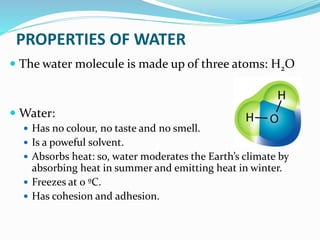
 The water molecule is made up of three atoms: H2O
 Water:
 Has no colour, no taste and no smell.
 Is a poweful solvent.
 Absorbs heat: so, water moderates the Earth’s climate by
absorbing heat in summer and emitting heat in winter.
 Freezes at 0 ºC.
 Has cohesion and adhesion.
 Cohesion
 Adhesion
SEA WATER
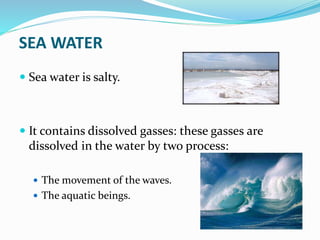
 Sea water is salty.
 It contains dissolved gasses: these gasses are
dissolved in the water by two process:
 The movement of the waves.
 The aquatic beings.
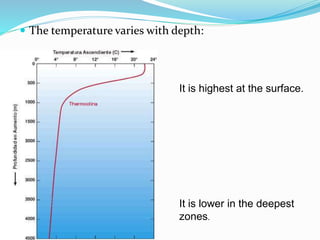
 The temperature varies with depth:
It is highest at the surface.
It is lower in the deepest
zones.
 MOVEMENTS PRODUCED IN THE OCEANS:
 Waves: occur on the surface, and they are caused by the
wind. Waves mix water with the air above the surface,
dissolving a lot of oxygen.
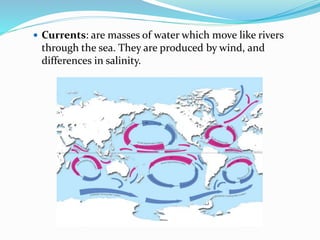
 Currents: are masses of water which move like rivers
through the sea. They are produced by wind, and
differences in salinity.
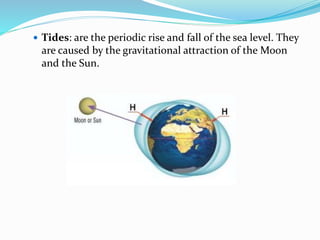
 Tides: are the periodic rise and fall of the sea level. They
are caused by the gravitational attraction of the Moon
and the Sun.
FRESH WATER
 Fresh water is found on the continents.
 It contains much less salt than sea water.
 It is found in different forms:
 Streams: are water courses fed by rain.
 Glaciers: are formed from the accumulation of snow on mountain
tops.
 Rivers: are permanent water courses.
 Lakes: are masses of water contained on depressed areas.
 Groundwater: is water beneath the ground surface.
 Wetlands: are areas where the ground is inundated all year round.
 Is the movement of water around, over and through
the Earth. It consist on these processes:
 Evaporation.
 Evapotranspiration.
 Condensation.
 Precipitation.
 Surface Runoff.
 Evaporation: liquid water changes to gas. Water
passes from the hydrosphere to the atmosphere.
 Evapotranspiration: water evaporates from the
leaves of plants.
 Condensation: Water vapour changes to liquid,
forming clouds.
 Precipitation: water in the clouds falls to the
ground.
 Surface Runoff: surface water moves across the
land, forming rivers and streams.
 Infiltration: surface water filters into the
ground, using the pores in the rocks.
El Modelado del Relieve por el Agua
http://www.edistribucion.es/anayaeducacion/8420534/U09/U09_01_EPI_04/v
ideo_modelado_paisaje.html
Las Aguas Contaminadas
http://www.edistribucion.es/anayaeducacion/8420534/U09/U09_01_EPI_05/
video_9_5_nb/index.html

The hydrosphere

  • 2.
    Do you know……..? Where can we find water in our planet?  How is sea water different to water in rivers?  What is the water cycle?  Why is important not to waste water?  Some easy ways to save water?
  • 5.
    WHERE IS THEREWATER ON EARTH?  97% of water on Earth is salt water. It is found in the oceans.  3% of water on Earth is fresh water. It is found in:  Ice and snow from glaciars.  Below the surface: groundwater.  In the atmosphere.  On the surface.  In living beings.
  • 6.
    PROPERTIES OF WATER The water molecule is made up of three atoms: H2O  Water:  Has no colour, no taste and no smell.  Is a poweful solvent.  Absorbs heat: so, water moderates the Earth’s climate by absorbing heat in summer and emitting heat in winter.  Freezes at 0 ºC.  Has cohesion and adhesion.
  • 7.
  • 8.
    SEA WATER  Seawater is salty.  It contains dissolved gasses: these gasses are dissolved in the water by two process:  The movement of the waves.  The aquatic beings.
  • 9.
     The temperaturevaries with depth: It is highest at the surface. It is lower in the deepest zones.
  • 10.
     MOVEMENTS PRODUCEDIN THE OCEANS:  Waves: occur on the surface, and they are caused by the wind. Waves mix water with the air above the surface, dissolving a lot of oxygen.
  • 11.
     Currents: aremasses of water which move like rivers through the sea. They are produced by wind, and differences in salinity.
  • 12.
     Tides: arethe periodic rise and fall of the sea level. They are caused by the gravitational attraction of the Moon and the Sun.
  • 15.
    FRESH WATER  Freshwater is found on the continents.  It contains much less salt than sea water.  It is found in different forms:  Streams: are water courses fed by rain.  Glaciers: are formed from the accumulation of snow on mountain tops.  Rivers: are permanent water courses.  Lakes: are masses of water contained on depressed areas.  Groundwater: is water beneath the ground surface.  Wetlands: are areas where the ground is inundated all year round.
  • 17.
     Is themovement of water around, over and through the Earth. It consist on these processes:  Evaporation.  Evapotranspiration.  Condensation.  Precipitation.  Surface Runoff.
  • 18.
     Evaporation: liquidwater changes to gas. Water passes from the hydrosphere to the atmosphere.
  • 19.
     Evapotranspiration: waterevaporates from the leaves of plants.
  • 20.
     Condensation: Watervapour changes to liquid, forming clouds.
  • 21.
     Precipitation: waterin the clouds falls to the ground.
  • 22.
     Surface Runoff:surface water moves across the land, forming rivers and streams.
  • 23.
     Infiltration: surfacewater filters into the ground, using the pores in the rocks.
  • 26.
    El Modelado delRelieve por el Agua http://www.edistribucion.es/anayaeducacion/8420534/U09/U09_01_EPI_04/v ideo_modelado_paisaje.html Las Aguas Contaminadas http://www.edistribucion.es/anayaeducacion/8420534/U09/U09_01_EPI_05/ video_9_5_nb/index.html