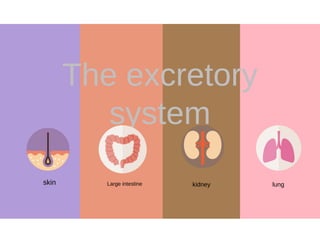
The excretory
system
skin Large intestine kidney lung
The excretory system is the system of an organism's body
that performs the function of excretion, the bodily
process of discharging wastes.
The Excretory system is responsible for the elimination of
wastes produced by homeostasis.
There are several parts of the body that are involved in this
process, such as sweat glands, the liver, the lungs and
the kidney system.
The skin
Is the outer body covering
fluid that is excreted
from skin
called“sweat”
which composed of
99% of water and 1% of minerals.
We lose 500-1000 cubic centimeters of sweat per day
Skin has 3
layers
1.The epidermis
the outermost layer of
skincreate our
“skin tone”(melanocytes)
2.The dermis
contains tough
connective tissue,
hair folliclesand sweat
glands
3.subcutaneous tissue
made up of fat and connective tissue
Skin function
1.Registers external
stimulation
2.Protect against damage or
infection
4.Control body temperature
5.Store fat
6.Make vitamin
The large
intestine
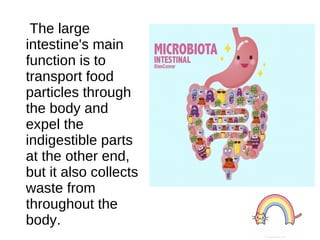
The large
intestine's main
function is to
transport food
particles through
the body and
expel the
indigestible parts
at the other end,
but it also collects
waste from
throughout the
body.
At about 10 feet long in humans, it transports
the wastes through the tubes to be excreted
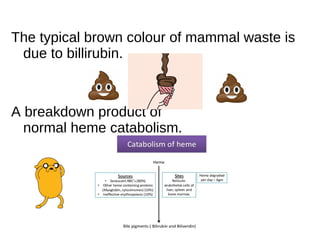
The typical brown colour of mammal waste is
due to billirubin.
A breakdown product of
normal heme catabolism.
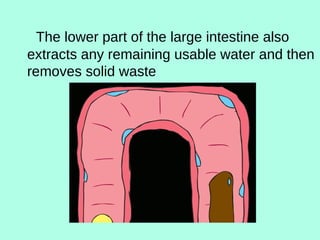
The lower part of the large intestine also
extracts any remaining usable water and then
removes solid waste
The kidneys
kidneys are two bean-shaped organs found on the left and
right sides of the body in vertebrates. They filter the blood in
order to make urine, to release and retain water, and to
remove waste. They also control the ion concentrations and
acid-base balance of the blood.
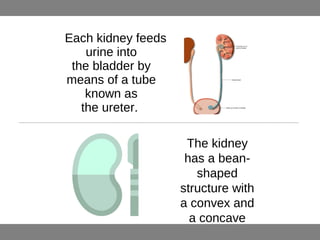
Each kidney feeds
urine into
the bladder by
means of a tube
known as
the ureter.
The kidney
has a bean-
shaped
structure with
a convex and
a concave
border
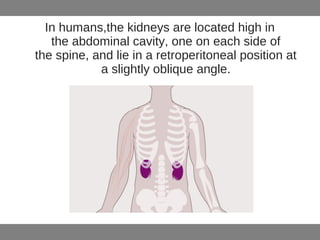
In humans,the kidneys are located high in
the abdominal cavity, one on each side of
the spine, and lie in a retroperitoneal position at
a slightly oblique angle.
A
recessed area on
the concave border
is the Renal hilum,
where the renal
artery enters the
kidney and the renal
vein and ureter leav
e.
In adult males,the kidney weighs between
125 and 170 grams.In females the weight
of the kidney is between 115 and
155 grams.
125-170 g. 115-155 g.
male female
Function of kidneys
Osmolality regulation : Maintaining water and salt level of the
body
H2O
Excretion of wastes: The kidneys excrete a variety of waste
products produced by metabolism into the urine.
SO4
The lungs
The lungs are the big part of our ability
to live as it performs mist respiratory
function.
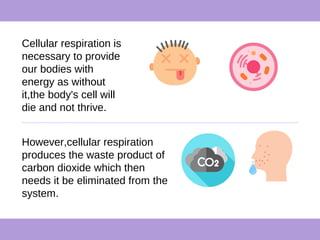
Cellular respiration is
necessary to provide
our bodies with
energy as without
it,the body's cell will
die and not thrive.
However,cellular respiration
produces the waste product of
carbon dioxide which then
needs it be eliminated from the
system.
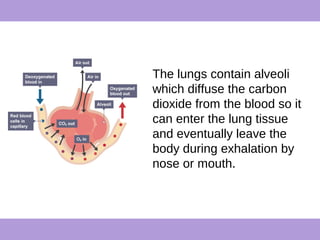
The lungs contain alveoli
which diffuse the carbon
dioxide from the blood so it
can enter the lung tissue
and eventually leave the
body during exhalation by
nose or mouth.
Animal excretory system
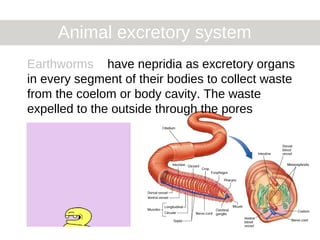
Earthworms have nepridia as excretory organs
in every segment of their bodies to collect waste
from the coelom or body cavity. The waste
expelled to the outside through the pores
Sponges
have simple structures of excretion. Waste is
excreted through epidermal cells to the
environment
Fish
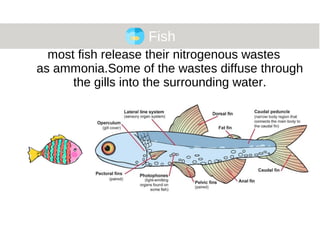
most fish release their nitrogenous wastes
as ammonia.Some of the wastes diffuse through
the gills into the surrounding water.
Planaria
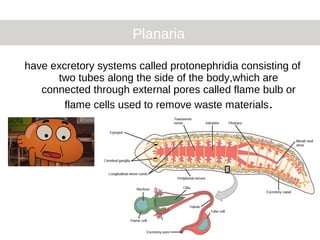
have excretory systems called protonephridia consisting of
two tubes along the side of the body,which are
connected through external pores called flame bulb or
flame cells used to remove waste materials.
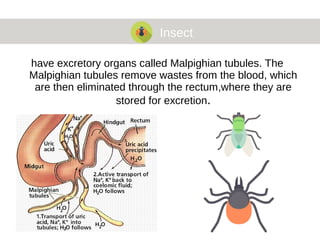
Insect
have excretory organs called Malpighian tubules. The
Malpighian tubules remove wastes from the blood, which
are then eliminated through the rectum,where they are
stored for excretion.
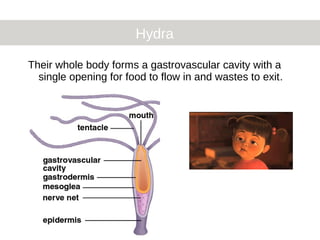
Hydra
Their whole body forms a gastrovascular cavity with a
single opening for food to flow in and wastes to exit.
Room 216
Group 4
Stamp meya tantawan tangtang
win

Excretory system

  • 1.
    The excretory system skin Largeintestine kidney lung
  • 2.
    The excretory systemis the system of an organism's body that performs the function of excretion, the bodily process of discharging wastes. The Excretory system is responsible for the elimination of wastes produced by homeostasis. There are several parts of the body that are involved in this process, such as sweat glands, the liver, the lungs and the kidney system.
  • 3.
    The skin Is theouter body covering
  • 4.
    fluid that isexcreted from skin called“sweat” which composed of 99% of water and 1% of minerals. We lose 500-1000 cubic centimeters of sweat per day
  • 5.
    Skin has 3 layers 1.Theepidermis the outermost layer of skincreate our “skin tone”(melanocytes) 2.The dermis contains tough connective tissue, hair folliclesand sweat glands
  • 6.
    3.subcutaneous tissue made upof fat and connective tissue
  • 7.
    Skin function 1.Registers external stimulation 2.Protectagainst damage or infection 4.Control body temperature 5.Store fat 6.Make vitamin
  • 8.
  • 9.
    The large intestine's main functionis to transport food particles through the body and expel the indigestible parts at the other end, but it also collects waste from throughout the body.
  • 10.
    At about 10feet long in humans, it transports the wastes through the tubes to be excreted
  • 11.
    The typical browncolour of mammal waste is due to billirubin. A breakdown product of normal heme catabolism.
  • 12.
    The lower partof the large intestine also extracts any remaining usable water and then removes solid waste
  • 13.
  • 14.
    kidneys are twobean-shaped organs found on the left and right sides of the body in vertebrates. They filter the blood in order to make urine, to release and retain water, and to remove waste. They also control the ion concentrations and acid-base balance of the blood.
  • 15.
    Each kidney feeds urineinto the bladder by means of a tube known as the ureter. The kidney has a bean- shaped structure with a convex and a concave border
  • 16.
    In humans,the kidneysare located high in the abdominal cavity, one on each side of the spine, and lie in a retroperitoneal position at a slightly oblique angle.
  • 17.
    A recessed area on theconcave border is the Renal hilum, where the renal artery enters the kidney and the renal vein and ureter leav e.
  • 18.
    In adult males,thekidney weighs between 125 and 170 grams.In females the weight of the kidney is between 115 and 155 grams. 125-170 g. 115-155 g. male female
  • 19.
    Function of kidneys Osmolalityregulation : Maintaining water and salt level of the body H2O Excretion of wastes: The kidneys excrete a variety of waste products produced by metabolism into the urine. SO4
  • 20.
  • 21.
    The lungs arethe big part of our ability to live as it performs mist respiratory function.
  • 22.
    Cellular respiration is necessaryto provide our bodies with energy as without it,the body's cell will die and not thrive. However,cellular respiration produces the waste product of carbon dioxide which then needs it be eliminated from the system.
  • 23.
    The lungs containalveoli which diffuse the carbon dioxide from the blood so it can enter the lung tissue and eventually leave the body during exhalation by nose or mouth.
  • 24.
    Animal excretory system Earthwormshave nepridia as excretory organs in every segment of their bodies to collect waste from the coelom or body cavity. The waste expelled to the outside through the pores
  • 25.
    Sponges have simple structuresof excretion. Waste is excreted through epidermal cells to the environment
  • 26.
    Fish most fish releasetheir nitrogenous wastes as ammonia.Some of the wastes diffuse through the gills into the surrounding water.
  • 27.
    Planaria have excretory systemscalled protonephridia consisting of two tubes along the side of the body,which are connected through external pores called flame bulb or flame cells used to remove waste materials.
  • 28.
    Insect have excretory organscalled Malpighian tubules. The Malpighian tubules remove wastes from the blood, which are then eliminated through the rectum,where they are stored for excretion.
  • 29.
    Hydra Their whole bodyforms a gastrovascular cavity with a single opening for food to flow in and wastes to exit.
  • 30.
    Room 216 Group 4 Stampmeya tantawan tangtang win