Unit 1
The Evolution of Computers
Chapter Review
Part-I
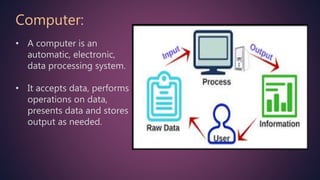
• A computer is an
automatic, electronic,
data processing system.
• It accepts data, performs
operations on data,
presents data and stores
output as needed.
Computer:
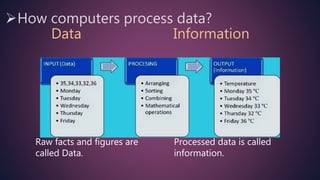
Data Information
Raw facts and figures are
called Data.
Processed data is called
information.
How computers process data?
How computers have changed over time?
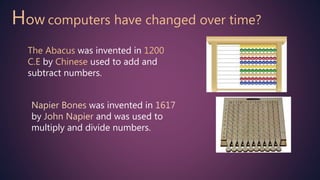
The Abacus was invented in 1200
C.E by Chinese used to add and
subtract numbers.
Napier Bones was invented in 1617
by John Napier and was used to
multiply and divide numbers.
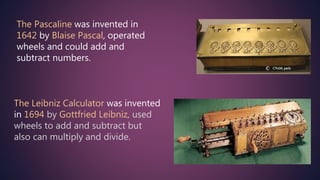
The Pascaline was invented in
1642 by Blaise Pascal, operated
wheels and could add and
subtract numbers.
The Leibniz Calculator was invented
in 1694 by Gottfried Leibniz, used
wheels to add and subtract but
also can multiply and divide.
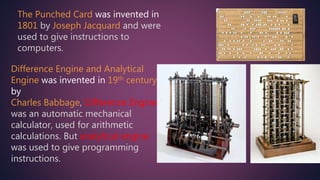
The Punched Card was invented in
1801 by Joseph Jacquard and were
used to give instructions to
computers.
Difference Engine and Analytical
Engine was invented in 19th century
by
Charles Babbage, Difference Engine
was an automatic mechanical
calculator, used for arithmetic
calculations. But analytical engine
was used to give programming
instructions.
Significance of Charles Babbage’s contribution to the
development of computer technology
Charles Babbage’s contribution to the development of computer
technology has very significant because he had drawn a path for
future in computer developments. His work on the analytical and
difference engines helped the electronic computer to take shape.
These machines showed how calculations and data processing
could be carried out through programming an electronic machine.
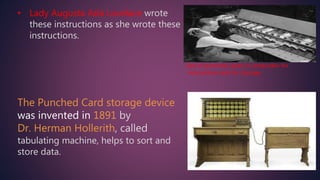
• Lady Augusta Ada Lovelace wrote
these instructions as she wrote these
instructions.
Use of punched cards in computers for
instructions and for storage
The Punched Card storage device
was invented in 1891 by
Dr. Herman Hollerith, called
tabulating machine, helps to sort and
store data.
1
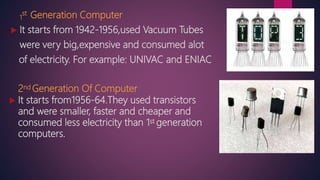
st Generation Computer
 It starts from 1942-1956,used Vacuum Tubes
were very big,expensive and consumed alot
of electricity. For example: UNIVAC and ENIAC
2nd Generation Of Computer
 It starts from1956-64.They used transistors
and were smaller, faster and cheaper and
consumed less electricity than 1st generation
computers.
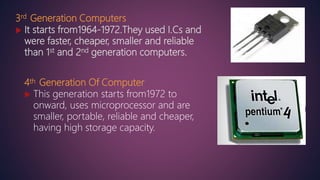
3rd Generation Computers
 It starts from1964-1972.They used I.Cs and
were faster, cheaper, smaller and reliable
than 1st and 2nd generation computers.
4th Generation Of Computer
 This generation starts from1972 to
onward, uses microprocessor and are
smaller, portable, reliable and cheaper,
having high storage capacity.
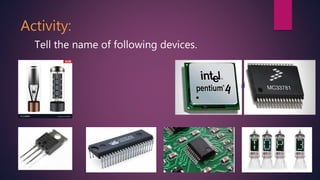
Activity:
Tell the name of following devices.
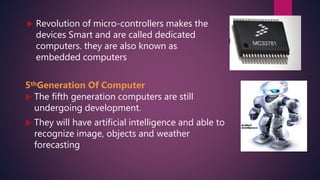
 Revolution of micro-controllers makes the
devices Smart and are called dedicated
computers. they are also known as
embedded computers
5thGeneration Of Computer
 The fifth generation computers are still
undergoing development.
 They will have artificial intelligence and able to
recognize image, objects and weather
forecasting
Major development in data processing form
1st generation to the 5th generation
From the first generation to the fifth generation, data processing
has become more efficient and convenient.
The processing capacity of vacuum tubes had limited but they were
replaced by transistors, ICs, and microprocessors. The storage
capacity has also increased over the generations.
Continue…
the evolution of computers-chapter review-1

the evolution of computers-chapter review-1

  • 2.
  • 3.
  • 4.
    • A computeris an automatic, electronic, data processing system. • It accepts data, performs operations on data, presents data and stores output as needed. Computer:
  • 5.
    Data Information Raw factsand figures are called Data. Processed data is called information. How computers process data?
  • 6.
    How computers havechanged over time? The Abacus was invented in 1200 C.E by Chinese used to add and subtract numbers. Napier Bones was invented in 1617 by John Napier and was used to multiply and divide numbers.
  • 7.
    The Pascaline wasinvented in 1642 by Blaise Pascal, operated wheels and could add and subtract numbers. The Leibniz Calculator was invented in 1694 by Gottfried Leibniz, used wheels to add and subtract but also can multiply and divide.
  • 8.
    The Punched Cardwas invented in 1801 by Joseph Jacquard and were used to give instructions to computers. Difference Engine and Analytical Engine was invented in 19th century by Charles Babbage, Difference Engine was an automatic mechanical calculator, used for arithmetic calculations. But analytical engine was used to give programming instructions.
  • 9.
    Significance of CharlesBabbage’s contribution to the development of computer technology Charles Babbage’s contribution to the development of computer technology has very significant because he had drawn a path for future in computer developments. His work on the analytical and difference engines helped the electronic computer to take shape. These machines showed how calculations and data processing could be carried out through programming an electronic machine.
  • 10.
    • Lady AugustaAda Lovelace wrote these instructions as she wrote these instructions. Use of punched cards in computers for instructions and for storage The Punched Card storage device was invented in 1891 by Dr. Herman Hollerith, called tabulating machine, helps to sort and store data.
  • 11.
    1 st Generation Computer It starts from 1942-1956,used Vacuum Tubes were very big,expensive and consumed alot of electricity. For example: UNIVAC and ENIAC 2nd Generation Of Computer  It starts from1956-64.They used transistors and were smaller, faster and cheaper and consumed less electricity than 1st generation computers.
  • 12.
    3rd Generation Computers It starts from1964-1972.They used I.Cs and were faster, cheaper, smaller and reliable than 1st and 2nd generation computers. 4th Generation Of Computer  This generation starts from1972 to onward, uses microprocessor and are smaller, portable, reliable and cheaper, having high storage capacity.
  • 13.
    Activity: Tell the nameof following devices.
  • 14.
     Revolution ofmicro-controllers makes the devices Smart and are called dedicated computers. they are also known as embedded computers 5thGeneration Of Computer  The fifth generation computers are still undergoing development.  They will have artificial intelligence and able to recognize image, objects and weather forecasting
  • 15.
    Major development indata processing form 1st generation to the 5th generation From the first generation to the fifth generation, data processing has become more efficient and convenient. The processing capacity of vacuum tubes had limited but they were replaced by transistors, ICs, and microprocessors. The storage capacity has also increased over the generations. Continue…