Digestion
• Phases Include
1. Ingestion
2. Movement
3. Mechanical and Chemical Digestion
4. Absorption
5. Elimination
Digestion
• Types
– Mechanical (physical)
• Chew
• Tear
• Grind
• Mash
• Mix
– Chemical
• Enzymatic reactions to improve digestion of
–Carbohydrates
–Proteins
–Lipids
Digestive System Organization
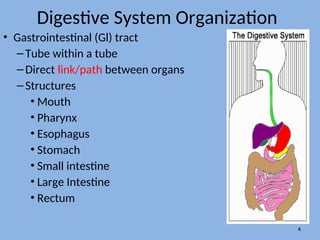
• Gastrointestinal (Gl) tract
–Tube within a tube
–Direct link/path between organs
–Structures
• Mouth
• Pharynx
• Esophagus
• Stomach
• Small intestine
• Large Intestine
• Rectum
4
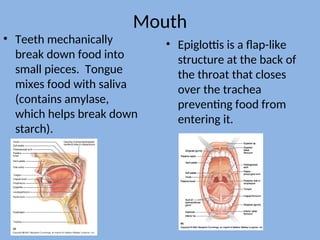
Mouth
• Teeth mechanically
break down food into
small pieces. Tongue
mixes food with saliva
(contains amylase,
which helps break down
starch).
• Epiglottis is a flap-like
structure at the back of
the throat that closes
over the trachea
preventing food from
entering it.
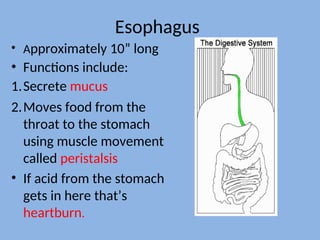
Esophagus
• Approximately 10” long
• Functions include:
1.Secrete mucus
2.Moves food from the
throat to the stomach
using muscle movement
called peristalsis
• If acid from the stomach
gets in here that’s
heartburn.
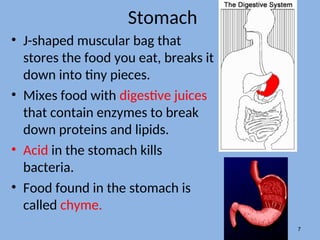
Stomach
• J-shaped muscular bag that
stores the food you eat, breaks it
down into tiny pieces.
• Mixes food with digestive juices
that contain enzymes to break
down proteins and lipids.
• Acid in the stomach kills
bacteria.
• Food found in the stomach is
called chyme.
7
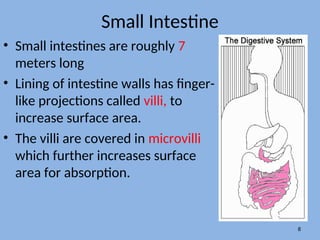
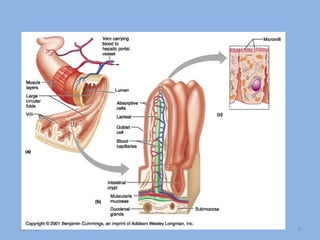
Small Intestine
• Small intestines are roughly 7
meters long
• Lining of intestine walls has finger-
like projections called villi, to
increase surface area.
• The villi are covered in microvilli
which further increases surface
area for absorption.
8
08/11/24 9
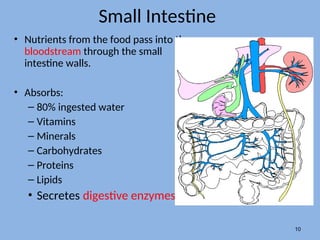
Small Intestine
• Nutrients from the food pass into the
bloodstream through the small
intestine walls.
• Absorbs:
– 80% ingested water
– Vitamins
– Minerals
– Carbohydrates
– Proteins
– Lipids
• Secretes digestive enzymes
10
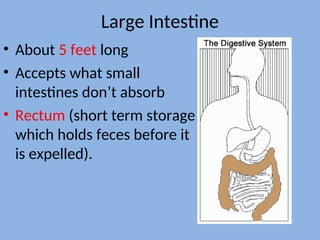
Large Intestine
• About 5 feet long
• Accepts what small
intestines don’t absorb
• Rectum (short term storage
which holds feces before it
is expelled).
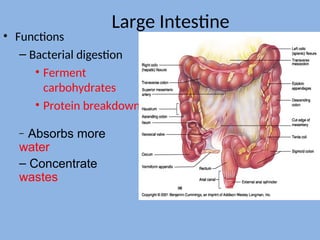
Large Intestine
• Functions
– Bacterial digestion
• Ferment
carbohydrates
• Protein breakdown
– Absorbs more
water
– Concentrate
wastes
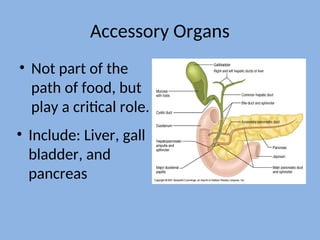
Accessory Organs
• Not part of the
path of food, but
play a critical role.
• Include: Liver, gall
bladder, and
pancreas
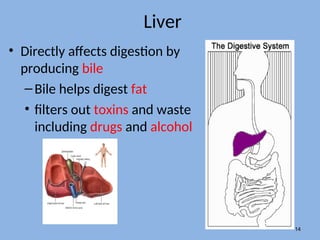
Liver
• Directly affects digestion by
producing bile
–Bile helps digest fat
• filters out toxins and waste
including drugs and alcohol
14
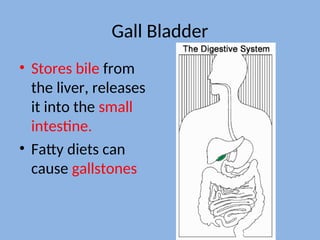
Gall Bladder
• Stores bile from
the liver, releases
it into the small
intestine.
• Fatty diets can
cause gallstones
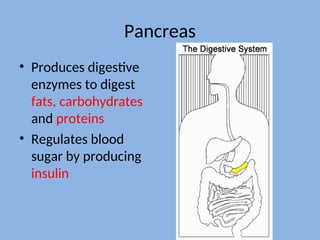
Pancreas
• Produces digestive
enzymes to digest
fats, carbohydrates
and proteins
• Regulates blood
sugar by producing
insulin
Fun Facts
• HOW LONG ARE YOUR INTESTINES? At
least 25 feet in an adult. Be glad you're not a full-
grown horse -- their coiled-up intestines are 89
feet long!
• Food drying up and hanging out in the large
intestine can last 18 hours to 2 days!
• In your lifetime, your digestive system may
handle about 50 tons!!
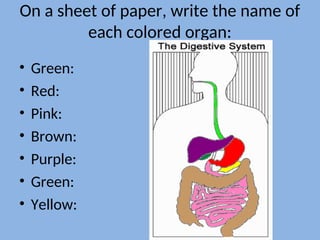
On a sheet of paper, write the name of
each colored organ:
• Green:
• Red:
• Pink:
• Brown:
• Purple:
• Green:
• Yellow:
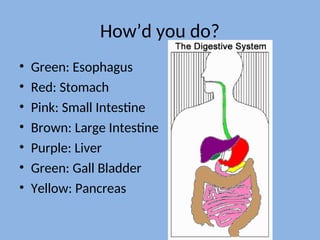
How’d you do?
• Green: Esophagus
• Red: Stomach
• Pink: Small Intestine
• Brown: Large Intestine
• Purple: Liver
• Green: Gall Bladder
• Yellow: Pancreas
References and Links
• Your Digestive System and How It Works
– Digestive system diagram comes from this site
• The Real Deal on the Digestive System
• Pancreas: Introduction and Index
• Your Gross and Cool Body - Digestive System

13-digestion system-13-digestion system.ppt

  • 2.
    Digestion • Phases Include 1.Ingestion 2. Movement 3. Mechanical and Chemical Digestion 4. Absorption 5. Elimination
  • 3.
    Digestion • Types – Mechanical(physical) • Chew • Tear • Grind • Mash • Mix – Chemical • Enzymatic reactions to improve digestion of –Carbohydrates –Proteins –Lipids
  • 4.
    Digestive System Organization •Gastrointestinal (Gl) tract –Tube within a tube –Direct link/path between organs –Structures • Mouth • Pharynx • Esophagus • Stomach • Small intestine • Large Intestine • Rectum 4
  • 5.
    Mouth • Teeth mechanically breakdown food into small pieces. Tongue mixes food with saliva (contains amylase, which helps break down starch). • Epiglottis is a flap-like structure at the back of the throat that closes over the trachea preventing food from entering it.
  • 6.
    Esophagus • Approximately 10”long • Functions include: 1.Secrete mucus 2.Moves food from the throat to the stomach using muscle movement called peristalsis • If acid from the stomach gets in here that’s heartburn.
  • 7.
    Stomach • J-shaped muscularbag that stores the food you eat, breaks it down into tiny pieces. • Mixes food with digestive juices that contain enzymes to break down proteins and lipids. • Acid in the stomach kills bacteria. • Food found in the stomach is called chyme. 7
  • 8.
    Small Intestine • Smallintestines are roughly 7 meters long • Lining of intestine walls has finger- like projections called villi, to increase surface area. • The villi are covered in microvilli which further increases surface area for absorption. 8
  • 9.
  • 10.
    Small Intestine • Nutrientsfrom the food pass into the bloodstream through the small intestine walls. • Absorbs: – 80% ingested water – Vitamins – Minerals – Carbohydrates – Proteins – Lipids • Secretes digestive enzymes 10
  • 11.
    Large Intestine • About5 feet long • Accepts what small intestines don’t absorb • Rectum (short term storage which holds feces before it is expelled).
  • 12.
    Large Intestine • Functions –Bacterial digestion • Ferment carbohydrates • Protein breakdown – Absorbs more water – Concentrate wastes
  • 13.
    Accessory Organs • Notpart of the path of food, but play a critical role. • Include: Liver, gall bladder, and pancreas
  • 14.
    Liver • Directly affectsdigestion by producing bile –Bile helps digest fat • filters out toxins and waste including drugs and alcohol 14
  • 15.
    Gall Bladder • Storesbile from the liver, releases it into the small intestine. • Fatty diets can cause gallstones
  • 16.
    Pancreas • Produces digestive enzymesto digest fats, carbohydrates and proteins • Regulates blood sugar by producing insulin
  • 17.
    Fun Facts • HOWLONG ARE YOUR INTESTINES? At least 25 feet in an adult. Be glad you're not a full- grown horse -- their coiled-up intestines are 89 feet long! • Food drying up and hanging out in the large intestine can last 18 hours to 2 days! • In your lifetime, your digestive system may handle about 50 tons!!
  • 19.
    On a sheetof paper, write the name of each colored organ: • Green: • Red: • Pink: • Brown: • Purple: • Green: • Yellow:
  • 20.
    How’d you do? •Green: Esophagus • Red: Stomach • Pink: Small Intestine • Brown: Large Intestine • Purple: Liver • Green: Gall Bladder • Yellow: Pancreas
  • 21.
    References and Links •Your Digestive System and How It Works – Digestive system diagram comes from this site • The Real Deal on the Digestive System • Pancreas: Introduction and Index • Your Gross and Cool Body - Digestive System

Editor's Notes

  • #6 A good way to describe peristalsis is an ocean wave moving through the muscle. These diagrams don’t separate the esophagus from the mouth functions, you might want to talk about what happens in the mouth too.
  • #7 The stomach takes around 4 hours to do it’s job on the food, depending on what kinds of food are digested.
  • #11 Depending on the maturity of the group, you can talk about the feces leaving via the anus. Mention the appendix at the bottom of the ascending colon and that it might have been used long ago but is not today Mention the portions of the large intestine, ascending, transverse, descending, sigmoid, and rectum (last one if the audience is mature enough)
  • #14 Livers can regenerate missing pieces if necessary. Is one of the largest organs in the body.
  • #15 Explain to students that removing the stones typically means removing the gallbladder, but that the body eventually adjusts to not having the bile stored.
  • #16 Explain the difference between the two types of diabetes. In type 1, the pancreas fails to produce enough insulin. In type 2, the body stops responding properly to the insulin it creates.