Prepared by:
ANTONIO T. DELGADO
DISCUSSION OUTLINE
ECONOMIC
GLOBALIZATION
THE BRETTON
WOODS SYSTEM
OTHER ECONOMIC
ORGANIZATIONS
THE MULTINATIONAL
CORPORATION
01 02
03 04
01
ECONOMIC GLOBALIZATION
It refers to the increasing interdependence of world
economies as a result of the growing scale of cross-
border trade of commodities and services, flow of
international capital and wide and rapid spread of
technologies (Gao, 2000).
ECONOMIC GLOBALIZATION
It is one of the three main processes of ‘generic’
globalization, with the two others being political
globalization and cultural globalization.
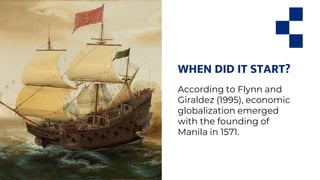
WHEN DID IT START?
According to Flynn and
Giraldez (1995), economic
globalization emerged
with the founding of
Manila in 1571.
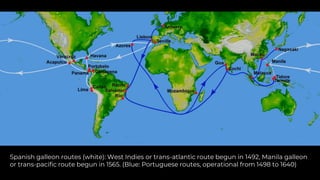
Spanish galleon routes (white): West Indies or trans-atlantic route begun in 1492, Manila galleon
or trans-pacific route begun in 1565. (Blue: Portuguese routes, operational from 1498 to 1640)
ATTRIBUTES OF THE
GLOBAL ECONOMY
• Global communication
systems
• Transportation systems
• Transnational business
strategies
• Flexible forms of capital
accumulation
• Global agreements that
promote free trade
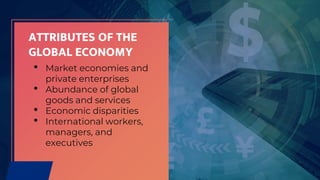
ATTRIBUTES OF THE
GLOBAL ECONOMY
• Market economies and
private enterprises
• Abundance of global
goods and services
• Economic disparities
• International workers,
managers, and
executives
A Prior Epoch of Globalization
A global economic system, specifically a global capitalist
system, emerged in about 1896 and reached something
of a peak throughout the world by 1914.
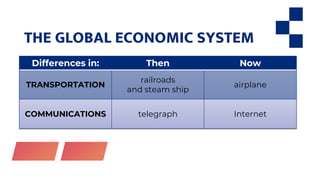
Differences in: Then Now
TRANSPORTATION
railroads
and steam ship
airplane
COMMUNICATIONS telegraph Internet
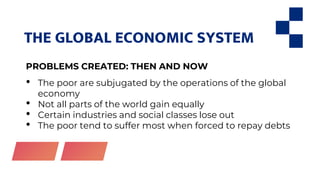
THE GLOBAL ECONOMIC SYSTEM
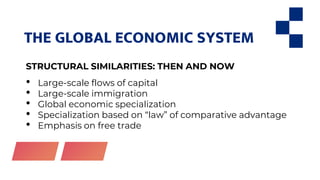
STRUCTURAL SIMILARITIES: THEN AND NOW
• Large-scale flows of capital
• Large-scale immigration
• Global economic specialization
• Specialization based on “law” of comparative advantage
• Emphasis on free trade
THE GLOBAL ECONOMIC SYSTEM
PROBLEMS CREATED: THEN AND NOW
• The poor are subjugated by the operations of the global
economy
• Not all parts of the world gain equally
• Certain industries and social classes lose out
• The poor tend to suffer most when forced to repay debts
02
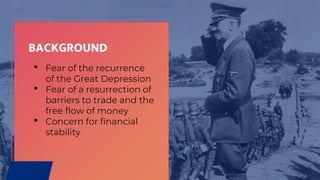
BACKGROUND
• Fear of the recurrence
of the Great Depression
• Fear of a resurrection of
barriers to trade and the
free flow of money
• Concern for financial
stability
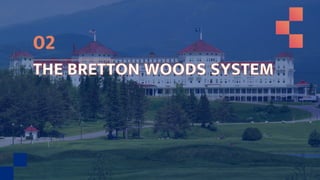
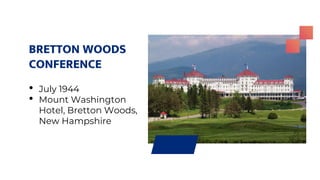
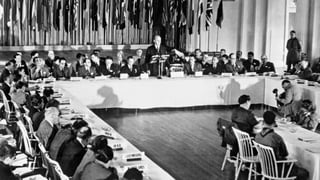
• July 1944
• Mount Washington
Hotel, Bretton Woods,
New Hampshire
BRETTON WOODS
CONFERENCE
5 KEY ELEMENTS OF BWS
1. Each participating state would establish a ‘par value’ for
its currency expressed in terms of gold or in terms of the
gold value of the US dollar as of July 1944
2. Each country would agree to exchange its own currency
for those of other countries at the established exchange
rates, plus or minus a one-percent margin
5 KEY ELEMENTS OF BWS
3. The International Monetary Fund (IMF) was created to
establish, stabilize, and oversee exchange rates
4. Member states agreed to eliminate all restrictions on the
use of its currency for international trade
5. The entire system was based on the US dollar
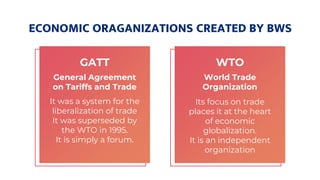
ECONOMIC ORAGANIZATIONS CREATED BY BWS
GATT
General Agreement
on Tariffs and Trade
It was a system for the
liberalization of trade
It was superseded by
the WTO in 1995.
It is simply a forum.
WTO
World Trade
Organization
Its focus on trade
places it at the heart
of economic
globalization.
It is an independent
organization
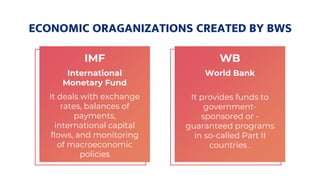
ECONOMIC ORAGANIZATIONS CREATED BY BWS
IMF
International
Monetary Fund
It deals with exchange
rates, balances of
payments,
international capital
flows, and monitoring
of macroeconomic
policies
WB
World Bank
It provides funds to
government-
sponsored or -
guaranteed programs
in so-called Part II
countries .
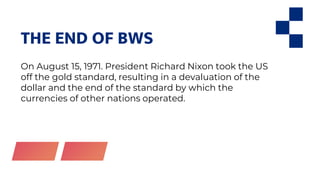
THE END OF BWS
On August 15, 1971. President Richard Nixon took the US
off the gold standard, resulting in a devaluation of the
dollar and the end of the standard by which the
currencies of other nations operated.
03
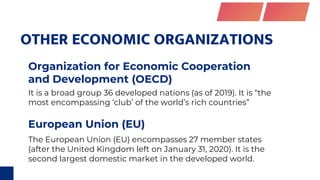
OTHER ECONOMIC ORGANIZATIONS
Organization for Economic Cooperation
and Development (OECD)
European Union (EU)
It is a broad group 36 developed nations (as of 2019). It is “the
most encompassing ‘club’ of the world’s rich countries”
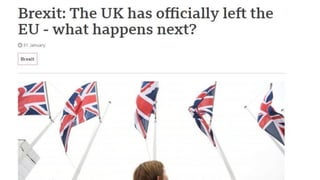
The European Union (EU) encompasses 27 member states
(after the United Kingdom left on January 31, 2020). It is the
second largest domestic market in the developed world.
OTHER ECONOMIC ORGANIZATIONS
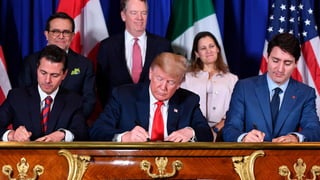
United States–Mexico–Canada
Agreement (USMCA)
MERCOSUR
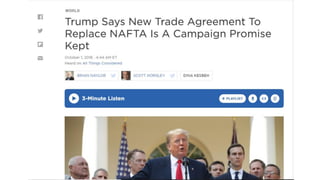
It is the successor agreement to the North American Free
Trade Agreement (NAFTA). It took effect on July 1, 2020.
It was created by the Treaty of Asuncion in 1991 with the goal of
a common market in South America by 1995.
OTHER ECONOMIC ORGANIZATIONS
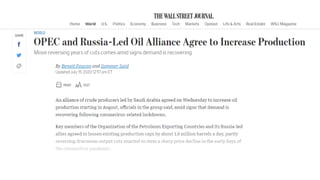
Organization of Petroleum
Exporting Countries (OPEC)
Trans‐Pacific Partnership (TPP)
It includes the major oil exporters and has succeeded in
greatly increasing the price of oil.
In addition to deepening economic ties and expanding trade,
the agreement is also considered “a not‐so‐secret gambit to
keep China at bay.”
OTHER ECONOMIC ORGANIZATIONS
Brazil, Russia, India, China, & South Africa (BRICS)
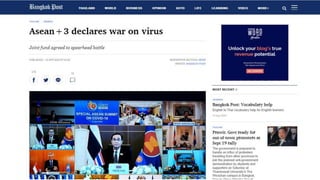
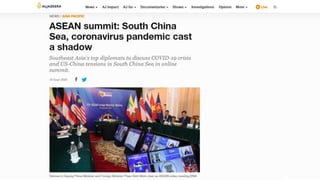
Association of Southeast Asian Nations Plus
China, Japan and South Korea (ASEAN+3)
These countries have very large and growing populations that
could serve as a massive work force and untapped consumer
market.
It was established in the late 1990s when ASEAN countries
decided to enhance cooperation with other major economies
of Asia against the backdrop of economic globalization.
04
THE MULTINATIONAL
CORPORATION (MNC)
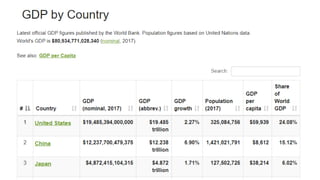
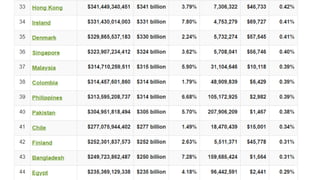
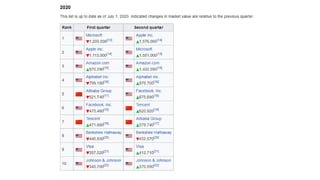
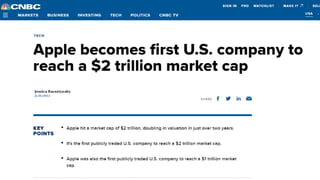
• It is a major player in economic globalization.
• While transnational corporations (TNCs) involve
operations in more than one country, MNCs operate
in more than two countries.
MNC ACTIVITIES
Foreign Direct Investment (FDI)
Portfolio Investment
It involves investments by one firm in another firm that exists
abroad in a different nation-state, with the intention of gaining
control over the latter’s operations.
It involves the purchase of equity in companies in other
countries, but the motivation is financial gain and not to obtain
control over those companies.
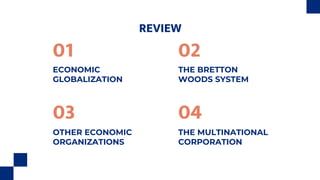
REVIEW
ECONOMIC
GLOBALIZATION
THE BRETTON
WOODS SYSTEM
OTHER ECONOMIC
ORGANIZATIONS
THE MULTINATIONAL
CORPORATION
01 02
03 04
ANY QUESTIONS?
CREDITS: This presentation template was
created by Slidesgo, including icons by
Flaticon, infographics & images by Freepik
You can contact me thru:
Facebook.com/kazekage15
Twitter.com/SirTonyDelgado
THANKS
FOR LISTENING!
REFERENCES
1. ASEAN Secretariat Information Paper. (April 2020). Overview of ASEAN Plus Three Cooperation.
Retrieved from https://asean.org/storage/2016/01/APT-Overview-Paper-24-Apr-2020.pdf
2. Babones, S. (2007). "Studying Globalization: Methodological Issues". In George Ritzer (ed.). The
Blackwell Companion to Globalization. John Wiley & Sons. p. 146.
3. Flynn, D., & Giráldez, A. (1995). Born with a "Silver Spoon": The Origin of World Trade in 1571.
Journal of World History, 6(2), 201-221. Retrieved August 14, 2020, from
www.jstor.org/stable/20078638
4. Gao, S. (2000). Economic Globalization: Trends, Risks and Risk Prevention.
https://www.un.org/en/development/desa/policy/cdp/cdp_ background_ papers/bp2000_ 1.pdf
5. Ritzer G. (2011). Globalization: The Essentials. Chichester, West Sussex: Wiley-Blackwell.
6. Ritzer, G. (2019). Globalization: The Essentials, Second Edition. Chichester, West Sussex: Wiley-
Blackwell
7. Rowntree, et al. (2017). Globalization and Diversity : Geography of a Changing World. Hoboken,
NJ : Pearson

The Contemporary World: Global Economic Structures

  • 1.
  • 2.
    DISCUSSION OUTLINE ECONOMIC GLOBALIZATION THE BRETTON WOODSSYSTEM OTHER ECONOMIC ORGANIZATIONS THE MULTINATIONAL CORPORATION 01 02 03 04
  • 3.
  • 4.
    ECONOMIC GLOBALIZATION It refersto the increasing interdependence of world economies as a result of the growing scale of cross- border trade of commodities and services, flow of international capital and wide and rapid spread of technologies (Gao, 2000).
  • 5.
    ECONOMIC GLOBALIZATION It isone of the three main processes of ‘generic’ globalization, with the two others being political globalization and cultural globalization.
  • 6.
    WHEN DID ITSTART? According to Flynn and Giraldez (1995), economic globalization emerged with the founding of Manila in 1571.
  • 7.
    Spanish galleon routes(white): West Indies or trans-atlantic route begun in 1492, Manila galleon or trans-pacific route begun in 1565. (Blue: Portuguese routes, operational from 1498 to 1640)
  • 8.
    ATTRIBUTES OF THE GLOBALECONOMY • Global communication systems • Transportation systems • Transnational business strategies • Flexible forms of capital accumulation • Global agreements that promote free trade
  • 9.
    ATTRIBUTES OF THE GLOBALECONOMY • Market economies and private enterprises • Abundance of global goods and services • Economic disparities • International workers, managers, and executives
  • 10.
    A Prior Epochof Globalization A global economic system, specifically a global capitalist system, emerged in about 1896 and reached something of a peak throughout the world by 1914.
  • 11.
    Differences in: ThenNow TRANSPORTATION railroads and steam ship airplane COMMUNICATIONS telegraph Internet THE GLOBAL ECONOMIC SYSTEM
  • 12.
    THE GLOBAL ECONOMICSYSTEM STRUCTURAL SIMILARITIES: THEN AND NOW • Large-scale flows of capital • Large-scale immigration • Global economic specialization • Specialization based on “law” of comparative advantage • Emphasis on free trade
  • 13.
    THE GLOBAL ECONOMICSYSTEM PROBLEMS CREATED: THEN AND NOW • The poor are subjugated by the operations of the global economy • Not all parts of the world gain equally • Certain industries and social classes lose out • The poor tend to suffer most when forced to repay debts
  • 14.
  • 16.
    BACKGROUND • Fear ofthe recurrence of the Great Depression • Fear of a resurrection of barriers to trade and the free flow of money • Concern for financial stability
  • 17.
    • July 1944 •Mount Washington Hotel, Bretton Woods, New Hampshire BRETTON WOODS CONFERENCE
  • 19.
    5 KEY ELEMENTSOF BWS 1. Each participating state would establish a ‘par value’ for its currency expressed in terms of gold or in terms of the gold value of the US dollar as of July 1944 2. Each country would agree to exchange its own currency for those of other countries at the established exchange rates, plus or minus a one-percent margin
  • 20.
    5 KEY ELEMENTSOF BWS 3. The International Monetary Fund (IMF) was created to establish, stabilize, and oversee exchange rates 4. Member states agreed to eliminate all restrictions on the use of its currency for international trade 5. The entire system was based on the US dollar
  • 21.
    ECONOMIC ORAGANIZATIONS CREATEDBY BWS GATT General Agreement on Tariffs and Trade It was a system for the liberalization of trade It was superseded by the WTO in 1995. It is simply a forum. WTO World Trade Organization Its focus on trade places it at the heart of economic globalization. It is an independent organization
  • 22.
    ECONOMIC ORAGANIZATIONS CREATEDBY BWS IMF International Monetary Fund It deals with exchange rates, balances of payments, international capital flows, and monitoring of macroeconomic policies WB World Bank It provides funds to government- sponsored or - guaranteed programs in so-called Part II countries .
  • 23.
    THE END OFBWS On August 15, 1971. President Richard Nixon took the US off the gold standard, resulting in a devaluation of the dollar and the end of the standard by which the currencies of other nations operated.
  • 24.
  • 25.
    OTHER ECONOMIC ORGANIZATIONS Organizationfor Economic Cooperation and Development (OECD) European Union (EU) It is a broad group 36 developed nations (as of 2019). It is “the most encompassing ‘club’ of the world’s rich countries” The European Union (EU) encompasses 27 member states (after the United Kingdom left on January 31, 2020). It is the second largest domestic market in the developed world.
  • 27.
    OTHER ECONOMIC ORGANIZATIONS UnitedStates–Mexico–Canada Agreement (USMCA) MERCOSUR It is the successor agreement to the North American Free Trade Agreement (NAFTA). It took effect on July 1, 2020. It was created by the Treaty of Asuncion in 1991 with the goal of a common market in South America by 1995.
  • 30.
    OTHER ECONOMIC ORGANIZATIONS Organizationof Petroleum Exporting Countries (OPEC) Trans‐Pacific Partnership (TPP) It includes the major oil exporters and has succeeded in greatly increasing the price of oil. In addition to deepening economic ties and expanding trade, the agreement is also considered “a not‐so‐secret gambit to keep China at bay.”
  • 32.
    OTHER ECONOMIC ORGANIZATIONS Brazil,Russia, India, China, & South Africa (BRICS) Association of Southeast Asian Nations Plus China, Japan and South Korea (ASEAN+3) These countries have very large and growing populations that could serve as a massive work force and untapped consumer market. It was established in the late 1990s when ASEAN countries decided to enhance cooperation with other major economies of Asia against the backdrop of economic globalization.
  • 36.
  • 37.
    THE MULTINATIONAL CORPORATION (MNC) •It is a major player in economic globalization. • While transnational corporations (TNCs) involve operations in more than one country, MNCs operate in more than two countries.
  • 42.
    MNC ACTIVITIES Foreign DirectInvestment (FDI) Portfolio Investment It involves investments by one firm in another firm that exists abroad in a different nation-state, with the intention of gaining control over the latter’s operations. It involves the purchase of equity in companies in other countries, but the motivation is financial gain and not to obtain control over those companies.
  • 46.
    REVIEW ECONOMIC GLOBALIZATION THE BRETTON WOODS SYSTEM OTHERECONOMIC ORGANIZATIONS THE MULTINATIONAL CORPORATION 01 02 03 04
  • 47.
  • 48.
    CREDITS: This presentationtemplate was created by Slidesgo, including icons by Flaticon, infographics & images by Freepik You can contact me thru: Facebook.com/kazekage15 Twitter.com/SirTonyDelgado THANKS FOR LISTENING!
  • 49.
    REFERENCES 1. ASEAN SecretariatInformation Paper. (April 2020). Overview of ASEAN Plus Three Cooperation. Retrieved from https://asean.org/storage/2016/01/APT-Overview-Paper-24-Apr-2020.pdf 2. Babones, S. (2007). "Studying Globalization: Methodological Issues". In George Ritzer (ed.). The Blackwell Companion to Globalization. John Wiley & Sons. p. 146. 3. Flynn, D., & Giráldez, A. (1995). Born with a "Silver Spoon": The Origin of World Trade in 1571. Journal of World History, 6(2), 201-221. Retrieved August 14, 2020, from www.jstor.org/stable/20078638 4. Gao, S. (2000). Economic Globalization: Trends, Risks and Risk Prevention. https://www.un.org/en/development/desa/policy/cdp/cdp_ background_ papers/bp2000_ 1.pdf 5. Ritzer G. (2011). Globalization: The Essentials. Chichester, West Sussex: Wiley-Blackwell. 6. Ritzer, G. (2019). Globalization: The Essentials, Second Edition. Chichester, West Sussex: Wiley- Blackwell 7. Rowntree, et al. (2017). Globalization and Diversity : Geography of a Changing World. Hoboken, NJ : Pearson