TCW 101
CONTEMPORARY
GLOBAL
GOVERNANCE
Presentation by Wu, Ashley T.
TODAY'S
TOPICS
WHAT WE'LL DISCUSS
Define Global Governance
Identify The Roles & Functions Of United Nations
Determine The Challenges To Global
Governance In The 21st Century
20%
apply their lessons to other fields
How is the world governed in
the absence of a world
government ?
INTERNATIONAL AGREEMENTS
are treaties signed by a number of states
that establish global rules of
conduct. States that break these rules are
called rogue states (North Korea, Iran,
Iraq, Syria)
INTERNATIONAL LAW
is the collection of rules and regulations
that define the rights and obligations of
states
SIGNIFICANT INTERNATIONAL
TREATIES
United Nations
Charter (1945)
Created the united
nations
GATT (1947)
Greatly reduced tariffs
& boosted trade
Convention On The
Elimination Of
All Forms Of
Discrimination Against
(1979)
International bill of rights for
women
Rome Statute
(1988)
Established the
international criminal
court
Kyoto Protocol
(2005)
Regulates greenhouse
emissions to reduce
global warming
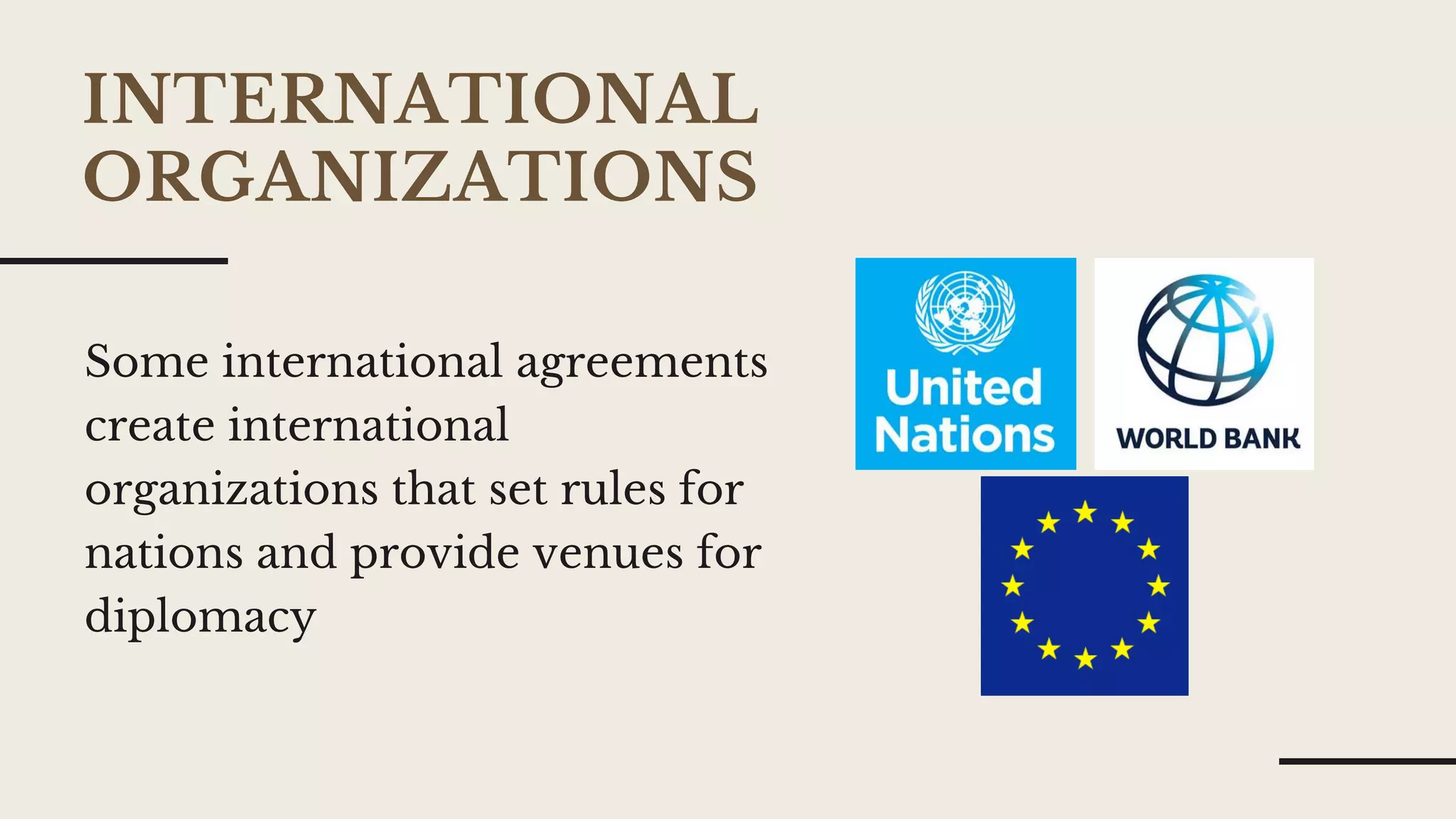
INTERNATIONAL
ORGANIZATIONS
Some international agreements
create international
organizations that set rules for
nations and provide venues for
diplomacy
GLOBAL GOVERNANCE
• The sum of laws, norms, policies and institutions that
define , constitute and mediate trans-border relations
between states, cultures, citizens, intergovernmental
and nongovernmental organization and the market.
• There is no central authority
• THERE IS NO GLOBAL GOVERNMENT
To examine the essential/ ideational role of UN in the 21st century
THE UNITED NATIONS : AS
A GLOBAL GOVERNANCE ACTOR
ESSENTIAL/ IDEATIONAL
ROLE OF UN IN THE
21ST CENTURY
MANAGING KNOWLEDGE
Addressing a problem that goes beyond the
capacity of the state
DEVELOPING NORMS
Helps to solidify new norm of behavior,
often through summit, conferences and
international panels and commissions
FORMULATING
RECOMMENDATIONS
A policy actor because of its ability to
convene and consult
INSTITUTIONALIZING IDEAS
Every problem has several global
institutions working on significant aspects of
solutions
QUIZ
¼ Sheet Yellow Paper
“1/4 Po?”
Yes 1/4
ME FEELING IMMUNE TO
CORONAVIRUS AFTER EATING 3
OVALTINE TABLETS
1. What do you call the
treaties signed by a number
of states that establish global
rules of conduct?
2. What is the sum of laws,
norms, policies and institutions
that define , constitute and
mediate trans-border relations
between states
3. What do you call the
collection of rules and
regulations that define the rights
and obligations of states?
4. Give an example of
international organization
5. An international treaty that is
defined as the international bill of
rights for women and its year
6. Give an example of essential
role of un in the 21st century
6. Give an example of essential
role of un in the 21st century
7-10. Give three examples of
significant international treaties
and the date it was signed

Contemporary Global governance

  • 1.
  • 2.
    TODAY'S TOPICS WHAT WE'LL DISCUSS DefineGlobal Governance Identify The Roles & Functions Of United Nations Determine The Challenges To Global Governance In The 21st Century
  • 3.
    20% apply their lessonsto other fields
  • 4.
    How is theworld governed in the absence of a world government ?
  • 5.
    INTERNATIONAL AGREEMENTS are treatiessigned by a number of states that establish global rules of conduct. States that break these rules are called rogue states (North Korea, Iran, Iraq, Syria) INTERNATIONAL LAW is the collection of rules and regulations that define the rights and obligations of states
  • 6.
    SIGNIFICANT INTERNATIONAL TREATIES United Nations Charter(1945) Created the united nations GATT (1947) Greatly reduced tariffs & boosted trade Convention On The Elimination Of All Forms Of Discrimination Against (1979) International bill of rights for women Rome Statute (1988) Established the international criminal court Kyoto Protocol (2005) Regulates greenhouse emissions to reduce global warming
  • 7.
    INTERNATIONAL ORGANIZATIONS Some international agreements createinternational organizations that set rules for nations and provide venues for diplomacy
  • 8.
    GLOBAL GOVERNANCE • Thesum of laws, norms, policies and institutions that define , constitute and mediate trans-border relations between states, cultures, citizens, intergovernmental and nongovernmental organization and the market. • There is no central authority • THERE IS NO GLOBAL GOVERNMENT
  • 9.
    To examine theessential/ ideational role of UN in the 21st century THE UNITED NATIONS : AS A GLOBAL GOVERNANCE ACTOR
  • 10.
    ESSENTIAL/ IDEATIONAL ROLE OFUN IN THE 21ST CENTURY MANAGING KNOWLEDGE Addressing a problem that goes beyond the capacity of the state DEVELOPING NORMS Helps to solidify new norm of behavior, often through summit, conferences and international panels and commissions FORMULATING RECOMMENDATIONS A policy actor because of its ability to convene and consult INSTITUTIONALIZING IDEAS Every problem has several global institutions working on significant aspects of solutions
  • 11.
    QUIZ ¼ Sheet YellowPaper “1/4 Po?” Yes 1/4
  • 13.
    ME FEELING IMMUNETO CORONAVIRUS AFTER EATING 3 OVALTINE TABLETS
  • 14.
    1. What doyou call the treaties signed by a number of states that establish global rules of conduct?
  • 15.
    2. What isthe sum of laws, norms, policies and institutions that define , constitute and mediate trans-border relations between states
  • 16.
    3. What doyou call the collection of rules and regulations that define the rights and obligations of states?
  • 17.
    4. Give anexample of international organization
  • 18.
    5. An internationaltreaty that is defined as the international bill of rights for women and its year
  • 19.
    6. Give anexample of essential role of un in the 21st century
  • 20.
    6. Give anexample of essential role of un in the 21st century
  • 21.
    7-10. Give threeexamples of significant international treaties and the date it was signed

Editor's Notes

  • #6 In order to make the global system less chaotic and unpredictable, states often make agreements with one another to modify their behavior
  • #8 Offers loans to more than 100 states promote peace - eu
  • #11 2. Ex. HIV – AIDS Awareness Campaign, Anti- Human Trafficking, Climate Change 3. Reduce global warming, prosecution of human rights violations, poverty reduction, etc 4. Greenpeace, Human Rights Watch, Transparency International, Interparliamentary Union