Downloaded 118 times


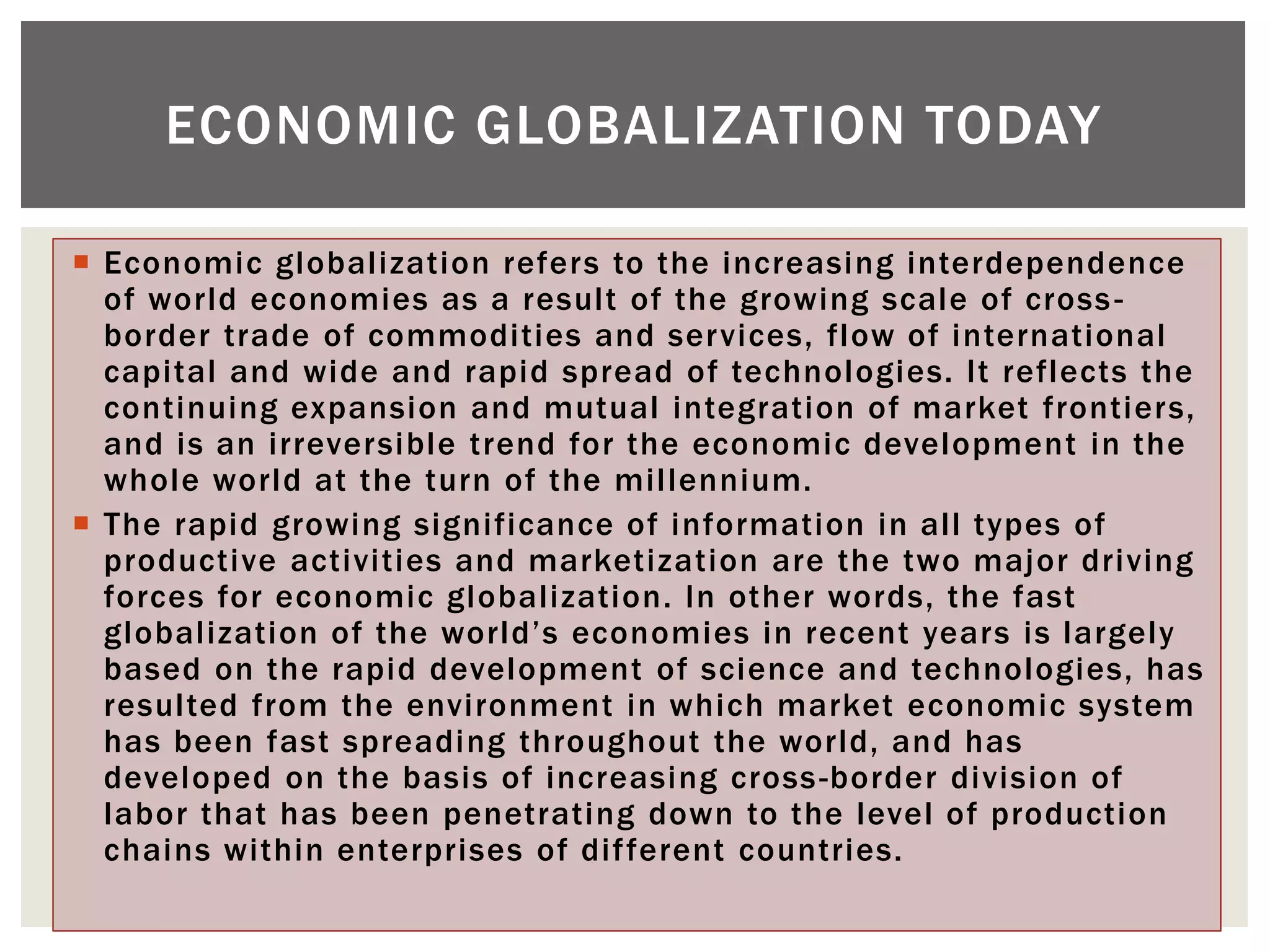


This document discusses the history and concepts of economic globalization. It defines economic globalization as the increasing interdependence of world economies through cross-border trade, capital flows, and spread of technologies. Key points include: - International organizations like the IMF and World Bank help facilitate global economic cooperation and stability. - International trade routes like the Silk Road date back millennia, though globalization accelerated in the late 20th century. - The Bretton Woods system established rules for international monetary management in the postwar era. This system tied currencies to gold and aimed to reduce economic nationalism. - Neoliberalism advocates free movement of goods, capital and services across borders, while limiting state intervention in markets


