THE GLOBAL INTERSTATE
SYSTEM
THE CONTEMPORARY WORLD
OUTLINE OF THE TOPIC
Defining State
Defining Interstate
Neoliberalism Vs. Economic Sovereignty
Effects of Globalization in Government
Institution that Govern Globalization
DEFINING "STATE"
"State is independent political
communities each of which possesses a
government and asserts sovereignty about
a particular portion of the earth’s surface
and a particular segment of a human
population.“ (Hedley Bull)
DEFINING "INTERSTATE"
"A system of unequally powerful and
competing states In which no single states is
capable of imposing control on all others,
These states are in interaction with one
another in a set of shifting alliance and wars
and change in relatives power of states upsets
any temporary set of alliances, leading to a
restructuring of balance of power.
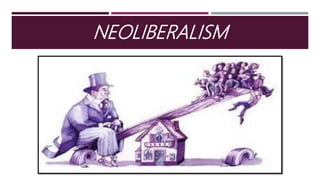
NEOLIBERALISM
NEOLIBERALISM
 The intensification of the influence and dominance of
capital.
 Values market exchange capable of acting as a guide to
all human action.
 Emphasizes the significance of contractual relations in the
marketplace.
 Social good will be maximized by maximizing the
reach and frequency market transactions.
ECONOMIC SOVEREIGNTY
The power of national
governments to make
decisions
independently of
those made by other
governments.
QUESTION TO THINK ABOUT
IN A HIGHLY GLOBALIZED
WORLD, IS ECONOMIC
SOVEREIGNTY STILL ACHIEVABLE?
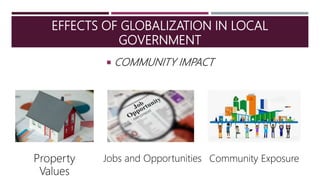
EFFECTS OF GLOBALIZATION IN LOCAL
GOVERNMENT
 COMMUNITY IMPACT
Property
Values
Jobs and Opportunities Community Exposure
THE REALITY
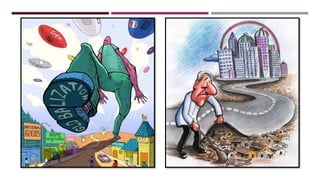
 As the world becomes more
interconnected through politics, trade and
communications, the role of states and
governments are also shifting. Thus,
national and local policies are not only
based on local context but also
international and global realities.
MONTREAL PROTOCOL ON SUBSTANCES THAT DEPLETE
THE OZONE LAYER
Aims to phase out
the production of
numerous
substances
responsible for
ozone depletion,
signed in August
26, 1987 with 46
countries
A definitive
evidence of
Montreal Protocols
success was
discussed by NASA
and projected that
ozone levels will
return to 1980
levels by 2032.
An example how
international
agreements and
efforts could fight
borderless
challenges and
issues.
HOW DOES GLOBALIZATION NEGATIVELY
AFFECTS LOCAL GOVERNMENTS AND
LOCAL COMMUNITIES?
THERE IS NEGATIVE SIDE OF
GLOBALIZATION
DILEMMA FOR LOCAL GOVERNMENTS
 A local government would like to attract major global investors in
their Community by setting up for instance their manufacturing firm
in their area. This could generate jobs for local people and generate
income for local businesses.
 However, it will entail convert tracks of agricultural lands into
industrial zones. Farmers will be displaced and agricultural
production of the area will be affected.
 A global corporation is also demanding lower taxes and lower-
income wages to finalize their investment in the area. They argue
that they will create more jobs and more income from the local
QUESTIONS TO THINK ABOUT
HOW COULD LOCAL GOVERNMENTS BALANCE IMPROVED
ECONOMIC PERFORMANCE AND PARTICIPATION IN GLOBAL
ECONOMIC SCENE WITHOUT SACRIFICING LOCAL, SOCIAL AND
ENVIRONMENTAL WELL-BEING? ARE LOCAL GOVERNMENTS
HEAVILY INFLUENCED BY POWERFUL CORPORATE ENTITIES?
INSTITUTIONS THAT GOVERN GLOBALIZATION
 A GLOBAL NETWORK
 With the growing Globalization, the
governance of global relations goes
beyond the national governments.
One country's scale and scope are
limited in addressing regional and
global issues like climate change,
cybercrimes, global financial crises and
territorial disputes. Aside from the
governments, non-state actors
continue to increase their roles in
global governance
NON-STATE ACTORS
 Non-government organizations, Volunteer organizations
and Interest Groups.
 The Increase of the number of international organizations
and the expansion of their functions have undeniably
restricted an individual country's sovereignty to certain
extent. There are several institutions that govern
international relations and affairs.
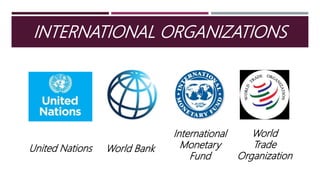
INTERNATIONAL ORGANIZATIONS
United Nations World Bank
International
Monetary
Fund
World
Trade
Organization
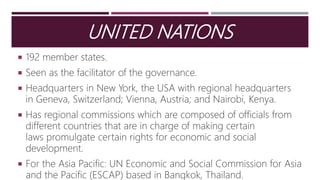
UNITED NATIONS
 192 member states.
 Seen as the facilitator of the governance.
 Headquarters in New York, the USA with regional headquarters
in Geneva, Switzerland; Vienna, Austria; and Nairobi, Kenya.
 Has regional commissions which are composed of officials from
different countries that are in charge of making certain
laws promulgate certain rights for economic and social
development.
 For the Asia Pacific: UN Economic and Social Commission for Asia
and the Pacific (ESCAP) based in Bangkok, Thailand.
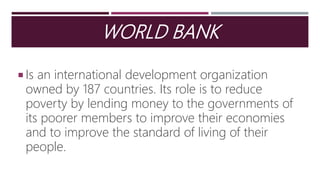
WORLD BANK
 Is an international development organization
owned by 187 countries. Its role is to reduce
poverty by lending money to the governments of
its poorer members to improve their economies
and to improve the standard of living of their
people.
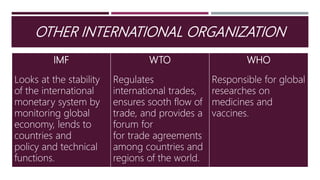
OTHER INTERNATIONAL ORGANIZATION
IMF
Looks at the stability
of the international
monetary system by
monitoring global
economy, lends to
countries and
policy and technical
functions.
WTO
Regulates
international trades,
ensures sooth flow of
trade, and provides a
forum for
for trade agreements
among countries and
regions of the world.
WHO
Responsible for global
researches on
medicines and
vaccines.
Global Interstate System

Global Interstate System

  • 1.
  • 2.
    OUTLINE OF THETOPIC Defining State Defining Interstate Neoliberalism Vs. Economic Sovereignty Effects of Globalization in Government Institution that Govern Globalization
  • 3.
    DEFINING "STATE" "State isindependent political communities each of which possesses a government and asserts sovereignty about a particular portion of the earth’s surface and a particular segment of a human population.“ (Hedley Bull)
  • 4.
    DEFINING "INTERSTATE" "A systemof unequally powerful and competing states In which no single states is capable of imposing control on all others, These states are in interaction with one another in a set of shifting alliance and wars and change in relatives power of states upsets any temporary set of alliances, leading to a restructuring of balance of power.
  • 5.
  • 6.
    NEOLIBERALISM  The intensificationof the influence and dominance of capital.  Values market exchange capable of acting as a guide to all human action.  Emphasizes the significance of contractual relations in the marketplace.  Social good will be maximized by maximizing the reach and frequency market transactions.
  • 7.
    ECONOMIC SOVEREIGNTY The powerof national governments to make decisions independently of those made by other governments.
  • 8.
    QUESTION TO THINKABOUT IN A HIGHLY GLOBALIZED WORLD, IS ECONOMIC SOVEREIGNTY STILL ACHIEVABLE?
  • 9.
    EFFECTS OF GLOBALIZATIONIN LOCAL GOVERNMENT  COMMUNITY IMPACT Property Values Jobs and Opportunities Community Exposure
  • 10.
    THE REALITY  Asthe world becomes more interconnected through politics, trade and communications, the role of states and governments are also shifting. Thus, national and local policies are not only based on local context but also international and global realities.
  • 11.
    MONTREAL PROTOCOL ONSUBSTANCES THAT DEPLETE THE OZONE LAYER Aims to phase out the production of numerous substances responsible for ozone depletion, signed in August 26, 1987 with 46 countries A definitive evidence of Montreal Protocols success was discussed by NASA and projected that ozone levels will return to 1980 levels by 2032. An example how international agreements and efforts could fight borderless challenges and issues.
  • 13.
    HOW DOES GLOBALIZATIONNEGATIVELY AFFECTS LOCAL GOVERNMENTS AND LOCAL COMMUNITIES? THERE IS NEGATIVE SIDE OF GLOBALIZATION
  • 15.
    DILEMMA FOR LOCALGOVERNMENTS  A local government would like to attract major global investors in their Community by setting up for instance their manufacturing firm in their area. This could generate jobs for local people and generate income for local businesses.  However, it will entail convert tracks of agricultural lands into industrial zones. Farmers will be displaced and agricultural production of the area will be affected.  A global corporation is also demanding lower taxes and lower- income wages to finalize their investment in the area. They argue that they will create more jobs and more income from the local
  • 16.
    QUESTIONS TO THINKABOUT HOW COULD LOCAL GOVERNMENTS BALANCE IMPROVED ECONOMIC PERFORMANCE AND PARTICIPATION IN GLOBAL ECONOMIC SCENE WITHOUT SACRIFICING LOCAL, SOCIAL AND ENVIRONMENTAL WELL-BEING? ARE LOCAL GOVERNMENTS HEAVILY INFLUENCED BY POWERFUL CORPORATE ENTITIES?
  • 17.
    INSTITUTIONS THAT GOVERNGLOBALIZATION  A GLOBAL NETWORK  With the growing Globalization, the governance of global relations goes beyond the national governments. One country's scale and scope are limited in addressing regional and global issues like climate change, cybercrimes, global financial crises and territorial disputes. Aside from the governments, non-state actors continue to increase their roles in global governance
  • 18.
    NON-STATE ACTORS  Non-governmentorganizations, Volunteer organizations and Interest Groups.  The Increase of the number of international organizations and the expansion of their functions have undeniably restricted an individual country's sovereignty to certain extent. There are several institutions that govern international relations and affairs.
  • 19.
    INTERNATIONAL ORGANIZATIONS United NationsWorld Bank International Monetary Fund World Trade Organization
  • 20.
    UNITED NATIONS  192member states.  Seen as the facilitator of the governance.  Headquarters in New York, the USA with regional headquarters in Geneva, Switzerland; Vienna, Austria; and Nairobi, Kenya.  Has regional commissions which are composed of officials from different countries that are in charge of making certain laws promulgate certain rights for economic and social development.  For the Asia Pacific: UN Economic and Social Commission for Asia and the Pacific (ESCAP) based in Bangkok, Thailand.
  • 21.
    WORLD BANK  Isan international development organization owned by 187 countries. Its role is to reduce poverty by lending money to the governments of its poorer members to improve their economies and to improve the standard of living of their people.
  • 22.
    OTHER INTERNATIONAL ORGANIZATION IMF Looksat the stability of the international monetary system by monitoring global economy, lends to countries and policy and technical functions. WTO Regulates international trades, ensures sooth flow of trade, and provides a forum for for trade agreements among countries and regions of the world. WHO Responsible for global researches on medicines and vaccines.