Downloaded 394 times
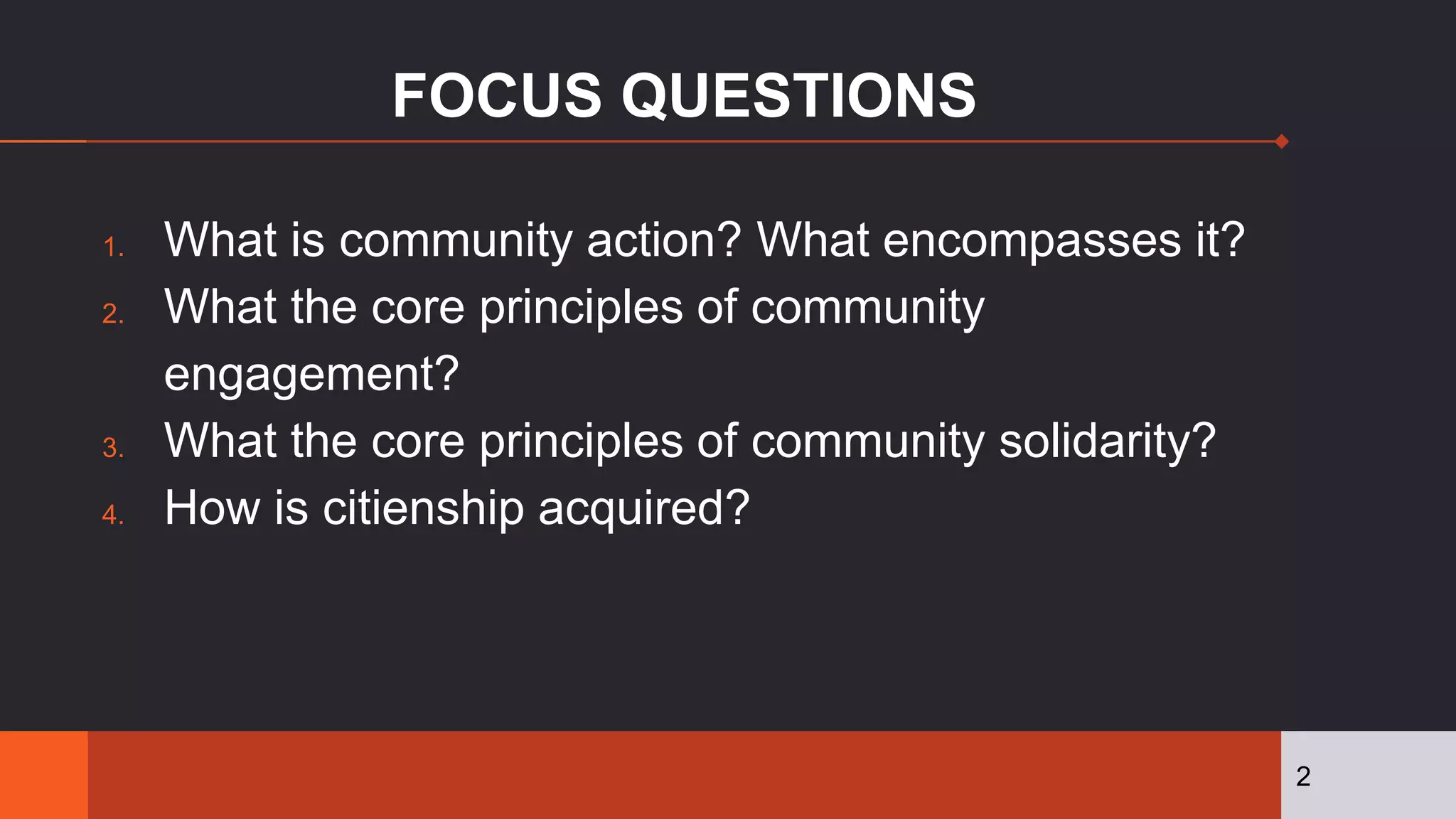
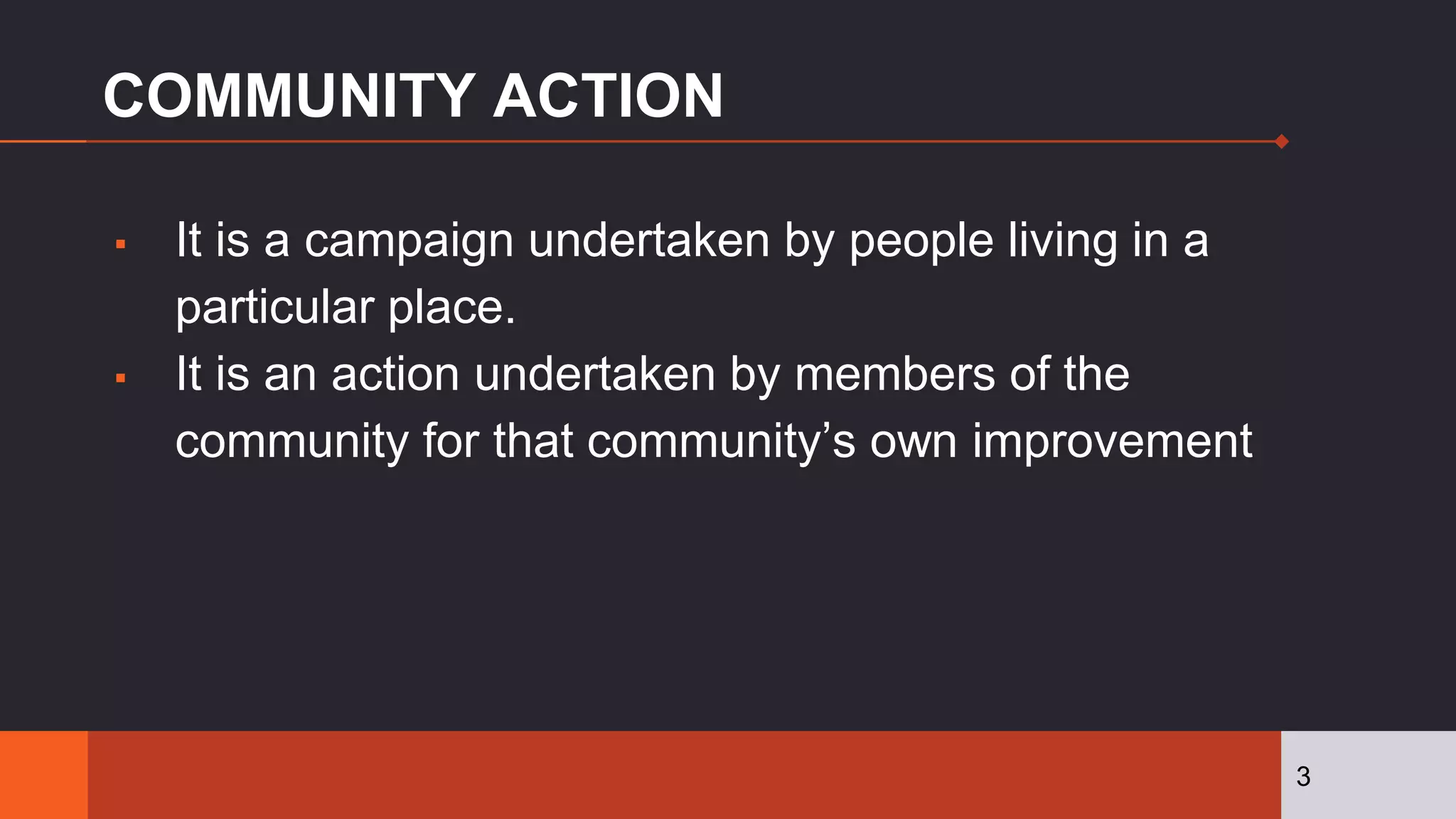

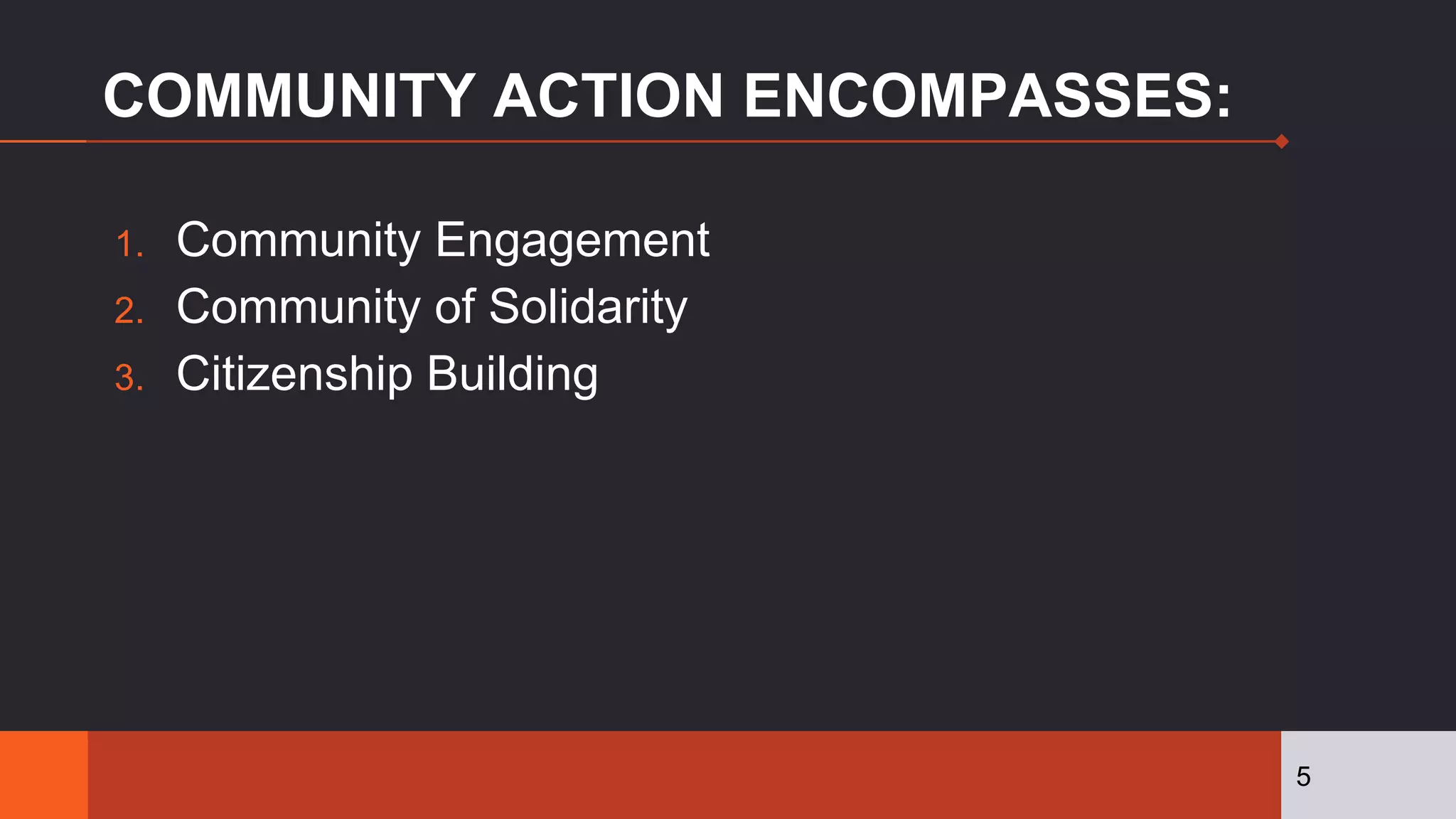
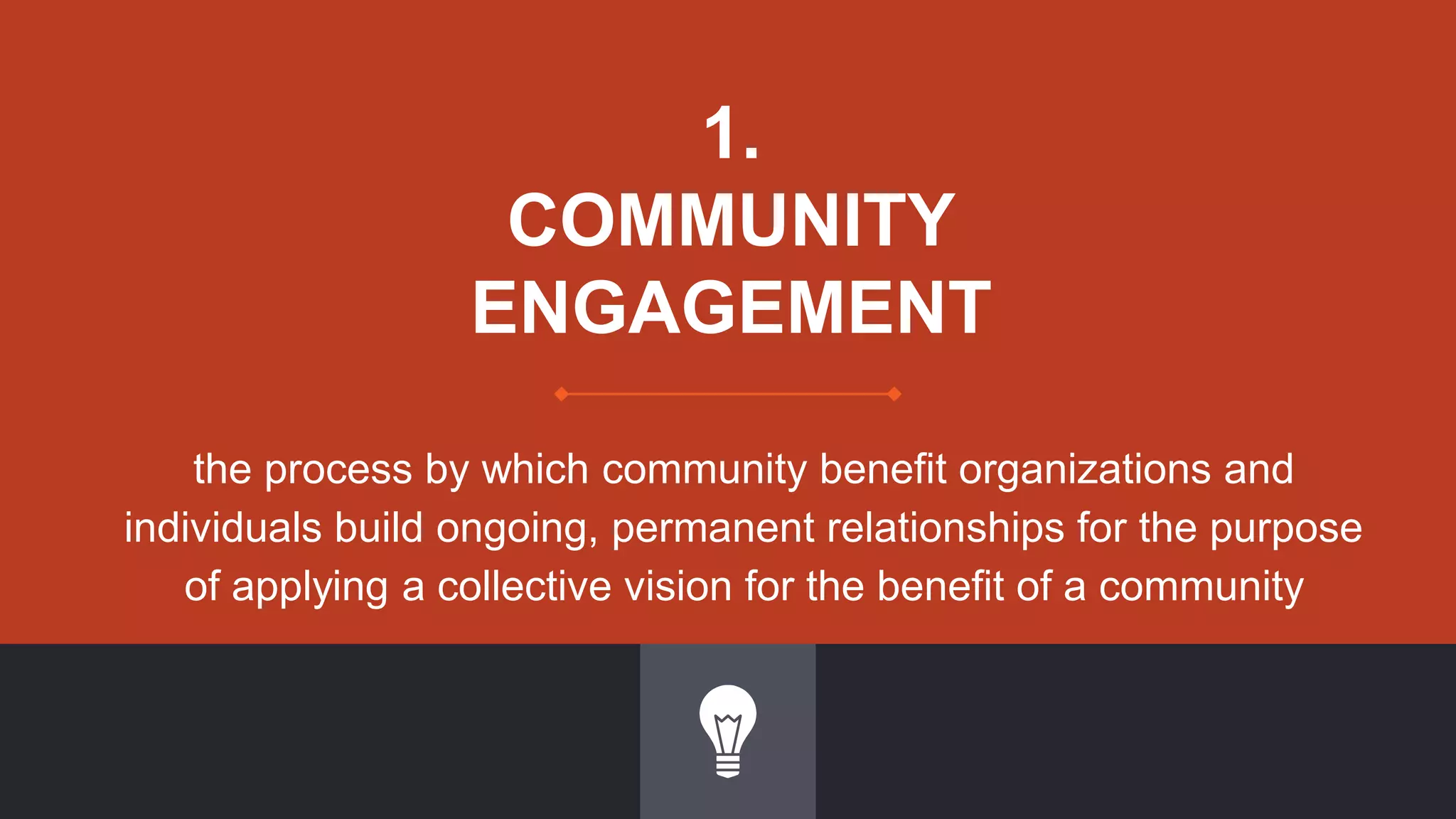
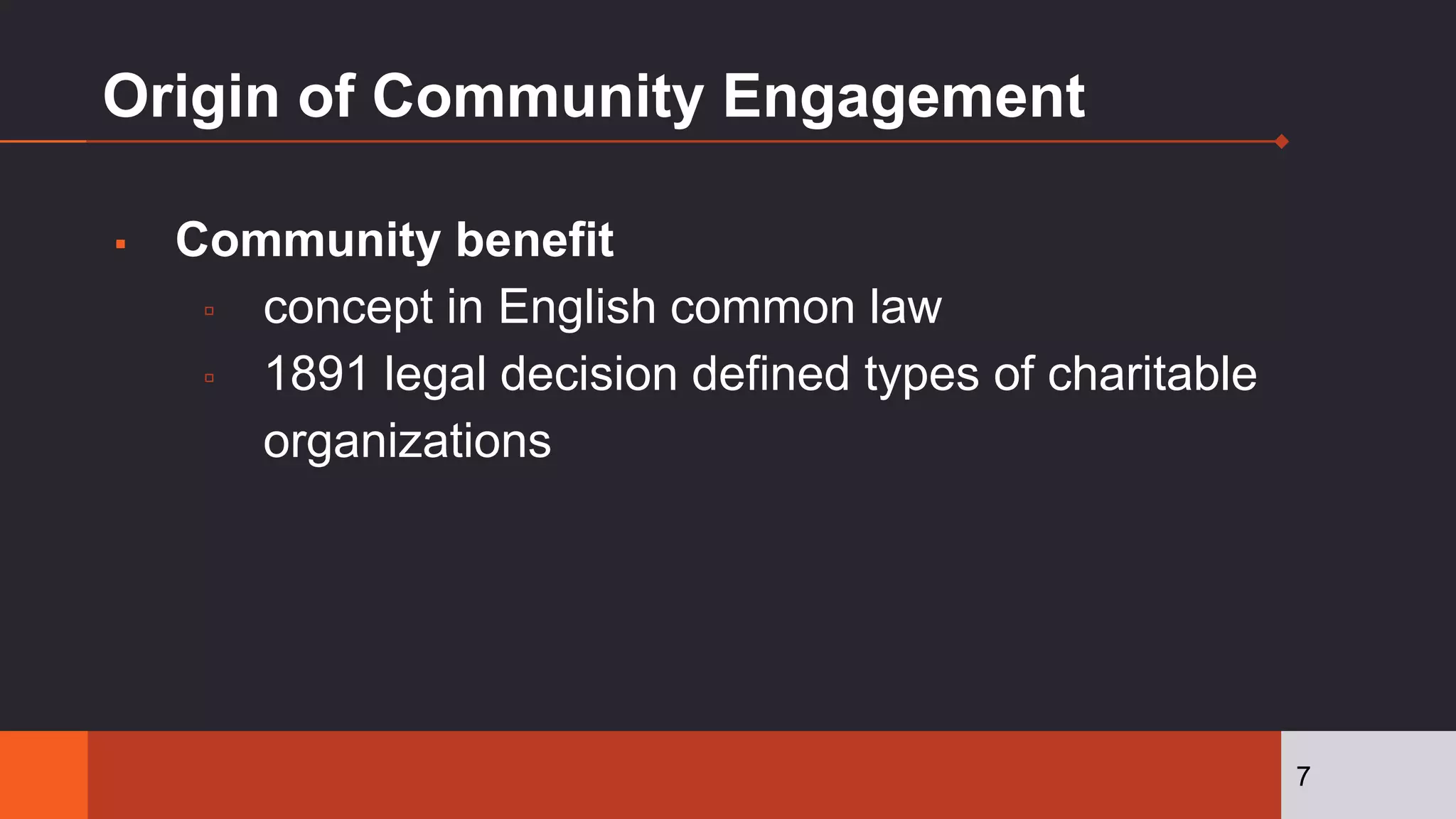

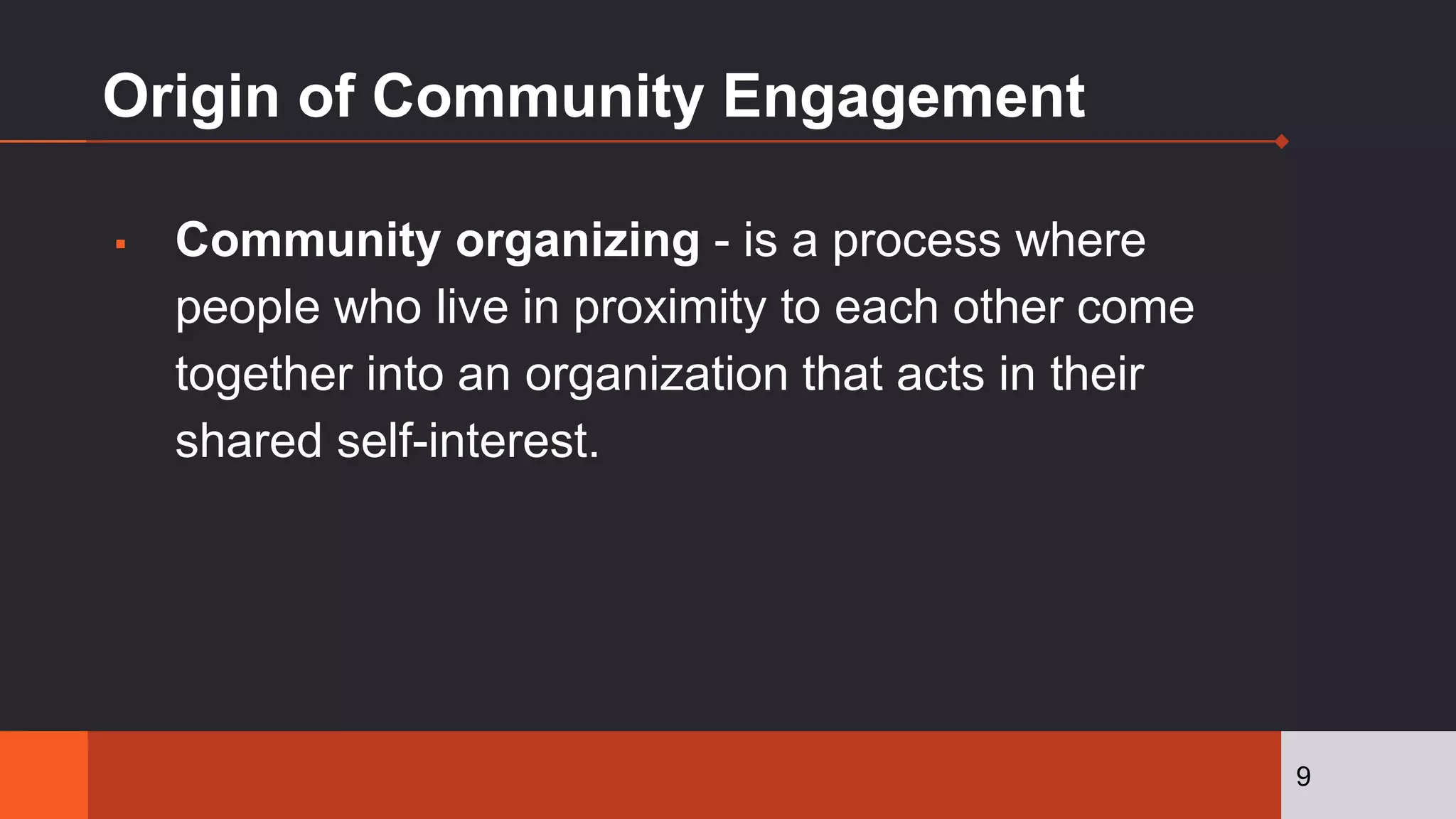

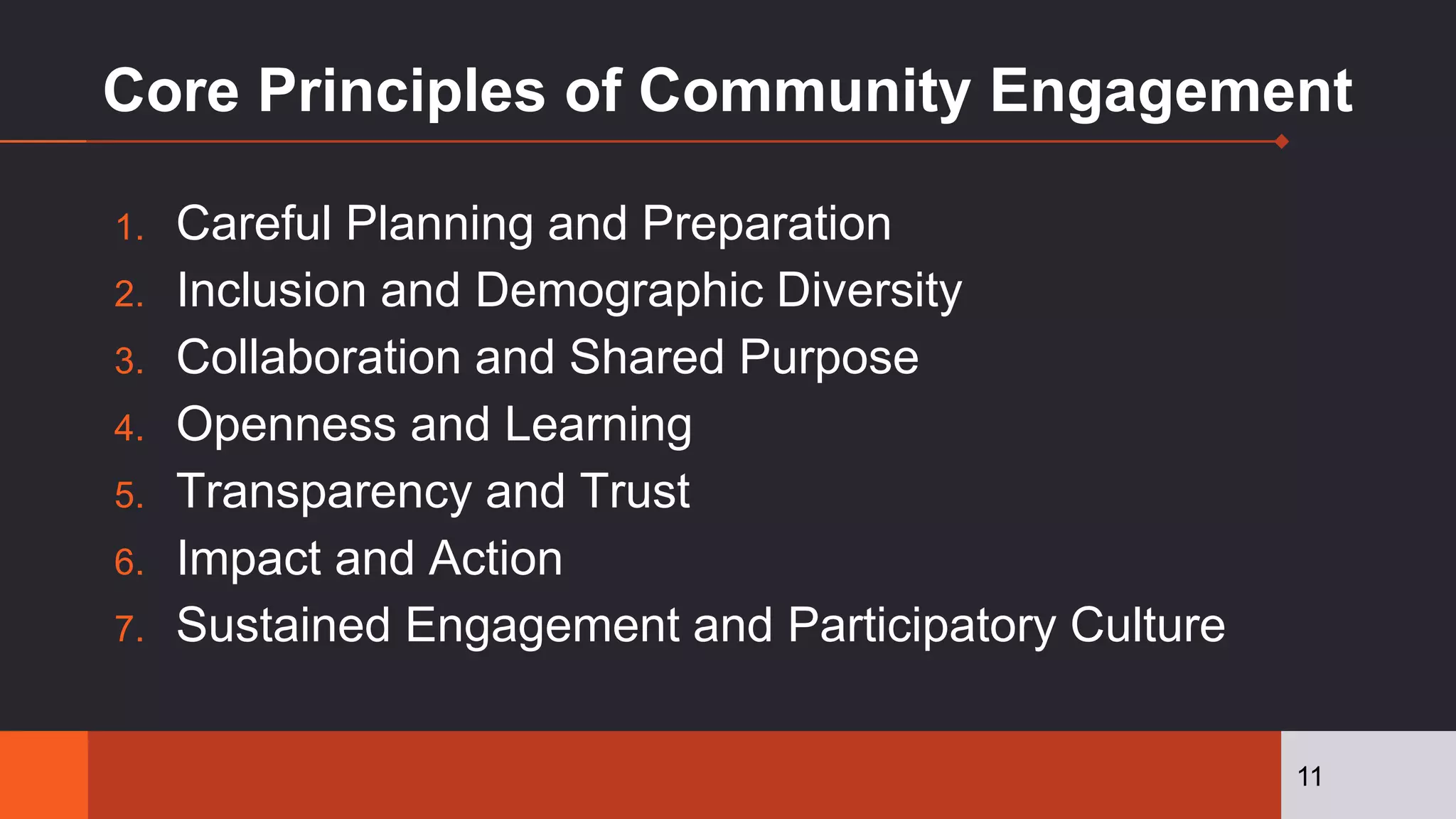



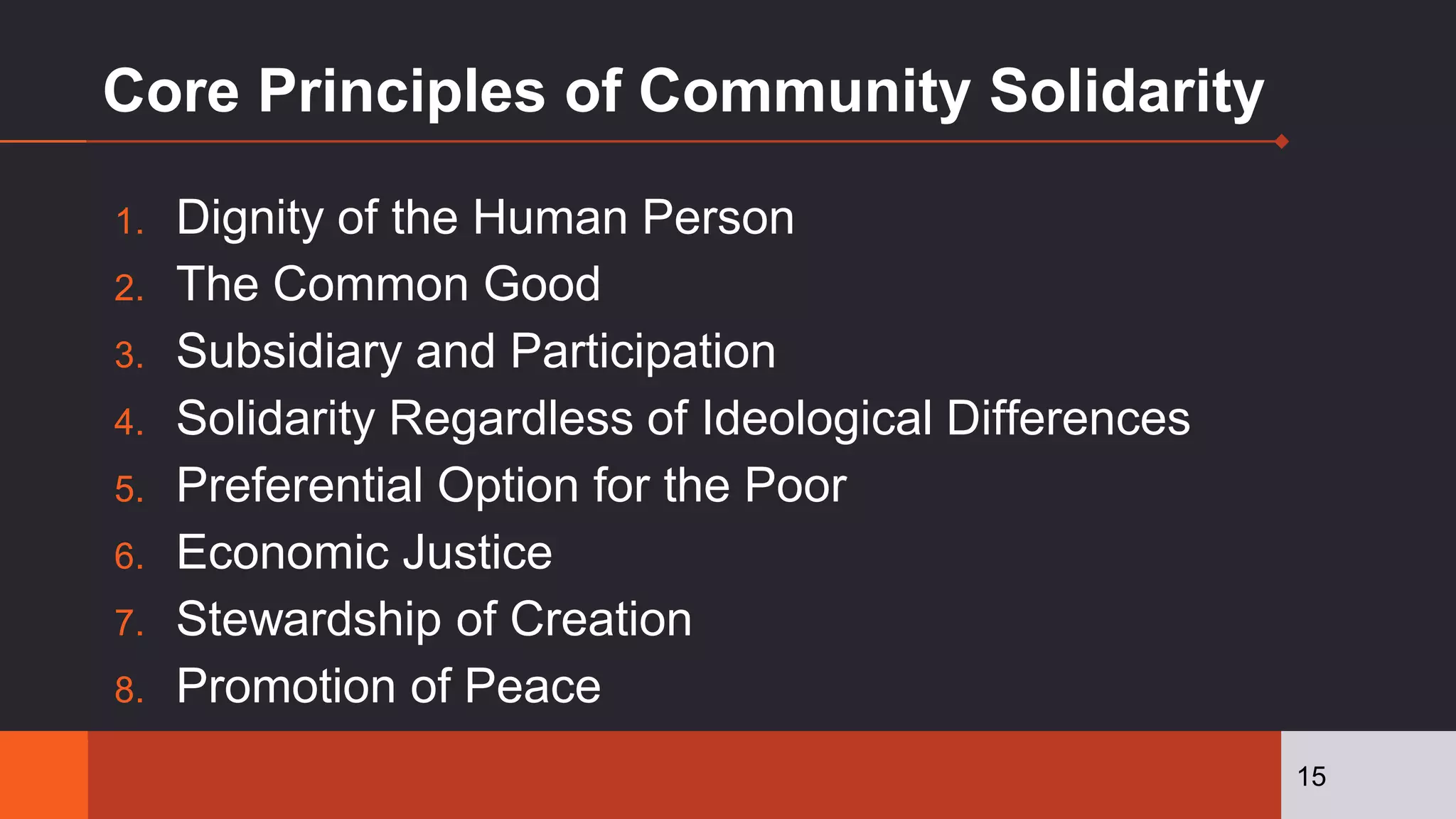

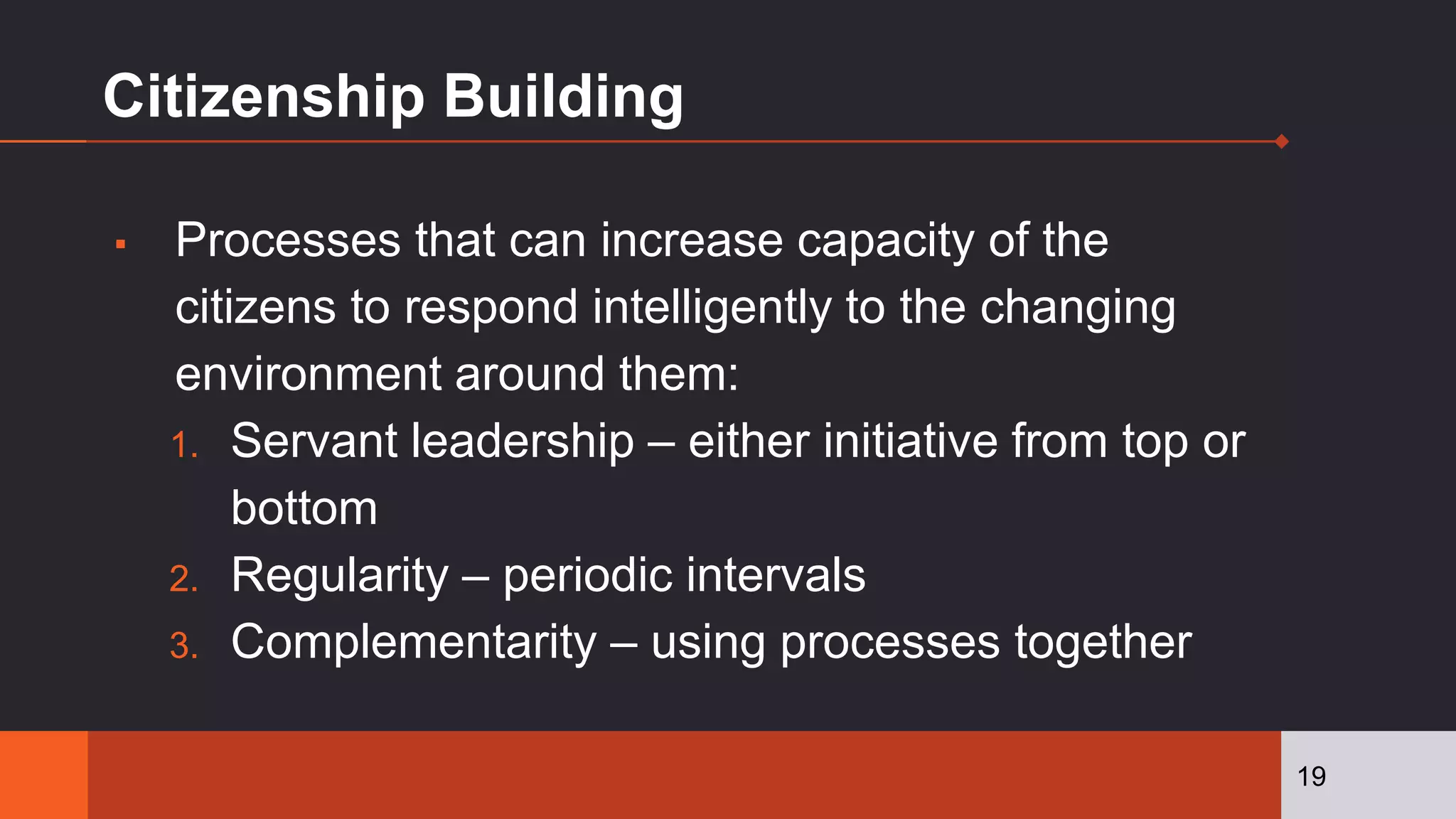



This document discusses community action and the principles that encompass it. Community action involves community members undertaking actions to improve their community. It encompasses community engagement, solidarity, and citizenship building. Community engagement focuses on building ongoing relationships between community organizations and individuals to collectively benefit the community. Principles of community engagement include careful planning, inclusion, collaboration, openness, transparency, impact, and sustained participation. Community solidarity is based on mutual commitment to one another's well-being and principles like human dignity, the common good, and preferential support for the poor. Citizenship building involves processes to increase citizens' capacity to respond intelligently to their environment, such as servant leadership, regular participation, and complementary approaches.
Overview of community action, its definition, and its purpose for improving community conditions.
Discusses the three key components: community engagement, solidarity, and citizenship building.
Explores the process of community engagement and its historical origins in community organizing.
Lists and explains principles essential for effective community engagement practices.
Defines community solidarity as mutual commitment to the well-being of its members.
Outlines principles of solidarity that promote dignity, common good, and justice within communities.
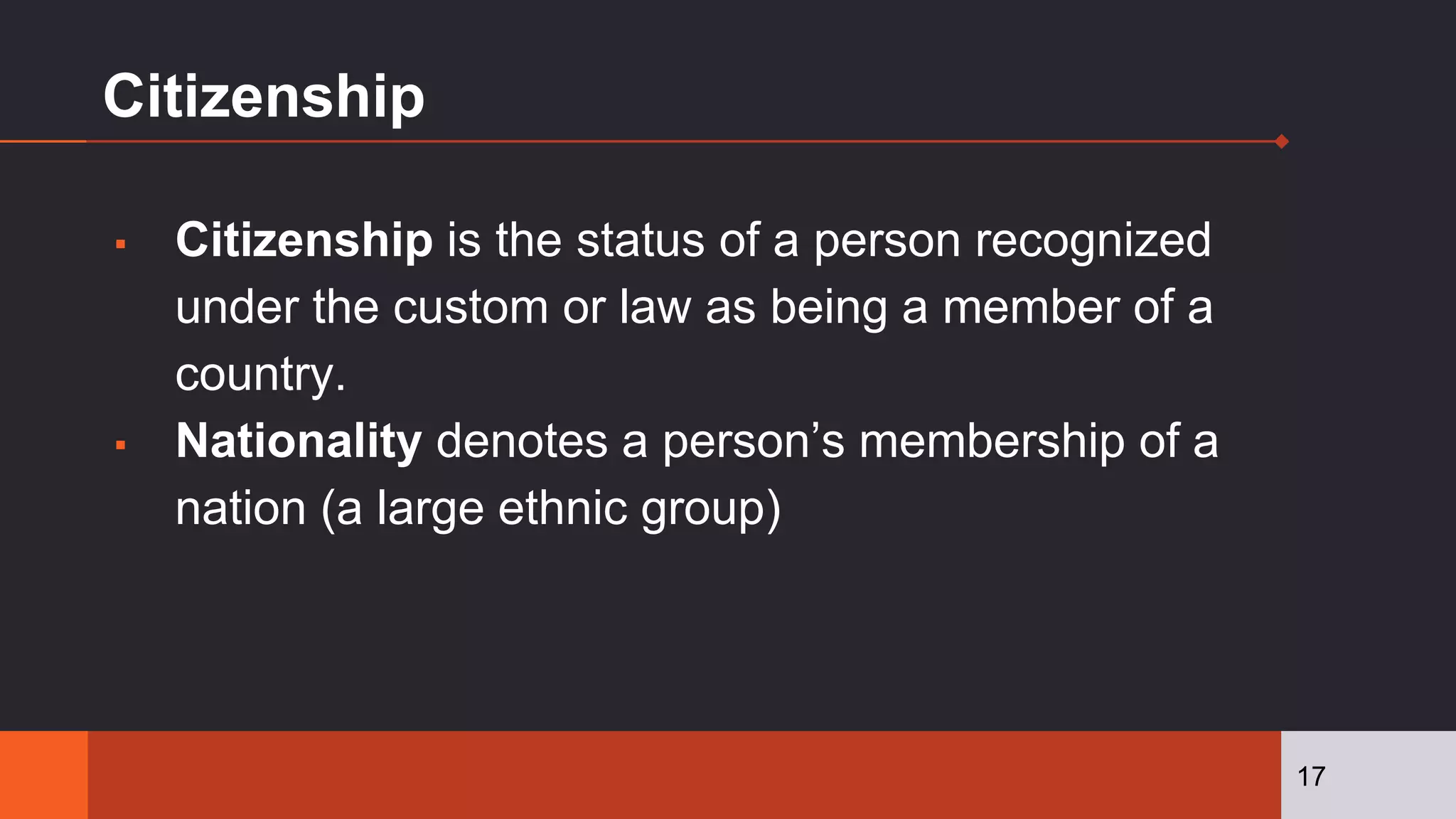
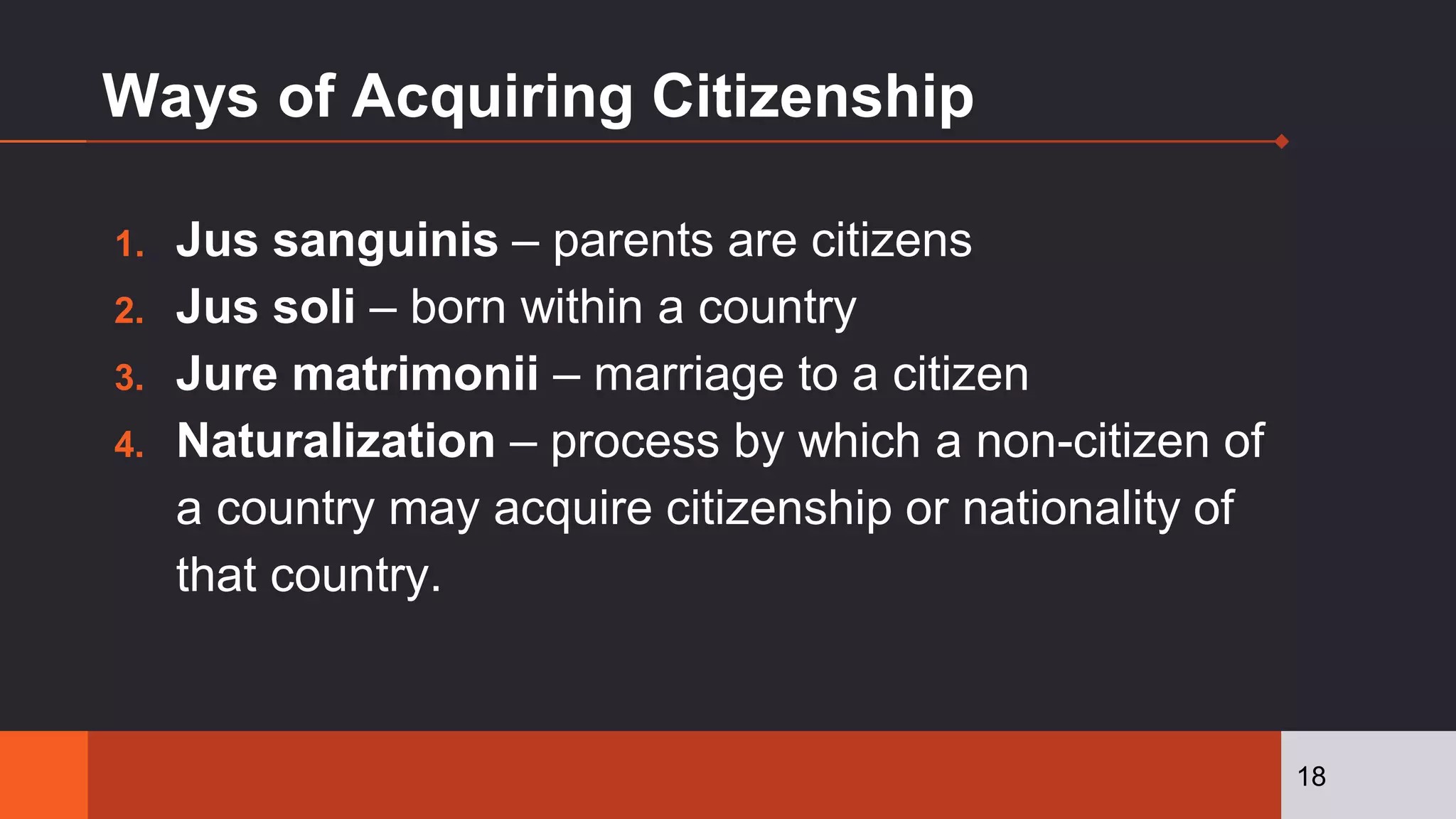
Defines citizenship, its acquisition methods, and processes for strengthening citizen capacities.
Concludes the presentation with contact info and references for further reading.


