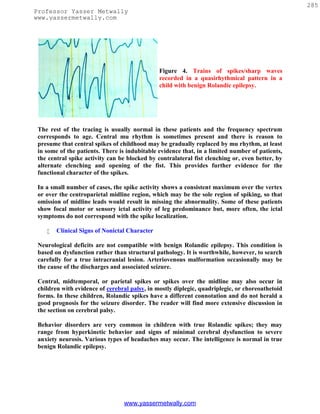
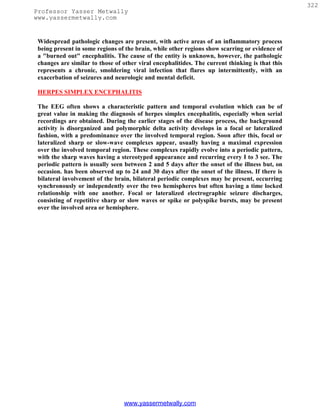
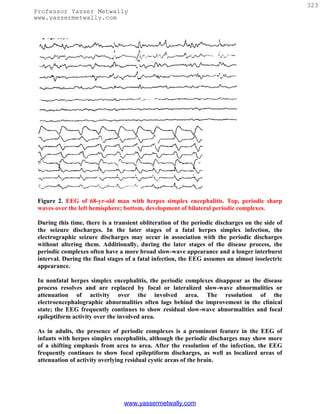
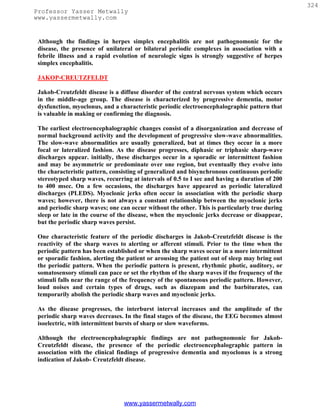
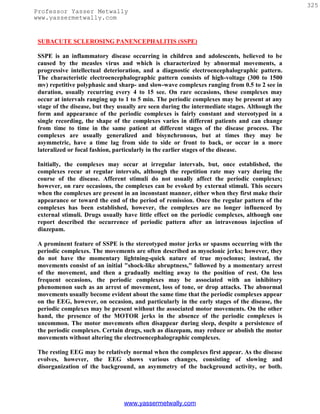
Professor Yasser Metwally
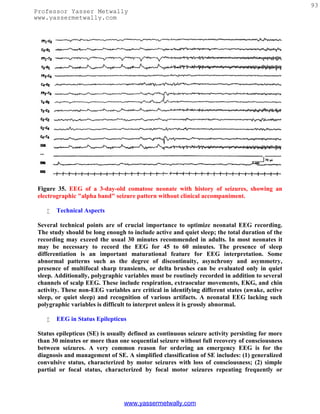
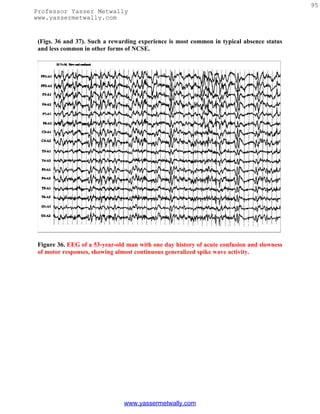
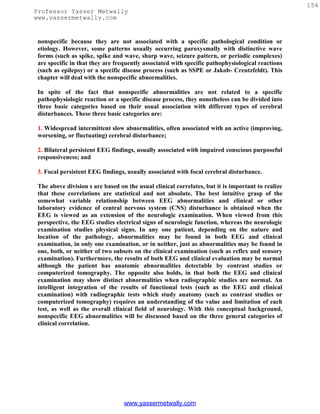
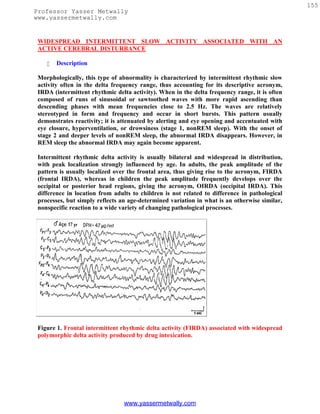
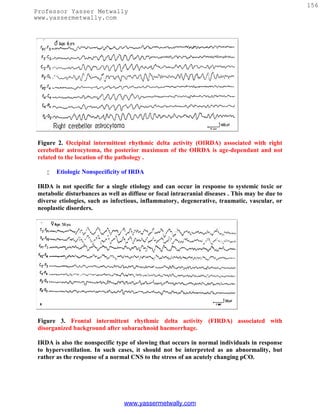
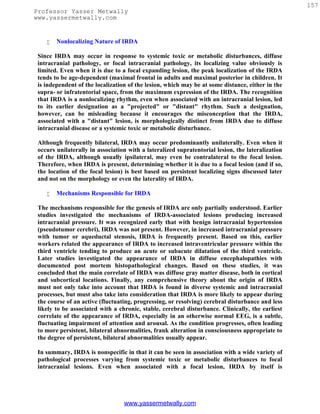
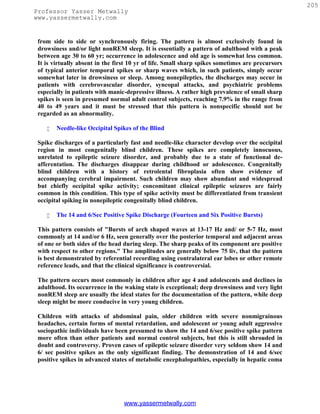
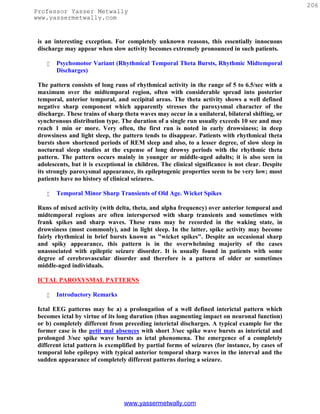
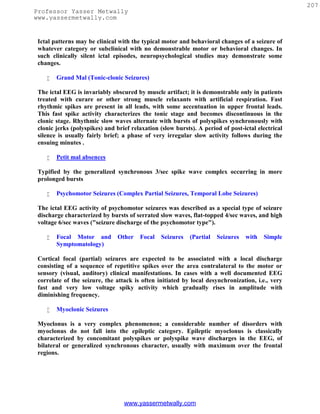
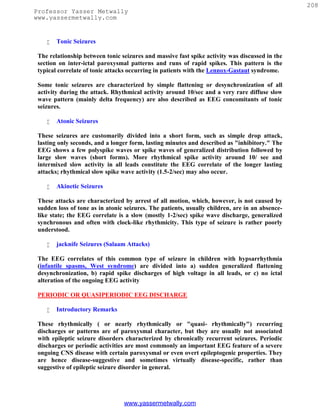
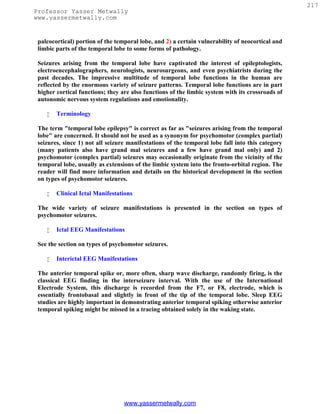
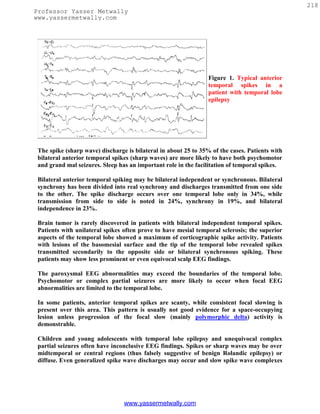
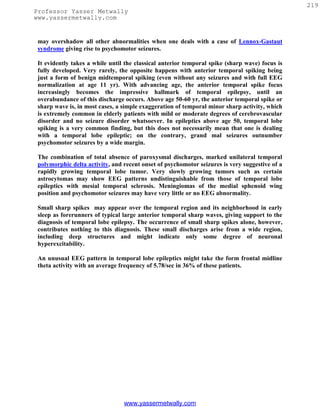
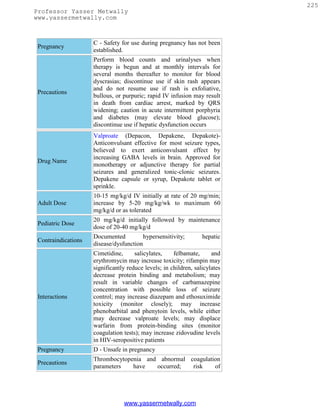
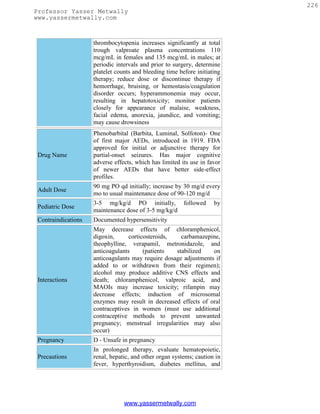
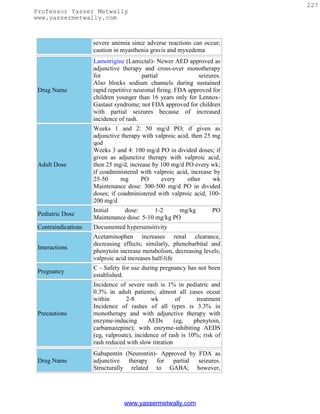
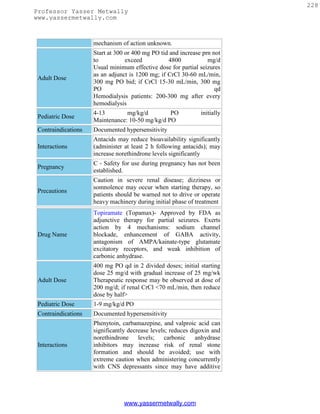
www.yassermetwally.com                      INDEX | Preface | Web site


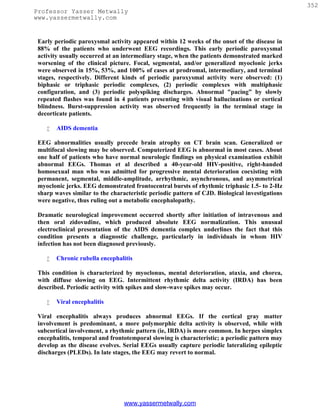
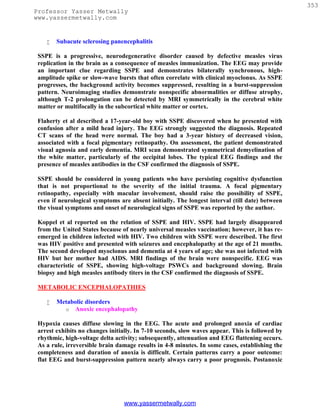
 Conventional EEG

 Professor Yasser Metwally
 Professor of neurology, Ain Shams University, Cairo, Egypt


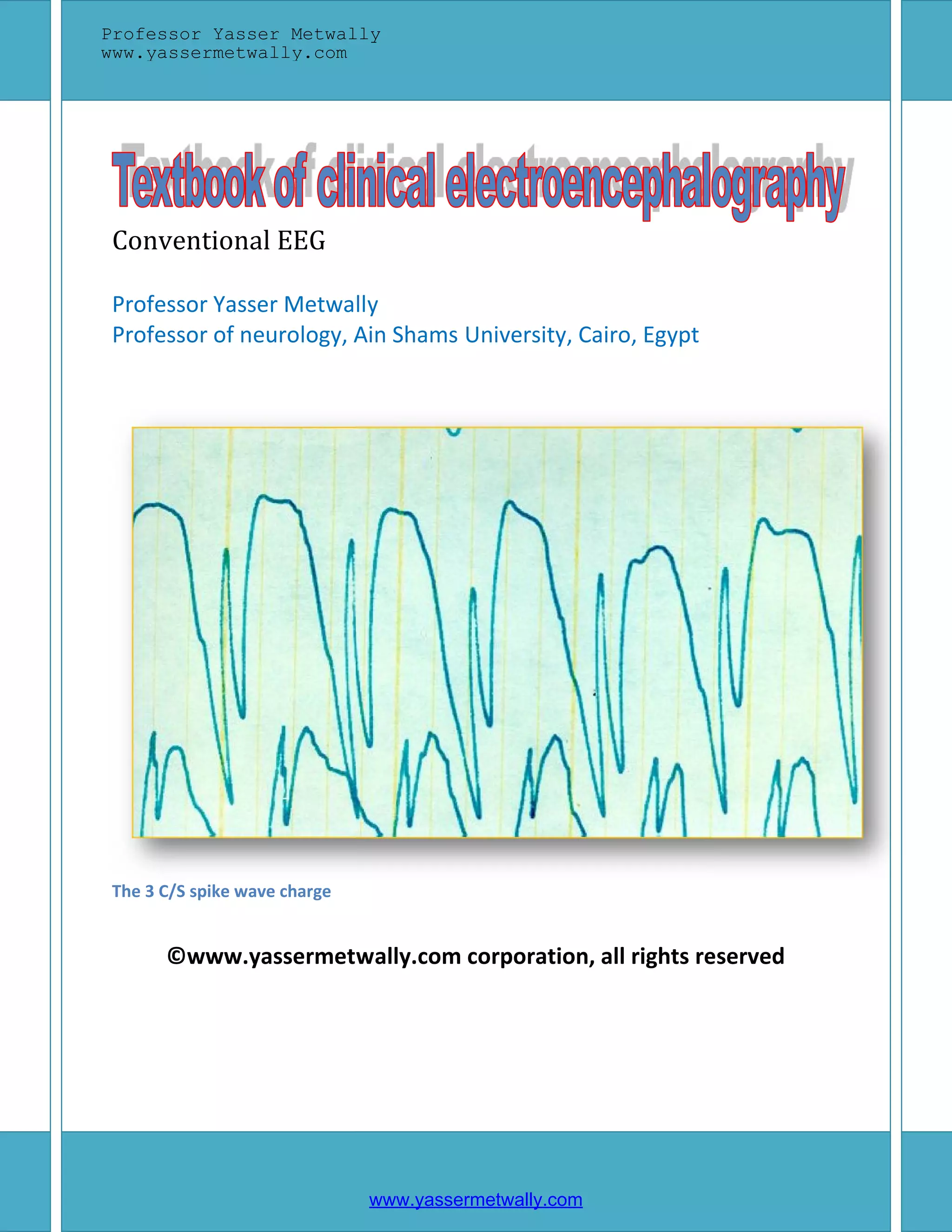
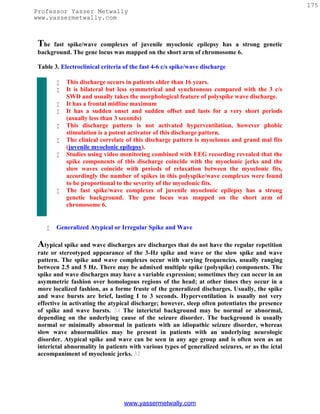
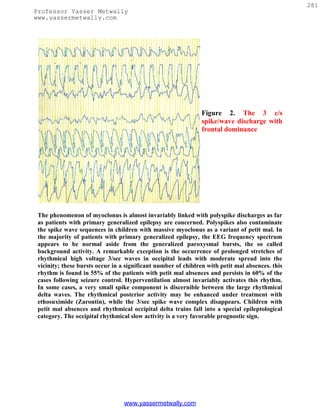
 The 3 C/S spike wave charge


       ©www.yassermetwally.com corporation, all rights reserved


                               www.yassermetwally.com
Professor Yasser Metwally
www.yassermetwally.com
                                   Index | Cover page | Web site

 Thank you for using my publication. This publication covers the clinical aspect of conventional
 EEG. It simply reflects thing the way I understand, deals with and interpret a conventional EEG
 tracing.

 Conventional EEG has fallen short of expectation not because of its limited value, but rather
 because it is rarely ordered by a Knowledgeable clinician and interpreted by an
 electroencephalographer in a way most useful to the patient.

 Another reason why Conventional EEG have fallen short of expectation, is its impressionistic,
 qualitative nature and this strongly reflects the needs for quantitative EEG. Quantitative EEG
 (Also called brainmapping, EEG cartography, Brain electrical activity mapping, BEAM) is a
 wonderful way of reflects the brain function in real time and in a totally non-invasive way. A
 short notice is given to brainmapping at the end of this textbook.

 I really hope you will find this publication as useful as a truly wish. This publication is distributed
 free of charge, it is placed in the public domain as soon as it is uploaded and can be freely
 distributed on two conditions;

    1- It is not changed in any way
    2- It is distributed free of charge

 Professor Yasser Metwally
 Cairo, Egypt
 September 2012

        ©www.yassermetwally.com corporation, all rights reserved


                                     www.yassermetwally.com
INDEX
Professor Yasser Metwally
www.yassermetwally.com


      1.    EEG methodology
      2.    EEG…significance and mistakes
      3.    EEG sharp activity
      4.    EEG in focal cerebral lesions
      5.    Focal cerebral abnormalities
      6.    EEG changes in focal destructive brain lesions
      7.    Generalized EEG abnormalities
      8.    Non-specific EEG patterns
      9.    EEG and epilepsy
      10.   Age dependent epileptic conditions
      11.   EEG in Status epilepticus
      12.   EEG in focal and generalized epilepsy
      13.   Focus-related epilepsies
      14.   EEG and brain tumors
      15.   EEG in brain infection
      16.   Encephalopathy EEG patterns
      17.   EEG in encephalopathy and dementia
      18.   EEG in altered consciousness
      19.   Brainmapping and quantitative EEG
                      My web site | Online newspaper
             © yassermetwally.com corporation. All rights reserved


                           www.yassermetwally.com
1
Professor Yasser Metwally
www.yassermetwally.com


 INDEX


                                                                  INTRODUCTION

                                                                  SPECIFIC CLINICAL
                                                                   APPLICATIONS


 INTRODUCTION

 Electroencephalography is the technique by which the electrical activity generated by the
 brain is amplified and displayed, resulting in an electroencephalogram (EEG). This method
 enables one to assess brain function noninvasively over a given period. Although many
 abnormalities on the EEG are nonspecific, several clinical presentations have associated
 EEG findings that are diagnostic of a specific condition or lesion in the central nervous


                                www.yassermetwally.com
2
Professor Yasser Metwally
www.yassermetwally.com


 system. Before the advent of modern neuroimaging, the EEG was one of the most
 important noninvasive diagnostic tools available to the neurologist and neurosurgeon. It
 provided information on cerebral function when anatomic detail could not be accurately
 obtained. Current neuroimaging techniques such as computed tomography (CT) and
 magnetic resonance imaging (MRI) of the brain now yield excellent neuroanatomic detail.
 Despite these advances, the EEG remains a valuable tool in the clinical evaluation of many
 disorders of the central nervous system, as it is readily available and safe and provides
 information on brain function that is still unique.

 When an EEG is requested, it is important that the referring physician state the clinical
 question that is to be answered by the EEG. Common reasons for obtaining an EEG
 include a history of a clinical seizure and the need to rule out epileptiform activity; acute
 encephalopathy or coma of undetermined etiology; or a prolonged seizure with the need to
 rule out ongoing electrographic seizure activity (i.e., status epilepticus). When the EEG is
 completed, the findings are summarized in a report using accepted EEG terminology, with
 the most significant findings listed first. The EEG is also interpreted in the context of the
 clinical presentation and question, thus providing the clinician with a clinical correlation to
 the findings noted in the EEG.

       History

 The early evaluations of the central nervous system by physiologists in the late 1700s and
 early 1800s consisted of stimulating the brain electrically rather than measuring the
 electrical currents it generates. Not until the latter half of the nineteenth century did the
 British physiologist Richard Caton describe the electrical activity of the brain in
 experimental animals. Caton obtained cortical EEG recordings, and he also noted that'
 'feeble currents of varying direction pass through the multiplier when the electrodes are
 placed on two points of the external surface of the skull. Early in the twentieth century, the
 Russian physiologist V.V. PravdichNeminsky used the term "electrocerebrogram," and he
 defined the predominant frequency bands of the cerebral electrical activity in animals,
 labeling them alpha and beta. In 1929 Hans Berger published the initial findings on the
 EEG in humans, calling it the "Elektrenkephalogramm", from which
 electroencephalogram has been derived. Previous investigators had noted the reactivity of
 the EEG in animals to peripheral somatic electrical stimulation. Berger showed that the
 human EEG is reactive to opening and closing of the eyes: such potential changes from the
 occipital region were later termed the Berger, or alpha, rhythm.

 In 1934, Berger's findings were confirmed by Adrian and Matthews. The application of
 EEG in a neuropathologic condition was initially described by Walter when he
 demonstrated focal EEG slowing in patients with brain tumors, which he called delta
 waves. During the subsequent two decades, clinical investigators evaluated the use of the
 EEG in normal and neuropathologic conditions. Over the past six decades. standards have
 also been developed for the application and nomenclature of electrode placement and
 montage representation. The clinical significance of most EEG patterns has been well
 described. Advances in electronics and computers have been applied to
 electroencephalography, providing improved definition of both cerebral and extracerebral


                                  www.yassermetwally.com
3
Professor Yasser Metwally
www.yassermetwally.com


 activity (such as artifacts). The EEG now is "paperless," with a digitized EEG displayed in
 real time on a video monitor. Frequency spectral analysis (brain mapping) is being actively
 investigated, and it proved to be an additional tool in the evaluation of brain function.

       Technical Aspects

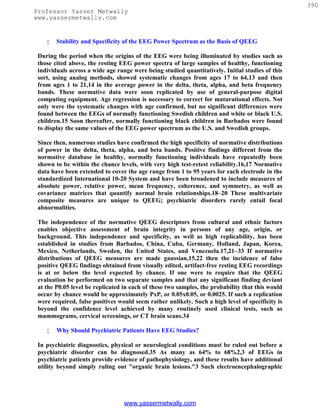
 The electrical activity of the brain has an amplitude in the microvolt range, typically
 ranging from 10 to 150 µV. In a routine EEG, the brain's electrical activity is measured at
 the scalp using a surface electrode. The electrical signal is then conducted by wire to the
 EEG machine, where it is amplified, filtered, and displayed. This process is briefly
 summarized below.

           o   Electrodes

 Since the discovery of the EEG. several types of electrodes have been used. Subdermal
 needle electrodes were the first to be applied. However, owing to the variability of
 impedance and the potential for morbidity and transmission of infectious disease, this type
 of electrode is no longer routinely used. The most common electrode currently in use is a
 gold-plated disc 10 mm in diameter. Twenty-one electrode sites on the scalp are defined
 according to the International 10-20 System, which is based on skull landmarks (inion,
 nasion and left and right preauricular points) whose distances are then subdivided in a
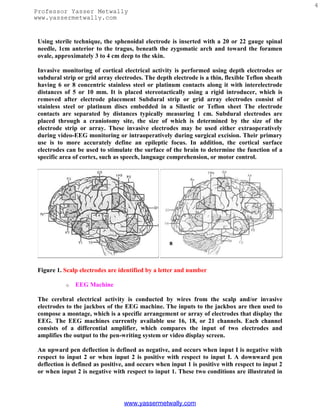
 specified manner. A typical interelectrode distance is 6 cm. Scalp electrodes are identified
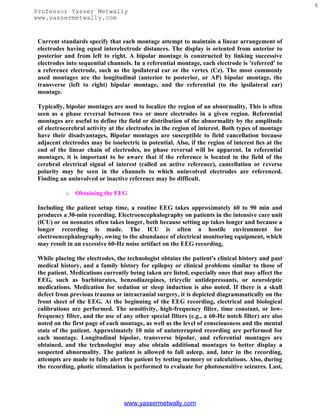
 by a letter and number (Fig-1). Most of the letters specify an approximate brain region. as
 follows: Fp: frontopolar; F: frontal; C: central; T: temporal; P: parietal; and O: occipital.
 The ear electrode is denoted by the letter A. Electrodes with odd numbers are on the left
 side of the head (Fp1, F3, C3, P3, O1, F7, T3, T5, and A1), and electrodes with even
 numbers are on the right side (Fp2, F4, C4, P4, 02, F8, T4, T6, and A2). Midline electrodes
 are designated by the letter "z" (Fpz, Fz, Cz, Pz, and Oz).

 After marking the scalp according to the International 10-20 System, the technologist
 prepares each site by using a mild abrasive to lower and equalize the scalp impedance. An
 electrode is placed at each site using either a conductive paste or a collodionsoaked gauze
 patch through which conductive gel is injected into the disc. Properly prepared electrodes
 have impedances between 1000 and 5000 ?.

 Scalp electrodes provide adequate measurement of the cerebral electrical activity arising
 from the superior and lateral aspects of the brain. The anterolateral temporal lobe can be
 sampled by using a pair of "true" temporal electrodes (T1 and T2), in addition to the 10-20
 System electrodes. However, the midline and basal aspects of the brain cannot be sampled
 well by electrodes on the scalp. In the past the nasopharyngeal electrode was used in an
 attempt to measure the electrocerebral activity of the anteromesial aspect of the temporal
 lobe. It consisted of a silver rod that was advanced through the naris until it came in
 contact with the posterior wall of the nasopharynx. However, it was subject to significant
 artifacts caused by breathing and swallowing. The sphenoidal electrode is an alternative
 that can be used to semiinvasively sample the anteromesial temporal lobe. It consists of a
 thin, Teflon-coated platinum or chlorided silver wire that is placed near the foramen ovale.


                                 www.yassermetwally.com
4
Professor Yasser Metwally
www.yassermetwally.com


 Using sterile technique, the sphenoidal electrode is inserted with a 20 or 22 gauge spinal
 needle, 1cm anterior to the tragus, beneath the zygomatic arch and toward the foramen
 ovale, approximately 3 to 4 cm deep to the skin.

 Invasive monitoring of cortical electrical activity is performed using depth electrodes or
 subdural strip or grid array electrodes. The depth electrode is a thin, flexible Teflon sheath
 having 6 or 8 concentric stainless steel or platinum contacts along it with interelectrode
 distances of 5 or 10 mm. It is placed stereotactically using a rigid introducer, which is
 removed after electrode placement Subdural strip or grid array electrodes consist of
 stainless steel or platinum discs embedded in a Silastic or Teflon sheet The electrode
 contacts are separated by distances typically measuring 1 cm. Subdural electrodes are
 placed through a craniotomy site, the size of which is determined by the size of the
 electrode strip or array. These invasive electrodes may be used either extraoperatively
 during video-EEG monitoring or intraoperatively during surgical excision. Their primary
 use is to more accurately define an epileptic focus. In addition, the cortical surface
 electrodes can be used to stimulate the surface of the brain to determine the function of a
 specific area of cortex, such as speech, language comprehension, or motor control.


 Figure 1. Scalp electrodes are identified by a letter and number

           o   EEG Machine

 The cerebral electrical activity is conducted by wires from the scalp and/or invasive
 electrodes to the jackbox of the EEG machine. The inputs to the jackbox are then used to
 compose a montage, which is a specific arrangement or array of electrodes that display the
 EEG. The EEG machines currently available use 16, 18, or 21 channels. Each channel
 consists of a differential amplifier, which compares the input of two electrodes and
 amplifies the output to the pen-writing system or video display screen.

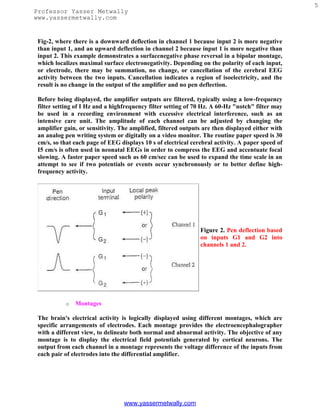
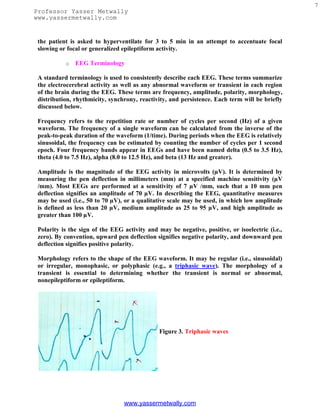
 An upward pen deflection is defined as negative, and occurs when input I is negative with
 respect to input 2 or when input 2 is positive with respect to input I. A downward pen
 deflection is defined as positive, and occurs when input 1 is positive with respect to input 2
 or when input 2 is negative with respect to input 1. These two conditions are illustrated in


                                  www.yassermetwally.com
5
Professor Yasser Metwally
www.yassermetwally.com


 Fig-2, where there is a downward deflection in channel 1 because input 2 is more negative
 than input 1, and an upward deflection in channel 2 because input 1 is more negative than
 input 2. This example demonstrates a surfacenegative phase reversal in a bipolar montage,
 which localizes maximal surface electronegativity. Depending on the polarity of each input,
 or electrode, there may be summation, no change, or cancellation of the cerebral EEG
 activity between the two inputs. Cancellation indicates a region of isoelectricity, and the
 result is no change in the output of the amplifier and no pen deflection.

 Before being displayed, the amplifier outputs are filtered, typically using a low-frequency
 filter setting of I Hz and a highfrequency filter setting of 70 Hz. A 60-Hz "notch" filter may
 be used in a recording environment with excessive electrical interference, such as an
 intensive care unit. The amplitude of each channel can be adjusted by changing the
 amplifier gain, or sensitivity. The amplified, filtered outputs are then displayed either with
 an analog pen writing system or digitally on a video monitor. The routine paper speed is 30
 cm/s, so that each page of EEG displays 10 s of electrical cerebral activity. A paper speed of
 I5 cm/s is often used in neonatal EEGs in order to compress the EEG and accentuate focal
 slowing. A faster paper speed such as 60 cm/sec can be used to expand the time scale in an
 attempt to see if two potentials or events occur synchronously or to better define high-
 frequency activity.


                                                               Figure 2. Pen deflection based
                                                               on inputs G1 and G2 into
                                                               channels 1 and 2.


           o   Montages

 The brain's electrical activity is logically displayed using different montages, which are
 specific arrangements of electrodes. Each montage provides the electroencephalographer
 with a different view, to delineate both normal and abnormal activity. The objective of any
 montage is to display the electrical field potentials generated by cortical neurons. The
 output from each channel in a montage represents the voltage difference of the inputs from
 each pair of electrodes into the differential amplifier.


                                  www.yassermetwally.com
6
Professor Yasser Metwally
www.yassermetwally.com


 Current standards specify that each montage attempt to maintain a linear arrangement of
 electrodes having equal interelectrode distances. The display is oriented from anterior to
 posterior and from left to right. A bipolar montage is constructed by linking successive
 electrodes into sequential channels. In a referential montage, each electrode is 'referred' to
 a reference electrode, such as the ipsilateral ear or the vertex (Cz). The most commonly
 used montages are the longitudinal (anterior to posterior, or AP) bipolar montage, the
 transverse (left to right) bipolar montage, and the referential (to the ipsilateral ear)
 montage.

 Typically, bipolar montages are used to localize the region of an abnormality, This is often
 seen as a phase reversal between two or more electrodes in a given region. Referential
 montages are useful to define the field or distribution of the abnormality by the amplitude
 of electrocerebral activity at the electrodes in the region of interest. Both types of montage
 have their disadvantages, Bipolar montages are susceptible to field cancellation because
 adjacent electrodes may be isoelectric in potential. Also, if the region of interest lies at the
 end of the linear chain of electrodes, no phase reversal will be apparent. In referential
 montages, it is important to be aware that if the reference is located in the field of the
 cerebral electrical signal of interest (called an active reference), cancellation or reverse
 polarity may be seen in the channels to which uninvolved electrodes are referenced.
 Finding an uninvolved or inactive reference may be difficult.

            o   Obtaining the EEG

 Including the patient setup time, a routine EEG takes approximately 60 to 90 min and
 produces a 30-min recording. Electroencephalography on patients in the intensive care unit
 (lCU) or on neonates often takes longer, both because setting up takes longer and because a
 longer recording is made. The ICU is often a hostile environment for
 electroencephalography, owing to the abundance of electrical monitoring equipment, which
 may result in an excessive 60-Hz noise artifact on the EEG recording,

 While placing the electrodes, the technologist obtains the patient's clinical history and past
 medical history, and a family history for epilepsy or clinical problems similar to those of
 the patient. Medications currently being taken are listed, especially ones that may affect the
 EEG, such as barbiturates, benzodiazepines, tricyclic antidepressants, or neuroleptic
 medications. Medication for sedation or sleep induction is also noted. If there is a skull
 defect from previous trauma or intracranial surgery, it is depicted diagrammatically on the
 front sheet of the EEG. At the beginning of the EEG recording, electrical and biological
 calibrations are performed. The sensitivity, high-frequency filter, time constant, or low-
 frequency filter, and the use of any other special filters (e.g., a 60-Hz notch filter) are also
 noted on the first page of each montage, as well as the level of consciousness and the mental
 state of the patient. Approximately 10 min of uninterrupted recording are performed for
 each montage. Longitudinal bipolar, transverse bipolar, and referential montages are
 obtained, and the technologist may also obtain additional montages to better display a
 suspected abnormality. The patient is allowed to fall asleep, and, later in the recording,
 attempts are made to fully alert the patient by testing memory or calculations. Also, during
 the recording, photic stimulation is performed to evaluate for photosensitive seizures. Last,


                                  www.yassermetwally.com
7
Professor Yasser Metwally
www.yassermetwally.com


 the patient is asked to hyperventilate for 3 to 5 min in an attempt to accentuate focal
 slowing or focal or generalized epileptiform activity.

           o   EEG Terminology

 A standard terminology is used to consistently describe each EEG. These terms summarize
 the electrocerebral activity as well as any abnormal waveform or transient in each region
 of the brain during the EEG. These terms are frequency, amplitude, polarity, morphology,
 distribution, rhythmicity, synchrony, reactivity, and persistence. Each term will be briefly
 discussed below.

 Frequency refers to the repetition rate or number of cycles per second (Hz) of a given
 waveform. The frequency of a single waveform can be calculated from the inverse of the
 peak-to-peak duration of the waveform (1/time). During periods when the EEG is relatively
 sinusoidal, the frequency can be estimated by counting the number of cycles per 1 second
 epoch. Four frequency bands appear in EEGs and have been named delta (0.5 to 3.5 Hz),
 theta (4.0 to 7.5 Hz), alpha (8.0 to 12.5 Hz), and beta (13 Hz and greater).

 Amplitude is the magnitude of the EEG activity in microvolts (µV). It is determined by
 measuring the pen deflection in millimeters (mm) at a specified machine sensitivity (µV
 /mm). Most EEGs are performed at a sensitivity of 7 µV /mm, such that a 10 mm pen
 deflection signifies an amplitude of 70 µV. In describing the EEG, quantitative measures
 may be used (i.e., 50 to 70 µV), or a qualitative scale may be used, in which low amplitude
 is defined as less than 20 µV, medium amplitude as 25 to 95 µV, and high amplitude as
 greater than 100 µV.

 Polarity is the sign of the EEG activity and may be negative, positive, or isoelectric (i.e.,
 zero). By convention, upward pen deflection signifies negative polarity, and downward pen
 deflection signifies positive polarity.

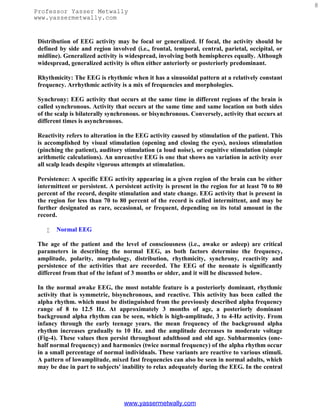
 Morphology refers to the shape of the EEG waveform. It may be regular (i.e., sinusoidal)
 or irregular, monophasic, or polyphasic (e.g., a triphasic wave). The morphology of a
 transient is essential to determining whether the transient is normal or abnormal,
 nonepileptiform or epileptiform.


                                               Figure 3. Triphasic waves


                                 www.yassermetwally.com
8
Professor Yasser Metwally
www.yassermetwally.com


 Distribution of EEG activity may be focal or generalized. If focal, the activity should be
 defined by side and region involved (i.e., frontal, temporal, central, parietal, occipital, or
 midline). Generalized activity is widespread, involving both hemispheres equally. Although
 widespread, generalized activity is often either anteriorly or posteriorly predominant.

 Rhythmicity: The EEG is rhythmic when it has a sinusoidal pattern at a relatively constant
 frequency. Arrhythmic activity is a mix of frequencies and morphologies.

 Synchrony: EEG activity that occurs at the same time in different regions of the brain is
 called synchronous. Activity that occurs at the same time and same location on both sides
 of the scalp is bilaterally synchronous. or bisynchronous. Conversely, activity that occurs at
 different times is asynchronous.

 Reactivity refers to alteration in the EEG activity caused by stimulation of the patient. This
 is accomplished by visual stimulation (opening and closing the eyes), noxious stimulation
 (pinching the patient), auditory stimulation (a loud noise), or cognitive stimulation (simple
 arithmetic calculations). An unreactive EEG is one that shows no variation in activity over
 all scalp leads despite vigorous attempts at stimulation.

 Persistence: A specific EEG activity appearing in a given region of the brain can be either
 intermittent or persistent. A persistent activity is present in the region for at least 70 to 80
 percent of the record, despite stimulation and state change. EEG activity that is present in
 the region for less than 70 to 80 percent of the record is called intermittent, and may be
 further designated as rare, occasional, or frequent, depending on its total amount in the
 record.

       Normal EEG

 The age of the patient and the level of consciousness (i.e., awake or asleep) are critical
 parameters in describing the normal EEG, as both factors determine the frequency,
 amplitude, polarity, morphology, distribution, rhythmicity, synchrony, reactivity and
 persistence of the activities that are recorded. The EEG of the neonate is significantly
 different from that of the infant of 3 months or older, and it will be discussed below.

 In the normal awake EEG, the most notable feature is a posteriorly dominant, rhythmic
 activity that is symmetric, bisynchronous, and reactive. This activity has been called the
 alpha rhythm. which must be distinguished from the previously described alpha frequency
 range of 8 to 12.5 Hz. At approximately 3 months of age, a posteriorly dominant
 background alpha rhythm can be seen, which is high-amplitude, 3 to 4-Hz activity. From
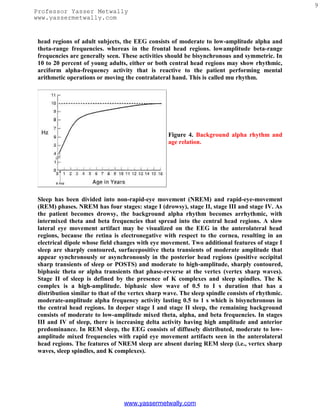
 infancy through the early teenage years. the mean frequency of the background alpha
 rhythm increases gradually to 10 Hz. and the amplitude decreases to moderate voltage
 (Fig-4). These values then persist throughout adulthood and old age. Subharmonics (one-
 half normal frequency) and harmonics (twice normal frequency) of the alpha rhythm occur
 in a small percentage of normal individuals. These variants are reactive to various stimuli.
 A pattern of lowamplitude, mixed fast frequencies can also be seen in normal adults, which
 may be due in part to subjects' inability to relax adequately during the EEG. In the central


                                  www.yassermetwally.com
9
Professor Yasser Metwally
www.yassermetwally.com


 head regions of adult subjects, the EEG consists of moderate to low-amplitude alpha and
 theta-range frequencies. whereas in the frontal head regions. lowamplitude beta-range
 frequencies are generally seen. These activities should be bisynchronous and symmetric. In
 10 to 20 percent of young adults, either or both central head regions may show rhythmic,
 arciform alpha-frequency activity that is reactive to the patient performing mental
 arithmetic operations or moving the contralateral hand. This is called mu rhythm.


                                                   Figure 4. Background alpha rhythm and
                                                   age relation.


 Sleep has been divided into non-rapid-eye movement (NREM) and rapid-eye-movement
 (REM) phases. NREM has four stages: stage I (drowsy), stage II, stage III and stage IV. As
 the patient becomes drowsy, the background alpha rhythm becomes arrhythmic, with
 intermixed theta and beta frequencies that spread into the central head regions. A slow
 lateral eye movement artifact may be visualized on the EEG in the anterolateral head
 regions, because the retina is electronegative with respect to the cornea, resulting in an
 electrical dipole whose field changes with eye movement. Two additional features of stage I
 sleep are sharply contoured, surfacepositive theta transients of moderate amplitude that
 appear synchronously or asynchronously in the posterior head regions (positive occipital
 sharp transients of sleep or POSTS) and moderate to high-amplitude, sharply contoured,
 biphasic theta or alpha transients that phase-reverse at the vertex (vertex sharp waves).
 Stage II of sleep is defined by the presence of K complexes and sleep spindles. The K
 complex is a high-amplitude. biphasic slow wave of 0.5 to I s duration that has a
 distribution similar to that of the vertex sharp wave. The sleep spindle consists of rhythmic.
 moderate-amplitude alpha frequency activity lasting 0.5 to 1 s which is bisynchronous in
 the central head regions. In deeper stage I and stage II sleep, the remaining background
 consists of moderate to low-amplitude mixed theta, alpha, and beta frequencies. In stages
 III and IV of sleep, there is increasing delta activity having high amplitude and anterior
 predominance. In REM sleep, the EEG consists of diffusely distributed, moderate to low-
 amplitude mixed frequencies with rapid eye movement artifacts seen in the anterolateral
 head regions. The features of NREM sleep are absent during REM sleep (i.e., vertex sharp
 waves, sleep spindles, and K complexes).


                                  www.yassermetwally.com
10
Professor Yasser Metwally
www.yassermetwally.com


       Benign Variants and Artifacts

 One of the major goals of EEG is to accurately define which EEG patterns are consistent
 with the diagnosis of seizures, and which patterns may be of no clinical significance (that is,
 normal). The "epileptiform" patterns and "seizure-like" discharges that are not
 significantly associated with seizures are called benign EEG variants and, in general, are
 considered normal findings on the EEG when it is properly obtained. For each of these
 patterns, the interpretation depends critically on the age and clinical state of the patient
 and the distribution, frequency, amplitude, and morphology of the waveform(s). The
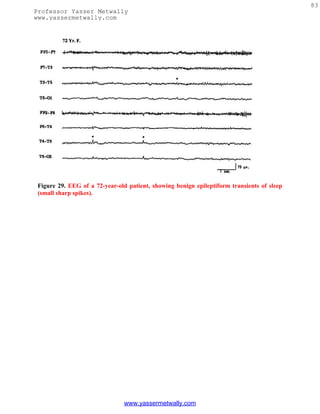
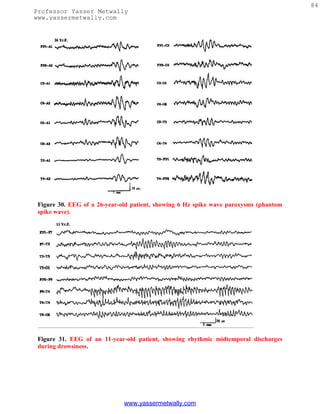
 benign epileptiform patterns include benign epileptiform transients of sleep (BETS), 14
 and 6-Hz positive bursts, 6-Hz spike and wave (phantom spike and wave), and wicket
 spikes. The benign seizure-like discharges include rhythmic midtemporal discharges
 (RMTD or psychomotor variant), midline theta rhythm, frontal arousal rhythm (FAR),
 and subclinical rhythmic electrographic discharges in adults (SREDA).

 An EEG activity that does not originate from the brain is called an artifact. Artifacts can
 be divided into two major groups, physiologic and nonphysiologic. The accurate
 identification of artifacts can be crucial to the correct interpretation of both normal and
 abnormal EEGs. An electrically hostile environment such as an ICU often proves to be a
 significant challenge to the EEG technologist, who must recognize and, if possible,
 eliminate all artifacts. Any source in the body that has an electrical dipole or generates an
 electrical field is capable of producing a physiologic artifact. These include the heart
 (electrocardiogram and ballistocardiogram or pulse artifact), eyes (oculomotor artifact),
 muscles (myogenic artifact), and tongue (glossokinetic artifact). Sweating may alter the
 impedance at the electrode-scalp interface and produce an artifact. In the region of a skull
 defect, there may be accentuation of amplitude with very sharp morphology, which is
 called breach rhythm. Examples of nonphysiologic artifacts include 60-Hz interference
 from nearby electrical equipment, kinesiogenic artifacts caused by patient or electrode
 movement, IV drip artifact caused by a charged saline solution, and mechanical ventilator
 artifacts caused by patient movement or fluid movement in the ventilator tubing.

       Abnormal EEG

 Most abnormal EEG findings are defined by localizing the region of maximal electrode
 negativity associated with the abnormality. Models of radially oriented neurons have been
 proposed to define the origin of cortical electronegativity. However, much of the brain's
 cortical surface lies along the base and walls of sulci. Using scalp and cortical electrodes,
 Cooper and colleagues estimated that approximately 6 cm2 of cortical surface was
 necessary to generate scalp-recorded electrical potentials. Abraham and AjmoneMarsan
 have demonstrated that only 20 to 70 percent of spike discharges seen using
 electrocorticography are seen on scalp EEG. Significant abnormalities on the EEG consist
 of slowing, lack of reactivity, interictal epileptiform activity. periodic patterns, and ictal
 patterns. The clinical and pathologic importance of each finding depends on whether it is
 focal or generalized, intermittent or persistent. Although an amplitude asymmetry of
 greater than 50 percent is also considered abnormal, it must be demonstrated on multiple
 montages, including a referential montage, preferably to a common reference. Amplitude


                                  www.yassermetwally.com
11
Professor Yasser Metwally
www.yassermetwally.com


 asymmetries are often the result of normal anatomic variations (e.g., in skull thickness) or
 technical factors (interelectrode distances. electrode impedances. etc.).

 As noted above. the normal frequency range for the background alpha rhythm is from 8 to
 12.5 Hz. Therefore, in a maximally alerted adult patient, a background alpha rhythm of
 less than 8 Hz is considered abnormal. Intermittent, generalized delta slowing may appear
 as isolated diffuse polymorphic delta transients or as rhythmic delta activity. Intermittent
 rhythmic delta activity (IRDA) may be seen having frontal predominance (FIRDA) in
 adults or occipital predominance (OIRDA) in children. These findings are nonspecific in
 etiology. However, each abnormality noted above is consistent with diffuse bihemispheric
 cerebral dysfunction. In adult patients, the severity of the cerebral dysfunction is related to
 the degree of theta or delta slowing of the posterior background frequencies or to the total
 amount of generalized delta slowing that occurs during the EEG record.

 Persistent frequency asymmetries of greater than 1 Hz between corresponding scalp
 regions are abnormal. Focal slow transients in the delta range often have variable
 morphology (are polymorphic) and are considered abnormal in all fully alerted, adult
 patients, with the exception of rare dominant-hemisphere temporal delta slowing in the
 elderly. When focal delta slowing is present for 70 to 80 percent of the record, it is called
 persistent polymorphic delta activity, or PPDA. Although not specific in etiology, focal
 PPDA is consistent with a structural lesion in the absence of a recent transient neurologic
 event such as a seizure, transient ischemic attack, or complicated migraine headache. If
 focal polymorphic delta activity appears in less than 70 percent of the record, it is noted as
 intermittent and qualified as rare, occasional, or frequent, depending on the total amount
 seen during the EEG. Intermittent focal delta slowing is nonspecific in etiology and clinical
 significance and is thought to be consistent with focal neuronal or cerebral dysfunction in
 the region of the slowing.

 Generalized loss of reactivity is evidence of severe diffuse bihemispheric cerebral
 dysfunction, regardless of the dominant frequency. This finding is commonly seen in coma
 and will be discussed in more detail below. Focal loss of reactivity may be seen in the
 setting of an intracerebral structural abnormality, such as a cerebral infarct, abscess, or
 tumor. Focal unreactivity of the posterior background rhythm with eye opening is called
 Bancaud's phenomenon, because of its location, it is the most readily recognized form of
 focal unreactivity.


                                  www.yassermetwally.com
12
Professor Yasser Metwally
www.yassermetwally.com


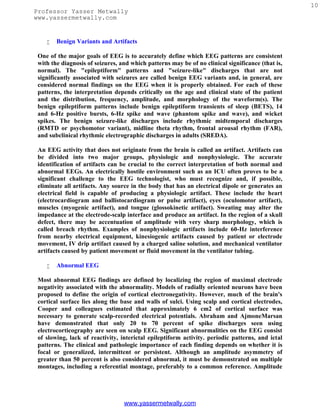
 Figure 5. Bilateral independent temporal spikes and sharp waves. Left side greater than
 right.


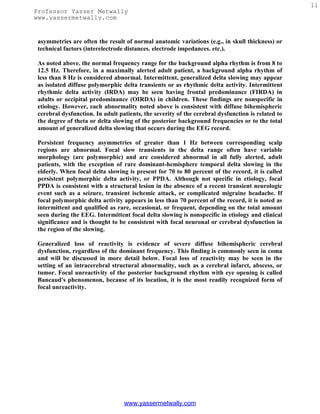
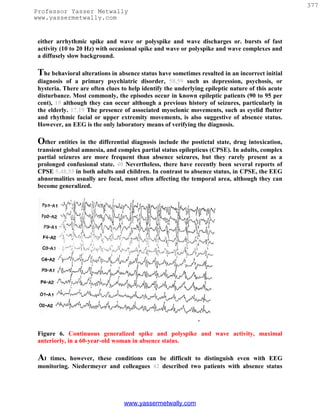
                                                                            Figure 6. Burst
                                                                            of generalized 3-
                                                                            Hz spike and
                                                                            wave activity.


 Two transients of special interest are the sharp wave and the spike discharge. These
 transients are important because of their high correlation with seizures, and they are often
 referred to as epileptiform discharges. They are defined by their morphology and duration,
 with sharp waves having a duration of 70 to 200 ms and spike discharges having a duration


                                 www.yassermetwally.com
13
Professor Yasser Metwally
www.yassermetwally.com


 of 20 to 70 ms. When accompanied by an after-going slow wave, they are referred to as a
 sharp or spike and slow wave complex. If an epileptiform discharge appears focally, it is
 localized by finding a region with a phase reversal on the bipolar montages (Fig-5). Using a
 referential montage with an uninvolved reference. a focal epileptiform discharge is
 localized by defining the region of greatest electronegativity. The generalized epileptiform
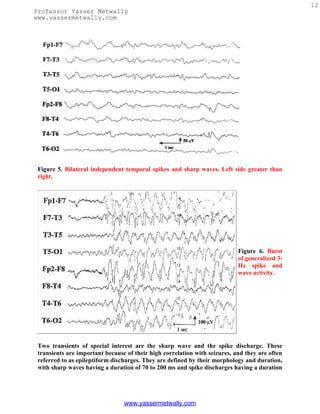
 transient is most commonly a spike discharge, which may appear as an isolated spike, a
 spike-wave complex, or a polyspike and wave complex. Although they are called
 generalized, these discharges are often anteriorly predominant and may have shifting left
 or right sided emphasis, which averages out during the EEG. Spike-wave and polyspike-
 wave complexes often appear as repetitive discharges having a predominant frequency
 based on the repetition rate of the discharges (Fig-6 ).


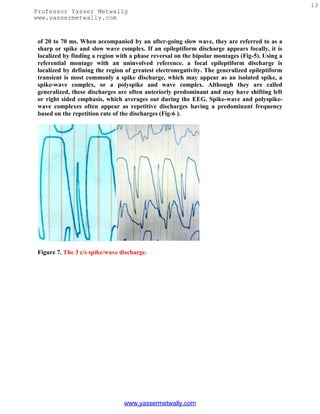
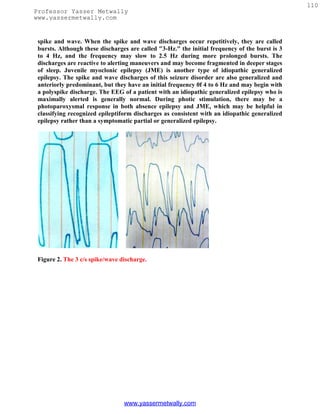
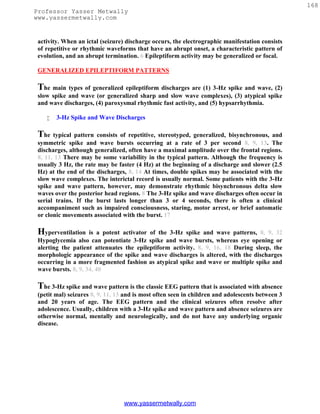
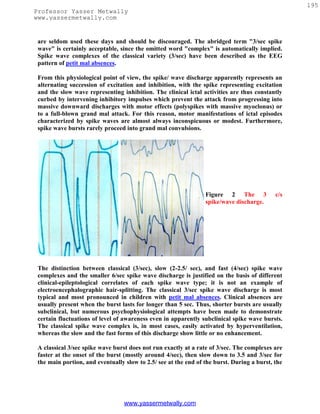
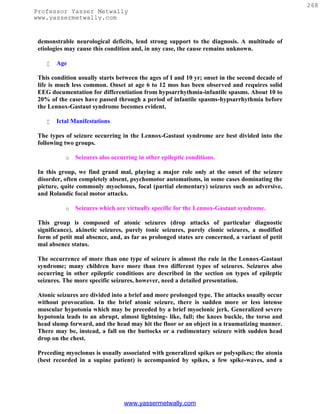
 Figure 7. The 3 c/s spike/wave discharge.


                                 www.yassermetwally.com
14
Professor Yasser Metwally
www.yassermetwally.com


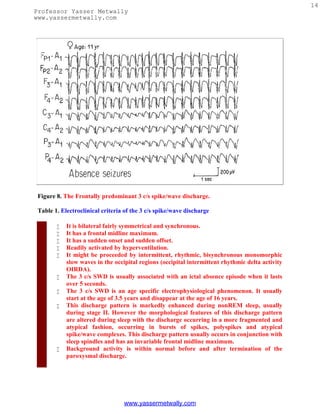
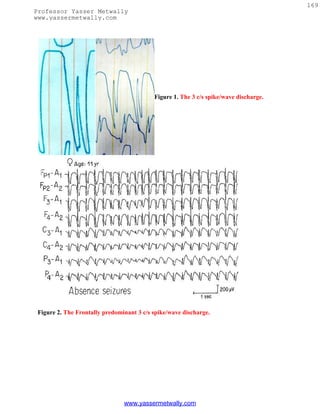
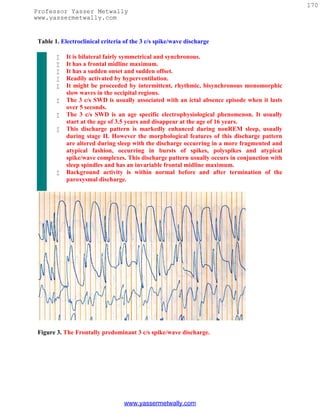
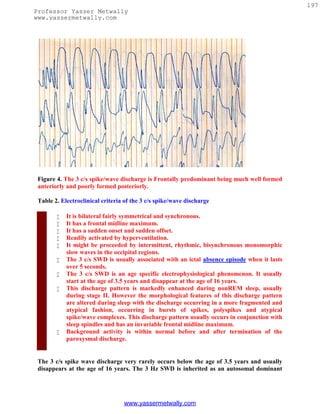
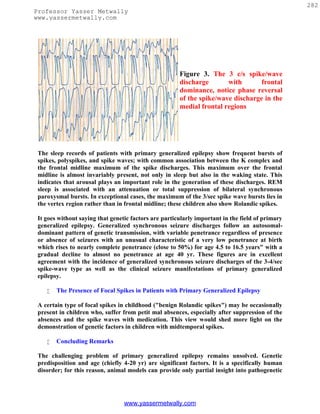
 Figure 8. The Frontally predominant 3 c/s spike/wave discharge.

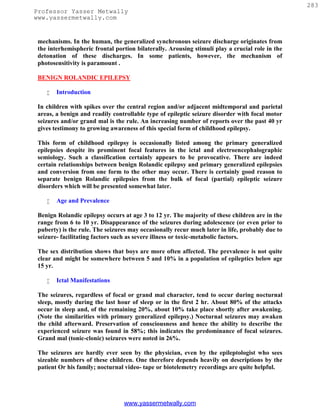
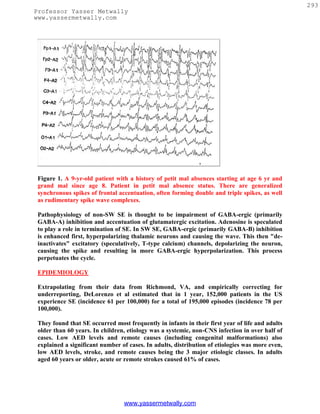
 Table 1. Electroclinical criteria of the 3 c/s spike/wave discharge

           It is bilateral fairly symmetrical and synchronous.
           It has a frontal midline maximum.
           It has a sudden onset and sudden offset.
           Readily activated by hyperventilation.
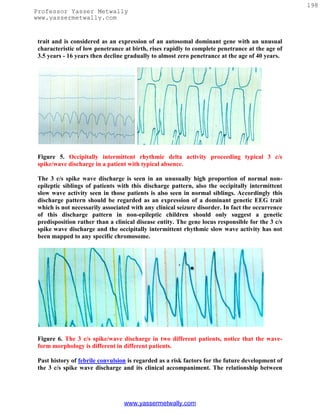
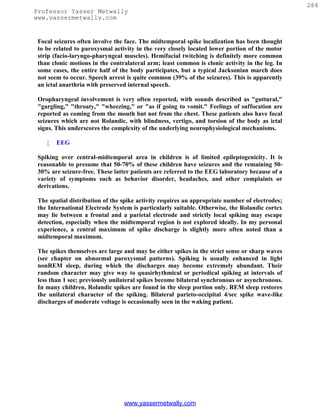
           It might be proceeded by intermittent, rhythmic, bisynchronous monomorphic
            slow waves in the occipital regions (occipital intermittent rhythmic delta activity
            OIRDA).
           The 3 c/s SWD is usually associated with an ictal absence episode when it lasts
            over 5 seconds.
           The 3 c/s SWD is an age specific electrophysiological phenomenon. It usually
            start at the age of 3.5 years and disappear at the age of 16 years.
           This discharge pattern is markedly enhanced during nonREM sleep, usually
            during stage II. However the morphological features of this discharge pattern
            are altered during sleep with the discharge occurring in a more fragmented and
            atypical fashion, occurring in bursts of spikes, polyspikes and atypical
            spike/wave complexes. This discharge pattern usually occurs in conjunction with
            sleep spindles and has an invariable frontal midline maximum.
           Background activity is within normal before and after termination of the
            paroxysmal discharge.


                                  www.yassermetwally.com
15
Professor Yasser Metwally
www.yassermetwally.com


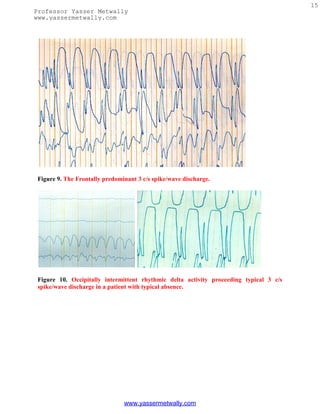
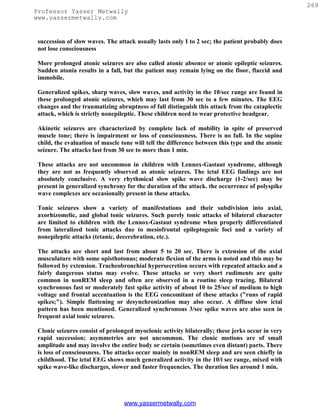
 Figure 9. The Frontally predominant 3 c/s spike/wave discharge.


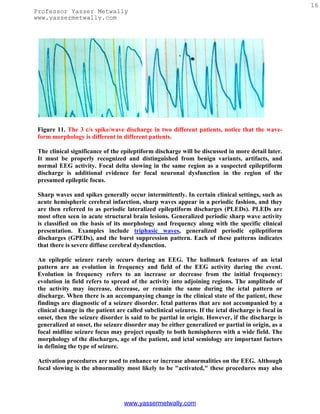
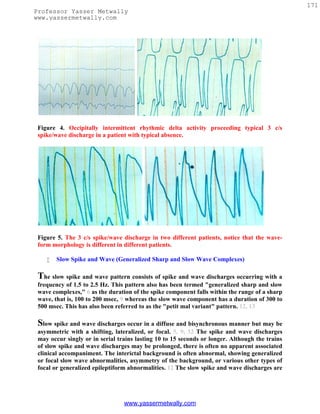
 Figure 10. Occipitally intermittent rhythmic delta activity proceeding typical 3 c/s
 spike/wave discharge in a patient with typical absence.


                                www.yassermetwally.com
16
Professor Yasser Metwally
www.yassermetwally.com


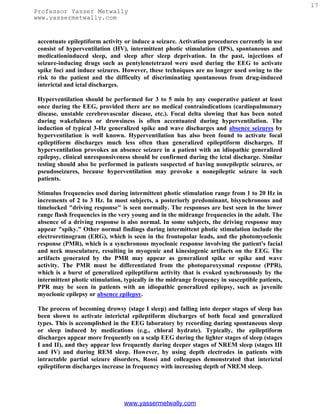
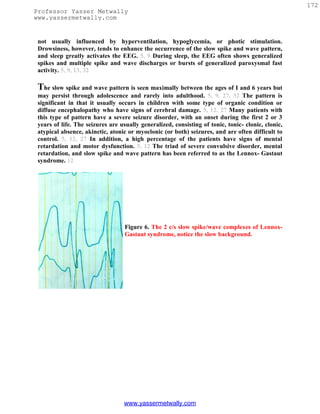
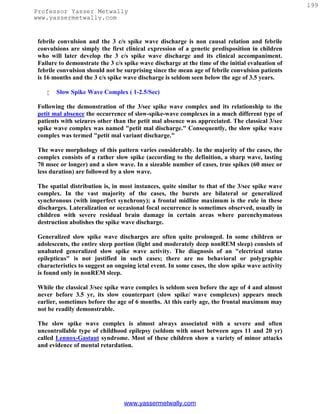
 Figure 11. The 3 c/s spike/wave discharge in two different patients, notice that the wave-
 form morphology is different in different patients.

 The clinical significance of the epileptiform discharge will be discussed in more detail later.
 It must be properly recognized and distinguished from benign variants, artifacts, and
 normal EEG activity. Focal delta slowing in the same region as a suspected epileptiform
 discharge is additional evidence for focal neuronal dysfunction in the region of the
 presumed epileptic focus.

 Sharp waves and spikes generally occur intermittently. In certain clinical settings, such as
 acute hemispheric cerebral infarction, sharp waves appear in a periodic fashion, and they
 are then referred to as periodic lateralized epileptiform discharges (PLEDs). PLEDs are
 most often seen in acute structural brain lesions. Generalized periodic sharp wave activity
 is classified on the basis of its morphology and frequency along with the specific clinical
 presentation. Examples include triphasic waves, generalized periodic epileptiform
 discharges (GPEDs), and the burst suppression pattern. Each of these patterns indicates
 that there is severe diffuse cerebral dysfunction.

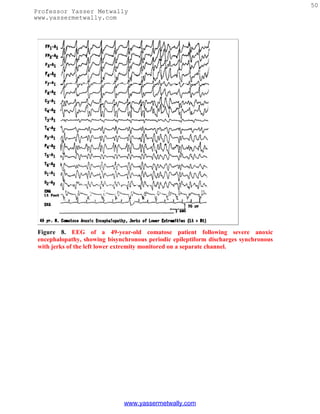
 An epileptic seizure rarely occurs during an EEG. The hallmark features of an ictal
 pattern are an evolution in frequency and field of the EEG activity during the event.
 Evolution in frequency refers to an increase or decrease from the initial frequency:
 evolution in field refers to spread of the activity into adjoining regions. The amplitude of
 the activity may increase, decrease, or remain the same during the ictal pattern or
 discharge. When there is an accompanying change in the clinical state of the patient, these
 findings are diagnostic of a seizure disorder. Ictal patterns that are not accompanied by a
 clinical change in the patient are called subclinical seizures. If the ictal discharge is focal in
 onset, then the seizure disorder is said to be partial in origin. However, if the discharge is
 generalized at onset, the seizure disorder may be either generalized or partial in origin, as a
 focal midline seizure focus may project equally to both hemispheres with a wide field. The
 morphology of the discharges, age of the patient, and ictal semiology are important factors
 in defining the type of seizure.

 Activation procedures are used to enhance or increase abnormalities on the EEG. Although
 focal slowing is the abnormality most likely to be "activated," these procedures may also


                                   www.yassermetwally.com
17
Professor Yasser Metwally
www.yassermetwally.com


 accentuate epileptiform activity or induce a seizure. Activation procedures currently in use
 consist of hyperventilation (HV), intermittent photic stimulation (IPS), spontaneous and
 medicationinduced sleep, and sleep after sleep deprivation. In the past, injections of
 seizure-inducing drugs such as pentylenetetrazol were used during the EEG to activate
 spike foci and induce seizures. However, these techniques are no longer used owing to the
 risk to the patient and the difficulty of discriminating spontaneous from drug-induced
 interictal and ictal discharges.

 Hyperventilation should be performed for 3 to 5 min by any cooperative patient at least
 once during the EEG, provided there are no medical contraindications (cardiopulmonary
 disease, unstable cerebrovascular disease, etc.). Focal delta slowing that has been noted
 during wakefulness or drowsiness is often accentuated during hyperventilation. The
 induction of typical 3-Hz generalized spike and wave discharges and absence seizures by
 hyperventilation is well known. Hyperventilation has also been found to activate focal
 epileptiform discharges much less often than generalized epileptiform discharges. If
 hyperventilation provokes an absence seizure in a patient with an idiopathic generalized
 epilepsy, clinical unresponsiveness should be confirmed during the ictal discharge. Similar
 testing should also be performed in patients suspected of having nonepileptic seizures, or
 pseudoseizures, because hyperventilation may provoke a nonepileptic seizure in such
 patients.

 Stimulus frequencies used during intermittent photic stimulation range from 1 to 20 Hz in
 increments of 2 to 3 Hz. In most subjects, a posteriorly predominant, bisynchronous and
 timelocked "driving response" is seen normally. The responses are best seen in the lower
 range flash frequencies in the very young and in the midrange frequencies in the adult. The
 absence of a driving response is also normal. In some subjects, the driving response may
 appear "spiky." Other normal findings during intermittent photic stimulation include the
 electroretinogram (ERG), which is seen in the frontopolar leads, and the photomyoclonic
 response (PMR), which is a synchronous myoclonic response involving the patient's facial
 and neck musculature, resulting in myogenic and kinesiogenic artifacts on the EEG. The
 artifacts generated by the PMR may appear as generalized spike or spike and wave
 activity. The PMR must be differentiated from the photoparoxysmal response (PPR),
 which is a burst of generalized epileptiform activity that is evoked synchronously by the
 intermittent photic stimulation, typically in the midrange frequency in susceptible patients,
 PPR may be seen in patients with an idiopathic generalized epilepsy, such as juvenile
 myoclonic epilepsy or absence epilepsy.

 The process of becoming drowsy (stage I sleep) and falling into deeper stages of sleep has
 been shown to activate interictal epileptiform discharges of both focal and generalized
 types. This is accomplished in the EEG laboratory by recording during spontaneous sleep
 or sleep induced by medications (e.g., chloral hydrate). Typically, the epileptiform
 discharges appear more frequently on a scalp EEG during the lighter stages of sleep (stages
 I and II), and they appear less frequently during deeper stages of NREM sleep (stages III
 and IV) and during REM sleep. However, by using depth electrodes in patients with
 intractable partial seizure disorders, Rossi and colleagues demonstrated that interictal
 epileptiform discharges increase in frequency with increasing depth of NREM sleep.


                                 www.yassermetwally.com
18
Professor Yasser Metwally
www.yassermetwally.com


 The effect of sleep deprivation is less well established. Although it is often used as an
 activating method in patients with suspected seizures after a routine EEG without
 epileptiform features, it is not clear whether it causes any activation of the interictal
 epileptiform activity beyond that caused by falling asleep. Nevertheless, many EEG
 laboratories continue to recommend sleep deprivation with sleep as a follow-up EEG after
 a nondiagnostic routine EEG.

 SPECIFIC CLINICAL APPLICATIONS

 Although EEG is used most often as an ancillary test in clinical epilepsy, it also is an
 invaluable tool in other neurological conditions, such as encephalopathy, focal central
 nervous system (CNS) lesions, and clinical brain death, as well as for electrocorticography,
 and in neonatal medicine. The following sections discuss the usefulness of EEG in each of
 these situations.

       Epilepsy

 Epilepsy is defined as "paroxysmal transient disturbances of brain function that may be
 manifested as episodic impairment or loss of consciousness, abnormal motor phenomena,
 psychic or sensory disturbances, or perturbation of the autonomic nervous system. A
 seizure, or ictus epilepticus, is an epileptic attack or recurrence. The classification of
 epilepsies used by International League Against Epilepsy (ILAE) includes two major
 categories: partial epilepsies and generalized epilepsies. A partial seizure disorder is
 considered to have a focal region of onset in the brain, and awareness may be either
 preserved (simple partial seizure) or lost (complex partial seizure). A generalized seizure
 disorder is considered to involve most, if not all, of the brain at onset. The generalized
 seizure types may involve cessation of activity with loss of awareness (absence seizure) or
 generalized tonic-clonic activity (generalized tonic-clonic seizure). Both partial and
 generalized seizure disorders are further subdivided into idiopathic and symptomatic
 types, previously called primary and secondary, respectively. Idiopathic epilepsies are
 thought to be genetically heritable, are associated with normal intelligence, and occur
 during specific age periods. The symptomatic epilepsies are likely the result of a CNS
 injury, which in a symptomatic partial epilepsy consists of a focal lesion and in a
 symptomatic generalized epilepsy consists of diffuse cerebral abnormality. Symptomatic
 epilepsies are typically lifelong conditions.

 It cannot be overemphasized that the diagnosis of epilepsy is based primarily on the clinical
 history. As noted above, a clinical seizure rarely occurs during an EEG, and thus the EEG
 is rarely diagnostic of a seizure disorder or epilepsy. In a large, populationbased EEG
 study by Zivin and Ajmone-Marsan involving subjects without a history of seizures,
 approximately 2 percent of the subjects had EEGs with epileptiform discharges. Of the
 individuals in this subgroup, only 15 percent subsequently developed a seizure disorder.
 Therefore, epileptiform discharges seen on an EEG should not be referred to as interictal
 discharges unless it is known that the patient has a clinically defined seizure disorder. Focal
 or generalized epileptiform discharges should be noted as consistent with the interictal
 expression of either a partial or a generalized epilepsy, respectively. When applied in the


                                  www.yassermetwally.com
19
Professor Yasser Metwally
www.yassermetwally.com


 appropriate clinical setting, the EEG is useful in classifying the seizure type, predicting the
 long-term outcome, and choosing the appropriate antiepileptic medication.

 Overall, symptomatic partial seizure disorders are the most common type of epilepsy. The
 clinical semiology of the partial seizure generally depends on the site of onset. In children,
 focal epileptiform discharges arising from the temporal region have the greatest incidence
 of clinical seizures, ranging from 85 to 95 percent. The next highest incidence (70 to 75
 percent) is associated with frontal discharges. The central, parietal and occipital regions
 have the lowest incidence of seizures related to epileptiform discharges. estimated at 40 to
 70 percent. In addition to the characteristics of recorded epileptiform activity, the age of
 the patient and the presence or absence of neurological deficits on examination are
 important factors that are helpful in determining the clinical significance of epileptiform
 discharges and in classifying the partial seizure disorder as either symptomatic or
 idiopathic. The occurrence of a clinical seizure with a focal electrographic correlate is
 diagnostic of a partial epilepsy. Blume and colleagues presented several types of scalp EEG
 correlates for partial seizures, most of which began with rhythmic sinusoidal activity or
 repetitive sharp wave activity that subsequently evolved in frequency. Most patients with
 complex partial seizures were noted to have a scalp correlate on the EEG. Patients with
 simple partial seizures were less likely to have a scalp correlate.

 The best-defined idiopathic partial epilepsy is benign rolandic epilepsy. The classic EEG
 finding in this childhood seizure disorder is a characteristic monomorphic centrotemporal
 sharp wave. The sharp waves are often seen independently in the centrotemporal and
 adjacent regions, and they are accentuated by light sleep. The waking background rhythm
 is generally normal.

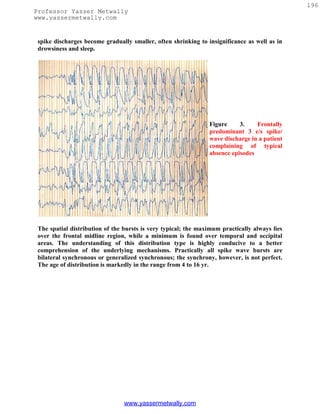
 Of the idiopathic generalized epilepsies, the absence seizure is the most common type. The
 interictal EEG feature of this type of seizure disorder consists of generalized, high-
 amplitude, anteriorly predominant 3-Hz spike and wave discharges, called typical 3-Hz
 spike and wave. When the spike and wave discharges occur repetitively, they are called
 bursts. Although these discharges are called "3-Hz." the initial frequency of the burst is 3
 to 4 Hz, and the frequency may slow to 2.5 Hz during more prolonged bursts. The
 discharges are reactive to alerting maneuvers and may become fragmented in deeper stages
 of sleep. Juvenile myoclonic epilepsy (JME) is another type of idiopathic generalized
 epilepsy. The spike and wave discharges of this seizure disorder are also generalized and
 anteriorly predominant, but they have an initial frequency 0f 4 to 6 Hz and may begin with
 a polyspike discharge. The EEG of a patient with an idiopathic generalized epilepsy who is
 maximally alerted is generally normal. During photic stimulation, there may be a
 photoparoxysmal response in both absence epilepsy and JME, which may be helpful in
 classifying recognized epileptiform discharges as consistent with an idiopathic generalized
 epilepsy rather than a symptomatic partial or generalized epilepsy.

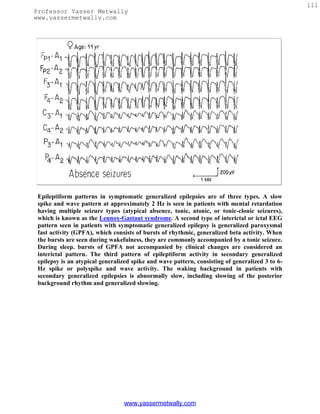
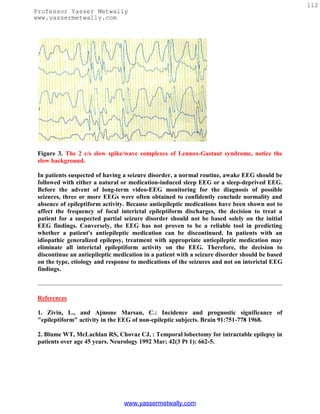
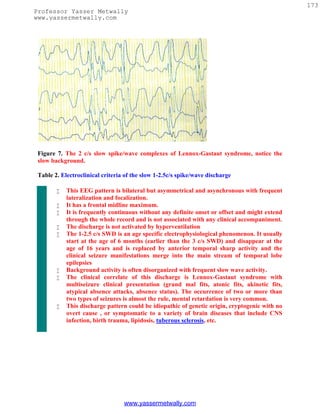
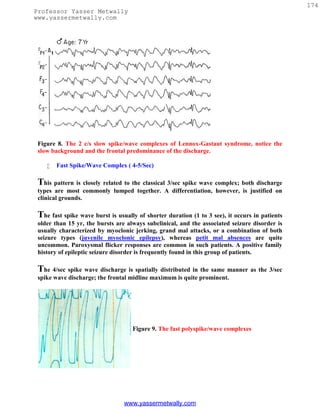
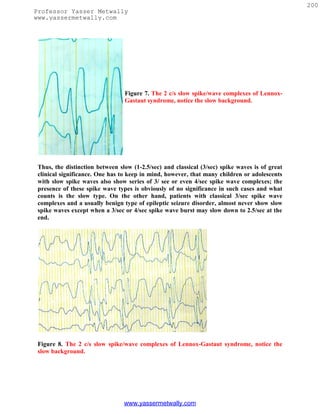
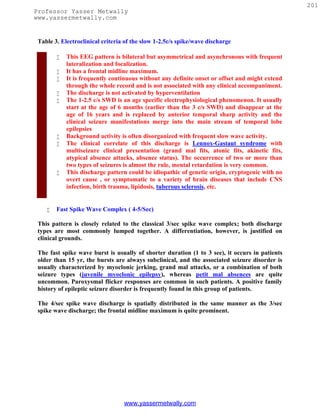
 Epileptiform patterns in symptomatic generalized epilepsies are of three types. A slow
 spike and wave pattern at approximately 2 Hz is seen in patients with mental retardation
 having multiple seizure types (atypical absence, tonic, atonic, or tonic-clonic seizures),
 which is known as the Lennox-Gastaut syndrome. A second type of interictal or ictal EEG


                                  www.yassermetwally.com
20
Professor Yasser Metwally
www.yassermetwally.com


 pattern seen in patients with symptomatic generalized epilepsy is generalized paroxysmal
 fast activity (GPFA), which consists of bursts of rhythmic, generalized beta activity. When
 the bursts are seen during wakefulness, they are commonly accompanied by a tonic seizure.
 During sleep. bursts of GPFA not accompanied by clinical changes are considered an
 interictal pattern. The third pattern of epileptiform activity in secondary generalized
 epilepsy is an atypical generalized spike and wave pattern, consisting of generalized 3 to 6-
 Hz spike or polyspike and wave activity. The waking background in patients with
 secondary generalized epilepsies is abnormally slow, including slowing of the posterior
 background rhythm and generalized slowing.

 In patients suspected of having a seizure disorder, a normal routine, awake EEG should be
 followed with either a natural or medication-induced sleep EEG or a sleep-deprived EEG.
 Before the advent of long-term video-EEG monitoring for the diagnosis of possible
 seizures, three or more EEGs were often obtained to confidently conclude normality and
 absence of epileptiform activity. Because antiepileptic medications have been shown not to
 affect the frequency of focal interictal epileptiform discharges, the decision to treat a
 patient for a suspected partial seizure disorder should not be based solely on the initial
 EEG findings. Conversely, the EEG has not proven to be a reliable tool in predicting
 whether a patient's antiepileptic medication can be discontinued. In patients with an
 idiopathic generalized epilepsy, treatment with appropriate antiepileptic medication may
 eliminate all interictal epileptiform activity on the EEG. Therefore, the decision to
 discontinue an antiepileptic medication in a patient with a seizure disorder should be based
 on the type, etiology and response to medications of the seizures and not on interictal EEG
 findings.


                                 www.yassermetwally.com
21
Professor Yasser Metwally
www.yassermetwally.com


Interictal epileptic activity
The interictal marker of a seizure focus is the spike or sharp wave. The distinction between
these two patterns has no etiologic significance, the only difference being one of EEG
pattern morphology. A spike is defined as being less than 70 milliseconds in duration, and a
sharp wave has a duration of 70-200 milliseconds. The terms spike or sharp wave, while
having particular meaning to the electroencephalographer, are often used interchangeably.
Spikes and sharp waves are almost always of negative polarity at the scalp surface. These
epileptiform discharges may arise from any region of the cerebral hemispheres but most
commonly are manifested in the anterior temporal, frontal, or centrotemporal regions.

An anterior temporal spike or sharp wave is highly associated with the occurrence of
clinical focal-onset seizures. When this pattern is seen on the EEG, the likelihood of the
individual manifesting clinical seizures is over 90%. However, the converse is not
necessarily true. While the EEG of most patients with temporal lobe seizures demonstrates
anterior temporal spikes, an EEG negative for this finding does not exclude a diagnosis of
epilepsy. Often, repeated EEG recordings or prolonged EEG monitoring is required to
demonstrate the epileptiform pattern.

Frontal spikes and sharp waves also are highly associated with clinical seizures but not to
the same degree as temporal discharges. Approximately 70-80% of individuals whose EEG
demonstrates frontal spikes have clinical seizures. Frontal spikes or sharp waves are more
likely to be associated with mass lesions such as neoplasms, traumatic lesions, or congenital
cerebral malformations.

Centrotemporal or rolandic sharp waves are often a marker for a particular epilepsy
syndrome of childhood known as benign rolandic epilepsy or benign focal epilepsy of
childhood with centrotemporal spikes. This is a disorder in which a child, typically aged 4-
12 years, develops focal seizures with sensory or motor seizures in the mouth or face
region. These children also may have generalized seizures; typically, these seizures are
nocturnal. The EEG pattern is unusual in that there is often a simultaneous negative
waveform in the centrotemporal region and a positive one in the frontal region. This
pattern of EEG polarity is virtually diagnostic of benign rolandic epilepsy.

Epileptiform EEG patterns are seen less commonly in the occipital, central, or parietal
regions. Occipital spikes typically are seen in young children and may or may not be
associated with clinical seizures. Discharges in any of these regions may indicate the
presence of partial epilepsy.


                                www.yassermetwally.com
22
Professor Yasser Metwally
www.yassermetwally.com


                                                                  Figure 12. Examples of sharp
                                                                  waves [left] and spike [right]


 Table 2. Electroclinical criteria of spike/ sharp wave discharge

           A spike is a transient, clearly distinguished from the background activity, with
            pointed peak at conventional paper speeds and a duration from 20 to under 70
            msec; the main component is generally negative. Amplitude is variable. Spikes
            represent the basic element of paroxysmal activity in the EEG
           A sharp wave is a transient, clearly distinguished from background activity,
            with pointed peak at conventional paper speeds and duration of 70 to 200 msec.
            The main component is generally negative relative to other areas.
           Both spikes and sharp waves have multiphasic characters, being composed of a
            sequence of a minor positive, a major negative, and a second minor positive
            component is typical in most instances. The long duration of a sharp wave
            permits better insight into the multiphasic character of this potential.
           The spike/sharp wave potentials are reliable indicators of a potential seizure
            focus because they result from the characteristic neurophysiological event "the
            paroxysmal depolarization shift" (PDS). This phenomenon consists of thousands
            of neurons simultaneously undergoing large depolarization with superimposed
            action potentials. Both synaptic events and intrinsic cellular currents have been
            implicated in this process. EEG spikes/sharp waves are due to the slow
            depolarization currents in the PDS. Neurons surrounding the focus are inhibited
            during the paroxysmal depolarization shift, and within the focus the the
            paroxysmal depolarization shift is followed by a hyperpolarization potential.
            Both an increase in depolarizing events and a loss of inhibitory mechanisms can
            lead to persistence and propagation of the discharge as a seizure.
           Spikes and sharp waves are neurophysiologically closely related phenomena;
            both of them are typical paroxysmal discharges and highly suggestive of an
            epileptic seizure disorder, although both phenomena may occur in patients
            without a history of seizure disorder.
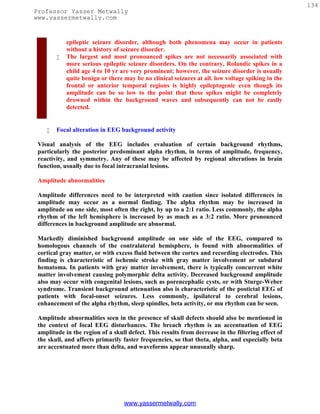
           The largest and most pronounced spikes are not necessarily associated with more
            serious epileptic seizure disorders. On the contrary, Rolandic spikes in a child age 4 to
            10 yr are very prominent; however, the seizure disorder is usually quite benign or there
            may be no clinical seizures at all. low voltage spiking in the frontal or anterior temporal
            regions is highly epileptogenic even though its amplitude can be so low to the point that
            these spikes might be completely drowned within the background waves and
            subsequently can not be easily detected.


                                    www.yassermetwally.com
23
Professor Yasser Metwally
www.yassermetwally.com


       Encephalopathy and Coma

 Encephalopathy and coma result from conditions that affect both cerebral hemispheres or
 the reticular activating system in the midbrain. The differential diagnosis is broad,
 including metabolic, toxic, anoxic/ischemic, infectious, endocrinologic, degenerative, and
 inflammatory processes. These processes affect the brain diffusely, and, consequently,
 changes in the EEG often appear generalized. While most EEG findings in encephalopathy
 and coma are nonspecific with regard to etiology, information relevant to the clinical
 course and prognosis can be obtained using the EEG.

 In cases of mild encephalopathy, theta and delta activity is intermixed with the background
 alpha rhythm. Occasional generalized delta transients are also seen. As the encephalopathy
 worsens, there is loss of background alpha-range frequencies and an increased amount of
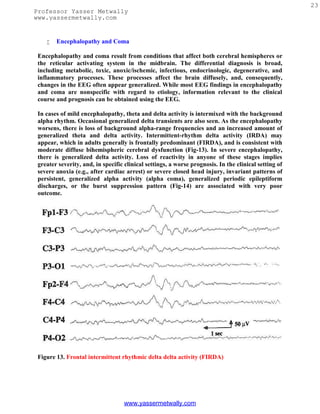
 generalized theta and delta activity. Intermittent-rhythm delta activity (IRDA) may
 appear, which in adults generally is frontally predominant (FIRDA), and is consistent with
 moderate diffuse bihemispheric cerebral dysfunction (Fig-13). In severe encephalopathy,
 there is generalized delta activity. Loss of reactivity in anyone of these stages implies
 greater severity, and, in specific clinical settings, a worse prognosis. In the clinical setting of
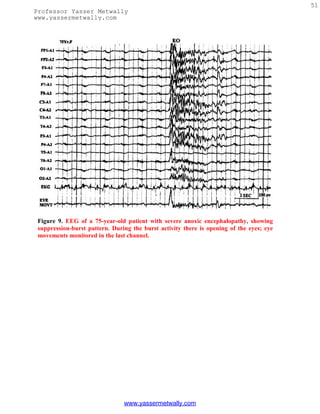
 severe anoxia (e.g., after cardiac arrest) or severe closed head injury, invariant patterns of
 persistent, generalized alpha activity (alpha coma), generalized periodic epileptiform
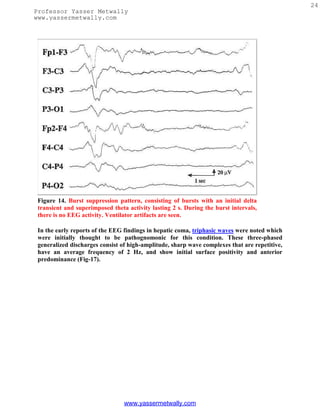
 discharges, or the burst suppression pattern (Fig-14) are associated with very poor
 outcome.


 Figure 13. Frontal intermittent rhythmic delta delta activity (FIRDA)


                                   www.yassermetwally.com
24
Professor Yasser Metwally
www.yassermetwally.com


 Figure 14. Burst suppression pattern, consisting of bursts with an initial delta
 transient and superimposed theta activity lasting 2 s. During the burst intervals,
 there is no EEG activity. Ventilator artifacts are seen.

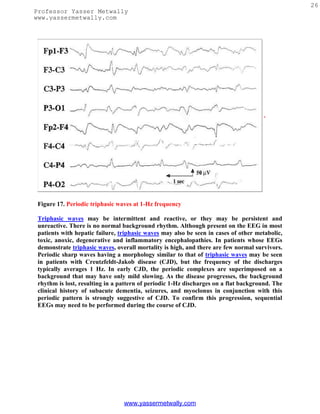
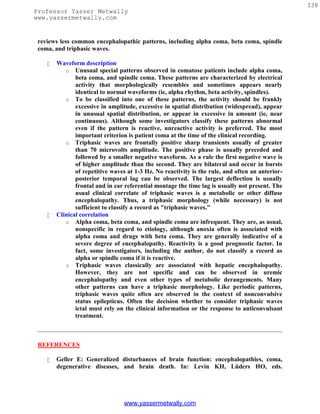
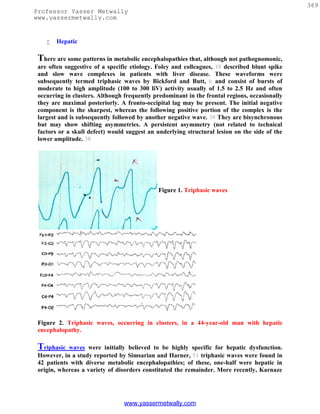
 In the early reports of the EEG findings in hepatic coma, triphasic waves were noted which
 were initially thought to be pathognomonic for this condition. These three-phased
 generalized discharges consist of high-amplitude, sharp wave complexes that are repetitive,
 have an average frequency of 2 Hz, and show initial surface positivity and anterior
 predominance (Fig-17).


                                 www.yassermetwally.com
25
Professor Yasser Metwally
www.yassermetwally.com


 Figure 16. The intermittent rhythmic delta activity [left image] and the the polymorphic
 slow wave activity [right image]

 Table 3. Electrical criteria of The intermittent rhythmic delta activity.

                  Consists of sinusoidal waveforms of approximately 2.5 Hz that occur
                   intermittently in the EEG recording. It is most often symmetric but can be
                   lateralized.
                  In adults, the delta activity has a frontal predominance (frontal
                   intermittent rhythmic delta activity [FIRDA]). In children, it is maximal
                   posteriorly (occipital intermittent rhythmic delta activity [OIRDA])
                  The intermittent rhythmic delta activity shows visual reactivity and is
                   commonly suppressed in the eye open state unless the patient is comatose.
                  Intermittent rhythmic delta activity is associated with structural lesions,
                   most commonly diencephalic, infratentorial or intraventricular tumors, or
                   with diffuse encephalopathies.
                  FIRDA occurring in patients with a normal EEG background suggests
                   that the pattern is due to a structural lesion; when associated with EEG
                   background abnormalities, it is likely to be due to encephalopathy.
                  OIRDA is associated with absence epilepsy in children aged 6-10 years.


                                  www.yassermetwally.com
26
Professor Yasser Metwally
www.yassermetwally.com


                                                                                      .


 Figure 17. Periodic triphasic waves at 1-Hz frequency

 Triphasic waves may be intermittent and reactive, or they may be persistent and
 unreactive. There is no normal background rhythm. Although present on the EEG in most
 patients with hepatic failure, triphasic waves may also be seen in cases of other metabolic,
 toxic, anoxic, degenerative and inflammatory encephalopathies. In patients whose EEGs
 demonstrate triphasic waves, overall mortality is high, and there are few normal survivors.
 Periodic sharp waves having a morphology similar to that of triphasic waves may be seen
 in patients with Creutzfeldt-Jakob disease (CJD), but the frequency of the discharges
 typically averages 1 Hz. In early CJD, the periodic complexes are superimposed on a
 background that may have only mild slowing. As the disease progresses, the background
 rhythm is lost, resulting in a pattern of periodic 1-Hz discharges on a flat background. The
 clinical history of subacute dementia, seizures, and myoclonus in conjunction with this
 periodic pattern is strongly suggestive of CJD. To confirm this progression, sequential
 EEGs may need to be performed during the course of CJD.


                                 www.yassermetwally.com
27
Professor Yasser Metwally
www.yassermetwally.com


 Polymorphic delta activity (PDA)
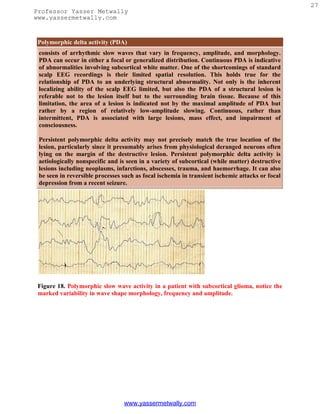
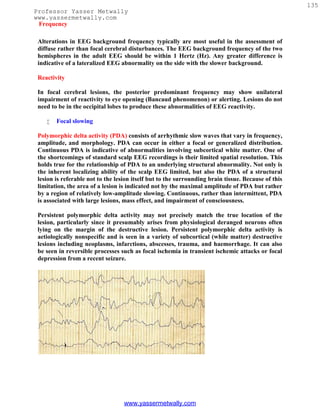
 consists of arrhythmic slow waves that vary in frequency, amplitude, and morphology.
 PDA can occur in either a focal or generalized distribution. Continuous PDA is indicative
 of abnormalities involving subcortical white matter. One of the shortcomings of standard
 scalp EEG recordings is their limited spatial resolution. This holds true for the
 relationship of PDA to an underlying structural abnormality. Not only is the inherent
 localizing ability of the scalp EEG limited, but also the PDA of a structural lesion is
 referable not to the lesion itself but to the surrounding brain tissue. Because of this
 limitation, the area of a lesion is indicated not by the maximal amplitude of PDA but
 rather by a region of relatively low-amplitude slowing. Continuous, rather than
 intermittent, PDA is associated with large lesions, mass effect, and impairment of
 consciousness.

 Persistent polymorphic delta activity may not precisely match the true location of the
 lesion, particularly since it presumably arises from physiological deranged neurons often
 lying on the margin of the destructive lesion. Persistent polymorphic delta activity is
 aetiologically nonspecific and is seen in a variety of subcortical (while matter) destructive
 lesions including neoplasms, infarctions, abscesses, trauma, and haemorrhage. It can also
 be seen in reversible processes such as focal ischemia in transient ischemic attacks or focal
 depression from a recent seizure.


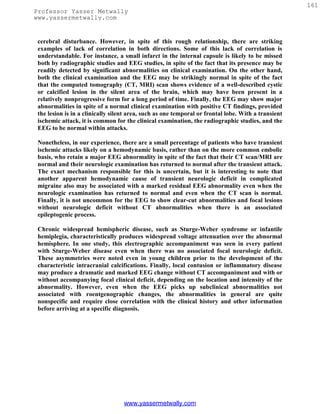
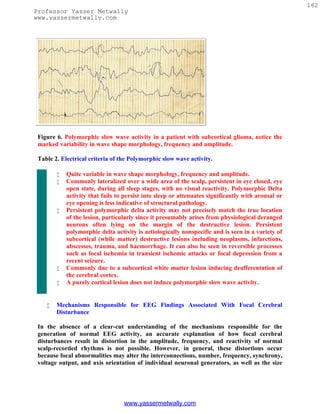
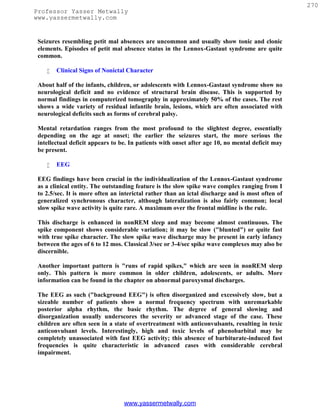
 Figure 18. Polymorphic slow wave activity in a patient with subcortical glioma, notice the
 marked variability in wave shape morphology, frequency and amplitude.


                                 www.yassermetwally.com
28
Professor Yasser Metwally
www.yassermetwally.com


 Table 4. Electrical criteria of the Polymorphic slow wave activity.

           Quite variable in wave shape morphology, frequency and amplitude.
           Commonly lateralized over a wide area of the scalp, persistent in eye closed, eye
            open state, during all sleep stages, with no visual reactivity. Polymorphic Delta
            activity that fails to persist into sleep or attenuates significantly with arousal or
            eye opening is less indicative of structural pathology.
           Persistent polymorphic delta activity may not precisely match the true location
            of the lesion, particularly since it presumably arises from physiological deranged
            neurons often lying on the margin of the destructive lesion. Persistent
            polymorphic delta activity is aetiologically nonspecific and is seen in a variety of
            subcortical (while matter) destructive lesions including neoplasms, infarctions,
            abscesses, trauma, and haemorrhage. It can also be seen in reversible processes
            such as focal ischemia in transient ischemic attacks or focal depression from a
            recent seizure.
           Commonly due to a subcortical white matter lesion inducing deafferentation of
            the cerebral cortex.
           A purely cortical lesion does not induce polymorphic slow wave activity.

 Rhythmic delta activity
 consists of sinusoidal waveforms of approximately 2.5 Hz that occur intermittently in the
 EEG recording. It is most often symmetric but can be lateralized. In adults, the delta
 activity has a frontal predominance (frontal intermittent rhythmic delta activity [FIRDA]).
 In children, it is maximal posteriorly (occipital intermittent rhythmic delta activity
 [OIRDA]). Intermittent rhythmic delta activity is associated with structural lesions, most
 commonly diencephalic, infratentorial or intraventricular tumors, or with diffuse
 encephalopathies. FIRDA occurring in patients with a normal EEG background suggests
 that the pattern is due to a structural lesion; when associated with EEG background
 abnormalities, it is likely to be due to encephalopathy. In cases of encephalopathy with
 FIRDA, the pathophysiologic processes are believed to involve cortical and subcortical gray
 matter. OIRDA is associated with absence epilepsy in children aged 6-10 years


 Figure 19. The intermittent rhythmic delta activity [left image] and the the polymorphic
 slow wave activity [right image]


                                  www.yassermetwally.com
29
Professor Yasser Metwally
www.yassermetwally.com


 Table 5. Electrical criteria of The intermittent rhythmic delta activity.

           Consists of sinusoidal waveforms of approximately 2.5 Hz that occur
            intermittently in the EEG recording. It is most often symmetric but can be
            lateralized.
           In adults, the delta activity has a frontal predominance (frontal intermittent
            rhythmic delta activity [FIRDA]). In children, it is maximal posteriorly
            (occipital intermittent rhythmic delta activity [OIRDA])
           The intermittent rhythmic delta activity shows visual reactivity and is commonly
            suppressed in the eye open state unless the patient is comatose.
           Intermittent rhythmic delta activity is associated with structural lesions, most
            commonly diencephalic, infratentorial or intraventricular tumors, or with
            diffuse encephalopathies.
           FIRDA occurring in patients with a normal EEG background suggests that the
            pattern is due to a structural lesion; when associated with EEG background
            abnormalities, it is likely to be due to encephalopathy.
           OIRDA is associated with absence epilepsy in children aged 6-10 years.

 Focal theta activity
 Is less likely to reflect a macroscopic structural lesion than is focal delta. Theta is
 commonly, however, associated with a functional disturbance, such as epileptogenic
 cortex, especially postictally, after amplitude suppression and focal delta have resolved. In
 addition, localized theta is usually superimposed on focal delta to some degree; the relative
 proportion of delta and theta reflects the size and/or severity of the underlying structural
 or functional cerebral abnormality.

 Epileptiform activity may be seen on the EEG in some degenerative encephalopathies that
 have associated seizures. Multifocal, independent epileptiform spike discharges may be
 seen in TaySachs disease, in several of the progressive myoclonic epilepsies (neuronal
 ceroid lipofuscinosis, Lafora body disease, and some mitochondrial encephalomyopathies),
 and in Rett syndrome. Atypical generalized spike and wave activity is present in
 UnverrichtLundborg disease, which is another type of progressive myoclonic epilepsy.

 Of the inflammatory encephalopathies, distinctive EEG findings are seen in subacute
 sclerosing panencephalitis (SSPE) and herpes simplex encephalitis. The clinical
 presentation of SSPE includes myoclonus with progressive encephalopathy. The EEG
 shows periodic, polyphasic sharp and slow wave complexes that have an interburst interval
 of 4 to 10 s. As SSPE progresses, there is gradual loss of the intermixed background
 frequencies, resulting in a pattern similar to burst suppression. Herpes simplex encephalitis
 is the most common sporadic viral encephalitis, typically presenting with fever,
 encephalopathy, and secondarily generalized seizures. The EEG commonly shows periodic
 lateralized epileptiform discharges (PLEDS). which are lateralized to the side of the herpes
 infection. Should both temporal lobes be involved, bilateral independent periodic
 epileptiform discharges (BIPLEDS) may be seen on the EEG. Other forms of inflammatory


                                  www.yassermetwally.com
30
Professor Yasser Metwally
www.yassermetwally.com


 encephalopathy typically result in nonspecific slowing of the EEG, the severity of which is
 often correlated with the severity of the encephalopathy.

 Lastly, nonconvulsive status epilepticus should be considered in patients with a known
 seizure disorder or recently witnessed seizure who present with prolonged encephalopathy.
 Patients presenting in nonconvulsive status epilepticus may have subtle clinical findings of
 ongoing seizures, and electroencephalography is crucial in confirming response to therapy
 with cessation of electrographic seizure activity. The EEG in nonconvulsive status
 epilepticus generally shows widespread, repetitive sharp and slow wave complexes at 1 to 2
 Hz. Administration of low-dose intravenous benzodiazepine therapy during the EEG
 usually results in rapid resolution of the ictal pattern and clinical encephalopathy. Should
 convulsive seizure activity not respond to conventional therapeutic intervention, then
 barbiturate coma or general anesthesia with concurrent EEG monitoring is needed to
 demonstrate a burst suppression pattern and lack of electrographic seizure activity.

       Focal Lesions of the Central Nervous System

 The EEG findings in focal cerebral lesions are generally nonspecific. Serial EEGs may be
 necessary to fully appreciate the electrographic changes in conditions where there may be
 significant change in neurological status, such as acute stroke or progressive brain tumor.
 If only the cortical gray matter is involved, there is amplitude suppression of the
 surrounding EEG activity. However, many focal cerebral lesions involve both the cortical
 gray matter and the underlying white matter, resulting in slowing of the EEG activity with
 intermittent focal delta activity. Midline and infratentorial lesions may not produce any
 changes in the EEG, or they may result in generalized slowing.

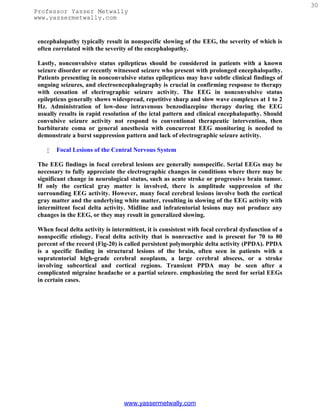
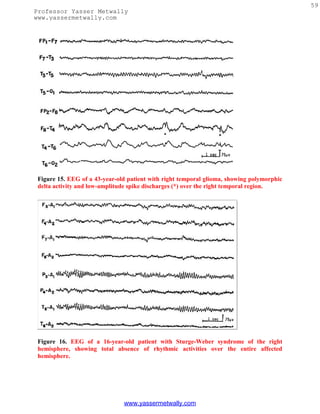
 When focal delta activity is intermittent, it is consistent with focal cerebral dysfunction of a
 nonspecific etiology. Focal delta activity that is nonreactive and is present for 70 to 80
 percent of the record (Fig-20) is called persistent polymorphic delta activity (PPDA). PPDA
 is a specific finding in structural lesions of the brain, often seen in patients with a
 supratentorial high-grade cerebral neoplasm, a large cerebral abscess, or a stroke
 involving subcortical and cortical regions. Transient PPDA may be seen after a
 complicated migraine headache or a partial seizure. emphasizing the need for serial EEGs
 in certain cases.


                                  www.yassermetwally.com
31
Professor Yasser Metwally
www.yassermetwally.com


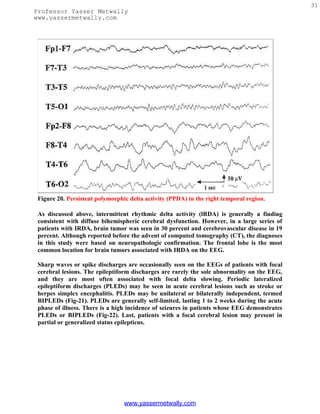
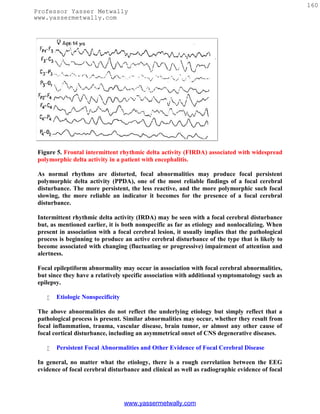
 Figure 20. Persistent polymorphic delta activity (PPDA) in the right temporal region.

 As discussed above, intermittent rhythmic delta activity (lRDA) is generally a finding
 consistent with diffuse bihemispheric cerebral dysfunction. However, in a large series of
 patients with IRDA, brain tumor was seen in 30 percent and cerebrovascular disease in 19
 percent. Although reported before the advent of computed tomography (CT), the diagnoses
 in this study were based on neuropathologic confirmation. The frontal lobe is the most
 common location for brain tumors associated with IRDA on the EEG.

 Sharp waves or spike discharges are occasionally seen on the EEGs of patients with focal
 cerebral lesions. The epileptiform discharges are rarely the sole abnormality on the EEG,
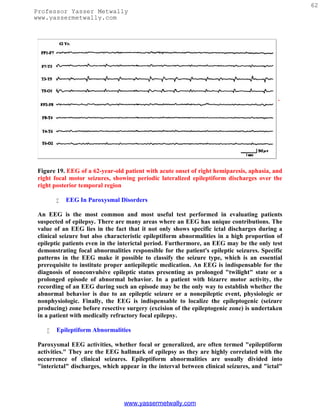
 and they are most often associated with focal delta slowing. Periodic lateralized
 epileptiform discharges (PLEDs) may be seen in acute cerebral lesions such as stroke or
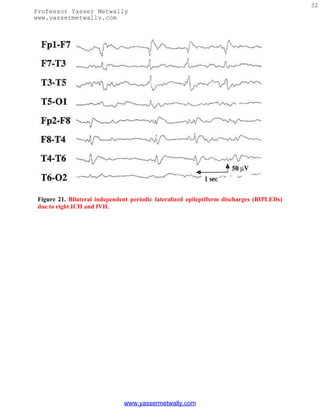
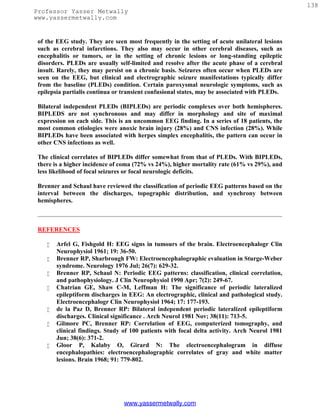
 herpes simplex encephalitis. PLEDs may be unilateral or bilaterally independent, termed
 BIPLEDs (Fig-21). PLEDs are generally self-limited, lasting 1 to 2 weeks during the acute
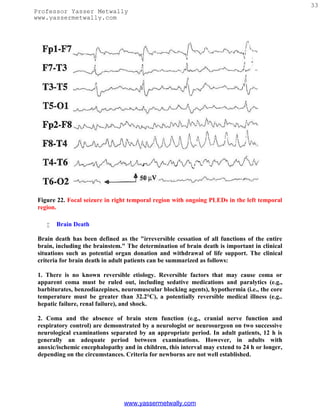
 phase of illness. There is a high incidence of seizures in patients whose EEG demonstrates
 PLEDs or BIPLEDs (Fig-22). Last, patients with a focal cerebral lesion may present in
 partial or generalized status epilepticus.


                                 www.yassermetwally.com
32
Professor Yasser Metwally
www.yassermetwally.com


 Figure 21. Bilateral independent periodic lateralized epileptiform discharges (BIPLEDs)
 due to right ICH and IVH.


                               www.yassermetwally.com
33
Professor Yasser Metwally
www.yassermetwally.com


 Figure 22. Focal seizure in right temporal region with ongoing PLEDs in the left temporal
 region.

       Brain Death

 Brain death has been defined as the "irreversible cessation of all functions of the entire
 brain, including the brainstem." The determination of brain death is important in clinical
 situations such as potential organ donation and withdrawal of life support. The clinical
 criteria for brain death in adult patients can be summarized as follows:

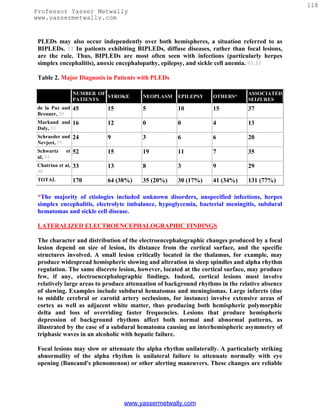
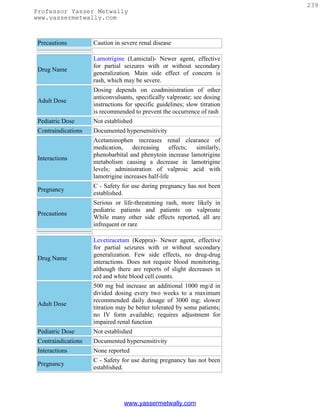
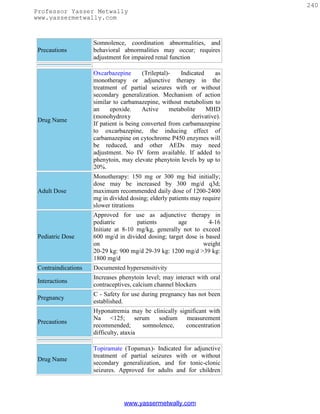
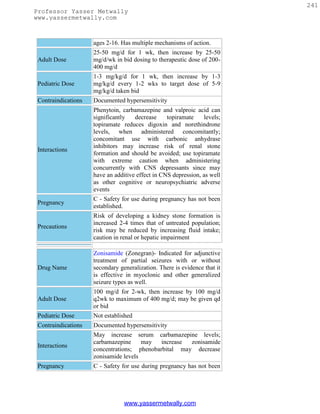
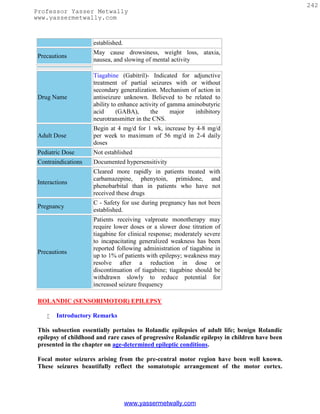
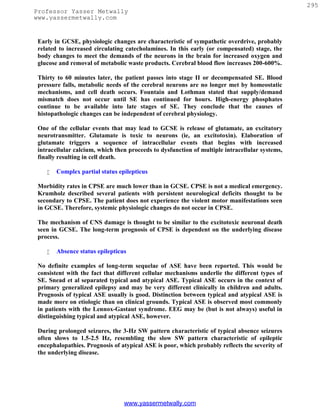
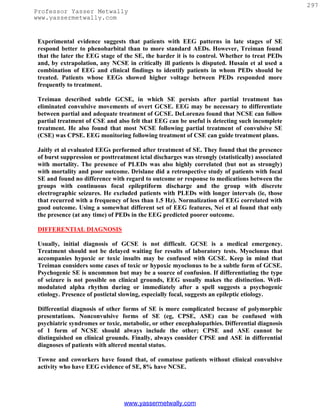
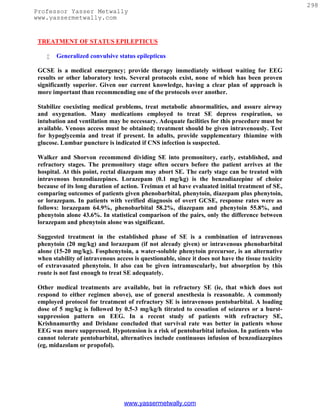
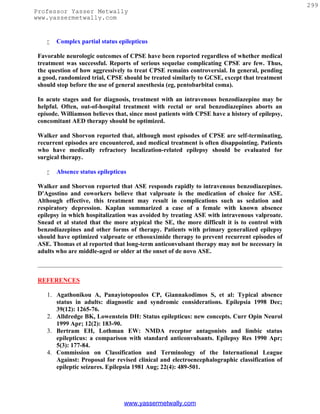
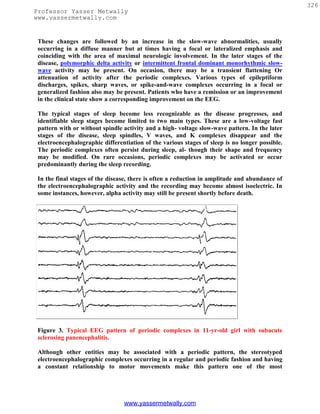
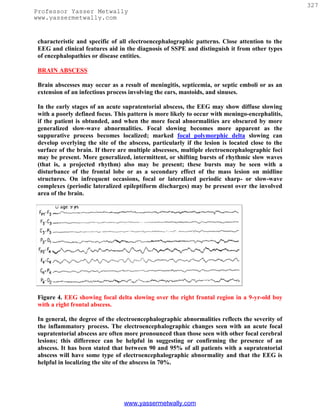
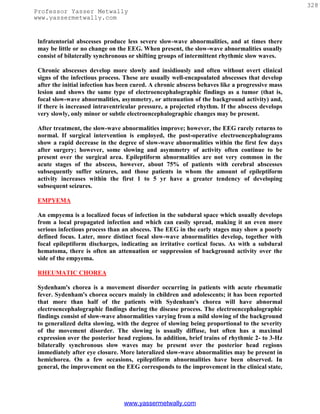
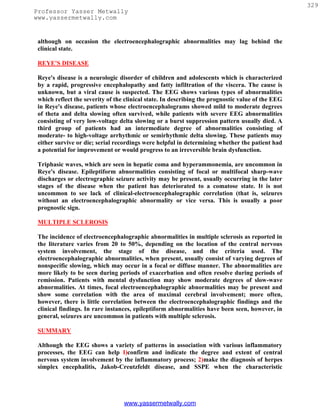
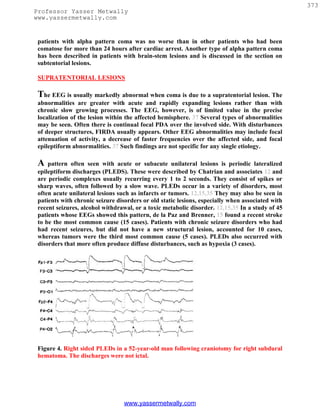
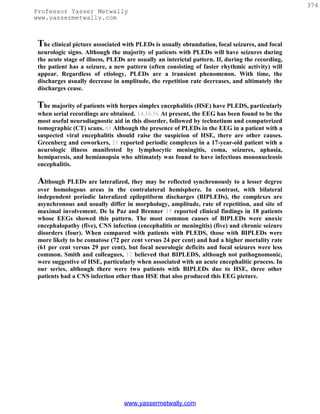
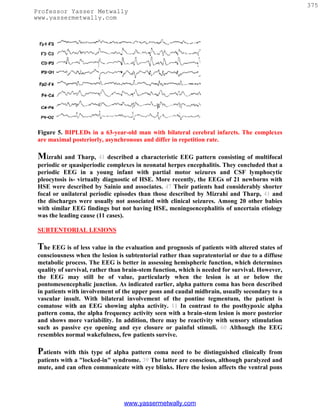
 1. There is no known reversible etiology. Reversible factors that may cause coma or
 apparent coma must be ruled out, including sedative medications and paralytics (e.g.,
 barbiturates, benzodiazepines, neuromuscular blocking agents), hypothermia (i.e., the core
 temperature must be greater than 32.2°C), a potentially reversible medical illness (e.g..
 hepatic failure, renal failure), and shock.

 2. Coma and the absence of brain stem function (e.g., cranial nerve function and
 respiratory control) are demonstrated by a neurologist or neurosurgeon on two successive
 neurological examinations separated by an appropriate period. In adult patients, 12 h is
 generally an adequate period between examinations. However, in adults with
 anoxic/ischemic encephalopathy and in children, this interval may extend to 24 h or longer,
 depending on the circumstances. Criteria for newborns are not well established.


                                 www.yassermetwally.com
34
Professor Yasser Metwally
www.yassermetwally.com


 3. Confirmatory tests (e.g., EEG, cerebral angiogram or nuclear cerebral blood flow scan)
 may be used if the period of observation is less than that recommended above, as in the
 setting of organ donation. In all other circumstances, these tests are considered optional
 and are used at the discretion of the attending physician.

 An EEG recording to determine brain death should not be considered until the clinical
 criteria are met. The EEG then be ordered to confirm electrocerebral inactivity or silence.
 (ECI and ECS. respectively). ECI is defined as lack of EEG activity greater than 2 µV. The
 following guidelines for performing an EEG to confirm ECI have been recommended by
 the American Electroencephalographic Society:

 1. At least 8 scalp electrodes should be used, covering the frontal, central, temporal, and
 occipital regions of both hemispheres.

 2. Interelectrode impedances should be between 100 and 1000 ?.

 3. The integrity of the recording system should be confirmed at the beginning of the
 recording. This is generally done by touching each electrode in succession and documenting
 the resulting electrode artifact.

 4. Interelectrode distances should be 10 cm or greater.

 5. Sensitivities must be increased from 7 µV /mm to 2 µV /mm during the recording, the
 duration of which should be at least 30 min, excluding time for EEG machine preparation
 (i.e., machine calibration at all sensitivities).

 6. Filter settings should be 1 Hz for the low-frequency filter and 30 Hz or greater for the
 high-frequency filter.

 7. Monitoring of additional cerebral and noncerebral sites should be done as needed. This
 is done to confirm the source of suspected artifacts, such as electrocardiogram, respiration.
 electromyogram. etc.

 8. Unreactivity of the EEG should be documented using visual stimulation, auditory
 stimulation and somatosensory stimulation below and above the neck.

 9. The EEG recording during ECI should be performed by a qualified technologist.

 10. The EEG should be repeated if there is any doubt regarding the diagnosis of ECI.

 It is crucial to remember that the EEG is only a confirmatory test for the presence of
 cerebral death and that the primary criteria are clinical. As the EEG is subject to artifacts
 whose source may not be determined, the utility of this test for confirmation of ECI may be
 limited in settings where factors which cause EEG artifacts are prevalent.


                                 www.yassermetwally.com
35
Professor Yasser Metwally
www.yassermetwally.com


       Electrocorticography

 Electrocorticography (ECoG) is the technique by which the brain's electrocerebral activity
 is directly measured using either depth electrodes, cortical surface contact electrodes, or
 subdural electrode strips or arrays. Although ECoG is not a routine procedure, it has
 become widely used in the presurgical evaluation of patients with medically intractable
 partial epilepsy where the site of seizure onset cannot be adequately localized using
 noninvasive methods. ECoG has also proved to be an important technique for functional
 brain mapping of eloquent cortex during the neurosurgical resection of lesions such as
 brain tumors or vascular malformations.

 In patients undergoing invasive monitoring with depth or subdural electrodes for epilepsy
 surgery evaluation, the decision of where to place the electrodes is based on several factors.
 including ictal semiology, interictal epileptiform activity and neuroimaging findings.
 Electrodes should be placed to cover the region of suspected seizure onset. Often the
 corresponding contralateral cortex is also covered, for reference and to confirm that there
 is a single zone of epileptogenesis. A sufficient number of seizures are recorded with video-
 EEG monitoring using the invasive electrodes, and the behavioral onset of seizures is timed
 to confirm that it follows the electrographic onset. Interictal epileptiform activity is much
 more often recorded when invasive electrodes are used, and it is often multifocal. Upon
 completion of monitoring, depth electrodes may be removed at the patient's bedside.
 Removal of subdural electrodes is generally performed in the operating room.

 The primary use of cortical stimulation is to identify areas of essential cortex, such as those
 subserving motor, sensory or language function. Brain mapping using cortical stimulation
 may be performed during epilepsy surgery or other neurosurgical procedures such as the
 resection of tumors or vascular malformations. It may be conducted intraoperatively with
 the patient awake in the operating room, or extraoperatively in the patient's room, where
 testing may be performed over several days in sessions lasting 1 to 3 h as needed. At most
 centers, stimulation consists of 0.3 to 1 ms biphasic square wave pulses at 50 Hz, lasting
 from 2 to 5 s each. The stimulation intensity starts at 0.5 to 1 mA and is raised in
 increments of 0.5 to 1 mA until a neurological deficit is produced or afterdischarges occur
 or a maximum 15 mA stimulus intensity is reached. During dominant temporal lobe
 surgery, object naming alone may be used if the zone of resection is more than 2 cm distal
 to the defined language cortex. However, when the zone of resection must border on
 language cortex, more extensive testing is performed, including reading, repetition, naming
 and comprehension. Motor and sensory areas may be similarly mapped by evoking either
 muscle contraction when stimulating areas of the precentral gyrus or regions of paresthesia
 when stimulating the postcentral gyrus. In all cases, the lowest stimulation intensity that
 evokes a response should be used, to limit the current field to the region of interest.

 Clinical seizures provoked by cortical stimulation are in general not predictive of the zone
 of epileptogenesis in patients with intractable partial seizures. Afterdischarge potentials are
 brief, self-limited electrographic seizures that may be produced by cortical stimulation.
 Afterdischarges may evolve into a clinical seizure, and for this reason, anticonvulsant levels
 in patients with partial seizures are maintained in the therapeutic range when cortical


                                  www.yassermetwally.com
36
Professor Yasser Metwally
www.yassermetwally.com


 stimulation is being performed. At some medical centers, cortical stimulation is performed
 in an attempt to induce typical auras that the patient may experience. Temporal lobe
 epilepsy has been reported to have the highest concordance between spontaneous seizures
 and induced auras or seizures.

       Neonatal EEG

 The neonatal period extends from birth (including premature birth) to age 2 months. The
 conceptual age (CA), or age since conception, is an important factor in interpreting the
 neonatal EEG, because it defines the level of maturation of the CNS. As the premature
 brain matures, well-defined patterns are seen that help to differentiate normal from
 abnormal EEGs at specific ages. Owing to the small size of the neonatal head, the
 International 10-20 System of electrode placements is modified to allow for coverage of the
 frontal, central, temporal, and occipital regions. Physiologic parameters such as heart rate,
 respirations, eye movements and limb myogenic activity are also monitored to help
 differentiate active sleep (rapid eye movements, variable heart rate and respiration) from
 quiet sleep (no movement with regular heart rate and respirations), and wakefulness from
 sleep. The EEG is performed at a paper speed of 15 mm/s (one-half the adult paper speed).
 This is done to allow a longer sampling time (generally 1 h) and to compress the EEG, as it
 consists predominantly of theta and delta range frequencies. Above a CA of 48 weeks, the
 standard EEG is performed.

 Before 22 weeks CA there is no discernible electrocerebral activity. As the neonatal brain
 matures, a discontinuous, invariant pattern is seen initially, which is gradually replaced by
 more continuous, variant patterns as term gestation is reached. At 26 weeks CA, a
 discontinuous pattern is seen, with bursts of high-amplitude, sharply contoured theta
 activity, which is maximal in the temporal regions. During the interburst periods, there is
 no discernible EEG activity. The EEG is unreactive and remains so until 34 weeks CA. By
 30 weeks CA, active sleep can be distinguished from quiet sleep by a reduction in
 amplitude and the amount of delta activity. At this age, beta-delta complexes (delta
 brushes) are seen in both stages of sleep; they gradually become less frequent and
 disappear by term. By 35 weeks CA, the EEG is reactive. Independent frontal sharp
 transients are seen, as well as occasional equally distributed independent sharp transients
 in both hemispheres, which may be seen until term. Wakefulness can be distinguished from
 sleep at 36 weeks CA, demonstrating continuous, low-amplitude mixed frequencies. At
 term, the EEG should be synchronous and reactive and should demonstrate both active
 and quiet sleep and wakefulness.

 The most common abnormality in a neonatal EEG is the absence or delayed appearance of
 normal patterns. A low-amplitude EEG may be due either to cerebral dysfunction or to an
 extracerebral fluid collection such as scalp edema or a subdural hematoma. An increased
 number of multifocal independent sharp transients indicates diffuse cerebral dysfunction,
 which is maximal in the region of the most frequent transients. These sharp transients are
 not called sharp waves or spikes, as they do not indicate a seizure disorder in the neonate.


                                 www.yassermetwally.com
37
Professor Yasser Metwally
www.yassermetwally.com


 The clinical and EEG findings of a seizure in the neonate vary in semiology and pattern,
 and some are controversial. Seizures in a neonate may not be accompanied by an
 electrographic correlate. Conversely, electrographic seizures may have no clinical
 correlate, or they may have subtle correlates such as apnea or heart rate changes. The EEG
 diagnosis of a seizure is based on the evolution of frequency of focal rhythmic activity,
 which may be limited to a single electrode. Generalized tonic clonic seizures very rarely are
 seen, likely because the myelination and dendritic arborization of the CNS is limited at this
 age.

 Obtaining an EEG should be considered in all premature or term neonates who have
 evidence of significant neurological dysfunction on clinical examination. In addition to
 providing information regarding CNS maturation, the neonatal EEG is often helpful in
 guiding neuroimaging assessment by cranial ultrasound, CT, or MRI. As neonatal seizures
 may have subtle or no clinical manifestations, the EEG is an invaluable tool in the clinical
 evaluation of the neonate.


 References

       Arroyo S, Lesser RP, Gordon B, et al: Functional significance of the mu rhythm of
        human cortex: an electrophysiologic study with subdural electrodes.
        Electroencephalogr Clin Neurophysiol 1993 Sep; 87(3): 7.
       Benbadis SR: Focal disturbances of brain function. In: Levin KH, Lüders HO, eds.
        Comprehensive Clinical Neurophysiology. Philadelphia: WB Saunders Co;
        2000:457-467.
       McFarland DJ, Miner LA, Vaughan TM, Wolpaw JR: Mu and beta rhythm
        topographies during motor imagery and actual movements. Brain Topogr 2000
        Spring; 12(3): 177-86.
       Pfurtscheller G, Stancak A Jr, Edlinger G: On the existence of different types of
        central beta rhythms below 30 Hz. Electroencephalogr Clin Neurophysiol 1997 Apr;
        102(4): 316-25.
       Pfurtscheller G, Neuper C, Krausz G: Functional dissociation of lower and upper
        frequency mu rhythms in relation to voluntary limb movement. Clin Neurophysiol
        2000 Oct; 111(10): 1873-9.
       Pineda JA, Allison BZ, Vankov A: The effects of self-movement, observation, and
        imagination on mu rhythms and readiness potentials (RP's): toward a brain-
        computer interface (BCI). IEEE Trans Rehabil Eng 2000 Jun; 8(2): 219-22.
       Zivin, L., and Ajmone Marsan, C.: Incidence and prognostic significance of
        "epileptiform" activity in the EEG of non-epileptic subjects. Brain 91:751-778 1968.
       Blume WT, McLachlan RS, Chovaz CJ, : Temporal lobectomy for intractable
        epilepsy in patients over age 45 years. Neurology 1992 Mar; 42(3 Pt 1): 662-5.


                                 www.yassermetwally.com
38
Professor Yasser Metwally
www.yassermetwally.com


 INDEX


                                                                    INTRODUCTION


 INTRODUCTION

 Despite advances in neuroimaging techniques over the past three decades that have helped
 in identifying structural lesions of the central nervous system, electroencephalography
 (EEG) continues to provide valuable insight into brain function by demonstrating focal or
 diffuse background abnormalities and epileptiform abnormalities. It is an extremely
 valuable test in patients suspected of epilepsy and in patients with altered mental status
 and coma. Patterns in the EEG make it possible to clarify the seizure type; it is


                                www.yassermetwally.com
39
Professor Yasser Metwally
www.yassermetwally.com


 indispensable for the diagnosis of nonconvulsive status epilepticus and for separating
 epileptic from other paroxysmal (nonepileptic) episodes. There are EEG patterns
 predictive of the cause of the encephalopathy (i.e., triphasic waves in metabolic
 encephalopathy) or the location of the lesion (i.e., focal polymorphic delta activity in lesions
 of the subcortical white matter). The various EEG characteristics of infantile, childhood,
 and adult epilepsies are described as well as the EEG patterns that are morphologically
 similar to interictal/ictal epileptiform discharges but unrelated to epilepsy. An EEG is most
 helpful in determining the severity and, hence, the prognosis of cerebral dysfunction.
 Lastly, EEG is extremely helpful in assessing normal or abnormal brain functioning in a
 newborn because of the serious limitation in performing an adequate neurologic
 examination on the neonate who is intubated or paralyzed for ventilatory control. Under
 such circumstances, the EEG may be the only available tool to detect an encephalopathic
 process or the occurrence of epileptic seizures.

 Electroencephalography (EEG) is the technique of recording from the scalp the
 spontaneous electrical activity of the brain and correlating it to the underlying brain
 function. Since the first recording of a human EEG in 1929 by Hans Berger, improvement
 in electronics and technology has made EEG one of the most widely used laboratory tests
 for clinical evaluation of neurologic disorders. However, in the past three decades with
 continuing advances in neuroimaging, particularly magnetic resonance imaging (MRI), the
 role of clinical EEG has become restricted and progressively more focused. Its major utility
 at present is in the evaluation of focal and diffuse encephalopathies, comatose conditions,
 epileptic disorders, and cerebral disorders affecting neonates and infants. The present
 article is not an attempt to describe EEG comprehensively in normal subjects and in
 different disease processes but to highlight its usefulness/limitation and emphasize
 precautions/care needed in its optimal utility. The subject will be discussed under seven
 sections: EEG in normal subjects, EEG in patients with altered mental status or diffuse
 encephalopathies, EEG in focal or lateralized cerebral hemispheric lesions, EEG in
 paroxysmal disorders, EEG in generalized epilepsies, EEG in neonates, and EEG in status
 epilepticus.

       EEG In Normal Subjects

 The EEG in the normal awake child and adult is well known and needs no detailed
 description. The following are points of emphasis:

    1. Alpha rhythm in the two hemispheres is very similar in frequency. A consistent
       difference of even 0.5 to 1.0 cps on the two sides is significant; the side showing a
       slower frequency may have a hemispheric dysfunction. Amplitude asymmetry is of
       relatively less significance, unless the asymmetry is prominent. In general, the alpha
       rhythm is higher in amplitude over the right hemisphere. If the amplitude of the
       alpha rhythm on the right side is more than 1 1/2 times that on the left side, the
       asymmetry is usually regarded as significant. When the alpha rhythm is over 25%
       higher in amplitude on the left side than the right side, this constitutes a significant
       asymmetry.[1]


                                  www.yassermetwally.com
40
Professor Yasser Metwally
www.yassermetwally.com


   2. Significant theta activity (4 to 7 Hz) is present in the EEG of children and
      adolescents. Delta activity in the awake tracing is rarely seen after the age of 5
      years. A common EEG pattern in adolescents is the presence of intermittent delta
      waves intermixed with alpha rhythm over the posterior head regions, the so-called
      "slow waves of youth."
   3. The EEG during non-rapid eye movement (NREM) sleep in children shows very
      prominent spikelike vertex sharp transients, which are often mistaken for
      epileptiform activity by EEG interpreters inexperienced with children's EEGs (Fig.
      1). Similarly, positive occipital sharp transients (POSTs), when high in amplitude
      and sharp in configuration, can be easily misinterpreted as abnormal spikes,
      especially in linkages where occipital electrodes are connected to input terminal 2
      (grid 2) of the amplifier (e.g., "double banana run").
   4. In a small proportion of normal adult subjects, clearly identifiable and countable
      alpha rhythm may be entirely absent. The background may consist of irregular
      mixtures of low amplitude (<20 µV) activities, mostly from 5.0 to 30.0 cps without a
      dominant frequency. Such low-voltage EEGs have been studied in detail.[2] The
      EEG is reactive to various physiologic stimuli such as sleep, drugs, and pathologic
      processes. In over half of the patients with low-voltage EEGs, hyperventilation may
      bring out an alpha rhythm. During sleep, normal activities such as vertex sharp
      transients and sleep spindles may be generated. It is essential that low-voltage
      tracings be clearly distinguished from EEGs showing electrocerebral inactivity,
      which have a grave prognosis. These EEGs lack reactivity and lability, and with
      increased instrumental sensitivities show no electrical activity of cerebral origin.
      Low-voltage EEGs are generally considered to be a normal variant occurring in 7 to
      10% of normal subjects over the age of 20 years. The low-voltage EEG does not
      correlate with neurologic or psychiatric disease.
   5. Changes in the EEG during normal senescence has been described in detail.[3-5]
      The most frequent change is the slowing of the alpha frequency. By the age of 70
      years, the mean alpha frequency decreases to 9.0 to 9.5 cps and decreases further to
      8.5 to 9.0 cps beyond the age of 80 years. In healthy elderly subjects, even at or over
      the age of 100 years, the frequency of the alpha rhythm remains well above 8.0
      cps.[6,7] Therefore, an average alpha frequency of less than 8.0 cps measured with
      the patient fully alert must be considered abnormal in elderly patients at all ages.
   6. Another EEG finding is the presence of isolated transients of irregular focal slowing
      in the theta-delta frequency range over the anterior temporal region, reported in
      40% of healthy elderly subjects.[4,5,8] They are most frequent over the left
      temporal area particularly during drowsiness (Fig. 2). Sometimes poorly defined
      sharp waves are interspersed with focal slow components. The left-sided
      accentuation of this activity remains unexplained. Such intermittent slow activity,
      with or without sharp components over the temporal region, has no correlation with
      intellectual or cognitive functioning or presence of a seizure disorder. More recent
      investigations suggest that the temporal slowing in the awake tracing may, in fact,
      not be the inevitable consequence of advancing age. In neurologically and
      psychologically normal septuagenarians, Katz and Horowitz[9] found that the focal
      slow activity was seen in only 17% of records and when present occupied less than
      1% of the tracing. Hence, intermittent temporal theta-delta activity occupying only


                                www.yassermetwally.com
41
Professor Yasser Metwally
www.yassermetwally.com


         a small proportion of the wake tracing should be considered as a normal aging
         phenomena. When the temporal slow activity comprises more delta than theta slow
         waves, which either recur frequently or occur in long runs and are widespread in
         distribution, a dementing process or focal lesion has to be seriously considered.
         Diffuse theta-delta activity in elderly subjects are likely to occur in those with
         intellectual impairment.[5]


    7.

 Figure 1. EEG of a 2-year-old child with very prominent spikelike vertex sharp transients.


                                 www.yassermetwally.com
42
Professor Yasser Metwally
www.yassermetwally.com


 Figure 2. EEG showing intermittent slow wave transients (*) in a 61-year-old subject.

       EEG in Patients with Altered Mental Status or Diffuse Encephalopathies

 The term encephalopathy is usually applied to patients displaying altered mental status as
 a result of a diffuse disturbance of brain function. Common encephalopathies are divided
 into metabolic, toxic, inflammatory (encephalitis), anoxic, and degenerative types. The
 EEG in most encephalopathies shows an alteration of background activities and emergence
 of varying degrees of theta-delta slowing. Remember that the EEG findings are generally
 nonspecific from a differential standpoint. The EEG is unable to distinguish between
 different etiologies. The main contribution of the EEG is in providing an objective measure
 of severity of encephalopathy, prognosis, and effectiveness of therapy.[10]

 There is a good correlation between the severity of the EEG changes, the severity of the
 encephalopathy, and the clinical state of the patient. In mild encephalopathy associated
 with mild clouding of consciousness and confusion, there is at first slowing of the posterior
 dominant rhythm, which decreases from a higher to a lower alpha frequency and then into
 the theta frequency range. More severe encephalopathy is associated with deeper levels of
 coma, and the background consists mainly of high-amplitude irregular delta activity. With
 further deterioration in the encephalopathy, the amplitude of all activities drop below 20
 µV and the EEG may consist of relatively low-amplitude, invariant delta activity. Some
 tracings reveal suppression-burst pattern where there is regular alternation of very-low-
 amplitude EEG with relatively higher-amplitude EEG segments. The most extreme type of
 abnormality is, of course, lack of any cerebral activity (i.e., electrocerebral inactivity).
 Presence of the later three types of EEG patterns (invariant low-amplitude delta,
 suppression-burst, and electrocerebral inactivity) carry a grave prognosis, if drug
 intoxication can be excluded as the cause of encephalopathy. If due to drug intoxication,


                                 www.yassermetwally.com
43
Professor Yasser Metwally
www.yassermetwally.com


 these severely abnormal patterns are quite reversible with treatment, with a high potential
 for complete recovery of neurologic functioning.

 Besides the degree of background slowing, there are two other features in the EEG that
 must be evaluated to determine the severity of encephalopathy. These are spontaneous
 variability of the EEG over several seconds to minutes, and reactivity to painful
 stimulation. In milder encephalopathies, the EEG shows spontaneous variability during the
 recording period and evidence of EEG reactivity to painful stimulation. When the EEG
 shows reactivity, painful stimulation commonly results in reduction of the amplitude,
 increase in frequency of the background activity, and reduction in the slow activity. There
 is often a "paradoxical activation," which is a period of more severe delta slowing following
 painful stimulation (Fig. 3). The presence of any type of reactivity (reduction in slow
 activity or increase in the degree of slowing) on painful stimulation suggests a lower grade
 of encephalopathy, whereas the EEG lacking spontaneous variability (invariant EEG) and
 total lack of any reactivity to intense and prolonged stimulation suggests a severe degree of
 encephalopathy.


 Figure 3. EEG of an 8-year-old child with hemolytic anemia and uremia, showing
 paradoxical activation characterized by increased delta slowing induced by painful
 stimulation.

 A grading system of EEG abnormalities in adults is shown in Table 1, similar to other
 rating systems.[11,12] It is helpful in prognosis, evaluation of effectiveness of therapy, and
 comparing serial EEG studies. The slow activities associated with an encephalopathy are
 usually widespread and symmetrical over the two hemispheres. In children, the slowing


                                  www.yassermetwally.com
44
Professor Yasser Metwally
www.yassermetwally.com


 may predominate over the posterior hemisphere, and in adults, usually over the frontal
 areas. These are simply maturation-related spatial EEG features, which do not signify that
 the encephalopathy is more severe posteriorly in children and anteriorly in adults.

 Table 1. Grading of EEG Abnormalities in Diffuse Encephalopathy


 It is unusual to see prominent focal or lateralized EEG findings with a diffuse
 encephalopathy unless there is an associated focal process, such as an old infarct or tumor.
 An exception is nonketotic hyperosmolar coma, a form of metabolic encephalopathy, which
 is very often associated with focal clinical (e.g., focal seizures) and focal EEG findings.
 Herpes simplex encephalitis and Creutzfeldt-Jakob disease (in the early stages) may also
 produce lateralized EEG slowing related to unilateral emphasis of the associated pathologic
 process (see below).

 Another EEG pattern associated with a mild form of encephalopathy is the presence of
 bursts of intermittent rhythmic delta activity (IRDA) superimposed on a more or less
 normal background activity. Depending on the area of predominance, the IRDA is further
 divided into frontal or occipital types. IRDA has been traditionally considered a "projected
 rhythm" and a hallmark of EEG findings in patients with deep midline lesions of
 diencephalic, upper brain stem, or posterior fossa locations.[13] Critical evaluations
 subsequently have cast serious doubts on this classic concept because this EEG pattern has
 been found in a large variety of pathological conditions and is often absent in deep midline
 lesions. As a matter of fact, the most common etiology of IRDA is a mild to moderate
 encephalopathy associated with some disturbance in consciousness (Fig. 4).[14]


                                 www.yassermetwally.com
45
Professor Yasser Metwally
www.yassermetwally.com


                                                                     Figure 4. EEG of an
                                                                     82-year-old     patient
                                                                     with recent history of
                                                                     lethargy           and
                                                                     confusion,     showing
                                                                     frontal    intermittent
                                                                     rhythmic          delta
                                                                     activity.


 Are there any unique or specific EEG features that help narrow the differential diagnosis
 of diffuse encephalopathy and point toward a more specific etiology? There are a few EEG
 patterns (e.g., triphasic waves, positive spikes, and periodic complexes) that, although not
 commonly encountered in encephalopathic patients, when present suggest a specific
 etiology for the encephalopathy. Periodic patterns are specifically encountered in anoxic
 encephalopathy and certain encephalitides, whereas triphasic waves and positive spikes
 characteristically occur in metabolic encephalopathies.

           o   Metabolic Encephalopathy

 An EEG showing diffuse slowing of the background and presence of triphasic waves is
 highly suggestive of a metabolic encephalopathy. triphasic waves are high amplitude (200
 to 300 µV), usually bilaterally synchronous, symmetrical, and maximum in amplitude over
 the frontocentral regions (Fig. 5). The most prominent component is a positive sharp wave
 that is preceded by a short-duration negative sharp wave and followed by a long-duration
 negative slow wave.[15] However, variations are quite common and the waveform may be
 monophasic or biphasic.


                                 www.yassermetwally.com
46
Professor Yasser Metwally
www.yassermetwally.com


 Figure 5. EEG of a 69-year-old patient with hepatic encephalopathy, showing triphasic
 waves.

 Although earlier authors[15] emphasized that the triphasic waves were highly specific for
 hepatic encephalopathy, this EEG pattern has been found to correlate best with any
 metabolic type of encephalopathy; hepatic, renal, and anoxic etiologies account for over
 75% of EEGs with triphasic waves.[16-18] A feature of triphasic waves often stressed is the
 progressive time lag (25 to 140 milliseconds) of the positive component of the triphasic
 wave from the anterior to the posterior region. This feature was considered to be most
 specific for hepatic etiology.[17,19] Recent studies[18] demonstrated that the time lag is
 neither a consistent feature of triphasic waves, nor has any specificity with regard to the
 type of metabolic encephalopathy. The "peril" is that no single feature or group of features
 regarding triphasic waves distinguish hepatic from nonhepatic cases.


                                 www.yassermetwally.com
47
Professor Yasser Metwally
www.yassermetwally.com


 There are a few other "pearls" regarding triphasic waves. Patients with metabolic
 encephalopathies showing prominent triphasic wave activity in their EEG have an overall
 poor prognosis; in one series, over two thirds died in a matter of a few months.[20]
 Furthermore, triphasic waves occur essentially in adults; this pattern has been rarely
 reported below the age of 20 years.[21] This is particularly true with Reyes disease, an
 acute childhood encephalopathy with hepatic fatty infiltration, where triphasic waves are
 absent.[22] The EEG pattern of 14 to 6 per second, positive spikes are a well-known
 maturational EEG pattern normally seen in children in adolescence during NREM sleep.
 The presence of positive spike bursts in comatose patients with continuous delta activity is
 a unique, albeit rare, EEG pattern associated with hepatic or anoxic encephalopathy in
 children (Fig. 6).[23,24]


 Figure 6. EEG of a 16-year-old comatose patient with Reye's syndrome, showing 14 cps
 positive spikes.

           o   Toxic Encephalopathy

 Overdose of hypnotic-sedative drugs is a common cause of coma encountered in the
 emergency room; excessive beta activity is a prominent feature in the EEG over the
 anterior head regions. What is less well recognized is that with more severe intoxication,
 the fast activity assumes a slower frequency (usually 10 to 13 Hz), which is widespread but
 with anterior predominance. The presence of generalized theta-delta activity with
 superimposed alpha frequency activity is a unique encephalographic pattern highly
 characteristic of sedative drug intoxication (Fig. 7). In the absence of prominent slow


                                 www.yassermetwally.com
48
Professor Yasser Metwally
www.yassermetwally.com


 activity, the anterior dominant generalized fast activity produces alpha or spindle coma
 pattern in the EEG indistinguishable from that seen with severe anoxic
 encephalopathy.[25,26]


                                                             Figure 7. EEG of an 18-year-
                                                             old patient with phenobarbital
                                                             intoxication,          showing
                                                             generalized theta-delta activity
                                                             with     superimposed      beta
                                                             frequencies (A) followed in 3
                                                             days by normalization of the
                                                             EEG (B).


 Very severe drug intoxication results in suppression-burst pattern or electrocerebral
 inactivity. Even though these patterns signify advanced intoxication, they do not carry as
 ominous a prognosis as when they occur in the setting of cardiopulmonary arrest. It has
 been repeatedly demonstrated that patients with drug-induced coma may have
 electrocerebral inactivity lasting over a day and may still make a full neurologic recovery.

 Phencyclidine hydrochloride ("angel dust," "PCP pills") is associated with a distinctive
 EEG pattern similar to that of subacute sclerosing panencephalitis (SSPE). The EEG shows
 generalized sinusoidal 6.0 cps theta activity that is interrupted approximately every 4
 seconds by generalized slow wave discharges.[27] A similar periodic EEG pattern is
 described transiently during ketamine (a phencyclidine derivative) anesthesia.


                                 www.yassermetwally.com
49
Professor Yasser Metwally
www.yassermetwally.com


           o   Anoxic Encephalopathy

 EEG is commonly performed in patients with anoxic encephalopathy due to
 cardiopulmonary arrest for assessing the severity of cerebral insult and for prognosis.
 Patients with normal or almost normal EEG tracings (grade I encephalopathy) following
 an episode of cerebral anoxia have an excellent prognosis for full neurologic recovery. On
 the other hand, patients with grade IV or V EEG abnormalities have a uniformly fatal
 prognosis; most of these patients die without regaining consciousness. An EEG should be
 obtained at least 5 or 6 hours after successful resuscitation since it takes an hour or more
 for the EEG to stabilize after an anoxic episode.[12]

 Besides electrocerebral inactivity, there are three other unique EEG patterns, encountered
 in association with anoxic encephalopathy, that carry a poor prognosis for neurologic
 recovery.

 Periodic discharges in anoxic encephalopathy may be either bilaterally synchronous
 periodic epileptiform discharges (BiPLEDs)[28] or independently occurring periodic
 lateralized epileptiform discharges (bilateral PLEDs).[29] Both periodic EEG patterns are
 often associated with myoclonic seizures (or even myoclonic status) and carry an extremely
 poor prognosis and uniform mortality (Fig. 8). Vigorous antiepileptic medication treatment
 of myoclonic seizures related to the two EEG patterns do not affect the ultimate prognosis.

 Suppression-burst EEG pattern due to anoxic encephalopathy is at times associated with
 interesting clinical phenomena; during periods of activity both eyes may open or there are
 other brief body movements (Fig. 9).[30,31] Whether this is an epileptic event (a brief
 myoclonic seizure) or a brain stem release phenomena remains unknown. At times these
 movements may cause confusion in the minds of relatives and even treating physicians
 about the patient's state of consciousness, as they may mimic volitional motor activity.

 A rare EEG pattern seen in severe anoxic encephalopathy is the alpha coma pattern,
 denoting the conjunction of clinical coma associated with alpha frequency activity.[32-34]
 Because in such tracings the dominant frequency is alpha frequency activity without
 significant slower frequencies, the EEG superficially resembles that of an "awake" person,
 but there are major differences. The alpha frequency activity in alpha pattern coma is
 widespread in distribution and is often prominent over the anterior head regions (Fig. 10).
 Reactivity to any type of sensory stimulation is usually absent. The prognosis of alpha
 pattern coma is extremely poor; all patients have either died or survived in chronic
 vegetative state.


                                 www.yassermetwally.com
50
Professor Yasser Metwally
www.yassermetwally.com


 Figure 8. EEG of a 49-year-old comatose patient following severe anoxic
 encephalopathy, showing bisynchronous periodic epileptiform discharges synchronous
 with jerks of the left lower extremity monitored on a separate channel.


                               www.yassermetwally.com
51
Professor Yasser Metwally
www.yassermetwally.com


 Figure 9. EEG of a 75-year-old patient with severe anoxic encephalopathy, showing
 suppression-burst pattern. During the burst activity there is opening of the eyes; eye
 movements monitored in the last channel.


                                www.yassermetwally.com
52
Professor Yasser Metwally
www.yassermetwally.com


 Figure 10. EEG of a 77-year-old comatose patient following cardiopulmonary arrest 4 days
 previously, showing "alpha coma pattern." Patient died after 2 days.

 Remember that EEG findings of alpha pattern coma are also seen in the setting of
 sedative/hypnotic drug intoxication[25,35] and in association with intrinsic brain stem
 lesions[36] with a much more favorable prognosis.

           o   Cerebral Death

 The EEG is being employed with increasing frequency for the determination of cerebral
 death in patients with irreversible coma, particularly when organs have to be salvaged for
 transplantation. It cannot be overemphasized that the absence of cerebral activity on the
 EEG is only one of the criteria, and should always be considered along with the clinical
 findings and blood flow studies for brain death. To properly identify very-low-voltage
 cerebral activity, to distinguish physiological or instrumental artifacts, and to eliminate the
 possibility of errors through malfunctioning equipment or inadequate techniques, the
 American EEG Society[37] has a number of recommendations that must be followed
 during EEG recordings in all cases of suspected brain death. In such "flat" tracings, EEG
 activity may be obscured by very-low-amplitude fast activity due to sustained contraction
 of scalp muscles, which can be eliminated by giving a short-acting neuromuscular blocking
 agent (succinylcholine, 20 to 40 mg IV). This step, which is very easy to undertake, is often
 overlooked to obtain a satisfactory recording in such patients.

 A single EEG and a 6- to 12-hour clinical observation after an unequivocal acute cerebral
 insult are minimum requirements for brain death evaluation in an adult. In young
 children, the guidelines are slightly different because of the more difficult task of


                                  www.yassermetwally.com
53
Professor Yasser Metwally
www.yassermetwally.com


 confirming brain death in this age group. A special task force[38] recommended the
 following:

    1. Brain death should not be determined until at least 7 days of age.
    2. Seven days to 2 months: two examinations and two EEGs separated by at least 48
       hours are required.
    3. Two months to 1 year: two examinations and two EEGs separated by at least 24
       hours are required.
    4. Older than 1 year: similar criteria as an adult (i.e., one EEG and at least 12 hours of
       observation).


       Encephalitides

 In viral encephalitis the severity of the EEG abnormalities generally parallel the clinical
 picture, but at times the EEG may be more disorganized and slow than the mental state of
 the patient may suggest. With a few exceptions, the EEG changes in different viral
 encephalitides are generally nonspecific and not helpful to distinguish one etiologic agent
 from another.[39]

 The EEG pattern and its evolution in herpes simplex encephalitis are rather characteristic
 so that the diagnosis can often be suspected by EEG findings when considered in the
 proper clinical setting. The EEG in herpes simplex encephalitis may show a prominent
 focal abnormality, usually a focus of polymorphic delta activity over a temporal region,
 corresponding to the initial localization of pathology to the temporal lobe of the brain.[40-
 42] The most characteristic EEG feature of herpes simplex encephalitis is the occurrence of
 pseudo-periodic, focal or unilateral, large amplitude, sharp wave complexes that repeat at
 regular intervals of 1 to 3 seconds.[40-43] These periodic lateralized epileptiform
 discharges are usually expressed maximally over the involved temporal lobe (Fig. 11). This
 characteristic periodic pattern is usually seen between 2 and 15 days after the onset of
 illness. As the disease progresses and the other hemisphere becomes involved, the periodic
 complexes may disappear on the side of initial involvement before appearing on the side
 more recently involved. With bilateral involvement of the brain, periodic complexes may
 occur over both hemispheres; they may then occur either synchronously or independently
 over the two sides.


                                 www.yassermetwally.com
54
Professor Yasser Metwally
www.yassermetwally.com


 Figure 11. EEG of a 65-year-old patient with Herpes simplex encephalitis, showing periodic
 epileptiform discharges occurring over the right temporal region every 1 to 2 seconds.

 The presence of unilateral or focal periodic complexes (PLEDs) is not unique for herpes
 simplex encephalitis. PLEDs may occur with acute focal cerebral hemispheric processes
 (e.g. infarction, brain abscess, or neoplasm).[44] Nevertheless, the presence of unilateral
 periodic complexes in association with an acute febrile illness, focal seizures, and spinal
 fluid pleocytosis is strongly suggestive of herpes simplex encephalitis.

 SSPE, a childhood disorder that is a slow virus infection of the central nervous system due
 to measles, has virtually disappeared from the United States since the introduction of
 measles vaccination. The EEG in SSPE is highly specific and characterized by the presence
 of high-amplitude periodic complexes that are bilateral, usually synchronous, and
 symmetrical.[45-47] They are remarkably stereotyped and consist of two or more delta
 waves with or without sharp wave components intermixed with them. The periodic
 complexes repeat with a fair regularity every 4 to 10 seconds and there is a 1:1 relationship
 of the EEG periodic complexes to the clinical myoclonic jerks, when present (Fig. 12). In
 the early stages of the disease, the periodic complexes may occur at irregular and long
 intervals, and sleep may activate them. A sleep recording, therefore, is recommended in a
 suspected case of SSPE in which the awake tracing has failed to reveal periodic
 complexes.[48] Also, in the early stages there is asymmetry of the periodic complexes,
 which may be associated with asymmetry of the myoclonic jerks that occur contralateral to
 the periodic complexes.[47] Later in the disease, the periodic complexes are bilaterally
 symmetrical and synchronous.


                                 www.yassermetwally.com
55
Professor Yasser Metwally
www.yassermetwally.com


 Figure 12. EEG of a 16-year-old patient with subacute sclerosing panencephalitis, showing
 high-amplitude generalized periodic complexes repeating at intervals of 8 to 10 seconds and
 accompanied by eye jerks and myoclonic jerks of the upper extremities monitored on the
 last two channels.

 Creutzfeldt-Jakob disease, a prion disorder of the central nervous system (CNS), is also
 characterized by a very specific EEG pattern, which consists of periodic, bilaterally
 synchronous wave forms.[49] The periodic discharges take the form of diphasic or
 triphasic sharp waves, which repeat regularly at a frequency close to one per second. There
 is a fairly close relationship between the periodic complexes and myoclonic jerks; the latter
 may occur a few milliseconds before or after the electrical event.

 What is less well known is the fact that in the early stages of Creutzfeldt-Jakob disease,
 focal or lateralized periodic sharp waves (PLEDs) may occur,[50,51] which later evolve into
 bilaterally symmetrical and synchronous periodic discharges superimposed on a "flat"
 background (Fig. 13). Although the periodic EEG pattern is not pathognomonic, the
 presence of periodic sharp waves occurring regularly around one per second, in association
 with clinical findings of progressive dementia and myoclonus in elderly individuals,
 provides strong support to the diagnosis of Creutzfeldt-Jakob disease. This characteristic
 periodic pattern is reported in more than 75% of patients with histologically verified
 Creutzfeldt-Jakob disease, and the pattern becomes fully established within the first 3
 months of the onset of symptoms.[52,53]


                                 www.yassermetwally.com
56
Professor Yasser Metwally
www.yassermetwally.com


 Figure 13. Serial EEGs of a 62-year-old patient with Creutzfeldt-Jakob disease. The first
 EEG (A), obtained 2 months after the onset of dementia and progressive right hemiparesis,
 shows left-sided delta activity. EEG 2 weeks later (B) shows periodic lateralized
 epileptiform discharges over the left hemisphere, and an EEG taken 5 months after the
 onset of illness (C) shows typical bisynchronous high-amplitude periodic complexes
 superimposed on "flat" background. Myoclonic jerks monitored on the last channel are
 synchronous to the periodic complexes.

       Degenerative Encephalopathies

 In degenerative encephalopathies, a common denominator is a disturbance in the
 regulation and frequency of the background activity, but the EEG features do differ with
 regard to whether the pathologic process involves predominantly cortical and/or
 subcortical gray matter or cerebral white matter.[54] In disorders that primarily involve
 the cerebral white matter, the EEG is characterized predominantly by the presence of
 high-amplitude continuous generalized polymorphic delta activity associated with a
 markedly disordered background and virtual absence of epileptiform activity or
 paroxysmal discharges. Such changes are characteristically seen in all types of
 leukodystrophies, Schilder's disease, and multifocal leukoencephalopathy. In diffuse
 cortical gray matter encephalopathies, the EEG is characterized by abnormal background
 activity that is slow, irregular, and low in amplitude. There is minimal continuous
 generalized polymorphic delta activity, and paroxysmal findings are usually absent or


                                www.yassermetwally.com
57
Professor Yasser Metwally
www.yassermetwally.com


 minimal. Examples include Alzheimer's or Pick's disease. In diffuse cortical and
 subcortical gray matter encephalopathies, the EEG shows generalized bilaterally
 synchronous paroxysmal discharges in the form of bursts of monorhythmic delta waves or
 paroxysms of slow spike wave activity superimposed on an abnormal background.
 Pathological conditions include cerebromacular degeneration (e.g., Batten's disease).

 Degenerative disorders with lesions predominantly below the cerebrum produce only
 minimal alterations in the EEG. This is usually the case in spinocerebellar degeneration,
 Parkinson's disease, progressive supranuclear palsy, and so on, where the EEG either
 remains normal or shows mild nonspecific slowing of the background activity. There are
 virtually no other EEG features associated with degenerative encephalopathies that have a
 high correlation to a specific etiologic process. The exception is the occurrence of large-
 amplitude spikes in response to single flashes or at flickering rates below three per second,
 which is a highly characteristic feature of Batten's disease.[55] These large potentials may
 reach 50 to 500 µV, maximum over the occipital region, and sometimes associated with
 myoclonic jerks of the limbs and face (Fig. 14). With advancing retinal disease and
 blindness, the characteristic photic response is lost.

                                                                             Figure 14. EEG
                                                                             of a 6-year-old
                                                                             patient     with
                                                                             Batten's disease,
                                                                             showing high-
                                                                             amplitude
                                                                             spikes induced
                                                                             by        photic
                                                                             stimulation at
                                                                             one per second.

 In patients with senile or presenile dementia, the EEG background shows varying degrees
 of slowing and disorganization[56-58] but may remain within normal limits in individuals
 with obvious intellectual impairment. A slowing of the alpha rhythm from 11 to 12 Hz to 8
 to 9 Hz may represent a significant deterioration of the EEG, but in the absence of serial
 studies this would remain unrecognized. Furthermore, the rate of progression of dementia
 is important because patients with very slowly progressing dementia are likely to show
 minimal EEG changes. Epileptiform discharges are rare in the Alzheimer's type of
 presenile or senile dementia except in very advanced disease. Sharp or triphasic waves over
 the posterior head regions in severely demented patients have been reported.[59] At times
 these EEG waveforms may raise a suspicion of Creutzfeldt-Jakob disease; however, unlike
 Creutzfeldt-Jakob disease, these discharges occur irregularly with little or no tendency
 toward periodic occurrence.

 Huntington's disease has a very characteristic clinical picture, and the diagnosis is
 confirmed by genetic testing. There is a high incidence of abnormal EEG tracing in
 Huntington's disease; the characteristic feature is the presence of a "flat tracing" with
 virtual absence of rhythmic activity. Such features are reported in as high as two thirds of


                                 www.yassermetwally.com
58
Professor Yasser Metwally
www.yassermetwally.com


 the patients with Huntington's disease.[60] There is absence of any EEG activity in excess
 of 10 µV. In addition, the EEG is practically devoid of any rhythmic activity, not merely a
 paucity of recognizable rhythms. Such "flat" EEGs in Huntington's disease need to be
 differentiated from a normal variant, low-amplitude tracings in adults, which have activity
 less than 20 µV and a paucity of recognizable rhythms. Hyperventilation would increase
 the amount and amplitude of rhythmic activity with normal variant, whereas in patients
 with Huntington's disease hyperventilation remains ineffective.[2]

       EEG in Focal or Lateralized Cerebral Hemispheric Lesions

 Since the advent of computerized tomography and MRI, the EEG has been utilized less for
 localizing focal cerebral lesions, including brain tumors. Nevertheless, the EEG is still
 extensively used to evaluate the epileptogenic potential of a focal cerebral process
 demonstrated on imaging studies. The EEG shows focal or lateralizing findings in localized
 lesions that involve a superficial assessable portion of a cerebral hemisphere.[61] There is
 slowing and decreased amplitude of the alpha rhythm on the side of the focal cerebral
 lesion. With extensive processes, the alpha rhythm disappears and is replaced by slower-
 frequency activity (theta/delta). Comparable changes can occur in the anterior beta activity
 and can be spontaneous or drug-induced. During NREM sleep, spindles may be less
 persistent and of lower amplitude as may vertex sharp transients. In massive or rapidly
 progressive hemispheric lesions such as a major hemispheric stroke or large glioblastoma,
 there may be severe depression of all EEG activities in that cerebral hemisphere.

 Since Walters' observation[62] a focus (localized activity) of delta activity has become the
 sign "par excellence" of focal structural lesions. The delta activity is called polymorphic or
 arrhythmic (PDA) because it consists of waves of irregular shape that change in duration,
 shape, and amplitude (Fig. 15) and fall in the frequency range of 0.5 to 3.0 Hz. Focal PDA
 indicates a lesion that involves subcortical white matter. Greater variability in the
 waveform (irregularity), longer duration of waves (slower frequency), and greater
 persistence indicate a more severe and acute focal process. A fact less often appreciated is
 that in a large area of PDA the focal process is best localized to the area showing the
 lowest-amplitude or "flat" PDA, rather than the area showing high-amplitude PDA.[63]
 Destructive lesions most frequently associated with focal PDA include neoplasm, abscess,
 infarct, hematoma, and contusion. However, focal PDA can appear transiently after a
 complex migraine attack or focal epileptic seizure. Hence, in a patient with prominent focal
 PDA with a history of a recent epileptic seizure, a repeat recording in a few days is
 indicated to assess the persistence or transient occurrence of this focal abnormality. Rapid
 disappearance of focal PDA would suggest a postictal change but would also lend support
 to a focal epileptic process. Static lesions such as infantile hemiplegia or Sturge-Weber
 syndrome[64] are associated with marked attenuation and often total absence of rhythmic
 activities (alpha or beta activity) over the entire affected hemisphere (Fig. 16). In contrast
 to progressive hemispheric lesions, such as cerebral tumor, there is very little, if any, slow
 activity over the involved hemisphere in such lateralized static focal processes.


                                  www.yassermetwally.com
59
Professor Yasser Metwally
www.yassermetwally.com


 Figure 15. EEG of a 43-year-old patient with right temporal glioma, showing polymorphic
 delta activity and low-amplitude spike discharges (*) over the right temporal region.


 Figure 16. EEG of a 16-year-old patient with Sturge-Weber syndrome of the right
 hemisphere, showing total absence of rhythmic activities over the entire affected
 hemisphere.


                               www.yassermetwally.com
60
Professor Yasser Metwally
www.yassermetwally.com


 Certainly, attenuation, disorganization, and slowing of the background activity on the side
 of the focal cerebral lesion and presence of PDA are EEG hallmarks of a focal cerebral
 process. Less often, the amplitude of the background activity may be higher on the side of
 the focal cerebral lesion,[65] which may lead to an erroneous interpretation of the side of
 the lesion. Such increase in the amplitude of the background activity is encountered with
 cerebral infarcts that have "healed," with skull defect related to previous craniotomy or in
 patients with slowly progressive tumors (Fig. 17). Often the enhanced background activity
 (such as alpha rhythm) over the side of the focal cerebral process is slightly slower in
 frequency as well as less reactive to eye opening,[63] which should alert the interpreter to
 the abnormality. Breach rhythms[66] associated with skull defects are focal "mu-like"
 rhythms in Rolandic or temporal region with sporadic slow waves and spiky or sharp
 transients (Fig. 18). These rhythms are unrelated to epilepsy and do not indicate
 recurrence of a tumor. The "spiky" grapho-elements should not be overinterpreted as
 epileptogenic discharges. For proper assessment of EEG asymmetries, it is therefore
 essential to know if the patient has had a craniotomy or skull defect, which may enhance
 background activities on the side of the breach of the skull.


 Figure 17. EEG of a 47-year-old patient with a low-grade glioma of the left temporal lobe,
 showing slightly slow but higher amplitude alpha on the left side.


                                 www.yassermetwally.com
61
Professor Yasser Metwally
www.yassermetwally.com


 Figure 18. EEG of a 47-year-old patient with history of previous left craniotomy, showing
 breach rhythm in the left temporocentral region.

 Epileptiform activity, such as focal spikes, sharp waves, or spike wave discharges, also
 occur in localized hemispheric lesions usually of an indolent or static nature. With acute
 hemispheric lesions, epileptiform discharges are less common but when seen often have a
 periodic character. PLEDs consist of sharp waves, repeating more or less regularly at one
 per second over a relatively large area of the hemicranium during most of the EEG study
 (Fig. 19). This distinctive focal periodic pattern usually occurs in patients with acute
 hemispheric strokes, brain abscess, primary (usually glioblastoma) or metastatic
 neoplasms, and herpes simplex encephalitis.[44,67]


                                www.yassermetwally.com
62
Professor Yasser Metwally
www.yassermetwally.com


                                                                                           .


 Figure 19. EEG of a 62-year-old patient with acute onset of right hemiparesis, aphasia, and
 right focal motor seizures, showing periodic lateralized epileptiform discharges over the
 right posterior temporal region

           EEG In Paroxysmal Disorders

 An EEG is the most common and most useful test performed in evaluating patients
 suspected of epilepsy. There are many areas where an EEG has unique contributions. The
 value of an EEG lies in the fact that it not only shows specific ictal discharges during a
 clinical seizure but also characteristic epileptiform abnormalities in a high proportion of
 epileptic patients even in the interictal period. Furthermore, an EEG may be the only test
 demonstrating focal abnormalities responsible for the patient's epileptic seizures. Specific
 patterns in the EEG make it possible to classify the seizure type, which is an essential
 prerequisite to institute proper antiepileptic medication. An EEG is indispensable for the
 diagnosis of nonconvulsive epileptic status presenting as prolonged "twilight" state or a
 prolonged episode of abnormal behavior. In a patient with bizarre motor activity, the
 recording of an EEG during such an episode may be the only way to establish whether the
 abnormal behavior is due to an epileptic seizure or a nonepileptic event, physiologic or
 nonphysiologic. Finally, the EEG is indispensable to localize the epileptogenic (seizure
 producing) zone before resective surgery (excision of the epileptogenic zone) is undertaken
 in a patient with medically refractory focal epilepsy.

       Epileptiform Abnormalities

 Paroxysmal EEG activities, whether focal or generalized, are often termed "epileptiform
 activities." They are the EEG hallmark of epilepsy as they are highly correlated with the
 occurrence of clinical seizures. Epileptiform abnormalities are usually divided into
 "interictal" discharges, which appear in the interval between clinical seizures, and "ictal"


                                 www.yassermetwally.com
63
Professor Yasser Metwally
www.yassermetwally.com


 discharges, which accompany clinical seizures. The distinction is arbitrary because the
 designation "ictal" or "interictal" often depends on how closely the patient was clinically
 observed because minimal behavioral alterations associated with the EEG paroxysms can
 be easily missed. Morphologically, interictal epileptiform abnormalities consist of spikes
 and polyspikes, sharp waves, spike-slow wave complexes, multiple (poly) spike wave
 complexes, and sharp-slow wave complexes. Spike is defined as an EEG transient clearly
 distinguished from the background, with a pointed peak at conventional paper speed and a
 duration of 20 to 70 milliseconds. Sharp waves are transients of similar character as spikes
 but have a duration of longer than 70 milliseconds and less than 200 milliseconds. Spike-
 slow waves and sharp-slow wave complexes are constituted by spikes or sharp waves
 followed by a high-amplitude slow wave.

 Morphologic characteristics of epileptiform discharges have little correlation with different
 types of epileptic seizures. The topographic distribution of these discharges are more
 important in the classification of epilepsies. Generalized discharges that are bilaterally
 synchronous and symmetrical are associated with generalized epilepsies, whereas focal or
 lateralized discharges constitute the EEG "signature" of partial (focal) epilepsies. Most
 patients do not have their epileptic seizures during the brief period of routine EEG; hence,
 the interictal epileptiform abnormalities are the ones heavily relied on for the diagnosis of
 epilepsy. Although the interictal epileptiform abnormalities have a high correlation with
 the occurrence of clinical seizures, they do not themselves mean that the patient has
 epilepsy. The irrefutable evidence of epileptic seizure is a clinical seizure associated
 simultaneously with ictal discharges in the EEG, although such evidence is often difficult to
 obtain except during prolonged video EEG monitoring.

 "Ictal" or an electrographic seizure pattern is characterized by repetitive EEG discharges
 with relatively abrupt onset and termination, and characteristic pattern of evolution lasting
 at least several seconds. The commonest waves or complexes vary in form, frequency, and
 topography. The ictal pattern is generally rhythmic and frequently displays increasing
 amplitude, decreasing frequency, and spatial spread during the seizure. The three EEG
 characteristics of a focal "ictal" pattern, therefore, consist of sudden onset/termination,
 occurrence of a rhythmic pattern of activity during the epileptic seizure, and its
 characteristic evolution with respect to amplitude, frequency, and spatial distribution.

       Proper Identification of Diagnostic Epileptiform Abnormalities in the EEG

 In the evaluation of abnormalities in the EEG, one needs to be constantly aware that there
 are many EEG transients that morphologically resemble epileptiform discharges and that
 need to be distinguished from diagnostically crucial epileptiform abnormalities to avoid
 overdiagnosis or misdiagnosis. These include:

 Artifacts: for example, electrode pop, muscle potentials, eye movements, electrocardiogram
 (EKG), etc.


                                 www.yassermetwally.com
64
Professor Yasser Metwally
www.yassermetwally.com


 Normal components of ongoing background activity: for example, vertex sharp transients
 of sleep, POSTs, mu rhythm, lambda waves, drowsy activity during sleep in children that
 may often be associated with sharp components, etc.

 Epileptiform variants of dubious clinical significance: there are a large number of benign
 epileptiform variants that must be recognized, lest they be misinterpreted. Although
 morphologically similar, they are nonepileptogenic as they have no established relationship
 with the process responsible for generating epileptic seizures. Such sharp transients include
 14 to 6 per second positive spikes, small sharp spikes or benign epileptiform transients of
 sleep, 6 Hz spike wave or phantom spike wave, wicket spikes, psychomotor variant pattern
 or rhythmic midtemporal discharges, breach rhythm, etc. Sleep not only activates
 diagnostically useful epileptiform EEG patterns, but also unmasks several types of
 nonepileptogenic sharp transients.

 It is critical that the EEG interpreter has clear criteria for distinguishing diagnostically
 relevant epileptiform discharges from sharply contoured background activity or benign
 variants. Useful criteria have been formulated for identification of epileptiform
 events[68,69]:

 Epileptiform discharges (spikes, sharp waves, and spike wave complexes) should be
 unarguably discrete events, not just accentuation of part of an ongoing sequence of waves.
 They should be clearly separable from ongoing background activity, not only by their
 higher amplitude but also by their morphology and duration.

 Most epileptiform discharges have a bi- or triphasic waveform and they have a more
 complex morphology than even high-voltage background rhythms.

 The epileptiform events are not sinusoidal but rather show asymmetric, rising and falling
 phases.

 Most spikes and sharp waves are followed by a slow wave.

 Finally, they should have a physiological potential field involving more than one electrode
 that helps to distinguish them from electrode-related artifacts or muscle potentials.

       Specificity of Interictal Epileptiform Abnormalities

 Are "hard-core" epileptiform abnormalities encountered in normal children and adults
 who do not have a history of epileptic seizures? Different studies, some in children[70,71]
 and others in all age groups,[72-74] found an incidence of less than 2 to 4% of epileptiform
 abnormalities in the EEG of nonepileptic subjects. In an interesting study on EEG findings
 in 13,658 males ages 17 to 25 without a previous history of significant illness who were
 medically screened for training in the Royal Air Force of England, 69 (0.5%) had
 unequivocal epileptiform discharges.[75] Hence, the incidence of epileptiform
 abnormalities in the healthy population was significantly lower than the 2 to 4% noted in
 the nonepileptic patients referred to hospital EEG laboratories.


                                 www.yassermetwally.com
65
Professor Yasser Metwally
www.yassermetwally.com


 One can certainly conclude that if an individual has a "blackout spell" or episodic loss of
 consciousness, it is very likely to be an epileptic seizure if there are unequivocal
 epileptiform discharges recorded in the EEG. To reemphasize, interictal epileptiform
 discharges in the EEG are never diagnostic of epilepsy by themselves, but in the
 appropriate clinical setting, they provide important circumstantial evidence for the
 diagnosis of epilepsy.

       Sensitivity of EEG and Techniques to Improve the Yield of Interictal and Ictal EEG
        Abnormalities in Patients with Epileptic Disorders

 Some patients with unequivocal epilepsy, especially focal epilepsy, may have repeatedly
 normal or nonspecific EEG studies. A single routine EEG consisting of half an hour
 recording during wakefulness, hyperventilation, and intermittent photic stimulation (IPS)
 provides diagnostic findings in approximately half of the patients with epilepsy.[76] The
 following describes a few ways to increase the yield of epileptiform abnormalities in an
 interictal EEG study.

 Serial EEG Studies. EEGs recorded on more than one occasion will increase the chance for
 recording a specific epileptiform abnormality. Research[76] has demonstrated that serial
 EEG studies increase the yield for epileptiform abnormalities from 50% in the first record
 to 84% by the third EEG, and in 92% by the fourth EEG. There was little additional yield
 to serial EEGs beyond this point.[76] Thus, four or five EEG studies spread over a few
 years provide diagnostic abnormalities in over 90% patients with epilepsy. An opposite
 corollary is also true; serial negative EEG studies in a patient with continuing paroxysmal
 events should raise suspicion of nonepileptic episodes. It is also well known that interictal
 epileptiform discharges markedly increase after a clinical seizure[77]; hence, obtaining an
 EEG promptly after a clinical seizure will increase the chances of capturing interictal
 epileptiform discharges.

 Activating Procedures. Activating procedures (e.g., hyperventilation, IPS), recording
 during sleep, are very well known to activate epileptiform discharges not recorded in the
 awake tracing. Hyperventilation and IPS are potent activators of generalized spike wave
 discharges associated with primary generalized epilepsies. On the other hand, sleep tends
 to bring out focal epileptiform abnormalities in patients experiencing focal epileptic
 seizures. Sleep activates virtually all focal epileptiform abnormalities; therefore, every
 patient suspected of epilepsy should have a sleep recording unless there is an unequivocal
 and specific abnormality displayed optimally during wakefulness. One of the best ways to
 ensure a sleep EEG is to instruct the patient to come for the EEG test after remaining
 awake during the entire or at least a major part of the previous night. Sleep deprivation
 appears to have a further activating effect that is additive to natural sleep itself,
 particularly in patients with complex partial seizures and in patients with juvenile
 myoclonic epilepsy.

 Normal response to IPS includes photic driving (photic following) at flash rate or at
 harmonics. In about 5% of patients, asymmetric photic driving response (>50% difference
 in amplitude) may occur, which by itself (without asymmetric awake and/or sleep


                                 www.yassermetwally.com
66
Professor Yasser Metwally
www.yassermetwally.com


 activities) has no clinical significance. IPS is especially helpful in patients with primary
 generalized epilepsy in eliciting abnormal paroxysmal discharges. Photoparoxysmal
 response (PPR) has a high correlation with clinical epilepsy. It is characterized by the
 occurrence of generalized bilaterally synchronous spike wave or multiple spike wave
 discharges occurring with IPS. The most effective frequency is around 15 flashes per
 second but other frequencies may be equally effective. Reilly and Peters distinguished two
 types of PPR: prolonged (self-sustained), which continues for a short period after the
 stimulus has been withdrawn (Fig. 20), and self-limited, which cease before the flashes
 stop.[78] There is a much higher incidence of epilepsy in patients with prolonged (93%)
 compared with the self-limited (52%) PPR. A 1992 meta-analysis of the studies on PPR
 concluded: (1) PPR, prolonged or self-limited, had a significantly higher incidence of
 seizures than controls; (2) a prolonged PPR was associated with a much higher incidence of
 seizures (85%) than the self-limited group (50%); (3) patients with prolonged PPR more
 often had other epileptiform abnormalities in their resting EEG than the self-limited
 group; (4) the risk of epilepsy increased if the PPR was associated with epileptiform
 abnormalities in the resting EEG; (5) the seizure incidence associated with self-limited PPR
 without other epileptiform abnormalities was lower (30%) but still significantly higher
 than patients without PPR.[79]


 Figure 20. An EEG of a 15-year-old patient with primary generalized epilepsy, showing
 prolonged (self-sustained) photoparoxysmal response.

 Another photic-induced response that may superficially resemble PPR but has no
 significant correlation with epilepsy is a photo-myoclonic response (PMR). It consists of
 frontally dominant polyspikes synchronous with the flash rate and accompanied by
 rhythmic jerking of the muscles of the forehead, eyelids, and face. The response is blocked


                                 www.yassermetwally.com
67
Professor Yasser Metwally
www.yassermetwally.com


 when the eyes are opened and it promptly stops with withdrawal of photic stimulation.
 PMR is generally considered to be a muscular response without cerebral participation but
 some regard it to be an expression of cortical response within the spectrum of photic
 cortical reflex myoclonus. It is seen in some nervous or tense individuals or in patients with
 psychiatric troubles or elderly subjects. Its presence in an individual case has no diagnostic
 significance.

       Besides photic driving, PPR, and PMR, other less common IPS-induced EEG
        responses include:

 Posterior hemispheric stimulus-dependent response: an anomalous steady state flash visual
 evoked potential (VEP) of unusually sharp waveform or high amplitude. This has no
 clinical correlation except when it represents very-high-amplitude and spiky VEPs in
 association with Batten's disease or neuronal ceroid lipofuscinosis.

 Rarely, IPS may activate a focal epileptiform discharge, usually an occipital spike focus.

 Less often IPS may induce a frank seizure with clinical correlates (e.g., an absence, absence
 with eyelid myoclonus, single random generalized myoclonic jerks, repeated myoclonic
 jerks, occipital onset focal seizure, and rarely even a generalized tonic-clonic seizure).

 Remember than 10% of patients with all forms of primary generalized epilepsy show PPR,
 with the highest incidence (30 to 35%) in juvenile myoclonic epilepsy.[80] The incidence of
 PPR is about 15% in childhood absence epilepsy, <10% in juvenile absence epilepsy, and
 10 to 15% in epilepsy with generalized tonic-clonic seizures on awakening. PPR is also
 common in infantile and childhood epilepsies with myoclonic seizures such as benign and
 severe myoclonic epilepsies of infancy and myoclonic-astatic epilepsy of childhood. PPR is
 rare in focal epilepsies and secondary generalized epilepsies (e.g., Lennox-Gastaut
 syndrome).

 It must be emphasized that PPR can be detected, although rarely, among individuals with
 headaches or other complaints, during evaluation for aviation jobs, or as a genetic marker
 in a susceptible individual with a family history of idiopathic generalized epilepsy. PPR in
 nonepileptic subjects has a prevalence of 1 to 4%; the response then is usually brief and
 less prominent.

 IPS is not a totally benign activating procedure. One can induce a generalized tonic-clonic
 convulsion (often the first one) if photic stimulation is continued over a long duration in a
 patient who shows prominent PPR. It is recommended that the photic stimulation be
 limited to short periods (1 to 5 seconds) and terminated promptly as soon as generalized
 spike wave activity is recorded (Fig. 20).

 Special Electrodes. Although the standard 10 to 20 international system of electrode
 placement provides reasonable coverage of the whole head, certain areas that have high
 epileptogenicity, such as the mesial temporal lobes in patients with mesial temporal
 sclerosis, are not fully explored by conventional placement and may require additional


                                  www.yassermetwally.com
68
Professor Yasser Metwally
www.yassermetwally.com


 electrodes. Nasopharyngeal electrodes have been widely used in the past in patients
 suspected to have with temporal lobe epilepsy. They are associated with variable degrees of
 discomfort and may prevent the patient from attaining sleep during the EEG recording.
 They have now been largely replaced by the use of anterior temporal electrodes, which are
 placed 1 cm above and one third the distance along the line from the external auditory
 meatus to the external canthus of the eye.[81]

 In a comparison of the percentages of spikes detected by standard scalp electrodes, anterior
 temporal, mini-sphenoidal, surface sphenoidal, and nasopharyngeal electrodes in patients
 with suspected complex partial seizures, the anterior temporal electrodes provided
 significant improvement in detecting epileptiform abnormalities.[82] Recordings from
 standard scalp electrodes detected 58% of the discharges. Anterior temporal electrodes
 were the best; they detected 70% of all the discharges by themselves, and 81% in
 combination with standard scalp electrodes. It can be concluded that recordings from
 anterior temporal electrodes must be done to improve the detection of interictal
 epileptiform abnormalities in patients suspected of having temporal lobe epilepsy.
 Sphenoidal electrodes are almost invariably employed during video EEG monitoring as a
 part of the presurgical evaluation of patients with medically intractable complex partial
 seizures. The yield of abnormality from sphenoidal recordings is certainly greater than that
 with nasopharyngeal or anterior temporal electrodes, but it is difficult to justify the use of
 invasive electrode placement in routine EEG study for paroxysmal disorders.

 Activation of an Actual Seizure During Routine EEG Study. All efforts must be made to
 capture the patient's habitual episode during a routine EEG. If precipitating factors are
 known, these are appropriately exploited. Hyperventilation, a potent precipitator of an
 absence seizure in a child with primary generalized epilepsy, must always be utilized for at
 least 5 minutes, once in the beginning and again at the end of a routine EEG study. In rare
 patients with reflex epilepsy, playing specific music in musicogenic epilepsy, asking a
 patient to read from a book in reading epilepsy, bathing the patient in bathing epilepsy,
 asking the patient to eat his meals (eating epilepsy), smelling gasoline, and so on, may all be
 carried out to promote an ictal event.

 In patients with possible pseudoseizures, suggestion protocols are often useful in
 precipitating episodes and demonstrating EEG changes.[83] It is important to emphasize
 that induced seizures must be clinically typical of a patient's habitual episodes before the
 diagnosis of pseudoseizures is strongly considered.

       Some Interpretive Challenges of EEG Findings During Paroxysmal Events

 Some of the pitfalls regarding ictal EEG changes during an actual seizure need to be
 stressed. All epileptic seizures are not associated with distinctive concomitant surface EEG
 changes. Seizures that remain very localized, including epilepsia partialis continua and
 simple partial seizures (focal seizures with preserved consciousness), may not have changes
 in the scalp EEG because the diagnostic discharge may be deep-seated or involve only a
 small pool of neuronal tissue. However, epileptic seizures manifested by loss of
 consciousness, on the other hand, are accompanied by demonstrable changes in the scalp


                                  www.yassermetwally.com
69
Professor Yasser Metwally
www.yassermetwally.com


 EEG. Therefore, absence of such changes during a clinical episode of "unconsciousness" or
 bilateral widespread motor activity (resembling grand mal seizure) can be particularly
 important in making the diagnosis of nonepileptic events or pseudoseizures. Ten to 20% of
 patients with pseudoseizures do have epileptic seizures as well. The most one can say is that
 at least some of the clinical episodes appear to be functional, and this must be considered
 within the context of the entire clinical picture.

 In evaluating patients with muscle jerks or other brief motor events, it needs to be
 established whether these represent epileptic phenomena. Simultaneous recording by
 placing two electrodes over the involved muscle may be very helpful in establishing the
 relationship of, or lack of, the EEG and the motor recordings. In patients with myoclonic
 seizures, it is not always easy to establish whether an electrical event synchronous with the
 motor jerk is indeed a cerebral discharge or simply a movement artifact. The presence of
 morphologically similar EEG discharges in other portions of the tracing but unassociated
 with obvious motor activity will establish that they represent a genuine cortical discharge
 rather than an artifact generated by sudden movement.

       EEG in Generalized Epilepsies

 The epileptic process in generalized epilepsies involves large areas of the brain at the outset
 of the seizure, and the EEG is characterized by bilaterally synchronous generalized
 paroxysms of spikes and spike wave discharges. Generalized epilepsies are subcategorized
 as primary (idiopathic) and secondary (symptomatic).

 A patient with primary generalized epilepsy (PGE) has no identifiable etiology, normal
 brain imaging, and normal neurocognitive functioning. The epilepsy has a strong genetic
 basis and is highly responsive to antiepileptic medication. The patient may suffer from
 absence (petit mal), myoclonic, and tonic-clonic seizures, among other generalized seizures.
 Many different syndromes of PGE have been recognized depending upon the predominant
 seizure type and the age of onset. Classically, the presence of rhythmic, anterior-dominant
 generalized bisynchronous 3 Hz spike wave discharges superimposed on a normal
 background are considered to be the EEG hallmark of PGE.

 However, the most common EEG abnormality associated with PGE is the so-called
 "irregular" or "atypical" or "rapid spike" wave activity. This is characterized by
 generalized paroxysms of spikes or spike wave complexes occurring with an irregular
 frequency of about 3 to 5 Hz. Although some spike wave complexes will approximate 3 Hz,
 the overall impression is that the EEG abnormality is much less regular than the classic 3
 Hz spike wave discharges (Fig. 21). Transient asymmetry of the bisynchronous spike wave
 activity and isolated "focal" spikes are common. Atypical generalized spike waves are not
 only seen in PGE but also in secondary generalized epilepsies such as progressive
 myoclonus epilepsies of different etiologies.


                                  www.yassermetwally.com
70
Professor Yasser Metwally
www.yassermetwally.com


                                                                     Figure 21. EEG of a
                                                                     46-year-old     patient
                                                                     with           primary
                                                                     generalized epilepsy,
                                                                     showing        atypical
                                                                     generalized
                                                                     bisynchronous     spike
                                                                     wave activity.


 Besides the presence of brief (1 to 3 seconds) generalized spike wave discharges, there are
 no interictal epileptiform abnormalities that are specific for individual syndromes included
 under PGE (childhood absence epilepsy, juvenile absence epilepsy, juvenile myoclonic
 epilepsy, epilepsy with myoclonic absences, and generalized tonic-clonic seizures on
 awakening). There are a few EEG features that are more common with certain syndromes:
 (1) polyspike wave discharges are more common with myoclonic epilepsies; (2) paroxysms
 of occipital-dominant rhythmic delta activity in the EEG is a feature most commonly
 encountered with childhood absence epilepsy; (3) short paroxysms of spike wave discharges
 of higher frequency (4.0 to 4.5 Hz) are more common with PGE manifesting primarily with
 generalized tonic-clonic seizures; and (4) PPR is most common with juvenile myoclonic
 epilepsy.

 In patients with PGE, a routine EEG may capture one or more absence seizures or
 epileptic myoclonic jerks. In children an absence seizure may be induced during the EEG
 study by hyperventilation with characteristic generalized 3 Hz spike wave discharge, which
 is sustained for more than 3 seconds in duration. Epileptic myoclonic jerks are associated
 in the EEG with high-amplitude generalized polyspike wave discharges in association with
 myoclonic jerks. Not well recognized is the fact that the EEG in patients with PGE may
 record focal or lateralized spikes in addition to the overwhelming generalized
 bisynchronous spike wave activity.[84,85] Similarly, spike or spike wave activity occurring
 bilaterally but restricted to the frontal areas (where the generalized paroxysms are usually
 maximum) is also common. Such discharges are often called "abortive" spike wave
 complexes. Roughly one quarter of patients with 3 Hz spike wave activity in their EEG may
 show such focal or lateralized discharges,[84] which should generally be viewed as isolated
 fragments or limited expression of what is fundamentally a generalized epileptic


                                 www.yassermetwally.com
71
Professor Yasser Metwally
www.yassermetwally.com


 abnormality. Such focal epileptiform discharges often shift from one electrode to the other
 and from one side to the other.

 Secondary generalized epilepsy (SGE) is a more serious disorder, secondary to known
 diffuse cerebral hemispheric insult. Patients are children who have frequent seizures of
 generalized type, usually medically refractory. Many have significant developmental delay
 and neurocognitive deficits. In contrast to PGE, the background activity of the EEG in
 SGE syndrome is disorganized and there are variable degrees of slowing. In addition, there
 are several paroxysmal EEG patterns associated with SGE syndrome: (1) irregular
 bisynchronous spike wave activity described above, which can occur both with PGE or
 SGE; (2) slow spike wave (2.5 Hz or slower in frequency) discharges; (3) hypsarrhythmia;
 (4) independent multifocal spike discharges (IMSD); and (4) generalized paroxysmal fast
 activity (GPFA). These EEG patterns are largely nonspecific for etiology but are
 expressions of severe neocortical insult. Many of these EEG patterns are also age-
 dependent.

 West's syndrome (infantile epileptic encephalopathy) is characterized clinically by infantile
 spasms (jackknife seizures). The EEG usually shows a distinctive interictal pattern called
 hypsarrhythmia. It consists of very-high-amplitude, asynchronous slow activity
 superimposed on frequent multifocal spikes, polyspikes, or sharp waves or generalized
 spike wave complexes. The abundance of epileptiform activity, the entire absence of any
 organization ("chaotic" appearance), and absence of normal activities (e.g., alpha rhythm
 or sleep spindles) are constant features of a typical hypsarrhythmic pattern (Fig. 22). When
 some of the characteristic features are lacking or are less prominent, some would interpret
 the EEG as showing "modified hypsarrhythmia." Often the classical hypsarrhythmic
 pattern occurs only during NREM sleep, and the awake tracing showing diffuse slowing
 with minimal epileptiform activity. During an actual infantile spasm, there is an abrupt
 generalized attenuation of the background (i.e., an electrodecremental response) (Fig. 23).
 This may be preceded by a high-voltage, usually generalized biphasic slow wave complex.
 During the electrodecrement there may be low-amplitude beta activity with varying spatial
 distribution. These electrodecremental events occur often during sleep but without
 behavioral accompaniment.


                                 www.yassermetwally.com
72
Professor Yasser Metwally
www.yassermetwally.com


 Figure 22. EEG of a 6-month-old infant with developmental delay and infantile spasms,
 showing typical hypsarrhythmic pattern.


 Figure 23. EEG of a 5-month-old infant, showing electrodecremental response during an
 infantile spasm monitored on the last channel.


                               www.yassermetwally.com
73
Professor Yasser Metwally
www.yassermetwally.com


 Hypsarrhythmia, which is an EEG pattern, and infantile spasms do not have an absolutely
 constant relationship and are not interchangeable terms. Typical and modified
 hypsarrhythmia occurs in two thirds of the EEGs of infants with infantile spasms, whereas
 the remaining one third show generalized slow spike wave discharges (described
 below).[86] Besides various pathologic conditions associated with a severe cortical insult,
 hypsarrhythmic pattern is often encountered in infants suffering from tuberous sclerosis or
 genetically determined metabolic conditions such as non-ketotic hyperglycenemia.[87]
 Children with Aicardi's syndrome (agenesis of corpus callosum, mental retardation,
 infantile spasms, choreoretinal lesions) show a markedly asymmetric hypsarrhythmic
 pattern with virtually complete interhemispheric asynchrony of a suppression-burst-like
 background.[88]

 The hypsarrhythmic pattern is a maturational pattern most commonly expressed between
 the ages of 4 and 12 months. As the infant grows older, beyond the age of 2 years, it is rare
 to encounter typical hypsarrhythmia, although infantile spasms may still continue.
 Hypsarrhythmia is replaced by different EEG patterns such as a diffusely slow tracing,
 slow spike wave discharges as seen with Lennox-Gastaut syndrome, IMSD, and, rarely, a
 normal tracing.

 Adrenocorticotrophic hormone therapy often has a dramatic effect on infantile spasms as
 well as the hypsarrhythmic EEG pattern, which may virtually disappear in a matter of a
 few days to a few weeks after initiation of therapy. However, despite these clinical and EEG
 improvements, the long-term neurocognitive development remains subnormal.

 Lennox-Gastaut syndrome (childhood epileptic encephalopathy) is another common form
 of SGE manifesting in early childhood with developmental delay, neurocognitive deficits,
 and frequent generalized seizures including tonic seizures. The EEG shows generalized,
 slow spike wave discharges (1.5 to 2.5 Hz) superimposed on abnormally slow background
 activity (Fig. 24).[89,90] It is important to distinguish these EEG findings from those seen
 with primary generalized epilepsy where the background activity is normal for age and the
 generalized spike wave discharges are usually of faster frequency (3 to 5 Hz). Although
 appearing widespread and bilaterally synchronous, the slow spike wave activity is usually
 higher in amplitude over the anterior head regions (in 90% of patients); less commonly the
 amplitude is highest over the occipital areas. The duration of the paroxysms varies widely
 from isolated complexes to almost continuous slow spike wave activity, commonly without
 an identified behavioral or awareness change. Hence, the slow spike wave activity in
 Lennox-Gastaut syndrome is considered an interictal pattern, although it must be
 understood that subtle changes of behavior in retarded and uncooperative children are
 hard to recognize.


                                 www.yassermetwally.com
74
Professor Yasser Metwally
www.yassermetwally.com


 Figure 24. EEG of a 16-year-old child with mental retardation and tonic seizures, showing
 slow spike wave activity superimposed on a slow background.

 When one encounters prolonged episodes of slow spike wave activity lasting several seconds
 to minutes, the interpretative challenge is to decide if these electrographic events represent
 an ictal pattern (atypical absences or nonconvulsive status) or they simply represent more
 pronounced interictal pattern. A history of similar long episodes of slow spike wave activity
 in one or more previous EEGs would support an interictal finding. Also, giving a small
 dose of lorazepam intravenously will have no affect on an interictal pattern but will usually
 abort an ictal pattern, at least temporarily.

 If a tonic seizure is recorded during the EEG of a patient with Lennox-Gastaut syndrome,
 the characteristic finding is an electrodecrement or "flattening" lasting several seconds. In
 addition, high-frequency rhythmic activity in the alpha-beta frequency range commonly
 occurs during the electrodecrement.

 Another distinctive EEG pattern of a symptomatic generalized epilepsy syndrome is IMSD
 characterized by the presence of three or more independent and noncontiguous foci of
 spike or spike wave activity with at least one focus in one hemisphere (Fig. 25).[91,92] As
 expected, the background activity is invariably disorganized and slow in frequency.


                                  www.yassermetwally.com
75
Professor Yasser Metwally
www.yassermetwally.com


 Figure 25. EEG of a 7-month-old child, showing independent multifocal spike discharges.

 There is a close correlation between the three EEG patterns of hypsarrhythmia, slow spike
 wave, and IMSD associated with SGE. All of them are associated with diffuse or multifocal
 cerebral abnormalities and have similar clinical correlates of mental retardation, multiple
 and medically intractable seizure types, and a high incidence of neurologic deficits.[91]
 Furthermore, serial studies over time may show a change of one pattern to the other in the
 same patient. Also, in the same EEG study, more than one of these patterns may coexist
 (e.g., IMSD during wakefulness and slow spike wave activity during sleep). It is very well
 known that at least 20% of infants with hypsarrhythmia may show slow spike wave usually
 by the second to fourth year of life. Both of these patterns may further change to IMSD in
 early childhood. Thus, these three EEG patterns have a common physiopathologic basis
 and are probably dependent more on cerebral maturation than on a particular kind of
 cerebral pathologic process.[91] Hypsarrhythmia is usually seen in the later half of the first
 year of life in response to a cerebral insult prenatally, perinatally, or in the immediate
 postnatal period. It rarely results from cerebral insults after the second year of life. The
 slow spike wave pattern associated with Lennox-Gastaut syndrome is commonly observed
 between the ages of 2 and 5 years. The IMSD pattern is seen commonly throughout the first
 decade of life.

 A unique EEG pattern of GPFA is seen predominantly during sleep consisting of high-
 frequency, 12 to 25 Hz repetitive spike discharges occurring synchronously over both
 hemispheres (Fig. 26).[93] It is associated most commonly with SGE (usually Lennox-
 Gastaut syndrome) but it may rarely occur also with PGE or in patients with focal seizures,


                                  www.yassermetwally.com
76
Professor Yasser Metwally
www.yassermetwally.com


 particularly with a frontal lobe focus. This EEG pattern is usually not associated with an
 obvious clinical change, although subtle tonic seizures (opening of eyes and jaw, eye
 deviation upward) may be missed. In rare patients with PGE and 3 Hz generalized spike
 wave, the awake EEG may appear rather benign but the presence of GPFA during sleep is
 a warning that more severe encephalopathy may be present. In such patients, motor
 seizures are common and the disorder is likely to persist in adulthood.[94]


 Figure 26. EEG of an 11-year-old patient with Lennox-Gastaut syndrome, showing
 generalized paroxysmal fast activity (B).

       EEG in Focal or Localization-Related Epilepsies

 Focal epilepsies are usually categorized into two subgroups: (1) asymptomatic (secondary)
 localization-related epilepsies due to acquired focal cortical processes; and (2) idiopathic
 (primary) localization-related epilepsies, which are largely age-dependent and genetically
 based disorders, the best-known being benign Rolandic epilepsy (BRE).

 The hallmark of focal epilepsy in the interictal EEG is the presence of a focus of
 epileptiform activity (i.e., spikes, spike waves, or spike wave complexes). The interictal


                                 www.yassermetwally.com
77
Professor Yasser Metwally
www.yassermetwally.com


 paroxysmal activity is characteristically random, occurring at inconstant intervals.
 Intuitively, the positive correlation of an abundance of epileptiform discharges with a more
 frequent occurrence of clinical seizures would be expected. This is, however, not true.
 Abundance and rate of repetition of epileptiform discharges correlate very poorly with the
 frequency of clinical seizures. It is not uncommon to see rare interictal spikes in a patient
 who has frequent complex partial seizures. The reverse is also true, as in BRE where the
 child may have only rare clinical seizures but very abundant epileptiform discharges,
 particularly during sleep. An important fact regarding interictal epileptiform discharges is
 that they become much more frequent in the EEG immediately after a clinical focal
 seizure.[77]

 Another characteristic of the interictal EEG is the presence of a focal abnormality of the
 background activity. This may take the form of intermittent low-voltage slow waves and
 attenuation of faster rhythm with the same localization as that of the epileptiform
 discharges. In general, when the focal epileptiform activity occurs along with abnormal
 focal organization, the possibility of a structural lesion is more likely and the focal epilepsy
 is most likely to be symptomatic. On the other hand, occurrence of random focal spikes
 without any accompanying features of focal disorganization of the background activity is
 usual with idiopathic or primary localization-related epilepsies such as BRE or benign
 occipital epilepsy.

 The majority (85%) of patients with complex partial seizures have temporal lobe onset,
 whereas a small proportion (15%) have frontal lobe onset partial epilepsy. Temporal lobe
 epilepsy, which is the most common type of focal epilepsy in adults, is associated with
 interictal epileptiform discharges over one or both anterior temporal regions (Fig. 27). The
 peak of the potential field involves inferior frontal (F7 or F8), midtemporal (T3 or T4), and
 the ear lobe electrodes (A1 or A2). The F7 and F8 electrodes of the 10 to 20 electrode
 placement system more commonly record activity originating in the anterior temporal lobe
 rather than in the frontal areas. In suspected patients with temporal lobe epilepsy,
 recording from additional TI and T2 electrodes must be performed to optimally elicit
 epileptiform abnormalities of temporal lobe origin. In patients undergoing presurgical
 evaluation, anterior sphenoidal electrodes are commonly inserted, which markedly
 increase the yield of demonstrating temporal epileptiform abnormalities. In frontal lobe
 epilepsy, interictal epileptiform discharges are recorded over the frontal region but often
 the EEGs, even on several occasions, may remain normal.[95,96] Special attention must be
 paid to the midline electrodes (FZ and CZ), which can demonstrate low-amplitude
 epileptiform discharges. Also, additional supraorbital and midfrontopolar (FPZ) electrodes
 may be helpful in demonstrating epileptiform abnormalities in frontal lobe epilepsy.


                                  www.yassermetwally.com
78
Professor Yasser Metwally
www.yassermetwally.com


 Figure 27. EEG of a 68-year-old patient with a long history of complex partial seizures,
 showing a focus of sharp waves and low-amplitude slow activity over the right anterior
 temporal region.

 BRE constitutes the most common primary (idiopathic) localization-related partial epilepsy
 with onset between the ages of 4 and 10 years. Virtually all recover by the age of 15 or 16
 years when the patients become seizure-free and their EEGs revert to normal. The
 background EEG activity in wakefulness and sleep is normal. There are epileptiform
 discharges over the central or centrotemporal region, which are markedly activated during
 sleep (Fig. 28).[97] In some children, epileptiform discharges are restricted to sleep
 recording only.


                                 www.yassermetwally.com
79
Professor Yasser Metwally
www.yassermetwally.com


 Figure 28. EEG of a 9-year-old child with benign Rolandic epilepsy, showing a focus of
 right centrotemporal spike discharges. The right half of the figure shows a spike discharge
 with horizontal dipole distribution.

 A horizontal dipole field is a highly characteristic feature of the centrotemporal
 epileptiform discharges associated with BRE.[98] The negative end of the dipole is located
 at the centrotemporal area, and the positive end toward the frontal regions bilaterally (see
 right half of Fig. 28). In 10 to 15% of patients with BRE, additional EEG abnormalities are
 seen. Independent spike foci may occur over the occipital and less commonly over the
 frontal regions. Interestingly, bisynchronous spike wave discharges also occur in
 approximately 10% of patients with BRE during routine EEG recordings.[99]

 Centrotemporal or Rolandic spikes are not specific for BRE. Children with acquired brain
 insults involving fronto-centro-temporal regions (who may also have neurologic deficits,
 e.g., cerebral palsy) may show epileptiform activity over one or both central areas. In
 contrast to BRE such "lesional" patients usually have abnormal background activity,
 either focally or diffusely, and have secondary (symptomatic) partial epilepsy.

 Many studies[100-102] have stressed that a small proportion of epileptics have midline
 spike foci; the epileptiform abnormalities are localized at the midline electrodes with some
 spread to parasagittal electrodes on both sides. They are best demonstrated in the coronal
 montage, which includes midline (FZ, CZ, and PZ) electrodes; the amplitude may be


                                 www.yassermetwally.com
80
Professor Yasser Metwally
www.yassermetwally.com


 somewhat asymmetric in parasagittal electrodes. The midline spike foci have highest
 amplitude at the CZ electrode in most of the patients. Such foci are common in children,
 and at least half of the patients show these discharges only during sleep. Certainly, caution
 must be exercised in distinguishing midline CZ spikes from normal sleep potentials such as
 vertex sharp transients. Midline spike foci have a high correlation with clinical seizures of
 focal or generalized type, and a significant proportion show evidence of cognitive or
 neurologic deficits.

 Rarely, a focal seizure is recorded in a routine EEG in a patient with focal epilepsy. As
 mentioned before, the hallmark of an ictal EEG pattern associated with a focal seizure is
 the sudden appearance of focal rhythmic activity that evolves during a short period with a
 progressive change in the amplitude and frequency with a topographic spread. Postictally,
 there may be a period of "flattening" followed by variable degrees of slow wave activity,
 which may be generalized initially but usually becomes lateralized or focal later in the
 postictal period before the preictal EEG pattern becomes reestablished. A transient delta
 focus after the seizure is a very reliable sign of a localized lesion or at least a focal origin of
 the previous epileptic seizure. The postictal focal slowing may persist for a few seconds to a
 few hours or even a few days, depending upon such factors as the age of the patient, size of
 the lesion, duration, and number of seizures.

 The ictal EEG pattern of complex partial seizures of temporal lobe onset usually starts with
 a focal rhythmic 4 to 7 Hz theta activity over one temporal region, which then spreads
 bilaterally, becoming higher in amplitude, slower in frequency, and often interspersed with
 sharp wave components.

 Complex partial seizures of frontal lobe onset have a unique semiology compared with the
 complex partial seizures of temporal lobe onset.[95,96] The former are brief (less than 1
 minute), commonly nocturnal, often occurring in clusters with many per day, have complex
 motor automatisms with kicking and thrashing, sexual automatism, vocalization, and with
 very short or no postictal period of confusion after the seizure. The frantic and often
 bizarre motor thrashing and kicking behavior and rapid return of awareness at the end of
 the seizure frequently leads to an erroneous diagnosis of pseudoseizures. Diagnostic
 difficulty is further compounded by the fact that routine EEG, even on many occasions,
 may be nonrevealing in patients with frontal lobe seizures.[95,96] Interictal abnormalities,
 when present, are often seen near the vertex bifrontally so that localization is not easy.
 Furthermore, the ictal EEG during a frontal lobe complex partial seizure often fails to
 provide diagnostic information because of marked contamination with ongoing movement
 artifacts during the seizure. Careful evaluation of the ictal EEG using coronal montage and
 high-frequency filtering may reveal rhythmic ictal patterns in frontal/central electrodes
 near the midline, spreading bilaterally to the parasagittal region. The frontal lobe complex
 partial seizures not only resemble pseudoseizures clinically but also lack diagnostic
 interictal and ictal EEG findings. Their brief duration, emergence out of sleep, and
 stereotypic semiology are highly characteristic features that help distinguish them from
 pseudoseizures.


                                   www.yassermetwally.com
81
Professor Yasser Metwally
www.yassermetwally.com


       Certain EEG Patterns Morphologically Similar to Interictal/ictal Epileptiform
        Discharges But Unrelated to Epilepsy

 There are some EEG patterns that, by virtue of having spike or sharp wave components or
 being rhythmic, closely resemble diagnostically important epileptiform discharges.
 Although they share some of the same electrographic features, their presence in the EEG
 has no correlation with epileptic seizures. These patterns have been reviewed in detail.[103]

 The 14 and 6 Hz positive spikes are brief paroxysms, usually less than 1 second, of positive
 spikes with a frequency of 6 Hz at some times and 14 Hz at others. They are distributed
 over the posterior hemispheric regions, occurring usually unilaterally. If enough of them
 are recorded in a tracing, they are expressed on both sides of the head. They are most
 commonly seen in children and adolescents during drowsiness and light sleep. This pattern
 has been the subject of many reviews and long-drawn controversy but it is now held to be a
 normal sleep activity or a normal variant.

 Small sharp spikes or benign epileptiform transients of sleep are spike potentials that are
 recorded in adults during drowsiness and light sleep. They are sporadic and shift from one
 side to the other, and have widespread distribution over the scalp despite low amplitude.
 The spikes are usually low amplitude (less than 50 µV), very short duration (less than 50
 milliseconds), and mono- or diphasic potentials with no or minimal slow wave component
 following the spikes (Fig. 29). They are never associated with focal slowing or other
 abnormalities of the background activities. Their special distribution on the scalp may
 suggest a horizontally oriented dipole generator extending across the sagittal midline with
 opposite polarity on the two sides of the head. They are especially frequent in the EEG
 performed after a period of sleep deprivation and are considered to have no correlation
 with epileptic seizure disorder.[104]

 The 6 Hz spike wave or phantom spike wave consists of bilaterally synchronous, short (less
 than 1 second) paroxysms of 5 to 7 Hz spike wave activity.[105] Although widespread in
 distribution, they are usually best developed over the posterior hemispheric region (Fig.
 30). The spike component is usually low in amplitude, whereas the slow wave following it is
 more prominent; hence, the term "phantom spike wave." It occurs in young adults and is
 best expressed during drowsiness. There is still some controversy regarding their clinical
 significance, especially the ones that are anteriorly dominant. It has been suggested[106]
 that the 6 Hz spike wave activity that occurs with high amplitude and predominance over
 the anterior hemisphere and is recorded during wakefulness may have a high correlation
 with seizures, whereas predominantly occipital, low-amplitude, spike wave discharges
 occurring in drowsiness have no correlation with epileptic seizures.

 "Psychomotor variant" or rhythmic midtemporal discharges is a rare EEG finding
 observed in less than 1% of the patient population coming to an EEG lab. It is
 characterized by long (several seconds to a minute) paroxysms of 5 to 7 Hz rhythmic
 activity with an admixture of sharp components occurring over the midtemporal (T3/T4)
 regions (Fig. 31).[107] The paroxysms are unilateral or bilateral. Bilateral paroxysms may
 appear independently on the two sides or simultaneously with variable asymmetry. The


                                 www.yassermetwally.com
82
Professor Yasser Metwally
www.yassermetwally.com


 pattern is invariant and without evolution from beginning to end. This EEG finding occurs
 during drowsiness or light sleep and has no correlation with epileptic seizure disorder.

 The wicket temporal pattern is characterized by negative sharp transients that occur in
 runs and have a wicket shape. The repetition rate varies between 6 and 11 Hz in different
 and even in the same bursts. They are best seen in T3/T4 or F7/F8 electrodes with variable
 spread to A1/A2. They are usually bitemporal, occurring independently on the two sides.
 The pattern occurs exclusively in adults and is seen in both wakefulness and sleep.[108]

 Subclinical rhythmic EEG discharges of adults is a rare EEG pattern[109,110] that closely
 resembles an ictal pattern, but there is no evidence that it represents an epileptic seizure. It
 occurs mainly in elderly subjects and may extend beyond 1 minute but without any clinical
 change. It is predominant over the posterior head regions and usually bilateral but may be
 asymmetric. In the most characteristic form the pattern begins with a series of rhythmic
 sharp-contoured waves that gradually merge into a sustained theta frequency. It may
 subside abruptly or gradually.[103]

 There are many normal activities, particularly during sleep in children that, being sharp in
 configuration, are often mistaken for epileptiform discharges. These include vertex sharp
 transients and positive occipital sharp transients. In children, the vertex sharp transients
 may be quite high in amplitude and spiky in configuration, very closely resembling
 epileptiform discharges. One has to be very careful in interpreting sharp waves or spikes in
 children of Rolandic location expressed only during sleep. Normal mu rhythm in central
 leads and breach rhythm recorded in patients with iatrogenic or acquired skull defect may
 also consist of sharp components that may be mistaken for epileptiform discharges.
 Lambda waves, which are sharply contoured activity in the occipital region seen when a
 person has eyes open and scans the surrounding environment, need to be differentiated
 from posterior hemispheric epileptiform discharges.


                                  www.yassermetwally.com
83
Professor Yasser Metwally
www.yassermetwally.com


 Figure 29. EEG of a 72-year-old patient, showing benign epileptiform transients of sleep
 (small sharp spikes).


                                www.yassermetwally.com
84
Professor Yasser Metwally
www.yassermetwally.com


 Figure 30. EEG of a 26-year-old patient, showing 6 Hz spike wave paroxysms (phantom
 spike wave).


 Figure 31. EEG of an 11-year-old patient, showing rhythmic midtemporal discharges
 during drowsiness.


                              www.yassermetwally.com
85
Professor Yasser Metwally
www.yassermetwally.com


       EEG in Neonates

 In recent years there has been much interest in using EEG to evaluate full-term or
 premature neonates[111,112] due to the serious limitations in performing an adequate
 neurologic examination. The neonate may be confined to an isolette, may be intubated, or
 may be paralyzed for ventilatory control. Under such circumstances, EEG is a very
 important tool to assess an encephalopathic process or occurrence of epileptic seizures. In
 addition, the background abnormalities have been classified in neonates and used to
 predict neurologic outcome.

 The EEG of a neonate shows distinctive patterns related to the conceptional age (CA) and
 the behavioral state (awake, active sleep, quiet sleep). Space does not permit a description
 of EEG patterns associated with different conceptional ages, but this is summarized in
 Table 2. It is important to emphasize that the EEG maturation runs parallel in utero and in
 incubator; only minimal or no differences have been found between babies of the same CA
 born after different periods in utero.

 Table 2. EEG Maturation in Preterm Neonates


 In a full-term neonate four EEG patterns are observed related to the wakefulness/sleep
 cycle: (1) low-voltage irregular (LVI) is characterized by the presence of continuous low-
 amplitude (<50 µV), mainly widespread theta activity; (2) mixed pattern is characterized
 by continuous moderate amplitude (usually <100 µV) theta and delta activities; (3) high-
 voltage slow (HVS) consists of continuous high-amplitude semirhythmic, mostly delta
 activity (0.5 to 3.0 cps) in all regions with an amplitude of 50 to 150 µV; and (4) tracé


                                 www.yassermetwally.com
86
Professor Yasser Metwally
www.yassermetwally.com


 alternant (TA) pattern is characterized by the occurrence of 3 to 5 second bursts of high
 amplitude (50 to 100 µV) slow activity (0.5 to 3.0 Hz), which occur at intervals of 3 to 10
 seconds when the background is relatively low amplitude (10 to 25 µV) consisting of theta
 waves. In other words, there is an alteration of bursts of large-amplitude slow activity
 separated by quiescent or "flat" periods of low-voltage activity.

 These four EEG patterns are recorded in different states. The LVI EEG is usually
 recorded in wakefulness and in active sleep. The mixed pattern can also be recorded in
 active sleep and relaxed wakefulness. The TA and HVS patterns are characteristic of quiet
 sleep. A unique characteristic of neonate sleep is that as the neonate falls asleep, he usually
 enters a period of active (REM) sleep. This differs from older infants, children, and adults
 who never begin their sleep with a period of active (REM) sleep. It is only by 10 to 12 weeks
 postterm that sleep onset changes from active to quiet (NREM) sleep.

 A couple of perils and pitfalls need emphasized in interpreting the neonatal EEG. The TA
 pattern of quiet sleep in a normal full-term neonate and tracé discontinua pattern in a
 normal premature neonate during quiet sleep have a superficial resemblance to the
 suppression-burst pattern that carries a poor prognosis. Differentiation between normal
 and abnormal discontinuous patterns becomes an important challenge in interpreting the
 neonatal EEG. The suppression-burst pattern is invariant and nonreactive to stimulation.
 It usually signifies a severe encephalopathy (usually ischemic/hypoxic), although it may
 occur transiently due to recent intravenous sedative/hypnotic medication. On the other
 hand, the TA and tracé discontinua pattern associated with quiet sleep in full-term and
 premature neonates, respectively, are state dependent and react to stimulation. In addition,
 long recordings would demonstrate activities characteristic of wakefulness and active sleep
 in normal full-term and premature (over 32 weeks CA) neonates. The TA pattern
 gradually disappears over 6 weeks postterm when the HVS pattern becomes the sole EEG
 accompaniment of quiet sleep.[113]

 Another striking feature of the neonatal EEG is the frequent occurrence of multifocal
 sharp transients during indeterminate and quiet sleep. These start appearing at 35 weeks
 CA and constitute a normal finding in full-term neonates. The clinical significance of these
 sharp transients remains controversial. It is difficult to clearly separate abnormal
 (pathologic) sharp waves from normal sharp transients of the neonate. In general, the
 normal sharp transients are infrequent in occurrence, usually blunt in morphology (rather
 than assuming spiky configuration), arise from any scalp location but are common over
 frontal and temporal regions, are truly random in occurrence, without persistent focality,
 and largely confined to the burst phase of the TA pattern. However, no universal criteria
 have been established to separate normal sharp transients of the newborn from the
 abnormal sharp wave activity. Unless the sharp wave discharges are repetitive, periodic, or
 localized over one region, an epileptogenic significance must not be assigned to them. When
 the multifocal sharp transients are very frequent and occur even during active sleep and
 wakefulness, the EEG is considered to be abnormal but suggestive merely of a nonspecific
 encephalopathic process.


                                  www.yassermetwally.com
87
Professor Yasser Metwally
www.yassermetwally.com


 A unique EEG pattern of pathologic significance is the presence of positive Rolandic sharp
 waves (PRS).[114] PRS may be confined to one hemisphere; if they are bilateral they may
 be consistently more abundant over one hemisphere. They are usually maximum at CZ but
 may be lateralized to C3 or C4 electrodes (Fig. 32). Their positive polarity is a distinctive
 feature in addition to their localization. Although initially described as the EEG correlates
 of the intraventricular hemorrhage, PRS waves may be seen in other conditions, including
 periventricular leukomalacia, parenchymal hemorrhage, hydrocephalus, hypoxic/ischemic
 insult, and other conditions.[112,115-117] Presently, the view is that PRS waves represent a
 marker of different white matter lesions rather than being specific for
 periventricular/intraventricular hemorrhage. Positive polarity sharp waves at other
 locations (especially in the temporal region) have no distinctive significance and may just
 be a part of multifocal sharp transients in the neonates.


                                                              Figure 32. EEG of a neonate of
                                                              35 weeks conceptional age,
                                                              showing          low-amplitude
                                                              positive Rolandic sharp wave
                                                              discharges at the vertex (CZ)
                                                              electrode. Patient had grade
                                                              IV             intraventricular
                                                              hemorrhage        and      was
                                                              unresponsive.


 Abnormalities of the background activity in full-term neonates are usually classified as
 either severe or mild[118-120] and are summarized in Table 3. The severe EEG
 abnormalities indicate severe impairment of brain function and carry a poor prognosis for
 survival and/or neurologic development. Severely abnormal EEG patterns consist of: (1)
 isoelectric EEG showing activity consistently below 5 µV; (2) persistent low-voltage tracing,
 EEG showing activity between 5 and 15 µV with very little variability or sleep/wake


                                 www.yassermetwally.com
88
Professor Yasser Metwally
www.yassermetwally.com


 differentiation; (3) paroxysmal tracing or suppression-burst pattern (discontinuous,
 invariant, and nonreactive pattern characterized by 1 to 10 second paroxysms of
 polymorphic activities such as sharp waves, spikes, and theta-delta activities interspersed
 with long quiescent periods as long as > 20 seconds); (4) invariant high-amplitude delta
 activity (persistent and nonchanging high-amplitude 0.5 to 3.0 Hz generalized activity); and
 (5) the presence of gross asynchrony and asymmetry of the EEG activity over the two sides
 of the head. Studies have established that the presence of these EEG abnormalities in a full-
 term neonate, particularly if the abnormalities have been persistent in serial EEGs, carry a
 very poor prognosis for survival or future neurologic development; over 90% of neonates
 with such severe abnormalities have an unfavorable outcome.[118,119]

 Table 3. Classification of EEG Abnormalities in Neonates


 Mild abnormalities of the background activities include more than the usual asynchrony
 and/or asymmetry; EEG being immature for the conceptional age; lack of recognizable
 sleep states; excessive discontinuity ("flat" periods longer than 30 seconds); abnormal
 monorhythmic activities; and excessive multifocal sharp transients. The presence of more
 than one mild abnormality may suggest an underlying encephalopathic process of varying
 severity, particularly if the EEG shows persistent abnormality on serial studies. Several of
 the above mild abnormalities do occur in neonates who are heavily sedated; hence,
 iatrogenic causes need to be excluded before ascribing them to permanent neurologic
 insult.

       Neonatal Seizures

 One of the major reasons an EEG is performed is if a neonate is suspected of having
 epileptic seizures. In neonates, epileptic seizures are often characterized clinically by subtle


                                  www.yassermetwally.com
89
Professor Yasser Metwally
www.yassermetwally.com


 motor behavior such as elevation of a limb, eye deviation, eyelid flutter, tonic posturing,
 bicycling movements of the legs, apnea, and so on. The EEG is indispensable in establishing
 the epileptic nature of the motor activity by demonstrating an associated ictal pattern.
 There are many unique features of neonatal seizures that are different from the seizures
 encountered in older children and adults. The International Classification of Epileptic
 Seizures is obviously inappropriate for neonates. The immature brain at this age is unable
 to initiate and sustain generalized epileptic discharges as in older children; hence, typical
 tonic-clonic seizures do not occur. Many of the neonatal seizures are subtle seizures as
 described above. At least some of these do not show a close relationship to an EEG change.
 The significance of such stereotypic motor events with no concomitant EEG changes
 becomes a controversial issue regarding diagnosis and management. Whether these events
 represent "epileptic" dysfunction (not "picked up" by scalp electrodes) or whether these
 stereotypic behaviors signify episodes of brain stem release phenomena has yet to be
 resolved.

 The opposite situation is also common. An electrographic ictal pattern may occur without
 an obvious clinical change. Such "subclinical" seizures are common with a pharmacologic
 neuromuscular blockade, stupor and coma following severe hypoxic/ischemic
 encephalopathy, multifocal status epilepticus, and following apparently successful
 treatment of status epilepticus using antiepileptic drugs.

 The EEG ictal pattern is highly variable but consists of rhythmic activity of some sort,
 which is well localized to a relatively small area of the brain. With rare exception, the ictal
 pattern in neonates is focal, unifocal, or multifocal. When multifocal, the ictal pattern may
 occur over two different regions at the same time but the discharges have different
 waveforms and different repetition rates. Multifocal seizures simultaneously occurring on
 the two sides is a unique feature of neonatal epileptogenesis.

 Interictal epileptiform abnormalities are rarely present to aid in the diagnosis of neonatal
 seizures. Multifocal sharp transients over the frontal and temporal regions are common
 even in healthy neonates and, as mentioned above, do not correlate with present or future
 occurrence of epileptic seizures. It appears that in neonates the epileptic process exhibits
 "all or none" features: either a seizure manifests overtly with appropriate electrographic
 features or has no interictal epileptiform markers.

       Ictal EEG patterns associated with neonatal seizures are of four basic types[111]:

 Focal spikes or spike wave discharges superimposed on a more or less normal background
 is an ictal pattern most commonly located over the Rolandic region (C3 or C4), and the
 frequency of the ictal discharge is usually over two per second (Fig. 33). In neonates, focal
 EEG discharges and clinical seizures do not necessarily imply focal brain lesions. Common
 etiologies include metabolic disturbances, such as hypocalcemia or hypoglycemia, and
 subarachnoid hemorrhage. Such an ictal pattern, when associated with normal a EEG
 background, is prognostically favorable.


                                  www.yassermetwally.com
90
Professor Yasser Metwally
www.yassermetwally.com


 Another focal ictal pattern consists of slow-frequency sharp waves or complex waveforms
 repeating approximately one per second, never recruiting at a faster rate (Fig. 34). This
 pattern is similar to PLEDs. The background activity is almost always low in amplitude.
 This pattern, called "depressed" brain discharges,[121] is associated with a severe cerebral
 insult (e.g., hypoxic/ischemic encephalopathy, encephalitis, cerebrovascular accident, etc.).
 The accompanying clinical seizures are usually subtle or the EEG discharges are entirely
 subclinical.

 Focal monorhythmic pattern in the beta, theta, and delta frequency is a unique ictal
 pattern in neonates. It may start with low-amplitude focal 8 to 14 Hz activity that slows
 down to 4 to 7 Hz and then to 0.5 to 3.0 Hz rhythmic pattern. All types of combinations of
 the frequency band are possible but some ictal discharges may remain essentially
 monorhythmic ("alpha band" seizures) during a given seizure (Fig. 35). The background is
 always abnormal and usually low in amplitude. This type of pattern has been referred to as
 pseudo-beta-alpha-theta-delta ictal pattern[111] and is usually associated with subtle
 seizures, tonic or myoclonic seizures, or no behavioral clinical change. This ictal pattern is
 associated with severe CNS dysfunction and correlates with a poor outcome.

 Multifocal ictal pattern is characterized by an abnormal background activity and the
 development of an ictal pattern independently or, rarely, simultaneously over two or more
 areas of one or both hemispheres. Two or more focal seizures may appear concomitantly in
 the same or, more commonly, the opposite hemisphere and appear to progress
 independently. This ictal EEG pattern is usually associated with subtle seizures; the
 underlying pathology consists of severe encephalopathy due to infection, congenital
 anomalies, birth trauma, or anoxia. This pattern carries a poor prognosis for normal
 neurologic development.


                                  www.yassermetwally.com
91
Professor Yasser Metwally
www.yassermetwally.com


 Figure 33. EEG of a 5-day-old neonate, showing focal ictal pattern characterized by
 rhythmic sharp waves in the left Rolandic region.


                              www.yassermetwally.com
92
Professor Yasser Metwally
www.yassermetwally.com


 Figure 34. EEG of a 5-day-old neonate on ventilator, showing "depressed brain seizure"
 characterized by less than one per second, low-amplitude sharp waves over the right
 hemisphere.


                               www.yassermetwally.com
93
Professor Yasser Metwally
www.yassermetwally.com


 Figure 35. EEG of a 3-day-old comatose neonate with history of seizures, showing an
 electrographic "alpha band" seizure pattern without clinical accompaniment.

       Technical Aspects

 Several technical points are of crucial importance to optimize neonatal EEG recording.
 The study should be long enough to include active and quiet sleep; the total duration of the
 recording may exceed the usual 30 minutes recommended in adults. In most neonates it
 may be necessary to record the EEG for 45 to 60 minutes. The presence of sleep
 differentiation is an important maturational feature for EEG interpretation. Some
 abnormal patterns such as the degree of discontinuity, asynchrony and asymmetry,
 presence of multifocal sharp transients, or delta brushes can be evaluated only in quiet
 sleep. Additionally, polygraphic variables must be routinely recorded in addition to several
 channels of scalp EEG. These include respiration, extraocular movements, EKG, and chin
 activity. These non-EEG variables are critical in identifying different states (awake, active
 sleep, or quiet sleep) and recognition of various artifacts. A neonatal EEG lacking such
 polygraphic variables is difficult to interpret unless it is grossly abnormal.

       EEG in Status Epilepticus

 Status epilepticus (SE) is usually defined as continuous seizure activity persisting for more
 than 30 minutes or more than one sequential seizure without full recovery of consciousness
 between seizures. A very common reason for ordering an emergency EEG is for the
 diagnosis and management of SE. A simplified classification of SE includes: (1) generalized
 convulsive status, characterized by motor seizures with loss of consciousness; (2) simple
 partial or focal status, characterized by focal motor seizures repeating frequently or


                                 www.yassermetwally.com
94
Professor Yasser Metwally
www.yassermetwally.com


 epilepsia partialis continua with the patient remaining fully conscious; and (3)
 nonconvulsive status (NCSE) characterized by a variable alteration of consciousness with
 minimal or no motor activity.

 NCSE poses many challenging nosologic, diagnostic, and therapeutic problems. NCSE
 includes: (1) absence status, occurring in the setting of generalized epilepsy (idiopathic or
 symptomatic) and (2) complex partial status associated with focal or partial epilepsy of
 frontal or temporal onset. In both types, the patient may present with mental status
 alteration (e.g., slowness in behavior and mentation, confusion, and, rarely, stupor or
 coma). Then, there are patients who after treatment of generalized convulsive status
 continue to be obtunded or comatose and show epileptiform discharges in their EEG.
 These patients are often designated as having "subtle" SE or lumped under NCSE.

 It is relatively easy to diagnose NCSE associated with focal epilepsy when there are
 frequent electrographic focal seizures with an ictal EEG pattern that evolves over time
 with change in the amplitude, frequency, and spatial distribution. However, it is quite
 common for the ictal EEG pattern associated with complex partial status associated with
 focal epilepsy to be generalized spikes or sharp waves repeating at 1 to 6 Hz frequency.
 Such a generalized EEG pattern is similar to that seen in typical absence status associated
 with idiopathic generalized epilepsy (absence epilepsy) and atypical absence status in
 children with secondary generalized epilepsy of the Lennox-Gastaut type. To complicate
 the situation even further, patients with Lennox-Gastaut syndrome interictally have
 generalized 1.0 to 3.0 cps spike wave discharges that may be very frequent, and one needs
 to decide if they represent an ictal pattern (hence atypical absence status) or simply
 represent a prominent interictal pattern. Some waxing or waning of such generalized
 epileptiform discharges may not help in the distinction because this may be simply related
 to state changes.

 Some helpful criteria are proposed by Young et al[122] in patients who show almost
 continuously occurring generalized, nonevolving epileptiform discharges in their EEGs,
 including repetitive generalized or focal epileptiform discharges (spikes, sharp waves, and
 spike waves) that repeat at a rate faster than three per second, very likely represent an ictal
 pattern. Such repetitive discharges at a frequency slower than three per second are likely
 to be ictal if significant clinical and/or EEG improvement is demonstrated following small
 doses of intravenous lorazepam or diazepam. Rhythmic sinusoidal waves of any frequency
 (ranging from to frequency) may represent an ictal pattern if there is an evolving pattern
 at the onset (increasing amplitude and/or decreasing frequency) or a decrement pattern at
 the termination (decremental amplitude or frequency) or postdischarge slowing or voltage
 attenuation.

 In a patient with obtundation or mental status change of recent onset, an EEG is indicated
 to rule out NCSE. If repetitive generalized epileptiform discharges are recorded in the
 EEG, 1 to 2 mg of lorazepam or 5 to 10 mg of diazepam are injected intravenously while
 the EEG is running. A marked clinical improvement of obtundation and disappearance of
 generalized paroxysmal activity in the EEG would strongly support the diagnosis of NCSE


                                  www.yassermetwally.com
95
Professor Yasser Metwally
www.yassermetwally.com


 (Figs. 36 and 37). Such a rewarding experience is most common in typical absence status
 and less common in other forms of NCSE.


 Figure 36. EEG of a 53-year-old man with one day history of acute confusion and slowness
 of motor responses, showing almost continuous generalized spike wave activity.


                                www.yassermetwally.com
96
Professor Yasser Metwally
www.yassermetwally.com


 Figure 37. EEG of the same patient seen in Figure 36 following 4 mg of intravenous
 lorazepam, showing disappearance of all paroxysmal activity and mental clearing, highly
 suggestive of nonconvulsive status epilepticus.

 Reviewing the previous EEG and obtaining follow-up EEG studies also provide a helpful
 distinction between ictal and interictal basis for the repetitive generalized spike wave
 discharges seen in children with Lennox-Gastaut syndrome. A period of frequent repetitive
 generalized spike wave discharges associated with clinical deterioration of mental status is
 more likely an episode of atypical absence status, particularly if the previous EEGs or
 follow-up EEGs display dramatically fewer epileptiform abnormalities.

 "Subtle" SE commonly includes patients who had a known episode of convulsive or
 generalized tonic-clonic status, brought under control by intravenous antiepileptic therapy
 (e.g., phenytoin, lorazepam, and barbiturates), but continue to remain obtunded or
 comatose without significant motor activity. EEG of such patients often show repetitive
 discharges, which may include lateralized periodic discharges (e.g., PLEDs or BiIPLEDS)
 or generalized periodic discharges (PEDs). Some epileptologists[123] are of the opinion that
 progressive sequential EEG changes occur during generalized convulsive SE with an


                                 www.yassermetwally.com
97
Professor Yasser Metwally
www.yassermetwally.com


 "intermediary" pattern of PEDs and PLEDs (unilateral or bilateral) before disappearance
 of all paroxysmal EEG activities, and that the presence of these "intermediary" EEG
 patterns necessitate further aggressive therapeutic measures (e.g., inducing pentobarbital
 coma, etc.). Such views are not universal. Many, on the other hand, consider PED and
 PLED patterns observed during the course of convulsive status not an ictal pattern but
 suggestive of a severe epileptic encephalopathy reflective of a neuronal dysfunction from
 underlying brain damage.[124]

 Refractory SE is usually treated by continuous intravenous anesthesia maintained by
 pentobarbital, propofol, or medazolam. The dose is regulated such as to control all clear-
 cut clinical or electrographic seizures and to maintain a suppression-burst pattern in the
 EEG. Therefore, continuous bedside EEG is monitored. There is no consensus as to the
 duration of "burst" and "flat" periods for optimal dosing. Most consider that establishing
 and maintaining any degree of suppression-burst pattern is adequate.

 One final note of caution is that focal motor seizures including epilepsia partialis continua
 may not show ictal changes in the EEG because of the limited size of neuronal tissue
 involved during the epileptic seizure or because the ictal pattern in the EEG may be
 obscured by artifacts. Careful review of the EEG using different montages (especially a
 transverse bipolar montage going through the midline electrodes) and use of appropriate
 muscle filters may reveal a low-amplitude ictal pattern.


 References

    1. Markand ON. Alpha rhythms. J Clin Neurophysiol 1990; 7:163-189
    2. Adams A. Studies on the flat electroencephalogram in man. Electroencephalogr Clin
        Neurophysiol 1959;11:35-41
    3. Obrist WD. The electroencephalogram of normal aged adults. Electroencephalogr
        Clin Neurophysiol 1954;6:235- 244
    4. Busse EM, Obrist WD. Significance of focal electroencephalographic changes in the
        elderly. Postgrad Med 1963;34: 179-182
    5. Orbrist WD. Problems of aging. In: Remond A, ed. Handbook of
        Electroencephalography and Clinical Neurophysiology. Vol. 6A. Amsterdam:
        Elsevier; 1976:275-292
    6. Hubbard O, Sunde D, Goldenshon ES. The EEG changes in centenarians.
        Electroencephalogr Clin Neurophysiol 1976;40:407-417
    7. Torres F, Faovo A, Loewenson R, et al. The electroencephalogram of elderly
        subjects revisited. Electroencephalogr Clin Neurophysiol 1983;56:391-398
    8. Kooi KA, Gurener AM, Tupper CJ, et al. Electroencephalographic patterns of the
        temporal region in normal adults. Neurology 1964;14:1029-1035
    9. Katz RI, Horowitz GR. Electroencephalogram in septuagenarian: studies in a
        normal geriatric population. J Am Geriatr Soc 1982;3:273-275
    10. Markand ON. Electroencephalography in diffuse encephalopathies. J Clin
        Neurophysiol 1984;1:357-407


                                 www.yassermetwally.com
98
Professor Yasser Metwally
www.yassermetwally.com


   11. Hockaday JM, Potts F, Epstein E, et al. Electroencephalographic changes in acute
       cerebral anoxia from cardiac or respiratory arrest. Electroencephalogr Clin
       Neurophysiol 1965; 18:575-586
   12. Prior PF. The EEG in Acute Cerebral Anoxia. Amsterdam: Excerpta Medica; 1973
   13. Cordeau JP. Monorhythmic frontal delta activity in human electroencephalogram:
       a study of 100 cases. Electroencephalogr Clin Neurophysiol 1959;11:733-746
   14. Schaul N, Lüders H, Sachdev K. Generalized, bilaterally synchronous bursts of slow
       waves in the EEG. Arch Neurol 1981;38:690-692
   15. Bickford RG, Butt HR. Hepatic coma: the electroencephalographic pattern. J Clin
       Invest 1955;34:790-799
   16. Simsarian JP, Harner RN. Diagnosis of metabolic encephalopathy: significance of
       triphasic waves in the electroencephalogram [abstract]. Neurology 1972;22:456
   17. Karnze DS, Bickford RG. Triphasic waves: a reassessment of their significance.
       Electroencephalogr Clin Neurophysiol 1984;57:193-198
   18. Fisch BJ, Klass DW. The diagnostic specificity of triphasic wave patterns.
       Electroencephalogr Clin Neurophysiol 1988; 70:1-8
   19. Reiher J. The electroencephalogram in the investigation of metabolic comas.
       Electroencephalogr Clin Neurophysiol 1970;28:104
   20. Bahmon-Dussan JE, Celesia GG, Grigg-Damberger MM. Prognostic significance of
       EEG triphasic waves in patients with altered states of consciousness. J Clin
       Neurophysiol 1989;6:313-319
   21. MacGillivray BB, Kennedy J. The "triphasic waves" of hepatic encephalopathy
       [abstract]. Electroencephalogr Clin Neurophysiol 1970;28:428P
   22. Aoki Y, Lombroso CT. Prognostic value of electroencephalography in Reye's
       syndrome. Neurology 1973;23: 333-343
   23. Yamada T, Young S, Kimura J. Significance of positive spike bursts in Reye's
       syndrome. Arch Neurol 1977;34:376-380
   24. Drury I. 14-and-6 positive bursts in childhood encephalopathies.
       Electroencephalogr Clin Neurophysiol 1989;72: 479-485
   25. Carroll WM, Mastaglia FL. Alpha and beta coma in drug intoxication
       uncomplicated by cerebral hypoxia. Electroencephalogr Clin Neurophysiol
       1979;46:95-105
   26. Kuroiwa Y, Furukawa T, Inaki K. Recovery from drug-induced alpha-coma.
       Neurology 1981;31:1359-1361
   27. Stockard TJ, Werner SS, Albers JA, et al. EEG findings in phencyclidine
       intoxication. Arch Neurol 1976;33:200-203
   28. Kuroiwa Y, Celesia GG, Chung HD. Periodic EEG discharges and status spongiosus
       of the cerebral cortex in anoxic encephalopathy: a necropsy case report. J Neurol
       Neurosurg Psychiatry 1982;45:740-742
   29. Paz D, Brenner RD. Bilateral independent periodic lateralized epileptiform
       discharges, clinical significance. Arch Neurol 1981;38:713-715
   30. McCarty GE, Marshall DW. Transient eyelid opening associated with postanoxic
       EEG suppression-burst pattern. Arch Neurol 1981;38:754-756
   31. Reeves AL, Westmoreland BF, Klass DW. Clinical accompaniments of the burst-
       suppression EEG pattern. J Clin Neurophysiol 1997;14:150-153


                               www.yassermetwally.com
99
Professor Yasser Metwally
www.yassermetwally.com


   32. Chokroverty S. "Alpha-like" rhythms in electroencephalograms in coma after
       cardiac arrest. Neurology 1975;25:655- 663
   33. Westmoreland BF, Klass DW, Sharbrough FW, et al. "Alpha coma:"
       electroencephalographic, clinical, pathological and etiological correlation. Arch
       Neurol 1975;32:713-718
   34. Alving J, Miller M, Sindrup E, et al. Alpha-pattern coma following cerebral anoxia.
       Electroencephalogr Clin Neurophysiol 1979;47:95-101
   35. Kuroiwa Y, Furukawa T. EEG prognostication in drug related alpha coma [letter].
       Arch Neurol 1981;38:200
   36. Chatrian GE, White LE Jr, Shaw CM. EEG pattern resembling wakefulness in
       unresponsive decerebrate state following traumatic brainstem infarct.
       Electroenceph Clin Neurophysiol 1964;16:285-289
   37. American EEG Society. Guideline three: minimum technical standards for EEG
       recording in suspected cerebral death. J Clin Neurophysiol 1994;11:10-13
   38. Report of Special Task Force. Guidelines for the determination of brain death in
       children. Pediatrics 1987;80:298-300
   39. Markand ON. EEG in the diagnosis of CNS infections. In: Roos KL, ed. Central
       Nervous System Infectious Diseases and Therapy. New York: Marcel Dekker;
       1997:667-689
   40. Illis LS, Taylor RM. The electroencephalogram in herpes simplex encephalitis.
       Lancet 1972;1:718-721
   41. Gupta PC, Seth P. Periodic complex in herpes simplex encephalitis: a clinical and
       experimental study. Electroencephalogr Clin Neurophysiol 1973;35:67-74
   42. Chien LT, Boehm RM, Robinson H, et al. Characteristic early
       electroencephalographic changes in herpes simplex encephalitis: clinical and
       virologic studies. Arch Neurol 1977; 34:361-364
   43. Upton A, Gumpert J. Electroencephalography in the diagnosis of herpes simplex
       encephalitis. Lancet 1970;1:650-652
   44. Markand ON, Daly DD. Pseudoperiodic lateralized paroxysmal discharges in
       electroencephalogram. Neurology 1971; 21:975-981
   45. Cobb W, Hill D. Electroencephalogram in subacute progressive encephalitis. Brain
       1950;73:392-404
   46. Cobb W. The periodic events of subacute sclerosing leukoencephalitis.
       Electroenceph Clin Neurophysiol 1966; 21:278-294
   47. Markand ON, Panszi JG. The electroencephalogram in subacute sclerosing
       panencephalitis. Arch Neurol 1975;32:719- 726
   48. Westmoreland BF, Gomex MR, Blume WT. Activation of periodic complexes of
       subacute sclerosing panencephalitis by sleep. Ann Neurol 1977;1:185-187
   49. Burger LJ, Rowan J, Goldenshon E. Creutzfeldt-Jakob disease. Arch Neurol
       1972;26:428-433
   50. Au WJ, Gabor AJ, Viyan N, Markand ON. Periodic lateralized epileptiform
       complexes (PLEDs) in Creutzfeldt-Jakob disease. Neurology 1980;30:611-617
   51. Furlan A, Henry CE, Sweeny PI, et al. Focal EEG abnormalities in Heidenhain's
       variant of Jakob-Creutzfeldt disease. Arch Neurol 1981;38:312-314
   52. Chiofalo N, Fuentes A, Galvez S. Serial EEG findings in 27 cases of Creutzfeldt-
       Jakob disease. Arch Neurol 1980;37: 143-145


                               www.yassermetwally.com
100
Professor Yasser Metwally
www.yassermetwally.com


   53. Chiappa KH, Burke CJ, Young RR. Creutzfeldt-Jakob disease: periodic sharp
       waves in the EEG as an invariant element of the clinical syndrome. Presented at the
       American Academy of Neurology Meeting, Chicago, 1979
   54. Gloor P, Kalaby O, Giard N. The electroencephalogram in diffuse
       encephalopathies: electroencephalographic correlates of gray and white matter
       lesion. Brain 1968;91:779-802
   55. Pampiglione G, Harden A. Neurophysiological identification of a late infantile form
       of "neuronal lipidosis." J Neurol Neurosurg Psychiatry 1973;36:68-74
   56. Letemendia F, Pampiglione G. Clinical and EEG observation in Alzheimer's
       disease. J Neurol Neurosurg Psychiatry 1958;21:167-172
   57. Liddell DW. Investigation of EEG findings in presenile dementia. J Neurol
       Neurosurg Psychiatry 1958;21:173-176
   58. Gordon EB, Sim M. The EEG in presenile dementia. J Neurol Neurosurg Psychiatry
       1967;30:285-291
   59. Muller HF, Kral VA. The electroencephalogram in advanced senile dementia. J Am
       Geriatr Soc 1967;15:415-426
   60. Margerison JH, Scott DF. Huntington's chorea: clinical EEG and neuropathological
       findings [abstract]. Electroencephalogr Clin Neurophysiol 1965;19:314
   61. Daly DD, Markand ON: Focal brain lesions. In: Daly DD, Pedley TA, eds. Current
       Practice of Clinical Electroencephalography. 2nd ed. New York: Raven Press;
       1990:335- 370
   62. Walter WG. The location of cerebral tumours by electroencephalography. Lancet
       1936;11:305-308
   63. Arfel G, Fischgold H. EEG-signs in tumours of the brain. Electroencephalogr Clin
       Neurophysiol 1961;19(suppl):36- 50
   64. Brenner R, Sharbrough F. Electroencephalographic evaluation in Sturge-Weber
       syndrome. Neurology 1976;26:629-632
   65. Kershmann J, Conde A, Gibson WC. Electroencephalography in differential
       diagnosis of supratentorial tumors. Arch Neurol Psychiatry (Chicago) 1949;62:255-
       268
   66. Cobb WA, Guillof RJ, Cast J. Breach rhythm: the EEG related to skull defects.
       Electroencephalogr Clin Neurophysiol 1979;47:251-271
   67. Chatrian GE, Shaw CM, Leftman H. The significance of periodic lateralized
       epileptiform discharges in EEG: an electrographic, clinical and pathological study.
       Electroencephalogr Clin Neurophysiol 1964;17:177-193
   68. Maulsby RL. Some guidelines for assessment of spikes and sharp waves in EEG
       tracings. Am J EEG Technol 1971; 11:3-16
   69. Gloor P. The EEG and differential diagnosis of epilepsy. In: Van Duijn H, Donker
       DNJ, Van Huffelen AC, eds. Current Concepts in Clinical Neurophysiology. The
       Netherlands: NV Drukkerij Trio; 1977:9-21
   70. Petersen I, Eeg-Olofsson O, Sellden U. Paroxysmal activity in EEG of normal
       children. In: Kellaway P, Petersen I, eds. Clinical Electroencephalography of
       Children. New York: Grune & Stratton; 1968:167-188
   71. Eeg-Olofsson O, Petersen I, Sellden U. The development of the
       electroencephalogram in normal children from the age of one through fifteen years:
       paroxysmal activity. Neuropediatrie 1971;4:375-404


                               www.yassermetwally.com
101
Professor Yasser Metwally
www.yassermetwally.com


   72. Zivin L, Ajmone-Marsan C. Incidence and prognostic significance of "epileptiform"
       activity in the EEG of nonepileptic subjects. Brain 1968;91:751-778
   73. Goodin DS, Aminoff MJ. Does the interictal EEG have a role in the diagnosis of
       epilepsy. Lancet 1984;1:837-839
   74. Bridgers SL. Epileptiform abnormalities discovered on electroencephalographic
       screening of psychiatric inpatients. Arch Neurol 1987;44:312-316
   75. Gregory RP, Oates T, Merry RTG. Electroencephalogram epileptiform
       abnormalities in candidates for aircrew training. Electroencephalogr Clin
       Neurophysiol 1993;86:75-77
   76. Salinsky M, Kanter R, Dasheiff R. Effectiveness of multiple EEGs in supporting the
       diagnosis of epilepsy: an operational curve. Epilepsia 1987;28:331-334
   77. Gotman J, Marciani MG. Electroencephalographic spiking activity, drug levels and
       seizure occurrence in epileptic patients. Ann Neurol 1985;17:597-603
   78. Reilly EL, Peters JF. Relationship of some varieties of electroencephalographic
       photosensitivity to clinical convulsive disorders. Neurology 1973;23:1050-1057
   79. Puglia JF, Brenner RP, Soso MJ. Relationship between prolonged and self-limited
       photoparoxysmal responses and seizure incidence: study and review. J Clin
       Neurophysiol 1992;9:137-144
   80. Wolf P, Gooses R. Relation of photosensitivity to epileptic syndromes. J Neurol
       Neurosurg Psychiatry 1986;49:1386- 1391
   81. Silverman D. The anterior temporal electrode and the ten-twenty system.
       Electroencephalogr Clin Neurophysiol 1960; 12:735-737
   82. Goodin DA, Aminoff MJ, Laxer KD. Detection of epileptiform activity by different
       noninvasive EEG methods in complex partial epilepsy. Ann Neurol 1990;27:330-334
   83. Markand ON. Psychogenic seizures (pseudoseizures). In: Radhakrishnan K, ed.
       Medically Refractory Epilepsy. Trivandrum, India: Sree Chitra Tirunal Institute of
       Medical Sciences and Technology; 1999:61-75
   84. Gabor AJ, Ajmone-Marsan C. Co-existence of focal and bilateral diffuse
       paroxysmal discharges in epileptics. Epilepsia 1969;10:453-472
   85. Lombroso CT. Consistent EEG focalities detected in subjects with primary
       generalized epilepsies monitored for two decades. Epilepsia 1997;38:797-812
   86. Jeavons PM, Bower BD. Infantile spasms. In: Vinken PJ, Bruyn GW, eds.
       Handbook of Clinical Neurology. Vol. 15, The Epilepsies. New York: American
       Elsevier; 1974:219-234
   87. Markand ON, Garg BP, Brandt IK. Nonketotic hyperglycenemia:
       electroencephalographic and evoked potential abnormalities. Neurology
       1982;32:151-156
   88. Fariello RG, Chun RW, Doro JM, Buncic JR, Pritchard JS. EEG recognition of
       Aicardi's syndrome. Arch Neurol 1977; 34:563-566
   89. Blume WT, David RB, Gomez MR. Generalized sharp and slow wave complexes:
       associated clinical features and long-term follow-up. Brain 1973;96:289-306
   90. Markand ON. Slow spike wave activity in EEG and associated clinical features:
       often called "Lennox" or "Lennox-Gastaut" syndrome. Neurology 1977;27:746-757
   91. Noriega-Sanchez A, Markand ON. Clinical and electroencephalographic correlation
       of independent multifocal spike discharges. Neurology 1976;26:667-672


                               www.yassermetwally.com
102
Professor Yasser Metwally
www.yassermetwally.com


   92. Blume WT. Clinical and electrographic correlates of the multiple independent spike
       foci pattern in children. Ann Neurol 1978;4:541-547
   93. Brenner      RP,     Atkinson     R.     Generalized   paroxysmal     fast   activity:
       electroencephalographic and clinical features. Ann Neurol 1981;11:386-390
   94. Gabor AJ, Seyal M. Effect of sleep on the electrographic manifestations of epilepsy.
       J Clin Neurophysiol 1986;3:23-38
   95. Williamson PD, Spencer DD, Spencer SS, Novelly RA, Mattson RH. Complex
       partial seizures of frontal lobe origin. Ann Neurol 1985;18:497-504
   96. Morris HH, Dinner DD, Lüders H. Supplementary motor seizures: clinical and
       electrographic findings. Neurology 1988;38:1075-1082
   97. Blom S, Heijbel J. Benign epilepsy of children with centro-temporal EEG foci:
       discharge rates during sleep. Epilepsia 1975;16:133-140
   98. Gregory DL, Wong PK. Topographical analysis of the centro-temporal discharges
       in benign Rolandic epilepsy of childhood. Epilepsia 1984;25:705-711
   99. Lerman P, Kivity S. Benign focal epilepsy of childhood: a follow-up study of 100
       recovered patients. Arch Neurol 1975; 32:261-264
   100.        Pedley TA, Tharp BR, Herman K. Clinical and electroencephalographic
       characteristics of midline parasagittal foci. Ann Neurol 1981;9:142-149
   101.        Pourmand RA, Markand ON, Thomas C. Midline spike discharges: clinical
       and EEG correlations. Clin Electroencephalogr 1984;15:232-237
   102.        Fischer RA, Clancy RR. Midline foci of epileptiform activity in children and
       neonates. J Child Neurol 1987;2: 224-228
   103.        Klass     DW,     Westmoreland        BF.    Nonepileptogenic    epileptiform
       electroencephalographic activity. Ann Neurol 1985;18: 627-635
   104.        White JC, Langston JW, Pedley TA. Benign epileptiform transients of sleep:
       clarification of the "small sharp spike" controversy. Neurology 1977;27:1061-1068
   105.        Thomas JE, Klass DW. Six-per-second spike and wave pattern in the
       electroencephalogram. Neurology 1968;18:587- 593
   106.        Hughes JR. Two forms of the 6/sec spike and wave complex.
       Electroencephalogr Clin Neurophysiol 1980;48:535- 550
   107.        Lipman IL, Hughes JR. Rhythmic midtemporal discharges: an electroclinical
       study. Electroencephalogr Clin Neurophysiol 1969;27:43-47
   108.        Reiher J, Lebel M. Wicket spikes: clinical correlates of a previously
       undescribed EEG pattern. Can J Neurol Sci 1977;4:39-47
   109.        Westmoreland BF, Klass DW. A distinctive rhythmic EEG discharge of
       adults. Electroencephalogr Clin Neurophysiol 1981;51:186-191
   110.        Westmoreland BF, Klass DW. Unusual variants of subclinical rhythmic
       electrographic discharge of adults (SREDA). Electroencephalogr Clin Neurophysiol
       1997; 102:1-4
   111.        Lombroso CT. Neonatal polygraphy in full-term and premature infants: a
       review of normal and abnormal findings. J Clin Neurophysiol 1985;2:105-155
   112.        Aso K, Scher MS, Barmada MA. Neonatal electroencephalography and
       neuropathology. J Clin Neurophysiol 1989;6:103-123
   113.        Ellingson RJ, Peters JP. Development of EEG and daytime sleep patterns in
       normal full-term infants during the first three months of life: longitudinal
       observations. Electroencephalogr Clin Neurophysiol 1980;49:112-124


                                www.yassermetwally.com
103
Professor Yasser Metwally
www.yassermetwally.com


   114.      Cukier F, Andre M, Monod N, Dreyfus-Brisac C. Apport de I'EEG au
      diagnostic    des    hemorragies     intra-ventriculaires   du    premature. Rev
      Electroencephalogr Neurophysiol 1972; 2:318-322
   115.      Clancy R, Tharp B. Positive Rolandic sharp waves in the
      electroencephalograms of premature neonates with intraventricular hemorrhage.
      Electroencephalogr Clin Neurophysiol 1984;57:395-404
   116.      Marret S, Parain D, Samson-Dollfus D. Positive Rolandic sharp waves and
      periventricular leukomalacia in the newborn. Neuropediatrics 1986;17:199-202
   117.      Novotny EJ, Tharp BR, Coen RW, Bejar R, Enzmann D, Vaucher YE.
      Positive Rolandic sharp waves in the EEG of the premature infant. Neurology
      1987;37:1481-1486
   118.      Monod N, Pajot N, Guidasci S. The neonatal EEG: statistical studies and
      prognostic value in full-term and pre-term babies. Electroencephalogr Clin
      Neurophysiol 1972;32: 529-544
   119.      Lombroso C. Quantified electrographic scales on 10 preterm healthy
      newborns followed up to 40-43 weeks of conceptional age by serial polygraphic
      recordings. Electroencephalogr Clin Neurophysiol 1979;46:460-474
   120.      Tharp BR, Cukier P, Monod N. The prognostic value of the
      electroencephalogram in premature infants. Electroencephalogr Clin Neurophysiol
      1981;51:219-236
   121.      Hrachovy RA, Mizrahi EM, Kellaway P. Electroencephalography of
      newborn. In: Daly DD, Pedley TA, eds. Current Practice of Clinical
      Electrophysiology. New York: Raven Press; 1990:201-242
   122.      Young GB, Jordan KG, Dowig GS. An assessment of nonconvulsive seizures
      in the intensive care unit using continuous EEG monitoring: an investigation of
      variables associated with mortality. Neurology 1996;47:83-89
   123.      Treiman DM, Walton NY, Kendrick C. A progressive sequence of
      electroencephalographic changes during generalized convulsive status epilepticus.
      Epilepsy Res 1990;5: 49-60
   124.      Brenner RP. Is it status? Epilepsia 2002;43(suppl 3):103-113


                              www.yassermetwally.com
104
Professor Yasser Metwally
www.yassermetwally.com


 INDEX


                                                                   INTRODUCTION


 INTRODUCTION

 The occurrence of focal or generalized paroxysmal discharges in apparently healthy
 individuals is a puzzling and even annoying finding which requires some discussion. These
 findings may be quickly termed as false positives, but the EEG abnormalities are real and
 their irrelevance in view of the individual's good health is more apparent than real. Such
 spikes give testimony of certain cerebral dysfunctions which may or may not become
 manifest in the further course of events. These findings do not discredit the method of


                                www.yassermetwally.com
105
Professor Yasser Metwally
www.yassermetwally.com


 electroencephalography, which, after artifacts are ruled out, can only show facts. These
 disturbing facts are in need of a reasonable interpretation. Let us contemplate the
 indubitable fact that a complete medical evaluation will yield certain physical shortcomings
 and organic abnormalities in practically every healthy individual; even acne pimples are
 cutaneous lesions and hence abnormalities. What the electroencephalographer needs in
 such cases is a common sense philosophy as a basis for a wise interpretation. General
 medicine is full of examples of seemingly irrelevant and yet unmistakably present
 abnormalities which the prudent, seasoned physician will integrate into a holistic view of
 the individual. Seen from this angle, electroencephalography does not differ from the rest
 of medicine.


                                                             Figure 1. Examples of sharp
                                                             waves [left] and spike [right]


 Table 1. Electroclinical criteria of spike/ sharp wave discharge

           A spike is a transient, clearly distinguished from the background activity, with
            pointed peak at conventional paper speeds and a duration from 20 to under 70
            msec; the main component is generally negative. Amplitude is variable. Spikes
            represent the basic element of paroxysmal activity in the EEG
           A sharp wave is a transient, clearly distinguished from background activity,
            with pointed peak at conventional paper speeds and duration of 70 to 200 msec.
            The main component is generally negative relative to other areas.
           Both spikes and sharp waves have multiphasic characters, being composed of a
            sequence of a minor positive, a major negative, and a second minor positive
            component is typical in most instances. The long duration of a sharp wave
            permits better insight into the multiphasic character of this potential.
           The spike/sharp wave potentials are reliable indicators of a potential seizure
            focus because they result from the characteristic neurophysiological event "the
            paroxysmal depolarization shift" (PDS). This phenomenon consists of thousands
            of neurons simultaneously undergoing large depolarization with superimposed
            action potentials. Both synaptic events and intrinsic cellular currents have been
            implicated in this process. EEG spikes/sharp waves are due to the slow
            depolarization currents in the PDS. Neurons surrounding the focus are inhibited
            during the paroxysmal depolarization shift, and within the focus the the
            paroxysmal depolarization shift is followed by a hyperpolarization potential.
            Both an increase in depolarizing events and a loss of inhibitory mechanisms can
            lead to persistence and propagation of the discharge as a seizure.


                                  www.yassermetwally.com
106
Professor Yasser Metwally
www.yassermetwally.com


           Spikes and sharp waves are neurophysiologically closely related phenomena;
            both of them are typical paroxysmal discharges and highly suggestive of an
            epileptic seizure disorder, although both phenomena may occur in patients
            without a history of seizure disorder.
           The largest and most pronounced spikes are not necessarily associated with
            more serious epileptic seizure disorders. On the contrary, Rolandic spikes in a
            child age 4 to 10 yr are very prominent; however, the seizure disorder is usually
            quite benign or there may be no clinical seizures at all. low voltage spiking in the
            frontal or anterior temporal regions is highly epileptogenic even though its
            amplitude can be so low to the point that these spikes might be completely
            drowned within the background waves and subsequently can not be easily
            detected.


 The EEG evaluation of comparatively large healthy populations usually shows a certain
 percentage of abnormalities such as spike, sharp wave or paroxysmal discharge. One
 should thoughtfully contemplated the clinical significance of spikes in healthy persons.
 Above all, the interpretation must take into consideration age. In childhood, the occurrence
 of central-midtemporal (also parietal) spikes is associated with overt seizures in only 50-
 70% of the cases; this pertains mainly to the age from 3-12 yr. In occipital spikes (mainly
 age 3-5 yr), the epileptogenicity is even lower. In general, "benign" focal spikes (such as
 seen in benign Rolandic epilepsy) is seen, in healthy individual, much more often than
 generalized synchronous bursts of spikes or spike waves. In most children, the
 abnormalities disappear on follow up EGG studies and the minority develop overt clinical
 symptomatology.

 Table 2. Interictal epileptic activity

Interictal epileptic activity
The interictal marker of a seizure focus is the spike or sharp wave. The distinction between
these two patterns has no etiologic significance, the only difference being one of EEG
pattern morphology. A spike is defined as being less than 70 milliseconds in duration, and a
sharp wave has a duration of 70-200 milliseconds. The terms spike or sharp wave, while
having particular meaning to the electroencephalographer, are often used interchangeably.
Spikes and sharp waves are almost always of negative polarity at the scalp surface. These
epileptiform discharges may arise from any region of the cerebral hemispheres but most
commonly are manifested in the anterior temporal, frontal, or centrotemporal regions.

An anterior temporal spike or sharp wave is highly associated with the occurrence of
clinical focal-onset seizures. When this pattern is seen on the EEG, the likelihood of the
individual manifesting clinical seizures is over 90%. However, the converse is not
necessarily true. While the EEG of most patients with temporal lobe seizures demonstrates
anterior temporal spikes, an EEG negative for this finding does not exclude a diagnosis of
epilepsy. Often, repeated EEG recordings or prolonged EEG monitoring is required to


                                    www.yassermetwally.com
107
Professor Yasser Metwally
www.yassermetwally.com


demonstrate the epileptiform pattern.

Frontal spikes and sharp waves also are highly associated with clinical seizures but not to
the same degree as temporal discharges. Approximately 70-80% of individuals whose EEG
demonstrates frontal spikes have clinical seizures. Frontal spikes or sharp waves are more
likely to be associated with mass lesions such as neoplasms, traumatic lesions, or congenital
cerebral malformations.

Centrotemporal or rolandic sharp waves are often a marker for a particular epilepsy
syndrome of childhood known as benign rolandic epilepsy or benign focal epilepsy of
childhood with centrotemporal spikes. This is a disorder in which a child, typically aged 4-
12 years, develops focal seizures with sensory or motor seizures in the mouth or face
region. These children also may have generalized seizures; typically, these seizures are
nocturnal. The EEG pattern is unusual in that there is often a simultaneous negative
waveform in the centrotemporal region and a positive one in the frontal region. This
pattern of EEG polarity is virtually diagnostic of benign rolandic epilepsy.

Epileptiform EEG patterns are seen less commonly in the occipital, central, or parietal
regions. Occipital spikes typically are seen in young children and may or may not be
associated with clinical seizures. Discharges in any of these regions may indicate the
presence of partial epilepsy.

 Both generalized synchronous (spike wave, polyspike wave) and Rolandic (centroparieto-
 midtemporal) spikes in nonepileptic children suggest a genetic predisposition if no
 neurological deficit and no history of insult to the CNS are present. In children with a
 history of cerebral palsy and with no seizures but prominent spiking, the spike activity may
 herald future epileptic seizures. Even in perfectly healthy children with spikes, the
 possibility of future seizures cannot be completely ruled out, although the chances are slim.

 In healthy children and especially in healthy adults with spikes, stress must be laid on
 certain personality disorders which are not incompatible with normal functioning.
 Psychological and mild psychiatric deviations include poor impulse control, proneness to
 hysterical conversion reactions, and schizoid manifestations. In such individuals, the
 presence of a cerebral dysfunction with paroxysmal EEG changes may hamper the natural
 process of psychological maturation. In some of these cases, head injuries or infections of
 moderate severity might have prompted or facilitated the EEG changes as well as the
 psychological deviations.

 The high incidence of anterior temporal-midtemporal sharp transients in older patients
 with no clinical epileptic fits has no significance. These patients may even have overt sharp
 waves; others show small sharp spikes. Unless there is evidence of epileptic seizures, these
 discharges only indicate some degree of temporal lobe dysfunction, often compatible with
 good health.

 This section must be capped by a strong plea to refrain from rash and ill-advised
 statements that a seizure-free person has epilepsy and must be treated because of spikes in


                                 www.yassermetwally.com
108
Professor Yasser Metwally
www.yassermetwally.com


 the EEG. These persons need further medical attention and repeat EEG should be done at
 reasonable intervals, such as every 2 yr in a child or adolescent and every 5 yr in an adult.
 Anticonvulsive treatment is not needed, but should not necessarily be denied to extremely
 apprehensive, introspective, and hypochondria-prone individuals.

 Table 3. Pearls for practice

       In childhood, the occurrence of central-midtemporal (also parietal) spikes is associated
        with overt seizures in only 50-70% of the cases; this pertains mainly to the age from 3-12
        yr. In occipital spikes (mainly age 3-5 yr), the epileptogenicity is even lower.
       In general, "benign" focal spikes (such as seen in benign Rolandic epilepsy) is seen, in
        healthy individual, much more often than generalized synchronous bursts of spikes or
        spike waves. In most children, the abnormalities disappear on follow up EGG studies and
        the minority develop overt clinical symptomatology.
       Both generalized synchronous (spike wave, polyspike wave) and Rolandic (centroparieto-
        midtemporal) spikes in nonepileptic children suggest a genetic predisposition if no
        neurological deficit and no history of insult to the CNS are present.
       In children, focal epileptiform discharges arising from the temporal region have the
        greatest incidence of clinical seizures, ranging from 85 to 95 percent. The next highest
        incidence (70 to 75 percent) is associated with frontal discharges. The central, parietal
        and occipital regions have the lowest incidence of seizures related to epileptiform
        discharges. estimated at 40 to 70 percent.
       When applied in the appropriate clinical setting, the EEG is useful in classifying the
        seizure type, predicting the long-term outcome, and choosing the appropriate antiepileptic
        medication.
       EEG has not proven to be a reliable tool in predicting whether a patient's antiepileptic
        medication can be discontinued. The decision to discontinue an antiepileptic medication
        in a patient with a seizure disorder should be based on the type, etiology and response to
        medications of the seizures and not on interictal EEG findings.


       Epileptic EEG sharp activity

 Epilepsy is defined as "paroxysmal transient disturbances of brain function that may be
 manifested as episodic impairment or loss of consciousness, abnormal motor phenomena,
 psychic or sensory disturbances, or perturbation of the autonomic nervous system. A
 seizure, or ictus epilepticus, is an epileptic attack or recurrence. The classification of
 epilepsies used by International League Against Epilepsy (ILAE) includes two major
 categories: partial epilepsies and generalized epilepsies. A partial seizure disorder is
 considered to have a focal region of onset in the brain, and awareness may be either
 preserved (simple partial seizure) or lost (complex partial seizure). A generalized seizure
 disorder is considered to involve most, if not all, of the brain at onset. The generalized
 seizure types may involve cessation of activity with loss of awareness (absence seizure) or
 generalized tonic-clonic activity (generalized tonic-clonic seizure). Both partial and
 generalized seizure disorders are further subdivided into idiopathic and symptomatic


                                  www.yassermetwally.com
109
Professor Yasser Metwally
www.yassermetwally.com


 types, previously called primary and secondary, respectively. Idiopathic epilepsies are
 thought to be genetically heritable, are associated with normal intelligence, and occur
 during specific age periods. The symptomatic epilepsies are likely the result of a CNS
 injury, which in a symptomatic partial epilepsy consists of a focal lesion and in a
 symptomatic generalized epilepsy consists of diffuse cerebral abnormality. Symptomatic
 epilepsies are typically lifelong conditions.

 It cannot be overemphasized that the diagnosis of epilepsy is based primarily on the clinical
 history. As noted above, a clinical seizure rarely occurs during an EEG, and thus the EEG
 is rarely diagnostic of a seizure disorder or epilepsy. In a large, populationbased EEG
 study by Zivin and Ajmone-Marsan [1] involving subjects without a history of seizures,
 approximately 2 percent of the subjects had EEGs with epileptiform discharges. Of the
 individuals in this subgroup, only 15 percent subsequently developed a seizure disorder.
 Therefore, epileptiform discharges seen on an EEG should not be referred to as interictal
 discharges unless it is known that the patient has a clinically defined seizure disorder. Focal
 or generalized epileptiform discharges should be noted as consistent with the interictal
 expression of either a partial or a generalized epilepsy, respectively. When applied in the
 appropriate clinical setting, the EEG is useful in classifying the seizure type, predicting the
 long-term outcome, and choosing the appropriate antiepileptic medication.

 Overall, symptomatic partial seizure disorders are the most common type of epilepsy. The
 clinical semiology of the partial seizure generally depends on the site of onset. In children,
 focal epileptiform discharges arising from the temporal region have the greatest incidence
 of clinical seizures, ranging from 85 to 95 percent. The next highest incidence (70 to 75
 percent) is associated with frontal discharges. The central, parietal and occipital regions
 have the lowest incidence of seizures related to epileptiform discharges. estimated at 40 to
 70 percent. In addition to the characteristics of recorded epileptiform activity, the age of
 the patient and the presence or absence of neurological deficits on examination are
 important factors that are helpful in determining the clinical significance of epileptiform
 discharges and in classifying the partial seizure disorder as either symptomatic or
 idiopathic. The occurrence of a clinical seizure with a focal electrographic correlate is
 diagnostic of a partial epilepsy. Blume and colleagues [2] presented several types of scalp
 EEG correlates for partial seizures, most of which began with rhythmic sinusoidal activity
 or repetitive sharp wave activity that subsequently evolved in frequency. Most patients
 with complex partial seizures were noted to have a scalp correlate on the EEG. Patients
 with simple partial seizures were less likely to have a scalp correlate.

 The best-defined idiopathic partial epilepsy is benign rolandic epilepsy. The classic EEG
 finding in this childhood seizure disorder is a characteristic monomorphic centrotemporal
 sharp wave. The sharp waves are often seen independently in the centrotemporal and
 adjacent regions, and they are accentuated by light sleep. The waking background rhythm
 is generally normal.

 Of the idiopathic generalized epilepsies, the absence seizure is the most common type. The
 interictal EEG feature of this type of seizure disorder consists of generalized, high-
 amplitude, anteriorly predominant 3-Hz spike and wave discharges, called typical 3-Hz


                                  www.yassermetwally.com
110
Professor Yasser Metwally
www.yassermetwally.com


 spike and wave. When the spike and wave discharges occur repetitively, they are called
 bursts. Although these discharges are called "3-Hz." the initial frequency of the burst is 3
 to 4 Hz, and the frequency may slow to 2.5 Hz during more prolonged bursts. The
 discharges are reactive to alerting maneuvers and may become fragmented in deeper stages
 of sleep. Juvenile myoclonic epilepsy (JME) is another type of idiopathic generalized
 epilepsy. The spike and wave discharges of this seizure disorder are also generalized and
 anteriorly predominant, but they have an initial frequency 0f 4 to 6 Hz and may begin with
 a polyspike discharge. The EEG of a patient with an idiopathic generalized epilepsy who is
 maximally alerted is generally normal. During photic stimulation, there may be a
 photoparoxysmal response in both absence epilepsy and JME, which may be helpful in
 classifying recognized epileptiform discharges as consistent with an idiopathic generalized
 epilepsy rather than a symptomatic partial or generalized epilepsy.


 Figure 2. The 3 c/s spike/wave discharge.


                                 www.yassermetwally.com
111
Professor Yasser Metwally
www.yassermetwally.com


 Epileptiform patterns in symptomatic generalized epilepsies are of three types. A slow
 spike and wave pattern at approximately 2 Hz is seen in patients with mental retardation
 having multiple seizure types (atypical absence, tonic, atonic, or tonic-clonic seizures),
 which is known as the Lennox-Gastaut syndrome. A second type of interictal or ictal EEG
 pattern seen in patients with symptomatic generalized epilepsy is generalized paroxysmal
 fast activity (GPFA), which consists of bursts of rhythmic, generalized beta activity. When
 the bursts are seen during wakefulness, they are commonly accompanied by a tonic seizure.
 During sleep. bursts of GPFA not accompanied by clinical changes are considered an
 interictal pattern. The third pattern of epileptiform activity in secondary generalized
 epilepsy is an atypical generalized spike and wave pattern, consisting of generalized 3 to 6-
 Hz spike or polyspike and wave activity. The waking background in patients with
 secondary generalized epilepsies is abnormally slow, including slowing of the posterior
 background rhythm and generalized slowing.


                                 www.yassermetwally.com
112
Professor Yasser Metwally
www.yassermetwally.com


 Figure 3. The 2 c/s slow spike/wave complexes of Lennox-Gastaut syndrome, notice the
 slow background.

 In patients suspected of having a seizure disorder, a normal routine, awake EEG should be
 followed with either a natural or medication-induced sleep EEG or a sleep-deprived EEG.
 Before the advent of long-term video-EEG monitoring for the diagnosis of possible
 seizures, three or more EEGs were often obtained to confidently conclude normality and
 absence of epileptiform activity. Because antiepileptic medications have been shown not to
 affect the frequency of focal interictal epileptiform discharges, the decision to treat a
 patient for a suspected partial seizure disorder should not be based solely on the initial
 EEG findings. Conversely, the EEG has not proven to be a reliable tool in predicting
 whether a patient's antiepileptic medication can be discontinued. In patients with an
 idiopathic generalized epilepsy, treatment with appropriate antiepileptic medication may
 eliminate all interictal epileptiform activity on the EEG. Therefore, the decision to
 discontinue an antiepileptic medication in a patient with a seizure disorder should be based
 on the type, etiology and response to medications of the seizures and not on interictal EEG
 findings.


 References

 1. Zivin, L., and Ajmone Marsan, C.: Incidence and prognostic significance of
 "epileptiform" activity in the EEG of non-epileptic subjects. Brain 91:751-778 1968.

 2. Blume WT, McLachlan RS, Chovaz CJ, : Temporal lobectomy for intractable epilepsy in
 patients over age 45 years. Neurology 1992 Mar; 42(3 Pt 1): 662-5.


                                 www.yassermetwally.com
113
Professor Yasser Metwally
www.yassermetwally.com


 INDEX


                                          INRODUCTION

                                          ELECTROENCEPHALOGRAPHIC ABNORMALITIES
                                           INDICATING FOCAL DYSFUNCTION

                                          LATERALIZED ELECTROENCEPHALOGRAPHIC
                                           FINDINGS

                                          GENERALIZED ELECTROENCEPHALOGRAPHIC
                                           CHANGES


 EEG EVALUATION OF FOCAL CEREBRAL LESIONS

       Role of Electroencephalography in the Era of Computed Tomography

 The role of electroencephalography (EEG) in detecting focal cerebral disturbances has
 undergone a significant change in the last decade owing to the development and availability
 of computerized imaging techniques. EEG is generally complementary to these as, with the
 exception of positron emission tomography (PET) and single photon emission tomography
 (SPECT), only EEG evaluates changes in brain physiology. Furthermore, EEG provides
 the only continuous measure of cerebral function over time. Computerized transaxial
 tomography (CT) and magnetic resonance imaging (MRI) scanning are clearly the
 procedures of choice for delineating structural lesions. However, they do not currently
 reveal abnormalities unless anatomic alterations in brain tissue have occurred.

 In this article, we will review the major electroencephalographic changes that occur with
 focal cerebral lesions, describe how they relate to CT findings, and indicate the relevance of
 focal physiologic dysfunction in the absence of structural pathology. Although this article
 deals with conventional electroencephalographic techniques, newer developments such as
 topographic EEG mapping and magnetoencephalography suggest that the monitoring of
 spontaneous and evoked electrical brain activity will continue to play an important role in
 neurologic diagnosis.


                                  www.yassermetwally.com
114
Professor Yasser Metwally
www.yassermetwally.com


 ELECTROENCEPHALOGRAPHIC                   ABNORMALITIES            INDICATING         FOCAL
 DYSFUNCTION

       Focal Delta Activity

 Focal delta activity is the classic electroencephalographic sign of a local disturbance in
 cerebral function. A structural lesion is most strongly suggested if the delta activity is
 continuously present, shows variability in waveform amplitude, duration, and morphology
 (so-called "polymorphic" or "arrhythmic" activity), and persists during changes in
 physiologic state. Delta waves that attenuate with eye opening (or other alerting
 maneuvers), or fail to persist into sleep, are less indicative of structural pathology.


 Figure 1. A, Continuous left parietal-occipital polymorphic delta activity. Note associated
 loss of alpha rhythm and attenuation of faster frequencies over the occipital region. The
 responsible lesion was a malignant glioma of the left parietal lobe (B).

 The localizing value of focal delta is increased when it is topographically discrete or
 associated with depression of superimposed faster background frequencies. 3,19,34
 Superficial lesions tend to produce more restricted EEG changes, whereas deep cerebral
 lesions may result in hemispheric, or even bilateral, delta. Lesions involving the central and
 parietal areas are less likely to present with a circumscribed delta focus, and are also
 correspondingly more apt to produce delta activity falsely localized to the temporal areas.

 Focal delta is often, but by no means always, maximal over the actual lesion. If sufficient
 destruction of cortex has occurred, the voltage of delta activity may actually be reduced
 over the area of maximal cortical involvement and thus be higher in the areas bordering
 the lesion. 19 If two or more delta foci are present, the one that is most persistent and least
 rhythmic indicates the site of the major lesion, regardless of voltage.

 Few studies have correlated focal delta with CT abnormalities. Gilmore and Brenner, 17
 examined 100 consecutive EEGs containing focal polymorphic delta activity and reviewed
 the CT findings in these patients. Sixty-eight patients had focal CT lesions, 10 had nonfocal
 abnormalities, and 22 had normal scans. Although peak delta voltage was not always
 directly over the lesion, laterality was invariably correct. Normal CT scans occurred in


                                  www.yassermetwally.com
115
Professor Yasser Metwally
www.yassermetwally.com


 patients with seizure disorders (12), concussion or contusion (5), ischemic strokes (3), viral
 encephalitis (1), and a progressive undiagnosed neurologic syndrome (1). Twelve patients
 with focal neurologic examinations had normal CT scans.

 Weisberg and associated 57 studied 50 consecutive patients with a unilateral temporal delta
 pattern and neurologic signs. CT in these patients showed tumor (40 per cent), vascular
 lesions (20 per cent), diffuse atrophy (16 per cent), or hydrocephalus (4 per cent). Twenty
 per cent had normal CT scans, a figure similar to that of Gilmore and Brenner. 17 Half of
 the patients with normal CT had probable epilepsy; the remainder had no further
 evolution of their neurologic findings over a 4-year follow-up.

 In another study, Weisberg and colleagues, 57 reviewed CT findings in 20 patients who had
 a "unilateral delta pattern" but normal neurologic examination, cerebrospinal fluid (CSF),
 and isotope brain scan. Six had abnormal CT scans: three showing diffuse atrophy and
 three with infarcts. The three patients with atrophy developed Alzheimer's disease within 1
 year. The authors did not indicate why the remaining 14 patients with normal CT had been
 referred to the EEG laboratory.

 Reports such as these demonstrate that although focal polymorphic delta is strongly
 correlated with localized anatomic pathology, EEG findings may occur in the absence of a
 demonstrable CT lesion. When focal delta is found without a corresponding CT
 abnormality, it is usually in the setting of seizures, nonhemorrhagic infarction, or trauma.
 17, 57

 Clinical, 46 and experimental, 18 observations indicate that polymorphic delta results
 primarily from lesions affecting cerebral white matter. Involvement of superficial cortex is
 not essential, and, indeed, lesions restricted to the cortical mantle do not generally produce
 significant focal delta. 18,46 It is likely that functional deafferentation of cortex, rather
 than a change in cortical metabolic rate, is critical. 18 Cerebral edema does not appear to
 make a substantial contribution to the production of delta waves. 16,18,46

 Persistent polymorphic delta activity may not precisely match the true location of the
 lesion, particularly since it presumably arises from physiological deranged neurons often
 lying on the margin of the destructive lesion. Persistent polymorphic delta activity is
 aetiologically nonspecific and is seen in a variety of subcortical (while matter) destructive
 lesions including neoplasms, infarctions, abscesses, trauma, and haemorrhage. It can also
 be seen in reversible processes such as focal ischemia in transient ischemic attacks or focal
 depression from a recent seizure.

 Because the likelihood of a demonstrable structural change is strongly correlated with the
 degree of slowing, the clinical associations of focal theta activity are less striking, especially
 for acute or subacute lesions. Focal theta may be seen in the early stages of a slowly
 growing neoplasm or in the resolution of acute lesions caused by stroke or trauma.


                                   www.yassermetwally.com
116
Professor Yasser Metwally
www.yassermetwally.com


 Figure 2. Polymorphic slow wave activity in a patient with subcortical glioma, notice the
 marked variability in wave shape morphology, frequency and amplitude.

 Table 1. Electrical criteria of the Polymorphic slow wave activity.

           Quite variable in wave shape morphology, frequency and amplitude.
           Commonly lateralized over a wide area of the scalp, persistent in eye closed, eye
            open state, during all sleep stages, with no visual reactivity. Polymorphic Delta
            activity that fails to persist into sleep or attenuates significantly with arousal or
            eye opening is less indicative of structural pathology.
           Persistent polymorphic delta activity may not precisely match the true location
            of the lesion, particularly since it presumably arises from physiological deranged
            neurons often lying on the margin of the destructive lesion. Persistent
            polymorphic delta activity is aetiologically nonspecific and is seen in a variety of
            subcortical (while matter) destructive lesions including neoplasms, infarctions,
            abscesses, trauma, and haemorrhage. It can also be seen in reversible processes
            such as focal ischemia in transient ischemic attacks or focal depression from a
            recent seizure.
           Commonly due to a subcortical white matter lesion inducing deafferentation of
            the cerebral cortex.
           A purely cortical lesion does not induce polymorphic slow wave activity.


       Beta Activity

 Abnormalities in beta activity are usually limited to voltage asymmetries. To be considered
 unequivocally abnormal, there should be a persistent amplitude difference of 35 per cent or
 greater (expressed as a percentage of the higher voltage). 32

 Diminished beta activity results either from cortical dysfunction or from an increase in
 resistance of the medium separating cortex from scalp recording electrodes. Thus, local
 attenuation of beta may occur with a cortical infarction, for example, or in the presence of
 a subdural or epidural fluid collection. A beta asymmetry may also result from localized


                                  www.yassermetwally.com
117
Professor Yasser Metwally
www.yassermetwally.com


 scalp edema caused by head injury or infiltration from an intravenous line. Similar
 considerations apply as well to the localized absence or attenuation of background rhythms
 other than beta.

 Focally increased beta activity is usually associated with a skull defect. 7,25 Occasionally,
 localized enhancement of beta may occur over a tumor or as the manifestation of an
 epileptogenic focus. 20

       Epileptiform Activity

 Focal epileptiform activity (spikes or sharp waves) may antedate the appearance of focal
 EEG-slowing or other clues to a tumor by months or years. 21 In a multicenter study of
 1396 patients with epilepsy, 10 per cent had tumors detected by CT. 15 However, the
 incidence of tumor rose to 22 per cent when only patients with partial seizures were
 considered. Brain tumor did not occur in patients with primary generalized epilepsy and
 was found in only 5 per cent of those with secondary generalized seizures.

 Periodic lateralized epileptiform discharges (PLEDS) usually occur in the setting of an
 acute or subacute destructive process. Impaired consciousness is virtually always present,
 and seizures are evident nearly 80 per cent of the time. The complexes are most often
 composed of di- or triphasic spikes or sharp waves recurring at approximately regular I to
 2-second intervals. However, the distribution, morphology, voltage, and rate of repetition
 vary substantially among patients. Schwartz and coworkers, 53 studied 52 patients and
 found a typical electrographic evolution for PLEDS. Gradual simplification in morphology
 and progressive prolongation of the interval between discharges usually occurred within 4
 weeks. In a few patients, however, clinical relapses were accompanied by reappearance of
 PLEDS.


 Figure 3. A, Left-sided PLEDS, maximally involving the left parietal-occipital region.
 Background rhythms are slowed bilaterally, and there is a slight reduction in faster
 frequencies on the left. The patient had an intracerebral tuberculoma on that side.


                                 www.yassermetwally.com
118
Professor Yasser Metwally
www.yassermetwally.com


 PLEDs may also occur independently over both hemispheres, a situation referred to as
 BIPLEDs. 11 In patients exhibiting BIPLEDs, diffuse diseases, rather than focal lesions,
 are the rule. Thus, BIPLEDs are most often seen with infections (particularly herpes
 simplex encephalitis), anoxic encephalopathy, epilepsy, and sickle cell anemia. 01,11

 Table 2. Major Diagnosis in Patients with PLEDs

                  NUMBER OF                                                    ASSOCIATED
                            STROKE      NEOPLASM     EPILEPSY     OTHERS*
                  PATIENTS                                                     SEIZURES
de la Paz and     45       15           5            10           15           37
Brenner, 29
Markand and       16       12           0            0            4            13
Daly, 53
Schraeder and     24       9            3            6            6            20
Nevjeet, 55
Schwartz     et   52       15           19           11           7            35
al, 54
Chatrian et al,   33       13           8            3            9            29
48
TOTAL             170      64 (38%)     35 (20%)     30 (17%)     41 (34%)     131 (77%)

 *The majority of etiologies included unknown disorders, unspecified infections, herpes
 simplex encephalitis, electrolyte imbalance, hypoglycemia, bacterial meningitis, subdural
 hematomas and sickle cell disease.

 LATERALIZED ELECTROENCEPHALOGRAPHIC FINDINGS

 The character and distribution of the electroencephalographic changes produced by a focal
 lesion depend on size of lesion, its distance from the cortical surface, and the specific
 structures involved. A small lesion critically located in the thalamus, for example, may
 produce widespread hemispheric slowing and alteration in sleep spindles and alpha rhythm
 regulation. The same discrete lesion, however, located at the cortical surface, may produce
 few, if any, electroencephalographic findings. Indeed, cortical lesions must involve
 relatively large areas to produce attenuation of background rhythms in the relative absence
 of slowing. Examples include subdural hematomas and meningiomas. Large infarcts (due
 to middle cerebral or carotid artery occlusions, for instance) involve extensive areas of
 cortex as well as adjacent white matter, thus producing both hemispheric polymorphic
 delta and loss of overriding faster frequencies. Lesions that produce hemispheric
 depression of background rhythms affect both normal and abnormal patterns, as
 illustrated by the case of a subdural hematoma causing an interhemispheric asymmetry of
 triphasic waves in an alcoholic with hepatic failure.

 Focal lesions may slow or attenuate the alpha rhythm unilaterally. A particularly striking
 abnormality of the alpha rhythm is unilateral failure to attenuate normally with eye
 opening (Bancaud's phenomenon) or other alerting maneuvers. These changes are reliable


                                 www.yassermetwally.com
119
Professor Yasser Metwally
www.yassermetwally.com


 indicators of an ipsilateral, usually posterior, cerebral lesion, but they do not provide more
 specific localizing information.


 Figure 4. A, Failure of alpha rhythm to attenuate normally with eye-opening on the left.
 The patient had a giant aneurysm of the left internal carotid-middle cerebral artery
 bifurcation with compression of the frontal and temporal lobes from below (B).

 The photic driving response to repetitive flash stimulation may be consistently lateralized
 in normal individuals. 9 When it is the only finding in an otherwise normal record, an
 asymmetry of photic driving may usually be ignored. It is clear that a cortical lesion may
 depress the photic response unilaterally, but under these circumstances, the asymmetric
 photic response occurs in conjunction with other indications of focal dysfunction.
 Occasionally, focal lesions (especially subcortical or epileptogenic ones) may enhance the
 photic response on one side. 9

 Hyperventilation will often enhance localized, low-amplitude polymorphic delta or convert
 intermittent slowing into a continuous focal abnormality. Focal spikes, or even seizures,
 sometimes appear only during hyperventilation. 42 A consistently asymmetric response to
 hyperventilation is always abnormal.

 GENERALIZED ELECTROENCEPHALOGRAPHIC CHANGES

 Generalized electroencephalographic abnormalities do not contribute to localization of a
 focal lesion or by themselves even suggest the presence of localized structural pathology.
 They do, however, provide information about the extent of dysfunction resulting from a
 focal lesion or about a coexisting abnormality (metabolic encephalopathy, for example).

 Subfrontal, diencephalic, or infratentorial lesions may produce generalized
 electroencephalographic changes, usually a combination of intermittent bursts of rhythmic
 delta waves and continuous, widespread polymorphic theta and delta slowing. In the
 absence of obstructive hydrocephalus, electroencephalographic abnormalities are more
 frequent with rostral than caudal brain-stem lesions. Schaul and coworkers, 51 reviewed


                                  www.yassermetwally.com
120
Professor Yasser Metwally
www.yassermetwally.com


 the EEGs of 154 patients with diencephalic or posterior fossa lesions. Only 12 per cent of
 patients with diencephalic lesions had normal EEGS, whereas 60 per cent and 73 per cent
 of patients with lower brain-stem or cerebellar pathology respectively had normal EEGS.
 If the EEG abnormality was clearly lateralized, an infratentorial lesion was unlikely.

 Paroxysmal bursts of rhythmic delta waves with frontal or occipital predominance (the
 latter especially common in children) have been associated with subfrontal, deep midline,
 or posterior fossa lesions. In fact, however, intermittent rhythmic delta activity (IRDA) is
 nonspecific and is seen much more often in the setting of metabolic disorders or other
 encephalopathies affecting the brain diffusely than with focal lesions, regardless of location.

 IRDA may appear against an otherwise normal background. In contrast to polymorphic
 delta, IRDA is usually reactive to alerting maneuvers, disappears in sleep, and is
 augmented by hyperventilation or drowsiness. Correlative studies using CT and PET
 16,29,41,46 have failed to demonstrate a particular anatomic structure responsible for
 generating IRDA. Physiologic investigations, 18,46 implicate dysfunction of
 thalamocortical interactions.

 Rhythmic delta activity consists of sinusoidal waveforms of approximately 2.5 Hz that
 occur intermittently in the EEG recording. It is most often symmetric but can be
 lateralized. In adults, the delta activity has a frontal predominance (frontal intermittent
 rhythmic delta activity [FIRDA]). In children, it is maximal posteriorly (occipital
 intermittent rhythmic delta activity [OIRDA]). Intermittent rhythmic delta activity is
 associated with structural lesions, most commonly diencephalic, infratentorial or
 intraventricular tumors, or with diffuse encephalopathies. FIRDA occurring in patients
 with a normal EEG background suggests that the pattern is due to a structural lesion;
 when associated with EEG background abnormalities, it is likely to be due to
 encephalopathy. In cases of encephalopathy with FIRDA, the pathophysiologic processes
 are believed to involve cortical and subcortical gray matter. OIRDA is associated with
 absence epilepsy in children aged 6-10 years.


 Figure 6. The intermittent rhythmic delta activity [left image] and the the polymorphic
 slow wave activity [right image]


                                  www.yassermetwally.com
121
Professor Yasser Metwally
www.yassermetwally.com


 Table 3. Electrical criteria of The intermittent rhythmic delta activity.

           Consists of sinusoidal waveforms of approximately 2.5 Hz that occur
            intermittently in the EEG recording. It is most often symmetric but can be
            lateralized.
           In adults, the delta activity has a frontal predominance (frontal intermittent
            rhythmic delta activity [FIRDA]). In children, it is maximal posteriorly
            (occipital intermittent rhythmic delta activity [OIRDA])
           The intermittent rhythmic delta activity shows visual reactivity and is commonly
            suppressed in the eye open state unless the patient is comatose.
           Intermittent rhythmic delta activity is associated with structural lesions, most
            commonly diencephalic, infratentorial or intraventricular tumors, or with
            diffuse encephalopathies.
           FIRDA occurring in patients with a normal EEG background suggests that the
            pattern is due to a structural lesion; when associated with EEG background
            abnormalities, it is likely to be due to encephalopathy.
           OIRDA is associated with absence epilepsy in children aged 6-10 years.


 CLINICAL APPLICATIONS

       The EEG as a Screen for Further Investigation

 Patients with focal findings on neurologic examination require CT or MRI. When the
 clinical data do not strongly implicate a localized disease process, however, some clinicians
 have advocated using EEG as a cost-effective screen for more extensive, especially
 radiologic, investigation. Rosenberg and associated, 49 retrospectively reviewed 136
 patients with abnormal neurologic examinations but whose findings and histories did not
 suggest focal pathology. Clinically, the patients could be divided into six groups: headache,
 first seizure, recurrent seizure, confusion or dementia, transient ischemic attacks, and
 miscellaneous disorders. Electroencephalographic findings could be assigned to one of
 three groups. Twenty-one patients had focal abnormalities (slowing, spikes, or
 attenuation). Four of these (20 per cent of this group) had CT scans showing stroke, tumor,
 or porencephaly; the remainder had normal CT scans. Sixty-four patients had generalized
 electroencephalographic abnormalities. in this group only two patients had abnormal CT
 scans: one showing multiple metastases and the other cerebral hemiatrophy. Fifty-one
 patients with normal EEGs had normal CT scans. Rosenberg and coworkers, 49 concluded
 that careful neurologic examination and EEG may obviate CT in many patients.

 Weisberg and colleagues reviewed the results of CT in several hundred patients with
 chronic recurrent headaches, normal physical examinations, and normal EEGS. CT
 abnormalities occurred in under 0.5 per cent, and some of these were considered incidental.
 On the other hand, in patients with chronic headache and abnormal EEGs (9 per cent of
 their headache group), a focal EEG abnormality correctly predicted focal CT lesions. CT
 abnormalities did not occur in patients with diffuse or bilateral electroencephalographic


                                  www.yassermetwally.com
122
Professor Yasser Metwally
www.yassermetwally.com


 findings. These authors also concluded that the combination of EEG and clinical neurologic
 evaluation were adequate screening procedures in selected patients.

       Cerebrovascular Disease

 Single lacunes or other discrete, small subcortical vascular lesions usually produce little or
 no change in the EEG. Similarly, transient ischemic attacks not associated with chronic
 cerebral hypoperfusion or imminent occlusion of a major vessel do not significantly affect
 the EEG outside the symptomatic period. Superficial cortical or large, deep hemispheric
 infarctions characteristically result in acute, localized electroencephalographic
 abnormalities. If the infarction is nonhemorrhagic, CT may be normal at a time that the
 EEG clearly demonstrates a functional disturbance. Gilmore and Brenner, 17 reported 32
 cases of acute ischemic stroke with appropriate electroencephalographic changes (focal
 polymorphic delta). CT scans were normal in six (19 per cent). Masdeu and colleagues, 40
 selected 20 patients with hemispheric strokes, presumably involving a substantial amount
 of brain tissue. Eighteen (90 per cent) had focal EEG changes on presentation, and 80 per
 cent developed CT lesions within 2 weeks. In three patients (16 per cent), CT was initially
 negative at a time that EEG demonstrated a focal finding. Thus, in patients with ischemic,
 nonhemorrhagic strokes, the EEG may be sensitive to functional changes in the acute
 period before anatomic abnormalities have appeared.

 In addition to demonstrating the functional effects of acute infarction, EEG may
 occasionally show bilateral focal abnormalities in a patient with stroke, suggesting more
 extensive disease or possible emboli. Cortical laminar necrosis rarely produces CT
 abnormalities but often results in focal or more widespread electroencephalographic
 changes. 59

 EEG, regional cerebral blood flow (rCBF), and cerebral metabolic rate for oxygen
 (CMRo,) may vary independently depending on the physiologic or pathophysiologic state.
 For instance, diffuse slow activity occurs normally during sleep, but RCBF and CMRo2
 remain normal or may even increase. 47 With cerebrovascular disease, slow-wave
 electroencephalographic abnormalities are usually coupled to the CMR., and RCBF.
 Occasionally, despite a decrease in metabolic rate in the area of infarction, the RCBF is
 increased ("luxury perfusion"). 37 Marginal regional perfusion and possible impending
 infarction may be suggested by EEG and confirmed by RCBF studies in the absence of CT
 changes. Yanagihara and coworkers, 59 described three patients with severe occlusive
 disease of one or both internal carotid arteries. Two had evidence of a recent stroke and
 one had TIAS. Electroencephalographic findings were restricted to the involved
 hemisphere and ranged from continuous polymorphic delta to moderately severe
 intermittent delta activity. Both EEG and clinical findings improved substantially following
 superficial temporal-middle cerebral artery anastomosis.

 Moyamoya disease (progressive occlusive disease of the internal carotid arteries and its
 main branches with telangiectatic perfusion of the basal ganglia) is a rare disorder, mainly
 affecting children, that causes progressive neurologic deficits developing in an episodic or
 stuttering fashion. Sunder and associates, 54 reported three children with moyamoya


                                  www.yassermetwally.com
123
Professor Yasser Metwally
www.yassermetwally.com


 disease whose EEGs showed only posthyperventilation slowing for more than five minutes
 that was unresponsive to oral glucose; CT scans were normal. Aoki and colleagues, 2
 studied 16 children and found a "re-buildup" of slowing 20 to 60 seconds after completion
 of hyperventilation.

 Routinely obtaining EEGs in patients with subarachnoid hemorrhage is, in our opinion,
 not indicated. EEG is occasionally helpful in the patient with multiple intracranial
 aneurysms in whom the usual clinical and radiologic criteria do not clearly indicate the
 bleeding site. Focal or even lateralized electroencephalographic changes may assist the
 surgeon in selecting the correct aneurysm for clipping.

 Stroke is a common cause of PLEDs, 11,39,53,53 but the overall incidence of PLEDs in
 stroke is unknown. It is probably low,. however, and we do not advocate obtaining EEGs in
 patients with stroke solely to demonstrate the presence or absence of PLEDS. The presence
 of PLEDs in a patient with a recent cerebral infarction and focal seizures may be helpful
 prognostically, as such seizures are characteristically difficult to control but are usually
 self-limited.

 Focal electroencephalographic changes arc common in migraine, especially in children and
 in patients with ischemic ("complicated") symptomatology. 22 The degree and duration of
 EEG abnormality are related to the severity of the migraine attack. 58 CT is usually
 normal, but both acute (12) and chronic (23) changes have been described. Although EEG
 is not indicated for the majority of patients with headache, it may sometimes be helpful
 diagnostically, as recurrent headaches (or other paroxysmal symptoms suggesting
 vasomotor instability) associated with focal EEG abnormalities that improve on follow-up
 tracings are most often migrainous in origin.

 The role of EEG in prognosis following stroke has been the subject of only a few
 prospective studies, and to date, there is no consensus on its use. Roseman and associates,
 48 reported that persistence of a clinical deficit despite resolution of focal delta on EEG
 meant that further neurologic improvement was unlikely. Others believe that preservation
 of faster background frequencies, especially in middle cerebral artery strokes, implies
 preservation of cortical function and indicates a good prognosis. 45 Kayser-Gatchalian and
 Neundorfer, 31 recorded EEGs in the first 48 hours following strokes involving the anterior
 circulation. They found the degree of diffuse background slowing, but not of focal delta
 activity, was a statistically significant predictor of outcome. jabbari and coworkers, 24
 studied the relationship of EEG to prognosis in 53 patients with aphasia. The severity of
 focal slowing was not a good indicator of outcome. In our experience to date, EEG findings
 add little to other clinical information in predicting the degree of functional recovery
 following stroke.

       Infectious Diseases

 Of all infectious disorders affecting the brain, EEG is most important in the initial
 assessment of patients with possible herpes simplex encephalitis. Because the response to
 treatment with adenosine arabinoside (ARA-A) worsens as the interval between onset of


                                 www.yassermetwally.com
124
Professor Yasser Metwally
www.yassermetwally.com


 symptoms and initiation of antiviral therapy increases, early and accurate diagnosis is
 important, 44 Although a definitive diagnosis can still be made only by brain biopsy,
 characteristic electroencephalographic changes in the clinical setting of encephalitis help
 select patients for early treatment and biopsy. The EEG is usually abnormal before CT
 lesions, suggesting herpes encephalitis, 4,14,30 has appeared. indeed, by the time CT lesions
 are recognized, most patients will have an unfavorable outcome. 28,44

 The electroencephalographic changes in viral encephalitis generally consist of diffuse
 polymorphic slow activity, usually interrupted by bursts of more rhythmic, bisynchronous
 delta waves. A normal EEG should always raise doubt about the diagnosis. When herpes
 simplex is the infective agent, the majority of patients will show focal temporal or
 frontotemporal slowing that may be unilateral, or if bilateral, asymmetric. Periodic sharp
 wave complexes over one or both frontotemporal regions (occasionally in other locations
 and sometimes generalized) add additional specificity to the electroencephalographic
 findings. 4,6,13, 56 These usually occur between the second and fifteenth day of illness, 56
 but have been seen as early as the first day and as late as 2 months after the first symptoms
 appeared. 4 The presence of periodic complexes does not seem to affect prognosis. if brain
 biopsy is undertaken, this should preferably be done in the region of maximal
 electroencephalographic abnormality.

 Mizrahi and Tharp, 43 described characteristic focal or multifocal periodic
 electroencephalographic patterns in five of six neonates with herpes simplex encephalitis.
 They concluded that a periodic EEG in a neonate with focal seizures and CSF lymphocyte
 pleocytosis was virtually diagnostic of herpes infection. Awareness of this
 clinicoelectrographic correlation is especially important, as this condition may be
 overlooked, and focal CT abnormalities typical of adult herpes encephalitis are usually
 absent.

 Although over 90 per cent of patients with supratentorial brain abscesses will show
 continuous ipsilateral focal or hemispheric polymorphic delta activity, 41 CT has largely
 replaced EEG in the evaluation of patients with suspected brain abscess. Nonetheless, focal
 electroencephalographic changes may be seen in the early stage of cerebritis, before an
 encapsulated lesion is demonstrable on CT. Seizures are frequent following treatment of a
 cerebral abscess, and interictal epileptiform discharges in the convalescent or recovery
 period have been associated with a relatively increased risk of occurrence of seizures. 36

       Brain Tumors

 Electroencephalographic changes seen with tumors result mainly from disturbances in
 bordering brain parenchyma, as tumor tissue itself is electrically silent. 50 In an attempt to
 understand the basis of electroencephalographic changes in patients with gliomas,
 Newmark and colleagues, 46 compared EEG findings with information obtained by PET
 and CT. Metabolic rates of cortical tissue overlying isolated gliomas mainly affecting white
 matter were unrelated to focal delta activity. They were also unable to find a consistent
 relationship between cortical metabolic rate and local EEG attenuation. Thus, neither focal
 delta nor local depression of background rhythms seem dependent simply on cortical


                                  www.yassermetwally.com
125
Professor Yasser Metwally
www.yassermetwally.com


 metabolic rate. Rather, focal effects are probably due to modification of synaptic activity
 onto cortical neurons, destruction or alterations of the cortical neurons themselves, and
 relative metabolic effects caused by changes in blood flow, cellular metabolism, or the
 microenvironment. More diffuse electroencephalographic changes may be the consequence
 of increased intracranial pressure, shift of midline structures, or hydrocephalus.

 It is important to remember that focal epileptiform activity may precede the appearance of
 delta activity or an unequivocal CT lesion. In descending order of prevalence, epileptiform
 discharges occur in oligodendrogliomas, astrocytomas, meningiomas, metastases, and
 glioblastomas. 35 Tumors located near the rolandic fissure are statistically most likely, and
 those of the occipital lobe least likely, to cause seizures. 33 Apparent generalized
 epileptiform discharges may occur with mesial parasagittal lesions, especially those of the
 anterior and inferior frontal lobe. 55

 There can be no question that CT/MRI are the procedure of choice for detecting a cerebral
 tumor. In individual cases, however, EEG may provide important complementary
 information about the physiologic state of the brain. It can, for example, give some
 indication of the extent of cerebral dysfunction and permit fluctuations over time to be
 followed. This capability is especially promising as quantitative methodology (for example,
 power spectral analysis) becomes more widely available and begins to be applied routinely.
 Another role for EEG in patients with brain tumor is to help distinguish between direct
 effects of the neoplasm and superimposed metabolic or toxic encephalopathies. Finally,
 patients with brain tumors may have episodic symptoms, and EEG will often assist in
 differentiating among possible epileptic, ischemic, or noncerebral etiologies.

       Trauma

 EEG plays a limited role in the management of patients with head injuries. Transient
 generalized slowing of variable degree is common following concussion. Although there
 may be intermittent or shifting frequency and voltage asymmetries, a persistent area of
 continuous polymorphic delta activity should raise the suspicion of a cerebral contusion,
 even in the absence of a focal clinical or CT abnormality. In children, bilateral occipital
 slowing may persist for days after even minor trauma. Focal or diffuse
 electroencephalographic abnormalities during convalescence or after the acute effects of
 the injury have subsided may help to separate neurologic from psychologic dysfunction.
 There is no evidence that EEG is predictive of post-traumatic seizures, at least within the
 first 3 months following injury. 1,27

 SUMMARY

 We have reviewed the principal electroencephalographic findings in focal cerebral lesions
 and indicated practical applications for EEG in the era of CT. CT has restricted the use of
 EEG for detecting and localizing brain lesions, but it has also allowed EEG to focus
 appropriately on physiologic rather than anatomic issues. Clinically important focal
 electroencephalographic abnormalities may occur in the absence of CT lesions, and
 clinicians must understand the implications of such dissociations.


                                 www.yassermetwally.com
126
Professor Yasser Metwally
www.yassermetwally.com


 REFERENCES

 1. Annegers, J. F., Grabow, J. D., Groover, R. V., et al.: Seizures after head trauma: a
 population study. Neurology (N.Y.), 30:683-689, 1980.

 2. Aoki, Y., Hiraga, H., and Ichijo, S.: EEG of moyamoya disease. Electroencephalogr.
 Clin. Neurophysiol., 43:490, 1977.

 3. Arfel, G., and Fischgold, H.; EEG signs in tumors of the brain. Electroencephalogr. Clin.
 Neurophysiol., 19(Suppl.);36-50, 1961.

 4. Brodtkorb, E., Lindqvist, M., jonsson, M., et al.: Diagnosis of herpes simplex
 encephalitis, a comparison between electroencephalography and computed tomography
 findings. Acta Neurol. Scand., 66:462-471, 1982.

 5. Chatrian, G. E., Shaw, C., and Leffman, H.: The significance of periodic lateralized
 epileptiform discharges in EEG: An electrographic, clinical, and pathological study.
 Electroencephalogr. Clin. Neurophysiol., 17:177-193, 1964.

 6. Chien, L. T., Boehm, R. M., Robinson, H., et al.: Characteristic early
 electroencephalographic changes in herpes simplex encephalitis, clinical and virologic
 studies. Arch. Neurol., 34:361-364, 1977.

 7. Cobb, W. A., Guiloff, R. J., and Cast, J.: Breach rhythm: The EEG related to skull
 defects. Electroencephalogr. Clin. Neurophysiol., 47:251-271, 1979.

 8. Cohen, D., and Cuffin, B. N.: Demonstration of useful differences between
 magnetoencephalogram        and electroencephalogram. Electroencephalogr. Clin.
 Neurophysiol., 56:38-51, 1983.

 9. Coull, B. M., and Pedley, T. A.: Intermittent photic stimulation: Clinical usefulness of
 nonconvulsive responses. Electroencephalogr. Clin. Neurophysiol., 44:353-363, 1978.

 10. Daly, D. D.: Use of EEG for diagnosis and evaluation of epileptic seizures and
 nonepileptic episodic disorders. In Klass, D., and Daly, D. (eds.): Current Practice of
 Clinical Electroencephalography. New York, Raven Press, 1979.

 11. de la Paz, D., and Brenner, R. P.: Bilateral independent periodic lateralized
 epileptiform discharges. Arch. Neurol., 38:713-715, 1981.

 12. Dorfman, L. J., Marshall, W. H., and Enzmann, D. R.: Cerebral infarction and
 migraine: Clinical and radiologic correlations. Neurology (N.Y.), 29:317-322, 1979.


                                 www.yassermetwally.com
127
Professor Yasser Metwally
www.yassermetwally.com


 13. Elian, M.: Herpes simplex encephalitis: Prognosis and long-term follow-up. Arch.
 Neurol., 32:39-43, 1975.

 14. Enzmann, D. R., Ransom, B., Norman, D., et al.: Computed tomography of herpes
 simplex encephalitis. Radiology, 129:419-425, 1978.

 15. Gastaut, H.: Conclusions: Computerized transverse axial tomography in epilepsy.
 Epilepsia, 17:337-338, 1976.

 16. Gastaut, J. L., Michel, B., Hassan, S., et al.: Electroencephalography in brain edema
 (127 cases of brain tumor investigated by cranial computerized tomography).
 Electroencephalogr. Clin. Neurophysiol., 46:239-255, 1979.

 17. Gilmore, P. C., and Brenner, R. P.: Correlation of EEG, computerized tomography,
 and clinical findings: Study of 100 patients with focal delta activity. Arch. Neurol., 38:371-
 372, 1981.

 18. Gloor, P., Ball, G., and Schaul, N.: Brain lesions that produce delta waves in the EEG.
 Neurology (Minneap.), 27:326-333, 1977.

 19. Goldensohn, E. S.: Use of the EEG for evaluation of focal intracranial lesions. In Klass,
 D., and Daly, D. (eds.): Current Practice of Clinical Electroencephalography. New York,
 Raven Press, 1979.

 20. Green, R. L. and Wilson, W. P.: Asymmetries of beta activity in epilepsy, brain tumor,
 and cerebrovascular disease. Electroencephalogr. Clin. Neurophysiol., 13:75-78, 1961.

 21. Hess, R.: Brain tumors and other space occupying processes. In Remorid, A., and Hess,
 R. (eds): Handbook of Electroencephalography and Clinical Neurophysiology. Vol. 14, Part
 C. Amsterdam, Elsevier Scientific Publishing Co., 1975.

 22. Hockaday, J. M., and Whitty, C. W. M.: Factors determining the electroencephalogram
 in migraine: A study of 560 patients according to clinical type of migraine. Brain, 92:769-
 788, 1969.

 23. Hungerford, G. D., du Boulay, G. H., and Zilka, K. J.: Computerized axial tomography
 in patients with severe migraine: A preliminary report. J. Neurol. Neurosurg. Psychiatry,
 39:990-994, 1976.

 24. jabbari, B., Maulsby, R. L., Holtzapple, P. A., et a].; Prognostic value of EEG in acute
 vascular aphasia: A long-term clinical-EEG study of 53 patients. Clin. Electroencephalogr.,
 10:190-197, 1979.

 25. Jaffe, R. and Jacobs, L.: The beta focus: Its nature and significance. Acta Neurol.
 Scand., 48:191 203, 1972.


                                  www.yassermetwally.com
128
Professor Yasser Metwally
www.yassermetwally.com


 26. jasper, H. H., and van Buren, J.: Interrelationship between cortex and subcortical
 structures: Clinical electroencephalographic studies. Electroencephalogr. Clin.
 Neurophysiol. 4(Suppl.):168-188, 1953.

 27. jennctt, B.: Epilepsy after Nonmissile Head Injuries. Ed. 2. Chicago, Year Book
 Medical Publishers, 1975.

 28. Johnson, B. T.: Viral Infections of the Nervous System. New York, Raven Press, 1982.

 29. jonkman, E. J., van der Holst, M. J. C., and Posen, L.: Relation between EEG, CAT,
 and clinical data. Electroencephalogr. Clin. Neurophysiol., 43:547, 1977.

 30. Kaufman, D. M., Zimmerman, R. D., and Leeds, N. E.: Computed tomography in
 herpes simplex encephalitis. Neurology (N.Y.), 29:1392-1396, 1979.

 31. Kayser-Gatchalian, M. C., and Neundorfer, B.: The prognostic value of EEG in
 ischemic cerebral insults. Electroencephalogr. Clin. Neurophysiol., 49:608-617, 1980.

 32. Kellaway, P.: An orderly approach to visual analysis: The parameters of the normal
 EEG in adults and children. In Klass, D., and Daly, D. (eds.): Current Practice of Clinical
 Electroencephalography, New York, Raven Press, 1979.

 33. Ketz, E.: Brain tumors and epilepsy. In Vinken, P. J., and Bruyn, G. W. (eds):
 Handbook of Clinical Neurology. Vol. 16. Amsterdam, North Holland Publishing Co., 1974.

 34. Kooi, K. A., Tucker, R. P., and Marshall, R. E.: Fundamentals                          of
 Electroencephalography. Ed. 2. Hagerstown, New York, Harper and Row, 1978.

 35. Krenkel, W.: The electroencephalogram in tumors of the brain. In Vinken, P. J., and
 Bruyn, G. W. (eds.): Handbook of Clinical Neurology. Vol. 16. Amsterdam, North Holland
 Publishing Co., 1974.

 36. Legg, N. J., Gupta, P. C., and Scott, D. F.: Epilepsy following cerebral abscess: A
 clinical and EEG study of 70 patients. Brain, 96:259-268, 1973.

 37. Lenzi, G. L., Gracowiak, R. S. J., and Jones, T.: Cerebral oxygen metabolism and blood
 flow in human cerebral ischemic infarction. J. Cereb. Blood Flow Metab., 2:321-335, 1982.

 38. Lombroso, C. T., and Duffy, F. H.: Brain electrical activity mapping as an adjunct to
 CT scanning. In Canger, R., Angeleri, F., and Penry, J. K. (eds.): Advances in
 Epileptology: Xlth Epilepsy International Symposium. New York, Raven Press, 1980.

 39. Markand, 0. N., and Daly, D. D.: Pseudoperiodic lateralized paroxysmal discharges in
 electroencephalogram. Neurology (Minneap.), 21:976-981, 1971.


                                 www.yassermetwally.com
129
Professor Yasser Metwally
www.yassermetwally.com


 40. Masdeu, J. C., Azar-Kia, B., and Rubino, F.: Evaluation of recent cerebral infarction by
 computerized tomography. Arch. Neurol., 34:417-421, 1977.

 41. Michel, B., Gastaut, J. L., and Bianchi, L.: Electroencephalographic cranial
 computerized tomographic correlations in brain abscess. Electroencephalogr. Clin.
 Neurophysiol., 46:256-273, 1979.

 42. Miley, C. E., and Forster, F. M.: Activation of partial complex seizures by
 hyperventilation. Arch. Neurol., 34:371-373, 1977.

 43. Mizrahi, E. M., and Tharp, B. R.: A characteristic EEG pattern in neonatal herpes
 simplex encephalitis. Neurology (N.Y.), 32:1215-1220, 1982.

 44. Morawetz, R. B., Whittey, R. J., and Murphy, D. M.: Experience with brain biopsy for
 suspected herpes encephalitis: A review of forty consecutive cases. Neurosurgery, 12:654-
 657, 1983.

 45. Niedermeyer, E.: Cerebrovascular disorders and EEG. In Niedermeyer, E., and Lopes
 da Silva, F. (eds.): Electroencephalography: Basic Principles, Clinical Applications, and
 Related Fields. Baltimore, Urban and Schwarzenberg, 1982.

 46. Newmark, M. E., Theodore, W. H., Sato, S., et al.: EEG, transmission computed
 tomography, and positron emission tomography with fluorodeoxyglucose 18F: Their use in
 adults with gliomas. Arch. Neurol., 40:607-610, 1983.

 47. Paulson, 0. B., and Sharbrough, F. W.: Physiologic and Pathophysiologic relationship
 between the EEG and the regional cerebral blood flow. Acta Neurol. Scand., 50:194-220,
 1974.

 48. Roseman, E., Schmidt, R., and Foltz, E.: Serial electroencephalography in vascular
 lesions of the brain. Neurology (Minneap.), 2:311-331, 1952.

 49. Rosenberg, C. E., Anderson, D. C., Mahowald, M. W., et al.: Computerized
 tomography and EEG in patients without focal neurological findings. Arch. Neurol.,
 39:291-292, 1982.

 50. Scarf, J. E., and Rahm, W. E.: The human electrocorticogram: A report of spontaneous
 electrical potentials obtained from the exposed brain. J. Neurophysiol., 4:418-426, 1941.

 51. Schaul, N., Gloor, P., and Gotman, J.: The EEG in deep midline lesions. Neurology
 (N.Y.), 31;157-167, 1981.

 52. Schracder, P. L., and Navjeet, S.: Seizure disorders following periodic lateralized
 epileptiform discharges. Epilepsia, 21:647-653, 1980.


                                 www.yassermetwally.com
130
Professor Yasser Metwally
www.yassermetwally.com


 53. Schwartz, M. S., Prior, P. F., and Scott, D. F.: The occurrence and evolution in the EEG
 of a lateralized periodic phenomenon. Brain, 92:613-622, 1973.

 54. Sunder, T. R., Erwin, C. W., and Dubois, P. J.: Hyperventilation induced abnormalities
 in the electroencephalogram of children with moyamoya disease. Electroencephalogr. Clin.
 Neurophysiol., 49:414-420, 1980.

 55. Tiikel, K., and jasper, H.: The electroencephalogram in parasagittal lesions.
 Electroencephalogr. Clin. Neurophysiol., 4:481-494, 1952.

 56. Upton, A., and Gumpert, J.: Electroencephalography in diagnosis of herpes simplex
 encephalitis. Lancet, 1:650-652, 1970.

 57. Weisberg, L., Nice, C., and Katz, M.: Cerebral Computed Tomography: A Text Atlas.
 Ed. 2. Philadelphia, W. B. Saunders Co., 1984.

 58. Westmoreland, B. F.: EEG in the evaluation of headaches. In Klass, D., and Daly, D.
 (eds.): Current Practice of Clinical Electroencephalography. New York, Raven Press, 1979.

 59. Yanigahara, T., Houser, D. W., and Klass, D. W.: Computed tomography and EEG in
 cerebrovascular disease. Arch. Neurol., 38:597-600, 1981.


                                 www.yassermetwally.com
131
Professor Yasser Metwally
www.yassermetwally.com


 INDEX


                                                            INTRODUCTION

                                                            EPILEPTIFORM
                                                             DISCHARGES

                                                            FOCAL ALTERATIONS IN
                                                             EEG BACKGROUND
                                                             ACTIVITY

                                                            FOCAL SLOWING

                                                            PERIODIC EEG PATTERNS


 INTRODUCTION

 The electroencephalogram (EEG) is a mainstay of diagnosis for patients with epilepsy,
 suspected seizures, or impaired consciousness. Prior to the availability of cerebral imaging
 techniques, such as computed tomography (CT) scanning and magnetic resonance imaging
 (MRI), the EEG was critical for the diagnosis of mass lesions in the cerebral hemispheres.
 For example, a comatose patient whose EEG manifested decreased amplitude over one
 cerebral hemisphere was strongly suspected of having a subdural hematoma. Such EEG
 diagnosis of cerebral lesions is no longer necessary. Nonetheless, EEG is a critical tool for


                                 www.yassermetwally.com
132
Professor Yasser Metwally
www.yassermetwally.com


 defining the physiology of focal abnormalities of the cerebrum; such physiologic foci may
 have no neuroimaging correlates. EEG can further define the clinical significance of
 regions with subtle or undetected changes on CT scan or MRI.

 Focal EEG abnormalities may either be transient or continuous. Transient EEG
 abnormalities include epileptiform patterns, such as spikes or sharp waves; these must be
 distinguished from other transient patterns representing benign variants that may be
 mistaken for pathologic findings. Continuous focal abnormalities include alterations of
 ongoing EEG background activity (either attenuation or enhancement), focal slow-wave
 abnormalities, or periodic EEG patterns that consist of rhythmic and repetitive sharp wave
 or spike patterns. Each of these types of abnormalities typically is associated with
 underlying focal pathology. More widespread central nervous system (CNS) physiologic
 derangements, such as those due to metabolic disturbances, can also occasionally produce
 such focal EEG abnormalities; most often, these are superimposed on a structural
 abnormality, though the lesion may not be visualized on brain imaging.

       Epileptiform discharge

 The interictal marker of a seizure focus is the spike or sharp wave. The distinction between
 these two patterns has no etiologic significance, the only difference being one of EEG
 pattern morphology. A spike is defined as being less than 70 milliseconds in duration, and a
 sharp wave has a duration of 70-200 milliseconds. The terms spike or sharp wave, while
 having particular meaning to the electroencephalographer, are often used interchangeably.
 Spikes and sharp waves are almost always of negative polarity at the scalp surface. These
 epileptiform discharges may arise from any region of the cerebral hemispheres but most
 commonly are manifested in the anterior temporal, frontal, or centrotemporal regions.

 An anterior temporal spike or sharp wave is highly associated with the occurrence of
 clinical focal-onset seizures. When this pattern is seen on the EEG, the likelihood of the
 individual manifesting clinical seizures is over 90%. However, the converse is not
 necessarily true. While the EEG of most patients with temporal lobe seizures demonstrates
 anterior temporal spikes, an EEG negative for this finding does not exclude a diagnosis of
 epilepsy. Often, repeated EEG recordings or prolonged EEG monitoring is required to
 demonstrate the epileptiform pattern.

 Frontal spikes and sharp waves also are highly associated with clinical seizures but not to
 the same degree as temporal discharges. Approximately 70-80% of individuals whose EEG
 demonstrates frontal spikes have clinical seizures. Frontal spikes or sharp waves are more
 likely to be associated with mass lesions such as neoplasms, traumatic lesions, or congenital
 cerebral malformations.

 Centrotemporal or rolandic sharp waves are often a marker for a particular epilepsy
 syndrome of childhood known as benign rolandic epilepsy or benign focal epilepsy of
 childhood with centrotemporal spikes. This is a disorder in which a child, typically aged 4-
 12 years, develops focal seizures with sensory or motor seizures in the mouth or face
 region. These children also may have generalized seizures; typically, these seizures are


                                 www.yassermetwally.com
133
Professor Yasser Metwally
www.yassermetwally.com


 nocturnal. The EEG pattern is unusual in that there is often a simultaneous negative
 waveform in the centrotemporal region and a positive one in the frontal region. This
 pattern of EEG polarity is virtually diagnostic of benign rolandic epilepsy.

 Epileptiform EEG patterns are seen less commonly in the occipital, central, or parietal
 regions. Occipital spikes typically are seen in young children and may or may not be
 associated with clinical seizures. Discharges in any of these regions may indicate the
 presence of partial epilepsy.


                                                             Figure 1. Examples of sharp
                                                             waves [left] and spike [right]


 Table 1. Electroclinical criteria of spike/ sharp wave discharge

           A spike is a transient, clearly distinguished from the background activity, with
            pointed peak at conventional paper speeds and a duration from 20 to under 70
            msec; the main component is generally negative. Amplitude is variable. Spikes
            represent the basic element of paroxysmal activity in the EEG
           A sharp wave is a transient, clearly distinguished from background activity,
            with pointed peak at conventional paper speeds and duration of 70 to 200 msec.
            The main component is generally negative relative to other areas.
           Both spikes and sharp waves have multiphasic characters, being composed of a
            sequence of a minor positive, a major negative, and a second minor positive
            component is typical in most instances. The long duration of a sharp wave
            permits better insight into the multiphasic character of this potential.
           The spike/sharp wave potentials are reliable indicators of a potential seizure
            focus because they result from the characteristic neurophysiological event "the
            paroxysmal depolarization shift" (PDS). This phenomenon consists of thousands
            of neurons simultaneously undergoing large depolarization with superimposed
            action potentials. Both synaptic events and intrinsic cellular currents have been
            implicated in this process. EEG spikes/sharp waves are due to the slow
            depolarization currents in the PDS. Neurons surrounding the focus are inhibited
            during the paroxysmal depolarization shift, and within the focus the the
            paroxysmal depolarization shift is followed by a hyperpolarization potential.
            Both an increase in depolarizing events and a loss of inhibitory mechanisms can
            lead to persistence and propagation of the discharge as a seizure.
           Spikes and sharp waves are neurophysiologically closely related phenomena;
            both of them are typical paroxysmal discharges and highly suggestive of an


                                  www.yassermetwally.com
134
Professor Yasser Metwally
www.yassermetwally.com


            epileptic seizure disorder, although both phenomena may occur in patients
            without a history of seizure disorder.
           The largest and most pronounced spikes are not necessarily associated with
            more serious epileptic seizure disorders. On the contrary, Rolandic spikes in a
            child age 4 to 10 yr are very prominent; however, the seizure disorder is usually
            quite benign or there may be no clinical seizures at all. low voltage spiking in the
            frontal or anterior temporal regions is highly epileptogenic even though its
            amplitude can be so low to the point that these spikes might be completely
            drowned within the background waves and subsequently can not be easily
            detected.


       Focal alteration in EEG background activity

 Visual analysis of the EEG includes evaluation of certain background rhythms,
 particularly the posterior predominant alpha rhythm, in terms of amplitude, frequency,
 reactivity, and symmetry. Any of these may be affected by regional alterations in brain
 function, usually due to focal intracranial lesions.

 Amplitude abnormalities

 Amplitude differences need to be interpreted with caution since isolated differences in
 amplitude may occur as a normal finding. The alpha rhythm may be increased in
 amplitude on one side, most often the right, by up to a 2:1 ratio. Less commonly, the alpha
 rhythm of the left hemisphere is increased by as much as a 3:2 ratio. More pronounced
 differences in background amplitude are abnormal.

 Markedly diminished background amplitude on one side of the EEG, compared to
 homologous channels of the contralateral hemisphere, is found with abnormalities of
 cortical gray matter, or with excess fluid between the cortex and recording electrodes. This
 finding is characteristic of ischemic stroke with gray matter involvement or subdural
 hematoma. In patients with gray matter involvement, there is typically concurrent white
 matter involvement causing polymorphic delta activity. Decreased background amplitude
 also may occur with congenital lesions, such as porencephalic cysts, or with Sturge-Weber
 syndrome. Transient background attenuation also is characteristic of the postictal EEG of
 patients with focal-onset seizures. Less commonly, ipsilateral to cerebral lesions,
 enhancement of the alpha rhythm, sleep spindles, beta activity, or mu rhythm can be seen.

 Amplitude abnormalities seen in the presence of skull defects should also be mentioned in
 the context of focal EEG disturbances. The breach rhythm is an accentuation of EEG
 amplitude in the region of a skull defect. This results from decrease in the filtering effect of
 the skull, and affects primarily faster frequencies, so that theta, alpha, and especially beta
 are accentuated more than delta, and waveforms appear unusually sharp.


                                  www.yassermetwally.com
135
Professor Yasser Metwally
www.yassermetwally.com
 Frequency

 Alterations in EEG background frequency typically are most useful in the assessment of
 diffuse rather than focal cerebral disturbances. The EEG background frequency of the two
 hemispheres in the adult EEG should be within 1 Hertz (Hz). Any greater difference is
 indicative of a lateralized EEG abnormality on the side with the slower background.

 Reactivity

 In focal cerebral lesions, the posterior predominant frequency may show unilateral
 impairment of reactivity to eye opening (Bancaud phenomenon) or alerting. Lesions do not
 need to be in the occipital lobes to produce these abnormalities of EEG reactivity.

       Focal slowing

 Polymorphic delta activity (PDA) consists of arrhythmic slow waves that vary in frequency,
 amplitude, and morphology. PDA can occur in either a focal or generalized distribution.
 Continuous PDA is indicative of abnormalities involving subcortical white matter. One of
 the shortcomings of standard scalp EEG recordings is their limited spatial resolution. This
 holds true for the relationship of PDA to an underlying structural abnormality. Not only is
 the inherent localizing ability of the scalp EEG limited, but also the PDA of a structural
 lesion is referable not to the lesion itself but to the surrounding brain tissue. Because of this
 limitation, the area of a lesion is indicated not by the maximal amplitude of PDA but rather
 by a region of relatively low-amplitude slowing. Continuous, rather than intermittent, PDA
 is associated with large lesions, mass effect, and impairment of consciousness.

 Persistent polymorphic delta activity may not precisely match the true location of the
 lesion, particularly since it presumably arises from physiological deranged neurons often
 lying on the margin of the destructive lesion. Persistent polymorphic delta activity is
 aetiologically nonspecific and is seen in a variety of subcortical (while matter) destructive
 lesions including neoplasms, infarctions, abscesses, trauma, and haemorrhage. It can also
 be seen in reversible processes such as focal ischemia in transient ischemic attacks or focal
 depression from a recent seizure.


                                   www.yassermetwally.com
136
Professor Yasser Metwally
www.yassermetwally.com


 Figure 2. Polymorphic slow wave activity in a patient with subcortical glioma, notice the
 marked variability in wave shape morphology, frequency and amplitude.

 Table 2. Electrical criteria of the Polymorphic slow wave activity.

           Quite variable in wave shape morphology, frequency and amplitude.
           Commonly lateralized over a wide area of the scalp, persistent in eye closed, eye
            open state, during all sleep stages, with no visual reactivity. Polymorphic Delta
            activity that fails to persist into sleep or attenuates significantly with arousal or
            eye opening is less indicative of structural pathology.
           Persistent polymorphic delta activity may not precisely match the true location
            of the lesion, particularly since it presumably arises from physiological deranged
            neurons often lying on the margin of the destructive lesion. Persistent
            polymorphic delta activity is aetiologically nonspecific and is seen in a variety of
            subcortical (while matter) destructive lesions including neoplasms, infarctions,
            abscesses, trauma, and haemorrhage. It can also be seen in reversible processes
            such as focal ischemia in transient ischemic attacks or focal depression from a
            recent seizure.
           Commonly due to a subcortical white matter lesion inducing deafferentation of
            the cerebral cortex.
           A purely cortical lesion does not induce polymorphic slow wave activity.


 Rhythmic delta activity consists of sinusoidal waveforms of approximately 2.5 Hz that
 occur intermittently in the EEG recording. It is most often symmetric but can be
 lateralized. In adults, the delta activity has a frontal predominance (frontal intermittent
 rhythmic delta activity [FIRDA]). In children, it is maximal posteriorly (occipital
 intermittent rhythmic delta activity [OIRDA]). Intermittent rhythmic delta activity is
 associated with structural lesions, most commonly diencephalic, infratentorial or
 intraventricular tumors, or with diffuse encephalopathies. FIRDA occurring in patients
 with a normal EEG background suggests that the pattern is due to a structural lesion;
 when associated with EEG background abnormalities, it is likely to be due to
 encephalopathy. In cases of encephalopathy with FIRDA, the pathophysiologic processes
 are believed to involve cortical and subcortical gray matter. OIRDA is associated with
 absence epilepsy in children aged 6-10 years.


                                  www.yassermetwally.com
137
Professor Yasser Metwally
www.yassermetwally.com


 Figure 3. The intermittent rhythmic delta activity [left image] and the the polymorphic
 slow wave activity [right image]

 Table 3. Electrical criteria of The intermittent rhythmic delta activity.

           Consists of sinusoidal waveforms of approximately 2.5 Hz that occur
            intermittently in the EEG recording. It is most often symmetric but can be
            lateralized.
           In adults, the delta activity has a frontal predominance (frontal intermittent
            rhythmic delta activity [FIRDA]). In children, it is maximal posteriorly
            (occipital intermittent rhythmic delta activity [OIRDA])
           The intermittent rhythmic delta activity shows visual reactivity and is commonly
            suppressed in the eye open state unless the patient is comatose.
           Intermittent rhythmic delta activity is associated with structural lesions, most
            commonly diencephalic, infratentorial or intraventricular tumors, or with
            diffuse encephalopathies.
           FIRDA occurring in patients with a normal EEG background suggests that the
            pattern is due to a structural lesion; when associated with EEG background
            abnormalities, it is likely to be due to encephalopathy.
           OIRDA is associated with absence epilepsy in children aged 6-10 years.


 Focal theta activity is less likely to reflect a macroscopic structural lesion than is focal
 delta. Theta is commonly, however, associated with a functional disturbance, such as
 epileptogenic cortex, especially postictally, after amplitude suppression and focal delta have
 resolved. In addition, localized theta is usually superimposed on focal delta to some degree;
 the relative proportion of delta and theta reflects the size and/or severity of the underlying
 structural or functional cerebral abnormality.

       Periodic EEG patterns

 Periodic lateralized epileptiform discharges (PLEDs) are EEG abnormalities consisting of
 repetitive spike or sharp wave discharges, which are focal or lateralized over one
 hemisphere, recur at intervals of 0.5-5 seconds, and continue through most of the duration


                                  www.yassermetwally.com
138
Professor Yasser Metwally
www.yassermetwally.com


 of the EEG study. They are seen most frequently in the setting of acute unilateral lesions
 such as cerebral infarctions. They also may occur in other cerebral diseases, such as
 encephalitis or tumors, or in the setting of chronic lesions or long-standing epileptic
 disorders. PLEDs are usually self-limited and resolve after the acute phase of a cerebral
 insult. Rarely, they may persist on a chronic basis. Seizures often occur when PLEDs are
 seen on the EEG, but clinical and electrographic seizure manifestations typically differ
 from the baseline (PLEDs) condition. Certain paroxysmal neurologic symptoms, such as
 epilepsia partialis continua or transient confusional states, may be associated with PLEDs.

 Bilateral independent PLEDs (BIPLEDs) are periodic complexes over both hemispheres.
 BIPLEDS are not synchronous and may differ in morphology and site of maximal
 expression on each side. This is an uncommon EEG finding. In a series of 18 patients, the
 most common etiologies were anoxic brain injury (28%) and CNS infection (28%). While
 BIPLEDs have been associated with herpes simplex encephalitis, the pattern can occur in
 other CNS infections as well.

 The clinical correlates of BIPLEDs differ somewhat from that of PLEDs. With BIPLEDs,
 there is a higher incidence of coma (72% vs 24%), higher mortality rate (61% vs 29%), and
 less likelihood of focal seizures or focal neurologic deficits.

 Brenner and Schaul have reviewed the classification of periodic EEG patterns based on the
 interval between the discharges, topographic distribution, and synchrony between
 hemispheres.


 REFERENCES

       Arfel G, Fishgold H: EEG signs in tumours of the brain. Electroencephalogr Clin
        Neurophysiol 1961; 19: 36-50.
       Brenner RP, Sharbrough FW: Electroencephalographic evaluation in Sturge-Weber
        syndrome. Neurology 1976 Jul; 26(7): 629-32.
       Brenner RP, Schaul N: Periodic EEG patterns: classification, clinical correlation,
        and pathophysiology. J Clin Neurophysiol 1990 Apr; 7(2): 249-67.
       Chatrian GE, Shaw C-M, Leffman H: The significance of periodic lateralized
        epileptiform discharges in EEG: An electrographic, clinical and pathological study.
        Electroencephalogr Clin Neurophysiol 1964; 17: 177-193.
       de la Paz D, Brenner RP: Bilateral independent periodic lateralized epileptiform
        discharges. Clinical significance . Arch Neurol 1981 Nov; 38(11): 713-5.
       Gilmore PC, Brenner RP: Correlation of EEG, computerized tomography, and
        clinical findings. Study of 100 patients with focal delta activity. Arch Neurol 1981
        Jun; 38(6): 371-2.
       Gloor P, Kalaby O, Girard N: The electroencephalogram in diffuse
        encephalopathies: electroencephalographic correlates of gray and white matter
        lesions. Brain 1968; 91: 779-802.


                                 www.yassermetwally.com
139
Professor Yasser Metwally
www.yassermetwally.com


      Klass DW, Westmoreland BF: Electroencephalography: General principles and
       adult electroencephalograms. In: Daube JR, ed. Clinical Neurophysiology 1996: 73-
       103.
      Schaul N, Green L, Peyster R: Structural determinants of electroencephalographic
       findings in acute hemispheric lesions. Ann Neurol 1986 Dec; 20(6): 703-11.
      Schraeder PL, Singh N: Seizure disorders following periodic lateralized
       epileptiform discharges. Epilepsia 1980 Dec; 21(6): 647-53.
      Terzano MG, Parrino L, Mazzucchi A: Confusional states with periodic lateralized
       epileptiform discharges (PLEDs): a peculiar epileptic syndrome in the elderly.
       Epilepsia 1986 Jul-Aug; 27(4): 446-57.
      Walsh JM, Brenner RP: Periodic lateralized epileptiform discharges--long-term
       outcome in adults. Epilepsia 1987 Sep-Oct; 28(5): 533-6.
      Westmoreland B, Klass D: Asymmetrical attenuation of alpha activity with
       arithmetic attention. Electroencephalogr Clin Neurophysiol 1971; 31: 634-635.
      Westmoreland BF, Klass DW, Sharbrough FW: Chronic periodic lateralized
       epileptiform discharges. Arch Neurol 1986 May; 43(5): 494-6.


                               www.yassermetwally.com
140
Professor Yasser Metwally
www.yassermetwally.com


 INDEX


                                                              INTRODUCTION

                                                              WAVEFORM DESCRIPTIONS

                                                              CLINICAL CORRELATION


 INTRODUCTION

 Before the advent of modern neuroimaging, EEG was the best noninvasive tool to use in
 searching for focal lesions. In the last few decades, with progress in imaging techniques, the
 role of EEG is changing; its use for localization of a brain lesion is being superseded by
 neuroimaging. The utilization of EEG outside of epilepsy has declined markedly.

 The use of EEG in monitoring brain activity in the operating room and also in intensive
 care settings needs to be redefined and its utility reassessed. In clinical situations in which
 the primary question is the electrical functioning of the brain and not primarily
 localization, EEG will remain a necessary test. EEGs are performed routinely in various


                                  www.yassermetwally.com
141
Professor Yasser Metwally
www.yassermetwally.com


 clinical situations; therefore the neurophysiologist is expected to be familiar with the EEG
 findings even in situations in which they are of relatively limited value.

 Like most neurophysiologic tests, EEG is a test of cerebral function; hence for the most
 part it will be nonspecific as to etiology. Although at one time authors discussed the
 application of EEG in differentiating various types of lesions, this clearly has not been
 clinically useful in the modern era. The exercise of describing EEG abnormalities by
 pathology (eg, stroke, abscess, tumor, even various types of tumors!), which was common in
 old EEG texts, is therefore not followed here. Instead, the different patterns of focal
 (nonepileptic) disturbances of brain function and their clinical significance are reviewed.

       Waveform description

 Slow activity

 Abnormal slow activity is by far the most common EEG manifestation of focal brain
 dysfunction. The abnormality that correlates best with the presence of a structural lesion is
 polymorphic or arrhythmic (as opposed to monomorphic or rhythmic) delta (ie, 1-3 Hz)
 slowing. This is all the more reliable when it is continuous, unreactive (ie, characterized by
 lack of change between states, such as wake or sleep, or in response to external stimuli), of
 high amplitude, polymorphic, and unilateral. The localization of slow potentials follows the
 same rules as that of epileptiform discharges. Thus, “phase reversals” are useful to localize
 slow potentials and do not imply abnormality or epileptogenicity.

 Amplitude asymmetry

 In the classification used here, the term asymmetry refers to asymmetry of amplitude and
 to normal rhythms. By contrast, a focal frequency asymmetry would be classified as focal
 slow (Lüders and Noachtar). Finally, readers should keep in mind that amplitude
 asymmetries should be evaluated on referential montages, since amplitude is highly
 dependent on interelectrode distances.

 Periodic lateralized epileptiform discharges

 Described in 1964 by Chatrian et al, periodic lateralized epileptiform discharges (PLEDS)
 are a special type of focal abnormality. As implied by their name, they are periodic,
 lateralized, and epileptiform. Periodicity is the most characteristic feature, and the one that
 sets PLEDS apart from other focal abnormalities. Periodicity refers to a relatively constant
 interval between discharges, which varies between 0.5 and 3 seconds and most often is
 around 1 second. The epileptiform morphology of the discharges is not invariable, as
 PLEDS are often closer to slow waves than to sharp waves in morphology.


                                  www.yassermetwally.com
142
Professor Yasser Metwally
www.yassermetwally.com


       Clinical correlation

 Slow activity

 Continuous focal slow activity is the only nonepileptiform focal abnormality that can be
 interpreted unequivocally as abnormal when it is an isolated finding. Other focal
 abnormalities are quite frequent but are of such low specificity that they almost never
 constitute an abnormality in themselves. To be interpreted as abnormal, these usually
 require the coexistence of a more definite abnormality such as slowing or epileptiform
 discharges.

 As already outlined, focal slowing is nonspecific as to etiology, and in the era of
 neuroimaging the EEG has no role in diagnosing the nature of a lesion. Focal slowing is the
 most common abnormality associated with focal lesions of any type, including (but not
 limited to) neoplastic, vascular, subdural collections, traumatic, and infectious. It
 occasionally may be seen even in more subtle structural abnormalities such as
 mesiotemporal sclerosis or focal malformations of cortical development.

 The physiologic basis for focal polymorphic delta activity caused by focal cortical lesions is
 not fully understood. It is probably due to abnormalities in the underlying white matter
 rather than the cortex itself. When present, focal slow activity correlates highly with the
 side of the lesion, but it is not reliable for lobar localization. The likelihood of a structural
 lesion (ie, specificity) diminishes when the slow activity lacks these characteristics and is
 intermittent, in the theta rather than the delta range, and of low amplitude. This type of
 slowing may be normal (eg, temporal slowing of the elderly). This is essentially the
 difference between focal “continuous slow” and “intermittent slow” (Lüders and
 Noachtar).

 In a few situations in clinical neurology, the EEG may show clear evidence of focal
 dysfunction (ie, focal slow) while no structural abnormality is found. The typical cases in
 point are the focal epilepsies. A readily demonstrable structural lesion usually is not found
 on neuroimaging, typically MRI.

 Focal brain dysfunction without structural abnormalities has been observed in transient
 ischemic attacks (TIA), migraine, and postictal states. Polymorphic delta activity in these
 cases may be indistinguishable from that caused by a structural lesion, except that it is
 short-lived (ie, it disappears over time). The postictal state is the most common cause of
 nonstructural polymorphic delta activity, but the activity disappears within minutes to
 hours after the ictal event. Patients with ongoing TIAs or migraine rarely undergo an EEG
 during the symptomatic period, so clinical data are scarce.

 Amplitude asymmetry

 Destructive lesions clearly can attenuate the amplitude of normal rhythms. However,
 normal rhythms are never perfectly symmetric in amplitude, therefore which asymmetries


                                   www.yassermetwally.com
143
Professor Yasser Metwally
www.yassermetwally.com


 to consider significant is not always clear. (Some have proposed a greater than 50% side-
 to-side difference as abnormal.)

 A good rule of thumb is that, with very few exceptions, significant focal asymmetries are
 associated with slowing. The authors recommend that any amplitude asymmetry associated
 with slowing of frequency be considered significant.

 Amplitude asymmetry or suppression of normal rhythms is somewhat more likely to be
 seen in structural abnormalities that increase the distance or interfere with the conduction
 of the electrical signal between the cortex and the recording scalp electrodes. Examples
 include subdural collections (eg, hematoma, empyema), epidural collections (eg, hematoma,
 abscess), subgaleal collections, and calcifications such as those seen in Sturge-Weber
 syndrome.

 Amplitude asymmetry also may be more common than slowing in subdural hematomas.
 However, caution must be exercised before considering isolated nonepileptiform focal
 findings other than slowing as abnormal. In general, as with other types of focal EEG
 abnormalities such as slowing, amplitude asymmetry is nonspecific as to etiology.

 Although asymmetry in amplitude is usually indicative of dysfunction on the side of
 depressed amplitude, one notable exception to this rule is the so-called breach rhythm. This
 is caused by a skull defect, which attenuates the high-frequency filter function of the intact
 skull. As a result, faster frequencies (eg, alpha, spindles, beta) are of higher amplitude on
 the side of the defect. Since morphology often is sharply contoured, determining the
 epileptogenicity of these discharges can be extremely difficult, and in this situation erring
 on the conservative side, by not interpreting them as epileptiform, is clearly preferable.
 Because of a cancellation effect between frontopolar (Fp1/Fp2) and frontal (F3/F4), eye
 movements often are not increased on the side of a skull defect and may indeed be of lesser
 amplitude on that side.

 Periodic lateralized epileptiform discharges

 PLEDS are caused by acute destructive focal lesions and are a transitory phenomenon:
 they tend to disappear in weeks, even if the causal lesion persists. Over time, the record
 takes on a less specific focal slow appearance, which is more likely to persist. By far the
 most common etiology is an acute cerebrovascular event; second most common is focal
 encephalitis such as that caused by herpes. In a clinical context suggestive of viral
 encephalitis, the EEG can be of great value for diagnosis and can guide tissue biopsy.
 Though most often associated with an acute destructive lesion, PLEDS, like other EEG
 findings, are not specific as to etiology and have been described in almost all types of
 structural lesions, including subdural hematoma and chronic lesions, especially in the
 presence of a superimposed systemic disturbance.

 In keeping with their epileptiform morphology, PLEDS have a close association with
 clinical seizures, and on average about 80% of patients with PLEDS have clinical seizures.
 The transition between PLEDS and a clear ictal seizure pattern is very gradual, illustrating


                                  www.yassermetwally.com
144
Professor Yasser Metwally
www.yassermetwally.com


 the hypothesis that PLEDS may represent a subclinical ictal pattern. In clinical practice,
 however, PLEDS usually are managed as interictal discharges (ie, spikes or sharp waves).
 They indicate a high risk for focal seizures, but usually are not treated with antiepileptic
 drugs unless clinical evidence for seizures is noted. This position is endorsed by the authors
 and others. This is somewhat controversial, however, and some advocate antiepileptic
 treatment in all patients with PLEDS.

 Periodic patterns in Creutzfeldt-Jakob disease usually are generalized and bisynchronous
 (see articles on encephalopathies) but occasionally, especially early in the course, they may
 be unilateral or markedly asymmetric, and thus take on the appearance of PLEDS.

 Other less common focal patterns

 An abnormal response to photic stimulation can be seen in focal lesions. Normal photic
 driving has long been known to be potentially reduced on the side of a lesion. Posterior
 destructive lesions are particularly likely to attenuate the driving response, but some
 reports have described an enhanced photic response on the side of dysfunction. However,
 since the normal driving response can be quite asymmetric, such a finding should be
 accompanied by a more reliable abnormality such as slowing of the waveform frequency in
 order to be interpreted as abnormal.

 The Bancaud phenomenon refers to the unilateral loss of reactivity of a normal rhythm and
 initially was described in the context of the alpha rhythm. It should be considered a
 pathological finding only when associated with other more definite abnormalities, such as
 slowing.


 REFERENCES

       Au WJ, Gabor AJ, Vijayan N, Markand ON: Periodic lateralized epileptiform
        complexes (PLEDs) in Creutzfeldt- Jakob disease. Neurology 1980 Jun; 30(6): 611-7.
       Bancaud J, Hécaen H, Lairy GC: Modifications de la réactivité EEG, troubles des
        fonctions symboliques et troubles confusionnels dans les lésions hémisphériques
        localisées. Electroencephalogr Clin Neurophysiol 1955; 7: 179.
       Benbadis S: Focal disturbances of brain function. In: Levin KH, Lüders HO, eds.
        Comprehensive Clinical Neurophysiology. Philadelphia: WB Saunders Co;
        2000:457-467.
       Brenner RP, Schaul N: Periodic EEG patterns: classification, clinical correlation,
        and pathophysiology. J Clin Neurophysiol 1990 Apr; 7(2): 249-67.
       Brenner RP, Sharbrough FW: Electroencephalographic evaluation in Sturge-Weber
        syndrome. Neurology 1976 Jul; 26(7): 629-32.
       Cantor FK, Ilbag F: Facilitation of photic response by focal lesions.
        Electroencephalogr Clin Neurophysiol 1973 Jan; 34(1): 77-9.


                                  www.yassermetwally.com
145
Professor Yasser Metwally
www.yassermetwally.com


      Chatrian GE, Shaw CM, Leffman F: The significance of periodic lateralized
       epileptiform discharges in EEG: an electrographic, clinical, and pathological study.
       Electroencephalogr Clin Neurophysiol 1964; 17: 177-193.
      Chu NS: Periodic lateralized epileptiform discharges with preexisting focal brain
       lesions. Role of alcohol withdrawal and anoxic encephalopathy. Arch Neurol 1980
       Sep; 37(9): 551-4.
      Cobb WA, Guiloff RJ, Cast J: Breach rhythm: the EEG related to skull defects.
       Electroencephalogr Clin Neurophysiol 1979 Sep; 47(3): 251-71.
      Collice M, Arena O, Fontana RA, et al: Role of EEG monitoring and cross-clamping
       duration in carotid endarterectomy. J Neurosurg 1986 Dec; 65(6): 815-9.
      Erkulvrawatr S: Occurrence, evolution and prognosis of periodic lateralized
       epileptiform discharges in EEG. Clin Electroencephalogr 1977; 8: 89-99.
      Faught E: Current role of electroencephalography in cerebral ischemia. Stroke 1993
       Apr; 24(4): 609-13.
      Fischer-Williams M, Last SL, Lyberi G, Northfield DW: Clinico-EEG study in 128
       gliomas and 50 intracranial tumours. Brain 1962; 78: 42-58.
      Furlan AJ, Henry CE, Sweeney PJ, Mitsumoto H: Focal EEG abnormalities in
       Heidenhain's variant of Jakob-Creutzfeldt disease. Arch Neurol 1981 May; 38(5):
       312-4.
      Gambardella A, Gotman J, Cendes F, Andermann F: Focal intermittent delta
       activity in patients with mesiotemporal atrophy: a reliable marker of the
       epileptogenic focus. Epilepsia 1995 Feb; 36(2): 122-9.
      Geller E: Generalized disturbances of brain function: encephalopathies, coma,
       degenerative diseases, and brain death. In: Levin KH, Lüders HO, eds.
       Comprehensive Clinical Neurophysiology. Philadelphia: WB Saunders Co;
       2000:438-455.
      Gilmore PC, Brenner RP: Correlation of EEG, computerized tomography, and
       clinical findings. Study of 100 patients with focal delta activity. Arch Neurol 1981
       Jun; 38(6): 371-2.
      Gloor P, Ball G, Schaul N: Brain lesions that produce delta waves in the EEG.
       Neurology 1977 Apr; 27(4): 326-33.
      Heye N, Cervos-Navarro J: Focal involvement and lateralization in Creutzfeldt-
       Jakob      disease:   correlation    of   clinical,  electroencephalographic      and
       neuropathological findings. Eur Neurol 1992; 32(5): 289-92.
      Joynt RJ, Cape CA, Knott JR: Significance of focal delta activity in adult
       electroencephalography. Arch Neurol 1965; 12: 631-638.
      Levin KH, Lüders HO, eds: Comprehensive Clinical Neurophysiology.
       Philadelphia: WB Saunders Co; 2000.
      Lüders H, Noachtar S, eds: Atlas and Classification of Electroencephalography.
       Philadelphia: WB Saunders Co; 2000.
      Maytal J, Novak GP, Knobler SB, Schaul N: Neuroradiological manifestations of
       focal polymorphic delta activity in children. Arch Neurol 1993 Feb; 50(2): 181-4.
      Michel B, Gastaut JL, Bianchi L: Electroencephalographic cranial computerized
       tomographic correlations in brain abscess. Electroencephalogr Clin Neurophysiol
       1979 Mar; 46(3): 256-73.


                                www.yassermetwally.com
146
Professor Yasser Metwally
www.yassermetwally.com


      Musil F: Development of focal changes in the EEG of those with cranio-cerebral
       injury. Electroencephalogr Clin Neurophysiol 1969 Feb; 26(2): 229.
      Neufeld MY, Vishnevskaya S, Treves TA, et al: Periodic lateralized epileptiform
       discharges (PLEDs) following stroke are associated with metabolic abnormalities.
       Electroencephalogr Clin Neurophysiol 1997 Apr; 102(4): 295-8.
      Pfurtscheller G, Sager W, Wege W: Correlations between CT scan and
       sensorimotor EEG rhythms in patients with cerebrovascular disorders.
       Electroencephalogr Clin Neurophysiol 1981 Nov; 52(5): 473-85.
      Pohlmann-Eden B, Hoch DB, Cochius JI, Chiappa KH: Periodic lateralized
       epileptiform discharges--a critical review. J Clin Neurophysiol 1996 Nov; 13(6): 519-
       30.
      Raymond AA, Fish DR: EEG features of focal malformations of cortical
       development. J Clin Neurophysiol 1996 Nov; 13(6): 495-506.
      Schaul N, Green L, Peyster R, Gotman J: Structural determinants of
       electroencephalographic findings in acute hemispheric lesions. Ann Neurol 1986
       Dec; 20(6): 703-11.
      Schwartz MS, Prior PF, Scott DF: The occurrence and evolution in the EEG of a
       lateralized periodic phenomenon. Brain 1973 Sep; 96(3): 613-22.
      Snodgrass SM, Tsuburaya K, Ajmone-Marsan C: Clinical significance of periodic
       lateralized epileptiform discharges: relationship with status epilepticus. J Clin
       Neurophysiol 1989 Apr; 6(2): 159-72.
      Upton A, Gumpert J: Electroencephalography in the early diagnosis of herpes
       simplex encephalitis. Rev Electroencephalogr Neurophysiol Clin 1971 Jan-Mar;
       1(1): 81-3.
      Vignadndra V, Ghee LT, Chawla J: EEG in brain abscess: its value in localization
       compared to other diagnostic tests. Electroencephalogr Clin Neurophysiol 1975 Jun;
       38(6): 611-22.


                                www.yassermetwally.com
147
Professor Yasser Metwally
www.yassermetwally.com


 INDEX


                                                       INTRODUCTION

                                                       SLOW ACTIVITY

                                                       PERIODIC ABNORMALITIES


 INTRODUCTION

 Generalized EEG abnormalities typically signify dysfunction of the entire brain, although
 such dysfunction may not be symmetric in distribution. Generalized patterns thus may be
 described further as maximal in one region of the cerebrum (eg, frontal) or in one
 hemisphere compared to the other. Identification of an abnormality as generalized may
 require analysis of the EEG by several montages to determine lack of focality. Careful
 elimination of external and bioelectric artifact is important to avoid misinterpretation of
 noncerebral activity (eg, ECG), which can contaminate multiple channels, appearing as
 generalized abnormalities.

 This chapter discusses EEG patterns that usually are generalized and are not considered
 primarily ictal. Many of these patterns occur in encephalopathic states, which themselves


                                 www.yassermetwally.com
148
Professor Yasser Metwally
www.yassermetwally.com


 can lower a patient’s threshold for seizures. Some patterns can be considered
 "epileptiform" since they contain spikes, sharp transients, or rhythmic paroxysmal
 patterns. Remember that the term "epileptiform" is descriptive of an EEG’s appearance
 only and does not necessarily imply that the pattern is "epileptogenic."

 SLOW ACTIVITY

       Alpha coma

 Unremitting 8- to 13-Hz EEG activity that is unresponsive to eye opening or other
 stimulation has been termed alpha coma. This activity differs in appearance from alpha
 rhythm (normal background activity) in its lack of reactivity and its spatial distribution. It
 is monorhythmic, diffuse, or may have anterior accentuation. Only minor fluctuations in
 amplitude occur, and no reactivity to external stimulation can be elicited. Spindle coma is
 similar in appearance and implications but consists of monorhythmic 13- to 15-Hz activities
 without reactivity. This pattern must be distinguished from normal alpha rhythm in the
 locked-in state and from slower segments of 10- to 18-Hz rhythms observed in various
 intoxications.

 Alpha coma can be found in comatose patients with brainstem lesions and in severe
 posttraumatic and anoxic encephalopathies. Although this pattern indicates a poor
 prognosis, instances of recovery have been reported occasionally.

       Diffuse slowing

 Generalized continuous theta and delta patterns occur in comatose and encephalopathic
 states of multiple potential etiologies. Patterns that fail to respond, either in amplitude or
 frequency, to noxious, auditory, or visual stimuli carry a poor prognosis for meaningful
 neurologic recovery. Similar patterns with preserved reproducible reactivity imply
 potential for some recovery and should be compared to recordings repeated several days
 later. These patterns must be distinguished from those of normal drowsiness and sleep.

       Intermittent delta

 Intermittent rhythmic delta activity (IRDA) usually occurs at frequencies of 2-2.5 Hz with
 relatively sinusoidal, stereotypic, bilaterally synchronous waveforms appearing in short
 bursts. The ascending phase is sloped more steeply than the descent, and waves are
 typically bilateral and widespread with peak amplitude frontally in older individuals
 (FIRDA) and occipitally in children (OIRDA). These patterns attenuate with alerting or
 eye opening. Eye closure, drowsiness, and hyperventilation accentuate IRDA. Although
 IRDA disappears in stage 2 and deeper non–rapid eye movement (REM) sleep, it may
 reappear in REM sleep.

 Multiple etiologies can result in IRDA, including metabolic, toxic, hypoxic, or various
 diffuse or focal intracranial diseases. Even when IRDA occurs unilaterally in association
 with a focal cerebral lesion, the lateralization of IRDA may be ipsilateral or contralateral


                                  www.yassermetwally.com
149
Professor Yasser Metwally
www.yassermetwally.com


 to the lesion. Thus IRDA is a nonspecific nonlocalizing EEG pattern, unless associated with
 other focal findings on the EEG. Although the mechanisms for production of IRDA are
 understood incompletely, studies correlating with pathologic specimens suggest that IRDA
 is associated primarily with diffuse gray matter disease.

 The degree of encephalopathy manifested appears to correspond to the proportion of IRDA
 on the EEG. This pattern must be distinguished from the frequently encountered frontally
 maximal intermittent delta that can be seen in drowsy elderly patients.


 Figure 1. The intermittent rhythmic delta activity [left image] and the the polymorphic
 slow wave activity [right image]

 Table 1. Electrical criteria of The intermittent rhythmic delta activity.

           Consists of sinusoidal waveforms of approximately 2.5 Hz that occur
            intermittently in the EEG recording. It is most often symmetric but can be
            lateralized.
           In adults, the delta activity has a frontal predominance (frontal intermittent
            rhythmic delta activity [FIRDA]). In children, it is maximal posteriorly
            (occipital intermittent rhythmic delta activity [OIRDA])
           The intermittent rhythmic delta activity shows visual reactivity and is commonly
            suppressed in the eye open state unless the patient is comatose.
           Intermittent rhythmic delta activity is associated with structural lesions, most
            commonly diencephalic, infratentorial or intraventricular tumors, or with
            diffuse encephalopathies.
           FIRDA occurring in patients with a normal EEG background suggests that the
            pattern is due to a structural lesion; when associated with EEG background
            abnormalities, it is likely to be due to encephalopathy.
           OIRDA is associated with absence epilepsy in children aged 6-10 years.


                                  www.yassermetwally.com
150
Professor Yasser Metwally
www.yassermetwally.com


 PERIODIC ABNORMALITIES

       Burst suppression

 High-voltage bursts of slow, sharp, and spiking activity alternating with a suppressed
 background have been termed burst suppression. The duration of bursts or suppressed
 epochs is highly variable. Myoclonic jerking can occur concomitantly with the bursts and
 may be ictal. Chemical paralysis in the intubated ventilated patient is required to
 determine if the patterns of ictal potential persist after elimination of motion artifact. The
 endogenous pattern of burst suppression needs to be distinguished from pharmacologically
 induced patterns (eg, with etomidate, barbiturates, benzodiazepines). This pattern is
 encountered in deep coma and has been suggested as the final pattern in deterioration of
 generalized status epilepticus.

       Subacute sclerosing panencephalitis

 Subacute sclerosing panencephalitis (SSPE) is an inflammatory disease of children and
 adolescents caused by chronic infection with the measles virus. The characteristic EEG
 pattern, initially described by Radermecker and Cobb and Hill, consists of high-voltage
 (300-1500 mV), repetitive, polyphasic sharp and slow wave complexes of 0.5- to 2-second
 duration that recur every 4-15 seconds. Rarely, the complexes can occur at intervals of 1-5
 minutes. The interval between complexes may shorten as the disease progresses.

 The morphology of the waveforms tends to be consistent in a single recording but may be
 strikingly variable with disease progression. Although the complexes are usually symmetric
 and synchronous, they may be asymmetric with a time lag between hemispheres or lobes.
 The EEG usually is not changed by stimuli except in the earliest stages of the disease or in
 remission, when the EEG pattern tends to be more inconstant. The EEG background is
 slow and progressively more disorganized as the disease advances. The stages of sleep
 eventually become difficult to distinguish.

 Abnormal movements, cognitive deterioration, and the diagnostic EEG characterize the
 clinical disease. Stereotypic jerking or other movement abnormalities occur with the
 periodic complexes. Rarely, the periodic complexes become apparent before the movements
 manifest. The movements often disappear in sleep, even though the complexes persist.

 JAKOB-CREUTZFELDT DISEASE

 This disease is a long-latency infection caused by a prion. The characteristic EEG shows
 biphasic or triphasic discharges that are initially sporadic and may even be asymmetric. As
 the disease advances, the pattern becomes generalized and synchronous with continuous
 periodic stereotypic 200- to 400-millisecond sharp waves occurring at intervals of 0.5-1.0
 seconds. Myoclonic jerks often occur in association with the sharp waveforms, but the
 relationship is not constant. Late in the illness and during sleep, myoclonic jerks disappear,
 despite the persistence of the periodic EEG. The sharp waves typically react to external
 stimuli. Early in the disease, alerting the patient may elicit the periodic pattern; later, when


                                  www.yassermetwally.com
151
Professor Yasser Metwally
www.yassermetwally.com


 the periodic pattern is readily apparent, rhythmic photic or other stimuli can "drive" the
 periodic frequency. Benzodiazepines or barbiturates can temporarily eliminate both
 myoclonic jerks and periodic patterns.

 ELECTROCEREBRAL INACTIVITY

 EEGs are performed occasionally to provide supportive evidence of brain death. Although
 brain death is defined by clinical criteria, some situations preclude complete or definitive
 examination findings (such as severe open head or eye trauma). In such situations, a
 confirmatory test is often helpful. Cerebral angiography demonstrating no blood flow is the
 most sensitive and specific confirmatory test, but it also is time and labor intensive and may
 be refused by the family as it is highly invasive. An EEG may be a reasonable alternative,
 but it needs to be performed according to strict criteria for clinical as well as medical-legal
 determinations.

 Electrocerebral inactivity (ECI), or electrocerebral silence (ECS), is defined as no cerebral
 activity over 2 mV using a montage that uses electrode pairs at least 10 cm apart with
 interelectrode impedances <10,000 ohms and >100 ohms.

 According to guidelines of the American Clinical Neurophysiology Society, the following
 are minimum technical standards for EEG recording in suspected brain death:

       A minimum of 8 scalp electrodes
       Impedances between 100 and 10,000 ohms
       Integrity of entire recording system tested by touching each electrode individually to
        obtain appropriately located artifact potential
       Interelectrode distances of at least 10 cm
       Sensitivity of at least 2 mV for 30 minutes of the recording, with appropriate
        calibrations documented
       High-frequency filter (HFF) not set below 30 Hz and low-frequency filter (LFF) not
        set above 1 Hz
       Additional monitoring techniques used as necessary to eliminate or prove
        waveforms are artifactual
       No EEG reactivity to strong and thorough tactile, auditory, or visual stimulation
       Recording performed by a qualified technologist working under the direction of a
        qualified electroencephalographer
       If ECI in doubt, EEG repeated after an interval (suggested 6 h)


 REFERENCES

       Austin EJ, Wilkus RJ, Longstreth WT Jr: Etiology and prognosis of alpha coma.
        Neurology 1988 May; 38(5): 773-7.
       Chokroverty S: "Alpha-like" rhythms in electroencephalograms in coma after
        cardiac arrest. Neurology 1975 Jul; 25(7): 655-63.


                                  www.yassermetwally.com
152
Professor Yasser Metwally
www.yassermetwally.com


      Cobb W, Hill D: Electroencephalogram in subacute progressive panencephalitis.
       Brain 1950; 73: 392-404.
      Cobb WA: The periodic events of subacute sclerosing leukoencephalitis. Clin
       Neurophysiol 1966; 21: 278-294.
      Daly DD: Use of EEG for diagnosis and evaluation of epileptic seizures and
       nonepileptic episodic disorders. In: Klass DD, Daly DD, eds. Current Practice of
       Clinical Electroencephalography. Raven Press; 1979:221-268.
      Gilmore RL (ed): Guideline Three: Minimum Technical Standards for EEG
       Recording in Suspected Cerebral Death. Journal of Clinical Neurophysiology 1994;
       11: 10-13.
      Gilmore RL (ed): Guideline Three: Minimum Technical Standards for EEG
       Recording in Suspected Cerebral Death. Journal of Clinical Neurophysiology 1994;
       11: 10-13.
      Gloor P: Generalized and widespread bilateral paroxysmal activities. In: Cobb W,
       ed. EEG Interpretation in Clinical Medicine. Handbook of Electroencephalography
       and Clinical Neurology. Vol 11. Elsevier Science; 1976:52-87.
      Grindal AB, Suter C: "Alpha-pattern coma" in high voltage electrical injury.
       Electroencephalogr Clin Neurophysiol 1975 May; 38(5): 521-6.
      Jones DP, Nevin S: Rapidly progressive cerebral degeneration with mental disorder,
       focal disturbances and myoclonic epilepsy. J Neurol Neurosurg Psychiatr 1954; 17:
       148-159.
      Markand ON, Panszi JG: The electroencephalogram in subacute sclerosing
       panencephalitis. Arch Neurol 1975 Nov; 32(11): 719-26.
      Petre-Quadens O, Sfaello Z, Van Bogaert L, Moya G: Sleep study in SSPE (first
       results). Neurology 1968 Jan; 18(1 Pt 2): 60-8.
      Radermecker J: Aspects electroencephalographiques dans trois cas d’encephalite
       subaigue. Acta Neurol Psychiatr Belg 1949; 49: 222-232.
      Sharborough FW, Westmoreland BF, Reagan TJ, et al: The significance of
       transitional monorhythmic EEG pattern in patients after cardiopulmonary arrest.
       Neurology 1975; 27: 384-385.
      Slotnick SD, Klein SA, Carney T: Electrophysiological estimate of human cortical
       magnification. Clin Neurophysiol 2001 Jul; 112(7): 1349-56.
      Synek VM, Glasgow GL: Recovery from alpha coma after decompression sickness
       complicated by spinal cord lesions at cervical and midthoracic levels.
       Electroencephalogr Clin Neurophysiol 1985 May; 60(5): 417-9.
      Treiman DM, Walton NY, Kendrick C: A progressive sequence of
       electroencephalographic changes during generalized convulsive status epilepticus.
       Epilepsy Res 1990 Jan-Feb; 5(1): 49-60.
      Westmoreland BF, Klass DW, Sharbrough FW, Reagan TJ: Alpha-coma.
       Electroencephalographic, clinical, pathologic, and etiologic correlations. Arch
       Neurol 1975 Nov; 32(11): 713-8.
      Westmoreland BF, Gomez MR, Blume WT: Activation of periodic complexes of
       subacute sclerosing panencephalitis by sleep. Ann Neurol 1977 Feb; 1(2): 185-7.


                               www.yassermetwally.com
153
Professor Yasser Metwally
www.yassermetwally.com


 INDEX


                                        INTRODUCTION

                                        BILATERAL INTERMITTENT RHYTHMIC
                                         DELTA ACTIVITY

                                        FOCAL POLYMORPHIC DELTA ACTIVITY


 NONSPECIFIC ABNORMAL EEG PATTERNS

 Electroencephalogram (EEG) abnormalities can be divided into three descriptive
 categories:

 a) Distortion and disappearance of normal patterns,

 b) Appearance and increase of abnormal patterns, and

 c) Disappearance of all patterns.

 The description of the above EEG abnormalities can be further expanded by identifying
 their spatial extent (local or widespread, unilateral or bilateral) and their temporal
 persistence (brief and intermittent or prolonged and persistent). The intermittent
 abnormalities characterized by the sudden appearance and disappearance of a pattern are
 called "paroxysmal."

 The above classification of EEG abnormalities is purely descriptive. In addition to
 descriptive categorization, EEG abnormalities can be subdivided on the basis of their usual
 clinical correlations. Most abnormal patterns, whether persistent or intermittent, are


                                 www.yassermetwally.com
154
Professor Yasser Metwally
www.yassermetwally.com


 nonspecific because they are not associated with a specific pathological condition or
 etiology. However, some patterns usually occurring paroxysmally with distinctive wave
 forms (such as spike, spike and wave, sharp wave, seizure pattern, or periodic complexes)
 are specific in that they are frequently associated with specific pathophysiological reactions
 (such as epilepsy) or a specific disease process (such as SSPE or Jakob- Creutzfeldt). This
 chapter will deal with the nonspecific abnormalities.

 In spite of the fact that nonspecific abnormalities are not related to a specific
 pathophysiologic reaction or a specific disease process, they nonetheless can be divided into
 three basic categories based on their usual association with different types of cerebral
 disturbances. These three basic categories are:

 1. Widespread intermittent slow abnormalities, often associated with an active (improving,
 worsening, or fluctuating) cerebral disturbance;

 2. Bilateral persistent EEG findings, usually associated with impaired conscious purposeful
 responsiveness; and

 3. Focal persistent EEG findings, usually associated with focal cerebral disturbance.

 The above division s are based on the usual clinical correlates, but it is important to realize
 that these correlations are statistical and not absolute. The best intuitive grasp of the
 somewhat variable relationship between EEG abnormalities and clinical or other
 laboratory evidence of central nervous system (CNS) disturbance is obtained when the
 EEG is viewed as an extension of the neurologic examination. When viewed from this
 perspective, the EEG studies electrical signs of neurologic function, whereas the neurologic
 examination studies physical signs. In any one patient, depending on the nature and
 location of the pathology, abnormalities may be found in both EEG and clinical
 examination, in only one examination, or in neither, just as abnormalities may be found in
 one, both, or neither of two subsets on the clinical examination (such as reflex and sensory
 examination). Furthermore, the results of both EEG and clinical evaluation may be normal
 although the patient has anatomic abnormalities detectable by contrast studies or
 computerized tomography. The opposite also holds, in that both the EEG and clinical
 examination may show distinct abnormalities when radiographic studies are normal. An
 intelligent integration of the results of functional tests (such as the EEG and clinical
 examination) with radiographic tests which study anatomy (such as contrast studies or
 computerized tomography) requires an understanding of the value and limitation of each
 test, as well as the overall clinical field of neurology. With this conceptual background,
 nonspecific EEG abnormalities will be discussed based on the three general categories of
 clinical correlation.


                                  www.yassermetwally.com
155
Professor Yasser Metwally
www.yassermetwally.com


 WIDESPREAD INTERMITTENT SLOW ACTIVITY ASSOCIATED WITH AN
 ACTIVE CEREBRAL DISTURBANCE

       Description

 Morphologically, this type of abnormality is characterized by intermittent rhythmic slow
 activity often in the delta frequency range, thus accounting for its descriptive acronym,
 IRDA (intermittent rhythmic delta activity). When in the delta frequency range, it is often
 composed of runs of sinusoidal or sawtoothed waves with more rapid ascending than
 descending phases with mean frequencies close to 2.5 Hz. The waves are relatively
 stereotyped in form and frequency and occur in short bursts. This pattern usually
 demonstrates reactivity; it is attenuated by alerting and eye opening and accentuated with
 eye closure, hyperventilation, or drowsiness (stage 1, nonREM sleep). With the onset of
 stage 2 and deeper levels of nonREM sleep, the abnormal IRDA disappears. However, in
 REM sleep the abnormal IRDA may again become apparent.

 Intermittent rhythmic delta activity is usually bilateral and widespread in distribution,
 with peak localization strongly influenced by age. In adults, the peak amplitude of the
 pattern is usually localized over the frontal area, thus giving rise to the acronym, FIRDA
 (frontal IRDA), whereas in children the peak amplitude frequently develops over the
 occipital or posterior head regions, giving the acronym, OIRDA (occipital IRDA). This
 difference in location from adults to children is not related to difference in pathological
 processes, but simply reflects an age-determined variation in what is an otherwise similar,
 nonspecific reaction to a wide variety of changing pathological processes.


 Figure 1. Frontal intermittent rhythmic delta activity (FIRDA) associated with widespread
 polymorphic delta activity produced by drug intoxication.


                                 www.yassermetwally.com
156
Professor Yasser Metwally
www.yassermetwally.com


 Figure 2. Occipital intermittent rhythmic delta activity (OIRDA) associated with right
 cerebellar astrocytoma, the posterior maximum of the OIRDA is age-dependant and not
 related to the location of the pathology .

       Etiologic Nonspecificity of IRDA

 IRDA is not specific for a single etiology and can occur in response to systemic toxic or
 metabolic disturbances as well as diffuse or focal intracranial diseases . This may be due to
 diverse etiologies, such as infectious, inflammatory, degenerative, traumatic, vascular, or
 neoplastic disorders.


 Figure 3. Frontal intermittent rhythmic delta activity (FIRDA) associated with
 disorganized background after subarachnoid haemorrhage.

 IRDA is also the nonspecific type of slowing that occurs in normal individuals in response
 to hyperventilation. In such cases, it should not be interpreted as an abnormality, but
 rather as the response of a normal CNS to the stress of an acutely changing pCO.


                                 www.yassermetwally.com
157
Professor Yasser Metwally
www.yassermetwally.com


       Nonlocalizing Nature of IRDA

 Since IRDA may occur in response to systemic toxic or metabolic disturbances, diffuse
 intracranial pathology, or focal intracranial pathology, its localizing value obviously is
 limited. Even when it is due to a focal expanding lesion, the peak localization of the IRDA
 tends to be age-dependent (maximal frontal in adults and maximal posterior in children. It
 is independent of the localization of the lesion, which may be at some distance, either in the
 supra- or infratentorial space, from the maximum expression of the IRDA. The recognition
 that IRDA is a nonlocalizing rhythm, even when associated with an intracranial lesion, led
 to its earlier designation as a "projected" or "distant" rhythm. Such a designation,
 however, can be misleading because it encourages the misconception that the IRDA,
 associated with a "distant" lesion, is morphologically distinct from IRDA due to diffuse
 intracranial disease or a systemic toxic or metabolic disturbance.

 Although frequently bilateral, IRDA may occur predominantly unilaterally. Even when it
 occurs unilaterally in association with a lateralized supratentorial lesion, the lateralization
 of the IRDA, although usually ipsilateral, may even be contralateral to the focal lesion.
 Therefore, when IRDA is present, determining whether it is due to a focal lesion (and if so,
 the location of the focal lesion) is best based on persistent localizing signs discussed later
 and not on the morphology or even the laterality of IRDA.

       Mechanisms Responsible for IRDA

 The mechanisms responsible for the genesis of IRDA are only partially understood. Earlier
 studies investigated the mechanisms of IRDA-associated lesions producing increased
 intracranial pressure. It was recognized early that with benign intracranial hypertension
 (pseudotumor cerebri), IRDA was not present. However, in increased intracranial pressure
 with tumor or aqueductal stenosis, IRDA is frequently present. Based on this, earlier
 workers related the appearance of IRDA to increased intraventricular pressure within the
 third ventricle tending to produce an acute or subacute dilatation of the third ventricle.
 Later studies investigated the appearance of IRDA in diffuse encephalopathies with
 documented post mortem histopathological changes. Based on these studies, it was
 concluded that the main correlate of IRDA was diffuse gray matter disease, both in cortical
 and subcortical locations. Finally, any comprehensive theory about the origin of IRDA
 must not only take into account that IRDA is found in diverse systemic and intracranial
 processes, but must also take into consideration that IRDA is more likely to appear during
 the course of an active (fluctuating, progressing, or resolving) cerebral disturbance and less
 likely to be associated with a chronic, stable, cerebral disturbance. Clinically, the earliest
 correlate of the appearance of IRDA, especially in an otherwise normal EEG, is a subtle,
 fluctuating impairment of attention and arousal. As the condition progresses, often leading
 to more persistent, bilateral abnormalities, frank alteration in consciousness appropriate to
 the degree of persistent, bilateral abnormalities usually appear.

 In summary, IRDA is nonspecific in that it can be seen in association with a wide variety of
 pathological processes varying from systemic toxic or metabolic disturbances to focal
 intracranial lesions. Even when associated with a focal lesion, IRDA by itself is


                                  www.yassermetwally.com
158
Professor Yasser Metwally
www.yassermetwally.com


 nonlocalizing. The common denominator in the wide variety of pathological processes
 producing IRDA is that, when such an abnormality appears, it is likely to be associated
 with the development of widespread CNS dysfunction; the earliest clinical correlates are
 fluctuating levels of alertness and attention. With focal lesions, one mechanism may be an
 increased transventricular pressure with secondary disturbances at both the subcortical
 and cortical levels. With primary intracranial encephalopathies, it appears to be due to
 widespread involvement of the gray matter at subcortical and cortical levels.


 Figure 4. The intermittent rhythmic delta activity [left image] and the the polymorphic
 slow wave activity [right image]

 Table 1. Electrical criteria of The intermittent rhythmic delta activity.

           Consists of sinusoidal waveforms of approximately 2.5 Hz that occur
            intermittently in the EEG recording. It is most often symmetric but can be
            lateralized.
           In adults, the delta activity has a frontal predominance (frontal intermittent
            rhythmic delta activity [FIRDA]). In children, it is maximal posteriorly
            (occipital intermittent rhythmic delta activity [OIRDA])
           The intermittent rhythmic delta activity shows visual reactivity and is commonly
            suppressed in the eye open state unless the patient is comatose.
           Intermittent rhythmic delta activity is associated with structural lesions, most
            commonly diencephalic, infratentorial or intraventricular tumors, or with
            diffuse encephalopathies.
           FIRDA occurring in patients with a normal EEG background suggests that the
            pattern is due to a structural lesion; when associated with EEG background
            abnormalities, it is likely to be due to encephalopathy.
           OIRDA is associated with absence epilepsy in children aged 6-10 years.


                                  www.yassermetwally.com
159
Professor Yasser Metwally
www.yassermetwally.com


 FOCAL PERSISTENT EEG FINDINGS ASSOCIATED WITH FOCAL CEREBRAL
 LESIONS

 As was done in the preceding section on bilateral persistent EEG findings, focal persistent
 EEG abnormalities can be divided into the following general descriptive types. These are a)
 distortion and disappearance of normal patterns, b) appearance and increase of abnormal
 patterns, and c) disappearance of all patterns.

 There is some overlap in the first two types of abnormalities, since abnormal rhythms may
 be related to the distortion of previously recognized normal rhythms. Disappearance of all
 rhythms in a focal area can seldom be seen at the cerebral cortex, although they may be
 detected with electrocorticography.

 The focal distortion of normal rhythms may produce an asymmetry of amplitude,
 frequency, or reactivity of the rhythm. Amplitude asymmetries alone, unless extreme, are
 the least reliable finding. Amplitude may be increased or decreased on the side of focal
 abnormality. However, if there is focal slowing of physiologic rhythms (for example, the
 alpha rhythm) by 1 Hz or more, this usually identifies reliably the side of focal
 abnormality, whether or not the amplitude of the rhythm is increased or decreased. The
 unilateral loss of reactivity of a physiologic rhythm, such as the loss of reactivity of the
 alpha rhythm to eye opening or to mental alerting, also reliably identifies the focal side of
 abnormality. Because of shifting asynchronies and asymmetries of the mu rhythm, the
 exact limits of normal asymmetry become more difficult to define; however, the
 asymmetrical slowing of the central mu rhythm by 1 Hz or more, usually associated with
 an increase in amplitude, is a reliable sign of focal abnormality often of a chronic nature.

 In addition to the waking rhythms discussed above, the normal activity of sleep inducing
 spindles and vertex waves may be distorted or lost by a focal lesion in the appropriate
 distribution.


                                 www.yassermetwally.com
160
Professor Yasser Metwally
www.yassermetwally.com


 Figure 5. Frontal intermittent rhythmic delta activity (FIRDA) associated with widespread
 polymorphic delta activity in a patient with encephalitis.

 As normal rhythms are distorted, focal abnormalities may produce focal persistent
 polymorphic delta activity (PPDA), one of the most reliable findings of a focal cerebral
 disturbance. The more persistent, the less reactive, and the more polymorphic such focal
 slowing, the more reliable an indicator it becomes for the presence of a focal cerebral
 disturbance.

 Intermittent rhythmic delta activity (IRDA) may be seen with a focal cerebral disturbance
 but, as mentioned earlier, it is both nonspecific as far as etiology and nonlocalizing. When
 present in association with a focal cerebral lesion, it usually implies that the pathological
 process is beginning to produce an active cerebral disturbance of the type that is likely to
 become associated with changing (fluctuating or progressive) impairment of attention and
 alertness.

 Focal epileptiform abnormality may occur in association with focal cerebral abnormalities,
 but since they have a relatively specific association with additional symptomatology such as
 epilepsy.

       Etiologic Nonspecificity

 The above abnormalities do not reflect the underlying etiology but simply reflect that a
 pathological process is present. Similar abnormalities may occur, whether they result from
 focal inflammation, trauma, vascular disease, brain tumor, or almost any other cause of
 focal cortical disturbance, including an asymmetrical onset of CNS degenerative diseases.

       Persistent Focal Abnormalities and Other Evidence of Focal Cerebral Disease

 In general, no matter what the etiology, there is a rough correlation between the EEG
 evidence of focal cerebral disturbance and clinical as well as radiographic evidence of focal


                                   www.yassermetwally.com
161
Professor Yasser Metwally
www.yassermetwally.com


 cerebral disturbance. However, in spite of this rough relationship, there are striking
 examples of lack of correlation in both directions. Some of this lack of correlation is
 understandable. For instance, a small infarct in the internal capsule is likely to be missed
 both by radiographic studies and EEG studies, in spite of the fact that its presence may be
 readily detected by significant abnormalities on clinical examination. On the other hand,
 both the clinical examination and the EEG may be strikingly normal in spite of the fact
 that the computed tomography (CT, MRI) scan shows evidence of a well-described cystic
 or calcified lesion in the silent area of the brain, which may have been present in a
 relatively nonprogressive form for a long period of time. Finally, the EEG may show major
 abnormalities in spite of a normal clinical examination with positive CT findings, provided
 the lesion is in a clinically silent area, such as one temporal or frontal lobe. With a transient
 ischemic attack, it is common for the clinical examination, the radiographic studies, and the
 EEG to be normal within attacks.

 Nonetheless, in our experience, there are a small percentage of patients who have transient
 ischemic attacks likely on a hemodynamic basis, rather than on the more common embolic
 basis, who retain a major EEG abnormality in spite of the fact that their CT scan/MRI are
 normal and their neurologic examination has returned to normal after the transient attack.
 The exact mechanism responsible for this is uncertain, but it is interesting to note that
 another apparent hemodynamic cause of transient neurologic deficit in complicated
 migraine also may be associated with a marked residual EEG abnormality even when the
 neurologic examination has returned to normal and even when the CT scan is normal.
 Finally, it is not uncommon for the EEG to show clear-cut abnormalities and focal lesions
 without neurologic deficit without CT abnormalities when there is an associated
 epileptogenic process.

 Chronic widespread hemispheric disease, such as Sturge-Weber syndrome or infantile
 hemiplegia, characteristically produces widespread voltage attenuation over the abnormal
 hemisphere. In one study, this electrographic accompaniment was seen in every patient
 with Sturge-Weber disease even when there was no associated focal neurologic deficit.
 These asymmetries were noted even in young children prior to the development of the
 characteristic intracranial calcifications. Finally, local contusion or inflammatory disease
 may produce a dramatic and marked EEG change without CT accompaniment and with or
 without accompanying focal clinical deficit, depending on the location and intensity of the
 abnormality. However, even when the EEG picks up subclinical abnormalities not
 associated with roentgenographic changes, the abnormalities in general are quite
 nonspecific and require close correlation with the clinical history and other information
 before arriving at a specific diagnosis.


                                   www.yassermetwally.com
162
Professor Yasser Metwally
www.yassermetwally.com


 Figure 6. Polymorphic slow wave activity in a patient with subcortical glioma, notice the
 marked variability in wave shape morphology, frequency and amplitude.

 Table 2. Electrical criteria of the Polymorphic slow wave activity.

           Quite variable in wave shape morphology, frequency and amplitude.
           Commonly lateralized over a wide area of the scalp, persistent in eye closed, eye
            open state, during all sleep stages, with no visual reactivity. Polymorphic Delta
            activity that fails to persist into sleep or attenuates significantly with arousal or
            eye opening is less indicative of structural pathology.
           Persistent polymorphic delta activity may not precisely match the true location
            of the lesion, particularly since it presumably arises from physiological deranged
            neurons often lying on the margin of the destructive lesion. Persistent
            polymorphic delta activity is aetiologically nonspecific and is seen in a variety of
            subcortical (while matter) destructive lesions including neoplasms, infarctions,
            abscesses, trauma, and haemorrhage. It can also be seen in reversible processes
            such as focal ischemia in transient ischemic attacks or focal depression from a
            recent seizure.
           Commonly due to a subcortical white matter lesion inducing deafferentation of
            the cerebral cortex.
           A purely cortical lesion does not induce polymorphic slow wave activity.


       Mechanisms Responsible for EEG Findings Associated With Focal Cerebral
        Disturbance

 In the absence of a clear-cut understanding of the mechanisms responsible for the
 generation of normal EEG activity, an accurate explanation of how focal cerebral
 disturbances result in distortion in the amplitude, frequency, and reactivity of normal
 scalp-recorded rhythms is not possible. However, in general, these distortions occur
 because focal abnormalities may alter the interconnections, number, frequency, synchrony,
 voltage output, and axis orientation of individual neuronal generators, as well as the size


                                  www.yassermetwally.com
163
Professor Yasser Metwally
www.yassermetwally.com


 and location and integrity of the cortical area containing the individual generators giving
 rise to the total signal ultimately detected on the scalp.

 There is general agreement among various workers that focal pathology in the underlying
 white matter is commonly associated with PPDA . In these cases, it is postulated that the
 white matter lesions produce PPDA by deafferenting the overlying cortex from its
 underlying white matter input.

 If so, this theory could also be extended to explain focal PPDA occurring post-ictally.
 Although it would not be reasonable to explain post-ictal focal PPDA on the basis of a
 primary white matter disturbance, it is reasonable to assume that the postictal state, either
 by exhaustion or inhibition, may functionally deafferent the cortex from its underlying
 white matter input. Finally, even if deafferentation of the cerebral cortex from its
 underlying white matter is the primary mechanism responsible for PPDA, whether focal or
 generalized, additional factors such as the acuteness or changing nature of the
 deafferentation would have to be postulated as an additional important factor, inasmuch as
 PPDA is more commonly associated with acute, active disturbances and less commonly
 seen in chronic, stable disturbances.

 SUMMARY

 The nonspecific EEG abnormalities discussed in the preceding sections can be best thought
 of as electrical signs of cerebral dysfunction which may add new or confirmatory
 information about the patient's clinical condition. Although none of the findings in
 themselves are specific for a single etiology, taken in context with the clinical history they
 may be helpful in deciding between one of several possibilities (for example, functional
 versus organic), as well as in following the evolution of abnormality and giving prognostic
 information, especially in unconscious patients. In addition, EEG findings may suggest that
 additional studies and follow-up evaluation are needed. The nonspecific EEG findings were
 discussed under their usual clinical correlations, which are:

 1. IRDA, usually associated with an active cerebral disturbance;

 2. Bilateral persistent abnormalities, usually associated with impaired conscious purposeful
 responsiveness; and

 3. Focal abnormalities, usually associated with focal cerebral disturbance.

 Identification and categorization of these signs allows the EEG to be used as a dynamic tool
 to investigate function, especially if applied during the acute and evolving stages of various
 neurologic conditions and if correlated with other available information.


                                  www.yassermetwally.com
164
Professor Yasser Metwally
www.yassermetwally.com


 References

 Aoki, Y., and Lombroso, C. 1973. Prognostic value of electroencephalography in Reye's
 syndrome. Neurology (Minneap.), 23:333-343.

 Bancaud, J., Hdcaen, H., and Lairy, G.C. 1955. Modifications de la reactivite E.E.G.,
 troubles des fonctions symboliques et troubles confusionnels dans Jes ldsions
 hemisphdriques localisdes. Electroenceph. Clin. Neurophysiol., 7:179.

 Beecher, H.K. 1968. A definition of irreversible coma. Report of the Ad Hoc Committee of
 the Harvard Medical School to examine the definition of brain death. J.A.M.A., 205:337.

 Bergamasco, B., Bergamini, L., Doriguzzi, T., and Fabiani, D. 1968. EEG sleep patterns as
 a prognostic criterion in posttraumatic coma. Electroenceph. Clin. Neurophysiol., 24:374-
 377.

 Boddie, H., Banna, M., and Bradley, W.G. 1974. "Benign" intracranial hypertension.
 Brain, 97:313-326.

 Brenner, R., Schwartzman, R., and Richey, E. 1975. Prognostic significance of episodic low
 amplitude or relatively isoelectric EEG patterns. Dis. Nerv. Syst., 36:582.

 Brenner, R., and Sharbrough, F. 1976. Electroencephalographic evaluation in Sturge-
 Weber syndrome. Neurology, 26:629-632.

 Carroll, W., and Mastaglia, F. 1979. Alpha and beta coma in drug intoxication
 uncomplicated by cerebral hypoxia. Electroenceph. Clin. Neurophysiol., 46:95-105.

 Chase, T., Moretti, L., and Prensky, A. 1968. Clinical and electroencephalographic
 manifestations of vascular lesions of the pons. Neurology, 18:357.

 Chatrian, G. 1980. Electrophysiologic Evaluation of Brain Death: A Critical Appraisal. In
 Aminoff, M. (ed.): Electrodiagnosis in Clinical Neurology. New York, Churchill
 Livingstone, 600 P.

 Chatrian, G., White, L., Jr., and Daly, D. 1963. Electroencephalographic patterns
 resembling those of sleep in certain comatose states after injuries to the head.
 Electroenceph. Clin. Neurophysiol., 15:272-280.

 Cobb, W. (ed.). 1976. Part B. EEG interpretation in clinical medicine. In Remond, A.
 (editor-in-chieo: Handbook of Electroencephalography and Clinical Neurophysiology. Vol.
 11. Amsterdam, Elsevier Scientific Publishing Co.


                                www.yassermetwally.com
165
Professor Yasser Metwally
www.yassermetwally.com


 Cobb, W., Guiloff, R., and Cast, J. 1979. Breach rhythm: The EEG related to skull defects.
 Electroenceph. Clin. Neurophysiol., 47:251-271.

 Cobb, W., and Muller, G. 1954. Parietal focal theta rhythm. Electroenceph. Clin.
 Neurophysiol., 6:455.

 Daly, D. 1968. The effect of sleep upon the electroencephalogram in patients with brain
 tumors. Electroenceph. Clin. Neurophysiol., 25:521-529.

 Daly, D., Whelan, J., Bickford, R., and McCarthy, C. 1953. The electroencephalogram in
 cases of tumors of the posterior fossa and third ventricle. Electroenceph. Clin.
 Neurophysiol., 5:203-216.

 Faure, J., Drooglever-Fortuyn, J., Gastaut, H., Larramendi, L., Martin, P., Passouant, P.,
 Rdmond, A., Titeca, J., and Walter, W.G. 1951. De la gense et de la signification des
 rythmes recucillis distance dans les cas de tumeurs cerebrales. Electroenceph. Clin.
 Neurophysiol., 3:429-434.

 Gloor, P., Ball, G., and Schaul, N. 1977. Brain lesions that produce delta waves in the EEG.
 Neurology (Minneap.), 27:326-333.

 Gloor, P., Kalabay, O., and Giard, N. 1968. The electroencephalogram in diffuse
 encephalopathies: Electroencephalographic correlates of grey and white matter lesions.
 Brain, 91:779-802.

 Grindal, A., Suter, C., Martinez, A. 1977. Alpha-pattern coma: 24 cases with 9 survivors.
 Annals of Neurol., 1:371-377.

 Guidelines in EEG No. 1. 1976. Minimal technical standards for EEG recording in
 suspected cerebral death. Willoughby, Ohio, American EEG Society.

 Hess, R. (ed.). 1975. Part C. Brain tumors and other space occupying processes. In
 Remond, A. (editor-in-chief): Handbook of Electroencephalography and Clinical
 Neurophysiology. Vol. 14. Amsterdam, Elsevier Scientific Publishing Co.

 Klass, D., and Daly, D. (eds.). 1979. Current Practice of Clinical Electroencephalography.
 First edition. New York, Raven Press.

 Kooi, K., Tucker, R., and Marshall, R. 1978. Fundamentals of Electroencephalography.
 Second edition. Hagerstown, Harper & Row.

 Markand, 0. 1976. Electroencephalogram in "locked-in" syndrome. Electroenceph. Clin.
 Neurophysiol., 40:529.

 Martinius, J., Matthes, A., and Lombroso, C. 1968. Electroencephalographic features in
 posterior fossa tumors in children. Electroenceph. Clin. Neurophysiol., 25:128-139.


                                 www.yassermetwally.com
166
Professor Yasser Metwally
www.yassermetwally.com


 Scollo-Lavizzari, A. 1970. The effect of sleep on EEG abnormalities at a distance from the
 lesion: All night study of 30 cases. Eur. Neurol., 3:65-87.

 Sidell, A., and Daly, D. 1961. The electroencephalogram in cases of benign intracranial
 hypertension. Neurology (Minneap.), 11:413-417.

 Voukydis, P. 1974. Effect of intracranial blood on the electrocardiogram. New England J.
 Med., 291:612.

 Walker, A.E. 1977. An appraisal of the criteria of cerebral death. A summary statement. A
 collaboration study. J.A.M.A., 237:982.

 Westmoreland, B., and Klass, D. 1971. Asymmetrical attenuation of alpha activity with
 arithmetical attention. Electroenceph. Clin. Neurophysiol., 31:634-635 (abstract).

 Westmoreland, B., Klass, D., Sharbrough, F., and Reagan, T. 1975. Alpha coma: EEG,
 clinical, pathologic and etiologic correlations. Arch. Neurol., 32:713.


                                www.yassermetwally.com
167
Professor Yasser Metwally
www.yassermetwally.com


 INDEX


                                                      INTRODUCTION

                                                      GENERALIZED EPILEPTIFORM
                                                       PATTERNS

                                                      FOCAL EPILEPTIFORM DISCHARGES

                                                      STATUS EPILEPTICUS

                                                      BENIGN EPILEPTIFORM PATTERNS


 THE ELECTROENCEPHALOGRAPHY IN PATIENTS WITH EPILEPSY

 The electroencephalogram (EEG) is the single most important test in the evaluation of
 patients with epilepsy, as it demonstrates the presence of various types of epileptiform
 activity that are associated with seizures. Epileptiform activity consists of paroxysmal
 waveforms of cerebral origin that have a distinctive morphologic appearance that is clearly
 distinguishable from the ongoing background activity and that a have a high correlation
 with the presence of a seizure disorder. 6, 29, 34, 43 The main types of epileptiform
 discharges are spikes, sharp waves, and spike and wave discharges. Spikes are brief
 potentials having a steep ascending and descending limb with a duration of less than 70
 msec. 6 Sharp waves are broader potentials with pointed peaks, having a duration that
 usually ranges between 70 and 200 msec. 6 A spike and wave discharge consists of a spike
 followed by a slow wave. Most of the discharges seen in the EEG represent interictal


                                 www.yassermetwally.com
168
Professor Yasser Metwally
www.yassermetwally.com


 activity. When an ictal (seizure) discharge occurs, the electrographic manifestation consists
 of repetitive or rhythmic waveforms that have an abrupt onset, a characteristic pattern of
 evolution, and an abrupt termination. 6 Epileptiform activity may be generalized or focal.

 GENERALIZED EPILEPTIFORM PATTERNS

 The main types of generalized epileptiform discharges are (1) 3-Hz spike and wave, (2)
 slow spike and wave (or generalized sharp and slow wave complexes), (3) atypical spike
 and wave discharges, (4) paroxysmal rhythmic fast activity, and (5) hypsarrhythmia.

       3-Hz Spike and Wave Discharges

 The   typical pattern consists of repetitive, stereotyped, generalized, bisynchronous, and
 symmetric spike and wave bursts occurring at a rate of 3 per second 8, 9, 13. The
 discharges, although generalized, often have a maximal amplitude over the frontal regions.
 8, 11, 13 There may be some variability in the typical pattern. Although the frequency is
 usually 3 Hz, the rate may be faster (4 Hz) at the beginning of a discharge and slower (2.5
 Hz) at the end of the discharges, 8, 14 At times, double spikes may be associated with the
 slow wave complexes. The interictal record is usually normal. Some patients with the 3-Hz
 spike and wave pattern, however, may demonstrate rhythmic bisynchronous delta slow
 waves over the posterior head regions. 8 The 3-Hz spike and wave discharges often occur in
 serial trains. If the burst lasts longer than 3 or 4 seconds, there is often a clinical
 accompaniment such as impaired consciousness, staring, motor arrest, or brief automatic
 or clonic movements associated with the burst. 17

 Hyperventilation    is a potent activator of the 3-Hz spike and wave patterns, 8, 9, 32
 Hypoglycemia also can potentiate 3-Hz spike and wave bursts, whereas eye opening or
 alerting the patient attenuates the epileptiform activity. 8, 9, 16, 18 During sleep, the
 morphologic appearance of the spike and wave discharges is altered, with the discharges
 occurring in a more fragmented fashion as atypical spike and wave or multiple spike and
 wave bursts. 8, 9, 34, 40

 The 3-Hz spike and wave pattern is the classic EEG pattern that is associated with absence
 (petit mal) seizures 8, 9, 11, 13 and is most often seen in children and adolescents between 3
 and 20 years of age. The EEG pattern and the clinical seizures often resolve after
 adolescence. Usually, children with a 3-Hz spike and wave pattern and absence seizures are
 otherwise normal, mentally and neurologically, and do not have any underlying organic
 disease.


                                  www.yassermetwally.com
169
Professor Yasser Metwally
www.yassermetwally.com


                                           Figure 1. The 3 c/s spike/wave discharge.


 Figure 2. The Frontally predominant 3 c/s spike/wave discharge.


                                www.yassermetwally.com
170
Professor Yasser Metwally
www.yassermetwally.com


 Table 1. Electroclinical criteria of the 3 c/s spike/wave discharge

           It is bilateral fairly symmetrical and synchronous.
           It has a frontal midline maximum.
           It has a sudden onset and sudden offset.
           Readily activated by hyperventilation.
           It might be proceeded by intermittent, rhythmic, bisynchronous monomorphic
            slow waves in the occipital regions.
           The 3 c/s SWD is usually associated with an ictal absence episode when it lasts
            over 5 seconds.
           The 3 c/s SWD is an age specific electrophysiological phenomenon. It usually
            start at the age of 3.5 years and disappear at the age of 16 years.
           This discharge pattern is markedly enhanced during nonREM sleep, usually
            during stage II. However the morphological features of this discharge pattern
            are altered during sleep with the discharge occurring in a more fragmented and
            atypical fashion, occurring in bursts of spikes, polyspikes and atypical
            spike/wave complexes. This discharge pattern usually occurs in conjunction with
            sleep spindles and has an invariable frontal midline maximum.
           Background activity is within normal before and after termination of the
            paroxysmal discharge.


 Figure 3. The Frontally predominant 3 c/s spike/wave discharge.


                                  www.yassermetwally.com
171
Professor Yasser Metwally
www.yassermetwally.com


 Figure 4. Occipitally intermittent rhythmic delta activity proceeding typical 3 c/s
 spike/wave discharge in a patient with typical absence.


 Figure 5. The 3 c/s spike/wave discharge in two different patients, notice that the wave-
 form morphology is different in different patients.

       Slow Spike and Wave (Generalized Sharp and Slow Wave Complexes)

 The slow spike and wave pattern consists of spike and wave discharges occurring with a
 frequency of 1.5 to 2.5 Hz. This pattern also has been termed "generalized sharp and slow
 wave complexes," 6 as the duration of the spike component falls within the range of a sharp
 wave, that is, 100 to 200 msec, 9 whereas the slow wave component has a duration of 300 to
 500 msec. This has also been referred to as the "petit mal variant" pattern. 12, 13

 Slow spike and wave discharges occur in a diffuse and bisynchronous manner but may be
 asymmetric with a shifting, lateralized, or focal. 5, 9, 32 The spike and wave discharges
 may occur singly or in serial trains lasting 10 to 15 seconds or longer. Although the trains
 of slow spike and wave discharges may be prolonged, there is often no apparent associated
 clinical accompaniment. The interictal background is often abnormal, showing generalized
 or focal slow wave abnormalities, asymmetry of the background, or various other types of
 focal or generalized epileptiform abnormalities. 12 The slow spike and wave discharges are


                                 www.yassermetwally.com
172
Professor Yasser Metwally
www.yassermetwally.com


 not usually influenced by hyperventilation, hypoglycemia, or photic stimulation.
 Drowsiness, however, tends to enhance the occurrence of the slow spike and wave pattern,
 and sleep greatly activates the EEG. 5, 9 During sleep, the EEG often shows generalized
 spikes and multiple spike and wave discharges or bursts of generalized paroxysmal fast
 activity. 5, 9, 13, 32

 The slow spike and wave pattern is seen maximally between the ages of I and 6 years but
 may persist through adolescence and rarely into adulthood. 5, 9, 27, 32 The pattern is
 significant in that it usually occurs in children with some type of organic condition or
 diffuse encephalopathy who have signs of cerebral damage. 5, 12, 27 Many patients with
 this type of pattern have a severe seizure disorder, with an onset during the first 2 or 3
 years of life. The seizures are usually generalized, consisting of tonic, tonic- clonic, clonic,
 atypical absence, akinetic, atonic or myoclonic (or both) seizures, and are often difficult to
 control. 5, 12, 27 In addition, a high percentage of the patients have signs of mental
 retardation and motor dysfunction. 5, 12 The triad of severe convulsive disorder, mental
 retardation, and slow spike and wave pattern has been referred to as the Lennox- Gastaut
 syndrome. 12


                                   Figure 6. The 2 c/s slow spike/wave complexes of Lennox-
                                   Gastaut syndrome, notice the slow background.


                                  www.yassermetwally.com
173
Professor Yasser Metwally
www.yassermetwally.com


 Figure 7. The 2 c/s slow spike/wave complexes of Lennox-Gastaut syndrome, notice the
 slow background.

 Table 2. Electroclinical criteria of the slow 1-2.5c/s spike/wave discharge

           This EEG pattern is bilateral but asymmetrical and asynchronous with frequent
            lateralization and focalization.
           It has a frontal midline maximum.
           It is frequently continuous without any definite onset or offset and might extend
            through the whole record and is not associated with any clinical accompaniment.
           The discharge is not activated by hyperventilation
           The 1-2.5 c/s SWD is an age specific electrophysiological phenomenon. It usually
            start at the age of 6 months (earlier than the 3 c/s SWD) and disappear at the
            age of 16 years and is replaced by anterior temporal sharp activity and the
            clinical seizure manifestations merge into the main stream of temporal lobe
            epilepsies
           Background activity is often disorganized with frequent slow wave activity.
           The clinical correlate of this discharge is Lennox-Gastaut syndrome with
            multiseizure clinical presentation (grand mal fits, atonic fits, akinetic fits,
            atypical absence attacks, absence status). The occurrence of two or more than
            two types of seizures is almost the rule, mental retardation is very common.
           This discharge pattern could be idiopathic of genetic origin, cryptogenic with no
            overt cause , or symptomatic to a variety of brain diseases that include CNS
            infection, birth trauma, lipidosis, tuberous sclerosis, etc.


                                  www.yassermetwally.com
174
Professor Yasser Metwally
www.yassermetwally.com


 Figure 8. The 2 c/s slow spike/wave complexes of Lennox-Gastaut syndrome, notice the
 slow background and the frontal predominance of the discharge.

       Fast Spike/Wave Complex ( 4-5/Sec)

 This pattern is closely related to the classical 3/sec spike wave complex; both discharge
 types are most commonly lumped together. A differentiation, however, is justified on
 clinical grounds.

 The fast spike wave burst is usually of shorter duration (1 to 3 see), it occurs in patients
 older than 15 yr, the bursts are always subclinical, and the associated seizure disorder is
 usually characterized by myoclonic jerking, grand mal attacks, or a combination of both
 seizure types (juvenile myoclonic epilepsy), whereas petit mal absences are quite
 uncommon. Paroxysmal flicker responses are common in such patients. A positive family
 history of epileptic seizure disorder is frequently found in this group of patients.

 The 4/sec spike wave discharge is spatially distributed in the same manner as the 3/sec
 spike wave discharge; the frontal midline maximum is quite prominent.


                                    Figure 9. The fast polyspike/wave complexes


                                 www.yassermetwally.com
175
Professor Yasser Metwally
www.yassermetwally.com


 The  fast spike/wave complexes of juvenile myoclonic epilepsy has a strong genetic
 background. The gene locus was mapped on the short arm of chromosome 6.

 Table 3. Electroclinical criteria of the fast 4-6 c/s spike/wave discharge

           This discharge occurs in patients older than 16 years.
           It is bilateral but less symmetrical and synchronous compared with the 3 c/s
            SWD and usually takes the morphological feature of polyspike wave discharge.
           It has a frontal midline maximum
           It has a sudden onset and sudden offset and lasts for a very short periods
            (usually less than 3 seconds)
           This discharge pattern is not activated hyperventilation, however phobic
            stimulation is a potent activator of this discharge pattern.
           The clinical correlate of this discharge pattern is myoclonus and grand mal fits
            (juvenile myoclonic epilepsy).
           Studies using video monitoring combined with EEG recording revealed that the
            spike components of this discharge coincide with the myoclonic jerks and the
            slow waves coincide with periods of relaxation between the myoclonic fits,
            accordingly the number of spikes in this polyspike/wave complexes were found
            to be proportional to the severity of the myoclonic fits.
           The fast spike/wave complexes of juvenile myoclonic epilepsy has a strong
            genetic background. The gene locus was mapped on the short arm of
            chromosome 6.


       Generalized Atypical or Irregular Spike and Wave

 Atypical spike and wave discharges are discharges that do not have the regular repetition
 rate or stereotyped appearance of the 3-Hz spike and wave or the slow spike and wave
 pattern. The spike and wave complexes occur with varying frequencies, usually ranging
 between 2.5 and 5 Hz. There may be admixed multiple spike (polyspike) components. The
 spike and wave discharges may have a variable expression; sometimes they can occur in an
 asymmetric fashion over homologous regions of the head; at other times they occur in a
 more localized fashion, as a forme fruste of the generalized discharges. Usually, the spike
 and wave bursts are brief, lasting I to 3 seconds. Hyperventilation is usually not very
 effective in activating the atypical discharge; however, sleep often potentiates the presence
 of spike and wave bursts. 34 The interictal background may be normal or abnormal,
 depending on the underlying cause of the seizure disorder. The background is usually
 normal or minimally abnormal in patients with an idiopathic seizure disorder, whereas
 slow wave abnormalities may be present in patients with an underlying neurologic
 disorder. Atypical spike and wave can be seen in any age group and is often seen as an
 interictal abnormality in patients with various types of generalized seizures, or as the ictal
 accompaniment of myoclonic jerks. 32


                                   www.yassermetwally.com
176
Professor Yasser Metwally
www.yassermetwally.com


       Generalized Paroxysmal Fast Activity

 Generalized paroxysmal fast activity consists of repetitive serial spike discharges or fast
 activity in the range of 10 to 20 Hz. This pattern also has been termed the "grand mal
 pattern" 13 because of its frequent association with grand mal seizures; however, the use of
 a clinical term to describe an EEG pattern is to be discouraged. 6 This pattern is seen at the
 onset of generalized tonic, tonic-clonic, or akinetic seizures. Fast paroxysmal rhythmic
 activity also can be seen during sleep recordings of patients with generalized seizures and
 patients with the slow spike and wave pattern. 13, 32

 The EEG accompaniment of a generalized tonic-clonic seizure reflects the various phases
 of the seizure. With the onset of the generalized tonic contraction of the body, the EEG
 shows generalized paroxysmal fast activity in the range of 20 to 40 Hz. This is followed by
 rhythmic activity in the range of 10 Hz, which increases in amplitude as it slows down in
 frequency. During this period, there is some generalized trembling of the body. This is
 followed by the clonic phase of the seizure. During this phase, the EEG shows bilaterally
 synchronous spike and slow wave discharges, with the spikes coinciding with the clonic
 jerks and the slow waves coinciding with the period of relaxation in between the clonic
 movements. As the clonic jerks slow down, the spike and wave complexes decrease in
 frequency, with increasing intervals between the spike and wave complexes. Finally, there
 is an abrupt cessation of the spike and wave discharges, which is followed by a generalized
 attenuation or slowing of the EEG during the postictal period, at which time the patient is
 limp and unresponsive. The slowing then gradually decreases and is replaced by more
 normal background activity as the patient recovers from the seizure.

       Hypsarrhythmia

 The term hypsarrhythmia was introduced by Gibbs and Gibbs 13 and refers to a high-
 voltage arrhythmic and disorganized EEG pattern that consists of a chaotic admixture of
 continuous, multifocal, high-amplitude spike and sharp wave discharges and arrhythmic
 slow waves. The hypsarrhythmic pattern is seen in children between the ages of 4 months
 and 4 years and is predominantly found in infants and children with infantile spasms (West
 syndrome). The syndrome is not a specific disease entity but occurs in response to a severe
 cerebral insult or a diffuse or multifocal disease process occurring at an early age, usually
 before I year of age. 21 In half the patients, the cause is unknown. 21 In the other half, the
 syndrome may occur as a result of prenatal, perinatal, or postnatal insult, encephalitis,
 congenital defects, tuberous sclerosis, or various other dysgenetic, biochemical, or
 metabolic derangements that can occur in the young child . 21

 The patients often have frequent infantile spasms or myoclonic jerks. Infantile spasms
 consist of tonic flexion or extension (or both) movements of the neck, body, and legs,
 usually lasting 3 to 10 seconds. 21, 23 The EEG accompaniment consists of an initial, high-
 voltage spike and sharp wave discharge, followed by an abrupt decrement or flattening of
 the EEG, which lasts for several seconds. 4, 23 Myoclonic jerks are very brief, lasting less


                                  www.yassermetwally.com
177
Professor Yasser Metwally
www.yassermetwally.com


 than a second, and are associated with a generalized, high-voltage spike or spike and wave
 discharge. in the EEG. Infantile spasms and hypsarrhythmia are an age-related syndrome
 seen in early infancy and childhood and resolve after therapy or spontaneously after 4 or 5
 years of age. 21


 Figure 10. The Hypsarrhythmia pattern.


                                 www.yassermetwally.com
178
Professor Yasser Metwally
www.yassermetwally.com


 Table 4. Electroclinical criteria of Hypsarrhythmia discharge

           The word Hypsarrhythmia is originally derived from the Greek word hypsolos
            which means high and it refers to high voltage arrhythmia with a disorganized
            EEG pattern that consists of chaotic admixture of continuos, multifocal, high
            amplitude spikes, polyspikes, sharp waves and arrhythmic slow waves. This
            EEG pattern is dynamic and highly variable from one patient to anther and
            between one study and anther study for a single patient. Background activity is
            often disorganized with frequent slow wave activity
           Marked change in the Hypsarrhythmia pattern also occurs during sleep. In
            REM sleep there is marked reduction to total disappearance of this EEG
            pattern. There is also normalization of this discharge pattern immediately
            following awakening from sleep.
           This discharge pattern is seen in children between the age of 4 months to 4 years
            and after the age of 4 years this pattern of discharge usually merges into the
            slow spike/ slow wave complexes.
           Hypsarrhythmia pattern is frequently equated with infantile spasm (West
            syndrome), (characterized by massive flexion myoclonus of the head and neck
            called jack-knifing or Salaam attacks), however this pattern is not specific to any
            disease entity and is seen in response to any sever cerebral insult or sever
            multifocal disease process that occurs below the age of 1 year.
           Five different types of Hypsarrhythmia are present
                o Hypsarrhythmia with increased interhemispheric synchronization.
                o Asymmetrical Hypsarrhythmia.
                o Hypsarrhythmia with a constant focus.
                o Hypsarrhythmia with episodes of voltage attenuation.
                o Hypsarrhythmia composed only of high voltage slow waves without
                    spikes or sharp waves.


 FOCAL EPILEPTIFORM DISCHARGES

 The preferential localization of focal epileptiform discharges is related to a number of
 factors that include (1) an age-related distribution of spike discharges (there is a tendency
 for discharges to be localized to certain areas, depending on the state of maturation or the
 age of the patient); (2) the site of pathologic lesion producing the seizures; and (3) the
 degree of epileptogenicity of various areas of the brain. There is a difference in the
 threshold and susceptibility of various regions of the brain for developing an epileptogenic
 focus. The areas with the lowest threshold are the temporal lobe and the sensorimotor strip
 area. The frontal lobe also has a low threshold, whereas the parietal and occipital lobes
 have the highest thresholds.

 The   main types of focal discharges are occipital spikes, centroparietal spikes,
 centromidtemporal spikes, anterior temporal sharp waves, frontal spikes, midline spikes,
 and periodic lateral epileptiform discharges (PLEDs).


                                  www.yassermetwally.com
179
Professor Yasser Metwally
www.yassermetwally.com


       Occipital Spikes

 An occipital spike focus is seen most often in young children between 2 and 5 years of age,
 with a peak incidence at 4 years and a progressive decline afterward. 22 The spikes occur
 as single or multiple spike discharges in a unilateral or bilateral fashion over the occipital
 head regions. Occipital spikes are not a highly epileptogenic spike in children, as only 40 to
 50 per cent of children have seizures; 22, 32 however, a number of the children with
 occipital spikes may have visual difficulty, such as strabismus, cataracts, amblyopia, or
 various types of visual perceptive defects. 22 A particularly rapid spike discharge, referred
 to as "needle sharp spikes," has been seen in congenitally blind children without a seizure
 disorder. 15,32

 Although occipital spikes may be a benign phenomenon in younger children, the presence
 of occipital spikes in older children and adults is often related to some underlying lesion
 such as an infarct, a vascular malformation, a tumor, or trauma. The seizures that occur in
 patients with an occipital seizure discharge are often associated with visual symptoms in
 the contralateral field. If the focus is restricted to the occipital lobe, the symptoms usually
 consist of unformed visual hallucinations such as scintillating scotomata, flashing light or
 stars, or, rarely, a homonymous dimming of vision. 11, 32

       Centroparietal Spikes (Rolandic Spikes)

 Centroparietal spike discharges occur in children between 4 and 10 years of age. 22 On
 occasion, the spike may be maximal over the vertex region. 34, 35 This is not a highly
 epileptogenic spike in children, as only 38 to 50 per cent of children with this type of spike
 discharge have seizures. 3, 22 The seizures usually consist of focal motor or sensory
 seizures that may become secondarily generalized. A number of patients with this type of
 spike discharge have cerebral palsy or some type of motor dysfunction or mental
 retardation with or without an associated seizure disorder. 13, 22

       Centromidtemporal (Sylvian) Spike Discharge of Childhood

 Centromidtemporal spikes are seen in children and adolescents between the ages of 4 and
 13 years. The spike discharges are seen predominantly in the central and midtemporal
 leads, hence the name centromid-temporal spike. The site of origin appears to be the lower
 rolandic or motor strip area, and if an extra electrode is placed midway between the
 central and midtemporal electrodes, the discharge is often maximal at this electrode. The
 discharges have a rather characteristic appearance: they consist of high-voltage, diphasic
 or polyphasic blunt spikes or sharp waves, followed by an aftercoming slow wave with a
 duration of 200 to 300 msec. 19 On occasion, they can occur as very low-amplitude
 discharges. The spikes can be frequent and very prominent and may occur in brief clusters
 or in serial trains. The discharges may occur unilaterally or bilaterally or may shift from
 one side to another on subsequent recordings. 19, 22 At times, laterality of the spike
 discharges may not correspond to the hemisphere giving rise to the ictal symptoms. The


                                  www.yassermetwally.com
180
Professor Yasser Metwally
www.yassermetwally.com


 frequency of the discharges is usually increased during drowsiness and sleep, and,
 occasionally, the discharges are seen only during sleep. 19

 Approximately 60 to 85 per cent of children with centrotemporal spikes will have seizures.
 3, 13, 25 The seizures, which have been called sylvian seizures, benign rolandic epilepsy, or
 benign seizures of childhood with centrotemporal spikes, are one of the most common types
 seen in childhood. 19, 25, 32 The seizures often have a focal sensory or motor onset with
 paresthesias of the side of the mouth, tongue, or check, or focal twitching of one side of the
 face or hand, which would be consistent with a focus of origin in the lower rolandic area
 (that is, the face, hand, and laryngopharyngeal region). During the seizure, the patient is
 unable to speak because of a motor speech arrest and may have excessive salivation or
 drooling because of difficulty or inability to swallow. The seizure may progress with
 heniclonic or tonic movements of the body and then become secondarily generalized. The
 seizures often occur during sleep or as the child awakens from sleep. Most of the patients
 are otherwise healthy and show no evidence of cerebral pathology, and the seizures and
 spikes usually disappear spontaneously in the second decade of life. On occasion,
 centrotemporal spike discharges can be seen as an incidental finding in the EEG in
 asymptomatic children who do not have seizures.


                                               Figure 11. Trains of spikes/sharp waves
                                               recorded in a quasirhythmical pattern in a
                                               child with benign Rolandic epilepsy.


         Anterior Temporal Spikes

 In   contrast to the centro-midtemporal spike of childhood, which is primarily a
 suprasylvian spike, the true anterior temporal spike is an infrasylvian spike with a
 maximum in the anterior temporal or inferior frontal electrodes and prominent
 involvement of the midtemporal and ear leads. The anterior temporal spike is more
 commonly seen in the adolescent and adult age group and often appears after 12 or 13
 years of age. Drowsiness and sleep markedly potentiate the presence of temporal
 discharges, which occur more than twice as frequently during sleep as in the awake tracing.
 13, 24 The EEG evaluation of a patient with suspected temporal lobe seizures, therefore,
 would be considered incomplete unless a sleep recording is also performed.

 The   anterior temporal spike discharge is one of the most epileptogenic of all spike
 discharges; more than 90 per cent of patients with this spike discharge have seizures. 13


                                  www.yassermetwally.com
181
Professor Yasser Metwally
www.yassermetwally.com


 Various ictal patterns may be present during a seizure, 11, 20, 24 with the most common
 type of electrographic discharge consisting of incrementing sharp waves, spikes, or
 sinusoidal rhythms. The clinical seizures consist of various manifestations of complex
 partial seizures.


                                                                 Figure 12. Typical anterior
                                                                 temporal spikes in a patient
                                                                 with temporal lobe epilepsy


       Frontal Spike Discharges

 Frontal   spikes may be seen in persons of any age. These spikes also are highly
 epileptogenic, with approximately 80 per cent of patients who have a frontal spike
 discharge suffering seizures. 13 There is often some underlying pathology such as head
 trauma, tumor, vascular lesion, scarring, or the residual effects of encephalitis causing the
 epileptogenic focus. Various types of seizures can occur, including versive seizures, focal
 motor seizures, atypical absence seizures, complex partial seizures, and secondarily
 generalized seizures. 10, 36

       Midline Epileptiform Discharges

 These are discharges that arise from the midline or central vertex region and which may
 not be apparent unless midline leads are employed. The main type of seizure arising from
 the midline area is the supplementary motor seizure (mesial frontal seizure), which is
 characterized by posturing of the arm with elevation and abduction of the arm on one side,
 deviation of the head and eyes to the elevated arm, rhythmic movements, arrest of
 voluntary movements, vocalization or guttural sounds, or a motor speech arrest sometimes
 associated with generalized body sensation such as an epigastric sensation or a sense of
 fullness. 33, 36

       Periodic Lateralized Epileptiform Discharges

 Periodic  lateralized epileptiform discharges (PLEDS) consist of focal, unilateral sharp
 waves, that occur in a periodic or quasiperiodic fashion of I per second to I every 3 seconds.


                                   www.yassermetwally.com
182
Professor Yasser Metwally
www.yassermetwally.com


 The sharp wave complexes have a variable morphologic appearance and vary in duration
 (100 to 200 msec) and in amplitude (100 to 300 uV). 2, 9, 32 PLEDs may occur with a
 widespread distribution over one hemisphere or in a more focal fashion. 7 The epileptiform
 discharges also may vary in morphologic appearance and shift in area of maximal
 emphasis in the same tracing and have a reflection to homologous regions over the opposite
 hemisphere. There is usually an attenuation or slowing of the background on the side of the
 PLEDS. Also occurring may be electrographic seizure discharges, which consist of
 repetitive trains of spikes or sharp waves over the involved area or hemisphere that may or
 may not be associated with clinical manifestations of seizures.

 PLEDs usually occur as a result of an acute or subacute disturbance of cerebral function
 such as a vascular insult, herpes simplex encephalitis, a rapidly growing tumor, abscess,
 head trauma, or subdural hematoma or after intracranial surgery. 7, 9, 28 PLEDs thus are
 not specific for a single process but, when present, indicate the presence of some acute or
 subacute cerebral lesion. Bilateral PLEDs are most commonly seen with herpes simplex
 encephalitis or multifocal vascular disease. 9 In herpes simplex encephalitis, the discharges
 are usually maximal over the temporofrontal region, whereas with vascular lesions, the
 discharges are usually maximal over the parieto-posterior temporal region (that is, the
 watershed area).

 The clinical features of a patient with PLEDs usually consist of the 7, abrupt onset of
 recurrent seizures, obtundation, and a neurologic deficit. 7, 28 The seizures often consist of
 focal motor seizures that may become secondarily generalized. They may persist for several
 days and be difficult to control with anticonvulsants. At times, the seizures may take the
 form of epilepsia partialis continua. The neurologic deficit usually is related to the area of
 the brain from which the PLEDs are arising. PLEDs are a transient phenomenon and
 usually resolve over a period of 1 to 3 weeks. 7,9

 Usually    the patient's neurologic deficit, altered mentation, and seizures resolve in
 association with the disappearance of PLEDS, although there may be a discordance
 between the resolution of the EEG and the clinical findings . 7 In summary, PLEDs are not
 specific for a single etiologic process, but (1) they usually indicate the presence of an acute
 or subacute lesion; (2) they are often accompanied by seizures, obtundation, and neurologic
 dysfunction; and (3) they usually are a transient phenomenon and, depending on the
 underlying process, evolve into other types of EEG abnormalities or resolve with
 neurologic recovery.

 STATUS EPILEPTICUS

 Status  epilepticus is a condition of recurrent or continuous seizure activity without
 recovery between the seizures.

 Absence status (also termed spike-wave stupor, petit mal status, or nonconvulsive status)
 consists of prolonged episodes, during which there is disturbance of mental function in


                                  www.yassermetwally.com
183
Professor Yasser Metwally
www.yassermetwally.com


 association with continuous or repetitive, generalized spike and wave discharges on the
 EEG. 1, 42 Patients with absence status may have clouding of consciousness, confusion, an
 apparent psychiatric or cognitive disturbance, automatic behavior, lethargy, somnolence or
 amnesia, or combinations of these. There may be some associated myoclonic jerks or
 blinking of the eyes. Absence status can be seen in both children and adults, including
 patients more than 60 years of age. 1, 42

 Partial complex status (psychomotor status or temporal lobe status) is an uncommon type
 of status epilepticus that can present as prolonged or repeated episodes of confusion with
 apparent psychiatric symptoms, automatic behavior, or amnesia. These episodes are
 associated with continuous or recurrent episodes of focal seizure activity on the EEG,
 usually over the temporal or frontal regions. 2, 31

 Generalized    tonic-clonic status (also called grand mal or convulsive status) is
 characterized by repeated generalized tonic-clonic seizures without recovery of
 consciousness between the seizures. The EEG shows repeated electrographic manifestations
 of tonic-clonic seizure activity or continuous, repetitive, generalized and bisynchronous
 spike and spike and wave discharges.

 Focal status consists of repetitive or continuous focal motor or sensory seizures involving a
 localized area of the body. It is also associated with continuous or recurrent focal spike or
 sharp wave discharges on the EEG over the involved area. 41

 BENIGN EPILEPTIFORM PATTERNS

 The benign patterns consist of activity that has an epileptiform appearance but        is not
 epileptogenic, that is, is not associated with seizures. This includes 14- and 6-Hz positive
 spike bursts, small sharp spikes, 6-Hz spike and wave pattern, rhythmic temporal theta
 activity of drowsiness (psychomotor variant pattern), and wicket spikes. 14, 30, 17-39 These
 benign wave forms can be seen in asymptomatic or normal persons and should not be
 interpreted as being indicative of a seizure disorder.

 SUMMARY

 The   EEG is useful in evaluating seizure disorders by establishing or confirming the
 diagnosis of a seizure disorder, determining the type and focus of origin of the seizure, and
 helping make the distinction between an epileptic attack and a nonepileptic condition. The
 EEG also may show other abnormalities, such as focal slowing, that give a clue about the
 underlying disease process. A negative EEG does not exclude the diagnosis of epilepsy.
 Activating procedures such as hyperventilation, photic stimulation, and recording during
 sleep may help bring out epileptiform activity. 9, 13, 24 Occasionally, repeated or more
 prolonged recordings are necessary to demonstrate the epileptiform abnormalities. On the
 other hand, epileptiform-like activity may be present in the EEG without being associated
 with a seizure disorder. As the diagnosis of epilepsy is a clinical one, the EEG, like any test,


                                  www.yassermetwally.com
184
Professor Yasser Metwally
www.yassermetwally.com


 should not be used independently in making the diagnosis of epilepsy but should be
 interpreted in the context of the whole clinical setting.


 REFERENCES

 1. Andermann, F., and Robb, J. P.: Absence status: A reappraisal following review of
 thirty- eight patients. Epilepsia, 13:177-187, 1972.

 2. Ballenger, C. E., III, King, D. W., and Gallagher, B. B.: Partial complex status
 epilepticus. Neurology (N.Y.), 33:1545-1552, 1983.

 3. Beaussart, M.: Benign epilepsy of children with rolandic (centro-temporal) paroxysmal
 foci: A clinical entity: Study of 221 cases. Epilepsia, 13:795-811, 1972.

 4. Bickford, R. G., and Klass, D.: Scalp and depth electrographic studies of electro-
 decremental seizures (abstract). Electroencephalogr. Clin. Neurophysiol., 12:263, 1960.

 5. Blume, W. T., David, R. B., and Gomez, M. R.: Generalized sharp and slow wave
 complexes: Associated clinical features and long-term follow-up. Brain, 96:289-306, 1973.

 6. Chatrian, G. E., Bergamini, L., Dondey, M., et al.: Appendix B: A glossary of terms most
 commonly used by clinical electroencephalographers. Electroencephalogr. Clin.
 Neurophysiol., 37:538-548, 1974.

 7. Chatrian, G. E., Shaw, C.-M., and Leffman, H.: The significance of periodic lateralized
 epileptiform discharges in EEG: An electrographic, clinical, and pathological study.
 Electroencephalogr. Clin. Neurophysiol., 17:177-193, 1964.

 8. Dalby, M. A.: Epilepsy and 3 per second spike and wave rhythms. Acta Neurol. Scand.
 (Suppl. 40), 45:1-180, 1969.

 9. Daly, D. D.: Use of the EEG for diagnosis and evaluation of epileptic seizures and
 nonepileptic episodic disorders. In Klass, D. W., and Daly, D. D. (eds.): Current Practice of
 Clinical Electroencephalography. New York, Raven Press, 1979, pages 221-268.

 10. Fegersten, L., and Roger, A.: Frontal epileptogenic foci and their clinical correlations.
 Electroencephalogr. Clin. Neurophysiol., 13:905-913, 1961.

 11. Gastaut, H., and Broughton, R.: Epileptic Seizures: Clinical and Electrographic
 Features, Diagnosis and Treatment. Springfield, Illinois, Charles C Thomas, 1972.

 12. Gastaut, H., Roger, J., Soulayrol, R., et al.: Childhood epileptic encephalopathy with
 diffuse slow spike-waves (otherwise known as "petit mal variant") or Lennox syndrome.
 Epilepsia, 7:139-179, 1966.


                                 www.yassermetwally.com
185
Professor Yasser Metwally
www.yassermetwally.com


 13. Gibbs, F. A., and Gibbs, E. L.: Atlas of Electroencephalography. Vol. 2. Ed. 2.
 Cambridge, Massachusetts, Addison-Wesley Press, 1952, page 422.

 14. Gibbs, F. A., and Gibbs, E. L.: Atlas of Electroencephalography. Vol. 3. Ed. 2. Reading,
 Massachusetts, Addison-Wesley Publishing Company, 1964

 15. Gibbs, F. A., and Gibbs, E. L.: Atlas of Electroencephalography. Vol. 4. Reading,
 Massachusetts, Addison-Wesley Publishing Company, 1978.

 16. Gibbs, F. A., Gibbs, E. L., and Lennox, W. G.: The influence of the blood sugar level on
 the wave and spike formation in petit mal epilepsy. Arch. Neurol. Psychiatry (Chicago),
 41:1111-1116, 1939.

 17. Goode, D. J., Penry, J. K., and Dreifuss, F. E.: Effects of paroxysmal spike-wave on
 continuous visual-motor performance. Epilepsia, 11:241-254, 1970.

 18. Guey, J., Bureau, M., Dravet, C., et al.: A study of the rhythm of petit mal absences in
 children in relation to prevailing situations: The use of EEG telemetry during psychological
 examinations, school exercises, and periods of inactivity. Epilepsia, 10:441-451, 1969.

 19. Heijbel, J.: Benign epilepsy of children with centrotemporal EEG foci: Clinical, genetic
 and neurophysiological studies. AMR University Medical Dissertations, New Series No. 17,
 1976.

 20. jasper, H., Pertuisset, B and Flanigin, H.: EEG and cortical electrograms in patients
 with temporal lobe seizures. Arch. Neurol. Psychiatry, 65:272-290, 1951.

 21. jeavons, P. M., and Bower, B. D.: Infantile spasms. In Vinken, P. J., and Bruyn, G. W.
 (eds.): Handbook of Clinical Neurology. Vol. 15. New York, American Elsevier Publishing
 Company, 1974, pages 219-234.

 22. Kellaway, P.: The incidence, significance and natural history of spike foci in children.
 In Henry, C. E. (ed.): Course in Clinical Electroencephalography: Current Clinical
 Neurophysiology; Update on EEG and Evoked Potentials. New York, Elsevier, 1980.

 23. Kellaway, P., Hrachovy, R. A., Frost, J. D. Jr., et al.: Precise characterization and
 quantification of infantile spasms. Ann. Neurol., 6:214-218, 1979.

 24. Klass, D. W.: Electroencephalographic manifestations of complex partial seizures. In
 Penry, J. K., and Daly, D. D. (eds.): Complex Partial Seizures and Their Treatment. New
 York, Raven Press, 1975.

 25. Lombroso, C. T.: Sylvian seizures and midtemporal spike foci in children, Arch.
 Neurol., 17:52-59, 1967.


                                 www.yassermetwally.com
186
Professor Yasser Metwally
www.yassermetwally.com


 26. Ludwig, B. I., and Ajmone Marsan, C.: Clinical ictal patterns in epileptic patients with
 occipital electroencephalographic foci. Neurology (Minneapolis), 25:463-471, 1975.

 27. Markand, 0. N.: Slow spike-wave activity in EEG and associated clinical features: Often
 called "Lennox" or "Lennox-Gastaut" syndrome. Neurology (Minneapolis), 27:746-757,
 1977.

 28. Markand, 0. N., and Daly, D. D.: Pseudoperiodic lateralized paroxysmal discharges in
 electroencephalogram. Neurology (Minneapolis), 21:975-981, 1971.

 29. Maulsby, R. L.: Some guidelines for assessment of spikes and sharp waves in EEG
 tracings. Am. J. Electroencephalogr. Technol., 11:3-16, 1971.

 30. Maulsby, R. L.: EEG patterns of uncertain diagnostic significance. In Klass, D. W., and
 Daly, D. D. (eds.); Current Practice of Clinical Electroencephalography. New York, Raven
 Press, 1979, pages 411-419.

 31. Mayeux, R., and Lueders, H.: Complex partial status epilepticus: Case report and
 proposal for diagnostic criteria. Neurology (Minneapolis), 28:957-961, 1978.

 32. Niedermeyer, E., and da Silva, F. L.: Electroencephalography: Basic Principles,
 Clinical Applications and Related Fields. Baltimore, Urban and Schwarzenberg, 1982.

 33. Neidermeyer, E., and Walker, A. E.: Mesio-frontal                  epilepsy   (abstract).
 Electroencephalogr. Clin. Neurophysiol., 31:104-105, 1971.

 34. Pedley, T. A.: Interictal epileptiform discharges: Discriminating characteristics and
 clinical correlations. Am. J. Electroencephalogr. Technol., 20;101-119, 1980.

 35. Pedley, T. A., Tharp, B. R., and Herman, K. R.: Electroencephalographic and clinical
 correlates of vertex spike foci (abstract). Electroencephalogr. Clin. Neurophysiol., 50:153P,
 1980.

 36. Penfield, W., and jasper, H.: Epilepsy and the Functional Anatomy of the Human
 Brain. Boston, Little, Brown & Company, 1954.

 37. Reiher, J., and Klass, D. W.: Two common EEG patterns of doubtful clinical
 significance. Med. Clin. North Am., 52:933-940, July 1968.

 38. Reiher, J., and Lebel, M.: Wicket spikes: Clinical correlates of a previously undescribed
 EEG pattern. Can. J. Neurol. Sci., 4:39-47, 1977.

 39. Reiher, J., Level, M., and Klass, D. W.: Small sharp spikes (SSS): Reassessment of
 electroencephalographic     characteristics   and      clinical significance (abstract).
 Electroencephalogr. Clin. Neurophysiol., 43:775, 1977.


                                 www.yassermetwally.com
187
Professor Yasser Metwally
www.yassermetwally.com


 40. Sato, S., Dreifuss, F. E., and Penry, J. K.: The effect of sleep on spike-wave discharges
 in absence seizures. Neurology (Minneapolis), 23:1335-1345, 1973.

 41. Thomas, J. E., Reagan, T. J., and Klass, D. W.: Epilepsia partialis continua: A review of
 32 cases. Arch. Neurol., 34:266-275, 1977.

 42. Thompson, S. W., and Greenhouse, A. H.: Petit mal status in adults. Ann. Intern. Med.,
 68:1271-1279, 1968.

 43. Zivin, L., and Ajmone Marsan, C.: Incidence and prognostic significance of
 "epileptiform" activity in the EEG of non-epileptic subjects. Brain 91:751-778 1968.


                                 www.yassermetwally.com
188
Professor Yasser Metwally
www.yassermetwally.com


 INDEX


                                                                 INTRODUCTION

                                                                 INTERICTAL PAROXYSMAL
                                                                  PATTERNS

                                                                 ICTAL PAROXYSMAL
                                                                  PATTERNS

                                                                 PERIODIC OR
                                                                  QUASIPERIODIC EEG
                                                                  DISCHARGE

                                                                 THE OCCURRENCE OF
                                                                  EPILEPTIC DISCHARGE IN
                                                                  HEALTHY NONEPILEPTIC
                                                                  PERSONS


 INTRODUCTION

 It is often difficult of impossible to differentiate between ictal clinical, ictal subclinical and
 interictal EGG discharge. In fact we must acknowledge that there is a gray zone between
 ictal and interictal paroxysmal EEG discharge, the following point help to differentiate
 between ictal and interictal EEG discharge.

       Sudden Change of Frequency

 There are, however, some valid guidelines for the detection of truly ictal events. The onset
 of a clinical seizure may be characterized by a sudden change of frequency. A new type of


                                   www.yassermetwally.com
189
Professor Yasser Metwally
www.yassermetwally.com


 rhythm appears, hesitantly, then more distinctly; soon it boldly dominates the tracing. This
 rhythm may be in alpha frequency or it may be faster or slower; it clearly demonstrates a
 new element of the tracing, indicative of a completely new electrophysiological event. The
 abnormal rhythm may or may not show spiky character. It tends to become slower with
 increasing amplitudes and more distinct spiky phases of the rhythmical waves.

       Sudden Loss of Voltage

 Sudden "desynchronization" of electrical activity is found in electrodecremental seizures.
 The onset of these attacks may look almost flat locally and/or diffusely, but extremely fast
 very low voltage activity may gradually increase in voltage with decreasing frequencies.
 Ictal rhythmical activity may soon become preponderant, similar to that found in the
 sudden change of frequency.

       Sudden Increase of Voltage

 The classical example is the sudden steep rise of amplitude in a classical petit mal absence
 with 3/sec spike waves. There is hence considerable variability in the ictal EEG events. This
 has been quite discouraging for those concentrating on automatic devices for seizure
 detection. Even the eye of the experienced electroencephalographer may have difficulties in
 the determination of ictal episodes.

 PROBLEMS OF TERMINOLOGY

 Definitions of EEG events are indispensable but quite difficult and often unsatisfactory.
 Attempts to re-assess the EEG terminology have been made from time to time; they often
 result in neologistic construction of terms which fail to receive general acceptance. The
 EEG terminology is filled with widely used, popular, and, alas, often quite sloppy and
 inaccurate terms. Nevertheless, most electroencephalographers know what is meant by
 such expressions in our professional jargon.

 INTERICTAL PAROXYSMAL PATTERNS

       Spike (Single or Random Spike)

 A spike is a transient, clearly distinguished from the background activity, with pointed
 peak at conventional paper speeds and a duration from 20 to under 70 msec; the main
 component is generally negative. Amplitude is variable.

 The distinction from the background activity is based on wave morphology and amplitude.
 In many cases, spikes stand out against the background because of their high voltage. If the
 voltage of spikes and background activity is approximately equal, the faster character (i.e.,
 the shorter duration) of the spike is its distinctive feature. It is possible that a spike of 50
 msec duration and moderate amplitude may be imbedded in 20/sec activity (50 msec wave
 duration), for instance in an epileptic with considerable drug-induced fast activity. Under
 these circumstances, the spike activity may be undetectable. In such a case, fast paper


                                  www.yassermetwally.com
190
Professor Yasser Metwally
www.yassermetwally.com


 speed could demonstrate the morphological features of the spike (multiphasic and more
 pointed character with a dominant negative phase) in contrast with the more monotonous
 appearance of the fast waves.

 The multiphasic character of a single spike deserves particular emphasis. A sequence of a
 minor positive, a major negative, and a second minor positive component is typical in most
 instances. A slow negative component may trail the spike discharge and often attain about
 the same amplitude as the negative main component of the spike. This trailing slow
 component of a single spike should not be regarded as evidence of a spike wave complex.

 The electroencephalographer will very seldom find single spikes on the scalp with
 predominant positive component. Positive single spikes are more common in
 electrocorticographic and depth recordings; on the scalp, predominant positivity of single
 spikes raises the question of defective superficial cortical laminae. Following surgery of
 cortical A-V malformations, such positive spikes may be present occasionally.

 Spikes represent the basic element of paroxysmal activity in the EEG. A unitarian view
 that all spikes mean a hidden or overt paroxysmal event would be erroneous. The fine
 semiology of spikes is extremely important and the EEG interpreter ought to consider the
 following questions:

        a) What is the precise wave morphology?

        b) Where do the spikes occur?

        C) What is the age?

        d) What is the state of awareness?

        e) Is there any possibility of an artifact of similar appearance?

        f) Is there any possibility of a physiological potential of similar appearance?

           o   Wave Morphology

 The largest and most pronounced spikes are not necessarily associated with more serious
 epileptic seizure disorders. On the contrary, Rolandic spikes in a child age 4 to 10 yr are
 very prominent; however, the seizure disorder is usually quite benign or there may be no
 clinical seizures at all. low voltage spiking in the frontal or anterior temporal regions is
 highly epileptogenic even though its amplitude can be so low to the point that these spikes
 might be completely drowned within the background waves.


                                  www.yassermetwally.com
191
Professor Yasser Metwally
www.yassermetwally.com


           o   Spatial Distribution

 In childhood, occipital spikes are, in general, the most benign spike discharges, with less
 than 50% having clinical seizures; Rolandic central-midtemporal-parietal spikes are also
 quite benign, while frontal spikes or multi-focal spikes are more epileptogenic.

           o   Age

 The significance of the age factor is enormous. From the spikes of an epileptic newborn to a
 seizure focus of old age, age-determined varieties of spikes can be distinguished.

           o   Level of Awareness

 Random spikes may occur at any state of the waking-sleeping cycle and occur even in REM
 sleep when bilateral synchronous bursts of spikes or spike waves are usually suppressed.

           o   Distinction from Similar Physiological Patterns

 This differentiation is particularly important in the case of vertex sharp waves during deep
 drowsiness and stage 2 of light nonREM sleep. In childhood (after age 4), these waves may
 have a particularly spiky appearance and may be misinterpreted as paroxysmal spikes.

 Physiological sharp or spiky vertex waves are usually quite easily distinguished from
 Rolandic spikes in sleep. Even in the more uncommon case of paroxysmal spike discharges
 over the vertex, the differentiation from physiological vertex sharp waves is not difficult,

 The physiological nature of occipital lambda waves and "lambdoid" activity (positive
 occipital transients of sleep) must also be considered. The main component of this pat- tern
 is positive.

           o   Distinction from Artifacts of Similar Appearance

 This distinction depends on the electroencephalographer's experience and is usually an
 easy one. The interpretation of the clinical significance of spikes can be extremely difficult
 and depends on the electroencephalographer's experience in the art of reading the EEG
 tracing and also on his clinical understanding of epileptological problems. Extensive
 personal laboratory experience is just as essential as scientific knowledge in interpreting
 the EEG.

       Sharp Waves

 A sharp wave is a transient, clearly distinguished from background activity, with pointed
 peak at conventional paper speeds and duration of 70 to 200 msec. The main component is
 generally negative relative to other areas.


                                  www.yassermetwally.com
192
Professor Yasser Metwally
www.yassermetwally.com


 The rising phase of the sharp wave is of the same order of magnitude as in spikes, but the
 descending phase is prolonged. This configuration with a steeper ascending phase,
 however, is not always present. A very unusual type of repetitive slow sharp wave activity
 has been reported in prematurely born infants with intraventricular hemorrhage; these
 discharges show predominantly positive polarity and are recorded mainly over the
 Rolandic region. The maximum of this activity is sometimes found over the vertex.

 Spikes and sharp waves are neurophysiologically closely related phenomena; both of them
 are typical paroxysmal discharges and highly suggestive of an epileptic seizure disorder,
 although both phenomena may occur in patients without a history of seizure disorder.

 Sharp waves are usually found as random focal discharges; most anterior temporal spikes
 are, in a strict sense, sharp waves. This is also true for most benign Rolandic spikes of
 childhood. Sharp waves are more seldom found in generalized synchronous bursts where
 single spikes, spike waves, and polyspikes predominate. It has been contemplated that
 sharp waves on the scalp correspond with spikes in the depth or on the cortex. Combined
 depth and scalp recording clearly refutes this view. One can detect spikes as well as sharp
 waves in depth recordings; a deep sharp wave usually corresponds with a sharp wave on
 the scalp if there is any corresponding scalp activity at all.

 The long duration of a sharp wave permits better insight into the multiphasic character of
 this potential. A small preceding positive component may be very fast and qualify as a
 spike; even a small biphasic spike discharge may precede the much larger sharp wave.
 Some sharp waves even exceed the maximum length of 200 msec. Others become very
 complex. They consist of a constantly varying number of components; such compounded
 sharp waves may occur as periodic discharges (periodic lateralized epileptiform
 discharges). It is certainly not incorrect to use the term "spikes" and "sharp waves"
 synonymously when a local paroxysmal event is discussed, although purists of
 nomenclature would regard this as a breach of etiquette.

 The spike/sharp wave potentials are reliable indicators of a potential seizure focus because
 they result from the characteristic neurophysiological event "the paroxysmal
 depolarization shift" (PDS). This phenomenon consists of thousands of neurons
 simultaneously undergoing large depolarization with superimposed action potentials. Both
 synaptic events and intrinsic cellular currents have been implicated in this process. EEG
 spikes/sharp waves are due to the slow depolarization currents in the PDS. Neurons
 surrounding the focus are inhibited during the paroxysmal depolarization shift, and within
 the focus the the paroxysmal depolarization shift is followed by a hyperpolarization
 potential. Both an increase in depolarizing events and a loss of inhibitory mechanisms can
 lead to persistence and propagation of the discharge as a seizure.

       Polyspikes or Multiple Spikes

 This discharge type represents a complex of spikes and may also be called polyspike
 complex. In modern terminology, the term "multiple spike complex" is preferred on the
 grounds of linguistic considerations, because "polyspikes" is an etymological hybrid. It has


                                 www.yassermetwally.com
193
Professor Yasser Metwally
www.yassermetwally.com


 been defined as a complex paroxysmal EEG pattern with close association of two or more
 diphasic spikes occurring more or less rhythmically in bursts of variable duration,
 generally with large amplitudes.

 Polyspike bursts are readily elicited by electrical stimulation of single depth leads,
 especially in limbic regions. On the scalp, however, polyspikes occur mostly as bilateral or
 generalized synchronous discharges. Exceptional focal polyspikes are occasionally
 encountered; these usually have a frontal maximum, except for occipital accentuation in
 hypsarrhythmia. Polyspikes and also polyspike-wave complexes are sometimes associated
 with concomitant myoclonus, especially in primary generalized epilepsy and in
 photosensitive individuals with this type of seizure disorder. Children with Lennox-Gastaut
 syndrome may also show the association of polyspikes and myoclonus.

       Runs of Rapid Spikes

 This pattern has been described as "grand mal discharge", "fast paroxysmal rhythms",
 and "rhythmic spikes". It is seen only in sleep and occurs in older children, adolescents,
 and younger adults. It consists of bursts of spike discharges at a rate from 10-25/sec,
 usually generalized but with a well defined maximum over frontal regions; it may even be
 confined to the frontal leads. The voltage is in the medium to high range, often exceeding
 100 or even 200 iLv. The discharge rate is in most cases somewhat irregular. The bursts
 last for about 2 to 10 sec; bursts of more than 5 sec duration are usually associated with
 tonic seizures and thus represent an ictal pattern.

 The obvious misnomer, grand mal discharges, is based on certain similarities with the ictal
 EEG of a grand mal seizure. In a patient population with grand mal seizures, runs of rapid
 spikes as an interictal pattern are a very rare finding. This pattern occurs in patients with
 secondary generalized epilepsy who suffer from more than one type of seizure and
 especially from akinetic seizures. This discharge is very typical in patients with Lennox-
 Gastaut syndrome; it is hardly ever found outside this clinical entity.


                                                             Figure 1. Examples of sharp
                                                             waves [left] and spike [right]


                                 www.yassermetwally.com
194
Professor Yasser Metwally
www.yassermetwally.com


 Table 1. Electroclinical criteria of spike/ sharp wave discharge

           A spike is a transient, clearly distinguished from the background activity, with
            pointed peak at conventional paper speeds and a duration from 20 to under 70
            msec; the main component is generally negative. Amplitude is variable. Spikes
            represent the basic element of paroxysmal activity in the EEG
           A sharp wave is a transient, clearly distinguished from background activity,
            with pointed peak at conventional paper speeds and duration of 70 to 200 msec.
            The main component is generally negative relative to other areas.
           Both spikes and sharp waves have multiphasic characters, being composed of a
            sequence of a minor positive, a major negative, and a second minor positive
            component is typical in most instances. The long duration of a sharp wave
            permits better insight into the multiphasic character of this potential.
           The spike/sharp wave potentials are reliable indicators of a potential seizure
            focus because they result from the characteristic neurophysiological event "the
            paroxysmal depolarization shift" (PDS). This phenomenon consists of thousands
            of neurons simultaneously undergoing large depolarization with superimposed
            action potentials. Both synaptic events and intrinsic cellular currents have been
            implicated in this process. EEG spikes/sharp waves are due to the slow
            depolarization currents in the PDS. Neurons surrounding the focus are inhibited
            during the paroxysmal depolarization shift, and within the focus the the
            paroxysmal depolarization shift is followed by a hyperpolarization potential.
            Both an increase in depolarizing events and a loss of inhibitory mechanisms can
            lead to persistence and propagation of the discharge as a seizure.
           Spikes and sharp waves are neurophysiologically closely related phenomena;
            both of them are typical paroxysmal discharges and highly suggestive of an
            epileptic seizure disorder, although both phenomena may occur in patients
            without a history of seizure disorder.
           The largest and most pronounced spikes are not necessarily associated with
            more serious epileptic seizure disorders. On the contrary, Rolandic spikes in a
            child age 4 to 10 yr are very prominent; however, the seizure disorder is usually
            quite benign or there may be no clinical seizures at all. low voltage spiking in the
            frontal or anterior temporal regions is highly epileptogenic even though its
            amplitude can be so low to the point that these spikes might be completely
            drowned within the background waves and subsequently can not be easily
            detected.


       Spike Wave Complex (Classical 3/Sec)

 Classical 3/sec spike wave complexes are widely known even outside the community of
 electroencephalographers. It is officially termed "spike and slow wave complex"; this term
 comprises all types of spike wave complexes, which we will list separately because of
 markedly differing associated clinical-epileptological conditions. The official definition is
 quite simple: "A pattern consisting of a spike followed by a slow wave." Older terms such
 as "spike-and-dome complex," "wave-and-spike complex," and "dart-and-dome complex"


                                  www.yassermetwally.com
195
Professor Yasser Metwally
www.yassermetwally.com


 are seldom used these days and should be discouraged. The abridged term "3/sec spike
 wave" is certainly acceptable, since the omitted word "complex" is automatically implied.
 Spike wave complexes of the classical variety (3/sec) have been described as the EEG
 pattern of petit mal absences.

 From this physiological point of view, the spike/ wave discharge apparently represents an
 alternating succession of excitation and inhibition, with the spike representing excitation
 and the slow wave representing inhibition. The clinical ictal activities are thus constantly
 curbed by intervening inhibitory impulses which prevent the attack from progressing into
 massive downward discharges with motor effects (polyspikes with massive myoclonus) or
 to a full-blown grand mal attack. For this reason, motor manifestations of ictal episodes
 characterized by spike waves are almost always inconspicuous or modest. Furthermore,
 spike wave bursts rarely proceed into grand mal convulsions.


                                                                 Figure 2 The 3             c/s
                                                                 spike/wave discharge.


 The distinction between classical (3/sec), slow (2-2.5/ sec), and fast (4/sec) spike wave
 complexes and the smaller 6/sec spike wave discharge is justified on the basis of different
 clinical-epileptological correlates of each spike wave type; it is not an example of
 electroencephalographic hair-splitting. The classical 3/sec spike wave discharge is most
 typical and most pronounced in children with petit mal absences. Clinical absences are
 usually present when the burst lasts for longer than 5 sec. Thus, shorter bursts are usually
 subclinical, but numerous psychophysiological attempts have been made to demonstrate
 certain fluctuations of level of awareness even in apparently subclinical spike wave bursts.
 The classical spike wave complex is, in most cases, easily activated by hyperventilation,
 whereas the slow and the fast forms of this discharge show little or no enhancement.

 A classical 3/sec spike wave burst does not run exactly at a rate of 3/sec. The complexes are
 faster at the onset of the burst (mostly around 4/sec), then slow down to 3.5 and 3/sec for
 the main portion, and eventually slow to 2.5/ see at the end of the burst. During a burst, the


                                  www.yassermetwally.com
196
Professor Yasser Metwally
www.yassermetwally.com


 spike discharges become gradually smaller, often shrinking to insignificance as well as in
 drowsiness and sleep.


                                                                Figure     3.    Frontally
                                                                predominant 3 c/s spike/
                                                                wave discharge in a patient
                                                                complaining of typical
                                                                absence episodes


 The spatial distribution of the bursts is very typical; the maximum practically always lies
 over the frontal midline region, while a minimum is found over temporal and occipital
 areas. The understanding of this distribution type is highly conducive to a better
 comprehension of the underlying mechanisms. Practically all spike wave bursts are
 bilateral synchronous or generalized synchronous; the synchrony, however, is not perfect.
 The age of distribution is markedly in the range from 4 to 16 yr.


                                 www.yassermetwally.com
197
Professor Yasser Metwally
www.yassermetwally.com


 Figure 4. The 3 c/s spike/wave discharge is Frontally predominant being much well formed
 anteriorly and poorly formed posteriorly.

 Table 2. Electroclinical criteria of the 3 c/s spike/wave discharge

           It is bilateral fairly symmetrical and synchronous.
           It has a frontal midline maximum.
           It has a sudden onset and sudden offset.
           Readily activated by hyperventilation.
           It might be proceeded by intermittent, rhythmic, bisynchronous monomorphic
            slow waves in the occipital regions.
           The 3 c/s SWD is usually associated with an ictal absence episode when it lasts
            over 5 seconds.
           The 3 c/s SWD is an age specific electrophysiological phenomenon. It usually
            start at the age of 3.5 years and disappear at the age of 16 years.
           This discharge pattern is markedly enhanced during nonREM sleep, usually
            during stage II. However the morphological features of this discharge pattern
            are altered during sleep with the discharge occurring in a more fragmented and
            atypical fashion, occurring in bursts of spikes, polyspikes and atypical
            spike/wave complexes. This discharge pattern usually occurs in conjunction with
            sleep spindles and has an invariable frontal midline maximum.
           Background activity is within normal before and after termination of the
            paroxysmal discharge.


 The 3 c/s spike wave discharge very rarely occurs below the age of 3.5 years and usually
 disappears at the age of 16 years. The 3 Hz SWD is inherited as an autosomal dominant


                                  www.yassermetwally.com
198
Professor Yasser Metwally
www.yassermetwally.com


 trait and is considered as an expression of an autosomal dominant gene with an unusual
 characteristic of low penetrance at birth, rises rapidly to complete penetrance at the age of
 3.5 years - 16 years then decline gradually to almost zero penetrance at the age of 40 years.


 Figure 5. Occipitally intermittent rhythmic delta activity proceeding typical 3 c/s
 spike/wave discharge in a patient with typical absence.

 The 3 c/s spike wave discharge is seen in an unusually high proportion of normal non-
 epileptic siblings of patients with this discharge pattern, also the occipitally intermittent
 slow wave activity seen in those patients is also seen in normal siblings. Accordingly this
 discharge pattern should be regarded as an expression of a dominant genetic EEG trait
 which is not necessarily associated with any clinical seizure disorder. In fact the occurrence
 of this discharge pattern in non-epileptic children should only suggest a genetic
 predisposition rather than a clinical disease entity. The gene locus responsible for the 3 c/s
 spike wave discharge and the occipitally intermittent rhythmic slow wave activity has not
 been mapped to any specific chromosome.


 Figure 6. The 3 c/s spike/wave discharge in two different patients, notice that the wave-
 form morphology is different in different patients.

 Past history of febrile convulsion is regarded as a risk factors for the future development of
 the 3 c/s spike wave discharge and its clinical accompaniment. The relationship between


                                  www.yassermetwally.com
199
Professor Yasser Metwally
www.yassermetwally.com


 febrile convulsion and the 3 c/s spike wave discharge is non causal relation and febrile
 convulsions are simply the first clinical expression of a genetic predisposition in children
 who will later develop the 3 c/s spike wave discharge and its clinical accompaniment.
 Failure to demonstrate the 3 c/s spike wave discharge at the time of the initial evaluation of
 febrile convulsion should not be surprising since the mean age of febrile convulsion patients
 is 16 months and the 3 c/s spike wave discharge is seldom seen below the age of 3.5 years.

       Slow Spike Wave Complex ( 1-2.5/Sec)

 Following the demonstration of the 3/sec spike wave complex and its relationship to the
 petit mal absence the occurrence of slow-spike-wave complexes in a much different type of
 patients with seizures other than the petit mal absence was appreciated. The classical 3/sec
 spike wave complex was named "petit mal discharge." Consequently, the slow spike wave
 complex was termed "petit mal variant discharge."

 The wave morphology of this pattern varies considerably. In the majority of the cases, the
 complex consists of a rather slow spike (according to the definition, a sharp wave, lasting
 70 msec or longer) and a slow wave. In a sizeable number of cases, true spikes (60 msec or
 less duration) are followed by a slow wave.

 The spatial distribution is, in most instances, quite similar to that of the 3/sec spike wave
 complex. In the vast majority of the cases, the bursts are bilateral or generalized
 synchronous (with imperfect synchrony); a frontal midline maximum is the rule in these
 discharges. Lateralization or occasional focal occurrence is sometimes observed, usually in
 children with severe residual brain damage in certain areas where parenchymatous
 destruction abolishes the spike wave discharge.

 Generalized slow spike wave discharges are often quite prolonged. In some children or
 adolescents, the entire sleep portion (light and moderately deep nonREM sleep) consists of
 unabated generalized slow spike wave activity. The diagnosis of an "electrical status
 epilepticus" is not justified in such cases; there are no behavioral or polygraphic
 characteristics to suggest an ongoing ictal event. In some cases, the slow spike wave activity
 is found only in nonREM sleep.

 While the classical 3/sec spike wave complex is seldom seen before the age of 4 and almost
 never before 3.5 yr, its slow counterpart (slow spike/ wave complexes) appears much
 earlier, sometimes before the age of 6 months. At this early age, the frontal maximum may
 not be readily demonstrable.

 The slow spike wave complex is almost always associated with a severe and often
 uncontrollable type of childhood epilepsy (seldom with onset between ages 11 and 20 yr)
 called Lennox-Gastaut syndrome. Most of these children show a variety of minor attacks
 and evidence of mental retardation.


                                  www.yassermetwally.com
200
Professor Yasser Metwally
www.yassermetwally.com


                                 Figure 7. The 2 c/s slow spike/wave complexes of Lennox-
                                 Gastaut syndrome, notice the slow background.


 Thus, the distinction between slow (1-2.5/sec) and classical (3/sec) spike waves is of great
 clinical significance. One has to keep in mind, however, that many children or adolescents
 with slow spike waves also show series of 3/ see or even 4/sec spike wave complexes; the
 presence of these spike wave types is obviously of no significance in such cases and what
 counts is the slow type. On the other hand, patients with classical 3/sec spike wave
 complexes and a usually benign type of epileptic seizure disorder, almost never show slow
 spike waves except when a 3/sec or 4/sec spike wave burst may slow down to 2.5/sec at the
 end.


 Figure 8. The 2 c/s slow spike/wave complexes of Lennox-Gastaut syndrome, notice the
 slow background.


                                 www.yassermetwally.com
201
Professor Yasser Metwally
www.yassermetwally.com


 Table 3. Electroclinical criteria of the slow 1-2.5c/s spike/wave discharge

           This EEG pattern is bilateral but asymmetrical and asynchronous with frequent
            lateralization and focalization.
           It has a frontal midline maximum.
           It is frequently continuous without any definite onset or offset and might extend
            through the whole record and is not associated with any clinical accompaniment.
           The discharge is not activated by hyperventilation
           The 1-2.5 c/s SWD is an age specific electrophysiological phenomenon. It usually
            start at the age of 6 months (earlier than the 3 c/s SWD) and disappear at the
            age of 16 years and is replaced by anterior temporal sharp activity and the
            clinical seizure manifestations merge into the main stream of temporal lobe
            epilepsies
           Background activity is often disorganized with frequent slow wave activity.
           The clinical correlate of this discharge is Lennox-Gastaut syndrome with
            multiseizure clinical presentation (grand mal fits, atonic fits, akinetic fits,
            atypical absence attacks, absence status). The occurrence of two or more than
            two types of seizures is almost the rule, mental retardation is very common.
           This discharge pattern could be idiopathic of genetic origin, cryptogenic with no
            overt cause , or symptomatic to a variety of brain diseases that include CNS
            infection, birth trauma, lipidosis, tuberous sclerosis, etc.


       Fast Spike Wave Complex ( 4-5/Sec)

 This pattern is closely related to the classical 3/sec spike wave complex; both discharge
 types are most commonly lumped together. A differentiation, however, is justified on
 clinical grounds.

 The fast spike wave burst is usually of shorter duration (1 to 3 see), it occurs in patients
 older than 15 yr, the bursts are always subclinical, and the associated seizure disorder is
 usually characterized by myoclonic jerking, grand mal attacks, or a combination of both
 seizure types (juvenile myoclonic epilepsy), whereas petit mal absences are quite
 uncommon. Paroxysmal flicker responses are common in such patients. A positive family
 history of epileptic seizure disorder is frequently found in this group of patients.

 The 4/sec spike wave discharge is spatially distributed in the same manner as the 3/sec
 spike wave discharge; the frontal midline maximum is quite prominent.


                                  www.yassermetwally.com
202
Professor Yasser Metwally
www.yassermetwally.com


                                      Figure 9. The fast polyspike/wave complexes


 The fast spike/wave complexes of juvenile myoclonic epilepsy has a strong genetic
 background. The gene locus was mapped on the short arm of chromosome 6.

 Table 4. Electroclinical criteria of the fast 4-6 c/s spike/wave discharge

           This discharge occurs in patients older than 16 years.
           It is bilateral but less symmetrical and synchronous compared with the 3 c/s
            SWD and usually takes the morphological feature of polyspike wave discharge.
           It has a frontal midline maximum
           It has a sudden onset and sudden offset and lasts for a very short periods
            (usually less than 3 seconds)
           This discharge pattern is not activated hyperventilation, however phobic
            stimulation is a potent activator of this discharge pattern.
           The clinical correlate of this discharge pattern is myoclonus and grand mal fits
            (juvenile myoclonic epilepsy).
           Studies using video monitoring combined with EEG recording revealed that the
            spike components of this discharge coincide with the myoclonic jerks and the
            slow waves coincide with periods of relaxation between the myoclonic fits,
            accordingly the number of spikes in this polyspike/wave complexes were found
            to be proportional to the severity of the myoclonic fits.
           The fast spike/wave complexes of juvenile myoclonic epilepsy has a strong
            genetic background. The gene locus was mapped on the short arm of
            chromosome 6.


       Hypsarrhythmia

 The word Hypsarrhythmia is originally derived from the Greek word hypsolos which
 means high and it refers to high voltage arrhythmia with a disorganized EEG pattern that
 consists of chaotic admixture of continuos, multifocal, high amplitude spikes, polyspikes,
 sharp waves and arrhythmic slow waves. This EEG pattern is dynamic and highly variable
 from one patient to anther and between one study and anther study for a single patient.
 Background activity is often disorganized with frequent slow wave activity


                                   www.yassermetwally.com
203
Professor Yasser Metwally
www.yassermetwally.com


 Marked change in the Hypsarrhythmia pattern also occurs during sleep. In REM sleep
 there is marked reduction to total disappearance of this EEG pattern. There is also
 normalization of this discharge pattern immediately following awakening from sleep.


 Figure 10. The Hypsarrhythmia pattern.

 This discharge pattern is seen in children between the age of 4 months to 4 years and after
 the age of 4 years this pattern of discharge usually merges into the slow spike/ slow wave
 complexes.

 Hypsarrhythmia pattern is frequently equated with infantile spasm (West syndrome),
 (characterized by massive flexion myoclonus of the head and neck called jack-knifing or
 Salaam attacks), however this pattern is not specific to any disease entity and is seen in
 response to any sever cerebral insult or sever multifocal disease process that occurs below
 the age of 1 year.

 Five different types of Hypsarrhythmia are present

 1- Hypsarrhythmia with increased interhemispheric synchronization.

 2-Asymmetrical Hypsarrhythmia.

 3- Hypsarrhythmia with a constant focus.

 4- Hypsarrhythmia with episodes of voltage attenuation.

 5- Hypsarrhythmia composed only of high voltage slow waves without spikes or sharp
 waves.


                                 www.yassermetwally.com
204
Professor Yasser Metwally
www.yassermetwally.com


 Table 5. Comparison between the classical generalized epileptic EEG discharge.

EEG TYPE                        AGE                             CLINICAL CORRELATE
Classical 3 c/s SWD             3.5 years -16 years             Petit mal epilepsy
Slow SWD (1-2.5 c/s)            6 months-16 years               Lennox-Gastaut syndrome
Fast SWD (4-6 c/s)              over 16 years                   Juvenile myoclonic epilepsy
Hypsarrhythmia                  4 months -4 years               West syndrome

       The 6/Sec Spike Wave Complex (Wave and Spike Phantom, Miniature Spike and
        Wave)

 It is usually a pattern of adulthood but may also occur in adolescents and children. About
 50 to 60% of the patients suffer from indubitable epileptic seizures (mostly grand mal),
 while the remainder shows a history of syncopal attacks, post-traumatic states, or
 psychiatric problems. The 6/sec spike wave complex is an uncommon but not rare pattern
 (about 0. 5-1 % in a central EEG laboratory). The discharge may be recorded in waking
 state, drowsiness, and light nonREM sleep; light drowsiness appears to be the optimal
 recording condition.

 Regarding the spatial distribution of this discharge, two types are present. Type I with
 frontal accentuation, and Type I with occipital accentuation. We are evidently dealing with
 two different types of discharge; the frontal type is most commonly associated with
 epileptic seizure disorders and sometimes found in combination with other paroxysmal
 discharge types. The occipital types are found predominantly in patients with no evidence
 of epileptic seizure disorder.

       Rudimentary Spike Wave Complex ("Pseudo Petit Mal Discharge")

 This pattern is most prominent over parietal areas. It is found only in infancy and early
 childhood when marked hypnagogic rhythmical theta activity is paramount in the drowsy
 state. In some of these children, the theta activity occurs in generalized bursts rather than
 in prolonged stretches; such bursts, sometimes as slow as 3-4/sec, may contain small spike
 elements which could justify a term like rudimentary spike waves. That this pattern
 denotes a mild abnormality; transition into a classical or other spike wave pattern does not
 occur. It has been shown that a history of febrile illness is very often found in children with
 rudimentary spike waves; a history of febrile convulsions is also quite common in such
 children.

       Small Sharp Spikes

 It is the most inconspicuous paroxysmal discharge and hence is easily overlooked. (Only
 the occipital type of the 6/sec spike wave complex is equally small and unimpressive.) The
 main negative and positive components are of about equally spiky character. The discharge
 is fairly widespread and is seen chiefly over temporal and frontal areas, either shifting


                                  www.yassermetwally.com
205
Professor Yasser Metwally
www.yassermetwally.com


 from side to side or synchronously firing. The pattern is almost exclusively found in
 drowsiness and/or light nonREM sleep. It is essentially a pattern of adulthood with a peak
 between age 30 to 60 yr; occurrence in adolescence and old age is somewhat less common.
 It is virtually absent in the first 10 yr of life. Small sharp spikes sometimes are precursors
 of typical anterior temporal spikes or sharp waves which, in such patients, simply occur
 somewhat later in drowsiness or sleep. Among nonepileptics, the discharges may occur in
 patients with cerebrovascular disorder, syncopal attacks, and psychiatric problems
 especially in patients with manic-depressive illness. A rather high prevalence of small sharp
 spikes is seen in presumed normal adult control subjects, reaching 7.9% in the range from
 40 to 49 years and it must be stressed that this pattern is nonspecific should not be
 regarded as an abnormality.

       Needle-like Occipital Spikes of the Blind

 Spike discharges of a particularly fast and needle-like character develop over the occipital
 region in most congenitally blind children. These spikes are completely innocuous,
 unrelated to epileptic seizure disorder, and probably due to a state of functional de-
 afferentation. The discharges disappear during childhood or adolescence. Congenitally
 blind children with a history of retrolental fibroplasia often show evidence of
 accompanying cerebral impairment. Such children may show abundant and widespread
 but chiefly occipital spike activity; concomitant clinical epileptic seizures are fairly
 common in this condition. This type of spike activity must be differentiated from transient
 occipital spiking in nonepileptic congenitally blind children.

       The 14 and 6/Sec Positive Spike Discharge (Fourteen and Six Positive Bursts)

 This pattern consists of "Bursts of arch shaped waves at 13-17 Hz and/ or 5-7 Hz, most
 commonly at 14 and/or 6 Hz, seen generally over the posterior temporal and adjacent areas
 of one or both sides of the head during sleep. The sharp peaks of its component are positive
 with respect to other regions." The amplitudes are generally below 75 liv, that the pattern
 is best demonstrated by referential recording using contralateral ear lobes or other remote
 reference leads, and that the clinical significance is controversial.

 The pattern occurs most commonly in children after age 4 and adolescents and declines in
 adulthood. Its occurrence in the waking state is exceptional; deep drowsiness and very light
 nonREM sleep are usually the ideal states for the documentation of the pattern, while deep
 sleep might be more conducive in very young children.

 Children with attacks of abdominal pain, older children with severe nonmigrainous
 headaches, certain forms of mental retardation, and adolescent or young adult aggressive
 sociopathic individuals have been presumed to show the 14 and 6/sec positive spike pattern
 more often than other patients and normal control subjects, but this is still shrouded in
 doubt and controversy. Proven cases of epileptic seizure disorder very seldom show 14 and
 6/ sec positive spikes as the only significant finding. The demonstration of 14 and 6/sec
 positive spikes in advanced states of metabolic encephalopathies, especially in hepatic coma


                                  www.yassermetwally.com
206
Professor Yasser Metwally
www.yassermetwally.com


 is an interesting exception. For completely unknown reasons, this essentially innocuous
 discharge may appear when slow activity becomes extremely pronounced in such patients.

       Psychomotor Variant (Rhythmical Temporal Theta Bursts, Rhythmic Midtemporal
        Discharges)

 The pattern consists of long runs of rhythmical activity in the range of 5 to 6.5/sec with a
 maximum over the midtemporal region, often with considerable spread into posterior
 temporal, anterior temporal, and occipital areas. The theta activity shows a well defined
 negative sharp component which apparently stresses the paroxysmal character of the
 discharge. These trains of sharp theta waves may occur in a unilateral, bilateral shifting, or
 synchronous distribution type. The duration of a single run usually exceeds 10 see and may
 reach 1 min or more. Very often, the first run is noted in early drowsiness; in deep
 drowsiness and light sleep, the pattern tends to disappear. Patients with rhythmical theta
 bursts show shortened periods of REM sleep and also, to a lesser degree, of slow sleep in
 nocturnal sleep studies at the expense of long drowsy periods with the rhythmic theta
 pattern. The pattern occurs mainly in younger or middle-aged adults; it is also seen in
 adolescents, but it is exceptional in children. The clinical significance is not clear. Despite
 its strongly paroxysmal appearance, its epileptogenic properties seem to be very low; most
 patients have no history of clinical seizures.

       Temporal Minor Sharp Transients of Old Age. Wicket Spikes

 Runs of mixed activity (with delta, theta, and alpha frequency) over anterior temporal and
 midtemporal regions are often interspersed with sharp transients and sometimes with
 frank spikes and sharp waves. These runs may be recorded in the waking state, in
 drowsiness (most commonly), and in light sleep. In the latter, spike activity may become
 fairly rhythmical in brief bursts known as "wicket spikes". Despite an occasional sharp
 and spiky appearance, this pattern is in the overwhelming majority of the cases
 unassociated with epileptic seizure disorder. It is usually found in patients with some
 degree of cerebrovascular disorder and therefore is a pattern of older or sometimes
 middle-aged individuals.

 ICTAL PAROXYSMAL PATTERNS

       Introductory Remarks

 Ictal EEG patterns may be a) a prolongation of a well defined interictal pattern which
 becomes ictal by virtue of its long duration (thus augmenting impact on neuronal function)
 or b) completely different from preceding interictal discharges. A typical example for the
 former case is the petit mal absences with short 3/sec spike wave bursts as interictal and
 prolonged 3/sec spike wave bursts as ictal phenomena. The emergence of a completely
 different ictal pattern is exemplified by partial forms of seizures (for instance, by cases of
 temporal lobe epilepsy with typical anterior temporal sharp waves in the interval and the
 sudden appearance of completely different patterns during a seizure.


                                  www.yassermetwally.com
207
Professor Yasser Metwally
www.yassermetwally.com


 Ictal patterns may be clinical with the typical motor and behavioral changes of a seizure of
 whatever category or subclinical with no demonstrable motor or behavioral changes. In
 such clinically silent ictal episodes, neuropsychological studies may demonstrate some
 changes.

       Grand Mal (Tonic-clonic Seizures)

 The ictal EEG is invariably obscured by muscle artifact; it is demonstrable only in patients
 treated with curare or other strong muscle relaxants with artificial respiration. Fast
 rhythmic spikes are present in all leads, with some accentuation in upper frontal leads.
 This fast spike activity characterizes the tonic stage and becomes discontinuous in the
 clonic stage. Rhythmic slow waves alternate with bursts of polyspikes synchronously with
 clonic jerks (polyspikes) and brief relaxation (slow bursts). A period of post-ictal electrical
 silence is usually fairly brief; a phase of very irregular slow activity follows during the
 ensuing minutes .

       Petit mal absences

 Typified by the generalized synchronous 3/sec spike wave complex occurring in more
 prolonged bursts

       Psychomotor Seizures (Complex Partial Seizures, Temporal Lobe Seizures)

 The ictal EEG activity of psychomotor seizures was described as a special type of seizure
 discharge characterized by bursts of serrated slow waves, flat-topped 4/sec waves, and high
 voltage 6/sec waves ("seizure discharge of the psychomotor type").

       Focal Motor and         Other   Focal   Seizures    (Partial   Seizures   with   Simple
        Symptomatology)

 Cortical focal (partial) seizures are expected to be associated with a local discharge
 consisting of a sequence of repetitive spikes over the area contralateral to the motor or
 sensory (visual, auditory) clinical manifestations. In cases with a well documented EEG
 correlate of the seizure, the attack is often initiated by local desynchronization, i.e., very
 fast and very low voltage spiky activity which gradually rises in amplitude with
 diminishing frequency.

       Myoclonic Seizures

 Myoclonus is a very complex phenomenon; a considerable number of disorders with
 myoclonus do not fall into the epileptic category. Epileptic myoclonus is classically
 characterized by concomitant polyspikes or polyspike wave discharges in the EEG, of
 bilateral or generalized synchronous character, usually with maximum over the frontal
 regions.


                                  www.yassermetwally.com
208
Professor Yasser Metwally
www.yassermetwally.com


       Tonic Seizures

 The relationship between tonic seizures and massive fast spike activity was discussed in the
 section on inter-ictal paroxysmal patterns and runs of rapid spikes. This pattern is the
 typical correlate of tonic attacks occurring in patients with the Lennox-Gastaut syndrome.

 Some tonic seizures are characterized by simple flattening or desynchronization of all
 activity during the attack. Rhythmical activity around 10/sec and a very rare diffuse slow
 wave pattern (mainly delta frequency) are also described as EEG concomitants of tonic
 seizures.

       Atonic Seizures

 These seizures are customarily divided into a short form, such as simple drop attack,
 lasting only seconds, and a longer form, lasting minutes and described as "inhibitory." The
 EEG shows a few polyspike waves or spike waves of generalized distribution followed by
 large slow waves (short forms). More rhythmical spike activity around 10/ see and
 intermixed slow activity in all leads constitute the EEG correlate of the longer lasting
 attacks; rhythmical slow spike wave activity (1.5-2/sec) may also occur.

       Akinetic Seizures

 These attacks are characterized by arrest of all motion, which, however, is not caused by
 sudden loss of tone as in atonic seizures. The patients, usually children, are in an absence-
 like state; the EEG correlate is a slow (mostly 1-2/sec) spike wave discharge, generalized
 synchronous and often with clock-like rhythmicity. This type of seizure is rather poorly
 understood.

       jacknife Seizures (Salaam Attacks)

 The EEG correlates of this common type of seizure in children with hypsarrhythmia
 (infantile spasms, West syndrome) are divided into a) sudden generalized flattening
 desynchronization, b) rapid spike discharges of high voltage in all leads, or c) no ictal
 alteration of the ongoing EEG activity

 PERIODIC OR QUASIPERIODIC EEG DISCHARGE

       Introductory Remarks

 These rhythmically ( or nearly rhythmically or "quasi- rhythmically") recurring
 discharges or patterns are of paroxysmal character, but they are usually not associated
 with epileptic seizure disorders characterized by chronically recurrent seizures. Periodic
 discharges or periodic activities are most commonly an important EEG feature of a severe
 ongoing CNS disease with certain paroxysmal or even overt epileptogenic properties. They
 are hence disease-suggestive and sometimes virtually disease-specific, rather than
 suggestive of epileptic seizure disorder in general.


                                 www.yassermetwally.com
209
Professor Yasser Metwally
www.yassermetwally.com


 The periodic character of these patterns in the presence of severe CNS involvement
 remains enigmatic; such rhythmical firing is markedly different from the predominantly
 random character of inter-ictal seizure discharges (spikes, sharp wave, etc.). There is no
 satisfactory model to explain the periodicity of the discharges.

 Periodic discharges are always of large amplitude, mostly in the range of 100 to 300 ILv.
 These may be simple sharp waves, but of a duration which usually exceeds 150 msec. Other
 periodic discharges are compounded and polymorphic. Periodic discharges may be focal,
 widely scattered, or generalized synchronous.

       Periodic Complexes in Subacute Sclerosing Panencephalitis (SSPE)

 The periodic complexes dominate the second stage of this disease; this is a prolonged phase
 in which the clinical diagnosis is usually made. This type of complex discharge practically
 does not occur in other clinical conditions and is hence almost disease- specific. It is a very
 reliable and highly contributory diagnostic finding in this disease. The discharges show a
 duration from 0.5 to 3 see and are formed by two or more waves with mean amplitude of
 500 liv (100 to 1000 liv). In some cases, the voltage may even reach 1400 Irv. The enormous
 height of this discharge may impress the inexperienced as a movement artifact; this idea is
 supported by frequent associated motor events such as myoclonus or sudden loss of tone.

 The periodicity becomes manifest as the disease progresses; in its earlier stages, which are
 usually dominated by diffuse 1-3/sec activity of fairly rhythmical character, the
 compounded discharge may be aperiodic. Sometimes, the periodic discharge is present in
 the earliest stage of the disease and may persist to the fatal outcome; more often, this
 pattern disappears in the terminal or third stage. The elements of the discharge are
 variable; a giant slow wave is usually mixed with several sharp waves. The discharge is
 generalized, with a maximum over the frontocentral areas and vertex. The frequency of the
 complexes ranges from 4 to 16/min. The discharge is more impressive in the waking state.

 Accompanying myoclonus is fairly synchronous with the discharge; the motor activity may
 precede or trail the discharge in a range of 200 to 800 msec. Minor interhemispheric
 asynchronous (15 msec) and an earlier appearance in parieto-occipital areas, than in
 frontal-central areas where the discharge shows its most impressive voltage, is also
 described.

 The background activity between the complexes is quite variable. The background may be
 normal with posterior alpha rhythm; however, this is exceptional; severely disordered
 background activity is most commonly found. Slow activity prevails and numerous spikes
 are sometimes recorded, especially over anterior areas. Spike wave complexes may also be
 present; even clinical petit mal absences with classical 3/sec spike wave complexes have
 been observed.


                                  www.yassermetwally.com
210
Professor Yasser Metwally
www.yassermetwally.com


       Periodic Complexes in Herpes Simplex Encephalitis

 In an earlier stage, local mostly unilateral temporal polymorphic delta waves are the most
 striking feature, but soon large sharp waves emerge over the most affected region. These
 discharges usually fire at intervals from 2 to 4 sec. The discharge may be quite slow and
 exceed 1000 msec; consider that a sharp wave is defined as having a duration from 70 to
 150 msec. The amplitudes are in the range from 100 to about 500 liv. Similar periodic
 sharp discharges have been demonstrated in neonatal herpes simplex encephalitis. In the
 course of the disease, the originally regional discharge tends to become generalized
 synchronous; asynchronous bilateral discharges may also occur.

 In contrast with the complexes found in SSPE, the periodic discharge of herpes simplex
 encephalitis is of short periodicity, with the greatest intervals of 4 sec or less; this criterion
 is always met in the herpes simplex discharge. In some cases, the periodic discharge can be
 detected only when almost daily repeat records are carried out. This explains the fact that
 periodic discharges are not reported in all cases of herpes simplex encephalitis.

       Periodic Discharges in Jakob-Creutzfeldt Encephalopathy

 The periodic discharge consists of a sharp wave or a sharp triphasic complex of 100 to 300
 msec duration with a repetition rate of 0.5 to 2/sec or intervals of 500 to 2000 msec. The
 discharges occur against a severely disordered background of activity, mostly in
 generalized synchrony. Some cases show unilateral onset with discharges over one
 hemisphere or lateralized to one hemisphere for several days or weeks.

 The periodic activity usually shows a maximum over the anterior region, except for the
 Heidenhain form which has a posterior maximum; in this special form, cortical blindness is
 a common feature. In sleep, the periodic discharges tend to disappear. The absence of
 periodic discharges after 10 wk of illness militates against Jakob-Creutzfeldt disease.
 Myoclonus is a typical clinical feature of this encephalopathy. The periodic patterns may or
 may not be associated with myoclonus.

       Periodic Lateralized Epileptiform Discharges (PLED)

 Periodic Lateralized Epileptiform Discharges (PLED) may occur in a variety of acute
 neurological conditions. This pattern is most often associated with acute cerebral
 infarctions but may also occur in neoplastic and inflammatory pathology. As to acute
 vascular pathology, watershed-type infarctions are the most common structural
 substratum in patients with PLED.

 PLED may be simple and large sharp waves or complex (compounded) discharges with
 mixed spiky and slower elements. The amplitudes usually lie around 100 to 300 @v, but
 may be occasionally much higher. The firing rate may be as fast as 3/sec or as slow as
 12/sec. The discharge is found over the maximally involved area and the local background
 activity is almost always severely disordered. The focal maximum is customarily located
 over the boundary zone between middle and posterior cerebral arteries and thus over the


                                   www.yassermetwally.com
211
Professor Yasser Metwally
www.yassermetwally.com


 posterior temporal region and its immediate vicinity. More seldom are watershed
 infarctions found between the territories of middle and anterior cerebral arteries, with a
 maximum of PLED activity over the superior frontal region.

 PLED are often associated with simultaneous focal motor twitching in contralateral face or
 fingers, hand, arm, leg, foot, etc. This underscores the paroxysmal character of the pattern.
 It is usually a temporary pattern which changes into other abnormalities within 1 to 2 days.
 Patients with PLED are in most cases acutely ill and often show a history of a variety of
 mixed problems, such as cerebral arteriosclerosis plus renal insufficiency or chronic
 alcoholism or diabetes mellitus. With all this emphasis on the vascular genesis of this
 pattern, the possibility of an underlying neoplasm must not be ignored. Patients with PLED
 are most commonly older adults; this pattern occasionally occurs in young adults and
 children.

       Periodic Discharges in Acute Cerebral Anoxia

 Repetitive simple or compounded sharp waves in generalized synchrony may occur against
 a flat (or at least seemingly flat) background of activity in patients with acute cerebral
 anoxia. Myoclonus is often found in association with this type of activity. In most cases,
 these discharges are probably aborted bursts in a suppression burst pattern. True periodic
 discharges, however, may also occur.

 THE OCCURRENCE OF EPILEPTIC DISCHARGE IN HEALTHY NONEPILEPTIC
 PERSONS

 The occurrence of focal or generalized paroxysmal discharges in apparently healthy
 individuals is a puzzling and even annoying finding which requires some discussion. These
 findings may be quickly termed as false positives, but the EEG abnormalities are real and
 their irrelevance in view of the individual's good health is more apparent than real. Such
 spikes give testimony of certain cerebral dysfunctions which may or may not become
 manifest in the further course of events. These findings do not discredit the method of
 electroencephalography, which, after artifacts are ruled out, can only show facts. These
 disturbing facts are in need of a reasonable interpretation. Let us contemplate the
 indubitable fact that a complete medical evaluation will yield certain physical shortcomings
 and organic abnormalities in practically every healthy individual; even acne pimples are
 cutaneous lesions and hence abnormalities. What the electroencephalographer needs in
 such cases is a common sense philosophy as a basis for a wise interpretation. General
 medicine is full of examples of seemingly irrelevant and yet unmistakably present
 abnormalities which the prudent, seasoned physician will integrate into a holistic view of
 the individual. Seen from this angle, electroencephalography does not differ from the rest
 of medicine.

 The EEG evaluation of comparatively large healthy populations usually shows a certain
 percentage of abnormalities such as spike, sharp wave or paroxysmal discharge. One
 should thoughtfully contemplated the clinical significance of spikes in healthy persons.
 Above all, the interpretation must take into consideration age. In childhood, the occurrence


                                 www.yassermetwally.com
212
Professor Yasser Metwally
www.yassermetwally.com


 of central-midtemporal (also parietal) spikes is associated with overt seizures in only 50-
 70% of the cases; this pertains mainly to the age from 3-12 yr. In occipital spikes (mainly
 age 3-5 yr), the epileptogenicity is even lower. In general, "benign" focal spikes (such as
 seen in benign Rolandic epilepsy) is seen, in healthy individual, much more often than
 generalized synchronous bursts of spikes or spike waves. In most children, the
 abnormalities disappear on follow up EGG studies and the minority develop overt clinical
 symptomatology.

 Both generalized synchronous (spike wave, polyspike wave) and Rolandic (centroparieto-
 midtemporal) spikes in nonepileptic children suggest a genetic predisposition if no
 neurological deficit and no history of insult to the CNS are present. In children with a
 history of cerebral palsy and with no seizures but prominent spiking, the spike activity may
 herald future epileptic seizures. Even in perfectly healthy children with spikes, the
 possibility of future seizures cannot be completely ruled out, although the chances are slim.

 In healthy children and especially in healthy adults with spikes, stress must be laid on
 certain personality disorders which are not incompatible with normal functioning.
 Psychological and mild psychiatric deviations include poor impulse control, proneness to
 hysterical conversion reactions, and schizoid manifestations. In such individuals, the
 presence of a cerebral dysfunction with paroxysmal EEG changes may hamper the natural
 process of psychological maturation. In some of these cases, head injuries or infections of
 moderate severity might have prompted or facilitated the EEG changes as well as the
 psychological deviations.

 The high incidence of anterior temporal-midtemporal sharp transients in older patients
 with no clinical epileptic fits has no significance. These patients may even have overt sharp
 waves; others show small sharp spikes. Unless there is evidence of epileptic seizures, these
 discharges only indicate some degree of temporal lobe dysfunction, often compatible with
 good health.

 This section must be capped by a strong plea to refrain from rash and ill-advised
 statements that a seizure-free person has epilepsy and must be treated because of spikes in
 the EEG. These persons need further medical attention and repeat EEG should be done at
 reasonable intervals, such as every 2 yr in a child or adolescent and every 5 yr in an adult.
 Anticonvulsive treatment is not needed, but should not necessarily be denied to extremely
 apprehensive, introspective, and hypochondria-prone individuals.

 CONCLUSION

 Paroxysmal discharges in the EEG are indicators of deviant neuronal behavior which may
 or may not amount to clinical epileptic seizures. Solid experience in clinical EEG and
 familiarity with the multitude of epileptic seizures disorders are the indispensable
 prerequisites for a truthful and clinically useful interpretation of paroxysmal EEG events.


                                 www.yassermetwally.com
213
Professor Yasser Metwally
www.yassermetwally.com


 REFERENCES

      Benbadis SR, Luders HO: Epileptic syndromes: an underutilized concept. Epilepsia
       1996 Nov; 37(11): 1029-34.
      Brodie MJ, Dichter MA: Antiepileptic drugs. N Engl J Med 1996 Jan 18; 334(3):
       168-75.
      Cavazos JE, Das I, Sutula TP: Neuronal loss induced in limbic pathways by
       kindling: evidence for induction of hippocampal sclerosis by repeated brief seizures.
       J Neurosci 1994 May; 14(5 Pt 2): 3106-21.
      Dichter MA, Brodie MJ: New antiepileptic drugs. N Engl J Med 1996 Jun 13;
       334(24): 1583-90.
      Engel J Jr: Classifications of the International League Against Epilepsy: time for
       reappraisal. Epilepsia 1998 Sep; 39(9): 1014-7.
      Engel J Jr: International classification: implications for neocortical epilepsies. Adv
       Neurol 2000; 84: 119-24.
      Engel J Jr: Surgery for seizures. N Engl J Med 1996 Mar 7; 334(10): 647-52.
      Goldensohn ES, Porter RJ, Schwartzkroin PA: The American Epilepsy Society: an
       historic perspective on 50 years of advances in research. Epilepsia 1997; 38(1): 124-
       50.
      Hauser and Hesdorffer: Epilepsy: Frequency, Causes, and Consequences. New
       York, Demos Publications 1990.
      Hosford DA, Clark S, Cao Z: The role of GABAB receptor activation in absence
       seizures of lethargic (lh/lh) mice. Science 1992 Jul 17; 257(5068): 398-401.
      Hosford DA, Wang Y: Utility of the lethargic (lh/lh) mouse model of absence
       seizures in predicting the effects of lamotrigine, vigabatrin, tiagabine, gabapentin,
       and topiramate against human absence seizures. Epilepsia 1997 Apr; 38(4): 408-14.
      Houser CR, Esclapez M: Vulnerability and plasticity of the GABA system in the
       pilocarpine model of spontaneous recurrent seizures. Epilepsy Res 1996 Dec; 26(1):
       207-18.
      Luders H, Acharya J, Baumgartner C: Semiological seizure classification. Epilepsia
       1998 Sep; 39(9): 1006-13.
      McCormick DA: Cellular mechanisms underlying cholinergic and noradrenergic
       modulation of neuronal firing mode in the cat and guinea pig dorsal lateral
       geniculate nucleus. J Neurosci 1992 Jan; 12(1): 278-89.
      McNamara JO: Cellular and molecular basis of epilepsy. J Neurosci 1994 Jun;
       14(6): 3413-25.
      Sanchez-Vives MV, McCormick DA: Cellular and network mechanisms of rhythmic
       recurrent activity in neocortex. Nat Neurosci 2000 Oct; 3(10): 1027-34.
      Scharfman HE, Schwartzkroin PA: Protection of dentate hilar cells from prolonged
       stimulation by intracellular calcium chelation. Science 1989 Oct 13; 246(4927): 257-
       60.
      Scheuer ML, Pedley TA: The evaluation and treatment of seizures. N Engl J Med
       1990 Nov 22; 323(21): 1468-74.
      Sloviter RS: Status epilepticus-induced neuronal injury and network
       reorganization. Epilepsia 1999; 40 Suppl 1: S34-9; discussion S40-1.


                                www.yassermetwally.com
214
Professor Yasser Metwally
www.yassermetwally.com


      Sloviter RS, Pedley TA: Subtle hippocampal malformation: importance in febrile
       seizures and development of epilepsy. Neurology 1998 Apr; 50(4): 846-9.
      Sutula T, Cascino G, Cavazos J: Mossy fiber synaptic reorganization in the epileptic
       human temporal lobe. Ann Neurol 1989 Sep; 26(3): 321-30.
      Sutula T, He XX, Cavazos J: Synaptic reorganization in the hippocampus induced
       by abnormal functional activity. Science 1988 Mar 4; 239(4844): 1147-50.
      Arfel G, Fishgold H: EEG signs in tumours of the brain. Electroencephalogr Clin
       Neurophysiol 1961; 19: 36-50.
      Brenner RP, Sharbrough FW: Electroencephalographic evaluation in Sturge-Weber
       syndrome. Neurology 1976 Jul; 26(7): 629-32.
      Brenner RP, Schaul N: Periodic EEG patterns: classification, clinical correlation,
       and pathophysiology. J Clin Neurophysiol 1990 Apr; 7(2): 249-67.
      Chatrian GE, Shaw C-M, Leffman H: The significance of periodic lateralized
       epileptiform discharges in EEG: An electrographic, clinical and pathological study.
       Electroencephalogr Clin Neurophysiol 1964; 17: 177-193.
      de la Paz D, Brenner RP: Bilateral independent periodic lateralized epileptiform
       discharges. Clinical significance . Arch Neurol 1981 Nov; 38(11): 713-5.
      Gilmore PC, Brenner RP: Correlation of EEG, computerized tomography, and
       clinical findings. Study of 100 patients with focal delta activity. Arch Neurol 1981
       Jun; 38(6): 371-2.
      Gloor P, Kalaby O, Girard N: The electroencephalogram in diffuse
       encephalopathies: electroencephalographic correlates of gray and white matter
       lesions. Brain 1968; 91: 779-802.
      Klass DW, Westmoreland BF: Electroencephalography: General principles and
       adult electroencephalograms. In: Daube JR, ed. Clinical Neurophysiology 1996: 73-
       103.
      Schaul N, Green L, Peyster R: Structural determinants of electroencephalographic
       findings in acute hemispheric lesions. Ann Neurol 1986 Dec; 20(6): 703-11.
      Schraeder PL, Singh N: Seizure disorders following periodic lateralized
       epileptiform discharges. Epilepsia 1980 Dec; 21(6): 647-53.
      Terzano MG, Parrino L, Mazzucchi A: Confusional states with periodic lateralized
       epileptiform discharges (PLEDs): a peculiar epileptic syndrome in the elderly.
       Epilepsia 1986 Jul-Aug; 27(4): 446-57.
      Walsh JM, Brenner RP: Periodic lateralized epileptiform discharges--long-term
       outcome in adults. Epilepsia 1987 Sep-Oct; 28(5): 533-6.
      Westmoreland B, Klass D: Asymmetrical attenuation of alpha activity with
       arithmetic attention. Electroencephalogr Clin Neurophysiol 1971; 31: 634-635.
      Westmoreland BF, Klass DW, Sharbrough FW: Chronic periodic lateralized
       epileptiform discharges. Arch Neurol 1986 May; 43(5): 494-6.
      Austin EJ, Wilkus RJ, Longstreth WT Jr: Etiology and prognosis of alpha coma.
       Neurology 1988 May; 38(5): 773-7.
      Chokroverty S: "Alpha-like" rhythms in electroencephalograms in coma after
       cardiac arrest. Neurology 1975 Jul; 25(7): 655-63.
      Cobb W, Hill D: Electroencephalogram in subacute progressive panencephalitis.
       Brain 1950; 73: 392-404.


                                www.yassermetwally.com
215
Professor Yasser Metwally
www.yassermetwally.com


      Cobb WA: The periodic events of subacute sclerosing leukoencephalitis. Clin
       Neurophysiol 1966; 21: 278-294.
      Daly DD: Use of EEG for diagnosis and evaluation of epileptic seizures and
       nonepileptic episodic disorders. In: Klass DD, Daly DD, eds. Current Practice of
       Clinical Electroencephalography. Raven Press; 1979:221-268.
      Gilmore RL (ed): Guideline Three: Minimum Technical Standards for EEG
       Recording in Suspected Cerebral Death. Journal of Clinical Neurophysiology 1994;
       11: 10-13.
      Gilmore RL (ed): Guideline Three: Minimum Technical Standards for EEG
       Recording in Suspected Cerebral Death. Journal of Clinical Neurophysiology 1994;
       11: 10-13.
      Gloor P: Generalized and widespread bilateral paroxysmal activities. In: Cobb W,
       ed. EEG Interpretation in Clinical Medicine. Handbook of Electroencephalography
       and Clinical Neurology. Vol 11. Elsevier Science; 1976:52-87.
      Grindal AB, Suter C: "Alpha-pattern coma" in high voltage electrical injury.
       Electroencephalogr Clin Neurophysiol 1975 May; 38(5): 521-6.
      Jones DP, Nevin S: Rapidly progressive cerebral degeneration with mental disorder,
       focal disturbances and myoclonic epilepsy. J Neurol Neurosurg Psychiatr 1954; 17:
       148-159.
      Markand ON, Panszi JG: The electroencephalogram in subacute sclerosing
       panencephalitis. Arch Neurol 1975 Nov; 32(11): 719-26.
      Petre-Quadens O, Sfaello Z, Van Bogaert L, Moya G: Sleep study in SSPE (first
       results). Neurology 1968 Jan; 18(1 Pt 2): 60-8.
      Radermecker J: Aspects electroencephalographiques dans trois cas d’encephalite
       subaigue. Acta Neurol Psychiatr Belg 1949; 49: 222-232.
      Sharborough FW, Westmoreland BF, Reagan TJ, et al: The significance of
       transitional monorhythmic EEG pattern in patients after cardiopulmonary arrest.
       Neurology 1975; 27: 384-385.
      Slotnick SD, Klein SA, Carney T: Electrophysiological estimate of human cortical
       magnification. Clin Neurophysiol 2001 Jul; 112(7): 1349-56.
      Synek VM, Glasgow GL: Recovery from alpha coma after decompression sickness
       complicated by spinal cord lesions at cervical and midthoracic levels.
       Electroencephalogr Clin Neurophysiol 1985 May; 60(5): 417-9.
      Treiman DM, Walton NY, Kendrick C: A progressive sequence of
       electroencephalographic changes during generalized convulsive status epilepticus.
       Epilepsy Res 1990 Jan-Feb; 5(1): 49-60.
      Westmoreland BF, Klass DW, Sharbrough FW, Reagan TJ: Alpha-coma.
       Electroencephalographic, clinical, pathologic, and etiologic correlations. Arch
       Neurol 1975 Nov; 32(11): 713-8.
      Westmoreland BF, Gomez MR, Blume WT: Activation of periodic complexes of
       subacute sclerosing panencephalitis by sleep. Ann Neurol 1977 Feb; 1(2): 185-7.


                               www.yassermetwally.com
216
Professor Yasser Metwally
www.yassermetwally.com


 INDEX


                                        INTRODUCTION

                                        TEMPORAL LOBE EPILEPSY

                                        FRONTAL LOBE EPILEPSY

                                        ROLANDIC (SENSORIMOTOR) EPILEPSY

                                        PARIETAL LOBE EPILEPSY

                                        OCCIPITAL LOBE EPILEPSY


 INTRODUCTION

 It was stated that a spike focus does not necessarily denote a stable epileptogenic focus;
 benign Rolandic epilepsy stands as the epitome of the truth of this statement. Zones of
 cortical hyperexcitability (hyperirritability) may behave like a focus in the EEG, but these
 dysfunctions may burn themselves out with advancing age. Not so an epileptogenic focus
 which is based on cerebral pathology. Most of this pathology is residual, while the
 possibility of a space-occupying lesion must always be kept in mind. But are residual
 epileptogenic lesions quiet residues of a bygone active disease? Modern electromicroscopic
 work has shown that "residual" gliosis is a very active process, which provides a better
 understanding for the epileptic irritation of neurons. In this chapter we will discuss the
 electroclinical criteria of some focal epilepsies.

 TEMPORAL LOBE EPILEPSY

       Introductory Remarks

 The temporal lobe is far more often than any other areas the seat of an epileptogenic focus.
 What renders the temporal lobe so prone to harbor epileptogenic foci? The answer
 probably lies in 1) special anatomo-physiological properties of the limbic (arche- and


                                 www.yassermetwally.com
217
Professor Yasser Metwally
www.yassermetwally.com


 palcocortical) portion of the temporal lobe, and 2) a certain vulnerability of neocortical and
 limbic parts of the temporal lobe to some forms of pathology.

 Seizures arising from the temporal lobe have captivated the interest of epileptologists,
 electroencephalographers, neurologists, neurosurgeons, and even psychiatrists during the
 past decades. The impressive multitude of temporal lobe functions in the human are
 reflected by the enormous variety of seizure patterns. Temporal lobe functions are in part
 higher cortical functions; they are also functions of the limbic system with its crossroads of
 autonomic nervous system regulations and emotionality.

       Terminology

 The term "temporal lobe epilepsy" is correct as far as "seizures arising from the temporal
 lobe" are concerned. It should not be used as a synonym for psychomotor (complex partial)
 seizures, since 1) not all seizure manifestations of the temporal lobe fall into this category
 (many patients also have grand mal seizures and a few have grand mal only) and 2)
 psychomotor (complex partial) seizures may occasionally originate from the vicinity of the
 temporal lobe, usually as extensions of the limbic system into the fronto-orbital region. The
 reader will find more information and details on the historical development in the section
 on types of psychomotor seizures.

       Clinical Ictal Manifestations

 The wide variety of seizure manifestations is presented in the section on types of
 psychomotor seizures.

       Ictal EEG Manifestations

 See the section on types of psychomotor seizures.

       Interictal EEG Manifestations

 The anterior temporal spike or, more often, sharp wave discharge, randomly firing, is the
 classical EEG finding in the interseizure interval. With the use of the International
 Electrode System, this discharge is recorded from the F7, or F8, electrode, which is
 essentially frontobasal and slightly in front of the tip of the temporal lobe. Sleep EEG
 studies are highly important in demonstrating anterior temporal spiking otherwise anterior
 temporal spiking might be missed in a tracing obtained solely in the waking state.


                                  www.yassermetwally.com
218
Professor Yasser Metwally
www.yassermetwally.com


                                                                 Figure 1. Typical anterior
                                                                 temporal spikes in a
                                                                 patient with temporal lobe
                                                                 epilepsy


 The spike (sharp wave) discharge is bilateral in about 25 to 35% of the cases. Patients with
 bilateral anterior temporal spikes (sharp waves) are more likely to have both psychomotor
 and grand mal seizures. Sleep has an important role in the facilitation of temporal spikes.

 Bilateral anterior temporal spiking may be bilateral independent or synchronous. Bilateral
 synchrony has been divided into real synchrony and discharges transmitted from one side
 to the other. The spike discharge occurs over one temporal lobe only in 34%, while
 transmission from side to side is noted in 24%, synchrony in 19%, and bilateral
 independence in 23%.

 Brain tumor is rarely discovered in patients with bilateral independent temporal spikes.
 Patients with unilateral spikes often prove to have mesial temporal sclerosis; the superior
 aspects of the temporal lobe showed a maximum of corticographic spike activity. Patients
 with lesions of the basomesial surface and the tip of the temporal lobe revealed spikes
 transmitted secondarily to the opposite side or bilateral synchronous spiking. These
 patients may show less prominent or even equivocal scalp EEG findings.

 The paroxysmal EEG abnormalities may exceed the boundaries of the temporal lobe.
 Psychomotor or complex partial seizures are more likely to occur when focal EEG
 abnormalities are limited to the temporal lobe.

 In some patients, anterior temporal spikes are scanty, while consistent focal slowing is
 present over this area. This pattern is usually not good evidence for a space-occupying
 lesion unless progression of the focal slow (mainly polymorphic delta) activity is
 demonstrable.

 Children and young adolescents with temporal lobe epilepsy and unequivocal complex
 partial seizures often have inconclusive EEG findings. Spikes or sharp waves may be over
 midtemporal or central regions (thus falsely suggestive of benign Rolandic epilepsy) or
 diffuse. Even generalized spike wave discharges may occur and slow spike wave complexes


                                 www.yassermetwally.com
219
Professor Yasser Metwally
www.yassermetwally.com


 may overshadow all other abnormalities when one deals with a case of Lennox-Gastaut
 syndrome giving rise to psychomotor seizures.

 It evidently takes a while until the classical anterior temporal spike (sharp wave) focus is
 fully developed. Very rarely, the opposite happens with anterior temporal spiking being
 just a form of benign midtemporal spiking (even without any seizures and with full EEG
 normalization at age 11 yr). With advancing age, the anterior temporal spike focus
 increasingly becomes the impressive hallmark of temporal epilepsy, until an
 overabundance of this discharge occurs. Above age 50-60 yr, the anterior temporal spike or
 sharp wave is, in most cases, a simple exaggeration of temporal minor sharp activity, which
 is extremely common in elderly patients with mild or moderate degrees of cerebrovascular
 disorder and no seizure disorder whatsoever. In epileptics above age 50, temporal lobe
 spiking is a very common finding, but this does not necessarily mean that one is dealing
 with a temporal lobe epileptic; on the contrary, grand mal seizures outnumber
 psychomotor seizures by a wide margin.

 The combination of total absence of paroxysmal discharges, marked unilateral temporal
 polymorphic delta activity, and recent onset of psychomotor seizures is very suggestive of a
 rapidly growing temporal lobe tumor. Very slowly growing tumors such as certain
 astrocytomas may show EEG patterns undistinguishable from those of temporal lobe
 epileptics with mesial temporal sclerosis. Meningiomas of the medial sphenoid wing
 position and psychomotor seizures may have very little or no EEG abnormality.

 Small sharp spikes may appear over the temporal region and its neighborhood in early
 sleep as forerunners of typical large anterior temporal sharp waves, giving support to the
 diagnosis of temporal lobe epilepsy. The occurrence of small sharp spikes alone, however,
 contributes nothing to this diagnosis. These small discharges arise from a wide region,
 including deep structures and might indicate only some degree of neuronal
 hyperexcitability.

 An unusual EEG pattern in temporal lobe epileptics might take the form frontal midline
 theta activity with an average frequency of 5.78/sec in 36% of these patients.


                                 www.yassermetwally.com
220
Professor Yasser Metwally
www.yassermetwally.com


 Table 1 Electroclinical characteristic of temporal lobe epilepsy.

          Anterior temporal spikes (or sharp waves) are the EEG cornerstone for the
           diagnosis of temporal lobe epilepsy (commonly recorded at F7, F8 electrodes).
           Anterior temporal or frontal midline theta activity is occasionally the EEG
           correlate of temporal lobe epilspsy. Marked unilateral temporal polymorphic
           delta activity is very suggestive of a rapidly growing temporal lobe tumor.
          The spike (sharp wave) discharge is bilateral in about 25 to 35% of the cases.
           Patients with bilateral anterior temporal spikes (sharp waves) are more likely to
           have both psychomotor and grand mal seizures. Sleep has an important role in
           the facilitation of temporal spikes.
          Brain tumor is rarely discovered in patients with bilateral independent temporal
           spikes. Patients with unilateral spikes often prove to have mesial temporal
           sclerosis.
          Above age 50-60 yr, the anterior temporal spike or sharp wave is, in most cases, a
           simple exaggeration of temporal minor sharp activity, which is extremely
           common in elderly patients with mild or moderate degrees of cerebrovascular
           disorder and no seizure disorder whatsoever.
          Children and young adolescents with temporal lobe epilepsy and unequivocal
           complex partial seizures often have inconclusive EEG findings. Spikes or sharp
           waves may be over midtemporal or central regions (thus falsely suggestive of
           benign Rolandic epilepsy) or diffuse. Even generalized spike wave discharges
           may occur and slow spike wave complexes may overshadow all other
           abnormalities when one deals with a case of Lennox-Gastaut syndrome giving
           rise to psychomotor seizures.
          Temporal lobe epilepsy (as an electroclinical syndrome) is usually found in older
           adolescents and in young and middle-aged adults; childhood and senium tend to
           dilute the clinical and EEG semiology. In particular the anterior temporal spikes
           or sharp wave focus is not well developed in young children as it takes a while to
           develop. In older age the anterior temporal spike or sharp wave is, in most cases,
           a simple exaggeration of temporal minor sharp activity, which is extremely
           common in elderly patients with mild or moderate degrees of cerebrovascular
           disorder and no seizure disorder whatsoever.


 Unfortunately, it must be conceded that a fair number of patients with unequivocal
 psychomotor (complex partial) seizures show normal EEG tracings awake, asleep, and with
 activations, not only once but repeatedly. The availability of a CT scan, MRI is particularly
 important, since certain deep seated tumors impinging on the medial portions of the
 temporal lobe may give rise to seizures without inter-ictal EEG abnormalities. Sleep
 deprivation may occasionally bring the EEG abnormalities into the open. A sharp
 reduction of anticonvulsants usually has a remarkable effect, but, as a conscientious
 physician, one uses this form of activation with great reservation and reluctance. The
 epileptic rebound may lead to more widespread or even generalized seizure discharges,
 thus masking the focal character of the seizure disorder, or, much worse, the patient will
 have numerous seizures; worst of all, a dreadful status epilepticus grand mal may develop.


                                  www.yassermetwally.com
221
Professor Yasser Metwally
www.yassermetwally.com


 The addition of nasopharyngeal leads improves very slightly the chances of demonstrating
 a temporal lobe epileptogenic focus. In addition to the artifact-proneness of these leads, the
 electrodes may easily cross over to the side contralateral to the nostril of insertion.
 Sphenoidal leads are more likely to yield valuable additional information from the anterior
 portion of the temporal lobe; the invasive character of their insertion has discouraged most
 electroencephalographers from using these electrodes.

       Age and Prevalence

 Temporal lobe epilepsy spans a period from early childhood to senility but, as was pointed
 out, classical cases are usually found in older adolescents and in young and middle-aged
 adults; childhood and senium tend to dilute the clinical and EEG semiology.

       Psychological and Psychiatric Features

 A review of the copious literature on this subject could fill a monograph; in this context, we
 have to confine ourselves to a few basic statements. According to personal impression, the
 most common psychological features are irritability and hyposexuality; these data were
 derived from patients considered candidates for temporal lobectomy because of the
 severity of their seizure disorder.

 A constant state of irritability renders these patients more volatile; some of them exhibit
 hostility and are prone to aggressive acts, but it must be stated very clearly that these cases
 are exceptional and not the rule. In recent decades, the conjunction of acts of violence or
 crime and temporal lobe epilepsy has been widely accepted without sufficient support from
 clinical data. Single observations of aggressive acts must be considered exceptional. Studies
 of large patient groups have clearly shown the rarity of aggressive acts in patients with
 temporal lobe epilepsy. Hyposexuality has been confirmed in these patients.

 Patients with major psychomotor epilepsy are subject to an increased risk of psychiatric
 disturbance but that, except the immediate postictal psychotic state, the risk appears to
 reflect the site and extent of brain damage and the individual's psychosocial history and
 opportunities more than a diagnosis of epilepsy." This author also feels that ". . . temporal
 lobe epilepsy makes a very small contribution to the pool of psychiatric disturbances,
 including violence."

 Relationships to the schizoid personality have been frequently reported and combination
 with overt schizophrenia is well known, though not common.

 The electroencephalographer will occasionally find that patients with temporal lobe
 epilepsy and schizophrenia show marked EEG improvement or completely normal tracings
 when the psychiatric condition is at its worst, while the patient is practically seizure-free,
 and vice versa (enhanced seizure disorder, massive spiking and psychiatric improvement).
 This "seesaw phenomenon" has been observed ("forced normalization").


                                  www.yassermetwally.com
222
Professor Yasser Metwally
www.yassermetwally.com


 A comparison of left- and right-sided temporal epilepsies (dominant versus nondominant
 temporal lobe) has shown some psychological-psychiatric differences. Epileptogenic foci in
 the temporal lobe in the dominant hemisphere are more likely to be associated with
 aggressive behavior.

 The causes of temporal lobe epilepsy are as follows (in order of frequency)

       No histopathological abnormality, the most common
       Unspecified minor abnormalities
       Cortical neuronal loss and gliosis
       Gliomas and ganglioglioma
       Cortical neuronal loss, gliosis and hippocampal sclerosis
       Meningo-cerebral cicatrix and remote contusion
       Vascular formation of brain and/or pia
       Hamartomas
       Tumors other than gliomas
       Residuum of brain abscess
       Post-meningitic cerebral atrophy
       Tuberous sclerosis and formes frustes
       Subacute and chronic encephalitides
       Ulegyria
       Anomalous cases
       Residuum of old infarct

 The higher incidence of tumors deserves special attention when one considers their
 progressive and eventually life threatening nature. A sizeable portion of these tumors,
 however, are of very mildly progressive nature and almost behave like a nontumoral lesion.
 Small tumors as the cause of seizures are found mainly in the mesio-inferior areas such as
 an uncus and amygdaloid region. Temporal lobe seizures may also be caused by a pituitary
 tumor with a large supradiaphragmatic portion and, furthermore, by lipomas of the corpus
 callosum.

       Neurophysiological Mechanisms

 Limbic and neocortical portions of the temporal lobe (and, not seldom, of the adjacent
 fronto-orbital region) are actively involved in the ictal and inter-ictal epileptic phenomena
 of temporal lobe epilepsy. The uncinate region, comprising the amygdaloid complex,
 uncinate gyrus, and anterior-insular and peninsular portions of the temporal lobe, appears
 to be mostly involved in typical psychomotor automatisms, whereas the lateral temporal
 neocortex appears to be most active in experienced psychomotor seizures.

 The role of the hippocampus remains enigmatic. Hippocampic electrical stimulation in man
 almost never results in afterdischarges or seizures this structure is more likely to be
 secondarily involved. Its role ...... "to consolidate memory traces", is often jeopardized in
 ictal activity. It must be added that the left and right hippocampus apparently serve special
 memory functions, with verbal memory on the dominant and nonverbal visual memory on


                                 www.yassermetwally.com
223
Professor Yasser Metwally
www.yassermetwally.com


 the nondominant side. Amygdalo-hypothalamic connections are likely to account for
 emotional responses, in normal physiology as well as, in a morbid and exaggerated form,
 during ictal activity. Connections between amygdala and basal ganglia (putamen, globus
 pallidus, putamen) might serve the behavioral-motor component of temporal lobe seizures.
 Autonomic manifestations are probably served by the amygdala through the hypothalamus
 or originate from the insular cortex. Bilateral temporal lobe involvement is very common.

       Course and Therapy

 Until a few years ago, 4 principal medications were used for partial seizures: phenytoin,
 carbamazepine, valproate, and phenobarbital. In recent years, a number of newer
 medications have been approved by the FDA. These newer AEDs have not been evaluated
 in double-blind trials as monotherapy, so how they compare to the older AEDs is not
 known. The initial choice of medication depends on side-effect profile, cost considerations,
 and dosage schedule. The major VA trials did not show any significant difference in seizure
 control among the 4 older AEDs. Adverse effects were greater with phenobarbital and with
 valproate.

 Single-drug therapy is the goal, and the dosage of each medication prescribed should be
 increased until either seizures are controlled or adverse effects occur.

 Drug Category: Anticonvulsants - These agents prevent seizure recurrence and terminate
 clinical and electrical seizure activity.

                     Carbamazepine (Tegretol, Carbatrol, Epitol)-
                     Affects sodium channels during sustained rapid
                     repetitive                                 firing.
 Drug Name           Extended release form preferred (Tegretol XR or
                     Carbatrol) because of bid dosing, which improves
                     compliance and leads to more stable blood levels.
                     No IV formulation available.
 Adult Dose          600-2000 mg/d PO
                     5 mg/kg/d initially, followed by maintenance dose
 Pediatric Dose
                     of 15-20 mg/kg/d
 Contraindications   Documented hypersensitivity; concurrent MAOIs
                     Danazol may increase serum levels significantly
                     within 30 days (avoid whenever possible); do not
                     coadminister with MAOIs; cimetidine may
 Interactions        increase toxicity, especially if taken in first 4 wk
                     of therapy; may decrease primidone and
                     phenobarbital levels (their coadministration may
                     increase carbamazepine levels)
 Pregnancy           D - Unsafe in pregnancy
 Precautions         Do not use to relieve minor aches or pains;


                                 www.yassermetwally.com
224
Professor Yasser Metwally
www.yassermetwally.com


                     caution with increased intraocular pressure; obtain
                     CBCs and serum iron baseline prior to treatment,
                     during first 2 months, and yearly or every other
                     year thereafter; can cause drowsiness, dizziness,
                     and blurred vision; caution while driving or
                     performing other tasks requiring alertness
                     Phenytoin (Dilantin)- One of oldest drugs known
                     for treatment of seizures; extremely cost-effective.
                     In young women, can coarsen facial features,
                     cause hirsutism and gingival hyperplasia. In
                     addition, requires frequent blood levels because of
                     nonlinear                         pharmacokinetics.
 Drug Name           Long-term use associated with peripheral
                     neuropathy              and             osteopenia.
                     Can be mixed only with isotonic saline since
                     D5W       causes     phenytoin     to   precipitate.
                     Fosphenytoin (prodrug of phenytoin) measured in
                     units of phenytoin equivalents (PE). Fosphenytoin
                     can be diluted with either saline or D5W.
                     Loading dose: 15-20 mg/kg/d PO/IV at rate no
                     faster         than         50         mg/min
 Adult Dose          Maintenance:        3-5     mg/kg/d     PO/IV
                     Fosphenytoin loading dose: 20 mg PE/kg infused
                     at maximal rate of 150 mg/min
                     Initial   dose:     5-7    mg/kg/d            PO/IV
 Pediatric Dose
                     Maintenance: 5-7 mg/kg/d PO/IV
 Contraindications   Documented hypersensitivity
                     Amiodarone, benzodiazepines, chloramphenicol,
                     cimetidine, fluconazole, isoniazid, metronidazole,
                     miconazole,      phenylbutazone,      succinimides,
                     sulfonamides,       omeprazole,      phenacemide,
                     disulfiram,      ethanol     (acute      ingestion),
                     trimethoprim, and valproic acid may increase
                     toxicity
                     Barbiturates,     diazoxide,    ethanol     (chronic
 Interactions        ingestion),    rifampin,     antacids,     charcoal,
                     carbamazepine, theophylline, and sucralfate may
                     decrease                                      effects
                     May decrease effects of acetaminophen,
                     corticosteroids,      dicumarol,     disopyramide,
                     doxycycline, estrogens, haloperidol, amiodarone,
                     carbamazepine, cardiac glycosides, quinidine,
                     theophylline, methadone, metyrapone, mexiletine,
                     oral contraceptives, valproic acid


                                 www.yassermetwally.com
225
Professor Yasser Metwally
www.yassermetwally.com


                     C - Safety for use during pregnancy has not been
 Pregnancy
                     established.
                     Perform blood counts and urinalyses when
                     therapy is begun and at monthly intervals for
                     several months thereafter to monitor for blood
                     dyscrasias; discontinue use if skin rash appears
                     and do not resume use if rash is exfoliative,
 Precautions
                     bullous, or purpuric; rapid IV infusion may result
                     in death from cardiac arrest, marked by QRS
                     widening; caution in acute intermittent porphyria
                     and diabetes (may elevate blood glucose);
                     discontinue use if hepatic dysfunction occurs
                     Valproate (Depacon, Depakene, Depakote)-
                     Anticonvulsant effective for most seizure types,
                     believed to exert anticonvulsant effect by
                     increasing GABA levels in brain. Approved for
 Drug Name
                     monotherapy or adjunctive therapy for partial
                     seizures and generalized tonic-clonic seizures.
                     Depakene capsule or syrup, Depakote tablet or
                     sprinkle.
                     10-15 mg/kg/d IV initially at rate of 20 mg/min;
 Adult Dose          increase by 5-20 mg/kg/wk to maximum 60
                     mg/kg/d or as tolerated
                     20 mg/kg/d initially followed by maintenance
 Pediatric Dose
                     dose of 20-40 mg/kg/d
                     Documented          hypersensitivity;        hepatic
 Contraindications
                     disease/dysfunction
                     Cimetidine,      salicylates,    felbamate,      and
                     erythromycin may increase toxicity; rifampin may
                     significantly reduce levels; in children, salicylates
                     decrease protein binding and metabolism; may
                     result in variable changes of carbamazepine
                     concentration with possible loss of seizure
 Interactions        control; may increase diazepam and ethosuximide
                     toxicity (monitor closely); may increase
                     phenobarbital and phenytoin levels, while either
                     may decrease valproate levels; may displace
                     warfarin from protein-binding sites (monitor
                     coagulation tests); may increase zidovudine levels
                     in HIV-seropositive patients
 Pregnancy           D - Unsafe in pregnancy
                     Thrombocytopenia and abnormal coagulation
 Precautions
                     parameters   have   occurred;  risk    of


                                 www.yassermetwally.com
226
Professor Yasser Metwally
www.yassermetwally.com


                     thrombocytopenia increases significantly at total
                     trough valproate plasma concentrations 110
                     mcg/mL in females and 135 mcg/mL in males; at
                     periodic intervals and prior to surgery, determine
                     platelet counts and bleeding time before initiating
                     therapy; reduce dose or discontinue therapy if
                     hemorrhage, bruising, or hemostasis/coagulation
                     disorder occurs; hyperammonemia may occur,
                     resulting in hepatotoxicity; monitor patients
                     closely for appearance of malaise, weakness,
                     facial edema, anorexia, jaundice, and vomiting;
                     may cause drowsiness
                     Phenobarbital (Barbita, Luminal, Solfoton)- One
                     of first major AEDs, introduced in 1919. FDA
                     approved for initial or adjunctive therapy for
 Drug Name           partial-onset seizures. Has major cognitive
                     adverse effects, which has limited its use in favor
                     of newer AEDs that have better side-effect
                     profiles.
                     90 mg PO qd initially; increase by 30 mg/d every
 Adult Dose
                     mo to usual maintenance dose of 90-120 mg/d
                     3-5 mg/kg/d PO initially,           followed    by
 Pediatric Dose
                     maintenance dose of 3-5 mg/kg/d
 Contraindications   Documented hypersensitivity
                     May decrease effects of chloramphenicol,
                     digoxin,      corticosteroids,   carbamazepine,
                     theophylline, verapamil, metronidazole, and
                     anticoagulants      (patients  stabilized    on
                     anticoagulants may require dosage adjustments if
                     added to or withdrawn from their regimen);
                     alcohol may produce additive CNS effects and
 Interactions        death; chloramphenicol, valproic acid, and
                     MAOIs may increase toxicity; rifampin may
                     decrease effects; induction of microsomal
                     enzymes may result in decreased effects of oral
                     contraceptives in women (must use additional
                     contraceptive methods to prevent unwanted
                     pregnancy; menstrual irregularities may also
                     occur)
 Pregnancy           D - Unsafe in pregnancy
                     In prolonged therapy, evaluate hematopoietic,
 Precautions         renal, hepatic, and other organ systems; caution in
                     fever, hyperthyroidism, diabetes mellitus, and


                                 www.yassermetwally.com
227
Professor Yasser Metwally
www.yassermetwally.com


                     severe anemia since adverse reactions can occur;
                     caution in myasthenia gravis and myxedema
                     Lamotrigine (Lamictal)- Newer AED approved as
                     adjunctive therapy and cross-over monotherapy
                     for                 partial               seizures.
                     Also blocks sodium channels during sustained
 Drug Name           rapid repetitive neuronal firing. FDA approved for
                     children younger than 16 years only for Lennox-
                     Gastaut syndrome; not FDA approved for children
                     with partial seizures because of increased
                     incidence of rash.
                     Weeks 1 and 2: 50 mg/d PO; if given as
                     adjunctive therapy with valproic acid, then 25 mg
                     qod
                     Weeks 3 and 4: 100 mg/d PO in divided doses; if
                     given as adjunctive therapy with valproic acid,
 Adult Dose          then 25 mg/d, increase by 100 mg/d PO every wk;
                     if coadministered with valproic acid, increase by
                     25-50      mg     PO      every      other     wk
                     Maintenance dose: 300-500 mg/d PO in divided
                     doses; if coadministered with valproic acid, 100-
                     200 mg/d
                     Initial    dose:       1-2     mg/kg           PO
 Pediatric Dose
                     Maintenance dose: 5-10 mg/kg PO
 Contraindications   Documented hypersensitivity
                     Acetaminophen increases renal clearance,
                     decreasing effects; similarly, phenobarbital and
 Interactions
                     phenytoin increase metabolism, decreasing levels;
                     valproic acid increases half-life
                     C - Safety for use during pregnancy has not been
 Pregnancy
                     established.
                     Incidence of severe rash is 1% in pediatric and
                     0.3% in adult patients; almost all cases occur
                     within       2-8       wk         of     treatment
                     Incidence of rashes of all types is 3.3% in
 Precautions         monotherapy and with adjunctive therapy with
                     enzyme-inducing       AEDs       (eg,   phenytoin,
                     carbamazepine); with enzyme-inhibiting AEDS
                     (eg, valproate), incidence of rash is 10%; risk of
                     rash reduced with slow titration
                     Gabapentin (Neurontin)- Approved by FDA as
 Drug Name           adjunctive therapy for partial seizures.
                     Structurally related to GABA; however,


                                 www.yassermetwally.com
228
Professor Yasser Metwally
www.yassermetwally.com


                     mechanism of action unknown.
                     Start at 300 or 400 mg PO tid and increase prn not
                     to           exceed          4800            mg/d
                     Usual minimum effective dose for partial seizures
                     as an adjunct is 1200 mg; if CrCl 30-60 mL/min,
 Adult Dose
                     300 mg PO bid; if CrCl 15-30 mL/min, 300 mg
                     PO                                              qd
                     Hemodialysis patients: 200-300 mg after every
                     hemodialysis
                     4-13        mg/kg/d         PO            initially
 Pediatric Dose
                     Maintenance: 10-50 mg/kg/d PO
 Contraindications   Documented hypersensitivity
                     Antacids may reduce bioavailability significantly
 Interactions        (administer at least 2 h following antacids); may
                     increase norethindrone levels significantly
                     C - Safety for use during pregnancy has not been
 Pregnancy
                     established.
                     Caution in severe renal disease; dizziness or
                     somnolence may occur when starting therapy, so
 Precautions
                     patients should be warned not to drive or operate
                     heavy machinery during initial phase of treatment
                     Topiramate (Topamax)- Approved by FDA as
                     adjunctive therapy for partial seizures. Exerts
                     action by 4 mechanisms: sodium channel
 Drug Name           blockade, enhancement of GABA activity,
                     antagonism of AMPA/kainate-type glutamate
                     excitatory receptors, and weak inhibition of
                     carbonic anhydrase.
                     400 mg PO qd in 2 divided doses; initial starting
                     dose 25 mg/d with gradual increase of 25 mg/wk
 Adult Dose          Therapeutic response may be observed at dose of
                     200 mg/d; if renal CrCl <70 mL/min, then reduce
                     dose by half>
 Pediatric Dose      1-9 mg/kg/d PO
 Contraindications   Documented hypersensitivity
                     Phenytoin, carbamazepine, and valproic acid can
                     significantly decrease levels; reduces digoxin and
                     norethindrone levels;       carbonic anhydrase
 Interactions        inhibitors may increase risk of renal stone
                     formation and should be avoided; use with
                     extreme caution when administering concurrently
                     with CNS depressants since may have additive


                                 www.yassermetwally.com
229
Professor Yasser Metwally
www.yassermetwally.com


                     effect in CNS depression, as well as other
                     cognitive or neuropsychiatric adverse events
                     C - Safety for use during pregnancy has not been
 Pregnancy
                     established.
                     1.5% of patients develop kidney stones, because it
                     is weak carbonic anhydrase inhibitor and reduces
 Precautions
                     urinary citrate excretion while increasing urine pH
                     (more common in males)
                     Tiagabine (Gabitril)- Enhances GABA activity by
 Drug Name           inhibiting uptake in neurons and astrocytes. Can
                     be used as add-on therapy for partial seizures.
                     4 mg PO qd to start, increase by 4-8 mg/d every
 Adult Dose          wk to maintenance dose of 32-56 mg in 2-4
                     divided doses
 Pediatric Dose      Not established
 Contraindications   Documented hypersensitivity
                     Cleared more rapidly in patients treated with
                     carbamazepine,     phenytoin, primidone,   or
 Interactions
                     phenobarbital than in patients who have not
                     received one of these drugs
                     C - Safety for use during pregnancy has not been
 Pregnancy
                     established.
                     Patients receiving valproate monotherapy may
                     require lower doses or slower dose titration for
                     clinical response; has caused moderately severe to
                     incapacitating generalized weakness in as many as
 Precautions
                     1% of patients with epilepsy; weakness may
                     resolve after reduction in dose or discontinuation
                     of tiagabine; should be withdrawn slowly to
                     reduce potential for increased seizure frequency
                     Zonisamide (Zonegran)- Has been studied
                     extensively in Japanese and European trials.
                     Blocks T-type calcium currents and prolongs
 Drug Name
                     sodium-channel inactivation. Also weak carbonic
                     anhydrase inhibitor. In monotherapy has long
                     half-life of 70 h.
                     100 mg PO qd initially for 2 wk, then increase by
 Adult Dose          100 mg/d every wk to every 2 wk to maintenance
                     dose of 100-300 mg bid
 Pediatric Dose      Not established
 Contraindications   Documented        hypersensitivity;   history   of


                                 www.yassermetwally.com
230
Professor Yasser Metwally
www.yassermetwally.com


                     urolithiasis
                     May increase serum carbamazepine levels;
 Interactions        carbamazepine may increase concentrations;
                     phenobarbital may decrease levels
                     C - Safety for use during pregnancy has not been
 Pregnancy
                     established.
                     Administration associated with 2-3.5% risk of
                     urolithiasis; anorexia, nausea, ataxia, impaired
                     concentration, and other cognitive side effects
 Precautions
                     have been reported; cleared by hepatic
                     conjugation and oxidation; therefore, dose should
                     be reduced in patients with hepatic insufficiency
                     Oxcarbazepine (Trileptal)- Approved by FDA as
                     monotherapy and adjunctive therapy for partial
                     epilepsy in adults and children aged 4-16 years.
 Drug Name           Blocks sodium-activated channels during
                     sustained rapid repetitive firing. Has no
                     antiepileptic activity itself; its 10-monohydroxy
                     metabolite is active compound.
                     300 mg PO initially bid; increase by 300 mg bid
 Adult Dose
                     every wk to maintenance of 600-1200 mg bid
 Pediatric Dose      Not established
                     Documented hypersensitivity; hypersensitivity to
 Contraindications
                     carbamazepine (25-30% have cross-sensitivity)
                     May decrease levels of dihydropyridine calcium
                     antagonists and oral contraceptives; can reduce
                     serum      concentrations     of    carbamazepine,
                     phenobarbital, phenytoin, and valproic acid; when
 Interactions        given in doses 1200 mg/d, may increase
                     phenytoin and phenobarbital serum concentrations
                     significantly; can reduce serum concentrations of
                     oral contraceptives and make oral contraceptives
                     ineffective; can increase clearance of felodipine
                     C - Safety for use during pregnancy has not been
 Pregnancy
                     established.
                     Among persons with hypersensitivity to
                     carbamazepine,      25-30%         will     have
                     hypersensitivity to oxcarbazepine; can cause
 Precautions         cognitive adverse effects such as psychomotor
                     slowing, impaired concentration, impaired speech
                     and impaired language; in persons with impaired
                     renal function (CrCl <30 mL/min), dose should


                                    www.yassermetwally.com
231
Professor Yasser Metwally
www.yassermetwally.com


                     begin at half usual starting dose, and dose
                     increments should be made more slowly; can
                     cause hyponatremia (sodium><125 mmol/L);
                     rapid withdrawal can cause exacerbation of
                     seizures; observe for adverse effects and monitor
                     plasma levels of concomitant anticonvulsants
                     during dose titration>
                     Levetiracetam (Keppra)- Approved by FDA in
                     1999 as add-on therapy for partial seizures.
 Drug Name           Mechanism of action unknown. Has favorable
                     adverse-effect profile, with no life-threatening
                     toxicity reported to this date.
                     500 mg PO bid initially; increase by 500 mg PO
                     bid every 2 wk; not to exceed 1500 mg PO bid in
 Adult Dose          adults; lower doses recommended in elderly (start
                     at 250 mg PO bid) and in patients with renal
                     impairment
 Pediatric Dose      Not established
 Contraindications   Documented hypersensitivity
 Interactions        None reported
                     C - Safety for use during pregnancy has not been
 Pregnancy
                     established.
                     Renally excreted (67%) and, thus, dose should be
                     lowered in renal impairment; major side effects
                     include somnolence, asthenia, incoordination,
 Precautions         mild leukopenia (3%), and behavioral changes
                     such as anxiety, hostility, emotional lability,
                     depression    and   psychosis     (1-2%),    and
                     depersonalization
                     Felbamate (Felbatol)- Approved for medically
                     refractory partial seizures and Lennox-Gastaut
                     syndrome. Has multiple mechanisms of action,
 Drug Name
                     including blockade of glycine site of NMDA
                     receptor, potentiation of GABAergic activity, and
                     inhibition of voltage-sensitive sodium channels.
                     600 mg PO tid initially; increase by 600-1200
 Adult Dose          mg/d every wk; not to exceed 1200-1600 mg PO
                     tid
 Pediatric Dose      Not established
                     Documented hypersensitivity; blood dyscrasias;
 Contraindications
                     hepatic dysfunction
 Interactions        May increase steady-state phenytoin levels—40%


                                www.yassermetwally.com
232
Professor Yasser Metwally
www.yassermetwally.com


                       dose-reduction of phenytoin may be necessary in
                       some patients; phenytoin may double clearance,
                       resulting in more than 45% decrease in steady-
                       state levels; phenobarbital may cause increase in
                       phenobarbital        plasma       concentrations;
                       phenobarbital may reduce plasma levels; may
                       decrease steady-state carbamazepine levels and
                       increase steady-state carbamazepine metabolite
                       levels; may increase steady-state valproic acid
                       levels
                       C - Safety for use during pregnancy has not been
 Pregnancy
                       established.
                       Associated with marked increase in incidence of
                       aplastic anemia (monitor CBC periodically);
                       marked increase in fatal hepatic failure reported in
                       patients receiving felbamate; perform liver
 Precautions
                       function testing (ALT, AST, bilirubin) before
                       therapy and at 1- to 2-wk intervals during therapy;
                       discontinue immediately if liver abnormalities
                       detected during treatment

 Temporal lobe epilepsy is a serious seizure disorder. Good therapeutic responses to first
 line medications are the exception rather than the rule.

 It is saddening to see a large number of patients remain unresponsive to any medication.
 These patients are candidates for surgical treatment by temporal lobectomy. The facilities
 for seizure surgery are limited and the selection of patients is beset with psychological
 problems. Not every suitable candidate is sufficiently motivated to give his consent for this
 operation. In well screened material, about 40% of the patients will become seizure-free
 after temporal lobectomy .

 The electroencephalographer is often amazed at the minor effects of temporal lobectomy
 on the EEG as such; such changes are often limited to local voltage depression
 corresponding to the cortical removal. The excision of this sizeable portion of brain tissue
 usually produces less EEG effect than a diagnostic cortical biopsy, which is often followed
 by marked local delta activity for a period of time. Persisting seizure discharges are likely
 to change their spatial distribution to some extent; previous anterior temporal spike
 activity may move to the midtemporal region.

 FRONTAL LOBE EPILEPSY

       Introduction

 Frontal lobe epilepsy is much less common than temporal lobe epilepsy. Moreover, frontal
 lobe epilepsy is less significant as an epileptological entity. Frontal lobe seizures often


                                   www.yassermetwally.com
233
Professor Yasser Metwally
www.yassermetwally.com


 consist of immediate grand mal attacks, thus obscuring any focal initiation, has been widely
 confirmed.

       Seven different clinical seizure patterns are distinguished:

 1. Immediate unconsciousness followed by a grand mal with minimal or no lateralizing
 signs.

 2. Immediate unconsciousness associated with initial turning of the head and eyes
 (sometimes of the body) to the opposite side, promptly followed by a grand mal, probably
 originating from the anterior third or fourth of the frontal lobe contralateral to the
 adversive movement.

 3. Initial adversion of head and eyes to the opposite side, preserved consciousness, and
 conscious adversive (contraversive) attack which, after 5 to 20 sec may or may not be
 followed by a grand mal. The origin usually lies in the convexity of the intermediate frontal
 region.

 4. Posturing movement of the body with tonic elevation of the contralateral arm,
 downward extension of the ipsilateral arm, and turning of head away from the side of the
 lesion as if looking at the raised hand. This type of seizure arises from the medial aspect of
 the intermediate frontal region in the vicinity of the supplementary motor region. This type
 of seizure has also been described as "mesiofrontal epilepsy"and was attributed to the
 supplementary motor region within the interhemispheric fissure.

 5. Brief attacks of "dizziness," a "flush," or "weak" feeling. This vague sensation may stop
 after a few seconds or it may be followed by brief arrest of activity, confusion, and staring.
 This attack imitates the petit mal absence clinically and even electroencephalographically.
 In contrast with true petit mal absences, these attacks may be followed by a grand mal.

 6. Sudden alteration of thought processes, such as "forced thinking" ("my thoughts
 suddenly became fixed"). This may be followed by a petit mal-like absence or by a grand
 mal.

 7. Seizures arising from the fronto-orbital cortex are practically undistinguishable from
 temporal lobe epilepsy. Petit mal absence status-like ictal symptomatology due to a left
 frontal epileptogenic focus is occasionally demonstrated.


                                  www.yassermetwally.com
234
Professor Yasser Metwally
www.yassermetwally.com


       More frequently occurring seizure manifestations are listed in the following table.

 Table 2. Subdivision of Frontal Lobe Seizures.

 More Frequent                                 Less Frequent
    Deviation of head and eves                    Simple motor automatisms


       Clonic and/or tonic manifestations            Autonomic manifestations

       Falls                                         Subjective sensations

       Breaking off of contact                       Disturbances    in      normal   motor
                                                       behavior

       Phonatory manifestations                      Complex motor automatisms

       Immobility                                    Visual sensations

       Memory disturbances                           Laughter


       EEG Observations

 Frontal lobe spiking may be found in various forms. Spike activity is particularly scarce
 and the search for an EEG focus often elusive in mesiofrontal (interhemispheric) foci. If
 demonstrable at all, spikes are found over the superior frontal or frontal midline region;
 their size is small.

 Large and somewhat blunted sharp waves are found in cases of presumed fronto- orbital
 epilepsy. Generalized synchronous spike wave bursts are found in patients with bilateral
 synchrony. In some of the cases, only depth EEG can demonstrate the primary focus. The
 ictal patterns of frontal lobe epilepsy are not basically different from other forms of
 neocortical focal seizure disorders.

       Course and Therapy

 Anticonvulsants indicated for use in partial seizures are the medical treatment of choice.
 Patients will generally require many years of treatment, so consideration of side effects is
 important. While most of the anticonvulsants are in pregnancy category C or D, the risk of
 medication to the fetus must be weighed against the risk of maternal seizures to the fetus.
 Due to the risk of level fluctuations, patients should not switch between brand and generic
 anticonvulsants, and if a generic is used, patients should receive the same generic
 formulation consistently.


                                  www.yassermetwally.com
235
Professor Yasser Metwally
www.yassermetwally.com


 Drug Category: Anticonvulsants - Prevent seizure recurrence and terminate clinical and
 electrical seizure activity.

                     Carbamazepine        (Tegretol,     Tegretol    XR,
                     Carbatrol)- First-line agent for partial seizures
                     with or without secondary generalization;
                     particularly effective in the treatment of nocturnal
                     motor/dystonic frontal lobe seizures; potential
 Drug Name           hematologic and other adverse effects; blood
                     monitoring is recommended. Available as tablets,
                     extended release tablets, extended release
                     capsules,               and              suspension.
                     Patients who are not using extended release form
                     often require tid dosing.
                     200 mg PO qd or bid, initially; increase by 200
                     mg weekly as needed; maximal recommended
 Adult Dose          dose is 1200 mg/d in divided doses; although
                     higher doses may be required in patients on other
                     enzyme-inducing drugs
                     Small children frequently require suspension
                     <6 years: 10-20 mg/kg/d bid or tid for tab, qid for
                     suspension; increase as needed up to 35 mg/kg/d
 Pediatric Dose      in                 divided                   doses
                     6-12 years: 100 mg bid or half tsp qid; increase as
                     needed by 100 mg/d, up to a maximum of 1000
                     mg/d in divided doses
                     Documented hypersensitivity; history of bone
 Contraindications   marrow depression; administration of MAO
                     inhibitors within last 14 d
                     Serum levels may increase significantly within 30
                     days of danazol coadministration (avoid whenever
                     possible); do not coadminister with monoamine
                     oxidase (MAO) inhibitors; cimetidine may
 Interactions        increase toxicity especially if taken in first 4 wk
                     of therapy; carbamazepine may decrease
                     primidone, and phenobarbital levels (their
                     coadministration may increase carbamazepine
                     levels)
 Pregnancy           D - Unsafe in pregnancy
                     Do not use to relief minor aches or pains; caution
                     with increased intraocular pressure; obtain CBCs
 Precautions         and serum-iron baseline prior to treatment, during
                     first 2 months, and yearly or every other year
                     thereafter; can cause drowsiness, dizziness, and


                                 www.yassermetwally.com
236
Professor Yasser Metwally
www.yassermetwally.com


                     blurred vision; caution while driving             or
                     performing other tasks requiring alertness

                     Phenytoin (Dilantin Kapseals, Dilantin Infatabs)-
                     Available as tablets, capsules, infatabs, and
                     suspension. A first-line agent for partial seizures;
 Drug Name           advantage of phenytoin -- quickly achieves
                     therapeutic level and the possibility of once daily
                     dosing (Dilantin Kapseals), which increases
                     compliance.
                     Some patients will require oral loading, in order
                     to obtain a therapeutic level quickly. Phenytoin
                     can be loaded as 1 g divided in 3 doses (400-300-
                     300) at 2 hour intervals; maintenance dose of 300
                     mg/d should be started 24 h after loading; if
                     patients are not to be loaded, initiate dosing at 300
                     mg/d, either as tid, bid, or qd; further dosage
                     increase should be based on response to
 Adult Dose
                     treatment; due to zero order kinetics, increase by
                     30           mg           or          50           mg
                     IV administration should be reserved for
                     situations such as status epilepticus or for patients
                     with IV access only; IV loading dose is 15-20
                     mg/kg; fosphenytoin is more expensive than IV
                     phenytoin, but does not cause tissue necrosis or
                     irritation when extravasated, and may be given IM
                     <6 years: Initiate at 5 mg/kg/d in 2-3 divided
 Pediatric Dose      doses;     maintenance      is     4-8  mg/kg
                     >6 years: May require adult dosing
                     Documented hypersensitivity; sino-atrial block,
 Contraindications   second and third degree AV block, sinus
                     bradycardia, or Adams-Stokes syndrome
                     Amiodarone, benzodiazepines, chloramphenicol,
                     cimetidine, fluconazole, isoniazid, metronidazole,
                     miconazole,     phenylbutazone,      succinimides,
                     sulfonamides,      omeprazole,       phenacemide,
                     disulfiram,     ethanol      (acute     ingestion),
                     trimethoprim, and valproic acid may increase
 Interactions        phenytoin                                  toxicity
                     Phenytoin effects may decrease when taken
                     concurrently with barbiturates, diazoxide, ethanol
                     (chronic ingestion), rifampin, antacids, charcoal,
                     carbamazepine, theophylline, and sucralfate
                     Phenytoin      may      decrease     effects     of
                     acetaminophen,      corticosteroids,    dicumarol,


                                 www.yassermetwally.com
237
Professor Yasser Metwally
www.yassermetwally.com


                     disopyramide,       doxycycline,      estrogens,
                     haloperidol, amiodarone, carbamazepine, cardiac
                     glycosides, quinidine, theophylline, methadone,
                     metyrapone, mexiletine, oral contraceptives,
                     valproic acid
 Pregnancy           D - Unsafe in pregnancy
                     Perform blood counts and urinalyses when
                     therapy is begun and at monthly intervals for
                     several months thereafter to monitor for blood
                     dyscrasias; discontinue use if a skin rash appears
                     and do not resume use if rash is exfoliative,
 Precautions
                     bullous or purpuric; rapid IV infusion may result
                     in death from cardiac arrest, marked by QRS
                     widening; caution in acute intermittent porphyria
                     and diabetes (may elevate blood sugars;
                     discontinue use if hepatic dysfunction occurs

                     Valproic acid, divalproex sodium (Depakote,
                     Depakene, Depacon)- Available as tablets,
                     capsules, syrup, sprinkles, injection. Although
                     valproate is considered a first-line agent for the
                     treatment of primary generalized epilepsy, it is
 Drug Name
                     indicated for partial seizures as well, particularly
                     for patients with secondary generalization. Must
                     be used cautiously in women of childbearing age;
                     has limited use in young children due to the risk
                     of hepatic failure, which may be fatal.
                     10-15 mg/kg/d PO in divided doses, and increase
                     by 5-10 mg/kg/wk; usual maximum dose is 60
 Adult Dose          mg/kg/d
                     Alternatively, 20 mg/min IV 60-min infusion;
                     faster rates have been used
                     <2 years: Not established; risk of hepatic failure
 Pediatric Dose
                     >2 years: Administer as in adults
                     Documented          hypersensitivity;       hepatic
 Contraindications
                     disease/dysfunction
                     Coadministration with cimetidine, salicylates,
                     felbamate, and erythromycin may increase
                     toxicity; rifampin may significantly reduce
                     valproate levels; in pediatric patients, protein
 Interactions
                     binding and metabolism of valproate decrease
                     when taken concomitantly with salicylates;
                     coadministration with carbamazepine may result
                     in    variable   changes    of   carbamazepine


                                 www.yassermetwally.com
238
Professor Yasser Metwally
www.yassermetwally.com


                     concentrations with possible loss of seizure
                     control; valproate may increase diazepam and
                     ethosuximide toxicity (monitor closely); valproate
                     may increase phenobarbital and phenytoin levels
                     while either one may decrease valproate levels;
                     valproate may displace warfarin from protein
                     binding sites (monitor coagulation tests); may
                     increase zidovudine levels in HIV seropositive
                     patients
 Pregnancy           D - Unsafe in pregnancy
                     Thrombocytopenia and abnormal coagulation
                     parameters have occurred; the risk of
                     thrombocytopenia increases significantly at total
                     trough valproate plasma concentrations > 110
                     mcg/mL in females and 135 mcg/mL in males; at
                     periodic intervals and prior to surgery determine
                     platelet counts and bleeding time before initiating
 Precautions
                     therapy; reduce dose or discontinue therapy if
                     hemorrhage, bruising or a hemostasis/coagulation
                     disorder occur; hyperammonemia may occur,
                     resulting in hepatotoxicity; monitor patients
                     closely for appearance of malaise, weakness,
                     facial edema, anorexia, jaundice, and vomiting;
                     may cause drowsiness

                     Gabapentin (Neurontin)- Indicated for use in
                     partial seizures with and without secondary
 Drug Name
                     generalization; has relatively few drug
                     interactions and side effects.
                     300 mg bid or tid; may be increased weekly up to
                     1800-2400 mg/d in divided doses; some patients
 Adult Dose          require doses up to 3600 mg/d or higher; renally
                     excreted, dosage adjustment necessary for patients
                     with renal dysfunction
                     <12         years:         Not         established
 Pediatric Dose
                     >12 years: Administer as in adults
 Contraindications   Documented hypersensitivity
                     Antacids may significantly reduce bioavailability
                     of gabapentin (administer at least 2 h following
 Interactions
                     antacids); may increase norethindrone levels
                     significantly
                     C - Safety for use during pregnancy has not been
 Pregnancy
                     established.


                                 www.yassermetwally.com
239
Professor Yasser Metwally
www.yassermetwally.com


 Precautions         Caution in severe renal disease

                     Lamotrigine (Lamictal)- Newer agent, effective
                     for partial seizures with or without secondary
 Drug Name
                     generalization. Main side effect of concern is
                     rash, which may be severe.
                     Dosing depends on coadministration of other
                     anticonvulsants, specifically valproate; see dosing
 Adult Dose
                     instructions for specific guidelines; slow titration
                     is recommended to prevent the occurrence of rash
 Pediatric Dose      Not established
 Contraindications   Documented hypersensitivity
                     Acetaminophen increases renal clearance of
                     medication,    decreasing      effects; similarly,
                     phenobarbital and phenytoin increase lamotrigine
 Interactions
                     metabolism causing a decrease in lamotrigine
                     levels; administration of valproic acid with
                     lamotrigine increases half-life
                     C - Safety for use during pregnancy has not been
 Pregnancy
                     established.
                     Serious or life-threatening rash, more likely in
                     pediatric patients and patients on valproate
 Precautions
                     While many other side effects reported, all are
                     infrequent or rare

                     Levetiracetam (Keppra)- Newer agent, effective
                     for partial seizures with or without secondary
                     generalization. Few side effects, no drug-drug
 Drug Name
                     interactions. Does not require blood monitoring,
                     although there are reports of slight decreases in
                     red and white blood cell counts.
                     500 mg bid increase an additional 1000 mg/d in
                     divided dosing every two weeks to a maximum
                     recommended daily dosage of 3000 mg; slower
 Adult Dose
                     titration may be better tolerated by some patients;
                     no IV form available; requires adjustment for
                     impaired renal function
 Pediatric Dose      Not established
 Contraindications   Documented hypersensitivity
 Interactions        None reported
                     C - Safety for use during pregnancy has not been
 Pregnancy
                     established.


                                 www.yassermetwally.com
240
Professor Yasser Metwally
www.yassermetwally.com


                     Somnolence, coordination abnormalities, and
 Precautions         behavioral abnormalities may occur; requires
                     adjustment for impaired renal function

                     Oxcarbazepine       (Trileptal)-   Indicated     as
                     monotherapy or adjunctive therapy in the
                     treatment of partial seizures with or without
                     secondary generalization. Mechanism of action
                     similar to carbamazepine, without metabolism to
                     an     epoxide.     Active     metabolite    MHD
                     (monohydroxy                            derivative).
 Drug Name
                     If patient is being converted from carbamazepine
                     to oxcarbazepine, the inducing effect of
                     carbamazepine on cytochrome P450 enzymes will
                     be reduced, and other AEDs may need
                     adjustment. No IV form available. If added to
                     phenytoin, may elevate phenytoin levels by up to
                     20%.
                     Monotherapy: 150 mg or 300 mg bid initially;
                     dose may be increased by 300 mg/d q3d;
 Adult Dose          maximum recommended daily dose of 1200-2400
                     mg in divided dosing; elderly patients may require
                     slower titrations
                     Approved for use as adjunctive therapy in
                     pediatric        patients       age         4-16
                     Initiate at 8-10 mg/kg, generally not to exceed
 Pediatric Dose      600 mg/d in divided dosing; target dose is based
                     on                                        weight
                     20-29 kg: 900 mg/d 29-39 kg: 1200 mg/d >39 kg:
                     1800 mg/d
 Contraindications   Documented hypersensitivity
                     Increases phenytoin level; may interact with oral
 Interactions
                     contraceptives, calcium channel blockers
                     C - Safety for use during pregnancy has not been
 Pregnancy
                     established.
                     Hyponatremia may be clinically significant with
                     Na <125;          serum   sodium  measurement
 Precautions
                     recommended;         somnolence,  concentration
                     difficulty, ataxia

                     Topiramate (Topamax)- Indicated for adjunctive
                     treatment of partial seizures with or without
 Drug Name
                     secondary generalization, and for tonic-clonic
                     seizures. Approved for adults and for children


                                 www.yassermetwally.com
241
Professor Yasser Metwally
www.yassermetwally.com


                     ages 2-16. Has multiple mechanisms of action.
                     25-50 mg/d for 1 wk, then increase by 25-50
 Adult Dose          mg/d/wk in bid dosing to therapeutic dose of 200-
                     400 mg/d
                     1-3 mg/kg/d for 1 wk, then increase by 1-3
 Pediatric Dose      mg/kg/d every 1-2 wks to target dose of 5-9
                     mg/kg/d taken bid
 Contraindications   Documented hypersensitivity
                     Phenytoin, carbamazepine and valproic acid can
                     significantly   decrease     topiramate    levels;
                     topiramate reduces digoxin and norethindrone
                     levels, when administered concomitantly;
                     concomitant use with carbonic anhydrase
                     inhibitors may increase risk of renal stone
 Interactions
                     formation and should be avoided; use topiramate
                     with extreme caution when administering
                     concurrently with CNS depressants since may
                     have an additive effect in CNS depression, as well
                     as other cognitive or neuropsychiatric adverse
                     events
                     C - Safety for use during pregnancy has not been
 Pregnancy
                     established.
                     Risk of developing a kidney stone formation is
                     increased 2-4 times that of untreated population;
 Precautions
                     risk may be reduced by increasing fluid intake;
                     caution in renal or hepatic impairment

                     Zonisamide (Zonegran)- Indicated for adjunctive
                     treatment of partial seizures with or without
 Drug Name           secondary generalization. There is evidence that it
                     is effective in myoclonic and other generalized
                     seizure types as well.
                     100 mg/d for 2-wk, then increase by 100 mg/d
 Adult Dose          q2wk to maximum of 400 mg/d; may be given qd
                     or bid
 Pediatric Dose      Not established
 Contraindications   Documented hypersensitivity
                     May increase serum carbamazepine levels;
                     carbamazepine     may   increase zonisamide
 Interactions
                     concentrations; phenobarbital may decrease
                     zonisamide levels
 Pregnancy           C - Safety for use during pregnancy has not been


                                 www.yassermetwally.com
242
Professor Yasser Metwally
www.yassermetwally.com


                     established.
                     May cause drowsiness, weight loss, ataxia,
 Precautions
                     nausea, and slowing of mental activity

                     Tiagabine (Gabitril)- Indicated for adjunctive
                     treatment of partial seizures with or without
                     secondary generalization. Mechanism of action in
 Drug Name           antiseizure unknown. Believed to be related to
                     ability to enhance activity of gamma aminobutyric
                     acid      (GABA),       the     major   inhibitory
                     neurotransmitter in the CNS.
                     Begin at 4 mg/d for 1 wk, increase by 4-8 mg/d
 Adult Dose          per week to maximum of 56 mg/d in 2-4 daily
                     doses
 Pediatric Dose      Not established
 Contraindications   Documented hypersensitivity
                     Cleared more rapidly in patients treated with
                     carbamazepine, phenytoin, primidone, and
 Interactions
                     phenobarbital than in patients who have not
                     received these drugs
                     C - Safety for use during pregnancy has not been
 Pregnancy
                     established.
                     Patients receiving valproate monotherapy may
                     require lower doses or a slower dose titration of
                     tiagabine for clinical response; moderately severe
                     to incapacitating generalized weakness has been
                     reported following administration of tiagabine in
 Precautions
                     up to 1% of patients with epilepsy; weakness may
                     resolve after a reduction in dose or
                     discontinuation of tiagabine; tiagabine should be
                     withdrawn slowly to reduce potential for
                     increased seizure frequency

 ROLANDIC (SENSORIMOTOR) EPILEPSY

       Introductory Remarks

 This subsection essentially pertains to Rolandic epilepsies of adult life; benign Rolandic
 epilepsy of childhood and rare cases of progressive Rolandic epilepsy in children have been
 presented in the chapter on age-determined epileptic conditions.

 Focal motor seizures arising from the pre-central motor region have been well known.
 These seizures beautifully reflect the somatotopic arrangement of the motor cortex.


                                    www.yassermetwally.com
243
Professor Yasser Metwally
www.yassermetwally.com


 Jackson (1870) made a clear distinction between seizures starting with twitching of facial
 and glossal muscles and those starting with finger, hand, or foot movements of the opposite
 side.

 The somatotopic arrangement of the motor cortex must not be conceived of as a mosaic in
 which the smallest focus of epileptic irritation will give rise to contralateral twitching of
 extremely small corresponding muscular segments. In other words, there does not seem to
 be full equality among the cortical segments. Areas with a large cortical-Rolandic
 representation also have low thresholds for electrical stimulation (index finger, thumb,
 then face and foot). This is probably also true for the less commonly focal sensory seizures
 arising from the post-central gyrus.

       Clinical-ictal Manifestations

 Clonic twitching of contralateral muscle segments with preserved consciousness is the
 principal manifestation of Cortical motor Rolandic epilepsy. This clonic activity may a)
 remain localized, b) spread over the rest of the contralateral half of the body, and c)
 eventually culminate in a grand mal seizure. The spread of clonic activity from one body
 region to another is widely known as "Jacksonian march".

 Focal Rolandic motor seizures usually last from 10 see to several minutes. Attacks
 exceeding a duration of 30 min must be regarded as a focal motor status or even as
 epilepsia partialis continua or Koshevnikov syndrome. Most attacks started in the hand,
 followed by mouth, arm, fingers, foot, face, and leg. Involvement of trunk muscles was
 uncommon.

 As to epileptic manifestations of the sensory Rolandic cortex (post-central gurus), a variety
 of paresthesias or dysesthesias have been observed. "Formication," or the sensation of
 running ants, is the most common symptom, followed by numbness, pain, and sensations of
 heat or cold. Pain as a sensoricortical ictal symptom is more common than one would
 expect from experimental data concerning pain perception and the post-central gyrus.

 Focal motor or sensory attacks can stop at any stage. Sensory focal attacks are usually
 quickly associated with focal motor activity. Uncontaminated sensory cortical seizures are
 so rare that one should thoroughly rule out possibilities such as ischemic cerebral attacks
 or peripheral neuritic pain.

 Bilateral focal motor seizures are extremely rare. In such cases, the clonic motions spread
 from one side gradually to the other half of the body.

 Post-epileptic paralysis (Todd's paralysis) has been known since the original observations
 of Todd (1856). Post-ictal paresis of the ictally involved muscle segments has been thought
 to be caused by metabolic exhaustion but, in recent years, the concept of active inhibition
 has prevailed. Postictal motor deficits are more common in active pathology such as
 vascular lesions, AV malformations, or tumors. In general, these motor deficits are more
 common in children and last for minutes, hours, or a few days.


                                 www.yassermetwally.com
244
Professor Yasser Metwally
www.yassermetwally.com


       EEG Findings

 The ictal EEG shows astounding variations. Lack of ictal EEG changes is a well known
 weakness of electroencephalography, probably due to the smallness of the cortical spiking.
 In the majority of the cases, ictal repetitive spiking is present over the affected motor
 cortex. Interictal spike activity also shows variations ranging from absence to pronounced
 focal spiking, which, incidentally, is most common in children with benign Rolandic
 epilepsy. In patients with acute watershed-type infarctions, focal motor seizures are often
 accompanied by PLED.

       Neurophysiological Considerations

 Focal motor seizures are usually strictly cortical, but the structural lesion causing the
 seizures may not be precisely located in the Rolandic region. Neighboring lesions may cause
 the pre-central cortex to erupt in epileptic discharges due to its low threshold.

       Etiology

 Onset of focal motor or focal sensory seizures in adult life must always raise the suspicion
 of a tumor involving or in the vicinity of the Rolandic cortex. Arteriovenous malformations
 should also be considered one of the more common causes of focal motor seizures. Post-
 traumatic epilepsy and cerebral arteriosclerosis are also common causes; neurosyphilis and
 tuberculoma previously ranked high in the list of causes.

       Prevalence

 Prevalence is probably between 3 and 10% of a population of epileptics, depending on the
 sampling.

       Therapy and Course

 Therapy and course depend strongly on the type of underlying pathology. In general, focal
 motor and sensory seizures show a good to very good response to first line anticonvulsants.
 Surgical interventions are limited by the threat of subsequent catastrophic motor deficits.
 Removal of parasagittal meningiomas is usually followed by excellent results.

 PARIETAL LOBE EPILEPSY

 Epileptic phenomena of parietal origin do not form a well defined epileptological entity.
 Parietal lobe functions are complex; functional differences between the dominant and the
 nondominant parietal lobe compound the problems of parietal lobe function.

 There is, therefore, no typical parietal lobe seizure symptomatology. In most cases, the
 seizures affect visual functions and a variety of complex visual disturbances may be found,
 such as scintillation or oscillopsia. Short attacks of extremely severe vertigo may occur.


                                 www.yassermetwally.com
245
Professor Yasser Metwally
www.yassermetwally.com


 Automatisms and ictal tonic postural changes of the upper limbs is reported as parietal
 lobe phenomena.

 Trauma is the most common cause of these seizures. Post-traumatic epilepsy caused by
 lacerating wounds from high velocity projectiles and shell fragments most often affects the
 centroparietal region.

 OCCIPITAL LOBE EPILEPSY

 Epileptic phenomena of the occipital lobe are not common. When the attacks originate
 from the calcarine fissure, elementary visual sensations such as bright light, sparks, or a
 ball of fire are experienced. The sensations may move across the visual field or remain
 stationary for the duration of the seizure. Spread from a temporal lobe focus into the
 occipital region with elementary visual ictal sensations has been reported.

 Attacks of blindness may be accompanied by generalized spike wave activity. Bilateral
 synchronous occipital spike wave activity has been reported during visual hallucinations.
 Epileptic nystagmus, also called oculocionic seizures, may occur during occipital lobe
 seizures. It is interesting to note that occipital lobe epilepsy tends to occur in acute or
 subacute cerebral disorders. Occipital lobe epilepsy must be carefully distinguished from
 migrainous or ischemic disturbances.


 REFERENCES

       Acharya V, Acharya J, Luders H: Olfactory epileptic auras. Neurology 1998 Jul;
        51(1): 56-61.
       Adams RD, Victor M, Ropper AH: Epilepsy and other seizure disorders. Principles
        of Neurology 1997; 313-343.
       Berkovic SF, McIntosh A, Howell RA: Familial temporal lobe epilepsy: a common
        disorder identified in twins. Ann Neurol 1996 Aug; 40(2): 227-35.
       Engel J, Williamson PD, Heinz-Gregor W: Mesial Temporal Lobe Epilepsy.
        Epilepsy: A Comprehensive Textbook 1997; 2417-2426.
       Foldvary N, Nashold B, Mascha E: Seizure outcome after temporal lobectomy for
        temporal lobe epilepsy: a Kaplan-Meier survival analysis. Neurology 2000 Feb 8;
        54(3): 630-4.
       Gibbs EL, Gibbs FA, Fuster B: Psychomotor Epilepsy. Archives of Neurology and
        Psychiatry 1948; 60: 331-339.
       Gillham R, Kane K, Bryant-Comstock L: A double-blind comparison of lamotrigine
        and carbamazepine in newly diagnosed epilepsy with health-related quality of life as
        an outcome measure. Seizure 2000 Sep; 9(6): 375-9.
       Harvey AS, Berkovic SF, Wrennall JA: Temporal lobe epilepsy in childhood:
        clinical, EEG, and neuroimaging findings and syndrome classification in a cohort
        with new-onset seizures. Neurology 1997 Oct; 49(4): 960-8.


                                 www.yassermetwally.com
246
Professor Yasser Metwally
www.yassermetwally.com


      Harvey AS, Grattan-Smith JD, Desmond PM: Febrile seizures and hippocampal
       sclerosis: frequent and related findings in intractable temporal lobe epilepsy of
       childhood. Pediatr Neurol 1995 Apr; 12(3): 201-6.
      Hennessy MJ, Langan Y, Elwes RD: A study of mortality after temporal lobe
       epilepsy surgery. Neurology 1999 Oct 12; 53(6): 1276-83.
      Jeong SW, Lee SK, Kim KK: Prognostic factors in anterior temporal lobe resections
       for mesial temporal lobe epilepsy: multivariate analysis. Epilepsia 1999 Dec; 40(12):
       1735-9.
      Kim WJ, Park SC, Lee SJ: The prognosis for control of seizures with medications in
       patients with MRI evidence for mesial temporal sclerosis. Epilepsia 1999 Mar;
       40(3): 290-3.
      Luciano D: Partial seizures of frontal and temporal origin. Neurol Clin 1993 Nov;
       11(4): 805-22.
      Passaro EA, Beydoun A: Identification of potential candidates for epilepsy surgery.
       E Medicine Neurology 2001.
      Passaro EA, Beydoun A: The Pre-surgical Evaluation of Medically Refractory
       Epilepsy. E Medicine Neurology 2001.
      Passaro EA, Beydoun A, Minecan D: Outcome of Epilepsy Surgery. E Medicine
       Neurology 2001.
      Semah F, Picot MC, Adam C: Is the underlying cause of epilepsy a major prognostic
       factor for recurrence? Neurology 1998 Nov; 51(5): 1256-62.
      Spencer DC, Morrell MJ, Risinger MW: The role of the intracarotid amobarbital
       procedure in evaluation of patients for epilepsy surgery. Epilepsia 2000 Mar; 41(3):
       320-5.
      Sperling MR, Feldman H, Kinman J: Seizure control and mortality in epilepsy. Ann
       Neurol 1999 Jul; 46(1): 45-50.
      Wiebe S, Blume WT, Girvin JP: A randomized, controlled trial of surgery for
       temporal-lobe epilepsy. N Engl J Med 2001 Aug 2; 345(5): 311-8.
      Williamson PD, Thadani VM, French JA: Medial temporal lobe epilepsy: videotape
       analysis of objective clinical seizure characteristics. Epilepsia 1998 Nov; 39(11):
       1182-8.
      Winawer MR, Ottman R, Hauser WA: Autosomal dominant partial epilepsy with
       auditory features: defining the phenotype. Neurology 2000 Jun 13; 54(11): 2173-6.


                                www.yassermetwally.com
247
Professor Yasser Metwally
www.yassermetwally.com


 INDEX


                                                       INTRODUCTION

                                                       NEONATAL CONVULSION

                                                       INFANTILE SPASM
                                                        (HYPSARRHYTHMIA)

                                                       FEBRILE CONVULSIONS

                                                       THE LENNOX-GASTAUT
                                                        SYNDROME

                                                       PRIMARY GENERALIZED
                                                        EPILEPSY

                                                       BENIGN ROLANDIC EPILEPSY


 INTRODUCTION

 The age of the patients has great influence on the ictal, clinical and EEG characteristics of
 the epileptic seizures disorders and it also determines the course and prognosis of epilepsy
 in general. This is particularly true in the first two decades of life, especially for infancy
 and early childhood. There are certain age- determined epileptological entities or epileptic
 conditions which appear to be monolithic, in spite of a wide variety of etiologies and
 probably also despite variations in the localization of cerebral involvement. The role of age
 in epileptic seizure disorder has been substantiated by experimental work and clinical
 electroencephalographic investigations. We find in age-determined epileptic conditions a)


                                  www.yassermetwally.com
248
Professor Yasser Metwally
www.yassermetwally.com


 certain condition-related types of seizures, b) certain condition-related EEG patterns, and
 c) certain condition-related characteristics of course and prognosis.

 In the past, this aspect of epileptic seizure disorder had been neglected; too much emphasis
 was universally placed on locus and cause of the seizure. From the historical view- point,
 the description of infantile spasm and the discovery of a specific EEG pattern called
 hypsarrhythmia mark the first individualization of an age-determined polyetiological
 epileptic condition with certain clinical-electroencephalographic criteria. There is a long
 historical evolution of the very common condition known as febrile convulsions. the clinical
 picture of benign Rolandic epilepsy became clear due to the efforts of numerous authors.
 Neonatal convulsions, which are a particularly heterogeneous group, must also be listed in
 this context and the thought-provoking notion of primary generalized epilepsy also belongs
 in this category.

 Figure 1. The course of various age-dependant epileptic seizure disorders in a longitudinal
 view.

           0-3 months 4-24           2-5 years   6-10 years   11-15 years 16-20 years 21-30 years avove
                      months                                                                      30
                                                                                                  years
NNCB       0-3          Often seizure free
           months
NNCS       0-24 months            Conversion to (IS) and/or (LGS)
IS         ss           4 months-5 years    Conversion to (LGS)
FC                      4 months-5 years         Often seizure free
LGS                     4 months-30 years                                                        TLE
PGE 1                                2 years-20 years                                Often     seizure
           Often           febrile                                                   free
           convulsion
PGE 2                                                         11 years-30 years
BRE                                  2 years-10 years         Often seizure free

 NNCB=neonatal convulsion, benign; NNCS= neonatal convulsion severe; IS= infantile
 spasm; FC =febrile convulsion; LGS= Lennox-Gastaut syndrome; PGE 1= primary
 generalized epilepsy with absence attacks; PGE2= primary generalized epilepsy with
 myoclonic attacks; BRE= benign Rolandic epilepsy, TLE = temporal lobe epilepsy.


                                     www.yassermetwally.com
249
Professor Yasser Metwally
www.yassermetwally.com


 Table 1. Comparison between the classical age-dependant generalized epileptic EEG
 discharge.

EEG TYPE                         AGE                              CLINICAL CORRELATE
Classical 3 c/s SWD              3.5 years -16 years              Petit mal epilepsy
Slow SWD (1-2.5 c/s)             6 months-16 years                Lennox-Gastaut syndrome
Fast SWD (4-6 c/s)               Over 16 years                    Juvenile myoclonic epilepsy
Hypsarrhythmia                   4 months -4 years                West syndrome

 NEONATAL CONVULSION

       Introductory Remarks

 In the neonatal period of life, epileptic seizures are fairly common and may be caused by a
 wide variety of etiologies. There is some reason to presume that neonatal convulsions play a
 greater role in the lives of full-term infants than in premature infants, notwithstanding the
 high risk of brain damage caused by prematurity. The neonatal period may be extended to
 the first 3 mos of life by some, while holders of a stricter view limit this period to the first 3
 wk. Neonatal convulsions are common; their prevalence may range from 0.2% to 1.2% of
 all live births.

 Tonic seizures are also quite common; they consist of opisthotonus, extension or elevation
 of limbs, and, often, rotation of head and eyes. "odd movements" of the limbs (swimming
 or rowing movements), chewing, eye blinking, opening of eyes, nystagmus, and an
 abnormal cry are also among the clinical manifestation of neonatal seizures. Episodes of
 apnea may be ictal or nonictal. Neonatal seizures are divided into a) tonic, b) clonic, c)
 atonic, d) autonomic, and e) automatism-like seizures.

       Clinical Ictal Manifestations of Neonatal Seizures

 At this early age, convulsive movements are not easily distinguished from physiological
 motor activity, this is particularly true for seizures in premature infants with barely
 recognizable convulsive movements. Combined video recording and tele-encephalographic
 documentation has been helpful in the distinction of physiological and convulsive motions.

 Organized tonic-clonic sequences of the grand mal type do not occur in the first 4 to 6 mos
 of patient's life and are precluded by the lack of cerebral maturation in terms of
 myelination. Poorly organized tonic-clonic attacks may occasionally occur in neonates.
 Clonic seizures may begin in any part of the body and progress from one region to another
 in an irregular fashion. Spread often remains ipsilateral although full-blown
 hemiconvulsions are not encountered. Clonic movements may remain localized throughout
 the seizure.


                                   www.yassermetwally.com
250
Professor Yasser Metwally
www.yassermetwally.com


       Seizures Versus Status Epilepticus in the Neonate

 Neonatal seizures are often unusually prolonged or consist of a seemingly endless
 succession of seizures with brief inter-ictal interval. For this reason, the term "neonatal
 status epilepticus" has been used frequently. It simply appears to be the nature of severe
 neonatal convulsions to show status-like character. The convulsions themselves do not
 reach the degree of severity found in status epilepticus of a more mature age, especially
 grand mal status. The severity of the clinical condition lies in the disorder which causes the
 seizures rather than in the seizure as such.

       EEG Findings

 In milder forms of neonatal convulsions (benign forms), chances are that the recording is
 obtained in the interictal state and the record shows no significant abnormalities.

 In severe forms, ictal EEG abnormalities are the rule. Two types of ictal EEG changes
 ought to be distinguished. These are 1) repetitive long stretches of rhythmical spiking, often
 in the disguise of rhythmical slow activity with a disguised spike component often varying
 the frequency of ictal firing, ranging from alpha frequency down to the low delta range,
 and 2) a very irregular pattern with widespread nearly flat stretches and irregularly mixed
 bursts. of high voltage slow activity, with waves in the medium and fast range, and massive
 spikes or sharp waves.

 The first pattern described is more often noted. Its character is essentially multifocal. The
 onset of an attack is practically always focal. The occipital and central areas are the most
 common sites of focal ictal spiking, whereas the frontal and temporal areas are less often
 involved. The temporal region is the most frequent site, followed by the occipital region.
 The ictal discharge in the newborn generally remains localized to one hemisphere, it may
 spread slowly to involve the entire hemisphere or the entire contralateral hemisphere
 rather than spreading to the opposite side as it is often observed in adult seizures.

 There are no firm electro-clinical correlations, although it has been thought that clonic
 movements more often occur with spikes and tonic phenomena, with delta discharges.
 Swimming or rowing movements or tonic spasms are sometimes associated with artifact-
 disturbed stretches of low voltage.

 For the novice in neonatal EEG recording, the rhythmical slow or spike activity in an ictal
 episode appears to be "unreal" and hence artifactual, since the type of discharge is hardly
 ever seen at other periods of life.

 As to the second pattern described above, no rhythmical spiking is noted; irregular bursts,
 often asynchronous, and interspersed nearly flat stretches dominate the picture.
 Generalized synchronous bursts are essentially alien to neonatal convulsions and only faint
 suggestions of such bursts may materialize. The accompanying ictal clinical manifestations
 are usually short tonic spasms or short myoclonic jerks. The entire pattern represents a
 foretaste of hypsarrhythmia; it is present with little or no interruption for weeks and tends


                                  www.yassermetwally.com
251
Professor Yasser Metwally
www.yassermetwally.com


 to convert into full-blown hypsarrhythmia. This occurs usually between the ages of 4 and 6
 (or 3 and 5) mos when the voltage output reaches the typical high amplitudes of
 hypsarrhythmia.

 In very severe forms of neonatal seizure disorder, the newborn shows an almost flat record
 in spite of numerous convulsive activities. This may be observed in neonatal herpes simplex
 encephalitis; the nearly flat character is prognostically ominous, although the infant will
 gradually show increasing voltage output and a more customary EEG type of neonatal
 convulsion.

 The interictal EEG depends heavily on the general state of the body, especially on the level
 of consciousness. Preserved consciousness with an "alert look" was found in 30% of the
 infants despite repetitive convulsions. The EEG may show ictal-subclinical patterns.
 Otherwise, the record usually lacks the typical interictal finding of random spikes or shows
 such spikes in an attenuated form only. There is no evidence that a particular state of sleep
 facilitates or depresses seizures; a low percentage of active REM sleep, 22-30% compared
 with 40-60% in normal newborns, has been reported.

       Aetiological Considerations

 The prognosis of neonatal convulsions depends heavily on its cause and the type of
 underlying pathology. This sets neonatal convulsions apart from other age-determined
 epileptic conditions, in which the etiology is usually less important that the epileptic
 condition as such. Causes ranges between extracranial infection (mainly gastroenteritis
 with dehydration and pneumonia), structural noninfectious brain damage (asphyxia for
 example) and metabolic disorder. It has to be kept in mind that structural brain damage
 from cerebral malformations, asphyxia, or birth injury manifests itself in the first few days
 of life, as opposed to seizures due to infections, which are more apt to occur after the first
 week.

 Hypocalcemia in the first week of life is usually a more serious cause of convulsions than
 hypocalcemia of the second week, which is due to alimentary problems. Idiopathic infantile
 hypoglycemia has a very poor prognosis. In this EEG-oriented presentation, the multitude
 of causes can not be presented in detail.

       Therapy and Prognosis

 Anticonvulsant treatment is essentially based on phenobarbital (im or orally, 2 mg/kg
 within 24 hr);the use of adjuvants cannot be discussed in this context.

 The immediate or short-range mortality of neonatal convulsions is considerable and may
 reach 54%. The long-range prognosis is good only for the benign forms of neonatal
 convulsions, usually caused by extracranial infections and milder forms of metabolic
 disturbances. Mild to moderate infections with meningeal more than encephalitic
 involvement also suggest a good prognosis. Next come the more serious CNS infections,
 while cerebral malformations, very severe and very early CNS infection, and some very


                                  www.yassermetwally.com
252
Professor Yasser Metwally
www.yassermetwally.com


 damaging metabolic disturbances are most likely to result in "malignant" forms of
 neonatal convulsions, followed by either fatal outcome or severe CNS residues with mental
 retardation.

 The EEG in the acute convulsive state has proved to be very helpful. 86% of the infants
 with normal neonatal EEG were normal at a mean age of 4 yr, whereas 69% of those with
 unifocal EEG abnormalities and 11.8% of those with multifocal EEG abnormalities were
 normal at a mean age of 4 yr.

 INFANTILE SPASM (HYPSARRHYTHMIA)

       Historical Remarks

 Infantile spasms consist of sudden tonic and myoclonic phenomena. The term "infantile
 spasms" is quite satisfactory from the clinical viewpoint and should be preserved.
 "Hypsarrhythmia" is an EEG term which denotes the EEG correlate of the condition and
 has found surprisingly wide acceptance with clinicians; a clinical term such as infantile
 spasms is certainly preferable as far as the clinical condition as such is concerned.

       Age

 Infantile spasms are found in the age range from 4 to 30 mos; earlier and later occurrences
 of the condition are exceptional. This age range is particularly valid when one looks upon
 this condition from the combined clinical-electroencephalographic viewpoint. Then it
 becomes clear that a truly hypsarrhythmic EEG pattern does not develop before age 4 mos,
 although at 3 mos a very similar EEG picture may be present already. From a purely
 clinical viewpoint, one could define infantile spasms as beginning right after birth. The
 hypsarrhythmic pattern tends to develop out of the irregular pattern with bursts and flat
 stretches in neonatal convulsions as mentioned in the preceding section.

 The end of the period of infantile spasms essentially parallels the disappearance of the
 hypsarrhythmic pattern; this usually occurs in the second half of the third year of life. In
 exceptional cases, the pattern may linger on for a year or even longer (up to 8 yr).

       Clinical ictal Manifestations

 Both clonic and tonic phenomena may occur in infantile spasms. The most common type is
 a massive flexion myoclonus of head, trunk, and extremities, known as "jackknifing." The
 lightning-like character of this sequence of movements permits an exact analysis only with
 the use of videotape documentation. The tonic phenomena are slower and may last 2 to 5
 see with accompanying autonomic changes such as flushing or lacrimation.

 The clonic spasm may show some variation. Instead of abduction of the extremities,
 adduction may occur to such a degree that the infant appears to be embracing himself,
 whereas the abduction pattern seems to simulate the Moro reflex. Extensor spasms are also
 observed; there is sudden extension of neck and trunk with symmetrical forward extension


                                  www.yassermetwally.com
253
Professor Yasser Metwally
www.yassermetwally.com


 and extension of lower extremities at the hips and knees ("cheerleader spasm"). Head
 nodding may also occur.

 The ictal manifestations of infantile spasms are short but tend to repeat themselves in rapid
 succession. Unilateral spasms have been described. Up to several hundred or even several
 thousand spasms per day may occur.

       Clinical Signs of Nonictal Character

 The general clinical picture of the baby depends on the degree of accompanying brain
 damage. A sizable number of infants with infantile spasms and hypsarrhythmia (about
 one-third) are brain damaged from birth; many of them have passed through a period of
 severe neonatal convulsions. Severe cerebral malformations or CNS infections are common
 causes in such cases. Signs of cerebral palsy in its various forms may be demonstrable.

 In many other cases, infantile spasms suddenly start in a previously healthy baby and, at
 that time, the hypsarrhythmic EEG pattern is already present. When untreated, the
 psychomotor development of the infant shows signs of retardation starting with the onset of
 attacks.

       EEG Findings

 The EEG findings are quite unique and essentially unmistakable, although there is a
 certain gray zone of questionable or borderline cases. The term hypsarrhythmia is derived
 from the Greek word "hypselos," which means "high," thus indicating the high voltage
 which generally predominates. No hypsarrhythmic recording can be appropriately
 obtained with the standard sensitivity of the EEG apparatus; lowering the sensitivity is
 required. Bursts of very high voltage slow waves occur in irregular fashion with a varying
 degree of bilateral synchrony which usually increases in sleep. The stages of early nonREM
 sleep are particularly conducive to a typical hypsarrhythmic recording. Long stretches of
 high voltage slow and intermixed spike activity may suddenly be interrupted by a brief
 stretch of near flatness in all leads, or less commonly near flatness in a few leads or over
 one hemisphere; these flat stretches are practically limited to sleep tracings.

 The spike activity shows single spikes and sharp waves, as well as very brief sequences of
 polyspikes which are usually of smaller amplitude. The spike activity is almost always of
 posterior accentuation. The posterior maximum of spike activity is quite helpful in
 differentiation from the Lennox-Gastaut syndrome, which sometimes starts exceptionally
 early (i.e., between the ages of 6 and 12 mos), when one usually sees the onset and evolution
 of infantile spasms with hypsarrhythmia. Large slow spike waves of frontal accentuation
 are found in babies with the Lennox-Gastaut syndrome. This unfortunately barely known
 distinction helps clarify the differentiation of these two conditions.

 The ictal EEG, the concomitant of infantile spasms, is quite variable. Fast activity and high
 voltage spikes may accompany the attacks, polyspikes and slow waves may be present, no
 change of the hypsarrhythmic interval EEG may occur, but, most commonly, a sudden


                                 www.yassermetwally.com
254
Professor Yasser Metwally
www.yassermetwally.com


 suppression of the EEG activity may be seen for several seconds. A sleep recording is a
 necessity since, in some cases, the waking record may be unreadable while hypsarrhythmia
 is confined to the sleep portion.

 Hypsarrhythmia is almost but not always a reliable EEG correlate of infantile spasms.
 There are clinically convincing cases with no hypsarrhythmia, but in these rare exceptions
 the voltage output is unusually high. Unless there is a rapid response to treatment, the
 hypsarrhythmic pattern is likely to appear in the further course of such infants.

 On the other hand, the clinician could be the one to be blamed when the expected
 hypsarrhythmia is not found; his presumptive diagnosis may be wrong. The clinical
 differential diagnosis of infantile spasms or hypsarrhythmia includes a variety of
 conditions:

           o   Spasmus nutans: EEG normal
           o   Jactatio capitis nocturna: EEG normal
           o   Salaam tic or "salutatory" spasms (Moro): Nonspecific EEG abnormalities
               sometimes with spikes in combination with epileptic seizures, but no
               hypsarrhythmia
           o Myoclonic encephalopathy (Kinsbourne, 1962): EEG normal
       Aetiological and Neuropathological Considerations

 The etiologies are divided into the idiopathic group and the symptomatic group. There is
 general consensus among investigators that the symptomatic group with known
 neurological disease or evidence of any kind of brain damage is the larger one. The ratio is
 approximately one-third of cases with idiopathic forms to two-thirds with symptomatic
 forms. Computerized tomography can detect structural anomalies in cases which might
 have been diagnosed as idiopathic in earlier years.

 The number of etiological factors is enormous. Traumatic or asphyxic perinatal brain
 damage may lead to cerebral palsy associated with hypsarrhythmia; many developmental
 and congenital CNS anomalies may lead to this condition, with tuberous sclerosis as a more
 common cause. Inborn errors of metabolism and post-infectious states must also be
 mentioned. The idiopathic form with no evidence of structural brain damage remains an
 enigma. This form was conceived as a nosological entity ("infantile myoclonic
 encephalopathy"), but this concept has not found general approval. Familial occurrence is
 not common, but certainly not negligible; it ranges from 3 to 6%.

       The Aicardi Syndrome as a Special Form of Infantile Spasm

 This syndrome consists of infantile spasms (flexor spasms), agenesis of the corpus callosum,
 and chorioretinal anomalies. The cause has remained obscure and the nature of this
 syndrome is poorly understood. The EEG shows hypsarrhythmia in some of these patients.
 Some of the hypsarrhythmic records showed remarkable asymmetries. Even the flexor
 spasms were often asymmetrical or limited to one-half of the body.


                                 www.yassermetwally.com
255
Professor Yasser Metwally
www.yassermetwally.com


       Pathogenetic Concepts

 Infantile spasms with hypsarrhythmia (West syndrome) are now listed as "secondary
 generalized epilepsy," in company with the Lennox-Gastaut syndrome and specific
 epileptogenic encephalopathies, such as essential, hereditary myoclonus epilepsy or Tay-
 Sachs disease. This implies that there must be a primary focus which is eventually
 superseded by generalization of the EEG phenomena as well as the clinical manifestations,
 which are void of any specific focal character.

 This basic concept of secondary generalization is not proven, although many of these cases
 show focal structural lesions. One could speculate, however, that a special genetic
 component predisposes certain infants to this type of epileptic reaction. Thus, a case of
 cerebral palsy may be accompanied by any type of epileptic seizure or infantile spasms-
 hypsarrhythmia if a special genetic predisposition is present.

       Therapy and Prognosis

 The goals of pharmacotherapy are to reduce morbidity and prevent complications.

 Drug Category: Adrenocorticotropic agents - Cause profound and varied metabolic effects.
 Corticosteroids modify the body's immune response to diverse stimuli.

                     Corticotropin (Acthar, ACTH)- Estimated
                     efficacy (percentage of infants with West
                     syndrome reaching seizure freedom) is 50-67%.
                     Associated with serious, potentially life-
                     threatening adverse effects. Must be administered
                     IM, which is painful to the infant and unpleasant
                     for       the        parent       to      perform.
                     Daily dosages are expressed either as U/d (most
                     common),          U/m2/d,         or       U/kg/d.
 Drug Name
                     A prospective single-blind study demonstrated no
                     difference in the effectiveness of high-dose, long-
                     duration corticotropin (150 U/m2/d for 3 wk,
                     tapering over 9 wk) versus low-dose, short-
                     duration corticotropin (20-30 U/d for 2-6 wk,
                     tapering over 1 wk). With respect to spasm
                     cessation and improvement in the patient's EEG;
                     hypertension was more common with larger
                     doses.
                     Not established; 5-40 U/d IM for 1-6 wk to 40-
                     160 U/d IM for 3-12 mo suggested; some authors
 Pediatric Dose
                     recommend 150 U/m2/d IM for 6 wk or 5-8
                     U/kg/d IM in divided doses for 2-3 wk
 Contraindications   Documented hypersensitivity; porcine protein


                                 www.yassermetwally.com
256
Professor Yasser Metwally
www.yassermetwally.com


                hypersensitivity, scleroderma, recent surgery,
                congestive heart failure, primary adrenal
                insufficiency, hypercortisolism, active herpes
                infection, active tuberculosis, herpes simplex
                ocular infection, thromboembolic disease, or
                active serious bacterial, viral, or fungal infection;
                avoid vaccines and immunizations during therapy
                Amphotericin B can decrease response;
                acetazolamide or other carbonic anhydrase
                inhibitors     can      cause     hypernatremia,
                hypocalcemia, hypokalemia, and edema; diuretics
                can reduce natriuretic and diuretic effects;
                potassium-depleting     diuretics  can     cause
 Interactions   hypokalemia; phenytoin, barbiturates, and
                rifampin can decrease corticosteroid effects;
                estrogens can potentiate effects; salicylates or
                NSAIDs can cause GI ulceration; growth
                hormone (somatropin) can reduce growth
                response to somatropin; warfarin can decrease
                anticoagulation response
                C - Safety for use during pregnancy has not been
 Pregnancy
                established.
                Because of increased risk of infection,
                hypertension, hypertrophic cardiomyopathy, and
                electrolyte disturbances, careful and frequent
                clinical and laboratory monitoring of the patient is
                essential
 Precautions
                Caution in Cushing disease, hypertension,
                hypokalemia,       hypernatremia,     diverticulitis,
                ulcerative colitis or intestinal anastomosis, renal
                disease, diabetes mellitus, hypothyroidism,
                hepatic disease

                Prednisone (Deltasone, Orasone, Meticorten)-
                Few comparative studies between ACTH and
                prednisone have been performed; one double-
                blind, placebo-controlled, crossover study
                demonstrated no difference between low-dose
                ACTH (20-30 U/d) and prednisone (2 mg/kg/d)
 Drug Name
                while a second prospective, randomized, single-
                blinded study demonstrated high-dose ACTH at
                150 U/m2/d was superior to prednisone (2
                mg/kg/d) in suppressing clinical spasms and
                hypsarrhythmic EEG in infants with infantile
                spasms.


                            www.yassermetwally.com
257
Professor Yasser Metwally
www.yassermetwally.com


 Pediatric Dose      2 mg/kg/d PO for 2-4 wk
                     Documented hypersensitivity; viral infection,
                     peptic ulcer disease, hepatic dysfunction,
 Contraindications
                     connective tissue infections, and fungal or
                     tubercular skin infections; GI disease
                     Barbiturates, phenytoin, rifabutin, and rifampin
                     can increase metabolism of prednisone;
                     hyperthyroidism can increase metabolism of
                     prednisone; hypothyroidism can decrease
 Interactions
                     metabolism of prednisone; isoproterenol in
                     patients with asthma can increase risk of cardiac
                     toxicity, clinical deterioration, myocardial
                     infarction, congestive heart failure, and death
                     B - Usually safe but benefits must outweigh the
 Pregnancy
                     risks.
                     Prolonged therapy can affect metabolic, GI,
                     neurologic/behavioral,      dermatologic,        and
                     endocrine systems; metabolic adverse events can
                     include (but are not limited to) fluid retention and
                     electrolyte disturbances (eg, hypernatremia,
                     hypokalemia, hypokalemic metabolic alkalosis,
                     hypocalcemia), edema, hypertension, and
                     hyperglycemia; GI adverse events can include
                     nausea, vomiting, abdominal pain, anorexia,
                     diarrhea, constipation, gastritis, esophageal
                     ulceration, weight loss, and delayed growth;
                     neurologic and behavioral adverse events reported
                     during prolonged administration can include
                     headache, insomnia, restlessness, mood lability,
                     anxiety, personality changes, and psychosis;
 Precautions
                     visual adverse events may include exophthalmos,
                     retinopathy, posterior subcapsular cataracts, and
                     ocular hypertension; dermatologic adverse events
                     reported during therapy can include skin atrophy,
                     diaphoresis, impaired wound healing, facial
                     erythema, hirsutism, ecchymosis, and easy
                     bruising; endocrinologic adverse events from
                     prolonged use include hypercorticism and
                     physiologic dependence; idiosyncratic reactions
                     include     pancreatitis      and      dermatologic
                     hypersensitivity reactions (allergic dermatitis,
                     angioedema, urticaria); avoid vaccination with
                     live-virus vaccines; avoid abrupt discontinuation
                     if the patient has been on long-term therapy;
                     caution in congestive heart failure, hypertension,


                                 www.yassermetwally.com
258
Professor Yasser Metwally
www.yassermetwally.com


                     glaucoma, GI disease, diverticulitis, intestinal
                     anastomosis, hepatic disease, hypoalbuminemia,
                     peptic ulcer disease, renal disease, osteoporosis,
                     diabetes mellitus, hypothyroidism, coagulopathy
                     or thromboembolic disease, or potential
                     impending GI perforation

                     Vigabatrin- Not approved by the FDA in the US
                     but is available in many countries worldwide.
                     Multiple studies (both open label and double
 Drug Name
                     blind) have demonstrated effectiveness in
                     stopping seizures in infants with West syndrome,
                     especially when caused by tuberous sclerosis.
                     Initial dose: 40 mg/kg/d in 2 divided doses
 Pediatric Dose
                     Maintenance doses: 40-150 mg/kg/d
 Contraindications   Documented hypersensitivity
 Interactions        None reported
                     Dose-dependent       adverse    effects   include
                     hyperactivity, agitation, sedation, depression,
                     psychosis, drowsiness, insomnia, facial edema,
                     ataxia, nausea and/or vomiting, stupor, and
                     somnolence; idiosyncratic reactions include visual
 Precautions
                     field constriction; may exacerbate myoclonic and
                     absence seizures in some patients; long-term
                     reactions (cumulative adverse effects) include
                     weight gain; lower doses in patients with renal
                     dysfunction

 Drug Category: Benzodiazepines - By binding to specific receptor-sites these agents appear
 to potentiate the effects of gamma-aminobutyrate (GABA) and facilitate inhibitory GABA
 neurotransmission and other inhibitory transmitters.

                     Clonazepam (Klonopin)- Considered second-line
                     AED therapy against spasms associated with West
                     syndrome. Adverse effects and the development
 Drug Name           of tolerance limit usefulness over time.
                     Nitrazepam and clobazam are not approved by the
                     FDA in the US but are available in many
                     countries worldwide.
 Pediatric Dose      Maintenance dose: 0.01-0.2 mg/kg/d PO
                     Documented hypersensitivity, significant liver
 Contraindications
                     disease, and acute narrow-angle glaucoma
 Interactions        Decrease    plasma     levels    of    phenytoin,


                                 www.yassermetwally.com
259
Professor Yasser Metwally
www.yassermetwally.com


                     phenobarbital, and carbamazepine; potentiate
                     CNS depression induced by other anticonvulsants
                     and alcohol; may reduce renal clearance of
                     digoxin; cimetidine and erythromycin decrease
                     clearance
 Pregnancy           D - Unsafe in pregnancy
                     Dose-dependent adverse effects of clonazepam
                     include     hyperactivity,    sedation,    drooling,
                     incoordination, drowsiness, ataxia, fatigue,
                     confusion, vertigo, dizziness, amnesic effect, and
                     encephalopathy; clobazam is considered the least
                     sedating benzodiazepine; long-term (cumulative)
 Precautions
                     adverse effects include tolerance and dependence;
                     clobazam is considered to have the longest time to
                     the development of tolerance; adjust dose or
                     discontinue therapy in presence of renal or liver
                     function impairment, since metabolism occurs in
                     the liver and metabolites are excreted in urine

 Drug Category: Anticonvulsants - Prevent seizure recurrence and terminate clinical and
 electrical seizure activity.

                     Valproic acid (Depakote, Depakene, Depacon)-
 Drug Name           Considered an effective second-line AED therapy
                     against spasms associated with West syndrome.
                     Initial dose: 10-15 mg/kg/d PO in divided doses
                     bid/tid
                     Titration: 5-10 mg/kg/d increments at weekly
 Pediatric Dose
                     intervals until therapeutic effect is achieved or
                     toxicity                                   occurs
                     Maintenance dose: 15-60 mg/kg/d PO
                     Documented        hypersensitivity;    history     of
                     hepatotoxicity or pancreatitis (patients at high risk
                     for hepatotoxicity include <2 y, multiple
 Contraindications
                     concomitant AEDs including phenobarbital,
                     underlying metabolic disease, such as, defect in
                     fatty acid oxidation, and developmental delay)
                     Coadministration with cimetidine, salicylates,
                     felbamate, and erythromycin may increase
                     toxicity; rifampin may significantly reduce
 Interactions        valproate levels; in pediatric patients, protein
                     binding and metabolism of valproate decrease
                     when taken concomitantly with salicylates;
                     coadministration with carbamazepine may result


                                 www.yassermetwally.com
260
Professor Yasser Metwally
www.yassermetwally.com


                  in    variable   changes    of     carbamazepine
                  concentrations with possible loss of seizure
                  control; valproate may increase diazepam and
                  ethosuximide toxicity (monitor closely); valproate
                  may increase phenobarbital and phenytoin levels
                  while either one may decrease valproate levels;
                  valproate may displace warfarin from protein
                  binding sites (monitor coagulation tests); may
                  increase zidovudine levels in HIV seropositive
                  patients
 Pregnancy        D - Unsafe in pregnancy
                  Dose-dependent adverse effects include asthenia,
                  nausea, vomiting, somnolence, tremor, and
                  dizziness; less common adverse effects include
 Precautions      thrombocytopenia        and    parotid    swelling;
                  idiosyncratic reactions include hepatotoxicity and
                  pancreatitis; long-term (cumulative) adverse
                  effects include hair loss and weight gain

                  Lamotrigine (Lamictal)- Inhibits release of
                  glutamate and inhibits voltage-sensitive sodium
                  channels, leading to stabilization of neuronal
                  membrane. Effectiveness in West syndrome has
 Drug Name        been investigated in open-label studies with
                  promising                                   results.
                  Initial dose, maintenance dose, titration intervals,
                  and titration increments depend on concomitant
                  medications.
                  Combination with AEDs that induce hepatic
                  CYP-450 enzyme system WITHOUT valproate:
                  Initial starting dose: 0.6 mg/kg/d PO for 2 wk; 1.2
                  mg/kg/d for wk 3-4; 5-15 mg/kg/d thereafter; after
                  week 4, dosage increment not to exceed 1.2
                  mg/kg/d q1-2wk until maintenance dose achieved;
                  maximum         daily    dose    is   400     mg/d

 Pediatric Dose   Combination WITH valproate with or without
                  other AEDs that induce hepatic CYP-450 enzyme
                  system:
                  Initial starting dose: 0.15 mg/kg/d PO for 2 wk;
                  0.3 mg/kg/d for weeks 3-4; 1-5 mg/kg/d
                  thereafter; after week 4, dosage increment not to
                  exceed 0.3 mg/kg/d q1-2wk until maintenance
                  dose achieved; usual maximum daily dose is 200
                  mg/d


                              www.yassermetwally.com
261
Professor Yasser Metwally
www.yassermetwally.com


                     Documented hypersensitivity; history of erythema
                     multiforme, Stevens-Johnson syndrome, or toxic
 Contraindications   epidermal necrolysis; erythema multiforme,
                     Stevens-Johnson syndrome, toxic epidermal
                     necrolysis
                     Affected by concomitant AEDs; when used in
                     conjunction with medications that induce hepatic
                     CYP-450 microsomal enzymes (phenobarbital,
                     carbamazepine,     phenytoin),     clearance     is
                     enhanced; conversely, when used in conjunction
 Interactions
                     with medications that inhibit hepatic CYP-450
                     microsomal enzymes (valproate), clearance is
                     diminished; lower starting doses, a slow titration
                     rate (ie, 2 or more wk intervals between dosage
                     increases), and smaller increments are needed
                     C - Safety for use during pregnancy has not been
 Pregnancy
                     established.
                     Dose-dependent adverse effects include ataxia,
                     diplopia, dizziness, headache, nausea, and
                     somnolence; idiosyncratic reactions include
                     Stevens-Johnson syndrome and toxic epidermal
                     necrolysis; no long-term (cumulative) adverse
                     effects           noted             to           date
                     Risk factors for associated severe dermatologic
                     reactions include younger age (children more than
 Precautions
                     adults), co-medication with valproic acid, rapid
                     rate of titration, and high starting dose; give
                     careful attention to initial starting dose, titration
                     rate, and co-medications; prompt evaluation of
                     any rash is prudent and imperative; approximately
                     10-12% of patients develop a non–life-threatening
                     rash that usually resolves rapidly upon withdrawal
                     and occasionally without changing the dosage

                     Topiramate (Topamax)- Sulfamate-substituted
                     monosaccharide with broad spectrum of
                     antiepileptic activity that may have a state-
                     dependent sodium channel blocking action,
                     potentiates the inhibitory activity of the
 Drug Name           neurotransmitter gamma-aminobutyrate (GABA).
                     May          block       glutamate    activity.

                     Effectiveness in West syndrome has been
                     investigated in one open-label study with
                     promising results.


                                 www.yassermetwally.com
262
Professor Yasser Metwally
www.yassermetwally.com


                     Initial starting dose: 2 -3 mg/kg/d PO; increment
 Pediatric Dose      of             2-3          mg/kg           q3-4d
                     Maintenance dose: 15-20 mg/kg/d PO
 Contraindications   Documented hypersensitivity
                     May increase phenytoin plasma levels; may
 Interactions        decrease valproate plasma levels; phenytoin and
                     carbamazepine decrease levels
                     C - Safety for use during pregnancy has not been
 Pregnancy
                     established.
                     Dose-dependent       adverse    effects   include
                     irritability, ataxia, dizziness, fatigue, nausea,
                     somnolence, psychomotor slowing, concentration,
                     constipation, and speech problems; if CNS
 Precautions
                     adverse effects occur, reduce concomitant AEDs,
                     slow titration, or reduce dose; no idiosyncratic
                     reactions noted; oligohidrosis and nephrolithiasis
                     are reported

                     Zonisamide (Zonegran)- Effectiveness in West
 Drug Name           syndrome has been investigated in 5 open-label
                     studies with promising results.
                     Initial dose: 1-2 mg/kg/d; increase 1-2 mg/kg/d
 Pediatric Dose      q2wk
                     Maintenance dose: 8-12 mg/kg/d
 Contraindications   Documented hypersensitivity
                     Phenytoin, phenobarbital, carbamazepine, and
 Interactions        valproate decrease half life; no effect on steady-
                     state plasma concentrations of other AEDs
                     C - Safety for use during pregnancy has not been
 Pregnancy
                     established.
                     Dose-dependent adverse effects include headache,
                     anorexia, nausea, dizziness, ataxia, paresthesia,
                     difficulty    concentrating,    irritability,   and
                     somnolence; idiosyncratic reactions include
 Precautions
                     severe rash (Stevens-Johnson syndrome, toxic
                     epidermal necrolysis) with a reporting rate of 46
                     per     million   patient-years     of     exposure;
                     oligohidrosis and nephrolithiasis are reported

 Drug Category: Vitamins - Essential for normal metabolic processes

 Drug Name           Pyridoxine (Vitamin B-6)- Two distinct treatment


                                 www.yassermetwally.com
263
Professor Yasser Metwally
www.yassermetwally.com


                      situations exist where pyridoxine is used in
                      patients        with         West       syndrome:
                      (1) IV administration during diagnostic EEG to
                      assess if patient's seizures and EEG abnormalities
                      are related to pyridoxine dependency. In this
                      approach, administer 50-100 mg IV during the
                      diagnostic EEG; if a dramatic improvement is
                      noted in the EEG, the patient is believed to have
                      pyridoxine-dependent                       seizures
                      (2) Long-term oral administration: Effectiveness
                      of chronic oral high-dose pyridoxine in West
                      syndrome has been investigated in multiple open-
                      label studies with promising results; most patients
                      who respond to chronic oral high-dose pyridoxine
                      do so within 1-2 wk of initiation.
                      Initial    dose:      10-20     mg/kg/d        PO
                      Titration:        10          mg/kg            q3d
 Pediatric Dose
                      Maintenance     dose:    15-50   mg/kg/d       PO
                      (approximately 100-400 mg/d)
                      Documented hypersensitivity; do not administer
 Contraindications
                      IV to infants with cardiac disease
                      Can decrease phenobarbital and phenytoin serum
 Interactions
                      concentrations
                      C - Safety for use during pregnancy has not been
 Pregnancy
                      established.
                      Usually well tolerated; adverse events include
                      decreased      appetite,    nausea,     vomiting,
                      paresthesias, diarrhea, somnolence, and headache;
                      abnormal liver function tests and low serum folic
 Precautions
                      acid levels have been noted in some patients;
                      long-term (cumulative) adverse effects can
                      include severe sensory peripheral neuropathy,
                      movement disorders, and ataxia

 Infantile spasms used to be regarded as therapeutically hopeless in view of the poor
 response to the classical anticonvulsants, such as phenobarbital and diphenylhydantoin.
 The observation of an excellent response to ACTH represents one of the most important
 steps forward in the history of-modern anticonvulsive therapy.

 The EEG shows almost immediate improvement under effective therapy. This does not
 necessarily reflect clinical improvement. Complete normalization may occur, but such
 responses are mostly temporary; return of spike activity, mostly over posterior regions, is a
 common event. In many cases with poor therapeutic response and especially in those with


                                  www.yassermetwally.com
264
Professor Yasser Metwally
www.yassermetwally.com


 preexisting brain damage and history of neonatal convulsions, transition into the Lennox-
 Gastaut syndrome is common.

 FEBRILE CONVULSIONS

       Introductory Remarks, Age and Definition

 This condition is probably the most common epileptic seizure disorder; about 3--4% of all
 children have at least one febrile seizure in infancy or early childhood. The attacks tend to
 occur between the ages of 6 mos and 5 yr, especially between 6 mos and 3 yr. The onset falls
 into the range of 6 to 24 mos. It is unwise to call fever-induced convulsions after the age of 4
 yr "simple febrile convulsions."

 Febrile convulsions must be strictly separated from epileptic seizures in infants or children
 with an acute severe febrile disease giving rise to structural lesions. The differences are
 indicated in Table 2. Lumping together both groups would tarnish the predominantly
 excellent diagnosis of simple febrile convulsions.


                                  www.yassermetwally.com
265
Professor Yasser Metwally
www.yassermetwally.com


 Table 2. Differences between Febrile convulsion and Seizures during febrile brain disease

                                                            Seizures during febrile brain
Parameter         Febrile convulsion
                                                            disease
Typical age       6 nonths- 3 years                         0-3 years
Genetic           strong                                    None
Type of seizure tonic-clonic                                Tonic-clonic or hemiconvulsion
Duration       of 1-3 minutes                               Prolonged, 10 minutes to hours
seizure                                                     or status epilepticus
Clinical setting At the onset of fever, mostly due to Mostly due to CNS infection or
                 upper respiratory tract infection, often cerebrovascular accident of
                 coinciding with the first sharp rise of infancy
                 temperature
Cerebral          None                                      Common
pathology
Post-ictal        None                                      Common
deficit
EEG               Rapidly normalize after convulsion, Abnormal during               convulsion
                  with normal interictal pattern in over and interictally
                  90% of cases
Anticonvulsants Not necessary (neither during the acute Often needed
                convulsion nor for prevention of future
                convulsion)
Prognosis         Good, occasionally progress to primary Guarded, non febrile seizures
                  generalized epilepsies                 are   common,    occasionally
                                                            progress to temporal lobe epilepsy


 The simple febrile convulsion occurs in an infant during the steep rise of temperature at
 the beginning of a trivial infection involving mainly the upper respiratory tract. The
 mother may not even know that the child is running a fever when the convulsion occurs.
 The academic physician hardly ever has a chance to see these convulsions, which do not
 necessitate hospitalization but are usually followed by a visit to the doctor's office and
 subsequent clinical evaluation.

       Clinical Manifestations

 Simple febrile convulsions represent a tonic-clonic seizure, essentially an infantile version
 of a grand mal attack. Some degree of lateralization may be present, but a strict
 hemiconvulsion or focal-motor type of seizure would militate against the assumption of a
 febrile convulsion. Most of these infants and children have two attacks; many have one or
 more seizures in the course of a few years.


                                  www.yassermetwally.com
266
Professor Yasser Metwally
www.yassermetwally.com


       EEG Findings

 Ictal EEG tracings are hard to obtain in a truly simple febrile convulsion; grand mal-like
 EEG changes are most likely to occur. Tracings obtained in the hospital in the acute febrile
 state with convulsions show severe lateralized EEG changes, but these cases are most likely
 to fall into the category of epileptic seizures in infants with acute structural lesions.

 In the interictal stage, the records are usually normalized and one seldom encounters
 abnormal tracings. When sedation is used, one is very often surprised to see the very large
 amount of sedation-induced fast activity, even using chloral hydrate. short spike wave-like
 bursts in drowsiness and sleep may occur ("pseudo petit mal discharge"). The most
 common site was the occipital lobe and, in 88%, the spike focus disappeared within 3 yr.
 This was often followed by the appearance of a spike wave focus.

 Abnormal interictal tracings are likely to indicate underlying cerebral impairment with
 paroxysmal properties; these infants might be candidates for a febrile epileptic
 manifestation (i.e., for a chronic epileptic seizure disorder) in the future. The prognosis for
 these children is mostly favorable.


       Etiological and Pathophysiological Considerations

 A genetic predisposition to febrile convulsions is indubitable. The seizure-precipitating
 action of hyperthermia is not yet fully understood. The limitation of this action to infancy
 and early childhood is particularly enigmatic. Brisk changes of the water and electrolyte
 balance may play an important part.

 In addition to trivial upper respiratory tract infections, there are some diseases of infancy
 of potentially epileptogenic character. The mild and short-lasting roseola infantum
 (exanthema subitum) is quite often associated with convulsions of infancy and early
 childhood. The question remains as to whether this represents a true febrile convulsion or a
 mild or larval encephalitic component. A seizure at the beginning of the first steep rise of
 fever would support the diagnosis of a simple febrile convulsion, while a seizure at the
 height of the hyperthermia would militate against it.

       Therapy and Prognosis

 On the basis of risk/benefit analysis, neither long-term nor intermittent anticonvulsant
 therapy is indicated for children who have experienced 1 or more simple febrile seizures. In
 unusual circumstances, oral diazepam can be given with each fever.


                                  www.yassermetwally.com
267
Professor Yasser Metwally
www.yassermetwally.com


 Drug Category: Benzodiazepines - These agents have antiseizure activity and act rapidly in
 acute seizures.

                      Diazepam- Can decrease number of subsequent
                      febrile seizures when given with each febrile
                      episode. By increasing activity of GABA, a major
                      inhibitory neurotransmitter, depresses all levels of
 Drug Name
                      CNS, including limbic and reticular formation.
                      A study reported in New England Journal of
                      Medicine continued therapy until child was
                      afebrile for 24 h. However, this seems excessive.
                      0.33 mg/kg PO at the onset of fever; continue q8h
 Pediatric Dose
                      until child is afebrile
                      Documented       hypersensitivity,    narrow-angle
 Contraindications
                      glaucoma
                      Toxicity in CNS increased by phenothiazines,
                      barbiturates, alcohols, MAOIs, and other sedative
 Interactions
                      medications; cisapride can increase levels
                      significantly
 Pregnancy            D - Unsafe in pregnancy
                      About two thirds of children who receive
                      diazepam for this indication have ataxia,
                      sleepiness, or similar adverse effects; use caution
 Precautions
                      in patients who receive other CNS depressants; be
                      careful with patients who have low albumin levels
                      or hepatic failure, which may increase toxicity

 The vast majority of febrile convulsions have an excellent prognosis. The question of
 whether or not to treat will not be discussed in this context.

 THE LENNOX-GASTAUT SYNDROME

       Introductory Remarks

 This epileptological entity has been recognized as such over the past five decades, following
 earlier EEG observations and presumptive electro-clinical correlations. The severity and
 poor prognosis of the seizure disorder in patients with slow spike wave complexes was quite
 evident, by contrast to the classical 3-4/sec spike wave complexes in patients with petit mal
 absences and the prognostically more favorable "primary generalized epilepsy."

 The diagnosis of this syndrome is based on the occurrence of certain types of seizures, some
 of them practically syndrome-specific, and typical EEG changes; furthermore, the poor
 treatment response (with few exceptions) accompanying mental retardation, and frequently


                                  www.yassermetwally.com
268
Professor Yasser Metwally
www.yassermetwally.com


 demonstrable neurological deficits, lend strong support to the diagnosis. A multitude of
 etiologies may cause this condition and, in any case, the cause remains unknown.

       Age

 This condition usually starts between the ages of I and 10 yr; onset in the second decade of
 life is much less common. Onset at age 6 to 12 mos has been observed and requires solid
 EEG documentation for differentiation from hypsarrhythmia-infantile spasms. About 10 to
 20% of the cases have passed through a period of infantile spasms-hypsarrhythmia before
 the Lennox-Gastaut syndrome becomes evident.

       Ictal Manifestations

 The types of seizure occurring in the Lennox-Gastaut syndrome are best divided into the
 following two groups.

           o   Seizures also occurring in other epileptic conditions.

 In this group, we find grand mal, playing a major role only at the onset of the seizure
 disorder, often completely absent, psychomotor automatisms, in some cases dominating the
 picture, quite commonly myoclonus, focal (partial elementary) seizures such as adversive,
 and Rolandic focal motor attacks.

           o   Seizures which are virtually specific for the Lennox-Gastaut syndrome.

 This group is composed of atonic seizures (drop attacks of particular diagnostic
 significance), akinetic seizures, purely tonic seizures, purely clonic seizures, a modified
 form of petit mal absence, and, as far as prolonged states are concerned, a variant of petit
 mal absence status.

 The occurrence of more than one type of seizure is almost the rule in the Lennox-Gastaut
 syndrome; many children have more than two different types of seizures. Seizures also
 occurring in other epileptic conditions are described in the section on types of epileptic
 seizures. The more specific seizures, however, need a detailed presentation.

 Atonic seizures are divided into a brief and more prolonged type. The attacks usually occur
 without provocation. In the brief atonic seizure, there is sudden more or less intense
 muscular hypotonia which may be preceded by a brief myoclonic jerk. Generalized severe
 hypotonia leads to an abrupt, almost lightning- like, fall; the knees buckle, the torso and
 head slump forward, and the head may hit the floor or an object in a traumatizing manner.
 There may be, instead, a fall on the buttocks or a rudimentary seizure with sudden head
 drop on the chest.

 Preceding myoclonus is usually associated with generalized spikes or polyspikes; the atonia
 (best recorded in a supine patient) is accompanied by spikes, a few spike-waves, and a


                                 www.yassermetwally.com
269
Professor Yasser Metwally
www.yassermetwally.com


 succession of slow waves. The attack usually lasts only I to 2 sec; the patient probably does
 not lose consciousness

 More prolonged atonic seizures are also called atonic absence or atonic epileptic seizures.
 Sudden atonia results in a fall, but the patient may remain lying on the floor, flaccid and
 immobile.

 Generalized spikes, sharp waves, slow waves, and activity in the 10/sec range are found in
 these prolonged atonic seizures, which may last from 30 sec to a few minutes. The EEG
 changes and the traumatizing abruptness of fall distinguish this attack from the cataplectic
 attack, which is strictly nonepileptic. These children need to wear protective headgear.

 Akinetic seizures are characterized by complete lack of mobility in spite of preserved
 muscle tone; there is impairment or loss of consciousness. There is no fall. In the supine
 child, the evaluation of muscle tone will tell the difference between this type and the atonic
 seizure. The attacks last from 30 see to more than 1 min.

 These attacks are not uncommon in children with Lennox-Gastaut syndrome, although
 they are not as frequently observed as atonic seizures. The ictal EEG findings are not
 absolutely conclusive. A very rhythmical slow spike wave discharge (1-2/sec) may be
 present in generalized synchrony for the duration of the attack. the occurrence of polyspike
 wave complexes are occasionally present in these attacks.

 Tonic seizures show a variety of manifestations and their subdivision into axial,
 axorhizomelic, and global tonic seizures. Such purely tonic attacks of bilateral character
 are limited to children with the Lennox-Gastaut syndrome when properly differentiated
 from lateralized tonic attacks due to mesiofrontal epileptogenic foci and a variety of
 nonepileptic attacks (tetanic, decerebration, etc.).

 The attacks are short and last from about 5 to 20 sec. There is extension of the axial
 musculature with some opisthotonus; moderate flexion of the arms is noted and this may be
 followed by extension. Tracheobronchial hypersecretion occurs with repeated attacks and a
 fairly dangerous status may evolve. These attacks or very short rudiments are quite
 common in nonREM sleep and often are observed in a routine sleep tracing. Bilateral
 synchronous fast or moderately fast spike activity of about 10 to 25/sec of medium to high
 voltage and frontal accentuation is the EEG concomitant of these attacks ("runs of rapid
 spikes;"). Simple flattening or desynchronization may also occur. A diffuse slow ictal
 pattern has been mentioned. Generalized synchronous 3/sec spike waves are also seen in
 frequent axial tonic seizures.

 Clonic seizures consist of prolonged myoclonic activity bilaterally; these jerks occur in very
 rapid succession; asymmetries are not uncommon. The clonic motions are of small
 amplitude and may involve the entire body or certain (sometimes even distant) parts. There
 is loss of consciousness. The attacks occur mainly in nonREM sleep and are seen chiefly in
 childhood. The ictal EEG shows much generalized activity in the 10/i sec range, mixed with
 spike wave-like discharges, slower and faster frequencies. The duration lies around 1 min.


                                  www.yassermetwally.com
270
Professor Yasser Metwally
www.yassermetwally.com


 Seizures resembling petit mal absences are uncommon and usually show tonic and clonic
 elements. Episodes of petit mal absence status in the Lennox-Gastaut syndrome are quite
 common.

       Clinical Signs of Nonictal Character

 About half of the infants, children, or adolescents with Lennox-Gastaut syndrome show no
 neurological deficit and no evidence of structural brain disease. This is supported by
 normal findings in computerized tomography in approximately 50% of the cases. The rest
 shows a wide variety of residual infantile brain, lesions, which are often associated with
 neurological deficits such as forms of cerebral palsy.

 Mental retardation ranges from the most profound to the slightest degree, essentially
 depending on the age at onset; the earlier the seizures start, the more serious the
 intellectual deficit appears to be. In patients with onset after age 10, no mental deficit may
 be present.

       EEG

 EEG findings have been crucial in the individualization of the Lennox-Gastaut syndrome
 as a clinical entity. The outstanding feature is the slow spike wave complex ranging from I
 to 2.5/sec. It is more often an interictal rather than an ictal discharge and is most often of
 generalized synchronous character, although lateralization is also fairly common; local
 slow spike wave activity is quite rare. A maximum over the frontal midline is the rule.

 This discharge is enhanced in nonREM sleep and may become almost continuous. The
 spike component shows considerable variation; it may be slow ("blunted") or quite fast
 with true spike character. The slow spike wave discharge may be present in early infancy
 between the ages of 6 to 12 mos. Classical 3/sec or 3-4/sec spike wave complexes may also be
 discernible.

 Another important pattern is "runs of rapid spikes," which are seen in nonREM sleep
 only. This pattern is more common in older children, adolescents, or adults. More
 information can be found in the chapter on abnormal paroxysmal discharges.

 The EEG as such ("background EEG") is often disorganized and excessively slow, but a
 sizeable number of patients show a normal frequency spectrum with unremarkable
 posterior alpha rhythm, the basic rhythm. The degree of general slowing and
 disorganization usually underscores the severity or advanced stage of the case. These
 children are often seen in a state of overtreatment with anticonvulsants, resulting in toxic
 anticonvulsant levels. Interestingly, high and toxic levels of phenobarbital may be
 completely unassociated with fast EEG activity; this absence of barbiturate-induced fast
 frequencies is quite characteristic in advanced cases with considerable cerebral
 impairment.


                                  www.yassermetwally.com
271
Professor Yasser Metwally
www.yassermetwally.com


       Etiological and Neuropathological Considerations

 The aforementioned normal computed tomography (CT) scan findings in 50% of the cases
 further support the view that about half of the cases are idiopathic and hence without
 structural cerebral changes. The nature of idiopathic forms is completely unclear. Genetic
 predisposition is certainly more than just a hypothesis.

 Acquired pathology of residual character is present in a considerable number of cases;
 with CNS infection and birth trauma/asphyxia as the leading problems. One could argue
 that such pathology alone can hardly account for this severe form of epileptic seizure
 disorder and that a genetic predisposition is a prerequisite. Even progressive pathology
 such as intracranial tumors may be associated occasionally with Lennox-Gastaut
 syndrome. Phenylketonuria, forms of lipidosis, tuberous sclerosis, lead encephalopathy,
 and toxoplasmosis have been specifically mentioned as etiological factors. In essence, we
 are dealing with the same dichotomy of idiopathic and symptomatic forms as in infantile
 spasms-hypsarrhythmia.

       Pathogenetic Concepts

 The debatable concept of secondary generalized epilepsy was discussed earlier in the
 section on infantile spasms. All that was said there also applies to the Lennox-Gastaut
 syndrome.

       Therapy and Prognosis

 Medical Care:

       The goals of treatment for patients with LGS are the same as for all epilepsy
        patients: the best quality of life with the fewest seizures (hopefully none), the fewest
        treatment side effects, and the least number of medications.
       Antiepileptic medications (AEDs) are the mainstay of therapy for patients with
        LGS. Unfortunately, no one medical treatment gives satisfactory relief for all or
        even most patients with LGS. A combination of medical treatment modalities
        frequently is required.
       The various medical treatment options for patients with LGS can be divided into the
        following 3 major groups:
            o First-line treatments based on clinical experience or conventional wisdom
               (eg, valproic acid, benzodiazepines [specifically clonazepam, nitrazepam,
               clobazam])
            o Suspected effective treatments based on open-label uncontrolled studies (eg,
               vigabatrin, zonisamide)
            o Proven effective treatments based on double-blind placebo-controlled studies
               (eg, lamotrigine, topiramate, felbamate)


                                  www.yassermetwally.com
272
Professor Yasser Metwally
www.yassermetwally.com


 Surgical Care:

       Corpus callosotomy: Corpus callosotomy is effective in reducing drop attacks but
        typically is not helpful for other seizure types and is considered palliative rather
        than curative. Seizure freedom following corpus callosotomy is rare but can occur.
       Vagus nerve stimulation: In 3 published small studies, approximately three fourths
        of LGS patients experienced greater than 50% reduction in seizure frequency with a
        follow-up period as long as 5 years.
       Focal cortical resection: In rare cases, resection of a localized lesion (eg, vascular
        lesion, tumor) can improve seizure control.

 The goal of pharmacotherapy is to reduce morbidity and prevent complications.

 Drug Category: Anticonvulsant - Prevent seizure recurrence and terminate clinical and
 electrical seizure activity.

                      Valproate (Depakote, Depakene, Depacon)-
                      Considered a first-line treatment option for
 Drug Name            children with LGS for 2 decades; reported to be
                      more effective in patients with cryptogenic LGS
                      than in those with symptomatic LGS.
                      10-15 mg/kg/d PO divided bid/tid initially; titrate
                      with 5-10 mg/kg/d increments qwk until
 Adult Dose
                      therapeutic effect achieved or toxicity occurs;
                      average maintenance dose is 15-60 mg/kg/d
 Pediatric Dose       Administer as in adults
                      Documented       hypersensitivity;   history    of
                      pancreatitis    or    hepatotoxicity;     multiple
                      concomitant antiepileptic medications (eg,
 Contraindications
                      phenobarbital), underlying metabolic disease (eg,
                      defect in fatty acid oxidation), developmental
                      delay
                      Coadministration with cimetidine, salicylates,
                      felbamate, and erythromycin may increase
                      toxicity; rifampin may significantly reduce
                      valproate levels; in pediatric patients, protein
                      binding and metabolism of valproate decrease
                      when taken concomitantly with salicylates;
 Interactions         coadministration with carbamazepine may result
                      in    variable   changes    of     carbamazepine
                      concentrations with possible loss of seizure
                      control; valproate may increase diazepam and
                      ethosuximide toxicity (monitor closely); valproate
                      may increase phenobarbital and phenytoin levels
                      while either one may decrease valproate levels;


                                  www.yassermetwally.com
273
Professor Yasser Metwally
www.yassermetwally.com


                       valproate may displace warfarin from protein
                       binding sites (monitor coagulation tests); may
                       increase zidovudine levels in HIV seropositive
                       patients
 Pregnancy             D - Unsafe in pregnancy
                       Dose-dependent adverse effects include asthenia,
                       nausea, vomiting, somnolence, tremor, and
                       dizziness; less common adverse effects include
                       thrombocytopenia       and     parotid     swelling;
 Precautions
                       idiosyncratic reactions include hepatotoxicity and
                       pancreatitis; long-term (cumulative) adverse
                       effects include hair loss, polycystic ovary disease,
                       and weight gain

 Drug Category: Benzodiazepine

                   Clonazepam (Klonopin)- Considered effective first-
                   line AED therapy against seizures associated with
                   LGS; adverse effects and development of tolerance
                   limit usefulness over time; nitrazepam (Mogadon) and
                   clobazam (Frisium) are not approved by the FDA in
 Drug Name
                   the US but are available in many countries; a
                   combination of valproic acid and benzodiazepine may
                   be better than either drug alone; dosing on an every-
                   other-day schedule or alternating two benzodiazepines
                   daily may slow the development of tolerance.
                   1.5         mg/d         PO          divided        tid
 Adult Dose        titrate with 0.5-1 mg increments q3d; maintenance
                   dose is <20 mg/d
 Pediatric Dose Maintenance dose: 0.01-0.2 mg/kg/d PO
                   Documented hypersensitivity; significant liver
 Contraindications
                   disease; acute narrow-angle glaucoma
                   Decreases plasma levels of phenytoin, phenobarbital
                   and carbamazepine; potentiates CNS depression
                   induced by other anticonvulsants and alcohol; may
 Interactions      reduce renal clearance of digoxin; may decrease
                   control of parkinsonian symptoms by levodopa;
                   disulfiram, cimetidine, and erythromycin decrease
                   clearance
 Pregnancy         D - Unsafe in pregnancy
                   Dose-dependent adverse effects include hyperactivity,
                   sedation, drooling, incoordination, drowsiness, ataxia,
 Precautions
                   fatigue, confusion, vertigo, dizziness, amnesic effect,
                   and encephalopathy; clobazam is considered the least


                                   www.yassermetwally.com
274
Professor Yasser Metwally
www.yassermetwally.com


                  sedating                                 benzodiazepine
                  Long-term (cumulative) adverse effects include
                  tolerance, dependence; clobazam is considered to have
                  the longest time to the development of tolerance
                  Adjust dose or discontinue if renal or liver function is
                  impaired, since metabolism occurs in liver and
                  metabolites are excreted in urine; caution in history of
                  previous substance dependence; association with
                  development of tolerance and psychologic and
                  physical dependence exists
                   Lamotrigine (Lamictal)- Efficacy as adjunctive
                   therapy against seizures associated with LGS was
                   demonstrated in two controlled trials and multiple
                   open-label studies. Valuable for patients with LGS
                   despite risk of dermatologic idiosyncratic reactions.
                   Consider for use as soon as diagnosis of LGS made.
 Drug Name
                   Proper attention to concomitant medications, a low
                   starting dose, and a very slow titration can minimize
                   risk of dermatologic idiosyncratic reactions. Initial
                   dose, maintenance dose, titration intervals, and
                   titration increments depend on concomitant
                   medications.
                   If used in combination with AEDs that induce the
                   hepatic CYP-450 enzyme system WITHOUT
                   valproate:
                   Starting dose: 50 mg/d for 2 wk; 100 mg/d in weeks
                   3-4; increase by 100 mg/d q1-2wk until maintenance
                   dosage                    is                achieved
                   Maintenance dose: 300-500 mg/d given in 2 divided
                   doses
 Adult Dose        If used in combination WITH valproate (with or
                   without other AEDs that induce the hepatic CYP-
                   450                   enzyme                system):
                   Initial starting dose: 25 mg every other d for 2 wk;
                   25 mg daily in weeks 3-4; increase by 25-50 mg/d
                   q1-2wk until maintenance dosage achieved
                   Maintenance dose: 100-400 mg/d; if added to
                   valproic acid alone, usual maintenance dose is 100-
                   200 mg/d
                   If used with AEDs that induce the hepatic CYP-450
                   enzyme         system     WITHOUT        valproate:
                   Initial starting dose: 0.6 mg/kg/d for 2 wk; 1.2
 Pediatric Dose
                   mg/kg/d in weeks 3-4; 5-15 mg/kg/d thereafter; after
                   week 4, dosage increment is not to exceed 1.2
                   mg/kg/d every 1-2 wk until maintenance dose is


                                  www.yassermetwally.com
275
Professor Yasser Metwally
www.yassermetwally.com


                   achieved; daily dose not to exceed 400 mg/d
                   If used WITH valproate (with or without other AEDs
                   that induce the hepatic CYP-450 enzyme system):
                   Initial starting dose: 0.15 mg/kg/d for 2 wk; 0.3
                   mg/kg/d in weeks 3-4; 1-5 mg/kg/d thereafter; after
                   week 4, dosage increment is not to exceed 0.3
                   mg/kg/d every 1-2 wk until maintenance dose is
                   achieved; daily dose not to exceed 200 mg/d
                   Documented hypersensitivity; history of erythema
                   multiforme, Stevens-Johnson syndrome, or toxic
                   epidermal necrolysis; risk of potentially life
                   threatening rash (erythema multiforme, Stevens-
                   Johnson syndrome, toxic epidermal necrolysis) in
                   adults is 0.3% and approximately 1% in children <16
                   y; risk factors for severe dermatologic reactions
                   include younger age (children more than adults), co-
 Contraindications
                   medication with valproic acid, rapid rate of titration,
                   and high starting dose; give careful attention to
                   initial starting dose, titration rate, and co-
                   medications; prompt evaluation of any rash is
                   prudent and imperative; approximately 10-12% of
                   patients develop a non–life-threatening rash that
                   usually resolves rapidly upon withdrawal and
                   sometimes without changing dosage
                   Affected by concomitant AEDs; when used with
                   medications that induce hepatic CYP-450
                   microsomal enzymes (phenobarbital, carbamazepine,
                   phenytoin), clearance is enhanced; conversely, when
 Interactions      used with medications that inhibit hepatic CYP-450
                   microsomal enzymes (valproate), clearance is
                   diminished; lower starting doses, a very slow
                   titration rate (ie, every 2 or more wk), and smaller
                   increments are needed
                   C - Safety for use during pregnancy has not been
 Pregnancy
                   established.
                   Dose-dependent adverse effects include ataxia,
                   diplopia, dizziness, headache, nausea, and
                   somnolence; idiosyncratic reactions include Stevens-
 Precautions
                   Johnson syndrome and toxic epidermal necrolysis;
                   no long-term (cumulative) adverse effects are noted
                   to date

                       Topiramate (Topamax)- Found to be safe and
 Drug Name             effective as adjunctive therapy (target dose 6
                       mg/kg/d) for patients with LGS in a multicenter,


                                   www.yassermetwally.com
276
Professor Yasser Metwally
www.yassermetwally.com


                     double-blind, placebo-controlled trial. In long-
                     term open-label extension portion of this trial
                     (mean TPM dosage 10 mg/kg/d), drop attacks
                     were reduced by >1/2 in 55% of patients, and
                     15% of patients were free of drop attacks for >6
                     mo at the last visit.
                     25-50 PO mg/d PO initially; titrate with
 Adult Dose          increments of 25-50 mg/d PO q1-2wk;
                     maintenance dose is 250-500 mg/d
                     0.5-1 mg/kg/d PO initially followed by
 Pediatric Dose      increments of 0.5-1 mg/kg q1-2wk; maintenance
                     dose is 6-10 mg/kg/d
 Contraindications   Documented hypersensitivity
                     May increase phenytoin plasma levels; may
                     decrease valproate plasma levels; may decrease
                     digoxin levels; phenytoin, phenobarbital, and
 Interactions
                     carbamazepine decrease levels; efficacy of oral
                     contraceptives may be compromised with
                     concomitant use
                     C - Safety for use during pregnancy has not been
 Pregnancy
                     established.
                     Dose-dependent adverse effects include ataxia,
                     dizziness,    fatigue,    nausea,    somnolence,
                     psychomotor slowing, and concentration and
                     speech problems; if CNS adverse effects occur,
                     reduce concomitant AEDs, slow titration, or
 Precautions
                     reduce TPM dose; no idiosyncratic reactions are
                     noted; caution in patients with history of renal
                     stones since nephrolithiasis occurred in 1.5% of
                     patients in controlled trials; oligohidrosis is
                     reported

                     Felbamate (Felbatol)- Found to be safe and
                     effective in patients with LGS in a randomized,
                     double-blind,     placebo-controlled   adjunctive
                     therapy trial; a 12-month follow-up study in
 Drug Name           patients who completed the controlled part of the
                     study confirmed long-term efficacy; although
                     effective, the significant risk of idiosyncratic
                     reactions associated with use make it a third-line
                     or fourth-line drug for LGS.
                     1200 mg/d PO in 3-4 divided doses initially;
 Adult Dose          reduce dosage of concomitant AEDs by 20-30%;
                     titrate with increments of 1200 mg/d qwk to 3600


                                 www.yassermetwally.com
277
Professor Yasser Metwally
www.yassermetwally.com


                     mg/kg/d; not to exceed 3600-4800 mg/d
                     15 mg/kg/d PO in 3-4 divided doses initially;
                     reduce dosage of concomitant AEDs by 20-30%
 Pediatric Dose      Titration: Increase by 15 mg/kg/d increments at
                     weekly intervals to 45 mg/kg/d PO; not to exceed
                     3600-4800 mg/d
                     Documented hypersensitivity; history of aplastic
 Contraindications
                     anemia or hepatotoxicity
                     May increase steady-state phenytoin levels; 40%
                     dose-reduction of phenytoin may be necessary in
                     some patients; phenytoin may double felbamate
                     clearance, resulting in more than 45% decrease in
                     steady-state levels; coadministration of felbamate
                     and phenobarbital may cause increase in
 Interactions
                     phenobarbital         plasma         concentrations;
                     phenobarbital may reduce plasma felbamate
                     levels; felbamate may decrease steady-state
                     carbamazepine levels and increase steady-state
                     carbamazepine metabolite levels; felbamate may
                     increase steady-state valproic acid levels
                     C - Safety for use during pregnancy has not been
 Pregnancy
                     established.
                     Dose-dependent adverse effects include anorexia,
                     vomiting, insomnia, nausea, and headache;
 Precautions         idiosyncratic reactions include aplastic anemia
                     (approximately 1/4000-5000 patients) and
                     hepatotoxicity (1/10,000-12,000 patients)

                     Zonisamide (Zonegran)- Effectiveness in LGS has
 Drug Name           been investigated in 3 small open-label studies
                     with promising results.
                     100 mg/d PO initially; titrate with increments of
 Adult Dose
                     100 mg q2wk; maintenance dose is 400-600 mg/d
                     1-2 mg/kg/d PO initially; titrate with increments
 Pediatric Dose      of 1-2 mg/kg/d q2wk; maintenance dose is 8-12
                     mg/kg/d
 Contraindications   Documented hypersensitivity
                     Phenytoin, phenobarbital, carbamazepine, and
 Interactions        valproate decrease half life; does not effect
                     steady-state plasma concentrations of other AEDs
                     C - Safety for use during pregnancy has not been
 Pregnancy
                     established.


                                 www.yassermetwally.com
278
Professor Yasser Metwally
www.yassermetwally.com


                      Dose-dependent adverse effects include headache,
                      anorexia, nausea, dizziness, ataxia, paresthesia,
                      difficulty    concentrating,     irritability,   and
                      somnolence; idiosyncratic reactions include
 Precautions
                      severe rash (Stevens-Johnson syndrome, toxic
                      epidermal necrolysis) with a reporting rate of 46
                      per     million    patient-years     of     exposure;
                      oligohidrosis is reported

                      Vigabatrin (Sabril)- Not approved by the FDA in
                      the US but is available in many countries; in 6
 Drug Name            open-label studies involving 78 LGS patients,
                      15% became completely seizure-free and 44%
                      had >50% reduction in seizure frequency.
                      1-2 g/d PO in 2 divided doses initially; titrate with
 Adult Dose           increments of 500 mg/d; maintenance dose is 2-4
                      g/d
                      40 mg/kg/d PO initially in 2 divided doses;
 Pediatric Dose
                      maintenance dose is 40-100 mg/kg/d
 Contraindications    Documented hypersensitivity
 Interactions         None reported
                      Dose-dependent       adverse    effects   include
                      hyperactivity, agitation, sedation, depression,
                      psychosis, drowsiness, insomnia, facial edema,
                      ataxia, nausea and/or vomiting, stupor, and
                      somnolence; idiosyncratic reactions include visual
 Precautions          field constriction; may exacerbate myoclonic and
                      absence seizures in some patients; long-term
                      reactions include weight gain; not approved by
                      the FDA in the US but is available in many
                      countries worldwide; lower doses in patients with
                      renal dysfunction

 Most cases of Lennox-Gastaut syndrome are not responsive to therapy. This is a gloomy
 picture; the course quite often leads to institutionalization, especially in patients with very
 early onset. The course of the disease, however, should not be conceived as a linear
 progression of deterioration. Observation of adult patients shows certain interesting trends.

 In adulthood, the EEG may gradually lose the characteristics of the Lennox-Gastaut
 syndrome. The slow spike wave complex may disappear after age 20 or 15. and, instead,
 runs of rapid spikes in sleep only may become more prominent. This pattern, too, may
 gradually vanish and spikes or sharp waves of temporal and especially anterior temporal
 localization may then become predominant. Interestingly, this change may be associated
 with the appearance of psychomotor (complex partial) seizures as a new phenomenon or


                                  www.yassermetwally.com
279
Professor Yasser Metwally
www.yassermetwally.com


 enhancement of pre-existing seizures of this type. Thus, the patient seems to merge into the
 mainstream of temporal lobe epilepsy but will remain a deteriorated case with mental
 deficit or behavioral changes, often fostered by years of institutionalization. This process
 has been described as "secondary temporalization". It is doubtful whether all patients take
 this course.

 PRIMARY GENERALIZED EPILEPSY

       Introduction

 The entire concept of a primary generalized epilepsy has its foundation in the EEG. Who
 would have thought that a simple petit mal absence with its rather subtle clinical
 symptomatology could be the result of massive generalized synchronous epileptic
 discharges? The first observation of the ictal EEG pattern of petit mal has been the starting
 point for numerous attempts to explain the phenomenon of primary generalized seizure
 discharges.

       Terminology

 The term "primary generalized epilepsy" has been introduced by the International League
 against Epilepsy. This term deserves general acceptance. It implies that the clinical and
 electroencephalographic phenomena of the seizures occurring in this epileptic condition are
 generalized from the start. This term has superseded older terms such as "centrencephalic
 epilepsy", "cortico-reticular epilepsy", and "common generalized epilepsy". Its weakness
 lies in the fact that it seems to burn all bridges for a retreat if a truly focal cortical onset
 with extremely rapid generalization should ever be convincingly demonstrated in the
 future.

       Age and Prevalence

 The age depends on the type of seizure. Classical petit mal absences mostly start at age 4 to
 6 yr; a special group starts at age 9 to 15 yr. Myoclonus and grand mal attacks usually start
 at age 11 to 14 yr. Improvement or full seizure control after age 20-25 yr is very common.
 A special manifestation is the petit mal absence status, which may occur in older children,
 adolescents, adults, and even the elderly.

 Primary generalized epilepsy is sometimes preceded by a period of febrile convulsions in
 infancy and early childhood. It is never preceded by severe conditions such as infantile
 spasms or the Lennox-Gastaut syndrome.

       Ictal Manifestations

 The petit mal absence was discussed in detail in the section dealing with types of seizures.
 The two different forms are 1) simple petit mal absences, starting at age 4 or shortly
 thereafter, with a large number of absences/day (sometimes exceeding 100/day); and 2)


                                  www.yassermetwally.com
280
Professor Yasser Metwally
www.yassermetwally.com


 "juvenile" petit mal absences with an onset at age 9 up to 15 yr, more prolonged or mixed
 with more motor activity.

 Petit mal absences show a wide variety of mild to moderate motor accompaniment;
 rhythmical eye blinking in synchrony with the spike waves is the most common motor
 component. Retropulsion of the head is quite common ("retropulsive petit mal); adversive
 movements and some rhythmically repetitive oral motions may also occur.

 Children with petit mal absences often start having grand mal seizures in early
 adolescence. Figures range from 31 % to 54%. In most of these cases, the grand mal
 seizures do not pose a major problem and are readily brought under control.

 Grand mal attacks in patients with primary generalized epilepsy are very often preceded
 by sudden bilateral myoclonus. These myoclonic jerks may also occur as isolated events,
 especially in the morning hours after a night of insufficient sleep. Many patients with this
 combination of grand mal and myoclonus may never have experienced any petit mal
 absences earlier in childhood. This petit mal-free form is a special variant of primary
 generalized epilepsy which also shows slightly different inter-ictal bursts in the EEG. These
 bursts are relatively short and dominated by 4/sec or 4-5/sec spike wave complexes which
 are, contrary to the classical 3/sec or 3-4/sec spike waves, not readily activated by
 hyperventilation. Many of these patients are flicker-sensitive (photoconvulsive response)
 and positive family histories are more often obtained in this group. Myoclonus may also be
 associated with brief petit mal absences.

 Very prolonged absence-like stages, attacks of petit mal- like stupor, or petit mal
 automatisms have been termed "Petit mal status", whereas the modern terminology
 recommends the term "absence status." These states will be discussed in the section on
 status epilepticus. While all of the ictal manifestations of primary generalized epilepsy tend
 to occur in children and adolescents, the absence status not only occurs in elderlies but may
 even have its onset in old age.

       EEG

 The 3/sec or 3-4 c/s spike wave pattern is the EEG correlate of the classical petit mal
 absence and also occurs, often abundantly, in the interval, sometimes in drowsiness and
 sleep. These generalized bursts, with or without clinical absence, are readily triggered by
 hyperventilation and may materialize after a few deep breaths in untreated patients.
 Intermittent photic stimulation may occasionally trigger petit mal absences with 3/sec spike
 waves; more often, it is associated with generalized polyspikes of frontal accentuation, with
 or without clinical myoclonic jerking, most often at frequencies of 14-18 flashes/sec. As was
 pointed out above, photosensitivity is more often noted in patients with 4/sec or 4-5/sec
 spike wave bursts and a history of grand mal and/or myoclonus.


                                  www.yassermetwally.com
281
Professor Yasser Metwally
www.yassermetwally.com


                                                               Figure 2. The 3 c/s
                                                               spike/wave discharge with
                                                               frontal dominance


 The phenomenon of myoclonus is almost invariably linked with polyspike discharges as far
 as patients with primary generalized epilepsy are concerned. Polyspikes also contaminate
 the spike wave sequences in children with massive myoclonus as a variant of petit mal. In
 the majority of patients with primary generalized epilepsy, the EEG frequency spectrum
 appears to be normal aside from the generalized paroxysmal bursts, the so called
 background activity. A remarkable exception is the occurrence of prolonged stretches of
 rhythmical high voltage 3/sec waves in occipital leads with moderate spread into the
 vicinity; these bursts occur in a significant number of children with petit mal absences. this
 rhythm is found in 55% of the patients with petit mal absences and persists in 60% of the
 cases following seizure control. Hyperventilation almost invariably activates this rhythm.
 In some cases, a very small spike component is discernible between the large rhythmical
 delta waves. The rhythmical posterior activity may be enhanced under treatment with
 ethosuximide (Zarontin), while the 3/sec spike wave complex disappears. Children with
 petit mal absences and rhythmical occipital delta trains fall into a special epileptological
 category. The occipital rhythmical slow activity is a very favorable prognostic sign.


                                  www.yassermetwally.com
282
Professor Yasser Metwally
www.yassermetwally.com


                                                       Figure 3. The 3 c/s spike/wave
                                                       discharge       with       frontal
                                                       dominance, notice phase reversal
                                                       of the spike/wave discharge in the
                                                       medial frontal regions


 The sleep records of patients with primary generalized epilepsy show frequent bursts of
 spikes, polyspikes, and spike waves; with common association between the K complex and
 the frontal midline maximum of the spike discharges. This maximum over the frontal
 midline is almost invariably present, not only in sleep but also in the waking state. This
 indicates that arousal plays an important role in the generation of these discharges. REM
 sleep is associated with an attenuation or total suppression of bilateral synchronous
 paroxysmal bursts. In exceptional cases, the maximum of the 3/sec spike wave bursts lies in
 the vertex region rather than in frontal midline; these children also show Rolandic spikes.

 It goes without saying that genetic factors are particularly important in the field of primary
 generalized epilepsy. Generalized synchronous seizure discharges follow an autosomal-
 dominant pattern of genetic transmission, with variable penetrance regardless of presence
 or absence of seizures with an unusual characteristic of a very low penetrance at birth
 which rises to nearly complete penetrance (close to 50%) for age 4.5 to 16.5 years" with a
 gradual decline to almost no penetrance at age 40 yr. These figures are in excellent
 agreement with the incidence of generalized synchronous seizure discharges of the 3-4/sec
 spike-wave type as well as the clinical seizure manifestations of primary generalized
 epilepsy.

       The Presence of Focal Spikes in Patients with Primary Generalized Epilepsy

 A certain type of focal spikes in childhood ("benign Rolandic spikes") may be occasionally
 present in children who, suffer from petit mal absences, especially after suppression of the
 absences and the spike waves with medication. This view would shed more light on the
 demonstration of genetic factors in children with midtemporal spikes.

       Concluding Remarks

 The challenging problem of primary generalized epilepsy remains unsolved. Genetic
 predisposition and age (chiefly 4-20 yr) are significant factors. It is a specifically human
 disorder; for this reason, animal models can provide only partial insight into pathogenetic


                                  www.yassermetwally.com
283
Professor Yasser Metwally
www.yassermetwally.com


 mechanisms. In the human, the generalized synchronous seizure discharge originates from
 the interhemispheric frontal portion bilaterally. Arousing stimuli play a crucial role in the
 detonation of these discharges. In some patients, however, the mechanism of
 photosensitivity is paramount .

 BENIGN ROLANDIC EPILEPSY

       Introduction

 In children with spikes over the central region and/or adjacent midtemporal and parietal
 areas, a benign and readily controllable type of epileptic seizure disorder with focal motor
 seizures and/or grand mal is the rule. An increasing number of reports over the past 40 yr
 gives testimony to growing awareness of this special form of childhood epilepsy.

 This form of childhood epilepsy is occasionally listed among the primary generalized
 epilepsies despite its prominent focal features in the ictal and electroencephalographic
 semiology. Such a classification certainly appears to be provocative. There are indeed
 certain relationships between benign Rolandic epilepsy and primary generalized epilepsies
 and conversion from one form to the other may occur. There is certainly good reason to
 separate benign Rolandic epilepsies from the bulk of focal (partial) epileptic seizure
 disorders which will be presented somewhat later.

       Age and Prevalence

 Benign Rolandic epilepsy occurs at age 3 to 12 yr. The majority of these children are in the
 range from 6 to 10 yr. Disappearance of the seizures during adolescence (or even prior to
 puberty) is the rule. The seizures may occasionally recur much later in life, probably due to
 seizure- facilitating factors such as severe illness or toxic-metabolic factors.

 The sex distribution shows that boys are more often affected. The prevalence is not quite
 clear and might be somewhere between 5 and 10% in a population of epileptics below age
 15 yr.

       Ictal Manifestations

 The seizures, regardless of focal or grand mal character, tend to occur during nocturnal
 sleep, mostly during the last hour of sleep or in the first 2 hr. About 80% of the attacks
 occur in sleep and, of the remaining 20%, about 10% take place shortly after awakening.
 (Note the similarities with primary generalized epilepsy.) Nocturnal seizures may awaken
 the child afterward. Preservation of consciousness and hence the ability to describe the
 experienced seizure was found in 58%; this indicates the predominance of focal seizures.
 Grand mal (tonic-clonic) seizures were noted in 26%.

 The seizures are hardly ever seen by the physician, even by the epileptologist who sees
 sizeable numbers of these children. One therefore depends heavily on descriptions by the
 patient Or his family; nocturnal video- tape or biotelemetry recordings are quite helpful.


                                 www.yassermetwally.com
284
Professor Yasser Metwally
www.yassermetwally.com


 Focal seizures often involve the face. The midtemporal spike localization has been thought
 to be related to paroxysmal activity in the very closely located lower portion of the motor
 strip (facio-laryngo-pharyngeal muscles). Hemifacial twitching is definitely more common
 than clonic motions in the contralateral arm; least common is clonic activity in the leg. In
 some cases, the entire half of the body participates, but a typical Jacksonian march does
 not seem to occur. Speech arrest is quite common (39% of the seizures). This is apparently
 an ictal anarthria with preserved internal speech.

 Oropharyngeal involvement is very often reported, with sounds described as "guttural,"
 "gargling," "throaty," "wheezing," or "as if going to vomit." Feelings of suffocation are
 reported as coming from the mouth but not from the chest. These patients also have focal
 seizures which are not Rolandic, with blindness, vertigo, and torsion of the body as ictal
 signs. This underscores the complexity of the underlying neurophysiological mechanisms.

       EEG

 Spiking over central-midtemporal area in children is of limited epileptogenicity. It is
 reasonable to presume that 50-70% of these children have seizures and the remaining 50-
 30% are seizure-free. These latter patients are referred to the EEG laboratory because of a
 variety of symptoms such as behavior disorder, headaches, and other complaints or
 derivations.

 The spatial distribution of the spike activity requires an appropriate number of electrodes;
 the International Electrode System is particularly suitable. Otherwise, the Rolandic cortex
 may lie between a frontal and a parietal electrode and strictly local spiking may escape
 detection, especially when the midtemporal region is not explored ideally. In my personal
 experience, a central maximum of spike discharge is slightly more often noted than a
 midtemporal maximum.

 The spikes themselves are large and may be either spikes in the strict sense or sharp waves
 (see chapter on abnormal paroxysmal patterns). Spiking is usually enhanced in light
 nonREM sleep, during which the discharges may become extremely abundant. Their
 random character may give way to quasirhythmical or periodical spiking at intervals of
 less than 1 see; previously unilateral spikes become bilateral synchronous or asynchronous.
 In many children, Rolandic spikes are found in the sleep portion only. REM sleep restores
 the unilateral character of the spiking. Bilateral parieto-occipital 4/sec spike wave-like
 discharges of moderate voltage is occasionally seen in the waking patient.


                                 www.yassermetwally.com
285
Professor Yasser Metwally
www.yassermetwally.com


                                               Figure 4. Trains of spikes/sharp waves
                                               recorded in a quasirhythmical pattern in a
                                               child with benign Rolandic epilepsy.


 The rest of the tracing is usually normal in these patients and the frequency spectrum
 corresponds to age. Central mu rhythm is sometimes present and there is reason to
 presume that central spikes of childhood may be gradually replaced by mu rhythm, at least
 in some of the patients. There is indubitable evidence that, in a limited number of patients,
 the central spike activity can be blocked by contralateral fist clenching or, even better, by
 alternate clenching and opening of the fist. This provides further evidence for the
 functional character of the spikes.

 In a small number of cases, the spike activity shows a consistent maximum over the vertex
 or over the centroparietal midline region, which may be the sole region of spiking, so that
 omission of midline leads would result in missing the abnormality. Some of these patients
 show focal motor or sensory ictal activity of leg predominance but, more often, the ictal
 symptoms do not correspond with the spike localization.

       Clinical Signs of Nonictal Character

 Neurological deficits are not compatible with benign Rolandic epilepsy. This condition is
 based on dysfunction rather than structural pathology. It is worthwhile, however, to search
 carefully for a true intracranial lesion. Arteriovenous malformation occasionally may be
 the cause of the discharges and associated seizure.

 Central, midtemporal, or parietal spikes or spikes over the midline may also occur in
 children with evidence of cerebral palsy, in mostly diplegic, quadriplegic, or choreoathetoid
 forms. In these children, Rolandic spikes have a different connotation and do not herald a
 good prognosis for the seizure disorder. The reader will find more extensive discussion in
 the section on cerebral palsy.

 Behavior disorders are very common in children with true Rolandic spikes; they may
 range from hyperkinetic behavior and signs of minimal cerebral dysfunction to severe
 anxiety neurosis. Various types of headaches may occur. The intelligence is normal in true
 benign Rolandic epilepsy.


                                 www.yassermetwally.com
286
Professor Yasser Metwally
www.yassermetwally.com


       Course

 The seizures are easily controlled with routine anticonvulsive treatment. Treatment may
 even be withheld unless seizures repeat themselves.

 Freedom from seizures in adolescence is the rule. The return of a single major convulsion
 may occasionally occur under the influence of infections, stress, or toxic substances. These
 cases show no resurgence of the central spike focus, which renders the EEG diagnosis very
 difficult. The presence of central mu rhythm may serve as a hint that the patient has had
 central spikes in the past, but such conclusions can be made only with reservations.

       Etiological Considerations

 This form of epilepsy is due to dysfunction rather than pathology. A genetic basis is the
 most logical thought.

       Problem of Differential Diagnosis

 Benign Rolandic epilepsy must be differentiated from:

 1. Children with Rolandic spikes and no seizures whatsoever (these children are certainly
 not epileptics; about 30 to 50% of the children with Rolandic spikes have no overt clinical
 seizures).

 2. Children with Rolandic spikes and a history of antecedent brain damage or cerebral
 palsy.

 3. Children who have typical psychomotor seizures and evidence of temporal lobe epilepsy
 which may gradually progress in severity; these children may have atypical spike
 localization (central, midtemporal), while the classical anterior temporal sharp wave focus
 does not materialize before adolescence.

 4. Children with midtemporal spikes, marked tendency to generalization and spike wave
 formation, clinically with aphasia, probably a temporary inflammatory condition which
 gradually subsides.

 5. Children with frequent focal motor seizures which become progressively worse:
 "malignant" Rolandic epilepsy of childhood.

 6. Children with centroparietal spikes elicited by tactile stimulation of corresponding
 cutaneous areas of the body (see under benign parietal epilepsy). The differentiation of
 these conditions rests on a careful combined clinical-electroencephalographic assessment of
 each case. The EEG shows considerable slowing. There is evidence of constant muscle
 activity, but no authentic cerebral spikes are demonstrable.


                                 www.yassermetwally.com
287
Professor Yasser Metwally
www.yassermetwally.com


       Spike Foci Outside the Rolandic Region in Children

 Occipital spike foci are usually found between the ages of 2 to 5 yr. These children show no
 neurological or ophthalmological deficit; about 40% of them have clinical seizures, mostly
 grand mal, with good prognosis.

 Frontal spike foci in children are associated with epileptogenicity, with about 80% having
 overt seizures, and a guarded prognosis. Multiple spike foci (two or more areas of
 independent spiking) are also highly epileptogenic; the prognosis is guarded and probably
 fairly good if Rolandic spikes predominate.

       Considerations of Basic Mechanisms

 True benign Rolandic epilepsy is likely to be based on temporary paroxysmal
 hyperirritability of the motor cortex, which naturally has a lower threshold of epileptic
 excitability. This is merely a working hypothesis in need of further substantiating evidence.

       "Malignant" Rolandic Epilepsy

 Cases of progressively worsening focal motor seizures and prolonged episodes of epilepsia
 partialis continua are quite rare but probably constitute a special epileptological entity.
 Motor deficits and mental decline are associated with the seizure disorder. Their etiology is
 poorly defined; chronic localized encephalitis may be one of the causes (Rasmussen
 syndrome). Hemispherectomy seems to be the only effective treatment; limited cortical
 excisions or lobectomics are ineffective.

 The EEG shows endless sequences of ictal spike discharges during focal motor attacks but
 becomes uninformative in states of epilepsia partialis continua, which probably originate
 from deep structures or possibly from lamina V of the motor cortex without participation
 of the superficial layers.

       Benign Parietal Epilepsy

 The vast majority of these patients were children between the ages of 4 and 8 yr.The
 occurrence of spikes over the parietal region (parasagittal zone) following contralateral
 tactile stimuli characteristic of this condition. The paroxysmal response to tactile stimuli
 was found to be enhanced in nonREM sleep. Only 20% of children had clinical seizures;
 the remaining children were referred because of behavior problems.

       Children with Midtemporal Spikes, Progressive Aphasia and Seizures

 This syndrome of childhood epilepsy with progressive aphasia has stimulated much interest
 over the past 40 yr and may be regarded as an epileptological entity unless the discovery of
 a consistently present pathogenic agent such as a virus turns this condition into a specific
 disease entity.


                                   www.yassermetwally.com
288
Professor Yasser Metwally
www.yassermetwally.com


 This condition is found in children around ages 4 to 6 yr. Speech becomes less intelligible
 and eventually is limited to a few words. Myoclonic jerking and other forms of brief
 seizures (akinetic, etc.) are reported. The EEG shows marked spiking, mainly over the left
 midtemporal region, but there are numerous generalized spike wave- like bursts, first 3-
 4/sec and later in the 1.5-3/sec range, suggestive of a Lennox-Gastaut syndrome. Cortical
 biopsy may show inflammatory changes and gliosis with mildly appearance of the
 meninges over left temporal region. In the course of years, the speech function starts to
 improve, the seizure frequency diminishes, and the EEG abnormalities gradually vanish.

       Considerations of "Functional" Versus "Autochthonous" Seizure Discharges

 The presentation of age-determined epileptic conditions clearly shows benign and vicious
 forms. It was mentioned before that generalized synchronous spikes and spike waves in
 primary generalized epilepsy and focal spikes in benign Rolandic epilepsy can be easily
 suppressed for a limited period with small doses of iv diazepam, whereas many cases of
 chronic epileptogenic foci are not touched by such small amounts.

 This dichotomy of responses of human epileptogenic EEG discharges reminds us of a
 similar dichotomy which has been widely discussed among neurophysiologists and basic
 science workers in the field of epileptology. Are we dealing with basically normal neurons
 which fire excessively due to hypersynchronous synaptic input? Such an epileptogenic
 focus would consist of a hyperexcitable "neuronal aggregate". On the other hand, one
 could view the epileptogenic focus as composed of intrinsically abnormal neurons.

 There is accumulating evidence that epileptic seizure disorders based upon neuronal
 hyperexcitability do exist. The key areas of predisposition to epileptic neuronal
 hyperexcitability may be summarized as follows.

 1. Frontal lobe-supplementary motor area in interhemispheric fissure

 Presumed trigger: arousing stimuli in a state of reduced vigilance. Generalization: very
 common and very pronounced, exemplified by 3/sec spike waves, with or without petit mal
 absence (perhaps via cingulate and thalamocortical connections).

 2. Occipital lobe Trigger: flickering light and other visual stimuli. Generalization: common,
 exemplified by polyspikes with or without myoclonus, occasionally by spike waves with or
 without petit mal absence, via occipito-frontocentral connections and/or geniculate-
 thalamocortical fiber systems.

 3. Rolandic region Trigger: unclear; possibly sensorimotor idling. Generalization: is not
 quite as common; seizures, if occurring, are most often of focal motor character.

 Hyperexcitability of all three key areas may occasionally exist in certain patients with
 primary generalized epilepsy. Such cases epitomize the significance of predisposition (i.e.,
 genetic factors). The hyperexcitability of the sensory- parietal cortex with local spike
 responses to contralateral tactile stimuli seems to be a related phenomenon.


                                 www.yassermetwally.com
289
Professor Yasser Metwally
www.yassermetwally.com


 REFERENCES

   1.    Benbadis SR, Luders HO: Epileptic syndromes: an underutilized concept. Epilepsia
         1996 Nov; 37(11): 1029-34.
   2.    Brodie MJ, Dichter MA: Antiepileptic drugs. N Engl J Med 1996 Jan 18; 334(3):
         168-75.
   3.    Cavazos JE, Das I, Sutula TP: Neuronal loss induced in limbic pathways by
         kindling: evidence for induction of hippocampal sclerosis by repeated brief seizures.
         J Neurosci 1994 May; 14(5 Pt 2): 3106-21.
   4.    Dichter MA, Brodie MJ: New antiepileptic drugs. N Engl J Med 1996 Jun 13;
         334(24): 1583-90.
   5.    Engel J Jr: Classifications of the International League Against Epilepsy: time for
         reappraisal. Epilepsia 1998 Sep; 39(9): 1014-7.
   6.    Engel J Jr: International classification: implications for neocortical epilepsies. Adv
         Neurol 2000; 84: 119-24.
   7.    Engel J Jr: Surgery for seizures. N Engl J Med 1996 Mar 7; 334(10): 647-52.
   8.    Goldensohn ES, Porter RJ, Schwartzkroin PA: The American Epilepsy Society: an
         historic perspective on 50 years of advances in research. Epilepsia 1997; 38(1): 124-
         50.
   9.    Hauser and Hesdorffer: Epilepsy: Frequency, Causes, and Consequences. New
         York, Demos Publications 1990.
   10.   Hosford DA, Clark S, Cao Z: The role of GABAB receptor activation in absence
         seizures of lethargic (lh/lh) mice. Science 1992 Jul 17; 257(5068): 398-401.
   11.   Hosford DA, Wang Y: Utility of the lethargic (lh/lh) mouse model of absence
         seizures in predicting the effects of lamotrigine, vigabatrin, tiagabine, gabapentin,
         and topiramate against human absence seizures. Epilepsia 1997 Apr; 38(4): 408-14.
   12.   Houser CR, Esclapez M: Vulnerability and plasticity of the GABA system in the
         pilocarpine model of spontaneous recurrent seizures. Epilepsy Res 1996 Dec; 26(1):
         207-18.
   13.   Luders H, Acharya J, Baumgartner C: Semiological seizure classification. Epilepsia
         1998 Sep; 39(9): 1006-13.
   14.   McCormick DA: Cellular mechanisms underlying cholinergic and noradrenergic
         modulation of neuronal firing mode in the cat and guinea pig dorsal lateral
         geniculate nucleus. J Neurosci 1992 Jan; 12(1): 278-89.
   15.   McNamara JO: Cellular and molecular basis of epilepsy. J Neurosci 1994 Jun;
         14(6): 3413-25.
   16.   Sanchez-Vives MV, McCormick DA: Cellular and network mechanisms of rhythmic
         recurrent activity in neocortex. Nat Neurosci 2000 Oct; 3(10): 1027-34.
   17.   Scharfman HE, Schwartzkroin PA: Protection of dentate hilar cells from prolonged
         stimulation by intracellular calcium chelation. Science 1989 Oct 13; 246(4927): 257-
         60.
   18.   Scheuer ML, Pedley TA: The evaluation and treatment of seizures. N Engl J Med
         1990 Nov 22; 323(21): 1468-74.


                                  www.yassermetwally.com
290
Professor Yasser Metwally
www.yassermetwally.com


   19. Sloviter RS: Status epilepticus-induced neuronal injury and network
       reorganization. Epilepsia 1999; 40 Suppl 1: S34-9; discussion S40-1.
   20. Sloviter RS, Pedley TA: Subtle hippocampal malformation: importance in febrile
       seizures and development of epilepsy. Neurology 1998 Apr; 50(4): 846-9.
   21. Sutula T, Cascino G, Cavazos J: Mossy fiber synaptic reorganization in the epileptic
       human temporal lobe. Ann Neurol 1989 Sep; 26(3): 321-30.
   22. Sutula T, He XX, Cavazos J: Synaptic reorganization in the hippocampus induced
       by abnormal functional activity. Science 1988 Mar 4; 239(4844): 1147-50.


                               www.yassermetwally.com
291
Professor Yasser Metwally
www.yassermetwally.com


 INDEX


                                                          INTRODUCTION

                                                          EPIDEMIOLOGY

                                                          MORBIDITY AND
                                                           MORTALITY

                                                          ELECTROENCEPHALOGRAP
                                                           HY (EEG)

                                                          DIFFERENTIAL DIAGNOSIS

                                                          TREATMENT OF STATUS
                                                           EPILEPTICUS


 INTRODUCTION

 The first description of what might have been a case of status epilepticus (SE) can be found
 in the 25th and 26th tablets of the Sakikku cuneiform dating from 718-612 BC. The SE
 described in this classical period usually consisted of grand mal or generalized tonic-clonic
 convulsions (ie, generalized convulsive SE, or GCSE). Sporadic descriptions of other forms
 of SE appeared, but not until the advent of EEG were these other forms systematically
 described. GCSE was recognized quickly as a medical emergency, and the other forms


                                 www.yassermetwally.com
292
Professor Yasser Metwally
www.yassermetwally.com


 usually grouped together as nonconvulsive SE (NCSE) were not considered emergencies.
 This gave rise to a first practical classification of SE into GCSE and NCSE.

 This classification soon was found to be inadequate. It grouped together SE consisting of
 absence or petit mal seizures (ie, absence SE, or ASE) and SE consisting of complex partial
 seizures (ie, complex partial SE, or CPSE), both of which could lead to clinically similar
 twilight states. At the 10th Marseille Colloquium in 1962, the traditional definition of SE
 was extended to consist of epileptic seizures that were so prolonged or repeated as to
 constitute a fixed and durable epileptic state. This definition implied that there were as
 many types of SE as there were seizures and that SE classifications should be similar to a
 seizure classification. The World Health Organization (WHO) dictionary defines SE as "a
 condition characterized by epileptic seizures that are sufficiently prolonged or repeated at
 sufficiently brief intervals so as to produce an unvarying and enduring epileptic condition."
 This was modified in the 1981 version of the international classification to a condition in
 which "a seizurepersists for a sufficient length of time or is repeated frequently enough
 that recovery between attacks does not occur."

 Currently, some controversy exists with regard to the exact definition of SE. Gastaut
 (according to Shorvon) suggested that the episode should last at least 30-60 minutes to be
 considered SE. Most current studies accept a cutoff of 30 minutes. DeLorenzo and
 coworkers compared patients with seizures that lasted 10-29 minutes to patients whose
 seizures lasted 30 minutes or more. Shorter seizures were much more likely to stop without
 antiepileptic drugs (AEDs); they also had a much lower mortality rate. Shinnar and co-
 workers identified a subpopulation of children predisposed to prolonged (30 minutes)
 seizures and concluded that their data supported starting treatment of any seizure that
 lasts for 5-10 minutes and retaining the 30 minute cutoff in the definition of status
 epilepticus. Lowenstein, Bleck, and MacDonald argued that basing a definition on the onset
 of neuronal injury is questionable. Because isolated seizures rarely last longer than a few
 minutes, they proposed a revised operational cutoff of5 minutes for GCSE in the adult.

 However, many recognize that the best definition would be based on the physiology of SE
 and that such a definition should include failure of normal seizure-terminating
 mechanisms. Although some biochemical changes that take place during SE (eg, loss of
 GABA-A receptor sensitivity) are known, sufficient experimental data are lacking to
 formulate such a definition, which might need to encompass many different mechanisms.
 Fountain and Lothman suggested a pathophysiological classification based largely on
 manifestations found on EEG. First, he differentiated between isolated seizures (transient
 neuronal dysfunction) and SE (enduring neuronal dysfunction). SE then was subdivided,
 based upon the presence or absence of typical spike-wave (SW) complexes on the EEG, into
 SW SE and non-SW SE.


                                 www.yassermetwally.com
293
Professor Yasser Metwally
www.yassermetwally.com


 Figure 1. A 9-yr-old patient with a history of petit mal absences starting at age 6 yr and
 grand mal since age 8. Patient in petit mal absence status. There are generalized
 synchronous spikes of frontal accentuation, often forming double and triple spikes, as well
 as rudimentary spike wave complexes.

 Pathophysiology of non-SW SE is thought to be impairment of GABA-ergic (primarily
 GABA-A) inhibition and accentuation of glutamatergic excitation. Adenosine is speculated
 to play a role in termination of SE. In SW SE, GABA-ergic (primarily GABA-B) inhibition
 is enhanced first, hyperpolarizing thalamic neurons and causing the wave. This then "de-
 inactivates" excitatory (speculatively, T-type calcium) channels, depolarizing the neuron,
 causing the spike and resulting in more GABA-ergic hyperpolarization. This process
 perpetuates the cycle.

 EPIDEMIOLOGY

 Extrapolating from their data from Richmond, VA, and empirically correcting for
 underreporting, DeLorenzo et al estimated that in 1 year, 152,000 patients in the US
 experience SE (incidence 61 per 100,000) for a total of 195,000 episodes (incidence 78 per
 100,000).

 They found that SE occurred most frequently in infants in their first year of life and adults
 older than 60 years. In children, etiology was a systemic, non-CNS infection in over half of
 cases. Low AED levels and remote causes (including congenital malformations) also
 explained a significant number of cases. In adults, distribution of etiologies was more even,
 low AED levels, stroke, and remote causes being the 3 major etiologic classes. In adults
 aged 60 years or older, acute or remote strokes caused 61% of cases.


                                 www.yassermetwally.com
294
Professor Yasser Metwally
www.yassermetwally.com


 Shorvon estimated the incidence of SE as 44.1-64.6 cases per 100,000 per year. Of these, 18-
 28 are GCSE, 3.5 CPSE, and 0.1 typical ASE. He also estimated that 8 cases per 100,000
 are newly diagnosed epilepsies presenting with SE.

 MORBIDITY AND MORTALITY

       Determinants

 Determinants of mortality and morbidity include type of SE, etiology, age of patient, and
 duration of SE. Mortality rates in children are lower than in adults. Low-mortality causes
 include low AED levels and systemic infections. High-mortality causes include hypoxia and
 anoxia, cerebrovascular disease, metabolic disturbances, and tumors.

 Waterhouse et al recently showed that SE consisting of intermittent seizures has a lower
 mortality rate than SE consisting of a continuous seizure; this finding was statistically
 significant in adults but not children.

 DeGiorgio et al showed that serum neuron-specific enolase (a marker of acute brain
 damage) is elevated in GCSE, CPSE, and subclinical or subtle GCSE. The levels were
 lowest in GCSE, higher after CPSE, and highest after subclinical or subtle GCSE. This
 finding suggests that all of those forms of SE can cause neuronal damage. The authors
 concluded that the high levels after subtle GCSE are related to the poor outcome generally
 associated with that presentation. The intermediate levels after CPSE reflect long duration
 and potential for brain damage.

 Krumholz believes that GCSE and CPSE have been well documented to cause brain
 damage and that, although ASE has not been documented definitively to cause brain
 damage, it does pose a significant problem of recurrence. Drislane has countered that the
 various forms of human NCSE have not yet been shown to cause permanent brain damage,
 at least sufficiently unequivocally to justify urgent treatment.

 Jordan believes that when NCSE occurs in the setting of brain injury, the 2 conditions act
 synergistically to increase brain damage.

       Generalized convulsive status epilepticus

 The greatest mortality and morbidity rates in SE occur in patients with GCSE. Recent
 estimates of mortality in patients with GCSE range from 8-32%. In the past, rates have
 been as high as 50%. Effects of GCSE can be subdivided into systemic effects and CNS
 effects, which can be further subdivided into those resulting from systemic physiologic
 changes and those resulting from neuronal activity (excitotoxicity).

 Hauser and Hesdorffer believed that the deaths from SE in patients with acute CNS insult
 did not appear to be due to the SE but to systemic complications such as aspiration,
 compression fracture, acute tubular necrosis, hypotension, and the effect of the underlying
 pathology, of the progressive lesion in the CNS.


                                 www.yassermetwally.com
295
Professor Yasser Metwally
www.yassermetwally.com


 Early in GCSE, physiologic changes are characteristic of sympathetic overdrive, probably
 related to increased circulating catecholamines. In this early (or compensated) stage, the
 body changes to meet the demands of the neurons in the brain for increased oxygen and
 glucose and removal of metabolic waste products. Cerebral blood flow increases 200-600%.

 Thirty to 60 minutes later, the patient passes into stage II or decompensated SE. Blood
 pressure falls, metabolic needs of the cerebral neurons are no longer met by homeostatic
 mechanisms, and cell death occurs. Fountain and Lothman stated that supply/demand
 mismatch does not occur until SE has continued for hours. High-energy phosphates
 continue to be available into late stages of SE. They conclude that the causes of
 histopathologic changes can be independent of cerebral physiology.

 One of the cellular events that may lead to GCSE is release of glutamate, an excitatory
 neurotransmitter. Glutamate is toxic to neurons (ie, an excitotoxin). Elaboration of
 glutamate triggers a sequence of intracellular events that begins with increased
 intracellular calcium, which then proceeds to dysfunction of multiple intracellular systems,
 finally resulting in cell death.

       Complex partial status epilepticus

 Morbidity rates in CPSE are much lower than in GCSE. CPSE is not a medical emergency.
 Krumholz described several patients with persistent neurological deficits thought to be
 secondary to CPSE. The patient does not experience the violent motor manifestations seen
 in GCSE. Therefore, systemic physiologic changes do not occur in CPSE.

 The mechanism of CNS damage is thought to be similar to the excitotoxic neuronal death
 seen in GCSE. The long-term prognosis of CPSE is dependent on the underlying disease
 process.

       Absence status epilepticus

 No definite examples of long-term sequelae of ASE have been reported. This would be
 consistent with the fact that different cellular mechanisms underlie the different types of
 SE. Snead et al separated typical and atypical ASE. Typical ASE occurs in the context of
 primary generalized epilepsy and may be very different clinically in children and adults.
 Prognosis of typical ASE usually is good. Distinction between typical and atypical ASE is
 made more on etiologic than on clinical grounds. Typical ASE is observed most commonly
 in patients with the Lennox-Gastaut syndrome. EEG may be (but is not always) useful in
 distinguishing typical and atypical ASE, however.

 During prolonged seizures, the 3-Hz SW pattern characteristic of typical absence seizures
 often slows to 1.5-2.5 Hz, resembling the slow SW pattern characteristic of epileptic
 encephalopathies. Prognosis of atypical ASE is poor, which probably reflects the severity of
 the underlying disease.


                                 www.yassermetwally.com
296
Professor Yasser Metwally
www.yassermetwally.com


 ELECTROENCEPHALOGRAPHY (EEG)

 EEG frequently is obscured by muscle and movement artifact during an episode of GCSE,
 and thus its usefulness may be limited. In diagnosis, EEG can distinguish SE from other
 causes of altered mental status. EEG also is useful in classifying SE into SW and non-SW
 forms, in choosing and monitoring therapy, and in formulating prognosis.

 Animals with experimentally induced GCSE progress through a sequence of EEG stages
 according to Treiman's classification. These include discrete generalized seizures with
 interictal slowing, merged discrete seizures with waxing and waning of frequency and
 amplitude, continuous seizure discharge, almost continuous seizure discharge interrupted
 by flat periods, and periodic epileptiform discharges (PEDs) on a flat background (ie,
 periodic lateralized epileptiform discharges [PLEDs]).

 Disagreement exists regarding the number of stages and the descriptions of individual
 stages, but enough independent descriptions indicate some sort of progression, at least in
 experimental animals, to support this proposal. Treiman believes that most cases of human
 GCSE are actually secondarily GCSE. Whether a similar sequence of changes occurs in
 primarily GCSE is uncertain. The full sequence has not been reported in humans.
 Although all stages have been reported in various individuals (sometimes several in a single
 individual), some investigators believe that humans, unlike experimental animals, do not
 always progress through a predictable sequence of EEG changes during SE. Whether
 PEDs comprise an ictal pattern or a marker of severe cortical dysfunction is still a subject
 of disagreement.

 Nowack and Shaikh have reported fragments of Treiman's sequence in human patients
 with CPSE. Such a sequence may occur in cases of partial-onset (probably non-SW) human
 SE. In partial status epilepticus, Grand'Maison et al. have described a somewhat different
 set of stages than Treiman.Granner and Lee studied EEGs from 85 episodes of NCSE.
 They speculate that many cases with generalized-appearing ictal discharge (especially those
 with focal predominance) may actually have focal onset of the SE and that diazepam can be
 a useful tool for distiguishing between generalized and focal onset in this heterogenous
 group.

 A patient who displays the violent motor manifestations of GCSE usually presents no
 diagnostic difficulty. However, Walker et al reported that almost half of patients referred
 to a specialized center for "refractory SE" had nonepileptic conditions that mimic SE.
 Howell et al. discussed the difficulties of differentiating SE from pseudostatus epilepticus.
 Kaplan described 25 patients with NCSE in whom diagnosis was delayed up to 5 days
 because of presentations that suggested other entities. EEG can be helpful in making the
 correct diagnosis. Privitera et al reported that 74 of 198 patients with altered levels of
 consciousness but no clinical convulsions had EEG evidence of definite or probable non–
 tonic-clonic SE. They believed that correct diagnosis could not be made on clinical signs
 alone. Their conclusion was that an emergency EEG should be obtained in all patients with
 altered levels of consciousness.


                                 www.yassermetwally.com
297
Professor Yasser Metwally
www.yassermetwally.com


 Experimental evidence suggests that patients with EEG patterns in late stages of SE
 respond better to phenobarbital than to more standard AEDs. However, Treiman found
 that the later the EEG stage of the SE, the harder it is to control. Whether to treat PEDs
 and, by extrapolation, any NCSE in critically ill patients is disputed. Husain et al used a
 combination of EEG and clinical findings to identify patients in whom PEDs should be
 treated. Patients whose EEGs showed higher voltage between PEDs responded more
 frequently to treatment.

 Treiman described subtle GCSE, in which SE persists after partial treatment has
 eliminated convulsive movements of overt GCSE. EEG may be necessary to differentiate
 between partial and adequate treatment of GCSE. DeLorenzo found that NCSE can follow
 partial treatment of CSE and also felt that EEG can be useful is detecting such incomplete
 treatment. He also found that most NCSE following partial treatment of convulsive SE
 (CSE) was CPSE. EEG monitoring following treatment of CSE can guide treatment plans.

 Jaitly et al evaluated EEGs performed after treatment of SE. They found that the presence
 of burst suppression or posttreatment ictal discharges was strongly (statistically) associated
 with mortality. The presence of PLEDs was also highly correlated (but not as strongly)
 with mortality and poor outcome. Drislane did a retrospective study of patients with focal
 SE and found no difference with regard to outcome or response to medications between the
 groups with continuous focal epileptiform discharge and the group with discrete
 electrographic seizures. He excluded patients with PLEDs with longer intervals (ie, those
 that recurred with a frequency of less than 1.5 Hz). Normalization of EEG correlated with
 good outcome. Using a somewhat different set of EEG features, Nei et al found that only
 the presence (at any time) of PEDs in the EEG predicted poorer outcome.

 DIFFERENTIAL DIAGNOSIS

 Usually, initial diagnosis of GCSE is not difficult. GCSE is a medical emergency.
 Treatment should not be delayed waiting for results of laboratory tests. Myoclonus that
 accompanies hypoxic or toxic insults may be confused with GCSE. Keep in mind that
 Treiman considers some cases of toxic or hypoxic myoclonus to be a subtle form of GCSE.
 Psychogenic SE is uncommon but may be a source of confusion. If differentiating the type
 of seizure is not possible on clinical grounds, EEG usually makes the distinction. Well-
 modulated alpha rhythm during or immediately after a spell suggests a psychogenic
 etiology. Presence of postictal slowing, especially focal, suggests an epileptic etiology.

 Differential diagnosis of other forms of SE is more complicated because of polymorphic
 presentations. Nonconvulsive forms of SE (eg, CPSE, ASE) can be confused with
 psychiatric syndromes or toxic, metabolic, or other encephalopathies. Differential diagnosis
 of 1 form of NCSE should always include the other; CPSE and ASE cannot be
 distinguished on clinical grounds. Finally, always consider CPSE and ASE in differential
 diagnoses of patients with altered mental status.

 Towne and coworkers have found that, of comatose patients without clinical convulsive
 activity who have EEG evidence of SE, 8% have NCSE.


                                  www.yassermetwally.com
298
Professor Yasser Metwally
www.yassermetwally.com


 TREATMENT OF STATUS EPILEPTICUS

       Generalized convulsive status epilepticus

 GCSE is a medical emergency; provide therapy immediately without waiting for EEG
 results or other laboratory tests. Several protocols exist, none of which has been proven
 significantly superior. Given our current knowledge, having a clear plan of approach is
 more important than recommending one of the protocols over another.

 Stabilize coexisting medical problems, treat metabolic abnormalities, and assure airway
 and oxygenation. Many medications employed to treat SE depress respiration, so
 intubation and ventilation may be necessary. Adequate facilities for this procedure must be
 available. Venous access must be obtained; treatment should be given intravenously. Test
 for hypoglycemia and treat if present. In adults, provide supplementary thiamine with
 glucose. Lumbar puncture is indicated if CNS infection is suspected.

 Walker and Shorvon recommend dividing SE into premonitory, early, established, and
 refractory stages. The premonitory stage often occurs before the patient arrives at the
 hospital. At this point, rectal diazepam may abort SE. The early stage can be treated with
 intravenous benzodiazepines. Lorazepam (0.1 mg/kg) is the benzodiazepine of choice
 because of its long duration of action. Treiman et al have evaluated initial treatment of SE,
 comparing outcomes of patients given phenobarbital, phenytoin, diazepam plus phenytoin,
 or lorazepam. In patients with verified diagnosis of overt GCSE, response rates were as
 follows: lorazepam 64.9%, phenobarbital 58.2%, diazepam and phenytoin 55.8%, and
 phenytoin alone 43.6%. In statistical comparison of the pairs, only the difference between
 lorazepam and phenytoin alone was significant.

 Suggested treatment in the established phase of SE is a combination of intravenous
 phenytoin (20 mg/kg) and lorazepam (if not already given) or intravenous phenobarbital
 alone (15-20 mg/kg). Fosphenytoin, a water-soluble phenytoin precursor, is an alternative
 when stability of intravenous access is questionable, since it does not have the tissue toxicity
 of extravasated phenytoin. It also can be given intramuscularly, but absorption by this
 route is not fast enough to treat SE adequately.

 Other medical treatments are available, but in refractory SE (ie, that which does not
 respond to either regimen above), use of general anesthesia is reasonable. A commonly
 employed protocol for treatment of refractory SE is intravenous pentobarbital. A loading
 dose of 5 mg/kg is followed by 0.5-3 mg/kg/h titrated to cessation of seizures or a burst-
 suppression pattern on EEG. In a recent study of patients with refractory SE,
 Krishnamurthy and Drislane concluded that survival rate was better in patients whose
 EEG was more suppressed. Hypotension is a risk of pentobarbital infusion. In patients who
 cannot tolerate pentobarbital, alternatives include continuous infusion of benzodiazepines
 (eg, midazolam or propofol).


                                  www.yassermetwally.com
299
Professor Yasser Metwally
www.yassermetwally.com


       Complex partial status epilepticus

 Favorable neurologic outcomes of CPSE have been reported regardless of whether medical
 treatment was successful. Reports of serious sequelae complicating CPSE are few. Thus,
 the question of how aggressively to treat CPSE remains controversial. In general, pending
 a good, randomized trial, CPSE should be treated similarly to GCSE, except that treatment
 should stop before the use of general anesthesia (eg, pentobarbital coma).

 In acute stages and for diagnosis, treatment with an intravenous benzodiazepine may be
 helpful. Often, out-of-hospital treatment with rectal or oral benzodiazepines aborts an
 episode. Williamson believes that, since most patients with CPSE have a history of epilepsy,
 concomitant AED therapy should be optimized.

 Walker and Shorvon reported that, although most episodes of CPSE are self-terminating,
 recurrent episodes are encountered, and medical treatment is often disappointing. Patients
 who have medically refractory localization-related epilepsy should be evaluated for
 surgical therapy.

       Absence status epilepticus

 Walker and Shorvon reported that ASE responds rapidly to intravenous benzodiazepines.
 D'Agostino and coworkers believe that valproate is the medication of choice for ASE.
 Although effective, this treatment may result in complications such as sedation and
 respiratory depression. Kaplan summarized a case of a female with known absence
 epilepsy in which hospitalization was avoided by treating ASE with intravenous valproate.
 Snead et al stated that the more atypical the SE, the more difficult it is to control with
 benzodiazepines and other forms of therapy. Patients with primary generalized epilepsy
 should have optimized valproate or ethosuximide therapy to prevent recurrent episodes of
 ASE. Thomas et al reported that long-term anticonvulsant therapy may not be necessary in
 adults who are middle-aged or older at the onset of de novo ASE.


 REFERENCES

    1. Agathonikou A, Panayiotopoulos CP, Giannakodimos S, et al: Typical absence
       status in adults: diagnostic and syndromic considerations. Epilepsia 1998 Dec;
       39(12): 1265-76.
    2. Alldredge BK, Lowenstein DH: Status epilepticus: new concepts. Curr Opin Neurol
       1999 Apr; 12(2): 183-90.
    3. Bertram EH, Lothman EW: NMDA receptor antagonists and limbic status
       epilepticus: a comparison with standard anticonvulsants. Epilepsy Res 1990 Apr;
       5(3): 177-84.
    4. Commission on Classification and Terminology of the International League
       Against: Proposal for revised clinical and electroencephalographic classification of
       epileptic seizures. Epilepsia 1981 Aug; 22(4): 489-501.


                                 www.yassermetwally.com
300
Professor Yasser Metwally
www.yassermetwally.com


   5. D'Agostino MD, Andermann F, Dubeau F: Exceptionally long absence status:
       multifactorial etiology, drug interactions and complications. Epileptic Disord 1999
       Dec; 1(4): 229-32.
   6. DeGiorgio CM, Heck CN, Rabinowicz AL: Serum neuron-specific enolase in the
       major subtypes of status epilepticus. Neurology 1999 Mar 10; 52(4): 746-9.
   7. DeLorenzo RJ, Pellock JM, Towne AR: Epidemiology of status epilepticus. J Clin
       Neurophysiol 1995 Jul; 12(4): 316-25.
   8. DeLorenzo RJ, Waterhouse EJ, Towne AR: Persistent nonconvulsive status
       epilepticus after the control of convulsive status epilepticus. Epilepsia 1998 Aug;
       39(8): 833-40.
   9. DeLorenzo RJ, Garnett LK, Towne AR: Comparison of status epilepticus with
       prolonged seizure episodes lasting from 10 to 29 minutes. Epilepsia 1999 Feb; 40(2):
       164-9.
   10. Drislane FW: Evidence against permanent neurologic damage from nonconvulsive
       status epilepticus. J Clin Neurophysiol 1999 Jul; 16(4): 323-31; discussion 353.
   11. Drislane FW, Blum AS, Schomer DL: Focal status epilepticus: clinical features and
       significance of different EEG patterns. Epilepsia 1999 Sep; 40(9): 1254-60.
   12. Fountain NB, Lothman EW: Pathophysiology of status epilepticus. J Clin
       Neurophysiol 1995 Jul; 12(4): 326-42.
   13. Gilliam FG: Status epilepticus. In: Wyllie E, ed. The Treatment of Epilepsy. 2nd ed.
       Baltimore: Lippincott Williams & Wilkins; 1997:666-676.
   14. Grand'Maison F, Reiher J, Leduc CP: Retrospective inventory of EEG
       abnormalities in partial status epilepticus. Electroencephalogr Clin Neurophysiol
       1991 Oct; 79(4): 264-70.
   15. Granner MA, Lee SI: Nonconvulsive status epilepticus: EEG analysis in a large
       series. Epilepsia 1994 Jan-Feb; 35(1): 42-7.
   16. Hauser WA, Hesdorffer DC: Epilepsy: Frequency, Causes and Consequences.
       Landover, Md: Epilepsy Foundation of America; 1990.
   17. Howell SJ, Owen L, Chadwick DW: Pseudostatus epilepticus. Q J Med 1989 Jun;
       71(266): 507-19.
   18. Husain AM, Mebust KA, Radtke RA: Generalized periodic epileptiform discharges:
       etiologies, relationship to status epilepticus, and prognosis. J Clin Neurophysiol 1999
       Jan; 16(1): 51-8.
   19. Jaitly R, Sgro JA, Towne AR: Prognostic value of EEG monitoring after status
       epilepticus: a prospective adult study. J Clin Neurophysiol 1997 Jul; 14(4): 326-34.
   20. Jordan KG: Nonconvulsive status epilepticus in acute brain injury. J Clin
       Neurophysiol 1999 Jul; 16(4): 332-40; discussion 353.
   21. Kaplan PW: Nonconvulsive status epilepticus in the emergency room. Epilepsia
       1996 Jul; 37(7): 643-50.
   22. Kaplan PW: Intravenous valproate treatment of generalized nonconvulsive status
       epilepticus. Clin Electroencephalogr 1999 Jan; 30(1): 1-4.
   23. Kapur J, Macdonald RL: Status epilepticus. In: Shorvon S, et al, eds. The
       Treatment of Epilepsy. Oxford: Blackwell Science; 1996:258-68.
   24. Krishnamurthy KB, Drislane FW: Depth of EEG suppression and outcome in
       barbiturate anesthetic treatment for refractory status epilepticus. Epilepsia 1999
       Jun; 40(6): 759-62.


                                www.yassermetwally.com
301
Professor Yasser Metwally
www.yassermetwally.com


   25. Krumholz A: Epidemiology and evidence for morbidity of nonconvulsive status
       epilepticus. J Clin Neurophysiol 1999 Jul; 16(4): 314-22; discussion 353.
   26. Litt B et al: Nonconvulsive status epilepticus in the critically ill elderly. Epilepsia
       1998; 39: 1194-1202.
   27. Lowenstein DH, Bleck T, Macdonald RL: It's time to revise the definition of status
       epilepticus. Epilepsia 1999 Jan; 40(1): 120-2.
   28. Nei M, Lee JM, Shanker VL: The EEG and prognosis in status epilepticus.
       Epilepsia 1999 Feb; 40(2): 157-63.
   29. Nowack WJ, Shaikh IA: Progression of electroclinical changes in complex partial
       status epilepticus: filling in the blanks. Clin Electroencephalogr 1999 Jan; 30(1): 5-
       8.
   30. Otahara S, Otsuka Y: Myoclonic status epilepticus. In: Engel P, eds. Epilepsy: A
       Comprehensive Textbook. Lippincott-Raven; 1997:725-729.
   31. Privitera M, Hoffman M, Moore JL: EEG detection of nontonic-clonic status
       epilepticus in patients with altered consciousness. Epilepsy Res 1994 Jun; 18(2):
       155-66.
   32. Shinnar S, Berg AT, Moshe SL: How long do new-onset seizures in children last?
       Ann Neurol 2001 May; 49(5): 659-64.
   33. Shorvon S: Status Epilepticus: Its Clinical Features and Treatment in Children and
       Adults. Cambridge University Press; 1994.
   34. Simon R, et al: Acute morbidity and mortality of status epilepticus. In: Engel J,
       Pedley TA, eds. Epilepsy: A Comprehensive Textbook. Philadelphia: Lippincott-
       Raven; 1997:741-753.
   35. Snead OC III: Absence status epilepticus. In: Engel J, Pedley TA, eds. Epilepsy: A
       Comprehensive Textbook. Philadelphia: Lippincott-Raven; 1997:701-707.
   36. Thomas P, Beaumanoir A, Genton P: 'De novo' absence status of late onset: report
       of 11 cases [see comments]. Neurology 1992 Jan; 42(1): 104-10.
   37. Towne AR, Waterhouse EJ, Boggs JG: Prevalence of nonconvulsive status
       epilepticus in comatose patients. Neurology 2000 Jan 25; 54(2): 340-5.
   38. Treiman DM: Electroclinical features of status epilepticus. J Clin Neurophysiol
       1995 Jul; 12(4): 343-62.
   39. Treiman DM, Meyers PD, Walton NY: A comparison of four treatments for
       generalized convulsive status epilepticus. Veterans Affairs Status Epilepticus
       Cooperative Study Group [see comments]. N Engl J Med 1998 Sep 17; 339(12): 792-
       8.
   40. Walker MC, Shorvon SD: Treatment of status epilepticus and serial seizures. In:
       Shorvon S, Dreifuss F, Fish D, Thomas D (eds): The Treatment of Epilepsy 1996;
       Blackwell Science: Oxford: 269-285.
   41. Walker MC, Howard RS, Smith SJ: Diagnosis and treatment of status epilepticus
       on a neurological intensive care unit. QJM 1996 Dec; 89(12): 913-20.
   42. Walton NY, Treiman DM: Response of status epilepticus induced by lithium and
       pilocarpine to treatment with diazepam. Exp Neurol 1988 Aug; 101(2): 267-75.
   43. Waterhouse EJ, Garnett LK, Towne AR: Prospective population-based study of
       intermittent and continuous convulsive status epilepticus in Richmond, Virginia.
       Epilepsia 1999 Jun; 40(6): 752-8.


                                www.yassermetwally.com
302
Professor Yasser Metwally
www.yassermetwally.com


   44. Williamson PD: Complex partial status epilepticus. In: Engel J, Pedley TA, eds.
       Epilepsy: A Comprehensive Textbook. Philadelphia: Lippincott-Raven; 1997:681-
       699.


                              www.yassermetwally.com
303
Professor Yasser Metwally
www.yassermetwally.com


 INDEX


                                                              INTRODUCTION

                                                              BACKGROUND

                                                              TYPES OF EEG
                                                               ABNORMALITIES
                                                               ASSOCIATED WITH
                                                               BRAIN TUMORS

                                                              EEG CHANGES IN
                                                               TUMORS BY LOCATION

                                                              TUMOR TYPE AND EEG

                                                              EEG CHANGES OVER
                                                               TIME


 INTRODUCTION

 Until the past 4 decades, localization of brain tumors and other focal lesions was difficult.
 Neuroimaging techniques consisted of skull x-rays, which were usually negative, and
 pneumoencephalograms, which were invasive, painful, and often uninformative. In 1936,
 Walter, who introduced the term “delta waves,” first identified the association between
 localized slow waves on EEG and tumors of the cerebral hemispheres. This established
 EEG as an important tool for localizing brain tumors. For the next 4 decades
 electroencephalographers mounted an enormous effort to improve accuracy of localization
 and to seek clues to underlying pathologic processes.


                                 www.yassermetwally.com
304
Professor Yasser Metwally
www.yassermetwally.com


 Experience has shown EEG to be somewhat reliable in localizing lesions involving
 superficial accessible portions of the cerebral hemispheres, though it is of limited value in
 deep-seated lesions, especially posterior fossa tumors. The role of EEG in detecting focal
 cerebral disturbances has undergone a significant change since the development of CT scan
 and MRI. Today EEG is primarily complementary to these studies and is used mainly for
 evaluating functional changes in the patient’s condition. It demonstrates aspects of brain
 physiology that are not reflected in structural neuroimaging. Functional neuroimaging
 techniques, such as positron emission tomography (PET), single-photon emission computed
 tomography (SPECT), and functional MRI (fMRI), can exhibit physiologic changes but not
 with the temporal resolution of EEG. Furthermore, EEG provides the only continuous
 measure of cerebral function over time.

 This chapter reviews the major EEG changes that occur with different brain tumors, as
 determined by location, histologic type, associated complications, and surgical and
 nonsurgical treatments.

 BACKGROUND

       Classification

 Intracranial tumors have been classified by location and histology.

 Classification by location, modified from Merritt, 1991, is as follows:

 I. Tumors of the skull

        A. Metastatic tumors
        B. Eosinophilic granuloma

 II. Tumors of the meninges

        A. Meningioma
        B. Meningeal carcinomatosis

 III. Tumors of the cranial nerves

        A. Acoustic neuromas
        B. Trigeminal neuromas

 IV. Neuroectodermal tumors

        A. Cerebral

               1. Astrocytoma
               2. Oligodendroglioma
               3. Glioblastoma


                                  www.yassermetwally.com
305
Professor Yasser Metwally
www.yassermetwally.com


        B. Cerebellar
               1. Medulloblastoma
               2. Astrocytoma
        C. Brainstem
               1. Glioma
               2. Ependymoma

 V. Other primary tumors

        A. Pituitary adenoma
        B. Pinealoma
        C. Congenital tumors

              1. Craniopharyngioma
        D. Granulomas

 VI. Metastatic

        A. Parenchymal tumors

 The 1993 World Health Organization classification is based on histology. A simplified
 version is as follows:

 I. Tumors of neuroepithelial origin

        A. Astrocytic tumors

               1. Astrocytoma
               2. Anaplastic (malignant) astrocytoma
               3. Glioblastoma
        B. Oligodendroglial tumors
        C. Ependymal tumors
        D. Mixed gliomas
        E. Choroid plexus tumors
        F. Neuroepithelial tumors of uncertain origin
        G. Neuronal and mixed neuronal-glial tumors
               1. Dysembryoplastic neuroepithelial tumor
               2. Ganglioglioma
        H. Pineal parenchymal tumors

 II. Embryonal tumors

 III. Tumors of cranial and spinal nerves

 IV. Tumors of the meninges


                                 www.yassermetwally.com
306
Professor Yasser Metwally
www.yassermetwally.com


        A. Meningioma and its variants
        B. Malignant neoplasms (eg, chondrosarcoma)

 V. Lymphomas and hemopoietic neoplasms

 VI. Germ cell tumors

 VII. Cysts and tumorlike lesions

        A. Colloid cyst of the third ventricle
        B. Hypothalamic hamartoma

 VIII. Tumors of the sellar region

        A. Pituitary adenoma
        B. Craniopharyngioma

 IX. Local extension from regional tumors

 X. Metastatic tumors

 XI. Unclassified tumors

       Epidemiology

 One estimate states that in the United States in 1990, approximately 20,500 new cases of
 primary brain tumors and 20,700 new cases of metastatic brain tumors occurred. Based on
 the 1989 US population of 249,000,000, these numbers signify an incidence rate of 8.2 per
 100,000 for primary brain tumors and 8.3 per 100,000 for metastatic brain tumors.

 The following characteristics apply to primary brain tumors:

       Second most common cause of cancer death in children and adults aged 34 years
        and younger
       Third most common cause of cancer death in men aged 35-54 years
       In 1990, represented approximately 1.5% of all cancers diagnosed and 2% of cancer
        deaths

 The various types of brain tumors occur with different frequency in children and in adults.

 The most common childhood tumors are astrocytoma, medulloblastoma, and ependymoma.

 The most common adult tumors are metastatic brain tumors (from lung, breast,
 melanoma, and other primary tumors), glioblastoma, and anaplastic astrocytoma.

 brain tumors presenting with seizures


                                    www.yassermetwally.com
307
Professor Yasser Metwally
www.yassermetwally.com


 Seizures occur in 40-60% of patients with supratentorial tumors and are the presenting
 symptom in 10-40%. When seizures start in adulthood, neoplasms are the cause in 2-20%
 of patients. In general, the more slowly a tumor grows, the more likely it is to present with
 a seizure. For example, as many as 92% of oligodendrogliomas are associated with seizures,
 and in most patients they are the presenting symptom. Location is also important in
 determining the likelihood of seizures. Perirolandic cortex is believed to be most
 epileptogenic, although this impression may reflect in part the ease of diagnosing seizures
 in the presence of prominent motor activity. Medial temporal structures are probably the
 next most epileptogenic, followed by other areas of frontal, temporal, and parietal lobes,
 with occipital lobe the least likely to produce seizures. Subcortical tumors, such as those in
 the thalamus and particularly the posterior fossa, rarely cause seizures.

 TYPES OF EEG ABNORMALITIES ASSOCIATED WITH BRAIN TUMORS

 EEG abnormalities in brain tumors depend on the stage at which the patient presents for
 evaluation. EEG changes observed with tumors result mainly from disturbances in
 bordering brain parenchyma, since tumor tissue is electrically silent (with the possible
 exception of tumors containing neuronal elements, such as gangliogliomas). For this reason,
 EEG localization often is misleading, although lateralization is generally reliable.

 The following are common findings:

       Polymorphic delta activity (PDA)
       Intermittent rhythmic delta activity (IRDA)
       Diffuse or localized theta activity
       Localized loss of activity over the area of the tumor
       Asymmetric beta activity
       Disturbance of the alpha rhythm
       Spikes, sharp waves, or spike-wave discharges

 Activation procedures are usually of limited value in patients with tumors, although
 hyperventilation occasionally can accentuate focal slowing. Asymmetries of photic driving
 can be useful at times, although they also can be misleading.

       Slow Wave Activity

 Focal delta activity is the classic electrographic sign of a local disturbance in cerebral
 function. A structural lesion is strongly suggested if the delta activity is continuously
 present; shows variability in waveform amplitude, duration, and morphology
 (polymorphic); and persists during changes in physiologic states, such as sleep or alerting
 procedures. When focal delta is found without a corresponding imaging abnormality, it is
 usually in the setting of acute seizures (especially postictally), nonhemorrhagic infarction,
 or trauma.

 Clinical and experimental observations indicate that PDA results primarily from lesions
 affecting cerebral white matter; involvement of superficial cortex is not essential, and


                                  www.yassermetwally.com
308
Professor Yasser Metwally
www.yassermetwally.com


 lesions restricted to the cortical mantle generally do not produce significant delta activity.
 Functional deafferentation of cortex likely is critical.

 Delta activity that fails to persist into sleep or attenuates significantly with arousal or eye
 opening is less indicative of structural pathology, as is rhythmic or sinusoidal delta. The
 latter usually occurs intermittently and is termed IRDA. It is usually bilateral and of high
 amplitude and is typically maximal occipitally (OIRDA) in children and frontally (FIRDA)
 in adults. Unlike PDA, IRDA increases in drowsiness and attenuates with arousal. IRDA
 often is observed without structural pathology, as in metabolic encephalopathies, but it also
 can occur with diencephalic or other deep lesions; in this situation, an amplitude
 asymmetry can be present, with higher amplitude ipsilateral to the lesion.

 As in other clinical settings, theta activity is indicative of less severe localized or diffuse
 dysfunction than delta activity and is observed more commonly with functional
 disturbances than with structural disturbances. When unaccompanied by delta activity,
 theta is less likely to indicate a lesion that produces a focal neurologic deficit or seizures.

       Localized Loss and Asymmetries of Background Activity

 Since tumor tissue probably does not generate electrical activity detectable with
 conventional recording techniques, electrical silence is the best localizing sign of a cerebral
 tumor. However, it is a rare finding, occurring only when the tumor involves significant
 cortical areas with minimal subcortical disruption. Incomplete loss of activity, especially
 faster normal rhythms, is observed more commonly and is diagnostically helpful.

       Alpha rhythm

 By the time the patient presents with focal or diffuse neurologic symptoms and signs,
 disturbance of the alpha rhythm may be present. Slowing of the alpha rhythm ipsilateral to
 a tumor is more common and significant than asymmetry of amplitude. However,
 disturbance of alpha rhythm depends on the site of the tumor. The more posterior the
 location, the more the alpha tends to be slowed, impersistent, or disturbed by admixed
 theta waves. The alpha rhythm also may fail to block to eye opening on the side of the
 neoplasm (ie, Bancaud phenomenon).

       Beta activity

 Abnormalities of beta activity usually are limited to voltage asymmetries. To be considered
 unequivocally abnormal, a persistent amplitude difference of one third or greater
 (expressed as a fraction of the higher voltage) should be present. Diminished beta activity
 results either from cortical dysfunction, as in parenchymal tumors, or from an increase in
 resistance of the medium-separating cortex from scalp-recording electrodes, as in
 meningiomas or subdural collections. Focally increased beta activity usually is associated
 with a skull defect.


                                  www.yassermetwally.com
309
Professor Yasser Metwally
www.yassermetwally.com


 Interictal Epileptiform Discharges

       Isolated discharges

 Spikes, sharp waves, or spike-wave complexes occurring with consistent localization are
 observed uncommonly early in the course of brain tumors. In one study predating the CT
 scan era, such discharges appeared with only 3% of gliomas and metastatic tumors at the
 time of craniotomy. However, they were more common either as early findings of slowly
 growing neoplasms associated with seizures or later after focal slowing had developed.

       Periodic lateralized epileptiform discharges

 Patients with tumors may exhibit periodic lateralized epileptiform discharges (PLEDs) at
 times, particularly after a series of seizures. In a study of 282 patients with typical PLEDs,
 tumor was present in 18%. Most patients with this EEG finding have had or will have
 seizures, if they are observed sufficiently closely and persistently; the pattern likely
 represents a transitional state between ictal and interictal epileptiform discharges.
 Aggressiveness of treatment depends in part on whether the discharges are resolving
 (becoming less sharp, more localized, and further apart) or the opposite.

       Seizure patterns

 When electrographic seizures are recorded during a routine EEG, suspect status
 epilepticus. Clinical accompaniments may be subtle, as in aphasic or other forms of
 nonconvulsive status, particularly when the patient’s baseline condition has been
 compromised by the tumor, its treatment, or complications.

 EEG CHANGES IN TUMORS BY LOCATION

 Since EEG reflects activity of cortical neurons, hemispheric tumors affect EEG most
 consistently and prominently. In older studies, a normal EEG occurred in approximately
 5% of hemispheric, 25% of deep or basal, and 25% of infratentorial tumors. The overall
 figure now may be 50% or higher, given the earlier diagnosis allowed by modern
 neuroimaging. Location is an important determinant of the likelihood and nature of EEG
 abnormalities.

 Frontal Lobe Tumors

       Frontal lobe tumors characteristically cause focal PDA, which accurately localizes
        the lesion.
       In approximately one third of patients, slow waves are bilateral and may be IRDA
        rather than PDA. This occurs most often when deep structures such as the corpus
        callosum are involved (butterfly glioma).
       IRDA is more frequent with frontal tumors than with tumors in other hemispheric
        locations, even in children in whom the IRDA is often maximal occipitally (OIRDA).


                                  www.yassermetwally.com
310
Professor Yasser Metwally
www.yassermetwally.com


       The slow wave abnormality may be only in the theta range, particularly in small,
        slowly growing tumors.
       The alpha rhythm usually is preserved, although it may be disrupted with large
        lesions.
       Parasagittal tumors, particularly meningiomas, may cause decreased beta activity
        on the side of the tumor or runs of ipsilateral alpha and theta activity.
       Sharp waves and spikes are most likely in slow-growing neoplasms and may be
        bilateral; occasionally, frontally predominant spike-wave complexes mimicking
        those of idiopathic epilepsies may be produced.

 Temporal Lobe Tumors

 Temporal gliomas are generally the easiest to localize on EEG, since PDA occurs over the
 tumor site in more than 80% of patients. Tumors in other locations, such as the thalamus,
 also may produce temporal delta; however, focal delta is more reliably localizing when
 background rhythms also are attenuated.

        Anterior temporal

       When tumors are in this location, a well-preserved alpha rhythm occurs.
       PDA is well localized.
       EEG from the contralateral hemisphere is often virtually normal.
       Since these tumors often are associated with seizures, they may demonstrate
        interictal epileptiform discharges. These may be identical to those associated with
        nonneoplastic lesions such as mesial temporal sclerosis, especially when the tumor is
        located medially, as is often the case with very slow-growing tumors, such as
        gangliogliomas and dysembryoplastic neuroepithelial tumors.

        Posterior temporal

       Tumors in this location are characterized by PDA and usually disturbance of the
        ipsilateral alpha rhythm.
       Slowing or disorganization of the alpha rhythm with intermixed theta is present.
       Occasionally, alpha amplitude is decreased markedly rather than slowed.

 Parietal Lobe Tumors

       Tumors in this region less often produce localized slowing; PDA usually is
        lateralized but often not clearly localized. When phase reversals are present, they
        may be temporal or frontal rather than parietal.
       PDA is often slow (<2 Hz), but it is usually of lower amplitude than with frontal or
        temporal tumors.
       The alpha background generally is disturbed either ipsilaterally or bilaterally.
       Theta rather than delta activity may occur in meningiomas, low-grade gliomas, and
        small metastases.


                                 www.yassermetwally.com
311
Professor Yasser Metwally
www.yassermetwally.com


       In centroparietal tumors, mu rhythms may be attenuated ipsilaterally but
        occasionally may be more persistent and of higher amplitude.
       Since seizures are common in patients with tumors in perirolandic areas, ipsilateral
        epileptiform discharges may be present; at times they may be difficult to distinguish
        from mu, especially after craniotomy.

 Occipital Lobe Tumors

       Most occipital gliomas produce focal changes, especially PDA, which spreads
        variably to more anterior and contralateral locations. Occipital meningiomas,
        mainly of the tentorium, can cause more focal EEG changes.
       The background alpha rhythm is rarely normal and may be impaired either
        ipsilaterally or bilaterally.
       Interictal epileptiform discharges are rare.

 Deep Hemispheric Tumors

 Deep hemispheric tumors include tumors impinging on the lateral and third ventricle and
 surrounding structures, including the diencephalon, basal ganglia, and corpus callosum.
 Neuroimaging has led to earlier diagnosis of smaller tumors that may be associated with
 normal EEGs. When abnormalities are observed, the following apply:

       The typical EEG finding is IRDA. This finding classically has been associated with
        hydrocephalus or increased intracranial pressure, but this assumption may be
        incorrect, since IRDA is uncommon in hydrocephalus of nonneoplastic origin and is
        not present in benign intracranial hypertension.
       PDA typically does not occur, although asymmetric IRDA is relatively common.
       Especially in older patients, rhythmic delta may be more continuous than
        intermittent.
       Alpha rhythm and sleep spindles may be disrupted ipsilateral to the lesion.
       Epileptiform discharges are very rare.

 Intraventricular and Sellar Tumors

 Lateral ventricle (ependymoma, meningioma)

       EEG may exhibit PDA over the ipsilateral temporal lobe.
       Theta and sharp waves may be present temporally.

 Third ventricle (colloid cyst, epidermoid, craniopharyngioma)

       EEG is usually normal unless the lesion is large.
       Slowing may be bifrontal or diffuse.
       Runs of theta may be observed.

 Sellar region


                                 www.yassermetwally.com
312
Professor Yasser Metwally
www.yassermetwally.com


       EEG is usually normal
       If present, slowing is usually bitemporal.

 Infratentorial tumors

 Brain stem and cerebellum

       EEG is more often abnormal in children.
       If present, slowing is most often posterior and bilateral.
       IRDA may be observed, especially if hydrocephalus is present.

 Cerebellopontine angle (acoustic neuroma)

       EEG is usually normal, especially with small tumors.
       When present, slowing is usually temporal or temporal occipital.
       Slowing is often intermittent and usually but not always ipsilateral; it may be
        bilateral or even predominantly contralateral.

 TUMOR TYPE AND EEG

 EEG patterns are not specific for tumor pathology, but some general correlations exist.

       Slowly growing extra-axial tumors, such as meningiomas, produce the mildest EEG
        disturbances, whereas rapidly growing intraaxial tumors, such as glioblastomas,
        cause the most marked abnormalities.
       Benign intraaxial tumors, such as astrocytomas or oligodendrogliomas, are
        intermediate in their effects on the EEG.
       Interictal discharges most commonly are observed initially in slowly growing
        tumors and often are observed later in the course of higher grade lesions.

 Meningiomas

 Being extraaxial, meningiomas compress the brain but cause little destruction of brain
 tissue. Therefore, meningiomas of the anterior or middle cranial fossa, unless large,
 infrequently alter EEGs. Convexity meningiomas are more likely to cause EEG changes.
 With rolandic or parasagittal meningiomas, common EEG changes include the following:

       Focal theta activity
       FIRDA
       Diminished, or less often, augmented beta activity
       Focal PDA that is usually low in amplitude (50-60 mV), intermittent, and
        misleadingly prominent in temporal derivations
       Epileptiform discharges observed in as many as 45% of patients


                                  www.yassermetwally.com
313
Professor Yasser Metwally
www.yassermetwally.com


 Gliomas

 Slowly growing gliomas such as oligodendrogliomas and fibrillary astrocytomas (excluding
 tumors of deep structures) often can be distinguished from the more rapidly growing
 anaplastic astrocytoma and glioblastoma multiforme.

       With the more benign tumors, which comparatively are circumscribed, the
        abnormalities tend to be localized and within the theta range.
       In the rapidly growing tumors, relatively more overall abnormality is present, and
        the background (particularly the alpha rhythm) is more impaired and disorganized.
       Glioblastomas produce the most widespread, slowest (often 1 Hz or less), and largest
        (100-200 mV) delta waves. These tumors cause prominent PDA, with marked
        alteration of background rhythms. Also, the high incidence of necrosis makes “flat
        PDA” (low-amplitude slow delta with diminished fast activity) more likely.
       Indolent gliomas commonly cause seizures, and epileptiform activity may appear
        before significant slowing occurs. Later, delta appears, often intermittently and at 2-
        3 Hz. Still later, focal PDA becomes persistent.

 Metastases

 Metastatic tumors to the brain occur commonly with carcinomas of lung, kidney, and
 breast and with melanomas and chorionic carcinomas. When metastases are present
 bilaterally, slowing often appears diffuse, although it is often asymmetric; slowing from
 multiple bilateral lesions is often difficult to distinguish from a toxic-metabolic disturbance.
 Meningeal carcinomatosis usually causes changes that correlate with the clinical situation;
 when deposits are widespread and cause an encephalopathy, slowing is usually diffuse.

 Isolated metastases usually cause less prominent abnormalities than gliomas of similar size
 and location. Slow waves show higher frequency, lower amplitude, and less persistence
 than with high-grade gliomas, and normal background rhythms are more likely to be
 preserved.

 EEG CHANGES OVER TIME

 Because of improvements in neuroimaging and neurosurgery and recognition of the
 benefits of early resection, serial EEG studies now rarely are performed prior to surgery.
 Older studies suggest that EEG evolution during tumor growth is characterized mainly by
 increased slowing—lower frequency, higher amplitude, more persistence, and wider
 distribution—with rate of change depending mainly on rate of tumor growth. Also,
 epileptiform discharges are more likely to occur as the tumor grows.

 Occasionally, successful treatment with steroids or chemotherapy can cause reduction in
 slowing and epileptiform activity.

 Following resection, dramatic changes may occur in the EEG; these usually stabilize over
 periods of weeks to months. Since screening for tumor recurrence now depends on


                                  www.yassermetwally.com
314
Professor Yasser Metwally
www.yassermetwally.com


 neuroimaging, serial EEGs usually are reserved for patients with clinical changes that are
 not explained by imaging, particularly when seizures are suspected.

 EEG changes after neurosurgery

 EEG changes after neurosurgery usually exhibit the following features:

       In the immediate postoperative period, the EEG frequently deteriorates, with
        prominent focal and sometimes generalized slowing. Localized PDA can occur if, for
        example, the temporal or frontal lobe was retracted to provide access to a deep
        tumor.
       After a week or so, EEG abnormalities improve, and slow waves diminish, although
        much individual variation exists.
       In most patients, the residual EEG abnormality becomes stable 3-4 months after
        craniotomy.
       Abnormalities seldom resolve completely; residual abnormality depends largely on
        completeness of tumor excision.
       Subsequent localized or generalized increase in slowing or loss of background
        activity strongly suggests tumor recurrence.
       With further progression, delta activity increases in voltage while frequency
        becomes slower and distribution wider.
       Emergence of epileptiform activity without changes in focal or generalized slowing
        is common but typically does not imply tumor recurrence.
       Appearance of a postoperative breach rhythm is almost universal. This consists of a
        localized increase in theta and faster frequency activity, usually 6-11 Hz, which
        shows a sharp, often arciform contour. Decrease in the filtering effect of the intact
        skull on higher frequency activity after a breach (break) in the cranium is the major
        cause of these changes, which generally persist despite replacement of the bone flap
        and healing of the craniotomy. Preoperative and postoperative recordings on a
        patient with an oligodendroglioma (see Picture 1, Picture 2) illustrate these changes.
        At times, such rhythmic activity can suggest a seizure pattern, but it does not have
        the characteristic evolution of frequency, amplitude, and distribution of an ictal
        discharge.

 Use of EEG to predict postoperative seizures

 Because of the tendency of focally increased high-frequency activity after craniotomy to
 sharpen the contour of background waves, identification of interictal epileptiform
 discharges is difficult. A distribution other than the breach rhythm, asymmetric up-slope
 and down-slope, extremely sharp peak, and prominent after-coming slow wave suggests
 epileptogenicity. However, in a preliminary study, degree of slowing (predominantly delta
 rather than theta) was associated more closely with seizures than with amount of sharp
 activity.

 Complications of brain tumors and their treatment


                                 www.yassermetwally.com
315
Professor Yasser Metwally
www.yassermetwally.com


 The possibility of perioperative stroke has been mentioned. Sizable ischemic infarcts
 typically exhibit increased slowing in the region of the stroke, with loss of fast activity if
 cortex is involved. Hemorrhagic stroke or hemorrhage into the tumor bed also is
 accompanied by increased slowing, which may be bilateral if deep structures are affected.

 If chemotherapy or radiation is effective, slowing can diminish even without surgery.
 Conversely, late effects of radiation can result in increased slowing, as well as new
 epileptiform activity and clinical seizures in the case of radiation necrosis. EEG probably
 does not help in distinguishing recurrent tumor from radiation necrosis. In radiation-
 induced     or   chemotherapy-induced        encephalopathies,     including    methotrexate
 leukoencephalopathy, slowing of the EEG usually parallels the clinical situation.

 The clinician and electroencephalographer also must remember that patients with brain
 tumors can develop additional diseases, particularly when immunosuppressed, such as
 progressive multifocal leukoencephalopathy or herpes simplex encephalitis. In these
 patients, EEG changes such as focal slowing or periodic discharges reflect the new
 condition.

 CONCLUSIONS

 The character and distribution of EEG changes produced by tumors depend primarily on
 lesion size, rate of growth, distance from the cortical surface, and specific structures
 involved.

 In general, the following are true:

       PDA is the hallmark of tumor localization.
       Both metastatic tumors and gliomas commonly cause delta activity, often localized
        to the tumor site and neighboring zone, although bilateral slowing may occur.
        Changes are more marked with aggressive gliomas.
       Deep tumors are more likely to cause widespread hemispheric or bilateral slowing,
        often rhythmic (IRDA). Small deep tumors may cause no abnormalities, especially if
        the thalamus is not involved.
       When the tumor is growing rapidly and involves cortex, localized loss of
        background activity may occur.
       Slowing of the alpha rhythm is frequent in posterior supratentorial tumors.
       Spikes, sharp waves, or spike-wave discharges often are observed at the time of
        diagnosis in slowly growing tumors that are most likely to present with seizures.
        With more malignant neoplasms, both seizures and epileptiform discharges occur
        later.
       Craniotomies and other interventions alter the EEG in usually predictable ways.
        Breach rhythm can complicate the interpretation of interictal epileptiform activity.

 Despite advances in neuroimaging, EEG still offers a unique view of physiologic changes
 over time in patients with brain tumors.


                                  www.yassermetwally.com
316
Professor Yasser Metwally
www.yassermetwally.com


 REFERENCES

   1. Bagchi BK, et al: Subtentorial tumors and other lesions: An EEG study of 121 cases.
       Electroencephalogr Clin Neurophysiol 1961; 13: 180-92.
   2. Binnie CD, Prior PF: Electroencephalography. J Neurol Neurosurg Psychiatry 1994
       Nov; 57(11): 1308-19.
   3. Blume WT, Girvin JP, Kaufmann JC: Childhood brain tumors presenting as
       chronic uncontrolled focal seizure disorders. Ann Neurol 1982 Dec; 12(6): 538-41.
   4. Boddie HG, Banna M, Bradley WG: "Benign" intracranial hypertension. A survey
       of the clinical and radiological features, and long-term prognosis. Brain 1974 Jun;
       97(2): 313-26.
   5. Chatrian GE, et al: The significance of periodic lateralized epileptiform discharges
       in EEG: An electrographic, clinical, and pathological study. Electroencephalogr
       Clin Neurophysiol 1964; 17: 177-93.
   6. Cobb WA, Guiloff RJ, Cast J: Breach rhythm: the EEG related to skull defects.
       Electroencephalogr Clin Neurophysiol 1979 Sep; 47(3): 251-71.
   7. Daly D, et al: The EEG in cases of tumors of the posterior fossa and third ventricle.
       Electroencephalogr Clin Neurophysiol 1953; 5: 203-16.
   8. Daly D, et al: Rhythms associated with gliomas of the cerebral hemispheres.
       Electroencephalogr Clin Neurophysiol 1950; 2: 360P.
   9. Daly DD, Pedley TA, eds: Current practice of clinical EEG. 2nd ed. Philadelphia:
       Lippincott - Raven; 1997.
   10. Daly DD: Brain tumors and other space occupying processes. In: Remond A, ed.
       Handbook of EEG and Clinical Neurophysiology. Vol 14C. Amsterdam: Elsevier;
       1975: 5-10.
   11. Daly DD, Thomas JE: Sequential alterations in the EEGs of patients with brain
       tumors. Electroencephalogr Clin Neurophysiol 1958; 10: 395-404.
   12. Fariello RG, Orrison W, Blanco G, Reyes PF: Neuroradiological correlates of
       frontally predominant intermittent rhythmic delta activity (FIRDA).
       Electroencephalogr Clin Neurophysiol 1982 Aug; 54(2): 194-202.
   13. Fisch BJ, Pedley TA: Evaluation of focal cerebral lesions. Role of
       electroencephalography in the era of computed tomography. Neurol Clin 1985 Aug;
       3(3): 649-62.
   14. Fischer-Williams M: Brain tumors and other space-occupying lesions. In:
       Neidermyer E, Lopes da Silva F, eds. Electroencephalography: Basic Principles,
       Clinical Applications, and Related Fields. 2nd ed. Baltimore: Urban &
       Schwarzenberg; 1987: 229-59.
   15. Hess R: EEG and cerebral tumors. Significance of EEG signs for location of
       cerebral tumors. Electroencephalogr Clin Neurophysiol 1961; 19,75-110.
   16. Hess R: Brain tumors and other space occupying processes. In: Remond A, ed.
       Handbook of EEG and Clinical Neurology. Clinical EEG. Vol 14. Amsterdam:
       Elsevier; 1975.
   17. Hughes JR, Zak SM: EEG and clinical changes in patients with chronic seizures
       associated with slowly growing brain tumors. Arch Neurol 1987 May; 44(5): 540-3.


                               www.yassermetwally.com
317
Professor Yasser Metwally
www.yassermetwally.com


   18. Krenkel W: The EEG in tumors of the brain. In: Vinken PJ, Bruyn GW, eds.
       Handbook of Clinical Neurology. Vol 16. Amsterdam: North Holland; 1974: 418-54.
   19. Merritt HH: Tumors. In: A Textbook of Neurology. Philadelphia: Lea & Febiger;
       1991: 213-319.
   20. Raymond AA, Fish DR, Sisodiya SM, et al: Abnormalities of gyration, heterotopias,
       tuberous sclerosis, focal cortical dysplasia, microdysgenesis, dysembryoplastic
       neuroepithelial tumour and dysgenesis of the archicortex in epilepsy. Clinical, EEG
       and neuroimaging features in 100 adult patient. Brain 1995 Jun; 118 ( Pt 3): 629-60.
   21. Reinikainen KJ, Keranen T, Lehtinen JM, et al: CT brain scan and EEG in the
       diagnosis of adult onset seizures. Epilepsy Res 1987 May; 1(3): 178-84.
   22. Rowan AJ, Rudolf Nd, Scott DF: EEG prediction of brain metastases. A controlled
       study with neuropathological confirmation. J Neurol Neurosurg Psychiatry 1974
       Aug; 37(8): 888-93.
   23. Schiff D: Classification, epidemiology, and etiology of brain tumors. In: Samuels
       MA, Feske S, eds. Office Practice of Neurology. New York: Churchill Livingstone;
       1996: 808-13.
   24. Siddiqui F, Bromfield E, Winslow N: Role of EEG in predicting post-operative
       seizures in brain tumor patients. Epilepsia 2000; 41(Suppl 7): 206.
   25. Van der Drift JHA, Magnus O: EEG and cerebral tumor. Primary thalamic lesions.
       Electroencephalogr Clin Neurophysiol 1961; 19: 125-37.
   26. Wen PY: Clinical presentation and diagnosis of brain tumors. In: Samuels MA,
       Feske S, eds. Office Practice of Neurology. New York: Churchill Livingstone; 1996:
       813-7.


                               www.yassermetwally.com
318
Professor Yasser Metwally
www.yassermetwally.com


 INDEX


                                                              MENINGITIS

                                                              ENCEPHALITIS

                                                              CHRONIC ENCEPHALITIS
                                                               OF RASMUSSEN AND
                                                               AGUILAR

                                                              HERPES SIMPLEX
                                                               ENCEPHALITIS

                                                              JAKOP-CREUTZFELDT

                                                              SUBACUTE SCLEROSING
                                                               PANENCEPHALITIS

                                                              BRAIN ABSCESS

                                                              EMPYEMA

                                                              RHEUMATIC CHOREA

                                                              REYE'S DISEASE

                                                              MULTIPLE SCLEROSIS


 MENINGITIS

 The EEG in meningitis shows various degrees of slow- wave abnormalities, depending on
 the type of meningitis and the degree of involvement of the central nervous system.

 Moderate to severe diffuse slow-wave abnormalities are often present in acute purulent
 meningitis, and paroxysmal epileptiform activity may be present in those patients who have
 seizures.

 The electroencephalographic findings in tuberculous meningitis vary according to the
 location of the inflammatory process. In basal meningitis, the EEG may be normal and


                                www.yassermetwally.com
319
Professor Yasser Metwally
www.yassermetwally.com


 show only mild nonspecific slowing. When the inflammatory process involves the cortical
 meninges, moderate to severe slowing occurs, depending on the degree of cortical
 involvement, the rate of progression of the disease process, the level of consciousness, the
 presence of metabolic or systemic factors, the pulmonary state of the patient, and the
 effects of medication. As with purulent meningitis, more severe slow-wave abnormalities
 are present in children, with the slowing often being maximal over the posterior head
 regions.

 In aseptic meningitis, the EEG may be normal or show only mild slowing; the
 electroencephalographic findings may not necessarily correlate with the clinical severity of
 the inflammatory process or the development or degree of post-infectious sequelae.

 Patients in whom meningoencephalitis develops in association with infectious
 mononucleosis may have mild to moderate diffuse or focal slow-wave abnormalities that
 may or may not coincide with the area of maximal neurologic dysfunction. On occasion,
 focal epileptiform abnormalities have been observed in patients who experience seizures.

 The rate and degree of the improvement in the electroencephalographic abnormalities
 after treatment have some diagnostic and prognostic value. One of the characteristic
 features of meningococcal meningitis is the rapid improvement in the
 electroencephalographic findings, with the findings often returning to normal within 1 or 2
 wk after treatment. In other types of purulent meningitis and tuberculous meningitis, the
 electroencephalographic abnormalities often require several weeks to resolve.

 The EEG usually returns to normal in patients with uncomplicated meningitis; however,
 persistent electroencephalographic abnormalities or evidence of deterioration in the EEG
 suggests an unfavorable course, the development of a complication such as an abscess or
 hydrocephalus, or the presence of residual brain damage.

 Although the electroencephalographic findings are not essential for making the specific
 diagnosis of meningitis, the EEG and particularly serial recordings are helpful in following
 the course of the disease, detecting the development of complications or relapse, and
 indicating the presence of sequelae or residual brain damage.

 ENCEPHALITIS

 The electroencephalographic findings in encephalitis are similar to those in meningitis,
 although the abnormalities are often more severe; this may be a helpful point in the
 differential diagnosis.

 The EEG is almost always abnormal during the acute phase of encephalitis, with the most
 frequent finding being the presence of diffuse high-voltage, arrhythmic and/or rhythmic
 delta slowing. Diffuse polymorphic arrhythmic delta activity is more likely to occur when
 the white matter is involved, whereas paroxysmal, bisynchronous slow-wave activity is
 more likely to be present when the disease process involves the subcortical gray matter.
 The degree of slowing depends on the severity of the infection, the amount of cerebral


                                 www.yassermetwally.com
320
Professor Yasser Metwally
www.yassermetwally.com


 involvement, the level of consciousness, and other associated systemic or metabolic factors.
 In general, the leukoencephalitides, which primarily involve the white matter and which
 are caused by the group B non-neurotropic viruses (measles, rubella, variola) and the post-
 vaccinal states, are associated with more severe electroencephalographic abnormalities
 than are those caused by the group A neurotropic viruses (mumps, St. Louis and equine
 encephalitis). Children often show more severe electroencephalographic abnormalities than
 do adults. Epileptiform abnormalities also may be present, particularly if the patient is
 having seizures.


 Figure l. EEG showing generalized slowing in an 11-mos-old boy with tuberculous
 meningitis.

 Slow-wave abnormalities have also been observed during the acute stages of uncomplicated
 childhood infections, such is measles, mumps, rubella, chickenpox, and scarlet fever, in
 which there is no overt evidence of nervous system involvement. The
 electroencephalographic abnormalities occur most frequently with measles infection, in
 which moderate to severe slow-wave abnormalities may be present as early as I to 4 days
 before the rash appears, reaching a maximum on the first day of the rash and then
 subsiding during the next 8 to 10 days. Transient slow- wave abnormalities also have been
 observed over the posterior head regions after measles vaccination.

 The electroencephalographic abnormalities usually diminish in association with clinical
 improvement, but on occasion the electroencephalographic changes lag behind the clinical
 findings. However, persistent or increased abnormalities, particularly if they are focal, are
 associated with an increased likelihood of brain damage or post-encephalitic epilepsy. A
 return to a normal electroencephalographic pattern does not preclude residual brain
 damage.

 Diffuse slow-wave abnormalities with, at times, more focal features and epileptiform
 activity may be seen in California encephalitis and there is a fairly good correlation


                                 www.yassermetwally.com
321
Professor Yasser Metwally
www.yassermetwally.com


 between the EEG and clinical findings, both during the acute stages of the disease and on
 follow-up examinations.

 The entero-encephalitides caused by Coxsackie and ECHO viruses, which predominantly
 affect infants and young children, are accompanied by varying degrees of diffuse slow-
 wave abnormalities in the EEG. Western equine, Eastern equine, St. Louis, and Japanese
 encephalitis are also associated with variable slow-wave abnormalities in the EEG, which
 may or may not show a correlation with the clinical picture.

 In tick-borne viral encephalitis (spring-summer encephalitis). slow-wave abnormalities
 may be present prior to the onset of symptoms. The abnormalities do not necessarily
 correspond with the clinical symptoms and severity of the infection; slow-wave
 abnormalities, however, may continue to be present in those patients with post-encephalitic
 symptoms. EEG recordings have only rarely been done in rabies. They have been described
 as showing a depression or "extreme desynchronization" in one case, and nonspecific
 findings in two other cases (Gastaut and Miletto, 1955; Radermecker, 1977). Diffuse slow-
 wave abnormalities similar to those seen in other post-vaccinal states may be present
 following rabies vaccination.

 The EEG recordings in the rickettsial infections (Eurasian typhus or spotted fever, Rocky
 Mountain spotted fever, tsutsugamushi fever) range from normal to those showing diffuse
 or focal slow-wave abnormalities, with epileptiform activity being present in those patients
 who develop seizures. The degree of EEG abnormality usually reflects the degree of
 encephalitic involvement.

 Encephalitis or meningitis caused by fungal diseases (histoplasmosis, blastomycosis, and
 coccidioidomycosis) are associated with diffuse slow-wave abnormalities in the EEG. These
 changes are similar to those produced by bacterial and viral agents. More focal EEG
 abnormalities may be present if there is focal cerebral involvement by mycotic abscesses.
 As fungal infections tend to recur, the EEG may be helpful in following the clinical course
 of the patient and alerting one to a recurrence of the infection or the development of
 complications. As a rule, most of the different types of encephalitis do not give rise to
 specific types of EEG patterns. Instead, the EEG abnormalities are most often expressed as
 diffuse or focal slow-wave abnormalities, with the degree and extent of the slowing
 reflecting the intensity of parenchymal involvement.

 CHRONIC ENCEPHALITIS OF RASMUSSEN AND AGUILAR

 There is an entity of chronic smoldering encephalitis which occurs in children and young
 adults which is characterized by progressive neurologic and intellectual deterioration and
 recurrent episodes of intractable seizures. The seizures are variable; one type of seizure
 may be present at one point in time, to be replaced by a different type of seizure arising in a
 different location at another stage of the disease process. The EEG shows various types of
 epileptiform and slow-wave abnormalities. which migrate or spread to different areas of
 the brain during the disease process.


                                  www.yassermetwally.com
322
Professor Yasser Metwally
www.yassermetwally.com


 Widespread pathologic changes are present, with active areas of an inflammatory process
 being present in some regions of the brain, while other regions show scarring or evidence of
 a "burned out" encephalitis. The cause of the entity is unknown, however, the pathologic
 changes are similar to those of other viral encephalitides. The current thinking is that this
 represents a chronic, smoldering viral infection that flares up intermittently, with an
 exacerbation of seizures and neurologic and mental deficit.

 HERPES SIMPLEX ENCEPHALITIS

 The EEG often shows a characteristic pattern and temporal evolution which can be of
 great value in making the diagnosis of herpes simplex encephalitis, especially when serial
 recordings are obtained. During the earlier stages of the disease process, the background
 activity is disorganized and polymorphic delta activity develops in a focal or lateralized
 fashion, with a predominance over the involved temporal region. Soon after this, focal or
 lateralized sharp or slow-wave complexes appear, usually having a maximal expression
 over the involved temporal region. These complexes rapidly evolve into a periodic pattern,
 with the sharp waves having a stereotyped appearance and recurring every I to 3 see. The
 periodic pattern is usually seen between 2 and 5 days after the onset of the illness but, on
 occasion. has been observed up to 24 and 30 days after the onset of the illness. If there is
 bilateral involvement of the brain, bilateral periodic complexes may be present, occurring
 synchronously or independently over the two hemispheres but often having a time locked
 relationship with one another. Focal or lateralized electrographic seizure discharges,
 consisting of repetitive sharp or slow waves or spike or polyspike bursts, may be present
 over the involved area or hemisphere.


                                 www.yassermetwally.com
323
Professor Yasser Metwally
www.yassermetwally.com


 Figure 2. EEG of 68-yr-old man with herpes simplex encephalitis. Top, periodic sharp
 waves over the left hemisphere; bottom, development of bilateral periodic complexes.

 During this time, there is a transient obliteration of the periodic discharges on the side of
 the seizure discharges. In the later stages of a fatal herpes simplex infection, the
 electrographic seizure discharges may occur in association with the periodic discharges
 without altering them. Additionally, during the later stages of the disease process, the
 periodic complexes often have a more broad slow-wave appearance and a longer interburst
 interval. During the final stages of a fatal infection, the EEG assumes an almost isoelectric
 appearance.

 In nonfatal herpes simplex encephalitis, the periodic complexes disappear as the disease
 process resolves and are replaced by focal or lateralized slow-wave abnormalities or
 attenuation of activity over the involved area. The resolution of the
 electroencephalographic abnormalities often lags behind the improvement in the clinical
 state; the EEG frequently continues to show residual slow-wave abnormalities and focal
 epileptiform activity over the involved area.

 As in adults, the presence of periodic complexes is a prominent feature in the EEG of
 infants with herpes simplex encephalitis, although the periodic discharges may show more
 of a shifting emphasis from area to area. After the resolution of the infection, the EEG
 frequently continues to show focal epileptiform discharges, as well as localized areas of
 attenuation of activity overlying residual cystic areas of the brain.


                                 www.yassermetwally.com
324
Professor Yasser Metwally
www.yassermetwally.com


 Although the findings in herpes simplex encephalitis are not pathognomonic for the
 disease, the presence of unilateral or bilateral periodic complexes in association with a
 febrile illness and a rapid evolution of neurologic signs is strongly suggestive of herpes
 simplex encephalitis.

 JAKOP-CREUTZFELDT

 Jakob-Creutzfeldt disease is a diffuse disorder of the central nervous system which occurs
 in the middle-age group. The disease is characterized by progressive dementia, motor
 dysfunction, myoclonus, and a characteristic periodic electroencephalographic pattern that
 is valuable in making or confirming the diagnosis.

 The earliest electroencephalographic changes consist of a disorganization and decrease of
 normal background activity and the development of progressive slow-wave abnormalities.
 The slow-wave abnormalities are usually generalized, but at times they occur in a more
 focal or lateralized fashion. As the disease progresses, diphasic or triphasic sharp-wave
 discharges appear. initially, these discharges occur in a sporadic or intermittent fashion
 and may be asymmetric or predominate over one region, but eventually they evolve into
 the characteristic pattern, consisting of generalized and bisynchronous continuous periodic
 stereotyped sharp waves, recurring at intervals of 0.5 to I sec and having a duration of 200
 to 400 msec. On a few occasions, the discharges have appeared as periodic lateralized
 discharges (PLEDS). Myoclonic jerks often occur in association with the periodic sharp
 waves; however, there is not always a constant relationship between the myoclonic jerks
 and periodic sharp waves; one can occur without the other. This is particularly true during
 sleep or late in the course of the disease, when the myoclonic jerks decrease or disappear,
 but the periodic sharp waves persist.

 One characteristic feature of the periodic discharges in Jakob-Creutzfeldt disease is the
 reactivity of the sharp waves to alerting or afferent stimuli. Prior to the time when the
 periodic pattern has been established or when the sharp waves occur in a more intermittent
 or sporadic fashion, alerting the patient or arousing the patient out of sleep may bring out
 the periodic pattern. When the periodic pattern is present, rhythmic photic, auditory, or
 somatosensory stimuli can pace or set the rhythm of the sharp waves if the frequency of the
 stimuli falls near the range of the frequency of the spontaneous periodic pattern. However,
 loud noises and certain types of drugs, such as diazepam and the barbiturates, can
 temporarily abolish the periodic sharp waves and myoclonic jerks.

 As the disease progresses, the interburst interval increases and the amplitude of the
 periodic sharp waves decreases. In the final stages of the disease, the EEG becomes almost
 isoelectric, with intermittent bursts of sharp or slow waveforms.

 Although the electroencephalographic findings are not pathognomonic for Jakob-
 Creutzfeldt disease, the presence of the periodic electroencephalographic pattern in
 association with the clinical findings of progressive dementia and myoclonus is a strong
 indication of Jakob- Creutzfeldt disease.


                                 www.yassermetwally.com
325
Professor Yasser Metwally
www.yassermetwally.com


 SUBACUTE SCLEROSING PANENCEPHALITIS (SSPE)

 SSPE is an inflammatory disease occurring in children and adolescents, believed to be
 caused by the measles virus and which is characterized by abnormal movements, a
 progressive intellectual deterioration, and a diagnostic electroencephalographic pattern.
 The characteristic electroencephalographic pattern consists of high-voltage (300 to 1500
 mv) repetitive polyphasic and sharp- and slow-wave complexes ranging from 0.5 to 2 see in
 duration, usually recurring every 4 to 15 see. On rare occasions, these complexes may
 occur at intervals ranging up to 1 to 5 min. The periodic complexes may be present at any
 stage of the disease, but they usually are seen during the intermediate stages. Although the
 form and appearance of the periodic complexes is fairly constant and stereotyped in a
 single recording, the shape of the complexes varies in different patients and can change
 from time to time in the same patient at different stages of the disease process. The
 complexes are usually generalized and bisynchronous, but at times they may be
 asymmetric, have a time lag from side to side or front to back, or occur in a more
 lateralized or focal fashion, particularly in the earlier stages of the disease.

 Initially, the complexes may occur at irregular intervals, but, once established, the
 complexes recur at regular intervals, although the repetition rate may vary during the
 course of the disease. Afferent stimuli do not usually affect the periodic complexes;
 however, on rare occasions, the complexes can be evoked by external stimuli. This occurs
 when the complexes are present in an inconstant manner, either when they first make their
 appearance or toward the end of the period of remission. Once the regular pattern of the
 complexes has been established, however, the complexes are no longer influenced by
 external stimuli. Drugs usually have little effect on the periodic complexes, although one
 report described the occurrence of periodic pattern after an intravenous injection of
 diazepam.

 A prominent feature of SSPE is the stereotyped motor jerks or spasms occurring with the
 periodic complexes. The movements are often described as myoclonic jerks; however, they
 do not have the momentary lightning-quick nature of true myoclonus; instead, the
 movements consist of an initial "shock-like abruptness," followed by a momentary arrest
 of the movement, and then a gradually melting away to the position of rest. On less
 frequent occasions, the periodic complexes may be associated with an inhibitory
 phenomenon such as an arrest of movement, loss of tone, or drop attacks. The abnormal
 movements usually become evident about the same time that the periodic complexes appear
 on the EEG, however, on occasion, and particularly in the early stages of the disease, the
 periodic complexes may be present without the associated motor movements. On the other
 hand, the presence of the MOTOR jerks in the absence of the periodic complexes is
 uncommon. The motor movements often disappear during sleep, despite a persistence of
 the periodic complexes. Certain drugs, such as diazepam, may reduce or abolish the motor
 movements without altering the electroencephalographic complexes.

 The resting EEG may be relatively normal when the complexes first appear. As the disease
 evolves, however, the EEG shows various changes, consisting of slowing and
 disorganization of the background, an asymmetry of the background activity, or both.


                                 www.yassermetwally.com
326
Professor Yasser Metwally
www.yassermetwally.com


 These changes are followed by an increase in the slow-wave abnormalities, usually
 occurring in a diffuse manner but at times having a focal or lateralized emphasis and
 coinciding with the area of maximal neurologic involvement. In the later stages of the
 disease, polymorphic delta activity or intermittent frontal dominant monorhythmic slow-
 wave activity may be present. On occasion, there may be a transient flattening Or
 attenuation of activity after the periodic complexes. Various types of epileptiform
 discharges, spikes, sharp waves, or spike-and-wave complexes occurring in a focal or
 generalized fashion also may be present. Patients who have a remission or an improvement
 in the clinical state show a corresponding improvement on the EEG.

 The typical stages of sleep become less recognizable as the disease progresses, and
 identifiable sleep stages become limited to two main types. These are a low-voltage fast
 pattern with or without spindle activity and a high- voltage slow-wave pattern. In the later
 stages of the disease, sleep spindles, V waves, and K complexes disappear and the
 electroencephalographic differentiation of the various stages of sleep is no longer possible.
 The periodic complexes often persist during sleep, al- though their shape and frequency
 may be modified. On rare occasions, periodic complexes may be activated or occur
 predominantly during the sleep recording.

 In the final stages of the disease, there is often a reduction in amplitude and abundance of
 the electroencephalographic activity and the recording may become almost isoelectric. In
 some instances, however, alpha activity may still be present shortly before death.


 Figure 3. Typical EEG pattern of periodic complexes in 11-yr-old girl with subacute
 sclerosing panencephalitis.

 Although other entities may be associated with a periodic pattern, the stereotyped
 electroencephalographic complexes occurring in a regular and periodic fashion and having
 a constant relationship to motor movements make this pattern one of the most


                                 www.yassermetwally.com
327
Professor Yasser Metwally
www.yassermetwally.com


 characteristic and specific of all electroencephalographic patterns. Close attention to the
 EEG and clinical features aid in the diagnosis of SSPE and distinguish it from other types
 of encephalopathies or disease entities.

 BRAIN ABSCESS

 Brain abscesses may occur as a result of meningitis, septicemia, or septic emboli or as an
 extension of an infectious process involving the ears, mastoids, and sinuses.

 In the early stages of an acute supratentorial abscess, the EEG may show diffuse slowing
 with a poorly defined focus. This pattern is more likely to occur with meningo-encephalitis,
 if the patient is obtunded, and when the more focal abnormalities are obscured by more
 generalized slow-wave abnormalities. Focal slowing becomes more apparent as the
 suppurative process becomes localized; marked focal polymorphic delta slowing can
 develop overlying the site of the abscess, particularly if the lesion is located close to the
 surface of the brain. If there are multiple abscesses, multiple electroencephalographic foci
 may be present. More generalized, intermittent, or shifting bursts of rhythmic slow waves
 (that is, a projected rhythm) also may be present; these bursts may be seen with a
 disturbance of the frontal lobe or as a secondary effect of the mass lesion on midline
 structures. On infrequent occasions, focal or lateralized periodic sharp- or slow-wave
 complexes (periodic lateralized epileptiform discharges) may be present over the involved
 area of the brain.


 Figure 4. EEG showing focal delta slowing over the right frontal region in a 9-yr-old boy
 with a right frontal abscess.

 In general, the degree of the electroencephalographic abnormalities reflects the severity of
 the inflammatory process. The electroencephalographic changes seen with an acute focal
 supratentorial abscess are often more pronounced than those seen with other focal cerebral
 lesions; this difference can be helpful in suggesting or confirming the presence of an
 abscess. It has been stated that between 90 and 95% of all patients with a supratentorial
 abscess will have some type of electroencephalographic abnormality and that the EEG is
 helpful in localizing the site of the abscess in 70%.


                                 www.yassermetwally.com
328
Professor Yasser Metwally
www.yassermetwally.com


 lnfratentorial abscesses produce less severe slow-wave abnormalities, and at times there
 may be little or no change on the EEG. When present, the slow-wave abnormalities usually
 consist of bilaterally synchronous or shifting groups of intermittent rhythmic slow waves.

 Chronic abscesses develop more slowly and insidiously and often without overt clinical
 signs of the infectious process. These are usually well-encapsulated abscesses that develop
 after the initial infection has been cured. A chronic abscess behaves like a progressive mass
 lesion and shows the same type of electroencephalographic findings as a tumor (that is,
 focal slow-wave abnormalities, asymmetry, or attenuation of the background activity) and,
 if there is increased intraventricular pressure, a projected rhythm. If the abscess develops
 very slowly, only minor or subtle electroencephalographic changes may be present.

 After treatment, the slow-wave abnormalities improve; however, the EEG rarely returns to
 normal. If surgical intervention is employed, the post-operative electroencephalograms
 show a rapid decrease in the degree of slow-wave abnormalities within the first few days
 after surgery; however, some slowing and asymmetry of activity often continue to be
 present over the surgical area. Epileptiform abnormalities are not very common in the
 acute stages of the abscess, however, about 75% of patients with cerebral abscesses
 subsequently suffer seizures, and those patients in whom the amount of epileptiform
 activity increases within the first 1 to 5 yr have a greater tendency of developing
 subsequent seizures.

 EMPYEMA

 An empyema is a localized focus of infection in the subdural space which usually develops
 from a local propagated infection and which can easily spread, making it an even more
 serious infectious process than an abscess. The EEG in the early stages may show a poorly
 defined focus. Later, more distinct focal slow-wave abnormalities develop, together with
 focal epileptiform discharges, indicating an irritative cortical focus. As with a subdural
 hematoma, there is often an attenuation or suppression of background activity over the
 side of the empyema.

 RHEUMATIC CHOREA

 Sydenham's chorea is a movement disorder occurring in patients with acute rheumatic
 fever. Sydenham's chorea occurs mainly in children and adolescents; it has been reported
 that more than half of the patients with Sydenham's chorea will have abnormal
 electroencephalographic findings during the disease process. The electroencephalographic
 findings consist of slow-wave abnormalities varying from a mild slowing of the background
 to generalized delta slowing, with the degree of slowing being proportional to the severity
 of the movement disorder. The slowing is usually diffuse, but often has a maximal
 expression over the posterior head regions. In addition, brief trains of rhythmic 2- to 3-Hz
 bilaterally synchronous slow waves may be present over the posterior head regions
 immediately after eye closure. More lateralized slow-wave abnormalities may be present in
 hemichorea. On a few occasions, epileptiform abnormalities have been observed. In
 general, the improvement on the EEG corresponds to the improvement in the clinical state,


                                 www.yassermetwally.com
329
Professor Yasser Metwally
www.yassermetwally.com


 although on occasion the electroencephalographic abnormalities may lag behind the
 clinical state.

 REYE'S DISEASE

 Reye's disease is a neurologic disorder of children and adolescents which is characterized
 by a rapid, progressive encephalopathy and fatty infiltration of the viscera. The cause is
 unknown, but a viral cause is suspected. The EEG shows various types of abnormalities
 which reflect the severity of the clinical state. In describing the prognostic value of the EEG
 in Reye's disease, patients whose electroencephalograms showed mild to moderate degrees
 of theta and delta slowing often survived, while patients with severe EEG abnormalities
 consisting of very low-voltage delta slowing or a burst suppression pattern usually died. A
 third group of patients had an intermediate degree of abnormalities consisting of
 moderate- to high-voltage arrhythmic or semirhythmic delta slowing. These patients may
 either survive or die; serial recordings were helpful in determining whether the patient had
 a potential for improvement or would progress to an irreversible brain dysfunction.

 Triphasic waves, which are seen in hepatic coma and hyperammonemia, are uncommon in
 Reye's disease. Epileptiform abnormalities consisting of focal or multifocal sharp-wave
 discharges or electrographic seizure activity may be present, usually occurring in the later
 stages of the disease when the patient has deteriorated to a comatose state. It is not
 uncommon to see lack of clinical-electroencephalographic correlation (that is, seizures
 without an electroencephalographic abnormality or vice versa. This is usually a poor
 prognostic sign.

 MULTIPLE SCLEROSIS

 The incidence of electroencephalographic abnormalities in multiple sclerosis as reported in
 the literature varies from 20 to 50%, depending on the location of the central nervous
 system involvement, the stage of the disease, and the criteria used. The
 electroencephalographic abnormalities, when present, usually consist of varying degrees of
 nonspecific slowing, which may occur in a focal or diffuse manner. The abnormalities are
 more likely to be seen during periods of exacerbation and often resolve during periods of
 remission. Patients with mental dysfunction may show moderate degrees of slow-wave
 abnormalities. At times, focal electroencephalographic abnormalities may be present and
 show some correlation with the area of maximal cerebral involvement; more often,
 however, there is little correlation between the electroencephalographic findings and the
 clinical findings. In rare instances, epileptiform abnormalities have been seen, however, in
 general, seizures are uncommon in patients with multiple sclerosis.

 SUMMARY

 Although the EEG shows a variety of patterns in association with various inflammatory
 processes, the EEG can help I)confirm and indicate the degree and extent of central
 nervous system involvement by the inflammatory process; 2)make the diagnosis of herpes
 simplex encephalitis, Jakob-Creutzfeldt disease, and SSPE when the characteristic


                                  www.yassermetwally.com
330
Professor Yasser Metwally
www.yassermetwally.com


 electroencephalographic pattern of these diseases is present; 3)indicate the presence of a
 focal lesion; 4)monitor the course of the disease process; and 5)detect the development of
 complications or sequelae.


 References

 Aguilar, M. J., and Rasmussen, T. 1960. Role of encephalitis in the pathogenesis of
 epilepsy. Arch. Neurol. 2:663-76.

 Aoki, Y., and Lombroso, C. T. 1973. Prognostic value of electroencephalography in Reye's
 syndrome. Neurology (Minneapolis) 23:333-43.

 Arentsen, K., and Voldby, H. 1952. Electroencephalographic changes in neurosyphilis.
 Electroencephalogr. Clin. Neurophysiol. 4:331-7.

 Au, W. J., Gabor, A. J., Vijayan, N., and Markand, 0. N. 1980. Periodic lateralized
 epileptiform complexes (PLEDS) in Creutzfeldt-Jakob disease. Neurology (NY) 30:611-17.

 Burger, L. J., Rowan, A. J., and Goldensohn, E. S. 1972. Creutzfeldt-Jakob disease. An
 electroencephalographic study. Arch. Neurol. 26:428-33.

 Chaves-Carballo, E., Gomez, M. R., and Sharbrough, F. W. 1975. Encephalopathy and
 fatty infiltration of the viscera (Reye-Johnson syndrome). A 17-year experience. Mayo Clin.
 Proc. 50:209-15.

 Chien, L. T., Boehm, R. M., Robinson, H., Liu, C., and Frenkel, L. D. 1977. Characteristic
 early electroencephalographic changes in herpes simplex encephalitis. Clinical and
 virologic studies. Arch. Neurol. 34:361-4.

 Cobb, W. 1966. The periodic events of subacute sclerosing leucoencephalitis.
 Electroencephalogr. Clin. Neurophysiol. 21:278-94.

 Cobb, W. A. 1975. Electroencephalographic changes in viral encephalitis. In Viral Diseases
 of the Central Nervous System, ed. lilis, L. S., pp. 76-89. Baltimore: Williams & Wilkins.

 Cobb, W., and Hill, D. 1950. Electroencephalogram in subacute progressive encephalitis.
 Brain 73:392-404.

 Elian, M. 1975. Herpes simplex encephalitis. Prognosis and longterm follow-up. Arch.
 Neurol. 32:39-43.

 Elliott, F., Gardner-Thorpe, C., Bar-wick, D. D., and Foster, J. B. 1974. Jakob-Creutzfeldt
 disease. Modification of clinical and electroencephalographic activity with methylphenidate
 and diazepam. J. Neurol. Neurosurg. Psychiatry 37:879-87.


                                 www.yassermetwally.com
331
Professor Yasser Metwally
www.yassermetwally.com


 Gaches, J., and Arfel, G. 1972. Certitude et suspicions d'encdphalites herpetiques. Aspects
 electroencephalog Taphiques. Enc6phale. 61:51049.

 Gastaut, H., and Miletto, G. 1955. Interpretation physiopathogenique de la rage furieuse.
 Rev. Neurol. (Paris) 92:1-25.

 Gibbs, F. A., Gibbs, E. L., Carpenter, P. R., and Spies, H. W. 1959.
 Electroencephalographic abnormality in "uncomplicated" childhood diseases. J.A.M.A.
 171:1050-5.

 Gibbs, F. A., Gibbs, E. L., Spies, H. W., and Carpenter, P. R. 1964. Common types of
 childhood encephalitis. Electroencephalographic and clinical relationships. Arch. Neurol.
 10:1-11.

 Gloor, P., Kalabay, O., and Giard, N. 1968. The electroencephalogram in diffuse
 encephalopathies. Electroencephalographic correlates of grey and white matter lesions.
 Brain 91:779-802.

 Grabow, J.D., Matthews, C.G., Chun, R.W.M., and Thompson, W.H. 1969. The
 electroencephalogram and clinical sequelae of California arbovirus encephalitis. Neurology
 (Minneapolis) 19:394-404.

 Gupta, P. C., and Seth, P. 1973. Periodic complexes in herpes simplex encephalitis. A
 clinical and experimental study. Electroencephalogr. Clin. Neurophysiol. 35:67-74.

 Hanzel, F. 1961. Aspects of tick encephalitis. In Encephalitides, eds. Van Bogaert, L.,
 Radermecker, J., Hazay, J., and Lowenthal, A., pp. 661-670. Amsterdam: Elsevier.

 Illis, L. S., and Taylor, F. M. 1972. The electroencephalogram in herpes-simplex
 encephalitis. Lancet 1:718-21.

 Johnson, D. A., Klass, D. W., and Millichap, J. G. 1964. Electroencephalogram in
 Sydenham's chorea. Arch. Neurol. 10:21-7.

 Jones, D. P., and Nevin, S. 1954. Rapidly progressive cerebral degeneration (subacute
 vascular encephalopathy) with mental disorder, focal disturbances, and myoclonic
 epilepsy. J. Neurol. Neurosurg. Psychiatry 17:148-59.

 Kiloh, L. G., McComas, A. J., and Osselton, J. W. 1972. Clinical Electroencephalography,
 3rd ed. London: Butterworth.

 Kooi, K. A., Tucker, R. P., and Marshall, R. E. 1978. Fundamentals                      of
 Electroencephalography, 2nd ed. Hagerstown, Maryland: Harper & Row.

 Lavy, S., Lavy, R., and Brand, A. 1964. Neurological and electroencephalographic
 abnormalities in rheumatic fever. Acta Neurol. Scand. 40:76-88.


                                 www.yassermetwally.com
332
Professor Yasser Metwally
www.yassermetwally.com


 Le Beau, J., and Dondey, M. 1959. Importance diagnostique de certaines activites
 electroencephalographiques lateralises, pdriodiques ou A tendance periodique au cours des
 abcs du cerveau. ElectroeDcephalogr. Clin. Neurophysiol. 11:43-58.

 Legg, N. J., Gupta, P. C., and Scott, D. F. 1973. Epilepsy following cerebral abscess. A
 clinical and EEG study of 70 patients. Brain 96:259-68.

 Levit, Z. M. 1978. Electroencephalographic studies in multiple sclerosis. Specific changes in
 benign multiple sclerosis. Electroencephalogr. Clin. Neurophysiol. 44:471-8.

 Lombroso, C. T. 1968. Remarks on the EEG and movement disorder in SSPE. Neurology
 (Minneapolis) 18(Part 2):69-75.

 Markand, 0. N., and Panszi, J. G. 1975. The electroencephalogram in subacute sclerosing
 panencephalitis. Arch. Neurol. 32:719-26.

 May, W. W. 1968. Creutzfeldt-Jakob disease. 1. Survey of the literature and clinical
 diagnosis. Acta Neurol. Scand. 44:1-32.

 Metz, H., Gregoriou, M.. and Sandifer, P. 1964. Subacute sclerosing pan-encephalitis. A
 review of 17 cases with special reference to clinical diagnostic criteria. Arch. Dis. Child.
 39:554-7.

 Michel, B., Gastaut, J. L., and Bianchi, L. 1979. Electroencephalographic cranial
 computerized tomographic correlations in brain abscess. Electroencephalogr. Clin.
 Neurophysiol. 46:256-73.

 Nelson, J. R., and Leffman, H. 1963. The human diffusely projecting system, Evoked
 potentials and interactions. Arch. Neurol. 8:544-56.

 Nevin, S., McMenemey, W. H., Behrman, S., and Jones, D. P. 1960. Subacute spongiform
 encephalopathy. A subacute form of encephalopathy attributable to vascular dysfunction
 (spongiform cerebral atrophy). Brain 83:519-64.

 Pampiglione, G. 1964a. Polymyographic studies of some involuntary movements in
 subacute sclerosing pan-encephalitis. Arch. Dis. Child. 39:558-63.

 Pampiglione, G. 1964b. Prodromal phase of measles. Some neurophysiological studies. Br.
 Med. J. 2:1296-1300.

 Pampiglione, G., Griffith, A. H., and Bramwell, E. C. 1971. Transient cerebral changes
 after vaccination against measles. Lancet 2:54.

 Petre-Quadens, O., Sfaello, Z., van Bogaert, L., and Moya, G. 1968. Sleep study in SSPE
 (first results). Neurology (Minneapolis) 18(Part 2):60-8.


                                 www.yassermetwally.com
333
Professor Yasser Metwally
www.yassermetwally.com


 Pettay, O., Leinikki, P., Donner, M., and Lapinleimu, K. 1972. Herpes simplex virus
 infection in the newborn. Arch. Dis. Child. 47:97-103.

 Radermecker, F. J., ed. 1977. Infections and Inflammatory Reactions, Allergy and Allergic
 Reactions; Degenerative Diseases Handbook of Electroencephalography and Clinical
 Neurophysiology, vol. 15, part A. Amsterdam: Elsevier.

 Radermecker, J. 1949. Aspects d' lectroencephalographiques dans trois cas d'enc6phalite
 subaigud. Acta Neurol. Psychiatr. Beig. 49:222-32.

 Radermecker, J., and Poser, C. M. 1960. The significance of repetitive paroxysmal
 electroencephalographic    patterns.    Their specificity in subacute   sclerosing
 leukoencephalitis. World Neurol. 1:422-31.

 Rasmussen, T., and McCann, W. 1968. Clinical studies of patients with focal epilepsy due
 to "chronic encephalitis." Trans. Am. Neurol. Assoc. 93:89-94.

 Rawls, W. E., Dyck, P. J., Klass, D. W., Greer, H. D., and Herrmann, E. C., Jr. 1966.
 Encephalitis associated with herpes simplex virus. Ann. Intern. Med. 64:104-15.

 Reiher, J., Lapointe, L. R., and Lessard, L. 1973. Prolonged and variable intervals between
 EEG complexes in subacute inclusion body encephalitis. Can. Med. Assoc. J. 108:729-32.

 Schnell, R. G., Dyck, P. J., Bowie, E. J. W., Klass, D. W., and Taswell, H. F. 1966.
 Infectious mononucleosis. Neurologic and EEG findings. Medicine 45:51-63.

 Scott, D. F. 1976. Understanding EEG. An Introduction to Electroencephalography.
 London: Gerald Duckworth & Co.

 Smith, J. B., Groover, R. V., Klass, D. W., and Houser, 0. W. 1977. Multicystic cerebral
 degeneration in neonatal herpes simplex virus encephalitis. Am. J. Dis. Child. 131:568-72.

 Smith, J. B., Westmoreland, B. F., Reagan, T. J., and Sandok, B. A. 1975. A distinctive
 clinical EEG profile in herpes simplex encephalitis. Mayo Clin. Proc. 50:469-74.

 Stockard, J. J., and Sharbrough, F. W. 1980. Unique contributions of short-latency
 auditory and somatosensory evoked potentials to neurologic diagnosis. Prog. Clin.
 Neurophysiol. 7:231-63.

 Turrell, R. C., and Roseman, E. 1955. Electroencephalographic studies of the
 encephalopathies. IV. Serial studies in meningococcic meningitis. Arch. Neurol. Psychiatr.
 73:141-8.

 Upton, A., and Gumpert, J. 1970. Electroencephalography in diagnosis of herpes-simplex
 encephalitis. Lancet 1:650-2.


                                 www.yassermetwally.com
334
Professor Yasser Metwally
www.yassermetwally.com


 Usher, S. J., and Jasper, H. H. 1941. The etiology of Sydenham's chorea.
 Electroencephalographic studies. Can. Med. Assoc. J. 44:365-71.

 Westmoreland, B. F., Gomez, M. R., and Blume, W. T. 1977. Activation of periodic
 complexes of subacute sclerosing panencephalitis by sleep. Ann. Neurol. 1:185-7.

 Westmoreland, B. F., Shar-brough, F. W., and Donat, J. R. 1979. Stimulus-induced EEG
 complexes and motor spasms in subacute sclerosing panencephalitis. Neurology
 (Minneapolis) 29:1154-7.


                              www.yassermetwally.com
335
Professor Yasser Metwally
www.yassermetwally.com


 INDEX


                                                              ENCEPHALOPATHIC
                                                               PATTERN I

                                                              ENCEPHALOPATHIC
                                                               PATTERN II

                                                              ENCEPHALOPATHIC
                                                               PATTERN III


 ENCEPHALOPATHIC PATTERN I (GENERALIZED SLOWING)

 Since the EEG is a test of cerebral function, diffuse (generalized) abnormal patterns are by
 definition indicative of diffuse brain dysfunction (ie, diffuse encephalopathy). This article
 discusses generalized slowing, which is the most common finding in diffuse
 encephalopathies. Generalized slowing can be divided in a clinically useful way into 3
 patterns: background slowing, intermittent slowing, and generalized slowing.


                                 www.yassermetwally.com
336
Professor Yasser Metwally
www.yassermetwally.com


       Waveform description
           o Background slowing: A posterior dominant and reactive background is
               present, but its frequency is too slow for age. The lower limit of normal
               generally is considered to be 8 Hz beginning at age 8 years. A guideline to
               remember the lower limits of normal is as follows: 1-3-5-8 Hz at ages 5-6-7-8
               years, respectively.
           o Intermittent slowing: This involves bursts of generalized slowing, usually
               polymorphic delta. More rarely, the intermittent bursts are in the theta
               frequency range, and occasionally they can be rhythmic rather than
               polymorphic. When rhythmic, this pattern sometimes is referred to as frontal
               intermittent rhythmic delta activity (FIRDA). The EEG is still reactive to
               external stimulation and, for example, may have evidence of state changes
               such as drowsiness or sleep. A posterior dominant background is usually
               present, and it may be normal or slow in frequency.
           o Continuous slowing: Polymorphic delta activity (PDA) occupies more than
               80% of the record. This is usually unreactive, and a posterior dominant
               background is usually absent.
       Clinical correlation

 Essentially, the 3 levels of slowing described above represent 3 degrees of severity (ie, mild,
 moderate, and severe diffuse encephalopathy). As usual, this is completely nonspecific as to
 etiology and most commonly is observed in metabolic and toxic (including medication-
 induced) encephalopathies. It also can be observed in diffuse structural or degenerative
 processes. However, most slowly progressive neurodegenerative diseases (eg, dementias of
 the Alzheimer type) go along with a normal EEG until the very late stages.

 ENCEPHALOPATHIC PATTERN II

 Since EEG is a test of cerebral function, diffuse (generalized) abnormal patterns are by
 definition indicative of diffuse brain dysfunction (ie, diffuse encephalopathy).

 This article reviews patterns that generally are considered the next level of severity beyond
 generalized slowing. These patterns include periodic patterns, including burst-suppression,
 background suppression, and electrocerebral inactivity (ECI).

       Waveform description
          o Periodic patterns : Discharges occur at regular intervals (periodicity). The
             discharges are typically complex and multiphasic and often are epileptiform
             in morphology. Thus they are like periodic lateralizing epileptiform
             discharges (PLEDs) except that instead of being lateralized, they are
             generalized. They sometimes are referred to as generalized periodic
             epileptiform discharges (GPEDs). Rather than their morphology, their
             periodicity sets them apart as a unique and clinically useful entity (as is true
             for PLEDs). By contrast, the term bi-PLEDs usually refers to periodic
             discharges that are asynchronous (ie, independent) between the 2
             hemispheres.


                                  www.yassermetwally.com
337
Professor Yasser Metwally
www.yassermetwally.com


           o   Burst-suppression pattern: This subtype of periodic pattern has bursts of
               activity (mixture of sharp and slow waves) periodically interrupted by
               episodes of suppression (activity mV). Typically, the episodes of suppression
               are longer (typically 5-10 s) than the bursts of activity (typically 1-3 s).
           o Background suppression: This is a “nearly flat” EEG, with very low voltage
               activity (mV) and no reactivity, but the activity is still too large to meet
               criteria for ECI.
           o Electrocerebral inactivity: ECI is defined by no activity greater than 2 mV,
               and to support a diagnosis of brain death, ECI must be recorded according
               to strict guidelines to avoid “overcalling” brain death. These requirements
               include recording time, double interelectrode distances, testing reactivity,
               and the integrity of the system.
       Clinical correlation
           o As usual, these severe encephalopathic patterns are completely nonspecific as
               to etiology but represent extremely severe degrees of diffuse encephalopathy.
               Because sedative medications can cause or aggravate these abnormalities
               careful interpretation is warranted when reading these patterns. It is
               important to emphasize that these patterns are indicative of very severe
               brain dysfunction if sedative medications can safely be excluded in their
               causation.
           o Periodic patterns, including burst-suppression patterns, are somewhat more
               common in anoxic injuries than in other systemic disturbances. Periodic
               patterns can be induced by high-dose sedatives such as barbiturates,
               benzodiazepines, or propofol. In fact, burst-suppression pattern is typically
               the goal and the method used to titrate doses of anesthetics for the treatment
               of refractory status epilepticus.
           o In the appropriate clinical context, certain periodic patterns can suggest and
               support the diagnoses of Jakob-Creutzfeldt disease (JCD) and subacute
               sclerosing panencephalitis (SSPE). Classically, the periodicity for JCD is
               approximately 1-2 seconds, whereas in SSPE it is much longer
               (approximately 4-10 s).
           o Rhythmicity or periodicity is one of the hallmarks of electrographic seizures,
               thus periodic patterns quite often are observed in the context of
               nonconvulsive status epilepticus. Often the decision whether to consider a
               periodic pattern ictal must rely on the clinical information or the response to
               anticonvulsant treatment.
           o ECI is supportive of a clinical diagnosis of brain death. Remembering and
               emphasizing that brain death is a clinical diagnosis is important. Contrary to
               a common misconception, EEG is not required for the diagnosis of brain
               death and is only considered as a supportive test.

 ENCEPHALOPATHIC PATTERN III

 Since EEG is a test of cerebral function, diffuse (generalized) abnormal patterns are by
 definition indicative of diffuse brain dysfunction (ie, diffuse encephalopathy). This article


                                 www.yassermetwally.com
338
Professor Yasser Metwally
www.yassermetwally.com


 reviews less common encephalopathic patterns, including alpha coma, beta coma, spindle
 coma, and triphasic waves.

       Waveform description
           o Unusual special patterns observed in comatose patients include alpha coma,
               beta coma, and spindle coma. These patterns are characterized by electrical
               activity that morphologically resembles and sometimes appears nearly
               identical to normal waveforms (ie, alpha rhythm, beta activity, spindles).
           o To be classified into one of these patterns, the activity should be frankly
               excessive in amplitude, excessive in spatial distribution (widespread), appear
               in unusual spatial distribution, or appear in excessive in amount (ie, near
               continuous). Although some investigators classify these patterns abnormal
               even if the pattern is reactive, unreactive activity is preferred. The most
               important criterion is patient coma at the time of the clinical recording.
           o Triphasic waves are frontally positive sharp transients usually of greater
               than 70 microvolts amplitude. The positive phase is usually preceded and
               followed by a smaller negative waveform. As a rule the first negative wave is
               of higher amplitude than the second. They are bilateral and occur in bursts
               of repetitive waves at 1-3 Hz. No reactivity is the rule, and often an anterior-
               posterior temporal lag can be observed. The largest deflection is usually
               frontal and in ear referential montage the time lag is usually not present. The
               usual clinical correlate of triphasic waves is a metabolic or other diffuse
               encephalopathy. Thus, a triphasic morphology (while necessary) is not
               sufficient to classify a record as "triphasic waves."
       Clinical correlation
           o Alpha coma, beta coma, and spindle coma are infrequent. They are, as usual,
               nonspecific in regard to etiology, although anoxia often is associated with
               alpha coma and drugs with beta coma. They are generally indicative of a
               severe degree of encephalopathy. Reactivity is a good prognostic factor. In
               fact, some investigators, including the author, do not classify a record as
               alpha or spindle coma if it is reactive.
           o Triphasic waves classically are associated with hepatic encephalopathy.
               However, they are not specific and can be observed in uremic
               encephalopathy and even other types of metabolic derangements. Many
               other patterns can have a triphasic morphology. Like periodic patterns,
               triphasic waves quite often are observed in the context of nonconvulsive
               status epilepticus. Often the decision whether to consider triphasic waves
               ictal must rely on the clinical information or the response to anticonvulsant
               treatment.


 REFERENCES

       Geller E: Generalized disturbances of brain function: encephalopathies, coma,
        degenerative diseases, and brain death. In: Levin KH, Lüders HO, eds.


                                  www.yassermetwally.com
339
Professor Yasser Metwally
www.yassermetwally.com


       Comprehensive Clinical Neurophysiology. Philadelphia: WB Saunders; 2000: 438-
       455.
      Levin KH, Lüders HO, eds: Comprehensive Clinical Neurophysiology.
       Philadelphia: WB Saunders Co; 2000.
      Luders H, Noachtar S, eds: Atlas and Classification of Electroencephalography.
       Philadelphia: WB Saunders Co; 2000.
      American EEG Society: Guideline three: minimum technical standards for EEG
       recording in suspected cerebral death. American Electroencephalographic Society. J
       Clin Neurophysiol 1994 Jan; 11(1): 10-3.
      Geller E: Generalized disturbances of brain function: encephalopathies, coma,
       degenerative diseases, and brain death. In: Levin KH, Lüders HO, eds.
       Comprehensive Clinical Neurophysiology. Philadelphia: WB Saunders Co;
       2000:438-455.
      Husain AM, Mebust KA, Radtke RA: Generalized periodic epileptiform discharges:
       etiologies, relationship to status epilepticus, and prognosis. J Clin Neurophysiol 1999
       Jan; 16(1): 51-8.
      Levin KH, Lüders HO, eds: Comprehensive Clinical Neurophysiology.
       Philadelphia: WB Saunders Co; 2000.
      Luders H, Noachtar S, eds: Atlas and Classification of Electroencephalography.
       Philadelphia: WB Saunders Co; 2000.
      Benbadis SR, Tatum WO: Prevalence of nonconvulsive status epilepticus in
       comatose patients. Neurology 2000 Nov 14; 55(9): 1421-3.
      Geller E: Generalized disturbances of brain function: encephalopathies, coma,
       degenerative diseases, and brain death. In: Levin KH, Lüders HO, eds.
       Comprehensive Clinical Neurophysiology. Philadelphia: WB Saunders Co;
       2000:438-455.
      Kaplan PW, Genoud D, Ho TW, Jallon P: Etiology, neurologic correlations, and
       prognosis in alpha coma. Clin Neurophysiol 1999 Feb; 110(2): 205-13.
      Kaplan PW, Genoud D, Ho TW, Jallon P: Clinical correlates and prognosis in early
       spindle coma. Clin Neurophysiol 2000 Apr; 111(4): 584-90.
      Levin KH, Lüders HO, eds: Comprehensive Clinical Neurophysiology.
       Philadelphia: WB Saunders Co; 2000.
      Lüders H, Noachtar S, eds: Atlas and Classification of Electroencephalography.
       Philadelphia: WB Saunders Co; 2000.


                                 www.yassermetwally.com
340
Professor Yasser Metwally
www.yassermetwally.com


 INDEX


                                                                  INTRODUCTION

                                                                  DEMENTIA

                                                                  VASCULAR DEMENTIA

                                                                  HEREDITARY
                                                                   ENCEPHALOPATHIES

                                                                  INFECTIOUS
                                                                   ENCEPHALOPATHIES

                                                                  METABOLIC
                                                                   ENCEPHALOPATHIES

                                                                  TRIPHASIC WAVEFORMS


 INTRODUCTION

 EEG has been employed clinically for some time as a measure of brain function in the hope
 of determining and differentiating certain functional conditions of the brain. It is used in
 patients who suffer from cognitive dysfunction, either a general decline of overall brain
 function or a localized or lateralized deficit. This article addresses primarily the clinical use
 of EEG in evaluation of dementias and encephalopathies.

       Definition of dementia

 Criteria from Diagnostic and Statistical Manual of Mental Disorders, Fourth Edition (DSM-
 IV) should be used in the diagnosis of dementia. Clinical dementia is a fairly broad-based


                                   www.yassermetwally.com
341
Professor Yasser Metwally
www.yassermetwally.com


 decline of brain function; most definitions center on the patient’s intellectual decline and
 memory dysfunction. This is, however, a fairly simplistic approach; dementia is much more
 than these fundamental deficits. Some of the dementias have distinguishing features. The
 process that constitutes normal aging is still an ongoing debate. As our understanding and
 testing procedures develop, more people are being classified as suffering from some type of
 dementia.

 In 1998, Widagdo et al performed a quantitative EEG (QEEG) study of age-related
 changes during cognitive tasks. This study revealed no conclusive differences between the
 young and the elderly. Cognitive decline, unlike normal aging, is associated with alterations
 in the temporospatial characteristics of EEG. The diagnosis of the initial stages of dementia
 is based mainly on neuropsychological testing and clinical suspicion. The EEG findings are
 nonspecific.

       EEG findings in dementia

 In early dementia, the resting alpha frequency declines. Most authors agree that the lower
 limit of normal alpha frequency is 8.5 cycles per second. Medications can slow the posterior
 dominant rhythm; therefore, medication effect should always be excluded. In assessing the
 frequency of the alpha rhythm, alerting maneuvers are essential in order to ensure that the
 patient is in the best awake state and not drowsy. Computerized methods, such as EEG
 spectral analysis, coherence, and complexity (ie, correlation dimension), have been
 demonstrated to correspond to cognitive function.

 Stevens et al recorded EEGs during 2 resting conditions (eyes closed and eyes opened) and
 2 tasks (mental arithmetic and a lexical decision). The goal of the study was to evaluate
 which temporal and spatial EEG descriptors change with cognitive decline and normal
 aging. The EEGs were analyzed by using EEG microstates. The primary findings were a
 significant increase in the number of ultrashort EEG microstates and a reduction in the
 average duration of EEG microstates in cognitively impaired and demented patients.
 Cognitive impairment was associated with a reduction or loss of EEG reactivity. In
 contrast, no alterations in temporal or spatial EEG descriptors were found in normal
 aging. Cognitive tasks did not add to the information already obtained during the resting
 states. The reduction in EEG microstate duration correlated with loss of cognitive function.

 Therefore, temporospatial analysis of the EEG record is a useful indicator of cortical
 dysfunction in dementia and correlates with degree of cognitive impairment. Apparently,
 temporospatial analysis may be useful in distinguishing patients with dementia from those
 experiencing normal aging. These data are largely preliminary; whether they contribute
 additional information to the clinical data in evaluating dementia is unclear.

       Definition of encephalopathy

 Encephalopathy represents a brain state in which normal functioning of the brain is
 disturbed temporarily or permanently. Encephalopathy encompasses a number of
 conditions that lead to cognitive dysfunction. Some of these conditions are multifactorial


                                 www.yassermetwally.com
342
Professor Yasser Metwally
www.yassermetwally.com


 and some have an established cause, such as hepatic or uremic encephalopathy. Because
 the EEG patterns in most dementias and encephalopathies demonstrate few specific
 features, they are discussed together. Some notable exceptions include Creutzfeldt-Jakob
 disease (CJD) and subacute sclerosing panencephalitis (SSPE); however, no specific
 patterns exist for most dementias and encephalopathies. Other conditions, such as hepatic
 and renal encephalopathies, carry distinguishing features; nevertheless, similar patterns
 may be seen in a fairly wide range of illnesses under certain conditions.

       EEG findings in encephalopathy

 In general, the most prominent feature of the EEG record in encephalopathies (if there is a
 change) is slowing of the normal background frequency. A gradual and progressive decline
 over the course of the disease may be noted if serial EEGs are performed. Disorganization
 of the record may develop gradually. Reactivity to photic or other type of external
 stimulation may be altered. If a QEEG is done, it may show a frequency shift or decreased
 interhemispheric coherence of background frequencies. Some conditions are associated
 with an increase in seizure frequency, and in such cases, epileptic activity may be recorded.

 In a given context, the EEG can play a clinically useful role, especially since functional
 MRI, positron emission tomography (PET), and single-photon emission computed
 tomography (SPECT) are either still in an experimental stage or require special settings
 not widely available.

       Use of digital EEG data

 Although in the following sections digital EEG data are cited frequently, these data
 represent primarily digital analysis of clinical EEG recording. The referenced data are
 presumed to be based on an EEG recording that is read by a clinician; presently, it is
 recorded by using computerized technology for ease and also for availability for further
 analysis. A variety of mathematical transforms are available after the initial clinical
 interpretation—for example, coherence, Fourier transform, wavelets, and microstates (see
 Digital EEG). These allow for further comparisons with norms and control groups but
 should be interpreted in conjunction with the primary EEG reading.

 DEMENTIA

       Alzheimer disease

 EEG is the only clinical diagnostic instrument directly reflecting cortical neuronal
 functioning. Although the EEG may be normal or minimally disturbed in a number of
 patients in the initial stages of Alzheimer disease (AD), an abnormal EEG usually is
 recorded later in the course. A large percentage of patients with moderately severe to
 severe AD exhibit abnormal EEGs.

 In 1981, Stigsby reported diffuse increases of delta and theta frequencies, as well as
 decreases in the alpha and beta frequency ranges in AD. Frontal slowing was more


                                  www.yassermetwally.com
343
Professor Yasser Metwally
www.yassermetwally.com


 prominent. The slowing was more prominent anterior to the sylvian fissure, while the blood
 flow was more decreased posterior to the sylvian fissure. These findings may be explained
 by the fact that the EEG reflects the functional decline of the anterior structures, while the
 flow decrease correlates more with the structural damage of the parietal lobe. The frontal
 slowing probably reflects the loss of functioning of the frontal cholinergic system.

 Wada et al showed that EEG coherence provides a measure of functional correlation
 between 2 EEG signals. They examined intrahemispheric EEG coherence at rest and
 during photic stimulation in 10 patients with dementia of the Alzheimer type. In the resting
 EEG, patients with AD had significantly lower coherence than gender- and age-matched
 healthy control subjects in the alpha-1, alpha-2, and beta-1 frequency bands. EEG analysis
 during photic stimulation demonstrated that the patients had significantly lower coherence,
 irrespective of the stimulus frequency. The changes in coherence from the resting state to
 the stimulus condition showed significant group differences in the region of the brain
 primarily involved in visual functioning. The patients had significantly lower coherence of
 their EEG reactivity to photic stimulation at 5 and 15 Hz over the posterior head regions.

 These findings suggest that patients with AD may have an impairment of interhemispheric
 functional connectivity in both nonstimulus and stimulus conditions. This suggests a failure
 of normal stimulation-related brain activation in AD. Jelic et al found a positive correlation
 between levels of tau protein in the cerebrospinal fluid (CSF) and EEG alpha/delta ratio. In
 a subgroup with high CSF tau levels, a strong relationship between EEG alpha/theta and
 alpha/delta power was found. No such correlation was found in healthy controls and mildly
 cognitively impaired individuals with elevated CSF tau levels.

 Locatelli et al used EEG coherence to evaluate the functionality of cortical connections and
 to get information about the synchronization of the regional cortical activity. They studied
 EEG coherence in patients with suspected AD. Alpha coherence was decreased significantly
 in 6 patients. Significant delta coherence increase was found in a few patients between
 frontal and posterior regions. The group with AD demonstrated a significant decrease of
 alpha-band coherence in the temporo-parieto-occipital areas. This was expressed to a
 greater extent in patients with more severe cognitive impairment. They theorized that these
 abnormalities could reflect 2 different pathophysiological changes: (1) the alpha coherence
 decrease could be related to alterations in corticocortical connections, whereas (2) the delta
 coherence increase suggests lack of influence of subcortical cholinergic structures on
 cortical electrical activity.

 Strik et al studied EEG microstates in AD. The microstates of the resting EEG of patients
 presenting with mild or moderately severe dementia of the Alzheimer type demonstrated a
 significant anteriorization of the microstate fields, and the duration of sustained
 microstates was reduced. These differences were more important than the diffuse slowing.
 The measurements of microstates may be useful in the early diagnosis of AD. Muller et al
 conducted a study comparing SPECT and QEEG. They concluded that QEEG may be as
 useful as SPECT brain scanning in staging the disease; however, the correlation with
 clinical status was weak.


                                  www.yassermetwally.com
344
Professor Yasser Metwally
www.yassermetwally.com


 Siennicki-Lantz et al studied the relation of cerebral white matter lesions to AD. Cerebral
 blood flow (CBF) in white matter correlated with systolic blood pressure and multichannel
 EEG in senile dementia of the Alzheimer type. The presence and functional significance of
 white matter lesions in the aging brain or in dementia and their relation to blood pressure
 is an unsettled issue. White matter lesions occur in both cerebrovascular disease and AD.
 Probably, the white matter lesions in hypertensive patients are not related to but simply
 are coexistent with the AD. Their influence on overall expression of the degree of dementia
 is unclear; intuitively, however, the lesions should be causing additional cognitive
 dysfunction.

 They observed significantly lower CBF in the white matter (WMCBF) in patients with AD
 than in controls. This was more obvious in the posterior cerebral region (ie, parieto-
 temporo-occipital area). QEEG from the posterior cerebral regions correlated with
 WMCBF. Systolic blood pressure was significantly lower in the AD group and was
 correlated positively with WMCBF in the posterior and anterior brain regions.

 Epileptiform activity may occur more frequently in patients with AD than in the general
 population; clinical tonic-clonic seizures can occur. Bilateral synchronous periodic
 epileptiform discharges (BiPEDs), such as triphasic waves (TWs), may be recorded in AD,
 usually in the late stages (for more information on TWs, see Triphasic Waveforms). These
 findings are not specific for AD because they most often are observed in metabolic
 disorders, particularly hepatic encephalopathy and other degenerative diseases, such as
 CJD. While good correlation exists between severity of EEG abnormalities and cognitive
 impairment, epileptiform discharges or TWs are not predictive factors for seizures. EEG
 often can be useful in evaluating dementia in order to exclude a superimposed reversible
 metabolic etiology, and to confirm CJD when the dementia is rapidly progressive.

 To investigate the relationship between QEEG band powers and CBF, Rodriguez et al
 studied 42 patients with suspected AD and 18 healthy controls who were elderly. They tried
 to differentiate patients with AD from the controls by QEEG and CBF measurements.
 Regional CBF and QEEG were correlated with one another, especially in the right
 hemisphere. Significant correlations were found between Mini Mental State Examination
 (MMSE) scores and relative power of the 2- to 6-Hz and the 6.5- to 12-Hz bands on either
 side and between MMSE scores and left regional CBF, while the correlation between
 MMSE scores and right regional CBF was less strong.

 Employed together, QEEG and regional CBF sensitivity was 88% and specificity 89%,
 with a total accuracy of 88.3%. QEEG alone showed an accuracy of 77% in the whole
 group and of 69% in those with mild AD, and regional CBF alone an accuracy of 75% in
 the whole group and of 71% in those with mild AD. This study suggests that QEEG and
 regional CBF measurements used together are reasonably accurate in differentiating AD
 from healthy aging.

 Lehtovirta et al studied the relation of apolipoprotein E (ApoE) to EEG changes. ApoE
 sigma-4 allele is a risk factor for late-onset AD and is proposed to have an impact on
 cholinergic function in AD. Because the cholinergic system has an important role in


                                 www.yassermetwally.com
345
Professor Yasser Metwally
www.yassermetwally.com


 modulating EEG, an impairment of the cholinergic system may have a relation to the EEG
 slowing that is characteristic of AD progression. The QEEG of 31 patients with AD was
 recorded at the early stage of the disease and after a 3-year follow-up. Patients with AD
 were divided into several subgroups according to the ApoE sigma-4 allele (ie, 2 sigma-4, 1
 sigma-4, and 0 sigma-4). These subgroups did not differ in clinical severity or duration of
 dementia. The AD patients carrying the sigma-4 allele had more pronounced slow-wave
 activity than AD patients without the sigma-4 allele, although the disease progression rate
 did not change. These differences in EEG may suggest differences in the degree of the
 cholinergic deficit in these subgroups.

 The typical electrophysiological correlates of myoclonus in AD are similar to those of
 cortical reflex myoclonus, with a focal, contralateral negativity in the EEG preceding the
 myoclonic jerk. The electrophysiological correlate of polymyoclonus that can be seen in AD
 and other pathological states is a bifrontal negativity in the EEG that precedes the
 myoclonic jerk. This new type of electrophysiological correlate of myoclonus may reflect
 activity of a subcortical generator.

       Pick disease

 Pick disease, which is a frontotemporal dementia, is much less common than AD. The age
 of onset is earlier than that of AD. The EEG is less abnormal than in AD, especially in the
 early stages. Posterior alpha rhythm is more preserved. Theta and delta are increased.
 Frequency analysis may demonstrate a difference at a time when simple visual reading
 may not pick up a clear abnormality. The major feature of Pick disease is a decline in
 judgment and insight with relative early preservation of memory. Because EEG correlates
 poorly with the clinical symptoms, impressive EEG changes are not observed in this
 condition. Blood flow measurements correlate with thinking processes; Ingvar
 demonstrated these changes in 1977. Stigsby demonstrated a decrease in anterior blood
 flow in patients with Pick disease. Because the anterior cholinergic system is relatively
 preserved in Pick disease, the EEG changes are not prominent frontally.

       Huntington chorea

 Huntington chorea is a combination of a movement disorder and a dementia, which is
 dominated by cognitive impairment, psychotic features, and memory impairment. The
 EEG changes show gradual and progressive slowing over time. The amplitude also
 attenuates as the disease progresses. About 30% of the patients have very-low-voltage
 EEGs with amplitudes below 10 microvolts. Hyperventilation as a rule does not increase
 the background voltage as it usually does in healthy subjects. About 3% of the patients
 show epileptiform activity; they tend to be juvenile cases. The EEG has not been proven to
 be of any predictive value in identifying future affected family members. Genetic testing is
 far more useful.


                                 www.yassermetwally.com
346
Professor Yasser Metwally
www.yassermetwally.com


       Progressive supranuclear palsy

 In progressive supranuclear palsy (PSP), usually the degree of dementia is not severe. The
 EEG may be normal initially but eventually shows increasing delta and theta activity. The
 delta may be rhythmic with frontal accentuation. Gross et al showed a decrease in
 background frequency down to 6-7/s and delta activity over the temporal regions. Sleep
 may show poor spindle development. Rapid eye movement (REM) sleep may be reduced or
 absent. These changes probably reflect the involvement of the locus ceruleus and the
 pontine raphe nuclei.

       Parkinson disease

 The EEG is frequently normal. In advanced cases, however, marked slowing is noted. Sleep
 may be markedly abnormal with frequent awakenings, prolonged sleep latency, reduced
 REM sleep, periodic leg movements, etc. Wszolek et al studied patients with rapidly
 progressive familial parkinsonism and dementia with pallidopontonigral degeneration
 (PPND). The patients had PPND linked to chromosome 17q21-22; 11 EEGs of 9 patients
 were studied. EEGs revealed normal findings early in the disease and diffuse slowing that
 became more prominent with disease progression. Electromyograms (EMGs) and nerve
 conduction studies (NCSs) showed no abnormalities. Visual evoked potentials (VEPs) and
 sensory evoked potentials (SEPs) were normal. The clinical neurophysiologic study findings
 were consistent with a cortical and subcortical degenerative process.

 With clinical deterioration, progressive decline is seen in the mean parietal frequency and
 background rhythms. Theta and theta-delta mixture may be recorded bilaterally in the
 posterior head regions. After stereotactic surgery, focal theta or delta slowing may be
 observed.

 VASCULAR DEMENTIA

       Binswanger disease

 Binswanger disease usually demonstrates slowing of background and a nonspecific pattern;
 however, Kuroda et al reported some other patterns. They described a 72-year-old patient
 with von Recklinghausen disease exhibiting akinetic mutism within 6 months of the onset of
 dementia. The EEG demonstrated periodic synchronous discharges (PSDs) suggesting
 CJD. The CT brain scan findings represented diffuse cerebral atrophy. Autopsy findings
 revealed diffuse subcortical white matter disease and marked arteriosclerotic changes of
 the subcortical arterioles.

 The cortex was relatively spared, and the pathologic diagnosis confirmed Binswanger
 disease. Binswanger disease, therefore, can present with PSD and should be included in the
 differential diagnosis of dementia. On the other hand, Dziaiek et al described a group of 15
 patients with Binswanger subcortical atherosclerotic encephalopathy who showed different
 EEG appearance. The EEG records were pathological in most cases, with varying degrees
 of slow activity that was distributed symmetrically.


                                 www.yassermetwally.com
347
Professor Yasser Metwally
www.yassermetwally.com


       Circulatory encephalopathy
           o Atherosclerosis

 Plachinda et al studied the correlations of cognitive disorders and the EEGs of elderly
 patients with circulatory encephalopathy. They explored the possibilities of using EEG for
 evaluating intellectual-mnemonic disorders in elderly patients with cerebral
 atherosclerosis. Ninety-five patients (aged 60-74 years) with atherosclerotic encephalopathy
 but without stroke were included in the study. Statistical analysis of the data demonstrated
 a correlation between psychological test results and EEG readings and computerized EEG
 data. In cerebrovascular disease, focal slowing is far more frequent than in nonvascular
 dementia; therefore, EEG can be useful in distinguishing the 2 conditions.

           o   Multi-infarct dementia

 No specific EEG pattern is associated with multi-infarct dementia. Some background
 slowing may be observed, especially in advanced disease. These changes are less prominent
 and do not show the progressive course observed in AD. Research is very scanty. Edman et
 al found a significant relationship between the increase in EEG slow-wave activity and
 increases in severity of the parietal brain syndrome. A somewhat lower significance was
 found for the relation between the increase in slow-wave activity and increases in the
 degree of dementia. These results suggest that the EEG deterioration mainly reflects the
 progressive and gradual decline of parietal brain function.

 Iznak et al used QEEG to reveal the specific features of and study amplitude-frequency
 parameters in patients with mild dementia of different origins compared to healthy elderly
 individuals. They found that alpha rhythm was suppressed in AD and vascular dementia
 and that alpha rhythm was slower and theta activity higher in AD. Patients with AD were
 characterized by desynchronized EEG.

       Transient global amnesia

 A variety of records have been reported from normal to even epileptiform potentials in
 transient global amnesia (TGA). Nonepileptiform activity, such as bitemporal delta or
 bioccipital theta, has been reported. Kushner described patients with normal activity, one
 with occasional epileptic activity, and one with asymmetric alpha depression, while 2
 patients had intermittent rhythmic slowing. TGA caused by a seizure is uncommon, and is
 believed to be caused by a vascular etiology or spreading depression. Patients with
 Korsakoff syndrome often have abnormal EEGs with theta-delta slowing.

 HEREDITARY ENCEPHALOPATHIES

       Action myoclonus

 Action myoclonus consists of arrhythmic muscular jerking induced by voluntary
 movement. It can be made worse by attempts at precise or coordinated movement (ie,
 intention myoclonus) and may be elicited by sensory stimuli. The effective stimulus for


                                   www.yassermetwally.com
348
Professor Yasser Metwally
www.yassermetwally.com


 action myoclonus is thought to be feedback from muscle afferents, although it may be
 related to activity in the motor cortex relayed to the reticular formation preceding or
 coinciding with voluntary movement. The condition usually is associated with diffuse
 neuronal diseases, such as posthypoxic encephalopathy, uremia, and the various forms of
 peripheral neuroepithelioma, although action myoclonus may be limited to one limb in
 some cases of focal cerebral damage. It is caused by hyperexcitability of the sensorimotor
 cortex (ie, cortical reflex myoclonus) or reticular formation (ie, reticular reflex myoclonus),
 or both.

 Autopsied cases have failed to reveal a clear pathology. Theories include loss of inhibitory
 mechanisms involving serotonin and possibly GABA transmitters. Myoclonus may be seen
 in degenerative disorders of the nervous system. It may be associated with tonic-clonic
 seizures or dementia. Myoclonus has been described in cases with Lafora inclusion bodies
 and cerebral storage diseases, as well as system degenerations: cerebellodentatorubral,
 pyramidal, extrapyramidal, optic, auditory, posterior columns and gracile and cuneate
 nuclei, spinocerebellar pathways, motor neurons of cranial nerves and anterior horns, and
 muscle fibers.

 Action myoclonus usually responds to sodium valproate or clonazepam, and some patients
 with posthypoxic action myoclonus may improve with serotonin precursors.

       Ramsay-Hunt and Unverricht-Lundborg syndromes

 The clinical distinction between Ramsay-Hunt syndrome and Unverricht-Lundborg
 syndrome (ie, Baltic myoclonus) is unclear because cerebellar signs are found in patients
 described under both syndromes. Some have proposed that the names could be joined and
 referred to as Unverricht-Lundborg-Hunt disease. Some authors have suggested that the
 condition be known as systems degeneration type of progressive myoclonus epilepsy.
 Presently, the cause of the condition (or spectrum of conditions) is not known.

       Mitochondrial encephalopathy with lactic acidosis and stroke (MELAS) and
        myoclonus, epilepsy with ragged red fibers (MERRF)

 Isozumi et al described a 50-year-old woman with subacute dementia and myoclonus whose
 CT scan revealed brain atrophy and EEG revealed PSDs. She initially was thought be
 suffering from CJD but dramatically recovered over 5 months. Based on further
 investigations, the final diagnosis was mitochondrial encephalomyopathy. In general, the
 EEG changes were described as background slowing, multifocal epileptiform discharges,
 and photosensitivity.

       Poststereotactic surgery

 Patients developed EEG slowing of different degrees about 50% of the time.


                                   www.yassermetwally.com
349
Professor Yasser Metwally
www.yassermetwally.com


       Alpers disease

 This clinicopathological entity, consisting of progressive neuronal degeneration (ie, Alpers
 disease) of childhood with liver disease, has been studied by Boyd et al. The onset is in early
 childhood and consists of intractable fits and progressive dementia. EEG studies have been
 carried out in 12 children with this condition. The EEGs were similar and demonstrated
 abnormal patterns with high-amplitude, slow activity, as well as smaller polyspikes. The
 flash VEP was usually abnormal and often asymmetrical. In the appropriate clinical
 setting, the neurophysiologic features may aid the clinician in diagnosis of this autosomal
 recessive inherited disorder.

       Adrenoleukodystrophy

 Multifocal paroxysmal discharges, hypsarrhythmic pattern, and prominent arrhythmic
 delta are present in temporo-occipital areas. Epileptic discharges usually do not occur in
 adrenoleukodystrophy.

       Zellweger syndrome

 This is characterized by diffuse slowing.

 Infantile neuroaxonal dystrophy

 This condition is characterized by a high-voltage, 14- to 22-Hz activity that is not reactive
 to environmental stimuli.

       Hallevorden-Spatz disease

 In this disease the EEG is normal to slow.

       Neuronal ceroid lipofuscinosis

 In the infantile form, the EEG is slow and early, and posterior spikes may be present.
 Photic response is excessive and evokes high-voltage spikes that are polyphasic. The EEG
 abnormalities in the juvenile form are not as marked.

       Gaucher disease

 In patients with type III disease, posterior spikes and sharp waves, diffuse spike and waves,
 and photomyoclonic and photoparoxysmal responses may be present.

       Metachromatic leukodystrophy

 Diffuse slowing progresses to high-voltage generalized delta activity. Epileptic activity is
 rare; however, hypsarrhythmia may be observed.


                                  www.yassermetwally.com
350
Professor Yasser Metwally
www.yassermetwally.com


       Tay-Sachs disease

 EEG is generally slow. Generalized or multifocal spikes accompany the seizures.

       Rett syndrome

 This is a progressive encephalopathy observed in girls. AI-Mateen et al reported 15 cases of
 Rett syndrome. The course is slowly progressive; it occurs only in girls and is characterized
 by early deterioration of higher brain function with dementia, autistic behavior, loss of
 purposeful use of the hands, and deceleration of head growth. When affected girls are aged
 2-4 years, epilepsy may develop with minor motor seizures. Additional features may
 include an extrapyramidal disorder with dystonia and choreoathetosis, and lactic acidemia.
 A precise biochemical marker of this disorder has not been identified.

 According to McIntosh et al, Rett syndrome consists of a progressive encephalopathy and
 psychomotor deterioration in young girls who have appeared clinically normal until age 6-
 18 months. The incidence is similar to phenylketonuria and autism in females. When the
 child is at least 6 months old, head growth decelerates in association with severe dementia,
 autism, apraxia, stereotypic "hand washing" movements, and loss of previously acquired
 skills. Other signs include breathing dysfunction, seizures, EEG abnormalities, and growth
 retardation. It appears to be sporadic in occurrence.

 The EEG may demonstrate slowing, a variety of nonspecific patterns, and epileptiform
 discharges. The epileptic activity may include multifocal spikes, slow-wave spikes, and
 paroxysmal delta slowing with spikes that may appear in sleep; in certain cases, however,
 sleep may attenuate the EEG abnormalities. Background flattening occurs to some degree,
 corresponding with the stage of dementia and cognitive decline. Rolandic spikes may be
 elicited by noise.

 INFECTIOUS ENCEPHALOPATHIES

       Creutzfeldt-Jakob disease

 The EEG shows a fairly typical repetitive pattern of BiPEDs such as TWs, approximately
 1-1.5 seconds apart. These usually are present during wakefulness and disappear during
 sleep. PSDs seem to be the EEG hallmark of the disease; however, a number of atypical
 EEG presentations have been reported without these waveforms. Aoki et al reported giant
 spikes with photic stimulation. These photic-stimulated giant spikes simultaneously
 suppressed PSDs. Necropsy exhibited extensive gray and white matter lesions. Both lateral
 geniculate bodies and pregeniculate bodies were involved preferentially. The superior
 colliculus, optic nerve, and optic tracts were not affected. The cortices of the occipital lobes
 were damaged severely. The Gennari line was spared. The lesion of the lateral geniculate
 body appeared to be associated with the unusual EEG feature.

 Their findings indicate that the visual pathway may be involved in the generation of PSD in
 CJD. The EEG findings and the evolution of clinical signs were investigated by Hansen et


                                  www.yassermetwally.com
351
Professor Yasser Metwally
www.yassermetwally.com


 al in 7 patients with CJD who underwent serial EEG recordings. At the onset (mean 8.7
 weeks) of periodic slow-wave complexes (PSWC), 5 patients already had progressed to
 akinetic mutism characterized by loss of verbal contact and movement disorder (ie,
 myoclonus, exaggerated startle reaction, or focal dyskinesia started in 5 patients). When
 akinetic mutism commenced (average 7.5 weeks), runs of frontal intermittent rhythmic
 delta activity (FIRDA) were found in all cases. These were later replaced by PSWC in 6
 patients. Occurrence of PSWC often related negatively to external stimuli and sedative
 medication.

 These data help in the selection of EEG recording dates to detect PSWC in patients in
 whom CJD is suspected. The survival time is short after the onset of PSWC (average 8
 weeks). In earlier disease stages, FIRDA-like EEG activities should be regarded as
 compatible with the diagnosis of CJD and should encourage further EEG studies for the
 demonstration of PSWC in a more advanced stage of CJD.

 EEG characteristics of CJD and its differential diagnosis were studied by Steinhoff et al.
 They found some nonspecific EEG findings and also typical PSWC in the course of the
 disease. They obtained a sensitivity of 67% and a specificity of 86%. With the exception of
 one familial variant of CJD, PSWC are usually absent in all other human prion diseases.
 They presented a pathophysiologic hypothesis on the development of PSWC based on the
 assumption that the specific periodicity of PSWC results from a still functionally active but
 greatly impaired subcortical-cortical circuit of neuronal excitability. They stressed the use
 of clinical signs, laboratory data, and EEG correlation and suggested that the clinical
 diagnosis of CJD should be reconsidered if repeated EEG recordings fail to reveal PSWC
 under technically adequate conditions. Some patients with CJD presented with visual
 blurring, diplopia, and visual loss—ie, the Heidenhain 5 variant.

 Focal EEG abnormalities as described in the Heidenhain variant of CJD are uncommon.
 Lee et al reported a 73-year-old man presenting with visual symptoms, right hemianopia,
 and rapidly progressive dementia. Myoclonus was synchronous with generalized periodic
 epileptiform discharges on EEG. In addition, periodic focal sharp waves were present at
 the left occipital region. Diffusion-weighted MRI of the brain showed slightly increased
 signal intensity in the occipital parasagittal area, left more than right. The 14-3-3 protein
 was detected in the CSF. The patient died within 5 months of presentation.

       Subacute spongiform encephalopathy

 Aguglia et al described 20 patients with subacute spongiform encephalopathy and periodic
 paroxysmal activities in the EEG. Evolution of clinical and EEG abnormalities were
 analyzed in all 20 (16 pathologically confirmed). Illness duration was less than 4 months in
 65% and greater than 17 months in 10%. The early clinical stage was characterized by
 gradual gait disturbances, mental deterioration, and sensory or autonomic changes. In 10
 EEG recordings from 7 patients examined in the early clinical stage, no periodic discharges
 were present.


                                 www.yassermetwally.com
352
Professor Yasser Metwally
www.yassermetwally.com


 Early periodic paroxysmal activity appeared within 12 weeks of the onset of the disease in
 88% of the patients who underwent EEG recordings. This early periodic paroxysmal
 activity usually occurred at an intermediary stage, when the patients demonstrated marked
 worsening of the clinical picture. Focal, segmental, and/or generalized myoclonic jerks
 were observed in 15%, 53%, and 100% of cases at prodromal, intermediary, and terminal
 stages, respectively. Different kinds of periodic paroxysmal activity were observed: (1)
 biphasic or triphasic periodic complexes, (2) periodic complexes with multiphasic
 configuration, and (3) periodic polyspiking discharges. Abnormal "pacing” by slowly
 repeated flashes was found in 4 patients presenting with visual hallucinations or cortical
 blindness. Burst-suppression activity was observed frequently in the terminal stage in
 decorticate patients.

       AIDS dementia

 EEG abnormalities usually precede brain atrophy on CT brain scan. Generalized or
 multifocal slowing may be observed. Computerized EEG is abnormal in most cases. About
 one half of patients who have normal neurologic findings on physical examination exhibit
 abnormal EEGs. Thomas et al described a 40-year-old HIV-positive, right-handed
 homosexual man who was admitted for progressive mental deterioration coexisting with
 permanent, segmental, middle-amplitude, arrhythmic, asynchronous, and asymmetrical
 myoclonic jerks. EEG demonstrated frontocentral bursts of rhythmic triphasic 1.5- to 2-Hz
 sharp waves similar to the characteristic periodic pattern of CJD. Biological investigations
 were negative, thus ruling out a metabolic encephalopathy.

 Dramatic neurological improvement occurred shortly after initiation of intravenous and
 then oral zidovudine, which produced absolute EEG normalization. This unusual
 electroclinical presentation of the AIDS dementia complex underlines the fact that this
 condition presents a diagnostic challenge, particularly in individuals in whom HIV
 infection has not been diagnosed previously.

       Chronic rubella encephalitis

 This condition is characterized by myoclonus, mental deterioration, ataxia, and chorea,
 with diffuse slowing on EEG. Intermittent rhythmic delta activity (IRDA) has been
 described. Periodic activity with spikes and slow-wave spikes may occur.

       Viral encephalitis

 Viral encephalitis always produces abnormal EEGs. If the cortical gray matter
 involvement is predominant, a more polymorphic delta activity is observed, while with
 subcortical involvement, a rhythmic pattern (ie, IRDA) is more common. In herpes simplex
 encephalitis, temporal and frontotemporal slowing is characteristic; a periodic pattern may
 develop as the disease evolves. Serial EEGs usually capture periodic lateralizing epileptic
 discharges (PLEDs). In late stages, the EEG may revert to normal.


                                 www.yassermetwally.com
353
Professor Yasser Metwally
www.yassermetwally.com


       Subacute sclerosing panencephalitis

 SSPE is a progressive, neurodegenerative disorder caused by defective measles virus
 replication in the brain as a consequence of measles immunization. The EEG may provide
 an important clue regarding SSPE and demonstrates bilaterally synchronous, high-
 amplitude spike or slow-wave bursts that often correlate with clinical myoclonus. As SSPE
 progresses, the background activity becomes suppressed, resulting in a burst-suppression
 pattern. Neuroimaging studies demonstrate nonspecific abnormalities or diffuse atrophy,
 although T-2 prolongation can be detected by MRI symmetrically in the cerebral white
 matter or multifocally in the subcortical white matter or cortex.

 Flaherty et al described a 17-year-old boy with SSPE discovered when he presented with
 confusion after a mild head injury. The EEG strongly suggested the diagnosis. Repeated
 CT scans of the head were normal. The boy had a 3-year history of decreased vision,
 associated with a focal pigmentary retinopathy. On assessment, the patient demonstrated
 visual agnosia and early dementia. MRI scan demonstrated symmetrical demyelination of
 the white matter, particularly of the occipital lobes. The typical EEG findings and the
 presence of measles antibodies in the CSF confirmed the diagnosis of SSPE.

 SSPE should be considered in young patients who have persisting cognitive dysfunction
 that is not proportional to the severity of the initial trauma. A focal pigmentary
 retinopathy, especially with macular involvement, should raise the possibility of SSPE,
 even if neurological symptoms are absent initially. The longest interval (till date) between
 the visual symptoms and onset of neurological signs of SSPE was reported by the author.

 Koppel et al reported on the relation of SSPE and HIV. SSPE had largely disappeared
 from the United States because of nearly universal measles vaccination; however, it has re-
 emerged in children infected with HIV. Two children with SSPE were described. The first
 was HIV positive and presented with seizures and encephalopathy at the age of 21 months.
 The second developed myoclonus and dementia at 4 years of age; she was not infected with
 HIV but her mother had AIDS. MRI findings of the brain were nonspecific. EEG was
 characteristic of SSPE, showing high-voltage PSWCs and background slowing. Brain
 biopsy and high measles antibody titers in the CSF confirmed the diagnosis of SSPE.

 METABOLIC ENCEPHALOPATHIES

       Metabolic disorders
          o Anoxic encephalopathy

 Hypoxia causes diffuse slowing in the EEG. The acute and prolonged anoxia of cardiac
 arrest exhibits no changes initially. In 7-10 seconds, slow waves appear. This is followed by
 rhythmic, high-voltage delta activity; subsequently, attenuation and EEG flattening occurs.
 As a rule, irreversible brain damage results in 4-8 minutes. In some cases, establishing the
 completeness and duration of anoxia is difficult. Certain patterns carry a poor outcome:
 flat EEG and burst-suppression pattern nearly always carry a poor prognosis. Postanoxic


                                 www.yassermetwally.com
354
Professor Yasser Metwally
www.yassermetwally.com


 EEGs may exhibit a variety of abnormal patterns: triphasic activity, alpha coma pattern,
 repetitive complexes, and bilateral PLEDs.

 Takahashi et al reported a 47-year-old man admitted to the hospital for depression, who
 suddenly developed cardiopulmonary arrest of unknown etiology and entered a chronic
 vegetative state as a result of anoxic encephalopathy. PSDs were present for as long as 5
 months. The wave pattern, periodicity, and duration of appearance of PSDs were similar to
 those of PSDs seen in CJD. The PSDs were prolonged gradually, with a course similar to
 that of the discharges observed in CJD. The mechanism of occurrence is considered to be
 similar to that of PSDs in CJD.

           o   Hyponatremic encephalopathy

 Usually, nonspecific slowing is observed in hyponatremic encephalopathy. A variety of
 other patterns have been described: TWs; burst of high-voltage rhythmic delta; central,
 high-voltage, 5- to 7-Hz rhythm; and sensory stimulation-induced, high-voltage delta
 activity. Epileptic activity is very rare, even in cases of clinical seizure. Kameda et al
 reported a case of FIRDA in the EEG of a patient with pituitary adenoma, hyponatremic
 encephalopathy, and major depression. The pituitary adenoma is thought to be a major
 factor for FIRDA in this case. Complicating factors included diffuse encephalopathy and
 use of antipsychotic drugs; FIRDA remained in the EEG after these factors diminished.
 The size of the pituitary adenoma that was proposed to be associated with FIRDA in the
 EEG recording was not noted. FIRDA may be associated with a small pituitary adenoma
 less than 10 mm in size.

           o   Hypocalcemia, hypercalcemia

 Paresthesias, tetany, muscle spasm and, rarely, seizures may occur in hypocalcemia. EEG
 findings include theta and polymorphic delta slowing, polyspikes, sharp waves, and
 paroxysmal activity. Hypercalcemia is associated with renal failure, neoplasms, bone
 destruction, parathormone releasing tumors, and hypervitaminosis D. Muscle weakness,
 polydipsia, polyuria, nausea, anorexia, and coma may develop. EEG changes appear when
 serum calcium level is approximately 13 mg/dL; slowing and intermittent rhythmic delta
 activity is seen. Photic driving may be prominent, and TWs may be recorded. When serum
 calcium is normalized, the EEG usually improves but not immediately. A hypercalcemic
 condition can be observed in association with hyperthyroidism. Confusional state and EEG
 alterations, among which diffuse monomorphic delta rhythms were remarkable, were
 shown by Juvarra. As soon as normalization of calcium serum level was achieved, rapid
 clinical and EEG improvement ensued.

       Endocrine conditions
          o Adrenal disease

 EEG pattern is nonspecific.


                                www.yassermetwally.com
355
Professor Yasser Metwally
www.yassermetwally.com


       Cushing disease

 EEG changes are uncommon.

       Addison disease

 Nonspecific slowing and diffuse theta and delta may be seen in a disorganized manner.

       Pheochromocytoma

 No particular EEG pattern has been noted.

       Hypoglycemia

 The EEG resembles changes described with hypoxia; hyperventilation response is
 exaggerated and FIRDA may be observed. If prolonged coma ensues, the EEG changes
 persist and may become permanent. In most cases of hypoglycemia, a generalized
 disorganization of record occurs; in patients with long-term diabetes, the EEG is usually
 mildly to moderately diffusely disorganized and slow.

       Hyperglycemia

 Similar slowing is the rule; however, epileptic activity may be observed with clinical
 seizure.

       Hyperthyroidism

 This has a nonspecific pattern, but thyroid storm spikes may be observed.

       Hypothyroidism

 Low-voltage theta is the rule with reduced photic driving response.

       Nutritional deficiency syndromes

 Pyridoxine deficiency causes severe, and at times, fatal convulsion in infants. The
 underlying metabolic problem has been suggested to be insufficient GABA synthesis.
 Thiamine deficiency causes diffuse slowing in Wernicke encephalopathy. Malnutrition
 results in EEG slowing, proportional and corresponding to the clinical alertness of the
 patient.

       Toxic agents
           o Carmofur

 Carmofur, an antineoplastic derivative of 5-fluorouracil, has been reported to cause
 subacute leukoencephalopathy. Kuzuhara described 3 individuals who developed subacute


                                 www.yassermetwally.com
356
Professor Yasser Metwally
www.yassermetwally.com


 leukoencephalopathy after carmofur (l-hexylcarbamoyl-5-fluorouracil) administration.
 Initial symptoms were unsteady gait and dementia, developing several weeks or months
 after administration of carmofur. Symptoms increased gradually even after stopping the
 drug. Severe encephalopathy with confusion, delirium, or coma developed. Symptoms were
 usually reversible but occasionally resulted in death. The EEG demonstrated marked
 slowing. CT scan of the brains of severely intoxicated patients showed marked hypodensity
 of the entire cerebral white matter. Carmofur must be discontinued immediately if any
 psychomotor symptoms develop.

           o   Aluminum toxicity

 Platen et al reported a wide range of toxic effects of aluminum. This element has been
 demonstrated in plants and aquatic animals in nature, in experimental animals by several
 routes of exposure, and under different clinical conditions in humans. Aluminum toxicity is
 a major problem in agriculture, affecting perhaps as much as 40% of arable soil in the
 world. In fresh waters acidified by acid rain, aluminum toxicity has led to fish extinction.
 Aluminum is a very potent neurotoxin. Subtle neurocognitive and psychomotor effects and
 EEG abnormalities have been reported at plasma aluminum levels as low as 50 mcg/L.

 Infants and patients with impaired renal function could be particularly susceptible to
 aluminum accumulation and toxicity. Evidence exists to suggest that aluminum may be the
 causative agent in the development of dementia in patients with chronic renal failure who
 are on dialysis (ie, dialysis dementia). The EEG may become abnormal months before the
 full-blown dementia develops. Aluminum also is associated with dialysis encephalopathy,
 which often is accompanied by osteomalacia and anemia. Such effects also have been
 reported in certain patient groups without renal failure.

 Aluminum accumulation occurs in the tissues of workers with long-term occupational
 exposure to aluminum dusts or fumes. Such exposure may cause neurological effects.

 In dialysis dementia, the EEG abnormalities usually are diffuse slowing, although TWs
 may occur. When seizure develops, high-voltage spike and slow-wave complexes and
 paroxysmal bursts with a frequency of 2-4 Hz have been observed. Polymorphic frontally
 dominant delta often is observed. The background slowing usually correlates with severity
 of mental status impairment. Subcortical dysfunction may be present with FIRDA.

       Liver transplantation

 The EEG in hepatic encephalopathy may consist of slow waves and TWs; epileptic activity
 may be observed. Adams et al studied patients after liver transplantation. Seventeen (33%)
 of 52 patients who underwent 56 consecutive orthotopic liver transplants had serious
 postoperative neurological complications. Seizures were described in 13 (25%) patients; of
 these, 50% had onset of seizures within the first week. In 3 patients, the seizures were
 associated with postoperative metabolic encephalopathy and fatal progressive neurological
 deterioration. Cyclosporin was thought to be causing the seizures in some of these patients.


                                 www.yassermetwally.com
357
Professor Yasser Metwally
www.yassermetwally.com


 In others, electrolyte disturbances, steroid treatment for graft rejection, and cerebral
 infarction could have contributed to the occurrence of seizures.

       Scleroderma

 CNS involvement and psychiatric manifestations can occur in systemic sclerosis (ie,
 scleroderma). Hietaharju et al evaluated CNS and psychiatric involvement in 32 patients.
 Severe CNS or psychiatric symptoms were present in 5 patients (16%), including
 encephalopathy, psychosis, anxiety disorder, grand mal seizures, and transient ischemic
 attack. In addition, abnormal VEPs were recorded in 5 of 32 patients (16%), suggesting
 optic neuropathy. EEGs were mainly normal or showed only slight nonspecific changes.

       Hashimoto myoclonic encephalopathy

 Ghika-Schmid et al reported 2 patients with subacute diffuse encephalopathy characterized
 by confusion, myoclonic encephalopathy, and mild akineto-rigid extrapyramidal signs in
 one case and by apathy, memory deficit, and partial complex seizures in the other.
 Hashimoto thyroiditis with high titers of antithyroglobulin antibodies was diagnosed in
 both patients, who were not responsive to anticonvulsant medication but exhibited rapid
 neurological improvement following steroid treatment. On neuropsychological
 examination, predominant frontotemporal dysfunction was noted.

 EEG activity was remarkable for its rhythmic delta activity, which was unresponsive to, or
 even paradoxically increased by, anticonvulsant treatment. Atrophy with temporal
 predominance was observed on MRI. These observations support the idea that this
 potentially treatable dementia and movement disorder should be classified as a separate
 clinical entity.

 Kothbauer-Margreiter et al reported 6 patients with Hashimoto thyroiditis and associated
 encephalopathy and compared with 14 well-documented cases identified in the literature.
 Encephalopathy typically affects patients when they are euthyroid and in an appropriate
 clinical situation; antithyroid autoantibodies are the main indicators of the
 encephalopathy. Since clinical features of Hashimoto encephalopathy are nonspecific, other
 etiologies such as infectious, metabolic, toxic, vascular, neoplastic, and paraneoplastic
 causes need to be considered.

 Two types of initial clinical presentation can be differentiated: (1) a vasculitic type with
 strokelike episodes and mild cognitive impairment and (2) a diffuse progressive type with
 dementia, seizures, psychotic episodes, or altered consciousness. These types may overlap,
 particularly over the long-term course in untreated patients. A strong female
 predominance existed in this study; 18 of the 20 patients were women. The EEG was
 abnormal in 90% of cases; it showed nonspecific changes. The condition is steroid
 responsive.


                                 www.yassermetwally.com
358
Professor Yasser Metwally
www.yassermetwally.com


 TRIPHASIC WAVEFORMS

 TWs initially were described by Foley et al in hepatic encephalopathy. They later were
 described in other metabolic states and brain tumors. Most electroencephalographers now
 agree that TWs are a relatively nonspecific pattern observed in a number of metabolic
 conditions, degenerative dementias, and anoxia. In a bipolar montage, TWs usually
 comprise a high-voltage, positive wave followed by a smaller negative deflection; they
 usually are bilaterally synchronous and maximal frontally. A fronto-occipital
 (anteroposterior) phase lag varies from 25-140 ms. This is expressed less in referential
 montages.


                                              Figure 1. Triphasic waves


 TWs have not been reported in children. Generally, the TW pattern carries a poor
 prognosis with a high mortality rate if it occurs in association with rapid neurological and
 clinical deterioration. However, TWs in a psychiatric population described by Blatt and
 Brenner carried a different prognosis. In a large retrospective study consisting of 15,326
 EEGs performed from 1983-1992 in a psychiatric institute, 83 EEGs (62 patients—13 men
 and 49 women aged 59-90 years, with a mean age of 74 years) had TWs. All 62 patients
 were awake, though they often were confused. Most (n=56) had dementia, usually severe;
 15 also had delirium. Six patients had no dementia. Infrequent etiologies included
 neuroleptic malignant syndrome (n=1) and hepatic encephalopathy (n=1); in 4, the cause
 was uncertain, although all were receiving lithium.

 EEG features analyzed included frequency of background rhythms, distribution of the
 TWs, periodicity, and epileptiform abnormalities. Background rhythms were slow in all
 but 7 patients (mean 6.2 +1-1.7 [SD] Hz). TWs were maximal posteriorly in 47 patients and
 anteriorly in 6 patients and were diffuse in 9 patients. Neuroimaging studies demonstrated
 prominent posterior abnormalities in only 1 individual. Periodicity was prominent in 4
 patients; in 2, the TWs were maximal anteriorly. Interictal epileptiform activity was
 present in 6 patients, a history of seizures in 8, and myoclonus in 4. TWs are uncommon in
 psychiatric populations; they occur primarily in elderly and severely demented patients.

 Agugila et al discussed nonmetabolic causes of TWs and described 2 patients with TWs on
 their EEGs in the absence of metabolic disturbances. One patient had coma associated with
 cerebellar hematoma, the other had mild dementia associated with idiopathic calcifications


                                 www.yassermetwally.com
359
Professor Yasser Metwally
www.yassermetwally.com


 of the basal ganglia and healthy auditory brainstem responses and subcortical and cortical
 SEPs. Neurologic examination revealed no asterixis in either patient.

 The literature on nonmetabolic causes of TWs also was reviewed, and the clinical and
 anatomic reports of 10 patients were analyzed. Seven patients had focal brainstem-
 diencephalic lesions (craniopharyngioma [2], thalamic gliomas [3], pontine stroke [2]).
 Three patients suffered from diffuse subcortical or multifocal encephalopathies
 (Binswanger encephalopathy [1], cerebral carcinomatosis [1], multifocal cerebral
 lymphoma [1]).

 From the clinical point of view, patients with nonmetabolic diseases causing TWs presented
 with either disturbance of higher cerebral functions with no asterixis or sudden onset of
 coma. Agugila et al concluded that TWs may result from focal brainstem/diencephalic
 lesions or from diffuse subcortical or multifocal encephalopathies in the absence of
 concomitant metabolic abnormalities. Nonmetabolic causes of TW should be suspected in
 patients presenting with neurological disturbances not associated with asterixis.

 TWs also were evaluated by Sundaram et al, and their clinical correlates and morphology
 were assessed. Twenty-six (41%) of 63 consecutive patients with TWs had various types of
 metabolic encephalopathies, while 37 patients (59%) had nonmetabolic encephalopathies,
 usually senile dementia. TWs were not found to be specific for any single type of metabolic
 encephalopathy. Etiology was linked more closely to level of consciousness at recording
 than any morphologic or distributional feature of the TWs themselves. Thus, all 31 alert
 patients had nonmetabolic encephalopathies, while all 13 comatose patients had metabolic
 encephalopathies.

 The second, positive component (wave II) most often had the highest voltage, while equally
 maximal waves I and II occurred next most commonly. In these patients, TWs most often
 were expressed maximally anteriorly. Among patients with metabolic encephalopathies, a
 posterior-anterior delay or lag of the wave II peak occurred more commonly than did the
 better known anterior-posterior lag. Lags occurred with both metabolic and nonmetabolic
 conditions but were more common with the former. No difference in quantity or mode of
 appearance existed between the metabolic and nonmetabolic groups when matched for
 consciousness level.

 Prognosis for patients with either metabolic or nonmetabolic encephalopathies was
 unfavorable. Only 4 of 24 patients with metabolic encephalopathy and 1 of 35 patients with
 nonmetabolic encephalopathy were well at follow-up more than 2 years later. Forty percent
 of EEGs with sharp and slow-wave complexes (slow spike waves) had sporadically
 appearing TWs. The relative amplitudes of the 3 components differed from those of TWs in
 other conditions; equally maximal waves II and III were the most usual form.

 DIGITAL EEG

 As stated in the assessment report of the American Academy of Neurology and the
 American Clinical Neurophysiology Society, digital EEG is an established substitute for


                                 www.yassermetwally.com
360
Professor Yasser Metwally
www.yassermetwally.com


 recording, reviewing, and storing a paper EEG record. In this sense, digital EEG simply
 replaces and improves the paper record in ways similar to the way a word processor has
 improved letter writing by hand or even by a typewriter. However, routine digital
 recording of the clinical EEG by digital means does not add new information that was not
 present in the paper record.

 Once the paper recording is made, a number of options become available for further
 analysis. Some processing methods, such as different montage displays and digital filtering,
 simply enhance the visibility of the record. Some other methods, such as calculating the
 mean band frequencies and different band-energy spectra, may bring into the forefront
 information that was already there in the paper record but is too tedious and time-
 consuming to calculate without use of a computer. Spike recognition is an important
 enhancement and a great time saver but needs careful review by the interpreting physician.
 Lately, technologic developments have enabled the authors to record long-term monitoring
 on small storage devices, making the diagnosis of syncope, seizures, and sleep disorders
 much easier.

 EEG brain mapping visualizes some selected electrical event in the brain and maps its
 geographic distribution. Attempts have been made to standardize some aspects of brain
 mapping; however, no clear uniform recommendation has yet emerged. Although
 frequency bands are fairly well standardized, different ways to calculate the data exist.
 Normative values are being developed; however, most brain maps are not time locked to an
 event or brain state; therefore, comparisons of frequency bands are difficult to accomplish
 across groups or disease states. A clear definition for the clinical correlation of the brain
 maps is still needed; therefore, EEG brain mapping and other advanced QEEG techniques
 should be used only by physicians highly skilled in clinical EEG and only as an adjunct to
 traditional EEG interpretation.

 These tests may be clinically useful only for patients well selected on the basis of their
 clinical presentation. Certain QEEG techniques are considered established as an addition
 to the digital EEG and include screening for possible epileptic spikes or seizures, long-term
 EEG monitoring or ambulatory recording, and operating room (OR) and ICU monitoring.

 Continuous EEG monitoring by frequency trending helps to detect early intracranial
 processes in the OR or ICU (eg, screening for possible epileptic seizures in high-risk
 patients in the ICU). QEEG frequency analysis may be a useful adjunct to interpretation of
 the routine EEG. In a number of conditions, such as postconcussion syndrome, head
 injury, learning disability, attention disorders, schizophrenia, depression, alcoholism, and
 drug abuse, the use of QEEG remains investigational. On the basis of available clinical and
 scientific evidence and expert opinions, QEEG is not currently useful in civil or criminal
 cases.

 QEEG is a derivative of regular EEG. The original data must be evaluated before
 proceeding to further mathematical translation of this same data set. A thorough
 understanding and firm knowledge base in clinical EEG diagnosis may help prevent
 erroneous interpretations of digitally displayed mathematical constructs (eg, brain map,


                                 www.yassermetwally.com
361
Professor Yasser Metwally
www.yassermetwally.com


 coherence map). Ideally, only physicians properly trained in EEG and, in addition,
 sufficiently well trained in mathematics and computing science should use these new
 technologies. A substantial risk of erroneous interpretations exists if any of the elements
 required is missing. Clinical use of any of the EEG brain mapping or other QEEG
 techniques by practitioners who are not physicians highly skilled and properly trained in
 clinical EEG interpretation or without reviewing the original record should be
 unacceptable.

       Concluding remarks

 The EEG is regarded as a fairly nonspecific measure of clinical states, as detailed in this
 article. A limited number of abnormalities that can be recognized in widely varied disease
 states exist. On the other hand, an abnormal EEG is a sensitive measure of brain function.
 When the patient has clinically symptomatic encephalopathy or moderate dementia, the
 EEG is almost always abnormal. Clinical utility of EEG needs to be appreciated in a
 different way than some other diagnostic procedures. In medicine, clear correlations and
 specific answers are desired; however, based on the modality and the underlying principle
 of measurement, this goal cannot always be achieved.

 Besides EEG, the MRI scan is very sensitive in showing various lesions in the brain. But
 knowing exactly what these lesions represent is difficult on the basis of mere appearance.
 While interpreting MRI images, the clinician relies to a large extent on other relevant
 clinical information. EEG measures electrical field variations, and a number of clinical
 conditions can disturb the normal electrical field of the brain. Simple state or electrolyte
 changes may alter the appearance and time variation of the brain-generated electrical
 fields; hence, a large number of conditions cause the EEG to appear abnormal. In EEG
 practice, the clinician has to rely to a large extent on the clinical history and the neurologic
 examination findings to make a clinically meaningful conclusion.

 In most instances, the correct question may be whether the EEG is normal or abnormal.
 The next step is to decide how an abnormal EEG would help the clinical diagnosis;
 therefore, the EEG can be used to confirm clinical observation or suspicion, or to
 determine the extent of the abnormality for prognostic purposes (ie, attempting to predict
 outcome of the clinical condition). Sometimes, EEGs serve as a "proof" to families that
 indeed the brain function is disturbed so greatly that recovery is doubtful. In such cases,
 the EEG helps resolve anxiety and supports a more correct ethical decision.

 The newer EEG techniques offer a number of conveniences and also enhance
 communication between the electroencephalographer and other clinical specialists;
 however, they may not make the record more specific but merely easier to understand.
 Computer analysis on the other hand may offer features that, although present in the
 regular record, are difficult or time-consuming to extract and display. EEG has a definite
 role in evaluating changes in mental states. It can confirm or refute nonconvulsive status
 epilepticus. EEG changes are usually proportional to the degree of metabolic, hepatic, or
 renal encephalopathy. EEG often is abnormal in subdural hematoma, normal pressure
 hydrocephalus (NPH), and CJD.


                                  www.yassermetwally.com
362
Professor Yasser Metwally
www.yassermetwally.com


 Computer analysis of the EEG may help reveal subtle changes in AD. This is promising
 and hopefully will soon become clinically useful and available. In cases of clinical dementia,
 a normal EEG with preserved alpha might help establish the diagnosis of Pick disease,
 while a slowed and shifted alpha frequency is seen in AD and PSP. Low-voltage, flat EEG
 and the appropriate clinical presentation may raise the suspicion of Huntington disease.
 While the EEG is nonspecific, in most cases it is abnormal in altered mental states.

 EEG study should be requested if clear clinical indications are present or if the clinician
 has a reasonable presumption that it may give clinically relevant information. This
 information is expected to alter the clinical decision-making process. It should help the
 referring source in diagnosis and treatment. Another role is to help the patient or family to
 understand the ongoing disease process. EEG frequently is ordered to evaluate patients
 with different degrees of mental and behavioral changes and encephalopathy or coma.
 Usually, nonspecific abnormalities are present that do not give definite information about
 the cause of the underlying process but do provide information on its location and severity;
 therefore, unless epileptic seizures are a consideration, the EEG does not give direct
 unequivocal information on the cause of the patient's condition.

 Nevertheless, the study may differentiate between a generalized and a focal abnormality.
 This may guide the clinician to further appropriate imaging studies. On the other hand, if
 the abnormality is generalized, the EEG can be used to characterize and monitor the
 disease process. With coma, the EEG may help in predicting the neurological prognosis.
 EEG is an important diagnostic tool in dementias in which specific morphological lesions
 are not apparent on imaging studies.

       Personal perspective

 EEG often is compared with MRI; when this comparison is made, it usually refers to
 clinical MRI and not functional MRI studies. This comparison is puzzling, since a
 primarily anatomical test is being compared with a functional one. MRI is good at telling
 us where the lesion is, while the EEG is pretty good at separating normal and abnormal
 primarily cortical function. Topological usefulness of EEG is limited, although with
 computerization it may be improved. The purpose of MRI is to provide precise localization
 of a lesion, usually one that has passed a certain stage of evolution. The EEG, on the other
 hand, captures the changing electrical characteristics of a functioning brain, primarily
 those of the cortex.

 Conditions can be identified with EEG that as a rule cannot be seen on the MRI; therefore,
 the use of these studies is not exclusive but complementary. The EEG may be used for the
 following:

       To exclude nonconvulsive status epilepticus
       To identify focal interictal epileptiform activity to confirm clinical suspicion that
        seizures may contribute to the condition in question


                                  www.yassermetwally.com
363
Professor Yasser Metwally
www.yassermetwally.com


       To attempt to record functional disturbance in individuals whose brain MRI is
        "normal" but brain dysfunction is evident clinically (eg, metabolic
        encephalopathies)
       To attempt to record disease-specific patterns in the proper clinical setting, such as
        progressive myoclonic epilepsies, CJD, SSPE
       To help a psychiatrist with the multitude of complex disorders masking as potential
        epilepsy or encephalopathy (eg, lithium intoxication may present with BiPEDs)
       To identify focal or lateralized changes that suggest a structural cause to the
        encephalopathy

 The truth often is stated that EEG is nonspecific and cannot diagnose etiology or
 localization well (eg, the cause of coma). However, nonspecificity is often not the question in
 general medical practice because most of the referrals in general neurology are individuals
 in whom the cause is pretty well clear, or reasonably suspected, on the basis of clinical
 history and laboratory chemistry. The question from the clinician is whether the brain is
 involved and the extent of brain damage, if any. To answer these questions, presently no
 clinical tool is more useful than the EEG.


 REFERENCES

    1. Adams DH, Ponsford S, Gunson B: Neurological complications following liver
       transplantation . Lancet 1987 Apr 25; 1(8539): 949-51.
    2. Aguglia U, Gambardella A, Oliveri RL, et al: Nonmetabolic causes of triphasic
       waves: a reappraisal . Clin Electroencephalogr 1990 Jul; 21(3): 120-5.
    3. Aguglia U, Farnarier G, Tinuper P: Subacute spongiform encephalopathy with
       periodic paroxysmal activities: clinical evolution and serial EEG findings in 20 cases
       . Clin Electroencephalogr 1987 Jul; 18(3): 147-58.
    4. Al-Mateen M, Philippart M, Shields WD: Rett syndrome. A commonly overlooked
       progressive encephalopathy in girls . Am J Dis Child 1986 Aug; 140(8): 761-5.
    5. Aoki T, Kobayashi K, Jibiki I: An autopsied case of Creutzfeldt-Jakob disease with
       the lateral geniculate body lesion showing antagonizing correlation between periodic
       synchronous discharges and photically induced giant evoked responses. Psychiatry
       Clin Neurosci 1998 Jun; 52(3): 333-7.
    6. Bittenbender JB, Quadfasel FA: Rigid and akinetic forms of Huntington’s chorea.
       Arch Neurol (Chicago) 1962; 7: 275-288.
    7. Blatt I, Brenner RP: Triphasic waves in a psychiatric population: a retrospective
       study. J Clin Neurophysiol 1996 Jul; 13(4): 324-9.
    8. Boyd SG, Harden A, Egger J: Progressive neuronal degeneration of childhood with
       liver disease ("Alpers' disease"): characteristic neurophysiological features .
       Neuropediatrics 1986 May; 17(2): 75-80.
    9. Dzialek E, Szymanska R, Bogucki A: [The electroencephalographic image in
       Binswanger's subcortical arteriosclerotic encephalopathy]. Neurol Neurochir Pol
       1989 May-Jun; 23(3): 214-9.


                                  www.yassermetwally.com
364
Professor Yasser Metwally
www.yassermetwally.com


   10. Edman A, Matousek M, Sjogren M: Longitudinal EEG findings in dementia related
       to the parietal brain syndrome and the degree of dementia. Dement Geriatr Cogn
       Disord 1998 Jul-Aug; 9(4): 199-204.
   11. Flaherty MP, O'Flaherty SJ: Neurological deterioration following head injury: the
       eyes had it. J Paediatr Child Health 1998 Apr; 34(2): 202-5.
   12. Flaten TP, Alfrey AC, Birchall JD, et al: Status and future concerns of clinical and
       environmental aluminum toxicology . J Toxicol Environ Health 1996 Aug 30; 48(6):
       527-41.
   13. Foley JM, Watson CW, Adams RD: Significance of electroencephalographic
       changes in hepatic coma. Trans Am Neurol Assoc 1950; 75: 161-165.
   14. Ghika-Schmid F, Ghika J, Regli F: Hashimoto's myoclonic encephalopathy: an
       underdiagnosed treatable condition? Mov Disord 1996 Sep; 11(5): 555-62.
   15. Gross RA, Spehlmann R, Daniels JC: Sleep disturbances in progressive
       supranuclear palsy . Electroencephalogr Clin Neurophysiol 1978 Jul; 45(1): 16-25.
   16. Hallett M, Wilkins DE: Myoclonus in Alzheimer's disease and minipolymyoclonus.
       Adv Neurol 1986; 43: 399-405.
   17. Hansen HC, Zschocke S, Sturenburg HJ: Clinical changes and EEG patterns
       preceding the onset of periodic sharp wave complexes in Creutzfeldt-Jakob disease.
       Acta Neurol Scand 1998 Feb; 97(2): 99-106.
   18. Hietaharju A, Jaaskelainen S, Hietarinta M: Central nervous system involvement
       and psychiatric manifestations in systemic sclerosis (scleroderma): clinical and
       neurophysiological evaluation. Acta Neurol Scand 1993 May; 87(5): 382-7.
   19. Hill D: The EEG in organic disease. Proc R Soc Med 1948; 41: 242-248.
   20. Ingvar DH: History of brain imaging in psychiatry. Dement Geriatr Cogn Disord
       1997 Mar-Apr; 8(2): 66-72.
   21. Ingvar DH: [The cerebral ideogram] . Encephale 1977; 3(1): 5-33.
   22. Ingvar DH, Philipson L: Distribution of cerebral blood flow in the dominant
       hemisphere during motor ideation and motor performance. Ann Neurol 1977; 2:
       23~237.
   23. Isozumi K, Fukuuchi Y, Tanaka K, et al: A MELAS (mitochondrial myopathy,
       encephalopathy, lactic acidosis, and stroke-like episodes) mtDNA mutation that
       induces subacute dementia which mimics Creutzfeldt-Jakob disease . Intern Med
       1994 Sep; 33(9): 543-6.
   24. Iznak AF, Gavrilova SI, Zhigul'skaia SE: [Quantitative EEG in early and
       differential diagnosis of mild dementia of different genesis]. Vestn Ross Akad Med
       Nauk 1999; (1): 11-6.
   25. Jelic V, Blomberg M, Dierks T: EEG slowing and cerebrospinal fluid tau levels in
       patients with cognitive decline. Neuroreport 1998 Jan 5; 9(1): 157-60.
   26. Juvarra G, Bettoni L, Olivieri MF, et al: Hypercalcemic encephalopathy in the
       course of hyperthyroidism . Eur Neurol 1985; 24(2): 121-7.
   27. Kameda K, Itoh N, Nakayama H: Frontal intermittent rhythmic delta activity
       (FIRDA) in pituitary adenoma. Clin Electroencephalogr 1995 Jul; 26(3): 173-9.
   28. Koppel BS, Poon TP, Khandji A, et al: Subacute sclerosing panencephalitis and
       acquired immunodeficiency syndrome: role of electroencephalography and
       magnetic resonance imaging . J Neuroimaging 1996 Apr; 6(2): 122-5.


                               www.yassermetwally.com
365
Professor Yasser Metwally
www.yassermetwally.com


   29. Kothbauer-Margreiter I, Sturzenegger M, Komor J: Encephalopathy associated
       with Hashimoto thyroiditis: diagnosis and treatment. J Neurol 1996 Aug; 243(8):
       585-93.
   30. Kuroda Y, Ikeda A, Kurohara K: Occurrence of paroxysmal synchronous EEG
       discharges in subcortical arteriosclerotic encephalopathy (Binswanger's disease) .
       Intern Med 1993 Mar; 32(3): 243-6.
   31. Kushner MJ, Hauser WA: Transient global amnesia: a case-control study . Ann
       Neurol 1985 Dec; 18(6): 684-91.
   32. Kuzuhara S, Ohkoshi N, Kanemaru K, et al: Subacute leucoencephalopathy
       induced by carmofur, a 5-fluorouracil derivative . J Neurol 1987 Aug; 234(6): 365-
       70.
   33. Lance JW: Action myoclonus, Ramsay Hunt syndrome, and other cerebellar
       myoclonic syndromes . Adv Neurol 1986; 43: 33-55.
   34. Lee KE, Loh NK, Tan AK: Creutzfeldt-Jakob disease presenting with visual
       blurring, diplopia and visual loss: Heidenhain's variant. Ann Acad Med Singapore
       1998 Nov; 27(6): 854-6.
   35. Lehtovirta M, Partanen J, Kononen M: Spectral analysis of EEG in Alzheimer's
       disease: relation to apolipoprotein E polymorphism. Neurobiol Aging 1996 Jul-Aug;
       17(4): 523-6.
   36. Lehtovirta M, Partanen J, Kononen M, et al: A longitudinal quantitative EEG study
       of Alzheimer's disease: relation to apolipoprotein E polymorphism . Dement Geriatr
       Cogn Disord 2000 Jan-Feb; 11(1): 29-35.
   37. Locatelli T, Cursi M, Liberati D: EEG coherence in Alzheimer's disease.
       Electroencephalogr Clin Neurophysiol 1998 Mar; 106(3): 229-37.
   38. McIntosh RP, Simatos D, Weston HJ, et al: Rett syndrome: case reports and review
       . N Z Med J 1990 Mar 28; 103(886): 122-5.
   39. Muller TJ, Thome J, Chiaramonti R: A comparison of qEEG and HMPAO-SPECT
       in relation to the clinical severity of Alzheimer's disease. Eur Arch Psychiatry Clin
       Neurosci 1997; 247(5): 259-63.
   40. Nuwer M: Assessment of digital EEG, quantitative EEG, and EEG brain mapping:
       report of the American Academy of Neurology and the American Clinical
       Neurophysiology Society. Neurology 1997 Jul; 49(1): 277-92.
   41. Plachinda lul, Belonog RP, Noshchenko AG: Correlations of cognition disorders
       and the EEG data in elderly patients with circulatory encephalopathy. Zh
       Nevropatol Psikhiatr Im S S Korsakova l992; 92(l): 34-8.
   42. Rodriguez G, Nobili F, Rocca G: Quantitative electroencephalography and regional
       cerebral blood flow: discriminant analysis between Alzheimer's patients and healthy
       controls. Dement Geriatr Cogn Disord 1998 Sep-Oct; 9(5): 274-83.
   43. Rodriguez G, Nobili F, Copello F: 99mTc-HMPAO regional cerebral blood flow and
       quantitative electroencephalography in Alzheimer's disease: a correlative study. J
       Nucl Med 1999 Apr; 40(4): 522-9.
   44. Schwab RS, England AC, Peterson E: Comparison of EEG findings in Parkinson’s
       disease. Electroenceph Clin Neurophysiol 1958; 10: 186.
   45. Schwab RS, England AC, Peterson E: Akinesia in Parkinson’s disease. Neurology
       1959; 9: 65-72.


                                www.yassermetwally.com
366
Professor Yasser Metwally
www.yassermetwally.com


   46. Siennicki-Lantz A, Lilja B, Rosen I: Cerebral blood flow in white matter is
       correlated with systolic blood pressure and EEG in senile dementia of the Alzheimer
       type. Dement Geriatr Cogn Disord 1998 Jan-Feb; 9(1): 29-38.
   47. Steinhoff BJ, Kropp S, Riedemann C: [Elecroencephalographic charactistics of
       Creutzfeldt-Jakob disease and its differential diagnosis]. Fortschr Neurol Psychiatr
       1998 Aug; 66(8): 357-65.
   48. Stevens A, Kircher T: Cognitive decline unlike normal aging is associated with
       alterations of EEG temporo-spatial characteristics. Eur Arch Psychiatry Clin
       Neurosci 1998; 248(5): 259-66.
   49. Stigsby B, Johannesson G, Ingvar DH: Regional EEG analysis and regional cerebral
       blood flow in Alzheimer's and Pick's diseases . Electroencephalogr Clin
       Neurophysiol 1981 May; 51(5): 537-47.
   50. Strik WK, Chiaramonti R, Muscas GC: Decreased EEG microstate duration and
       anteriorisation of the brain electrical fields in mild and moderate dementia of the
       Alzheimer type. Psychiatry Res 1997 Oct 31; 75(3): 183-91.
   51. Su PC, Goldensohn ES: Progressive supranuclear palsy. Electroencephalographic
       studies. Arch Neurol (Chicago) 1973; 29: 18~186.
   52. Sundaram MB, Blume WT: Triphasic waves: clinical correlates and morphology .
       Can J Neurol Sci 1987 May; 14(2): 136-40.
   53. Takahashi M, Kubota F, Nishi Y: Persistent synchronous periodic discharges
       caused by anoxic encephalopathy due to cardiopulmonary arrest. Clin
       Electroencephalogr 1993 Oct; 24(4): 166-72.
   54. Tatum WO 4th, Ross J, Cole AJ: Epileptic pseudodementia . Neurology 1998 May;
       50(5): 1472-5.
   55. Thomas P, Borg M: Reversible myoclonic encephalopathy revealing the AIDS-
       dementia complex. Electroencephalogr Clin Neurophysiol 1994 Feb; 90(2): 166-9.
   56. Wada Y, Nanbu Y, Koshino Y: Reduced interhemispheric EEG coherence in
       Alzheimer disease: analysis during rest and photic stimulation. Alzheimer Dis Assoc
       Disord 1998 Sep; 12(3): 175-81.
   57. Widagdo MM, Pierson JM, Helme RD: Age-related changes in qEEG during
       cognitive tasks. Int J Neurosci 1998 Jul; 95(1-2): 63-75.
   58. Wszolek ZK, Lagerlund TD, Steg RE: Clinical neurophysiologic findings in patients
       with rapidly progressive familial parkinsonism and dementia with pallido-ponto-
       nigral degeneration. Electroencephalogr Clin Neurophysiol 1998 Sep; 107(3): 213-
       22.
   59. Xu CY: [An EEG evaluation in diagnosing subacute spongiform encephalopathy].
       Chung Hua Shen Ching Ching Shen Ko Tsa Chih 1989 Feb; 22(1): 37-8, 63.


                               www.yassermetwally.com
367
Professor Yasser Metwally
www.yassermetwally.com


 INDEX

                                         INTRODUCTION

                                         METABOLIC ENCEPHALOPATHY

                                         HYPOXIA

                                         SUPRATENTORIAL LESIONS

                                         SUBTENTORIAL LESIONS

                                         NONCONVULSIVE STATUS EPILEPTICUS

                                         ELECTROCEREBRAL SILENCE


 THE ELECTROENCEPHALOGRAM IN ALTERED STATE OF CONSCIOUSNESS

 The electroencephalogram (EEG) is often of great value in the evaluation of patients with
 alterations of consciousness. In addition to the artifacts routinely encountered in the EEG
 laboratory, however, recordings made in the intensive care unit (ICU) are often
 contaminated by artifacts arising from monitoring equipment, life support systems, and
 personnel. The use of additional electrodes, the monitoring of the electrocardiogram
 (ECG), movements (for example, body, tongue, and eye) respiration, and the temporary
 disconnection of other equipment may be needed to identify the noncerebral origin of such
 activity. Klem, 34 has reviewed many of the problems encountered in performing bedside
 EEGS.

 When recording the EEG of comatose patients, it is important to test for reactivity, 3
 which is defined as a change in electrocerebral activity following stimulation. The
 recording should be continued for sufficient time without stimulation that the ongoing
 EEG activity can be studied and the presence or absence of spontaneous variability
 determined. Painful or auditory stimuli should be applied when both the patient and
 surroundings are relatively quiet. If reactivity is present, the EEG may show an
 attenuation of ongoing activity or an increase in amplitude, which is usually accompanied
 by the appearance of slower frequency activity. Reactivity usually indicates a lighter level
 of coma, and as the prognosis in most cases of coma is related to severity more than


                                 www.yassermetwally.com
368
Professor Yasser Metwally
www.yassermetwally.com


 etiology, 43 this is generally a good sign. However, with patients in coma secondary to a
 drug intoxication in whom recovery will usually occur if appropriate treatment is
 instituted, the presence or absence of reactivity on the EEG is of less value regarding
 prognosis.

 There   are several pathophysiologic mechanisms that can result in alteration of
 consciousness and ultimately coma. 43 They are as follows: (1) supratentorial mass lesions
 compressing the diencephalic and mesencephalic reticular formation; (2) infratentorial
 mass or destructive lesions; and (3) metabolic encephalopathy.

 The EEG may indicate that this alteration of consciousness is due to one of the followings
 (1) a diffuse. encephalopathy, particularly hepatic or some drug intoxications; (2) a focal
 brain lesion; or (3) continual epileptic activity without motor manifestations (nonconvulsive
 status).

 Unfortunately, one of the limitations of the EEG is its lack of specificity. For example,
 focal continuous polymorphic delta activity (PDA) is usually indicative of a focal structural
 cerebral lesion. However, the variety of pathologic disturbances capable of producing this
 EEG abnormality is diverse and includes an infarct, hemorrhage, tumor, abscess and other
 focal lesions. Similarly, diffuse slowing of background rhythms is seen in various
 encephalopathies regardless of etiology.

 The EEG may be of prognostic value if the etiology of the coma is known. if not, then
 serial EEGs are needed to indicate the progression of the encephalopathy.

 METABOLIC ENCEPHALOPATHY

 Diffuse processes affecting cerebral function are often metabolic in nature. In a series of
 500 patients initially diagnosed as "coma of unknown etiology" the leading cause was
 diffuse or metabolic brain dysfunction. 43 In general, with progression from lethargy to
 coma, there is a diffuse slowing of background rhythms from alpha to theta and
 subsequently delta activity. The degree of slowing usually parallels the degree of alteration
 of consciousness and indicates its severity, although there are exceptions. The EEG may
 also show intermittent bursts of rhythmic delta activity in a generalized distribution. In
 adults, this is usually maximal anteriorly and is referred to as frontal intermittent rhythmic
 delta activity (FIRDA), whereas in children, it is often maximal posteriorly and has been
 named OIRDA (occipital intermittent rhythmic delta activity).

 As noted previously, although a diffusely slow record indicates cerebral dysfunction, it is
 not specific for a single etiology. Possibilities would include a host of metabolic-toxic
 disturbances, inflammatory processes, and head trauma. Several of these entities are
 discussed in further detail in the following sections.


                                  www.yassermetwally.com
369
Professor Yasser Metwally
www.yassermetwally.com


       Hepatic

 There are some patterns in metabolic encephalopathies that, although not pathognomonic,
 are often suggestive of a specific etiology. Foley and colleagues, 18 described blunt spike
 and slow wave complexes in patients with liver disease. These waveforms were
 subsequently termed triphasic waves by Bickford and Butt, 6 and consist of bursts of
 moderate to high amplitude (100 to 300 liV) activity usually of 1.5 to 2.5 Hz and often
 occurring in clusters. Although frequently predominant in the frontal regions, occasionally
 they are maximal posteriorly. A fronto-occipital lag may be present. The initial negative
 component is the sharpest, whereas the following positive portion of the complex is the
 largest and is subsequently followed by another negative wave. 38 They are bisynchronous
 but may show shifting asymmetries. A persistent asymmetry (not related to technical
 factors or a skull defect) would suggest an underlying structural lesion on the side of the
 lower amplitude. 38


                                             Figure 1. Triphasic waves


 Figure 2. Triphasic waves, occurring in clusters, in a 44-year-old man with hepatic
 encephalopathy.

 Triphasic  waves were initially believed to be highly specific for hepatic dysfunction.
 However, in a study reported by Simsarian and Harner, 51 triphasic waves were found in
 42 patients with diverse metabolic encephalopathies; of these, one-half were hepatic in
 origin, whereas a variety of disorders constituted the remainder. More recently, Karnaze


                                 www.yassermetwally.com
370
Professor Yasser Metwally
www.yassermetwally.com


 and Bickford, 32 studied 50 patients whose EEGs showed triphasic waves. Etiologies were
 hepatic (28), azotemia (10), anoxia (9), hyperosmolarity (2), and hypoglycemia (1). Clearly,
 the frequency of this electroencephalographic pattern in any large series will depend on the
 patient population at the institution where the study is performed.

 Simsarian  and Harner, 51 believed that the presence of triphasic waves in metabolic
 encephalopathies did not accurately reflect the level of consciousness. It is generally held,
 however, that triphasic waves in hepatic disease tend to be seen in light coma and
 disappear with deepening levels. 6,38 Aside from metabolic encephalopathies, triphasic
 waves can be seen in patients with degenerative disorders such as Creutzfeldt-jakob
 disease.

 Reye's   syndrome, an encephalopathy seen primarily in children and associated with
 hepatic dysfunction, produces a variety of electroencephalographic abnormalities, but
 triphasic waves are uncommon. Aoki and Lombroso, 2 proposed a rating system of the
 EEG for prognostic purposes in this disorder, but Gottschalk and associates, 20 regard the
 clinical status (level of consciousness) on admission as the most accurate predictor of
 outcome. The EEG correlates well with the level of consciousness but not with the usual
 biochemical abnormalities seen in this syndrome. 20

 An unusual finding in several cases of Reye's syndrome has been the presence of 14- and
 6-Hz positive spikes. This pattern is commonly present in young children and adolescents
 in drowsiness and light sleep but not in deep coma. Yamada and coworkers, 62 have seen
 these waveforms in over 50 per cent of their patients with Reye's syndrome who were
 comatose and whose EEGs were markedly abnormal, showing diffuse delta activity. This
 high incidence of 14- and 6-Hz positive spikes contrasts with the scarcity of similar findings
 in other comatose patients. Yamada and colleagues, 62 cite several reports of this same
 pattern in comatose patients secondary to hepatic encephalopathy but whether this finding
 in coma is specific for hepatic dysfunction is uncertain.

        Renal

 Renal   disease shows abnormalities similar to other metabolic encephalopathies with
 progressive slowing of background rhythms and superimposed bursts of slow activity.
 Triphasic waves, are also seen, the incidence being similar to that in hepatic disease
 (approximately 20 per cent). 21 Seizures are more common in uremic than hepatic
 encephalopathy, and with renal disease, paroxysmal epileptiform abnormalities may be
 found in the EEG. Occasionally, with photic stimulation, there may be a photoparoxysmal
 or photomyogenic response.

 Hughes, 28 reviewed the correlation between multiple EEGs (362) and chemical changes
 in 23 uremic patients undergoing chronic hemodialysis over long periods of time (up to 18
 months). Seventy percent of patients had at least one abnormal EEG. The one single serum


                                  www.yassermetwally.com
371
Professor Yasser Metwally
www.yassermetwally.com


 index that correlated best with the EEG was the BUN, especially if the record showed a
 worsening.

 Other syndromes described in patients with renal disease undergoing dialysis include the
 dialysis dysequilibrium syndrome (DDS) and progressive dialysis encephalopathy (DE). In
 patients who develop DDS, there is a worsening of the clinical state and EEG following
 dialysis. Kennedy and colleagues, 33 performed continuous EEG monitoring in 13 uremic
 patients undergoing dialysis. In all, the EEG either became abnormal during dialysis or
 EEG abnormalities present prior to dialysis became more marked. Characteristic findings
 were bursts of high-voltage rhythmic delta waves. In the DE syndrome, Hughes and
 Schreeder, 29 found bilateral spike and wave complexes in 77 per cent of patients with DE
 compared with only 2 per cent in chronic renal patients without DE. Bursts of diffuse slow
 waves usually maximal in the frontal area were also more frequent in DE patients,
 although common in both groups.

       Drug Intoxication

 The presence of generalized fast activity on an EEG of a comatose patient should arouse
 the suspicion of a drug intoxication, particularly with drugs that are known to increase
 beta activity on the EEG, such as barbiturates or benzodiazepines. Usually, this activity is
 somewhat slower (10 to 16Hz) than the 20 to 25 Hz beta activity seen in patients who are
 awake and taking these medications, and it is superimposed on a diffusely slow
 background. With deeper levels of coma, intermittent episodes of suppression, a burst
 suppression pattern, and ultimately electrocerebral silence (ECS) can be seen. 23 An
 unusual pattern consisting of sinusoidal theta activity interrupted every few seconds by
 periodic slow wave complexes has been described in phencyclidine ("angel dust", "PCP")
 intoxication. 54 Drug intoxication can also result in other interesting EEG patterns, such as
 alpha coma and spindle coma, which are described in subsequent sections.


 Figure 3. Widespread fast activity maximal anteriorly, superimposed on slow activity, most
 marked posteriorly, in a 15-year-old girl in coma caused by a drug intoxication.


                                 www.yassermetwally.com
372
Professor Yasser Metwally
www.yassermetwally.com


 In delirium due to drug withdrawal, such as from barbiturates or alcohol, spontaneous
 epileptiform abnormalities may occur, and there may be a photomyogenic or
 photoparoxysmal response. The background rhythms are often normal or may contain
 excessive low amplitude fast activity.

 HYPOXIA

 Hypoxia, like drugs, can produce a wide variety of abnormal EEG patterns. Any type of
 generalized periodic pattern following a cardiorespiratory arrest carries a poor prognosis.
 Kuroiwa and Celesia, 35 reviewed 11 cases of their own and previously published reports
 of 105 other patients with a burst suppression pattern who were comatose after a
 cardiorespiratory arrest and not under the effects of CNS depressants. Of the 116 patients,
 Ill (96 per cent) died. Following an arrest, some patients are comatose with repetitive
 myoclonic jerks, and the EEG usually shows the jerks to be associated with repetitive
 spikes or sharp waves occurring at approximately 1-second intervals; again, this is often
 associated with a fatal outcome. Triphasic waves can occur in anoxia. These generally are
 seen in deeper levels of coma than when due to hepatic disease and are associated with a
 poorer prognosis. 32, 50

 Several authors, 27,46,5 have devised systems of grading the EEG to aid in prognosis. The
 ratings are similar, with EEGs showing normal or near normal frequency activity being
 assigned low grades, whereas those with predominantly delta activity, intermittent
 suppression, and ultimately ECS having higher grades that reflect a poorer prognosis.
 However, some EEGs may be difficult to classify, particularly those showing
 monorhythmic nonreactive faster frequencies, periodicity, or focal features.

 An alpha pattern coma has been described following hypoxia 22, 30, 53, 60 as well as with
 drug intoxications. 10, 22 Although the frequency of the activity is in the alpha range, it is
 widespread, often of greatest amplitude anteriorly and does not show the usual reactivity to
 passive eye opening and eye closure. Thus, it does not represent the normal physiologic
 alpha rhythm but rather is an abnormal pattern. The prognosis of alpha coma has
 generally been considered as poor but its prognostic significance has been recently
 reappraised by Iragui and McCutchen, 30 who reviewed the outcome in 94 reported
 posthypoxic cases. When the pattern was secondary to cardiopulmonary arrest (86
 patients), only 10 survived. In contrast, when due to a respiratory arrest (8 patients), 7
 survived. Moreover, recovery has been reported among patients in whom the pattern was
 secondary to a drug intoxications, 10,22 Although there have been relatively few cases of
 alpha pattern coma reported in pediatric patients, the prognosis in children, as in adults, is
 variable and appears to be related to etiology. 36

 Unfortunately there have been few studies comparing the outcome of patients with coma
 associated with alpha frequency activity in the EEG with a clinically similar group of
 individuals who have other EEG findings after cerebral anoxia from cardiac arrest. One
 such study reported by Sorensen and coworkers, 53 suggested that the prognosis in


                                  www.yassermetwally.com
373
Professor Yasser Metwally
www.yassermetwally.com


 patients with alpha pattern coma was no worse than in other patients who had been
 comatose for more than 24 hours after cardiac arrest. Another type of alpha pattern coma
 has been described in patients with brain-stem lesions and is discussed in the section on
 subtentorial lesions.

 SUPRATENTORIAL LESIONS

 The EEG is usually markedly abnormal when coma is due to a supratentorial lesion. The
 abnormalities are greater with acute and rapidly expanding lesions rather than with
 chronic slow growing processes. The EEG, however, is of limited value in the precise
 localization of the lesion within the affected hemisphere. 37 Several types of abnormalities
 may be seen. Often there is continual focal PDA over the involved side. With disturbances
 of deeper structures, FIRDA usually appears. Other EEG abnormalities may include focal
 attenuation of activity, a decrease of faster frequencies over the affected side, and focal
 epileptiform abnormalities. 37 Such findings are not specific for any single etiology.

 A   pattern often seen with acute or subacute unilateral lesions is periodic lateralized
 epileptiform discharges (PLEDS). These were described by Chatrian and associates 12 and
 are periodic complexes usually recurring every 1 to 2 seconds. They consist of spikes or
 sharp waves, often followed by a slow wave. PLEDs occur in a variety of disorders, most
 often acute unilateral lesions such as infarcts or tumors. 12,15,35 They may also be seen in
 patients with chronic seizure disorders or old static lesions, especially when associated with
 recent seizures, alcohol withdrawal, or a toxic metabolic disorder. 12,15,35 In a study of 45
 patients whose EEGs showed this pattern, de la Paz and Brenner, 15 found a recent stroke
 to be the most common cause (15 cases). Patients with chronic seizure disorders who had
 had recent seizures, but did not have a new structural lesion, accounted for 10 cases,
 whereas tumors were the third most common cause (5 cases). PLEDs also occurred with
 disorders that more often produce diffuse disturbances, such as hypoxia (3 cases).


 Figure 4. Right sided PLEDs in a 52-year-old man following craniotomy for right subdural
 hematoma. The discharges were not ictal.


                                  www.yassermetwally.com
374
Professor Yasser Metwally
www.yassermetwally.com


 The clinical picture associated with PLEDs is usually obtundation, focal seizures, and focal
 neurologic signs. Although the majority of patients with PLEDs will have seizures during
 the acute stage of illness, PLEDs are usually an interictal pattern. If, during the recording,
 the patient has a seizure, a new pattern (often consisting of faster rhythmic activity) will
 appear. Regardless of etiology, PLEDs are a transient phenomenon. With time, the
 discharges usually decrease in amplitude, the repetition rate decreases, and ultimately the
 discharges cease.

 The majority of patients with herpes simplex encephalitis (HSE) have PLEDS, particularly
 when serial recordings are obtained. 14,16,56 At present, the EEG has been found to be the
 most useful neurodiagnostic aid in this disorder, followed by technetium and computerized
 tomographic (CT) scans. 61 Although the presence of PLEDs in the EEG in a patient with a
 suspected viral encephalitis should raise the suspicion of HSE, there are other causes.
 Greenberg and coworkers, 21 reported periodic complexes in a 17-year-old patient with a
 neurologic illness manifested by lymphocytic meningitis, coma, seizures, aphasia,
 hemiparesis, and hemianopsia who ultimately was found to have infectious mononucleosis
 encephalitis.

 Although PLEDs are lateralized, they may be reflected synchronously to a lesser degree
 over homologous areas in the contralateral hemisphere. In contrast, with bilateral
 independent periodic lateralized epileptiform discharges (BIPLEDs), the complexes are
 asynchronous and usually differ in morphology, amplitude, rate of repetition, and site of
 maximal involvement. De la Paz and Brenner 15 reported clinical findings in 18 patients
 whose EEGs showed this pattern. The most common causes of BIPLEDs were anoxic
 encephalopathy (five), CNS infection (encephalitis or meningitis) (five) and chronic seizure
 disorders (four). When compared with patients with PLEDS, those with BIPLEDs were
 more likely to be comatose (72 per cent versus 24 per cent) and had a higher mortality rate
 (61 per cent versus 29 per cent), but focal neurologic deficits and focal seizures were less
 common. Smith and colleagues, 12 believed that BIPLEDS, although not pathognomonic,
 were suggestive of HSE, particularly when associated with an acute encephalitic process. In
 our series, although there were two patients with BIPLEDs due to HSE, three other
 patients had a CNS infection other than HSE that also produced this EEG picture.


                                  www.yassermetwally.com
375
Professor Yasser Metwally
www.yassermetwally.com


 Figure 5. BIPLEDs in a 63-year-old man with bilateral cerebral infarcts. The complexes
 are maximal posteriorly, asynchronous and differ in repetition rate.

 Mizrahi and Tharp, 41 described a characteristic EEG pattern consisting of multifocal
 periodic or quasiperiodic complexes in neonatal herpes encephalitis. They concluded that a
 periodic EEG in a young infant with partial motor seizures and CSF lymphocytic
 pleocytosis is- virtually diagnostic of HSE. More recently, the EEGs of 21 newborns with
 HSE were described by Sainio and associates. 47 Their patients had considerably shorter
 focal or unilateral periodic episodes than those described by Mizrahi and Tharp, 41 and
 the discharges were usually not associated with clinical seizures. Among 20 other babies
 with similar EEG findings but not having HSE, meningoencephalitis of uncertain etiology
 was the leading cause (11 cases).

 SUBTENTORIAL LESIONS

 The EEG is of less value in the evaluation and prognosis of patients with altered states of
 consciousness when the lesion is subtentorial rather than supratentorial or due to a diffuse
 metabolic process. The EEG is better in assessing hemispheric function, which determines
 quality of survival, rather than brain-stem function, which is needed for survival. However,
 the EEG may still be of value, particularly when the lesion is at or below the
 pontomesencephalic junction. As indicated earlier, alpha pattern coma has been described
 in patients with involvement of the upper pons and caudal midbrain, usually secondary to a
 vascular insult. With bilateral involvement of the pontine tegmentum, the patient is
 comatose with an EEG showing alpha activity. 11 In contrast to the posthypoxic alpha
 pattern coma, the alpha frequency activity seen with a brain-stem lesion is more posterior
 and shows more variability. In addition, there may be reactivity with sensory stimulation
 such as passive eye opening and eye closure or painful stimuli. 60 Although the EEG
 resembles normal wakefulness, few patients survive.

 Patients  with this type of alpha pattern coma need to be distinguished clinically from
 patients with a "locked-in" syndrome. 39 The latter are conscious, although paralyzed and
 mute, and can often communicate with eye blinks. Here the lesion affects the ventral pons


                                 www.yassermetwally.com
376
Professor Yasser Metwally
www.yassermetwally.com


 but does not involve the pontine tegmentum, and consciousness is not affected. Higher
 involvement of the midbrain and diencephalon result in coma and produce generalized
 slow (delta) waves that may be continuous or intermittent. 31, 37

 Another condition that may simulate coma is psychogenic unresponsiveness. The EEG is
 often normal and the alpha rhythm, if present, shows reactivity to passive eye opening and
 eye closure. Neurologic findings, particularly the presence of nystagmus with
 oculovestibular testing, will help identify the cause of this apparently altered state of
 consciousness. 43

 An EEG pattern that may be seen with subtentorial lesions, 9 as well as supratentorial
 lesions or diffuse encephalopathies, is spindle coma. This pattern is thought to be due to
 altered function caudal to the thalamus but rostral to the pontomesencephalic junction. 8
 The spindle coma pattern was described by Chatrian and colleagues 13 in a study of 11
 patients with head injury. They concluded that the presence of slow wave sleep activity,
 such as spindles, indicated a good prognosis. Britt and coworkers, reported 36 patients
 with nontraumatic alteration of consciousness of diverse etiologies, whose EEG activity
 resembled slow wave sleep. In those patients who were comatose (21), only four survived,
 whereas the prognosis was good in patients who were stuporous or semicomatose (14 of 15
 patients survived). Hansotia and associates, 24 studied 370 comatose patients, among whom
 5.9 per cent (22 patients) showed a spindle coma pattern. Approximately one third was due
 to head injury, whereas another third was secondary to cerebral hemorrhage or cerebral
 anoxia after myocardial infarction. They concluded that EEGs with spindle patterns are of
 dubious value in indicating the prognosis of coma, as the outcome for patients with this
 EEG pattern was no better than that without it. Thus, like other EEG patterns, spindle
 coma is not specific for a single etiology, and the prognosis is dependent on severity of
 insult, neurologic findings, and underlying cause.

 NONCONVULSIVE STATUS EPILEPTICUS

 The   EEG is extremely useful in the identification of nonconvulsive status epilepticus,
 particularly when the cause of this acute confusional state is not clinically apparent. There
 are two major categories of nonconvulsive status: generalized and complex partial.
 Numerous terms have been used to describe the former including petit mal and absence
 status. 1,17

 Absence status occurs in children and adults and is characterized by an impairment of
 consciousness ranging from minimal clouding to stupor and often lasting from hours to
 days. The EEG shows more or less continuous generalized, bilaterally synchronous,
 symmetric epileptic activity, usually maximal anteriorly. A variety of patterns have been
 described. 19 Most commonly (40 per cent), there are continuous spike and wave or
 polyspike and wave discharges with a frequency at about 3 Hz, usually ranging from 1 to 3
 Hz. In approximately 30 per cent of cases, bursts of rhythmic 3 Hz spike and wave are
 superimposed on a normal or slow background. The majority of the remaining cases show


                                 www.yassermetwally.com
377
Professor Yasser Metwally
www.yassermetwally.com


 either arrhythmic spike and wave or polyspike and wave discharges or. bursts of fast
 activity (10 to 20 Hz) with occasional spike and wave or polyspike and wave complexes and
 a diffusely slow background.

 The behavioral alterations in absence status have sometimes resulted in an incorrect initial
 diagnosis of a primary psychiatric disorder, 58,59 such as depression, psychosis, or
 hysteria. There are often clues to help identify the underlying epileptic nature of this acute
 disturbance. Most commonly, the episodes occur in known epileptic patients (90 to 95 per
 cent), 19 although they can occur although a previous history of seizures, particularly in
 the elderly. 17,19 The presence of associated myoclonic movements, such as eyelid flutter
 and rhythmic facial or upper extremity movements, is also suggestive of absence status.
 However, an EEG is the only laboratory means of verifying the diagnosis.

 Other entities in the differential diagnosis include the postictal state, drug intoxication,
 transient global amnesia, and complex partial status epilepticus (CPSE). In adults, complex
 partial seizures are more frequent than absence seizures, but they rarely present as a
 prolonged confusional state. 40 Nevertheless, there have recently been several reports of
 CPSE 5,48,55 in both adults and children. In contrast to absence status, in CPSE, the EEG
 abnormalities usually are focal, most often affecting the temporal area, although they can
 become generalized.


 Figure 6. Continuous generalized spike and polyspike and wave activity, maximal
 anteriorly, in a 60-year-old woman in absence status.

 At  times, however, these conditions can be difficult to distinguish even with EEG
 monitoring. Niedermeyer and colleagues 42 described two patients with absence status


                                  www.yassermetwally.com
378
Professor Yasser Metwally
www.yassermetwally.com


 whose ictal EEGs showed paroxysmal (spikes or rhythmical spike waves) activity that was
 consistently accentuated unilaterally over the superior frontal regions. They believed that
 the lack of symmetric, bilaterally synchronous paroxysmal discharges seen in their two
 cases did not negate the diagnosis of absence status but perhaps represented a variant or
 atypical form. Ballenger and coworkers 5 however, believed these cases showed a
 considerable overlap with those of continuous partial complex status.

 Porter  and Penry 45 believed that the clinical differences between absence status and
 complex partial status could help to differentiate these two disorders. The former ends
 abruptly without postictal abnormality, whereas the latter is associated with postictal
 confusion, depression, or general malaise. Treiman and Delgado-Escueta 55 have
 emphasized cyclic clinical. phases in patients with CPSE, alternating between total
 unresponsiveness with stereotyped automatisms and partial responsiveness with reactive
 automatisms.

 ELECTROCEREBRAL SILENCE

 The end stage of coma is ECS, which is defined as "no cerebral activity over 2 mv when
 recording from scalp or referential electrode pairs, 10 or more cm apart with
 interelectrode resistances under 10,000 ohms (or impedances under 6000 ohms), but over
 100 ohms. 25 The American EEG Society Guidelines", 25 discuss in detail technical
 standards to be used in recording patients with suspected cerebral death. These include
 considerations such as recording time, number of electrodes, interelectrode impedances,
 appropriate sensitivity and time constant, tests of reactivity and monitoring techniques.
 For further discussion of these recommendations and the rationale for each, the guidelines
 should be consulted.

 In cases in which ECS is present and the patient is being evaluated for brain death, both
 hypothermia and drug intoxication must be excluded. 25 Regarding the former, Walker
 and associates, 57 state that unless the temperature is less than 32'C, it does not seem to
 depress the EEG appreciably, whereas arterial hypotension (at or below shock levels) is a
 more potent depressor of EEG activity and should be considered when interpreting the
 EEG. They also thought that the record usually should not be performed until clinical
 evidence of brain death has been present for 12 hours, although this time might be
 shortened if the cause of coma is well established as irreversible. In practice, 6 hours is
 often the minimum.

 ECS, however, is not synonymous with brain death, as it may be due to intoxication with a
 CNS depressant drug, which is potentially reversible. It can occasionally be seen in patients
 with a persistent vegetative state 7 44 although the majority of such patients do show EEG
 activity.

 As mentioned in the American EEG Society Guidelines, 25 there is still a need for systemic
 study of ECS in children under 3 years of age, as apparent ECS can be associated with


                                 www.yassermetwally.com
379
Professor Yasser Metwally
www.yassermetwally.com


 serious metabolic derangements or bilateral subdural hematoma. In addition, Ashwal and
 Schneider, 4 reported 5 children less than 3 years of age, all of whom demonstrated
 persistent diffuse 2 to 4 mV delta or theta activity, yet met the clinical criteria of brain
 death. None had evidence of cerebral blood flow by either an isotope bolus technique (five
 patients) or cerebral angiography (four patients).

 SUMMARY

 The   EEG can be very helpful in the evaluation of patients with altered states of
 consciousness. Diffuse slowing of background rhythms and the presence of triphasic waves
 suggests metabolic dysfunction, particularly hepatic. Generalized fast activity may be seen
 in patients with a drug intoxication. Abnormalities, such as PLEDs or focal continual PDA,
 support a diagnosis of supratentorial lesion, whereas a normal appearing EEG in a
 comatose patient suggests a brain-stem lesion. In addition, the EEG may reveal that the
 alteration in consciousness is due to continual epileptic activity without motor
 manifestations (nonconvulsive status) that had not been suspected.

 As indicated, certain patterns have prognostic implications. However, as these patterns
 are not specific for a single etiology, the EEG is of most help when the cause is known. For
 example, burst suppression or a diffuse alpha pattern coma can be seen in either hypoxia
 or a drug intoxication. With hypoxia, these patterns carry an extremely poor prognosis for
 useful recovery, whereas complete recovery is often seen in cases secondary to drug
 ingestion. As a more extreme example, a patient whose EEG shows ECS secondary to drug
 intoxication may recover but will not if the ECS is due to hypoxia or severe head trauma. If
 the etiology of the encephalopathy is unknown, then sequential records are needed for
 prognosis.


 REFERENCES

 1. Andermann, F., and Robb, J. P.: Absence status: A reappraisal following review of
 thirty- eight patients. Epilepsia, 13:177-187, 1972.

 2. Aoki, Y., and Lombroso, C. T.: Prognostic value of electroencephalography in Reye's
 syndrome. Neurology, 23:333-343, 1973.

 3. Arfel, G.: Introduction to clinical and EEG studies in coma. In Harner, R., and Naquet,
 R. (eds.): Handbook of Electroencephalography and Clinical Neurophysiology. Vol. 12.
 Amsterdam, Elsevier, 1975.

 4. Ashwal, S., and Schneider, S.: Failure of electroencephalography to diagnose brain death
 in comatose children. Ann. Neurol., 6:512-517, 1979.


                                 www.yassermetwally.com
380
Professor Yasser Metwally
www.yassermetwally.com


 5. Ballenger, C. E., King, D. W., and Gallagher, B. B.: Partial complex status epilepticus.
 Neurology, 33:1545-1552, 1983.

 6. Bickford, R. G., and Butt, H. R.; Hepatic coma: The electroencephalographic pattern. J.
 Clin. Invest., 34:790-799, 1955.

 7. Brierly, J. B., Graham, D. I., Adams, J. H., et al.: Neocortical death after cardiac arrest.
 Lancet, 2:560-565, 1971.

 8. Britt, C. W.: Nontraumatic "spindle coma": Clinical, EEG and prognostic features.
 Neurology, 31:393-397, 1981.

 9. Britt, C. W., Rasq, E., and Gerson, L. P.: Spindle coma, secondary to primary traumatic
 midbrain hemorrhage. Electroencephalogr. Clin. Neurophysiol., 49:406-408, 1980.

 10. Carroll, W. M., and Mastaglia, F. L.: Alpha and beta coma in drug intoxication
 uncomplicated by cerebral hypoxia. Electroencephalogr. Clin. Neurophysiol., 46:95-105,
 1979.

 11. Chase, T. N., Moretti, L., and Prensky, A. L.: Clinical and electroencephalographic
 manifestations of vascular disease of the pons. Neurology, 18:357-368, 1968.

 12. Chatrian, G. E., Shaw, C. M., and Lcffman, H.: The significance of periodic lateralized
 epileptiform discharges in EEG: An electrographic, clinical, and pathological study.
 Electroencephalogr. Clin. Neurophysiol., 17:177-193, 1964.

 13. Chatrian, G. E., White, L. W., and Daly, D.: Electroencephalographic patterns
 resembling those of sleep in certain comatose states after injuries to the head.
 Electroencephalogr. Clin. Neurophysiol., 15:272-280, 1963.

 14. Chien, L. T., Boehm, R. M., Robinson, H., et al.: Characteristic early
 electroencephalographic changes in herpes simplex encephalitis. Arch. Neurol., 34:361-364,
 1977.

 15. de la Paz, D., and Brenner, R. P.: Bilateral independent periodic lateralized
 epileptiform discharges: clinical significance. Arch. Neurol., 38:713-715, 1981.

 16. Elian, M.: Herpes simplex encephalitis: Prognosis and long-term follow-up. Arch.
 Neurol., 32:39-43, 1975.

 17. Ellis, J. M., and Lee, S. I.: Acute prolonged confusion in later life as an ictal state.
 Epilepsia, 19:119-128, 1978.

 18. Foley, J. M., Watson, C. W., and Adams, R. D.: Significance of the
 electroencephalographic changes in hepatic coma. Trans. Am. Neurol. Assoc., 75:161-164,
 1950.


                                  www.yassermetwally.com
381
Professor Yasser Metwally
www.yassermetwally.com


 19. Gastaut, H., and Tassinari, C. A.: Ictal discharges in different types of seizures. In
 Gastaut, H., and Tassinari, C. A. (eds.); Handbook of Electroencephalography and Clinical
 Neurophysiology. Vol. 13A. Amsterdam, Elsevier, 1975.

 20. Gottschalk, P. G., Hansotia, P. L., and Berendes, J.: EEG in Reye's syndrome: A report
 of 15 cases. Am. J. Electroencephalogr. Technol., 18:141-150, 1978.

 21. Greenberg, D. A., Weinkle, D. J., and Aminoff, M. J.: Periodic EEG complexes in
 infectious mononucleosis encephalitis. J. Neurol. Neurosurg. Psychiatry, 45:648-651, 1982.

 22. Grindal, A. B., Suter, C., and Martinez, A. J.: Alpha-pattern coma: 24 cases with 9
 survivors. Ann. Neurol., 1:371-377, 1977.

 23. Haider, T., Matthew, H., and Oswald, I.: Electroencephalographic changes in acute
 drug poisoning. Electroencephalogr. Clin. Neurophysiol., 39:23-31, 1971.

 24. Hansotia, P., Gottschalk, P., Green, P., et al.: Spindle coma: Incidence,
 clinicopathologic correlates, and prognostic value. Neurology, 31:83-87, 1981.

 25. Harner, R.: American Electroencephalographic Society: Guidelines in EEG. Atlanta,
 American Electroencephalographic Society, 1980.

 26. Harner, R. N., and Katz, R. I.: Electroencephalography in metabolic coma. In Harner,
 R., and Naquet, R. (eds.): Handbook of Electroencephalography and Clinical
 Neurophysiology. Vol. 12. Amsterdam, Elsevier, 1975.

 27. Hockaday, J. M., Potts, F., Epstein, E., et al.: Electroencephalographic changes in acute
 cerebral anoxia from cardiac or respiratory arrest. Electroencephalogr. Clin.
 Neurophysiol., 18:575-586, 1965.

 28. Hughes, J. B.: Correlations between EEG and chemical changes in uremia.
 Electroencephalogr. Clin. Neurophysiol., 48:583-594, 1980.

 29. Hughes, J. R., and Schreeder, M. T.: EEG in dialysis encephalopathy. Neurology,
 30:1148-1154, 1980.

 30. Iragui, V. J., and McCutchen, C. B.: Physiologic and prognostic significance of "alpha
 coma." J. Neurol. Neurosurg. Psychiatry, 46:632-638, 1983.

 31. jouvet, M.: Coma and other disorders of consciousness. In Vinken, P. J., and Bruyn, G.
 W. (eds.): Handbook of Clinical Neurology. Vol. 3. Amsterdam, North Holland Publishing
 Co., 1969.

 32. Karnaze, D. S., and Bickford, R. G.: Triphasic waves: A reassessment of their
 significance. Electroencephalogr. Clin. Neurophysiol., 57:193-198, 1984.


                                 www.yassermetwally.com
382
Professor Yasser Metwally
www.yassermetwally.com


 33. Kennedy, A. C., Linton, A. L., Luke, R. G., et al.: Electroencephalographic changes
 during hemodialysis. Lancet, 1:408-411, 1963.

 34. Klem, G. H.: Some problems of bedside EEG recording. Am. J. Electroencephalogr.
 Technol., 19:19-29, 1979.

 35. Kuroiwa, Y., and Celesia, G. C.: Clinical significance of periodic EEG patterns. Arch.
 Neurol., 37:15-20, 1980.

 36. Lersch, D. R., and Kaplan, A. M.: Alpha-pattern coma in childhood and adolescence.
 Arch. Neurol., 41:68-70, 1984.

 37. Lundervold, A.: EEG in patients with coma due to localized brain lesions. In Harner,
 R., and Naquet, B. (eds.); Handbook of Electroencephalography and Clinical
 Neurophysiology. Vol. 12. Amsterdam, Elsevier, 1975.

 38. MacGillivray, B. B.: The EEG in liver disease. In Glaser, G. H. (ed.): Handbook of
 Electroencephalography and Clinical Neurophysiology. Vol. 15C. Amsterdam, Elsevier,
 1976.

 39. Markand, 0. N.: Electroencephalogram in "locked-in" syndrome. Electroencephalogr.
 Clin. Neurophysiol., 40:529-534, 1976.

 40. Markand, 0. N., Wheeler, G. L., and Pollack, S. L.: Complex partial status epilepticus
 (psychomotor status). Neurology, 28:189-196, 1978.

 41. Mizrahi, E. M., and Tharp, B. B.: A characteristic EEG pattern in neonatal herpes
 simplex encephalitis. Neurology, 32:1215-1220, 1982.

 42. Niedermeyer, E., Fineyre, F., Riley, T., et al.: Absence status (petit mal status) with
 focal characteristics. Arch. Neurol., 36:417-421, 1979.

 43. Plum, F., and Posner, J. D.: The Diagnosis of Stupor and Coma. Ed. 3. Philadelphia, F.
 A. Davis, 1980.

 44. Pollack, M. A., and Kellaway, P.: Cortical death with preservation of brain stem
 function: Correlation of clinical, electrophysiologic, and CT scan findings in three infants
 and two adults with prolonged survival. Trans. Am. Neurol. Assoc., 103:36-39, 1978.

 45. Porter, R. J., and Penry, J. K.: Petit mal status. In Delgado-Escueta, A. V., Wasterlain,
 C. G., Treiman, D. M., et al. (eds.): Advances in Neurology. Vol. 34. Status Epilepticus:
 Mechanisms of Brain Damage and Treatment. New York, Raven Press, 1983.

 46. Prior, P. F.: The EEG in Acute Cerebral Anoxia. Amsterdam, Excerpta Medica, 1973.


                                 www.yassermetwally.com
383
Professor Yasser Metwally
www.yassermetwally.com


 47. Sainio, K., Granstrom, M. L., Pettay, O., et al.: EEG in neonatal herpes simplex
 encephalitis. Electroencephalogr. Clin. Neurophysiol., 56:556-561, 1983.

 48. Shalev, R. S., and Amir, N.: Complex partial status epilepticus. Arch. Neurol., 40:90-92,
 1983.

 49. Silverman, D.: Retrospective study of the EEG in coma. Electroencephalogr. Clin.
 Neurophysiol., 15:486-503, 1963.

 50. Silverman, D.: The electroencephalogram in anoxic coma. In Harner, R., and Naquet,
 R. (eds.): Handbook of Electroencephalography and Clinical Neurophysiology. Vol. 12,
 Amsterdam, Elsevier, 1975.

 51. Simsarian, J. P., and Harner, R. N.: Diagnosis of metabolic encephalopathy:
 Significance of triphasic waves in the electroencephalogram. Neurology, 22:456, 1972.

 52. Smith, J. B., Westmoreland, B. F., Reagan, T. J., et al.: A distinctive clinical EEG
 profile in herpes simplex encephalitis. Mayo Clin. Proc., 50:469-474, 1975.

 53. Sorenson, K., Thomassen, A., and Wernberg, M.: Prognostic significance of alpha
 frequency EEG rhythm in coma after cardiac arrest. J. Neurol. Neurosurg. Psychiatry,
 41:840-842, 1978.

 54. Stockard, J. J., Werner, S. S., Aalbers, J. A., et al.: Electroencephalographic findings in
 phencyclidine intoxication. Arch. Neurol., 33:200-203, 1976.

 55. Treiman, D. M., and Delgado-Escueta, A. V.: Complex partial status epilepticus. In
 Delgado-Escueta, A. V., Wasterlain, C. G., Treiman, D. M., et al. (eds.): Advances in
 Neurology. Vol. 34. Status Epilepticus: Mechanisms of Brain Damage and Treatment. New
 York, Raven Press, 1983.

 56. Upton, A., and Gumpert, J.: Electroencephalography in diagnosis of herpes-simplex
 encephalitis. Lancet, 1;650-652, 1970.

 57. Walker, A. E., Bennett, D. R., Bricolo, A., et al.: Report of committee on cessation of
 cerebral function. In Cobb, W. A. (ed.): Recommendations for the Practice of Clinical
 Neurophysiology. Amsterdam, Elsevier, 1983.

 58. Weissberg, M. P.: A case of petit mal status: A diagnostic dilemma. Am. J. Psychiatry,
 132:1200-1201, 1975.

 59. Wells, C. E.: Transient ictal psychosis. Arch. Gen. Psychiatry, 32:1201-1203, 1975.

 60. Westmoreland, B. F., Klass, D. W., Sharbrough, F. W., et al.: Alpha-coma:
 Electroencephalographic, clinical, pathologic and etiologic correlations. Arch. Neurol., 32:
 713-718, 1975.


                                  www.yassermetwally.com
384
Professor Yasser Metwally
www.yassermetwally.com


 61. Whitley, R. J., Soong, S. J., Lineman, C., et al.: Herpes simplex encephalitis: Clinical
 assessment. J.A.M.A., 247:317-320, 1982.

 62. Yamada, T., Young, S., and Kimura, J.: Significance of positive spike bursts in Reye
 syndrome. Arch. Neurol., 34:376-380, 1977.


                                 www.yassermetwally.com
385
Professor Yasser Metwally
www.yassermetwally.com


 INDEX


                                                                 INTRODUCTION

                                                                 EEG AND QEEG

                                                                 CONVENTIONAL AND
                                                                  QUANTITATIVE EEG
                                                                  STUDIES


 INTRODUCTION

 Electrical activity of each brain region is homeostatically regulated, resulting in predictable
 frequency composition of the background EEG. Replicated normative databases have
 established that the EEG power spectrum is independent of ethnic background. Artifact-
 free EEG evaluated relative to such norms displays few deviant values in healthy, normally
 functioning individuals. In subjects with psychiatric disorders, high proportions of
 abnormal findings have been reported with good concordance and high specificity and
 sensitivity across numerous studies, distinctive within a wide variety of disorders and often
 contributing to differential diagnosis and selection of treatment. New three-dimensional
 QEEG imaging methods offer an economical alternative to other functional brain imaging
 modalities.


                                  www.yassermetwally.com
386
Professor Yasser Metwally
www.yassermetwally.com


 Brain imaging technologies are yielding information about structural or functional
 abnormalities in patients with various psychiatric and neurological disorders. These
 imaging modalities include magnetic resonance imaging; positron emission tomography of
 regional cerebral metabolic rate, regional cerebral blood flow, and radioligand binding to
 receptors of neurotransmitters; single-photon emission computed tomography; functional
 magnetic        resonance        imaging;       magnetoencephalography;        quantitative
 electroencephalography (QEEG) and event-related potentials (ERP); topographic QEEG
 and statistical probability mapping; and low-resolution electromagnetic tomography.
 Evidence from these brain imaging methods has unequivocally established that "mental
 illness" has definite correlates with brain dysfunction. QEEG and ERP methods afford the
 psychiatric practitioner a set of noninvasive tools that are capable of quantitatively
 assessing resting and evoked activity of the brain with sensitivity and temporal resolution
 superior to those of any other imaging method.

 Conditions such as anxiety disorder, depression, dementia, obsessive-compulsive disorder,
 schizophrenia, learning disabilities, and attention deficit disorder with and without
 hyperactivity are now understood to involve interactions between brain dysfunctions or
 altered neuroanatomical structure and environmental influences. Medications that
 profoundly alter the availability of neurotransmitters and affect a hypothesized
 pathophysiology are routinely prescribed by psychiatric practitioners. Nonetheless, little or
 no attempt is made in most cases, even in the treatment-resistant patient, to use biological
 assessment methods to select a treatment, to evaluate its physiological effect, and to
 demonstrate its efficacy objectively. Relevant biological measurements may become
 invaluable adjuncts for the selection and evaluation of treatment and may minimize false
 starts, decrease severity and shorten duration of symptoms, and markedly reduce costs. In
 this era, it will become increasingly essential to demonstrate the need for treatment and to
 substantiate its efficacy.

 EEG AND QEEG

 Of all the imaging modalities, the greatest body of replicated evidence regarding
 pathophysiological concomitants of psychiatric and developmental disorders has been
 provided by EEG and QEEG studies. Electrophysiological assessment is also the most
 practical of these methods, using relatively simple, inexpensive, compact equipment readily
 accommodated by clinics, hospitals, or private offices. QEEG analytical algorithms are
 widely available from commercial sources, and workshops with continuing medical
 education accreditation in collection, analysis, and interpretation of data are now regularly
 presented by professional societies as well as equipment manufacturers. However, despite
 extensive evidence of sensitivity and specificity, the adoption of QEEG by the psychiatric
 community has been slow. Two major factors may account for this.

 First, the numerous reports of abnormalities found in psychiatric patients by visual
 inspection of the conventional EEG have been regarded as too nonspecific and are usually
 not included in increasingly compressed curricula. Further, the great majority of recent
 papers reporting the results of EEG, QEEG, and ERP studies of psychiatric patients have


                                 www.yassermetwally.com
387
Professor Yasser Metwally
www.yassermetwally.com


 appeared not in psychiatric journals, but rather in specialized electrophysiological or brain
 research publications.

 Second, there has been considerable controversy about the clinical utility of QEEG in
 position papers published by various professional organizations over the past decade,1–4
 concluding, in the words of one such statement, that "the clinical application of
 Quantitative EEG is considered to be limited and adjunctive...clinical use...must be an
 extension of routine EEG."1 These statements cited only a very few published findings in
 psychiatric disorders, which were frequently grouped with "other disorders" (including
 tumors, multiple sclerosis, migraine, solvent exposure, and radiation exposure).

 During the last decade, more than 500 EEG and QEEG papers have reported well-
 designed studies, concurring that EEG and QEEG abnormalities are found in a high
 proportion of psychiatric patients. Individual studies usually include a substantial number
 of psychiatric patients and normal control subjects, and across all studies within any
 particular disorder, the overall sample size is very large. An overview of the findings
 reveals numerous consistent and concordant conventional EEG and QEEG findings among
 studies within the same DSM diagnoses. Many of these studies have been on never-
 medicated or unmedicated patients who have been medication free for substantial periods.
 Statistical significance, specificity, and sensitivity have been high. No comprehensive review
 of this large body of psychiatrically relevant literature has yet appeared.

 This article provides a comprehensive, updated review of how conventional EEG and
 QEEG can be useful in present clinical psychiatric practice. Other relevant reviews have
 appeared.5–8

       Basic QEEG Definitions

 In QEEG, multichannel recording (usually 19 electrodes at standardized positions) of eyes-
 closed, resting or "background" EEG are visually edited and a sample of artifact-free data,
 usually 1 to 2 minutes, is analyzed, using the Fast Fourier Transform (FFT) to quantify the
 power at each frequency of the EEG averaged across the entire sample, known as the
 power spectrum. The test-retest replicability of power spectra thus computed has been
 shown to be highly reproducible in works cited below. The power spectrum of clinical
 interest is usually considered to extend from about 1 Hz to 20 Hz.

 This frequency range has traditionally been separated into 4 wide frequency bands,
 typically defined as delta (1.5–3.5 Hz), theta (3.5–7.5 Hz), alpha (7.5–12.5 Hz), and beta
 (12.5–20 Hz). Results from each electrode can be represented as absolute power in each
 band (total µV2), relative power in each band (percentage of total power in each channel),
 coherence (a measure of synchronization between activity in two channels), or symmetry
 (the ratio of power in each band between a symmetrical pair of electrodes).


                                  www.yassermetwally.com
388
Professor Yasser Metwally
www.yassermetwally.com


       Neurophysiological Basis of EEG

 Research on the origins of rhythmic brain electrical activity in the various frequency bands
 indicates that anatomically complex homeostatic systems regulate the EEG power
 spectrum. Brainstem, thalamic, and cortical processes involving large neuronal populations
 mediate this regulation, using all the major neurotransmitters.9–12

 Pacemaker neurons distributed throughout the thalamus normally oscillate synchronously
 in the 7.5–12.5-Hz frequency range. Efferent projections globally distributed across the
 cortex produce the rhythmic electrical activity known as the alpha rhythm, which
 dominates the EEG of an alert healthy person at rest. Nucleus reticularis can hyperpolarize
 the cell membranes of thalamic neurons by gamma-aminobutyric acid (GABA) release,
 slowing the dominant alpha rhythm into the lower theta range (3.5–7.5 Hz) and
 diminishing sensory throughput to the cortex. Slow delta activity (1.5–3.5 Hz) is believed to
 originate in oscillator neurons in deep cortical layers and in the thalamus, normally
 inhibited by input from the ascending reticular activating system in the midbrain. The
 faster activity in the beta band (12.5–20 Hz) is believed to reflect corticocortical and
 thalamocortical transactions related to specific information processing.

 The changes characteristically seen in the disorders reviewed in this paper may be
 understood by referring to Figure 1. Activation of the mesencephalic reticular formation
 (MRF) causes inhibition of the nucleus reticularis by cholinergic and serotonergic
 mediation, which releases the thalamic cells from inhibition by the n. reticularis. The
 dominant activity of the EEG power spectrum becomes more rapid, with the return of
 alpha activity and the higher frequency beta activity, and the flow of information through
 the thalamus to the cortex is facilitated.


                                 www.yassermetwally.com
389
Professor Yasser Metwally
www.yassermetwally.com


 Figure 1. Neurophysiological changes characteristically seen in the disorders reviewed in
 this paper may reflect disturbances of regulation in this homeostatic systemSee text for a
 description of this model.

 The cortex can activate n. reticularis directly by glutamatergic pathways to suppress the
 arrival of information to the cortical level and, by striatal projections, dopamine can
 inhibit the MRF. Such inhibition of the MRF enables inhibition of thalamic neurons to
 occur and blocks the flow of sensory information through the thalamus to the cortex.

 This model suggests that deficiencies or excesses of any of the neurotransmitters should
 produce marked departure from the homeostatistically regulated normative EEG
 spectrum. Such neurotransmitter perturbations are widely believed to make decisive
 contributions to much psychiatric pathophysiology.

 The EEG power spectrum can be reasonably expected to be stable and characteristic for
 healthy human beings, as a result of homeostatic regulation by these processes, with high
 specificity probably reflecting our common genetic heritage. It is also reasonable to expect
 sensitivity in these measures to many dysfunctions believed to be abnormal in some
 psychiatric disorders. The data support these expectations.


                                 www.yassermetwally.com
390
Professor Yasser Metwally
www.yassermetwally.com


       Stability and Specificity of the EEG Power Spectrum as the Basis of QEEG

 During the period when the origins of the EEG were being illuminated by studies such as
 those cited above, the resting EEG power spectra of large samples of healthy, functioning
 individuals across a wide age range were being studied quantitatively. Initial studies of this
 sort, using analog methods, showed systematic changes from ages 17 to 64,13 and then
 from ages 1 to 21,14 in the average power in the delta, theta, alpha, and beta frequency
 bands. These normative data were soon replicated by use of general-purpose digital
 computing equipment. Age regression is necessary to correct for maturational effects. Not
 only were the systematic changes with age confirmed, but no significant differences were
 found between the EEGs of normally functioning Swedish children and white or black U.S.
 children.15 Soon thereafter, normally functioning black children in Barbados were found
 to display the same values of the EEG power spectrum as the U.S. and Swedish groups.

 Since then, numerous studies have confirmed the high specificity of normative distributions
 of power in the delta, theta, alpha, and beta bands. Positive findings different from the
 normative database in healthy, normally functioning individuals have repeatedly been
 shown to be within the chance levels, with very high test-retest reliability.16,17 Normative
 data have been extended to cover the age range from 1 to 95 years for each electrode in the
 standardized International 10-20 System and have been broadened to include measures of
 absolute power, relative power, mean frequency, coherence, and symmetry, as well as
 covariance matrices that quantify normal brain relationships.18–20 These multivariate
 composite measures are unique to QEEG; psychiatric disorders rarely entail focal
 abnormalities.

 The independence of the normative QEEG descriptors from cultural and ethnic factors
 enables objective assessment of brain integrity in persons of any age, origin, or
 background. This independence and specificity, as well as high replicability, has been
 established in studies from Barbados, China, Cuba, Germany, Holland, Japan, Korea,
 Mexico, Netherlands, Sweden, the United States, and Venezuela.17,21–33 If normative
 distributions of QEEG measures are made gaussian,15,22 then the incidence of false
 positive QEEG findings obtained from visually edited, artifact-free resting EEG recordings
 is at or below the level expected by chance. If one were to require that the QEEG
 evaluation be performed on two separate samples and that any significant finding deviant
 at the P0.05 level be replicated in each of these two samples, the probability that this would
 occur by chance would be approximately PxP, or 0.05x0.05, or 0.0025. If such a replication
 were required, false positives would seem rather unlikely. Such a high level of specificity is
 beyond the confidence level achieved by many routinely used clinical tests, such as
 mammograms, cervical screenings, or CT brain scans.34

       Why Should Psychiatric Patients Have EEG Studies?

 In psychiatric diagnostics, physical or neurological conditions must be ruled out before a
 psychiatric disorder can be diagnosed.35 As many as 64% to 68%2,3 of EEGs in
 psychiatric patients provide evidence of pathophysiology, and these results have additional
 utility beyond simply ruling out "organic brain lesions."3 Such electroencephalographic


                                  www.yassermetwally.com
391
Professor Yasser Metwally
www.yassermetwally.com


 studies may also aid in differential diagnosis, treatment selection, and evaluation. Some
 longitudinal studies show that initial quantitative EEG profiles may distinguish among
 patients with the same DSM diagnosis who will respond preferentially to different
 medications or who will display different evolution of illness.

 CONVENTIONAL AND QUANTITATIVE EEG STUDIES

 A voluminous literature attests to the robustness of conventional EEG studies and their
 clinical utility in disorders of brain function. This approach has contributed valuable
 information for the clinical psychiatrist. This method is essentially based on visual pattern
 recognition. Over the past 20 years, algorithms for computer pattern recognition, the
 computer's unsurpassed capacity to measure and calculate, and the availability of
 normative databases across the human life span have enhanced electroencephalography,
 supplementing the electroencephalographer's trained eye with a quantitative and objective
 description of a patient's EEG record (QEEG). Even more powerful are statistical
 comparisons between numerous measures from the individual patient and those of age-
 matched normal subjects or of patient subjects having different diagnoses.

 These two EEG approaches complement each other: conventional EEG provides reliable
 diagnostic information, especially sensitive to "organic" or neurological disorders,
 detecting features of waveshapes, frequency relationships, and transitions of state seldom
 encountered in the healthy individual. QEEG enables precise comparison of the individual
 patient's record with normative and psychopathologic patient databases. Across both EEG
 and QEEG studies, a broad consensus exists on the high proportion of abnormalities found
 in different psychiatric disorders and often on their electrophysiological profiles. In most of
 these studies, patients were without psychotropic medication, except for some of the reports
 evaluating patients with mood disorders or schizophrenia. Most of the chronic patients in
 those studies had been drug free for some period before evaluation.

       Dementias

 Electroencephalography is particularly effective but generally underutilized in the
 evaluation of the confused or delirious patient. The hallmark of delirium usually is the
 slowing of the background EEG rhythm, to an extent that is positively correlated with the
 degree of severity of the condition. The one exception is in delirium tremens (DT), which
 usually shows a normal EEG record with fast rhythms.2,36 If abnormal slow activity is
 found in the DT condition, consideration should be given to a Wernicke encephalopathy or
 to a hepatic disorder.37 In the delirium accompanying the neuroleptic malignant
 syndrome, only a mild diffuse slow wave usually appears.38 When delusional
 manifestations are prominent, as in organic delusional states, one typically finds increased
 slow-wave activity over both temporal lobes. Delirium can be differentiated from dementia,
 and the significant factors are an increased theta activity and increase in delta relative
 power.39

 In organic syndromes showing cognitive deficits such as memory dysfunction, the
 prevalence of EEG abnormalities is directly related to the degree of cognitive impairment.


                                  www.yassermetwally.com
392
Professor Yasser Metwally
www.yassermetwally.com


 If clinical impairment is equivocal, the incidence of EEG abnormalities is usually slightly
 over 40%; with a mild-to-moderate impairment, a 65% incidence is expected.40 The EEG
 is a moderately sensitive, nonspecific indication of brain dysfunction, clearly useful in the
 diagnosis of Alzheimer's disease41 and also AIDS dementia,42 with general agreement in
 the literature that increased slow activity and decreased mean frequency are correlated
 with cognitive impairment and measures of clinical severity of Alzheimer's dementia.3,43–
 45

 EEG frequency analysis allows confident detection of excessive slowing, more readily
 measured and quantified than conventional EEG. QEEG studies in dementia patients are
 in agreement with conventional EEG findings, reporting increased delta and/or theta
 power,46–68 decreased mean frequency,44,61,69,70 decreased beta power,71,72 and
 decreased occipital dominant frequency.53,58

 Many workers regard increased slow activity prior to reduction of alpha power as the
 earliest    electrophysiological   indicator  appearing      in   Alzheimer's     disease.
 30,32,47,52,58,63,68,73 The amount of theta activity shows the best correlation with
 cognitive deterioration11,14,29,31,74–77 and with clinical outcome in longitudinal follow-
 up,59,63,68,73,78–80 although one report found no predictive utility.81 Increased delta
 appears to be a correlate of severe advanced dementia, occurring subsequent to increased
 theta.45,60,74,77

 In cerebrovascular disease, several EEG frequency parameters are highly correlated with
 regional blood flow or metabolism. Sensitivity and specificity are high for detection of
 ischemia-related diffuse or focal impairment.23,82–88 These studies show sensitivity
 generally greater than 80%, false-positive rates below 5% to 10%, and correlations of
 r>0.7 between EEG and blood flow in ischemic and nonischemic regions. EEG slowing is
 highly correlated with decreased regional cerebral blood flow23,89–92 or
 metabolism.10,38,54 QEEG can detect reliable focal features that are missed in the routine
 EEG and can be quite abnormal even when the CT is still normal, such as in the first 1 to 3
 days after stroke or when the degree of ischemia is mild enough to cause dysfunction
 without infarction.

 Alzheimer's dementia and multi-infarct dementia (MID) have been differentiated by
 evaluating asymmetry of slow activity33,93 and coherence.19,48,94 Multiple studies report
 accurate discrimination of Alzheimer patients from depressed patients or from normal
 subjects by use of EEG or QEEG measures of slow activity. 37,40,41,44,46,95 Accurate
 separation of Alzheimer's from frontotemporal dementia (Pick's disease) by use of QEEG
 has been reported.96

           o   Conclusion

 Routine EEG has long been used to evaluate dementia and encephalopathy unresolved
 after initial clinical evaluation. There is excellent agreement between conventional and
 quantitative EEG studies of the dementias. QEEG may be useful in evaluating dementia or
 encephalopathy if routine EEG studies are not conclusive or if neuroimaging studies are


                                 www.yassermetwally.com
393
Professor Yasser Metwally
www.yassermetwally.com


 inconclusive or unavailable, as well as in differentiating between Alzheimer's dementia,
 multi-infarct dementia, depression, and normal aging.

 A broad consensus exists across a very large number of EEG and QEEG studies of
 dementia patients: Both kinds of studies report a diffuse increased delta and/or theta
 power, with decreased beta power and mean frequency. These features are absent in
 depression and are focal in multi-infarct dementia, enabling these disorders to be
 differentiated from Alzheimer's dementia. A good correlation exists between severity of
 cognitive impairment, clinical outcome, and amount of EEG slowing.

       Schizophrenia

 Numerous qualitative studies indicate abnormal conventional EEG findings in 20% to 60%
 of schizophrenic patients.2,97,98 A more specific finding in schizophrenia is a relatively low
 mean alpha frequency,98,99 although some patients may show a fast alpha rhythm.100
 Catatonic patients often present with paroxysmal activity.101

 Numerous EEG and QEEG studies of background activity have been performed on
 carefully evaluated groups of unmedicated as well as medicated schizophrenic patients.
 Substantial agreement emerges from this body of literature. Deficient alpha power is
 consistently reported,19,102–107 as well as altered alpha mean frequency or diminished
 alpha responsiveness.98,108,109 Numerous studies have reported increased beta activity in
 schizophrenia.105,110–113 Neuroleptics typically increase alpha power113–115 and reduce
 beta power,116,117 suggesting possible normalization of deviant features by medication.

 Increased delta and/or theta activity has also been reported in a large number of
 studies.101,102,105,106,118–125 Increased slow activity can apparently result from
 neuroleptic treatment,126,127 although there are reports of increased delta in patients off
 medication for several weeks102,105,128 and reduction of delta or theta when medication is
 resumed.114,125,129 In the elderly schizophrenic patient, an increase in fast theta activity
 (7–7.5 Hz) is seen. A decrease in fast alpha (10–12 Hz) noted on the frontal areas has been
 called "hypofrontality."100

 Clinical relationships reported include 1) correlation between negative symptoms and delta
 waves in the temporal areas;100 2) positive correlation between degree of QEEG
 abnormality and degree of clinical improvement,130 raising the question of whether this
 "degradation" of the EEG is a necessary condition for a clinical improvement with
 clozapine; and 3) correlation between blink rates, alpha power, and smoking.131 In sleep, a
 decrease has been found in stages III, IV, and REM, and also in REM latency and sleep
 continuity.132–135

 Results from a small number of studies are inconsistent with this consensus of a QEEG
 profile, showing increased delta or theta, decreased alpha, and increased beta in
 schizophrenia. For example, increased slow activity has not been found by some
 workers,136,137 and increased alpha100 and decreased beta106,120 have occasionally been
 reported. Not all of the studies reporting the increased slow activity/decreased


                                  www.yassermetwally.com
394
Professor Yasser Metwally
www.yassermetwally.com


 alpha/increased beta profile found all of the indicated deviations. This inconsistency
 plausibly might arise from the coexistence of several subtypes with different QEEG profiles
 within the population of schizophrenic patients. Observations might depend on the mixture
 of subtypes within the relatively small samples collected for a particular study.

 This heterogeneity has been recently documented in a large sample of medicated,
 nonmedicated, and never-medicated schizophrenic patients, using cluster analysis based on
 QEEG variables. Five subtypes were detected, with their QEEG profiles characterized by
 delta plus theta excess, theta excess, theta plus alpha excess with beta deficit, theta excess,
 and alpha excess with beta excess.138 Never-medicated patients were classified into three
 of these subtypes. Schizophrenic patients with QEEG profiles corresponding to some of the
 groups identified by this cluster analysis have been reported to display differential
 responses to treatment with haloperidol139or risperidone.140 Additional evidence of
 heterogeneity in the schizophrenic population has been provided in QEEG studies by other
 groups.141,142

 Findings of asymmetry in schizophrenia have been inconsistent. However, these findings
 depend upon whether measurements were made over anterior or posterior regions. When
 the electrode array covered both regions, power was highest over the right hemisphere in
 anterior regions, but over the left hemisphere in posterior regions.20,120,142 This
 conclusion was supported by the cluster analysis just cited, in which this asymmetry
 pattern was found in every frequency band for all five subtypes.138 However, increased
 amounts of delta activity in the left anterior temporal area100 have been reported to
 discriminate schizophrenic patients from control subjects.

 Increased interhemispheric coherence in anterior regions has been consistently
 found.121,138,143–145 In view of the decreased frontal coherence in depressive illness cited
 below, QEEG separation of schizophrenic patients from bipolar depressed patients may be
 possible.

           o   Conclusion

 Evaluation of EEG and QEEG literature on schizophrenia is complicated by the evident
 heterogeneity of the illness and the diversity of medication histories and dosage levels at the
 time of examination. In spite of these potential sources of difference among findings,
 considerable agreement nonetheless appears.

 Across a large number of EEG and QEEG studies, there is a broad consensus that
 schizophrenia shows a high incidence of EEG and QEEG abnormalities. Most often, the
 reported abnormalities have been delta and/or theta excesses in frontal areas, a decreased
 mean frequency and lower power in the alpha band, and increased beta power. Increased
 anterior coherence also has often been reported. Coherence measures may contribute to
 distinguishing bipolar disorder from schizophrenia.

       Mood Disorders: Unipolar and Bipolar Depression


                                  www.yassermetwally.com
395
Professor Yasser Metwally
www.yassermetwally.com


 The incidence of abnormal conventional EEG findings in mood disorders appears to be
 substantial, ranging from 20% to 40%2,97,146–148 higher in 1) manic than depressed
 patients, 2) female than male bipolar patients, and 3) nonfamilial cases with late-age onset.
 Whether an "abnormal" EEG is a necessary correlate of a clinically effective series of ECT
 treatment is controversial. This suggestion, like that made above regarding clozapine in
 schizophrenia, will require further study.

 Specific patterns noted in mood-disordered patients include the controversial small sharp
 spikes (SSS), 6/s spike and wave complexes, and positive spikes, seen especially in patients
 with suicidal ideation.2,149,150 The SSS pattern appears often in bipolar patients and also
 in their first-degree relatives.151

 Numerous QEEG studies have found increased alpha and/or theta power in a high
 percentage of depressed patients.8,19,152–157 Antidepressants reduce alpha
 activity,153,158–161 suggesting normalization of these deviant QEEG features (in contrast
 to the increased alpha caused by neuroleptics).113–115 Interhemispheric asymmetry,
 especially in anterior regions, has been reported repeatedly,162–166 as has decreased
 coherence.19,121,167 In bipolar illness, in contrast to unipolar depression, alpha activity is
 reduced155,168 and beta activity increased.5,19 This difference may serve to separate
 unipolar from bipolar patients presenting in a state of depression without prior history of
 mania.5,167

 Current treatment of bipolar disorder often includes the use of the anticonvulsant
 medications carbamazepine and sodium valproate. The successful use of these agents
 suggests overlap between convulsive disorders and bipolar illness. Ruling out convulsive
 illness with EEG studies prior to initiation of anticonvulsant treatment in bipolar patients
 may be prudent.

           o   Conclusion

 Both EEG and QEEG studies report that a high proportion of patients with mood
 disorders display abnormal brain electrical activity. EEG studies report that small sharp
 spikes and paroxysmal events are often found, especially on the right hemisphere, and that
 abnormal sleep studies are common.

 There is broad consensus in QEEG studies that increases in alpha or theta power, as well
 as asymmetry and hypocoherence in anterior regions, appear most often in unipolar
 depressed patients. Bipolar patients often display decreased alpha but increased beta
 activity.

 Mood Disorders: Anxiety, Panic, Obsessive-Compulsive, and Eating Disorders

 Several studies suggest a high incidence of EEG abnormalities in patients with anxiety
 disorders, panic disorders, and obsessive-compulsive disorder (OCD).2,169–172
 Diminished alpha activity has been found in anxiety disorder by using QEEG,173,174 and
 increased theta activity has been reported in OCD.175,176 Two subtypes of OCD patients


                                  www.yassermetwally.com
396
Professor Yasser Metwally
www.yassermetwally.com


 have been described. One, with increased alpha relative power, responded positively (82%)
 to serotonergic antidepressants, while the second, with increased theta relative power,
 failed to improve (80%).177 Epileptiform activity can occasionally be found in patients
 with tics (or stuttering), in addition to nonspecific diffuse slow activity.178,179 In patients
 with panic disorder, paroxysmal activity was four times more common than in depressed
 patients.180 Temporal lobe abnormalities, in particular, have been emphasized in QEEG
 studies in this type of patient.

 In anorexia nervosa, abnormal background activity in the EEG can be seen in nearly 60%
 of patients, possibly related to the effect of starvation on cerebral metabolism. Paroxysmal
 abnormalities are seen in about 12% of these patients.181 In intractable binge eating,
 "soft" neurological and EEG signs can appear. Both anticonvulsant and antidepressant
 drugs have been helpful in some of these patients.182–184 Patients with eating disorders
 frequently give a history of physical or sexual abuse as children, so the increase in EEG
 abnormalities in this group may be related to their abuse history. Alternatively, dietary
 and nutritional deficiencies may contribute to altered brain function.

           o   Conclusion

 Although abnormalities have been reported repeatedly in EEG and QEEG studies of
 patients in the above categories, consistent patterns have not yet been discerned.

       Developmental Learning Disorders, Attention Deficit Disorders, and Autism

 Specific developmental learning disorders (SDLD) are estimated to affect 4% to 6% of all
 school-age children.21,185 Attention deficit disorders with or without hyperactivity
 (ADHD or ADD) have a prevalence of 6% to 9% in school-age children.186,187 Although
 ADD/ADHD and SDLD are believed to be distinct neuropsychiatric entities, there is
 considerable comorbidity between the two disorders. Precise and accurate determination of
 the presence of ADD/ADHD versus SDLD can be of critical importance in avoiding the
 potentially devastating impact of these disorders on children and their families. EEG and
 QEEG can contribute usefully to this distinction as well as to separating children with
 social or motivational factors underlying school problems from those with organic
 dysfunction.

 The conventional EEG has been reported to be abnormal in 30% to 60% of children with
 ADHD or with specific learning disability (SDLD or LD), as reviewed by several
 authors.2,16,186,188–191 Reported abnormalities have often included diffuse slowing and
 decreased alpha activity.

 In QEEG studies, a high incidence of excess theta or decreased alpha and/or beta activity
 has been reported in SDLD children,18,21,33,192,186,187,193–197 with theta or alpha
 excess often seen in children with ADD or ADHD. The types of QEEG abnormality found
 in SDLD children are related to academic performance.198 A large percentage of children
 with attention deficit problems (more than 90%) show QEEG signs of cortical dysfunction,
 the majority displaying frontal theta or alpha excess, hypercoherence, and a high incidence


                                  www.yassermetwally.com
397
Professor Yasser Metwally
www.yassermetwally.com


 of abnormal interhemispheric asymmetry.197,199 Using QEEG measures, it has been
 possible to discriminate replicably ADD/ADHD versus normal children, with a specificity
 of 88% and a sensitivity of 94%,200 and ADD versus SDLD children, with a sensitivity of
 97% and a specificity of 84.2%.200

 The EEG is frequently abnormal in autism. In 14 studies encompassing approximately 800
 patients, the mean incidence of abnormal EEGs was 50% (median 47%), but the range of
 values for the incidence of abnormalities was considerable (10%–83%). This large range
 undoubtedly arose from differences both in the populations under study and, more
 important, the criteria used for abnormality. EEG abnormality can help predict a poorer
 outcome with regard to intelligence, speech, and educational achievement.151 Although
 clinical seizures are uncommon in autism, epileptiform activity sometimes occurs.

           o   Conclusion:

 Numerous EEG as well as QEEG reports agree that a high proportion of children with
 developmental disorders—among which learning disabilities and attention-deficit
 hyperactivity have received the most attention—display abnormal brain electrical activity.

 There is a wide consensus that delta or theta excess and alpha and beta deficits are
 commonly encountered in children with learning disorders and that theta or alpha excesses
 are often seen in children with ADD/ADHD.

       Alcohol and Substance Abuse

 The changes during acute alcoholic intoxication include the slowing of the EEG, seen in the
 form of decreased alpha frequency and abundance, an increased amount of theta, and even
 some generalized delta rhythms.201 These slow waves have a relationship with the degree
 of intoxication. The extent of the disturbance of consciousness is related to the amount of
 slow activity.202

 For chronic alcoholism, as in the acute stage, an increase in slow activity is often seen. This
 change appears as a decrease in alpha frequency and abundance, related to the typical
 blood alcohol level of a given patient, and also an increase in the theta rhythm, especially
 on the temporal areas.203,204 Temporal and frontal areas may also display an increase in
 fast activity related to the neuropsychological impairment, which must be distinguished
 from muscle artifact and often characterizes these records.128,203 Family history of
 alcoholism plays a prominent role in the risk of the disease.204–208 In the subacute
 encephalopathy associated with alcoholism, not only are slow waves noted, but epileptiform
 activity can also be seen, even as periodic lateralized epileptiform discharges (PLEDS).209

 Recent studies of substance abuse have largely relied on QEEG. Replicated reports have
 appeared of an increased beta (relative power) in alcohol dependence.19,128,203,204,207
 Increased alpha power, especially in anterior regions, has been reported in withdrawal, as
 well as after acute exposure to cannabis.210,211 Increased alpha and decreased delta and
 theta have been reported in crack cocaine users in withdrawal.212–216


                                  www.yassermetwally.com
398
Professor Yasser Metwally
www.yassermetwally.com


           o   Conclusion

 There is a broad consensus that both EEG and QEEG reveal marked abnormalities in
 alcoholics and substance abusers. The effects vary depending on the drug. Either increased
 slow activity with lower alpha and beta or the converse have been reported; this reflects the
 diversity of substances or states focused upon.

 However, among numerous QEEG studies, there is a consensus of increased beta relative
 power in alcoholism and increased alpha in cannabis or crack cocaine users.

       Mild Head Injury or Postconcussion Syndrome

 Patients with complaints of cognitive memory or attentional deficit after mild head injury
 without loss of consciousness frequently present for psychiatric evaluation for worker's
 compensation and disability benefits. Objective evidence of brain dysfunction in such cases
 is critical in the endeavor to separate the truly dysfunctional patient from the malingerer.
 EEG/QEEG evidence can play a critical role in such cases. Although the absence of
 abnormal brain electrical activity cannot definitively exclude the possibility of brain
 dysfunction, the presence of abnormalities, especially those most frequently associated with
 unequivocal traumatic brain insult, must be considered supportive of such claims.

 There is a high incidence of diffuse axonal injury, about 50%, in the 50,000 patients per
 year with head injury who recover; these patients characteristically do not display
 structural lesions on CT or even on MRI scans early after injury.217,218 Among those who
 recover after moderate head injury, 90% have cognitive or neuropsychological deficits.219
 Among such patients, studies involving many hundreds of cases have reported normal
 neurologic examinations but abnormal EEG.220–226 Numerous EEG and QEEG studies of
 severe head injury (Glasgow Coma Scale [GCS] 4–8) and moderate injury (GCS 9–12),
 using samples of 50 to 200 patients, have agreed that increased theta and decreased alpha
 power and/or decreased coherence and asymmetry often characterize such patients.
 Changes in these measures provide the best predictors of long-term outcome.219,227–229

 The studies cited above generally concur that the most characteristic QEEG or EEG
 abnormalities persisting after mild or moderate head injury are similar in type to those
 found after severe head injury, namely increased power in the theta band, decreased alpha,
 low coherence, and increased asymmetry. It is noteworthy that similar EEG abnormalities
 have been reported in boxers,230 correlated with the numbers of bouts or knockouts, and
 in professional soccer players who were "headers."231 These observations lend further
 credibility to the multiple reports of discriminant functions based on QEEG variables that
 successfully separated normal individuals from patients with a history of mild to moderate
 head injury years after apparent clinical recovery.232,233


                                 www.yassermetwally.com
399
Professor Yasser Metwally
www.yassermetwally.com


           o   Conclusion

 The consistency of these EEG and QEEG findings is high across the range from mild to
 moderate head injury as well as in sports-related head impacts, and similar types of
 abnormalities are observed in patients with severe head injury as they recover.

 There is a broad consensus that increased focal or diffuse theta, decreased alpha, decreased
 coherence, and increased asymmetry are common EEG indicators of the postconcussion
 syndrome.

       Three-Dimensional Statistical Probability Images: Source Localization and QEEG
        Tomography

 In the last decade, the problem of three-dimensional localization of the sources of voltage
 fields detected on the scalp has been energetically attacked by mathematicians and
 physicists as well as neurophysiologists. Basic early approaches have been reviewed by
 Lütkenhöner et al.234 and Buckner et al.235

 The initial success in applying these new source localization techniques to
 electrophysiological signals was achieved by brain electrical source analysis, or BESA.236–
 238 This method has received widespread acceptance for the separation and identification
 of highly localized dipole generators, such as focal epileptic discharges or spikes, and some
 neurosurgical centers have begun to use the method to pinpoint surgical targets in patients
 with intractable seizures.

 Attention was directed next to localization of multiple sources, and then to the related
 problem of distributed sources, by the use of deblurring techniques.239,240 Approaches to
 the localization of distributed sources have been explored in simulations, in patients with
 space-occupying lesions, and in psychiatric patients. These approaches have included
 localization of the centroids of FFT power maps,241 frequency domain localization,234
 linearly constrained minimum variance spatial filtering,242,243 recursive minimum
 norms,244 optimal resolution kernels and the resolution field,245,246 a Bayesian approach
 using anatomofunctional constraints,247 and combinatorial optimization applied to finite
 element models.235 Maximum likelihood procedures have been used to search for
 equivalent dipoles in 36 patients with space-occupying lesions. In 75% of these cases, the
 origin of deviant delta activity was localized near the center of the lesion volume, even in
 deep subcortical regions.248

 Perhaps the most promising approach to the inverse solution of distributed sources is low-
 resolution electromagnetic tomography (LORETA),249 a generalized minimum norm
 technique that has been analytically compared with several different solutions to the
 inverse problem and shown to be optimal.250 It has been applied to the localization of
 intracranial epileptiform activity, using subdural electrodes to confirm inferences from
 scalp,251 and to localizing space-occupying lesions with known positions based on CT
 scans.248,252 Locations defined by LORETA were found to correspond well to the actual
 position of the abnormalities.


                                 www.yassermetwally.com
400
Professor Yasser Metwally
www.yassermetwally.com


 Using LORETA, a group of 9 never-medicated first-break acute schizophrenic patients was
 compared voxel by voxel with a group of 36 normal control subjects, indicating stronger
 activity in the right frontal regions but weaker activity in posterior regions in the
 schizophrenic patients than in the normal subjects.253 These findings were in agreement
 with reports of hyperfrontality in some schizophrenic patients.

 Topographic mapping of quantitative electrophysiological data has recently been extended
 to quantitative electroencephalographic tomography, or QEEG-T, by Valdes-Sosa.254 A
 standard probabilistic brain atlas in Talairach space, constructed from more than 300
 MRIs of normal individuals,255 was evaluated, voxel by voxel, to constrain the
 hypothetical generators of the distributed inverse solution to gray matter. Regression
 equations were then computed for the log spectra of sources in every voxel of gray matter
 (3,500 voxels). These voxel-normative data spanned the age range 5 to 97 years and were
 calculated over spectra ranging from 0.39 to 19 Hz, in 0.39 Hz increments. Statistical
 probability tomographic images (SPTI) were then obtained by Z-transformation of each
 voxel of the raw LORETA image obtained from an individual with respect to the
 corresponding voxel-normative data. Spatial statistical methods evaluated deviations from
 the norms of regions of interest, and results were displayed on slices from the probabilistic
 atlas with each voxel color coded for statistic
Textbook of electroencephalography

Textbook of electroencephalography

  • 1.
    Professor Yasser Metwally www.yassermetwally.com INDEX | Preface | Web site Conventional EEG Professor Yasser Metwally Professor of neurology, Ain Shams University, Cairo, Egypt The 3 C/S spike wave charge ©www.yassermetwally.com corporation, all rights reserved www.yassermetwally.com
  • 2.
    Professor Yasser Metwally www.yassermetwally.com Index | Cover page | Web site Thank you for using my publication. This publication covers the clinical aspect of conventional EEG. It simply reflects thing the way I understand, deals with and interpret a conventional EEG tracing. Conventional EEG has fallen short of expectation not because of its limited value, but rather because it is rarely ordered by a Knowledgeable clinician and interpreted by an electroencephalographer in a way most useful to the patient. Another reason why Conventional EEG have fallen short of expectation, is its impressionistic, qualitative nature and this strongly reflects the needs for quantitative EEG. Quantitative EEG (Also called brainmapping, EEG cartography, Brain electrical activity mapping, BEAM) is a wonderful way of reflects the brain function in real time and in a totally non-invasive way. A short notice is given to brainmapping at the end of this textbook. I really hope you will find this publication as useful as a truly wish. This publication is distributed free of charge, it is placed in the public domain as soon as it is uploaded and can be freely distributed on two conditions; 1- It is not changed in any way 2- It is distributed free of charge Professor Yasser Metwally Cairo, Egypt September 2012 ©www.yassermetwally.com corporation, all rights reserved www.yassermetwally.com
  • 3.
    INDEX Professor Yasser Metwally www.yassermetwally.com 1. EEG methodology 2. EEG…significance and mistakes 3. EEG sharp activity 4. EEG in focal cerebral lesions 5. Focal cerebral abnormalities 6. EEG changes in focal destructive brain lesions 7. Generalized EEG abnormalities 8. Non-specific EEG patterns 9. EEG and epilepsy 10. Age dependent epileptic conditions 11. EEG in Status epilepticus 12. EEG in focal and generalized epilepsy 13. Focus-related epilepsies 14. EEG and brain tumors 15. EEG in brain infection 16. Encephalopathy EEG patterns 17. EEG in encephalopathy and dementia 18. EEG in altered consciousness 19. Brainmapping and quantitative EEG My web site | Online newspaper © yassermetwally.com corporation. All rights reserved www.yassermetwally.com
  • 4.
    1 Professor Yasser Metwally www.yassermetwally.com INDEX  INTRODUCTION  SPECIFIC CLINICAL APPLICATIONS INTRODUCTION Electroencephalography is the technique by which the electrical activity generated by the brain is amplified and displayed, resulting in an electroencephalogram (EEG). This method enables one to assess brain function noninvasively over a given period. Although many abnormalities on the EEG are nonspecific, several clinical presentations have associated EEG findings that are diagnostic of a specific condition or lesion in the central nervous www.yassermetwally.com
  • 5.
    2 Professor Yasser Metwally www.yassermetwally.com system. Before the advent of modern neuroimaging, the EEG was one of the most important noninvasive diagnostic tools available to the neurologist and neurosurgeon. It provided information on cerebral function when anatomic detail could not be accurately obtained. Current neuroimaging techniques such as computed tomography (CT) and magnetic resonance imaging (MRI) of the brain now yield excellent neuroanatomic detail. Despite these advances, the EEG remains a valuable tool in the clinical evaluation of many disorders of the central nervous system, as it is readily available and safe and provides information on brain function that is still unique. When an EEG is requested, it is important that the referring physician state the clinical question that is to be answered by the EEG. Common reasons for obtaining an EEG include a history of a clinical seizure and the need to rule out epileptiform activity; acute encephalopathy or coma of undetermined etiology; or a prolonged seizure with the need to rule out ongoing electrographic seizure activity (i.e., status epilepticus). When the EEG is completed, the findings are summarized in a report using accepted EEG terminology, with the most significant findings listed first. The EEG is also interpreted in the context of the clinical presentation and question, thus providing the clinician with a clinical correlation to the findings noted in the EEG.  History The early evaluations of the central nervous system by physiologists in the late 1700s and early 1800s consisted of stimulating the brain electrically rather than measuring the electrical currents it generates. Not until the latter half of the nineteenth century did the British physiologist Richard Caton describe the electrical activity of the brain in experimental animals. Caton obtained cortical EEG recordings, and he also noted that' 'feeble currents of varying direction pass through the multiplier when the electrodes are placed on two points of the external surface of the skull. Early in the twentieth century, the Russian physiologist V.V. PravdichNeminsky used the term "electrocerebrogram," and he defined the predominant frequency bands of the cerebral electrical activity in animals, labeling them alpha and beta. In 1929 Hans Berger published the initial findings on the EEG in humans, calling it the "Elektrenkephalogramm", from which electroencephalogram has been derived. Previous investigators had noted the reactivity of the EEG in animals to peripheral somatic electrical stimulation. Berger showed that the human EEG is reactive to opening and closing of the eyes: such potential changes from the occipital region were later termed the Berger, or alpha, rhythm. In 1934, Berger's findings were confirmed by Adrian and Matthews. The application of EEG in a neuropathologic condition was initially described by Walter when he demonstrated focal EEG slowing in patients with brain tumors, which he called delta waves. During the subsequent two decades, clinical investigators evaluated the use of the EEG in normal and neuropathologic conditions. Over the past six decades. standards have also been developed for the application and nomenclature of electrode placement and montage representation. The clinical significance of most EEG patterns has been well described. Advances in electronics and computers have been applied to electroencephalography, providing improved definition of both cerebral and extracerebral www.yassermetwally.com
  • 6.
    3 Professor Yasser Metwally www.yassermetwally.com activity (such as artifacts). The EEG now is "paperless," with a digitized EEG displayed in real time on a video monitor. Frequency spectral analysis (brain mapping) is being actively investigated, and it proved to be an additional tool in the evaluation of brain function.  Technical Aspects The electrical activity of the brain has an amplitude in the microvolt range, typically ranging from 10 to 150 µV. In a routine EEG, the brain's electrical activity is measured at the scalp using a surface electrode. The electrical signal is then conducted by wire to the EEG machine, where it is amplified, filtered, and displayed. This process is briefly summarized below. o Electrodes Since the discovery of the EEG. several types of electrodes have been used. Subdermal needle electrodes were the first to be applied. However, owing to the variability of impedance and the potential for morbidity and transmission of infectious disease, this type of electrode is no longer routinely used. The most common electrode currently in use is a gold-plated disc 10 mm in diameter. Twenty-one electrode sites on the scalp are defined according to the International 10-20 System, which is based on skull landmarks (inion, nasion and left and right preauricular points) whose distances are then subdivided in a specified manner. A typical interelectrode distance is 6 cm. Scalp electrodes are identified by a letter and number (Fig-1). Most of the letters specify an approximate brain region. as follows: Fp: frontopolar; F: frontal; C: central; T: temporal; P: parietal; and O: occipital. The ear electrode is denoted by the letter A. Electrodes with odd numbers are on the left side of the head (Fp1, F3, C3, P3, O1, F7, T3, T5, and A1), and electrodes with even numbers are on the right side (Fp2, F4, C4, P4, 02, F8, T4, T6, and A2). Midline electrodes are designated by the letter "z" (Fpz, Fz, Cz, Pz, and Oz). After marking the scalp according to the International 10-20 System, the technologist prepares each site by using a mild abrasive to lower and equalize the scalp impedance. An electrode is placed at each site using either a conductive paste or a collodionsoaked gauze patch through which conductive gel is injected into the disc. Properly prepared electrodes have impedances between 1000 and 5000 ?. Scalp electrodes provide adequate measurement of the cerebral electrical activity arising from the superior and lateral aspects of the brain. The anterolateral temporal lobe can be sampled by using a pair of "true" temporal electrodes (T1 and T2), in addition to the 10-20 System electrodes. However, the midline and basal aspects of the brain cannot be sampled well by electrodes on the scalp. In the past the nasopharyngeal electrode was used in an attempt to measure the electrocerebral activity of the anteromesial aspect of the temporal lobe. It consisted of a silver rod that was advanced through the naris until it came in contact with the posterior wall of the nasopharynx. However, it was subject to significant artifacts caused by breathing and swallowing. The sphenoidal electrode is an alternative that can be used to semiinvasively sample the anteromesial temporal lobe. It consists of a thin, Teflon-coated platinum or chlorided silver wire that is placed near the foramen ovale. www.yassermetwally.com
  • 7.
    4 Professor Yasser Metwally www.yassermetwally.com Using sterile technique, the sphenoidal electrode is inserted with a 20 or 22 gauge spinal needle, 1cm anterior to the tragus, beneath the zygomatic arch and toward the foramen ovale, approximately 3 to 4 cm deep to the skin. Invasive monitoring of cortical electrical activity is performed using depth electrodes or subdural strip or grid array electrodes. The depth electrode is a thin, flexible Teflon sheath having 6 or 8 concentric stainless steel or platinum contacts along it with interelectrode distances of 5 or 10 mm. It is placed stereotactically using a rigid introducer, which is removed after electrode placement Subdural strip or grid array electrodes consist of stainless steel or platinum discs embedded in a Silastic or Teflon sheet The electrode contacts are separated by distances typically measuring 1 cm. Subdural electrodes are placed through a craniotomy site, the size of which is determined by the size of the electrode strip or array. These invasive electrodes may be used either extraoperatively during video-EEG monitoring or intraoperatively during surgical excision. Their primary use is to more accurately define an epileptic focus. In addition, the cortical surface electrodes can be used to stimulate the surface of the brain to determine the function of a specific area of cortex, such as speech, language comprehension, or motor control. Figure 1. Scalp electrodes are identified by a letter and number o EEG Machine The cerebral electrical activity is conducted by wires from the scalp and/or invasive electrodes to the jackbox of the EEG machine. The inputs to the jackbox are then used to compose a montage, which is a specific arrangement or array of electrodes that display the EEG. The EEG machines currently available use 16, 18, or 21 channels. Each channel consists of a differential amplifier, which compares the input of two electrodes and amplifies the output to the pen-writing system or video display screen. An upward pen deflection is defined as negative, and occurs when input I is negative with respect to input 2 or when input 2 is positive with respect to input I. A downward pen deflection is defined as positive, and occurs when input 1 is positive with respect to input 2 or when input 2 is negative with respect to input 1. These two conditions are illustrated in www.yassermetwally.com
  • 8.
    5 Professor Yasser Metwally www.yassermetwally.com Fig-2, where there is a downward deflection in channel 1 because input 2 is more negative than input 1, and an upward deflection in channel 2 because input 1 is more negative than input 2. This example demonstrates a surfacenegative phase reversal in a bipolar montage, which localizes maximal surface electronegativity. Depending on the polarity of each input, or electrode, there may be summation, no change, or cancellation of the cerebral EEG activity between the two inputs. Cancellation indicates a region of isoelectricity, and the result is no change in the output of the amplifier and no pen deflection. Before being displayed, the amplifier outputs are filtered, typically using a low-frequency filter setting of I Hz and a highfrequency filter setting of 70 Hz. A 60-Hz "notch" filter may be used in a recording environment with excessive electrical interference, such as an intensive care unit. The amplitude of each channel can be adjusted by changing the amplifier gain, or sensitivity. The amplified, filtered outputs are then displayed either with an analog pen writing system or digitally on a video monitor. The routine paper speed is 30 cm/s, so that each page of EEG displays 10 s of electrical cerebral activity. A paper speed of I5 cm/s is often used in neonatal EEGs in order to compress the EEG and accentuate focal slowing. A faster paper speed such as 60 cm/sec can be used to expand the time scale in an attempt to see if two potentials or events occur synchronously or to better define high- frequency activity. Figure 2. Pen deflection based on inputs G1 and G2 into channels 1 and 2. o Montages The brain's electrical activity is logically displayed using different montages, which are specific arrangements of electrodes. Each montage provides the electroencephalographer with a different view, to delineate both normal and abnormal activity. The objective of any montage is to display the electrical field potentials generated by cortical neurons. The output from each channel in a montage represents the voltage difference of the inputs from each pair of electrodes into the differential amplifier. www.yassermetwally.com
  • 9.
    6 Professor Yasser Metwally www.yassermetwally.com Current standards specify that each montage attempt to maintain a linear arrangement of electrodes having equal interelectrode distances. The display is oriented from anterior to posterior and from left to right. A bipolar montage is constructed by linking successive electrodes into sequential channels. In a referential montage, each electrode is 'referred' to a reference electrode, such as the ipsilateral ear or the vertex (Cz). The most commonly used montages are the longitudinal (anterior to posterior, or AP) bipolar montage, the transverse (left to right) bipolar montage, and the referential (to the ipsilateral ear) montage. Typically, bipolar montages are used to localize the region of an abnormality, This is often seen as a phase reversal between two or more electrodes in a given region. Referential montages are useful to define the field or distribution of the abnormality by the amplitude of electrocerebral activity at the electrodes in the region of interest. Both types of montage have their disadvantages, Bipolar montages are susceptible to field cancellation because adjacent electrodes may be isoelectric in potential. Also, if the region of interest lies at the end of the linear chain of electrodes, no phase reversal will be apparent. In referential montages, it is important to be aware that if the reference is located in the field of the cerebral electrical signal of interest (called an active reference), cancellation or reverse polarity may be seen in the channels to which uninvolved electrodes are referenced. Finding an uninvolved or inactive reference may be difficult. o Obtaining the EEG Including the patient setup time, a routine EEG takes approximately 60 to 90 min and produces a 30-min recording. Electroencephalography on patients in the intensive care unit (lCU) or on neonates often takes longer, both because setting up takes longer and because a longer recording is made. The ICU is often a hostile environment for electroencephalography, owing to the abundance of electrical monitoring equipment, which may result in an excessive 60-Hz noise artifact on the EEG recording, While placing the electrodes, the technologist obtains the patient's clinical history and past medical history, and a family history for epilepsy or clinical problems similar to those of the patient. Medications currently being taken are listed, especially ones that may affect the EEG, such as barbiturates, benzodiazepines, tricyclic antidepressants, or neuroleptic medications. Medication for sedation or sleep induction is also noted. If there is a skull defect from previous trauma or intracranial surgery, it is depicted diagrammatically on the front sheet of the EEG. At the beginning of the EEG recording, electrical and biological calibrations are performed. The sensitivity, high-frequency filter, time constant, or low- frequency filter, and the use of any other special filters (e.g., a 60-Hz notch filter) are also noted on the first page of each montage, as well as the level of consciousness and the mental state of the patient. Approximately 10 min of uninterrupted recording are performed for each montage. Longitudinal bipolar, transverse bipolar, and referential montages are obtained, and the technologist may also obtain additional montages to better display a suspected abnormality. The patient is allowed to fall asleep, and, later in the recording, attempts are made to fully alert the patient by testing memory or calculations. Also, during the recording, photic stimulation is performed to evaluate for photosensitive seizures. Last, www.yassermetwally.com
  • 10.
    7 Professor Yasser Metwally www.yassermetwally.com the patient is asked to hyperventilate for 3 to 5 min in an attempt to accentuate focal slowing or focal or generalized epileptiform activity. o EEG Terminology A standard terminology is used to consistently describe each EEG. These terms summarize the electrocerebral activity as well as any abnormal waveform or transient in each region of the brain during the EEG. These terms are frequency, amplitude, polarity, morphology, distribution, rhythmicity, synchrony, reactivity, and persistence. Each term will be briefly discussed below. Frequency refers to the repetition rate or number of cycles per second (Hz) of a given waveform. The frequency of a single waveform can be calculated from the inverse of the peak-to-peak duration of the waveform (1/time). During periods when the EEG is relatively sinusoidal, the frequency can be estimated by counting the number of cycles per 1 second epoch. Four frequency bands appear in EEGs and have been named delta (0.5 to 3.5 Hz), theta (4.0 to 7.5 Hz), alpha (8.0 to 12.5 Hz), and beta (13 Hz and greater). Amplitude is the magnitude of the EEG activity in microvolts (µV). It is determined by measuring the pen deflection in millimeters (mm) at a specified machine sensitivity (µV /mm). Most EEGs are performed at a sensitivity of 7 µV /mm, such that a 10 mm pen deflection signifies an amplitude of 70 µV. In describing the EEG, quantitative measures may be used (i.e., 50 to 70 µV), or a qualitative scale may be used, in which low amplitude is defined as less than 20 µV, medium amplitude as 25 to 95 µV, and high amplitude as greater than 100 µV. Polarity is the sign of the EEG activity and may be negative, positive, or isoelectric (i.e., zero). By convention, upward pen deflection signifies negative polarity, and downward pen deflection signifies positive polarity. Morphology refers to the shape of the EEG waveform. It may be regular (i.e., sinusoidal) or irregular, monophasic, or polyphasic (e.g., a triphasic wave). The morphology of a transient is essential to determining whether the transient is normal or abnormal, nonepileptiform or epileptiform. Figure 3. Triphasic waves www.yassermetwally.com
  • 11.
    8 Professor Yasser Metwally www.yassermetwally.com Distribution of EEG activity may be focal or generalized. If focal, the activity should be defined by side and region involved (i.e., frontal, temporal, central, parietal, occipital, or midline). Generalized activity is widespread, involving both hemispheres equally. Although widespread, generalized activity is often either anteriorly or posteriorly predominant. Rhythmicity: The EEG is rhythmic when it has a sinusoidal pattern at a relatively constant frequency. Arrhythmic activity is a mix of frequencies and morphologies. Synchrony: EEG activity that occurs at the same time in different regions of the brain is called synchronous. Activity that occurs at the same time and same location on both sides of the scalp is bilaterally synchronous. or bisynchronous. Conversely, activity that occurs at different times is asynchronous. Reactivity refers to alteration in the EEG activity caused by stimulation of the patient. This is accomplished by visual stimulation (opening and closing the eyes), noxious stimulation (pinching the patient), auditory stimulation (a loud noise), or cognitive stimulation (simple arithmetic calculations). An unreactive EEG is one that shows no variation in activity over all scalp leads despite vigorous attempts at stimulation. Persistence: A specific EEG activity appearing in a given region of the brain can be either intermittent or persistent. A persistent activity is present in the region for at least 70 to 80 percent of the record, despite stimulation and state change. EEG activity that is present in the region for less than 70 to 80 percent of the record is called intermittent, and may be further designated as rare, occasional, or frequent, depending on its total amount in the record.  Normal EEG The age of the patient and the level of consciousness (i.e., awake or asleep) are critical parameters in describing the normal EEG, as both factors determine the frequency, amplitude, polarity, morphology, distribution, rhythmicity, synchrony, reactivity and persistence of the activities that are recorded. The EEG of the neonate is significantly different from that of the infant of 3 months or older, and it will be discussed below. In the normal awake EEG, the most notable feature is a posteriorly dominant, rhythmic activity that is symmetric, bisynchronous, and reactive. This activity has been called the alpha rhythm. which must be distinguished from the previously described alpha frequency range of 8 to 12.5 Hz. At approximately 3 months of age, a posteriorly dominant background alpha rhythm can be seen, which is high-amplitude, 3 to 4-Hz activity. From infancy through the early teenage years. the mean frequency of the background alpha rhythm increases gradually to 10 Hz. and the amplitude decreases to moderate voltage (Fig-4). These values then persist throughout adulthood and old age. Subharmonics (one- half normal frequency) and harmonics (twice normal frequency) of the alpha rhythm occur in a small percentage of normal individuals. These variants are reactive to various stimuli. A pattern of lowamplitude, mixed fast frequencies can also be seen in normal adults, which may be due in part to subjects' inability to relax adequately during the EEG. In the central www.yassermetwally.com
  • 12.
    9 Professor Yasser Metwally www.yassermetwally.com head regions of adult subjects, the EEG consists of moderate to low-amplitude alpha and theta-range frequencies. whereas in the frontal head regions. lowamplitude beta-range frequencies are generally seen. These activities should be bisynchronous and symmetric. In 10 to 20 percent of young adults, either or both central head regions may show rhythmic, arciform alpha-frequency activity that is reactive to the patient performing mental arithmetic operations or moving the contralateral hand. This is called mu rhythm. Figure 4. Background alpha rhythm and age relation. Sleep has been divided into non-rapid-eye movement (NREM) and rapid-eye-movement (REM) phases. NREM has four stages: stage I (drowsy), stage II, stage III and stage IV. As the patient becomes drowsy, the background alpha rhythm becomes arrhythmic, with intermixed theta and beta frequencies that spread into the central head regions. A slow lateral eye movement artifact may be visualized on the EEG in the anterolateral head regions, because the retina is electronegative with respect to the cornea, resulting in an electrical dipole whose field changes with eye movement. Two additional features of stage I sleep are sharply contoured, surfacepositive theta transients of moderate amplitude that appear synchronously or asynchronously in the posterior head regions (positive occipital sharp transients of sleep or POSTS) and moderate to high-amplitude, sharply contoured, biphasic theta or alpha transients that phase-reverse at the vertex (vertex sharp waves). Stage II of sleep is defined by the presence of K complexes and sleep spindles. The K complex is a high-amplitude. biphasic slow wave of 0.5 to I s duration that has a distribution similar to that of the vertex sharp wave. The sleep spindle consists of rhythmic. moderate-amplitude alpha frequency activity lasting 0.5 to 1 s which is bisynchronous in the central head regions. In deeper stage I and stage II sleep, the remaining background consists of moderate to low-amplitude mixed theta, alpha, and beta frequencies. In stages III and IV of sleep, there is increasing delta activity having high amplitude and anterior predominance. In REM sleep, the EEG consists of diffusely distributed, moderate to low- amplitude mixed frequencies with rapid eye movement artifacts seen in the anterolateral head regions. The features of NREM sleep are absent during REM sleep (i.e., vertex sharp waves, sleep spindles, and K complexes). www.yassermetwally.com
  • 13.
    10 Professor Yasser Metwally www.yassermetwally.com  Benign Variants and Artifacts One of the major goals of EEG is to accurately define which EEG patterns are consistent with the diagnosis of seizures, and which patterns may be of no clinical significance (that is, normal). The "epileptiform" patterns and "seizure-like" discharges that are not significantly associated with seizures are called benign EEG variants and, in general, are considered normal findings on the EEG when it is properly obtained. For each of these patterns, the interpretation depends critically on the age and clinical state of the patient and the distribution, frequency, amplitude, and morphology of the waveform(s). The benign epileptiform patterns include benign epileptiform transients of sleep (BETS), 14 and 6-Hz positive bursts, 6-Hz spike and wave (phantom spike and wave), and wicket spikes. The benign seizure-like discharges include rhythmic midtemporal discharges (RMTD or psychomotor variant), midline theta rhythm, frontal arousal rhythm (FAR), and subclinical rhythmic electrographic discharges in adults (SREDA). An EEG activity that does not originate from the brain is called an artifact. Artifacts can be divided into two major groups, physiologic and nonphysiologic. The accurate identification of artifacts can be crucial to the correct interpretation of both normal and abnormal EEGs. An electrically hostile environment such as an ICU often proves to be a significant challenge to the EEG technologist, who must recognize and, if possible, eliminate all artifacts. Any source in the body that has an electrical dipole or generates an electrical field is capable of producing a physiologic artifact. These include the heart (electrocardiogram and ballistocardiogram or pulse artifact), eyes (oculomotor artifact), muscles (myogenic artifact), and tongue (glossokinetic artifact). Sweating may alter the impedance at the electrode-scalp interface and produce an artifact. In the region of a skull defect, there may be accentuation of amplitude with very sharp morphology, which is called breach rhythm. Examples of nonphysiologic artifacts include 60-Hz interference from nearby electrical equipment, kinesiogenic artifacts caused by patient or electrode movement, IV drip artifact caused by a charged saline solution, and mechanical ventilator artifacts caused by patient movement or fluid movement in the ventilator tubing.  Abnormal EEG Most abnormal EEG findings are defined by localizing the region of maximal electrode negativity associated with the abnormality. Models of radially oriented neurons have been proposed to define the origin of cortical electronegativity. However, much of the brain's cortical surface lies along the base and walls of sulci. Using scalp and cortical electrodes, Cooper and colleagues estimated that approximately 6 cm2 of cortical surface was necessary to generate scalp-recorded electrical potentials. Abraham and AjmoneMarsan have demonstrated that only 20 to 70 percent of spike discharges seen using electrocorticography are seen on scalp EEG. Significant abnormalities on the EEG consist of slowing, lack of reactivity, interictal epileptiform activity. periodic patterns, and ictal patterns. The clinical and pathologic importance of each finding depends on whether it is focal or generalized, intermittent or persistent. Although an amplitude asymmetry of greater than 50 percent is also considered abnormal, it must be demonstrated on multiple montages, including a referential montage, preferably to a common reference. Amplitude www.yassermetwally.com
  • 14.
    11 Professor Yasser Metwally www.yassermetwally.com asymmetries are often the result of normal anatomic variations (e.g., in skull thickness) or technical factors (interelectrode distances. electrode impedances. etc.). As noted above. the normal frequency range for the background alpha rhythm is from 8 to 12.5 Hz. Therefore, in a maximally alerted adult patient, a background alpha rhythm of less than 8 Hz is considered abnormal. Intermittent, generalized delta slowing may appear as isolated diffuse polymorphic delta transients or as rhythmic delta activity. Intermittent rhythmic delta activity (IRDA) may be seen having frontal predominance (FIRDA) in adults or occipital predominance (OIRDA) in children. These findings are nonspecific in etiology. However, each abnormality noted above is consistent with diffuse bihemispheric cerebral dysfunction. In adult patients, the severity of the cerebral dysfunction is related to the degree of theta or delta slowing of the posterior background frequencies or to the total amount of generalized delta slowing that occurs during the EEG record. Persistent frequency asymmetries of greater than 1 Hz between corresponding scalp regions are abnormal. Focal slow transients in the delta range often have variable morphology (are polymorphic) and are considered abnormal in all fully alerted, adult patients, with the exception of rare dominant-hemisphere temporal delta slowing in the elderly. When focal delta slowing is present for 70 to 80 percent of the record, it is called persistent polymorphic delta activity, or PPDA. Although not specific in etiology, focal PPDA is consistent with a structural lesion in the absence of a recent transient neurologic event such as a seizure, transient ischemic attack, or complicated migraine headache. If focal polymorphic delta activity appears in less than 70 percent of the record, it is noted as intermittent and qualified as rare, occasional, or frequent, depending on the total amount seen during the EEG. Intermittent focal delta slowing is nonspecific in etiology and clinical significance and is thought to be consistent with focal neuronal or cerebral dysfunction in the region of the slowing. Generalized loss of reactivity is evidence of severe diffuse bihemispheric cerebral dysfunction, regardless of the dominant frequency. This finding is commonly seen in coma and will be discussed in more detail below. Focal loss of reactivity may be seen in the setting of an intracerebral structural abnormality, such as a cerebral infarct, abscess, or tumor. Focal unreactivity of the posterior background rhythm with eye opening is called Bancaud's phenomenon, because of its location, it is the most readily recognized form of focal unreactivity. www.yassermetwally.com
  • 15.
    12 Professor Yasser Metwally www.yassermetwally.com Figure 5. Bilateral independent temporal spikes and sharp waves. Left side greater than right. Figure 6. Burst of generalized 3- Hz spike and wave activity. Two transients of special interest are the sharp wave and the spike discharge. These transients are important because of their high correlation with seizures, and they are often referred to as epileptiform discharges. They are defined by their morphology and duration, with sharp waves having a duration of 70 to 200 ms and spike discharges having a duration www.yassermetwally.com
  • 16.
    13 Professor Yasser Metwally www.yassermetwally.com of 20 to 70 ms. When accompanied by an after-going slow wave, they are referred to as a sharp or spike and slow wave complex. If an epileptiform discharge appears focally, it is localized by finding a region with a phase reversal on the bipolar montages (Fig-5). Using a referential montage with an uninvolved reference. a focal epileptiform discharge is localized by defining the region of greatest electronegativity. The generalized epileptiform transient is most commonly a spike discharge, which may appear as an isolated spike, a spike-wave complex, or a polyspike and wave complex. Although they are called generalized, these discharges are often anteriorly predominant and may have shifting left or right sided emphasis, which averages out during the EEG. Spike-wave and polyspike- wave complexes often appear as repetitive discharges having a predominant frequency based on the repetition rate of the discharges (Fig-6 ). Figure 7. The 3 c/s spike/wave discharge. www.yassermetwally.com
  • 17.
    14 Professor Yasser Metwally www.yassermetwally.com Figure 8. The Frontally predominant 3 c/s spike/wave discharge. Table 1. Electroclinical criteria of the 3 c/s spike/wave discharge  It is bilateral fairly symmetrical and synchronous.  It has a frontal midline maximum.  It has a sudden onset and sudden offset.  Readily activated by hyperventilation.  It might be proceeded by intermittent, rhythmic, bisynchronous monomorphic slow waves in the occipital regions (occipital intermittent rhythmic delta activity OIRDA).  The 3 c/s SWD is usually associated with an ictal absence episode when it lasts over 5 seconds.  The 3 c/s SWD is an age specific electrophysiological phenomenon. It usually start at the age of 3.5 years and disappear at the age of 16 years.  This discharge pattern is markedly enhanced during nonREM sleep, usually during stage II. However the morphological features of this discharge pattern are altered during sleep with the discharge occurring in a more fragmented and atypical fashion, occurring in bursts of spikes, polyspikes and atypical spike/wave complexes. This discharge pattern usually occurs in conjunction with sleep spindles and has an invariable frontal midline maximum.  Background activity is within normal before and after termination of the paroxysmal discharge. www.yassermetwally.com
  • 18.
    15 Professor Yasser Metwally www.yassermetwally.com Figure 9. The Frontally predominant 3 c/s spike/wave discharge. Figure 10. Occipitally intermittent rhythmic delta activity proceeding typical 3 c/s spike/wave discharge in a patient with typical absence. www.yassermetwally.com
  • 19.
    16 Professor Yasser Metwally www.yassermetwally.com Figure 11. The 3 c/s spike/wave discharge in two different patients, notice that the wave- form morphology is different in different patients. The clinical significance of the epileptiform discharge will be discussed in more detail later. It must be properly recognized and distinguished from benign variants, artifacts, and normal EEG activity. Focal delta slowing in the same region as a suspected epileptiform discharge is additional evidence for focal neuronal dysfunction in the region of the presumed epileptic focus. Sharp waves and spikes generally occur intermittently. In certain clinical settings, such as acute hemispheric cerebral infarction, sharp waves appear in a periodic fashion, and they are then referred to as periodic lateralized epileptiform discharges (PLEDs). PLEDs are most often seen in acute structural brain lesions. Generalized periodic sharp wave activity is classified on the basis of its morphology and frequency along with the specific clinical presentation. Examples include triphasic waves, generalized periodic epileptiform discharges (GPEDs), and the burst suppression pattern. Each of these patterns indicates that there is severe diffuse cerebral dysfunction. An epileptic seizure rarely occurs during an EEG. The hallmark features of an ictal pattern are an evolution in frequency and field of the EEG activity during the event. Evolution in frequency refers to an increase or decrease from the initial frequency: evolution in field refers to spread of the activity into adjoining regions. The amplitude of the activity may increase, decrease, or remain the same during the ictal pattern or discharge. When there is an accompanying change in the clinical state of the patient, these findings are diagnostic of a seizure disorder. Ictal patterns that are not accompanied by a clinical change in the patient are called subclinical seizures. If the ictal discharge is focal in onset, then the seizure disorder is said to be partial in origin. However, if the discharge is generalized at onset, the seizure disorder may be either generalized or partial in origin, as a focal midline seizure focus may project equally to both hemispheres with a wide field. The morphology of the discharges, age of the patient, and ictal semiology are important factors in defining the type of seizure. Activation procedures are used to enhance or increase abnormalities on the EEG. Although focal slowing is the abnormality most likely to be "activated," these procedures may also www.yassermetwally.com
  • 20.
    17 Professor Yasser Metwally www.yassermetwally.com accentuate epileptiform activity or induce a seizure. Activation procedures currently in use consist of hyperventilation (HV), intermittent photic stimulation (IPS), spontaneous and medicationinduced sleep, and sleep after sleep deprivation. In the past, injections of seizure-inducing drugs such as pentylenetetrazol were used during the EEG to activate spike foci and induce seizures. However, these techniques are no longer used owing to the risk to the patient and the difficulty of discriminating spontaneous from drug-induced interictal and ictal discharges. Hyperventilation should be performed for 3 to 5 min by any cooperative patient at least once during the EEG, provided there are no medical contraindications (cardiopulmonary disease, unstable cerebrovascular disease, etc.). Focal delta slowing that has been noted during wakefulness or drowsiness is often accentuated during hyperventilation. The induction of typical 3-Hz generalized spike and wave discharges and absence seizures by hyperventilation is well known. Hyperventilation has also been found to activate focal epileptiform discharges much less often than generalized epileptiform discharges. If hyperventilation provokes an absence seizure in a patient with an idiopathic generalized epilepsy, clinical unresponsiveness should be confirmed during the ictal discharge. Similar testing should also be performed in patients suspected of having nonepileptic seizures, or pseudoseizures, because hyperventilation may provoke a nonepileptic seizure in such patients. Stimulus frequencies used during intermittent photic stimulation range from 1 to 20 Hz in increments of 2 to 3 Hz. In most subjects, a posteriorly predominant, bisynchronous and timelocked "driving response" is seen normally. The responses are best seen in the lower range flash frequencies in the very young and in the midrange frequencies in the adult. The absence of a driving response is also normal. In some subjects, the driving response may appear "spiky." Other normal findings during intermittent photic stimulation include the electroretinogram (ERG), which is seen in the frontopolar leads, and the photomyoclonic response (PMR), which is a synchronous myoclonic response involving the patient's facial and neck musculature, resulting in myogenic and kinesiogenic artifacts on the EEG. The artifacts generated by the PMR may appear as generalized spike or spike and wave activity. The PMR must be differentiated from the photoparoxysmal response (PPR), which is a burst of generalized epileptiform activity that is evoked synchronously by the intermittent photic stimulation, typically in the midrange frequency in susceptible patients, PPR may be seen in patients with an idiopathic generalized epilepsy, such as juvenile myoclonic epilepsy or absence epilepsy. The process of becoming drowsy (stage I sleep) and falling into deeper stages of sleep has been shown to activate interictal epileptiform discharges of both focal and generalized types. This is accomplished in the EEG laboratory by recording during spontaneous sleep or sleep induced by medications (e.g., chloral hydrate). Typically, the epileptiform discharges appear more frequently on a scalp EEG during the lighter stages of sleep (stages I and II), and they appear less frequently during deeper stages of NREM sleep (stages III and IV) and during REM sleep. However, by using depth electrodes in patients with intractable partial seizure disorders, Rossi and colleagues demonstrated that interictal epileptiform discharges increase in frequency with increasing depth of NREM sleep. www.yassermetwally.com
  • 21.
    18 Professor Yasser Metwally www.yassermetwally.com The effect of sleep deprivation is less well established. Although it is often used as an activating method in patients with suspected seizures after a routine EEG without epileptiform features, it is not clear whether it causes any activation of the interictal epileptiform activity beyond that caused by falling asleep. Nevertheless, many EEG laboratories continue to recommend sleep deprivation with sleep as a follow-up EEG after a nondiagnostic routine EEG. SPECIFIC CLINICAL APPLICATIONS Although EEG is used most often as an ancillary test in clinical epilepsy, it also is an invaluable tool in other neurological conditions, such as encephalopathy, focal central nervous system (CNS) lesions, and clinical brain death, as well as for electrocorticography, and in neonatal medicine. The following sections discuss the usefulness of EEG in each of these situations.  Epilepsy Epilepsy is defined as "paroxysmal transient disturbances of brain function that may be manifested as episodic impairment or loss of consciousness, abnormal motor phenomena, psychic or sensory disturbances, or perturbation of the autonomic nervous system. A seizure, or ictus epilepticus, is an epileptic attack or recurrence. The classification of epilepsies used by International League Against Epilepsy (ILAE) includes two major categories: partial epilepsies and generalized epilepsies. A partial seizure disorder is considered to have a focal region of onset in the brain, and awareness may be either preserved (simple partial seizure) or lost (complex partial seizure). A generalized seizure disorder is considered to involve most, if not all, of the brain at onset. The generalized seizure types may involve cessation of activity with loss of awareness (absence seizure) or generalized tonic-clonic activity (generalized tonic-clonic seizure). Both partial and generalized seizure disorders are further subdivided into idiopathic and symptomatic types, previously called primary and secondary, respectively. Idiopathic epilepsies are thought to be genetically heritable, are associated with normal intelligence, and occur during specific age periods. The symptomatic epilepsies are likely the result of a CNS injury, which in a symptomatic partial epilepsy consists of a focal lesion and in a symptomatic generalized epilepsy consists of diffuse cerebral abnormality. Symptomatic epilepsies are typically lifelong conditions. It cannot be overemphasized that the diagnosis of epilepsy is based primarily on the clinical history. As noted above, a clinical seizure rarely occurs during an EEG, and thus the EEG is rarely diagnostic of a seizure disorder or epilepsy. In a large, populationbased EEG study by Zivin and Ajmone-Marsan involving subjects without a history of seizures, approximately 2 percent of the subjects had EEGs with epileptiform discharges. Of the individuals in this subgroup, only 15 percent subsequently developed a seizure disorder. Therefore, epileptiform discharges seen on an EEG should not be referred to as interictal discharges unless it is known that the patient has a clinically defined seizure disorder. Focal or generalized epileptiform discharges should be noted as consistent with the interictal expression of either a partial or a generalized epilepsy, respectively. When applied in the www.yassermetwally.com
  • 22.
    19 Professor Yasser Metwally www.yassermetwally.com appropriate clinical setting, the EEG is useful in classifying the seizure type, predicting the long-term outcome, and choosing the appropriate antiepileptic medication. Overall, symptomatic partial seizure disorders are the most common type of epilepsy. The clinical semiology of the partial seizure generally depends on the site of onset. In children, focal epileptiform discharges arising from the temporal region have the greatest incidence of clinical seizures, ranging from 85 to 95 percent. The next highest incidence (70 to 75 percent) is associated with frontal discharges. The central, parietal and occipital regions have the lowest incidence of seizures related to epileptiform discharges. estimated at 40 to 70 percent. In addition to the characteristics of recorded epileptiform activity, the age of the patient and the presence or absence of neurological deficits on examination are important factors that are helpful in determining the clinical significance of epileptiform discharges and in classifying the partial seizure disorder as either symptomatic or idiopathic. The occurrence of a clinical seizure with a focal electrographic correlate is diagnostic of a partial epilepsy. Blume and colleagues presented several types of scalp EEG correlates for partial seizures, most of which began with rhythmic sinusoidal activity or repetitive sharp wave activity that subsequently evolved in frequency. Most patients with complex partial seizures were noted to have a scalp correlate on the EEG. Patients with simple partial seizures were less likely to have a scalp correlate. The best-defined idiopathic partial epilepsy is benign rolandic epilepsy. The classic EEG finding in this childhood seizure disorder is a characteristic monomorphic centrotemporal sharp wave. The sharp waves are often seen independently in the centrotemporal and adjacent regions, and they are accentuated by light sleep. The waking background rhythm is generally normal. Of the idiopathic generalized epilepsies, the absence seizure is the most common type. The interictal EEG feature of this type of seizure disorder consists of generalized, high- amplitude, anteriorly predominant 3-Hz spike and wave discharges, called typical 3-Hz spike and wave. When the spike and wave discharges occur repetitively, they are called bursts. Although these discharges are called "3-Hz." the initial frequency of the burst is 3 to 4 Hz, and the frequency may slow to 2.5 Hz during more prolonged bursts. The discharges are reactive to alerting maneuvers and may become fragmented in deeper stages of sleep. Juvenile myoclonic epilepsy (JME) is another type of idiopathic generalized epilepsy. The spike and wave discharges of this seizure disorder are also generalized and anteriorly predominant, but they have an initial frequency 0f 4 to 6 Hz and may begin with a polyspike discharge. The EEG of a patient with an idiopathic generalized epilepsy who is maximally alerted is generally normal. During photic stimulation, there may be a photoparoxysmal response in both absence epilepsy and JME, which may be helpful in classifying recognized epileptiform discharges as consistent with an idiopathic generalized epilepsy rather than a symptomatic partial or generalized epilepsy. Epileptiform patterns in symptomatic generalized epilepsies are of three types. A slow spike and wave pattern at approximately 2 Hz is seen in patients with mental retardation having multiple seizure types (atypical absence, tonic, atonic, or tonic-clonic seizures), which is known as the Lennox-Gastaut syndrome. A second type of interictal or ictal EEG www.yassermetwally.com
  • 23.
    20 Professor Yasser Metwally www.yassermetwally.com pattern seen in patients with symptomatic generalized epilepsy is generalized paroxysmal fast activity (GPFA), which consists of bursts of rhythmic, generalized beta activity. When the bursts are seen during wakefulness, they are commonly accompanied by a tonic seizure. During sleep. bursts of GPFA not accompanied by clinical changes are considered an interictal pattern. The third pattern of epileptiform activity in secondary generalized epilepsy is an atypical generalized spike and wave pattern, consisting of generalized 3 to 6- Hz spike or polyspike and wave activity. The waking background in patients with secondary generalized epilepsies is abnormally slow, including slowing of the posterior background rhythm and generalized slowing. In patients suspected of having a seizure disorder, a normal routine, awake EEG should be followed with either a natural or medication-induced sleep EEG or a sleep-deprived EEG. Before the advent of long-term video-EEG monitoring for the diagnosis of possible seizures, three or more EEGs were often obtained to confidently conclude normality and absence of epileptiform activity. Because antiepileptic medications have been shown not to affect the frequency of focal interictal epileptiform discharges, the decision to treat a patient for a suspected partial seizure disorder should not be based solely on the initial EEG findings. Conversely, the EEG has not proven to be a reliable tool in predicting whether a patient's antiepileptic medication can be discontinued. In patients with an idiopathic generalized epilepsy, treatment with appropriate antiepileptic medication may eliminate all interictal epileptiform activity on the EEG. Therefore, the decision to discontinue an antiepileptic medication in a patient with a seizure disorder should be based on the type, etiology and response to medications of the seizures and not on interictal EEG findings. www.yassermetwally.com
  • 24.
    21 Professor Yasser Metwally www.yassermetwally.com Interictalepileptic activity The interictal marker of a seizure focus is the spike or sharp wave. The distinction between these two patterns has no etiologic significance, the only difference being one of EEG pattern morphology. A spike is defined as being less than 70 milliseconds in duration, and a sharp wave has a duration of 70-200 milliseconds. The terms spike or sharp wave, while having particular meaning to the electroencephalographer, are often used interchangeably. Spikes and sharp waves are almost always of negative polarity at the scalp surface. These epileptiform discharges may arise from any region of the cerebral hemispheres but most commonly are manifested in the anterior temporal, frontal, or centrotemporal regions. An anterior temporal spike or sharp wave is highly associated with the occurrence of clinical focal-onset seizures. When this pattern is seen on the EEG, the likelihood of the individual manifesting clinical seizures is over 90%. However, the converse is not necessarily true. While the EEG of most patients with temporal lobe seizures demonstrates anterior temporal spikes, an EEG negative for this finding does not exclude a diagnosis of epilepsy. Often, repeated EEG recordings or prolonged EEG monitoring is required to demonstrate the epileptiform pattern. Frontal spikes and sharp waves also are highly associated with clinical seizures but not to the same degree as temporal discharges. Approximately 70-80% of individuals whose EEG demonstrates frontal spikes have clinical seizures. Frontal spikes or sharp waves are more likely to be associated with mass lesions such as neoplasms, traumatic lesions, or congenital cerebral malformations. Centrotemporal or rolandic sharp waves are often a marker for a particular epilepsy syndrome of childhood known as benign rolandic epilepsy or benign focal epilepsy of childhood with centrotemporal spikes. This is a disorder in which a child, typically aged 4- 12 years, develops focal seizures with sensory or motor seizures in the mouth or face region. These children also may have generalized seizures; typically, these seizures are nocturnal. The EEG pattern is unusual in that there is often a simultaneous negative waveform in the centrotemporal region and a positive one in the frontal region. This pattern of EEG polarity is virtually diagnostic of benign rolandic epilepsy. Epileptiform EEG patterns are seen less commonly in the occipital, central, or parietal regions. Occipital spikes typically are seen in young children and may or may not be associated with clinical seizures. Discharges in any of these regions may indicate the presence of partial epilepsy. www.yassermetwally.com
  • 25.
    22 Professor Yasser Metwally www.yassermetwally.com Figure 12. Examples of sharp waves [left] and spike [right] Table 2. Electroclinical criteria of spike/ sharp wave discharge  A spike is a transient, clearly distinguished from the background activity, with pointed peak at conventional paper speeds and a duration from 20 to under 70 msec; the main component is generally negative. Amplitude is variable. Spikes represent the basic element of paroxysmal activity in the EEG  A sharp wave is a transient, clearly distinguished from background activity, with pointed peak at conventional paper speeds and duration of 70 to 200 msec. The main component is generally negative relative to other areas.  Both spikes and sharp waves have multiphasic characters, being composed of a sequence of a minor positive, a major negative, and a second minor positive component is typical in most instances. The long duration of a sharp wave permits better insight into the multiphasic character of this potential.  The spike/sharp wave potentials are reliable indicators of a potential seizure focus because they result from the characteristic neurophysiological event "the paroxysmal depolarization shift" (PDS). This phenomenon consists of thousands of neurons simultaneously undergoing large depolarization with superimposed action potentials. Both synaptic events and intrinsic cellular currents have been implicated in this process. EEG spikes/sharp waves are due to the slow depolarization currents in the PDS. Neurons surrounding the focus are inhibited during the paroxysmal depolarization shift, and within the focus the the paroxysmal depolarization shift is followed by a hyperpolarization potential. Both an increase in depolarizing events and a loss of inhibitory mechanisms can lead to persistence and propagation of the discharge as a seizure.  Spikes and sharp waves are neurophysiologically closely related phenomena; both of them are typical paroxysmal discharges and highly suggestive of an epileptic seizure disorder, although both phenomena may occur in patients without a history of seizure disorder.  The largest and most pronounced spikes are not necessarily associated with more serious epileptic seizure disorders. On the contrary, Rolandic spikes in a child age 4 to 10 yr are very prominent; however, the seizure disorder is usually quite benign or there may be no clinical seizures at all. low voltage spiking in the frontal or anterior temporal regions is highly epileptogenic even though its amplitude can be so low to the point that these spikes might be completely drowned within the background waves and subsequently can not be easily detected. www.yassermetwally.com
  • 26.
    23 Professor Yasser Metwally www.yassermetwally.com  Encephalopathy and Coma Encephalopathy and coma result from conditions that affect both cerebral hemispheres or the reticular activating system in the midbrain. The differential diagnosis is broad, including metabolic, toxic, anoxic/ischemic, infectious, endocrinologic, degenerative, and inflammatory processes. These processes affect the brain diffusely, and, consequently, changes in the EEG often appear generalized. While most EEG findings in encephalopathy and coma are nonspecific with regard to etiology, information relevant to the clinical course and prognosis can be obtained using the EEG. In cases of mild encephalopathy, theta and delta activity is intermixed with the background alpha rhythm. Occasional generalized delta transients are also seen. As the encephalopathy worsens, there is loss of background alpha-range frequencies and an increased amount of generalized theta and delta activity. Intermittent-rhythm delta activity (IRDA) may appear, which in adults generally is frontally predominant (FIRDA), and is consistent with moderate diffuse bihemispheric cerebral dysfunction (Fig-13). In severe encephalopathy, there is generalized delta activity. Loss of reactivity in anyone of these stages implies greater severity, and, in specific clinical settings, a worse prognosis. In the clinical setting of severe anoxia (e.g., after cardiac arrest) or severe closed head injury, invariant patterns of persistent, generalized alpha activity (alpha coma), generalized periodic epileptiform discharges, or the burst suppression pattern (Fig-14) are associated with very poor outcome. Figure 13. Frontal intermittent rhythmic delta delta activity (FIRDA) www.yassermetwally.com
  • 27.
    24 Professor Yasser Metwally www.yassermetwally.com Figure 14. Burst suppression pattern, consisting of bursts with an initial delta transient and superimposed theta activity lasting 2 s. During the burst intervals, there is no EEG activity. Ventilator artifacts are seen. In the early reports of the EEG findings in hepatic coma, triphasic waves were noted which were initially thought to be pathognomonic for this condition. These three-phased generalized discharges consist of high-amplitude, sharp wave complexes that are repetitive, have an average frequency of 2 Hz, and show initial surface positivity and anterior predominance (Fig-17). www.yassermetwally.com
  • 28.
    25 Professor Yasser Metwally www.yassermetwally.com Figure 16. The intermittent rhythmic delta activity [left image] and the the polymorphic slow wave activity [right image] Table 3. Electrical criteria of The intermittent rhythmic delta activity.  Consists of sinusoidal waveforms of approximately 2.5 Hz that occur intermittently in the EEG recording. It is most often symmetric but can be lateralized.  In adults, the delta activity has a frontal predominance (frontal intermittent rhythmic delta activity [FIRDA]). In children, it is maximal posteriorly (occipital intermittent rhythmic delta activity [OIRDA])  The intermittent rhythmic delta activity shows visual reactivity and is commonly suppressed in the eye open state unless the patient is comatose.  Intermittent rhythmic delta activity is associated with structural lesions, most commonly diencephalic, infratentorial or intraventricular tumors, or with diffuse encephalopathies.  FIRDA occurring in patients with a normal EEG background suggests that the pattern is due to a structural lesion; when associated with EEG background abnormalities, it is likely to be due to encephalopathy.  OIRDA is associated with absence epilepsy in children aged 6-10 years. www.yassermetwally.com
  • 29.
    26 Professor Yasser Metwally www.yassermetwally.com . Figure 17. Periodic triphasic waves at 1-Hz frequency Triphasic waves may be intermittent and reactive, or they may be persistent and unreactive. There is no normal background rhythm. Although present on the EEG in most patients with hepatic failure, triphasic waves may also be seen in cases of other metabolic, toxic, anoxic, degenerative and inflammatory encephalopathies. In patients whose EEGs demonstrate triphasic waves, overall mortality is high, and there are few normal survivors. Periodic sharp waves having a morphology similar to that of triphasic waves may be seen in patients with Creutzfeldt-Jakob disease (CJD), but the frequency of the discharges typically averages 1 Hz. In early CJD, the periodic complexes are superimposed on a background that may have only mild slowing. As the disease progresses, the background rhythm is lost, resulting in a pattern of periodic 1-Hz discharges on a flat background. The clinical history of subacute dementia, seizures, and myoclonus in conjunction with this periodic pattern is strongly suggestive of CJD. To confirm this progression, sequential EEGs may need to be performed during the course of CJD. www.yassermetwally.com
  • 30.
    27 Professor Yasser Metwally www.yassermetwally.com Polymorphic delta activity (PDA) consists of arrhythmic slow waves that vary in frequency, amplitude, and morphology. PDA can occur in either a focal or generalized distribution. Continuous PDA is indicative of abnormalities involving subcortical white matter. One of the shortcomings of standard scalp EEG recordings is their limited spatial resolution. This holds true for the relationship of PDA to an underlying structural abnormality. Not only is the inherent localizing ability of the scalp EEG limited, but also the PDA of a structural lesion is referable not to the lesion itself but to the surrounding brain tissue. Because of this limitation, the area of a lesion is indicated not by the maximal amplitude of PDA but rather by a region of relatively low-amplitude slowing. Continuous, rather than intermittent, PDA is associated with large lesions, mass effect, and impairment of consciousness. Persistent polymorphic delta activity may not precisely match the true location of the lesion, particularly since it presumably arises from physiological deranged neurons often lying on the margin of the destructive lesion. Persistent polymorphic delta activity is aetiologically nonspecific and is seen in a variety of subcortical (while matter) destructive lesions including neoplasms, infarctions, abscesses, trauma, and haemorrhage. It can also be seen in reversible processes such as focal ischemia in transient ischemic attacks or focal depression from a recent seizure. Figure 18. Polymorphic slow wave activity in a patient with subcortical glioma, notice the marked variability in wave shape morphology, frequency and amplitude. www.yassermetwally.com
  • 31.
    28 Professor Yasser Metwally www.yassermetwally.com Table 4. Electrical criteria of the Polymorphic slow wave activity.  Quite variable in wave shape morphology, frequency and amplitude.  Commonly lateralized over a wide area of the scalp, persistent in eye closed, eye open state, during all sleep stages, with no visual reactivity. Polymorphic Delta activity that fails to persist into sleep or attenuates significantly with arousal or eye opening is less indicative of structural pathology.  Persistent polymorphic delta activity may not precisely match the true location of the lesion, particularly since it presumably arises from physiological deranged neurons often lying on the margin of the destructive lesion. Persistent polymorphic delta activity is aetiologically nonspecific and is seen in a variety of subcortical (while matter) destructive lesions including neoplasms, infarctions, abscesses, trauma, and haemorrhage. It can also be seen in reversible processes such as focal ischemia in transient ischemic attacks or focal depression from a recent seizure.  Commonly due to a subcortical white matter lesion inducing deafferentation of the cerebral cortex.  A purely cortical lesion does not induce polymorphic slow wave activity. Rhythmic delta activity consists of sinusoidal waveforms of approximately 2.5 Hz that occur intermittently in the EEG recording. It is most often symmetric but can be lateralized. In adults, the delta activity has a frontal predominance (frontal intermittent rhythmic delta activity [FIRDA]). In children, it is maximal posteriorly (occipital intermittent rhythmic delta activity [OIRDA]). Intermittent rhythmic delta activity is associated with structural lesions, most commonly diencephalic, infratentorial or intraventricular tumors, or with diffuse encephalopathies. FIRDA occurring in patients with a normal EEG background suggests that the pattern is due to a structural lesion; when associated with EEG background abnormalities, it is likely to be due to encephalopathy. In cases of encephalopathy with FIRDA, the pathophysiologic processes are believed to involve cortical and subcortical gray matter. OIRDA is associated with absence epilepsy in children aged 6-10 years Figure 19. The intermittent rhythmic delta activity [left image] and the the polymorphic slow wave activity [right image] www.yassermetwally.com
  • 32.
    29 Professor Yasser Metwally www.yassermetwally.com Table 5. Electrical criteria of The intermittent rhythmic delta activity.  Consists of sinusoidal waveforms of approximately 2.5 Hz that occur intermittently in the EEG recording. It is most often symmetric but can be lateralized.  In adults, the delta activity has a frontal predominance (frontal intermittent rhythmic delta activity [FIRDA]). In children, it is maximal posteriorly (occipital intermittent rhythmic delta activity [OIRDA])  The intermittent rhythmic delta activity shows visual reactivity and is commonly suppressed in the eye open state unless the patient is comatose.  Intermittent rhythmic delta activity is associated with structural lesions, most commonly diencephalic, infratentorial or intraventricular tumors, or with diffuse encephalopathies.  FIRDA occurring in patients with a normal EEG background suggests that the pattern is due to a structural lesion; when associated with EEG background abnormalities, it is likely to be due to encephalopathy.  OIRDA is associated with absence epilepsy in children aged 6-10 years. Focal theta activity Is less likely to reflect a macroscopic structural lesion than is focal delta. Theta is commonly, however, associated with a functional disturbance, such as epileptogenic cortex, especially postictally, after amplitude suppression and focal delta have resolved. In addition, localized theta is usually superimposed on focal delta to some degree; the relative proportion of delta and theta reflects the size and/or severity of the underlying structural or functional cerebral abnormality. Epileptiform activity may be seen on the EEG in some degenerative encephalopathies that have associated seizures. Multifocal, independent epileptiform spike discharges may be seen in TaySachs disease, in several of the progressive myoclonic epilepsies (neuronal ceroid lipofuscinosis, Lafora body disease, and some mitochondrial encephalomyopathies), and in Rett syndrome. Atypical generalized spike and wave activity is present in UnverrichtLundborg disease, which is another type of progressive myoclonic epilepsy. Of the inflammatory encephalopathies, distinctive EEG findings are seen in subacute sclerosing panencephalitis (SSPE) and herpes simplex encephalitis. The clinical presentation of SSPE includes myoclonus with progressive encephalopathy. The EEG shows periodic, polyphasic sharp and slow wave complexes that have an interburst interval of 4 to 10 s. As SSPE progresses, there is gradual loss of the intermixed background frequencies, resulting in a pattern similar to burst suppression. Herpes simplex encephalitis is the most common sporadic viral encephalitis, typically presenting with fever, encephalopathy, and secondarily generalized seizures. The EEG commonly shows periodic lateralized epileptiform discharges (PLEDS). which are lateralized to the side of the herpes infection. Should both temporal lobes be involved, bilateral independent periodic epileptiform discharges (BIPLEDS) may be seen on the EEG. Other forms of inflammatory www.yassermetwally.com
  • 33.
    30 Professor Yasser Metwally www.yassermetwally.com encephalopathy typically result in nonspecific slowing of the EEG, the severity of which is often correlated with the severity of the encephalopathy. Lastly, nonconvulsive status epilepticus should be considered in patients with a known seizure disorder or recently witnessed seizure who present with prolonged encephalopathy. Patients presenting in nonconvulsive status epilepticus may have subtle clinical findings of ongoing seizures, and electroencephalography is crucial in confirming response to therapy with cessation of electrographic seizure activity. The EEG in nonconvulsive status epilepticus generally shows widespread, repetitive sharp and slow wave complexes at 1 to 2 Hz. Administration of low-dose intravenous benzodiazepine therapy during the EEG usually results in rapid resolution of the ictal pattern and clinical encephalopathy. Should convulsive seizure activity not respond to conventional therapeutic intervention, then barbiturate coma or general anesthesia with concurrent EEG monitoring is needed to demonstrate a burst suppression pattern and lack of electrographic seizure activity.  Focal Lesions of the Central Nervous System The EEG findings in focal cerebral lesions are generally nonspecific. Serial EEGs may be necessary to fully appreciate the electrographic changes in conditions where there may be significant change in neurological status, such as acute stroke or progressive brain tumor. If only the cortical gray matter is involved, there is amplitude suppression of the surrounding EEG activity. However, many focal cerebral lesions involve both the cortical gray matter and the underlying white matter, resulting in slowing of the EEG activity with intermittent focal delta activity. Midline and infratentorial lesions may not produce any changes in the EEG, or they may result in generalized slowing. When focal delta activity is intermittent, it is consistent with focal cerebral dysfunction of a nonspecific etiology. Focal delta activity that is nonreactive and is present for 70 to 80 percent of the record (Fig-20) is called persistent polymorphic delta activity (PPDA). PPDA is a specific finding in structural lesions of the brain, often seen in patients with a supratentorial high-grade cerebral neoplasm, a large cerebral abscess, or a stroke involving subcortical and cortical regions. Transient PPDA may be seen after a complicated migraine headache or a partial seizure. emphasizing the need for serial EEGs in certain cases. www.yassermetwally.com
  • 34.
    31 Professor Yasser Metwally www.yassermetwally.com Figure 20. Persistent polymorphic delta activity (PPDA) in the right temporal region. As discussed above, intermittent rhythmic delta activity (lRDA) is generally a finding consistent with diffuse bihemispheric cerebral dysfunction. However, in a large series of patients with IRDA, brain tumor was seen in 30 percent and cerebrovascular disease in 19 percent. Although reported before the advent of computed tomography (CT), the diagnoses in this study were based on neuropathologic confirmation. The frontal lobe is the most common location for brain tumors associated with IRDA on the EEG. Sharp waves or spike discharges are occasionally seen on the EEGs of patients with focal cerebral lesions. The epileptiform discharges are rarely the sole abnormality on the EEG, and they are most often associated with focal delta slowing. Periodic lateralized epileptiform discharges (PLEDs) may be seen in acute cerebral lesions such as stroke or herpes simplex encephalitis. PLEDs may be unilateral or bilaterally independent, termed BIPLEDs (Fig-21). PLEDs are generally self-limited, lasting 1 to 2 weeks during the acute phase of illness. There is a high incidence of seizures in patients whose EEG demonstrates PLEDs or BIPLEDs (Fig-22). Last, patients with a focal cerebral lesion may present in partial or generalized status epilepticus. www.yassermetwally.com
  • 35.
    32 Professor Yasser Metwally www.yassermetwally.com Figure 21. Bilateral independent periodic lateralized epileptiform discharges (BIPLEDs) due to right ICH and IVH. www.yassermetwally.com
  • 36.
    33 Professor Yasser Metwally www.yassermetwally.com Figure 22. Focal seizure in right temporal region with ongoing PLEDs in the left temporal region.  Brain Death Brain death has been defined as the "irreversible cessation of all functions of the entire brain, including the brainstem." The determination of brain death is important in clinical situations such as potential organ donation and withdrawal of life support. The clinical criteria for brain death in adult patients can be summarized as follows: 1. There is no known reversible etiology. Reversible factors that may cause coma or apparent coma must be ruled out, including sedative medications and paralytics (e.g., barbiturates, benzodiazepines, neuromuscular blocking agents), hypothermia (i.e., the core temperature must be greater than 32.2°C), a potentially reversible medical illness (e.g.. hepatic failure, renal failure), and shock. 2. Coma and the absence of brain stem function (e.g., cranial nerve function and respiratory control) are demonstrated by a neurologist or neurosurgeon on two successive neurological examinations separated by an appropriate period. In adult patients, 12 h is generally an adequate period between examinations. However, in adults with anoxic/ischemic encephalopathy and in children, this interval may extend to 24 h or longer, depending on the circumstances. Criteria for newborns are not well established. www.yassermetwally.com
  • 37.
    34 Professor Yasser Metwally www.yassermetwally.com 3. Confirmatory tests (e.g., EEG, cerebral angiogram or nuclear cerebral blood flow scan) may be used if the period of observation is less than that recommended above, as in the setting of organ donation. In all other circumstances, these tests are considered optional and are used at the discretion of the attending physician. An EEG recording to determine brain death should not be considered until the clinical criteria are met. The EEG then be ordered to confirm electrocerebral inactivity or silence. (ECI and ECS. respectively). ECI is defined as lack of EEG activity greater than 2 µV. The following guidelines for performing an EEG to confirm ECI have been recommended by the American Electroencephalographic Society: 1. At least 8 scalp electrodes should be used, covering the frontal, central, temporal, and occipital regions of both hemispheres. 2. Interelectrode impedances should be between 100 and 1000 ?. 3. The integrity of the recording system should be confirmed at the beginning of the recording. This is generally done by touching each electrode in succession and documenting the resulting electrode artifact. 4. Interelectrode distances should be 10 cm or greater. 5. Sensitivities must be increased from 7 µV /mm to 2 µV /mm during the recording, the duration of which should be at least 30 min, excluding time for EEG machine preparation (i.e., machine calibration at all sensitivities). 6. Filter settings should be 1 Hz for the low-frequency filter and 30 Hz or greater for the high-frequency filter. 7. Monitoring of additional cerebral and noncerebral sites should be done as needed. This is done to confirm the source of suspected artifacts, such as electrocardiogram, respiration. electromyogram. etc. 8. Unreactivity of the EEG should be documented using visual stimulation, auditory stimulation and somatosensory stimulation below and above the neck. 9. The EEG recording during ECI should be performed by a qualified technologist. 10. The EEG should be repeated if there is any doubt regarding the diagnosis of ECI. It is crucial to remember that the EEG is only a confirmatory test for the presence of cerebral death and that the primary criteria are clinical. As the EEG is subject to artifacts whose source may not be determined, the utility of this test for confirmation of ECI may be limited in settings where factors which cause EEG artifacts are prevalent. www.yassermetwally.com
  • 38.
    35 Professor Yasser Metwally www.yassermetwally.com  Electrocorticography Electrocorticography (ECoG) is the technique by which the brain's electrocerebral activity is directly measured using either depth electrodes, cortical surface contact electrodes, or subdural electrode strips or arrays. Although ECoG is not a routine procedure, it has become widely used in the presurgical evaluation of patients with medically intractable partial epilepsy where the site of seizure onset cannot be adequately localized using noninvasive methods. ECoG has also proved to be an important technique for functional brain mapping of eloquent cortex during the neurosurgical resection of lesions such as brain tumors or vascular malformations. In patients undergoing invasive monitoring with depth or subdural electrodes for epilepsy surgery evaluation, the decision of where to place the electrodes is based on several factors. including ictal semiology, interictal epileptiform activity and neuroimaging findings. Electrodes should be placed to cover the region of suspected seizure onset. Often the corresponding contralateral cortex is also covered, for reference and to confirm that there is a single zone of epileptogenesis. A sufficient number of seizures are recorded with video- EEG monitoring using the invasive electrodes, and the behavioral onset of seizures is timed to confirm that it follows the electrographic onset. Interictal epileptiform activity is much more often recorded when invasive electrodes are used, and it is often multifocal. Upon completion of monitoring, depth electrodes may be removed at the patient's bedside. Removal of subdural electrodes is generally performed in the operating room. The primary use of cortical stimulation is to identify areas of essential cortex, such as those subserving motor, sensory or language function. Brain mapping using cortical stimulation may be performed during epilepsy surgery or other neurosurgical procedures such as the resection of tumors or vascular malformations. It may be conducted intraoperatively with the patient awake in the operating room, or extraoperatively in the patient's room, where testing may be performed over several days in sessions lasting 1 to 3 h as needed. At most centers, stimulation consists of 0.3 to 1 ms biphasic square wave pulses at 50 Hz, lasting from 2 to 5 s each. The stimulation intensity starts at 0.5 to 1 mA and is raised in increments of 0.5 to 1 mA until a neurological deficit is produced or afterdischarges occur or a maximum 15 mA stimulus intensity is reached. During dominant temporal lobe surgery, object naming alone may be used if the zone of resection is more than 2 cm distal to the defined language cortex. However, when the zone of resection must border on language cortex, more extensive testing is performed, including reading, repetition, naming and comprehension. Motor and sensory areas may be similarly mapped by evoking either muscle contraction when stimulating areas of the precentral gyrus or regions of paresthesia when stimulating the postcentral gyrus. In all cases, the lowest stimulation intensity that evokes a response should be used, to limit the current field to the region of interest. Clinical seizures provoked by cortical stimulation are in general not predictive of the zone of epileptogenesis in patients with intractable partial seizures. Afterdischarge potentials are brief, self-limited electrographic seizures that may be produced by cortical stimulation. Afterdischarges may evolve into a clinical seizure, and for this reason, anticonvulsant levels in patients with partial seizures are maintained in the therapeutic range when cortical www.yassermetwally.com
  • 39.
    36 Professor Yasser Metwally www.yassermetwally.com stimulation is being performed. At some medical centers, cortical stimulation is performed in an attempt to induce typical auras that the patient may experience. Temporal lobe epilepsy has been reported to have the highest concordance between spontaneous seizures and induced auras or seizures.  Neonatal EEG The neonatal period extends from birth (including premature birth) to age 2 months. The conceptual age (CA), or age since conception, is an important factor in interpreting the neonatal EEG, because it defines the level of maturation of the CNS. As the premature brain matures, well-defined patterns are seen that help to differentiate normal from abnormal EEGs at specific ages. Owing to the small size of the neonatal head, the International 10-20 System of electrode placements is modified to allow for coverage of the frontal, central, temporal, and occipital regions. Physiologic parameters such as heart rate, respirations, eye movements and limb myogenic activity are also monitored to help differentiate active sleep (rapid eye movements, variable heart rate and respiration) from quiet sleep (no movement with regular heart rate and respirations), and wakefulness from sleep. The EEG is performed at a paper speed of 15 mm/s (one-half the adult paper speed). This is done to allow a longer sampling time (generally 1 h) and to compress the EEG, as it consists predominantly of theta and delta range frequencies. Above a CA of 48 weeks, the standard EEG is performed. Before 22 weeks CA there is no discernible electrocerebral activity. As the neonatal brain matures, a discontinuous, invariant pattern is seen initially, which is gradually replaced by more continuous, variant patterns as term gestation is reached. At 26 weeks CA, a discontinuous pattern is seen, with bursts of high-amplitude, sharply contoured theta activity, which is maximal in the temporal regions. During the interburst periods, there is no discernible EEG activity. The EEG is unreactive and remains so until 34 weeks CA. By 30 weeks CA, active sleep can be distinguished from quiet sleep by a reduction in amplitude and the amount of delta activity. At this age, beta-delta complexes (delta brushes) are seen in both stages of sleep; they gradually become less frequent and disappear by term. By 35 weeks CA, the EEG is reactive. Independent frontal sharp transients are seen, as well as occasional equally distributed independent sharp transients in both hemispheres, which may be seen until term. Wakefulness can be distinguished from sleep at 36 weeks CA, demonstrating continuous, low-amplitude mixed frequencies. At term, the EEG should be synchronous and reactive and should demonstrate both active and quiet sleep and wakefulness. The most common abnormality in a neonatal EEG is the absence or delayed appearance of normal patterns. A low-amplitude EEG may be due either to cerebral dysfunction or to an extracerebral fluid collection such as scalp edema or a subdural hematoma. An increased number of multifocal independent sharp transients indicates diffuse cerebral dysfunction, which is maximal in the region of the most frequent transients. These sharp transients are not called sharp waves or spikes, as they do not indicate a seizure disorder in the neonate. www.yassermetwally.com
  • 40.
    37 Professor Yasser Metwally www.yassermetwally.com The clinical and EEG findings of a seizure in the neonate vary in semiology and pattern, and some are controversial. Seizures in a neonate may not be accompanied by an electrographic correlate. Conversely, electrographic seizures may have no clinical correlate, or they may have subtle correlates such as apnea or heart rate changes. The EEG diagnosis of a seizure is based on the evolution of frequency of focal rhythmic activity, which may be limited to a single electrode. Generalized tonic clonic seizures very rarely are seen, likely because the myelination and dendritic arborization of the CNS is limited at this age. Obtaining an EEG should be considered in all premature or term neonates who have evidence of significant neurological dysfunction on clinical examination. In addition to providing information regarding CNS maturation, the neonatal EEG is often helpful in guiding neuroimaging assessment by cranial ultrasound, CT, or MRI. As neonatal seizures may have subtle or no clinical manifestations, the EEG is an invaluable tool in the clinical evaluation of the neonate. References  Arroyo S, Lesser RP, Gordon B, et al: Functional significance of the mu rhythm of human cortex: an electrophysiologic study with subdural electrodes. Electroencephalogr Clin Neurophysiol 1993 Sep; 87(3): 7.  Benbadis SR: Focal disturbances of brain function. In: Levin KH, Lüders HO, eds. Comprehensive Clinical Neurophysiology. Philadelphia: WB Saunders Co; 2000:457-467.  McFarland DJ, Miner LA, Vaughan TM, Wolpaw JR: Mu and beta rhythm topographies during motor imagery and actual movements. Brain Topogr 2000 Spring; 12(3): 177-86.  Pfurtscheller G, Stancak A Jr, Edlinger G: On the existence of different types of central beta rhythms below 30 Hz. Electroencephalogr Clin Neurophysiol 1997 Apr; 102(4): 316-25.  Pfurtscheller G, Neuper C, Krausz G: Functional dissociation of lower and upper frequency mu rhythms in relation to voluntary limb movement. Clin Neurophysiol 2000 Oct; 111(10): 1873-9.  Pineda JA, Allison BZ, Vankov A: The effects of self-movement, observation, and imagination on mu rhythms and readiness potentials (RP's): toward a brain- computer interface (BCI). IEEE Trans Rehabil Eng 2000 Jun; 8(2): 219-22.  Zivin, L., and Ajmone Marsan, C.: Incidence and prognostic significance of "epileptiform" activity in the EEG of non-epileptic subjects. Brain 91:751-778 1968.  Blume WT, McLachlan RS, Chovaz CJ, : Temporal lobectomy for intractable epilepsy in patients over age 45 years. Neurology 1992 Mar; 42(3 Pt 1): 662-5. www.yassermetwally.com
  • 41.
    38 Professor Yasser Metwally www.yassermetwally.com INDEX  INTRODUCTION INTRODUCTION Despite advances in neuroimaging techniques over the past three decades that have helped in identifying structural lesions of the central nervous system, electroencephalography (EEG) continues to provide valuable insight into brain function by demonstrating focal or diffuse background abnormalities and epileptiform abnormalities. It is an extremely valuable test in patients suspected of epilepsy and in patients with altered mental status and coma. Patterns in the EEG make it possible to clarify the seizure type; it is www.yassermetwally.com
  • 42.
    39 Professor Yasser Metwally www.yassermetwally.com indispensable for the diagnosis of nonconvulsive status epilepticus and for separating epileptic from other paroxysmal (nonepileptic) episodes. There are EEG patterns predictive of the cause of the encephalopathy (i.e., triphasic waves in metabolic encephalopathy) or the location of the lesion (i.e., focal polymorphic delta activity in lesions of the subcortical white matter). The various EEG characteristics of infantile, childhood, and adult epilepsies are described as well as the EEG patterns that are morphologically similar to interictal/ictal epileptiform discharges but unrelated to epilepsy. An EEG is most helpful in determining the severity and, hence, the prognosis of cerebral dysfunction. Lastly, EEG is extremely helpful in assessing normal or abnormal brain functioning in a newborn because of the serious limitation in performing an adequate neurologic examination on the neonate who is intubated or paralyzed for ventilatory control. Under such circumstances, the EEG may be the only available tool to detect an encephalopathic process or the occurrence of epileptic seizures. Electroencephalography (EEG) is the technique of recording from the scalp the spontaneous electrical activity of the brain and correlating it to the underlying brain function. Since the first recording of a human EEG in 1929 by Hans Berger, improvement in electronics and technology has made EEG one of the most widely used laboratory tests for clinical evaluation of neurologic disorders. However, in the past three decades with continuing advances in neuroimaging, particularly magnetic resonance imaging (MRI), the role of clinical EEG has become restricted and progressively more focused. Its major utility at present is in the evaluation of focal and diffuse encephalopathies, comatose conditions, epileptic disorders, and cerebral disorders affecting neonates and infants. The present article is not an attempt to describe EEG comprehensively in normal subjects and in different disease processes but to highlight its usefulness/limitation and emphasize precautions/care needed in its optimal utility. The subject will be discussed under seven sections: EEG in normal subjects, EEG in patients with altered mental status or diffuse encephalopathies, EEG in focal or lateralized cerebral hemispheric lesions, EEG in paroxysmal disorders, EEG in generalized epilepsies, EEG in neonates, and EEG in status epilepticus.  EEG In Normal Subjects The EEG in the normal awake child and adult is well known and needs no detailed description. The following are points of emphasis: 1. Alpha rhythm in the two hemispheres is very similar in frequency. A consistent difference of even 0.5 to 1.0 cps on the two sides is significant; the side showing a slower frequency may have a hemispheric dysfunction. Amplitude asymmetry is of relatively less significance, unless the asymmetry is prominent. In general, the alpha rhythm is higher in amplitude over the right hemisphere. If the amplitude of the alpha rhythm on the right side is more than 1 1/2 times that on the left side, the asymmetry is usually regarded as significant. When the alpha rhythm is over 25% higher in amplitude on the left side than the right side, this constitutes a significant asymmetry.[1] www.yassermetwally.com
  • 43.
    40 Professor Yasser Metwally www.yassermetwally.com 2. Significant theta activity (4 to 7 Hz) is present in the EEG of children and adolescents. Delta activity in the awake tracing is rarely seen after the age of 5 years. A common EEG pattern in adolescents is the presence of intermittent delta waves intermixed with alpha rhythm over the posterior head regions, the so-called "slow waves of youth." 3. The EEG during non-rapid eye movement (NREM) sleep in children shows very prominent spikelike vertex sharp transients, which are often mistaken for epileptiform activity by EEG interpreters inexperienced with children's EEGs (Fig. 1). Similarly, positive occipital sharp transients (POSTs), when high in amplitude and sharp in configuration, can be easily misinterpreted as abnormal spikes, especially in linkages where occipital electrodes are connected to input terminal 2 (grid 2) of the amplifier (e.g., "double banana run"). 4. In a small proportion of normal adult subjects, clearly identifiable and countable alpha rhythm may be entirely absent. The background may consist of irregular mixtures of low amplitude (<20 µV) activities, mostly from 5.0 to 30.0 cps without a dominant frequency. Such low-voltage EEGs have been studied in detail.[2] The EEG is reactive to various physiologic stimuli such as sleep, drugs, and pathologic processes. In over half of the patients with low-voltage EEGs, hyperventilation may bring out an alpha rhythm. During sleep, normal activities such as vertex sharp transients and sleep spindles may be generated. It is essential that low-voltage tracings be clearly distinguished from EEGs showing electrocerebral inactivity, which have a grave prognosis. These EEGs lack reactivity and lability, and with increased instrumental sensitivities show no electrical activity of cerebral origin. Low-voltage EEGs are generally considered to be a normal variant occurring in 7 to 10% of normal subjects over the age of 20 years. The low-voltage EEG does not correlate with neurologic or psychiatric disease. 5. Changes in the EEG during normal senescence has been described in detail.[3-5] The most frequent change is the slowing of the alpha frequency. By the age of 70 years, the mean alpha frequency decreases to 9.0 to 9.5 cps and decreases further to 8.5 to 9.0 cps beyond the age of 80 years. In healthy elderly subjects, even at or over the age of 100 years, the frequency of the alpha rhythm remains well above 8.0 cps.[6,7] Therefore, an average alpha frequency of less than 8.0 cps measured with the patient fully alert must be considered abnormal in elderly patients at all ages. 6. Another EEG finding is the presence of isolated transients of irregular focal slowing in the theta-delta frequency range over the anterior temporal region, reported in 40% of healthy elderly subjects.[4,5,8] They are most frequent over the left temporal area particularly during drowsiness (Fig. 2). Sometimes poorly defined sharp waves are interspersed with focal slow components. The left-sided accentuation of this activity remains unexplained. Such intermittent slow activity, with or without sharp components over the temporal region, has no correlation with intellectual or cognitive functioning or presence of a seizure disorder. More recent investigations suggest that the temporal slowing in the awake tracing may, in fact, not be the inevitable consequence of advancing age. In neurologically and psychologically normal septuagenarians, Katz and Horowitz[9] found that the focal slow activity was seen in only 17% of records and when present occupied less than 1% of the tracing. Hence, intermittent temporal theta-delta activity occupying only www.yassermetwally.com
  • 44.
    41 Professor Yasser Metwally www.yassermetwally.com a small proportion of the wake tracing should be considered as a normal aging phenomena. When the temporal slow activity comprises more delta than theta slow waves, which either recur frequently or occur in long runs and are widespread in distribution, a dementing process or focal lesion has to be seriously considered. Diffuse theta-delta activity in elderly subjects are likely to occur in those with intellectual impairment.[5] 7. Figure 1. EEG of a 2-year-old child with very prominent spikelike vertex sharp transients. www.yassermetwally.com
  • 45.
    42 Professor Yasser Metwally www.yassermetwally.com Figure 2. EEG showing intermittent slow wave transients (*) in a 61-year-old subject.  EEG in Patients with Altered Mental Status or Diffuse Encephalopathies The term encephalopathy is usually applied to patients displaying altered mental status as a result of a diffuse disturbance of brain function. Common encephalopathies are divided into metabolic, toxic, inflammatory (encephalitis), anoxic, and degenerative types. The EEG in most encephalopathies shows an alteration of background activities and emergence of varying degrees of theta-delta slowing. Remember that the EEG findings are generally nonspecific from a differential standpoint. The EEG is unable to distinguish between different etiologies. The main contribution of the EEG is in providing an objective measure of severity of encephalopathy, prognosis, and effectiveness of therapy.[10] There is a good correlation between the severity of the EEG changes, the severity of the encephalopathy, and the clinical state of the patient. In mild encephalopathy associated with mild clouding of consciousness and confusion, there is at first slowing of the posterior dominant rhythm, which decreases from a higher to a lower alpha frequency and then into the theta frequency range. More severe encephalopathy is associated with deeper levels of coma, and the background consists mainly of high-amplitude irregular delta activity. With further deterioration in the encephalopathy, the amplitude of all activities drop below 20 µV and the EEG may consist of relatively low-amplitude, invariant delta activity. Some tracings reveal suppression-burst pattern where there is regular alternation of very-low- amplitude EEG with relatively higher-amplitude EEG segments. The most extreme type of abnormality is, of course, lack of any cerebral activity (i.e., electrocerebral inactivity). Presence of the later three types of EEG patterns (invariant low-amplitude delta, suppression-burst, and electrocerebral inactivity) carry a grave prognosis, if drug intoxication can be excluded as the cause of encephalopathy. If due to drug intoxication, www.yassermetwally.com
  • 46.
    43 Professor Yasser Metwally www.yassermetwally.com these severely abnormal patterns are quite reversible with treatment, with a high potential for complete recovery of neurologic functioning. Besides the degree of background slowing, there are two other features in the EEG that must be evaluated to determine the severity of encephalopathy. These are spontaneous variability of the EEG over several seconds to minutes, and reactivity to painful stimulation. In milder encephalopathies, the EEG shows spontaneous variability during the recording period and evidence of EEG reactivity to painful stimulation. When the EEG shows reactivity, painful stimulation commonly results in reduction of the amplitude, increase in frequency of the background activity, and reduction in the slow activity. There is often a "paradoxical activation," which is a period of more severe delta slowing following painful stimulation (Fig. 3). The presence of any type of reactivity (reduction in slow activity or increase in the degree of slowing) on painful stimulation suggests a lower grade of encephalopathy, whereas the EEG lacking spontaneous variability (invariant EEG) and total lack of any reactivity to intense and prolonged stimulation suggests a severe degree of encephalopathy. Figure 3. EEG of an 8-year-old child with hemolytic anemia and uremia, showing paradoxical activation characterized by increased delta slowing induced by painful stimulation. A grading system of EEG abnormalities in adults is shown in Table 1, similar to other rating systems.[11,12] It is helpful in prognosis, evaluation of effectiveness of therapy, and comparing serial EEG studies. The slow activities associated with an encephalopathy are usually widespread and symmetrical over the two hemispheres. In children, the slowing www.yassermetwally.com
  • 47.
    44 Professor Yasser Metwally www.yassermetwally.com may predominate over the posterior hemisphere, and in adults, usually over the frontal areas. These are simply maturation-related spatial EEG features, which do not signify that the encephalopathy is more severe posteriorly in children and anteriorly in adults. Table 1. Grading of EEG Abnormalities in Diffuse Encephalopathy It is unusual to see prominent focal or lateralized EEG findings with a diffuse encephalopathy unless there is an associated focal process, such as an old infarct or tumor. An exception is nonketotic hyperosmolar coma, a form of metabolic encephalopathy, which is very often associated with focal clinical (e.g., focal seizures) and focal EEG findings. Herpes simplex encephalitis and Creutzfeldt-Jakob disease (in the early stages) may also produce lateralized EEG slowing related to unilateral emphasis of the associated pathologic process (see below). Another EEG pattern associated with a mild form of encephalopathy is the presence of bursts of intermittent rhythmic delta activity (IRDA) superimposed on a more or less normal background activity. Depending on the area of predominance, the IRDA is further divided into frontal or occipital types. IRDA has been traditionally considered a "projected rhythm" and a hallmark of EEG findings in patients with deep midline lesions of diencephalic, upper brain stem, or posterior fossa locations.[13] Critical evaluations subsequently have cast serious doubts on this classic concept because this EEG pattern has been found in a large variety of pathological conditions and is often absent in deep midline lesions. As a matter of fact, the most common etiology of IRDA is a mild to moderate encephalopathy associated with some disturbance in consciousness (Fig. 4).[14] www.yassermetwally.com
  • 48.
    45 Professor Yasser Metwally www.yassermetwally.com Figure 4. EEG of an 82-year-old patient with recent history of lethargy and confusion, showing frontal intermittent rhythmic delta activity. Are there any unique or specific EEG features that help narrow the differential diagnosis of diffuse encephalopathy and point toward a more specific etiology? There are a few EEG patterns (e.g., triphasic waves, positive spikes, and periodic complexes) that, although not commonly encountered in encephalopathic patients, when present suggest a specific etiology for the encephalopathy. Periodic patterns are specifically encountered in anoxic encephalopathy and certain encephalitides, whereas triphasic waves and positive spikes characteristically occur in metabolic encephalopathies. o Metabolic Encephalopathy An EEG showing diffuse slowing of the background and presence of triphasic waves is highly suggestive of a metabolic encephalopathy. triphasic waves are high amplitude (200 to 300 µV), usually bilaterally synchronous, symmetrical, and maximum in amplitude over the frontocentral regions (Fig. 5). The most prominent component is a positive sharp wave that is preceded by a short-duration negative sharp wave and followed by a long-duration negative slow wave.[15] However, variations are quite common and the waveform may be monophasic or biphasic. www.yassermetwally.com
  • 49.
    46 Professor Yasser Metwally www.yassermetwally.com Figure 5. EEG of a 69-year-old patient with hepatic encephalopathy, showing triphasic waves. Although earlier authors[15] emphasized that the triphasic waves were highly specific for hepatic encephalopathy, this EEG pattern has been found to correlate best with any metabolic type of encephalopathy; hepatic, renal, and anoxic etiologies account for over 75% of EEGs with triphasic waves.[16-18] A feature of triphasic waves often stressed is the progressive time lag (25 to 140 milliseconds) of the positive component of the triphasic wave from the anterior to the posterior region. This feature was considered to be most specific for hepatic etiology.[17,19] Recent studies[18] demonstrated that the time lag is neither a consistent feature of triphasic waves, nor has any specificity with regard to the type of metabolic encephalopathy. The "peril" is that no single feature or group of features regarding triphasic waves distinguish hepatic from nonhepatic cases. www.yassermetwally.com
  • 50.
    47 Professor Yasser Metwally www.yassermetwally.com There are a few other "pearls" regarding triphasic waves. Patients with metabolic encephalopathies showing prominent triphasic wave activity in their EEG have an overall poor prognosis; in one series, over two thirds died in a matter of a few months.[20] Furthermore, triphasic waves occur essentially in adults; this pattern has been rarely reported below the age of 20 years.[21] This is particularly true with Reyes disease, an acute childhood encephalopathy with hepatic fatty infiltration, where triphasic waves are absent.[22] The EEG pattern of 14 to 6 per second, positive spikes are a well-known maturational EEG pattern normally seen in children in adolescence during NREM sleep. The presence of positive spike bursts in comatose patients with continuous delta activity is a unique, albeit rare, EEG pattern associated with hepatic or anoxic encephalopathy in children (Fig. 6).[23,24] Figure 6. EEG of a 16-year-old comatose patient with Reye's syndrome, showing 14 cps positive spikes. o Toxic Encephalopathy Overdose of hypnotic-sedative drugs is a common cause of coma encountered in the emergency room; excessive beta activity is a prominent feature in the EEG over the anterior head regions. What is less well recognized is that with more severe intoxication, the fast activity assumes a slower frequency (usually 10 to 13 Hz), which is widespread but with anterior predominance. The presence of generalized theta-delta activity with superimposed alpha frequency activity is a unique encephalographic pattern highly characteristic of sedative drug intoxication (Fig. 7). In the absence of prominent slow www.yassermetwally.com
  • 51.
    48 Professor Yasser Metwally www.yassermetwally.com activity, the anterior dominant generalized fast activity produces alpha or spindle coma pattern in the EEG indistinguishable from that seen with severe anoxic encephalopathy.[25,26] Figure 7. EEG of an 18-year- old patient with phenobarbital intoxication, showing generalized theta-delta activity with superimposed beta frequencies (A) followed in 3 days by normalization of the EEG (B). Very severe drug intoxication results in suppression-burst pattern or electrocerebral inactivity. Even though these patterns signify advanced intoxication, they do not carry as ominous a prognosis as when they occur in the setting of cardiopulmonary arrest. It has been repeatedly demonstrated that patients with drug-induced coma may have electrocerebral inactivity lasting over a day and may still make a full neurologic recovery. Phencyclidine hydrochloride ("angel dust," "PCP pills") is associated with a distinctive EEG pattern similar to that of subacute sclerosing panencephalitis (SSPE). The EEG shows generalized sinusoidal 6.0 cps theta activity that is interrupted approximately every 4 seconds by generalized slow wave discharges.[27] A similar periodic EEG pattern is described transiently during ketamine (a phencyclidine derivative) anesthesia. www.yassermetwally.com
  • 52.
    49 Professor Yasser Metwally www.yassermetwally.com o Anoxic Encephalopathy EEG is commonly performed in patients with anoxic encephalopathy due to cardiopulmonary arrest for assessing the severity of cerebral insult and for prognosis. Patients with normal or almost normal EEG tracings (grade I encephalopathy) following an episode of cerebral anoxia have an excellent prognosis for full neurologic recovery. On the other hand, patients with grade IV or V EEG abnormalities have a uniformly fatal prognosis; most of these patients die without regaining consciousness. An EEG should be obtained at least 5 or 6 hours after successful resuscitation since it takes an hour or more for the EEG to stabilize after an anoxic episode.[12] Besides electrocerebral inactivity, there are three other unique EEG patterns, encountered in association with anoxic encephalopathy, that carry a poor prognosis for neurologic recovery. Periodic discharges in anoxic encephalopathy may be either bilaterally synchronous periodic epileptiform discharges (BiPLEDs)[28] or independently occurring periodic lateralized epileptiform discharges (bilateral PLEDs).[29] Both periodic EEG patterns are often associated with myoclonic seizures (or even myoclonic status) and carry an extremely poor prognosis and uniform mortality (Fig. 8). Vigorous antiepileptic medication treatment of myoclonic seizures related to the two EEG patterns do not affect the ultimate prognosis. Suppression-burst EEG pattern due to anoxic encephalopathy is at times associated with interesting clinical phenomena; during periods of activity both eyes may open or there are other brief body movements (Fig. 9).[30,31] Whether this is an epileptic event (a brief myoclonic seizure) or a brain stem release phenomena remains unknown. At times these movements may cause confusion in the minds of relatives and even treating physicians about the patient's state of consciousness, as they may mimic volitional motor activity. A rare EEG pattern seen in severe anoxic encephalopathy is the alpha coma pattern, denoting the conjunction of clinical coma associated with alpha frequency activity.[32-34] Because in such tracings the dominant frequency is alpha frequency activity without significant slower frequencies, the EEG superficially resembles that of an "awake" person, but there are major differences. The alpha frequency activity in alpha pattern coma is widespread in distribution and is often prominent over the anterior head regions (Fig. 10). Reactivity to any type of sensory stimulation is usually absent. The prognosis of alpha pattern coma is extremely poor; all patients have either died or survived in chronic vegetative state. www.yassermetwally.com
  • 53.
    50 Professor Yasser Metwally www.yassermetwally.com Figure 8. EEG of a 49-year-old comatose patient following severe anoxic encephalopathy, showing bisynchronous periodic epileptiform discharges synchronous with jerks of the left lower extremity monitored on a separate channel. www.yassermetwally.com
  • 54.
    51 Professor Yasser Metwally www.yassermetwally.com Figure 9. EEG of a 75-year-old patient with severe anoxic encephalopathy, showing suppression-burst pattern. During the burst activity there is opening of the eyes; eye movements monitored in the last channel. www.yassermetwally.com
  • 55.
    52 Professor Yasser Metwally www.yassermetwally.com Figure 10. EEG of a 77-year-old comatose patient following cardiopulmonary arrest 4 days previously, showing "alpha coma pattern." Patient died after 2 days. Remember that EEG findings of alpha pattern coma are also seen in the setting of sedative/hypnotic drug intoxication[25,35] and in association with intrinsic brain stem lesions[36] with a much more favorable prognosis. o Cerebral Death The EEG is being employed with increasing frequency for the determination of cerebral death in patients with irreversible coma, particularly when organs have to be salvaged for transplantation. It cannot be overemphasized that the absence of cerebral activity on the EEG is only one of the criteria, and should always be considered along with the clinical findings and blood flow studies for brain death. To properly identify very-low-voltage cerebral activity, to distinguish physiological or instrumental artifacts, and to eliminate the possibility of errors through malfunctioning equipment or inadequate techniques, the American EEG Society[37] has a number of recommendations that must be followed during EEG recordings in all cases of suspected brain death. In such "flat" tracings, EEG activity may be obscured by very-low-amplitude fast activity due to sustained contraction of scalp muscles, which can be eliminated by giving a short-acting neuromuscular blocking agent (succinylcholine, 20 to 40 mg IV). This step, which is very easy to undertake, is often overlooked to obtain a satisfactory recording in such patients. A single EEG and a 6- to 12-hour clinical observation after an unequivocal acute cerebral insult are minimum requirements for brain death evaluation in an adult. In young children, the guidelines are slightly different because of the more difficult task of www.yassermetwally.com
  • 56.
    53 Professor Yasser Metwally www.yassermetwally.com confirming brain death in this age group. A special task force[38] recommended the following: 1. Brain death should not be determined until at least 7 days of age. 2. Seven days to 2 months: two examinations and two EEGs separated by at least 48 hours are required. 3. Two months to 1 year: two examinations and two EEGs separated by at least 24 hours are required. 4. Older than 1 year: similar criteria as an adult (i.e., one EEG and at least 12 hours of observation).  Encephalitides In viral encephalitis the severity of the EEG abnormalities generally parallel the clinical picture, but at times the EEG may be more disorganized and slow than the mental state of the patient may suggest. With a few exceptions, the EEG changes in different viral encephalitides are generally nonspecific and not helpful to distinguish one etiologic agent from another.[39] The EEG pattern and its evolution in herpes simplex encephalitis are rather characteristic so that the diagnosis can often be suspected by EEG findings when considered in the proper clinical setting. The EEG in herpes simplex encephalitis may show a prominent focal abnormality, usually a focus of polymorphic delta activity over a temporal region, corresponding to the initial localization of pathology to the temporal lobe of the brain.[40- 42] The most characteristic EEG feature of herpes simplex encephalitis is the occurrence of pseudo-periodic, focal or unilateral, large amplitude, sharp wave complexes that repeat at regular intervals of 1 to 3 seconds.[40-43] These periodic lateralized epileptiform discharges are usually expressed maximally over the involved temporal lobe (Fig. 11). This characteristic periodic pattern is usually seen between 2 and 15 days after the onset of illness. As the disease progresses and the other hemisphere becomes involved, the periodic complexes may disappear on the side of initial involvement before appearing on the side more recently involved. With bilateral involvement of the brain, periodic complexes may occur over both hemispheres; they may then occur either synchronously or independently over the two sides. www.yassermetwally.com
  • 57.
    54 Professor Yasser Metwally www.yassermetwally.com Figure 11. EEG of a 65-year-old patient with Herpes simplex encephalitis, showing periodic epileptiform discharges occurring over the right temporal region every 1 to 2 seconds. The presence of unilateral or focal periodic complexes (PLEDs) is not unique for herpes simplex encephalitis. PLEDs may occur with acute focal cerebral hemispheric processes (e.g. infarction, brain abscess, or neoplasm).[44] Nevertheless, the presence of unilateral periodic complexes in association with an acute febrile illness, focal seizures, and spinal fluid pleocytosis is strongly suggestive of herpes simplex encephalitis. SSPE, a childhood disorder that is a slow virus infection of the central nervous system due to measles, has virtually disappeared from the United States since the introduction of measles vaccination. The EEG in SSPE is highly specific and characterized by the presence of high-amplitude periodic complexes that are bilateral, usually synchronous, and symmetrical.[45-47] They are remarkably stereotyped and consist of two or more delta waves with or without sharp wave components intermixed with them. The periodic complexes repeat with a fair regularity every 4 to 10 seconds and there is a 1:1 relationship of the EEG periodic complexes to the clinical myoclonic jerks, when present (Fig. 12). In the early stages of the disease, the periodic complexes may occur at irregular and long intervals, and sleep may activate them. A sleep recording, therefore, is recommended in a suspected case of SSPE in which the awake tracing has failed to reveal periodic complexes.[48] Also, in the early stages there is asymmetry of the periodic complexes, which may be associated with asymmetry of the myoclonic jerks that occur contralateral to the periodic complexes.[47] Later in the disease, the periodic complexes are bilaterally symmetrical and synchronous. www.yassermetwally.com
  • 58.
    55 Professor Yasser Metwally www.yassermetwally.com Figure 12. EEG of a 16-year-old patient with subacute sclerosing panencephalitis, showing high-amplitude generalized periodic complexes repeating at intervals of 8 to 10 seconds and accompanied by eye jerks and myoclonic jerks of the upper extremities monitored on the last two channels. Creutzfeldt-Jakob disease, a prion disorder of the central nervous system (CNS), is also characterized by a very specific EEG pattern, which consists of periodic, bilaterally synchronous wave forms.[49] The periodic discharges take the form of diphasic or triphasic sharp waves, which repeat regularly at a frequency close to one per second. There is a fairly close relationship between the periodic complexes and myoclonic jerks; the latter may occur a few milliseconds before or after the electrical event. What is less well known is the fact that in the early stages of Creutzfeldt-Jakob disease, focal or lateralized periodic sharp waves (PLEDs) may occur,[50,51] which later evolve into bilaterally symmetrical and synchronous periodic discharges superimposed on a "flat" background (Fig. 13). Although the periodic EEG pattern is not pathognomonic, the presence of periodic sharp waves occurring regularly around one per second, in association with clinical findings of progressive dementia and myoclonus in elderly individuals, provides strong support to the diagnosis of Creutzfeldt-Jakob disease. This characteristic periodic pattern is reported in more than 75% of patients with histologically verified Creutzfeldt-Jakob disease, and the pattern becomes fully established within the first 3 months of the onset of symptoms.[52,53] www.yassermetwally.com
  • 59.
    56 Professor Yasser Metwally www.yassermetwally.com Figure 13. Serial EEGs of a 62-year-old patient with Creutzfeldt-Jakob disease. The first EEG (A), obtained 2 months after the onset of dementia and progressive right hemiparesis, shows left-sided delta activity. EEG 2 weeks later (B) shows periodic lateralized epileptiform discharges over the left hemisphere, and an EEG taken 5 months after the onset of illness (C) shows typical bisynchronous high-amplitude periodic complexes superimposed on "flat" background. Myoclonic jerks monitored on the last channel are synchronous to the periodic complexes.  Degenerative Encephalopathies In degenerative encephalopathies, a common denominator is a disturbance in the regulation and frequency of the background activity, but the EEG features do differ with regard to whether the pathologic process involves predominantly cortical and/or subcortical gray matter or cerebral white matter.[54] In disorders that primarily involve the cerebral white matter, the EEG is characterized predominantly by the presence of high-amplitude continuous generalized polymorphic delta activity associated with a markedly disordered background and virtual absence of epileptiform activity or paroxysmal discharges. Such changes are characteristically seen in all types of leukodystrophies, Schilder's disease, and multifocal leukoencephalopathy. In diffuse cortical gray matter encephalopathies, the EEG is characterized by abnormal background activity that is slow, irregular, and low in amplitude. There is minimal continuous generalized polymorphic delta activity, and paroxysmal findings are usually absent or www.yassermetwally.com
  • 60.
    57 Professor Yasser Metwally www.yassermetwally.com minimal. Examples include Alzheimer's or Pick's disease. In diffuse cortical and subcortical gray matter encephalopathies, the EEG shows generalized bilaterally synchronous paroxysmal discharges in the form of bursts of monorhythmic delta waves or paroxysms of slow spike wave activity superimposed on an abnormal background. Pathological conditions include cerebromacular degeneration (e.g., Batten's disease). Degenerative disorders with lesions predominantly below the cerebrum produce only minimal alterations in the EEG. This is usually the case in spinocerebellar degeneration, Parkinson's disease, progressive supranuclear palsy, and so on, where the EEG either remains normal or shows mild nonspecific slowing of the background activity. There are virtually no other EEG features associated with degenerative encephalopathies that have a high correlation to a specific etiologic process. The exception is the occurrence of large- amplitude spikes in response to single flashes or at flickering rates below three per second, which is a highly characteristic feature of Batten's disease.[55] These large potentials may reach 50 to 500 µV, maximum over the occipital region, and sometimes associated with myoclonic jerks of the limbs and face (Fig. 14). With advancing retinal disease and blindness, the characteristic photic response is lost. Figure 14. EEG of a 6-year-old patient with Batten's disease, showing high- amplitude spikes induced by photic stimulation at one per second. In patients with senile or presenile dementia, the EEG background shows varying degrees of slowing and disorganization[56-58] but may remain within normal limits in individuals with obvious intellectual impairment. A slowing of the alpha rhythm from 11 to 12 Hz to 8 to 9 Hz may represent a significant deterioration of the EEG, but in the absence of serial studies this would remain unrecognized. Furthermore, the rate of progression of dementia is important because patients with very slowly progressing dementia are likely to show minimal EEG changes. Epileptiform discharges are rare in the Alzheimer's type of presenile or senile dementia except in very advanced disease. Sharp or triphasic waves over the posterior head regions in severely demented patients have been reported.[59] At times these EEG waveforms may raise a suspicion of Creutzfeldt-Jakob disease; however, unlike Creutzfeldt-Jakob disease, these discharges occur irregularly with little or no tendency toward periodic occurrence. Huntington's disease has a very characteristic clinical picture, and the diagnosis is confirmed by genetic testing. There is a high incidence of abnormal EEG tracing in Huntington's disease; the characteristic feature is the presence of a "flat tracing" with virtual absence of rhythmic activity. Such features are reported in as high as two thirds of www.yassermetwally.com
  • 61.
    58 Professor Yasser Metwally www.yassermetwally.com the patients with Huntington's disease.[60] There is absence of any EEG activity in excess of 10 µV. In addition, the EEG is practically devoid of any rhythmic activity, not merely a paucity of recognizable rhythms. Such "flat" EEGs in Huntington's disease need to be differentiated from a normal variant, low-amplitude tracings in adults, which have activity less than 20 µV and a paucity of recognizable rhythms. Hyperventilation would increase the amount and amplitude of rhythmic activity with normal variant, whereas in patients with Huntington's disease hyperventilation remains ineffective.[2]  EEG in Focal or Lateralized Cerebral Hemispheric Lesions Since the advent of computerized tomography and MRI, the EEG has been utilized less for localizing focal cerebral lesions, including brain tumors. Nevertheless, the EEG is still extensively used to evaluate the epileptogenic potential of a focal cerebral process demonstrated on imaging studies. The EEG shows focal or lateralizing findings in localized lesions that involve a superficial assessable portion of a cerebral hemisphere.[61] There is slowing and decreased amplitude of the alpha rhythm on the side of the focal cerebral lesion. With extensive processes, the alpha rhythm disappears and is replaced by slower- frequency activity (theta/delta). Comparable changes can occur in the anterior beta activity and can be spontaneous or drug-induced. During NREM sleep, spindles may be less persistent and of lower amplitude as may vertex sharp transients. In massive or rapidly progressive hemispheric lesions such as a major hemispheric stroke or large glioblastoma, there may be severe depression of all EEG activities in that cerebral hemisphere. Since Walters' observation[62] a focus (localized activity) of delta activity has become the sign "par excellence" of focal structural lesions. The delta activity is called polymorphic or arrhythmic (PDA) because it consists of waves of irregular shape that change in duration, shape, and amplitude (Fig. 15) and fall in the frequency range of 0.5 to 3.0 Hz. Focal PDA indicates a lesion that involves subcortical white matter. Greater variability in the waveform (irregularity), longer duration of waves (slower frequency), and greater persistence indicate a more severe and acute focal process. A fact less often appreciated is that in a large area of PDA the focal process is best localized to the area showing the lowest-amplitude or "flat" PDA, rather than the area showing high-amplitude PDA.[63] Destructive lesions most frequently associated with focal PDA include neoplasm, abscess, infarct, hematoma, and contusion. However, focal PDA can appear transiently after a complex migraine attack or focal epileptic seizure. Hence, in a patient with prominent focal PDA with a history of a recent epileptic seizure, a repeat recording in a few days is indicated to assess the persistence or transient occurrence of this focal abnormality. Rapid disappearance of focal PDA would suggest a postictal change but would also lend support to a focal epileptic process. Static lesions such as infantile hemiplegia or Sturge-Weber syndrome[64] are associated with marked attenuation and often total absence of rhythmic activities (alpha or beta activity) over the entire affected hemisphere (Fig. 16). In contrast to progressive hemispheric lesions, such as cerebral tumor, there is very little, if any, slow activity over the involved hemisphere in such lateralized static focal processes. www.yassermetwally.com
  • 62.
    59 Professor Yasser Metwally www.yassermetwally.com Figure 15. EEG of a 43-year-old patient with right temporal glioma, showing polymorphic delta activity and low-amplitude spike discharges (*) over the right temporal region. Figure 16. EEG of a 16-year-old patient with Sturge-Weber syndrome of the right hemisphere, showing total absence of rhythmic activities over the entire affected hemisphere. www.yassermetwally.com
  • 63.
    60 Professor Yasser Metwally www.yassermetwally.com Certainly, attenuation, disorganization, and slowing of the background activity on the side of the focal cerebral lesion and presence of PDA are EEG hallmarks of a focal cerebral process. Less often, the amplitude of the background activity may be higher on the side of the focal cerebral lesion,[65] which may lead to an erroneous interpretation of the side of the lesion. Such increase in the amplitude of the background activity is encountered with cerebral infarcts that have "healed," with skull defect related to previous craniotomy or in patients with slowly progressive tumors (Fig. 17). Often the enhanced background activity (such as alpha rhythm) over the side of the focal cerebral process is slightly slower in frequency as well as less reactive to eye opening,[63] which should alert the interpreter to the abnormality. Breach rhythms[66] associated with skull defects are focal "mu-like" rhythms in Rolandic or temporal region with sporadic slow waves and spiky or sharp transients (Fig. 18). These rhythms are unrelated to epilepsy and do not indicate recurrence of a tumor. The "spiky" grapho-elements should not be overinterpreted as epileptogenic discharges. For proper assessment of EEG asymmetries, it is therefore essential to know if the patient has had a craniotomy or skull defect, which may enhance background activities on the side of the breach of the skull. Figure 17. EEG of a 47-year-old patient with a low-grade glioma of the left temporal lobe, showing slightly slow but higher amplitude alpha on the left side. www.yassermetwally.com
  • 64.
    61 Professor Yasser Metwally www.yassermetwally.com Figure 18. EEG of a 47-year-old patient with history of previous left craniotomy, showing breach rhythm in the left temporocentral region. Epileptiform activity, such as focal spikes, sharp waves, or spike wave discharges, also occur in localized hemispheric lesions usually of an indolent or static nature. With acute hemispheric lesions, epileptiform discharges are less common but when seen often have a periodic character. PLEDs consist of sharp waves, repeating more or less regularly at one per second over a relatively large area of the hemicranium during most of the EEG study (Fig. 19). This distinctive focal periodic pattern usually occurs in patients with acute hemispheric strokes, brain abscess, primary (usually glioblastoma) or metastatic neoplasms, and herpes simplex encephalitis.[44,67] www.yassermetwally.com
  • 65.
    62 Professor Yasser Metwally www.yassermetwally.com . Figure 19. EEG of a 62-year-old patient with acute onset of right hemiparesis, aphasia, and right focal motor seizures, showing periodic lateralized epileptiform discharges over the right posterior temporal region  EEG In Paroxysmal Disorders An EEG is the most common and most useful test performed in evaluating patients suspected of epilepsy. There are many areas where an EEG has unique contributions. The value of an EEG lies in the fact that it not only shows specific ictal discharges during a clinical seizure but also characteristic epileptiform abnormalities in a high proportion of epileptic patients even in the interictal period. Furthermore, an EEG may be the only test demonstrating focal abnormalities responsible for the patient's epileptic seizures. Specific patterns in the EEG make it possible to classify the seizure type, which is an essential prerequisite to institute proper antiepileptic medication. An EEG is indispensable for the diagnosis of nonconvulsive epileptic status presenting as prolonged "twilight" state or a prolonged episode of abnormal behavior. In a patient with bizarre motor activity, the recording of an EEG during such an episode may be the only way to establish whether the abnormal behavior is due to an epileptic seizure or a nonepileptic event, physiologic or nonphysiologic. Finally, the EEG is indispensable to localize the epileptogenic (seizure producing) zone before resective surgery (excision of the epileptogenic zone) is undertaken in a patient with medically refractory focal epilepsy.  Epileptiform Abnormalities Paroxysmal EEG activities, whether focal or generalized, are often termed "epileptiform activities." They are the EEG hallmark of epilepsy as they are highly correlated with the occurrence of clinical seizures. Epileptiform abnormalities are usually divided into "interictal" discharges, which appear in the interval between clinical seizures, and "ictal" www.yassermetwally.com
  • 66.
    63 Professor Yasser Metwally www.yassermetwally.com discharges, which accompany clinical seizures. The distinction is arbitrary because the designation "ictal" or "interictal" often depends on how closely the patient was clinically observed because minimal behavioral alterations associated with the EEG paroxysms can be easily missed. Morphologically, interictal epileptiform abnormalities consist of spikes and polyspikes, sharp waves, spike-slow wave complexes, multiple (poly) spike wave complexes, and sharp-slow wave complexes. Spike is defined as an EEG transient clearly distinguished from the background, with a pointed peak at conventional paper speed and a duration of 20 to 70 milliseconds. Sharp waves are transients of similar character as spikes but have a duration of longer than 70 milliseconds and less than 200 milliseconds. Spike- slow waves and sharp-slow wave complexes are constituted by spikes or sharp waves followed by a high-amplitude slow wave. Morphologic characteristics of epileptiform discharges have little correlation with different types of epileptic seizures. The topographic distribution of these discharges are more important in the classification of epilepsies. Generalized discharges that are bilaterally synchronous and symmetrical are associated with generalized epilepsies, whereas focal or lateralized discharges constitute the EEG "signature" of partial (focal) epilepsies. Most patients do not have their epileptic seizures during the brief period of routine EEG; hence, the interictal epileptiform abnormalities are the ones heavily relied on for the diagnosis of epilepsy. Although the interictal epileptiform abnormalities have a high correlation with the occurrence of clinical seizures, they do not themselves mean that the patient has epilepsy. The irrefutable evidence of epileptic seizure is a clinical seizure associated simultaneously with ictal discharges in the EEG, although such evidence is often difficult to obtain except during prolonged video EEG monitoring. "Ictal" or an electrographic seizure pattern is characterized by repetitive EEG discharges with relatively abrupt onset and termination, and characteristic pattern of evolution lasting at least several seconds. The commonest waves or complexes vary in form, frequency, and topography. The ictal pattern is generally rhythmic and frequently displays increasing amplitude, decreasing frequency, and spatial spread during the seizure. The three EEG characteristics of a focal "ictal" pattern, therefore, consist of sudden onset/termination, occurrence of a rhythmic pattern of activity during the epileptic seizure, and its characteristic evolution with respect to amplitude, frequency, and spatial distribution.  Proper Identification of Diagnostic Epileptiform Abnormalities in the EEG In the evaluation of abnormalities in the EEG, one needs to be constantly aware that there are many EEG transients that morphologically resemble epileptiform discharges and that need to be distinguished from diagnostically crucial epileptiform abnormalities to avoid overdiagnosis or misdiagnosis. These include: Artifacts: for example, electrode pop, muscle potentials, eye movements, electrocardiogram (EKG), etc. www.yassermetwally.com
  • 67.
    64 Professor Yasser Metwally www.yassermetwally.com Normal components of ongoing background activity: for example, vertex sharp transients of sleep, POSTs, mu rhythm, lambda waves, drowsy activity during sleep in children that may often be associated with sharp components, etc. Epileptiform variants of dubious clinical significance: there are a large number of benign epileptiform variants that must be recognized, lest they be misinterpreted. Although morphologically similar, they are nonepileptogenic as they have no established relationship with the process responsible for generating epileptic seizures. Such sharp transients include 14 to 6 per second positive spikes, small sharp spikes or benign epileptiform transients of sleep, 6 Hz spike wave or phantom spike wave, wicket spikes, psychomotor variant pattern or rhythmic midtemporal discharges, breach rhythm, etc. Sleep not only activates diagnostically useful epileptiform EEG patterns, but also unmasks several types of nonepileptogenic sharp transients. It is critical that the EEG interpreter has clear criteria for distinguishing diagnostically relevant epileptiform discharges from sharply contoured background activity or benign variants. Useful criteria have been formulated for identification of epileptiform events[68,69]: Epileptiform discharges (spikes, sharp waves, and spike wave complexes) should be unarguably discrete events, not just accentuation of part of an ongoing sequence of waves. They should be clearly separable from ongoing background activity, not only by their higher amplitude but also by their morphology and duration. Most epileptiform discharges have a bi- or triphasic waveform and they have a more complex morphology than even high-voltage background rhythms. The epileptiform events are not sinusoidal but rather show asymmetric, rising and falling phases. Most spikes and sharp waves are followed by a slow wave. Finally, they should have a physiological potential field involving more than one electrode that helps to distinguish them from electrode-related artifacts or muscle potentials.  Specificity of Interictal Epileptiform Abnormalities Are "hard-core" epileptiform abnormalities encountered in normal children and adults who do not have a history of epileptic seizures? Different studies, some in children[70,71] and others in all age groups,[72-74] found an incidence of less than 2 to 4% of epileptiform abnormalities in the EEG of nonepileptic subjects. In an interesting study on EEG findings in 13,658 males ages 17 to 25 without a previous history of significant illness who were medically screened for training in the Royal Air Force of England, 69 (0.5%) had unequivocal epileptiform discharges.[75] Hence, the incidence of epileptiform abnormalities in the healthy population was significantly lower than the 2 to 4% noted in the nonepileptic patients referred to hospital EEG laboratories. www.yassermetwally.com
  • 68.
    65 Professor Yasser Metwally www.yassermetwally.com One can certainly conclude that if an individual has a "blackout spell" or episodic loss of consciousness, it is very likely to be an epileptic seizure if there are unequivocal epileptiform discharges recorded in the EEG. To reemphasize, interictal epileptiform discharges in the EEG are never diagnostic of epilepsy by themselves, but in the appropriate clinical setting, they provide important circumstantial evidence for the diagnosis of epilepsy.  Sensitivity of EEG and Techniques to Improve the Yield of Interictal and Ictal EEG Abnormalities in Patients with Epileptic Disorders Some patients with unequivocal epilepsy, especially focal epilepsy, may have repeatedly normal or nonspecific EEG studies. A single routine EEG consisting of half an hour recording during wakefulness, hyperventilation, and intermittent photic stimulation (IPS) provides diagnostic findings in approximately half of the patients with epilepsy.[76] The following describes a few ways to increase the yield of epileptiform abnormalities in an interictal EEG study. Serial EEG Studies. EEGs recorded on more than one occasion will increase the chance for recording a specific epileptiform abnormality. Research[76] has demonstrated that serial EEG studies increase the yield for epileptiform abnormalities from 50% in the first record to 84% by the third EEG, and in 92% by the fourth EEG. There was little additional yield to serial EEGs beyond this point.[76] Thus, four or five EEG studies spread over a few years provide diagnostic abnormalities in over 90% patients with epilepsy. An opposite corollary is also true; serial negative EEG studies in a patient with continuing paroxysmal events should raise suspicion of nonepileptic episodes. It is also well known that interictal epileptiform discharges markedly increase after a clinical seizure[77]; hence, obtaining an EEG promptly after a clinical seizure will increase the chances of capturing interictal epileptiform discharges. Activating Procedures. Activating procedures (e.g., hyperventilation, IPS), recording during sleep, are very well known to activate epileptiform discharges not recorded in the awake tracing. Hyperventilation and IPS are potent activators of generalized spike wave discharges associated with primary generalized epilepsies. On the other hand, sleep tends to bring out focal epileptiform abnormalities in patients experiencing focal epileptic seizures. Sleep activates virtually all focal epileptiform abnormalities; therefore, every patient suspected of epilepsy should have a sleep recording unless there is an unequivocal and specific abnormality displayed optimally during wakefulness. One of the best ways to ensure a sleep EEG is to instruct the patient to come for the EEG test after remaining awake during the entire or at least a major part of the previous night. Sleep deprivation appears to have a further activating effect that is additive to natural sleep itself, particularly in patients with complex partial seizures and in patients with juvenile myoclonic epilepsy. Normal response to IPS includes photic driving (photic following) at flash rate or at harmonics. In about 5% of patients, asymmetric photic driving response (>50% difference in amplitude) may occur, which by itself (without asymmetric awake and/or sleep www.yassermetwally.com
  • 69.
    66 Professor Yasser Metwally www.yassermetwally.com activities) has no clinical significance. IPS is especially helpful in patients with primary generalized epilepsy in eliciting abnormal paroxysmal discharges. Photoparoxysmal response (PPR) has a high correlation with clinical epilepsy. It is characterized by the occurrence of generalized bilaterally synchronous spike wave or multiple spike wave discharges occurring with IPS. The most effective frequency is around 15 flashes per second but other frequencies may be equally effective. Reilly and Peters distinguished two types of PPR: prolonged (self-sustained), which continues for a short period after the stimulus has been withdrawn (Fig. 20), and self-limited, which cease before the flashes stop.[78] There is a much higher incidence of epilepsy in patients with prolonged (93%) compared with the self-limited (52%) PPR. A 1992 meta-analysis of the studies on PPR concluded: (1) PPR, prolonged or self-limited, had a significantly higher incidence of seizures than controls; (2) a prolonged PPR was associated with a much higher incidence of seizures (85%) than the self-limited group (50%); (3) patients with prolonged PPR more often had other epileptiform abnormalities in their resting EEG than the self-limited group; (4) the risk of epilepsy increased if the PPR was associated with epileptiform abnormalities in the resting EEG; (5) the seizure incidence associated with self-limited PPR without other epileptiform abnormalities was lower (30%) but still significantly higher than patients without PPR.[79] Figure 20. An EEG of a 15-year-old patient with primary generalized epilepsy, showing prolonged (self-sustained) photoparoxysmal response. Another photic-induced response that may superficially resemble PPR but has no significant correlation with epilepsy is a photo-myoclonic response (PMR). It consists of frontally dominant polyspikes synchronous with the flash rate and accompanied by rhythmic jerking of the muscles of the forehead, eyelids, and face. The response is blocked www.yassermetwally.com
  • 70.
    67 Professor Yasser Metwally www.yassermetwally.com when the eyes are opened and it promptly stops with withdrawal of photic stimulation. PMR is generally considered to be a muscular response without cerebral participation but some regard it to be an expression of cortical response within the spectrum of photic cortical reflex myoclonus. It is seen in some nervous or tense individuals or in patients with psychiatric troubles or elderly subjects. Its presence in an individual case has no diagnostic significance.  Besides photic driving, PPR, and PMR, other less common IPS-induced EEG responses include: Posterior hemispheric stimulus-dependent response: an anomalous steady state flash visual evoked potential (VEP) of unusually sharp waveform or high amplitude. This has no clinical correlation except when it represents very-high-amplitude and spiky VEPs in association with Batten's disease or neuronal ceroid lipofuscinosis. Rarely, IPS may activate a focal epileptiform discharge, usually an occipital spike focus. Less often IPS may induce a frank seizure with clinical correlates (e.g., an absence, absence with eyelid myoclonus, single random generalized myoclonic jerks, repeated myoclonic jerks, occipital onset focal seizure, and rarely even a generalized tonic-clonic seizure). Remember than 10% of patients with all forms of primary generalized epilepsy show PPR, with the highest incidence (30 to 35%) in juvenile myoclonic epilepsy.[80] The incidence of PPR is about 15% in childhood absence epilepsy, <10% in juvenile absence epilepsy, and 10 to 15% in epilepsy with generalized tonic-clonic seizures on awakening. PPR is also common in infantile and childhood epilepsies with myoclonic seizures such as benign and severe myoclonic epilepsies of infancy and myoclonic-astatic epilepsy of childhood. PPR is rare in focal epilepsies and secondary generalized epilepsies (e.g., Lennox-Gastaut syndrome). It must be emphasized that PPR can be detected, although rarely, among individuals with headaches or other complaints, during evaluation for aviation jobs, or as a genetic marker in a susceptible individual with a family history of idiopathic generalized epilepsy. PPR in nonepileptic subjects has a prevalence of 1 to 4%; the response then is usually brief and less prominent. IPS is not a totally benign activating procedure. One can induce a generalized tonic-clonic convulsion (often the first one) if photic stimulation is continued over a long duration in a patient who shows prominent PPR. It is recommended that the photic stimulation be limited to short periods (1 to 5 seconds) and terminated promptly as soon as generalized spike wave activity is recorded (Fig. 20). Special Electrodes. Although the standard 10 to 20 international system of electrode placement provides reasonable coverage of the whole head, certain areas that have high epileptogenicity, such as the mesial temporal lobes in patients with mesial temporal sclerosis, are not fully explored by conventional placement and may require additional www.yassermetwally.com
  • 71.
    68 Professor Yasser Metwally www.yassermetwally.com electrodes. Nasopharyngeal electrodes have been widely used in the past in patients suspected to have with temporal lobe epilepsy. They are associated with variable degrees of discomfort and may prevent the patient from attaining sleep during the EEG recording. They have now been largely replaced by the use of anterior temporal electrodes, which are placed 1 cm above and one third the distance along the line from the external auditory meatus to the external canthus of the eye.[81] In a comparison of the percentages of spikes detected by standard scalp electrodes, anterior temporal, mini-sphenoidal, surface sphenoidal, and nasopharyngeal electrodes in patients with suspected complex partial seizures, the anterior temporal electrodes provided significant improvement in detecting epileptiform abnormalities.[82] Recordings from standard scalp electrodes detected 58% of the discharges. Anterior temporal electrodes were the best; they detected 70% of all the discharges by themselves, and 81% in combination with standard scalp electrodes. It can be concluded that recordings from anterior temporal electrodes must be done to improve the detection of interictal epileptiform abnormalities in patients suspected of having temporal lobe epilepsy. Sphenoidal electrodes are almost invariably employed during video EEG monitoring as a part of the presurgical evaluation of patients with medically intractable complex partial seizures. The yield of abnormality from sphenoidal recordings is certainly greater than that with nasopharyngeal or anterior temporal electrodes, but it is difficult to justify the use of invasive electrode placement in routine EEG study for paroxysmal disorders. Activation of an Actual Seizure During Routine EEG Study. All efforts must be made to capture the patient's habitual episode during a routine EEG. If precipitating factors are known, these are appropriately exploited. Hyperventilation, a potent precipitator of an absence seizure in a child with primary generalized epilepsy, must always be utilized for at least 5 minutes, once in the beginning and again at the end of a routine EEG study. In rare patients with reflex epilepsy, playing specific music in musicogenic epilepsy, asking a patient to read from a book in reading epilepsy, bathing the patient in bathing epilepsy, asking the patient to eat his meals (eating epilepsy), smelling gasoline, and so on, may all be carried out to promote an ictal event. In patients with possible pseudoseizures, suggestion protocols are often useful in precipitating episodes and demonstrating EEG changes.[83] It is important to emphasize that induced seizures must be clinically typical of a patient's habitual episodes before the diagnosis of pseudoseizures is strongly considered.  Some Interpretive Challenges of EEG Findings During Paroxysmal Events Some of the pitfalls regarding ictal EEG changes during an actual seizure need to be stressed. All epileptic seizures are not associated with distinctive concomitant surface EEG changes. Seizures that remain very localized, including epilepsia partialis continua and simple partial seizures (focal seizures with preserved consciousness), may not have changes in the scalp EEG because the diagnostic discharge may be deep-seated or involve only a small pool of neuronal tissue. However, epileptic seizures manifested by loss of consciousness, on the other hand, are accompanied by demonstrable changes in the scalp www.yassermetwally.com
  • 72.
    69 Professor Yasser Metwally www.yassermetwally.com EEG. Therefore, absence of such changes during a clinical episode of "unconsciousness" or bilateral widespread motor activity (resembling grand mal seizure) can be particularly important in making the diagnosis of nonepileptic events or pseudoseizures. Ten to 20% of patients with pseudoseizures do have epileptic seizures as well. The most one can say is that at least some of the clinical episodes appear to be functional, and this must be considered within the context of the entire clinical picture. In evaluating patients with muscle jerks or other brief motor events, it needs to be established whether these represent epileptic phenomena. Simultaneous recording by placing two electrodes over the involved muscle may be very helpful in establishing the relationship of, or lack of, the EEG and the motor recordings. In patients with myoclonic seizures, it is not always easy to establish whether an electrical event synchronous with the motor jerk is indeed a cerebral discharge or simply a movement artifact. The presence of morphologically similar EEG discharges in other portions of the tracing but unassociated with obvious motor activity will establish that they represent a genuine cortical discharge rather than an artifact generated by sudden movement.  EEG in Generalized Epilepsies The epileptic process in generalized epilepsies involves large areas of the brain at the outset of the seizure, and the EEG is characterized by bilaterally synchronous generalized paroxysms of spikes and spike wave discharges. Generalized epilepsies are subcategorized as primary (idiopathic) and secondary (symptomatic). A patient with primary generalized epilepsy (PGE) has no identifiable etiology, normal brain imaging, and normal neurocognitive functioning. The epilepsy has a strong genetic basis and is highly responsive to antiepileptic medication. The patient may suffer from absence (petit mal), myoclonic, and tonic-clonic seizures, among other generalized seizures. Many different syndromes of PGE have been recognized depending upon the predominant seizure type and the age of onset. Classically, the presence of rhythmic, anterior-dominant generalized bisynchronous 3 Hz spike wave discharges superimposed on a normal background are considered to be the EEG hallmark of PGE. However, the most common EEG abnormality associated with PGE is the so-called "irregular" or "atypical" or "rapid spike" wave activity. This is characterized by generalized paroxysms of spikes or spike wave complexes occurring with an irregular frequency of about 3 to 5 Hz. Although some spike wave complexes will approximate 3 Hz, the overall impression is that the EEG abnormality is much less regular than the classic 3 Hz spike wave discharges (Fig. 21). Transient asymmetry of the bisynchronous spike wave activity and isolated "focal" spikes are common. Atypical generalized spike waves are not only seen in PGE but also in secondary generalized epilepsies such as progressive myoclonus epilepsies of different etiologies. www.yassermetwally.com
  • 73.
    70 Professor Yasser Metwally www.yassermetwally.com Figure 21. EEG of a 46-year-old patient with primary generalized epilepsy, showing atypical generalized bisynchronous spike wave activity. Besides the presence of brief (1 to 3 seconds) generalized spike wave discharges, there are no interictal epileptiform abnormalities that are specific for individual syndromes included under PGE (childhood absence epilepsy, juvenile absence epilepsy, juvenile myoclonic epilepsy, epilepsy with myoclonic absences, and generalized tonic-clonic seizures on awakening). There are a few EEG features that are more common with certain syndromes: (1) polyspike wave discharges are more common with myoclonic epilepsies; (2) paroxysms of occipital-dominant rhythmic delta activity in the EEG is a feature most commonly encountered with childhood absence epilepsy; (3) short paroxysms of spike wave discharges of higher frequency (4.0 to 4.5 Hz) are more common with PGE manifesting primarily with generalized tonic-clonic seizures; and (4) PPR is most common with juvenile myoclonic epilepsy. In patients with PGE, a routine EEG may capture one or more absence seizures or epileptic myoclonic jerks. In children an absence seizure may be induced during the EEG study by hyperventilation with characteristic generalized 3 Hz spike wave discharge, which is sustained for more than 3 seconds in duration. Epileptic myoclonic jerks are associated in the EEG with high-amplitude generalized polyspike wave discharges in association with myoclonic jerks. Not well recognized is the fact that the EEG in patients with PGE may record focal or lateralized spikes in addition to the overwhelming generalized bisynchronous spike wave activity.[84,85] Similarly, spike or spike wave activity occurring bilaterally but restricted to the frontal areas (where the generalized paroxysms are usually maximum) is also common. Such discharges are often called "abortive" spike wave complexes. Roughly one quarter of patients with 3 Hz spike wave activity in their EEG may show such focal or lateralized discharges,[84] which should generally be viewed as isolated fragments or limited expression of what is fundamentally a generalized epileptic www.yassermetwally.com
  • 74.
    71 Professor Yasser Metwally www.yassermetwally.com abnormality. Such focal epileptiform discharges often shift from one electrode to the other and from one side to the other. Secondary generalized epilepsy (SGE) is a more serious disorder, secondary to known diffuse cerebral hemispheric insult. Patients are children who have frequent seizures of generalized type, usually medically refractory. Many have significant developmental delay and neurocognitive deficits. In contrast to PGE, the background activity of the EEG in SGE syndrome is disorganized and there are variable degrees of slowing. In addition, there are several paroxysmal EEG patterns associated with SGE syndrome: (1) irregular bisynchronous spike wave activity described above, which can occur both with PGE or SGE; (2) slow spike wave (2.5 Hz or slower in frequency) discharges; (3) hypsarrhythmia; (4) independent multifocal spike discharges (IMSD); and (4) generalized paroxysmal fast activity (GPFA). These EEG patterns are largely nonspecific for etiology but are expressions of severe neocortical insult. Many of these EEG patterns are also age- dependent. West's syndrome (infantile epileptic encephalopathy) is characterized clinically by infantile spasms (jackknife seizures). The EEG usually shows a distinctive interictal pattern called hypsarrhythmia. It consists of very-high-amplitude, asynchronous slow activity superimposed on frequent multifocal spikes, polyspikes, or sharp waves or generalized spike wave complexes. The abundance of epileptiform activity, the entire absence of any organization ("chaotic" appearance), and absence of normal activities (e.g., alpha rhythm or sleep spindles) are constant features of a typical hypsarrhythmic pattern (Fig. 22). When some of the characteristic features are lacking or are less prominent, some would interpret the EEG as showing "modified hypsarrhythmia." Often the classical hypsarrhythmic pattern occurs only during NREM sleep, and the awake tracing showing diffuse slowing with minimal epileptiform activity. During an actual infantile spasm, there is an abrupt generalized attenuation of the background (i.e., an electrodecremental response) (Fig. 23). This may be preceded by a high-voltage, usually generalized biphasic slow wave complex. During the electrodecrement there may be low-amplitude beta activity with varying spatial distribution. These electrodecremental events occur often during sleep but without behavioral accompaniment. www.yassermetwally.com
  • 75.
    72 Professor Yasser Metwally www.yassermetwally.com Figure 22. EEG of a 6-month-old infant with developmental delay and infantile spasms, showing typical hypsarrhythmic pattern. Figure 23. EEG of a 5-month-old infant, showing electrodecremental response during an infantile spasm monitored on the last channel. www.yassermetwally.com
  • 76.
    73 Professor Yasser Metwally www.yassermetwally.com Hypsarrhythmia, which is an EEG pattern, and infantile spasms do not have an absolutely constant relationship and are not interchangeable terms. Typical and modified hypsarrhythmia occurs in two thirds of the EEGs of infants with infantile spasms, whereas the remaining one third show generalized slow spike wave discharges (described below).[86] Besides various pathologic conditions associated with a severe cortical insult, hypsarrhythmic pattern is often encountered in infants suffering from tuberous sclerosis or genetically determined metabolic conditions such as non-ketotic hyperglycenemia.[87] Children with Aicardi's syndrome (agenesis of corpus callosum, mental retardation, infantile spasms, choreoretinal lesions) show a markedly asymmetric hypsarrhythmic pattern with virtually complete interhemispheric asynchrony of a suppression-burst-like background.[88] The hypsarrhythmic pattern is a maturational pattern most commonly expressed between the ages of 4 and 12 months. As the infant grows older, beyond the age of 2 years, it is rare to encounter typical hypsarrhythmia, although infantile spasms may still continue. Hypsarrhythmia is replaced by different EEG patterns such as a diffusely slow tracing, slow spike wave discharges as seen with Lennox-Gastaut syndrome, IMSD, and, rarely, a normal tracing. Adrenocorticotrophic hormone therapy often has a dramatic effect on infantile spasms as well as the hypsarrhythmic EEG pattern, which may virtually disappear in a matter of a few days to a few weeks after initiation of therapy. However, despite these clinical and EEG improvements, the long-term neurocognitive development remains subnormal. Lennox-Gastaut syndrome (childhood epileptic encephalopathy) is another common form of SGE manifesting in early childhood with developmental delay, neurocognitive deficits, and frequent generalized seizures including tonic seizures. The EEG shows generalized, slow spike wave discharges (1.5 to 2.5 Hz) superimposed on abnormally slow background activity (Fig. 24).[89,90] It is important to distinguish these EEG findings from those seen with primary generalized epilepsy where the background activity is normal for age and the generalized spike wave discharges are usually of faster frequency (3 to 5 Hz). Although appearing widespread and bilaterally synchronous, the slow spike wave activity is usually higher in amplitude over the anterior head regions (in 90% of patients); less commonly the amplitude is highest over the occipital areas. The duration of the paroxysms varies widely from isolated complexes to almost continuous slow spike wave activity, commonly without an identified behavioral or awareness change. Hence, the slow spike wave activity in Lennox-Gastaut syndrome is considered an interictal pattern, although it must be understood that subtle changes of behavior in retarded and uncooperative children are hard to recognize. www.yassermetwally.com
  • 77.
    74 Professor Yasser Metwally www.yassermetwally.com Figure 24. EEG of a 16-year-old child with mental retardation and tonic seizures, showing slow spike wave activity superimposed on a slow background. When one encounters prolonged episodes of slow spike wave activity lasting several seconds to minutes, the interpretative challenge is to decide if these electrographic events represent an ictal pattern (atypical absences or nonconvulsive status) or they simply represent more pronounced interictal pattern. A history of similar long episodes of slow spike wave activity in one or more previous EEGs would support an interictal finding. Also, giving a small dose of lorazepam intravenously will have no affect on an interictal pattern but will usually abort an ictal pattern, at least temporarily. If a tonic seizure is recorded during the EEG of a patient with Lennox-Gastaut syndrome, the characteristic finding is an electrodecrement or "flattening" lasting several seconds. In addition, high-frequency rhythmic activity in the alpha-beta frequency range commonly occurs during the electrodecrement. Another distinctive EEG pattern of a symptomatic generalized epilepsy syndrome is IMSD characterized by the presence of three or more independent and noncontiguous foci of spike or spike wave activity with at least one focus in one hemisphere (Fig. 25).[91,92] As expected, the background activity is invariably disorganized and slow in frequency. www.yassermetwally.com
  • 78.
    75 Professor Yasser Metwally www.yassermetwally.com Figure 25. EEG of a 7-month-old child, showing independent multifocal spike discharges. There is a close correlation between the three EEG patterns of hypsarrhythmia, slow spike wave, and IMSD associated with SGE. All of them are associated with diffuse or multifocal cerebral abnormalities and have similar clinical correlates of mental retardation, multiple and medically intractable seizure types, and a high incidence of neurologic deficits.[91] Furthermore, serial studies over time may show a change of one pattern to the other in the same patient. Also, in the same EEG study, more than one of these patterns may coexist (e.g., IMSD during wakefulness and slow spike wave activity during sleep). It is very well known that at least 20% of infants with hypsarrhythmia may show slow spike wave usually by the second to fourth year of life. Both of these patterns may further change to IMSD in early childhood. Thus, these three EEG patterns have a common physiopathologic basis and are probably dependent more on cerebral maturation than on a particular kind of cerebral pathologic process.[91] Hypsarrhythmia is usually seen in the later half of the first year of life in response to a cerebral insult prenatally, perinatally, or in the immediate postnatal period. It rarely results from cerebral insults after the second year of life. The slow spike wave pattern associated with Lennox-Gastaut syndrome is commonly observed between the ages of 2 and 5 years. The IMSD pattern is seen commonly throughout the first decade of life. A unique EEG pattern of GPFA is seen predominantly during sleep consisting of high- frequency, 12 to 25 Hz repetitive spike discharges occurring synchronously over both hemispheres (Fig. 26).[93] It is associated most commonly with SGE (usually Lennox- Gastaut syndrome) but it may rarely occur also with PGE or in patients with focal seizures, www.yassermetwally.com
  • 79.
    76 Professor Yasser Metwally www.yassermetwally.com particularly with a frontal lobe focus. This EEG pattern is usually not associated with an obvious clinical change, although subtle tonic seizures (opening of eyes and jaw, eye deviation upward) may be missed. In rare patients with PGE and 3 Hz generalized spike wave, the awake EEG may appear rather benign but the presence of GPFA during sleep is a warning that more severe encephalopathy may be present. In such patients, motor seizures are common and the disorder is likely to persist in adulthood.[94] Figure 26. EEG of an 11-year-old patient with Lennox-Gastaut syndrome, showing generalized paroxysmal fast activity (B).  EEG in Focal or Localization-Related Epilepsies Focal epilepsies are usually categorized into two subgroups: (1) asymptomatic (secondary) localization-related epilepsies due to acquired focal cortical processes; and (2) idiopathic (primary) localization-related epilepsies, which are largely age-dependent and genetically based disorders, the best-known being benign Rolandic epilepsy (BRE). The hallmark of focal epilepsy in the interictal EEG is the presence of a focus of epileptiform activity (i.e., spikes, spike waves, or spike wave complexes). The interictal www.yassermetwally.com
  • 80.
    77 Professor Yasser Metwally www.yassermetwally.com paroxysmal activity is characteristically random, occurring at inconstant intervals. Intuitively, the positive correlation of an abundance of epileptiform discharges with a more frequent occurrence of clinical seizures would be expected. This is, however, not true. Abundance and rate of repetition of epileptiform discharges correlate very poorly with the frequency of clinical seizures. It is not uncommon to see rare interictal spikes in a patient who has frequent complex partial seizures. The reverse is also true, as in BRE where the child may have only rare clinical seizures but very abundant epileptiform discharges, particularly during sleep. An important fact regarding interictal epileptiform discharges is that they become much more frequent in the EEG immediately after a clinical focal seizure.[77] Another characteristic of the interictal EEG is the presence of a focal abnormality of the background activity. This may take the form of intermittent low-voltage slow waves and attenuation of faster rhythm with the same localization as that of the epileptiform discharges. In general, when the focal epileptiform activity occurs along with abnormal focal organization, the possibility of a structural lesion is more likely and the focal epilepsy is most likely to be symptomatic. On the other hand, occurrence of random focal spikes without any accompanying features of focal disorganization of the background activity is usual with idiopathic or primary localization-related epilepsies such as BRE or benign occipital epilepsy. The majority (85%) of patients with complex partial seizures have temporal lobe onset, whereas a small proportion (15%) have frontal lobe onset partial epilepsy. Temporal lobe epilepsy, which is the most common type of focal epilepsy in adults, is associated with interictal epileptiform discharges over one or both anterior temporal regions (Fig. 27). The peak of the potential field involves inferior frontal (F7 or F8), midtemporal (T3 or T4), and the ear lobe electrodes (A1 or A2). The F7 and F8 electrodes of the 10 to 20 electrode placement system more commonly record activity originating in the anterior temporal lobe rather than in the frontal areas. In suspected patients with temporal lobe epilepsy, recording from additional TI and T2 electrodes must be performed to optimally elicit epileptiform abnormalities of temporal lobe origin. In patients undergoing presurgical evaluation, anterior sphenoidal electrodes are commonly inserted, which markedly increase the yield of demonstrating temporal epileptiform abnormalities. In frontal lobe epilepsy, interictal epileptiform discharges are recorded over the frontal region but often the EEGs, even on several occasions, may remain normal.[95,96] Special attention must be paid to the midline electrodes (FZ and CZ), which can demonstrate low-amplitude epileptiform discharges. Also, additional supraorbital and midfrontopolar (FPZ) electrodes may be helpful in demonstrating epileptiform abnormalities in frontal lobe epilepsy. www.yassermetwally.com
  • 81.
    78 Professor Yasser Metwally www.yassermetwally.com Figure 27. EEG of a 68-year-old patient with a long history of complex partial seizures, showing a focus of sharp waves and low-amplitude slow activity over the right anterior temporal region. BRE constitutes the most common primary (idiopathic) localization-related partial epilepsy with onset between the ages of 4 and 10 years. Virtually all recover by the age of 15 or 16 years when the patients become seizure-free and their EEGs revert to normal. The background EEG activity in wakefulness and sleep is normal. There are epileptiform discharges over the central or centrotemporal region, which are markedly activated during sleep (Fig. 28).[97] In some children, epileptiform discharges are restricted to sleep recording only. www.yassermetwally.com
  • 82.
    79 Professor Yasser Metwally www.yassermetwally.com Figure 28. EEG of a 9-year-old child with benign Rolandic epilepsy, showing a focus of right centrotemporal spike discharges. The right half of the figure shows a spike discharge with horizontal dipole distribution. A horizontal dipole field is a highly characteristic feature of the centrotemporal epileptiform discharges associated with BRE.[98] The negative end of the dipole is located at the centrotemporal area, and the positive end toward the frontal regions bilaterally (see right half of Fig. 28). In 10 to 15% of patients with BRE, additional EEG abnormalities are seen. Independent spike foci may occur over the occipital and less commonly over the frontal regions. Interestingly, bisynchronous spike wave discharges also occur in approximately 10% of patients with BRE during routine EEG recordings.[99] Centrotemporal or Rolandic spikes are not specific for BRE. Children with acquired brain insults involving fronto-centro-temporal regions (who may also have neurologic deficits, e.g., cerebral palsy) may show epileptiform activity over one or both central areas. In contrast to BRE such "lesional" patients usually have abnormal background activity, either focally or diffusely, and have secondary (symptomatic) partial epilepsy. Many studies[100-102] have stressed that a small proportion of epileptics have midline spike foci; the epileptiform abnormalities are localized at the midline electrodes with some spread to parasagittal electrodes on both sides. They are best demonstrated in the coronal montage, which includes midline (FZ, CZ, and PZ) electrodes; the amplitude may be www.yassermetwally.com
  • 83.
    80 Professor Yasser Metwally www.yassermetwally.com somewhat asymmetric in parasagittal electrodes. The midline spike foci have highest amplitude at the CZ electrode in most of the patients. Such foci are common in children, and at least half of the patients show these discharges only during sleep. Certainly, caution must be exercised in distinguishing midline CZ spikes from normal sleep potentials such as vertex sharp transients. Midline spike foci have a high correlation with clinical seizures of focal or generalized type, and a significant proportion show evidence of cognitive or neurologic deficits. Rarely, a focal seizure is recorded in a routine EEG in a patient with focal epilepsy. As mentioned before, the hallmark of an ictal EEG pattern associated with a focal seizure is the sudden appearance of focal rhythmic activity that evolves during a short period with a progressive change in the amplitude and frequency with a topographic spread. Postictally, there may be a period of "flattening" followed by variable degrees of slow wave activity, which may be generalized initially but usually becomes lateralized or focal later in the postictal period before the preictal EEG pattern becomes reestablished. A transient delta focus after the seizure is a very reliable sign of a localized lesion or at least a focal origin of the previous epileptic seizure. The postictal focal slowing may persist for a few seconds to a few hours or even a few days, depending upon such factors as the age of the patient, size of the lesion, duration, and number of seizures. The ictal EEG pattern of complex partial seizures of temporal lobe onset usually starts with a focal rhythmic 4 to 7 Hz theta activity over one temporal region, which then spreads bilaterally, becoming higher in amplitude, slower in frequency, and often interspersed with sharp wave components. Complex partial seizures of frontal lobe onset have a unique semiology compared with the complex partial seizures of temporal lobe onset.[95,96] The former are brief (less than 1 minute), commonly nocturnal, often occurring in clusters with many per day, have complex motor automatisms with kicking and thrashing, sexual automatism, vocalization, and with very short or no postictal period of confusion after the seizure. The frantic and often bizarre motor thrashing and kicking behavior and rapid return of awareness at the end of the seizure frequently leads to an erroneous diagnosis of pseudoseizures. Diagnostic difficulty is further compounded by the fact that routine EEG, even on many occasions, may be nonrevealing in patients with frontal lobe seizures.[95,96] Interictal abnormalities, when present, are often seen near the vertex bifrontally so that localization is not easy. Furthermore, the ictal EEG during a frontal lobe complex partial seizure often fails to provide diagnostic information because of marked contamination with ongoing movement artifacts during the seizure. Careful evaluation of the ictal EEG using coronal montage and high-frequency filtering may reveal rhythmic ictal patterns in frontal/central electrodes near the midline, spreading bilaterally to the parasagittal region. The frontal lobe complex partial seizures not only resemble pseudoseizures clinically but also lack diagnostic interictal and ictal EEG findings. Their brief duration, emergence out of sleep, and stereotypic semiology are highly characteristic features that help distinguish them from pseudoseizures. www.yassermetwally.com
  • 84.
    81 Professor Yasser Metwally www.yassermetwally.com  Certain EEG Patterns Morphologically Similar to Interictal/ictal Epileptiform Discharges But Unrelated to Epilepsy There are some EEG patterns that, by virtue of having spike or sharp wave components or being rhythmic, closely resemble diagnostically important epileptiform discharges. Although they share some of the same electrographic features, their presence in the EEG has no correlation with epileptic seizures. These patterns have been reviewed in detail.[103] The 14 and 6 Hz positive spikes are brief paroxysms, usually less than 1 second, of positive spikes with a frequency of 6 Hz at some times and 14 Hz at others. They are distributed over the posterior hemispheric regions, occurring usually unilaterally. If enough of them are recorded in a tracing, they are expressed on both sides of the head. They are most commonly seen in children and adolescents during drowsiness and light sleep. This pattern has been the subject of many reviews and long-drawn controversy but it is now held to be a normal sleep activity or a normal variant. Small sharp spikes or benign epileptiform transients of sleep are spike potentials that are recorded in adults during drowsiness and light sleep. They are sporadic and shift from one side to the other, and have widespread distribution over the scalp despite low amplitude. The spikes are usually low amplitude (less than 50 µV), very short duration (less than 50 milliseconds), and mono- or diphasic potentials with no or minimal slow wave component following the spikes (Fig. 29). They are never associated with focal slowing or other abnormalities of the background activities. Their special distribution on the scalp may suggest a horizontally oriented dipole generator extending across the sagittal midline with opposite polarity on the two sides of the head. They are especially frequent in the EEG performed after a period of sleep deprivation and are considered to have no correlation with epileptic seizure disorder.[104] The 6 Hz spike wave or phantom spike wave consists of bilaterally synchronous, short (less than 1 second) paroxysms of 5 to 7 Hz spike wave activity.[105] Although widespread in distribution, they are usually best developed over the posterior hemispheric region (Fig. 30). The spike component is usually low in amplitude, whereas the slow wave following it is more prominent; hence, the term "phantom spike wave." It occurs in young adults and is best expressed during drowsiness. There is still some controversy regarding their clinical significance, especially the ones that are anteriorly dominant. It has been suggested[106] that the 6 Hz spike wave activity that occurs with high amplitude and predominance over the anterior hemisphere and is recorded during wakefulness may have a high correlation with seizures, whereas predominantly occipital, low-amplitude, spike wave discharges occurring in drowsiness have no correlation with epileptic seizures. "Psychomotor variant" or rhythmic midtemporal discharges is a rare EEG finding observed in less than 1% of the patient population coming to an EEG lab. It is characterized by long (several seconds to a minute) paroxysms of 5 to 7 Hz rhythmic activity with an admixture of sharp components occurring over the midtemporal (T3/T4) regions (Fig. 31).[107] The paroxysms are unilateral or bilateral. Bilateral paroxysms may appear independently on the two sides or simultaneously with variable asymmetry. The www.yassermetwally.com
  • 85.
    82 Professor Yasser Metwally www.yassermetwally.com pattern is invariant and without evolution from beginning to end. This EEG finding occurs during drowsiness or light sleep and has no correlation with epileptic seizure disorder. The wicket temporal pattern is characterized by negative sharp transients that occur in runs and have a wicket shape. The repetition rate varies between 6 and 11 Hz in different and even in the same bursts. They are best seen in T3/T4 or F7/F8 electrodes with variable spread to A1/A2. They are usually bitemporal, occurring independently on the two sides. The pattern occurs exclusively in adults and is seen in both wakefulness and sleep.[108] Subclinical rhythmic EEG discharges of adults is a rare EEG pattern[109,110] that closely resembles an ictal pattern, but there is no evidence that it represents an epileptic seizure. It occurs mainly in elderly subjects and may extend beyond 1 minute but without any clinical change. It is predominant over the posterior head regions and usually bilateral but may be asymmetric. In the most characteristic form the pattern begins with a series of rhythmic sharp-contoured waves that gradually merge into a sustained theta frequency. It may subside abruptly or gradually.[103] There are many normal activities, particularly during sleep in children that, being sharp in configuration, are often mistaken for epileptiform discharges. These include vertex sharp transients and positive occipital sharp transients. In children, the vertex sharp transients may be quite high in amplitude and spiky in configuration, very closely resembling epileptiform discharges. One has to be very careful in interpreting sharp waves or spikes in children of Rolandic location expressed only during sleep. Normal mu rhythm in central leads and breach rhythm recorded in patients with iatrogenic or acquired skull defect may also consist of sharp components that may be mistaken for epileptiform discharges. Lambda waves, which are sharply contoured activity in the occipital region seen when a person has eyes open and scans the surrounding environment, need to be differentiated from posterior hemispheric epileptiform discharges. www.yassermetwally.com
  • 86.
    83 Professor Yasser Metwally www.yassermetwally.com Figure 29. EEG of a 72-year-old patient, showing benign epileptiform transients of sleep (small sharp spikes). www.yassermetwally.com
  • 87.
    84 Professor Yasser Metwally www.yassermetwally.com Figure 30. EEG of a 26-year-old patient, showing 6 Hz spike wave paroxysms (phantom spike wave). Figure 31. EEG of an 11-year-old patient, showing rhythmic midtemporal discharges during drowsiness. www.yassermetwally.com
  • 88.
    85 Professor Yasser Metwally www.yassermetwally.com  EEG in Neonates In recent years there has been much interest in using EEG to evaluate full-term or premature neonates[111,112] due to the serious limitations in performing an adequate neurologic examination. The neonate may be confined to an isolette, may be intubated, or may be paralyzed for ventilatory control. Under such circumstances, EEG is a very important tool to assess an encephalopathic process or occurrence of epileptic seizures. In addition, the background abnormalities have been classified in neonates and used to predict neurologic outcome. The EEG of a neonate shows distinctive patterns related to the conceptional age (CA) and the behavioral state (awake, active sleep, quiet sleep). Space does not permit a description of EEG patterns associated with different conceptional ages, but this is summarized in Table 2. It is important to emphasize that the EEG maturation runs parallel in utero and in incubator; only minimal or no differences have been found between babies of the same CA born after different periods in utero. Table 2. EEG Maturation in Preterm Neonates In a full-term neonate four EEG patterns are observed related to the wakefulness/sleep cycle: (1) low-voltage irregular (LVI) is characterized by the presence of continuous low- amplitude (<50 µV), mainly widespread theta activity; (2) mixed pattern is characterized by continuous moderate amplitude (usually <100 µV) theta and delta activities; (3) high- voltage slow (HVS) consists of continuous high-amplitude semirhythmic, mostly delta activity (0.5 to 3.0 cps) in all regions with an amplitude of 50 to 150 µV; and (4) tracé www.yassermetwally.com
  • 89.
    86 Professor Yasser Metwally www.yassermetwally.com alternant (TA) pattern is characterized by the occurrence of 3 to 5 second bursts of high amplitude (50 to 100 µV) slow activity (0.5 to 3.0 Hz), which occur at intervals of 3 to 10 seconds when the background is relatively low amplitude (10 to 25 µV) consisting of theta waves. In other words, there is an alteration of bursts of large-amplitude slow activity separated by quiescent or "flat" periods of low-voltage activity. These four EEG patterns are recorded in different states. The LVI EEG is usually recorded in wakefulness and in active sleep. The mixed pattern can also be recorded in active sleep and relaxed wakefulness. The TA and HVS patterns are characteristic of quiet sleep. A unique characteristic of neonate sleep is that as the neonate falls asleep, he usually enters a period of active (REM) sleep. This differs from older infants, children, and adults who never begin their sleep with a period of active (REM) sleep. It is only by 10 to 12 weeks postterm that sleep onset changes from active to quiet (NREM) sleep. A couple of perils and pitfalls need emphasized in interpreting the neonatal EEG. The TA pattern of quiet sleep in a normal full-term neonate and tracé discontinua pattern in a normal premature neonate during quiet sleep have a superficial resemblance to the suppression-burst pattern that carries a poor prognosis. Differentiation between normal and abnormal discontinuous patterns becomes an important challenge in interpreting the neonatal EEG. The suppression-burst pattern is invariant and nonreactive to stimulation. It usually signifies a severe encephalopathy (usually ischemic/hypoxic), although it may occur transiently due to recent intravenous sedative/hypnotic medication. On the other hand, the TA and tracé discontinua pattern associated with quiet sleep in full-term and premature neonates, respectively, are state dependent and react to stimulation. In addition, long recordings would demonstrate activities characteristic of wakefulness and active sleep in normal full-term and premature (over 32 weeks CA) neonates. The TA pattern gradually disappears over 6 weeks postterm when the HVS pattern becomes the sole EEG accompaniment of quiet sleep.[113] Another striking feature of the neonatal EEG is the frequent occurrence of multifocal sharp transients during indeterminate and quiet sleep. These start appearing at 35 weeks CA and constitute a normal finding in full-term neonates. The clinical significance of these sharp transients remains controversial. It is difficult to clearly separate abnormal (pathologic) sharp waves from normal sharp transients of the neonate. In general, the normal sharp transients are infrequent in occurrence, usually blunt in morphology (rather than assuming spiky configuration), arise from any scalp location but are common over frontal and temporal regions, are truly random in occurrence, without persistent focality, and largely confined to the burst phase of the TA pattern. However, no universal criteria have been established to separate normal sharp transients of the newborn from the abnormal sharp wave activity. Unless the sharp wave discharges are repetitive, periodic, or localized over one region, an epileptogenic significance must not be assigned to them. When the multifocal sharp transients are very frequent and occur even during active sleep and wakefulness, the EEG is considered to be abnormal but suggestive merely of a nonspecific encephalopathic process. www.yassermetwally.com
  • 90.
    87 Professor Yasser Metwally www.yassermetwally.com A unique EEG pattern of pathologic significance is the presence of positive Rolandic sharp waves (PRS).[114] PRS may be confined to one hemisphere; if they are bilateral they may be consistently more abundant over one hemisphere. They are usually maximum at CZ but may be lateralized to C3 or C4 electrodes (Fig. 32). Their positive polarity is a distinctive feature in addition to their localization. Although initially described as the EEG correlates of the intraventricular hemorrhage, PRS waves may be seen in other conditions, including periventricular leukomalacia, parenchymal hemorrhage, hydrocephalus, hypoxic/ischemic insult, and other conditions.[112,115-117] Presently, the view is that PRS waves represent a marker of different white matter lesions rather than being specific for periventricular/intraventricular hemorrhage. Positive polarity sharp waves at other locations (especially in the temporal region) have no distinctive significance and may just be a part of multifocal sharp transients in the neonates. Figure 32. EEG of a neonate of 35 weeks conceptional age, showing low-amplitude positive Rolandic sharp wave discharges at the vertex (CZ) electrode. Patient had grade IV intraventricular hemorrhage and was unresponsive. Abnormalities of the background activity in full-term neonates are usually classified as either severe or mild[118-120] and are summarized in Table 3. The severe EEG abnormalities indicate severe impairment of brain function and carry a poor prognosis for survival and/or neurologic development. Severely abnormal EEG patterns consist of: (1) isoelectric EEG showing activity consistently below 5 µV; (2) persistent low-voltage tracing, EEG showing activity between 5 and 15 µV with very little variability or sleep/wake www.yassermetwally.com
  • 91.
    88 Professor Yasser Metwally www.yassermetwally.com differentiation; (3) paroxysmal tracing or suppression-burst pattern (discontinuous, invariant, and nonreactive pattern characterized by 1 to 10 second paroxysms of polymorphic activities such as sharp waves, spikes, and theta-delta activities interspersed with long quiescent periods as long as > 20 seconds); (4) invariant high-amplitude delta activity (persistent and nonchanging high-amplitude 0.5 to 3.0 Hz generalized activity); and (5) the presence of gross asynchrony and asymmetry of the EEG activity over the two sides of the head. Studies have established that the presence of these EEG abnormalities in a full- term neonate, particularly if the abnormalities have been persistent in serial EEGs, carry a very poor prognosis for survival or future neurologic development; over 90% of neonates with such severe abnormalities have an unfavorable outcome.[118,119] Table 3. Classification of EEG Abnormalities in Neonates Mild abnormalities of the background activities include more than the usual asynchrony and/or asymmetry; EEG being immature for the conceptional age; lack of recognizable sleep states; excessive discontinuity ("flat" periods longer than 30 seconds); abnormal monorhythmic activities; and excessive multifocal sharp transients. The presence of more than one mild abnormality may suggest an underlying encephalopathic process of varying severity, particularly if the EEG shows persistent abnormality on serial studies. Several of the above mild abnormalities do occur in neonates who are heavily sedated; hence, iatrogenic causes need to be excluded before ascribing them to permanent neurologic insult.  Neonatal Seizures One of the major reasons an EEG is performed is if a neonate is suspected of having epileptic seizures. In neonates, epileptic seizures are often characterized clinically by subtle www.yassermetwally.com
  • 92.
    89 Professor Yasser Metwally www.yassermetwally.com motor behavior such as elevation of a limb, eye deviation, eyelid flutter, tonic posturing, bicycling movements of the legs, apnea, and so on. The EEG is indispensable in establishing the epileptic nature of the motor activity by demonstrating an associated ictal pattern. There are many unique features of neonatal seizures that are different from the seizures encountered in older children and adults. The International Classification of Epileptic Seizures is obviously inappropriate for neonates. The immature brain at this age is unable to initiate and sustain generalized epileptic discharges as in older children; hence, typical tonic-clonic seizures do not occur. Many of the neonatal seizures are subtle seizures as described above. At least some of these do not show a close relationship to an EEG change. The significance of such stereotypic motor events with no concomitant EEG changes becomes a controversial issue regarding diagnosis and management. Whether these events represent "epileptic" dysfunction (not "picked up" by scalp electrodes) or whether these stereotypic behaviors signify episodes of brain stem release phenomena has yet to be resolved. The opposite situation is also common. An electrographic ictal pattern may occur without an obvious clinical change. Such "subclinical" seizures are common with a pharmacologic neuromuscular blockade, stupor and coma following severe hypoxic/ischemic encephalopathy, multifocal status epilepticus, and following apparently successful treatment of status epilepticus using antiepileptic drugs. The EEG ictal pattern is highly variable but consists of rhythmic activity of some sort, which is well localized to a relatively small area of the brain. With rare exception, the ictal pattern in neonates is focal, unifocal, or multifocal. When multifocal, the ictal pattern may occur over two different regions at the same time but the discharges have different waveforms and different repetition rates. Multifocal seizures simultaneously occurring on the two sides is a unique feature of neonatal epileptogenesis. Interictal epileptiform abnormalities are rarely present to aid in the diagnosis of neonatal seizures. Multifocal sharp transients over the frontal and temporal regions are common even in healthy neonates and, as mentioned above, do not correlate with present or future occurrence of epileptic seizures. It appears that in neonates the epileptic process exhibits "all or none" features: either a seizure manifests overtly with appropriate electrographic features or has no interictal epileptiform markers.  Ictal EEG patterns associated with neonatal seizures are of four basic types[111]: Focal spikes or spike wave discharges superimposed on a more or less normal background is an ictal pattern most commonly located over the Rolandic region (C3 or C4), and the frequency of the ictal discharge is usually over two per second (Fig. 33). In neonates, focal EEG discharges and clinical seizures do not necessarily imply focal brain lesions. Common etiologies include metabolic disturbances, such as hypocalcemia or hypoglycemia, and subarachnoid hemorrhage. Such an ictal pattern, when associated with normal a EEG background, is prognostically favorable. www.yassermetwally.com
  • 93.
    90 Professor Yasser Metwally www.yassermetwally.com Another focal ictal pattern consists of slow-frequency sharp waves or complex waveforms repeating approximately one per second, never recruiting at a faster rate (Fig. 34). This pattern is similar to PLEDs. The background activity is almost always low in amplitude. This pattern, called "depressed" brain discharges,[121] is associated with a severe cerebral insult (e.g., hypoxic/ischemic encephalopathy, encephalitis, cerebrovascular accident, etc.). The accompanying clinical seizures are usually subtle or the EEG discharges are entirely subclinical. Focal monorhythmic pattern in the beta, theta, and delta frequency is a unique ictal pattern in neonates. It may start with low-amplitude focal 8 to 14 Hz activity that slows down to 4 to 7 Hz and then to 0.5 to 3.0 Hz rhythmic pattern. All types of combinations of the frequency band are possible but some ictal discharges may remain essentially monorhythmic ("alpha band" seizures) during a given seizure (Fig. 35). The background is always abnormal and usually low in amplitude. This type of pattern has been referred to as pseudo-beta-alpha-theta-delta ictal pattern[111] and is usually associated with subtle seizures, tonic or myoclonic seizures, or no behavioral clinical change. This ictal pattern is associated with severe CNS dysfunction and correlates with a poor outcome. Multifocal ictal pattern is characterized by an abnormal background activity and the development of an ictal pattern independently or, rarely, simultaneously over two or more areas of one or both hemispheres. Two or more focal seizures may appear concomitantly in the same or, more commonly, the opposite hemisphere and appear to progress independently. This ictal EEG pattern is usually associated with subtle seizures; the underlying pathology consists of severe encephalopathy due to infection, congenital anomalies, birth trauma, or anoxia. This pattern carries a poor prognosis for normal neurologic development. www.yassermetwally.com
  • 94.
    91 Professor Yasser Metwally www.yassermetwally.com Figure 33. EEG of a 5-day-old neonate, showing focal ictal pattern characterized by rhythmic sharp waves in the left Rolandic region. www.yassermetwally.com
  • 95.
    92 Professor Yasser Metwally www.yassermetwally.com Figure 34. EEG of a 5-day-old neonate on ventilator, showing "depressed brain seizure" characterized by less than one per second, low-amplitude sharp waves over the right hemisphere. www.yassermetwally.com
  • 96.
    93 Professor Yasser Metwally www.yassermetwally.com Figure 35. EEG of a 3-day-old comatose neonate with history of seizures, showing an electrographic "alpha band" seizure pattern without clinical accompaniment.  Technical Aspects Several technical points are of crucial importance to optimize neonatal EEG recording. The study should be long enough to include active and quiet sleep; the total duration of the recording may exceed the usual 30 minutes recommended in adults. In most neonates it may be necessary to record the EEG for 45 to 60 minutes. The presence of sleep differentiation is an important maturational feature for EEG interpretation. Some abnormal patterns such as the degree of discontinuity, asynchrony and asymmetry, presence of multifocal sharp transients, or delta brushes can be evaluated only in quiet sleep. Additionally, polygraphic variables must be routinely recorded in addition to several channels of scalp EEG. These include respiration, extraocular movements, EKG, and chin activity. These non-EEG variables are critical in identifying different states (awake, active sleep, or quiet sleep) and recognition of various artifacts. A neonatal EEG lacking such polygraphic variables is difficult to interpret unless it is grossly abnormal.  EEG in Status Epilepticus Status epilepticus (SE) is usually defined as continuous seizure activity persisting for more than 30 minutes or more than one sequential seizure without full recovery of consciousness between seizures. A very common reason for ordering an emergency EEG is for the diagnosis and management of SE. A simplified classification of SE includes: (1) generalized convulsive status, characterized by motor seizures with loss of consciousness; (2) simple partial or focal status, characterized by focal motor seizures repeating frequently or www.yassermetwally.com
  • 97.
    94 Professor Yasser Metwally www.yassermetwally.com epilepsia partialis continua with the patient remaining fully conscious; and (3) nonconvulsive status (NCSE) characterized by a variable alteration of consciousness with minimal or no motor activity. NCSE poses many challenging nosologic, diagnostic, and therapeutic problems. NCSE includes: (1) absence status, occurring in the setting of generalized epilepsy (idiopathic or symptomatic) and (2) complex partial status associated with focal or partial epilepsy of frontal or temporal onset. In both types, the patient may present with mental status alteration (e.g., slowness in behavior and mentation, confusion, and, rarely, stupor or coma). Then, there are patients who after treatment of generalized convulsive status continue to be obtunded or comatose and show epileptiform discharges in their EEG. These patients are often designated as having "subtle" SE or lumped under NCSE. It is relatively easy to diagnose NCSE associated with focal epilepsy when there are frequent electrographic focal seizures with an ictal EEG pattern that evolves over time with change in the amplitude, frequency, and spatial distribution. However, it is quite common for the ictal EEG pattern associated with complex partial status associated with focal epilepsy to be generalized spikes or sharp waves repeating at 1 to 6 Hz frequency. Such a generalized EEG pattern is similar to that seen in typical absence status associated with idiopathic generalized epilepsy (absence epilepsy) and atypical absence status in children with secondary generalized epilepsy of the Lennox-Gastaut type. To complicate the situation even further, patients with Lennox-Gastaut syndrome interictally have generalized 1.0 to 3.0 cps spike wave discharges that may be very frequent, and one needs to decide if they represent an ictal pattern (hence atypical absence status) or simply represent a prominent interictal pattern. Some waxing or waning of such generalized epileptiform discharges may not help in the distinction because this may be simply related to state changes. Some helpful criteria are proposed by Young et al[122] in patients who show almost continuously occurring generalized, nonevolving epileptiform discharges in their EEGs, including repetitive generalized or focal epileptiform discharges (spikes, sharp waves, and spike waves) that repeat at a rate faster than three per second, very likely represent an ictal pattern. Such repetitive discharges at a frequency slower than three per second are likely to be ictal if significant clinical and/or EEG improvement is demonstrated following small doses of intravenous lorazepam or diazepam. Rhythmic sinusoidal waves of any frequency (ranging from to frequency) may represent an ictal pattern if there is an evolving pattern at the onset (increasing amplitude and/or decreasing frequency) or a decrement pattern at the termination (decremental amplitude or frequency) or postdischarge slowing or voltage attenuation. In a patient with obtundation or mental status change of recent onset, an EEG is indicated to rule out NCSE. If repetitive generalized epileptiform discharges are recorded in the EEG, 1 to 2 mg of lorazepam or 5 to 10 mg of diazepam are injected intravenously while the EEG is running. A marked clinical improvement of obtundation and disappearance of generalized paroxysmal activity in the EEG would strongly support the diagnosis of NCSE www.yassermetwally.com
  • 98.
    95 Professor Yasser Metwally www.yassermetwally.com (Figs. 36 and 37). Such a rewarding experience is most common in typical absence status and less common in other forms of NCSE. Figure 36. EEG of a 53-year-old man with one day history of acute confusion and slowness of motor responses, showing almost continuous generalized spike wave activity. www.yassermetwally.com
  • 99.
    96 Professor Yasser Metwally www.yassermetwally.com Figure 37. EEG of the same patient seen in Figure 36 following 4 mg of intravenous lorazepam, showing disappearance of all paroxysmal activity and mental clearing, highly suggestive of nonconvulsive status epilepticus. Reviewing the previous EEG and obtaining follow-up EEG studies also provide a helpful distinction between ictal and interictal basis for the repetitive generalized spike wave discharges seen in children with Lennox-Gastaut syndrome. A period of frequent repetitive generalized spike wave discharges associated with clinical deterioration of mental status is more likely an episode of atypical absence status, particularly if the previous EEGs or follow-up EEGs display dramatically fewer epileptiform abnormalities. "Subtle" SE commonly includes patients who had a known episode of convulsive or generalized tonic-clonic status, brought under control by intravenous antiepileptic therapy (e.g., phenytoin, lorazepam, and barbiturates), but continue to remain obtunded or comatose without significant motor activity. EEG of such patients often show repetitive discharges, which may include lateralized periodic discharges (e.g., PLEDs or BiIPLEDS) or generalized periodic discharges (PEDs). Some epileptologists[123] are of the opinion that progressive sequential EEG changes occur during generalized convulsive SE with an www.yassermetwally.com
  • 100.
    97 Professor Yasser Metwally www.yassermetwally.com "intermediary" pattern of PEDs and PLEDs (unilateral or bilateral) before disappearance of all paroxysmal EEG activities, and that the presence of these "intermediary" EEG patterns necessitate further aggressive therapeutic measures (e.g., inducing pentobarbital coma, etc.). Such views are not universal. Many, on the other hand, consider PED and PLED patterns observed during the course of convulsive status not an ictal pattern but suggestive of a severe epileptic encephalopathy reflective of a neuronal dysfunction from underlying brain damage.[124] Refractory SE is usually treated by continuous intravenous anesthesia maintained by pentobarbital, propofol, or medazolam. The dose is regulated such as to control all clear- cut clinical or electrographic seizures and to maintain a suppression-burst pattern in the EEG. Therefore, continuous bedside EEG is monitored. There is no consensus as to the duration of "burst" and "flat" periods for optimal dosing. Most consider that establishing and maintaining any degree of suppression-burst pattern is adequate. One final note of caution is that focal motor seizures including epilepsia partialis continua may not show ictal changes in the EEG because of the limited size of neuronal tissue involved during the epileptic seizure or because the ictal pattern in the EEG may be obscured by artifacts. Careful review of the EEG using different montages (especially a transverse bipolar montage going through the midline electrodes) and use of appropriate muscle filters may reveal a low-amplitude ictal pattern. References 1. Markand ON. Alpha rhythms. J Clin Neurophysiol 1990; 7:163-189 2. Adams A. Studies on the flat electroencephalogram in man. Electroencephalogr Clin Neurophysiol 1959;11:35-41 3. Obrist WD. The electroencephalogram of normal aged adults. Electroencephalogr Clin Neurophysiol 1954;6:235- 244 4. Busse EM, Obrist WD. Significance of focal electroencephalographic changes in the elderly. Postgrad Med 1963;34: 179-182 5. Orbrist WD. Problems of aging. In: Remond A, ed. Handbook of Electroencephalography and Clinical Neurophysiology. Vol. 6A. Amsterdam: Elsevier; 1976:275-292 6. Hubbard O, Sunde D, Goldenshon ES. The EEG changes in centenarians. Electroencephalogr Clin Neurophysiol 1976;40:407-417 7. Torres F, Faovo A, Loewenson R, et al. The electroencephalogram of elderly subjects revisited. Electroencephalogr Clin Neurophysiol 1983;56:391-398 8. Kooi KA, Gurener AM, Tupper CJ, et al. Electroencephalographic patterns of the temporal region in normal adults. Neurology 1964;14:1029-1035 9. Katz RI, Horowitz GR. Electroencephalogram in septuagenarian: studies in a normal geriatric population. J Am Geriatr Soc 1982;3:273-275 10. Markand ON. Electroencephalography in diffuse encephalopathies. J Clin Neurophysiol 1984;1:357-407 www.yassermetwally.com
  • 101.
    98 Professor Yasser Metwally www.yassermetwally.com 11. Hockaday JM, Potts F, Epstein E, et al. Electroencephalographic changes in acute cerebral anoxia from cardiac or respiratory arrest. Electroencephalogr Clin Neurophysiol 1965; 18:575-586 12. Prior PF. The EEG in Acute Cerebral Anoxia. Amsterdam: Excerpta Medica; 1973 13. Cordeau JP. Monorhythmic frontal delta activity in human electroencephalogram: a study of 100 cases. Electroencephalogr Clin Neurophysiol 1959;11:733-746 14. Schaul N, Lüders H, Sachdev K. Generalized, bilaterally synchronous bursts of slow waves in the EEG. Arch Neurol 1981;38:690-692 15. Bickford RG, Butt HR. Hepatic coma: the electroencephalographic pattern. J Clin Invest 1955;34:790-799 16. Simsarian JP, Harner RN. Diagnosis of metabolic encephalopathy: significance of triphasic waves in the electroencephalogram [abstract]. Neurology 1972;22:456 17. Karnze DS, Bickford RG. Triphasic waves: a reassessment of their significance. Electroencephalogr Clin Neurophysiol 1984;57:193-198 18. Fisch BJ, Klass DW. The diagnostic specificity of triphasic wave patterns. Electroencephalogr Clin Neurophysiol 1988; 70:1-8 19. Reiher J. The electroencephalogram in the investigation of metabolic comas. Electroencephalogr Clin Neurophysiol 1970;28:104 20. Bahmon-Dussan JE, Celesia GG, Grigg-Damberger MM. Prognostic significance of EEG triphasic waves in patients with altered states of consciousness. J Clin Neurophysiol 1989;6:313-319 21. MacGillivray BB, Kennedy J. The "triphasic waves" of hepatic encephalopathy [abstract]. Electroencephalogr Clin Neurophysiol 1970;28:428P 22. Aoki Y, Lombroso CT. Prognostic value of electroencephalography in Reye's syndrome. Neurology 1973;23: 333-343 23. Yamada T, Young S, Kimura J. Significance of positive spike bursts in Reye's syndrome. Arch Neurol 1977;34:376-380 24. Drury I. 14-and-6 positive bursts in childhood encephalopathies. Electroencephalogr Clin Neurophysiol 1989;72: 479-485 25. Carroll WM, Mastaglia FL. Alpha and beta coma in drug intoxication uncomplicated by cerebral hypoxia. Electroencephalogr Clin Neurophysiol 1979;46:95-105 26. Kuroiwa Y, Furukawa T, Inaki K. Recovery from drug-induced alpha-coma. Neurology 1981;31:1359-1361 27. Stockard TJ, Werner SS, Albers JA, et al. EEG findings in phencyclidine intoxication. Arch Neurol 1976;33:200-203 28. Kuroiwa Y, Celesia GG, Chung HD. Periodic EEG discharges and status spongiosus of the cerebral cortex in anoxic encephalopathy: a necropsy case report. J Neurol Neurosurg Psychiatry 1982;45:740-742 29. Paz D, Brenner RD. Bilateral independent periodic lateralized epileptiform discharges, clinical significance. Arch Neurol 1981;38:713-715 30. McCarty GE, Marshall DW. Transient eyelid opening associated with postanoxic EEG suppression-burst pattern. Arch Neurol 1981;38:754-756 31. Reeves AL, Westmoreland BF, Klass DW. Clinical accompaniments of the burst- suppression EEG pattern. J Clin Neurophysiol 1997;14:150-153 www.yassermetwally.com
  • 102.
    99 Professor Yasser Metwally www.yassermetwally.com 32. Chokroverty S. "Alpha-like" rhythms in electroencephalograms in coma after cardiac arrest. Neurology 1975;25:655- 663 33. Westmoreland BF, Klass DW, Sharbrough FW, et al. "Alpha coma:" electroencephalographic, clinical, pathological and etiological correlation. Arch Neurol 1975;32:713-718 34. Alving J, Miller M, Sindrup E, et al. Alpha-pattern coma following cerebral anoxia. Electroencephalogr Clin Neurophysiol 1979;47:95-101 35. Kuroiwa Y, Furukawa T. EEG prognostication in drug related alpha coma [letter]. Arch Neurol 1981;38:200 36. Chatrian GE, White LE Jr, Shaw CM. EEG pattern resembling wakefulness in unresponsive decerebrate state following traumatic brainstem infarct. Electroenceph Clin Neurophysiol 1964;16:285-289 37. American EEG Society. Guideline three: minimum technical standards for EEG recording in suspected cerebral death. J Clin Neurophysiol 1994;11:10-13 38. Report of Special Task Force. Guidelines for the determination of brain death in children. Pediatrics 1987;80:298-300 39. Markand ON. EEG in the diagnosis of CNS infections. In: Roos KL, ed. Central Nervous System Infectious Diseases and Therapy. New York: Marcel Dekker; 1997:667-689 40. Illis LS, Taylor RM. The electroencephalogram in herpes simplex encephalitis. Lancet 1972;1:718-721 41. Gupta PC, Seth P. Periodic complex in herpes simplex encephalitis: a clinical and experimental study. Electroencephalogr Clin Neurophysiol 1973;35:67-74 42. Chien LT, Boehm RM, Robinson H, et al. Characteristic early electroencephalographic changes in herpes simplex encephalitis: clinical and virologic studies. Arch Neurol 1977; 34:361-364 43. Upton A, Gumpert J. Electroencephalography in the diagnosis of herpes simplex encephalitis. Lancet 1970;1:650-652 44. Markand ON, Daly DD. Pseudoperiodic lateralized paroxysmal discharges in electroencephalogram. Neurology 1971; 21:975-981 45. Cobb W, Hill D. Electroencephalogram in subacute progressive encephalitis. Brain 1950;73:392-404 46. Cobb W. The periodic events of subacute sclerosing leukoencephalitis. Electroenceph Clin Neurophysiol 1966; 21:278-294 47. Markand ON, Panszi JG. The electroencephalogram in subacute sclerosing panencephalitis. Arch Neurol 1975;32:719- 726 48. Westmoreland BF, Gomex MR, Blume WT. Activation of periodic complexes of subacute sclerosing panencephalitis by sleep. Ann Neurol 1977;1:185-187 49. Burger LJ, Rowan J, Goldenshon E. Creutzfeldt-Jakob disease. Arch Neurol 1972;26:428-433 50. Au WJ, Gabor AJ, Viyan N, Markand ON. Periodic lateralized epileptiform complexes (PLEDs) in Creutzfeldt-Jakob disease. Neurology 1980;30:611-617 51. Furlan A, Henry CE, Sweeny PI, et al. Focal EEG abnormalities in Heidenhain's variant of Jakob-Creutzfeldt disease. Arch Neurol 1981;38:312-314 52. Chiofalo N, Fuentes A, Galvez S. Serial EEG findings in 27 cases of Creutzfeldt- Jakob disease. Arch Neurol 1980;37: 143-145 www.yassermetwally.com
  • 103.
    100 Professor Yasser Metwally www.yassermetwally.com 53. Chiappa KH, Burke CJ, Young RR. Creutzfeldt-Jakob disease: periodic sharp waves in the EEG as an invariant element of the clinical syndrome. Presented at the American Academy of Neurology Meeting, Chicago, 1979 54. Gloor P, Kalaby O, Giard N. The electroencephalogram in diffuse encephalopathies: electroencephalographic correlates of gray and white matter lesion. Brain 1968;91:779-802 55. Pampiglione G, Harden A. Neurophysiological identification of a late infantile form of "neuronal lipidosis." J Neurol Neurosurg Psychiatry 1973;36:68-74 56. Letemendia F, Pampiglione G. Clinical and EEG observation in Alzheimer's disease. J Neurol Neurosurg Psychiatry 1958;21:167-172 57. Liddell DW. Investigation of EEG findings in presenile dementia. J Neurol Neurosurg Psychiatry 1958;21:173-176 58. Gordon EB, Sim M. The EEG in presenile dementia. J Neurol Neurosurg Psychiatry 1967;30:285-291 59. Muller HF, Kral VA. The electroencephalogram in advanced senile dementia. J Am Geriatr Soc 1967;15:415-426 60. Margerison JH, Scott DF. Huntington's chorea: clinical EEG and neuropathological findings [abstract]. Electroencephalogr Clin Neurophysiol 1965;19:314 61. Daly DD, Markand ON: Focal brain lesions. In: Daly DD, Pedley TA, eds. Current Practice of Clinical Electroencephalography. 2nd ed. New York: Raven Press; 1990:335- 370 62. Walter WG. The location of cerebral tumours by electroencephalography. Lancet 1936;11:305-308 63. Arfel G, Fischgold H. EEG-signs in tumours of the brain. Electroencephalogr Clin Neurophysiol 1961;19(suppl):36- 50 64. Brenner R, Sharbrough F. Electroencephalographic evaluation in Sturge-Weber syndrome. Neurology 1976;26:629-632 65. Kershmann J, Conde A, Gibson WC. Electroencephalography in differential diagnosis of supratentorial tumors. Arch Neurol Psychiatry (Chicago) 1949;62:255- 268 66. Cobb WA, Guillof RJ, Cast J. Breach rhythm: the EEG related to skull defects. Electroencephalogr Clin Neurophysiol 1979;47:251-271 67. Chatrian GE, Shaw CM, Leftman H. The significance of periodic lateralized epileptiform discharges in EEG: an electrographic, clinical and pathological study. Electroencephalogr Clin Neurophysiol 1964;17:177-193 68. Maulsby RL. Some guidelines for assessment of spikes and sharp waves in EEG tracings. Am J EEG Technol 1971; 11:3-16 69. Gloor P. The EEG and differential diagnosis of epilepsy. In: Van Duijn H, Donker DNJ, Van Huffelen AC, eds. Current Concepts in Clinical Neurophysiology. The Netherlands: NV Drukkerij Trio; 1977:9-21 70. Petersen I, Eeg-Olofsson O, Sellden U. Paroxysmal activity in EEG of normal children. In: Kellaway P, Petersen I, eds. Clinical Electroencephalography of Children. New York: Grune & Stratton; 1968:167-188 71. Eeg-Olofsson O, Petersen I, Sellden U. The development of the electroencephalogram in normal children from the age of one through fifteen years: paroxysmal activity. Neuropediatrie 1971;4:375-404 www.yassermetwally.com
  • 104.
    101 Professor Yasser Metwally www.yassermetwally.com 72. Zivin L, Ajmone-Marsan C. Incidence and prognostic significance of "epileptiform" activity in the EEG of nonepileptic subjects. Brain 1968;91:751-778 73. Goodin DS, Aminoff MJ. Does the interictal EEG have a role in the diagnosis of epilepsy. Lancet 1984;1:837-839 74. Bridgers SL. Epileptiform abnormalities discovered on electroencephalographic screening of psychiatric inpatients. Arch Neurol 1987;44:312-316 75. Gregory RP, Oates T, Merry RTG. Electroencephalogram epileptiform abnormalities in candidates for aircrew training. Electroencephalogr Clin Neurophysiol 1993;86:75-77 76. Salinsky M, Kanter R, Dasheiff R. Effectiveness of multiple EEGs in supporting the diagnosis of epilepsy: an operational curve. Epilepsia 1987;28:331-334 77. Gotman J, Marciani MG. Electroencephalographic spiking activity, drug levels and seizure occurrence in epileptic patients. Ann Neurol 1985;17:597-603 78. Reilly EL, Peters JF. Relationship of some varieties of electroencephalographic photosensitivity to clinical convulsive disorders. Neurology 1973;23:1050-1057 79. Puglia JF, Brenner RP, Soso MJ. Relationship between prolonged and self-limited photoparoxysmal responses and seizure incidence: study and review. J Clin Neurophysiol 1992;9:137-144 80. Wolf P, Gooses R. Relation of photosensitivity to epileptic syndromes. J Neurol Neurosurg Psychiatry 1986;49:1386- 1391 81. Silverman D. The anterior temporal electrode and the ten-twenty system. Electroencephalogr Clin Neurophysiol 1960; 12:735-737 82. Goodin DA, Aminoff MJ, Laxer KD. Detection of epileptiform activity by different noninvasive EEG methods in complex partial epilepsy. Ann Neurol 1990;27:330-334 83. Markand ON. Psychogenic seizures (pseudoseizures). In: Radhakrishnan K, ed. Medically Refractory Epilepsy. Trivandrum, India: Sree Chitra Tirunal Institute of Medical Sciences and Technology; 1999:61-75 84. Gabor AJ, Ajmone-Marsan C. Co-existence of focal and bilateral diffuse paroxysmal discharges in epileptics. Epilepsia 1969;10:453-472 85. Lombroso CT. Consistent EEG focalities detected in subjects with primary generalized epilepsies monitored for two decades. Epilepsia 1997;38:797-812 86. Jeavons PM, Bower BD. Infantile spasms. In: Vinken PJ, Bruyn GW, eds. Handbook of Clinical Neurology. Vol. 15, The Epilepsies. New York: American Elsevier; 1974:219-234 87. Markand ON, Garg BP, Brandt IK. Nonketotic hyperglycenemia: electroencephalographic and evoked potential abnormalities. Neurology 1982;32:151-156 88. Fariello RG, Chun RW, Doro JM, Buncic JR, Pritchard JS. EEG recognition of Aicardi's syndrome. Arch Neurol 1977; 34:563-566 89. Blume WT, David RB, Gomez MR. Generalized sharp and slow wave complexes: associated clinical features and long-term follow-up. Brain 1973;96:289-306 90. Markand ON. Slow spike wave activity in EEG and associated clinical features: often called "Lennox" or "Lennox-Gastaut" syndrome. Neurology 1977;27:746-757 91. Noriega-Sanchez A, Markand ON. Clinical and electroencephalographic correlation of independent multifocal spike discharges. Neurology 1976;26:667-672 www.yassermetwally.com
  • 105.
    102 Professor Yasser Metwally www.yassermetwally.com 92. Blume WT. Clinical and electrographic correlates of the multiple independent spike foci pattern in children. Ann Neurol 1978;4:541-547 93. Brenner RP, Atkinson R. Generalized paroxysmal fast activity: electroencephalographic and clinical features. Ann Neurol 1981;11:386-390 94. Gabor AJ, Seyal M. Effect of sleep on the electrographic manifestations of epilepsy. J Clin Neurophysiol 1986;3:23-38 95. Williamson PD, Spencer DD, Spencer SS, Novelly RA, Mattson RH. Complex partial seizures of frontal lobe origin. Ann Neurol 1985;18:497-504 96. Morris HH, Dinner DD, Lüders H. Supplementary motor seizures: clinical and electrographic findings. Neurology 1988;38:1075-1082 97. Blom S, Heijbel J. Benign epilepsy of children with centro-temporal EEG foci: discharge rates during sleep. Epilepsia 1975;16:133-140 98. Gregory DL, Wong PK. Topographical analysis of the centro-temporal discharges in benign Rolandic epilepsy of childhood. Epilepsia 1984;25:705-711 99. Lerman P, Kivity S. Benign focal epilepsy of childhood: a follow-up study of 100 recovered patients. Arch Neurol 1975; 32:261-264 100. Pedley TA, Tharp BR, Herman K. Clinical and electroencephalographic characteristics of midline parasagittal foci. Ann Neurol 1981;9:142-149 101. Pourmand RA, Markand ON, Thomas C. Midline spike discharges: clinical and EEG correlations. Clin Electroencephalogr 1984;15:232-237 102. Fischer RA, Clancy RR. Midline foci of epileptiform activity in children and neonates. J Child Neurol 1987;2: 224-228 103. Klass DW, Westmoreland BF. Nonepileptogenic epileptiform electroencephalographic activity. Ann Neurol 1985;18: 627-635 104. White JC, Langston JW, Pedley TA. Benign epileptiform transients of sleep: clarification of the "small sharp spike" controversy. Neurology 1977;27:1061-1068 105. Thomas JE, Klass DW. Six-per-second spike and wave pattern in the electroencephalogram. Neurology 1968;18:587- 593 106. Hughes JR. Two forms of the 6/sec spike and wave complex. Electroencephalogr Clin Neurophysiol 1980;48:535- 550 107. Lipman IL, Hughes JR. Rhythmic midtemporal discharges: an electroclinical study. Electroencephalogr Clin Neurophysiol 1969;27:43-47 108. Reiher J, Lebel M. Wicket spikes: clinical correlates of a previously undescribed EEG pattern. Can J Neurol Sci 1977;4:39-47 109. Westmoreland BF, Klass DW. A distinctive rhythmic EEG discharge of adults. Electroencephalogr Clin Neurophysiol 1981;51:186-191 110. Westmoreland BF, Klass DW. Unusual variants of subclinical rhythmic electrographic discharge of adults (SREDA). Electroencephalogr Clin Neurophysiol 1997; 102:1-4 111. Lombroso CT. Neonatal polygraphy in full-term and premature infants: a review of normal and abnormal findings. J Clin Neurophysiol 1985;2:105-155 112. Aso K, Scher MS, Barmada MA. Neonatal electroencephalography and neuropathology. J Clin Neurophysiol 1989;6:103-123 113. Ellingson RJ, Peters JP. Development of EEG and daytime sleep patterns in normal full-term infants during the first three months of life: longitudinal observations. Electroencephalogr Clin Neurophysiol 1980;49:112-124 www.yassermetwally.com
  • 106.
    103 Professor Yasser Metwally www.yassermetwally.com 114. Cukier F, Andre M, Monod N, Dreyfus-Brisac C. Apport de I'EEG au diagnostic des hemorragies intra-ventriculaires du premature. Rev Electroencephalogr Neurophysiol 1972; 2:318-322 115. Clancy R, Tharp B. Positive Rolandic sharp waves in the electroencephalograms of premature neonates with intraventricular hemorrhage. Electroencephalogr Clin Neurophysiol 1984;57:395-404 116. Marret S, Parain D, Samson-Dollfus D. Positive Rolandic sharp waves and periventricular leukomalacia in the newborn. Neuropediatrics 1986;17:199-202 117. Novotny EJ, Tharp BR, Coen RW, Bejar R, Enzmann D, Vaucher YE. Positive Rolandic sharp waves in the EEG of the premature infant. Neurology 1987;37:1481-1486 118. Monod N, Pajot N, Guidasci S. The neonatal EEG: statistical studies and prognostic value in full-term and pre-term babies. Electroencephalogr Clin Neurophysiol 1972;32: 529-544 119. Lombroso C. Quantified electrographic scales on 10 preterm healthy newborns followed up to 40-43 weeks of conceptional age by serial polygraphic recordings. Electroencephalogr Clin Neurophysiol 1979;46:460-474 120. Tharp BR, Cukier P, Monod N. The prognostic value of the electroencephalogram in premature infants. Electroencephalogr Clin Neurophysiol 1981;51:219-236 121. Hrachovy RA, Mizrahi EM, Kellaway P. Electroencephalography of newborn. In: Daly DD, Pedley TA, eds. Current Practice of Clinical Electrophysiology. New York: Raven Press; 1990:201-242 122. Young GB, Jordan KG, Dowig GS. An assessment of nonconvulsive seizures in the intensive care unit using continuous EEG monitoring: an investigation of variables associated with mortality. Neurology 1996;47:83-89 123. Treiman DM, Walton NY, Kendrick C. A progressive sequence of electroencephalographic changes during generalized convulsive status epilepticus. Epilepsy Res 1990;5: 49-60 124. Brenner RP. Is it status? Epilepsia 2002;43(suppl 3):103-113 www.yassermetwally.com
  • 107.
    104 Professor Yasser Metwally www.yassermetwally.com INDEX  INTRODUCTION INTRODUCTION The occurrence of focal or generalized paroxysmal discharges in apparently healthy individuals is a puzzling and even annoying finding which requires some discussion. These findings may be quickly termed as false positives, but the EEG abnormalities are real and their irrelevance in view of the individual's good health is more apparent than real. Such spikes give testimony of certain cerebral dysfunctions which may or may not become manifest in the further course of events. These findings do not discredit the method of www.yassermetwally.com
  • 108.
    105 Professor Yasser Metwally www.yassermetwally.com electroencephalography, which, after artifacts are ruled out, can only show facts. These disturbing facts are in need of a reasonable interpretation. Let us contemplate the indubitable fact that a complete medical evaluation will yield certain physical shortcomings and organic abnormalities in practically every healthy individual; even acne pimples are cutaneous lesions and hence abnormalities. What the electroencephalographer needs in such cases is a common sense philosophy as a basis for a wise interpretation. General medicine is full of examples of seemingly irrelevant and yet unmistakably present abnormalities which the prudent, seasoned physician will integrate into a holistic view of the individual. Seen from this angle, electroencephalography does not differ from the rest of medicine. Figure 1. Examples of sharp waves [left] and spike [right] Table 1. Electroclinical criteria of spike/ sharp wave discharge  A spike is a transient, clearly distinguished from the background activity, with pointed peak at conventional paper speeds and a duration from 20 to under 70 msec; the main component is generally negative. Amplitude is variable. Spikes represent the basic element of paroxysmal activity in the EEG  A sharp wave is a transient, clearly distinguished from background activity, with pointed peak at conventional paper speeds and duration of 70 to 200 msec. The main component is generally negative relative to other areas.  Both spikes and sharp waves have multiphasic characters, being composed of a sequence of a minor positive, a major negative, and a second minor positive component is typical in most instances. The long duration of a sharp wave permits better insight into the multiphasic character of this potential.  The spike/sharp wave potentials are reliable indicators of a potential seizure focus because they result from the characteristic neurophysiological event "the paroxysmal depolarization shift" (PDS). This phenomenon consists of thousands of neurons simultaneously undergoing large depolarization with superimposed action potentials. Both synaptic events and intrinsic cellular currents have been implicated in this process. EEG spikes/sharp waves are due to the slow depolarization currents in the PDS. Neurons surrounding the focus are inhibited during the paroxysmal depolarization shift, and within the focus the the paroxysmal depolarization shift is followed by a hyperpolarization potential. Both an increase in depolarizing events and a loss of inhibitory mechanisms can lead to persistence and propagation of the discharge as a seizure. www.yassermetwally.com
  • 109.
    106 Professor Yasser Metwally www.yassermetwally.com  Spikes and sharp waves are neurophysiologically closely related phenomena; both of them are typical paroxysmal discharges and highly suggestive of an epileptic seizure disorder, although both phenomena may occur in patients without a history of seizure disorder.  The largest and most pronounced spikes are not necessarily associated with more serious epileptic seizure disorders. On the contrary, Rolandic spikes in a child age 4 to 10 yr are very prominent; however, the seizure disorder is usually quite benign or there may be no clinical seizures at all. low voltage spiking in the frontal or anterior temporal regions is highly epileptogenic even though its amplitude can be so low to the point that these spikes might be completely drowned within the background waves and subsequently can not be easily detected. The EEG evaluation of comparatively large healthy populations usually shows a certain percentage of abnormalities such as spike, sharp wave or paroxysmal discharge. One should thoughtfully contemplated the clinical significance of spikes in healthy persons. Above all, the interpretation must take into consideration age. In childhood, the occurrence of central-midtemporal (also parietal) spikes is associated with overt seizures in only 50- 70% of the cases; this pertains mainly to the age from 3-12 yr. In occipital spikes (mainly age 3-5 yr), the epileptogenicity is even lower. In general, "benign" focal spikes (such as seen in benign Rolandic epilepsy) is seen, in healthy individual, much more often than generalized synchronous bursts of spikes or spike waves. In most children, the abnormalities disappear on follow up EGG studies and the minority develop overt clinical symptomatology. Table 2. Interictal epileptic activity Interictal epileptic activity The interictal marker of a seizure focus is the spike or sharp wave. The distinction between these two patterns has no etiologic significance, the only difference being one of EEG pattern morphology. A spike is defined as being less than 70 milliseconds in duration, and a sharp wave has a duration of 70-200 milliseconds. The terms spike or sharp wave, while having particular meaning to the electroencephalographer, are often used interchangeably. Spikes and sharp waves are almost always of negative polarity at the scalp surface. These epileptiform discharges may arise from any region of the cerebral hemispheres but most commonly are manifested in the anterior temporal, frontal, or centrotemporal regions. An anterior temporal spike or sharp wave is highly associated with the occurrence of clinical focal-onset seizures. When this pattern is seen on the EEG, the likelihood of the individual manifesting clinical seizures is over 90%. However, the converse is not necessarily true. While the EEG of most patients with temporal lobe seizures demonstrates anterior temporal spikes, an EEG negative for this finding does not exclude a diagnosis of epilepsy. Often, repeated EEG recordings or prolonged EEG monitoring is required to www.yassermetwally.com
  • 110.
    107 Professor Yasser Metwally www.yassermetwally.com demonstratethe epileptiform pattern. Frontal spikes and sharp waves also are highly associated with clinical seizures but not to the same degree as temporal discharges. Approximately 70-80% of individuals whose EEG demonstrates frontal spikes have clinical seizures. Frontal spikes or sharp waves are more likely to be associated with mass lesions such as neoplasms, traumatic lesions, or congenital cerebral malformations. Centrotemporal or rolandic sharp waves are often a marker for a particular epilepsy syndrome of childhood known as benign rolandic epilepsy or benign focal epilepsy of childhood with centrotemporal spikes. This is a disorder in which a child, typically aged 4- 12 years, develops focal seizures with sensory or motor seizures in the mouth or face region. These children also may have generalized seizures; typically, these seizures are nocturnal. The EEG pattern is unusual in that there is often a simultaneous negative waveform in the centrotemporal region and a positive one in the frontal region. This pattern of EEG polarity is virtually diagnostic of benign rolandic epilepsy. Epileptiform EEG patterns are seen less commonly in the occipital, central, or parietal regions. Occipital spikes typically are seen in young children and may or may not be associated with clinical seizures. Discharges in any of these regions may indicate the presence of partial epilepsy. Both generalized synchronous (spike wave, polyspike wave) and Rolandic (centroparieto- midtemporal) spikes in nonepileptic children suggest a genetic predisposition if no neurological deficit and no history of insult to the CNS are present. In children with a history of cerebral palsy and with no seizures but prominent spiking, the spike activity may herald future epileptic seizures. Even in perfectly healthy children with spikes, the possibility of future seizures cannot be completely ruled out, although the chances are slim. In healthy children and especially in healthy adults with spikes, stress must be laid on certain personality disorders which are not incompatible with normal functioning. Psychological and mild psychiatric deviations include poor impulse control, proneness to hysterical conversion reactions, and schizoid manifestations. In such individuals, the presence of a cerebral dysfunction with paroxysmal EEG changes may hamper the natural process of psychological maturation. In some of these cases, head injuries or infections of moderate severity might have prompted or facilitated the EEG changes as well as the psychological deviations. The high incidence of anterior temporal-midtemporal sharp transients in older patients with no clinical epileptic fits has no significance. These patients may even have overt sharp waves; others show small sharp spikes. Unless there is evidence of epileptic seizures, these discharges only indicate some degree of temporal lobe dysfunction, often compatible with good health. This section must be capped by a strong plea to refrain from rash and ill-advised statements that a seizure-free person has epilepsy and must be treated because of spikes in www.yassermetwally.com
  • 111.
    108 Professor Yasser Metwally www.yassermetwally.com the EEG. These persons need further medical attention and repeat EEG should be done at reasonable intervals, such as every 2 yr in a child or adolescent and every 5 yr in an adult. Anticonvulsive treatment is not needed, but should not necessarily be denied to extremely apprehensive, introspective, and hypochondria-prone individuals. Table 3. Pearls for practice  In childhood, the occurrence of central-midtemporal (also parietal) spikes is associated with overt seizures in only 50-70% of the cases; this pertains mainly to the age from 3-12 yr. In occipital spikes (mainly age 3-5 yr), the epileptogenicity is even lower.  In general, "benign" focal spikes (such as seen in benign Rolandic epilepsy) is seen, in healthy individual, much more often than generalized synchronous bursts of spikes or spike waves. In most children, the abnormalities disappear on follow up EGG studies and the minority develop overt clinical symptomatology.  Both generalized synchronous (spike wave, polyspike wave) and Rolandic (centroparieto- midtemporal) spikes in nonepileptic children suggest a genetic predisposition if no neurological deficit and no history of insult to the CNS are present.  In children, focal epileptiform discharges arising from the temporal region have the greatest incidence of clinical seizures, ranging from 85 to 95 percent. The next highest incidence (70 to 75 percent) is associated with frontal discharges. The central, parietal and occipital regions have the lowest incidence of seizures related to epileptiform discharges. estimated at 40 to 70 percent.  When applied in the appropriate clinical setting, the EEG is useful in classifying the seizure type, predicting the long-term outcome, and choosing the appropriate antiepileptic medication.  EEG has not proven to be a reliable tool in predicting whether a patient's antiepileptic medication can be discontinued. The decision to discontinue an antiepileptic medication in a patient with a seizure disorder should be based on the type, etiology and response to medications of the seizures and not on interictal EEG findings.  Epileptic EEG sharp activity Epilepsy is defined as "paroxysmal transient disturbances of brain function that may be manifested as episodic impairment or loss of consciousness, abnormal motor phenomena, psychic or sensory disturbances, or perturbation of the autonomic nervous system. A seizure, or ictus epilepticus, is an epileptic attack or recurrence. The classification of epilepsies used by International League Against Epilepsy (ILAE) includes two major categories: partial epilepsies and generalized epilepsies. A partial seizure disorder is considered to have a focal region of onset in the brain, and awareness may be either preserved (simple partial seizure) or lost (complex partial seizure). A generalized seizure disorder is considered to involve most, if not all, of the brain at onset. The generalized seizure types may involve cessation of activity with loss of awareness (absence seizure) or generalized tonic-clonic activity (generalized tonic-clonic seizure). Both partial and generalized seizure disorders are further subdivided into idiopathic and symptomatic www.yassermetwally.com
  • 112.
    109 Professor Yasser Metwally www.yassermetwally.com types, previously called primary and secondary, respectively. Idiopathic epilepsies are thought to be genetically heritable, are associated with normal intelligence, and occur during specific age periods. The symptomatic epilepsies are likely the result of a CNS injury, which in a symptomatic partial epilepsy consists of a focal lesion and in a symptomatic generalized epilepsy consists of diffuse cerebral abnormality. Symptomatic epilepsies are typically lifelong conditions. It cannot be overemphasized that the diagnosis of epilepsy is based primarily on the clinical history. As noted above, a clinical seizure rarely occurs during an EEG, and thus the EEG is rarely diagnostic of a seizure disorder or epilepsy. In a large, populationbased EEG study by Zivin and Ajmone-Marsan [1] involving subjects without a history of seizures, approximately 2 percent of the subjects had EEGs with epileptiform discharges. Of the individuals in this subgroup, only 15 percent subsequently developed a seizure disorder. Therefore, epileptiform discharges seen on an EEG should not be referred to as interictal discharges unless it is known that the patient has a clinically defined seizure disorder. Focal or generalized epileptiform discharges should be noted as consistent with the interictal expression of either a partial or a generalized epilepsy, respectively. When applied in the appropriate clinical setting, the EEG is useful in classifying the seizure type, predicting the long-term outcome, and choosing the appropriate antiepileptic medication. Overall, symptomatic partial seizure disorders are the most common type of epilepsy. The clinical semiology of the partial seizure generally depends on the site of onset. In children, focal epileptiform discharges arising from the temporal region have the greatest incidence of clinical seizures, ranging from 85 to 95 percent. The next highest incidence (70 to 75 percent) is associated with frontal discharges. The central, parietal and occipital regions have the lowest incidence of seizures related to epileptiform discharges. estimated at 40 to 70 percent. In addition to the characteristics of recorded epileptiform activity, the age of the patient and the presence or absence of neurological deficits on examination are important factors that are helpful in determining the clinical significance of epileptiform discharges and in classifying the partial seizure disorder as either symptomatic or idiopathic. The occurrence of a clinical seizure with a focal electrographic correlate is diagnostic of a partial epilepsy. Blume and colleagues [2] presented several types of scalp EEG correlates for partial seizures, most of which began with rhythmic sinusoidal activity or repetitive sharp wave activity that subsequently evolved in frequency. Most patients with complex partial seizures were noted to have a scalp correlate on the EEG. Patients with simple partial seizures were less likely to have a scalp correlate. The best-defined idiopathic partial epilepsy is benign rolandic epilepsy. The classic EEG finding in this childhood seizure disorder is a characteristic monomorphic centrotemporal sharp wave. The sharp waves are often seen independently in the centrotemporal and adjacent regions, and they are accentuated by light sleep. The waking background rhythm is generally normal. Of the idiopathic generalized epilepsies, the absence seizure is the most common type. The interictal EEG feature of this type of seizure disorder consists of generalized, high- amplitude, anteriorly predominant 3-Hz spike and wave discharges, called typical 3-Hz www.yassermetwally.com
  • 113.
    110 Professor Yasser Metwally www.yassermetwally.com spike and wave. When the spike and wave discharges occur repetitively, they are called bursts. Although these discharges are called "3-Hz." the initial frequency of the burst is 3 to 4 Hz, and the frequency may slow to 2.5 Hz during more prolonged bursts. The discharges are reactive to alerting maneuvers and may become fragmented in deeper stages of sleep. Juvenile myoclonic epilepsy (JME) is another type of idiopathic generalized epilepsy. The spike and wave discharges of this seizure disorder are also generalized and anteriorly predominant, but they have an initial frequency 0f 4 to 6 Hz and may begin with a polyspike discharge. The EEG of a patient with an idiopathic generalized epilepsy who is maximally alerted is generally normal. During photic stimulation, there may be a photoparoxysmal response in both absence epilepsy and JME, which may be helpful in classifying recognized epileptiform discharges as consistent with an idiopathic generalized epilepsy rather than a symptomatic partial or generalized epilepsy. Figure 2. The 3 c/s spike/wave discharge. www.yassermetwally.com
  • 114.
    111 Professor Yasser Metwally www.yassermetwally.com Epileptiform patterns in symptomatic generalized epilepsies are of three types. A slow spike and wave pattern at approximately 2 Hz is seen in patients with mental retardation having multiple seizure types (atypical absence, tonic, atonic, or tonic-clonic seizures), which is known as the Lennox-Gastaut syndrome. A second type of interictal or ictal EEG pattern seen in patients with symptomatic generalized epilepsy is generalized paroxysmal fast activity (GPFA), which consists of bursts of rhythmic, generalized beta activity. When the bursts are seen during wakefulness, they are commonly accompanied by a tonic seizure. During sleep. bursts of GPFA not accompanied by clinical changes are considered an interictal pattern. The third pattern of epileptiform activity in secondary generalized epilepsy is an atypical generalized spike and wave pattern, consisting of generalized 3 to 6- Hz spike or polyspike and wave activity. The waking background in patients with secondary generalized epilepsies is abnormally slow, including slowing of the posterior background rhythm and generalized slowing. www.yassermetwally.com
  • 115.
    112 Professor Yasser Metwally www.yassermetwally.com Figure 3. The 2 c/s slow spike/wave complexes of Lennox-Gastaut syndrome, notice the slow background. In patients suspected of having a seizure disorder, a normal routine, awake EEG should be followed with either a natural or medication-induced sleep EEG or a sleep-deprived EEG. Before the advent of long-term video-EEG monitoring for the diagnosis of possible seizures, three or more EEGs were often obtained to confidently conclude normality and absence of epileptiform activity. Because antiepileptic medications have been shown not to affect the frequency of focal interictal epileptiform discharges, the decision to treat a patient for a suspected partial seizure disorder should not be based solely on the initial EEG findings. Conversely, the EEG has not proven to be a reliable tool in predicting whether a patient's antiepileptic medication can be discontinued. In patients with an idiopathic generalized epilepsy, treatment with appropriate antiepileptic medication may eliminate all interictal epileptiform activity on the EEG. Therefore, the decision to discontinue an antiepileptic medication in a patient with a seizure disorder should be based on the type, etiology and response to medications of the seizures and not on interictal EEG findings. References 1. Zivin, L., and Ajmone Marsan, C.: Incidence and prognostic significance of "epileptiform" activity in the EEG of non-epileptic subjects. Brain 91:751-778 1968. 2. Blume WT, McLachlan RS, Chovaz CJ, : Temporal lobectomy for intractable epilepsy in patients over age 45 years. Neurology 1992 Mar; 42(3 Pt 1): 662-5. www.yassermetwally.com
  • 116.
    113 Professor Yasser Metwally www.yassermetwally.com INDEX  INRODUCTION  ELECTROENCEPHALOGRAPHIC ABNORMALITIES INDICATING FOCAL DYSFUNCTION  LATERALIZED ELECTROENCEPHALOGRAPHIC FINDINGS  GENERALIZED ELECTROENCEPHALOGRAPHIC CHANGES EEG EVALUATION OF FOCAL CEREBRAL LESIONS  Role of Electroencephalography in the Era of Computed Tomography The role of electroencephalography (EEG) in detecting focal cerebral disturbances has undergone a significant change in the last decade owing to the development and availability of computerized imaging techniques. EEG is generally complementary to these as, with the exception of positron emission tomography (PET) and single photon emission tomography (SPECT), only EEG evaluates changes in brain physiology. Furthermore, EEG provides the only continuous measure of cerebral function over time. Computerized transaxial tomography (CT) and magnetic resonance imaging (MRI) scanning are clearly the procedures of choice for delineating structural lesions. However, they do not currently reveal abnormalities unless anatomic alterations in brain tissue have occurred. In this article, we will review the major electroencephalographic changes that occur with focal cerebral lesions, describe how they relate to CT findings, and indicate the relevance of focal physiologic dysfunction in the absence of structural pathology. Although this article deals with conventional electroencephalographic techniques, newer developments such as topographic EEG mapping and magnetoencephalography suggest that the monitoring of spontaneous and evoked electrical brain activity will continue to play an important role in neurologic diagnosis. www.yassermetwally.com
  • 117.
    114 Professor Yasser Metwally www.yassermetwally.com ELECTROENCEPHALOGRAPHIC ABNORMALITIES INDICATING FOCAL DYSFUNCTION  Focal Delta Activity Focal delta activity is the classic electroencephalographic sign of a local disturbance in cerebral function. A structural lesion is most strongly suggested if the delta activity is continuously present, shows variability in waveform amplitude, duration, and morphology (so-called "polymorphic" or "arrhythmic" activity), and persists during changes in physiologic state. Delta waves that attenuate with eye opening (or other alerting maneuvers), or fail to persist into sleep, are less indicative of structural pathology. Figure 1. A, Continuous left parietal-occipital polymorphic delta activity. Note associated loss of alpha rhythm and attenuation of faster frequencies over the occipital region. The responsible lesion was a malignant glioma of the left parietal lobe (B). The localizing value of focal delta is increased when it is topographically discrete or associated with depression of superimposed faster background frequencies. 3,19,34 Superficial lesions tend to produce more restricted EEG changes, whereas deep cerebral lesions may result in hemispheric, or even bilateral, delta. Lesions involving the central and parietal areas are less likely to present with a circumscribed delta focus, and are also correspondingly more apt to produce delta activity falsely localized to the temporal areas. Focal delta is often, but by no means always, maximal over the actual lesion. If sufficient destruction of cortex has occurred, the voltage of delta activity may actually be reduced over the area of maximal cortical involvement and thus be higher in the areas bordering the lesion. 19 If two or more delta foci are present, the one that is most persistent and least rhythmic indicates the site of the major lesion, regardless of voltage. Few studies have correlated focal delta with CT abnormalities. Gilmore and Brenner, 17 examined 100 consecutive EEGs containing focal polymorphic delta activity and reviewed the CT findings in these patients. Sixty-eight patients had focal CT lesions, 10 had nonfocal abnormalities, and 22 had normal scans. Although peak delta voltage was not always directly over the lesion, laterality was invariably correct. Normal CT scans occurred in www.yassermetwally.com
  • 118.
    115 Professor Yasser Metwally www.yassermetwally.com patients with seizure disorders (12), concussion or contusion (5), ischemic strokes (3), viral encephalitis (1), and a progressive undiagnosed neurologic syndrome (1). Twelve patients with focal neurologic examinations had normal CT scans. Weisberg and associated 57 studied 50 consecutive patients with a unilateral temporal delta pattern and neurologic signs. CT in these patients showed tumor (40 per cent), vascular lesions (20 per cent), diffuse atrophy (16 per cent), or hydrocephalus (4 per cent). Twenty per cent had normal CT scans, a figure similar to that of Gilmore and Brenner. 17 Half of the patients with normal CT had probable epilepsy; the remainder had no further evolution of their neurologic findings over a 4-year follow-up. In another study, Weisberg and colleagues, 57 reviewed CT findings in 20 patients who had a "unilateral delta pattern" but normal neurologic examination, cerebrospinal fluid (CSF), and isotope brain scan. Six had abnormal CT scans: three showing diffuse atrophy and three with infarcts. The three patients with atrophy developed Alzheimer's disease within 1 year. The authors did not indicate why the remaining 14 patients with normal CT had been referred to the EEG laboratory. Reports such as these demonstrate that although focal polymorphic delta is strongly correlated with localized anatomic pathology, EEG findings may occur in the absence of a demonstrable CT lesion. When focal delta is found without a corresponding CT abnormality, it is usually in the setting of seizures, nonhemorrhagic infarction, or trauma. 17, 57 Clinical, 46 and experimental, 18 observations indicate that polymorphic delta results primarily from lesions affecting cerebral white matter. Involvement of superficial cortex is not essential, and, indeed, lesions restricted to the cortical mantle do not generally produce significant focal delta. 18,46 It is likely that functional deafferentation of cortex, rather than a change in cortical metabolic rate, is critical. 18 Cerebral edema does not appear to make a substantial contribution to the production of delta waves. 16,18,46 Persistent polymorphic delta activity may not precisely match the true location of the lesion, particularly since it presumably arises from physiological deranged neurons often lying on the margin of the destructive lesion. Persistent polymorphic delta activity is aetiologically nonspecific and is seen in a variety of subcortical (while matter) destructive lesions including neoplasms, infarctions, abscesses, trauma, and haemorrhage. It can also be seen in reversible processes such as focal ischemia in transient ischemic attacks or focal depression from a recent seizure. Because the likelihood of a demonstrable structural change is strongly correlated with the degree of slowing, the clinical associations of focal theta activity are less striking, especially for acute or subacute lesions. Focal theta may be seen in the early stages of a slowly growing neoplasm or in the resolution of acute lesions caused by stroke or trauma. www.yassermetwally.com
  • 119.
    116 Professor Yasser Metwally www.yassermetwally.com Figure 2. Polymorphic slow wave activity in a patient with subcortical glioma, notice the marked variability in wave shape morphology, frequency and amplitude. Table 1. Electrical criteria of the Polymorphic slow wave activity.  Quite variable in wave shape morphology, frequency and amplitude.  Commonly lateralized over a wide area of the scalp, persistent in eye closed, eye open state, during all sleep stages, with no visual reactivity. Polymorphic Delta activity that fails to persist into sleep or attenuates significantly with arousal or eye opening is less indicative of structural pathology.  Persistent polymorphic delta activity may not precisely match the true location of the lesion, particularly since it presumably arises from physiological deranged neurons often lying on the margin of the destructive lesion. Persistent polymorphic delta activity is aetiologically nonspecific and is seen in a variety of subcortical (while matter) destructive lesions including neoplasms, infarctions, abscesses, trauma, and haemorrhage. It can also be seen in reversible processes such as focal ischemia in transient ischemic attacks or focal depression from a recent seizure.  Commonly due to a subcortical white matter lesion inducing deafferentation of the cerebral cortex.  A purely cortical lesion does not induce polymorphic slow wave activity.  Beta Activity Abnormalities in beta activity are usually limited to voltage asymmetries. To be considered unequivocally abnormal, there should be a persistent amplitude difference of 35 per cent or greater (expressed as a percentage of the higher voltage). 32 Diminished beta activity results either from cortical dysfunction or from an increase in resistance of the medium separating cortex from scalp recording electrodes. Thus, local attenuation of beta may occur with a cortical infarction, for example, or in the presence of a subdural or epidural fluid collection. A beta asymmetry may also result from localized www.yassermetwally.com
  • 120.
    117 Professor Yasser Metwally www.yassermetwally.com scalp edema caused by head injury or infiltration from an intravenous line. Similar considerations apply as well to the localized absence or attenuation of background rhythms other than beta. Focally increased beta activity is usually associated with a skull defect. 7,25 Occasionally, localized enhancement of beta may occur over a tumor or as the manifestation of an epileptogenic focus. 20  Epileptiform Activity Focal epileptiform activity (spikes or sharp waves) may antedate the appearance of focal EEG-slowing or other clues to a tumor by months or years. 21 In a multicenter study of 1396 patients with epilepsy, 10 per cent had tumors detected by CT. 15 However, the incidence of tumor rose to 22 per cent when only patients with partial seizures were considered. Brain tumor did not occur in patients with primary generalized epilepsy and was found in only 5 per cent of those with secondary generalized seizures. Periodic lateralized epileptiform discharges (PLEDS) usually occur in the setting of an acute or subacute destructive process. Impaired consciousness is virtually always present, and seizures are evident nearly 80 per cent of the time. The complexes are most often composed of di- or triphasic spikes or sharp waves recurring at approximately regular I to 2-second intervals. However, the distribution, morphology, voltage, and rate of repetition vary substantially among patients. Schwartz and coworkers, 53 studied 52 patients and found a typical electrographic evolution for PLEDS. Gradual simplification in morphology and progressive prolongation of the interval between discharges usually occurred within 4 weeks. In a few patients, however, clinical relapses were accompanied by reappearance of PLEDS. Figure 3. A, Left-sided PLEDS, maximally involving the left parietal-occipital region. Background rhythms are slowed bilaterally, and there is a slight reduction in faster frequencies on the left. The patient had an intracerebral tuberculoma on that side. www.yassermetwally.com
  • 121.
    118 Professor Yasser Metwally www.yassermetwally.com PLEDs may also occur independently over both hemispheres, a situation referred to as BIPLEDs. 11 In patients exhibiting BIPLEDs, diffuse diseases, rather than focal lesions, are the rule. Thus, BIPLEDs are most often seen with infections (particularly herpes simplex encephalitis), anoxic encephalopathy, epilepsy, and sickle cell anemia. 01,11 Table 2. Major Diagnosis in Patients with PLEDs NUMBER OF ASSOCIATED STROKE NEOPLASM EPILEPSY OTHERS* PATIENTS SEIZURES de la Paz and 45 15 5 10 15 37 Brenner, 29 Markand and 16 12 0 0 4 13 Daly, 53 Schraeder and 24 9 3 6 6 20 Nevjeet, 55 Schwartz et 52 15 19 11 7 35 al, 54 Chatrian et al, 33 13 8 3 9 29 48 TOTAL 170 64 (38%) 35 (20%) 30 (17%) 41 (34%) 131 (77%) *The majority of etiologies included unknown disorders, unspecified infections, herpes simplex encephalitis, electrolyte imbalance, hypoglycemia, bacterial meningitis, subdural hematomas and sickle cell disease. LATERALIZED ELECTROENCEPHALOGRAPHIC FINDINGS The character and distribution of the electroencephalographic changes produced by a focal lesion depend on size of lesion, its distance from the cortical surface, and the specific structures involved. A small lesion critically located in the thalamus, for example, may produce widespread hemispheric slowing and alteration in sleep spindles and alpha rhythm regulation. The same discrete lesion, however, located at the cortical surface, may produce few, if any, electroencephalographic findings. Indeed, cortical lesions must involve relatively large areas to produce attenuation of background rhythms in the relative absence of slowing. Examples include subdural hematomas and meningiomas. Large infarcts (due to middle cerebral or carotid artery occlusions, for instance) involve extensive areas of cortex as well as adjacent white matter, thus producing both hemispheric polymorphic delta and loss of overriding faster frequencies. Lesions that produce hemispheric depression of background rhythms affect both normal and abnormal patterns, as illustrated by the case of a subdural hematoma causing an interhemispheric asymmetry of triphasic waves in an alcoholic with hepatic failure. Focal lesions may slow or attenuate the alpha rhythm unilaterally. A particularly striking abnormality of the alpha rhythm is unilateral failure to attenuate normally with eye opening (Bancaud's phenomenon) or other alerting maneuvers. These changes are reliable www.yassermetwally.com
  • 122.
    119 Professor Yasser Metwally www.yassermetwally.com indicators of an ipsilateral, usually posterior, cerebral lesion, but they do not provide more specific localizing information. Figure 4. A, Failure of alpha rhythm to attenuate normally with eye-opening on the left. The patient had a giant aneurysm of the left internal carotid-middle cerebral artery bifurcation with compression of the frontal and temporal lobes from below (B). The photic driving response to repetitive flash stimulation may be consistently lateralized in normal individuals. 9 When it is the only finding in an otherwise normal record, an asymmetry of photic driving may usually be ignored. It is clear that a cortical lesion may depress the photic response unilaterally, but under these circumstances, the asymmetric photic response occurs in conjunction with other indications of focal dysfunction. Occasionally, focal lesions (especially subcortical or epileptogenic ones) may enhance the photic response on one side. 9 Hyperventilation will often enhance localized, low-amplitude polymorphic delta or convert intermittent slowing into a continuous focal abnormality. Focal spikes, or even seizures, sometimes appear only during hyperventilation. 42 A consistently asymmetric response to hyperventilation is always abnormal. GENERALIZED ELECTROENCEPHALOGRAPHIC CHANGES Generalized electroencephalographic abnormalities do not contribute to localization of a focal lesion or by themselves even suggest the presence of localized structural pathology. They do, however, provide information about the extent of dysfunction resulting from a focal lesion or about a coexisting abnormality (metabolic encephalopathy, for example). Subfrontal, diencephalic, or infratentorial lesions may produce generalized electroencephalographic changes, usually a combination of intermittent bursts of rhythmic delta waves and continuous, widespread polymorphic theta and delta slowing. In the absence of obstructive hydrocephalus, electroencephalographic abnormalities are more frequent with rostral than caudal brain-stem lesions. Schaul and coworkers, 51 reviewed www.yassermetwally.com
  • 123.
    120 Professor Yasser Metwally www.yassermetwally.com the EEGs of 154 patients with diencephalic or posterior fossa lesions. Only 12 per cent of patients with diencephalic lesions had normal EEGS, whereas 60 per cent and 73 per cent of patients with lower brain-stem or cerebellar pathology respectively had normal EEGS. If the EEG abnormality was clearly lateralized, an infratentorial lesion was unlikely. Paroxysmal bursts of rhythmic delta waves with frontal or occipital predominance (the latter especially common in children) have been associated with subfrontal, deep midline, or posterior fossa lesions. In fact, however, intermittent rhythmic delta activity (IRDA) is nonspecific and is seen much more often in the setting of metabolic disorders or other encephalopathies affecting the brain diffusely than with focal lesions, regardless of location. IRDA may appear against an otherwise normal background. In contrast to polymorphic delta, IRDA is usually reactive to alerting maneuvers, disappears in sleep, and is augmented by hyperventilation or drowsiness. Correlative studies using CT and PET 16,29,41,46 have failed to demonstrate a particular anatomic structure responsible for generating IRDA. Physiologic investigations, 18,46 implicate dysfunction of thalamocortical interactions. Rhythmic delta activity consists of sinusoidal waveforms of approximately 2.5 Hz that occur intermittently in the EEG recording. It is most often symmetric but can be lateralized. In adults, the delta activity has a frontal predominance (frontal intermittent rhythmic delta activity [FIRDA]). In children, it is maximal posteriorly (occipital intermittent rhythmic delta activity [OIRDA]). Intermittent rhythmic delta activity is associated with structural lesions, most commonly diencephalic, infratentorial or intraventricular tumors, or with diffuse encephalopathies. FIRDA occurring in patients with a normal EEG background suggests that the pattern is due to a structural lesion; when associated with EEG background abnormalities, it is likely to be due to encephalopathy. In cases of encephalopathy with FIRDA, the pathophysiologic processes are believed to involve cortical and subcortical gray matter. OIRDA is associated with absence epilepsy in children aged 6-10 years. Figure 6. The intermittent rhythmic delta activity [left image] and the the polymorphic slow wave activity [right image] www.yassermetwally.com
  • 124.
    121 Professor Yasser Metwally www.yassermetwally.com Table 3. Electrical criteria of The intermittent rhythmic delta activity.  Consists of sinusoidal waveforms of approximately 2.5 Hz that occur intermittently in the EEG recording. It is most often symmetric but can be lateralized.  In adults, the delta activity has a frontal predominance (frontal intermittent rhythmic delta activity [FIRDA]). In children, it is maximal posteriorly (occipital intermittent rhythmic delta activity [OIRDA])  The intermittent rhythmic delta activity shows visual reactivity and is commonly suppressed in the eye open state unless the patient is comatose.  Intermittent rhythmic delta activity is associated with structural lesions, most commonly diencephalic, infratentorial or intraventricular tumors, or with diffuse encephalopathies.  FIRDA occurring in patients with a normal EEG background suggests that the pattern is due to a structural lesion; when associated with EEG background abnormalities, it is likely to be due to encephalopathy.  OIRDA is associated with absence epilepsy in children aged 6-10 years. CLINICAL APPLICATIONS  The EEG as a Screen for Further Investigation Patients with focal findings on neurologic examination require CT or MRI. When the clinical data do not strongly implicate a localized disease process, however, some clinicians have advocated using EEG as a cost-effective screen for more extensive, especially radiologic, investigation. Rosenberg and associated, 49 retrospectively reviewed 136 patients with abnormal neurologic examinations but whose findings and histories did not suggest focal pathology. Clinically, the patients could be divided into six groups: headache, first seizure, recurrent seizure, confusion or dementia, transient ischemic attacks, and miscellaneous disorders. Electroencephalographic findings could be assigned to one of three groups. Twenty-one patients had focal abnormalities (slowing, spikes, or attenuation). Four of these (20 per cent of this group) had CT scans showing stroke, tumor, or porencephaly; the remainder had normal CT scans. Sixty-four patients had generalized electroencephalographic abnormalities. in this group only two patients had abnormal CT scans: one showing multiple metastases and the other cerebral hemiatrophy. Fifty-one patients with normal EEGs had normal CT scans. Rosenberg and coworkers, 49 concluded that careful neurologic examination and EEG may obviate CT in many patients. Weisberg and colleagues reviewed the results of CT in several hundred patients with chronic recurrent headaches, normal physical examinations, and normal EEGS. CT abnormalities occurred in under 0.5 per cent, and some of these were considered incidental. On the other hand, in patients with chronic headache and abnormal EEGs (9 per cent of their headache group), a focal EEG abnormality correctly predicted focal CT lesions. CT abnormalities did not occur in patients with diffuse or bilateral electroencephalographic www.yassermetwally.com
  • 125.
    122 Professor Yasser Metwally www.yassermetwally.com findings. These authors also concluded that the combination of EEG and clinical neurologic evaluation were adequate screening procedures in selected patients.  Cerebrovascular Disease Single lacunes or other discrete, small subcortical vascular lesions usually produce little or no change in the EEG. Similarly, transient ischemic attacks not associated with chronic cerebral hypoperfusion or imminent occlusion of a major vessel do not significantly affect the EEG outside the symptomatic period. Superficial cortical or large, deep hemispheric infarctions characteristically result in acute, localized electroencephalographic abnormalities. If the infarction is nonhemorrhagic, CT may be normal at a time that the EEG clearly demonstrates a functional disturbance. Gilmore and Brenner, 17 reported 32 cases of acute ischemic stroke with appropriate electroencephalographic changes (focal polymorphic delta). CT scans were normal in six (19 per cent). Masdeu and colleagues, 40 selected 20 patients with hemispheric strokes, presumably involving a substantial amount of brain tissue. Eighteen (90 per cent) had focal EEG changes on presentation, and 80 per cent developed CT lesions within 2 weeks. In three patients (16 per cent), CT was initially negative at a time that EEG demonstrated a focal finding. Thus, in patients with ischemic, nonhemorrhagic strokes, the EEG may be sensitive to functional changes in the acute period before anatomic abnormalities have appeared. In addition to demonstrating the functional effects of acute infarction, EEG may occasionally show bilateral focal abnormalities in a patient with stroke, suggesting more extensive disease or possible emboli. Cortical laminar necrosis rarely produces CT abnormalities but often results in focal or more widespread electroencephalographic changes. 59 EEG, regional cerebral blood flow (rCBF), and cerebral metabolic rate for oxygen (CMRo,) may vary independently depending on the physiologic or pathophysiologic state. For instance, diffuse slow activity occurs normally during sleep, but RCBF and CMRo2 remain normal or may even increase. 47 With cerebrovascular disease, slow-wave electroencephalographic abnormalities are usually coupled to the CMR., and RCBF. Occasionally, despite a decrease in metabolic rate in the area of infarction, the RCBF is increased ("luxury perfusion"). 37 Marginal regional perfusion and possible impending infarction may be suggested by EEG and confirmed by RCBF studies in the absence of CT changes. Yanagihara and coworkers, 59 described three patients with severe occlusive disease of one or both internal carotid arteries. Two had evidence of a recent stroke and one had TIAS. Electroencephalographic findings were restricted to the involved hemisphere and ranged from continuous polymorphic delta to moderately severe intermittent delta activity. Both EEG and clinical findings improved substantially following superficial temporal-middle cerebral artery anastomosis. Moyamoya disease (progressive occlusive disease of the internal carotid arteries and its main branches with telangiectatic perfusion of the basal ganglia) is a rare disorder, mainly affecting children, that causes progressive neurologic deficits developing in an episodic or stuttering fashion. Sunder and associates, 54 reported three children with moyamoya www.yassermetwally.com
  • 126.
    123 Professor Yasser Metwally www.yassermetwally.com disease whose EEGs showed only posthyperventilation slowing for more than five minutes that was unresponsive to oral glucose; CT scans were normal. Aoki and colleagues, 2 studied 16 children and found a "re-buildup" of slowing 20 to 60 seconds after completion of hyperventilation. Routinely obtaining EEGs in patients with subarachnoid hemorrhage is, in our opinion, not indicated. EEG is occasionally helpful in the patient with multiple intracranial aneurysms in whom the usual clinical and radiologic criteria do not clearly indicate the bleeding site. Focal or even lateralized electroencephalographic changes may assist the surgeon in selecting the correct aneurysm for clipping. Stroke is a common cause of PLEDs, 11,39,53,53 but the overall incidence of PLEDs in stroke is unknown. It is probably low,. however, and we do not advocate obtaining EEGs in patients with stroke solely to demonstrate the presence or absence of PLEDS. The presence of PLEDs in a patient with a recent cerebral infarction and focal seizures may be helpful prognostically, as such seizures are characteristically difficult to control but are usually self-limited. Focal electroencephalographic changes arc common in migraine, especially in children and in patients with ischemic ("complicated") symptomatology. 22 The degree and duration of EEG abnormality are related to the severity of the migraine attack. 58 CT is usually normal, but both acute (12) and chronic (23) changes have been described. Although EEG is not indicated for the majority of patients with headache, it may sometimes be helpful diagnostically, as recurrent headaches (or other paroxysmal symptoms suggesting vasomotor instability) associated with focal EEG abnormalities that improve on follow-up tracings are most often migrainous in origin. The role of EEG in prognosis following stroke has been the subject of only a few prospective studies, and to date, there is no consensus on its use. Roseman and associates, 48 reported that persistence of a clinical deficit despite resolution of focal delta on EEG meant that further neurologic improvement was unlikely. Others believe that preservation of faster background frequencies, especially in middle cerebral artery strokes, implies preservation of cortical function and indicates a good prognosis. 45 Kayser-Gatchalian and Neundorfer, 31 recorded EEGs in the first 48 hours following strokes involving the anterior circulation. They found the degree of diffuse background slowing, but not of focal delta activity, was a statistically significant predictor of outcome. jabbari and coworkers, 24 studied the relationship of EEG to prognosis in 53 patients with aphasia. The severity of focal slowing was not a good indicator of outcome. In our experience to date, EEG findings add little to other clinical information in predicting the degree of functional recovery following stroke.  Infectious Diseases Of all infectious disorders affecting the brain, EEG is most important in the initial assessment of patients with possible herpes simplex encephalitis. Because the response to treatment with adenosine arabinoside (ARA-A) worsens as the interval between onset of www.yassermetwally.com
  • 127.
    124 Professor Yasser Metwally www.yassermetwally.com symptoms and initiation of antiviral therapy increases, early and accurate diagnosis is important, 44 Although a definitive diagnosis can still be made only by brain biopsy, characteristic electroencephalographic changes in the clinical setting of encephalitis help select patients for early treatment and biopsy. The EEG is usually abnormal before CT lesions, suggesting herpes encephalitis, 4,14,30 has appeared. indeed, by the time CT lesions are recognized, most patients will have an unfavorable outcome. 28,44 The electroencephalographic changes in viral encephalitis generally consist of diffuse polymorphic slow activity, usually interrupted by bursts of more rhythmic, bisynchronous delta waves. A normal EEG should always raise doubt about the diagnosis. When herpes simplex is the infective agent, the majority of patients will show focal temporal or frontotemporal slowing that may be unilateral, or if bilateral, asymmetric. Periodic sharp wave complexes over one or both frontotemporal regions (occasionally in other locations and sometimes generalized) add additional specificity to the electroencephalographic findings. 4,6,13, 56 These usually occur between the second and fifteenth day of illness, 56 but have been seen as early as the first day and as late as 2 months after the first symptoms appeared. 4 The presence of periodic complexes does not seem to affect prognosis. if brain biopsy is undertaken, this should preferably be done in the region of maximal electroencephalographic abnormality. Mizrahi and Tharp, 43 described characteristic focal or multifocal periodic electroencephalographic patterns in five of six neonates with herpes simplex encephalitis. They concluded that a periodic EEG in a neonate with focal seizures and CSF lymphocyte pleocytosis was virtually diagnostic of herpes infection. Awareness of this clinicoelectrographic correlation is especially important, as this condition may be overlooked, and focal CT abnormalities typical of adult herpes encephalitis are usually absent. Although over 90 per cent of patients with supratentorial brain abscesses will show continuous ipsilateral focal or hemispheric polymorphic delta activity, 41 CT has largely replaced EEG in the evaluation of patients with suspected brain abscess. Nonetheless, focal electroencephalographic changes may be seen in the early stage of cerebritis, before an encapsulated lesion is demonstrable on CT. Seizures are frequent following treatment of a cerebral abscess, and interictal epileptiform discharges in the convalescent or recovery period have been associated with a relatively increased risk of occurrence of seizures. 36  Brain Tumors Electroencephalographic changes seen with tumors result mainly from disturbances in bordering brain parenchyma, as tumor tissue itself is electrically silent. 50 In an attempt to understand the basis of electroencephalographic changes in patients with gliomas, Newmark and colleagues, 46 compared EEG findings with information obtained by PET and CT. Metabolic rates of cortical tissue overlying isolated gliomas mainly affecting white matter were unrelated to focal delta activity. They were also unable to find a consistent relationship between cortical metabolic rate and local EEG attenuation. Thus, neither focal delta nor local depression of background rhythms seem dependent simply on cortical www.yassermetwally.com
  • 128.
    125 Professor Yasser Metwally www.yassermetwally.com metabolic rate. Rather, focal effects are probably due to modification of synaptic activity onto cortical neurons, destruction or alterations of the cortical neurons themselves, and relative metabolic effects caused by changes in blood flow, cellular metabolism, or the microenvironment. More diffuse electroencephalographic changes may be the consequence of increased intracranial pressure, shift of midline structures, or hydrocephalus. It is important to remember that focal epileptiform activity may precede the appearance of delta activity or an unequivocal CT lesion. In descending order of prevalence, epileptiform discharges occur in oligodendrogliomas, astrocytomas, meningiomas, metastases, and glioblastomas. 35 Tumors located near the rolandic fissure are statistically most likely, and those of the occipital lobe least likely, to cause seizures. 33 Apparent generalized epileptiform discharges may occur with mesial parasagittal lesions, especially those of the anterior and inferior frontal lobe. 55 There can be no question that CT/MRI are the procedure of choice for detecting a cerebral tumor. In individual cases, however, EEG may provide important complementary information about the physiologic state of the brain. It can, for example, give some indication of the extent of cerebral dysfunction and permit fluctuations over time to be followed. This capability is especially promising as quantitative methodology (for example, power spectral analysis) becomes more widely available and begins to be applied routinely. Another role for EEG in patients with brain tumor is to help distinguish between direct effects of the neoplasm and superimposed metabolic or toxic encephalopathies. Finally, patients with brain tumors may have episodic symptoms, and EEG will often assist in differentiating among possible epileptic, ischemic, or noncerebral etiologies.  Trauma EEG plays a limited role in the management of patients with head injuries. Transient generalized slowing of variable degree is common following concussion. Although there may be intermittent or shifting frequency and voltage asymmetries, a persistent area of continuous polymorphic delta activity should raise the suspicion of a cerebral contusion, even in the absence of a focal clinical or CT abnormality. In children, bilateral occipital slowing may persist for days after even minor trauma. Focal or diffuse electroencephalographic abnormalities during convalescence or after the acute effects of the injury have subsided may help to separate neurologic from psychologic dysfunction. There is no evidence that EEG is predictive of post-traumatic seizures, at least within the first 3 months following injury. 1,27 SUMMARY We have reviewed the principal electroencephalographic findings in focal cerebral lesions and indicated practical applications for EEG in the era of CT. CT has restricted the use of EEG for detecting and localizing brain lesions, but it has also allowed EEG to focus appropriately on physiologic rather than anatomic issues. Clinically important focal electroencephalographic abnormalities may occur in the absence of CT lesions, and clinicians must understand the implications of such dissociations. www.yassermetwally.com
  • 129.
    126 Professor Yasser Metwally www.yassermetwally.com REFERENCES 1. Annegers, J. F., Grabow, J. D., Groover, R. V., et al.: Seizures after head trauma: a population study. Neurology (N.Y.), 30:683-689, 1980. 2. Aoki, Y., Hiraga, H., and Ichijo, S.: EEG of moyamoya disease. Electroencephalogr. Clin. Neurophysiol., 43:490, 1977. 3. Arfel, G., and Fischgold, H.; EEG signs in tumors of the brain. Electroencephalogr. Clin. Neurophysiol., 19(Suppl.);36-50, 1961. 4. Brodtkorb, E., Lindqvist, M., jonsson, M., et al.: Diagnosis of herpes simplex encephalitis, a comparison between electroencephalography and computed tomography findings. Acta Neurol. Scand., 66:462-471, 1982. 5. Chatrian, G. E., Shaw, C., and Leffman, H.: The significance of periodic lateralized epileptiform discharges in EEG: An electrographic, clinical, and pathological study. Electroencephalogr. Clin. Neurophysiol., 17:177-193, 1964. 6. Chien, L. T., Boehm, R. M., Robinson, H., et al.: Characteristic early electroencephalographic changes in herpes simplex encephalitis, clinical and virologic studies. Arch. Neurol., 34:361-364, 1977. 7. Cobb, W. A., Guiloff, R. J., and Cast, J.: Breach rhythm: The EEG related to skull defects. Electroencephalogr. Clin. Neurophysiol., 47:251-271, 1979. 8. Cohen, D., and Cuffin, B. N.: Demonstration of useful differences between magnetoencephalogram and electroencephalogram. Electroencephalogr. Clin. Neurophysiol., 56:38-51, 1983. 9. Coull, B. M., and Pedley, T. A.: Intermittent photic stimulation: Clinical usefulness of nonconvulsive responses. Electroencephalogr. Clin. Neurophysiol., 44:353-363, 1978. 10. Daly, D. D.: Use of EEG for diagnosis and evaluation of epileptic seizures and nonepileptic episodic disorders. In Klass, D., and Daly, D. (eds.): Current Practice of Clinical Electroencephalography. New York, Raven Press, 1979. 11. de la Paz, D., and Brenner, R. P.: Bilateral independent periodic lateralized epileptiform discharges. Arch. Neurol., 38:713-715, 1981. 12. Dorfman, L. J., Marshall, W. H., and Enzmann, D. R.: Cerebral infarction and migraine: Clinical and radiologic correlations. Neurology (N.Y.), 29:317-322, 1979. www.yassermetwally.com
  • 130.
    127 Professor Yasser Metwally www.yassermetwally.com 13. Elian, M.: Herpes simplex encephalitis: Prognosis and long-term follow-up. Arch. Neurol., 32:39-43, 1975. 14. Enzmann, D. R., Ransom, B., Norman, D., et al.: Computed tomography of herpes simplex encephalitis. Radiology, 129:419-425, 1978. 15. Gastaut, H.: Conclusions: Computerized transverse axial tomography in epilepsy. Epilepsia, 17:337-338, 1976. 16. Gastaut, J. L., Michel, B., Hassan, S., et al.: Electroencephalography in brain edema (127 cases of brain tumor investigated by cranial computerized tomography). Electroencephalogr. Clin. Neurophysiol., 46:239-255, 1979. 17. Gilmore, P. C., and Brenner, R. P.: Correlation of EEG, computerized tomography, and clinical findings: Study of 100 patients with focal delta activity. Arch. Neurol., 38:371- 372, 1981. 18. Gloor, P., Ball, G., and Schaul, N.: Brain lesions that produce delta waves in the EEG. Neurology (Minneap.), 27:326-333, 1977. 19. Goldensohn, E. S.: Use of the EEG for evaluation of focal intracranial lesions. In Klass, D., and Daly, D. (eds.): Current Practice of Clinical Electroencephalography. New York, Raven Press, 1979. 20. Green, R. L. and Wilson, W. P.: Asymmetries of beta activity in epilepsy, brain tumor, and cerebrovascular disease. Electroencephalogr. Clin. Neurophysiol., 13:75-78, 1961. 21. Hess, R.: Brain tumors and other space occupying processes. In Remorid, A., and Hess, R. (eds): Handbook of Electroencephalography and Clinical Neurophysiology. Vol. 14, Part C. Amsterdam, Elsevier Scientific Publishing Co., 1975. 22. Hockaday, J. M., and Whitty, C. W. M.: Factors determining the electroencephalogram in migraine: A study of 560 patients according to clinical type of migraine. Brain, 92:769- 788, 1969. 23. Hungerford, G. D., du Boulay, G. H., and Zilka, K. J.: Computerized axial tomography in patients with severe migraine: A preliminary report. J. Neurol. Neurosurg. Psychiatry, 39:990-994, 1976. 24. jabbari, B., Maulsby, R. L., Holtzapple, P. A., et a].; Prognostic value of EEG in acute vascular aphasia: A long-term clinical-EEG study of 53 patients. Clin. Electroencephalogr., 10:190-197, 1979. 25. Jaffe, R. and Jacobs, L.: The beta focus: Its nature and significance. Acta Neurol. Scand., 48:191 203, 1972. www.yassermetwally.com
  • 131.
    128 Professor Yasser Metwally www.yassermetwally.com 26. jasper, H. H., and van Buren, J.: Interrelationship between cortex and subcortical structures: Clinical electroencephalographic studies. Electroencephalogr. Clin. Neurophysiol. 4(Suppl.):168-188, 1953. 27. jennctt, B.: Epilepsy after Nonmissile Head Injuries. Ed. 2. Chicago, Year Book Medical Publishers, 1975. 28. Johnson, B. T.: Viral Infections of the Nervous System. New York, Raven Press, 1982. 29. jonkman, E. J., van der Holst, M. J. C., and Posen, L.: Relation between EEG, CAT, and clinical data. Electroencephalogr. Clin. Neurophysiol., 43:547, 1977. 30. Kaufman, D. M., Zimmerman, R. D., and Leeds, N. E.: Computed tomography in herpes simplex encephalitis. Neurology (N.Y.), 29:1392-1396, 1979. 31. Kayser-Gatchalian, M. C., and Neundorfer, B.: The prognostic value of EEG in ischemic cerebral insults. Electroencephalogr. Clin. Neurophysiol., 49:608-617, 1980. 32. Kellaway, P.: An orderly approach to visual analysis: The parameters of the normal EEG in adults and children. In Klass, D., and Daly, D. (eds.): Current Practice of Clinical Electroencephalography, New York, Raven Press, 1979. 33. Ketz, E.: Brain tumors and epilepsy. In Vinken, P. J., and Bruyn, G. W. (eds): Handbook of Clinical Neurology. Vol. 16. Amsterdam, North Holland Publishing Co., 1974. 34. Kooi, K. A., Tucker, R. P., and Marshall, R. E.: Fundamentals of Electroencephalography. Ed. 2. Hagerstown, New York, Harper and Row, 1978. 35. Krenkel, W.: The electroencephalogram in tumors of the brain. In Vinken, P. J., and Bruyn, G. W. (eds.): Handbook of Clinical Neurology. Vol. 16. Amsterdam, North Holland Publishing Co., 1974. 36. Legg, N. J., Gupta, P. C., and Scott, D. F.: Epilepsy following cerebral abscess: A clinical and EEG study of 70 patients. Brain, 96:259-268, 1973. 37. Lenzi, G. L., Gracowiak, R. S. J., and Jones, T.: Cerebral oxygen metabolism and blood flow in human cerebral ischemic infarction. J. Cereb. Blood Flow Metab., 2:321-335, 1982. 38. Lombroso, C. T., and Duffy, F. H.: Brain electrical activity mapping as an adjunct to CT scanning. In Canger, R., Angeleri, F., and Penry, J. K. (eds.): Advances in Epileptology: Xlth Epilepsy International Symposium. New York, Raven Press, 1980. 39. Markand, 0. N., and Daly, D. D.: Pseudoperiodic lateralized paroxysmal discharges in electroencephalogram. Neurology (Minneap.), 21:976-981, 1971. www.yassermetwally.com
  • 132.
    129 Professor Yasser Metwally www.yassermetwally.com 40. Masdeu, J. C., Azar-Kia, B., and Rubino, F.: Evaluation of recent cerebral infarction by computerized tomography. Arch. Neurol., 34:417-421, 1977. 41. Michel, B., Gastaut, J. L., and Bianchi, L.: Electroencephalographic cranial computerized tomographic correlations in brain abscess. Electroencephalogr. Clin. Neurophysiol., 46:256-273, 1979. 42. Miley, C. E., and Forster, F. M.: Activation of partial complex seizures by hyperventilation. Arch. Neurol., 34:371-373, 1977. 43. Mizrahi, E. M., and Tharp, B. R.: A characteristic EEG pattern in neonatal herpes simplex encephalitis. Neurology (N.Y.), 32:1215-1220, 1982. 44. Morawetz, R. B., Whittey, R. J., and Murphy, D. M.: Experience with brain biopsy for suspected herpes encephalitis: A review of forty consecutive cases. Neurosurgery, 12:654- 657, 1983. 45. Niedermeyer, E.: Cerebrovascular disorders and EEG. In Niedermeyer, E., and Lopes da Silva, F. (eds.): Electroencephalography: Basic Principles, Clinical Applications, and Related Fields. Baltimore, Urban and Schwarzenberg, 1982. 46. Newmark, M. E., Theodore, W. H., Sato, S., et al.: EEG, transmission computed tomography, and positron emission tomography with fluorodeoxyglucose 18F: Their use in adults with gliomas. Arch. Neurol., 40:607-610, 1983. 47. Paulson, 0. B., and Sharbrough, F. W.: Physiologic and Pathophysiologic relationship between the EEG and the regional cerebral blood flow. Acta Neurol. Scand., 50:194-220, 1974. 48. Roseman, E., Schmidt, R., and Foltz, E.: Serial electroencephalography in vascular lesions of the brain. Neurology (Minneap.), 2:311-331, 1952. 49. Rosenberg, C. E., Anderson, D. C., Mahowald, M. W., et al.: Computerized tomography and EEG in patients without focal neurological findings. Arch. Neurol., 39:291-292, 1982. 50. Scarf, J. E., and Rahm, W. E.: The human electrocorticogram: A report of spontaneous electrical potentials obtained from the exposed brain. J. Neurophysiol., 4:418-426, 1941. 51. Schaul, N., Gloor, P., and Gotman, J.: The EEG in deep midline lesions. Neurology (N.Y.), 31;157-167, 1981. 52. Schracder, P. L., and Navjeet, S.: Seizure disorders following periodic lateralized epileptiform discharges. Epilepsia, 21:647-653, 1980. www.yassermetwally.com
  • 133.
    130 Professor Yasser Metwally www.yassermetwally.com 53. Schwartz, M. S., Prior, P. F., and Scott, D. F.: The occurrence and evolution in the EEG of a lateralized periodic phenomenon. Brain, 92:613-622, 1973. 54. Sunder, T. R., Erwin, C. W., and Dubois, P. J.: Hyperventilation induced abnormalities in the electroencephalogram of children with moyamoya disease. Electroencephalogr. Clin. Neurophysiol., 49:414-420, 1980. 55. Tiikel, K., and jasper, H.: The electroencephalogram in parasagittal lesions. Electroencephalogr. Clin. Neurophysiol., 4:481-494, 1952. 56. Upton, A., and Gumpert, J.: Electroencephalography in diagnosis of herpes simplex encephalitis. Lancet, 1:650-652, 1970. 57. Weisberg, L., Nice, C., and Katz, M.: Cerebral Computed Tomography: A Text Atlas. Ed. 2. Philadelphia, W. B. Saunders Co., 1984. 58. Westmoreland, B. F.: EEG in the evaluation of headaches. In Klass, D., and Daly, D. (eds.): Current Practice of Clinical Electroencephalography. New York, Raven Press, 1979. 59. Yanigahara, T., Houser, D. W., and Klass, D. W.: Computed tomography and EEG in cerebrovascular disease. Arch. Neurol., 38:597-600, 1981. www.yassermetwally.com
  • 134.
    131 Professor Yasser Metwally www.yassermetwally.com INDEX  INTRODUCTION  EPILEPTIFORM DISCHARGES  FOCAL ALTERATIONS IN EEG BACKGROUND ACTIVITY  FOCAL SLOWING  PERIODIC EEG PATTERNS INTRODUCTION The electroencephalogram (EEG) is a mainstay of diagnosis for patients with epilepsy, suspected seizures, or impaired consciousness. Prior to the availability of cerebral imaging techniques, such as computed tomography (CT) scanning and magnetic resonance imaging (MRI), the EEG was critical for the diagnosis of mass lesions in the cerebral hemispheres. For example, a comatose patient whose EEG manifested decreased amplitude over one cerebral hemisphere was strongly suspected of having a subdural hematoma. Such EEG diagnosis of cerebral lesions is no longer necessary. Nonetheless, EEG is a critical tool for www.yassermetwally.com
  • 135.
    132 Professor Yasser Metwally www.yassermetwally.com defining the physiology of focal abnormalities of the cerebrum; such physiologic foci may have no neuroimaging correlates. EEG can further define the clinical significance of regions with subtle or undetected changes on CT scan or MRI. Focal EEG abnormalities may either be transient or continuous. Transient EEG abnormalities include epileptiform patterns, such as spikes or sharp waves; these must be distinguished from other transient patterns representing benign variants that may be mistaken for pathologic findings. Continuous focal abnormalities include alterations of ongoing EEG background activity (either attenuation or enhancement), focal slow-wave abnormalities, or periodic EEG patterns that consist of rhythmic and repetitive sharp wave or spike patterns. Each of these types of abnormalities typically is associated with underlying focal pathology. More widespread central nervous system (CNS) physiologic derangements, such as those due to metabolic disturbances, can also occasionally produce such focal EEG abnormalities; most often, these are superimposed on a structural abnormality, though the lesion may not be visualized on brain imaging.  Epileptiform discharge The interictal marker of a seizure focus is the spike or sharp wave. The distinction between these two patterns has no etiologic significance, the only difference being one of EEG pattern morphology. A spike is defined as being less than 70 milliseconds in duration, and a sharp wave has a duration of 70-200 milliseconds. The terms spike or sharp wave, while having particular meaning to the electroencephalographer, are often used interchangeably. Spikes and sharp waves are almost always of negative polarity at the scalp surface. These epileptiform discharges may arise from any region of the cerebral hemispheres but most commonly are manifested in the anterior temporal, frontal, or centrotemporal regions. An anterior temporal spike or sharp wave is highly associated with the occurrence of clinical focal-onset seizures. When this pattern is seen on the EEG, the likelihood of the individual manifesting clinical seizures is over 90%. However, the converse is not necessarily true. While the EEG of most patients with temporal lobe seizures demonstrates anterior temporal spikes, an EEG negative for this finding does not exclude a diagnosis of epilepsy. Often, repeated EEG recordings or prolonged EEG monitoring is required to demonstrate the epileptiform pattern. Frontal spikes and sharp waves also are highly associated with clinical seizures but not to the same degree as temporal discharges. Approximately 70-80% of individuals whose EEG demonstrates frontal spikes have clinical seizures. Frontal spikes or sharp waves are more likely to be associated with mass lesions such as neoplasms, traumatic lesions, or congenital cerebral malformations. Centrotemporal or rolandic sharp waves are often a marker for a particular epilepsy syndrome of childhood known as benign rolandic epilepsy or benign focal epilepsy of childhood with centrotemporal spikes. This is a disorder in which a child, typically aged 4- 12 years, develops focal seizures with sensory or motor seizures in the mouth or face region. These children also may have generalized seizures; typically, these seizures are www.yassermetwally.com
  • 136.
    133 Professor Yasser Metwally www.yassermetwally.com nocturnal. The EEG pattern is unusual in that there is often a simultaneous negative waveform in the centrotemporal region and a positive one in the frontal region. This pattern of EEG polarity is virtually diagnostic of benign rolandic epilepsy. Epileptiform EEG patterns are seen less commonly in the occipital, central, or parietal regions. Occipital spikes typically are seen in young children and may or may not be associated with clinical seizures. Discharges in any of these regions may indicate the presence of partial epilepsy. Figure 1. Examples of sharp waves [left] and spike [right] Table 1. Electroclinical criteria of spike/ sharp wave discharge  A spike is a transient, clearly distinguished from the background activity, with pointed peak at conventional paper speeds and a duration from 20 to under 70 msec; the main component is generally negative. Amplitude is variable. Spikes represent the basic element of paroxysmal activity in the EEG  A sharp wave is a transient, clearly distinguished from background activity, with pointed peak at conventional paper speeds and duration of 70 to 200 msec. The main component is generally negative relative to other areas.  Both spikes and sharp waves have multiphasic characters, being composed of a sequence of a minor positive, a major negative, and a second minor positive component is typical in most instances. The long duration of a sharp wave permits better insight into the multiphasic character of this potential.  The spike/sharp wave potentials are reliable indicators of a potential seizure focus because they result from the characteristic neurophysiological event "the paroxysmal depolarization shift" (PDS). This phenomenon consists of thousands of neurons simultaneously undergoing large depolarization with superimposed action potentials. Both synaptic events and intrinsic cellular currents have been implicated in this process. EEG spikes/sharp waves are due to the slow depolarization currents in the PDS. Neurons surrounding the focus are inhibited during the paroxysmal depolarization shift, and within the focus the the paroxysmal depolarization shift is followed by a hyperpolarization potential. Both an increase in depolarizing events and a loss of inhibitory mechanisms can lead to persistence and propagation of the discharge as a seizure.  Spikes and sharp waves are neurophysiologically closely related phenomena; both of them are typical paroxysmal discharges and highly suggestive of an www.yassermetwally.com
  • 137.
    134 Professor Yasser Metwally www.yassermetwally.com epileptic seizure disorder, although both phenomena may occur in patients without a history of seizure disorder.  The largest and most pronounced spikes are not necessarily associated with more serious epileptic seizure disorders. On the contrary, Rolandic spikes in a child age 4 to 10 yr are very prominent; however, the seizure disorder is usually quite benign or there may be no clinical seizures at all. low voltage spiking in the frontal or anterior temporal regions is highly epileptogenic even though its amplitude can be so low to the point that these spikes might be completely drowned within the background waves and subsequently can not be easily detected.  Focal alteration in EEG background activity Visual analysis of the EEG includes evaluation of certain background rhythms, particularly the posterior predominant alpha rhythm, in terms of amplitude, frequency, reactivity, and symmetry. Any of these may be affected by regional alterations in brain function, usually due to focal intracranial lesions. Amplitude abnormalities Amplitude differences need to be interpreted with caution since isolated differences in amplitude may occur as a normal finding. The alpha rhythm may be increased in amplitude on one side, most often the right, by up to a 2:1 ratio. Less commonly, the alpha rhythm of the left hemisphere is increased by as much as a 3:2 ratio. More pronounced differences in background amplitude are abnormal. Markedly diminished background amplitude on one side of the EEG, compared to homologous channels of the contralateral hemisphere, is found with abnormalities of cortical gray matter, or with excess fluid between the cortex and recording electrodes. This finding is characteristic of ischemic stroke with gray matter involvement or subdural hematoma. In patients with gray matter involvement, there is typically concurrent white matter involvement causing polymorphic delta activity. Decreased background amplitude also may occur with congenital lesions, such as porencephalic cysts, or with Sturge-Weber syndrome. Transient background attenuation also is characteristic of the postictal EEG of patients with focal-onset seizures. Less commonly, ipsilateral to cerebral lesions, enhancement of the alpha rhythm, sleep spindles, beta activity, or mu rhythm can be seen. Amplitude abnormalities seen in the presence of skull defects should also be mentioned in the context of focal EEG disturbances. The breach rhythm is an accentuation of EEG amplitude in the region of a skull defect. This results from decrease in the filtering effect of the skull, and affects primarily faster frequencies, so that theta, alpha, and especially beta are accentuated more than delta, and waveforms appear unusually sharp. www.yassermetwally.com
  • 138.
    135 Professor Yasser Metwally www.yassermetwally.com Frequency Alterations in EEG background frequency typically are most useful in the assessment of diffuse rather than focal cerebral disturbances. The EEG background frequency of the two hemispheres in the adult EEG should be within 1 Hertz (Hz). Any greater difference is indicative of a lateralized EEG abnormality on the side with the slower background. Reactivity In focal cerebral lesions, the posterior predominant frequency may show unilateral impairment of reactivity to eye opening (Bancaud phenomenon) or alerting. Lesions do not need to be in the occipital lobes to produce these abnormalities of EEG reactivity.  Focal slowing Polymorphic delta activity (PDA) consists of arrhythmic slow waves that vary in frequency, amplitude, and morphology. PDA can occur in either a focal or generalized distribution. Continuous PDA is indicative of abnormalities involving subcortical white matter. One of the shortcomings of standard scalp EEG recordings is their limited spatial resolution. This holds true for the relationship of PDA to an underlying structural abnormality. Not only is the inherent localizing ability of the scalp EEG limited, but also the PDA of a structural lesion is referable not to the lesion itself but to the surrounding brain tissue. Because of this limitation, the area of a lesion is indicated not by the maximal amplitude of PDA but rather by a region of relatively low-amplitude slowing. Continuous, rather than intermittent, PDA is associated with large lesions, mass effect, and impairment of consciousness. Persistent polymorphic delta activity may not precisely match the true location of the lesion, particularly since it presumably arises from physiological deranged neurons often lying on the margin of the destructive lesion. Persistent polymorphic delta activity is aetiologically nonspecific and is seen in a variety of subcortical (while matter) destructive lesions including neoplasms, infarctions, abscesses, trauma, and haemorrhage. It can also be seen in reversible processes such as focal ischemia in transient ischemic attacks or focal depression from a recent seizure. www.yassermetwally.com
  • 139.
    136 Professor Yasser Metwally www.yassermetwally.com Figure 2. Polymorphic slow wave activity in a patient with subcortical glioma, notice the marked variability in wave shape morphology, frequency and amplitude. Table 2. Electrical criteria of the Polymorphic slow wave activity.  Quite variable in wave shape morphology, frequency and amplitude.  Commonly lateralized over a wide area of the scalp, persistent in eye closed, eye open state, during all sleep stages, with no visual reactivity. Polymorphic Delta activity that fails to persist into sleep or attenuates significantly with arousal or eye opening is less indicative of structural pathology.  Persistent polymorphic delta activity may not precisely match the true location of the lesion, particularly since it presumably arises from physiological deranged neurons often lying on the margin of the destructive lesion. Persistent polymorphic delta activity is aetiologically nonspecific and is seen in a variety of subcortical (while matter) destructive lesions including neoplasms, infarctions, abscesses, trauma, and haemorrhage. It can also be seen in reversible processes such as focal ischemia in transient ischemic attacks or focal depression from a recent seizure.  Commonly due to a subcortical white matter lesion inducing deafferentation of the cerebral cortex.  A purely cortical lesion does not induce polymorphic slow wave activity. Rhythmic delta activity consists of sinusoidal waveforms of approximately 2.5 Hz that occur intermittently in the EEG recording. It is most often symmetric but can be lateralized. In adults, the delta activity has a frontal predominance (frontal intermittent rhythmic delta activity [FIRDA]). In children, it is maximal posteriorly (occipital intermittent rhythmic delta activity [OIRDA]). Intermittent rhythmic delta activity is associated with structural lesions, most commonly diencephalic, infratentorial or intraventricular tumors, or with diffuse encephalopathies. FIRDA occurring in patients with a normal EEG background suggests that the pattern is due to a structural lesion; when associated with EEG background abnormalities, it is likely to be due to encephalopathy. In cases of encephalopathy with FIRDA, the pathophysiologic processes are believed to involve cortical and subcortical gray matter. OIRDA is associated with absence epilepsy in children aged 6-10 years. www.yassermetwally.com
  • 140.
    137 Professor Yasser Metwally www.yassermetwally.com Figure 3. The intermittent rhythmic delta activity [left image] and the the polymorphic slow wave activity [right image] Table 3. Electrical criteria of The intermittent rhythmic delta activity.  Consists of sinusoidal waveforms of approximately 2.5 Hz that occur intermittently in the EEG recording. It is most often symmetric but can be lateralized.  In adults, the delta activity has a frontal predominance (frontal intermittent rhythmic delta activity [FIRDA]). In children, it is maximal posteriorly (occipital intermittent rhythmic delta activity [OIRDA])  The intermittent rhythmic delta activity shows visual reactivity and is commonly suppressed in the eye open state unless the patient is comatose.  Intermittent rhythmic delta activity is associated with structural lesions, most commonly diencephalic, infratentorial or intraventricular tumors, or with diffuse encephalopathies.  FIRDA occurring in patients with a normal EEG background suggests that the pattern is due to a structural lesion; when associated with EEG background abnormalities, it is likely to be due to encephalopathy.  OIRDA is associated with absence epilepsy in children aged 6-10 years. Focal theta activity is less likely to reflect a macroscopic structural lesion than is focal delta. Theta is commonly, however, associated with a functional disturbance, such as epileptogenic cortex, especially postictally, after amplitude suppression and focal delta have resolved. In addition, localized theta is usually superimposed on focal delta to some degree; the relative proportion of delta and theta reflects the size and/or severity of the underlying structural or functional cerebral abnormality.  Periodic EEG patterns Periodic lateralized epileptiform discharges (PLEDs) are EEG abnormalities consisting of repetitive spike or sharp wave discharges, which are focal or lateralized over one hemisphere, recur at intervals of 0.5-5 seconds, and continue through most of the duration www.yassermetwally.com
  • 141.
    138 Professor Yasser Metwally www.yassermetwally.com of the EEG study. They are seen most frequently in the setting of acute unilateral lesions such as cerebral infarctions. They also may occur in other cerebral diseases, such as encephalitis or tumors, or in the setting of chronic lesions or long-standing epileptic disorders. PLEDs are usually self-limited and resolve after the acute phase of a cerebral insult. Rarely, they may persist on a chronic basis. Seizures often occur when PLEDs are seen on the EEG, but clinical and electrographic seizure manifestations typically differ from the baseline (PLEDs) condition. Certain paroxysmal neurologic symptoms, such as epilepsia partialis continua or transient confusional states, may be associated with PLEDs. Bilateral independent PLEDs (BIPLEDs) are periodic complexes over both hemispheres. BIPLEDS are not synchronous and may differ in morphology and site of maximal expression on each side. This is an uncommon EEG finding. In a series of 18 patients, the most common etiologies were anoxic brain injury (28%) and CNS infection (28%). While BIPLEDs have been associated with herpes simplex encephalitis, the pattern can occur in other CNS infections as well. The clinical correlates of BIPLEDs differ somewhat from that of PLEDs. With BIPLEDs, there is a higher incidence of coma (72% vs 24%), higher mortality rate (61% vs 29%), and less likelihood of focal seizures or focal neurologic deficits. Brenner and Schaul have reviewed the classification of periodic EEG patterns based on the interval between the discharges, topographic distribution, and synchrony between hemispheres. REFERENCES  Arfel G, Fishgold H: EEG signs in tumours of the brain. Electroencephalogr Clin Neurophysiol 1961; 19: 36-50.  Brenner RP, Sharbrough FW: Electroencephalographic evaluation in Sturge-Weber syndrome. Neurology 1976 Jul; 26(7): 629-32.  Brenner RP, Schaul N: Periodic EEG patterns: classification, clinical correlation, and pathophysiology. J Clin Neurophysiol 1990 Apr; 7(2): 249-67.  Chatrian GE, Shaw C-M, Leffman H: The significance of periodic lateralized epileptiform discharges in EEG: An electrographic, clinical and pathological study. Electroencephalogr Clin Neurophysiol 1964; 17: 177-193.  de la Paz D, Brenner RP: Bilateral independent periodic lateralized epileptiform discharges. Clinical significance . Arch Neurol 1981 Nov; 38(11): 713-5.  Gilmore PC, Brenner RP: Correlation of EEG, computerized tomography, and clinical findings. Study of 100 patients with focal delta activity. Arch Neurol 1981 Jun; 38(6): 371-2.  Gloor P, Kalaby O, Girard N: The electroencephalogram in diffuse encephalopathies: electroencephalographic correlates of gray and white matter lesions. Brain 1968; 91: 779-802. www.yassermetwally.com
  • 142.
    139 Professor Yasser Metwally www.yassermetwally.com  Klass DW, Westmoreland BF: Electroencephalography: General principles and adult electroencephalograms. In: Daube JR, ed. Clinical Neurophysiology 1996: 73- 103.  Schaul N, Green L, Peyster R: Structural determinants of electroencephalographic findings in acute hemispheric lesions. Ann Neurol 1986 Dec; 20(6): 703-11.  Schraeder PL, Singh N: Seizure disorders following periodic lateralized epileptiform discharges. Epilepsia 1980 Dec; 21(6): 647-53.  Terzano MG, Parrino L, Mazzucchi A: Confusional states with periodic lateralized epileptiform discharges (PLEDs): a peculiar epileptic syndrome in the elderly. Epilepsia 1986 Jul-Aug; 27(4): 446-57.  Walsh JM, Brenner RP: Periodic lateralized epileptiform discharges--long-term outcome in adults. Epilepsia 1987 Sep-Oct; 28(5): 533-6.  Westmoreland B, Klass D: Asymmetrical attenuation of alpha activity with arithmetic attention. Electroencephalogr Clin Neurophysiol 1971; 31: 634-635.  Westmoreland BF, Klass DW, Sharbrough FW: Chronic periodic lateralized epileptiform discharges. Arch Neurol 1986 May; 43(5): 494-6. www.yassermetwally.com
  • 143.
    140 Professor Yasser Metwally www.yassermetwally.com INDEX  INTRODUCTION  WAVEFORM DESCRIPTIONS  CLINICAL CORRELATION INTRODUCTION Before the advent of modern neuroimaging, EEG was the best noninvasive tool to use in searching for focal lesions. In the last few decades, with progress in imaging techniques, the role of EEG is changing; its use for localization of a brain lesion is being superseded by neuroimaging. The utilization of EEG outside of epilepsy has declined markedly. The use of EEG in monitoring brain activity in the operating room and also in intensive care settings needs to be redefined and its utility reassessed. In clinical situations in which the primary question is the electrical functioning of the brain and not primarily localization, EEG will remain a necessary test. EEGs are performed routinely in various www.yassermetwally.com
  • 144.
    141 Professor Yasser Metwally www.yassermetwally.com clinical situations; therefore the neurophysiologist is expected to be familiar with the EEG findings even in situations in which they are of relatively limited value. Like most neurophysiologic tests, EEG is a test of cerebral function; hence for the most part it will be nonspecific as to etiology. Although at one time authors discussed the application of EEG in differentiating various types of lesions, this clearly has not been clinically useful in the modern era. The exercise of describing EEG abnormalities by pathology (eg, stroke, abscess, tumor, even various types of tumors!), which was common in old EEG texts, is therefore not followed here. Instead, the different patterns of focal (nonepileptic) disturbances of brain function and their clinical significance are reviewed.  Waveform description Slow activity Abnormal slow activity is by far the most common EEG manifestation of focal brain dysfunction. The abnormality that correlates best with the presence of a structural lesion is polymorphic or arrhythmic (as opposed to monomorphic or rhythmic) delta (ie, 1-3 Hz) slowing. This is all the more reliable when it is continuous, unreactive (ie, characterized by lack of change between states, such as wake or sleep, or in response to external stimuli), of high amplitude, polymorphic, and unilateral. The localization of slow potentials follows the same rules as that of epileptiform discharges. Thus, “phase reversals” are useful to localize slow potentials and do not imply abnormality or epileptogenicity. Amplitude asymmetry In the classification used here, the term asymmetry refers to asymmetry of amplitude and to normal rhythms. By contrast, a focal frequency asymmetry would be classified as focal slow (Lüders and Noachtar). Finally, readers should keep in mind that amplitude asymmetries should be evaluated on referential montages, since amplitude is highly dependent on interelectrode distances. Periodic lateralized epileptiform discharges Described in 1964 by Chatrian et al, periodic lateralized epileptiform discharges (PLEDS) are a special type of focal abnormality. As implied by their name, they are periodic, lateralized, and epileptiform. Periodicity is the most characteristic feature, and the one that sets PLEDS apart from other focal abnormalities. Periodicity refers to a relatively constant interval between discharges, which varies between 0.5 and 3 seconds and most often is around 1 second. The epileptiform morphology of the discharges is not invariable, as PLEDS are often closer to slow waves than to sharp waves in morphology. www.yassermetwally.com
  • 145.
    142 Professor Yasser Metwally www.yassermetwally.com  Clinical correlation Slow activity Continuous focal slow activity is the only nonepileptiform focal abnormality that can be interpreted unequivocally as abnormal when it is an isolated finding. Other focal abnormalities are quite frequent but are of such low specificity that they almost never constitute an abnormality in themselves. To be interpreted as abnormal, these usually require the coexistence of a more definite abnormality such as slowing or epileptiform discharges. As already outlined, focal slowing is nonspecific as to etiology, and in the era of neuroimaging the EEG has no role in diagnosing the nature of a lesion. Focal slowing is the most common abnormality associated with focal lesions of any type, including (but not limited to) neoplastic, vascular, subdural collections, traumatic, and infectious. It occasionally may be seen even in more subtle structural abnormalities such as mesiotemporal sclerosis or focal malformations of cortical development. The physiologic basis for focal polymorphic delta activity caused by focal cortical lesions is not fully understood. It is probably due to abnormalities in the underlying white matter rather than the cortex itself. When present, focal slow activity correlates highly with the side of the lesion, but it is not reliable for lobar localization. The likelihood of a structural lesion (ie, specificity) diminishes when the slow activity lacks these characteristics and is intermittent, in the theta rather than the delta range, and of low amplitude. This type of slowing may be normal (eg, temporal slowing of the elderly). This is essentially the difference between focal “continuous slow” and “intermittent slow” (Lüders and Noachtar). In a few situations in clinical neurology, the EEG may show clear evidence of focal dysfunction (ie, focal slow) while no structural abnormality is found. The typical cases in point are the focal epilepsies. A readily demonstrable structural lesion usually is not found on neuroimaging, typically MRI. Focal brain dysfunction without structural abnormalities has been observed in transient ischemic attacks (TIA), migraine, and postictal states. Polymorphic delta activity in these cases may be indistinguishable from that caused by a structural lesion, except that it is short-lived (ie, it disappears over time). The postictal state is the most common cause of nonstructural polymorphic delta activity, but the activity disappears within minutes to hours after the ictal event. Patients with ongoing TIAs or migraine rarely undergo an EEG during the symptomatic period, so clinical data are scarce. Amplitude asymmetry Destructive lesions clearly can attenuate the amplitude of normal rhythms. However, normal rhythms are never perfectly symmetric in amplitude, therefore which asymmetries www.yassermetwally.com
  • 146.
    143 Professor Yasser Metwally www.yassermetwally.com to consider significant is not always clear. (Some have proposed a greater than 50% side- to-side difference as abnormal.) A good rule of thumb is that, with very few exceptions, significant focal asymmetries are associated with slowing. The authors recommend that any amplitude asymmetry associated with slowing of frequency be considered significant. Amplitude asymmetry or suppression of normal rhythms is somewhat more likely to be seen in structural abnormalities that increase the distance or interfere with the conduction of the electrical signal between the cortex and the recording scalp electrodes. Examples include subdural collections (eg, hematoma, empyema), epidural collections (eg, hematoma, abscess), subgaleal collections, and calcifications such as those seen in Sturge-Weber syndrome. Amplitude asymmetry also may be more common than slowing in subdural hematomas. However, caution must be exercised before considering isolated nonepileptiform focal findings other than slowing as abnormal. In general, as with other types of focal EEG abnormalities such as slowing, amplitude asymmetry is nonspecific as to etiology. Although asymmetry in amplitude is usually indicative of dysfunction on the side of depressed amplitude, one notable exception to this rule is the so-called breach rhythm. This is caused by a skull defect, which attenuates the high-frequency filter function of the intact skull. As a result, faster frequencies (eg, alpha, spindles, beta) are of higher amplitude on the side of the defect. Since morphology often is sharply contoured, determining the epileptogenicity of these discharges can be extremely difficult, and in this situation erring on the conservative side, by not interpreting them as epileptiform, is clearly preferable. Because of a cancellation effect between frontopolar (Fp1/Fp2) and frontal (F3/F4), eye movements often are not increased on the side of a skull defect and may indeed be of lesser amplitude on that side. Periodic lateralized epileptiform discharges PLEDS are caused by acute destructive focal lesions and are a transitory phenomenon: they tend to disappear in weeks, even if the causal lesion persists. Over time, the record takes on a less specific focal slow appearance, which is more likely to persist. By far the most common etiology is an acute cerebrovascular event; second most common is focal encephalitis such as that caused by herpes. In a clinical context suggestive of viral encephalitis, the EEG can be of great value for diagnosis and can guide tissue biopsy. Though most often associated with an acute destructive lesion, PLEDS, like other EEG findings, are not specific as to etiology and have been described in almost all types of structural lesions, including subdural hematoma and chronic lesions, especially in the presence of a superimposed systemic disturbance. In keeping with their epileptiform morphology, PLEDS have a close association with clinical seizures, and on average about 80% of patients with PLEDS have clinical seizures. The transition between PLEDS and a clear ictal seizure pattern is very gradual, illustrating www.yassermetwally.com
  • 147.
    144 Professor Yasser Metwally www.yassermetwally.com the hypothesis that PLEDS may represent a subclinical ictal pattern. In clinical practice, however, PLEDS usually are managed as interictal discharges (ie, spikes or sharp waves). They indicate a high risk for focal seizures, but usually are not treated with antiepileptic drugs unless clinical evidence for seizures is noted. This position is endorsed by the authors and others. This is somewhat controversial, however, and some advocate antiepileptic treatment in all patients with PLEDS. Periodic patterns in Creutzfeldt-Jakob disease usually are generalized and bisynchronous (see articles on encephalopathies) but occasionally, especially early in the course, they may be unilateral or markedly asymmetric, and thus take on the appearance of PLEDS. Other less common focal patterns An abnormal response to photic stimulation can be seen in focal lesions. Normal photic driving has long been known to be potentially reduced on the side of a lesion. Posterior destructive lesions are particularly likely to attenuate the driving response, but some reports have described an enhanced photic response on the side of dysfunction. However, since the normal driving response can be quite asymmetric, such a finding should be accompanied by a more reliable abnormality such as slowing of the waveform frequency in order to be interpreted as abnormal. The Bancaud phenomenon refers to the unilateral loss of reactivity of a normal rhythm and initially was described in the context of the alpha rhythm. It should be considered a pathological finding only when associated with other more definite abnormalities, such as slowing. REFERENCES  Au WJ, Gabor AJ, Vijayan N, Markand ON: Periodic lateralized epileptiform complexes (PLEDs) in Creutzfeldt- Jakob disease. Neurology 1980 Jun; 30(6): 611-7.  Bancaud J, Hécaen H, Lairy GC: Modifications de la réactivité EEG, troubles des fonctions symboliques et troubles confusionnels dans les lésions hémisphériques localisées. Electroencephalogr Clin Neurophysiol 1955; 7: 179.  Benbadis S: Focal disturbances of brain function. In: Levin KH, Lüders HO, eds. Comprehensive Clinical Neurophysiology. Philadelphia: WB Saunders Co; 2000:457-467.  Brenner RP, Schaul N: Periodic EEG patterns: classification, clinical correlation, and pathophysiology. J Clin Neurophysiol 1990 Apr; 7(2): 249-67.  Brenner RP, Sharbrough FW: Electroencephalographic evaluation in Sturge-Weber syndrome. Neurology 1976 Jul; 26(7): 629-32.  Cantor FK, Ilbag F: Facilitation of photic response by focal lesions. Electroencephalogr Clin Neurophysiol 1973 Jan; 34(1): 77-9. www.yassermetwally.com
  • 148.
    145 Professor Yasser Metwally www.yassermetwally.com  Chatrian GE, Shaw CM, Leffman F: The significance of periodic lateralized epileptiform discharges in EEG: an electrographic, clinical, and pathological study. Electroencephalogr Clin Neurophysiol 1964; 17: 177-193.  Chu NS: Periodic lateralized epileptiform discharges with preexisting focal brain lesions. Role of alcohol withdrawal and anoxic encephalopathy. Arch Neurol 1980 Sep; 37(9): 551-4.  Cobb WA, Guiloff RJ, Cast J: Breach rhythm: the EEG related to skull defects. Electroencephalogr Clin Neurophysiol 1979 Sep; 47(3): 251-71.  Collice M, Arena O, Fontana RA, et al: Role of EEG monitoring and cross-clamping duration in carotid endarterectomy. J Neurosurg 1986 Dec; 65(6): 815-9.  Erkulvrawatr S: Occurrence, evolution and prognosis of periodic lateralized epileptiform discharges in EEG. Clin Electroencephalogr 1977; 8: 89-99.  Faught E: Current role of electroencephalography in cerebral ischemia. Stroke 1993 Apr; 24(4): 609-13.  Fischer-Williams M, Last SL, Lyberi G, Northfield DW: Clinico-EEG study in 128 gliomas and 50 intracranial tumours. Brain 1962; 78: 42-58.  Furlan AJ, Henry CE, Sweeney PJ, Mitsumoto H: Focal EEG abnormalities in Heidenhain's variant of Jakob-Creutzfeldt disease. Arch Neurol 1981 May; 38(5): 312-4.  Gambardella A, Gotman J, Cendes F, Andermann F: Focal intermittent delta activity in patients with mesiotemporal atrophy: a reliable marker of the epileptogenic focus. Epilepsia 1995 Feb; 36(2): 122-9.  Geller E: Generalized disturbances of brain function: encephalopathies, coma, degenerative diseases, and brain death. In: Levin KH, Lüders HO, eds. Comprehensive Clinical Neurophysiology. Philadelphia: WB Saunders Co; 2000:438-455.  Gilmore PC, Brenner RP: Correlation of EEG, computerized tomography, and clinical findings. Study of 100 patients with focal delta activity. Arch Neurol 1981 Jun; 38(6): 371-2.  Gloor P, Ball G, Schaul N: Brain lesions that produce delta waves in the EEG. Neurology 1977 Apr; 27(4): 326-33.  Heye N, Cervos-Navarro J: Focal involvement and lateralization in Creutzfeldt- Jakob disease: correlation of clinical, electroencephalographic and neuropathological findings. Eur Neurol 1992; 32(5): 289-92.  Joynt RJ, Cape CA, Knott JR: Significance of focal delta activity in adult electroencephalography. Arch Neurol 1965; 12: 631-638.  Levin KH, Lüders HO, eds: Comprehensive Clinical Neurophysiology. Philadelphia: WB Saunders Co; 2000.  Lüders H, Noachtar S, eds: Atlas and Classification of Electroencephalography. Philadelphia: WB Saunders Co; 2000.  Maytal J, Novak GP, Knobler SB, Schaul N: Neuroradiological manifestations of focal polymorphic delta activity in children. Arch Neurol 1993 Feb; 50(2): 181-4.  Michel B, Gastaut JL, Bianchi L: Electroencephalographic cranial computerized tomographic correlations in brain abscess. Electroencephalogr Clin Neurophysiol 1979 Mar; 46(3): 256-73. www.yassermetwally.com
  • 149.
    146 Professor Yasser Metwally www.yassermetwally.com  Musil F: Development of focal changes in the EEG of those with cranio-cerebral injury. Electroencephalogr Clin Neurophysiol 1969 Feb; 26(2): 229.  Neufeld MY, Vishnevskaya S, Treves TA, et al: Periodic lateralized epileptiform discharges (PLEDs) following stroke are associated with metabolic abnormalities. Electroencephalogr Clin Neurophysiol 1997 Apr; 102(4): 295-8.  Pfurtscheller G, Sager W, Wege W: Correlations between CT scan and sensorimotor EEG rhythms in patients with cerebrovascular disorders. Electroencephalogr Clin Neurophysiol 1981 Nov; 52(5): 473-85.  Pohlmann-Eden B, Hoch DB, Cochius JI, Chiappa KH: Periodic lateralized epileptiform discharges--a critical review. J Clin Neurophysiol 1996 Nov; 13(6): 519- 30.  Raymond AA, Fish DR: EEG features of focal malformations of cortical development. J Clin Neurophysiol 1996 Nov; 13(6): 495-506.  Schaul N, Green L, Peyster R, Gotman J: Structural determinants of electroencephalographic findings in acute hemispheric lesions. Ann Neurol 1986 Dec; 20(6): 703-11.  Schwartz MS, Prior PF, Scott DF: The occurrence and evolution in the EEG of a lateralized periodic phenomenon. Brain 1973 Sep; 96(3): 613-22.  Snodgrass SM, Tsuburaya K, Ajmone-Marsan C: Clinical significance of periodic lateralized epileptiform discharges: relationship with status epilepticus. J Clin Neurophysiol 1989 Apr; 6(2): 159-72.  Upton A, Gumpert J: Electroencephalography in the early diagnosis of herpes simplex encephalitis. Rev Electroencephalogr Neurophysiol Clin 1971 Jan-Mar; 1(1): 81-3.  Vignadndra V, Ghee LT, Chawla J: EEG in brain abscess: its value in localization compared to other diagnostic tests. Electroencephalogr Clin Neurophysiol 1975 Jun; 38(6): 611-22. www.yassermetwally.com
  • 150.
    147 Professor Yasser Metwally www.yassermetwally.com INDEX  INTRODUCTION  SLOW ACTIVITY  PERIODIC ABNORMALITIES INTRODUCTION Generalized EEG abnormalities typically signify dysfunction of the entire brain, although such dysfunction may not be symmetric in distribution. Generalized patterns thus may be described further as maximal in one region of the cerebrum (eg, frontal) or in one hemisphere compared to the other. Identification of an abnormality as generalized may require analysis of the EEG by several montages to determine lack of focality. Careful elimination of external and bioelectric artifact is important to avoid misinterpretation of noncerebral activity (eg, ECG), which can contaminate multiple channels, appearing as generalized abnormalities. This chapter discusses EEG patterns that usually are generalized and are not considered primarily ictal. Many of these patterns occur in encephalopathic states, which themselves www.yassermetwally.com
  • 151.
    148 Professor Yasser Metwally www.yassermetwally.com can lower a patient’s threshold for seizures. Some patterns can be considered "epileptiform" since they contain spikes, sharp transients, or rhythmic paroxysmal patterns. Remember that the term "epileptiform" is descriptive of an EEG’s appearance only and does not necessarily imply that the pattern is "epileptogenic." SLOW ACTIVITY  Alpha coma Unremitting 8- to 13-Hz EEG activity that is unresponsive to eye opening or other stimulation has been termed alpha coma. This activity differs in appearance from alpha rhythm (normal background activity) in its lack of reactivity and its spatial distribution. It is monorhythmic, diffuse, or may have anterior accentuation. Only minor fluctuations in amplitude occur, and no reactivity to external stimulation can be elicited. Spindle coma is similar in appearance and implications but consists of monorhythmic 13- to 15-Hz activities without reactivity. This pattern must be distinguished from normal alpha rhythm in the locked-in state and from slower segments of 10- to 18-Hz rhythms observed in various intoxications. Alpha coma can be found in comatose patients with brainstem lesions and in severe posttraumatic and anoxic encephalopathies. Although this pattern indicates a poor prognosis, instances of recovery have been reported occasionally.  Diffuse slowing Generalized continuous theta and delta patterns occur in comatose and encephalopathic states of multiple potential etiologies. Patterns that fail to respond, either in amplitude or frequency, to noxious, auditory, or visual stimuli carry a poor prognosis for meaningful neurologic recovery. Similar patterns with preserved reproducible reactivity imply potential for some recovery and should be compared to recordings repeated several days later. These patterns must be distinguished from those of normal drowsiness and sleep.  Intermittent delta Intermittent rhythmic delta activity (IRDA) usually occurs at frequencies of 2-2.5 Hz with relatively sinusoidal, stereotypic, bilaterally synchronous waveforms appearing in short bursts. The ascending phase is sloped more steeply than the descent, and waves are typically bilateral and widespread with peak amplitude frontally in older individuals (FIRDA) and occipitally in children (OIRDA). These patterns attenuate with alerting or eye opening. Eye closure, drowsiness, and hyperventilation accentuate IRDA. Although IRDA disappears in stage 2 and deeper non–rapid eye movement (REM) sleep, it may reappear in REM sleep. Multiple etiologies can result in IRDA, including metabolic, toxic, hypoxic, or various diffuse or focal intracranial diseases. Even when IRDA occurs unilaterally in association with a focal cerebral lesion, the lateralization of IRDA may be ipsilateral or contralateral www.yassermetwally.com
  • 152.
    149 Professor Yasser Metwally www.yassermetwally.com to the lesion. Thus IRDA is a nonspecific nonlocalizing EEG pattern, unless associated with other focal findings on the EEG. Although the mechanisms for production of IRDA are understood incompletely, studies correlating with pathologic specimens suggest that IRDA is associated primarily with diffuse gray matter disease. The degree of encephalopathy manifested appears to correspond to the proportion of IRDA on the EEG. This pattern must be distinguished from the frequently encountered frontally maximal intermittent delta that can be seen in drowsy elderly patients. Figure 1. The intermittent rhythmic delta activity [left image] and the the polymorphic slow wave activity [right image] Table 1. Electrical criteria of The intermittent rhythmic delta activity.  Consists of sinusoidal waveforms of approximately 2.5 Hz that occur intermittently in the EEG recording. It is most often symmetric but can be lateralized.  In adults, the delta activity has a frontal predominance (frontal intermittent rhythmic delta activity [FIRDA]). In children, it is maximal posteriorly (occipital intermittent rhythmic delta activity [OIRDA])  The intermittent rhythmic delta activity shows visual reactivity and is commonly suppressed in the eye open state unless the patient is comatose.  Intermittent rhythmic delta activity is associated with structural lesions, most commonly diencephalic, infratentorial or intraventricular tumors, or with diffuse encephalopathies.  FIRDA occurring in patients with a normal EEG background suggests that the pattern is due to a structural lesion; when associated with EEG background abnormalities, it is likely to be due to encephalopathy.  OIRDA is associated with absence epilepsy in children aged 6-10 years. www.yassermetwally.com
  • 153.
    150 Professor Yasser Metwally www.yassermetwally.com PERIODIC ABNORMALITIES  Burst suppression High-voltage bursts of slow, sharp, and spiking activity alternating with a suppressed background have been termed burst suppression. The duration of bursts or suppressed epochs is highly variable. Myoclonic jerking can occur concomitantly with the bursts and may be ictal. Chemical paralysis in the intubated ventilated patient is required to determine if the patterns of ictal potential persist after elimination of motion artifact. The endogenous pattern of burst suppression needs to be distinguished from pharmacologically induced patterns (eg, with etomidate, barbiturates, benzodiazepines). This pattern is encountered in deep coma and has been suggested as the final pattern in deterioration of generalized status epilepticus.  Subacute sclerosing panencephalitis Subacute sclerosing panencephalitis (SSPE) is an inflammatory disease of children and adolescents caused by chronic infection with the measles virus. The characteristic EEG pattern, initially described by Radermecker and Cobb and Hill, consists of high-voltage (300-1500 mV), repetitive, polyphasic sharp and slow wave complexes of 0.5- to 2-second duration that recur every 4-15 seconds. Rarely, the complexes can occur at intervals of 1-5 minutes. The interval between complexes may shorten as the disease progresses. The morphology of the waveforms tends to be consistent in a single recording but may be strikingly variable with disease progression. Although the complexes are usually symmetric and synchronous, they may be asymmetric with a time lag between hemispheres or lobes. The EEG usually is not changed by stimuli except in the earliest stages of the disease or in remission, when the EEG pattern tends to be more inconstant. The EEG background is slow and progressively more disorganized as the disease advances. The stages of sleep eventually become difficult to distinguish. Abnormal movements, cognitive deterioration, and the diagnostic EEG characterize the clinical disease. Stereotypic jerking or other movement abnormalities occur with the periodic complexes. Rarely, the periodic complexes become apparent before the movements manifest. The movements often disappear in sleep, even though the complexes persist. JAKOB-CREUTZFELDT DISEASE This disease is a long-latency infection caused by a prion. The characteristic EEG shows biphasic or triphasic discharges that are initially sporadic and may even be asymmetric. As the disease advances, the pattern becomes generalized and synchronous with continuous periodic stereotypic 200- to 400-millisecond sharp waves occurring at intervals of 0.5-1.0 seconds. Myoclonic jerks often occur in association with the sharp waveforms, but the relationship is not constant. Late in the illness and during sleep, myoclonic jerks disappear, despite the persistence of the periodic EEG. The sharp waves typically react to external stimuli. Early in the disease, alerting the patient may elicit the periodic pattern; later, when www.yassermetwally.com
  • 154.
    151 Professor Yasser Metwally www.yassermetwally.com the periodic pattern is readily apparent, rhythmic photic or other stimuli can "drive" the periodic frequency. Benzodiazepines or barbiturates can temporarily eliminate both myoclonic jerks and periodic patterns. ELECTROCEREBRAL INACTIVITY EEGs are performed occasionally to provide supportive evidence of brain death. Although brain death is defined by clinical criteria, some situations preclude complete or definitive examination findings (such as severe open head or eye trauma). In such situations, a confirmatory test is often helpful. Cerebral angiography demonstrating no blood flow is the most sensitive and specific confirmatory test, but it also is time and labor intensive and may be refused by the family as it is highly invasive. An EEG may be a reasonable alternative, but it needs to be performed according to strict criteria for clinical as well as medical-legal determinations. Electrocerebral inactivity (ECI), or electrocerebral silence (ECS), is defined as no cerebral activity over 2 mV using a montage that uses electrode pairs at least 10 cm apart with interelectrode impedances <10,000 ohms and >100 ohms. According to guidelines of the American Clinical Neurophysiology Society, the following are minimum technical standards for EEG recording in suspected brain death:  A minimum of 8 scalp electrodes  Impedances between 100 and 10,000 ohms  Integrity of entire recording system tested by touching each electrode individually to obtain appropriately located artifact potential  Interelectrode distances of at least 10 cm  Sensitivity of at least 2 mV for 30 minutes of the recording, with appropriate calibrations documented  High-frequency filter (HFF) not set below 30 Hz and low-frequency filter (LFF) not set above 1 Hz  Additional monitoring techniques used as necessary to eliminate or prove waveforms are artifactual  No EEG reactivity to strong and thorough tactile, auditory, or visual stimulation  Recording performed by a qualified technologist working under the direction of a qualified electroencephalographer  If ECI in doubt, EEG repeated after an interval (suggested 6 h) REFERENCES  Austin EJ, Wilkus RJ, Longstreth WT Jr: Etiology and prognosis of alpha coma. Neurology 1988 May; 38(5): 773-7.  Chokroverty S: "Alpha-like" rhythms in electroencephalograms in coma after cardiac arrest. Neurology 1975 Jul; 25(7): 655-63. www.yassermetwally.com
  • 155.
    152 Professor Yasser Metwally www.yassermetwally.com  Cobb W, Hill D: Electroencephalogram in subacute progressive panencephalitis. Brain 1950; 73: 392-404.  Cobb WA: The periodic events of subacute sclerosing leukoencephalitis. Clin Neurophysiol 1966; 21: 278-294.  Daly DD: Use of EEG for diagnosis and evaluation of epileptic seizures and nonepileptic episodic disorders. In: Klass DD, Daly DD, eds. Current Practice of Clinical Electroencephalography. Raven Press; 1979:221-268.  Gilmore RL (ed): Guideline Three: Minimum Technical Standards for EEG Recording in Suspected Cerebral Death. Journal of Clinical Neurophysiology 1994; 11: 10-13.  Gilmore RL (ed): Guideline Three: Minimum Technical Standards for EEG Recording in Suspected Cerebral Death. Journal of Clinical Neurophysiology 1994; 11: 10-13.  Gloor P: Generalized and widespread bilateral paroxysmal activities. In: Cobb W, ed. EEG Interpretation in Clinical Medicine. Handbook of Electroencephalography and Clinical Neurology. Vol 11. Elsevier Science; 1976:52-87.  Grindal AB, Suter C: "Alpha-pattern coma" in high voltage electrical injury. Electroencephalogr Clin Neurophysiol 1975 May; 38(5): 521-6.  Jones DP, Nevin S: Rapidly progressive cerebral degeneration with mental disorder, focal disturbances and myoclonic epilepsy. J Neurol Neurosurg Psychiatr 1954; 17: 148-159.  Markand ON, Panszi JG: The electroencephalogram in subacute sclerosing panencephalitis. Arch Neurol 1975 Nov; 32(11): 719-26.  Petre-Quadens O, Sfaello Z, Van Bogaert L, Moya G: Sleep study in SSPE (first results). Neurology 1968 Jan; 18(1 Pt 2): 60-8.  Radermecker J: Aspects electroencephalographiques dans trois cas d’encephalite subaigue. Acta Neurol Psychiatr Belg 1949; 49: 222-232.  Sharborough FW, Westmoreland BF, Reagan TJ, et al: The significance of transitional monorhythmic EEG pattern in patients after cardiopulmonary arrest. Neurology 1975; 27: 384-385.  Slotnick SD, Klein SA, Carney T: Electrophysiological estimate of human cortical magnification. Clin Neurophysiol 2001 Jul; 112(7): 1349-56.  Synek VM, Glasgow GL: Recovery from alpha coma after decompression sickness complicated by spinal cord lesions at cervical and midthoracic levels. Electroencephalogr Clin Neurophysiol 1985 May; 60(5): 417-9.  Treiman DM, Walton NY, Kendrick C: A progressive sequence of electroencephalographic changes during generalized convulsive status epilepticus. Epilepsy Res 1990 Jan-Feb; 5(1): 49-60.  Westmoreland BF, Klass DW, Sharbrough FW, Reagan TJ: Alpha-coma. Electroencephalographic, clinical, pathologic, and etiologic correlations. Arch Neurol 1975 Nov; 32(11): 713-8.  Westmoreland BF, Gomez MR, Blume WT: Activation of periodic complexes of subacute sclerosing panencephalitis by sleep. Ann Neurol 1977 Feb; 1(2): 185-7. www.yassermetwally.com
  • 156.
    153 Professor Yasser Metwally www.yassermetwally.com INDEX  INTRODUCTION  BILATERAL INTERMITTENT RHYTHMIC DELTA ACTIVITY  FOCAL POLYMORPHIC DELTA ACTIVITY NONSPECIFIC ABNORMAL EEG PATTERNS Electroencephalogram (EEG) abnormalities can be divided into three descriptive categories: a) Distortion and disappearance of normal patterns, b) Appearance and increase of abnormal patterns, and c) Disappearance of all patterns. The description of the above EEG abnormalities can be further expanded by identifying their spatial extent (local or widespread, unilateral or bilateral) and their temporal persistence (brief and intermittent or prolonged and persistent). The intermittent abnormalities characterized by the sudden appearance and disappearance of a pattern are called "paroxysmal." The above classification of EEG abnormalities is purely descriptive. In addition to descriptive categorization, EEG abnormalities can be subdivided on the basis of their usual clinical correlations. Most abnormal patterns, whether persistent or intermittent, are www.yassermetwally.com
  • 157.
    154 Professor Yasser Metwally www.yassermetwally.com nonspecific because they are not associated with a specific pathological condition or etiology. However, some patterns usually occurring paroxysmally with distinctive wave forms (such as spike, spike and wave, sharp wave, seizure pattern, or periodic complexes) are specific in that they are frequently associated with specific pathophysiological reactions (such as epilepsy) or a specific disease process (such as SSPE or Jakob- Creutzfeldt). This chapter will deal with the nonspecific abnormalities. In spite of the fact that nonspecific abnormalities are not related to a specific pathophysiologic reaction or a specific disease process, they nonetheless can be divided into three basic categories based on their usual association with different types of cerebral disturbances. These three basic categories are: 1. Widespread intermittent slow abnormalities, often associated with an active (improving, worsening, or fluctuating) cerebral disturbance; 2. Bilateral persistent EEG findings, usually associated with impaired conscious purposeful responsiveness; and 3. Focal persistent EEG findings, usually associated with focal cerebral disturbance. The above division s are based on the usual clinical correlates, but it is important to realize that these correlations are statistical and not absolute. The best intuitive grasp of the somewhat variable relationship between EEG abnormalities and clinical or other laboratory evidence of central nervous system (CNS) disturbance is obtained when the EEG is viewed as an extension of the neurologic examination. When viewed from this perspective, the EEG studies electrical signs of neurologic function, whereas the neurologic examination studies physical signs. In any one patient, depending on the nature and location of the pathology, abnormalities may be found in both EEG and clinical examination, in only one examination, or in neither, just as abnormalities may be found in one, both, or neither of two subsets on the clinical examination (such as reflex and sensory examination). Furthermore, the results of both EEG and clinical evaluation may be normal although the patient has anatomic abnormalities detectable by contrast studies or computerized tomography. The opposite also holds, in that both the EEG and clinical examination may show distinct abnormalities when radiographic studies are normal. An intelligent integration of the results of functional tests (such as the EEG and clinical examination) with radiographic tests which study anatomy (such as contrast studies or computerized tomography) requires an understanding of the value and limitation of each test, as well as the overall clinical field of neurology. With this conceptual background, nonspecific EEG abnormalities will be discussed based on the three general categories of clinical correlation. www.yassermetwally.com
  • 158.
    155 Professor Yasser Metwally www.yassermetwally.com WIDESPREAD INTERMITTENT SLOW ACTIVITY ASSOCIATED WITH AN ACTIVE CEREBRAL DISTURBANCE  Description Morphologically, this type of abnormality is characterized by intermittent rhythmic slow activity often in the delta frequency range, thus accounting for its descriptive acronym, IRDA (intermittent rhythmic delta activity). When in the delta frequency range, it is often composed of runs of sinusoidal or sawtoothed waves with more rapid ascending than descending phases with mean frequencies close to 2.5 Hz. The waves are relatively stereotyped in form and frequency and occur in short bursts. This pattern usually demonstrates reactivity; it is attenuated by alerting and eye opening and accentuated with eye closure, hyperventilation, or drowsiness (stage 1, nonREM sleep). With the onset of stage 2 and deeper levels of nonREM sleep, the abnormal IRDA disappears. However, in REM sleep the abnormal IRDA may again become apparent. Intermittent rhythmic delta activity is usually bilateral and widespread in distribution, with peak localization strongly influenced by age. In adults, the peak amplitude of the pattern is usually localized over the frontal area, thus giving rise to the acronym, FIRDA (frontal IRDA), whereas in children the peak amplitude frequently develops over the occipital or posterior head regions, giving the acronym, OIRDA (occipital IRDA). This difference in location from adults to children is not related to difference in pathological processes, but simply reflects an age-determined variation in what is an otherwise similar, nonspecific reaction to a wide variety of changing pathological processes. Figure 1. Frontal intermittent rhythmic delta activity (FIRDA) associated with widespread polymorphic delta activity produced by drug intoxication. www.yassermetwally.com
  • 159.
    156 Professor Yasser Metwally www.yassermetwally.com Figure 2. Occipital intermittent rhythmic delta activity (OIRDA) associated with right cerebellar astrocytoma, the posterior maximum of the OIRDA is age-dependant and not related to the location of the pathology .  Etiologic Nonspecificity of IRDA IRDA is not specific for a single etiology and can occur in response to systemic toxic or metabolic disturbances as well as diffuse or focal intracranial diseases . This may be due to diverse etiologies, such as infectious, inflammatory, degenerative, traumatic, vascular, or neoplastic disorders. Figure 3. Frontal intermittent rhythmic delta activity (FIRDA) associated with disorganized background after subarachnoid haemorrhage. IRDA is also the nonspecific type of slowing that occurs in normal individuals in response to hyperventilation. In such cases, it should not be interpreted as an abnormality, but rather as the response of a normal CNS to the stress of an acutely changing pCO. www.yassermetwally.com
  • 160.
    157 Professor Yasser Metwally www.yassermetwally.com  Nonlocalizing Nature of IRDA Since IRDA may occur in response to systemic toxic or metabolic disturbances, diffuse intracranial pathology, or focal intracranial pathology, its localizing value obviously is limited. Even when it is due to a focal expanding lesion, the peak localization of the IRDA tends to be age-dependent (maximal frontal in adults and maximal posterior in children. It is independent of the localization of the lesion, which may be at some distance, either in the supra- or infratentorial space, from the maximum expression of the IRDA. The recognition that IRDA is a nonlocalizing rhythm, even when associated with an intracranial lesion, led to its earlier designation as a "projected" or "distant" rhythm. Such a designation, however, can be misleading because it encourages the misconception that the IRDA, associated with a "distant" lesion, is morphologically distinct from IRDA due to diffuse intracranial disease or a systemic toxic or metabolic disturbance. Although frequently bilateral, IRDA may occur predominantly unilaterally. Even when it occurs unilaterally in association with a lateralized supratentorial lesion, the lateralization of the IRDA, although usually ipsilateral, may even be contralateral to the focal lesion. Therefore, when IRDA is present, determining whether it is due to a focal lesion (and if so, the location of the focal lesion) is best based on persistent localizing signs discussed later and not on the morphology or even the laterality of IRDA.  Mechanisms Responsible for IRDA The mechanisms responsible for the genesis of IRDA are only partially understood. Earlier studies investigated the mechanisms of IRDA-associated lesions producing increased intracranial pressure. It was recognized early that with benign intracranial hypertension (pseudotumor cerebri), IRDA was not present. However, in increased intracranial pressure with tumor or aqueductal stenosis, IRDA is frequently present. Based on this, earlier workers related the appearance of IRDA to increased intraventricular pressure within the third ventricle tending to produce an acute or subacute dilatation of the third ventricle. Later studies investigated the appearance of IRDA in diffuse encephalopathies with documented post mortem histopathological changes. Based on these studies, it was concluded that the main correlate of IRDA was diffuse gray matter disease, both in cortical and subcortical locations. Finally, any comprehensive theory about the origin of IRDA must not only take into account that IRDA is found in diverse systemic and intracranial processes, but must also take into consideration that IRDA is more likely to appear during the course of an active (fluctuating, progressing, or resolving) cerebral disturbance and less likely to be associated with a chronic, stable, cerebral disturbance. Clinically, the earliest correlate of the appearance of IRDA, especially in an otherwise normal EEG, is a subtle, fluctuating impairment of attention and arousal. As the condition progresses, often leading to more persistent, bilateral abnormalities, frank alteration in consciousness appropriate to the degree of persistent, bilateral abnormalities usually appear. In summary, IRDA is nonspecific in that it can be seen in association with a wide variety of pathological processes varying from systemic toxic or metabolic disturbances to focal intracranial lesions. Even when associated with a focal lesion, IRDA by itself is www.yassermetwally.com
  • 161.
    158 Professor Yasser Metwally www.yassermetwally.com nonlocalizing. The common denominator in the wide variety of pathological processes producing IRDA is that, when such an abnormality appears, it is likely to be associated with the development of widespread CNS dysfunction; the earliest clinical correlates are fluctuating levels of alertness and attention. With focal lesions, one mechanism may be an increased transventricular pressure with secondary disturbances at both the subcortical and cortical levels. With primary intracranial encephalopathies, it appears to be due to widespread involvement of the gray matter at subcortical and cortical levels. Figure 4. The intermittent rhythmic delta activity [left image] and the the polymorphic slow wave activity [right image] Table 1. Electrical criteria of The intermittent rhythmic delta activity.  Consists of sinusoidal waveforms of approximately 2.5 Hz that occur intermittently in the EEG recording. It is most often symmetric but can be lateralized.  In adults, the delta activity has a frontal predominance (frontal intermittent rhythmic delta activity [FIRDA]). In children, it is maximal posteriorly (occipital intermittent rhythmic delta activity [OIRDA])  The intermittent rhythmic delta activity shows visual reactivity and is commonly suppressed in the eye open state unless the patient is comatose.  Intermittent rhythmic delta activity is associated with structural lesions, most commonly diencephalic, infratentorial or intraventricular tumors, or with diffuse encephalopathies.  FIRDA occurring in patients with a normal EEG background suggests that the pattern is due to a structural lesion; when associated with EEG background abnormalities, it is likely to be due to encephalopathy.  OIRDA is associated with absence epilepsy in children aged 6-10 years. www.yassermetwally.com
  • 162.
    159 Professor Yasser Metwally www.yassermetwally.com FOCAL PERSISTENT EEG FINDINGS ASSOCIATED WITH FOCAL CEREBRAL LESIONS As was done in the preceding section on bilateral persistent EEG findings, focal persistent EEG abnormalities can be divided into the following general descriptive types. These are a) distortion and disappearance of normal patterns, b) appearance and increase of abnormal patterns, and c) disappearance of all patterns. There is some overlap in the first two types of abnormalities, since abnormal rhythms may be related to the distortion of previously recognized normal rhythms. Disappearance of all rhythms in a focal area can seldom be seen at the cerebral cortex, although they may be detected with electrocorticography. The focal distortion of normal rhythms may produce an asymmetry of amplitude, frequency, or reactivity of the rhythm. Amplitude asymmetries alone, unless extreme, are the least reliable finding. Amplitude may be increased or decreased on the side of focal abnormality. However, if there is focal slowing of physiologic rhythms (for example, the alpha rhythm) by 1 Hz or more, this usually identifies reliably the side of focal abnormality, whether or not the amplitude of the rhythm is increased or decreased. The unilateral loss of reactivity of a physiologic rhythm, such as the loss of reactivity of the alpha rhythm to eye opening or to mental alerting, also reliably identifies the focal side of abnormality. Because of shifting asynchronies and asymmetries of the mu rhythm, the exact limits of normal asymmetry become more difficult to define; however, the asymmetrical slowing of the central mu rhythm by 1 Hz or more, usually associated with an increase in amplitude, is a reliable sign of focal abnormality often of a chronic nature. In addition to the waking rhythms discussed above, the normal activity of sleep inducing spindles and vertex waves may be distorted or lost by a focal lesion in the appropriate distribution. www.yassermetwally.com
  • 163.
    160 Professor Yasser Metwally www.yassermetwally.com Figure 5. Frontal intermittent rhythmic delta activity (FIRDA) associated with widespread polymorphic delta activity in a patient with encephalitis. As normal rhythms are distorted, focal abnormalities may produce focal persistent polymorphic delta activity (PPDA), one of the most reliable findings of a focal cerebral disturbance. The more persistent, the less reactive, and the more polymorphic such focal slowing, the more reliable an indicator it becomes for the presence of a focal cerebral disturbance. Intermittent rhythmic delta activity (IRDA) may be seen with a focal cerebral disturbance but, as mentioned earlier, it is both nonspecific as far as etiology and nonlocalizing. When present in association with a focal cerebral lesion, it usually implies that the pathological process is beginning to produce an active cerebral disturbance of the type that is likely to become associated with changing (fluctuating or progressive) impairment of attention and alertness. Focal epileptiform abnormality may occur in association with focal cerebral abnormalities, but since they have a relatively specific association with additional symptomatology such as epilepsy.  Etiologic Nonspecificity The above abnormalities do not reflect the underlying etiology but simply reflect that a pathological process is present. Similar abnormalities may occur, whether they result from focal inflammation, trauma, vascular disease, brain tumor, or almost any other cause of focal cortical disturbance, including an asymmetrical onset of CNS degenerative diseases.  Persistent Focal Abnormalities and Other Evidence of Focal Cerebral Disease In general, no matter what the etiology, there is a rough correlation between the EEG evidence of focal cerebral disturbance and clinical as well as radiographic evidence of focal www.yassermetwally.com
  • 164.
    161 Professor Yasser Metwally www.yassermetwally.com cerebral disturbance. However, in spite of this rough relationship, there are striking examples of lack of correlation in both directions. Some of this lack of correlation is understandable. For instance, a small infarct in the internal capsule is likely to be missed both by radiographic studies and EEG studies, in spite of the fact that its presence may be readily detected by significant abnormalities on clinical examination. On the other hand, both the clinical examination and the EEG may be strikingly normal in spite of the fact that the computed tomography (CT, MRI) scan shows evidence of a well-described cystic or calcified lesion in the silent area of the brain, which may have been present in a relatively nonprogressive form for a long period of time. Finally, the EEG may show major abnormalities in spite of a normal clinical examination with positive CT findings, provided the lesion is in a clinically silent area, such as one temporal or frontal lobe. With a transient ischemic attack, it is common for the clinical examination, the radiographic studies, and the EEG to be normal within attacks. Nonetheless, in our experience, there are a small percentage of patients who have transient ischemic attacks likely on a hemodynamic basis, rather than on the more common embolic basis, who retain a major EEG abnormality in spite of the fact that their CT scan/MRI are normal and their neurologic examination has returned to normal after the transient attack. The exact mechanism responsible for this is uncertain, but it is interesting to note that another apparent hemodynamic cause of transient neurologic deficit in complicated migraine also may be associated with a marked residual EEG abnormality even when the neurologic examination has returned to normal and even when the CT scan is normal. Finally, it is not uncommon for the EEG to show clear-cut abnormalities and focal lesions without neurologic deficit without CT abnormalities when there is an associated epileptogenic process. Chronic widespread hemispheric disease, such as Sturge-Weber syndrome or infantile hemiplegia, characteristically produces widespread voltage attenuation over the abnormal hemisphere. In one study, this electrographic accompaniment was seen in every patient with Sturge-Weber disease even when there was no associated focal neurologic deficit. These asymmetries were noted even in young children prior to the development of the characteristic intracranial calcifications. Finally, local contusion or inflammatory disease may produce a dramatic and marked EEG change without CT accompaniment and with or without accompanying focal clinical deficit, depending on the location and intensity of the abnormality. However, even when the EEG picks up subclinical abnormalities not associated with roentgenographic changes, the abnormalities in general are quite nonspecific and require close correlation with the clinical history and other information before arriving at a specific diagnosis. www.yassermetwally.com
  • 165.
    162 Professor Yasser Metwally www.yassermetwally.com Figure 6. Polymorphic slow wave activity in a patient with subcortical glioma, notice the marked variability in wave shape morphology, frequency and amplitude. Table 2. Electrical criteria of the Polymorphic slow wave activity.  Quite variable in wave shape morphology, frequency and amplitude.  Commonly lateralized over a wide area of the scalp, persistent in eye closed, eye open state, during all sleep stages, with no visual reactivity. Polymorphic Delta activity that fails to persist into sleep or attenuates significantly with arousal or eye opening is less indicative of structural pathology.  Persistent polymorphic delta activity may not precisely match the true location of the lesion, particularly since it presumably arises from physiological deranged neurons often lying on the margin of the destructive lesion. Persistent polymorphic delta activity is aetiologically nonspecific and is seen in a variety of subcortical (while matter) destructive lesions including neoplasms, infarctions, abscesses, trauma, and haemorrhage. It can also be seen in reversible processes such as focal ischemia in transient ischemic attacks or focal depression from a recent seizure.  Commonly due to a subcortical white matter lesion inducing deafferentation of the cerebral cortex.  A purely cortical lesion does not induce polymorphic slow wave activity.  Mechanisms Responsible for EEG Findings Associated With Focal Cerebral Disturbance In the absence of a clear-cut understanding of the mechanisms responsible for the generation of normal EEG activity, an accurate explanation of how focal cerebral disturbances result in distortion in the amplitude, frequency, and reactivity of normal scalp-recorded rhythms is not possible. However, in general, these distortions occur because focal abnormalities may alter the interconnections, number, frequency, synchrony, voltage output, and axis orientation of individual neuronal generators, as well as the size www.yassermetwally.com
  • 166.
    163 Professor Yasser Metwally www.yassermetwally.com and location and integrity of the cortical area containing the individual generators giving rise to the total signal ultimately detected on the scalp. There is general agreement among various workers that focal pathology in the underlying white matter is commonly associated with PPDA . In these cases, it is postulated that the white matter lesions produce PPDA by deafferenting the overlying cortex from its underlying white matter input. If so, this theory could also be extended to explain focal PPDA occurring post-ictally. Although it would not be reasonable to explain post-ictal focal PPDA on the basis of a primary white matter disturbance, it is reasonable to assume that the postictal state, either by exhaustion or inhibition, may functionally deafferent the cortex from its underlying white matter input. Finally, even if deafferentation of the cerebral cortex from its underlying white matter is the primary mechanism responsible for PPDA, whether focal or generalized, additional factors such as the acuteness or changing nature of the deafferentation would have to be postulated as an additional important factor, inasmuch as PPDA is more commonly associated with acute, active disturbances and less commonly seen in chronic, stable disturbances. SUMMARY The nonspecific EEG abnormalities discussed in the preceding sections can be best thought of as electrical signs of cerebral dysfunction which may add new or confirmatory information about the patient's clinical condition. Although none of the findings in themselves are specific for a single etiology, taken in context with the clinical history they may be helpful in deciding between one of several possibilities (for example, functional versus organic), as well as in following the evolution of abnormality and giving prognostic information, especially in unconscious patients. In addition, EEG findings may suggest that additional studies and follow-up evaluation are needed. The nonspecific EEG findings were discussed under their usual clinical correlations, which are: 1. IRDA, usually associated with an active cerebral disturbance; 2. Bilateral persistent abnormalities, usually associated with impaired conscious purposeful responsiveness; and 3. Focal abnormalities, usually associated with focal cerebral disturbance. Identification and categorization of these signs allows the EEG to be used as a dynamic tool to investigate function, especially if applied during the acute and evolving stages of various neurologic conditions and if correlated with other available information. www.yassermetwally.com
  • 167.
    164 Professor Yasser Metwally www.yassermetwally.com References Aoki, Y., and Lombroso, C. 1973. Prognostic value of electroencephalography in Reye's syndrome. Neurology (Minneap.), 23:333-343. Bancaud, J., Hdcaen, H., and Lairy, G.C. 1955. Modifications de la reactivite E.E.G., troubles des fonctions symboliques et troubles confusionnels dans Jes ldsions hemisphdriques localisdes. Electroenceph. Clin. Neurophysiol., 7:179. Beecher, H.K. 1968. A definition of irreversible coma. Report of the Ad Hoc Committee of the Harvard Medical School to examine the definition of brain death. J.A.M.A., 205:337. Bergamasco, B., Bergamini, L., Doriguzzi, T., and Fabiani, D. 1968. EEG sleep patterns as a prognostic criterion in posttraumatic coma. Electroenceph. Clin. Neurophysiol., 24:374- 377. Boddie, H., Banna, M., and Bradley, W.G. 1974. "Benign" intracranial hypertension. Brain, 97:313-326. Brenner, R., Schwartzman, R., and Richey, E. 1975. Prognostic significance of episodic low amplitude or relatively isoelectric EEG patterns. Dis. Nerv. Syst., 36:582. Brenner, R., and Sharbrough, F. 1976. Electroencephalographic evaluation in Sturge- Weber syndrome. Neurology, 26:629-632. Carroll, W., and Mastaglia, F. 1979. Alpha and beta coma in drug intoxication uncomplicated by cerebral hypoxia. Electroenceph. Clin. Neurophysiol., 46:95-105. Chase, T., Moretti, L., and Prensky, A. 1968. Clinical and electroencephalographic manifestations of vascular lesions of the pons. Neurology, 18:357. Chatrian, G. 1980. Electrophysiologic Evaluation of Brain Death: A Critical Appraisal. In Aminoff, M. (ed.): Electrodiagnosis in Clinical Neurology. New York, Churchill Livingstone, 600 P. Chatrian, G., White, L., Jr., and Daly, D. 1963. Electroencephalographic patterns resembling those of sleep in certain comatose states after injuries to the head. Electroenceph. Clin. Neurophysiol., 15:272-280. Cobb, W. (ed.). 1976. Part B. EEG interpretation in clinical medicine. In Remond, A. (editor-in-chieo: Handbook of Electroencephalography and Clinical Neurophysiology. Vol. 11. Amsterdam, Elsevier Scientific Publishing Co. www.yassermetwally.com
  • 168.
    165 Professor Yasser Metwally www.yassermetwally.com Cobb, W., Guiloff, R., and Cast, J. 1979. Breach rhythm: The EEG related to skull defects. Electroenceph. Clin. Neurophysiol., 47:251-271. Cobb, W., and Muller, G. 1954. Parietal focal theta rhythm. Electroenceph. Clin. Neurophysiol., 6:455. Daly, D. 1968. The effect of sleep upon the electroencephalogram in patients with brain tumors. Electroenceph. Clin. Neurophysiol., 25:521-529. Daly, D., Whelan, J., Bickford, R., and McCarthy, C. 1953. The electroencephalogram in cases of tumors of the posterior fossa and third ventricle. Electroenceph. Clin. Neurophysiol., 5:203-216. Faure, J., Drooglever-Fortuyn, J., Gastaut, H., Larramendi, L., Martin, P., Passouant, P., Rdmond, A., Titeca, J., and Walter, W.G. 1951. De la gense et de la signification des rythmes recucillis distance dans les cas de tumeurs cerebrales. Electroenceph. Clin. Neurophysiol., 3:429-434. Gloor, P., Ball, G., and Schaul, N. 1977. Brain lesions that produce delta waves in the EEG. Neurology (Minneap.), 27:326-333. Gloor, P., Kalabay, O., and Giard, N. 1968. The electroencephalogram in diffuse encephalopathies: Electroencephalographic correlates of grey and white matter lesions. Brain, 91:779-802. Grindal, A., Suter, C., Martinez, A. 1977. Alpha-pattern coma: 24 cases with 9 survivors. Annals of Neurol., 1:371-377. Guidelines in EEG No. 1. 1976. Minimal technical standards for EEG recording in suspected cerebral death. Willoughby, Ohio, American EEG Society. Hess, R. (ed.). 1975. Part C. Brain tumors and other space occupying processes. In Remond, A. (editor-in-chief): Handbook of Electroencephalography and Clinical Neurophysiology. Vol. 14. Amsterdam, Elsevier Scientific Publishing Co. Klass, D., and Daly, D. (eds.). 1979. Current Practice of Clinical Electroencephalography. First edition. New York, Raven Press. Kooi, K., Tucker, R., and Marshall, R. 1978. Fundamentals of Electroencephalography. Second edition. Hagerstown, Harper & Row. Markand, 0. 1976. Electroencephalogram in "locked-in" syndrome. Electroenceph. Clin. Neurophysiol., 40:529. Martinius, J., Matthes, A., and Lombroso, C. 1968. Electroencephalographic features in posterior fossa tumors in children. Electroenceph. Clin. Neurophysiol., 25:128-139. www.yassermetwally.com
  • 169.
    166 Professor Yasser Metwally www.yassermetwally.com Scollo-Lavizzari, A. 1970. The effect of sleep on EEG abnormalities at a distance from the lesion: All night study of 30 cases. Eur. Neurol., 3:65-87. Sidell, A., and Daly, D. 1961. The electroencephalogram in cases of benign intracranial hypertension. Neurology (Minneap.), 11:413-417. Voukydis, P. 1974. Effect of intracranial blood on the electrocardiogram. New England J. Med., 291:612. Walker, A.E. 1977. An appraisal of the criteria of cerebral death. A summary statement. A collaboration study. J.A.M.A., 237:982. Westmoreland, B., and Klass, D. 1971. Asymmetrical attenuation of alpha activity with arithmetical attention. Electroenceph. Clin. Neurophysiol., 31:634-635 (abstract). Westmoreland, B., Klass, D., Sharbrough, F., and Reagan, T. 1975. Alpha coma: EEG, clinical, pathologic and etiologic correlations. Arch. Neurol., 32:713. www.yassermetwally.com
  • 170.
    167 Professor Yasser Metwally www.yassermetwally.com INDEX  INTRODUCTION  GENERALIZED EPILEPTIFORM PATTERNS  FOCAL EPILEPTIFORM DISCHARGES  STATUS EPILEPTICUS  BENIGN EPILEPTIFORM PATTERNS THE ELECTROENCEPHALOGRAPHY IN PATIENTS WITH EPILEPSY The electroencephalogram (EEG) is the single most important test in the evaluation of patients with epilepsy, as it demonstrates the presence of various types of epileptiform activity that are associated with seizures. Epileptiform activity consists of paroxysmal waveforms of cerebral origin that have a distinctive morphologic appearance that is clearly distinguishable from the ongoing background activity and that a have a high correlation with the presence of a seizure disorder. 6, 29, 34, 43 The main types of epileptiform discharges are spikes, sharp waves, and spike and wave discharges. Spikes are brief potentials having a steep ascending and descending limb with a duration of less than 70 msec. 6 Sharp waves are broader potentials with pointed peaks, having a duration that usually ranges between 70 and 200 msec. 6 A spike and wave discharge consists of a spike followed by a slow wave. Most of the discharges seen in the EEG represent interictal www.yassermetwally.com
  • 171.
    168 Professor Yasser Metwally www.yassermetwally.com activity. When an ictal (seizure) discharge occurs, the electrographic manifestation consists of repetitive or rhythmic waveforms that have an abrupt onset, a characteristic pattern of evolution, and an abrupt termination. 6 Epileptiform activity may be generalized or focal. GENERALIZED EPILEPTIFORM PATTERNS The main types of generalized epileptiform discharges are (1) 3-Hz spike and wave, (2) slow spike and wave (or generalized sharp and slow wave complexes), (3) atypical spike and wave discharges, (4) paroxysmal rhythmic fast activity, and (5) hypsarrhythmia.  3-Hz Spike and Wave Discharges The typical pattern consists of repetitive, stereotyped, generalized, bisynchronous, and symmetric spike and wave bursts occurring at a rate of 3 per second 8, 9, 13. The discharges, although generalized, often have a maximal amplitude over the frontal regions. 8, 11, 13 There may be some variability in the typical pattern. Although the frequency is usually 3 Hz, the rate may be faster (4 Hz) at the beginning of a discharge and slower (2.5 Hz) at the end of the discharges, 8, 14 At times, double spikes may be associated with the slow wave complexes. The interictal record is usually normal. Some patients with the 3-Hz spike and wave pattern, however, may demonstrate rhythmic bisynchronous delta slow waves over the posterior head regions. 8 The 3-Hz spike and wave discharges often occur in serial trains. If the burst lasts longer than 3 or 4 seconds, there is often a clinical accompaniment such as impaired consciousness, staring, motor arrest, or brief automatic or clonic movements associated with the burst. 17 Hyperventilation is a potent activator of the 3-Hz spike and wave patterns, 8, 9, 32 Hypoglycemia also can potentiate 3-Hz spike and wave bursts, whereas eye opening or alerting the patient attenuates the epileptiform activity. 8, 9, 16, 18 During sleep, the morphologic appearance of the spike and wave discharges is altered, with the discharges occurring in a more fragmented fashion as atypical spike and wave or multiple spike and wave bursts. 8, 9, 34, 40 The 3-Hz spike and wave pattern is the classic EEG pattern that is associated with absence (petit mal) seizures 8, 9, 11, 13 and is most often seen in children and adolescents between 3 and 20 years of age. The EEG pattern and the clinical seizures often resolve after adolescence. Usually, children with a 3-Hz spike and wave pattern and absence seizures are otherwise normal, mentally and neurologically, and do not have any underlying organic disease. www.yassermetwally.com
  • 172.
    169 Professor Yasser Metwally www.yassermetwally.com Figure 1. The 3 c/s spike/wave discharge. Figure 2. The Frontally predominant 3 c/s spike/wave discharge. www.yassermetwally.com
  • 173.
    170 Professor Yasser Metwally www.yassermetwally.com Table 1. Electroclinical criteria of the 3 c/s spike/wave discharge  It is bilateral fairly symmetrical and synchronous.  It has a frontal midline maximum.  It has a sudden onset and sudden offset.  Readily activated by hyperventilation.  It might be proceeded by intermittent, rhythmic, bisynchronous monomorphic slow waves in the occipital regions.  The 3 c/s SWD is usually associated with an ictal absence episode when it lasts over 5 seconds.  The 3 c/s SWD is an age specific electrophysiological phenomenon. It usually start at the age of 3.5 years and disappear at the age of 16 years.  This discharge pattern is markedly enhanced during nonREM sleep, usually during stage II. However the morphological features of this discharge pattern are altered during sleep with the discharge occurring in a more fragmented and atypical fashion, occurring in bursts of spikes, polyspikes and atypical spike/wave complexes. This discharge pattern usually occurs in conjunction with sleep spindles and has an invariable frontal midline maximum.  Background activity is within normal before and after termination of the paroxysmal discharge. Figure 3. The Frontally predominant 3 c/s spike/wave discharge. www.yassermetwally.com
  • 174.
    171 Professor Yasser Metwally www.yassermetwally.com Figure 4. Occipitally intermittent rhythmic delta activity proceeding typical 3 c/s spike/wave discharge in a patient with typical absence. Figure 5. The 3 c/s spike/wave discharge in two different patients, notice that the wave- form morphology is different in different patients.  Slow Spike and Wave (Generalized Sharp and Slow Wave Complexes) The slow spike and wave pattern consists of spike and wave discharges occurring with a frequency of 1.5 to 2.5 Hz. This pattern also has been termed "generalized sharp and slow wave complexes," 6 as the duration of the spike component falls within the range of a sharp wave, that is, 100 to 200 msec, 9 whereas the slow wave component has a duration of 300 to 500 msec. This has also been referred to as the "petit mal variant" pattern. 12, 13 Slow spike and wave discharges occur in a diffuse and bisynchronous manner but may be asymmetric with a shifting, lateralized, or focal. 5, 9, 32 The spike and wave discharges may occur singly or in serial trains lasting 10 to 15 seconds or longer. Although the trains of slow spike and wave discharges may be prolonged, there is often no apparent associated clinical accompaniment. The interictal background is often abnormal, showing generalized or focal slow wave abnormalities, asymmetry of the background, or various other types of focal or generalized epileptiform abnormalities. 12 The slow spike and wave discharges are www.yassermetwally.com
  • 175.
    172 Professor Yasser Metwally www.yassermetwally.com not usually influenced by hyperventilation, hypoglycemia, or photic stimulation. Drowsiness, however, tends to enhance the occurrence of the slow spike and wave pattern, and sleep greatly activates the EEG. 5, 9 During sleep, the EEG often shows generalized spikes and multiple spike and wave discharges or bursts of generalized paroxysmal fast activity. 5, 9, 13, 32 The slow spike and wave pattern is seen maximally between the ages of I and 6 years but may persist through adolescence and rarely into adulthood. 5, 9, 27, 32 The pattern is significant in that it usually occurs in children with some type of organic condition or diffuse encephalopathy who have signs of cerebral damage. 5, 12, 27 Many patients with this type of pattern have a severe seizure disorder, with an onset during the first 2 or 3 years of life. The seizures are usually generalized, consisting of tonic, tonic- clonic, clonic, atypical absence, akinetic, atonic or myoclonic (or both) seizures, and are often difficult to control. 5, 12, 27 In addition, a high percentage of the patients have signs of mental retardation and motor dysfunction. 5, 12 The triad of severe convulsive disorder, mental retardation, and slow spike and wave pattern has been referred to as the Lennox- Gastaut syndrome. 12 Figure 6. The 2 c/s slow spike/wave complexes of Lennox- Gastaut syndrome, notice the slow background. www.yassermetwally.com
  • 176.
    173 Professor Yasser Metwally www.yassermetwally.com Figure 7. The 2 c/s slow spike/wave complexes of Lennox-Gastaut syndrome, notice the slow background. Table 2. Electroclinical criteria of the slow 1-2.5c/s spike/wave discharge  This EEG pattern is bilateral but asymmetrical and asynchronous with frequent lateralization and focalization.  It has a frontal midline maximum.  It is frequently continuous without any definite onset or offset and might extend through the whole record and is not associated with any clinical accompaniment.  The discharge is not activated by hyperventilation  The 1-2.5 c/s SWD is an age specific electrophysiological phenomenon. It usually start at the age of 6 months (earlier than the 3 c/s SWD) and disappear at the age of 16 years and is replaced by anterior temporal sharp activity and the clinical seizure manifestations merge into the main stream of temporal lobe epilepsies  Background activity is often disorganized with frequent slow wave activity.  The clinical correlate of this discharge is Lennox-Gastaut syndrome with multiseizure clinical presentation (grand mal fits, atonic fits, akinetic fits, atypical absence attacks, absence status). The occurrence of two or more than two types of seizures is almost the rule, mental retardation is very common.  This discharge pattern could be idiopathic of genetic origin, cryptogenic with no overt cause , or symptomatic to a variety of brain diseases that include CNS infection, birth trauma, lipidosis, tuberous sclerosis, etc. www.yassermetwally.com
  • 177.
    174 Professor Yasser Metwally www.yassermetwally.com Figure 8. The 2 c/s slow spike/wave complexes of Lennox-Gastaut syndrome, notice the slow background and the frontal predominance of the discharge.  Fast Spike/Wave Complex ( 4-5/Sec) This pattern is closely related to the classical 3/sec spike wave complex; both discharge types are most commonly lumped together. A differentiation, however, is justified on clinical grounds. The fast spike wave burst is usually of shorter duration (1 to 3 see), it occurs in patients older than 15 yr, the bursts are always subclinical, and the associated seizure disorder is usually characterized by myoclonic jerking, grand mal attacks, or a combination of both seizure types (juvenile myoclonic epilepsy), whereas petit mal absences are quite uncommon. Paroxysmal flicker responses are common in such patients. A positive family history of epileptic seizure disorder is frequently found in this group of patients. The 4/sec spike wave discharge is spatially distributed in the same manner as the 3/sec spike wave discharge; the frontal midline maximum is quite prominent. Figure 9. The fast polyspike/wave complexes www.yassermetwally.com
  • 178.
    175 Professor Yasser Metwally www.yassermetwally.com The fast spike/wave complexes of juvenile myoclonic epilepsy has a strong genetic background. The gene locus was mapped on the short arm of chromosome 6. Table 3. Electroclinical criteria of the fast 4-6 c/s spike/wave discharge  This discharge occurs in patients older than 16 years.  It is bilateral but less symmetrical and synchronous compared with the 3 c/s SWD and usually takes the morphological feature of polyspike wave discharge.  It has a frontal midline maximum  It has a sudden onset and sudden offset and lasts for a very short periods (usually less than 3 seconds)  This discharge pattern is not activated hyperventilation, however phobic stimulation is a potent activator of this discharge pattern.  The clinical correlate of this discharge pattern is myoclonus and grand mal fits (juvenile myoclonic epilepsy).  Studies using video monitoring combined with EEG recording revealed that the spike components of this discharge coincide with the myoclonic jerks and the slow waves coincide with periods of relaxation between the myoclonic fits, accordingly the number of spikes in this polyspike/wave complexes were found to be proportional to the severity of the myoclonic fits.  The fast spike/wave complexes of juvenile myoclonic epilepsy has a strong genetic background. The gene locus was mapped on the short arm of chromosome 6.  Generalized Atypical or Irregular Spike and Wave Atypical spike and wave discharges are discharges that do not have the regular repetition rate or stereotyped appearance of the 3-Hz spike and wave or the slow spike and wave pattern. The spike and wave complexes occur with varying frequencies, usually ranging between 2.5 and 5 Hz. There may be admixed multiple spike (polyspike) components. The spike and wave discharges may have a variable expression; sometimes they can occur in an asymmetric fashion over homologous regions of the head; at other times they occur in a more localized fashion, as a forme fruste of the generalized discharges. Usually, the spike and wave bursts are brief, lasting I to 3 seconds. Hyperventilation is usually not very effective in activating the atypical discharge; however, sleep often potentiates the presence of spike and wave bursts. 34 The interictal background may be normal or abnormal, depending on the underlying cause of the seizure disorder. The background is usually normal or minimally abnormal in patients with an idiopathic seizure disorder, whereas slow wave abnormalities may be present in patients with an underlying neurologic disorder. Atypical spike and wave can be seen in any age group and is often seen as an interictal abnormality in patients with various types of generalized seizures, or as the ictal accompaniment of myoclonic jerks. 32 www.yassermetwally.com
  • 179.
    176 Professor Yasser Metwally www.yassermetwally.com  Generalized Paroxysmal Fast Activity Generalized paroxysmal fast activity consists of repetitive serial spike discharges or fast activity in the range of 10 to 20 Hz. This pattern also has been termed the "grand mal pattern" 13 because of its frequent association with grand mal seizures; however, the use of a clinical term to describe an EEG pattern is to be discouraged. 6 This pattern is seen at the onset of generalized tonic, tonic-clonic, or akinetic seizures. Fast paroxysmal rhythmic activity also can be seen during sleep recordings of patients with generalized seizures and patients with the slow spike and wave pattern. 13, 32 The EEG accompaniment of a generalized tonic-clonic seizure reflects the various phases of the seizure. With the onset of the generalized tonic contraction of the body, the EEG shows generalized paroxysmal fast activity in the range of 20 to 40 Hz. This is followed by rhythmic activity in the range of 10 Hz, which increases in amplitude as it slows down in frequency. During this period, there is some generalized trembling of the body. This is followed by the clonic phase of the seizure. During this phase, the EEG shows bilaterally synchronous spike and slow wave discharges, with the spikes coinciding with the clonic jerks and the slow waves coinciding with the period of relaxation in between the clonic movements. As the clonic jerks slow down, the spike and wave complexes decrease in frequency, with increasing intervals between the spike and wave complexes. Finally, there is an abrupt cessation of the spike and wave discharges, which is followed by a generalized attenuation or slowing of the EEG during the postictal period, at which time the patient is limp and unresponsive. The slowing then gradually decreases and is replaced by more normal background activity as the patient recovers from the seizure.  Hypsarrhythmia The term hypsarrhythmia was introduced by Gibbs and Gibbs 13 and refers to a high- voltage arrhythmic and disorganized EEG pattern that consists of a chaotic admixture of continuous, multifocal, high-amplitude spike and sharp wave discharges and arrhythmic slow waves. The hypsarrhythmic pattern is seen in children between the ages of 4 months and 4 years and is predominantly found in infants and children with infantile spasms (West syndrome). The syndrome is not a specific disease entity but occurs in response to a severe cerebral insult or a diffuse or multifocal disease process occurring at an early age, usually before I year of age. 21 In half the patients, the cause is unknown. 21 In the other half, the syndrome may occur as a result of prenatal, perinatal, or postnatal insult, encephalitis, congenital defects, tuberous sclerosis, or various other dysgenetic, biochemical, or metabolic derangements that can occur in the young child . 21 The patients often have frequent infantile spasms or myoclonic jerks. Infantile spasms consist of tonic flexion or extension (or both) movements of the neck, body, and legs, usually lasting 3 to 10 seconds. 21, 23 The EEG accompaniment consists of an initial, high- voltage spike and sharp wave discharge, followed by an abrupt decrement or flattening of the EEG, which lasts for several seconds. 4, 23 Myoclonic jerks are very brief, lasting less www.yassermetwally.com
  • 180.
    177 Professor Yasser Metwally www.yassermetwally.com than a second, and are associated with a generalized, high-voltage spike or spike and wave discharge. in the EEG. Infantile spasms and hypsarrhythmia are an age-related syndrome seen in early infancy and childhood and resolve after therapy or spontaneously after 4 or 5 years of age. 21 Figure 10. The Hypsarrhythmia pattern. www.yassermetwally.com
  • 181.
    178 Professor Yasser Metwally www.yassermetwally.com Table 4. Electroclinical criteria of Hypsarrhythmia discharge  The word Hypsarrhythmia is originally derived from the Greek word hypsolos which means high and it refers to high voltage arrhythmia with a disorganized EEG pattern that consists of chaotic admixture of continuos, multifocal, high amplitude spikes, polyspikes, sharp waves and arrhythmic slow waves. This EEG pattern is dynamic and highly variable from one patient to anther and between one study and anther study for a single patient. Background activity is often disorganized with frequent slow wave activity  Marked change in the Hypsarrhythmia pattern also occurs during sleep. In REM sleep there is marked reduction to total disappearance of this EEG pattern. There is also normalization of this discharge pattern immediately following awakening from sleep.  This discharge pattern is seen in children between the age of 4 months to 4 years and after the age of 4 years this pattern of discharge usually merges into the slow spike/ slow wave complexes.  Hypsarrhythmia pattern is frequently equated with infantile spasm (West syndrome), (characterized by massive flexion myoclonus of the head and neck called jack-knifing or Salaam attacks), however this pattern is not specific to any disease entity and is seen in response to any sever cerebral insult or sever multifocal disease process that occurs below the age of 1 year.  Five different types of Hypsarrhythmia are present o Hypsarrhythmia with increased interhemispheric synchronization. o Asymmetrical Hypsarrhythmia. o Hypsarrhythmia with a constant focus. o Hypsarrhythmia with episodes of voltage attenuation. o Hypsarrhythmia composed only of high voltage slow waves without spikes or sharp waves. FOCAL EPILEPTIFORM DISCHARGES The preferential localization of focal epileptiform discharges is related to a number of factors that include (1) an age-related distribution of spike discharges (there is a tendency for discharges to be localized to certain areas, depending on the state of maturation or the age of the patient); (2) the site of pathologic lesion producing the seizures; and (3) the degree of epileptogenicity of various areas of the brain. There is a difference in the threshold and susceptibility of various regions of the brain for developing an epileptogenic focus. The areas with the lowest threshold are the temporal lobe and the sensorimotor strip area. The frontal lobe also has a low threshold, whereas the parietal and occipital lobes have the highest thresholds. The main types of focal discharges are occipital spikes, centroparietal spikes, centromidtemporal spikes, anterior temporal sharp waves, frontal spikes, midline spikes, and periodic lateral epileptiform discharges (PLEDs). www.yassermetwally.com
  • 182.
    179 Professor Yasser Metwally www.yassermetwally.com  Occipital Spikes An occipital spike focus is seen most often in young children between 2 and 5 years of age, with a peak incidence at 4 years and a progressive decline afterward. 22 The spikes occur as single or multiple spike discharges in a unilateral or bilateral fashion over the occipital head regions. Occipital spikes are not a highly epileptogenic spike in children, as only 40 to 50 per cent of children have seizures; 22, 32 however, a number of the children with occipital spikes may have visual difficulty, such as strabismus, cataracts, amblyopia, or various types of visual perceptive defects. 22 A particularly rapid spike discharge, referred to as "needle sharp spikes," has been seen in congenitally blind children without a seizure disorder. 15,32 Although occipital spikes may be a benign phenomenon in younger children, the presence of occipital spikes in older children and adults is often related to some underlying lesion such as an infarct, a vascular malformation, a tumor, or trauma. The seizures that occur in patients with an occipital seizure discharge are often associated with visual symptoms in the contralateral field. If the focus is restricted to the occipital lobe, the symptoms usually consist of unformed visual hallucinations such as scintillating scotomata, flashing light or stars, or, rarely, a homonymous dimming of vision. 11, 32  Centroparietal Spikes (Rolandic Spikes) Centroparietal spike discharges occur in children between 4 and 10 years of age. 22 On occasion, the spike may be maximal over the vertex region. 34, 35 This is not a highly epileptogenic spike in children, as only 38 to 50 per cent of children with this type of spike discharge have seizures. 3, 22 The seizures usually consist of focal motor or sensory seizures that may become secondarily generalized. A number of patients with this type of spike discharge have cerebral palsy or some type of motor dysfunction or mental retardation with or without an associated seizure disorder. 13, 22  Centromidtemporal (Sylvian) Spike Discharge of Childhood Centromidtemporal spikes are seen in children and adolescents between the ages of 4 and 13 years. The spike discharges are seen predominantly in the central and midtemporal leads, hence the name centromid-temporal spike. The site of origin appears to be the lower rolandic or motor strip area, and if an extra electrode is placed midway between the central and midtemporal electrodes, the discharge is often maximal at this electrode. The discharges have a rather characteristic appearance: they consist of high-voltage, diphasic or polyphasic blunt spikes or sharp waves, followed by an aftercoming slow wave with a duration of 200 to 300 msec. 19 On occasion, they can occur as very low-amplitude discharges. The spikes can be frequent and very prominent and may occur in brief clusters or in serial trains. The discharges may occur unilaterally or bilaterally or may shift from one side to another on subsequent recordings. 19, 22 At times, laterality of the spike discharges may not correspond to the hemisphere giving rise to the ictal symptoms. The www.yassermetwally.com
  • 183.
    180 Professor Yasser Metwally www.yassermetwally.com frequency of the discharges is usually increased during drowsiness and sleep, and, occasionally, the discharges are seen only during sleep. 19 Approximately 60 to 85 per cent of children with centrotemporal spikes will have seizures. 3, 13, 25 The seizures, which have been called sylvian seizures, benign rolandic epilepsy, or benign seizures of childhood with centrotemporal spikes, are one of the most common types seen in childhood. 19, 25, 32 The seizures often have a focal sensory or motor onset with paresthesias of the side of the mouth, tongue, or check, or focal twitching of one side of the face or hand, which would be consistent with a focus of origin in the lower rolandic area (that is, the face, hand, and laryngopharyngeal region). During the seizure, the patient is unable to speak because of a motor speech arrest and may have excessive salivation or drooling because of difficulty or inability to swallow. The seizure may progress with heniclonic or tonic movements of the body and then become secondarily generalized. The seizures often occur during sleep or as the child awakens from sleep. Most of the patients are otherwise healthy and show no evidence of cerebral pathology, and the seizures and spikes usually disappear spontaneously in the second decade of life. On occasion, centrotemporal spike discharges can be seen as an incidental finding in the EEG in asymptomatic children who do not have seizures. Figure 11. Trains of spikes/sharp waves recorded in a quasirhythmical pattern in a child with benign Rolandic epilepsy.  Anterior Temporal Spikes In contrast to the centro-midtemporal spike of childhood, which is primarily a suprasylvian spike, the true anterior temporal spike is an infrasylvian spike with a maximum in the anterior temporal or inferior frontal electrodes and prominent involvement of the midtemporal and ear leads. The anterior temporal spike is more commonly seen in the adolescent and adult age group and often appears after 12 or 13 years of age. Drowsiness and sleep markedly potentiate the presence of temporal discharges, which occur more than twice as frequently during sleep as in the awake tracing. 13, 24 The EEG evaluation of a patient with suspected temporal lobe seizures, therefore, would be considered incomplete unless a sleep recording is also performed. The anterior temporal spike discharge is one of the most epileptogenic of all spike discharges; more than 90 per cent of patients with this spike discharge have seizures. 13 www.yassermetwally.com
  • 184.
    181 Professor Yasser Metwally www.yassermetwally.com Various ictal patterns may be present during a seizure, 11, 20, 24 with the most common type of electrographic discharge consisting of incrementing sharp waves, spikes, or sinusoidal rhythms. The clinical seizures consist of various manifestations of complex partial seizures. Figure 12. Typical anterior temporal spikes in a patient with temporal lobe epilepsy  Frontal Spike Discharges Frontal spikes may be seen in persons of any age. These spikes also are highly epileptogenic, with approximately 80 per cent of patients who have a frontal spike discharge suffering seizures. 13 There is often some underlying pathology such as head trauma, tumor, vascular lesion, scarring, or the residual effects of encephalitis causing the epileptogenic focus. Various types of seizures can occur, including versive seizures, focal motor seizures, atypical absence seizures, complex partial seizures, and secondarily generalized seizures. 10, 36  Midline Epileptiform Discharges These are discharges that arise from the midline or central vertex region and which may not be apparent unless midline leads are employed. The main type of seizure arising from the midline area is the supplementary motor seizure (mesial frontal seizure), which is characterized by posturing of the arm with elevation and abduction of the arm on one side, deviation of the head and eyes to the elevated arm, rhythmic movements, arrest of voluntary movements, vocalization or guttural sounds, or a motor speech arrest sometimes associated with generalized body sensation such as an epigastric sensation or a sense of fullness. 33, 36  Periodic Lateralized Epileptiform Discharges Periodic lateralized epileptiform discharges (PLEDS) consist of focal, unilateral sharp waves, that occur in a periodic or quasiperiodic fashion of I per second to I every 3 seconds. www.yassermetwally.com
  • 185.
    182 Professor Yasser Metwally www.yassermetwally.com The sharp wave complexes have a variable morphologic appearance and vary in duration (100 to 200 msec) and in amplitude (100 to 300 uV). 2, 9, 32 PLEDs may occur with a widespread distribution over one hemisphere or in a more focal fashion. 7 The epileptiform discharges also may vary in morphologic appearance and shift in area of maximal emphasis in the same tracing and have a reflection to homologous regions over the opposite hemisphere. There is usually an attenuation or slowing of the background on the side of the PLEDS. Also occurring may be electrographic seizure discharges, which consist of repetitive trains of spikes or sharp waves over the involved area or hemisphere that may or may not be associated with clinical manifestations of seizures. PLEDs usually occur as a result of an acute or subacute disturbance of cerebral function such as a vascular insult, herpes simplex encephalitis, a rapidly growing tumor, abscess, head trauma, or subdural hematoma or after intracranial surgery. 7, 9, 28 PLEDs thus are not specific for a single process but, when present, indicate the presence of some acute or subacute cerebral lesion. Bilateral PLEDs are most commonly seen with herpes simplex encephalitis or multifocal vascular disease. 9 In herpes simplex encephalitis, the discharges are usually maximal over the temporofrontal region, whereas with vascular lesions, the discharges are usually maximal over the parieto-posterior temporal region (that is, the watershed area). The clinical features of a patient with PLEDs usually consist of the 7, abrupt onset of recurrent seizures, obtundation, and a neurologic deficit. 7, 28 The seizures often consist of focal motor seizures that may become secondarily generalized. They may persist for several days and be difficult to control with anticonvulsants. At times, the seizures may take the form of epilepsia partialis continua. The neurologic deficit usually is related to the area of the brain from which the PLEDs are arising. PLEDs are a transient phenomenon and usually resolve over a period of 1 to 3 weeks. 7,9 Usually the patient's neurologic deficit, altered mentation, and seizures resolve in association with the disappearance of PLEDS, although there may be a discordance between the resolution of the EEG and the clinical findings . 7 In summary, PLEDs are not specific for a single etiologic process, but (1) they usually indicate the presence of an acute or subacute lesion; (2) they are often accompanied by seizures, obtundation, and neurologic dysfunction; and (3) they usually are a transient phenomenon and, depending on the underlying process, evolve into other types of EEG abnormalities or resolve with neurologic recovery. STATUS EPILEPTICUS Status epilepticus is a condition of recurrent or continuous seizure activity without recovery between the seizures. Absence status (also termed spike-wave stupor, petit mal status, or nonconvulsive status) consists of prolonged episodes, during which there is disturbance of mental function in www.yassermetwally.com
  • 186.
    183 Professor Yasser Metwally www.yassermetwally.com association with continuous or repetitive, generalized spike and wave discharges on the EEG. 1, 42 Patients with absence status may have clouding of consciousness, confusion, an apparent psychiatric or cognitive disturbance, automatic behavior, lethargy, somnolence or amnesia, or combinations of these. There may be some associated myoclonic jerks or blinking of the eyes. Absence status can be seen in both children and adults, including patients more than 60 years of age. 1, 42 Partial complex status (psychomotor status or temporal lobe status) is an uncommon type of status epilepticus that can present as prolonged or repeated episodes of confusion with apparent psychiatric symptoms, automatic behavior, or amnesia. These episodes are associated with continuous or recurrent episodes of focal seizure activity on the EEG, usually over the temporal or frontal regions. 2, 31 Generalized tonic-clonic status (also called grand mal or convulsive status) is characterized by repeated generalized tonic-clonic seizures without recovery of consciousness between the seizures. The EEG shows repeated electrographic manifestations of tonic-clonic seizure activity or continuous, repetitive, generalized and bisynchronous spike and spike and wave discharges. Focal status consists of repetitive or continuous focal motor or sensory seizures involving a localized area of the body. It is also associated with continuous or recurrent focal spike or sharp wave discharges on the EEG over the involved area. 41 BENIGN EPILEPTIFORM PATTERNS The benign patterns consist of activity that has an epileptiform appearance but is not epileptogenic, that is, is not associated with seizures. This includes 14- and 6-Hz positive spike bursts, small sharp spikes, 6-Hz spike and wave pattern, rhythmic temporal theta activity of drowsiness (psychomotor variant pattern), and wicket spikes. 14, 30, 17-39 These benign wave forms can be seen in asymptomatic or normal persons and should not be interpreted as being indicative of a seizure disorder. SUMMARY The EEG is useful in evaluating seizure disorders by establishing or confirming the diagnosis of a seizure disorder, determining the type and focus of origin of the seizure, and helping make the distinction between an epileptic attack and a nonepileptic condition. The EEG also may show other abnormalities, such as focal slowing, that give a clue about the underlying disease process. A negative EEG does not exclude the diagnosis of epilepsy. Activating procedures such as hyperventilation, photic stimulation, and recording during sleep may help bring out epileptiform activity. 9, 13, 24 Occasionally, repeated or more prolonged recordings are necessary to demonstrate the epileptiform abnormalities. On the other hand, epileptiform-like activity may be present in the EEG without being associated with a seizure disorder. As the diagnosis of epilepsy is a clinical one, the EEG, like any test, www.yassermetwally.com
  • 187.
    184 Professor Yasser Metwally www.yassermetwally.com should not be used independently in making the diagnosis of epilepsy but should be interpreted in the context of the whole clinical setting. REFERENCES 1. Andermann, F., and Robb, J. P.: Absence status: A reappraisal following review of thirty- eight patients. Epilepsia, 13:177-187, 1972. 2. Ballenger, C. E., III, King, D. W., and Gallagher, B. B.: Partial complex status epilepticus. Neurology (N.Y.), 33:1545-1552, 1983. 3. Beaussart, M.: Benign epilepsy of children with rolandic (centro-temporal) paroxysmal foci: A clinical entity: Study of 221 cases. Epilepsia, 13:795-811, 1972. 4. Bickford, R. G., and Klass, D.: Scalp and depth electrographic studies of electro- decremental seizures (abstract). Electroencephalogr. Clin. Neurophysiol., 12:263, 1960. 5. Blume, W. T., David, R. B., and Gomez, M. R.: Generalized sharp and slow wave complexes: Associated clinical features and long-term follow-up. Brain, 96:289-306, 1973. 6. Chatrian, G. E., Bergamini, L., Dondey, M., et al.: Appendix B: A glossary of terms most commonly used by clinical electroencephalographers. Electroencephalogr. Clin. Neurophysiol., 37:538-548, 1974. 7. Chatrian, G. E., Shaw, C.-M., and Leffman, H.: The significance of periodic lateralized epileptiform discharges in EEG: An electrographic, clinical, and pathological study. Electroencephalogr. Clin. Neurophysiol., 17:177-193, 1964. 8. Dalby, M. A.: Epilepsy and 3 per second spike and wave rhythms. Acta Neurol. Scand. (Suppl. 40), 45:1-180, 1969. 9. Daly, D. D.: Use of the EEG for diagnosis and evaluation of epileptic seizures and nonepileptic episodic disorders. In Klass, D. W., and Daly, D. D. (eds.): Current Practice of Clinical Electroencephalography. New York, Raven Press, 1979, pages 221-268. 10. Fegersten, L., and Roger, A.: Frontal epileptogenic foci and their clinical correlations. Electroencephalogr. Clin. Neurophysiol., 13:905-913, 1961. 11. Gastaut, H., and Broughton, R.: Epileptic Seizures: Clinical and Electrographic Features, Diagnosis and Treatment. Springfield, Illinois, Charles C Thomas, 1972. 12. Gastaut, H., Roger, J., Soulayrol, R., et al.: Childhood epileptic encephalopathy with diffuse slow spike-waves (otherwise known as "petit mal variant") or Lennox syndrome. Epilepsia, 7:139-179, 1966. www.yassermetwally.com
  • 188.
    185 Professor Yasser Metwally www.yassermetwally.com 13. Gibbs, F. A., and Gibbs, E. L.: Atlas of Electroencephalography. Vol. 2. Ed. 2. Cambridge, Massachusetts, Addison-Wesley Press, 1952, page 422. 14. Gibbs, F. A., and Gibbs, E. L.: Atlas of Electroencephalography. Vol. 3. Ed. 2. Reading, Massachusetts, Addison-Wesley Publishing Company, 1964 15. Gibbs, F. A., and Gibbs, E. L.: Atlas of Electroencephalography. Vol. 4. Reading, Massachusetts, Addison-Wesley Publishing Company, 1978. 16. Gibbs, F. A., Gibbs, E. L., and Lennox, W. G.: The influence of the blood sugar level on the wave and spike formation in petit mal epilepsy. Arch. Neurol. Psychiatry (Chicago), 41:1111-1116, 1939. 17. Goode, D. J., Penry, J. K., and Dreifuss, F. E.: Effects of paroxysmal spike-wave on continuous visual-motor performance. Epilepsia, 11:241-254, 1970. 18. Guey, J., Bureau, M., Dravet, C., et al.: A study of the rhythm of petit mal absences in children in relation to prevailing situations: The use of EEG telemetry during psychological examinations, school exercises, and periods of inactivity. Epilepsia, 10:441-451, 1969. 19. Heijbel, J.: Benign epilepsy of children with centrotemporal EEG foci: Clinical, genetic and neurophysiological studies. AMR University Medical Dissertations, New Series No. 17, 1976. 20. jasper, H., Pertuisset, B and Flanigin, H.: EEG and cortical electrograms in patients with temporal lobe seizures. Arch. Neurol. Psychiatry, 65:272-290, 1951. 21. jeavons, P. M., and Bower, B. D.: Infantile spasms. In Vinken, P. J., and Bruyn, G. W. (eds.): Handbook of Clinical Neurology. Vol. 15. New York, American Elsevier Publishing Company, 1974, pages 219-234. 22. Kellaway, P.: The incidence, significance and natural history of spike foci in children. In Henry, C. E. (ed.): Course in Clinical Electroencephalography: Current Clinical Neurophysiology; Update on EEG and Evoked Potentials. New York, Elsevier, 1980. 23. Kellaway, P., Hrachovy, R. A., Frost, J. D. Jr., et al.: Precise characterization and quantification of infantile spasms. Ann. Neurol., 6:214-218, 1979. 24. Klass, D. W.: Electroencephalographic manifestations of complex partial seizures. In Penry, J. K., and Daly, D. D. (eds.): Complex Partial Seizures and Their Treatment. New York, Raven Press, 1975. 25. Lombroso, C. T.: Sylvian seizures and midtemporal spike foci in children, Arch. Neurol., 17:52-59, 1967. www.yassermetwally.com
  • 189.
    186 Professor Yasser Metwally www.yassermetwally.com 26. Ludwig, B. I., and Ajmone Marsan, C.: Clinical ictal patterns in epileptic patients with occipital electroencephalographic foci. Neurology (Minneapolis), 25:463-471, 1975. 27. Markand, 0. N.: Slow spike-wave activity in EEG and associated clinical features: Often called "Lennox" or "Lennox-Gastaut" syndrome. Neurology (Minneapolis), 27:746-757, 1977. 28. Markand, 0. N., and Daly, D. D.: Pseudoperiodic lateralized paroxysmal discharges in electroencephalogram. Neurology (Minneapolis), 21:975-981, 1971. 29. Maulsby, R. L.: Some guidelines for assessment of spikes and sharp waves in EEG tracings. Am. J. Electroencephalogr. Technol., 11:3-16, 1971. 30. Maulsby, R. L.: EEG patterns of uncertain diagnostic significance. In Klass, D. W., and Daly, D. D. (eds.); Current Practice of Clinical Electroencephalography. New York, Raven Press, 1979, pages 411-419. 31. Mayeux, R., and Lueders, H.: Complex partial status epilepticus: Case report and proposal for diagnostic criteria. Neurology (Minneapolis), 28:957-961, 1978. 32. Niedermeyer, E., and da Silva, F. L.: Electroencephalography: Basic Principles, Clinical Applications and Related Fields. Baltimore, Urban and Schwarzenberg, 1982. 33. Neidermeyer, E., and Walker, A. E.: Mesio-frontal epilepsy (abstract). Electroencephalogr. Clin. Neurophysiol., 31:104-105, 1971. 34. Pedley, T. A.: Interictal epileptiform discharges: Discriminating characteristics and clinical correlations. Am. J. Electroencephalogr. Technol., 20;101-119, 1980. 35. Pedley, T. A., Tharp, B. R., and Herman, K. R.: Electroencephalographic and clinical correlates of vertex spike foci (abstract). Electroencephalogr. Clin. Neurophysiol., 50:153P, 1980. 36. Penfield, W., and jasper, H.: Epilepsy and the Functional Anatomy of the Human Brain. Boston, Little, Brown & Company, 1954. 37. Reiher, J., and Klass, D. W.: Two common EEG patterns of doubtful clinical significance. Med. Clin. North Am., 52:933-940, July 1968. 38. Reiher, J., and Lebel, M.: Wicket spikes: Clinical correlates of a previously undescribed EEG pattern. Can. J. Neurol. Sci., 4:39-47, 1977. 39. Reiher, J., Level, M., and Klass, D. W.: Small sharp spikes (SSS): Reassessment of electroencephalographic characteristics and clinical significance (abstract). Electroencephalogr. Clin. Neurophysiol., 43:775, 1977. www.yassermetwally.com
  • 190.
    187 Professor Yasser Metwally www.yassermetwally.com 40. Sato, S., Dreifuss, F. E., and Penry, J. K.: The effect of sleep on spike-wave discharges in absence seizures. Neurology (Minneapolis), 23:1335-1345, 1973. 41. Thomas, J. E., Reagan, T. J., and Klass, D. W.: Epilepsia partialis continua: A review of 32 cases. Arch. Neurol., 34:266-275, 1977. 42. Thompson, S. W., and Greenhouse, A. H.: Petit mal status in adults. Ann. Intern. Med., 68:1271-1279, 1968. 43. Zivin, L., and Ajmone Marsan, C.: Incidence and prognostic significance of "epileptiform" activity in the EEG of non-epileptic subjects. Brain 91:751-778 1968. www.yassermetwally.com
  • 191.
    188 Professor Yasser Metwally www.yassermetwally.com INDEX  INTRODUCTION  INTERICTAL PAROXYSMAL PATTERNS  ICTAL PAROXYSMAL PATTERNS  PERIODIC OR QUASIPERIODIC EEG DISCHARGE  THE OCCURRENCE OF EPILEPTIC DISCHARGE IN HEALTHY NONEPILEPTIC PERSONS INTRODUCTION It is often difficult of impossible to differentiate between ictal clinical, ictal subclinical and interictal EGG discharge. In fact we must acknowledge that there is a gray zone between ictal and interictal paroxysmal EEG discharge, the following point help to differentiate between ictal and interictal EEG discharge.  Sudden Change of Frequency There are, however, some valid guidelines for the detection of truly ictal events. The onset of a clinical seizure may be characterized by a sudden change of frequency. A new type of www.yassermetwally.com
  • 192.
    189 Professor Yasser Metwally www.yassermetwally.com rhythm appears, hesitantly, then more distinctly; soon it boldly dominates the tracing. This rhythm may be in alpha frequency or it may be faster or slower; it clearly demonstrates a new element of the tracing, indicative of a completely new electrophysiological event. The abnormal rhythm may or may not show spiky character. It tends to become slower with increasing amplitudes and more distinct spiky phases of the rhythmical waves.  Sudden Loss of Voltage Sudden "desynchronization" of electrical activity is found in electrodecremental seizures. The onset of these attacks may look almost flat locally and/or diffusely, but extremely fast very low voltage activity may gradually increase in voltage with decreasing frequencies. Ictal rhythmical activity may soon become preponderant, similar to that found in the sudden change of frequency.  Sudden Increase of Voltage The classical example is the sudden steep rise of amplitude in a classical petit mal absence with 3/sec spike waves. There is hence considerable variability in the ictal EEG events. This has been quite discouraging for those concentrating on automatic devices for seizure detection. Even the eye of the experienced electroencephalographer may have difficulties in the determination of ictal episodes. PROBLEMS OF TERMINOLOGY Definitions of EEG events are indispensable but quite difficult and often unsatisfactory. Attempts to re-assess the EEG terminology have been made from time to time; they often result in neologistic construction of terms which fail to receive general acceptance. The EEG terminology is filled with widely used, popular, and, alas, often quite sloppy and inaccurate terms. Nevertheless, most electroencephalographers know what is meant by such expressions in our professional jargon. INTERICTAL PAROXYSMAL PATTERNS  Spike (Single or Random Spike) A spike is a transient, clearly distinguished from the background activity, with pointed peak at conventional paper speeds and a duration from 20 to under 70 msec; the main component is generally negative. Amplitude is variable. The distinction from the background activity is based on wave morphology and amplitude. In many cases, spikes stand out against the background because of their high voltage. If the voltage of spikes and background activity is approximately equal, the faster character (i.e., the shorter duration) of the spike is its distinctive feature. It is possible that a spike of 50 msec duration and moderate amplitude may be imbedded in 20/sec activity (50 msec wave duration), for instance in an epileptic with considerable drug-induced fast activity. Under these circumstances, the spike activity may be undetectable. In such a case, fast paper www.yassermetwally.com
  • 193.
    190 Professor Yasser Metwally www.yassermetwally.com speed could demonstrate the morphological features of the spike (multiphasic and more pointed character with a dominant negative phase) in contrast with the more monotonous appearance of the fast waves. The multiphasic character of a single spike deserves particular emphasis. A sequence of a minor positive, a major negative, and a second minor positive component is typical in most instances. A slow negative component may trail the spike discharge and often attain about the same amplitude as the negative main component of the spike. This trailing slow component of a single spike should not be regarded as evidence of a spike wave complex. The electroencephalographer will very seldom find single spikes on the scalp with predominant positive component. Positive single spikes are more common in electrocorticographic and depth recordings; on the scalp, predominant positivity of single spikes raises the question of defective superficial cortical laminae. Following surgery of cortical A-V malformations, such positive spikes may be present occasionally. Spikes represent the basic element of paroxysmal activity in the EEG. A unitarian view that all spikes mean a hidden or overt paroxysmal event would be erroneous. The fine semiology of spikes is extremely important and the EEG interpreter ought to consider the following questions: a) What is the precise wave morphology? b) Where do the spikes occur? C) What is the age? d) What is the state of awareness? e) Is there any possibility of an artifact of similar appearance? f) Is there any possibility of a physiological potential of similar appearance? o Wave Morphology The largest and most pronounced spikes are not necessarily associated with more serious epileptic seizure disorders. On the contrary, Rolandic spikes in a child age 4 to 10 yr are very prominent; however, the seizure disorder is usually quite benign or there may be no clinical seizures at all. low voltage spiking in the frontal or anterior temporal regions is highly epileptogenic even though its amplitude can be so low to the point that these spikes might be completely drowned within the background waves. www.yassermetwally.com
  • 194.
    191 Professor Yasser Metwally www.yassermetwally.com o Spatial Distribution In childhood, occipital spikes are, in general, the most benign spike discharges, with less than 50% having clinical seizures; Rolandic central-midtemporal-parietal spikes are also quite benign, while frontal spikes or multi-focal spikes are more epileptogenic. o Age The significance of the age factor is enormous. From the spikes of an epileptic newborn to a seizure focus of old age, age-determined varieties of spikes can be distinguished. o Level of Awareness Random spikes may occur at any state of the waking-sleeping cycle and occur even in REM sleep when bilateral synchronous bursts of spikes or spike waves are usually suppressed. o Distinction from Similar Physiological Patterns This differentiation is particularly important in the case of vertex sharp waves during deep drowsiness and stage 2 of light nonREM sleep. In childhood (after age 4), these waves may have a particularly spiky appearance and may be misinterpreted as paroxysmal spikes. Physiological sharp or spiky vertex waves are usually quite easily distinguished from Rolandic spikes in sleep. Even in the more uncommon case of paroxysmal spike discharges over the vertex, the differentiation from physiological vertex sharp waves is not difficult, The physiological nature of occipital lambda waves and "lambdoid" activity (positive occipital transients of sleep) must also be considered. The main component of this pat- tern is positive. o Distinction from Artifacts of Similar Appearance This distinction depends on the electroencephalographer's experience and is usually an easy one. The interpretation of the clinical significance of spikes can be extremely difficult and depends on the electroencephalographer's experience in the art of reading the EEG tracing and also on his clinical understanding of epileptological problems. Extensive personal laboratory experience is just as essential as scientific knowledge in interpreting the EEG.  Sharp Waves A sharp wave is a transient, clearly distinguished from background activity, with pointed peak at conventional paper speeds and duration of 70 to 200 msec. The main component is generally negative relative to other areas. www.yassermetwally.com
  • 195.
    192 Professor Yasser Metwally www.yassermetwally.com The rising phase of the sharp wave is of the same order of magnitude as in spikes, but the descending phase is prolonged. This configuration with a steeper ascending phase, however, is not always present. A very unusual type of repetitive slow sharp wave activity has been reported in prematurely born infants with intraventricular hemorrhage; these discharges show predominantly positive polarity and are recorded mainly over the Rolandic region. The maximum of this activity is sometimes found over the vertex. Spikes and sharp waves are neurophysiologically closely related phenomena; both of them are typical paroxysmal discharges and highly suggestive of an epileptic seizure disorder, although both phenomena may occur in patients without a history of seizure disorder. Sharp waves are usually found as random focal discharges; most anterior temporal spikes are, in a strict sense, sharp waves. This is also true for most benign Rolandic spikes of childhood. Sharp waves are more seldom found in generalized synchronous bursts where single spikes, spike waves, and polyspikes predominate. It has been contemplated that sharp waves on the scalp correspond with spikes in the depth or on the cortex. Combined depth and scalp recording clearly refutes this view. One can detect spikes as well as sharp waves in depth recordings; a deep sharp wave usually corresponds with a sharp wave on the scalp if there is any corresponding scalp activity at all. The long duration of a sharp wave permits better insight into the multiphasic character of this potential. A small preceding positive component may be very fast and qualify as a spike; even a small biphasic spike discharge may precede the much larger sharp wave. Some sharp waves even exceed the maximum length of 200 msec. Others become very complex. They consist of a constantly varying number of components; such compounded sharp waves may occur as periodic discharges (periodic lateralized epileptiform discharges). It is certainly not incorrect to use the term "spikes" and "sharp waves" synonymously when a local paroxysmal event is discussed, although purists of nomenclature would regard this as a breach of etiquette. The spike/sharp wave potentials are reliable indicators of a potential seizure focus because they result from the characteristic neurophysiological event "the paroxysmal depolarization shift" (PDS). This phenomenon consists of thousands of neurons simultaneously undergoing large depolarization with superimposed action potentials. Both synaptic events and intrinsic cellular currents have been implicated in this process. EEG spikes/sharp waves are due to the slow depolarization currents in the PDS. Neurons surrounding the focus are inhibited during the paroxysmal depolarization shift, and within the focus the the paroxysmal depolarization shift is followed by a hyperpolarization potential. Both an increase in depolarizing events and a loss of inhibitory mechanisms can lead to persistence and propagation of the discharge as a seizure.  Polyspikes or Multiple Spikes This discharge type represents a complex of spikes and may also be called polyspike complex. In modern terminology, the term "multiple spike complex" is preferred on the grounds of linguistic considerations, because "polyspikes" is an etymological hybrid. It has www.yassermetwally.com
  • 196.
    193 Professor Yasser Metwally www.yassermetwally.com been defined as a complex paroxysmal EEG pattern with close association of two or more diphasic spikes occurring more or less rhythmically in bursts of variable duration, generally with large amplitudes. Polyspike bursts are readily elicited by electrical stimulation of single depth leads, especially in limbic regions. On the scalp, however, polyspikes occur mostly as bilateral or generalized synchronous discharges. Exceptional focal polyspikes are occasionally encountered; these usually have a frontal maximum, except for occipital accentuation in hypsarrhythmia. Polyspikes and also polyspike-wave complexes are sometimes associated with concomitant myoclonus, especially in primary generalized epilepsy and in photosensitive individuals with this type of seizure disorder. Children with Lennox-Gastaut syndrome may also show the association of polyspikes and myoclonus.  Runs of Rapid Spikes This pattern has been described as "grand mal discharge", "fast paroxysmal rhythms", and "rhythmic spikes". It is seen only in sleep and occurs in older children, adolescents, and younger adults. It consists of bursts of spike discharges at a rate from 10-25/sec, usually generalized but with a well defined maximum over frontal regions; it may even be confined to the frontal leads. The voltage is in the medium to high range, often exceeding 100 or even 200 iLv. The discharge rate is in most cases somewhat irregular. The bursts last for about 2 to 10 sec; bursts of more than 5 sec duration are usually associated with tonic seizures and thus represent an ictal pattern. The obvious misnomer, grand mal discharges, is based on certain similarities with the ictal EEG of a grand mal seizure. In a patient population with grand mal seizures, runs of rapid spikes as an interictal pattern are a very rare finding. This pattern occurs in patients with secondary generalized epilepsy who suffer from more than one type of seizure and especially from akinetic seizures. This discharge is very typical in patients with Lennox- Gastaut syndrome; it is hardly ever found outside this clinical entity. Figure 1. Examples of sharp waves [left] and spike [right] www.yassermetwally.com
  • 197.
    194 Professor Yasser Metwally www.yassermetwally.com Table 1. Electroclinical criteria of spike/ sharp wave discharge  A spike is a transient, clearly distinguished from the background activity, with pointed peak at conventional paper speeds and a duration from 20 to under 70 msec; the main component is generally negative. Amplitude is variable. Spikes represent the basic element of paroxysmal activity in the EEG  A sharp wave is a transient, clearly distinguished from background activity, with pointed peak at conventional paper speeds and duration of 70 to 200 msec. The main component is generally negative relative to other areas.  Both spikes and sharp waves have multiphasic characters, being composed of a sequence of a minor positive, a major negative, and a second minor positive component is typical in most instances. The long duration of a sharp wave permits better insight into the multiphasic character of this potential.  The spike/sharp wave potentials are reliable indicators of a potential seizure focus because they result from the characteristic neurophysiological event "the paroxysmal depolarization shift" (PDS). This phenomenon consists of thousands of neurons simultaneously undergoing large depolarization with superimposed action potentials. Both synaptic events and intrinsic cellular currents have been implicated in this process. EEG spikes/sharp waves are due to the slow depolarization currents in the PDS. Neurons surrounding the focus are inhibited during the paroxysmal depolarization shift, and within the focus the the paroxysmal depolarization shift is followed by a hyperpolarization potential. Both an increase in depolarizing events and a loss of inhibitory mechanisms can lead to persistence and propagation of the discharge as a seizure.  Spikes and sharp waves are neurophysiologically closely related phenomena; both of them are typical paroxysmal discharges and highly suggestive of an epileptic seizure disorder, although both phenomena may occur in patients without a history of seizure disorder.  The largest and most pronounced spikes are not necessarily associated with more serious epileptic seizure disorders. On the contrary, Rolandic spikes in a child age 4 to 10 yr are very prominent; however, the seizure disorder is usually quite benign or there may be no clinical seizures at all. low voltage spiking in the frontal or anterior temporal regions is highly epileptogenic even though its amplitude can be so low to the point that these spikes might be completely drowned within the background waves and subsequently can not be easily detected.  Spike Wave Complex (Classical 3/Sec) Classical 3/sec spike wave complexes are widely known even outside the community of electroencephalographers. It is officially termed "spike and slow wave complex"; this term comprises all types of spike wave complexes, which we will list separately because of markedly differing associated clinical-epileptological conditions. The official definition is quite simple: "A pattern consisting of a spike followed by a slow wave." Older terms such as "spike-and-dome complex," "wave-and-spike complex," and "dart-and-dome complex" www.yassermetwally.com
  • 198.
    195 Professor Yasser Metwally www.yassermetwally.com are seldom used these days and should be discouraged. The abridged term "3/sec spike wave" is certainly acceptable, since the omitted word "complex" is automatically implied. Spike wave complexes of the classical variety (3/sec) have been described as the EEG pattern of petit mal absences. From this physiological point of view, the spike/ wave discharge apparently represents an alternating succession of excitation and inhibition, with the spike representing excitation and the slow wave representing inhibition. The clinical ictal activities are thus constantly curbed by intervening inhibitory impulses which prevent the attack from progressing into massive downward discharges with motor effects (polyspikes with massive myoclonus) or to a full-blown grand mal attack. For this reason, motor manifestations of ictal episodes characterized by spike waves are almost always inconspicuous or modest. Furthermore, spike wave bursts rarely proceed into grand mal convulsions. Figure 2 The 3 c/s spike/wave discharge. The distinction between classical (3/sec), slow (2-2.5/ sec), and fast (4/sec) spike wave complexes and the smaller 6/sec spike wave discharge is justified on the basis of different clinical-epileptological correlates of each spike wave type; it is not an example of electroencephalographic hair-splitting. The classical 3/sec spike wave discharge is most typical and most pronounced in children with petit mal absences. Clinical absences are usually present when the burst lasts for longer than 5 sec. Thus, shorter bursts are usually subclinical, but numerous psychophysiological attempts have been made to demonstrate certain fluctuations of level of awareness even in apparently subclinical spike wave bursts. The classical spike wave complex is, in most cases, easily activated by hyperventilation, whereas the slow and the fast forms of this discharge show little or no enhancement. A classical 3/sec spike wave burst does not run exactly at a rate of 3/sec. The complexes are faster at the onset of the burst (mostly around 4/sec), then slow down to 3.5 and 3/sec for the main portion, and eventually slow to 2.5/ see at the end of the burst. During a burst, the www.yassermetwally.com
  • 199.
    196 Professor Yasser Metwally www.yassermetwally.com spike discharges become gradually smaller, often shrinking to insignificance as well as in drowsiness and sleep. Figure 3. Frontally predominant 3 c/s spike/ wave discharge in a patient complaining of typical absence episodes The spatial distribution of the bursts is very typical; the maximum practically always lies over the frontal midline region, while a minimum is found over temporal and occipital areas. The understanding of this distribution type is highly conducive to a better comprehension of the underlying mechanisms. Practically all spike wave bursts are bilateral synchronous or generalized synchronous; the synchrony, however, is not perfect. The age of distribution is markedly in the range from 4 to 16 yr. www.yassermetwally.com
  • 200.
    197 Professor Yasser Metwally www.yassermetwally.com Figure 4. The 3 c/s spike/wave discharge is Frontally predominant being much well formed anteriorly and poorly formed posteriorly. Table 2. Electroclinical criteria of the 3 c/s spike/wave discharge  It is bilateral fairly symmetrical and synchronous.  It has a frontal midline maximum.  It has a sudden onset and sudden offset.  Readily activated by hyperventilation.  It might be proceeded by intermittent, rhythmic, bisynchronous monomorphic slow waves in the occipital regions.  The 3 c/s SWD is usually associated with an ictal absence episode when it lasts over 5 seconds.  The 3 c/s SWD is an age specific electrophysiological phenomenon. It usually start at the age of 3.5 years and disappear at the age of 16 years.  This discharge pattern is markedly enhanced during nonREM sleep, usually during stage II. However the morphological features of this discharge pattern are altered during sleep with the discharge occurring in a more fragmented and atypical fashion, occurring in bursts of spikes, polyspikes and atypical spike/wave complexes. This discharge pattern usually occurs in conjunction with sleep spindles and has an invariable frontal midline maximum.  Background activity is within normal before and after termination of the paroxysmal discharge. The 3 c/s spike wave discharge very rarely occurs below the age of 3.5 years and usually disappears at the age of 16 years. The 3 Hz SWD is inherited as an autosomal dominant www.yassermetwally.com
  • 201.
    198 Professor Yasser Metwally www.yassermetwally.com trait and is considered as an expression of an autosomal dominant gene with an unusual characteristic of low penetrance at birth, rises rapidly to complete penetrance at the age of 3.5 years - 16 years then decline gradually to almost zero penetrance at the age of 40 years. Figure 5. Occipitally intermittent rhythmic delta activity proceeding typical 3 c/s spike/wave discharge in a patient with typical absence. The 3 c/s spike wave discharge is seen in an unusually high proportion of normal non- epileptic siblings of patients with this discharge pattern, also the occipitally intermittent slow wave activity seen in those patients is also seen in normal siblings. Accordingly this discharge pattern should be regarded as an expression of a dominant genetic EEG trait which is not necessarily associated with any clinical seizure disorder. In fact the occurrence of this discharge pattern in non-epileptic children should only suggest a genetic predisposition rather than a clinical disease entity. The gene locus responsible for the 3 c/s spike wave discharge and the occipitally intermittent rhythmic slow wave activity has not been mapped to any specific chromosome. Figure 6. The 3 c/s spike/wave discharge in two different patients, notice that the wave- form morphology is different in different patients. Past history of febrile convulsion is regarded as a risk factors for the future development of the 3 c/s spike wave discharge and its clinical accompaniment. The relationship between www.yassermetwally.com
  • 202.
    199 Professor Yasser Metwally www.yassermetwally.com febrile convulsion and the 3 c/s spike wave discharge is non causal relation and febrile convulsions are simply the first clinical expression of a genetic predisposition in children who will later develop the 3 c/s spike wave discharge and its clinical accompaniment. Failure to demonstrate the 3 c/s spike wave discharge at the time of the initial evaluation of febrile convulsion should not be surprising since the mean age of febrile convulsion patients is 16 months and the 3 c/s spike wave discharge is seldom seen below the age of 3.5 years.  Slow Spike Wave Complex ( 1-2.5/Sec) Following the demonstration of the 3/sec spike wave complex and its relationship to the petit mal absence the occurrence of slow-spike-wave complexes in a much different type of patients with seizures other than the petit mal absence was appreciated. The classical 3/sec spike wave complex was named "petit mal discharge." Consequently, the slow spike wave complex was termed "petit mal variant discharge." The wave morphology of this pattern varies considerably. In the majority of the cases, the complex consists of a rather slow spike (according to the definition, a sharp wave, lasting 70 msec or longer) and a slow wave. In a sizeable number of cases, true spikes (60 msec or less duration) are followed by a slow wave. The spatial distribution is, in most instances, quite similar to that of the 3/sec spike wave complex. In the vast majority of the cases, the bursts are bilateral or generalized synchronous (with imperfect synchrony); a frontal midline maximum is the rule in these discharges. Lateralization or occasional focal occurrence is sometimes observed, usually in children with severe residual brain damage in certain areas where parenchymatous destruction abolishes the spike wave discharge. Generalized slow spike wave discharges are often quite prolonged. In some children or adolescents, the entire sleep portion (light and moderately deep nonREM sleep) consists of unabated generalized slow spike wave activity. The diagnosis of an "electrical status epilepticus" is not justified in such cases; there are no behavioral or polygraphic characteristics to suggest an ongoing ictal event. In some cases, the slow spike wave activity is found only in nonREM sleep. While the classical 3/sec spike wave complex is seldom seen before the age of 4 and almost never before 3.5 yr, its slow counterpart (slow spike/ wave complexes) appears much earlier, sometimes before the age of 6 months. At this early age, the frontal maximum may not be readily demonstrable. The slow spike wave complex is almost always associated with a severe and often uncontrollable type of childhood epilepsy (seldom with onset between ages 11 and 20 yr) called Lennox-Gastaut syndrome. Most of these children show a variety of minor attacks and evidence of mental retardation. www.yassermetwally.com
  • 203.
    200 Professor Yasser Metwally www.yassermetwally.com Figure 7. The 2 c/s slow spike/wave complexes of Lennox- Gastaut syndrome, notice the slow background. Thus, the distinction between slow (1-2.5/sec) and classical (3/sec) spike waves is of great clinical significance. One has to keep in mind, however, that many children or adolescents with slow spike waves also show series of 3/ see or even 4/sec spike wave complexes; the presence of these spike wave types is obviously of no significance in such cases and what counts is the slow type. On the other hand, patients with classical 3/sec spike wave complexes and a usually benign type of epileptic seizure disorder, almost never show slow spike waves except when a 3/sec or 4/sec spike wave burst may slow down to 2.5/sec at the end. Figure 8. The 2 c/s slow spike/wave complexes of Lennox-Gastaut syndrome, notice the slow background. www.yassermetwally.com
  • 204.
    201 Professor Yasser Metwally www.yassermetwally.com Table 3. Electroclinical criteria of the slow 1-2.5c/s spike/wave discharge  This EEG pattern is bilateral but asymmetrical and asynchronous with frequent lateralization and focalization.  It has a frontal midline maximum.  It is frequently continuous without any definite onset or offset and might extend through the whole record and is not associated with any clinical accompaniment.  The discharge is not activated by hyperventilation  The 1-2.5 c/s SWD is an age specific electrophysiological phenomenon. It usually start at the age of 6 months (earlier than the 3 c/s SWD) and disappear at the age of 16 years and is replaced by anterior temporal sharp activity and the clinical seizure manifestations merge into the main stream of temporal lobe epilepsies  Background activity is often disorganized with frequent slow wave activity.  The clinical correlate of this discharge is Lennox-Gastaut syndrome with multiseizure clinical presentation (grand mal fits, atonic fits, akinetic fits, atypical absence attacks, absence status). The occurrence of two or more than two types of seizures is almost the rule, mental retardation is very common.  This discharge pattern could be idiopathic of genetic origin, cryptogenic with no overt cause , or symptomatic to a variety of brain diseases that include CNS infection, birth trauma, lipidosis, tuberous sclerosis, etc.  Fast Spike Wave Complex ( 4-5/Sec) This pattern is closely related to the classical 3/sec spike wave complex; both discharge types are most commonly lumped together. A differentiation, however, is justified on clinical grounds. The fast spike wave burst is usually of shorter duration (1 to 3 see), it occurs in patients older than 15 yr, the bursts are always subclinical, and the associated seizure disorder is usually characterized by myoclonic jerking, grand mal attacks, or a combination of both seizure types (juvenile myoclonic epilepsy), whereas petit mal absences are quite uncommon. Paroxysmal flicker responses are common in such patients. A positive family history of epileptic seizure disorder is frequently found in this group of patients. The 4/sec spike wave discharge is spatially distributed in the same manner as the 3/sec spike wave discharge; the frontal midline maximum is quite prominent. www.yassermetwally.com
  • 205.
    202 Professor Yasser Metwally www.yassermetwally.com Figure 9. The fast polyspike/wave complexes The fast spike/wave complexes of juvenile myoclonic epilepsy has a strong genetic background. The gene locus was mapped on the short arm of chromosome 6. Table 4. Electroclinical criteria of the fast 4-6 c/s spike/wave discharge  This discharge occurs in patients older than 16 years.  It is bilateral but less symmetrical and synchronous compared with the 3 c/s SWD and usually takes the morphological feature of polyspike wave discharge.  It has a frontal midline maximum  It has a sudden onset and sudden offset and lasts for a very short periods (usually less than 3 seconds)  This discharge pattern is not activated hyperventilation, however phobic stimulation is a potent activator of this discharge pattern.  The clinical correlate of this discharge pattern is myoclonus and grand mal fits (juvenile myoclonic epilepsy).  Studies using video monitoring combined with EEG recording revealed that the spike components of this discharge coincide with the myoclonic jerks and the slow waves coincide with periods of relaxation between the myoclonic fits, accordingly the number of spikes in this polyspike/wave complexes were found to be proportional to the severity of the myoclonic fits.  The fast spike/wave complexes of juvenile myoclonic epilepsy has a strong genetic background. The gene locus was mapped on the short arm of chromosome 6.  Hypsarrhythmia The word Hypsarrhythmia is originally derived from the Greek word hypsolos which means high and it refers to high voltage arrhythmia with a disorganized EEG pattern that consists of chaotic admixture of continuos, multifocal, high amplitude spikes, polyspikes, sharp waves and arrhythmic slow waves. This EEG pattern is dynamic and highly variable from one patient to anther and between one study and anther study for a single patient. Background activity is often disorganized with frequent slow wave activity www.yassermetwally.com
  • 206.
    203 Professor Yasser Metwally www.yassermetwally.com Marked change in the Hypsarrhythmia pattern also occurs during sleep. In REM sleep there is marked reduction to total disappearance of this EEG pattern. There is also normalization of this discharge pattern immediately following awakening from sleep. Figure 10. The Hypsarrhythmia pattern. This discharge pattern is seen in children between the age of 4 months to 4 years and after the age of 4 years this pattern of discharge usually merges into the slow spike/ slow wave complexes. Hypsarrhythmia pattern is frequently equated with infantile spasm (West syndrome), (characterized by massive flexion myoclonus of the head and neck called jack-knifing or Salaam attacks), however this pattern is not specific to any disease entity and is seen in response to any sever cerebral insult or sever multifocal disease process that occurs below the age of 1 year. Five different types of Hypsarrhythmia are present 1- Hypsarrhythmia with increased interhemispheric synchronization. 2-Asymmetrical Hypsarrhythmia. 3- Hypsarrhythmia with a constant focus. 4- Hypsarrhythmia with episodes of voltage attenuation. 5- Hypsarrhythmia composed only of high voltage slow waves without spikes or sharp waves. www.yassermetwally.com
  • 207.
    204 Professor Yasser Metwally www.yassermetwally.com Table 5. Comparison between the classical generalized epileptic EEG discharge. EEG TYPE AGE CLINICAL CORRELATE Classical 3 c/s SWD 3.5 years -16 years Petit mal epilepsy Slow SWD (1-2.5 c/s) 6 months-16 years Lennox-Gastaut syndrome Fast SWD (4-6 c/s) over 16 years Juvenile myoclonic epilepsy Hypsarrhythmia 4 months -4 years West syndrome  The 6/Sec Spike Wave Complex (Wave and Spike Phantom, Miniature Spike and Wave) It is usually a pattern of adulthood but may also occur in adolescents and children. About 50 to 60% of the patients suffer from indubitable epileptic seizures (mostly grand mal), while the remainder shows a history of syncopal attacks, post-traumatic states, or psychiatric problems. The 6/sec spike wave complex is an uncommon but not rare pattern (about 0. 5-1 % in a central EEG laboratory). The discharge may be recorded in waking state, drowsiness, and light nonREM sleep; light drowsiness appears to be the optimal recording condition. Regarding the spatial distribution of this discharge, two types are present. Type I with frontal accentuation, and Type I with occipital accentuation. We are evidently dealing with two different types of discharge; the frontal type is most commonly associated with epileptic seizure disorders and sometimes found in combination with other paroxysmal discharge types. The occipital types are found predominantly in patients with no evidence of epileptic seizure disorder.  Rudimentary Spike Wave Complex ("Pseudo Petit Mal Discharge") This pattern is most prominent over parietal areas. It is found only in infancy and early childhood when marked hypnagogic rhythmical theta activity is paramount in the drowsy state. In some of these children, the theta activity occurs in generalized bursts rather than in prolonged stretches; such bursts, sometimes as slow as 3-4/sec, may contain small spike elements which could justify a term like rudimentary spike waves. That this pattern denotes a mild abnormality; transition into a classical or other spike wave pattern does not occur. It has been shown that a history of febrile illness is very often found in children with rudimentary spike waves; a history of febrile convulsions is also quite common in such children.  Small Sharp Spikes It is the most inconspicuous paroxysmal discharge and hence is easily overlooked. (Only the occipital type of the 6/sec spike wave complex is equally small and unimpressive.) The main negative and positive components are of about equally spiky character. The discharge is fairly widespread and is seen chiefly over temporal and frontal areas, either shifting www.yassermetwally.com
  • 208.
    205 Professor Yasser Metwally www.yassermetwally.com from side to side or synchronously firing. The pattern is almost exclusively found in drowsiness and/or light nonREM sleep. It is essentially a pattern of adulthood with a peak between age 30 to 60 yr; occurrence in adolescence and old age is somewhat less common. It is virtually absent in the first 10 yr of life. Small sharp spikes sometimes are precursors of typical anterior temporal spikes or sharp waves which, in such patients, simply occur somewhat later in drowsiness or sleep. Among nonepileptics, the discharges may occur in patients with cerebrovascular disorder, syncopal attacks, and psychiatric problems especially in patients with manic-depressive illness. A rather high prevalence of small sharp spikes is seen in presumed normal adult control subjects, reaching 7.9% in the range from 40 to 49 years and it must be stressed that this pattern is nonspecific should not be regarded as an abnormality.  Needle-like Occipital Spikes of the Blind Spike discharges of a particularly fast and needle-like character develop over the occipital region in most congenitally blind children. These spikes are completely innocuous, unrelated to epileptic seizure disorder, and probably due to a state of functional de- afferentation. The discharges disappear during childhood or adolescence. Congenitally blind children with a history of retrolental fibroplasia often show evidence of accompanying cerebral impairment. Such children may show abundant and widespread but chiefly occipital spike activity; concomitant clinical epileptic seizures are fairly common in this condition. This type of spike activity must be differentiated from transient occipital spiking in nonepileptic congenitally blind children.  The 14 and 6/Sec Positive Spike Discharge (Fourteen and Six Positive Bursts) This pattern consists of "Bursts of arch shaped waves at 13-17 Hz and/ or 5-7 Hz, most commonly at 14 and/or 6 Hz, seen generally over the posterior temporal and adjacent areas of one or both sides of the head during sleep. The sharp peaks of its component are positive with respect to other regions." The amplitudes are generally below 75 liv, that the pattern is best demonstrated by referential recording using contralateral ear lobes or other remote reference leads, and that the clinical significance is controversial. The pattern occurs most commonly in children after age 4 and adolescents and declines in adulthood. Its occurrence in the waking state is exceptional; deep drowsiness and very light nonREM sleep are usually the ideal states for the documentation of the pattern, while deep sleep might be more conducive in very young children. Children with attacks of abdominal pain, older children with severe nonmigrainous headaches, certain forms of mental retardation, and adolescent or young adult aggressive sociopathic individuals have been presumed to show the 14 and 6/sec positive spike pattern more often than other patients and normal control subjects, but this is still shrouded in doubt and controversy. Proven cases of epileptic seizure disorder very seldom show 14 and 6/ sec positive spikes as the only significant finding. The demonstration of 14 and 6/sec positive spikes in advanced states of metabolic encephalopathies, especially in hepatic coma www.yassermetwally.com
  • 209.
    206 Professor Yasser Metwally www.yassermetwally.com is an interesting exception. For completely unknown reasons, this essentially innocuous discharge may appear when slow activity becomes extremely pronounced in such patients.  Psychomotor Variant (Rhythmical Temporal Theta Bursts, Rhythmic Midtemporal Discharges) The pattern consists of long runs of rhythmical activity in the range of 5 to 6.5/sec with a maximum over the midtemporal region, often with considerable spread into posterior temporal, anterior temporal, and occipital areas. The theta activity shows a well defined negative sharp component which apparently stresses the paroxysmal character of the discharge. These trains of sharp theta waves may occur in a unilateral, bilateral shifting, or synchronous distribution type. The duration of a single run usually exceeds 10 see and may reach 1 min or more. Very often, the first run is noted in early drowsiness; in deep drowsiness and light sleep, the pattern tends to disappear. Patients with rhythmical theta bursts show shortened periods of REM sleep and also, to a lesser degree, of slow sleep in nocturnal sleep studies at the expense of long drowsy periods with the rhythmic theta pattern. The pattern occurs mainly in younger or middle-aged adults; it is also seen in adolescents, but it is exceptional in children. The clinical significance is not clear. Despite its strongly paroxysmal appearance, its epileptogenic properties seem to be very low; most patients have no history of clinical seizures.  Temporal Minor Sharp Transients of Old Age. Wicket Spikes Runs of mixed activity (with delta, theta, and alpha frequency) over anterior temporal and midtemporal regions are often interspersed with sharp transients and sometimes with frank spikes and sharp waves. These runs may be recorded in the waking state, in drowsiness (most commonly), and in light sleep. In the latter, spike activity may become fairly rhythmical in brief bursts known as "wicket spikes". Despite an occasional sharp and spiky appearance, this pattern is in the overwhelming majority of the cases unassociated with epileptic seizure disorder. It is usually found in patients with some degree of cerebrovascular disorder and therefore is a pattern of older or sometimes middle-aged individuals. ICTAL PAROXYSMAL PATTERNS  Introductory Remarks Ictal EEG patterns may be a) a prolongation of a well defined interictal pattern which becomes ictal by virtue of its long duration (thus augmenting impact on neuronal function) or b) completely different from preceding interictal discharges. A typical example for the former case is the petit mal absences with short 3/sec spike wave bursts as interictal and prolonged 3/sec spike wave bursts as ictal phenomena. The emergence of a completely different ictal pattern is exemplified by partial forms of seizures (for instance, by cases of temporal lobe epilepsy with typical anterior temporal sharp waves in the interval and the sudden appearance of completely different patterns during a seizure. www.yassermetwally.com
  • 210.
    207 Professor Yasser Metwally www.yassermetwally.com Ictal patterns may be clinical with the typical motor and behavioral changes of a seizure of whatever category or subclinical with no demonstrable motor or behavioral changes. In such clinically silent ictal episodes, neuropsychological studies may demonstrate some changes.  Grand Mal (Tonic-clonic Seizures) The ictal EEG is invariably obscured by muscle artifact; it is demonstrable only in patients treated with curare or other strong muscle relaxants with artificial respiration. Fast rhythmic spikes are present in all leads, with some accentuation in upper frontal leads. This fast spike activity characterizes the tonic stage and becomes discontinuous in the clonic stage. Rhythmic slow waves alternate with bursts of polyspikes synchronously with clonic jerks (polyspikes) and brief relaxation (slow bursts). A period of post-ictal electrical silence is usually fairly brief; a phase of very irregular slow activity follows during the ensuing minutes .  Petit mal absences Typified by the generalized synchronous 3/sec spike wave complex occurring in more prolonged bursts  Psychomotor Seizures (Complex Partial Seizures, Temporal Lobe Seizures) The ictal EEG activity of psychomotor seizures was described as a special type of seizure discharge characterized by bursts of serrated slow waves, flat-topped 4/sec waves, and high voltage 6/sec waves ("seizure discharge of the psychomotor type").  Focal Motor and Other Focal Seizures (Partial Seizures with Simple Symptomatology) Cortical focal (partial) seizures are expected to be associated with a local discharge consisting of a sequence of repetitive spikes over the area contralateral to the motor or sensory (visual, auditory) clinical manifestations. In cases with a well documented EEG correlate of the seizure, the attack is often initiated by local desynchronization, i.e., very fast and very low voltage spiky activity which gradually rises in amplitude with diminishing frequency.  Myoclonic Seizures Myoclonus is a very complex phenomenon; a considerable number of disorders with myoclonus do not fall into the epileptic category. Epileptic myoclonus is classically characterized by concomitant polyspikes or polyspike wave discharges in the EEG, of bilateral or generalized synchronous character, usually with maximum over the frontal regions. www.yassermetwally.com
  • 211.
    208 Professor Yasser Metwally www.yassermetwally.com  Tonic Seizures The relationship between tonic seizures and massive fast spike activity was discussed in the section on inter-ictal paroxysmal patterns and runs of rapid spikes. This pattern is the typical correlate of tonic attacks occurring in patients with the Lennox-Gastaut syndrome. Some tonic seizures are characterized by simple flattening or desynchronization of all activity during the attack. Rhythmical activity around 10/sec and a very rare diffuse slow wave pattern (mainly delta frequency) are also described as EEG concomitants of tonic seizures.  Atonic Seizures These seizures are customarily divided into a short form, such as simple drop attack, lasting only seconds, and a longer form, lasting minutes and described as "inhibitory." The EEG shows a few polyspike waves or spike waves of generalized distribution followed by large slow waves (short forms). More rhythmical spike activity around 10/ see and intermixed slow activity in all leads constitute the EEG correlate of the longer lasting attacks; rhythmical slow spike wave activity (1.5-2/sec) may also occur.  Akinetic Seizures These attacks are characterized by arrest of all motion, which, however, is not caused by sudden loss of tone as in atonic seizures. The patients, usually children, are in an absence- like state; the EEG correlate is a slow (mostly 1-2/sec) spike wave discharge, generalized synchronous and often with clock-like rhythmicity. This type of seizure is rather poorly understood.  jacknife Seizures (Salaam Attacks) The EEG correlates of this common type of seizure in children with hypsarrhythmia (infantile spasms, West syndrome) are divided into a) sudden generalized flattening desynchronization, b) rapid spike discharges of high voltage in all leads, or c) no ictal alteration of the ongoing EEG activity PERIODIC OR QUASIPERIODIC EEG DISCHARGE  Introductory Remarks These rhythmically ( or nearly rhythmically or "quasi- rhythmically") recurring discharges or patterns are of paroxysmal character, but they are usually not associated with epileptic seizure disorders characterized by chronically recurrent seizures. Periodic discharges or periodic activities are most commonly an important EEG feature of a severe ongoing CNS disease with certain paroxysmal or even overt epileptogenic properties. They are hence disease-suggestive and sometimes virtually disease-specific, rather than suggestive of epileptic seizure disorder in general. www.yassermetwally.com
  • 212.
    209 Professor Yasser Metwally www.yassermetwally.com The periodic character of these patterns in the presence of severe CNS involvement remains enigmatic; such rhythmical firing is markedly different from the predominantly random character of inter-ictal seizure discharges (spikes, sharp wave, etc.). There is no satisfactory model to explain the periodicity of the discharges. Periodic discharges are always of large amplitude, mostly in the range of 100 to 300 ILv. These may be simple sharp waves, but of a duration which usually exceeds 150 msec. Other periodic discharges are compounded and polymorphic. Periodic discharges may be focal, widely scattered, or generalized synchronous.  Periodic Complexes in Subacute Sclerosing Panencephalitis (SSPE) The periodic complexes dominate the second stage of this disease; this is a prolonged phase in which the clinical diagnosis is usually made. This type of complex discharge practically does not occur in other clinical conditions and is hence almost disease- specific. It is a very reliable and highly contributory diagnostic finding in this disease. The discharges show a duration from 0.5 to 3 see and are formed by two or more waves with mean amplitude of 500 liv (100 to 1000 liv). In some cases, the voltage may even reach 1400 Irv. The enormous height of this discharge may impress the inexperienced as a movement artifact; this idea is supported by frequent associated motor events such as myoclonus or sudden loss of tone. The periodicity becomes manifest as the disease progresses; in its earlier stages, which are usually dominated by diffuse 1-3/sec activity of fairly rhythmical character, the compounded discharge may be aperiodic. Sometimes, the periodic discharge is present in the earliest stage of the disease and may persist to the fatal outcome; more often, this pattern disappears in the terminal or third stage. The elements of the discharge are variable; a giant slow wave is usually mixed with several sharp waves. The discharge is generalized, with a maximum over the frontocentral areas and vertex. The frequency of the complexes ranges from 4 to 16/min. The discharge is more impressive in the waking state. Accompanying myoclonus is fairly synchronous with the discharge; the motor activity may precede or trail the discharge in a range of 200 to 800 msec. Minor interhemispheric asynchronous (15 msec) and an earlier appearance in parieto-occipital areas, than in frontal-central areas where the discharge shows its most impressive voltage, is also described. The background activity between the complexes is quite variable. The background may be normal with posterior alpha rhythm; however, this is exceptional; severely disordered background activity is most commonly found. Slow activity prevails and numerous spikes are sometimes recorded, especially over anterior areas. Spike wave complexes may also be present; even clinical petit mal absences with classical 3/sec spike wave complexes have been observed. www.yassermetwally.com
  • 213.
    210 Professor Yasser Metwally www.yassermetwally.com  Periodic Complexes in Herpes Simplex Encephalitis In an earlier stage, local mostly unilateral temporal polymorphic delta waves are the most striking feature, but soon large sharp waves emerge over the most affected region. These discharges usually fire at intervals from 2 to 4 sec. The discharge may be quite slow and exceed 1000 msec; consider that a sharp wave is defined as having a duration from 70 to 150 msec. The amplitudes are in the range from 100 to about 500 liv. Similar periodic sharp discharges have been demonstrated in neonatal herpes simplex encephalitis. In the course of the disease, the originally regional discharge tends to become generalized synchronous; asynchronous bilateral discharges may also occur. In contrast with the complexes found in SSPE, the periodic discharge of herpes simplex encephalitis is of short periodicity, with the greatest intervals of 4 sec or less; this criterion is always met in the herpes simplex discharge. In some cases, the periodic discharge can be detected only when almost daily repeat records are carried out. This explains the fact that periodic discharges are not reported in all cases of herpes simplex encephalitis.  Periodic Discharges in Jakob-Creutzfeldt Encephalopathy The periodic discharge consists of a sharp wave or a sharp triphasic complex of 100 to 300 msec duration with a repetition rate of 0.5 to 2/sec or intervals of 500 to 2000 msec. The discharges occur against a severely disordered background of activity, mostly in generalized synchrony. Some cases show unilateral onset with discharges over one hemisphere or lateralized to one hemisphere for several days or weeks. The periodic activity usually shows a maximum over the anterior region, except for the Heidenhain form which has a posterior maximum; in this special form, cortical blindness is a common feature. In sleep, the periodic discharges tend to disappear. The absence of periodic discharges after 10 wk of illness militates against Jakob-Creutzfeldt disease. Myoclonus is a typical clinical feature of this encephalopathy. The periodic patterns may or may not be associated with myoclonus.  Periodic Lateralized Epileptiform Discharges (PLED) Periodic Lateralized Epileptiform Discharges (PLED) may occur in a variety of acute neurological conditions. This pattern is most often associated with acute cerebral infarctions but may also occur in neoplastic and inflammatory pathology. As to acute vascular pathology, watershed-type infarctions are the most common structural substratum in patients with PLED. PLED may be simple and large sharp waves or complex (compounded) discharges with mixed spiky and slower elements. The amplitudes usually lie around 100 to 300 @v, but may be occasionally much higher. The firing rate may be as fast as 3/sec or as slow as 12/sec. The discharge is found over the maximally involved area and the local background activity is almost always severely disordered. The focal maximum is customarily located over the boundary zone between middle and posterior cerebral arteries and thus over the www.yassermetwally.com
  • 214.
    211 Professor Yasser Metwally www.yassermetwally.com posterior temporal region and its immediate vicinity. More seldom are watershed infarctions found between the territories of middle and anterior cerebral arteries, with a maximum of PLED activity over the superior frontal region. PLED are often associated with simultaneous focal motor twitching in contralateral face or fingers, hand, arm, leg, foot, etc. This underscores the paroxysmal character of the pattern. It is usually a temporary pattern which changes into other abnormalities within 1 to 2 days. Patients with PLED are in most cases acutely ill and often show a history of a variety of mixed problems, such as cerebral arteriosclerosis plus renal insufficiency or chronic alcoholism or diabetes mellitus. With all this emphasis on the vascular genesis of this pattern, the possibility of an underlying neoplasm must not be ignored. Patients with PLED are most commonly older adults; this pattern occasionally occurs in young adults and children.  Periodic Discharges in Acute Cerebral Anoxia Repetitive simple or compounded sharp waves in generalized synchrony may occur against a flat (or at least seemingly flat) background of activity in patients with acute cerebral anoxia. Myoclonus is often found in association with this type of activity. In most cases, these discharges are probably aborted bursts in a suppression burst pattern. True periodic discharges, however, may also occur. THE OCCURRENCE OF EPILEPTIC DISCHARGE IN HEALTHY NONEPILEPTIC PERSONS The occurrence of focal or generalized paroxysmal discharges in apparently healthy individuals is a puzzling and even annoying finding which requires some discussion. These findings may be quickly termed as false positives, but the EEG abnormalities are real and their irrelevance in view of the individual's good health is more apparent than real. Such spikes give testimony of certain cerebral dysfunctions which may or may not become manifest in the further course of events. These findings do not discredit the method of electroencephalography, which, after artifacts are ruled out, can only show facts. These disturbing facts are in need of a reasonable interpretation. Let us contemplate the indubitable fact that a complete medical evaluation will yield certain physical shortcomings and organic abnormalities in practically every healthy individual; even acne pimples are cutaneous lesions and hence abnormalities. What the electroencephalographer needs in such cases is a common sense philosophy as a basis for a wise interpretation. General medicine is full of examples of seemingly irrelevant and yet unmistakably present abnormalities which the prudent, seasoned physician will integrate into a holistic view of the individual. Seen from this angle, electroencephalography does not differ from the rest of medicine. The EEG evaluation of comparatively large healthy populations usually shows a certain percentage of abnormalities such as spike, sharp wave or paroxysmal discharge. One should thoughtfully contemplated the clinical significance of spikes in healthy persons. Above all, the interpretation must take into consideration age. In childhood, the occurrence www.yassermetwally.com
  • 215.
    212 Professor Yasser Metwally www.yassermetwally.com of central-midtemporal (also parietal) spikes is associated with overt seizures in only 50- 70% of the cases; this pertains mainly to the age from 3-12 yr. In occipital spikes (mainly age 3-5 yr), the epileptogenicity is even lower. In general, "benign" focal spikes (such as seen in benign Rolandic epilepsy) is seen, in healthy individual, much more often than generalized synchronous bursts of spikes or spike waves. In most children, the abnormalities disappear on follow up EGG studies and the minority develop overt clinical symptomatology. Both generalized synchronous (spike wave, polyspike wave) and Rolandic (centroparieto- midtemporal) spikes in nonepileptic children suggest a genetic predisposition if no neurological deficit and no history of insult to the CNS are present. In children with a history of cerebral palsy and with no seizures but prominent spiking, the spike activity may herald future epileptic seizures. Even in perfectly healthy children with spikes, the possibility of future seizures cannot be completely ruled out, although the chances are slim. In healthy children and especially in healthy adults with spikes, stress must be laid on certain personality disorders which are not incompatible with normal functioning. Psychological and mild psychiatric deviations include poor impulse control, proneness to hysterical conversion reactions, and schizoid manifestations. In such individuals, the presence of a cerebral dysfunction with paroxysmal EEG changes may hamper the natural process of psychological maturation. In some of these cases, head injuries or infections of moderate severity might have prompted or facilitated the EEG changes as well as the psychological deviations. The high incidence of anterior temporal-midtemporal sharp transients in older patients with no clinical epileptic fits has no significance. These patients may even have overt sharp waves; others show small sharp spikes. Unless there is evidence of epileptic seizures, these discharges only indicate some degree of temporal lobe dysfunction, often compatible with good health. This section must be capped by a strong plea to refrain from rash and ill-advised statements that a seizure-free person has epilepsy and must be treated because of spikes in the EEG. These persons need further medical attention and repeat EEG should be done at reasonable intervals, such as every 2 yr in a child or adolescent and every 5 yr in an adult. Anticonvulsive treatment is not needed, but should not necessarily be denied to extremely apprehensive, introspective, and hypochondria-prone individuals. CONCLUSION Paroxysmal discharges in the EEG are indicators of deviant neuronal behavior which may or may not amount to clinical epileptic seizures. Solid experience in clinical EEG and familiarity with the multitude of epileptic seizures disorders are the indispensable prerequisites for a truthful and clinically useful interpretation of paroxysmal EEG events. www.yassermetwally.com
  • 216.
    213 Professor Yasser Metwally www.yassermetwally.com REFERENCES  Benbadis SR, Luders HO: Epileptic syndromes: an underutilized concept. Epilepsia 1996 Nov; 37(11): 1029-34.  Brodie MJ, Dichter MA: Antiepileptic drugs. N Engl J Med 1996 Jan 18; 334(3): 168-75.  Cavazos JE, Das I, Sutula TP: Neuronal loss induced in limbic pathways by kindling: evidence for induction of hippocampal sclerosis by repeated brief seizures. J Neurosci 1994 May; 14(5 Pt 2): 3106-21.  Dichter MA, Brodie MJ: New antiepileptic drugs. N Engl J Med 1996 Jun 13; 334(24): 1583-90.  Engel J Jr: Classifications of the International League Against Epilepsy: time for reappraisal. Epilepsia 1998 Sep; 39(9): 1014-7.  Engel J Jr: International classification: implications for neocortical epilepsies. Adv Neurol 2000; 84: 119-24.  Engel J Jr: Surgery for seizures. N Engl J Med 1996 Mar 7; 334(10): 647-52.  Goldensohn ES, Porter RJ, Schwartzkroin PA: The American Epilepsy Society: an historic perspective on 50 years of advances in research. Epilepsia 1997; 38(1): 124- 50.  Hauser and Hesdorffer: Epilepsy: Frequency, Causes, and Consequences. New York, Demos Publications 1990.  Hosford DA, Clark S, Cao Z: The role of GABAB receptor activation in absence seizures of lethargic (lh/lh) mice. Science 1992 Jul 17; 257(5068): 398-401.  Hosford DA, Wang Y: Utility of the lethargic (lh/lh) mouse model of absence seizures in predicting the effects of lamotrigine, vigabatrin, tiagabine, gabapentin, and topiramate against human absence seizures. Epilepsia 1997 Apr; 38(4): 408-14.  Houser CR, Esclapez M: Vulnerability and plasticity of the GABA system in the pilocarpine model of spontaneous recurrent seizures. Epilepsy Res 1996 Dec; 26(1): 207-18.  Luders H, Acharya J, Baumgartner C: Semiological seizure classification. Epilepsia 1998 Sep; 39(9): 1006-13.  McCormick DA: Cellular mechanisms underlying cholinergic and noradrenergic modulation of neuronal firing mode in the cat and guinea pig dorsal lateral geniculate nucleus. J Neurosci 1992 Jan; 12(1): 278-89.  McNamara JO: Cellular and molecular basis of epilepsy. J Neurosci 1994 Jun; 14(6): 3413-25.  Sanchez-Vives MV, McCormick DA: Cellular and network mechanisms of rhythmic recurrent activity in neocortex. Nat Neurosci 2000 Oct; 3(10): 1027-34.  Scharfman HE, Schwartzkroin PA: Protection of dentate hilar cells from prolonged stimulation by intracellular calcium chelation. Science 1989 Oct 13; 246(4927): 257- 60.  Scheuer ML, Pedley TA: The evaluation and treatment of seizures. N Engl J Med 1990 Nov 22; 323(21): 1468-74.  Sloviter RS: Status epilepticus-induced neuronal injury and network reorganization. Epilepsia 1999; 40 Suppl 1: S34-9; discussion S40-1. www.yassermetwally.com
  • 217.
    214 Professor Yasser Metwally www.yassermetwally.com  Sloviter RS, Pedley TA: Subtle hippocampal malformation: importance in febrile seizures and development of epilepsy. Neurology 1998 Apr; 50(4): 846-9.  Sutula T, Cascino G, Cavazos J: Mossy fiber synaptic reorganization in the epileptic human temporal lobe. Ann Neurol 1989 Sep; 26(3): 321-30.  Sutula T, He XX, Cavazos J: Synaptic reorganization in the hippocampus induced by abnormal functional activity. Science 1988 Mar 4; 239(4844): 1147-50.  Arfel G, Fishgold H: EEG signs in tumours of the brain. Electroencephalogr Clin Neurophysiol 1961; 19: 36-50.  Brenner RP, Sharbrough FW: Electroencephalographic evaluation in Sturge-Weber syndrome. Neurology 1976 Jul; 26(7): 629-32.  Brenner RP, Schaul N: Periodic EEG patterns: classification, clinical correlation, and pathophysiology. J Clin Neurophysiol 1990 Apr; 7(2): 249-67.  Chatrian GE, Shaw C-M, Leffman H: The significance of periodic lateralized epileptiform discharges in EEG: An electrographic, clinical and pathological study. Electroencephalogr Clin Neurophysiol 1964; 17: 177-193.  de la Paz D, Brenner RP: Bilateral independent periodic lateralized epileptiform discharges. Clinical significance . Arch Neurol 1981 Nov; 38(11): 713-5.  Gilmore PC, Brenner RP: Correlation of EEG, computerized tomography, and clinical findings. Study of 100 patients with focal delta activity. Arch Neurol 1981 Jun; 38(6): 371-2.  Gloor P, Kalaby O, Girard N: The electroencephalogram in diffuse encephalopathies: electroencephalographic correlates of gray and white matter lesions. Brain 1968; 91: 779-802.  Klass DW, Westmoreland BF: Electroencephalography: General principles and adult electroencephalograms. In: Daube JR, ed. Clinical Neurophysiology 1996: 73- 103.  Schaul N, Green L, Peyster R: Structural determinants of electroencephalographic findings in acute hemispheric lesions. Ann Neurol 1986 Dec; 20(6): 703-11.  Schraeder PL, Singh N: Seizure disorders following periodic lateralized epileptiform discharges. Epilepsia 1980 Dec; 21(6): 647-53.  Terzano MG, Parrino L, Mazzucchi A: Confusional states with periodic lateralized epileptiform discharges (PLEDs): a peculiar epileptic syndrome in the elderly. Epilepsia 1986 Jul-Aug; 27(4): 446-57.  Walsh JM, Brenner RP: Periodic lateralized epileptiform discharges--long-term outcome in adults. Epilepsia 1987 Sep-Oct; 28(5): 533-6.  Westmoreland B, Klass D: Asymmetrical attenuation of alpha activity with arithmetic attention. Electroencephalogr Clin Neurophysiol 1971; 31: 634-635.  Westmoreland BF, Klass DW, Sharbrough FW: Chronic periodic lateralized epileptiform discharges. Arch Neurol 1986 May; 43(5): 494-6.  Austin EJ, Wilkus RJ, Longstreth WT Jr: Etiology and prognosis of alpha coma. Neurology 1988 May; 38(5): 773-7.  Chokroverty S: "Alpha-like" rhythms in electroencephalograms in coma after cardiac arrest. Neurology 1975 Jul; 25(7): 655-63.  Cobb W, Hill D: Electroencephalogram in subacute progressive panencephalitis. Brain 1950; 73: 392-404. www.yassermetwally.com
  • 218.
    215 Professor Yasser Metwally www.yassermetwally.com  Cobb WA: The periodic events of subacute sclerosing leukoencephalitis. Clin Neurophysiol 1966; 21: 278-294.  Daly DD: Use of EEG for diagnosis and evaluation of epileptic seizures and nonepileptic episodic disorders. In: Klass DD, Daly DD, eds. Current Practice of Clinical Electroencephalography. Raven Press; 1979:221-268.  Gilmore RL (ed): Guideline Three: Minimum Technical Standards for EEG Recording in Suspected Cerebral Death. Journal of Clinical Neurophysiology 1994; 11: 10-13.  Gilmore RL (ed): Guideline Three: Minimum Technical Standards for EEG Recording in Suspected Cerebral Death. Journal of Clinical Neurophysiology 1994; 11: 10-13.  Gloor P: Generalized and widespread bilateral paroxysmal activities. In: Cobb W, ed. EEG Interpretation in Clinical Medicine. Handbook of Electroencephalography and Clinical Neurology. Vol 11. Elsevier Science; 1976:52-87.  Grindal AB, Suter C: "Alpha-pattern coma" in high voltage electrical injury. Electroencephalogr Clin Neurophysiol 1975 May; 38(5): 521-6.  Jones DP, Nevin S: Rapidly progressive cerebral degeneration with mental disorder, focal disturbances and myoclonic epilepsy. J Neurol Neurosurg Psychiatr 1954; 17: 148-159.  Markand ON, Panszi JG: The electroencephalogram in subacute sclerosing panencephalitis. Arch Neurol 1975 Nov; 32(11): 719-26.  Petre-Quadens O, Sfaello Z, Van Bogaert L, Moya G: Sleep study in SSPE (first results). Neurology 1968 Jan; 18(1 Pt 2): 60-8.  Radermecker J: Aspects electroencephalographiques dans trois cas d’encephalite subaigue. Acta Neurol Psychiatr Belg 1949; 49: 222-232.  Sharborough FW, Westmoreland BF, Reagan TJ, et al: The significance of transitional monorhythmic EEG pattern in patients after cardiopulmonary arrest. Neurology 1975; 27: 384-385.  Slotnick SD, Klein SA, Carney T: Electrophysiological estimate of human cortical magnification. Clin Neurophysiol 2001 Jul; 112(7): 1349-56.  Synek VM, Glasgow GL: Recovery from alpha coma after decompression sickness complicated by spinal cord lesions at cervical and midthoracic levels. Electroencephalogr Clin Neurophysiol 1985 May; 60(5): 417-9.  Treiman DM, Walton NY, Kendrick C: A progressive sequence of electroencephalographic changes during generalized convulsive status epilepticus. Epilepsy Res 1990 Jan-Feb; 5(1): 49-60.  Westmoreland BF, Klass DW, Sharbrough FW, Reagan TJ: Alpha-coma. Electroencephalographic, clinical, pathologic, and etiologic correlations. Arch Neurol 1975 Nov; 32(11): 713-8.  Westmoreland BF, Gomez MR, Blume WT: Activation of periodic complexes of subacute sclerosing panencephalitis by sleep. Ann Neurol 1977 Feb; 1(2): 185-7. www.yassermetwally.com
  • 219.
    216 Professor Yasser Metwally www.yassermetwally.com INDEX  INTRODUCTION  TEMPORAL LOBE EPILEPSY  FRONTAL LOBE EPILEPSY  ROLANDIC (SENSORIMOTOR) EPILEPSY  PARIETAL LOBE EPILEPSY  OCCIPITAL LOBE EPILEPSY INTRODUCTION It was stated that a spike focus does not necessarily denote a stable epileptogenic focus; benign Rolandic epilepsy stands as the epitome of the truth of this statement. Zones of cortical hyperexcitability (hyperirritability) may behave like a focus in the EEG, but these dysfunctions may burn themselves out with advancing age. Not so an epileptogenic focus which is based on cerebral pathology. Most of this pathology is residual, while the possibility of a space-occupying lesion must always be kept in mind. But are residual epileptogenic lesions quiet residues of a bygone active disease? Modern electromicroscopic work has shown that "residual" gliosis is a very active process, which provides a better understanding for the epileptic irritation of neurons. In this chapter we will discuss the electroclinical criteria of some focal epilepsies. TEMPORAL LOBE EPILEPSY  Introductory Remarks The temporal lobe is far more often than any other areas the seat of an epileptogenic focus. What renders the temporal lobe so prone to harbor epileptogenic foci? The answer probably lies in 1) special anatomo-physiological properties of the limbic (arche- and www.yassermetwally.com
  • 220.
    217 Professor Yasser Metwally www.yassermetwally.com palcocortical) portion of the temporal lobe, and 2) a certain vulnerability of neocortical and limbic parts of the temporal lobe to some forms of pathology. Seizures arising from the temporal lobe have captivated the interest of epileptologists, electroencephalographers, neurologists, neurosurgeons, and even psychiatrists during the past decades. The impressive multitude of temporal lobe functions in the human are reflected by the enormous variety of seizure patterns. Temporal lobe functions are in part higher cortical functions; they are also functions of the limbic system with its crossroads of autonomic nervous system regulations and emotionality.  Terminology The term "temporal lobe epilepsy" is correct as far as "seizures arising from the temporal lobe" are concerned. It should not be used as a synonym for psychomotor (complex partial) seizures, since 1) not all seizure manifestations of the temporal lobe fall into this category (many patients also have grand mal seizures and a few have grand mal only) and 2) psychomotor (complex partial) seizures may occasionally originate from the vicinity of the temporal lobe, usually as extensions of the limbic system into the fronto-orbital region. The reader will find more information and details on the historical development in the section on types of psychomotor seizures.  Clinical Ictal Manifestations The wide variety of seizure manifestations is presented in the section on types of psychomotor seizures.  Ictal EEG Manifestations See the section on types of psychomotor seizures.  Interictal EEG Manifestations The anterior temporal spike or, more often, sharp wave discharge, randomly firing, is the classical EEG finding in the interseizure interval. With the use of the International Electrode System, this discharge is recorded from the F7, or F8, electrode, which is essentially frontobasal and slightly in front of the tip of the temporal lobe. Sleep EEG studies are highly important in demonstrating anterior temporal spiking otherwise anterior temporal spiking might be missed in a tracing obtained solely in the waking state. www.yassermetwally.com
  • 221.
    218 Professor Yasser Metwally www.yassermetwally.com Figure 1. Typical anterior temporal spikes in a patient with temporal lobe epilepsy The spike (sharp wave) discharge is bilateral in about 25 to 35% of the cases. Patients with bilateral anterior temporal spikes (sharp waves) are more likely to have both psychomotor and grand mal seizures. Sleep has an important role in the facilitation of temporal spikes. Bilateral anterior temporal spiking may be bilateral independent or synchronous. Bilateral synchrony has been divided into real synchrony and discharges transmitted from one side to the other. The spike discharge occurs over one temporal lobe only in 34%, while transmission from side to side is noted in 24%, synchrony in 19%, and bilateral independence in 23%. Brain tumor is rarely discovered in patients with bilateral independent temporal spikes. Patients with unilateral spikes often prove to have mesial temporal sclerosis; the superior aspects of the temporal lobe showed a maximum of corticographic spike activity. Patients with lesions of the basomesial surface and the tip of the temporal lobe revealed spikes transmitted secondarily to the opposite side or bilateral synchronous spiking. These patients may show less prominent or even equivocal scalp EEG findings. The paroxysmal EEG abnormalities may exceed the boundaries of the temporal lobe. Psychomotor or complex partial seizures are more likely to occur when focal EEG abnormalities are limited to the temporal lobe. In some patients, anterior temporal spikes are scanty, while consistent focal slowing is present over this area. This pattern is usually not good evidence for a space-occupying lesion unless progression of the focal slow (mainly polymorphic delta) activity is demonstrable. Children and young adolescents with temporal lobe epilepsy and unequivocal complex partial seizures often have inconclusive EEG findings. Spikes or sharp waves may be over midtemporal or central regions (thus falsely suggestive of benign Rolandic epilepsy) or diffuse. Even generalized spike wave discharges may occur and slow spike wave complexes www.yassermetwally.com
  • 222.
    219 Professor Yasser Metwally www.yassermetwally.com may overshadow all other abnormalities when one deals with a case of Lennox-Gastaut syndrome giving rise to psychomotor seizures. It evidently takes a while until the classical anterior temporal spike (sharp wave) focus is fully developed. Very rarely, the opposite happens with anterior temporal spiking being just a form of benign midtemporal spiking (even without any seizures and with full EEG normalization at age 11 yr). With advancing age, the anterior temporal spike focus increasingly becomes the impressive hallmark of temporal epilepsy, until an overabundance of this discharge occurs. Above age 50-60 yr, the anterior temporal spike or sharp wave is, in most cases, a simple exaggeration of temporal minor sharp activity, which is extremely common in elderly patients with mild or moderate degrees of cerebrovascular disorder and no seizure disorder whatsoever. In epileptics above age 50, temporal lobe spiking is a very common finding, but this does not necessarily mean that one is dealing with a temporal lobe epileptic; on the contrary, grand mal seizures outnumber psychomotor seizures by a wide margin. The combination of total absence of paroxysmal discharges, marked unilateral temporal polymorphic delta activity, and recent onset of psychomotor seizures is very suggestive of a rapidly growing temporal lobe tumor. Very slowly growing tumors such as certain astrocytomas may show EEG patterns undistinguishable from those of temporal lobe epileptics with mesial temporal sclerosis. Meningiomas of the medial sphenoid wing position and psychomotor seizures may have very little or no EEG abnormality. Small sharp spikes may appear over the temporal region and its neighborhood in early sleep as forerunners of typical large anterior temporal sharp waves, giving support to the diagnosis of temporal lobe epilepsy. The occurrence of small sharp spikes alone, however, contributes nothing to this diagnosis. These small discharges arise from a wide region, including deep structures and might indicate only some degree of neuronal hyperexcitability. An unusual EEG pattern in temporal lobe epileptics might take the form frontal midline theta activity with an average frequency of 5.78/sec in 36% of these patients. www.yassermetwally.com
  • 223.
    220 Professor Yasser Metwally www.yassermetwally.com Table 1 Electroclinical characteristic of temporal lobe epilepsy.  Anterior temporal spikes (or sharp waves) are the EEG cornerstone for the diagnosis of temporal lobe epilepsy (commonly recorded at F7, F8 electrodes). Anterior temporal or frontal midline theta activity is occasionally the EEG correlate of temporal lobe epilspsy. Marked unilateral temporal polymorphic delta activity is very suggestive of a rapidly growing temporal lobe tumor.  The spike (sharp wave) discharge is bilateral in about 25 to 35% of the cases. Patients with bilateral anterior temporal spikes (sharp waves) are more likely to have both psychomotor and grand mal seizures. Sleep has an important role in the facilitation of temporal spikes.  Brain tumor is rarely discovered in patients with bilateral independent temporal spikes. Patients with unilateral spikes often prove to have mesial temporal sclerosis.  Above age 50-60 yr, the anterior temporal spike or sharp wave is, in most cases, a simple exaggeration of temporal minor sharp activity, which is extremely common in elderly patients with mild or moderate degrees of cerebrovascular disorder and no seizure disorder whatsoever.  Children and young adolescents with temporal lobe epilepsy and unequivocal complex partial seizures often have inconclusive EEG findings. Spikes or sharp waves may be over midtemporal or central regions (thus falsely suggestive of benign Rolandic epilepsy) or diffuse. Even generalized spike wave discharges may occur and slow spike wave complexes may overshadow all other abnormalities when one deals with a case of Lennox-Gastaut syndrome giving rise to psychomotor seizures.  Temporal lobe epilepsy (as an electroclinical syndrome) is usually found in older adolescents and in young and middle-aged adults; childhood and senium tend to dilute the clinical and EEG semiology. In particular the anterior temporal spikes or sharp wave focus is not well developed in young children as it takes a while to develop. In older age the anterior temporal spike or sharp wave is, in most cases, a simple exaggeration of temporal minor sharp activity, which is extremely common in elderly patients with mild or moderate degrees of cerebrovascular disorder and no seizure disorder whatsoever. Unfortunately, it must be conceded that a fair number of patients with unequivocal psychomotor (complex partial) seizures show normal EEG tracings awake, asleep, and with activations, not only once but repeatedly. The availability of a CT scan, MRI is particularly important, since certain deep seated tumors impinging on the medial portions of the temporal lobe may give rise to seizures without inter-ictal EEG abnormalities. Sleep deprivation may occasionally bring the EEG abnormalities into the open. A sharp reduction of anticonvulsants usually has a remarkable effect, but, as a conscientious physician, one uses this form of activation with great reservation and reluctance. The epileptic rebound may lead to more widespread or even generalized seizure discharges, thus masking the focal character of the seizure disorder, or, much worse, the patient will have numerous seizures; worst of all, a dreadful status epilepticus grand mal may develop. www.yassermetwally.com
  • 224.
    221 Professor Yasser Metwally www.yassermetwally.com The addition of nasopharyngeal leads improves very slightly the chances of demonstrating a temporal lobe epileptogenic focus. In addition to the artifact-proneness of these leads, the electrodes may easily cross over to the side contralateral to the nostril of insertion. Sphenoidal leads are more likely to yield valuable additional information from the anterior portion of the temporal lobe; the invasive character of their insertion has discouraged most electroencephalographers from using these electrodes.  Age and Prevalence Temporal lobe epilepsy spans a period from early childhood to senility but, as was pointed out, classical cases are usually found in older adolescents and in young and middle-aged adults; childhood and senium tend to dilute the clinical and EEG semiology.  Psychological and Psychiatric Features A review of the copious literature on this subject could fill a monograph; in this context, we have to confine ourselves to a few basic statements. According to personal impression, the most common psychological features are irritability and hyposexuality; these data were derived from patients considered candidates for temporal lobectomy because of the severity of their seizure disorder. A constant state of irritability renders these patients more volatile; some of them exhibit hostility and are prone to aggressive acts, but it must be stated very clearly that these cases are exceptional and not the rule. In recent decades, the conjunction of acts of violence or crime and temporal lobe epilepsy has been widely accepted without sufficient support from clinical data. Single observations of aggressive acts must be considered exceptional. Studies of large patient groups have clearly shown the rarity of aggressive acts in patients with temporal lobe epilepsy. Hyposexuality has been confirmed in these patients. Patients with major psychomotor epilepsy are subject to an increased risk of psychiatric disturbance but that, except the immediate postictal psychotic state, the risk appears to reflect the site and extent of brain damage and the individual's psychosocial history and opportunities more than a diagnosis of epilepsy." This author also feels that ". . . temporal lobe epilepsy makes a very small contribution to the pool of psychiatric disturbances, including violence." Relationships to the schizoid personality have been frequently reported and combination with overt schizophrenia is well known, though not common. The electroencephalographer will occasionally find that patients with temporal lobe epilepsy and schizophrenia show marked EEG improvement or completely normal tracings when the psychiatric condition is at its worst, while the patient is practically seizure-free, and vice versa (enhanced seizure disorder, massive spiking and psychiatric improvement). This "seesaw phenomenon" has been observed ("forced normalization"). www.yassermetwally.com
  • 225.
    222 Professor Yasser Metwally www.yassermetwally.com A comparison of left- and right-sided temporal epilepsies (dominant versus nondominant temporal lobe) has shown some psychological-psychiatric differences. Epileptogenic foci in the temporal lobe in the dominant hemisphere are more likely to be associated with aggressive behavior. The causes of temporal lobe epilepsy are as follows (in order of frequency)  No histopathological abnormality, the most common  Unspecified minor abnormalities  Cortical neuronal loss and gliosis  Gliomas and ganglioglioma  Cortical neuronal loss, gliosis and hippocampal sclerosis  Meningo-cerebral cicatrix and remote contusion  Vascular formation of brain and/or pia  Hamartomas  Tumors other than gliomas  Residuum of brain abscess  Post-meningitic cerebral atrophy  Tuberous sclerosis and formes frustes  Subacute and chronic encephalitides  Ulegyria  Anomalous cases  Residuum of old infarct The higher incidence of tumors deserves special attention when one considers their progressive and eventually life threatening nature. A sizeable portion of these tumors, however, are of very mildly progressive nature and almost behave like a nontumoral lesion. Small tumors as the cause of seizures are found mainly in the mesio-inferior areas such as an uncus and amygdaloid region. Temporal lobe seizures may also be caused by a pituitary tumor with a large supradiaphragmatic portion and, furthermore, by lipomas of the corpus callosum.  Neurophysiological Mechanisms Limbic and neocortical portions of the temporal lobe (and, not seldom, of the adjacent fronto-orbital region) are actively involved in the ictal and inter-ictal epileptic phenomena of temporal lobe epilepsy. The uncinate region, comprising the amygdaloid complex, uncinate gyrus, and anterior-insular and peninsular portions of the temporal lobe, appears to be mostly involved in typical psychomotor automatisms, whereas the lateral temporal neocortex appears to be most active in experienced psychomotor seizures. The role of the hippocampus remains enigmatic. Hippocampic electrical stimulation in man almost never results in afterdischarges or seizures this structure is more likely to be secondarily involved. Its role ...... "to consolidate memory traces", is often jeopardized in ictal activity. It must be added that the left and right hippocampus apparently serve special memory functions, with verbal memory on the dominant and nonverbal visual memory on www.yassermetwally.com
  • 226.
    223 Professor Yasser Metwally www.yassermetwally.com the nondominant side. Amygdalo-hypothalamic connections are likely to account for emotional responses, in normal physiology as well as, in a morbid and exaggerated form, during ictal activity. Connections between amygdala and basal ganglia (putamen, globus pallidus, putamen) might serve the behavioral-motor component of temporal lobe seizures. Autonomic manifestations are probably served by the amygdala through the hypothalamus or originate from the insular cortex. Bilateral temporal lobe involvement is very common.  Course and Therapy Until a few years ago, 4 principal medications were used for partial seizures: phenytoin, carbamazepine, valproate, and phenobarbital. In recent years, a number of newer medications have been approved by the FDA. These newer AEDs have not been evaluated in double-blind trials as monotherapy, so how they compare to the older AEDs is not known. The initial choice of medication depends on side-effect profile, cost considerations, and dosage schedule. The major VA trials did not show any significant difference in seizure control among the 4 older AEDs. Adverse effects were greater with phenobarbital and with valproate. Single-drug therapy is the goal, and the dosage of each medication prescribed should be increased until either seizures are controlled or adverse effects occur. Drug Category: Anticonvulsants - These agents prevent seizure recurrence and terminate clinical and electrical seizure activity. Carbamazepine (Tegretol, Carbatrol, Epitol)- Affects sodium channels during sustained rapid repetitive firing. Drug Name Extended release form preferred (Tegretol XR or Carbatrol) because of bid dosing, which improves compliance and leads to more stable blood levels. No IV formulation available. Adult Dose 600-2000 mg/d PO 5 mg/kg/d initially, followed by maintenance dose Pediatric Dose of 15-20 mg/kg/d Contraindications Documented hypersensitivity; concurrent MAOIs Danazol may increase serum levels significantly within 30 days (avoid whenever possible); do not coadminister with MAOIs; cimetidine may Interactions increase toxicity, especially if taken in first 4 wk of therapy; may decrease primidone and phenobarbital levels (their coadministration may increase carbamazepine levels) Pregnancy D - Unsafe in pregnancy Precautions Do not use to relieve minor aches or pains; www.yassermetwally.com
  • 227.
    224 Professor Yasser Metwally www.yassermetwally.com caution with increased intraocular pressure; obtain CBCs and serum iron baseline prior to treatment, during first 2 months, and yearly or every other year thereafter; can cause drowsiness, dizziness, and blurred vision; caution while driving or performing other tasks requiring alertness Phenytoin (Dilantin)- One of oldest drugs known for treatment of seizures; extremely cost-effective. In young women, can coarsen facial features, cause hirsutism and gingival hyperplasia. In addition, requires frequent blood levels because of nonlinear pharmacokinetics. Drug Name Long-term use associated with peripheral neuropathy and osteopenia. Can be mixed only with isotonic saline since D5W causes phenytoin to precipitate. Fosphenytoin (prodrug of phenytoin) measured in units of phenytoin equivalents (PE). Fosphenytoin can be diluted with either saline or D5W. Loading dose: 15-20 mg/kg/d PO/IV at rate no faster than 50 mg/min Adult Dose Maintenance: 3-5 mg/kg/d PO/IV Fosphenytoin loading dose: 20 mg PE/kg infused at maximal rate of 150 mg/min Initial dose: 5-7 mg/kg/d PO/IV Pediatric Dose Maintenance: 5-7 mg/kg/d PO/IV Contraindications Documented hypersensitivity Amiodarone, benzodiazepines, chloramphenicol, cimetidine, fluconazole, isoniazid, metronidazole, miconazole, phenylbutazone, succinimides, sulfonamides, omeprazole, phenacemide, disulfiram, ethanol (acute ingestion), trimethoprim, and valproic acid may increase toxicity Barbiturates, diazoxide, ethanol (chronic Interactions ingestion), rifampin, antacids, charcoal, carbamazepine, theophylline, and sucralfate may decrease effects May decrease effects of acetaminophen, corticosteroids, dicumarol, disopyramide, doxycycline, estrogens, haloperidol, amiodarone, carbamazepine, cardiac glycosides, quinidine, theophylline, methadone, metyrapone, mexiletine, oral contraceptives, valproic acid www.yassermetwally.com
  • 228.
    225 Professor Yasser Metwally www.yassermetwally.com C - Safety for use during pregnancy has not been Pregnancy established. Perform blood counts and urinalyses when therapy is begun and at monthly intervals for several months thereafter to monitor for blood dyscrasias; discontinue use if skin rash appears and do not resume use if rash is exfoliative, Precautions bullous, or purpuric; rapid IV infusion may result in death from cardiac arrest, marked by QRS widening; caution in acute intermittent porphyria and diabetes (may elevate blood glucose); discontinue use if hepatic dysfunction occurs Valproate (Depacon, Depakene, Depakote)- Anticonvulsant effective for most seizure types, believed to exert anticonvulsant effect by increasing GABA levels in brain. Approved for Drug Name monotherapy or adjunctive therapy for partial seizures and generalized tonic-clonic seizures. Depakene capsule or syrup, Depakote tablet or sprinkle. 10-15 mg/kg/d IV initially at rate of 20 mg/min; Adult Dose increase by 5-20 mg/kg/wk to maximum 60 mg/kg/d or as tolerated 20 mg/kg/d initially followed by maintenance Pediatric Dose dose of 20-40 mg/kg/d Documented hypersensitivity; hepatic Contraindications disease/dysfunction Cimetidine, salicylates, felbamate, and erythromycin may increase toxicity; rifampin may significantly reduce levels; in children, salicylates decrease protein binding and metabolism; may result in variable changes of carbamazepine concentration with possible loss of seizure Interactions control; may increase diazepam and ethosuximide toxicity (monitor closely); may increase phenobarbital and phenytoin levels, while either may decrease valproate levels; may displace warfarin from protein-binding sites (monitor coagulation tests); may increase zidovudine levels in HIV-seropositive patients Pregnancy D - Unsafe in pregnancy Thrombocytopenia and abnormal coagulation Precautions parameters have occurred; risk of www.yassermetwally.com
  • 229.
    226 Professor Yasser Metwally www.yassermetwally.com thrombocytopenia increases significantly at total trough valproate plasma concentrations 110 mcg/mL in females and 135 mcg/mL in males; at periodic intervals and prior to surgery, determine platelet counts and bleeding time before initiating therapy; reduce dose or discontinue therapy if hemorrhage, bruising, or hemostasis/coagulation disorder occurs; hyperammonemia may occur, resulting in hepatotoxicity; monitor patients closely for appearance of malaise, weakness, facial edema, anorexia, jaundice, and vomiting; may cause drowsiness Phenobarbital (Barbita, Luminal, Solfoton)- One of first major AEDs, introduced in 1919. FDA approved for initial or adjunctive therapy for Drug Name partial-onset seizures. Has major cognitive adverse effects, which has limited its use in favor of newer AEDs that have better side-effect profiles. 90 mg PO qd initially; increase by 30 mg/d every Adult Dose mo to usual maintenance dose of 90-120 mg/d 3-5 mg/kg/d PO initially, followed by Pediatric Dose maintenance dose of 3-5 mg/kg/d Contraindications Documented hypersensitivity May decrease effects of chloramphenicol, digoxin, corticosteroids, carbamazepine, theophylline, verapamil, metronidazole, and anticoagulants (patients stabilized on anticoagulants may require dosage adjustments if added to or withdrawn from their regimen); alcohol may produce additive CNS effects and Interactions death; chloramphenicol, valproic acid, and MAOIs may increase toxicity; rifampin may decrease effects; induction of microsomal enzymes may result in decreased effects of oral contraceptives in women (must use additional contraceptive methods to prevent unwanted pregnancy; menstrual irregularities may also occur) Pregnancy D - Unsafe in pregnancy In prolonged therapy, evaluate hematopoietic, Precautions renal, hepatic, and other organ systems; caution in fever, hyperthyroidism, diabetes mellitus, and www.yassermetwally.com
  • 230.
    227 Professor Yasser Metwally www.yassermetwally.com severe anemia since adverse reactions can occur; caution in myasthenia gravis and myxedema Lamotrigine (Lamictal)- Newer AED approved as adjunctive therapy and cross-over monotherapy for partial seizures. Also blocks sodium channels during sustained Drug Name rapid repetitive neuronal firing. FDA approved for children younger than 16 years only for Lennox- Gastaut syndrome; not FDA approved for children with partial seizures because of increased incidence of rash. Weeks 1 and 2: 50 mg/d PO; if given as adjunctive therapy with valproic acid, then 25 mg qod Weeks 3 and 4: 100 mg/d PO in divided doses; if given as adjunctive therapy with valproic acid, Adult Dose then 25 mg/d, increase by 100 mg/d PO every wk; if coadministered with valproic acid, increase by 25-50 mg PO every other wk Maintenance dose: 300-500 mg/d PO in divided doses; if coadministered with valproic acid, 100- 200 mg/d Initial dose: 1-2 mg/kg PO Pediatric Dose Maintenance dose: 5-10 mg/kg PO Contraindications Documented hypersensitivity Acetaminophen increases renal clearance, decreasing effects; similarly, phenobarbital and Interactions phenytoin increase metabolism, decreasing levels; valproic acid increases half-life C - Safety for use during pregnancy has not been Pregnancy established. Incidence of severe rash is 1% in pediatric and 0.3% in adult patients; almost all cases occur within 2-8 wk of treatment Incidence of rashes of all types is 3.3% in Precautions monotherapy and with adjunctive therapy with enzyme-inducing AEDs (eg, phenytoin, carbamazepine); with enzyme-inhibiting AEDS (eg, valproate), incidence of rash is 10%; risk of rash reduced with slow titration Gabapentin (Neurontin)- Approved by FDA as Drug Name adjunctive therapy for partial seizures. Structurally related to GABA; however, www.yassermetwally.com
  • 231.
    228 Professor Yasser Metwally www.yassermetwally.com mechanism of action unknown. Start at 300 or 400 mg PO tid and increase prn not to exceed 4800 mg/d Usual minimum effective dose for partial seizures as an adjunct is 1200 mg; if CrCl 30-60 mL/min, Adult Dose 300 mg PO bid; if CrCl 15-30 mL/min, 300 mg PO qd Hemodialysis patients: 200-300 mg after every hemodialysis 4-13 mg/kg/d PO initially Pediatric Dose Maintenance: 10-50 mg/kg/d PO Contraindications Documented hypersensitivity Antacids may reduce bioavailability significantly Interactions (administer at least 2 h following antacids); may increase norethindrone levels significantly C - Safety for use during pregnancy has not been Pregnancy established. Caution in severe renal disease; dizziness or somnolence may occur when starting therapy, so Precautions patients should be warned not to drive or operate heavy machinery during initial phase of treatment Topiramate (Topamax)- Approved by FDA as adjunctive therapy for partial seizures. Exerts action by 4 mechanisms: sodium channel Drug Name blockade, enhancement of GABA activity, antagonism of AMPA/kainate-type glutamate excitatory receptors, and weak inhibition of carbonic anhydrase. 400 mg PO qd in 2 divided doses; initial starting dose 25 mg/d with gradual increase of 25 mg/wk Adult Dose Therapeutic response may be observed at dose of 200 mg/d; if renal CrCl <70 mL/min, then reduce dose by half> Pediatric Dose 1-9 mg/kg/d PO Contraindications Documented hypersensitivity Phenytoin, carbamazepine, and valproic acid can significantly decrease levels; reduces digoxin and norethindrone levels; carbonic anhydrase Interactions inhibitors may increase risk of renal stone formation and should be avoided; use with extreme caution when administering concurrently with CNS depressants since may have additive www.yassermetwally.com
  • 232.
    229 Professor Yasser Metwally www.yassermetwally.com effect in CNS depression, as well as other cognitive or neuropsychiatric adverse events C - Safety for use during pregnancy has not been Pregnancy established. 1.5% of patients develop kidney stones, because it is weak carbonic anhydrase inhibitor and reduces Precautions urinary citrate excretion while increasing urine pH (more common in males) Tiagabine (Gabitril)- Enhances GABA activity by Drug Name inhibiting uptake in neurons and astrocytes. Can be used as add-on therapy for partial seizures. 4 mg PO qd to start, increase by 4-8 mg/d every Adult Dose wk to maintenance dose of 32-56 mg in 2-4 divided doses Pediatric Dose Not established Contraindications Documented hypersensitivity Cleared more rapidly in patients treated with carbamazepine, phenytoin, primidone, or Interactions phenobarbital than in patients who have not received one of these drugs C - Safety for use during pregnancy has not been Pregnancy established. Patients receiving valproate monotherapy may require lower doses or slower dose titration for clinical response; has caused moderately severe to incapacitating generalized weakness in as many as Precautions 1% of patients with epilepsy; weakness may resolve after reduction in dose or discontinuation of tiagabine; should be withdrawn slowly to reduce potential for increased seizure frequency Zonisamide (Zonegran)- Has been studied extensively in Japanese and European trials. Blocks T-type calcium currents and prolongs Drug Name sodium-channel inactivation. Also weak carbonic anhydrase inhibitor. In monotherapy has long half-life of 70 h. 100 mg PO qd initially for 2 wk, then increase by Adult Dose 100 mg/d every wk to every 2 wk to maintenance dose of 100-300 mg bid Pediatric Dose Not established Contraindications Documented hypersensitivity; history of www.yassermetwally.com
  • 233.
    230 Professor Yasser Metwally www.yassermetwally.com urolithiasis May increase serum carbamazepine levels; Interactions carbamazepine may increase concentrations; phenobarbital may decrease levels C - Safety for use during pregnancy has not been Pregnancy established. Administration associated with 2-3.5% risk of urolithiasis; anorexia, nausea, ataxia, impaired concentration, and other cognitive side effects Precautions have been reported; cleared by hepatic conjugation and oxidation; therefore, dose should be reduced in patients with hepatic insufficiency Oxcarbazepine (Trileptal)- Approved by FDA as monotherapy and adjunctive therapy for partial epilepsy in adults and children aged 4-16 years. Drug Name Blocks sodium-activated channels during sustained rapid repetitive firing. Has no antiepileptic activity itself; its 10-monohydroxy metabolite is active compound. 300 mg PO initially bid; increase by 300 mg bid Adult Dose every wk to maintenance of 600-1200 mg bid Pediatric Dose Not established Documented hypersensitivity; hypersensitivity to Contraindications carbamazepine (25-30% have cross-sensitivity) May decrease levels of dihydropyridine calcium antagonists and oral contraceptives; can reduce serum concentrations of carbamazepine, phenobarbital, phenytoin, and valproic acid; when Interactions given in doses 1200 mg/d, may increase phenytoin and phenobarbital serum concentrations significantly; can reduce serum concentrations of oral contraceptives and make oral contraceptives ineffective; can increase clearance of felodipine C - Safety for use during pregnancy has not been Pregnancy established. Among persons with hypersensitivity to carbamazepine, 25-30% will have hypersensitivity to oxcarbazepine; can cause Precautions cognitive adverse effects such as psychomotor slowing, impaired concentration, impaired speech and impaired language; in persons with impaired renal function (CrCl <30 mL/min), dose should www.yassermetwally.com
  • 234.
    231 Professor Yasser Metwally www.yassermetwally.com begin at half usual starting dose, and dose increments should be made more slowly; can cause hyponatremia (sodium><125 mmol/L); rapid withdrawal can cause exacerbation of seizures; observe for adverse effects and monitor plasma levels of concomitant anticonvulsants during dose titration> Levetiracetam (Keppra)- Approved by FDA in 1999 as add-on therapy for partial seizures. Drug Name Mechanism of action unknown. Has favorable adverse-effect profile, with no life-threatening toxicity reported to this date. 500 mg PO bid initially; increase by 500 mg PO bid every 2 wk; not to exceed 1500 mg PO bid in Adult Dose adults; lower doses recommended in elderly (start at 250 mg PO bid) and in patients with renal impairment Pediatric Dose Not established Contraindications Documented hypersensitivity Interactions None reported C - Safety for use during pregnancy has not been Pregnancy established. Renally excreted (67%) and, thus, dose should be lowered in renal impairment; major side effects include somnolence, asthenia, incoordination, Precautions mild leukopenia (3%), and behavioral changes such as anxiety, hostility, emotional lability, depression and psychosis (1-2%), and depersonalization Felbamate (Felbatol)- Approved for medically refractory partial seizures and Lennox-Gastaut syndrome. Has multiple mechanisms of action, Drug Name including blockade of glycine site of NMDA receptor, potentiation of GABAergic activity, and inhibition of voltage-sensitive sodium channels. 600 mg PO tid initially; increase by 600-1200 Adult Dose mg/d every wk; not to exceed 1200-1600 mg PO tid Pediatric Dose Not established Documented hypersensitivity; blood dyscrasias; Contraindications hepatic dysfunction Interactions May increase steady-state phenytoin levels—40% www.yassermetwally.com
  • 235.
    232 Professor Yasser Metwally www.yassermetwally.com dose-reduction of phenytoin may be necessary in some patients; phenytoin may double clearance, resulting in more than 45% decrease in steady- state levels; phenobarbital may cause increase in phenobarbital plasma concentrations; phenobarbital may reduce plasma levels; may decrease steady-state carbamazepine levels and increase steady-state carbamazepine metabolite levels; may increase steady-state valproic acid levels C - Safety for use during pregnancy has not been Pregnancy established. Associated with marked increase in incidence of aplastic anemia (monitor CBC periodically); marked increase in fatal hepatic failure reported in patients receiving felbamate; perform liver Precautions function testing (ALT, AST, bilirubin) before therapy and at 1- to 2-wk intervals during therapy; discontinue immediately if liver abnormalities detected during treatment Temporal lobe epilepsy is a serious seizure disorder. Good therapeutic responses to first line medications are the exception rather than the rule. It is saddening to see a large number of patients remain unresponsive to any medication. These patients are candidates for surgical treatment by temporal lobectomy. The facilities for seizure surgery are limited and the selection of patients is beset with psychological problems. Not every suitable candidate is sufficiently motivated to give his consent for this operation. In well screened material, about 40% of the patients will become seizure-free after temporal lobectomy . The electroencephalographer is often amazed at the minor effects of temporal lobectomy on the EEG as such; such changes are often limited to local voltage depression corresponding to the cortical removal. The excision of this sizeable portion of brain tissue usually produces less EEG effect than a diagnostic cortical biopsy, which is often followed by marked local delta activity for a period of time. Persisting seizure discharges are likely to change their spatial distribution to some extent; previous anterior temporal spike activity may move to the midtemporal region. FRONTAL LOBE EPILEPSY  Introduction Frontal lobe epilepsy is much less common than temporal lobe epilepsy. Moreover, frontal lobe epilepsy is less significant as an epileptological entity. Frontal lobe seizures often www.yassermetwally.com
  • 236.
    233 Professor Yasser Metwally www.yassermetwally.com consist of immediate grand mal attacks, thus obscuring any focal initiation, has been widely confirmed.  Seven different clinical seizure patterns are distinguished: 1. Immediate unconsciousness followed by a grand mal with minimal or no lateralizing signs. 2. Immediate unconsciousness associated with initial turning of the head and eyes (sometimes of the body) to the opposite side, promptly followed by a grand mal, probably originating from the anterior third or fourth of the frontal lobe contralateral to the adversive movement. 3. Initial adversion of head and eyes to the opposite side, preserved consciousness, and conscious adversive (contraversive) attack which, after 5 to 20 sec may or may not be followed by a grand mal. The origin usually lies in the convexity of the intermediate frontal region. 4. Posturing movement of the body with tonic elevation of the contralateral arm, downward extension of the ipsilateral arm, and turning of head away from the side of the lesion as if looking at the raised hand. This type of seizure arises from the medial aspect of the intermediate frontal region in the vicinity of the supplementary motor region. This type of seizure has also been described as "mesiofrontal epilepsy"and was attributed to the supplementary motor region within the interhemispheric fissure. 5. Brief attacks of "dizziness," a "flush," or "weak" feeling. This vague sensation may stop after a few seconds or it may be followed by brief arrest of activity, confusion, and staring. This attack imitates the petit mal absence clinically and even electroencephalographically. In contrast with true petit mal absences, these attacks may be followed by a grand mal. 6. Sudden alteration of thought processes, such as "forced thinking" ("my thoughts suddenly became fixed"). This may be followed by a petit mal-like absence or by a grand mal. 7. Seizures arising from the fronto-orbital cortex are practically undistinguishable from temporal lobe epilepsy. Petit mal absence status-like ictal symptomatology due to a left frontal epileptogenic focus is occasionally demonstrated. www.yassermetwally.com
  • 237.
    234 Professor Yasser Metwally www.yassermetwally.com  More frequently occurring seizure manifestations are listed in the following table. Table 2. Subdivision of Frontal Lobe Seizures. More Frequent Less Frequent  Deviation of head and eves  Simple motor automatisms  Clonic and/or tonic manifestations  Autonomic manifestations  Falls  Subjective sensations  Breaking off of contact  Disturbances in normal motor behavior  Phonatory manifestations  Complex motor automatisms  Immobility  Visual sensations  Memory disturbances  Laughter  EEG Observations Frontal lobe spiking may be found in various forms. Spike activity is particularly scarce and the search for an EEG focus often elusive in mesiofrontal (interhemispheric) foci. If demonstrable at all, spikes are found over the superior frontal or frontal midline region; their size is small. Large and somewhat blunted sharp waves are found in cases of presumed fronto- orbital epilepsy. Generalized synchronous spike wave bursts are found in patients with bilateral synchrony. In some of the cases, only depth EEG can demonstrate the primary focus. The ictal patterns of frontal lobe epilepsy are not basically different from other forms of neocortical focal seizure disorders.  Course and Therapy Anticonvulsants indicated for use in partial seizures are the medical treatment of choice. Patients will generally require many years of treatment, so consideration of side effects is important. While most of the anticonvulsants are in pregnancy category C or D, the risk of medication to the fetus must be weighed against the risk of maternal seizures to the fetus. Due to the risk of level fluctuations, patients should not switch between brand and generic anticonvulsants, and if a generic is used, patients should receive the same generic formulation consistently. www.yassermetwally.com
  • 238.
    235 Professor Yasser Metwally www.yassermetwally.com Drug Category: Anticonvulsants - Prevent seizure recurrence and terminate clinical and electrical seizure activity. Carbamazepine (Tegretol, Tegretol XR, Carbatrol)- First-line agent for partial seizures with or without secondary generalization; particularly effective in the treatment of nocturnal motor/dystonic frontal lobe seizures; potential Drug Name hematologic and other adverse effects; blood monitoring is recommended. Available as tablets, extended release tablets, extended release capsules, and suspension. Patients who are not using extended release form often require tid dosing. 200 mg PO qd or bid, initially; increase by 200 mg weekly as needed; maximal recommended Adult Dose dose is 1200 mg/d in divided doses; although higher doses may be required in patients on other enzyme-inducing drugs Small children frequently require suspension <6 years: 10-20 mg/kg/d bid or tid for tab, qid for suspension; increase as needed up to 35 mg/kg/d Pediatric Dose in divided doses 6-12 years: 100 mg bid or half tsp qid; increase as needed by 100 mg/d, up to a maximum of 1000 mg/d in divided doses Documented hypersensitivity; history of bone Contraindications marrow depression; administration of MAO inhibitors within last 14 d Serum levels may increase significantly within 30 days of danazol coadministration (avoid whenever possible); do not coadminister with monoamine oxidase (MAO) inhibitors; cimetidine may Interactions increase toxicity especially if taken in first 4 wk of therapy; carbamazepine may decrease primidone, and phenobarbital levels (their coadministration may increase carbamazepine levels) Pregnancy D - Unsafe in pregnancy Do not use to relief minor aches or pains; caution with increased intraocular pressure; obtain CBCs Precautions and serum-iron baseline prior to treatment, during first 2 months, and yearly or every other year thereafter; can cause drowsiness, dizziness, and www.yassermetwally.com
  • 239.
    236 Professor Yasser Metwally www.yassermetwally.com blurred vision; caution while driving or performing other tasks requiring alertness Phenytoin (Dilantin Kapseals, Dilantin Infatabs)- Available as tablets, capsules, infatabs, and suspension. A first-line agent for partial seizures; Drug Name advantage of phenytoin -- quickly achieves therapeutic level and the possibility of once daily dosing (Dilantin Kapseals), which increases compliance. Some patients will require oral loading, in order to obtain a therapeutic level quickly. Phenytoin can be loaded as 1 g divided in 3 doses (400-300- 300) at 2 hour intervals; maintenance dose of 300 mg/d should be started 24 h after loading; if patients are not to be loaded, initiate dosing at 300 mg/d, either as tid, bid, or qd; further dosage increase should be based on response to Adult Dose treatment; due to zero order kinetics, increase by 30 mg or 50 mg IV administration should be reserved for situations such as status epilepticus or for patients with IV access only; IV loading dose is 15-20 mg/kg; fosphenytoin is more expensive than IV phenytoin, but does not cause tissue necrosis or irritation when extravasated, and may be given IM <6 years: Initiate at 5 mg/kg/d in 2-3 divided Pediatric Dose doses; maintenance is 4-8 mg/kg >6 years: May require adult dosing Documented hypersensitivity; sino-atrial block, Contraindications second and third degree AV block, sinus bradycardia, or Adams-Stokes syndrome Amiodarone, benzodiazepines, chloramphenicol, cimetidine, fluconazole, isoniazid, metronidazole, miconazole, phenylbutazone, succinimides, sulfonamides, omeprazole, phenacemide, disulfiram, ethanol (acute ingestion), trimethoprim, and valproic acid may increase Interactions phenytoin toxicity Phenytoin effects may decrease when taken concurrently with barbiturates, diazoxide, ethanol (chronic ingestion), rifampin, antacids, charcoal, carbamazepine, theophylline, and sucralfate Phenytoin may decrease effects of acetaminophen, corticosteroids, dicumarol, www.yassermetwally.com
  • 240.
    237 Professor Yasser Metwally www.yassermetwally.com disopyramide, doxycycline, estrogens, haloperidol, amiodarone, carbamazepine, cardiac glycosides, quinidine, theophylline, methadone, metyrapone, mexiletine, oral contraceptives, valproic acid Pregnancy D - Unsafe in pregnancy Perform blood counts and urinalyses when therapy is begun and at monthly intervals for several months thereafter to monitor for blood dyscrasias; discontinue use if a skin rash appears and do not resume use if rash is exfoliative, Precautions bullous or purpuric; rapid IV infusion may result in death from cardiac arrest, marked by QRS widening; caution in acute intermittent porphyria and diabetes (may elevate blood sugars; discontinue use if hepatic dysfunction occurs Valproic acid, divalproex sodium (Depakote, Depakene, Depacon)- Available as tablets, capsules, syrup, sprinkles, injection. Although valproate is considered a first-line agent for the treatment of primary generalized epilepsy, it is Drug Name indicated for partial seizures as well, particularly for patients with secondary generalization. Must be used cautiously in women of childbearing age; has limited use in young children due to the risk of hepatic failure, which may be fatal. 10-15 mg/kg/d PO in divided doses, and increase by 5-10 mg/kg/wk; usual maximum dose is 60 Adult Dose mg/kg/d Alternatively, 20 mg/min IV 60-min infusion; faster rates have been used <2 years: Not established; risk of hepatic failure Pediatric Dose >2 years: Administer as in adults Documented hypersensitivity; hepatic Contraindications disease/dysfunction Coadministration with cimetidine, salicylates, felbamate, and erythromycin may increase toxicity; rifampin may significantly reduce valproate levels; in pediatric patients, protein Interactions binding and metabolism of valproate decrease when taken concomitantly with salicylates; coadministration with carbamazepine may result in variable changes of carbamazepine www.yassermetwally.com
  • 241.
    238 Professor Yasser Metwally www.yassermetwally.com concentrations with possible loss of seizure control; valproate may increase diazepam and ethosuximide toxicity (monitor closely); valproate may increase phenobarbital and phenytoin levels while either one may decrease valproate levels; valproate may displace warfarin from protein binding sites (monitor coagulation tests); may increase zidovudine levels in HIV seropositive patients Pregnancy D - Unsafe in pregnancy Thrombocytopenia and abnormal coagulation parameters have occurred; the risk of thrombocytopenia increases significantly at total trough valproate plasma concentrations > 110 mcg/mL in females and 135 mcg/mL in males; at periodic intervals and prior to surgery determine platelet counts and bleeding time before initiating Precautions therapy; reduce dose or discontinue therapy if hemorrhage, bruising or a hemostasis/coagulation disorder occur; hyperammonemia may occur, resulting in hepatotoxicity; monitor patients closely for appearance of malaise, weakness, facial edema, anorexia, jaundice, and vomiting; may cause drowsiness Gabapentin (Neurontin)- Indicated for use in partial seizures with and without secondary Drug Name generalization; has relatively few drug interactions and side effects. 300 mg bid or tid; may be increased weekly up to 1800-2400 mg/d in divided doses; some patients Adult Dose require doses up to 3600 mg/d or higher; renally excreted, dosage adjustment necessary for patients with renal dysfunction <12 years: Not established Pediatric Dose >12 years: Administer as in adults Contraindications Documented hypersensitivity Antacids may significantly reduce bioavailability of gabapentin (administer at least 2 h following Interactions antacids); may increase norethindrone levels significantly C - Safety for use during pregnancy has not been Pregnancy established. www.yassermetwally.com
  • 242.
    239 Professor Yasser Metwally www.yassermetwally.com Precautions Caution in severe renal disease Lamotrigine (Lamictal)- Newer agent, effective for partial seizures with or without secondary Drug Name generalization. Main side effect of concern is rash, which may be severe. Dosing depends on coadministration of other anticonvulsants, specifically valproate; see dosing Adult Dose instructions for specific guidelines; slow titration is recommended to prevent the occurrence of rash Pediatric Dose Not established Contraindications Documented hypersensitivity Acetaminophen increases renal clearance of medication, decreasing effects; similarly, phenobarbital and phenytoin increase lamotrigine Interactions metabolism causing a decrease in lamotrigine levels; administration of valproic acid with lamotrigine increases half-life C - Safety for use during pregnancy has not been Pregnancy established. Serious or life-threatening rash, more likely in pediatric patients and patients on valproate Precautions While many other side effects reported, all are infrequent or rare Levetiracetam (Keppra)- Newer agent, effective for partial seizures with or without secondary generalization. Few side effects, no drug-drug Drug Name interactions. Does not require blood monitoring, although there are reports of slight decreases in red and white blood cell counts. 500 mg bid increase an additional 1000 mg/d in divided dosing every two weeks to a maximum recommended daily dosage of 3000 mg; slower Adult Dose titration may be better tolerated by some patients; no IV form available; requires adjustment for impaired renal function Pediatric Dose Not established Contraindications Documented hypersensitivity Interactions None reported C - Safety for use during pregnancy has not been Pregnancy established. www.yassermetwally.com
  • 243.
    240 Professor Yasser Metwally www.yassermetwally.com Somnolence, coordination abnormalities, and Precautions behavioral abnormalities may occur; requires adjustment for impaired renal function Oxcarbazepine (Trileptal)- Indicated as monotherapy or adjunctive therapy in the treatment of partial seizures with or without secondary generalization. Mechanism of action similar to carbamazepine, without metabolism to an epoxide. Active metabolite MHD (monohydroxy derivative). Drug Name If patient is being converted from carbamazepine to oxcarbazepine, the inducing effect of carbamazepine on cytochrome P450 enzymes will be reduced, and other AEDs may need adjustment. No IV form available. If added to phenytoin, may elevate phenytoin levels by up to 20%. Monotherapy: 150 mg or 300 mg bid initially; dose may be increased by 300 mg/d q3d; Adult Dose maximum recommended daily dose of 1200-2400 mg in divided dosing; elderly patients may require slower titrations Approved for use as adjunctive therapy in pediatric patients age 4-16 Initiate at 8-10 mg/kg, generally not to exceed Pediatric Dose 600 mg/d in divided dosing; target dose is based on weight 20-29 kg: 900 mg/d 29-39 kg: 1200 mg/d >39 kg: 1800 mg/d Contraindications Documented hypersensitivity Increases phenytoin level; may interact with oral Interactions contraceptives, calcium channel blockers C - Safety for use during pregnancy has not been Pregnancy established. Hyponatremia may be clinically significant with Na <125; serum sodium measurement Precautions recommended; somnolence, concentration difficulty, ataxia Topiramate (Topamax)- Indicated for adjunctive treatment of partial seizures with or without Drug Name secondary generalization, and for tonic-clonic seizures. Approved for adults and for children www.yassermetwally.com
  • 244.
    241 Professor Yasser Metwally www.yassermetwally.com ages 2-16. Has multiple mechanisms of action. 25-50 mg/d for 1 wk, then increase by 25-50 Adult Dose mg/d/wk in bid dosing to therapeutic dose of 200- 400 mg/d 1-3 mg/kg/d for 1 wk, then increase by 1-3 Pediatric Dose mg/kg/d every 1-2 wks to target dose of 5-9 mg/kg/d taken bid Contraindications Documented hypersensitivity Phenytoin, carbamazepine and valproic acid can significantly decrease topiramate levels; topiramate reduces digoxin and norethindrone levels, when administered concomitantly; concomitant use with carbonic anhydrase inhibitors may increase risk of renal stone Interactions formation and should be avoided; use topiramate with extreme caution when administering concurrently with CNS depressants since may have an additive effect in CNS depression, as well as other cognitive or neuropsychiatric adverse events C - Safety for use during pregnancy has not been Pregnancy established. Risk of developing a kidney stone formation is increased 2-4 times that of untreated population; Precautions risk may be reduced by increasing fluid intake; caution in renal or hepatic impairment Zonisamide (Zonegran)- Indicated for adjunctive treatment of partial seizures with or without Drug Name secondary generalization. There is evidence that it is effective in myoclonic and other generalized seizure types as well. 100 mg/d for 2-wk, then increase by 100 mg/d Adult Dose q2wk to maximum of 400 mg/d; may be given qd or bid Pediatric Dose Not established Contraindications Documented hypersensitivity May increase serum carbamazepine levels; carbamazepine may increase zonisamide Interactions concentrations; phenobarbital may decrease zonisamide levels Pregnancy C - Safety for use during pregnancy has not been www.yassermetwally.com
  • 245.
    242 Professor Yasser Metwally www.yassermetwally.com established. May cause drowsiness, weight loss, ataxia, Precautions nausea, and slowing of mental activity Tiagabine (Gabitril)- Indicated for adjunctive treatment of partial seizures with or without secondary generalization. Mechanism of action in Drug Name antiseizure unknown. Believed to be related to ability to enhance activity of gamma aminobutyric acid (GABA), the major inhibitory neurotransmitter in the CNS. Begin at 4 mg/d for 1 wk, increase by 4-8 mg/d Adult Dose per week to maximum of 56 mg/d in 2-4 daily doses Pediatric Dose Not established Contraindications Documented hypersensitivity Cleared more rapidly in patients treated with carbamazepine, phenytoin, primidone, and Interactions phenobarbital than in patients who have not received these drugs C - Safety for use during pregnancy has not been Pregnancy established. Patients receiving valproate monotherapy may require lower doses or a slower dose titration of tiagabine for clinical response; moderately severe to incapacitating generalized weakness has been reported following administration of tiagabine in Precautions up to 1% of patients with epilepsy; weakness may resolve after a reduction in dose or discontinuation of tiagabine; tiagabine should be withdrawn slowly to reduce potential for increased seizure frequency ROLANDIC (SENSORIMOTOR) EPILEPSY  Introductory Remarks This subsection essentially pertains to Rolandic epilepsies of adult life; benign Rolandic epilepsy of childhood and rare cases of progressive Rolandic epilepsy in children have been presented in the chapter on age-determined epileptic conditions. Focal motor seizures arising from the pre-central motor region have been well known. These seizures beautifully reflect the somatotopic arrangement of the motor cortex. www.yassermetwally.com
  • 246.
    243 Professor Yasser Metwally www.yassermetwally.com Jackson (1870) made a clear distinction between seizures starting with twitching of facial and glossal muscles and those starting with finger, hand, or foot movements of the opposite side. The somatotopic arrangement of the motor cortex must not be conceived of as a mosaic in which the smallest focus of epileptic irritation will give rise to contralateral twitching of extremely small corresponding muscular segments. In other words, there does not seem to be full equality among the cortical segments. Areas with a large cortical-Rolandic representation also have low thresholds for electrical stimulation (index finger, thumb, then face and foot). This is probably also true for the less commonly focal sensory seizures arising from the post-central gyrus.  Clinical-ictal Manifestations Clonic twitching of contralateral muscle segments with preserved consciousness is the principal manifestation of Cortical motor Rolandic epilepsy. This clonic activity may a) remain localized, b) spread over the rest of the contralateral half of the body, and c) eventually culminate in a grand mal seizure. The spread of clonic activity from one body region to another is widely known as "Jacksonian march". Focal Rolandic motor seizures usually last from 10 see to several minutes. Attacks exceeding a duration of 30 min must be regarded as a focal motor status or even as epilepsia partialis continua or Koshevnikov syndrome. Most attacks started in the hand, followed by mouth, arm, fingers, foot, face, and leg. Involvement of trunk muscles was uncommon. As to epileptic manifestations of the sensory Rolandic cortex (post-central gurus), a variety of paresthesias or dysesthesias have been observed. "Formication," or the sensation of running ants, is the most common symptom, followed by numbness, pain, and sensations of heat or cold. Pain as a sensoricortical ictal symptom is more common than one would expect from experimental data concerning pain perception and the post-central gyrus. Focal motor or sensory attacks can stop at any stage. Sensory focal attacks are usually quickly associated with focal motor activity. Uncontaminated sensory cortical seizures are so rare that one should thoroughly rule out possibilities such as ischemic cerebral attacks or peripheral neuritic pain. Bilateral focal motor seizures are extremely rare. In such cases, the clonic motions spread from one side gradually to the other half of the body. Post-epileptic paralysis (Todd's paralysis) has been known since the original observations of Todd (1856). Post-ictal paresis of the ictally involved muscle segments has been thought to be caused by metabolic exhaustion but, in recent years, the concept of active inhibition has prevailed. Postictal motor deficits are more common in active pathology such as vascular lesions, AV malformations, or tumors. In general, these motor deficits are more common in children and last for minutes, hours, or a few days. www.yassermetwally.com
  • 247.
    244 Professor Yasser Metwally www.yassermetwally.com  EEG Findings The ictal EEG shows astounding variations. Lack of ictal EEG changes is a well known weakness of electroencephalography, probably due to the smallness of the cortical spiking. In the majority of the cases, ictal repetitive spiking is present over the affected motor cortex. Interictal spike activity also shows variations ranging from absence to pronounced focal spiking, which, incidentally, is most common in children with benign Rolandic epilepsy. In patients with acute watershed-type infarctions, focal motor seizures are often accompanied by PLED.  Neurophysiological Considerations Focal motor seizures are usually strictly cortical, but the structural lesion causing the seizures may not be precisely located in the Rolandic region. Neighboring lesions may cause the pre-central cortex to erupt in epileptic discharges due to its low threshold.  Etiology Onset of focal motor or focal sensory seizures in adult life must always raise the suspicion of a tumor involving or in the vicinity of the Rolandic cortex. Arteriovenous malformations should also be considered one of the more common causes of focal motor seizures. Post- traumatic epilepsy and cerebral arteriosclerosis are also common causes; neurosyphilis and tuberculoma previously ranked high in the list of causes.  Prevalence Prevalence is probably between 3 and 10% of a population of epileptics, depending on the sampling.  Therapy and Course Therapy and course depend strongly on the type of underlying pathology. In general, focal motor and sensory seizures show a good to very good response to first line anticonvulsants. Surgical interventions are limited by the threat of subsequent catastrophic motor deficits. Removal of parasagittal meningiomas is usually followed by excellent results. PARIETAL LOBE EPILEPSY Epileptic phenomena of parietal origin do not form a well defined epileptological entity. Parietal lobe functions are complex; functional differences between the dominant and the nondominant parietal lobe compound the problems of parietal lobe function. There is, therefore, no typical parietal lobe seizure symptomatology. In most cases, the seizures affect visual functions and a variety of complex visual disturbances may be found, such as scintillation or oscillopsia. Short attacks of extremely severe vertigo may occur. www.yassermetwally.com
  • 248.
    245 Professor Yasser Metwally www.yassermetwally.com Automatisms and ictal tonic postural changes of the upper limbs is reported as parietal lobe phenomena. Trauma is the most common cause of these seizures. Post-traumatic epilepsy caused by lacerating wounds from high velocity projectiles and shell fragments most often affects the centroparietal region. OCCIPITAL LOBE EPILEPSY Epileptic phenomena of the occipital lobe are not common. When the attacks originate from the calcarine fissure, elementary visual sensations such as bright light, sparks, or a ball of fire are experienced. The sensations may move across the visual field or remain stationary for the duration of the seizure. Spread from a temporal lobe focus into the occipital region with elementary visual ictal sensations has been reported. Attacks of blindness may be accompanied by generalized spike wave activity. Bilateral synchronous occipital spike wave activity has been reported during visual hallucinations. Epileptic nystagmus, also called oculocionic seizures, may occur during occipital lobe seizures. It is interesting to note that occipital lobe epilepsy tends to occur in acute or subacute cerebral disorders. Occipital lobe epilepsy must be carefully distinguished from migrainous or ischemic disturbances. REFERENCES  Acharya V, Acharya J, Luders H: Olfactory epileptic auras. Neurology 1998 Jul; 51(1): 56-61.  Adams RD, Victor M, Ropper AH: Epilepsy and other seizure disorders. Principles of Neurology 1997; 313-343.  Berkovic SF, McIntosh A, Howell RA: Familial temporal lobe epilepsy: a common disorder identified in twins. Ann Neurol 1996 Aug; 40(2): 227-35.  Engel J, Williamson PD, Heinz-Gregor W: Mesial Temporal Lobe Epilepsy. Epilepsy: A Comprehensive Textbook 1997; 2417-2426.  Foldvary N, Nashold B, Mascha E: Seizure outcome after temporal lobectomy for temporal lobe epilepsy: a Kaplan-Meier survival analysis. Neurology 2000 Feb 8; 54(3): 630-4.  Gibbs EL, Gibbs FA, Fuster B: Psychomotor Epilepsy. Archives of Neurology and Psychiatry 1948; 60: 331-339.  Gillham R, Kane K, Bryant-Comstock L: A double-blind comparison of lamotrigine and carbamazepine in newly diagnosed epilepsy with health-related quality of life as an outcome measure. Seizure 2000 Sep; 9(6): 375-9.  Harvey AS, Berkovic SF, Wrennall JA: Temporal lobe epilepsy in childhood: clinical, EEG, and neuroimaging findings and syndrome classification in a cohort with new-onset seizures. Neurology 1997 Oct; 49(4): 960-8. www.yassermetwally.com
  • 249.
    246 Professor Yasser Metwally www.yassermetwally.com  Harvey AS, Grattan-Smith JD, Desmond PM: Febrile seizures and hippocampal sclerosis: frequent and related findings in intractable temporal lobe epilepsy of childhood. Pediatr Neurol 1995 Apr; 12(3): 201-6.  Hennessy MJ, Langan Y, Elwes RD: A study of mortality after temporal lobe epilepsy surgery. Neurology 1999 Oct 12; 53(6): 1276-83.  Jeong SW, Lee SK, Kim KK: Prognostic factors in anterior temporal lobe resections for mesial temporal lobe epilepsy: multivariate analysis. Epilepsia 1999 Dec; 40(12): 1735-9.  Kim WJ, Park SC, Lee SJ: The prognosis for control of seizures with medications in patients with MRI evidence for mesial temporal sclerosis. Epilepsia 1999 Mar; 40(3): 290-3.  Luciano D: Partial seizures of frontal and temporal origin. Neurol Clin 1993 Nov; 11(4): 805-22.  Passaro EA, Beydoun A: Identification of potential candidates for epilepsy surgery. E Medicine Neurology 2001.  Passaro EA, Beydoun A: The Pre-surgical Evaluation of Medically Refractory Epilepsy. E Medicine Neurology 2001.  Passaro EA, Beydoun A, Minecan D: Outcome of Epilepsy Surgery. E Medicine Neurology 2001.  Semah F, Picot MC, Adam C: Is the underlying cause of epilepsy a major prognostic factor for recurrence? Neurology 1998 Nov; 51(5): 1256-62.  Spencer DC, Morrell MJ, Risinger MW: The role of the intracarotid amobarbital procedure in evaluation of patients for epilepsy surgery. Epilepsia 2000 Mar; 41(3): 320-5.  Sperling MR, Feldman H, Kinman J: Seizure control and mortality in epilepsy. Ann Neurol 1999 Jul; 46(1): 45-50.  Wiebe S, Blume WT, Girvin JP: A randomized, controlled trial of surgery for temporal-lobe epilepsy. N Engl J Med 2001 Aug 2; 345(5): 311-8.  Williamson PD, Thadani VM, French JA: Medial temporal lobe epilepsy: videotape analysis of objective clinical seizure characteristics. Epilepsia 1998 Nov; 39(11): 1182-8.  Winawer MR, Ottman R, Hauser WA: Autosomal dominant partial epilepsy with auditory features: defining the phenotype. Neurology 2000 Jun 13; 54(11): 2173-6. www.yassermetwally.com
  • 250.
    247 Professor Yasser Metwally www.yassermetwally.com INDEX  INTRODUCTION  NEONATAL CONVULSION  INFANTILE SPASM (HYPSARRHYTHMIA)  FEBRILE CONVULSIONS  THE LENNOX-GASTAUT SYNDROME  PRIMARY GENERALIZED EPILEPSY  BENIGN ROLANDIC EPILEPSY INTRODUCTION The age of the patients has great influence on the ictal, clinical and EEG characteristics of the epileptic seizures disorders and it also determines the course and prognosis of epilepsy in general. This is particularly true in the first two decades of life, especially for infancy and early childhood. There are certain age- determined epileptological entities or epileptic conditions which appear to be monolithic, in spite of a wide variety of etiologies and probably also despite variations in the localization of cerebral involvement. The role of age in epileptic seizure disorder has been substantiated by experimental work and clinical electroencephalographic investigations. We find in age-determined epileptic conditions a) www.yassermetwally.com
  • 251.
    248 Professor Yasser Metwally www.yassermetwally.com certain condition-related types of seizures, b) certain condition-related EEG patterns, and c) certain condition-related characteristics of course and prognosis. In the past, this aspect of epileptic seizure disorder had been neglected; too much emphasis was universally placed on locus and cause of the seizure. From the historical view- point, the description of infantile spasm and the discovery of a specific EEG pattern called hypsarrhythmia mark the first individualization of an age-determined polyetiological epileptic condition with certain clinical-electroencephalographic criteria. There is a long historical evolution of the very common condition known as febrile convulsions. the clinical picture of benign Rolandic epilepsy became clear due to the efforts of numerous authors. Neonatal convulsions, which are a particularly heterogeneous group, must also be listed in this context and the thought-provoking notion of primary generalized epilepsy also belongs in this category. Figure 1. The course of various age-dependant epileptic seizure disorders in a longitudinal view. 0-3 months 4-24 2-5 years 6-10 years 11-15 years 16-20 years 21-30 years avove months 30 years NNCB 0-3 Often seizure free months NNCS 0-24 months Conversion to (IS) and/or (LGS) IS ss 4 months-5 years Conversion to (LGS) FC 4 months-5 years Often seizure free LGS 4 months-30 years TLE PGE 1 2 years-20 years Often seizure Often febrile free convulsion PGE 2 11 years-30 years BRE 2 years-10 years Often seizure free NNCB=neonatal convulsion, benign; NNCS= neonatal convulsion severe; IS= infantile spasm; FC =febrile convulsion; LGS= Lennox-Gastaut syndrome; PGE 1= primary generalized epilepsy with absence attacks; PGE2= primary generalized epilepsy with myoclonic attacks; BRE= benign Rolandic epilepsy, TLE = temporal lobe epilepsy. www.yassermetwally.com
  • 252.
    249 Professor Yasser Metwally www.yassermetwally.com Table 1. Comparison between the classical age-dependant generalized epileptic EEG discharge. EEG TYPE AGE CLINICAL CORRELATE Classical 3 c/s SWD 3.5 years -16 years Petit mal epilepsy Slow SWD (1-2.5 c/s) 6 months-16 years Lennox-Gastaut syndrome Fast SWD (4-6 c/s) Over 16 years Juvenile myoclonic epilepsy Hypsarrhythmia 4 months -4 years West syndrome NEONATAL CONVULSION  Introductory Remarks In the neonatal period of life, epileptic seizures are fairly common and may be caused by a wide variety of etiologies. There is some reason to presume that neonatal convulsions play a greater role in the lives of full-term infants than in premature infants, notwithstanding the high risk of brain damage caused by prematurity. The neonatal period may be extended to the first 3 mos of life by some, while holders of a stricter view limit this period to the first 3 wk. Neonatal convulsions are common; their prevalence may range from 0.2% to 1.2% of all live births. Tonic seizures are also quite common; they consist of opisthotonus, extension or elevation of limbs, and, often, rotation of head and eyes. "odd movements" of the limbs (swimming or rowing movements), chewing, eye blinking, opening of eyes, nystagmus, and an abnormal cry are also among the clinical manifestation of neonatal seizures. Episodes of apnea may be ictal or nonictal. Neonatal seizures are divided into a) tonic, b) clonic, c) atonic, d) autonomic, and e) automatism-like seizures.  Clinical Ictal Manifestations of Neonatal Seizures At this early age, convulsive movements are not easily distinguished from physiological motor activity, this is particularly true for seizures in premature infants with barely recognizable convulsive movements. Combined video recording and tele-encephalographic documentation has been helpful in the distinction of physiological and convulsive motions. Organized tonic-clonic sequences of the grand mal type do not occur in the first 4 to 6 mos of patient's life and are precluded by the lack of cerebral maturation in terms of myelination. Poorly organized tonic-clonic attacks may occasionally occur in neonates. Clonic seizures may begin in any part of the body and progress from one region to another in an irregular fashion. Spread often remains ipsilateral although full-blown hemiconvulsions are not encountered. Clonic movements may remain localized throughout the seizure. www.yassermetwally.com
  • 253.
    250 Professor Yasser Metwally www.yassermetwally.com  Seizures Versus Status Epilepticus in the Neonate Neonatal seizures are often unusually prolonged or consist of a seemingly endless succession of seizures with brief inter-ictal interval. For this reason, the term "neonatal status epilepticus" has been used frequently. It simply appears to be the nature of severe neonatal convulsions to show status-like character. The convulsions themselves do not reach the degree of severity found in status epilepticus of a more mature age, especially grand mal status. The severity of the clinical condition lies in the disorder which causes the seizures rather than in the seizure as such.  EEG Findings In milder forms of neonatal convulsions (benign forms), chances are that the recording is obtained in the interictal state and the record shows no significant abnormalities. In severe forms, ictal EEG abnormalities are the rule. Two types of ictal EEG changes ought to be distinguished. These are 1) repetitive long stretches of rhythmical spiking, often in the disguise of rhythmical slow activity with a disguised spike component often varying the frequency of ictal firing, ranging from alpha frequency down to the low delta range, and 2) a very irregular pattern with widespread nearly flat stretches and irregularly mixed bursts. of high voltage slow activity, with waves in the medium and fast range, and massive spikes or sharp waves. The first pattern described is more often noted. Its character is essentially multifocal. The onset of an attack is practically always focal. The occipital and central areas are the most common sites of focal ictal spiking, whereas the frontal and temporal areas are less often involved. The temporal region is the most frequent site, followed by the occipital region. The ictal discharge in the newborn generally remains localized to one hemisphere, it may spread slowly to involve the entire hemisphere or the entire contralateral hemisphere rather than spreading to the opposite side as it is often observed in adult seizures. There are no firm electro-clinical correlations, although it has been thought that clonic movements more often occur with spikes and tonic phenomena, with delta discharges. Swimming or rowing movements or tonic spasms are sometimes associated with artifact- disturbed stretches of low voltage. For the novice in neonatal EEG recording, the rhythmical slow or spike activity in an ictal episode appears to be "unreal" and hence artifactual, since the type of discharge is hardly ever seen at other periods of life. As to the second pattern described above, no rhythmical spiking is noted; irregular bursts, often asynchronous, and interspersed nearly flat stretches dominate the picture. Generalized synchronous bursts are essentially alien to neonatal convulsions and only faint suggestions of such bursts may materialize. The accompanying ictal clinical manifestations are usually short tonic spasms or short myoclonic jerks. The entire pattern represents a foretaste of hypsarrhythmia; it is present with little or no interruption for weeks and tends www.yassermetwally.com
  • 254.
    251 Professor Yasser Metwally www.yassermetwally.com to convert into full-blown hypsarrhythmia. This occurs usually between the ages of 4 and 6 (or 3 and 5) mos when the voltage output reaches the typical high amplitudes of hypsarrhythmia. In very severe forms of neonatal seizure disorder, the newborn shows an almost flat record in spite of numerous convulsive activities. This may be observed in neonatal herpes simplex encephalitis; the nearly flat character is prognostically ominous, although the infant will gradually show increasing voltage output and a more customary EEG type of neonatal convulsion. The interictal EEG depends heavily on the general state of the body, especially on the level of consciousness. Preserved consciousness with an "alert look" was found in 30% of the infants despite repetitive convulsions. The EEG may show ictal-subclinical patterns. Otherwise, the record usually lacks the typical interictal finding of random spikes or shows such spikes in an attenuated form only. There is no evidence that a particular state of sleep facilitates or depresses seizures; a low percentage of active REM sleep, 22-30% compared with 40-60% in normal newborns, has been reported.  Aetiological Considerations The prognosis of neonatal convulsions depends heavily on its cause and the type of underlying pathology. This sets neonatal convulsions apart from other age-determined epileptic conditions, in which the etiology is usually less important that the epileptic condition as such. Causes ranges between extracranial infection (mainly gastroenteritis with dehydration and pneumonia), structural noninfectious brain damage (asphyxia for example) and metabolic disorder. It has to be kept in mind that structural brain damage from cerebral malformations, asphyxia, or birth injury manifests itself in the first few days of life, as opposed to seizures due to infections, which are more apt to occur after the first week. Hypocalcemia in the first week of life is usually a more serious cause of convulsions than hypocalcemia of the second week, which is due to alimentary problems. Idiopathic infantile hypoglycemia has a very poor prognosis. In this EEG-oriented presentation, the multitude of causes can not be presented in detail.  Therapy and Prognosis Anticonvulsant treatment is essentially based on phenobarbital (im or orally, 2 mg/kg within 24 hr);the use of adjuvants cannot be discussed in this context. The immediate or short-range mortality of neonatal convulsions is considerable and may reach 54%. The long-range prognosis is good only for the benign forms of neonatal convulsions, usually caused by extracranial infections and milder forms of metabolic disturbances. Mild to moderate infections with meningeal more than encephalitic involvement also suggest a good prognosis. Next come the more serious CNS infections, while cerebral malformations, very severe and very early CNS infection, and some very www.yassermetwally.com
  • 255.
    252 Professor Yasser Metwally www.yassermetwally.com damaging metabolic disturbances are most likely to result in "malignant" forms of neonatal convulsions, followed by either fatal outcome or severe CNS residues with mental retardation. The EEG in the acute convulsive state has proved to be very helpful. 86% of the infants with normal neonatal EEG were normal at a mean age of 4 yr, whereas 69% of those with unifocal EEG abnormalities and 11.8% of those with multifocal EEG abnormalities were normal at a mean age of 4 yr. INFANTILE SPASM (HYPSARRHYTHMIA)  Historical Remarks Infantile spasms consist of sudden tonic and myoclonic phenomena. The term "infantile spasms" is quite satisfactory from the clinical viewpoint and should be preserved. "Hypsarrhythmia" is an EEG term which denotes the EEG correlate of the condition and has found surprisingly wide acceptance with clinicians; a clinical term such as infantile spasms is certainly preferable as far as the clinical condition as such is concerned.  Age Infantile spasms are found in the age range from 4 to 30 mos; earlier and later occurrences of the condition are exceptional. This age range is particularly valid when one looks upon this condition from the combined clinical-electroencephalographic viewpoint. Then it becomes clear that a truly hypsarrhythmic EEG pattern does not develop before age 4 mos, although at 3 mos a very similar EEG picture may be present already. From a purely clinical viewpoint, one could define infantile spasms as beginning right after birth. The hypsarrhythmic pattern tends to develop out of the irregular pattern with bursts and flat stretches in neonatal convulsions as mentioned in the preceding section. The end of the period of infantile spasms essentially parallels the disappearance of the hypsarrhythmic pattern; this usually occurs in the second half of the third year of life. In exceptional cases, the pattern may linger on for a year or even longer (up to 8 yr).  Clinical ictal Manifestations Both clonic and tonic phenomena may occur in infantile spasms. The most common type is a massive flexion myoclonus of head, trunk, and extremities, known as "jackknifing." The lightning-like character of this sequence of movements permits an exact analysis only with the use of videotape documentation. The tonic phenomena are slower and may last 2 to 5 see with accompanying autonomic changes such as flushing or lacrimation. The clonic spasm may show some variation. Instead of abduction of the extremities, adduction may occur to such a degree that the infant appears to be embracing himself, whereas the abduction pattern seems to simulate the Moro reflex. Extensor spasms are also observed; there is sudden extension of neck and trunk with symmetrical forward extension www.yassermetwally.com
  • 256.
    253 Professor Yasser Metwally www.yassermetwally.com and extension of lower extremities at the hips and knees ("cheerleader spasm"). Head nodding may also occur. The ictal manifestations of infantile spasms are short but tend to repeat themselves in rapid succession. Unilateral spasms have been described. Up to several hundred or even several thousand spasms per day may occur.  Clinical Signs of Nonictal Character The general clinical picture of the baby depends on the degree of accompanying brain damage. A sizable number of infants with infantile spasms and hypsarrhythmia (about one-third) are brain damaged from birth; many of them have passed through a period of severe neonatal convulsions. Severe cerebral malformations or CNS infections are common causes in such cases. Signs of cerebral palsy in its various forms may be demonstrable. In many other cases, infantile spasms suddenly start in a previously healthy baby and, at that time, the hypsarrhythmic EEG pattern is already present. When untreated, the psychomotor development of the infant shows signs of retardation starting with the onset of attacks.  EEG Findings The EEG findings are quite unique and essentially unmistakable, although there is a certain gray zone of questionable or borderline cases. The term hypsarrhythmia is derived from the Greek word "hypselos," which means "high," thus indicating the high voltage which generally predominates. No hypsarrhythmic recording can be appropriately obtained with the standard sensitivity of the EEG apparatus; lowering the sensitivity is required. Bursts of very high voltage slow waves occur in irregular fashion with a varying degree of bilateral synchrony which usually increases in sleep. The stages of early nonREM sleep are particularly conducive to a typical hypsarrhythmic recording. Long stretches of high voltage slow and intermixed spike activity may suddenly be interrupted by a brief stretch of near flatness in all leads, or less commonly near flatness in a few leads or over one hemisphere; these flat stretches are practically limited to sleep tracings. The spike activity shows single spikes and sharp waves, as well as very brief sequences of polyspikes which are usually of smaller amplitude. The spike activity is almost always of posterior accentuation. The posterior maximum of spike activity is quite helpful in differentiation from the Lennox-Gastaut syndrome, which sometimes starts exceptionally early (i.e., between the ages of 6 and 12 mos), when one usually sees the onset and evolution of infantile spasms with hypsarrhythmia. Large slow spike waves of frontal accentuation are found in babies with the Lennox-Gastaut syndrome. This unfortunately barely known distinction helps clarify the differentiation of these two conditions. The ictal EEG, the concomitant of infantile spasms, is quite variable. Fast activity and high voltage spikes may accompany the attacks, polyspikes and slow waves may be present, no change of the hypsarrhythmic interval EEG may occur, but, most commonly, a sudden www.yassermetwally.com
  • 257.
    254 Professor Yasser Metwally www.yassermetwally.com suppression of the EEG activity may be seen for several seconds. A sleep recording is a necessity since, in some cases, the waking record may be unreadable while hypsarrhythmia is confined to the sleep portion. Hypsarrhythmia is almost but not always a reliable EEG correlate of infantile spasms. There are clinically convincing cases with no hypsarrhythmia, but in these rare exceptions the voltage output is unusually high. Unless there is a rapid response to treatment, the hypsarrhythmic pattern is likely to appear in the further course of such infants. On the other hand, the clinician could be the one to be blamed when the expected hypsarrhythmia is not found; his presumptive diagnosis may be wrong. The clinical differential diagnosis of infantile spasms or hypsarrhythmia includes a variety of conditions: o Spasmus nutans: EEG normal o Jactatio capitis nocturna: EEG normal o Salaam tic or "salutatory" spasms (Moro): Nonspecific EEG abnormalities sometimes with spikes in combination with epileptic seizures, but no hypsarrhythmia o Myoclonic encephalopathy (Kinsbourne, 1962): EEG normal  Aetiological and Neuropathological Considerations The etiologies are divided into the idiopathic group and the symptomatic group. There is general consensus among investigators that the symptomatic group with known neurological disease or evidence of any kind of brain damage is the larger one. The ratio is approximately one-third of cases with idiopathic forms to two-thirds with symptomatic forms. Computerized tomography can detect structural anomalies in cases which might have been diagnosed as idiopathic in earlier years. The number of etiological factors is enormous. Traumatic or asphyxic perinatal brain damage may lead to cerebral palsy associated with hypsarrhythmia; many developmental and congenital CNS anomalies may lead to this condition, with tuberous sclerosis as a more common cause. Inborn errors of metabolism and post-infectious states must also be mentioned. The idiopathic form with no evidence of structural brain damage remains an enigma. This form was conceived as a nosological entity ("infantile myoclonic encephalopathy"), but this concept has not found general approval. Familial occurrence is not common, but certainly not negligible; it ranges from 3 to 6%.  The Aicardi Syndrome as a Special Form of Infantile Spasm This syndrome consists of infantile spasms (flexor spasms), agenesis of the corpus callosum, and chorioretinal anomalies. The cause has remained obscure and the nature of this syndrome is poorly understood. The EEG shows hypsarrhythmia in some of these patients. Some of the hypsarrhythmic records showed remarkable asymmetries. Even the flexor spasms were often asymmetrical or limited to one-half of the body. www.yassermetwally.com
  • 258.
    255 Professor Yasser Metwally www.yassermetwally.com  Pathogenetic Concepts Infantile spasms with hypsarrhythmia (West syndrome) are now listed as "secondary generalized epilepsy," in company with the Lennox-Gastaut syndrome and specific epileptogenic encephalopathies, such as essential, hereditary myoclonus epilepsy or Tay- Sachs disease. This implies that there must be a primary focus which is eventually superseded by generalization of the EEG phenomena as well as the clinical manifestations, which are void of any specific focal character. This basic concept of secondary generalization is not proven, although many of these cases show focal structural lesions. One could speculate, however, that a special genetic component predisposes certain infants to this type of epileptic reaction. Thus, a case of cerebral palsy may be accompanied by any type of epileptic seizure or infantile spasms- hypsarrhythmia if a special genetic predisposition is present.  Therapy and Prognosis The goals of pharmacotherapy are to reduce morbidity and prevent complications. Drug Category: Adrenocorticotropic agents - Cause profound and varied metabolic effects. Corticosteroids modify the body's immune response to diverse stimuli. Corticotropin (Acthar, ACTH)- Estimated efficacy (percentage of infants with West syndrome reaching seizure freedom) is 50-67%. Associated with serious, potentially life- threatening adverse effects. Must be administered IM, which is painful to the infant and unpleasant for the parent to perform. Daily dosages are expressed either as U/d (most common), U/m2/d, or U/kg/d. Drug Name A prospective single-blind study demonstrated no difference in the effectiveness of high-dose, long- duration corticotropin (150 U/m2/d for 3 wk, tapering over 9 wk) versus low-dose, short- duration corticotropin (20-30 U/d for 2-6 wk, tapering over 1 wk). With respect to spasm cessation and improvement in the patient's EEG; hypertension was more common with larger doses. Not established; 5-40 U/d IM for 1-6 wk to 40- 160 U/d IM for 3-12 mo suggested; some authors Pediatric Dose recommend 150 U/m2/d IM for 6 wk or 5-8 U/kg/d IM in divided doses for 2-3 wk Contraindications Documented hypersensitivity; porcine protein www.yassermetwally.com
  • 259.
    256 Professor Yasser Metwally www.yassermetwally.com hypersensitivity, scleroderma, recent surgery, congestive heart failure, primary adrenal insufficiency, hypercortisolism, active herpes infection, active tuberculosis, herpes simplex ocular infection, thromboembolic disease, or active serious bacterial, viral, or fungal infection; avoid vaccines and immunizations during therapy Amphotericin B can decrease response; acetazolamide or other carbonic anhydrase inhibitors can cause hypernatremia, hypocalcemia, hypokalemia, and edema; diuretics can reduce natriuretic and diuretic effects; potassium-depleting diuretics can cause Interactions hypokalemia; phenytoin, barbiturates, and rifampin can decrease corticosteroid effects; estrogens can potentiate effects; salicylates or NSAIDs can cause GI ulceration; growth hormone (somatropin) can reduce growth response to somatropin; warfarin can decrease anticoagulation response C - Safety for use during pregnancy has not been Pregnancy established. Because of increased risk of infection, hypertension, hypertrophic cardiomyopathy, and electrolyte disturbances, careful and frequent clinical and laboratory monitoring of the patient is essential Precautions Caution in Cushing disease, hypertension, hypokalemia, hypernatremia, diverticulitis, ulcerative colitis or intestinal anastomosis, renal disease, diabetes mellitus, hypothyroidism, hepatic disease Prednisone (Deltasone, Orasone, Meticorten)- Few comparative studies between ACTH and prednisone have been performed; one double- blind, placebo-controlled, crossover study demonstrated no difference between low-dose ACTH (20-30 U/d) and prednisone (2 mg/kg/d) Drug Name while a second prospective, randomized, single- blinded study demonstrated high-dose ACTH at 150 U/m2/d was superior to prednisone (2 mg/kg/d) in suppressing clinical spasms and hypsarrhythmic EEG in infants with infantile spasms. www.yassermetwally.com
  • 260.
    257 Professor Yasser Metwally www.yassermetwally.com Pediatric Dose 2 mg/kg/d PO for 2-4 wk Documented hypersensitivity; viral infection, peptic ulcer disease, hepatic dysfunction, Contraindications connective tissue infections, and fungal or tubercular skin infections; GI disease Barbiturates, phenytoin, rifabutin, and rifampin can increase metabolism of prednisone; hyperthyroidism can increase metabolism of prednisone; hypothyroidism can decrease Interactions metabolism of prednisone; isoproterenol in patients with asthma can increase risk of cardiac toxicity, clinical deterioration, myocardial infarction, congestive heart failure, and death B - Usually safe but benefits must outweigh the Pregnancy risks. Prolonged therapy can affect metabolic, GI, neurologic/behavioral, dermatologic, and endocrine systems; metabolic adverse events can include (but are not limited to) fluid retention and electrolyte disturbances (eg, hypernatremia, hypokalemia, hypokalemic metabolic alkalosis, hypocalcemia), edema, hypertension, and hyperglycemia; GI adverse events can include nausea, vomiting, abdominal pain, anorexia, diarrhea, constipation, gastritis, esophageal ulceration, weight loss, and delayed growth; neurologic and behavioral adverse events reported during prolonged administration can include headache, insomnia, restlessness, mood lability, anxiety, personality changes, and psychosis; Precautions visual adverse events may include exophthalmos, retinopathy, posterior subcapsular cataracts, and ocular hypertension; dermatologic adverse events reported during therapy can include skin atrophy, diaphoresis, impaired wound healing, facial erythema, hirsutism, ecchymosis, and easy bruising; endocrinologic adverse events from prolonged use include hypercorticism and physiologic dependence; idiosyncratic reactions include pancreatitis and dermatologic hypersensitivity reactions (allergic dermatitis, angioedema, urticaria); avoid vaccination with live-virus vaccines; avoid abrupt discontinuation if the patient has been on long-term therapy; caution in congestive heart failure, hypertension, www.yassermetwally.com
  • 261.
    258 Professor Yasser Metwally www.yassermetwally.com glaucoma, GI disease, diverticulitis, intestinal anastomosis, hepatic disease, hypoalbuminemia, peptic ulcer disease, renal disease, osteoporosis, diabetes mellitus, hypothyroidism, coagulopathy or thromboembolic disease, or potential impending GI perforation Vigabatrin- Not approved by the FDA in the US but is available in many countries worldwide. Multiple studies (both open label and double Drug Name blind) have demonstrated effectiveness in stopping seizures in infants with West syndrome, especially when caused by tuberous sclerosis. Initial dose: 40 mg/kg/d in 2 divided doses Pediatric Dose Maintenance doses: 40-150 mg/kg/d Contraindications Documented hypersensitivity Interactions None reported Dose-dependent adverse effects include hyperactivity, agitation, sedation, depression, psychosis, drowsiness, insomnia, facial edema, ataxia, nausea and/or vomiting, stupor, and somnolence; idiosyncratic reactions include visual Precautions field constriction; may exacerbate myoclonic and absence seizures in some patients; long-term reactions (cumulative adverse effects) include weight gain; lower doses in patients with renal dysfunction Drug Category: Benzodiazepines - By binding to specific receptor-sites these agents appear to potentiate the effects of gamma-aminobutyrate (GABA) and facilitate inhibitory GABA neurotransmission and other inhibitory transmitters. Clonazepam (Klonopin)- Considered second-line AED therapy against spasms associated with West syndrome. Adverse effects and the development Drug Name of tolerance limit usefulness over time. Nitrazepam and clobazam are not approved by the FDA in the US but are available in many countries worldwide. Pediatric Dose Maintenance dose: 0.01-0.2 mg/kg/d PO Documented hypersensitivity, significant liver Contraindications disease, and acute narrow-angle glaucoma Interactions Decrease plasma levels of phenytoin, www.yassermetwally.com
  • 262.
    259 Professor Yasser Metwally www.yassermetwally.com phenobarbital, and carbamazepine; potentiate CNS depression induced by other anticonvulsants and alcohol; may reduce renal clearance of digoxin; cimetidine and erythromycin decrease clearance Pregnancy D - Unsafe in pregnancy Dose-dependent adverse effects of clonazepam include hyperactivity, sedation, drooling, incoordination, drowsiness, ataxia, fatigue, confusion, vertigo, dizziness, amnesic effect, and encephalopathy; clobazam is considered the least sedating benzodiazepine; long-term (cumulative) Precautions adverse effects include tolerance and dependence; clobazam is considered to have the longest time to the development of tolerance; adjust dose or discontinue therapy in presence of renal or liver function impairment, since metabolism occurs in the liver and metabolites are excreted in urine Drug Category: Anticonvulsants - Prevent seizure recurrence and terminate clinical and electrical seizure activity. Valproic acid (Depakote, Depakene, Depacon)- Drug Name Considered an effective second-line AED therapy against spasms associated with West syndrome. Initial dose: 10-15 mg/kg/d PO in divided doses bid/tid Titration: 5-10 mg/kg/d increments at weekly Pediatric Dose intervals until therapeutic effect is achieved or toxicity occurs Maintenance dose: 15-60 mg/kg/d PO Documented hypersensitivity; history of hepatotoxicity or pancreatitis (patients at high risk for hepatotoxicity include <2 y, multiple Contraindications concomitant AEDs including phenobarbital, underlying metabolic disease, such as, defect in fatty acid oxidation, and developmental delay) Coadministration with cimetidine, salicylates, felbamate, and erythromycin may increase toxicity; rifampin may significantly reduce Interactions valproate levels; in pediatric patients, protein binding and metabolism of valproate decrease when taken concomitantly with salicylates; coadministration with carbamazepine may result www.yassermetwally.com
  • 263.
    260 Professor Yasser Metwally www.yassermetwally.com in variable changes of carbamazepine concentrations with possible loss of seizure control; valproate may increase diazepam and ethosuximide toxicity (monitor closely); valproate may increase phenobarbital and phenytoin levels while either one may decrease valproate levels; valproate may displace warfarin from protein binding sites (monitor coagulation tests); may increase zidovudine levels in HIV seropositive patients Pregnancy D - Unsafe in pregnancy Dose-dependent adverse effects include asthenia, nausea, vomiting, somnolence, tremor, and dizziness; less common adverse effects include Precautions thrombocytopenia and parotid swelling; idiosyncratic reactions include hepatotoxicity and pancreatitis; long-term (cumulative) adverse effects include hair loss and weight gain Lamotrigine (Lamictal)- Inhibits release of glutamate and inhibits voltage-sensitive sodium channels, leading to stabilization of neuronal membrane. Effectiveness in West syndrome has Drug Name been investigated in open-label studies with promising results. Initial dose, maintenance dose, titration intervals, and titration increments depend on concomitant medications. Combination with AEDs that induce hepatic CYP-450 enzyme system WITHOUT valproate: Initial starting dose: 0.6 mg/kg/d PO for 2 wk; 1.2 mg/kg/d for wk 3-4; 5-15 mg/kg/d thereafter; after week 4, dosage increment not to exceed 1.2 mg/kg/d q1-2wk until maintenance dose achieved; maximum daily dose is 400 mg/d Pediatric Dose Combination WITH valproate with or without other AEDs that induce hepatic CYP-450 enzyme system: Initial starting dose: 0.15 mg/kg/d PO for 2 wk; 0.3 mg/kg/d for weeks 3-4; 1-5 mg/kg/d thereafter; after week 4, dosage increment not to exceed 0.3 mg/kg/d q1-2wk until maintenance dose achieved; usual maximum daily dose is 200 mg/d www.yassermetwally.com
  • 264.
    261 Professor Yasser Metwally www.yassermetwally.com Documented hypersensitivity; history of erythema multiforme, Stevens-Johnson syndrome, or toxic Contraindications epidermal necrolysis; erythema multiforme, Stevens-Johnson syndrome, toxic epidermal necrolysis Affected by concomitant AEDs; when used in conjunction with medications that induce hepatic CYP-450 microsomal enzymes (phenobarbital, carbamazepine, phenytoin), clearance is enhanced; conversely, when used in conjunction Interactions with medications that inhibit hepatic CYP-450 microsomal enzymes (valproate), clearance is diminished; lower starting doses, a slow titration rate (ie, 2 or more wk intervals between dosage increases), and smaller increments are needed C - Safety for use during pregnancy has not been Pregnancy established. Dose-dependent adverse effects include ataxia, diplopia, dizziness, headache, nausea, and somnolence; idiosyncratic reactions include Stevens-Johnson syndrome and toxic epidermal necrolysis; no long-term (cumulative) adverse effects noted to date Risk factors for associated severe dermatologic reactions include younger age (children more than Precautions adults), co-medication with valproic acid, rapid rate of titration, and high starting dose; give careful attention to initial starting dose, titration rate, and co-medications; prompt evaluation of any rash is prudent and imperative; approximately 10-12% of patients develop a non–life-threatening rash that usually resolves rapidly upon withdrawal and occasionally without changing the dosage Topiramate (Topamax)- Sulfamate-substituted monosaccharide with broad spectrum of antiepileptic activity that may have a state- dependent sodium channel blocking action, potentiates the inhibitory activity of the Drug Name neurotransmitter gamma-aminobutyrate (GABA). May block glutamate activity. Effectiveness in West syndrome has been investigated in one open-label study with promising results. www.yassermetwally.com
  • 265.
    262 Professor Yasser Metwally www.yassermetwally.com Initial starting dose: 2 -3 mg/kg/d PO; increment Pediatric Dose of 2-3 mg/kg q3-4d Maintenance dose: 15-20 mg/kg/d PO Contraindications Documented hypersensitivity May increase phenytoin plasma levels; may Interactions decrease valproate plasma levels; phenytoin and carbamazepine decrease levels C - Safety for use during pregnancy has not been Pregnancy established. Dose-dependent adverse effects include irritability, ataxia, dizziness, fatigue, nausea, somnolence, psychomotor slowing, concentration, constipation, and speech problems; if CNS Precautions adverse effects occur, reduce concomitant AEDs, slow titration, or reduce dose; no idiosyncratic reactions noted; oligohidrosis and nephrolithiasis are reported Zonisamide (Zonegran)- Effectiveness in West Drug Name syndrome has been investigated in 5 open-label studies with promising results. Initial dose: 1-2 mg/kg/d; increase 1-2 mg/kg/d Pediatric Dose q2wk Maintenance dose: 8-12 mg/kg/d Contraindications Documented hypersensitivity Phenytoin, phenobarbital, carbamazepine, and Interactions valproate decrease half life; no effect on steady- state plasma concentrations of other AEDs C - Safety for use during pregnancy has not been Pregnancy established. Dose-dependent adverse effects include headache, anorexia, nausea, dizziness, ataxia, paresthesia, difficulty concentrating, irritability, and somnolence; idiosyncratic reactions include Precautions severe rash (Stevens-Johnson syndrome, toxic epidermal necrolysis) with a reporting rate of 46 per million patient-years of exposure; oligohidrosis and nephrolithiasis are reported Drug Category: Vitamins - Essential for normal metabolic processes Drug Name Pyridoxine (Vitamin B-6)- Two distinct treatment www.yassermetwally.com
  • 266.
    263 Professor Yasser Metwally www.yassermetwally.com situations exist where pyridoxine is used in patients with West syndrome: (1) IV administration during diagnostic EEG to assess if patient's seizures and EEG abnormalities are related to pyridoxine dependency. In this approach, administer 50-100 mg IV during the diagnostic EEG; if a dramatic improvement is noted in the EEG, the patient is believed to have pyridoxine-dependent seizures (2) Long-term oral administration: Effectiveness of chronic oral high-dose pyridoxine in West syndrome has been investigated in multiple open- label studies with promising results; most patients who respond to chronic oral high-dose pyridoxine do so within 1-2 wk of initiation. Initial dose: 10-20 mg/kg/d PO Titration: 10 mg/kg q3d Pediatric Dose Maintenance dose: 15-50 mg/kg/d PO (approximately 100-400 mg/d) Documented hypersensitivity; do not administer Contraindications IV to infants with cardiac disease Can decrease phenobarbital and phenytoin serum Interactions concentrations C - Safety for use during pregnancy has not been Pregnancy established. Usually well tolerated; adverse events include decreased appetite, nausea, vomiting, paresthesias, diarrhea, somnolence, and headache; abnormal liver function tests and low serum folic Precautions acid levels have been noted in some patients; long-term (cumulative) adverse effects can include severe sensory peripheral neuropathy, movement disorders, and ataxia Infantile spasms used to be regarded as therapeutically hopeless in view of the poor response to the classical anticonvulsants, such as phenobarbital and diphenylhydantoin. The observation of an excellent response to ACTH represents one of the most important steps forward in the history of-modern anticonvulsive therapy. The EEG shows almost immediate improvement under effective therapy. This does not necessarily reflect clinical improvement. Complete normalization may occur, but such responses are mostly temporary; return of spike activity, mostly over posterior regions, is a common event. In many cases with poor therapeutic response and especially in those with www.yassermetwally.com
  • 267.
    264 Professor Yasser Metwally www.yassermetwally.com preexisting brain damage and history of neonatal convulsions, transition into the Lennox- Gastaut syndrome is common. FEBRILE CONVULSIONS  Introductory Remarks, Age and Definition This condition is probably the most common epileptic seizure disorder; about 3--4% of all children have at least one febrile seizure in infancy or early childhood. The attacks tend to occur between the ages of 6 mos and 5 yr, especially between 6 mos and 3 yr. The onset falls into the range of 6 to 24 mos. It is unwise to call fever-induced convulsions after the age of 4 yr "simple febrile convulsions." Febrile convulsions must be strictly separated from epileptic seizures in infants or children with an acute severe febrile disease giving rise to structural lesions. The differences are indicated in Table 2. Lumping together both groups would tarnish the predominantly excellent diagnosis of simple febrile convulsions. www.yassermetwally.com
  • 268.
    265 Professor Yasser Metwally www.yassermetwally.com Table 2. Differences between Febrile convulsion and Seizures during febrile brain disease Seizures during febrile brain Parameter Febrile convulsion disease Typical age 6 nonths- 3 years 0-3 years Genetic strong None Type of seizure tonic-clonic Tonic-clonic or hemiconvulsion Duration of 1-3 minutes Prolonged, 10 minutes to hours seizure or status epilepticus Clinical setting At the onset of fever, mostly due to Mostly due to CNS infection or upper respiratory tract infection, often cerebrovascular accident of coinciding with the first sharp rise of infancy temperature Cerebral None Common pathology Post-ictal None Common deficit EEG Rapidly normalize after convulsion, Abnormal during convulsion with normal interictal pattern in over and interictally 90% of cases Anticonvulsants Not necessary (neither during the acute Often needed convulsion nor for prevention of future convulsion) Prognosis Good, occasionally progress to primary Guarded, non febrile seizures generalized epilepsies are common, occasionally progress to temporal lobe epilepsy The simple febrile convulsion occurs in an infant during the steep rise of temperature at the beginning of a trivial infection involving mainly the upper respiratory tract. The mother may not even know that the child is running a fever when the convulsion occurs. The academic physician hardly ever has a chance to see these convulsions, which do not necessitate hospitalization but are usually followed by a visit to the doctor's office and subsequent clinical evaluation.  Clinical Manifestations Simple febrile convulsions represent a tonic-clonic seizure, essentially an infantile version of a grand mal attack. Some degree of lateralization may be present, but a strict hemiconvulsion or focal-motor type of seizure would militate against the assumption of a febrile convulsion. Most of these infants and children have two attacks; many have one or more seizures in the course of a few years. www.yassermetwally.com
  • 269.
    266 Professor Yasser Metwally www.yassermetwally.com  EEG Findings Ictal EEG tracings are hard to obtain in a truly simple febrile convulsion; grand mal-like EEG changes are most likely to occur. Tracings obtained in the hospital in the acute febrile state with convulsions show severe lateralized EEG changes, but these cases are most likely to fall into the category of epileptic seizures in infants with acute structural lesions. In the interictal stage, the records are usually normalized and one seldom encounters abnormal tracings. When sedation is used, one is very often surprised to see the very large amount of sedation-induced fast activity, even using chloral hydrate. short spike wave-like bursts in drowsiness and sleep may occur ("pseudo petit mal discharge"). The most common site was the occipital lobe and, in 88%, the spike focus disappeared within 3 yr. This was often followed by the appearance of a spike wave focus. Abnormal interictal tracings are likely to indicate underlying cerebral impairment with paroxysmal properties; these infants might be candidates for a febrile epileptic manifestation (i.e., for a chronic epileptic seizure disorder) in the future. The prognosis for these children is mostly favorable.  Etiological and Pathophysiological Considerations A genetic predisposition to febrile convulsions is indubitable. The seizure-precipitating action of hyperthermia is not yet fully understood. The limitation of this action to infancy and early childhood is particularly enigmatic. Brisk changes of the water and electrolyte balance may play an important part. In addition to trivial upper respiratory tract infections, there are some diseases of infancy of potentially epileptogenic character. The mild and short-lasting roseola infantum (exanthema subitum) is quite often associated with convulsions of infancy and early childhood. The question remains as to whether this represents a true febrile convulsion or a mild or larval encephalitic component. A seizure at the beginning of the first steep rise of fever would support the diagnosis of a simple febrile convulsion, while a seizure at the height of the hyperthermia would militate against it.  Therapy and Prognosis On the basis of risk/benefit analysis, neither long-term nor intermittent anticonvulsant therapy is indicated for children who have experienced 1 or more simple febrile seizures. In unusual circumstances, oral diazepam can be given with each fever. www.yassermetwally.com
  • 270.
    267 Professor Yasser Metwally www.yassermetwally.com Drug Category: Benzodiazepines - These agents have antiseizure activity and act rapidly in acute seizures. Diazepam- Can decrease number of subsequent febrile seizures when given with each febrile episode. By increasing activity of GABA, a major inhibitory neurotransmitter, depresses all levels of Drug Name CNS, including limbic and reticular formation. A study reported in New England Journal of Medicine continued therapy until child was afebrile for 24 h. However, this seems excessive. 0.33 mg/kg PO at the onset of fever; continue q8h Pediatric Dose until child is afebrile Documented hypersensitivity, narrow-angle Contraindications glaucoma Toxicity in CNS increased by phenothiazines, barbiturates, alcohols, MAOIs, and other sedative Interactions medications; cisapride can increase levels significantly Pregnancy D - Unsafe in pregnancy About two thirds of children who receive diazepam for this indication have ataxia, sleepiness, or similar adverse effects; use caution Precautions in patients who receive other CNS depressants; be careful with patients who have low albumin levels or hepatic failure, which may increase toxicity The vast majority of febrile convulsions have an excellent prognosis. The question of whether or not to treat will not be discussed in this context. THE LENNOX-GASTAUT SYNDROME  Introductory Remarks This epileptological entity has been recognized as such over the past five decades, following earlier EEG observations and presumptive electro-clinical correlations. The severity and poor prognosis of the seizure disorder in patients with slow spike wave complexes was quite evident, by contrast to the classical 3-4/sec spike wave complexes in patients with petit mal absences and the prognostically more favorable "primary generalized epilepsy." The diagnosis of this syndrome is based on the occurrence of certain types of seizures, some of them practically syndrome-specific, and typical EEG changes; furthermore, the poor treatment response (with few exceptions) accompanying mental retardation, and frequently www.yassermetwally.com
  • 271.
    268 Professor Yasser Metwally www.yassermetwally.com demonstrable neurological deficits, lend strong support to the diagnosis. A multitude of etiologies may cause this condition and, in any case, the cause remains unknown.  Age This condition usually starts between the ages of I and 10 yr; onset in the second decade of life is much less common. Onset at age 6 to 12 mos has been observed and requires solid EEG documentation for differentiation from hypsarrhythmia-infantile spasms. About 10 to 20% of the cases have passed through a period of infantile spasms-hypsarrhythmia before the Lennox-Gastaut syndrome becomes evident.  Ictal Manifestations The types of seizure occurring in the Lennox-Gastaut syndrome are best divided into the following two groups. o Seizures also occurring in other epileptic conditions. In this group, we find grand mal, playing a major role only at the onset of the seizure disorder, often completely absent, psychomotor automatisms, in some cases dominating the picture, quite commonly myoclonus, focal (partial elementary) seizures such as adversive, and Rolandic focal motor attacks. o Seizures which are virtually specific for the Lennox-Gastaut syndrome. This group is composed of atonic seizures (drop attacks of particular diagnostic significance), akinetic seizures, purely tonic seizures, purely clonic seizures, a modified form of petit mal absence, and, as far as prolonged states are concerned, a variant of petit mal absence status. The occurrence of more than one type of seizure is almost the rule in the Lennox-Gastaut syndrome; many children have more than two different types of seizures. Seizures also occurring in other epileptic conditions are described in the section on types of epileptic seizures. The more specific seizures, however, need a detailed presentation. Atonic seizures are divided into a brief and more prolonged type. The attacks usually occur without provocation. In the brief atonic seizure, there is sudden more or less intense muscular hypotonia which may be preceded by a brief myoclonic jerk. Generalized severe hypotonia leads to an abrupt, almost lightning- like, fall; the knees buckle, the torso and head slump forward, and the head may hit the floor or an object in a traumatizing manner. There may be, instead, a fall on the buttocks or a rudimentary seizure with sudden head drop on the chest. Preceding myoclonus is usually associated with generalized spikes or polyspikes; the atonia (best recorded in a supine patient) is accompanied by spikes, a few spike-waves, and a www.yassermetwally.com
  • 272.
    269 Professor Yasser Metwally www.yassermetwally.com succession of slow waves. The attack usually lasts only I to 2 sec; the patient probably does not lose consciousness More prolonged atonic seizures are also called atonic absence or atonic epileptic seizures. Sudden atonia results in a fall, but the patient may remain lying on the floor, flaccid and immobile. Generalized spikes, sharp waves, slow waves, and activity in the 10/sec range are found in these prolonged atonic seizures, which may last from 30 sec to a few minutes. The EEG changes and the traumatizing abruptness of fall distinguish this attack from the cataplectic attack, which is strictly nonepileptic. These children need to wear protective headgear. Akinetic seizures are characterized by complete lack of mobility in spite of preserved muscle tone; there is impairment or loss of consciousness. There is no fall. In the supine child, the evaluation of muscle tone will tell the difference between this type and the atonic seizure. The attacks last from 30 see to more than 1 min. These attacks are not uncommon in children with Lennox-Gastaut syndrome, although they are not as frequently observed as atonic seizures. The ictal EEG findings are not absolutely conclusive. A very rhythmical slow spike wave discharge (1-2/sec) may be present in generalized synchrony for the duration of the attack. the occurrence of polyspike wave complexes are occasionally present in these attacks. Tonic seizures show a variety of manifestations and their subdivision into axial, axorhizomelic, and global tonic seizures. Such purely tonic attacks of bilateral character are limited to children with the Lennox-Gastaut syndrome when properly differentiated from lateralized tonic attacks due to mesiofrontal epileptogenic foci and a variety of nonepileptic attacks (tetanic, decerebration, etc.). The attacks are short and last from about 5 to 20 sec. There is extension of the axial musculature with some opisthotonus; moderate flexion of the arms is noted and this may be followed by extension. Tracheobronchial hypersecretion occurs with repeated attacks and a fairly dangerous status may evolve. These attacks or very short rudiments are quite common in nonREM sleep and often are observed in a routine sleep tracing. Bilateral synchronous fast or moderately fast spike activity of about 10 to 25/sec of medium to high voltage and frontal accentuation is the EEG concomitant of these attacks ("runs of rapid spikes;"). Simple flattening or desynchronization may also occur. A diffuse slow ictal pattern has been mentioned. Generalized synchronous 3/sec spike waves are also seen in frequent axial tonic seizures. Clonic seizures consist of prolonged myoclonic activity bilaterally; these jerks occur in very rapid succession; asymmetries are not uncommon. The clonic motions are of small amplitude and may involve the entire body or certain (sometimes even distant) parts. There is loss of consciousness. The attacks occur mainly in nonREM sleep and are seen chiefly in childhood. The ictal EEG shows much generalized activity in the 10/i sec range, mixed with spike wave-like discharges, slower and faster frequencies. The duration lies around 1 min. www.yassermetwally.com
  • 273.
    270 Professor Yasser Metwally www.yassermetwally.com Seizures resembling petit mal absences are uncommon and usually show tonic and clonic elements. Episodes of petit mal absence status in the Lennox-Gastaut syndrome are quite common.  Clinical Signs of Nonictal Character About half of the infants, children, or adolescents with Lennox-Gastaut syndrome show no neurological deficit and no evidence of structural brain disease. This is supported by normal findings in computerized tomography in approximately 50% of the cases. The rest shows a wide variety of residual infantile brain, lesions, which are often associated with neurological deficits such as forms of cerebral palsy. Mental retardation ranges from the most profound to the slightest degree, essentially depending on the age at onset; the earlier the seizures start, the more serious the intellectual deficit appears to be. In patients with onset after age 10, no mental deficit may be present.  EEG EEG findings have been crucial in the individualization of the Lennox-Gastaut syndrome as a clinical entity. The outstanding feature is the slow spike wave complex ranging from I to 2.5/sec. It is more often an interictal rather than an ictal discharge and is most often of generalized synchronous character, although lateralization is also fairly common; local slow spike wave activity is quite rare. A maximum over the frontal midline is the rule. This discharge is enhanced in nonREM sleep and may become almost continuous. The spike component shows considerable variation; it may be slow ("blunted") or quite fast with true spike character. The slow spike wave discharge may be present in early infancy between the ages of 6 to 12 mos. Classical 3/sec or 3-4/sec spike wave complexes may also be discernible. Another important pattern is "runs of rapid spikes," which are seen in nonREM sleep only. This pattern is more common in older children, adolescents, or adults. More information can be found in the chapter on abnormal paroxysmal discharges. The EEG as such ("background EEG") is often disorganized and excessively slow, but a sizeable number of patients show a normal frequency spectrum with unremarkable posterior alpha rhythm, the basic rhythm. The degree of general slowing and disorganization usually underscores the severity or advanced stage of the case. These children are often seen in a state of overtreatment with anticonvulsants, resulting in toxic anticonvulsant levels. Interestingly, high and toxic levels of phenobarbital may be completely unassociated with fast EEG activity; this absence of barbiturate-induced fast frequencies is quite characteristic in advanced cases with considerable cerebral impairment. www.yassermetwally.com
  • 274.
    271 Professor Yasser Metwally www.yassermetwally.com  Etiological and Neuropathological Considerations The aforementioned normal computed tomography (CT) scan findings in 50% of the cases further support the view that about half of the cases are idiopathic and hence without structural cerebral changes. The nature of idiopathic forms is completely unclear. Genetic predisposition is certainly more than just a hypothesis. Acquired pathology of residual character is present in a considerable number of cases; with CNS infection and birth trauma/asphyxia as the leading problems. One could argue that such pathology alone can hardly account for this severe form of epileptic seizure disorder and that a genetic predisposition is a prerequisite. Even progressive pathology such as intracranial tumors may be associated occasionally with Lennox-Gastaut syndrome. Phenylketonuria, forms of lipidosis, tuberous sclerosis, lead encephalopathy, and toxoplasmosis have been specifically mentioned as etiological factors. In essence, we are dealing with the same dichotomy of idiopathic and symptomatic forms as in infantile spasms-hypsarrhythmia.  Pathogenetic Concepts The debatable concept of secondary generalized epilepsy was discussed earlier in the section on infantile spasms. All that was said there also applies to the Lennox-Gastaut syndrome.  Therapy and Prognosis Medical Care:  The goals of treatment for patients with LGS are the same as for all epilepsy patients: the best quality of life with the fewest seizures (hopefully none), the fewest treatment side effects, and the least number of medications.  Antiepileptic medications (AEDs) are the mainstay of therapy for patients with LGS. Unfortunately, no one medical treatment gives satisfactory relief for all or even most patients with LGS. A combination of medical treatment modalities frequently is required.  The various medical treatment options for patients with LGS can be divided into the following 3 major groups: o First-line treatments based on clinical experience or conventional wisdom (eg, valproic acid, benzodiazepines [specifically clonazepam, nitrazepam, clobazam]) o Suspected effective treatments based on open-label uncontrolled studies (eg, vigabatrin, zonisamide) o Proven effective treatments based on double-blind placebo-controlled studies (eg, lamotrigine, topiramate, felbamate) www.yassermetwally.com
  • 275.
    272 Professor Yasser Metwally www.yassermetwally.com Surgical Care:  Corpus callosotomy: Corpus callosotomy is effective in reducing drop attacks but typically is not helpful for other seizure types and is considered palliative rather than curative. Seizure freedom following corpus callosotomy is rare but can occur.  Vagus nerve stimulation: In 3 published small studies, approximately three fourths of LGS patients experienced greater than 50% reduction in seizure frequency with a follow-up period as long as 5 years.  Focal cortical resection: In rare cases, resection of a localized lesion (eg, vascular lesion, tumor) can improve seizure control. The goal of pharmacotherapy is to reduce morbidity and prevent complications. Drug Category: Anticonvulsant - Prevent seizure recurrence and terminate clinical and electrical seizure activity. Valproate (Depakote, Depakene, Depacon)- Considered a first-line treatment option for Drug Name children with LGS for 2 decades; reported to be more effective in patients with cryptogenic LGS than in those with symptomatic LGS. 10-15 mg/kg/d PO divided bid/tid initially; titrate with 5-10 mg/kg/d increments qwk until Adult Dose therapeutic effect achieved or toxicity occurs; average maintenance dose is 15-60 mg/kg/d Pediatric Dose Administer as in adults Documented hypersensitivity; history of pancreatitis or hepatotoxicity; multiple concomitant antiepileptic medications (eg, Contraindications phenobarbital), underlying metabolic disease (eg, defect in fatty acid oxidation), developmental delay Coadministration with cimetidine, salicylates, felbamate, and erythromycin may increase toxicity; rifampin may significantly reduce valproate levels; in pediatric patients, protein binding and metabolism of valproate decrease when taken concomitantly with salicylates; Interactions coadministration with carbamazepine may result in variable changes of carbamazepine concentrations with possible loss of seizure control; valproate may increase diazepam and ethosuximide toxicity (monitor closely); valproate may increase phenobarbital and phenytoin levels while either one may decrease valproate levels; www.yassermetwally.com
  • 276.
    273 Professor Yasser Metwally www.yassermetwally.com valproate may displace warfarin from protein binding sites (monitor coagulation tests); may increase zidovudine levels in HIV seropositive patients Pregnancy D - Unsafe in pregnancy Dose-dependent adverse effects include asthenia, nausea, vomiting, somnolence, tremor, and dizziness; less common adverse effects include thrombocytopenia and parotid swelling; Precautions idiosyncratic reactions include hepatotoxicity and pancreatitis; long-term (cumulative) adverse effects include hair loss, polycystic ovary disease, and weight gain Drug Category: Benzodiazepine Clonazepam (Klonopin)- Considered effective first- line AED therapy against seizures associated with LGS; adverse effects and development of tolerance limit usefulness over time; nitrazepam (Mogadon) and clobazam (Frisium) are not approved by the FDA in Drug Name the US but are available in many countries; a combination of valproic acid and benzodiazepine may be better than either drug alone; dosing on an every- other-day schedule or alternating two benzodiazepines daily may slow the development of tolerance. 1.5 mg/d PO divided tid Adult Dose titrate with 0.5-1 mg increments q3d; maintenance dose is <20 mg/d Pediatric Dose Maintenance dose: 0.01-0.2 mg/kg/d PO Documented hypersensitivity; significant liver Contraindications disease; acute narrow-angle glaucoma Decreases plasma levels of phenytoin, phenobarbital and carbamazepine; potentiates CNS depression induced by other anticonvulsants and alcohol; may Interactions reduce renal clearance of digoxin; may decrease control of parkinsonian symptoms by levodopa; disulfiram, cimetidine, and erythromycin decrease clearance Pregnancy D - Unsafe in pregnancy Dose-dependent adverse effects include hyperactivity, sedation, drooling, incoordination, drowsiness, ataxia, Precautions fatigue, confusion, vertigo, dizziness, amnesic effect, and encephalopathy; clobazam is considered the least www.yassermetwally.com
  • 277.
    274 Professor Yasser Metwally www.yassermetwally.com sedating benzodiazepine Long-term (cumulative) adverse effects include tolerance, dependence; clobazam is considered to have the longest time to the development of tolerance Adjust dose or discontinue if renal or liver function is impaired, since metabolism occurs in liver and metabolites are excreted in urine; caution in history of previous substance dependence; association with development of tolerance and psychologic and physical dependence exists Lamotrigine (Lamictal)- Efficacy as adjunctive therapy against seizures associated with LGS was demonstrated in two controlled trials and multiple open-label studies. Valuable for patients with LGS despite risk of dermatologic idiosyncratic reactions. Consider for use as soon as diagnosis of LGS made. Drug Name Proper attention to concomitant medications, a low starting dose, and a very slow titration can minimize risk of dermatologic idiosyncratic reactions. Initial dose, maintenance dose, titration intervals, and titration increments depend on concomitant medications. If used in combination with AEDs that induce the hepatic CYP-450 enzyme system WITHOUT valproate: Starting dose: 50 mg/d for 2 wk; 100 mg/d in weeks 3-4; increase by 100 mg/d q1-2wk until maintenance dosage is achieved Maintenance dose: 300-500 mg/d given in 2 divided doses Adult Dose If used in combination WITH valproate (with or without other AEDs that induce the hepatic CYP- 450 enzyme system): Initial starting dose: 25 mg every other d for 2 wk; 25 mg daily in weeks 3-4; increase by 25-50 mg/d q1-2wk until maintenance dosage achieved Maintenance dose: 100-400 mg/d; if added to valproic acid alone, usual maintenance dose is 100- 200 mg/d If used with AEDs that induce the hepatic CYP-450 enzyme system WITHOUT valproate: Initial starting dose: 0.6 mg/kg/d for 2 wk; 1.2 Pediatric Dose mg/kg/d in weeks 3-4; 5-15 mg/kg/d thereafter; after week 4, dosage increment is not to exceed 1.2 mg/kg/d every 1-2 wk until maintenance dose is www.yassermetwally.com
  • 278.
    275 Professor Yasser Metwally www.yassermetwally.com achieved; daily dose not to exceed 400 mg/d If used WITH valproate (with or without other AEDs that induce the hepatic CYP-450 enzyme system): Initial starting dose: 0.15 mg/kg/d for 2 wk; 0.3 mg/kg/d in weeks 3-4; 1-5 mg/kg/d thereafter; after week 4, dosage increment is not to exceed 0.3 mg/kg/d every 1-2 wk until maintenance dose is achieved; daily dose not to exceed 200 mg/d Documented hypersensitivity; history of erythema multiforme, Stevens-Johnson syndrome, or toxic epidermal necrolysis; risk of potentially life threatening rash (erythema multiforme, Stevens- Johnson syndrome, toxic epidermal necrolysis) in adults is 0.3% and approximately 1% in children <16 y; risk factors for severe dermatologic reactions include younger age (children more than adults), co- Contraindications medication with valproic acid, rapid rate of titration, and high starting dose; give careful attention to initial starting dose, titration rate, and co- medications; prompt evaluation of any rash is prudent and imperative; approximately 10-12% of patients develop a non–life-threatening rash that usually resolves rapidly upon withdrawal and sometimes without changing dosage Affected by concomitant AEDs; when used with medications that induce hepatic CYP-450 microsomal enzymes (phenobarbital, carbamazepine, phenytoin), clearance is enhanced; conversely, when Interactions used with medications that inhibit hepatic CYP-450 microsomal enzymes (valproate), clearance is diminished; lower starting doses, a very slow titration rate (ie, every 2 or more wk), and smaller increments are needed C - Safety for use during pregnancy has not been Pregnancy established. Dose-dependent adverse effects include ataxia, diplopia, dizziness, headache, nausea, and somnolence; idiosyncratic reactions include Stevens- Precautions Johnson syndrome and toxic epidermal necrolysis; no long-term (cumulative) adverse effects are noted to date Topiramate (Topamax)- Found to be safe and Drug Name effective as adjunctive therapy (target dose 6 mg/kg/d) for patients with LGS in a multicenter, www.yassermetwally.com
  • 279.
    276 Professor Yasser Metwally www.yassermetwally.com double-blind, placebo-controlled trial. In long- term open-label extension portion of this trial (mean TPM dosage 10 mg/kg/d), drop attacks were reduced by >1/2 in 55% of patients, and 15% of patients were free of drop attacks for >6 mo at the last visit. 25-50 PO mg/d PO initially; titrate with Adult Dose increments of 25-50 mg/d PO q1-2wk; maintenance dose is 250-500 mg/d 0.5-1 mg/kg/d PO initially followed by Pediatric Dose increments of 0.5-1 mg/kg q1-2wk; maintenance dose is 6-10 mg/kg/d Contraindications Documented hypersensitivity May increase phenytoin plasma levels; may decrease valproate plasma levels; may decrease digoxin levels; phenytoin, phenobarbital, and Interactions carbamazepine decrease levels; efficacy of oral contraceptives may be compromised with concomitant use C - Safety for use during pregnancy has not been Pregnancy established. Dose-dependent adverse effects include ataxia, dizziness, fatigue, nausea, somnolence, psychomotor slowing, and concentration and speech problems; if CNS adverse effects occur, reduce concomitant AEDs, slow titration, or Precautions reduce TPM dose; no idiosyncratic reactions are noted; caution in patients with history of renal stones since nephrolithiasis occurred in 1.5% of patients in controlled trials; oligohidrosis is reported Felbamate (Felbatol)- Found to be safe and effective in patients with LGS in a randomized, double-blind, placebo-controlled adjunctive therapy trial; a 12-month follow-up study in Drug Name patients who completed the controlled part of the study confirmed long-term efficacy; although effective, the significant risk of idiosyncratic reactions associated with use make it a third-line or fourth-line drug for LGS. 1200 mg/d PO in 3-4 divided doses initially; Adult Dose reduce dosage of concomitant AEDs by 20-30%; titrate with increments of 1200 mg/d qwk to 3600 www.yassermetwally.com
  • 280.
    277 Professor Yasser Metwally www.yassermetwally.com mg/kg/d; not to exceed 3600-4800 mg/d 15 mg/kg/d PO in 3-4 divided doses initially; reduce dosage of concomitant AEDs by 20-30% Pediatric Dose Titration: Increase by 15 mg/kg/d increments at weekly intervals to 45 mg/kg/d PO; not to exceed 3600-4800 mg/d Documented hypersensitivity; history of aplastic Contraindications anemia or hepatotoxicity May increase steady-state phenytoin levels; 40% dose-reduction of phenytoin may be necessary in some patients; phenytoin may double felbamate clearance, resulting in more than 45% decrease in steady-state levels; coadministration of felbamate and phenobarbital may cause increase in Interactions phenobarbital plasma concentrations; phenobarbital may reduce plasma felbamate levels; felbamate may decrease steady-state carbamazepine levels and increase steady-state carbamazepine metabolite levels; felbamate may increase steady-state valproic acid levels C - Safety for use during pregnancy has not been Pregnancy established. Dose-dependent adverse effects include anorexia, vomiting, insomnia, nausea, and headache; Precautions idiosyncratic reactions include aplastic anemia (approximately 1/4000-5000 patients) and hepatotoxicity (1/10,000-12,000 patients) Zonisamide (Zonegran)- Effectiveness in LGS has Drug Name been investigated in 3 small open-label studies with promising results. 100 mg/d PO initially; titrate with increments of Adult Dose 100 mg q2wk; maintenance dose is 400-600 mg/d 1-2 mg/kg/d PO initially; titrate with increments Pediatric Dose of 1-2 mg/kg/d q2wk; maintenance dose is 8-12 mg/kg/d Contraindications Documented hypersensitivity Phenytoin, phenobarbital, carbamazepine, and Interactions valproate decrease half life; does not effect steady-state plasma concentrations of other AEDs C - Safety for use during pregnancy has not been Pregnancy established. www.yassermetwally.com
  • 281.
    278 Professor Yasser Metwally www.yassermetwally.com Dose-dependent adverse effects include headache, anorexia, nausea, dizziness, ataxia, paresthesia, difficulty concentrating, irritability, and somnolence; idiosyncratic reactions include Precautions severe rash (Stevens-Johnson syndrome, toxic epidermal necrolysis) with a reporting rate of 46 per million patient-years of exposure; oligohidrosis is reported Vigabatrin (Sabril)- Not approved by the FDA in the US but is available in many countries; in 6 Drug Name open-label studies involving 78 LGS patients, 15% became completely seizure-free and 44% had >50% reduction in seizure frequency. 1-2 g/d PO in 2 divided doses initially; titrate with Adult Dose increments of 500 mg/d; maintenance dose is 2-4 g/d 40 mg/kg/d PO initially in 2 divided doses; Pediatric Dose maintenance dose is 40-100 mg/kg/d Contraindications Documented hypersensitivity Interactions None reported Dose-dependent adverse effects include hyperactivity, agitation, sedation, depression, psychosis, drowsiness, insomnia, facial edema, ataxia, nausea and/or vomiting, stupor, and somnolence; idiosyncratic reactions include visual Precautions field constriction; may exacerbate myoclonic and absence seizures in some patients; long-term reactions include weight gain; not approved by the FDA in the US but is available in many countries worldwide; lower doses in patients with renal dysfunction Most cases of Lennox-Gastaut syndrome are not responsive to therapy. This is a gloomy picture; the course quite often leads to institutionalization, especially in patients with very early onset. The course of the disease, however, should not be conceived as a linear progression of deterioration. Observation of adult patients shows certain interesting trends. In adulthood, the EEG may gradually lose the characteristics of the Lennox-Gastaut syndrome. The slow spike wave complex may disappear after age 20 or 15. and, instead, runs of rapid spikes in sleep only may become more prominent. This pattern, too, may gradually vanish and spikes or sharp waves of temporal and especially anterior temporal localization may then become predominant. Interestingly, this change may be associated with the appearance of psychomotor (complex partial) seizures as a new phenomenon or www.yassermetwally.com
  • 282.
    279 Professor Yasser Metwally www.yassermetwally.com enhancement of pre-existing seizures of this type. Thus, the patient seems to merge into the mainstream of temporal lobe epilepsy but will remain a deteriorated case with mental deficit or behavioral changes, often fostered by years of institutionalization. This process has been described as "secondary temporalization". It is doubtful whether all patients take this course. PRIMARY GENERALIZED EPILEPSY  Introduction The entire concept of a primary generalized epilepsy has its foundation in the EEG. Who would have thought that a simple petit mal absence with its rather subtle clinical symptomatology could be the result of massive generalized synchronous epileptic discharges? The first observation of the ictal EEG pattern of petit mal has been the starting point for numerous attempts to explain the phenomenon of primary generalized seizure discharges.  Terminology The term "primary generalized epilepsy" has been introduced by the International League against Epilepsy. This term deserves general acceptance. It implies that the clinical and electroencephalographic phenomena of the seizures occurring in this epileptic condition are generalized from the start. This term has superseded older terms such as "centrencephalic epilepsy", "cortico-reticular epilepsy", and "common generalized epilepsy". Its weakness lies in the fact that it seems to burn all bridges for a retreat if a truly focal cortical onset with extremely rapid generalization should ever be convincingly demonstrated in the future.  Age and Prevalence The age depends on the type of seizure. Classical petit mal absences mostly start at age 4 to 6 yr; a special group starts at age 9 to 15 yr. Myoclonus and grand mal attacks usually start at age 11 to 14 yr. Improvement or full seizure control after age 20-25 yr is very common. A special manifestation is the petit mal absence status, which may occur in older children, adolescents, adults, and even the elderly. Primary generalized epilepsy is sometimes preceded by a period of febrile convulsions in infancy and early childhood. It is never preceded by severe conditions such as infantile spasms or the Lennox-Gastaut syndrome.  Ictal Manifestations The petit mal absence was discussed in detail in the section dealing with types of seizures. The two different forms are 1) simple petit mal absences, starting at age 4 or shortly thereafter, with a large number of absences/day (sometimes exceeding 100/day); and 2) www.yassermetwally.com
  • 283.
    280 Professor Yasser Metwally www.yassermetwally.com "juvenile" petit mal absences with an onset at age 9 up to 15 yr, more prolonged or mixed with more motor activity. Petit mal absences show a wide variety of mild to moderate motor accompaniment; rhythmical eye blinking in synchrony with the spike waves is the most common motor component. Retropulsion of the head is quite common ("retropulsive petit mal); adversive movements and some rhythmically repetitive oral motions may also occur. Children with petit mal absences often start having grand mal seizures in early adolescence. Figures range from 31 % to 54%. In most of these cases, the grand mal seizures do not pose a major problem and are readily brought under control. Grand mal attacks in patients with primary generalized epilepsy are very often preceded by sudden bilateral myoclonus. These myoclonic jerks may also occur as isolated events, especially in the morning hours after a night of insufficient sleep. Many patients with this combination of grand mal and myoclonus may never have experienced any petit mal absences earlier in childhood. This petit mal-free form is a special variant of primary generalized epilepsy which also shows slightly different inter-ictal bursts in the EEG. These bursts are relatively short and dominated by 4/sec or 4-5/sec spike wave complexes which are, contrary to the classical 3/sec or 3-4/sec spike waves, not readily activated by hyperventilation. Many of these patients are flicker-sensitive (photoconvulsive response) and positive family histories are more often obtained in this group. Myoclonus may also be associated with brief petit mal absences. Very prolonged absence-like stages, attacks of petit mal- like stupor, or petit mal automatisms have been termed "Petit mal status", whereas the modern terminology recommends the term "absence status." These states will be discussed in the section on status epilepticus. While all of the ictal manifestations of primary generalized epilepsy tend to occur in children and adolescents, the absence status not only occurs in elderlies but may even have its onset in old age.  EEG The 3/sec or 3-4 c/s spike wave pattern is the EEG correlate of the classical petit mal absence and also occurs, often abundantly, in the interval, sometimes in drowsiness and sleep. These generalized bursts, with or without clinical absence, are readily triggered by hyperventilation and may materialize after a few deep breaths in untreated patients. Intermittent photic stimulation may occasionally trigger petit mal absences with 3/sec spike waves; more often, it is associated with generalized polyspikes of frontal accentuation, with or without clinical myoclonic jerking, most often at frequencies of 14-18 flashes/sec. As was pointed out above, photosensitivity is more often noted in patients with 4/sec or 4-5/sec spike wave bursts and a history of grand mal and/or myoclonus. www.yassermetwally.com
  • 284.
    281 Professor Yasser Metwally www.yassermetwally.com Figure 2. The 3 c/s spike/wave discharge with frontal dominance The phenomenon of myoclonus is almost invariably linked with polyspike discharges as far as patients with primary generalized epilepsy are concerned. Polyspikes also contaminate the spike wave sequences in children with massive myoclonus as a variant of petit mal. In the majority of patients with primary generalized epilepsy, the EEG frequency spectrum appears to be normal aside from the generalized paroxysmal bursts, the so called background activity. A remarkable exception is the occurrence of prolonged stretches of rhythmical high voltage 3/sec waves in occipital leads with moderate spread into the vicinity; these bursts occur in a significant number of children with petit mal absences. this rhythm is found in 55% of the patients with petit mal absences and persists in 60% of the cases following seizure control. Hyperventilation almost invariably activates this rhythm. In some cases, a very small spike component is discernible between the large rhythmical delta waves. The rhythmical posterior activity may be enhanced under treatment with ethosuximide (Zarontin), while the 3/sec spike wave complex disappears. Children with petit mal absences and rhythmical occipital delta trains fall into a special epileptological category. The occipital rhythmical slow activity is a very favorable prognostic sign. www.yassermetwally.com
  • 285.
    282 Professor Yasser Metwally www.yassermetwally.com Figure 3. The 3 c/s spike/wave discharge with frontal dominance, notice phase reversal of the spike/wave discharge in the medial frontal regions The sleep records of patients with primary generalized epilepsy show frequent bursts of spikes, polyspikes, and spike waves; with common association between the K complex and the frontal midline maximum of the spike discharges. This maximum over the frontal midline is almost invariably present, not only in sleep but also in the waking state. This indicates that arousal plays an important role in the generation of these discharges. REM sleep is associated with an attenuation or total suppression of bilateral synchronous paroxysmal bursts. In exceptional cases, the maximum of the 3/sec spike wave bursts lies in the vertex region rather than in frontal midline; these children also show Rolandic spikes. It goes without saying that genetic factors are particularly important in the field of primary generalized epilepsy. Generalized synchronous seizure discharges follow an autosomal- dominant pattern of genetic transmission, with variable penetrance regardless of presence or absence of seizures with an unusual characteristic of a very low penetrance at birth which rises to nearly complete penetrance (close to 50%) for age 4.5 to 16.5 years" with a gradual decline to almost no penetrance at age 40 yr. These figures are in excellent agreement with the incidence of generalized synchronous seizure discharges of the 3-4/sec spike-wave type as well as the clinical seizure manifestations of primary generalized epilepsy.  The Presence of Focal Spikes in Patients with Primary Generalized Epilepsy A certain type of focal spikes in childhood ("benign Rolandic spikes") may be occasionally present in children who, suffer from petit mal absences, especially after suppression of the absences and the spike waves with medication. This view would shed more light on the demonstration of genetic factors in children with midtemporal spikes.  Concluding Remarks The challenging problem of primary generalized epilepsy remains unsolved. Genetic predisposition and age (chiefly 4-20 yr) are significant factors. It is a specifically human disorder; for this reason, animal models can provide only partial insight into pathogenetic www.yassermetwally.com
  • 286.
    283 Professor Yasser Metwally www.yassermetwally.com mechanisms. In the human, the generalized synchronous seizure discharge originates from the interhemispheric frontal portion bilaterally. Arousing stimuli play a crucial role in the detonation of these discharges. In some patients, however, the mechanism of photosensitivity is paramount . BENIGN ROLANDIC EPILEPSY  Introduction In children with spikes over the central region and/or adjacent midtemporal and parietal areas, a benign and readily controllable type of epileptic seizure disorder with focal motor seizures and/or grand mal is the rule. An increasing number of reports over the past 40 yr gives testimony to growing awareness of this special form of childhood epilepsy. This form of childhood epilepsy is occasionally listed among the primary generalized epilepsies despite its prominent focal features in the ictal and electroencephalographic semiology. Such a classification certainly appears to be provocative. There are indeed certain relationships between benign Rolandic epilepsy and primary generalized epilepsies and conversion from one form to the other may occur. There is certainly good reason to separate benign Rolandic epilepsies from the bulk of focal (partial) epileptic seizure disorders which will be presented somewhat later.  Age and Prevalence Benign Rolandic epilepsy occurs at age 3 to 12 yr. The majority of these children are in the range from 6 to 10 yr. Disappearance of the seizures during adolescence (or even prior to puberty) is the rule. The seizures may occasionally recur much later in life, probably due to seizure- facilitating factors such as severe illness or toxic-metabolic factors. The sex distribution shows that boys are more often affected. The prevalence is not quite clear and might be somewhere between 5 and 10% in a population of epileptics below age 15 yr.  Ictal Manifestations The seizures, regardless of focal or grand mal character, tend to occur during nocturnal sleep, mostly during the last hour of sleep or in the first 2 hr. About 80% of the attacks occur in sleep and, of the remaining 20%, about 10% take place shortly after awakening. (Note the similarities with primary generalized epilepsy.) Nocturnal seizures may awaken the child afterward. Preservation of consciousness and hence the ability to describe the experienced seizure was found in 58%; this indicates the predominance of focal seizures. Grand mal (tonic-clonic) seizures were noted in 26%. The seizures are hardly ever seen by the physician, even by the epileptologist who sees sizeable numbers of these children. One therefore depends heavily on descriptions by the patient Or his family; nocturnal video- tape or biotelemetry recordings are quite helpful. www.yassermetwally.com
  • 287.
    284 Professor Yasser Metwally www.yassermetwally.com Focal seizures often involve the face. The midtemporal spike localization has been thought to be related to paroxysmal activity in the very closely located lower portion of the motor strip (facio-laryngo-pharyngeal muscles). Hemifacial twitching is definitely more common than clonic motions in the contralateral arm; least common is clonic activity in the leg. In some cases, the entire half of the body participates, but a typical Jacksonian march does not seem to occur. Speech arrest is quite common (39% of the seizures). This is apparently an ictal anarthria with preserved internal speech. Oropharyngeal involvement is very often reported, with sounds described as "guttural," "gargling," "throaty," "wheezing," or "as if going to vomit." Feelings of suffocation are reported as coming from the mouth but not from the chest. These patients also have focal seizures which are not Rolandic, with blindness, vertigo, and torsion of the body as ictal signs. This underscores the complexity of the underlying neurophysiological mechanisms.  EEG Spiking over central-midtemporal area in children is of limited epileptogenicity. It is reasonable to presume that 50-70% of these children have seizures and the remaining 50- 30% are seizure-free. These latter patients are referred to the EEG laboratory because of a variety of symptoms such as behavior disorder, headaches, and other complaints or derivations. The spatial distribution of the spike activity requires an appropriate number of electrodes; the International Electrode System is particularly suitable. Otherwise, the Rolandic cortex may lie between a frontal and a parietal electrode and strictly local spiking may escape detection, especially when the midtemporal region is not explored ideally. In my personal experience, a central maximum of spike discharge is slightly more often noted than a midtemporal maximum. The spikes themselves are large and may be either spikes in the strict sense or sharp waves (see chapter on abnormal paroxysmal patterns). Spiking is usually enhanced in light nonREM sleep, during which the discharges may become extremely abundant. Their random character may give way to quasirhythmical or periodical spiking at intervals of less than 1 see; previously unilateral spikes become bilateral synchronous or asynchronous. In many children, Rolandic spikes are found in the sleep portion only. REM sleep restores the unilateral character of the spiking. Bilateral parieto-occipital 4/sec spike wave-like discharges of moderate voltage is occasionally seen in the waking patient. www.yassermetwally.com
  • 288.
    285 Professor Yasser Metwally www.yassermetwally.com Figure 4. Trains of spikes/sharp waves recorded in a quasirhythmical pattern in a child with benign Rolandic epilepsy. The rest of the tracing is usually normal in these patients and the frequency spectrum corresponds to age. Central mu rhythm is sometimes present and there is reason to presume that central spikes of childhood may be gradually replaced by mu rhythm, at least in some of the patients. There is indubitable evidence that, in a limited number of patients, the central spike activity can be blocked by contralateral fist clenching or, even better, by alternate clenching and opening of the fist. This provides further evidence for the functional character of the spikes. In a small number of cases, the spike activity shows a consistent maximum over the vertex or over the centroparietal midline region, which may be the sole region of spiking, so that omission of midline leads would result in missing the abnormality. Some of these patients show focal motor or sensory ictal activity of leg predominance but, more often, the ictal symptoms do not correspond with the spike localization.  Clinical Signs of Nonictal Character Neurological deficits are not compatible with benign Rolandic epilepsy. This condition is based on dysfunction rather than structural pathology. It is worthwhile, however, to search carefully for a true intracranial lesion. Arteriovenous malformation occasionally may be the cause of the discharges and associated seizure. Central, midtemporal, or parietal spikes or spikes over the midline may also occur in children with evidence of cerebral palsy, in mostly diplegic, quadriplegic, or choreoathetoid forms. In these children, Rolandic spikes have a different connotation and do not herald a good prognosis for the seizure disorder. The reader will find more extensive discussion in the section on cerebral palsy. Behavior disorders are very common in children with true Rolandic spikes; they may range from hyperkinetic behavior and signs of minimal cerebral dysfunction to severe anxiety neurosis. Various types of headaches may occur. The intelligence is normal in true benign Rolandic epilepsy. www.yassermetwally.com
  • 289.
    286 Professor Yasser Metwally www.yassermetwally.com  Course The seizures are easily controlled with routine anticonvulsive treatment. Treatment may even be withheld unless seizures repeat themselves. Freedom from seizures in adolescence is the rule. The return of a single major convulsion may occasionally occur under the influence of infections, stress, or toxic substances. These cases show no resurgence of the central spike focus, which renders the EEG diagnosis very difficult. The presence of central mu rhythm may serve as a hint that the patient has had central spikes in the past, but such conclusions can be made only with reservations.  Etiological Considerations This form of epilepsy is due to dysfunction rather than pathology. A genetic basis is the most logical thought.  Problem of Differential Diagnosis Benign Rolandic epilepsy must be differentiated from: 1. Children with Rolandic spikes and no seizures whatsoever (these children are certainly not epileptics; about 30 to 50% of the children with Rolandic spikes have no overt clinical seizures). 2. Children with Rolandic spikes and a history of antecedent brain damage or cerebral palsy. 3. Children who have typical psychomotor seizures and evidence of temporal lobe epilepsy which may gradually progress in severity; these children may have atypical spike localization (central, midtemporal), while the classical anterior temporal sharp wave focus does not materialize before adolescence. 4. Children with midtemporal spikes, marked tendency to generalization and spike wave formation, clinically with aphasia, probably a temporary inflammatory condition which gradually subsides. 5. Children with frequent focal motor seizures which become progressively worse: "malignant" Rolandic epilepsy of childhood. 6. Children with centroparietal spikes elicited by tactile stimulation of corresponding cutaneous areas of the body (see under benign parietal epilepsy). The differentiation of these conditions rests on a careful combined clinical-electroencephalographic assessment of each case. The EEG shows considerable slowing. There is evidence of constant muscle activity, but no authentic cerebral spikes are demonstrable. www.yassermetwally.com
  • 290.
    287 Professor Yasser Metwally www.yassermetwally.com  Spike Foci Outside the Rolandic Region in Children Occipital spike foci are usually found between the ages of 2 to 5 yr. These children show no neurological or ophthalmological deficit; about 40% of them have clinical seizures, mostly grand mal, with good prognosis. Frontal spike foci in children are associated with epileptogenicity, with about 80% having overt seizures, and a guarded prognosis. Multiple spike foci (two or more areas of independent spiking) are also highly epileptogenic; the prognosis is guarded and probably fairly good if Rolandic spikes predominate.  Considerations of Basic Mechanisms True benign Rolandic epilepsy is likely to be based on temporary paroxysmal hyperirritability of the motor cortex, which naturally has a lower threshold of epileptic excitability. This is merely a working hypothesis in need of further substantiating evidence.  "Malignant" Rolandic Epilepsy Cases of progressively worsening focal motor seizures and prolonged episodes of epilepsia partialis continua are quite rare but probably constitute a special epileptological entity. Motor deficits and mental decline are associated with the seizure disorder. Their etiology is poorly defined; chronic localized encephalitis may be one of the causes (Rasmussen syndrome). Hemispherectomy seems to be the only effective treatment; limited cortical excisions or lobectomics are ineffective. The EEG shows endless sequences of ictal spike discharges during focal motor attacks but becomes uninformative in states of epilepsia partialis continua, which probably originate from deep structures or possibly from lamina V of the motor cortex without participation of the superficial layers.  Benign Parietal Epilepsy The vast majority of these patients were children between the ages of 4 and 8 yr.The occurrence of spikes over the parietal region (parasagittal zone) following contralateral tactile stimuli characteristic of this condition. The paroxysmal response to tactile stimuli was found to be enhanced in nonREM sleep. Only 20% of children had clinical seizures; the remaining children were referred because of behavior problems.  Children with Midtemporal Spikes, Progressive Aphasia and Seizures This syndrome of childhood epilepsy with progressive aphasia has stimulated much interest over the past 40 yr and may be regarded as an epileptological entity unless the discovery of a consistently present pathogenic agent such as a virus turns this condition into a specific disease entity. www.yassermetwally.com
  • 291.
    288 Professor Yasser Metwally www.yassermetwally.com This condition is found in children around ages 4 to 6 yr. Speech becomes less intelligible and eventually is limited to a few words. Myoclonic jerking and other forms of brief seizures (akinetic, etc.) are reported. The EEG shows marked spiking, mainly over the left midtemporal region, but there are numerous generalized spike wave- like bursts, first 3- 4/sec and later in the 1.5-3/sec range, suggestive of a Lennox-Gastaut syndrome. Cortical biopsy may show inflammatory changes and gliosis with mildly appearance of the meninges over left temporal region. In the course of years, the speech function starts to improve, the seizure frequency diminishes, and the EEG abnormalities gradually vanish.  Considerations of "Functional" Versus "Autochthonous" Seizure Discharges The presentation of age-determined epileptic conditions clearly shows benign and vicious forms. It was mentioned before that generalized synchronous spikes and spike waves in primary generalized epilepsy and focal spikes in benign Rolandic epilepsy can be easily suppressed for a limited period with small doses of iv diazepam, whereas many cases of chronic epileptogenic foci are not touched by such small amounts. This dichotomy of responses of human epileptogenic EEG discharges reminds us of a similar dichotomy which has been widely discussed among neurophysiologists and basic science workers in the field of epileptology. Are we dealing with basically normal neurons which fire excessively due to hypersynchronous synaptic input? Such an epileptogenic focus would consist of a hyperexcitable "neuronal aggregate". On the other hand, one could view the epileptogenic focus as composed of intrinsically abnormal neurons. There is accumulating evidence that epileptic seizure disorders based upon neuronal hyperexcitability do exist. The key areas of predisposition to epileptic neuronal hyperexcitability may be summarized as follows. 1. Frontal lobe-supplementary motor area in interhemispheric fissure Presumed trigger: arousing stimuli in a state of reduced vigilance. Generalization: very common and very pronounced, exemplified by 3/sec spike waves, with or without petit mal absence (perhaps via cingulate and thalamocortical connections). 2. Occipital lobe Trigger: flickering light and other visual stimuli. Generalization: common, exemplified by polyspikes with or without myoclonus, occasionally by spike waves with or without petit mal absence, via occipito-frontocentral connections and/or geniculate- thalamocortical fiber systems. 3. Rolandic region Trigger: unclear; possibly sensorimotor idling. Generalization: is not quite as common; seizures, if occurring, are most often of focal motor character. Hyperexcitability of all three key areas may occasionally exist in certain patients with primary generalized epilepsy. Such cases epitomize the significance of predisposition (i.e., genetic factors). The hyperexcitability of the sensory- parietal cortex with local spike responses to contralateral tactile stimuli seems to be a related phenomenon. www.yassermetwally.com
  • 292.
    289 Professor Yasser Metwally www.yassermetwally.com REFERENCES 1. Benbadis SR, Luders HO: Epileptic syndromes: an underutilized concept. Epilepsia 1996 Nov; 37(11): 1029-34. 2. Brodie MJ, Dichter MA: Antiepileptic drugs. N Engl J Med 1996 Jan 18; 334(3): 168-75. 3. Cavazos JE, Das I, Sutula TP: Neuronal loss induced in limbic pathways by kindling: evidence for induction of hippocampal sclerosis by repeated brief seizures. J Neurosci 1994 May; 14(5 Pt 2): 3106-21. 4. Dichter MA, Brodie MJ: New antiepileptic drugs. N Engl J Med 1996 Jun 13; 334(24): 1583-90. 5. Engel J Jr: Classifications of the International League Against Epilepsy: time for reappraisal. Epilepsia 1998 Sep; 39(9): 1014-7. 6. Engel J Jr: International classification: implications for neocortical epilepsies. Adv Neurol 2000; 84: 119-24. 7. Engel J Jr: Surgery for seizures. N Engl J Med 1996 Mar 7; 334(10): 647-52. 8. Goldensohn ES, Porter RJ, Schwartzkroin PA: The American Epilepsy Society: an historic perspective on 50 years of advances in research. Epilepsia 1997; 38(1): 124- 50. 9. Hauser and Hesdorffer: Epilepsy: Frequency, Causes, and Consequences. New York, Demos Publications 1990. 10. Hosford DA, Clark S, Cao Z: The role of GABAB receptor activation in absence seizures of lethargic (lh/lh) mice. Science 1992 Jul 17; 257(5068): 398-401. 11. Hosford DA, Wang Y: Utility of the lethargic (lh/lh) mouse model of absence seizures in predicting the effects of lamotrigine, vigabatrin, tiagabine, gabapentin, and topiramate against human absence seizures. Epilepsia 1997 Apr; 38(4): 408-14. 12. Houser CR, Esclapez M: Vulnerability and plasticity of the GABA system in the pilocarpine model of spontaneous recurrent seizures. Epilepsy Res 1996 Dec; 26(1): 207-18. 13. Luders H, Acharya J, Baumgartner C: Semiological seizure classification. Epilepsia 1998 Sep; 39(9): 1006-13. 14. McCormick DA: Cellular mechanisms underlying cholinergic and noradrenergic modulation of neuronal firing mode in the cat and guinea pig dorsal lateral geniculate nucleus. J Neurosci 1992 Jan; 12(1): 278-89. 15. McNamara JO: Cellular and molecular basis of epilepsy. J Neurosci 1994 Jun; 14(6): 3413-25. 16. Sanchez-Vives MV, McCormick DA: Cellular and network mechanisms of rhythmic recurrent activity in neocortex. Nat Neurosci 2000 Oct; 3(10): 1027-34. 17. Scharfman HE, Schwartzkroin PA: Protection of dentate hilar cells from prolonged stimulation by intracellular calcium chelation. Science 1989 Oct 13; 246(4927): 257- 60. 18. Scheuer ML, Pedley TA: The evaluation and treatment of seizures. N Engl J Med 1990 Nov 22; 323(21): 1468-74. www.yassermetwally.com
  • 293.
    290 Professor Yasser Metwally www.yassermetwally.com 19. Sloviter RS: Status epilepticus-induced neuronal injury and network reorganization. Epilepsia 1999; 40 Suppl 1: S34-9; discussion S40-1. 20. Sloviter RS, Pedley TA: Subtle hippocampal malformation: importance in febrile seizures and development of epilepsy. Neurology 1998 Apr; 50(4): 846-9. 21. Sutula T, Cascino G, Cavazos J: Mossy fiber synaptic reorganization in the epileptic human temporal lobe. Ann Neurol 1989 Sep; 26(3): 321-30. 22. Sutula T, He XX, Cavazos J: Synaptic reorganization in the hippocampus induced by abnormal functional activity. Science 1988 Mar 4; 239(4844): 1147-50. www.yassermetwally.com
  • 294.
    291 Professor Yasser Metwally www.yassermetwally.com INDEX  INTRODUCTION  EPIDEMIOLOGY  MORBIDITY AND MORTALITY  ELECTROENCEPHALOGRAP HY (EEG)  DIFFERENTIAL DIAGNOSIS  TREATMENT OF STATUS EPILEPTICUS INTRODUCTION The first description of what might have been a case of status epilepticus (SE) can be found in the 25th and 26th tablets of the Sakikku cuneiform dating from 718-612 BC. The SE described in this classical period usually consisted of grand mal or generalized tonic-clonic convulsions (ie, generalized convulsive SE, or GCSE). Sporadic descriptions of other forms of SE appeared, but not until the advent of EEG were these other forms systematically described. GCSE was recognized quickly as a medical emergency, and the other forms www.yassermetwally.com
  • 295.
    292 Professor Yasser Metwally www.yassermetwally.com usually grouped together as nonconvulsive SE (NCSE) were not considered emergencies. This gave rise to a first practical classification of SE into GCSE and NCSE. This classification soon was found to be inadequate. It grouped together SE consisting of absence or petit mal seizures (ie, absence SE, or ASE) and SE consisting of complex partial seizures (ie, complex partial SE, or CPSE), both of which could lead to clinically similar twilight states. At the 10th Marseille Colloquium in 1962, the traditional definition of SE was extended to consist of epileptic seizures that were so prolonged or repeated as to constitute a fixed and durable epileptic state. This definition implied that there were as many types of SE as there were seizures and that SE classifications should be similar to a seizure classification. The World Health Organization (WHO) dictionary defines SE as "a condition characterized by epileptic seizures that are sufficiently prolonged or repeated at sufficiently brief intervals so as to produce an unvarying and enduring epileptic condition." This was modified in the 1981 version of the international classification to a condition in which "a seizurepersists for a sufficient length of time or is repeated frequently enough that recovery between attacks does not occur." Currently, some controversy exists with regard to the exact definition of SE. Gastaut (according to Shorvon) suggested that the episode should last at least 30-60 minutes to be considered SE. Most current studies accept a cutoff of 30 minutes. DeLorenzo and coworkers compared patients with seizures that lasted 10-29 minutes to patients whose seizures lasted 30 minutes or more. Shorter seizures were much more likely to stop without antiepileptic drugs (AEDs); they also had a much lower mortality rate. Shinnar and co- workers identified a subpopulation of children predisposed to prolonged (30 minutes) seizures and concluded that their data supported starting treatment of any seizure that lasts for 5-10 minutes and retaining the 30 minute cutoff in the definition of status epilepticus. Lowenstein, Bleck, and MacDonald argued that basing a definition on the onset of neuronal injury is questionable. Because isolated seizures rarely last longer than a few minutes, they proposed a revised operational cutoff of5 minutes for GCSE in the adult. However, many recognize that the best definition would be based on the physiology of SE and that such a definition should include failure of normal seizure-terminating mechanisms. Although some biochemical changes that take place during SE (eg, loss of GABA-A receptor sensitivity) are known, sufficient experimental data are lacking to formulate such a definition, which might need to encompass many different mechanisms. Fountain and Lothman suggested a pathophysiological classification based largely on manifestations found on EEG. First, he differentiated between isolated seizures (transient neuronal dysfunction) and SE (enduring neuronal dysfunction). SE then was subdivided, based upon the presence or absence of typical spike-wave (SW) complexes on the EEG, into SW SE and non-SW SE. www.yassermetwally.com
  • 296.
    293 Professor Yasser Metwally www.yassermetwally.com Figure 1. A 9-yr-old patient with a history of petit mal absences starting at age 6 yr and grand mal since age 8. Patient in petit mal absence status. There are generalized synchronous spikes of frontal accentuation, often forming double and triple spikes, as well as rudimentary spike wave complexes. Pathophysiology of non-SW SE is thought to be impairment of GABA-ergic (primarily GABA-A) inhibition and accentuation of glutamatergic excitation. Adenosine is speculated to play a role in termination of SE. In SW SE, GABA-ergic (primarily GABA-B) inhibition is enhanced first, hyperpolarizing thalamic neurons and causing the wave. This then "de- inactivates" excitatory (speculatively, T-type calcium) channels, depolarizing the neuron, causing the spike and resulting in more GABA-ergic hyperpolarization. This process perpetuates the cycle. EPIDEMIOLOGY Extrapolating from their data from Richmond, VA, and empirically correcting for underreporting, DeLorenzo et al estimated that in 1 year, 152,000 patients in the US experience SE (incidence 61 per 100,000) for a total of 195,000 episodes (incidence 78 per 100,000). They found that SE occurred most frequently in infants in their first year of life and adults older than 60 years. In children, etiology was a systemic, non-CNS infection in over half of cases. Low AED levels and remote causes (including congenital malformations) also explained a significant number of cases. In adults, distribution of etiologies was more even, low AED levels, stroke, and remote causes being the 3 major etiologic classes. In adults aged 60 years or older, acute or remote strokes caused 61% of cases. www.yassermetwally.com
  • 297.
    294 Professor Yasser Metwally www.yassermetwally.com Shorvon estimated the incidence of SE as 44.1-64.6 cases per 100,000 per year. Of these, 18- 28 are GCSE, 3.5 CPSE, and 0.1 typical ASE. He also estimated that 8 cases per 100,000 are newly diagnosed epilepsies presenting with SE. MORBIDITY AND MORTALITY  Determinants Determinants of mortality and morbidity include type of SE, etiology, age of patient, and duration of SE. Mortality rates in children are lower than in adults. Low-mortality causes include low AED levels and systemic infections. High-mortality causes include hypoxia and anoxia, cerebrovascular disease, metabolic disturbances, and tumors. Waterhouse et al recently showed that SE consisting of intermittent seizures has a lower mortality rate than SE consisting of a continuous seizure; this finding was statistically significant in adults but not children. DeGiorgio et al showed that serum neuron-specific enolase (a marker of acute brain damage) is elevated in GCSE, CPSE, and subclinical or subtle GCSE. The levels were lowest in GCSE, higher after CPSE, and highest after subclinical or subtle GCSE. This finding suggests that all of those forms of SE can cause neuronal damage. The authors concluded that the high levels after subtle GCSE are related to the poor outcome generally associated with that presentation. The intermediate levels after CPSE reflect long duration and potential for brain damage. Krumholz believes that GCSE and CPSE have been well documented to cause brain damage and that, although ASE has not been documented definitively to cause brain damage, it does pose a significant problem of recurrence. Drislane has countered that the various forms of human NCSE have not yet been shown to cause permanent brain damage, at least sufficiently unequivocally to justify urgent treatment. Jordan believes that when NCSE occurs in the setting of brain injury, the 2 conditions act synergistically to increase brain damage.  Generalized convulsive status epilepticus The greatest mortality and morbidity rates in SE occur in patients with GCSE. Recent estimates of mortality in patients with GCSE range from 8-32%. In the past, rates have been as high as 50%. Effects of GCSE can be subdivided into systemic effects and CNS effects, which can be further subdivided into those resulting from systemic physiologic changes and those resulting from neuronal activity (excitotoxicity). Hauser and Hesdorffer believed that the deaths from SE in patients with acute CNS insult did not appear to be due to the SE but to systemic complications such as aspiration, compression fracture, acute tubular necrosis, hypotension, and the effect of the underlying pathology, of the progressive lesion in the CNS. www.yassermetwally.com
  • 298.
    295 Professor Yasser Metwally www.yassermetwally.com Early in GCSE, physiologic changes are characteristic of sympathetic overdrive, probably related to increased circulating catecholamines. In this early (or compensated) stage, the body changes to meet the demands of the neurons in the brain for increased oxygen and glucose and removal of metabolic waste products. Cerebral blood flow increases 200-600%. Thirty to 60 minutes later, the patient passes into stage II or decompensated SE. Blood pressure falls, metabolic needs of the cerebral neurons are no longer met by homeostatic mechanisms, and cell death occurs. Fountain and Lothman stated that supply/demand mismatch does not occur until SE has continued for hours. High-energy phosphates continue to be available into late stages of SE. They conclude that the causes of histopathologic changes can be independent of cerebral physiology. One of the cellular events that may lead to GCSE is release of glutamate, an excitatory neurotransmitter. Glutamate is toxic to neurons (ie, an excitotoxin). Elaboration of glutamate triggers a sequence of intracellular events that begins with increased intracellular calcium, which then proceeds to dysfunction of multiple intracellular systems, finally resulting in cell death.  Complex partial status epilepticus Morbidity rates in CPSE are much lower than in GCSE. CPSE is not a medical emergency. Krumholz described several patients with persistent neurological deficits thought to be secondary to CPSE. The patient does not experience the violent motor manifestations seen in GCSE. Therefore, systemic physiologic changes do not occur in CPSE. The mechanism of CNS damage is thought to be similar to the excitotoxic neuronal death seen in GCSE. The long-term prognosis of CPSE is dependent on the underlying disease process.  Absence status epilepticus No definite examples of long-term sequelae of ASE have been reported. This would be consistent with the fact that different cellular mechanisms underlie the different types of SE. Snead et al separated typical and atypical ASE. Typical ASE occurs in the context of primary generalized epilepsy and may be very different clinically in children and adults. Prognosis of typical ASE usually is good. Distinction between typical and atypical ASE is made more on etiologic than on clinical grounds. Typical ASE is observed most commonly in patients with the Lennox-Gastaut syndrome. EEG may be (but is not always) useful in distinguishing typical and atypical ASE, however. During prolonged seizures, the 3-Hz SW pattern characteristic of typical absence seizures often slows to 1.5-2.5 Hz, resembling the slow SW pattern characteristic of epileptic encephalopathies. Prognosis of atypical ASE is poor, which probably reflects the severity of the underlying disease. www.yassermetwally.com
  • 299.
    296 Professor Yasser Metwally www.yassermetwally.com ELECTROENCEPHALOGRAPHY (EEG) EEG frequently is obscured by muscle and movement artifact during an episode of GCSE, and thus its usefulness may be limited. In diagnosis, EEG can distinguish SE from other causes of altered mental status. EEG also is useful in classifying SE into SW and non-SW forms, in choosing and monitoring therapy, and in formulating prognosis. Animals with experimentally induced GCSE progress through a sequence of EEG stages according to Treiman's classification. These include discrete generalized seizures with interictal slowing, merged discrete seizures with waxing and waning of frequency and amplitude, continuous seizure discharge, almost continuous seizure discharge interrupted by flat periods, and periodic epileptiform discharges (PEDs) on a flat background (ie, periodic lateralized epileptiform discharges [PLEDs]). Disagreement exists regarding the number of stages and the descriptions of individual stages, but enough independent descriptions indicate some sort of progression, at least in experimental animals, to support this proposal. Treiman believes that most cases of human GCSE are actually secondarily GCSE. Whether a similar sequence of changes occurs in primarily GCSE is uncertain. The full sequence has not been reported in humans. Although all stages have been reported in various individuals (sometimes several in a single individual), some investigators believe that humans, unlike experimental animals, do not always progress through a predictable sequence of EEG changes during SE. Whether PEDs comprise an ictal pattern or a marker of severe cortical dysfunction is still a subject of disagreement. Nowack and Shaikh have reported fragments of Treiman's sequence in human patients with CPSE. Such a sequence may occur in cases of partial-onset (probably non-SW) human SE. In partial status epilepticus, Grand'Maison et al. have described a somewhat different set of stages than Treiman.Granner and Lee studied EEGs from 85 episodes of NCSE. They speculate that many cases with generalized-appearing ictal discharge (especially those with focal predominance) may actually have focal onset of the SE and that diazepam can be a useful tool for distiguishing between generalized and focal onset in this heterogenous group. A patient who displays the violent motor manifestations of GCSE usually presents no diagnostic difficulty. However, Walker et al reported that almost half of patients referred to a specialized center for "refractory SE" had nonepileptic conditions that mimic SE. Howell et al. discussed the difficulties of differentiating SE from pseudostatus epilepticus. Kaplan described 25 patients with NCSE in whom diagnosis was delayed up to 5 days because of presentations that suggested other entities. EEG can be helpful in making the correct diagnosis. Privitera et al reported that 74 of 198 patients with altered levels of consciousness but no clinical convulsions had EEG evidence of definite or probable non– tonic-clonic SE. They believed that correct diagnosis could not be made on clinical signs alone. Their conclusion was that an emergency EEG should be obtained in all patients with altered levels of consciousness. www.yassermetwally.com
  • 300.
    297 Professor Yasser Metwally www.yassermetwally.com Experimental evidence suggests that patients with EEG patterns in late stages of SE respond better to phenobarbital than to more standard AEDs. However, Treiman found that the later the EEG stage of the SE, the harder it is to control. Whether to treat PEDs and, by extrapolation, any NCSE in critically ill patients is disputed. Husain et al used a combination of EEG and clinical findings to identify patients in whom PEDs should be treated. Patients whose EEGs showed higher voltage between PEDs responded more frequently to treatment. Treiman described subtle GCSE, in which SE persists after partial treatment has eliminated convulsive movements of overt GCSE. EEG may be necessary to differentiate between partial and adequate treatment of GCSE. DeLorenzo found that NCSE can follow partial treatment of CSE and also felt that EEG can be useful is detecting such incomplete treatment. He also found that most NCSE following partial treatment of convulsive SE (CSE) was CPSE. EEG monitoring following treatment of CSE can guide treatment plans. Jaitly et al evaluated EEGs performed after treatment of SE. They found that the presence of burst suppression or posttreatment ictal discharges was strongly (statistically) associated with mortality. The presence of PLEDs was also highly correlated (but not as strongly) with mortality and poor outcome. Drislane did a retrospective study of patients with focal SE and found no difference with regard to outcome or response to medications between the groups with continuous focal epileptiform discharge and the group with discrete electrographic seizures. He excluded patients with PLEDs with longer intervals (ie, those that recurred with a frequency of less than 1.5 Hz). Normalization of EEG correlated with good outcome. Using a somewhat different set of EEG features, Nei et al found that only the presence (at any time) of PEDs in the EEG predicted poorer outcome. DIFFERENTIAL DIAGNOSIS Usually, initial diagnosis of GCSE is not difficult. GCSE is a medical emergency. Treatment should not be delayed waiting for results of laboratory tests. Myoclonus that accompanies hypoxic or toxic insults may be confused with GCSE. Keep in mind that Treiman considers some cases of toxic or hypoxic myoclonus to be a subtle form of GCSE. Psychogenic SE is uncommon but may be a source of confusion. If differentiating the type of seizure is not possible on clinical grounds, EEG usually makes the distinction. Well- modulated alpha rhythm during or immediately after a spell suggests a psychogenic etiology. Presence of postictal slowing, especially focal, suggests an epileptic etiology. Differential diagnosis of other forms of SE is more complicated because of polymorphic presentations. Nonconvulsive forms of SE (eg, CPSE, ASE) can be confused with psychiatric syndromes or toxic, metabolic, or other encephalopathies. Differential diagnosis of 1 form of NCSE should always include the other; CPSE and ASE cannot be distinguished on clinical grounds. Finally, always consider CPSE and ASE in differential diagnoses of patients with altered mental status. Towne and coworkers have found that, of comatose patients without clinical convulsive activity who have EEG evidence of SE, 8% have NCSE. www.yassermetwally.com
  • 301.
    298 Professor Yasser Metwally www.yassermetwally.com TREATMENT OF STATUS EPILEPTICUS  Generalized convulsive status epilepticus GCSE is a medical emergency; provide therapy immediately without waiting for EEG results or other laboratory tests. Several protocols exist, none of which has been proven significantly superior. Given our current knowledge, having a clear plan of approach is more important than recommending one of the protocols over another. Stabilize coexisting medical problems, treat metabolic abnormalities, and assure airway and oxygenation. Many medications employed to treat SE depress respiration, so intubation and ventilation may be necessary. Adequate facilities for this procedure must be available. Venous access must be obtained; treatment should be given intravenously. Test for hypoglycemia and treat if present. In adults, provide supplementary thiamine with glucose. Lumbar puncture is indicated if CNS infection is suspected. Walker and Shorvon recommend dividing SE into premonitory, early, established, and refractory stages. The premonitory stage often occurs before the patient arrives at the hospital. At this point, rectal diazepam may abort SE. The early stage can be treated with intravenous benzodiazepines. Lorazepam (0.1 mg/kg) is the benzodiazepine of choice because of its long duration of action. Treiman et al have evaluated initial treatment of SE, comparing outcomes of patients given phenobarbital, phenytoin, diazepam plus phenytoin, or lorazepam. In patients with verified diagnosis of overt GCSE, response rates were as follows: lorazepam 64.9%, phenobarbital 58.2%, diazepam and phenytoin 55.8%, and phenytoin alone 43.6%. In statistical comparison of the pairs, only the difference between lorazepam and phenytoin alone was significant. Suggested treatment in the established phase of SE is a combination of intravenous phenytoin (20 mg/kg) and lorazepam (if not already given) or intravenous phenobarbital alone (15-20 mg/kg). Fosphenytoin, a water-soluble phenytoin precursor, is an alternative when stability of intravenous access is questionable, since it does not have the tissue toxicity of extravasated phenytoin. It also can be given intramuscularly, but absorption by this route is not fast enough to treat SE adequately. Other medical treatments are available, but in refractory SE (ie, that which does not respond to either regimen above), use of general anesthesia is reasonable. A commonly employed protocol for treatment of refractory SE is intravenous pentobarbital. A loading dose of 5 mg/kg is followed by 0.5-3 mg/kg/h titrated to cessation of seizures or a burst- suppression pattern on EEG. In a recent study of patients with refractory SE, Krishnamurthy and Drislane concluded that survival rate was better in patients whose EEG was more suppressed. Hypotension is a risk of pentobarbital infusion. In patients who cannot tolerate pentobarbital, alternatives include continuous infusion of benzodiazepines (eg, midazolam or propofol). www.yassermetwally.com
  • 302.
    299 Professor Yasser Metwally www.yassermetwally.com  Complex partial status epilepticus Favorable neurologic outcomes of CPSE have been reported regardless of whether medical treatment was successful. Reports of serious sequelae complicating CPSE are few. Thus, the question of how aggressively to treat CPSE remains controversial. In general, pending a good, randomized trial, CPSE should be treated similarly to GCSE, except that treatment should stop before the use of general anesthesia (eg, pentobarbital coma). In acute stages and for diagnosis, treatment with an intravenous benzodiazepine may be helpful. Often, out-of-hospital treatment with rectal or oral benzodiazepines aborts an episode. Williamson believes that, since most patients with CPSE have a history of epilepsy, concomitant AED therapy should be optimized. Walker and Shorvon reported that, although most episodes of CPSE are self-terminating, recurrent episodes are encountered, and medical treatment is often disappointing. Patients who have medically refractory localization-related epilepsy should be evaluated for surgical therapy.  Absence status epilepticus Walker and Shorvon reported that ASE responds rapidly to intravenous benzodiazepines. D'Agostino and coworkers believe that valproate is the medication of choice for ASE. Although effective, this treatment may result in complications such as sedation and respiratory depression. Kaplan summarized a case of a female with known absence epilepsy in which hospitalization was avoided by treating ASE with intravenous valproate. Snead et al stated that the more atypical the SE, the more difficult it is to control with benzodiazepines and other forms of therapy. Patients with primary generalized epilepsy should have optimized valproate or ethosuximide therapy to prevent recurrent episodes of ASE. Thomas et al reported that long-term anticonvulsant therapy may not be necessary in adults who are middle-aged or older at the onset of de novo ASE. REFERENCES 1. Agathonikou A, Panayiotopoulos CP, Giannakodimos S, et al: Typical absence status in adults: diagnostic and syndromic considerations. Epilepsia 1998 Dec; 39(12): 1265-76. 2. Alldredge BK, Lowenstein DH: Status epilepticus: new concepts. Curr Opin Neurol 1999 Apr; 12(2): 183-90. 3. Bertram EH, Lothman EW: NMDA receptor antagonists and limbic status epilepticus: a comparison with standard anticonvulsants. Epilepsy Res 1990 Apr; 5(3): 177-84. 4. Commission on Classification and Terminology of the International League Against: Proposal for revised clinical and electroencephalographic classification of epileptic seizures. Epilepsia 1981 Aug; 22(4): 489-501. www.yassermetwally.com
  • 303.
    300 Professor Yasser Metwally www.yassermetwally.com 5. D'Agostino MD, Andermann F, Dubeau F: Exceptionally long absence status: multifactorial etiology, drug interactions and complications. Epileptic Disord 1999 Dec; 1(4): 229-32. 6. DeGiorgio CM, Heck CN, Rabinowicz AL: Serum neuron-specific enolase in the major subtypes of status epilepticus. Neurology 1999 Mar 10; 52(4): 746-9. 7. DeLorenzo RJ, Pellock JM, Towne AR: Epidemiology of status epilepticus. J Clin Neurophysiol 1995 Jul; 12(4): 316-25. 8. DeLorenzo RJ, Waterhouse EJ, Towne AR: Persistent nonconvulsive status epilepticus after the control of convulsive status epilepticus. Epilepsia 1998 Aug; 39(8): 833-40. 9. DeLorenzo RJ, Garnett LK, Towne AR: Comparison of status epilepticus with prolonged seizure episodes lasting from 10 to 29 minutes. Epilepsia 1999 Feb; 40(2): 164-9. 10. Drislane FW: Evidence against permanent neurologic damage from nonconvulsive status epilepticus. J Clin Neurophysiol 1999 Jul; 16(4): 323-31; discussion 353. 11. Drislane FW, Blum AS, Schomer DL: Focal status epilepticus: clinical features and significance of different EEG patterns. Epilepsia 1999 Sep; 40(9): 1254-60. 12. Fountain NB, Lothman EW: Pathophysiology of status epilepticus. J Clin Neurophysiol 1995 Jul; 12(4): 326-42. 13. Gilliam FG: Status epilepticus. In: Wyllie E, ed. The Treatment of Epilepsy. 2nd ed. Baltimore: Lippincott Williams & Wilkins; 1997:666-676. 14. Grand'Maison F, Reiher J, Leduc CP: Retrospective inventory of EEG abnormalities in partial status epilepticus. Electroencephalogr Clin Neurophysiol 1991 Oct; 79(4): 264-70. 15. Granner MA, Lee SI: Nonconvulsive status epilepticus: EEG analysis in a large series. Epilepsia 1994 Jan-Feb; 35(1): 42-7. 16. Hauser WA, Hesdorffer DC: Epilepsy: Frequency, Causes and Consequences. Landover, Md: Epilepsy Foundation of America; 1990. 17. Howell SJ, Owen L, Chadwick DW: Pseudostatus epilepticus. Q J Med 1989 Jun; 71(266): 507-19. 18. Husain AM, Mebust KA, Radtke RA: Generalized periodic epileptiform discharges: etiologies, relationship to status epilepticus, and prognosis. J Clin Neurophysiol 1999 Jan; 16(1): 51-8. 19. Jaitly R, Sgro JA, Towne AR: Prognostic value of EEG monitoring after status epilepticus: a prospective adult study. J Clin Neurophysiol 1997 Jul; 14(4): 326-34. 20. Jordan KG: Nonconvulsive status epilepticus in acute brain injury. J Clin Neurophysiol 1999 Jul; 16(4): 332-40; discussion 353. 21. Kaplan PW: Nonconvulsive status epilepticus in the emergency room. Epilepsia 1996 Jul; 37(7): 643-50. 22. Kaplan PW: Intravenous valproate treatment of generalized nonconvulsive status epilepticus. Clin Electroencephalogr 1999 Jan; 30(1): 1-4. 23. Kapur J, Macdonald RL: Status epilepticus. In: Shorvon S, et al, eds. The Treatment of Epilepsy. Oxford: Blackwell Science; 1996:258-68. 24. Krishnamurthy KB, Drislane FW: Depth of EEG suppression and outcome in barbiturate anesthetic treatment for refractory status epilepticus. Epilepsia 1999 Jun; 40(6): 759-62. www.yassermetwally.com
  • 304.
    301 Professor Yasser Metwally www.yassermetwally.com 25. Krumholz A: Epidemiology and evidence for morbidity of nonconvulsive status epilepticus. J Clin Neurophysiol 1999 Jul; 16(4): 314-22; discussion 353. 26. Litt B et al: Nonconvulsive status epilepticus in the critically ill elderly. Epilepsia 1998; 39: 1194-1202. 27. Lowenstein DH, Bleck T, Macdonald RL: It's time to revise the definition of status epilepticus. Epilepsia 1999 Jan; 40(1): 120-2. 28. Nei M, Lee JM, Shanker VL: The EEG and prognosis in status epilepticus. Epilepsia 1999 Feb; 40(2): 157-63. 29. Nowack WJ, Shaikh IA: Progression of electroclinical changes in complex partial status epilepticus: filling in the blanks. Clin Electroencephalogr 1999 Jan; 30(1): 5- 8. 30. Otahara S, Otsuka Y: Myoclonic status epilepticus. In: Engel P, eds. Epilepsy: A Comprehensive Textbook. Lippincott-Raven; 1997:725-729. 31. Privitera M, Hoffman M, Moore JL: EEG detection of nontonic-clonic status epilepticus in patients with altered consciousness. Epilepsy Res 1994 Jun; 18(2): 155-66. 32. Shinnar S, Berg AT, Moshe SL: How long do new-onset seizures in children last? Ann Neurol 2001 May; 49(5): 659-64. 33. Shorvon S: Status Epilepticus: Its Clinical Features and Treatment in Children and Adults. Cambridge University Press; 1994. 34. Simon R, et al: Acute morbidity and mortality of status epilepticus. In: Engel J, Pedley TA, eds. Epilepsy: A Comprehensive Textbook. Philadelphia: Lippincott- Raven; 1997:741-753. 35. Snead OC III: Absence status epilepticus. In: Engel J, Pedley TA, eds. Epilepsy: A Comprehensive Textbook. Philadelphia: Lippincott-Raven; 1997:701-707. 36. Thomas P, Beaumanoir A, Genton P: 'De novo' absence status of late onset: report of 11 cases [see comments]. Neurology 1992 Jan; 42(1): 104-10. 37. Towne AR, Waterhouse EJ, Boggs JG: Prevalence of nonconvulsive status epilepticus in comatose patients. Neurology 2000 Jan 25; 54(2): 340-5. 38. Treiman DM: Electroclinical features of status epilepticus. J Clin Neurophysiol 1995 Jul; 12(4): 343-62. 39. Treiman DM, Meyers PD, Walton NY: A comparison of four treatments for generalized convulsive status epilepticus. Veterans Affairs Status Epilepticus Cooperative Study Group [see comments]. N Engl J Med 1998 Sep 17; 339(12): 792- 8. 40. Walker MC, Shorvon SD: Treatment of status epilepticus and serial seizures. In: Shorvon S, Dreifuss F, Fish D, Thomas D (eds): The Treatment of Epilepsy 1996; Blackwell Science: Oxford: 269-285. 41. Walker MC, Howard RS, Smith SJ: Diagnosis and treatment of status epilepticus on a neurological intensive care unit. QJM 1996 Dec; 89(12): 913-20. 42. Walton NY, Treiman DM: Response of status epilepticus induced by lithium and pilocarpine to treatment with diazepam. Exp Neurol 1988 Aug; 101(2): 267-75. 43. Waterhouse EJ, Garnett LK, Towne AR: Prospective population-based study of intermittent and continuous convulsive status epilepticus in Richmond, Virginia. Epilepsia 1999 Jun; 40(6): 752-8. www.yassermetwally.com
  • 305.
    302 Professor Yasser Metwally www.yassermetwally.com 44. Williamson PD: Complex partial status epilepticus. In: Engel J, Pedley TA, eds. Epilepsy: A Comprehensive Textbook. Philadelphia: Lippincott-Raven; 1997:681- 699. www.yassermetwally.com
  • 306.
    303 Professor Yasser Metwally www.yassermetwally.com INDEX  INTRODUCTION  BACKGROUND  TYPES OF EEG ABNORMALITIES ASSOCIATED WITH BRAIN TUMORS  EEG CHANGES IN TUMORS BY LOCATION  TUMOR TYPE AND EEG  EEG CHANGES OVER TIME INTRODUCTION Until the past 4 decades, localization of brain tumors and other focal lesions was difficult. Neuroimaging techniques consisted of skull x-rays, which were usually negative, and pneumoencephalograms, which were invasive, painful, and often uninformative. In 1936, Walter, who introduced the term “delta waves,” first identified the association between localized slow waves on EEG and tumors of the cerebral hemispheres. This established EEG as an important tool for localizing brain tumors. For the next 4 decades electroencephalographers mounted an enormous effort to improve accuracy of localization and to seek clues to underlying pathologic processes. www.yassermetwally.com
  • 307.
    304 Professor Yasser Metwally www.yassermetwally.com Experience has shown EEG to be somewhat reliable in localizing lesions involving superficial accessible portions of the cerebral hemispheres, though it is of limited value in deep-seated lesions, especially posterior fossa tumors. The role of EEG in detecting focal cerebral disturbances has undergone a significant change since the development of CT scan and MRI. Today EEG is primarily complementary to these studies and is used mainly for evaluating functional changes in the patient’s condition. It demonstrates aspects of brain physiology that are not reflected in structural neuroimaging. Functional neuroimaging techniques, such as positron emission tomography (PET), single-photon emission computed tomography (SPECT), and functional MRI (fMRI), can exhibit physiologic changes but not with the temporal resolution of EEG. Furthermore, EEG provides the only continuous measure of cerebral function over time. This chapter reviews the major EEG changes that occur with different brain tumors, as determined by location, histologic type, associated complications, and surgical and nonsurgical treatments. BACKGROUND  Classification Intracranial tumors have been classified by location and histology. Classification by location, modified from Merritt, 1991, is as follows: I. Tumors of the skull A. Metastatic tumors B. Eosinophilic granuloma II. Tumors of the meninges A. Meningioma B. Meningeal carcinomatosis III. Tumors of the cranial nerves A. Acoustic neuromas B. Trigeminal neuromas IV. Neuroectodermal tumors A. Cerebral 1. Astrocytoma 2. Oligodendroglioma 3. Glioblastoma www.yassermetwally.com
  • 308.
    305 Professor Yasser Metwally www.yassermetwally.com B. Cerebellar 1. Medulloblastoma 2. Astrocytoma C. Brainstem 1. Glioma 2. Ependymoma V. Other primary tumors A. Pituitary adenoma B. Pinealoma C. Congenital tumors 1. Craniopharyngioma D. Granulomas VI. Metastatic A. Parenchymal tumors The 1993 World Health Organization classification is based on histology. A simplified version is as follows: I. Tumors of neuroepithelial origin A. Astrocytic tumors 1. Astrocytoma 2. Anaplastic (malignant) astrocytoma 3. Glioblastoma B. Oligodendroglial tumors C. Ependymal tumors D. Mixed gliomas E. Choroid plexus tumors F. Neuroepithelial tumors of uncertain origin G. Neuronal and mixed neuronal-glial tumors 1. Dysembryoplastic neuroepithelial tumor 2. Ganglioglioma H. Pineal parenchymal tumors II. Embryonal tumors III. Tumors of cranial and spinal nerves IV. Tumors of the meninges www.yassermetwally.com
  • 309.
    306 Professor Yasser Metwally www.yassermetwally.com A. Meningioma and its variants B. Malignant neoplasms (eg, chondrosarcoma) V. Lymphomas and hemopoietic neoplasms VI. Germ cell tumors VII. Cysts and tumorlike lesions A. Colloid cyst of the third ventricle B. Hypothalamic hamartoma VIII. Tumors of the sellar region A. Pituitary adenoma B. Craniopharyngioma IX. Local extension from regional tumors X. Metastatic tumors XI. Unclassified tumors  Epidemiology One estimate states that in the United States in 1990, approximately 20,500 new cases of primary brain tumors and 20,700 new cases of metastatic brain tumors occurred. Based on the 1989 US population of 249,000,000, these numbers signify an incidence rate of 8.2 per 100,000 for primary brain tumors and 8.3 per 100,000 for metastatic brain tumors. The following characteristics apply to primary brain tumors:  Second most common cause of cancer death in children and adults aged 34 years and younger  Third most common cause of cancer death in men aged 35-54 years  In 1990, represented approximately 1.5% of all cancers diagnosed and 2% of cancer deaths The various types of brain tumors occur with different frequency in children and in adults. The most common childhood tumors are astrocytoma, medulloblastoma, and ependymoma. The most common adult tumors are metastatic brain tumors (from lung, breast, melanoma, and other primary tumors), glioblastoma, and anaplastic astrocytoma. brain tumors presenting with seizures www.yassermetwally.com
  • 310.
    307 Professor Yasser Metwally www.yassermetwally.com Seizures occur in 40-60% of patients with supratentorial tumors and are the presenting symptom in 10-40%. When seizures start in adulthood, neoplasms are the cause in 2-20% of patients. In general, the more slowly a tumor grows, the more likely it is to present with a seizure. For example, as many as 92% of oligodendrogliomas are associated with seizures, and in most patients they are the presenting symptom. Location is also important in determining the likelihood of seizures. Perirolandic cortex is believed to be most epileptogenic, although this impression may reflect in part the ease of diagnosing seizures in the presence of prominent motor activity. Medial temporal structures are probably the next most epileptogenic, followed by other areas of frontal, temporal, and parietal lobes, with occipital lobe the least likely to produce seizures. Subcortical tumors, such as those in the thalamus and particularly the posterior fossa, rarely cause seizures. TYPES OF EEG ABNORMALITIES ASSOCIATED WITH BRAIN TUMORS EEG abnormalities in brain tumors depend on the stage at which the patient presents for evaluation. EEG changes observed with tumors result mainly from disturbances in bordering brain parenchyma, since tumor tissue is electrically silent (with the possible exception of tumors containing neuronal elements, such as gangliogliomas). For this reason, EEG localization often is misleading, although lateralization is generally reliable. The following are common findings:  Polymorphic delta activity (PDA)  Intermittent rhythmic delta activity (IRDA)  Diffuse or localized theta activity  Localized loss of activity over the area of the tumor  Asymmetric beta activity  Disturbance of the alpha rhythm  Spikes, sharp waves, or spike-wave discharges Activation procedures are usually of limited value in patients with tumors, although hyperventilation occasionally can accentuate focal slowing. Asymmetries of photic driving can be useful at times, although they also can be misleading.  Slow Wave Activity Focal delta activity is the classic electrographic sign of a local disturbance in cerebral function. A structural lesion is strongly suggested if the delta activity is continuously present; shows variability in waveform amplitude, duration, and morphology (polymorphic); and persists during changes in physiologic states, such as sleep or alerting procedures. When focal delta is found without a corresponding imaging abnormality, it is usually in the setting of acute seizures (especially postictally), nonhemorrhagic infarction, or trauma. Clinical and experimental observations indicate that PDA results primarily from lesions affecting cerebral white matter; involvement of superficial cortex is not essential, and www.yassermetwally.com
  • 311.
    308 Professor Yasser Metwally www.yassermetwally.com lesions restricted to the cortical mantle generally do not produce significant delta activity. Functional deafferentation of cortex likely is critical. Delta activity that fails to persist into sleep or attenuates significantly with arousal or eye opening is less indicative of structural pathology, as is rhythmic or sinusoidal delta. The latter usually occurs intermittently and is termed IRDA. It is usually bilateral and of high amplitude and is typically maximal occipitally (OIRDA) in children and frontally (FIRDA) in adults. Unlike PDA, IRDA increases in drowsiness and attenuates with arousal. IRDA often is observed without structural pathology, as in metabolic encephalopathies, but it also can occur with diencephalic or other deep lesions; in this situation, an amplitude asymmetry can be present, with higher amplitude ipsilateral to the lesion. As in other clinical settings, theta activity is indicative of less severe localized or diffuse dysfunction than delta activity and is observed more commonly with functional disturbances than with structural disturbances. When unaccompanied by delta activity, theta is less likely to indicate a lesion that produces a focal neurologic deficit or seizures.  Localized Loss and Asymmetries of Background Activity Since tumor tissue probably does not generate electrical activity detectable with conventional recording techniques, electrical silence is the best localizing sign of a cerebral tumor. However, it is a rare finding, occurring only when the tumor involves significant cortical areas with minimal subcortical disruption. Incomplete loss of activity, especially faster normal rhythms, is observed more commonly and is diagnostically helpful.  Alpha rhythm By the time the patient presents with focal or diffuse neurologic symptoms and signs, disturbance of the alpha rhythm may be present. Slowing of the alpha rhythm ipsilateral to a tumor is more common and significant than asymmetry of amplitude. However, disturbance of alpha rhythm depends on the site of the tumor. The more posterior the location, the more the alpha tends to be slowed, impersistent, or disturbed by admixed theta waves. The alpha rhythm also may fail to block to eye opening on the side of the neoplasm (ie, Bancaud phenomenon).  Beta activity Abnormalities of beta activity usually are limited to voltage asymmetries. To be considered unequivocally abnormal, a persistent amplitude difference of one third or greater (expressed as a fraction of the higher voltage) should be present. Diminished beta activity results either from cortical dysfunction, as in parenchymal tumors, or from an increase in resistance of the medium-separating cortex from scalp-recording electrodes, as in meningiomas or subdural collections. Focally increased beta activity usually is associated with a skull defect. www.yassermetwally.com
  • 312.
    309 Professor Yasser Metwally www.yassermetwally.com Interictal Epileptiform Discharges  Isolated discharges Spikes, sharp waves, or spike-wave complexes occurring with consistent localization are observed uncommonly early in the course of brain tumors. In one study predating the CT scan era, such discharges appeared with only 3% of gliomas and metastatic tumors at the time of craniotomy. However, they were more common either as early findings of slowly growing neoplasms associated with seizures or later after focal slowing had developed.  Periodic lateralized epileptiform discharges Patients with tumors may exhibit periodic lateralized epileptiform discharges (PLEDs) at times, particularly after a series of seizures. In a study of 282 patients with typical PLEDs, tumor was present in 18%. Most patients with this EEG finding have had or will have seizures, if they are observed sufficiently closely and persistently; the pattern likely represents a transitional state between ictal and interictal epileptiform discharges. Aggressiveness of treatment depends in part on whether the discharges are resolving (becoming less sharp, more localized, and further apart) or the opposite.  Seizure patterns When electrographic seizures are recorded during a routine EEG, suspect status epilepticus. Clinical accompaniments may be subtle, as in aphasic or other forms of nonconvulsive status, particularly when the patient’s baseline condition has been compromised by the tumor, its treatment, or complications. EEG CHANGES IN TUMORS BY LOCATION Since EEG reflects activity of cortical neurons, hemispheric tumors affect EEG most consistently and prominently. In older studies, a normal EEG occurred in approximately 5% of hemispheric, 25% of deep or basal, and 25% of infratentorial tumors. The overall figure now may be 50% or higher, given the earlier diagnosis allowed by modern neuroimaging. Location is an important determinant of the likelihood and nature of EEG abnormalities. Frontal Lobe Tumors  Frontal lobe tumors characteristically cause focal PDA, which accurately localizes the lesion.  In approximately one third of patients, slow waves are bilateral and may be IRDA rather than PDA. This occurs most often when deep structures such as the corpus callosum are involved (butterfly glioma).  IRDA is more frequent with frontal tumors than with tumors in other hemispheric locations, even in children in whom the IRDA is often maximal occipitally (OIRDA). www.yassermetwally.com
  • 313.
    310 Professor Yasser Metwally www.yassermetwally.com  The slow wave abnormality may be only in the theta range, particularly in small, slowly growing tumors.  The alpha rhythm usually is preserved, although it may be disrupted with large lesions.  Parasagittal tumors, particularly meningiomas, may cause decreased beta activity on the side of the tumor or runs of ipsilateral alpha and theta activity.  Sharp waves and spikes are most likely in slow-growing neoplasms and may be bilateral; occasionally, frontally predominant spike-wave complexes mimicking those of idiopathic epilepsies may be produced. Temporal Lobe Tumors Temporal gliomas are generally the easiest to localize on EEG, since PDA occurs over the tumor site in more than 80% of patients. Tumors in other locations, such as the thalamus, also may produce temporal delta; however, focal delta is more reliably localizing when background rhythms also are attenuated. Anterior temporal  When tumors are in this location, a well-preserved alpha rhythm occurs.  PDA is well localized.  EEG from the contralateral hemisphere is often virtually normal.  Since these tumors often are associated with seizures, they may demonstrate interictal epileptiform discharges. These may be identical to those associated with nonneoplastic lesions such as mesial temporal sclerosis, especially when the tumor is located medially, as is often the case with very slow-growing tumors, such as gangliogliomas and dysembryoplastic neuroepithelial tumors. Posterior temporal  Tumors in this location are characterized by PDA and usually disturbance of the ipsilateral alpha rhythm.  Slowing or disorganization of the alpha rhythm with intermixed theta is present.  Occasionally, alpha amplitude is decreased markedly rather than slowed. Parietal Lobe Tumors  Tumors in this region less often produce localized slowing; PDA usually is lateralized but often not clearly localized. When phase reversals are present, they may be temporal or frontal rather than parietal.  PDA is often slow (<2 Hz), but it is usually of lower amplitude than with frontal or temporal tumors.  The alpha background generally is disturbed either ipsilaterally or bilaterally.  Theta rather than delta activity may occur in meningiomas, low-grade gliomas, and small metastases. www.yassermetwally.com
  • 314.
    311 Professor Yasser Metwally www.yassermetwally.com  In centroparietal tumors, mu rhythms may be attenuated ipsilaterally but occasionally may be more persistent and of higher amplitude.  Since seizures are common in patients with tumors in perirolandic areas, ipsilateral epileptiform discharges may be present; at times they may be difficult to distinguish from mu, especially after craniotomy. Occipital Lobe Tumors  Most occipital gliomas produce focal changes, especially PDA, which spreads variably to more anterior and contralateral locations. Occipital meningiomas, mainly of the tentorium, can cause more focal EEG changes.  The background alpha rhythm is rarely normal and may be impaired either ipsilaterally or bilaterally.  Interictal epileptiform discharges are rare. Deep Hemispheric Tumors Deep hemispheric tumors include tumors impinging on the lateral and third ventricle and surrounding structures, including the diencephalon, basal ganglia, and corpus callosum. Neuroimaging has led to earlier diagnosis of smaller tumors that may be associated with normal EEGs. When abnormalities are observed, the following apply:  The typical EEG finding is IRDA. This finding classically has been associated with hydrocephalus or increased intracranial pressure, but this assumption may be incorrect, since IRDA is uncommon in hydrocephalus of nonneoplastic origin and is not present in benign intracranial hypertension.  PDA typically does not occur, although asymmetric IRDA is relatively common.  Especially in older patients, rhythmic delta may be more continuous than intermittent.  Alpha rhythm and sleep spindles may be disrupted ipsilateral to the lesion.  Epileptiform discharges are very rare. Intraventricular and Sellar Tumors Lateral ventricle (ependymoma, meningioma)  EEG may exhibit PDA over the ipsilateral temporal lobe.  Theta and sharp waves may be present temporally. Third ventricle (colloid cyst, epidermoid, craniopharyngioma)  EEG is usually normal unless the lesion is large.  Slowing may be bifrontal or diffuse.  Runs of theta may be observed. Sellar region www.yassermetwally.com
  • 315.
    312 Professor Yasser Metwally www.yassermetwally.com  EEG is usually normal  If present, slowing is usually bitemporal. Infratentorial tumors Brain stem and cerebellum  EEG is more often abnormal in children.  If present, slowing is most often posterior and bilateral.  IRDA may be observed, especially if hydrocephalus is present. Cerebellopontine angle (acoustic neuroma)  EEG is usually normal, especially with small tumors.  When present, slowing is usually temporal or temporal occipital.  Slowing is often intermittent and usually but not always ipsilateral; it may be bilateral or even predominantly contralateral. TUMOR TYPE AND EEG EEG patterns are not specific for tumor pathology, but some general correlations exist.  Slowly growing extra-axial tumors, such as meningiomas, produce the mildest EEG disturbances, whereas rapidly growing intraaxial tumors, such as glioblastomas, cause the most marked abnormalities.  Benign intraaxial tumors, such as astrocytomas or oligodendrogliomas, are intermediate in their effects on the EEG.  Interictal discharges most commonly are observed initially in slowly growing tumors and often are observed later in the course of higher grade lesions. Meningiomas Being extraaxial, meningiomas compress the brain but cause little destruction of brain tissue. Therefore, meningiomas of the anterior or middle cranial fossa, unless large, infrequently alter EEGs. Convexity meningiomas are more likely to cause EEG changes. With rolandic or parasagittal meningiomas, common EEG changes include the following:  Focal theta activity  FIRDA  Diminished, or less often, augmented beta activity  Focal PDA that is usually low in amplitude (50-60 mV), intermittent, and misleadingly prominent in temporal derivations  Epileptiform discharges observed in as many as 45% of patients www.yassermetwally.com
  • 316.
    313 Professor Yasser Metwally www.yassermetwally.com Gliomas Slowly growing gliomas such as oligodendrogliomas and fibrillary astrocytomas (excluding tumors of deep structures) often can be distinguished from the more rapidly growing anaplastic astrocytoma and glioblastoma multiforme.  With the more benign tumors, which comparatively are circumscribed, the abnormalities tend to be localized and within the theta range.  In the rapidly growing tumors, relatively more overall abnormality is present, and the background (particularly the alpha rhythm) is more impaired and disorganized.  Glioblastomas produce the most widespread, slowest (often 1 Hz or less), and largest (100-200 mV) delta waves. These tumors cause prominent PDA, with marked alteration of background rhythms. Also, the high incidence of necrosis makes “flat PDA” (low-amplitude slow delta with diminished fast activity) more likely.  Indolent gliomas commonly cause seizures, and epileptiform activity may appear before significant slowing occurs. Later, delta appears, often intermittently and at 2- 3 Hz. Still later, focal PDA becomes persistent. Metastases Metastatic tumors to the brain occur commonly with carcinomas of lung, kidney, and breast and with melanomas and chorionic carcinomas. When metastases are present bilaterally, slowing often appears diffuse, although it is often asymmetric; slowing from multiple bilateral lesions is often difficult to distinguish from a toxic-metabolic disturbance. Meningeal carcinomatosis usually causes changes that correlate with the clinical situation; when deposits are widespread and cause an encephalopathy, slowing is usually diffuse. Isolated metastases usually cause less prominent abnormalities than gliomas of similar size and location. Slow waves show higher frequency, lower amplitude, and less persistence than with high-grade gliomas, and normal background rhythms are more likely to be preserved. EEG CHANGES OVER TIME Because of improvements in neuroimaging and neurosurgery and recognition of the benefits of early resection, serial EEG studies now rarely are performed prior to surgery. Older studies suggest that EEG evolution during tumor growth is characterized mainly by increased slowing—lower frequency, higher amplitude, more persistence, and wider distribution—with rate of change depending mainly on rate of tumor growth. Also, epileptiform discharges are more likely to occur as the tumor grows. Occasionally, successful treatment with steroids or chemotherapy can cause reduction in slowing and epileptiform activity. Following resection, dramatic changes may occur in the EEG; these usually stabilize over periods of weeks to months. Since screening for tumor recurrence now depends on www.yassermetwally.com
  • 317.
    314 Professor Yasser Metwally www.yassermetwally.com neuroimaging, serial EEGs usually are reserved for patients with clinical changes that are not explained by imaging, particularly when seizures are suspected. EEG changes after neurosurgery EEG changes after neurosurgery usually exhibit the following features:  In the immediate postoperative period, the EEG frequently deteriorates, with prominent focal and sometimes generalized slowing. Localized PDA can occur if, for example, the temporal or frontal lobe was retracted to provide access to a deep tumor.  After a week or so, EEG abnormalities improve, and slow waves diminish, although much individual variation exists.  In most patients, the residual EEG abnormality becomes stable 3-4 months after craniotomy.  Abnormalities seldom resolve completely; residual abnormality depends largely on completeness of tumor excision.  Subsequent localized or generalized increase in slowing or loss of background activity strongly suggests tumor recurrence.  With further progression, delta activity increases in voltage while frequency becomes slower and distribution wider.  Emergence of epileptiform activity without changes in focal or generalized slowing is common but typically does not imply tumor recurrence.  Appearance of a postoperative breach rhythm is almost universal. This consists of a localized increase in theta and faster frequency activity, usually 6-11 Hz, which shows a sharp, often arciform contour. Decrease in the filtering effect of the intact skull on higher frequency activity after a breach (break) in the cranium is the major cause of these changes, which generally persist despite replacement of the bone flap and healing of the craniotomy. Preoperative and postoperative recordings on a patient with an oligodendroglioma (see Picture 1, Picture 2) illustrate these changes. At times, such rhythmic activity can suggest a seizure pattern, but it does not have the characteristic evolution of frequency, amplitude, and distribution of an ictal discharge. Use of EEG to predict postoperative seizures Because of the tendency of focally increased high-frequency activity after craniotomy to sharpen the contour of background waves, identification of interictal epileptiform discharges is difficult. A distribution other than the breach rhythm, asymmetric up-slope and down-slope, extremely sharp peak, and prominent after-coming slow wave suggests epileptogenicity. However, in a preliminary study, degree of slowing (predominantly delta rather than theta) was associated more closely with seizures than with amount of sharp activity. Complications of brain tumors and their treatment www.yassermetwally.com
  • 318.
    315 Professor Yasser Metwally www.yassermetwally.com The possibility of perioperative stroke has been mentioned. Sizable ischemic infarcts typically exhibit increased slowing in the region of the stroke, with loss of fast activity if cortex is involved. Hemorrhagic stroke or hemorrhage into the tumor bed also is accompanied by increased slowing, which may be bilateral if deep structures are affected. If chemotherapy or radiation is effective, slowing can diminish even without surgery. Conversely, late effects of radiation can result in increased slowing, as well as new epileptiform activity and clinical seizures in the case of radiation necrosis. EEG probably does not help in distinguishing recurrent tumor from radiation necrosis. In radiation- induced or chemotherapy-induced encephalopathies, including methotrexate leukoencephalopathy, slowing of the EEG usually parallels the clinical situation. The clinician and electroencephalographer also must remember that patients with brain tumors can develop additional diseases, particularly when immunosuppressed, such as progressive multifocal leukoencephalopathy or herpes simplex encephalitis. In these patients, EEG changes such as focal slowing or periodic discharges reflect the new condition. CONCLUSIONS The character and distribution of EEG changes produced by tumors depend primarily on lesion size, rate of growth, distance from the cortical surface, and specific structures involved. In general, the following are true:  PDA is the hallmark of tumor localization.  Both metastatic tumors and gliomas commonly cause delta activity, often localized to the tumor site and neighboring zone, although bilateral slowing may occur. Changes are more marked with aggressive gliomas.  Deep tumors are more likely to cause widespread hemispheric or bilateral slowing, often rhythmic (IRDA). Small deep tumors may cause no abnormalities, especially if the thalamus is not involved.  When the tumor is growing rapidly and involves cortex, localized loss of background activity may occur.  Slowing of the alpha rhythm is frequent in posterior supratentorial tumors.  Spikes, sharp waves, or spike-wave discharges often are observed at the time of diagnosis in slowly growing tumors that are most likely to present with seizures. With more malignant neoplasms, both seizures and epileptiform discharges occur later.  Craniotomies and other interventions alter the EEG in usually predictable ways. Breach rhythm can complicate the interpretation of interictal epileptiform activity. Despite advances in neuroimaging, EEG still offers a unique view of physiologic changes over time in patients with brain tumors. www.yassermetwally.com
  • 319.
    316 Professor Yasser Metwally www.yassermetwally.com REFERENCES 1. Bagchi BK, et al: Subtentorial tumors and other lesions: An EEG study of 121 cases. Electroencephalogr Clin Neurophysiol 1961; 13: 180-92. 2. Binnie CD, Prior PF: Electroencephalography. J Neurol Neurosurg Psychiatry 1994 Nov; 57(11): 1308-19. 3. Blume WT, Girvin JP, Kaufmann JC: Childhood brain tumors presenting as chronic uncontrolled focal seizure disorders. Ann Neurol 1982 Dec; 12(6): 538-41. 4. Boddie HG, Banna M, Bradley WG: "Benign" intracranial hypertension. A survey of the clinical and radiological features, and long-term prognosis. Brain 1974 Jun; 97(2): 313-26. 5. Chatrian GE, et al: The significance of periodic lateralized epileptiform discharges in EEG: An electrographic, clinical, and pathological study. Electroencephalogr Clin Neurophysiol 1964; 17: 177-93. 6. Cobb WA, Guiloff RJ, Cast J: Breach rhythm: the EEG related to skull defects. Electroencephalogr Clin Neurophysiol 1979 Sep; 47(3): 251-71. 7. Daly D, et al: The EEG in cases of tumors of the posterior fossa and third ventricle. Electroencephalogr Clin Neurophysiol 1953; 5: 203-16. 8. Daly D, et al: Rhythms associated with gliomas of the cerebral hemispheres. Electroencephalogr Clin Neurophysiol 1950; 2: 360P. 9. Daly DD, Pedley TA, eds: Current practice of clinical EEG. 2nd ed. Philadelphia: Lippincott - Raven; 1997. 10. Daly DD: Brain tumors and other space occupying processes. In: Remond A, ed. Handbook of EEG and Clinical Neurophysiology. Vol 14C. Amsterdam: Elsevier; 1975: 5-10. 11. Daly DD, Thomas JE: Sequential alterations in the EEGs of patients with brain tumors. Electroencephalogr Clin Neurophysiol 1958; 10: 395-404. 12. Fariello RG, Orrison W, Blanco G, Reyes PF: Neuroradiological correlates of frontally predominant intermittent rhythmic delta activity (FIRDA). Electroencephalogr Clin Neurophysiol 1982 Aug; 54(2): 194-202. 13. Fisch BJ, Pedley TA: Evaluation of focal cerebral lesions. Role of electroencephalography in the era of computed tomography. Neurol Clin 1985 Aug; 3(3): 649-62. 14. Fischer-Williams M: Brain tumors and other space-occupying lesions. In: Neidermyer E, Lopes da Silva F, eds. Electroencephalography: Basic Principles, Clinical Applications, and Related Fields. 2nd ed. Baltimore: Urban & Schwarzenberg; 1987: 229-59. 15. Hess R: EEG and cerebral tumors. Significance of EEG signs for location of cerebral tumors. Electroencephalogr Clin Neurophysiol 1961; 19,75-110. 16. Hess R: Brain tumors and other space occupying processes. In: Remond A, ed. Handbook of EEG and Clinical Neurology. Clinical EEG. Vol 14. Amsterdam: Elsevier; 1975. 17. Hughes JR, Zak SM: EEG and clinical changes in patients with chronic seizures associated with slowly growing brain tumors. Arch Neurol 1987 May; 44(5): 540-3. www.yassermetwally.com
  • 320.
    317 Professor Yasser Metwally www.yassermetwally.com 18. Krenkel W: The EEG in tumors of the brain. In: Vinken PJ, Bruyn GW, eds. Handbook of Clinical Neurology. Vol 16. Amsterdam: North Holland; 1974: 418-54. 19. Merritt HH: Tumors. In: A Textbook of Neurology. Philadelphia: Lea & Febiger; 1991: 213-319. 20. Raymond AA, Fish DR, Sisodiya SM, et al: Abnormalities of gyration, heterotopias, tuberous sclerosis, focal cortical dysplasia, microdysgenesis, dysembryoplastic neuroepithelial tumour and dysgenesis of the archicortex in epilepsy. Clinical, EEG and neuroimaging features in 100 adult patient. Brain 1995 Jun; 118 ( Pt 3): 629-60. 21. Reinikainen KJ, Keranen T, Lehtinen JM, et al: CT brain scan and EEG in the diagnosis of adult onset seizures. Epilepsy Res 1987 May; 1(3): 178-84. 22. Rowan AJ, Rudolf Nd, Scott DF: EEG prediction of brain metastases. A controlled study with neuropathological confirmation. J Neurol Neurosurg Psychiatry 1974 Aug; 37(8): 888-93. 23. Schiff D: Classification, epidemiology, and etiology of brain tumors. In: Samuels MA, Feske S, eds. Office Practice of Neurology. New York: Churchill Livingstone; 1996: 808-13. 24. Siddiqui F, Bromfield E, Winslow N: Role of EEG in predicting post-operative seizures in brain tumor patients. Epilepsia 2000; 41(Suppl 7): 206. 25. Van der Drift JHA, Magnus O: EEG and cerebral tumor. Primary thalamic lesions. Electroencephalogr Clin Neurophysiol 1961; 19: 125-37. 26. Wen PY: Clinical presentation and diagnosis of brain tumors. In: Samuels MA, Feske S, eds. Office Practice of Neurology. New York: Churchill Livingstone; 1996: 813-7. www.yassermetwally.com
  • 321.
    318 Professor Yasser Metwally www.yassermetwally.com INDEX  MENINGITIS  ENCEPHALITIS  CHRONIC ENCEPHALITIS OF RASMUSSEN AND AGUILAR  HERPES SIMPLEX ENCEPHALITIS  JAKOP-CREUTZFELDT  SUBACUTE SCLEROSING PANENCEPHALITIS  BRAIN ABSCESS  EMPYEMA  RHEUMATIC CHOREA  REYE'S DISEASE  MULTIPLE SCLEROSIS MENINGITIS The EEG in meningitis shows various degrees of slow- wave abnormalities, depending on the type of meningitis and the degree of involvement of the central nervous system. Moderate to severe diffuse slow-wave abnormalities are often present in acute purulent meningitis, and paroxysmal epileptiform activity may be present in those patients who have seizures. The electroencephalographic findings in tuberculous meningitis vary according to the location of the inflammatory process. In basal meningitis, the EEG may be normal and www.yassermetwally.com
  • 322.
    319 Professor Yasser Metwally www.yassermetwally.com show only mild nonspecific slowing. When the inflammatory process involves the cortical meninges, moderate to severe slowing occurs, depending on the degree of cortical involvement, the rate of progression of the disease process, the level of consciousness, the presence of metabolic or systemic factors, the pulmonary state of the patient, and the effects of medication. As with purulent meningitis, more severe slow-wave abnormalities are present in children, with the slowing often being maximal over the posterior head regions. In aseptic meningitis, the EEG may be normal or show only mild slowing; the electroencephalographic findings may not necessarily correlate with the clinical severity of the inflammatory process or the development or degree of post-infectious sequelae. Patients in whom meningoencephalitis develops in association with infectious mononucleosis may have mild to moderate diffuse or focal slow-wave abnormalities that may or may not coincide with the area of maximal neurologic dysfunction. On occasion, focal epileptiform abnormalities have been observed in patients who experience seizures. The rate and degree of the improvement in the electroencephalographic abnormalities after treatment have some diagnostic and prognostic value. One of the characteristic features of meningococcal meningitis is the rapid improvement in the electroencephalographic findings, with the findings often returning to normal within 1 or 2 wk after treatment. In other types of purulent meningitis and tuberculous meningitis, the electroencephalographic abnormalities often require several weeks to resolve. The EEG usually returns to normal in patients with uncomplicated meningitis; however, persistent electroencephalographic abnormalities or evidence of deterioration in the EEG suggests an unfavorable course, the development of a complication such as an abscess or hydrocephalus, or the presence of residual brain damage. Although the electroencephalographic findings are not essential for making the specific diagnosis of meningitis, the EEG and particularly serial recordings are helpful in following the course of the disease, detecting the development of complications or relapse, and indicating the presence of sequelae or residual brain damage. ENCEPHALITIS The electroencephalographic findings in encephalitis are similar to those in meningitis, although the abnormalities are often more severe; this may be a helpful point in the differential diagnosis. The EEG is almost always abnormal during the acute phase of encephalitis, with the most frequent finding being the presence of diffuse high-voltage, arrhythmic and/or rhythmic delta slowing. Diffuse polymorphic arrhythmic delta activity is more likely to occur when the white matter is involved, whereas paroxysmal, bisynchronous slow-wave activity is more likely to be present when the disease process involves the subcortical gray matter. The degree of slowing depends on the severity of the infection, the amount of cerebral www.yassermetwally.com
  • 323.
    320 Professor Yasser Metwally www.yassermetwally.com involvement, the level of consciousness, and other associated systemic or metabolic factors. In general, the leukoencephalitides, which primarily involve the white matter and which are caused by the group B non-neurotropic viruses (measles, rubella, variola) and the post- vaccinal states, are associated with more severe electroencephalographic abnormalities than are those caused by the group A neurotropic viruses (mumps, St. Louis and equine encephalitis). Children often show more severe electroencephalographic abnormalities than do adults. Epileptiform abnormalities also may be present, particularly if the patient is having seizures. Figure l. EEG showing generalized slowing in an 11-mos-old boy with tuberculous meningitis. Slow-wave abnormalities have also been observed during the acute stages of uncomplicated childhood infections, such is measles, mumps, rubella, chickenpox, and scarlet fever, in which there is no overt evidence of nervous system involvement. The electroencephalographic abnormalities occur most frequently with measles infection, in which moderate to severe slow-wave abnormalities may be present as early as I to 4 days before the rash appears, reaching a maximum on the first day of the rash and then subsiding during the next 8 to 10 days. Transient slow- wave abnormalities also have been observed over the posterior head regions after measles vaccination. The electroencephalographic abnormalities usually diminish in association with clinical improvement, but on occasion the electroencephalographic changes lag behind the clinical findings. However, persistent or increased abnormalities, particularly if they are focal, are associated with an increased likelihood of brain damage or post-encephalitic epilepsy. A return to a normal electroencephalographic pattern does not preclude residual brain damage. Diffuse slow-wave abnormalities with, at times, more focal features and epileptiform activity may be seen in California encephalitis and there is a fairly good correlation www.yassermetwally.com
  • 324.
    321 Professor Yasser Metwally www.yassermetwally.com between the EEG and clinical findings, both during the acute stages of the disease and on follow-up examinations. The entero-encephalitides caused by Coxsackie and ECHO viruses, which predominantly affect infants and young children, are accompanied by varying degrees of diffuse slow- wave abnormalities in the EEG. Western equine, Eastern equine, St. Louis, and Japanese encephalitis are also associated with variable slow-wave abnormalities in the EEG, which may or may not show a correlation with the clinical picture. In tick-borne viral encephalitis (spring-summer encephalitis). slow-wave abnormalities may be present prior to the onset of symptoms. The abnormalities do not necessarily correspond with the clinical symptoms and severity of the infection; slow-wave abnormalities, however, may continue to be present in those patients with post-encephalitic symptoms. EEG recordings have only rarely been done in rabies. They have been described as showing a depression or "extreme desynchronization" in one case, and nonspecific findings in two other cases (Gastaut and Miletto, 1955; Radermecker, 1977). Diffuse slow- wave abnormalities similar to those seen in other post-vaccinal states may be present following rabies vaccination. The EEG recordings in the rickettsial infections (Eurasian typhus or spotted fever, Rocky Mountain spotted fever, tsutsugamushi fever) range from normal to those showing diffuse or focal slow-wave abnormalities, with epileptiform activity being present in those patients who develop seizures. The degree of EEG abnormality usually reflects the degree of encephalitic involvement. Encephalitis or meningitis caused by fungal diseases (histoplasmosis, blastomycosis, and coccidioidomycosis) are associated with diffuse slow-wave abnormalities in the EEG. These changes are similar to those produced by bacterial and viral agents. More focal EEG abnormalities may be present if there is focal cerebral involvement by mycotic abscesses. As fungal infections tend to recur, the EEG may be helpful in following the clinical course of the patient and alerting one to a recurrence of the infection or the development of complications. As a rule, most of the different types of encephalitis do not give rise to specific types of EEG patterns. Instead, the EEG abnormalities are most often expressed as diffuse or focal slow-wave abnormalities, with the degree and extent of the slowing reflecting the intensity of parenchymal involvement. CHRONIC ENCEPHALITIS OF RASMUSSEN AND AGUILAR There is an entity of chronic smoldering encephalitis which occurs in children and young adults which is characterized by progressive neurologic and intellectual deterioration and recurrent episodes of intractable seizures. The seizures are variable; one type of seizure may be present at one point in time, to be replaced by a different type of seizure arising in a different location at another stage of the disease process. The EEG shows various types of epileptiform and slow-wave abnormalities. which migrate or spread to different areas of the brain during the disease process. www.yassermetwally.com
  • 325.
    322 Professor Yasser Metwally www.yassermetwally.com Widespread pathologic changes are present, with active areas of an inflammatory process being present in some regions of the brain, while other regions show scarring or evidence of a "burned out" encephalitis. The cause of the entity is unknown, however, the pathologic changes are similar to those of other viral encephalitides. The current thinking is that this represents a chronic, smoldering viral infection that flares up intermittently, with an exacerbation of seizures and neurologic and mental deficit. HERPES SIMPLEX ENCEPHALITIS The EEG often shows a characteristic pattern and temporal evolution which can be of great value in making the diagnosis of herpes simplex encephalitis, especially when serial recordings are obtained. During the earlier stages of the disease process, the background activity is disorganized and polymorphic delta activity develops in a focal or lateralized fashion, with a predominance over the involved temporal region. Soon after this, focal or lateralized sharp or slow-wave complexes appear, usually having a maximal expression over the involved temporal region. These complexes rapidly evolve into a periodic pattern, with the sharp waves having a stereotyped appearance and recurring every I to 3 see. The periodic pattern is usually seen between 2 and 5 days after the onset of the illness but, on occasion. has been observed up to 24 and 30 days after the onset of the illness. If there is bilateral involvement of the brain, bilateral periodic complexes may be present, occurring synchronously or independently over the two hemispheres but often having a time locked relationship with one another. Focal or lateralized electrographic seizure discharges, consisting of repetitive sharp or slow waves or spike or polyspike bursts, may be present over the involved area or hemisphere. www.yassermetwally.com
  • 326.
    323 Professor Yasser Metwally www.yassermetwally.com Figure 2. EEG of 68-yr-old man with herpes simplex encephalitis. Top, periodic sharp waves over the left hemisphere; bottom, development of bilateral periodic complexes. During this time, there is a transient obliteration of the periodic discharges on the side of the seizure discharges. In the later stages of a fatal herpes simplex infection, the electrographic seizure discharges may occur in association with the periodic discharges without altering them. Additionally, during the later stages of the disease process, the periodic complexes often have a more broad slow-wave appearance and a longer interburst interval. During the final stages of a fatal infection, the EEG assumes an almost isoelectric appearance. In nonfatal herpes simplex encephalitis, the periodic complexes disappear as the disease process resolves and are replaced by focal or lateralized slow-wave abnormalities or attenuation of activity over the involved area. The resolution of the electroencephalographic abnormalities often lags behind the improvement in the clinical state; the EEG frequently continues to show residual slow-wave abnormalities and focal epileptiform activity over the involved area. As in adults, the presence of periodic complexes is a prominent feature in the EEG of infants with herpes simplex encephalitis, although the periodic discharges may show more of a shifting emphasis from area to area. After the resolution of the infection, the EEG frequently continues to show focal epileptiform discharges, as well as localized areas of attenuation of activity overlying residual cystic areas of the brain. www.yassermetwally.com
  • 327.
    324 Professor Yasser Metwally www.yassermetwally.com Although the findings in herpes simplex encephalitis are not pathognomonic for the disease, the presence of unilateral or bilateral periodic complexes in association with a febrile illness and a rapid evolution of neurologic signs is strongly suggestive of herpes simplex encephalitis. JAKOP-CREUTZFELDT Jakob-Creutzfeldt disease is a diffuse disorder of the central nervous system which occurs in the middle-age group. The disease is characterized by progressive dementia, motor dysfunction, myoclonus, and a characteristic periodic electroencephalographic pattern that is valuable in making or confirming the diagnosis. The earliest electroencephalographic changes consist of a disorganization and decrease of normal background activity and the development of progressive slow-wave abnormalities. The slow-wave abnormalities are usually generalized, but at times they occur in a more focal or lateralized fashion. As the disease progresses, diphasic or triphasic sharp-wave discharges appear. initially, these discharges occur in a sporadic or intermittent fashion and may be asymmetric or predominate over one region, but eventually they evolve into the characteristic pattern, consisting of generalized and bisynchronous continuous periodic stereotyped sharp waves, recurring at intervals of 0.5 to I sec and having a duration of 200 to 400 msec. On a few occasions, the discharges have appeared as periodic lateralized discharges (PLEDS). Myoclonic jerks often occur in association with the periodic sharp waves; however, there is not always a constant relationship between the myoclonic jerks and periodic sharp waves; one can occur without the other. This is particularly true during sleep or late in the course of the disease, when the myoclonic jerks decrease or disappear, but the periodic sharp waves persist. One characteristic feature of the periodic discharges in Jakob-Creutzfeldt disease is the reactivity of the sharp waves to alerting or afferent stimuli. Prior to the time when the periodic pattern has been established or when the sharp waves occur in a more intermittent or sporadic fashion, alerting the patient or arousing the patient out of sleep may bring out the periodic pattern. When the periodic pattern is present, rhythmic photic, auditory, or somatosensory stimuli can pace or set the rhythm of the sharp waves if the frequency of the stimuli falls near the range of the frequency of the spontaneous periodic pattern. However, loud noises and certain types of drugs, such as diazepam and the barbiturates, can temporarily abolish the periodic sharp waves and myoclonic jerks. As the disease progresses, the interburst interval increases and the amplitude of the periodic sharp waves decreases. In the final stages of the disease, the EEG becomes almost isoelectric, with intermittent bursts of sharp or slow waveforms. Although the electroencephalographic findings are not pathognomonic for Jakob- Creutzfeldt disease, the presence of the periodic electroencephalographic pattern in association with the clinical findings of progressive dementia and myoclonus is a strong indication of Jakob- Creutzfeldt disease. www.yassermetwally.com
  • 328.
    325 Professor Yasser Metwally www.yassermetwally.com SUBACUTE SCLEROSING PANENCEPHALITIS (SSPE) SSPE is an inflammatory disease occurring in children and adolescents, believed to be caused by the measles virus and which is characterized by abnormal movements, a progressive intellectual deterioration, and a diagnostic electroencephalographic pattern. The characteristic electroencephalographic pattern consists of high-voltage (300 to 1500 mv) repetitive polyphasic and sharp- and slow-wave complexes ranging from 0.5 to 2 see in duration, usually recurring every 4 to 15 see. On rare occasions, these complexes may occur at intervals ranging up to 1 to 5 min. The periodic complexes may be present at any stage of the disease, but they usually are seen during the intermediate stages. Although the form and appearance of the periodic complexes is fairly constant and stereotyped in a single recording, the shape of the complexes varies in different patients and can change from time to time in the same patient at different stages of the disease process. The complexes are usually generalized and bisynchronous, but at times they may be asymmetric, have a time lag from side to side or front to back, or occur in a more lateralized or focal fashion, particularly in the earlier stages of the disease. Initially, the complexes may occur at irregular intervals, but, once established, the complexes recur at regular intervals, although the repetition rate may vary during the course of the disease. Afferent stimuli do not usually affect the periodic complexes; however, on rare occasions, the complexes can be evoked by external stimuli. This occurs when the complexes are present in an inconstant manner, either when they first make their appearance or toward the end of the period of remission. Once the regular pattern of the complexes has been established, however, the complexes are no longer influenced by external stimuli. Drugs usually have little effect on the periodic complexes, although one report described the occurrence of periodic pattern after an intravenous injection of diazepam. A prominent feature of SSPE is the stereotyped motor jerks or spasms occurring with the periodic complexes. The movements are often described as myoclonic jerks; however, they do not have the momentary lightning-quick nature of true myoclonus; instead, the movements consist of an initial "shock-like abruptness," followed by a momentary arrest of the movement, and then a gradually melting away to the position of rest. On less frequent occasions, the periodic complexes may be associated with an inhibitory phenomenon such as an arrest of movement, loss of tone, or drop attacks. The abnormal movements usually become evident about the same time that the periodic complexes appear on the EEG, however, on occasion, and particularly in the early stages of the disease, the periodic complexes may be present without the associated motor movements. On the other hand, the presence of the MOTOR jerks in the absence of the periodic complexes is uncommon. The motor movements often disappear during sleep, despite a persistence of the periodic complexes. Certain drugs, such as diazepam, may reduce or abolish the motor movements without altering the electroencephalographic complexes. The resting EEG may be relatively normal when the complexes first appear. As the disease evolves, however, the EEG shows various changes, consisting of slowing and disorganization of the background, an asymmetry of the background activity, or both. www.yassermetwally.com
  • 329.
    326 Professor Yasser Metwally www.yassermetwally.com These changes are followed by an increase in the slow-wave abnormalities, usually occurring in a diffuse manner but at times having a focal or lateralized emphasis and coinciding with the area of maximal neurologic involvement. In the later stages of the disease, polymorphic delta activity or intermittent frontal dominant monorhythmic slow- wave activity may be present. On occasion, there may be a transient flattening Or attenuation of activity after the periodic complexes. Various types of epileptiform discharges, spikes, sharp waves, or spike-and-wave complexes occurring in a focal or generalized fashion also may be present. Patients who have a remission or an improvement in the clinical state show a corresponding improvement on the EEG. The typical stages of sleep become less recognizable as the disease progresses, and identifiable sleep stages become limited to two main types. These are a low-voltage fast pattern with or without spindle activity and a high- voltage slow-wave pattern. In the later stages of the disease, sleep spindles, V waves, and K complexes disappear and the electroencephalographic differentiation of the various stages of sleep is no longer possible. The periodic complexes often persist during sleep, al- though their shape and frequency may be modified. On rare occasions, periodic complexes may be activated or occur predominantly during the sleep recording. In the final stages of the disease, there is often a reduction in amplitude and abundance of the electroencephalographic activity and the recording may become almost isoelectric. In some instances, however, alpha activity may still be present shortly before death. Figure 3. Typical EEG pattern of periodic complexes in 11-yr-old girl with subacute sclerosing panencephalitis. Although other entities may be associated with a periodic pattern, the stereotyped electroencephalographic complexes occurring in a regular and periodic fashion and having a constant relationship to motor movements make this pattern one of the most www.yassermetwally.com
  • 330.
    327 Professor Yasser Metwally www.yassermetwally.com characteristic and specific of all electroencephalographic patterns. Close attention to the EEG and clinical features aid in the diagnosis of SSPE and distinguish it from other types of encephalopathies or disease entities. BRAIN ABSCESS Brain abscesses may occur as a result of meningitis, septicemia, or septic emboli or as an extension of an infectious process involving the ears, mastoids, and sinuses. In the early stages of an acute supratentorial abscess, the EEG may show diffuse slowing with a poorly defined focus. This pattern is more likely to occur with meningo-encephalitis, if the patient is obtunded, and when the more focal abnormalities are obscured by more generalized slow-wave abnormalities. Focal slowing becomes more apparent as the suppurative process becomes localized; marked focal polymorphic delta slowing can develop overlying the site of the abscess, particularly if the lesion is located close to the surface of the brain. If there are multiple abscesses, multiple electroencephalographic foci may be present. More generalized, intermittent, or shifting bursts of rhythmic slow waves (that is, a projected rhythm) also may be present; these bursts may be seen with a disturbance of the frontal lobe or as a secondary effect of the mass lesion on midline structures. On infrequent occasions, focal or lateralized periodic sharp- or slow-wave complexes (periodic lateralized epileptiform discharges) may be present over the involved area of the brain. Figure 4. EEG showing focal delta slowing over the right frontal region in a 9-yr-old boy with a right frontal abscess. In general, the degree of the electroencephalographic abnormalities reflects the severity of the inflammatory process. The electroencephalographic changes seen with an acute focal supratentorial abscess are often more pronounced than those seen with other focal cerebral lesions; this difference can be helpful in suggesting or confirming the presence of an abscess. It has been stated that between 90 and 95% of all patients with a supratentorial abscess will have some type of electroencephalographic abnormality and that the EEG is helpful in localizing the site of the abscess in 70%. www.yassermetwally.com
  • 331.
    328 Professor Yasser Metwally www.yassermetwally.com lnfratentorial abscesses produce less severe slow-wave abnormalities, and at times there may be little or no change on the EEG. When present, the slow-wave abnormalities usually consist of bilaterally synchronous or shifting groups of intermittent rhythmic slow waves. Chronic abscesses develop more slowly and insidiously and often without overt clinical signs of the infectious process. These are usually well-encapsulated abscesses that develop after the initial infection has been cured. A chronic abscess behaves like a progressive mass lesion and shows the same type of electroencephalographic findings as a tumor (that is, focal slow-wave abnormalities, asymmetry, or attenuation of the background activity) and, if there is increased intraventricular pressure, a projected rhythm. If the abscess develops very slowly, only minor or subtle electroencephalographic changes may be present. After treatment, the slow-wave abnormalities improve; however, the EEG rarely returns to normal. If surgical intervention is employed, the post-operative electroencephalograms show a rapid decrease in the degree of slow-wave abnormalities within the first few days after surgery; however, some slowing and asymmetry of activity often continue to be present over the surgical area. Epileptiform abnormalities are not very common in the acute stages of the abscess, however, about 75% of patients with cerebral abscesses subsequently suffer seizures, and those patients in whom the amount of epileptiform activity increases within the first 1 to 5 yr have a greater tendency of developing subsequent seizures. EMPYEMA An empyema is a localized focus of infection in the subdural space which usually develops from a local propagated infection and which can easily spread, making it an even more serious infectious process than an abscess. The EEG in the early stages may show a poorly defined focus. Later, more distinct focal slow-wave abnormalities develop, together with focal epileptiform discharges, indicating an irritative cortical focus. As with a subdural hematoma, there is often an attenuation or suppression of background activity over the side of the empyema. RHEUMATIC CHOREA Sydenham's chorea is a movement disorder occurring in patients with acute rheumatic fever. Sydenham's chorea occurs mainly in children and adolescents; it has been reported that more than half of the patients with Sydenham's chorea will have abnormal electroencephalographic findings during the disease process. The electroencephalographic findings consist of slow-wave abnormalities varying from a mild slowing of the background to generalized delta slowing, with the degree of slowing being proportional to the severity of the movement disorder. The slowing is usually diffuse, but often has a maximal expression over the posterior head regions. In addition, brief trains of rhythmic 2- to 3-Hz bilaterally synchronous slow waves may be present over the posterior head regions immediately after eye closure. More lateralized slow-wave abnormalities may be present in hemichorea. On a few occasions, epileptiform abnormalities have been observed. In general, the improvement on the EEG corresponds to the improvement in the clinical state, www.yassermetwally.com
  • 332.
    329 Professor Yasser Metwally www.yassermetwally.com although on occasion the electroencephalographic abnormalities may lag behind the clinical state. REYE'S DISEASE Reye's disease is a neurologic disorder of children and adolescents which is characterized by a rapid, progressive encephalopathy and fatty infiltration of the viscera. The cause is unknown, but a viral cause is suspected. The EEG shows various types of abnormalities which reflect the severity of the clinical state. In describing the prognostic value of the EEG in Reye's disease, patients whose electroencephalograms showed mild to moderate degrees of theta and delta slowing often survived, while patients with severe EEG abnormalities consisting of very low-voltage delta slowing or a burst suppression pattern usually died. A third group of patients had an intermediate degree of abnormalities consisting of moderate- to high-voltage arrhythmic or semirhythmic delta slowing. These patients may either survive or die; serial recordings were helpful in determining whether the patient had a potential for improvement or would progress to an irreversible brain dysfunction. Triphasic waves, which are seen in hepatic coma and hyperammonemia, are uncommon in Reye's disease. Epileptiform abnormalities consisting of focal or multifocal sharp-wave discharges or electrographic seizure activity may be present, usually occurring in the later stages of the disease when the patient has deteriorated to a comatose state. It is not uncommon to see lack of clinical-electroencephalographic correlation (that is, seizures without an electroencephalographic abnormality or vice versa. This is usually a poor prognostic sign. MULTIPLE SCLEROSIS The incidence of electroencephalographic abnormalities in multiple sclerosis as reported in the literature varies from 20 to 50%, depending on the location of the central nervous system involvement, the stage of the disease, and the criteria used. The electroencephalographic abnormalities, when present, usually consist of varying degrees of nonspecific slowing, which may occur in a focal or diffuse manner. The abnormalities are more likely to be seen during periods of exacerbation and often resolve during periods of remission. Patients with mental dysfunction may show moderate degrees of slow-wave abnormalities. At times, focal electroencephalographic abnormalities may be present and show some correlation with the area of maximal cerebral involvement; more often, however, there is little correlation between the electroencephalographic findings and the clinical findings. In rare instances, epileptiform abnormalities have been seen, however, in general, seizures are uncommon in patients with multiple sclerosis. SUMMARY Although the EEG shows a variety of patterns in association with various inflammatory processes, the EEG can help I)confirm and indicate the degree and extent of central nervous system involvement by the inflammatory process; 2)make the diagnosis of herpes simplex encephalitis, Jakob-Creutzfeldt disease, and SSPE when the characteristic www.yassermetwally.com
  • 333.
    330 Professor Yasser Metwally www.yassermetwally.com electroencephalographic pattern of these diseases is present; 3)indicate the presence of a focal lesion; 4)monitor the course of the disease process; and 5)detect the development of complications or sequelae. References Aguilar, M. J., and Rasmussen, T. 1960. Role of encephalitis in the pathogenesis of epilepsy. Arch. Neurol. 2:663-76. Aoki, Y., and Lombroso, C. T. 1973. Prognostic value of electroencephalography in Reye's syndrome. Neurology (Minneapolis) 23:333-43. Arentsen, K., and Voldby, H. 1952. Electroencephalographic changes in neurosyphilis. Electroencephalogr. Clin. Neurophysiol. 4:331-7. Au, W. J., Gabor, A. J., Vijayan, N., and Markand, 0. N. 1980. Periodic lateralized epileptiform complexes (PLEDS) in Creutzfeldt-Jakob disease. Neurology (NY) 30:611-17. Burger, L. J., Rowan, A. J., and Goldensohn, E. S. 1972. Creutzfeldt-Jakob disease. An electroencephalographic study. Arch. Neurol. 26:428-33. Chaves-Carballo, E., Gomez, M. R., and Sharbrough, F. W. 1975. Encephalopathy and fatty infiltration of the viscera (Reye-Johnson syndrome). A 17-year experience. Mayo Clin. Proc. 50:209-15. Chien, L. T., Boehm, R. M., Robinson, H., Liu, C., and Frenkel, L. D. 1977. Characteristic early electroencephalographic changes in herpes simplex encephalitis. Clinical and virologic studies. Arch. Neurol. 34:361-4. Cobb, W. 1966. The periodic events of subacute sclerosing leucoencephalitis. Electroencephalogr. Clin. Neurophysiol. 21:278-94. Cobb, W. A. 1975. Electroencephalographic changes in viral encephalitis. In Viral Diseases of the Central Nervous System, ed. lilis, L. S., pp. 76-89. Baltimore: Williams & Wilkins. Cobb, W., and Hill, D. 1950. Electroencephalogram in subacute progressive encephalitis. Brain 73:392-404. Elian, M. 1975. Herpes simplex encephalitis. Prognosis and longterm follow-up. Arch. Neurol. 32:39-43. Elliott, F., Gardner-Thorpe, C., Bar-wick, D. D., and Foster, J. B. 1974. Jakob-Creutzfeldt disease. Modification of clinical and electroencephalographic activity with methylphenidate and diazepam. J. Neurol. Neurosurg. Psychiatry 37:879-87. www.yassermetwally.com
  • 334.
    331 Professor Yasser Metwally www.yassermetwally.com Gaches, J., and Arfel, G. 1972. Certitude et suspicions d'encdphalites herpetiques. Aspects electroencephalog Taphiques. Enc6phale. 61:51049. Gastaut, H., and Miletto, G. 1955. Interpretation physiopathogenique de la rage furieuse. Rev. Neurol. (Paris) 92:1-25. Gibbs, F. A., Gibbs, E. L., Carpenter, P. R., and Spies, H. W. 1959. Electroencephalographic abnormality in "uncomplicated" childhood diseases. J.A.M.A. 171:1050-5. Gibbs, F. A., Gibbs, E. L., Spies, H. W., and Carpenter, P. R. 1964. Common types of childhood encephalitis. Electroencephalographic and clinical relationships. Arch. Neurol. 10:1-11. Gloor, P., Kalabay, O., and Giard, N. 1968. The electroencephalogram in diffuse encephalopathies. Electroencephalographic correlates of grey and white matter lesions. Brain 91:779-802. Grabow, J.D., Matthews, C.G., Chun, R.W.M., and Thompson, W.H. 1969. The electroencephalogram and clinical sequelae of California arbovirus encephalitis. Neurology (Minneapolis) 19:394-404. Gupta, P. C., and Seth, P. 1973. Periodic complexes in herpes simplex encephalitis. A clinical and experimental study. Electroencephalogr. Clin. Neurophysiol. 35:67-74. Hanzel, F. 1961. Aspects of tick encephalitis. In Encephalitides, eds. Van Bogaert, L., Radermecker, J., Hazay, J., and Lowenthal, A., pp. 661-670. Amsterdam: Elsevier. Illis, L. S., and Taylor, F. M. 1972. The electroencephalogram in herpes-simplex encephalitis. Lancet 1:718-21. Johnson, D. A., Klass, D. W., and Millichap, J. G. 1964. Electroencephalogram in Sydenham's chorea. Arch. Neurol. 10:21-7. Jones, D. P., and Nevin, S. 1954. Rapidly progressive cerebral degeneration (subacute vascular encephalopathy) with mental disorder, focal disturbances, and myoclonic epilepsy. J. Neurol. Neurosurg. Psychiatry 17:148-59. Kiloh, L. G., McComas, A. J., and Osselton, J. W. 1972. Clinical Electroencephalography, 3rd ed. London: Butterworth. Kooi, K. A., Tucker, R. P., and Marshall, R. E. 1978. Fundamentals of Electroencephalography, 2nd ed. Hagerstown, Maryland: Harper & Row. Lavy, S., Lavy, R., and Brand, A. 1964. Neurological and electroencephalographic abnormalities in rheumatic fever. Acta Neurol. Scand. 40:76-88. www.yassermetwally.com
  • 335.
    332 Professor Yasser Metwally www.yassermetwally.com Le Beau, J., and Dondey, M. 1959. Importance diagnostique de certaines activites electroencephalographiques lateralises, pdriodiques ou A tendance periodique au cours des abcs du cerveau. ElectroeDcephalogr. Clin. Neurophysiol. 11:43-58. Legg, N. J., Gupta, P. C., and Scott, D. F. 1973. Epilepsy following cerebral abscess. A clinical and EEG study of 70 patients. Brain 96:259-68. Levit, Z. M. 1978. Electroencephalographic studies in multiple sclerosis. Specific changes in benign multiple sclerosis. Electroencephalogr. Clin. Neurophysiol. 44:471-8. Lombroso, C. T. 1968. Remarks on the EEG and movement disorder in SSPE. Neurology (Minneapolis) 18(Part 2):69-75. Markand, 0. N., and Panszi, J. G. 1975. The electroencephalogram in subacute sclerosing panencephalitis. Arch. Neurol. 32:719-26. May, W. W. 1968. Creutzfeldt-Jakob disease. 1. Survey of the literature and clinical diagnosis. Acta Neurol. Scand. 44:1-32. Metz, H., Gregoriou, M.. and Sandifer, P. 1964. Subacute sclerosing pan-encephalitis. A review of 17 cases with special reference to clinical diagnostic criteria. Arch. Dis. Child. 39:554-7. Michel, B., Gastaut, J. L., and Bianchi, L. 1979. Electroencephalographic cranial computerized tomographic correlations in brain abscess. Electroencephalogr. Clin. Neurophysiol. 46:256-73. Nelson, J. R., and Leffman, H. 1963. The human diffusely projecting system, Evoked potentials and interactions. Arch. Neurol. 8:544-56. Nevin, S., McMenemey, W. H., Behrman, S., and Jones, D. P. 1960. Subacute spongiform encephalopathy. A subacute form of encephalopathy attributable to vascular dysfunction (spongiform cerebral atrophy). Brain 83:519-64. Pampiglione, G. 1964a. Polymyographic studies of some involuntary movements in subacute sclerosing pan-encephalitis. Arch. Dis. Child. 39:558-63. Pampiglione, G. 1964b. Prodromal phase of measles. Some neurophysiological studies. Br. Med. J. 2:1296-1300. Pampiglione, G., Griffith, A. H., and Bramwell, E. C. 1971. Transient cerebral changes after vaccination against measles. Lancet 2:54. Petre-Quadens, O., Sfaello, Z., van Bogaert, L., and Moya, G. 1968. Sleep study in SSPE (first results). Neurology (Minneapolis) 18(Part 2):60-8. www.yassermetwally.com
  • 336.
    333 Professor Yasser Metwally www.yassermetwally.com Pettay, O., Leinikki, P., Donner, M., and Lapinleimu, K. 1972. Herpes simplex virus infection in the newborn. Arch. Dis. Child. 47:97-103. Radermecker, F. J., ed. 1977. Infections and Inflammatory Reactions, Allergy and Allergic Reactions; Degenerative Diseases Handbook of Electroencephalography and Clinical Neurophysiology, vol. 15, part A. Amsterdam: Elsevier. Radermecker, J. 1949. Aspects d' lectroencephalographiques dans trois cas d'enc6phalite subaigud. Acta Neurol. Psychiatr. Beig. 49:222-32. Radermecker, J., and Poser, C. M. 1960. The significance of repetitive paroxysmal electroencephalographic patterns. Their specificity in subacute sclerosing leukoencephalitis. World Neurol. 1:422-31. Rasmussen, T., and McCann, W. 1968. Clinical studies of patients with focal epilepsy due to "chronic encephalitis." Trans. Am. Neurol. Assoc. 93:89-94. Rawls, W. E., Dyck, P. J., Klass, D. W., Greer, H. D., and Herrmann, E. C., Jr. 1966. Encephalitis associated with herpes simplex virus. Ann. Intern. Med. 64:104-15. Reiher, J., Lapointe, L. R., and Lessard, L. 1973. Prolonged and variable intervals between EEG complexes in subacute inclusion body encephalitis. Can. Med. Assoc. J. 108:729-32. Schnell, R. G., Dyck, P. J., Bowie, E. J. W., Klass, D. W., and Taswell, H. F. 1966. Infectious mononucleosis. Neurologic and EEG findings. Medicine 45:51-63. Scott, D. F. 1976. Understanding EEG. An Introduction to Electroencephalography. London: Gerald Duckworth & Co. Smith, J. B., Groover, R. V., Klass, D. W., and Houser, 0. W. 1977. Multicystic cerebral degeneration in neonatal herpes simplex virus encephalitis. Am. J. Dis. Child. 131:568-72. Smith, J. B., Westmoreland, B. F., Reagan, T. J., and Sandok, B. A. 1975. A distinctive clinical EEG profile in herpes simplex encephalitis. Mayo Clin. Proc. 50:469-74. Stockard, J. J., and Sharbrough, F. W. 1980. Unique contributions of short-latency auditory and somatosensory evoked potentials to neurologic diagnosis. Prog. Clin. Neurophysiol. 7:231-63. Turrell, R. C., and Roseman, E. 1955. Electroencephalographic studies of the encephalopathies. IV. Serial studies in meningococcic meningitis. Arch. Neurol. Psychiatr. 73:141-8. Upton, A., and Gumpert, J. 1970. Electroencephalography in diagnosis of herpes-simplex encephalitis. Lancet 1:650-2. www.yassermetwally.com
  • 337.
    334 Professor Yasser Metwally www.yassermetwally.com Usher, S. J., and Jasper, H. H. 1941. The etiology of Sydenham's chorea. Electroencephalographic studies. Can. Med. Assoc. J. 44:365-71. Westmoreland, B. F., Gomez, M. R., and Blume, W. T. 1977. Activation of periodic complexes of subacute sclerosing panencephalitis by sleep. Ann. Neurol. 1:185-7. Westmoreland, B. F., Shar-brough, F. W., and Donat, J. R. 1979. Stimulus-induced EEG complexes and motor spasms in subacute sclerosing panencephalitis. Neurology (Minneapolis) 29:1154-7. www.yassermetwally.com
  • 338.
    335 Professor Yasser Metwally www.yassermetwally.com INDEX  ENCEPHALOPATHIC PATTERN I  ENCEPHALOPATHIC PATTERN II  ENCEPHALOPATHIC PATTERN III ENCEPHALOPATHIC PATTERN I (GENERALIZED SLOWING) Since the EEG is a test of cerebral function, diffuse (generalized) abnormal patterns are by definition indicative of diffuse brain dysfunction (ie, diffuse encephalopathy). This article discusses generalized slowing, which is the most common finding in diffuse encephalopathies. Generalized slowing can be divided in a clinically useful way into 3 patterns: background slowing, intermittent slowing, and generalized slowing. www.yassermetwally.com
  • 339.
    336 Professor Yasser Metwally www.yassermetwally.com  Waveform description o Background slowing: A posterior dominant and reactive background is present, but its frequency is too slow for age. The lower limit of normal generally is considered to be 8 Hz beginning at age 8 years. A guideline to remember the lower limits of normal is as follows: 1-3-5-8 Hz at ages 5-6-7-8 years, respectively. o Intermittent slowing: This involves bursts of generalized slowing, usually polymorphic delta. More rarely, the intermittent bursts are in the theta frequency range, and occasionally they can be rhythmic rather than polymorphic. When rhythmic, this pattern sometimes is referred to as frontal intermittent rhythmic delta activity (FIRDA). The EEG is still reactive to external stimulation and, for example, may have evidence of state changes such as drowsiness or sleep. A posterior dominant background is usually present, and it may be normal or slow in frequency. o Continuous slowing: Polymorphic delta activity (PDA) occupies more than 80% of the record. This is usually unreactive, and a posterior dominant background is usually absent.  Clinical correlation Essentially, the 3 levels of slowing described above represent 3 degrees of severity (ie, mild, moderate, and severe diffuse encephalopathy). As usual, this is completely nonspecific as to etiology and most commonly is observed in metabolic and toxic (including medication- induced) encephalopathies. It also can be observed in diffuse structural or degenerative processes. However, most slowly progressive neurodegenerative diseases (eg, dementias of the Alzheimer type) go along with a normal EEG until the very late stages. ENCEPHALOPATHIC PATTERN II Since EEG is a test of cerebral function, diffuse (generalized) abnormal patterns are by definition indicative of diffuse brain dysfunction (ie, diffuse encephalopathy). This article reviews patterns that generally are considered the next level of severity beyond generalized slowing. These patterns include periodic patterns, including burst-suppression, background suppression, and electrocerebral inactivity (ECI).  Waveform description o Periodic patterns : Discharges occur at regular intervals (periodicity). The discharges are typically complex and multiphasic and often are epileptiform in morphology. Thus they are like periodic lateralizing epileptiform discharges (PLEDs) except that instead of being lateralized, they are generalized. They sometimes are referred to as generalized periodic epileptiform discharges (GPEDs). Rather than their morphology, their periodicity sets them apart as a unique and clinically useful entity (as is true for PLEDs). By contrast, the term bi-PLEDs usually refers to periodic discharges that are asynchronous (ie, independent) between the 2 hemispheres. www.yassermetwally.com
  • 340.
    337 Professor Yasser Metwally www.yassermetwally.com o Burst-suppression pattern: This subtype of periodic pattern has bursts of activity (mixture of sharp and slow waves) periodically interrupted by episodes of suppression (activity mV). Typically, the episodes of suppression are longer (typically 5-10 s) than the bursts of activity (typically 1-3 s). o Background suppression: This is a “nearly flat” EEG, with very low voltage activity (mV) and no reactivity, but the activity is still too large to meet criteria for ECI. o Electrocerebral inactivity: ECI is defined by no activity greater than 2 mV, and to support a diagnosis of brain death, ECI must be recorded according to strict guidelines to avoid “overcalling” brain death. These requirements include recording time, double interelectrode distances, testing reactivity, and the integrity of the system.  Clinical correlation o As usual, these severe encephalopathic patterns are completely nonspecific as to etiology but represent extremely severe degrees of diffuse encephalopathy. Because sedative medications can cause or aggravate these abnormalities careful interpretation is warranted when reading these patterns. It is important to emphasize that these patterns are indicative of very severe brain dysfunction if sedative medications can safely be excluded in their causation. o Periodic patterns, including burst-suppression patterns, are somewhat more common in anoxic injuries than in other systemic disturbances. Periodic patterns can be induced by high-dose sedatives such as barbiturates, benzodiazepines, or propofol. In fact, burst-suppression pattern is typically the goal and the method used to titrate doses of anesthetics for the treatment of refractory status epilepticus. o In the appropriate clinical context, certain periodic patterns can suggest and support the diagnoses of Jakob-Creutzfeldt disease (JCD) and subacute sclerosing panencephalitis (SSPE). Classically, the periodicity for JCD is approximately 1-2 seconds, whereas in SSPE it is much longer (approximately 4-10 s). o Rhythmicity or periodicity is one of the hallmarks of electrographic seizures, thus periodic patterns quite often are observed in the context of nonconvulsive status epilepticus. Often the decision whether to consider a periodic pattern ictal must rely on the clinical information or the response to anticonvulsant treatment. o ECI is supportive of a clinical diagnosis of brain death. Remembering and emphasizing that brain death is a clinical diagnosis is important. Contrary to a common misconception, EEG is not required for the diagnosis of brain death and is only considered as a supportive test. ENCEPHALOPATHIC PATTERN III Since EEG is a test of cerebral function, diffuse (generalized) abnormal patterns are by definition indicative of diffuse brain dysfunction (ie, diffuse encephalopathy). This article www.yassermetwally.com
  • 341.
    338 Professor Yasser Metwally www.yassermetwally.com reviews less common encephalopathic patterns, including alpha coma, beta coma, spindle coma, and triphasic waves.  Waveform description o Unusual special patterns observed in comatose patients include alpha coma, beta coma, and spindle coma. These patterns are characterized by electrical activity that morphologically resembles and sometimes appears nearly identical to normal waveforms (ie, alpha rhythm, beta activity, spindles). o To be classified into one of these patterns, the activity should be frankly excessive in amplitude, excessive in spatial distribution (widespread), appear in unusual spatial distribution, or appear in excessive in amount (ie, near continuous). Although some investigators classify these patterns abnormal even if the pattern is reactive, unreactive activity is preferred. The most important criterion is patient coma at the time of the clinical recording. o Triphasic waves are frontally positive sharp transients usually of greater than 70 microvolts amplitude. The positive phase is usually preceded and followed by a smaller negative waveform. As a rule the first negative wave is of higher amplitude than the second. They are bilateral and occur in bursts of repetitive waves at 1-3 Hz. No reactivity is the rule, and often an anterior- posterior temporal lag can be observed. The largest deflection is usually frontal and in ear referential montage the time lag is usually not present. The usual clinical correlate of triphasic waves is a metabolic or other diffuse encephalopathy. Thus, a triphasic morphology (while necessary) is not sufficient to classify a record as "triphasic waves."  Clinical correlation o Alpha coma, beta coma, and spindle coma are infrequent. They are, as usual, nonspecific in regard to etiology, although anoxia often is associated with alpha coma and drugs with beta coma. They are generally indicative of a severe degree of encephalopathy. Reactivity is a good prognostic factor. In fact, some investigators, including the author, do not classify a record as alpha or spindle coma if it is reactive. o Triphasic waves classically are associated with hepatic encephalopathy. However, they are not specific and can be observed in uremic encephalopathy and even other types of metabolic derangements. Many other patterns can have a triphasic morphology. Like periodic patterns, triphasic waves quite often are observed in the context of nonconvulsive status epilepticus. Often the decision whether to consider triphasic waves ictal must rely on the clinical information or the response to anticonvulsant treatment. REFERENCES  Geller E: Generalized disturbances of brain function: encephalopathies, coma, degenerative diseases, and brain death. In: Levin KH, Lüders HO, eds. www.yassermetwally.com
  • 342.
    339 Professor Yasser Metwally www.yassermetwally.com Comprehensive Clinical Neurophysiology. Philadelphia: WB Saunders; 2000: 438- 455.  Levin KH, Lüders HO, eds: Comprehensive Clinical Neurophysiology. Philadelphia: WB Saunders Co; 2000.  Luders H, Noachtar S, eds: Atlas and Classification of Electroencephalography. Philadelphia: WB Saunders Co; 2000.  American EEG Society: Guideline three: minimum technical standards for EEG recording in suspected cerebral death. American Electroencephalographic Society. J Clin Neurophysiol 1994 Jan; 11(1): 10-3.  Geller E: Generalized disturbances of brain function: encephalopathies, coma, degenerative diseases, and brain death. In: Levin KH, Lüders HO, eds. Comprehensive Clinical Neurophysiology. Philadelphia: WB Saunders Co; 2000:438-455.  Husain AM, Mebust KA, Radtke RA: Generalized periodic epileptiform discharges: etiologies, relationship to status epilepticus, and prognosis. J Clin Neurophysiol 1999 Jan; 16(1): 51-8.  Levin KH, Lüders HO, eds: Comprehensive Clinical Neurophysiology. Philadelphia: WB Saunders Co; 2000.  Luders H, Noachtar S, eds: Atlas and Classification of Electroencephalography. Philadelphia: WB Saunders Co; 2000.  Benbadis SR, Tatum WO: Prevalence of nonconvulsive status epilepticus in comatose patients. Neurology 2000 Nov 14; 55(9): 1421-3.  Geller E: Generalized disturbances of brain function: encephalopathies, coma, degenerative diseases, and brain death. In: Levin KH, Lüders HO, eds. Comprehensive Clinical Neurophysiology. Philadelphia: WB Saunders Co; 2000:438-455.  Kaplan PW, Genoud D, Ho TW, Jallon P: Etiology, neurologic correlations, and prognosis in alpha coma. Clin Neurophysiol 1999 Feb; 110(2): 205-13.  Kaplan PW, Genoud D, Ho TW, Jallon P: Clinical correlates and prognosis in early spindle coma. Clin Neurophysiol 2000 Apr; 111(4): 584-90.  Levin KH, Lüders HO, eds: Comprehensive Clinical Neurophysiology. Philadelphia: WB Saunders Co; 2000.  Lüders H, Noachtar S, eds: Atlas and Classification of Electroencephalography. Philadelphia: WB Saunders Co; 2000. www.yassermetwally.com
  • 343.
    340 Professor Yasser Metwally www.yassermetwally.com INDEX  INTRODUCTION  DEMENTIA  VASCULAR DEMENTIA  HEREDITARY ENCEPHALOPATHIES  INFECTIOUS ENCEPHALOPATHIES  METABOLIC ENCEPHALOPATHIES  TRIPHASIC WAVEFORMS INTRODUCTION EEG has been employed clinically for some time as a measure of brain function in the hope of determining and differentiating certain functional conditions of the brain. It is used in patients who suffer from cognitive dysfunction, either a general decline of overall brain function or a localized or lateralized deficit. This article addresses primarily the clinical use of EEG in evaluation of dementias and encephalopathies.  Definition of dementia Criteria from Diagnostic and Statistical Manual of Mental Disorders, Fourth Edition (DSM- IV) should be used in the diagnosis of dementia. Clinical dementia is a fairly broad-based www.yassermetwally.com
  • 344.
    341 Professor Yasser Metwally www.yassermetwally.com decline of brain function; most definitions center on the patient’s intellectual decline and memory dysfunction. This is, however, a fairly simplistic approach; dementia is much more than these fundamental deficits. Some of the dementias have distinguishing features. The process that constitutes normal aging is still an ongoing debate. As our understanding and testing procedures develop, more people are being classified as suffering from some type of dementia. In 1998, Widagdo et al performed a quantitative EEG (QEEG) study of age-related changes during cognitive tasks. This study revealed no conclusive differences between the young and the elderly. Cognitive decline, unlike normal aging, is associated with alterations in the temporospatial characteristics of EEG. The diagnosis of the initial stages of dementia is based mainly on neuropsychological testing and clinical suspicion. The EEG findings are nonspecific.  EEG findings in dementia In early dementia, the resting alpha frequency declines. Most authors agree that the lower limit of normal alpha frequency is 8.5 cycles per second. Medications can slow the posterior dominant rhythm; therefore, medication effect should always be excluded. In assessing the frequency of the alpha rhythm, alerting maneuvers are essential in order to ensure that the patient is in the best awake state and not drowsy. Computerized methods, such as EEG spectral analysis, coherence, and complexity (ie, correlation dimension), have been demonstrated to correspond to cognitive function. Stevens et al recorded EEGs during 2 resting conditions (eyes closed and eyes opened) and 2 tasks (mental arithmetic and a lexical decision). The goal of the study was to evaluate which temporal and spatial EEG descriptors change with cognitive decline and normal aging. The EEGs were analyzed by using EEG microstates. The primary findings were a significant increase in the number of ultrashort EEG microstates and a reduction in the average duration of EEG microstates in cognitively impaired and demented patients. Cognitive impairment was associated with a reduction or loss of EEG reactivity. In contrast, no alterations in temporal or spatial EEG descriptors were found in normal aging. Cognitive tasks did not add to the information already obtained during the resting states. The reduction in EEG microstate duration correlated with loss of cognitive function. Therefore, temporospatial analysis of the EEG record is a useful indicator of cortical dysfunction in dementia and correlates with degree of cognitive impairment. Apparently, temporospatial analysis may be useful in distinguishing patients with dementia from those experiencing normal aging. These data are largely preliminary; whether they contribute additional information to the clinical data in evaluating dementia is unclear.  Definition of encephalopathy Encephalopathy represents a brain state in which normal functioning of the brain is disturbed temporarily or permanently. Encephalopathy encompasses a number of conditions that lead to cognitive dysfunction. Some of these conditions are multifactorial www.yassermetwally.com
  • 345.
    342 Professor Yasser Metwally www.yassermetwally.com and some have an established cause, such as hepatic or uremic encephalopathy. Because the EEG patterns in most dementias and encephalopathies demonstrate few specific features, they are discussed together. Some notable exceptions include Creutzfeldt-Jakob disease (CJD) and subacute sclerosing panencephalitis (SSPE); however, no specific patterns exist for most dementias and encephalopathies. Other conditions, such as hepatic and renal encephalopathies, carry distinguishing features; nevertheless, similar patterns may be seen in a fairly wide range of illnesses under certain conditions.  EEG findings in encephalopathy In general, the most prominent feature of the EEG record in encephalopathies (if there is a change) is slowing of the normal background frequency. A gradual and progressive decline over the course of the disease may be noted if serial EEGs are performed. Disorganization of the record may develop gradually. Reactivity to photic or other type of external stimulation may be altered. If a QEEG is done, it may show a frequency shift or decreased interhemispheric coherence of background frequencies. Some conditions are associated with an increase in seizure frequency, and in such cases, epileptic activity may be recorded. In a given context, the EEG can play a clinically useful role, especially since functional MRI, positron emission tomography (PET), and single-photon emission computed tomography (SPECT) are either still in an experimental stage or require special settings not widely available.  Use of digital EEG data Although in the following sections digital EEG data are cited frequently, these data represent primarily digital analysis of clinical EEG recording. The referenced data are presumed to be based on an EEG recording that is read by a clinician; presently, it is recorded by using computerized technology for ease and also for availability for further analysis. A variety of mathematical transforms are available after the initial clinical interpretation—for example, coherence, Fourier transform, wavelets, and microstates (see Digital EEG). These allow for further comparisons with norms and control groups but should be interpreted in conjunction with the primary EEG reading. DEMENTIA  Alzheimer disease EEG is the only clinical diagnostic instrument directly reflecting cortical neuronal functioning. Although the EEG may be normal or minimally disturbed in a number of patients in the initial stages of Alzheimer disease (AD), an abnormal EEG usually is recorded later in the course. A large percentage of patients with moderately severe to severe AD exhibit abnormal EEGs. In 1981, Stigsby reported diffuse increases of delta and theta frequencies, as well as decreases in the alpha and beta frequency ranges in AD. Frontal slowing was more www.yassermetwally.com
  • 346.
    343 Professor Yasser Metwally www.yassermetwally.com prominent. The slowing was more prominent anterior to the sylvian fissure, while the blood flow was more decreased posterior to the sylvian fissure. These findings may be explained by the fact that the EEG reflects the functional decline of the anterior structures, while the flow decrease correlates more with the structural damage of the parietal lobe. The frontal slowing probably reflects the loss of functioning of the frontal cholinergic system. Wada et al showed that EEG coherence provides a measure of functional correlation between 2 EEG signals. They examined intrahemispheric EEG coherence at rest and during photic stimulation in 10 patients with dementia of the Alzheimer type. In the resting EEG, patients with AD had significantly lower coherence than gender- and age-matched healthy control subjects in the alpha-1, alpha-2, and beta-1 frequency bands. EEG analysis during photic stimulation demonstrated that the patients had significantly lower coherence, irrespective of the stimulus frequency. The changes in coherence from the resting state to the stimulus condition showed significant group differences in the region of the brain primarily involved in visual functioning. The patients had significantly lower coherence of their EEG reactivity to photic stimulation at 5 and 15 Hz over the posterior head regions. These findings suggest that patients with AD may have an impairment of interhemispheric functional connectivity in both nonstimulus and stimulus conditions. This suggests a failure of normal stimulation-related brain activation in AD. Jelic et al found a positive correlation between levels of tau protein in the cerebrospinal fluid (CSF) and EEG alpha/delta ratio. In a subgroup with high CSF tau levels, a strong relationship between EEG alpha/theta and alpha/delta power was found. No such correlation was found in healthy controls and mildly cognitively impaired individuals with elevated CSF tau levels. Locatelli et al used EEG coherence to evaluate the functionality of cortical connections and to get information about the synchronization of the regional cortical activity. They studied EEG coherence in patients with suspected AD. Alpha coherence was decreased significantly in 6 patients. Significant delta coherence increase was found in a few patients between frontal and posterior regions. The group with AD demonstrated a significant decrease of alpha-band coherence in the temporo-parieto-occipital areas. This was expressed to a greater extent in patients with more severe cognitive impairment. They theorized that these abnormalities could reflect 2 different pathophysiological changes: (1) the alpha coherence decrease could be related to alterations in corticocortical connections, whereas (2) the delta coherence increase suggests lack of influence of subcortical cholinergic structures on cortical electrical activity. Strik et al studied EEG microstates in AD. The microstates of the resting EEG of patients presenting with mild or moderately severe dementia of the Alzheimer type demonstrated a significant anteriorization of the microstate fields, and the duration of sustained microstates was reduced. These differences were more important than the diffuse slowing. The measurements of microstates may be useful in the early diagnosis of AD. Muller et al conducted a study comparing SPECT and QEEG. They concluded that QEEG may be as useful as SPECT brain scanning in staging the disease; however, the correlation with clinical status was weak. www.yassermetwally.com
  • 347.
    344 Professor Yasser Metwally www.yassermetwally.com Siennicki-Lantz et al studied the relation of cerebral white matter lesions to AD. Cerebral blood flow (CBF) in white matter correlated with systolic blood pressure and multichannel EEG in senile dementia of the Alzheimer type. The presence and functional significance of white matter lesions in the aging brain or in dementia and their relation to blood pressure is an unsettled issue. White matter lesions occur in both cerebrovascular disease and AD. Probably, the white matter lesions in hypertensive patients are not related to but simply are coexistent with the AD. Their influence on overall expression of the degree of dementia is unclear; intuitively, however, the lesions should be causing additional cognitive dysfunction. They observed significantly lower CBF in the white matter (WMCBF) in patients with AD than in controls. This was more obvious in the posterior cerebral region (ie, parieto- temporo-occipital area). QEEG from the posterior cerebral regions correlated with WMCBF. Systolic blood pressure was significantly lower in the AD group and was correlated positively with WMCBF in the posterior and anterior brain regions. Epileptiform activity may occur more frequently in patients with AD than in the general population; clinical tonic-clonic seizures can occur. Bilateral synchronous periodic epileptiform discharges (BiPEDs), such as triphasic waves (TWs), may be recorded in AD, usually in the late stages (for more information on TWs, see Triphasic Waveforms). These findings are not specific for AD because they most often are observed in metabolic disorders, particularly hepatic encephalopathy and other degenerative diseases, such as CJD. While good correlation exists between severity of EEG abnormalities and cognitive impairment, epileptiform discharges or TWs are not predictive factors for seizures. EEG often can be useful in evaluating dementia in order to exclude a superimposed reversible metabolic etiology, and to confirm CJD when the dementia is rapidly progressive. To investigate the relationship between QEEG band powers and CBF, Rodriguez et al studied 42 patients with suspected AD and 18 healthy controls who were elderly. They tried to differentiate patients with AD from the controls by QEEG and CBF measurements. Regional CBF and QEEG were correlated with one another, especially in the right hemisphere. Significant correlations were found between Mini Mental State Examination (MMSE) scores and relative power of the 2- to 6-Hz and the 6.5- to 12-Hz bands on either side and between MMSE scores and left regional CBF, while the correlation between MMSE scores and right regional CBF was less strong. Employed together, QEEG and regional CBF sensitivity was 88% and specificity 89%, with a total accuracy of 88.3%. QEEG alone showed an accuracy of 77% in the whole group and of 69% in those with mild AD, and regional CBF alone an accuracy of 75% in the whole group and of 71% in those with mild AD. This study suggests that QEEG and regional CBF measurements used together are reasonably accurate in differentiating AD from healthy aging. Lehtovirta et al studied the relation of apolipoprotein E (ApoE) to EEG changes. ApoE sigma-4 allele is a risk factor for late-onset AD and is proposed to have an impact on cholinergic function in AD. Because the cholinergic system has an important role in www.yassermetwally.com
  • 348.
    345 Professor Yasser Metwally www.yassermetwally.com modulating EEG, an impairment of the cholinergic system may have a relation to the EEG slowing that is characteristic of AD progression. The QEEG of 31 patients with AD was recorded at the early stage of the disease and after a 3-year follow-up. Patients with AD were divided into several subgroups according to the ApoE sigma-4 allele (ie, 2 sigma-4, 1 sigma-4, and 0 sigma-4). These subgroups did not differ in clinical severity or duration of dementia. The AD patients carrying the sigma-4 allele had more pronounced slow-wave activity than AD patients without the sigma-4 allele, although the disease progression rate did not change. These differences in EEG may suggest differences in the degree of the cholinergic deficit in these subgroups. The typical electrophysiological correlates of myoclonus in AD are similar to those of cortical reflex myoclonus, with a focal, contralateral negativity in the EEG preceding the myoclonic jerk. The electrophysiological correlate of polymyoclonus that can be seen in AD and other pathological states is a bifrontal negativity in the EEG that precedes the myoclonic jerk. This new type of electrophysiological correlate of myoclonus may reflect activity of a subcortical generator.  Pick disease Pick disease, which is a frontotemporal dementia, is much less common than AD. The age of onset is earlier than that of AD. The EEG is less abnormal than in AD, especially in the early stages. Posterior alpha rhythm is more preserved. Theta and delta are increased. Frequency analysis may demonstrate a difference at a time when simple visual reading may not pick up a clear abnormality. The major feature of Pick disease is a decline in judgment and insight with relative early preservation of memory. Because EEG correlates poorly with the clinical symptoms, impressive EEG changes are not observed in this condition. Blood flow measurements correlate with thinking processes; Ingvar demonstrated these changes in 1977. Stigsby demonstrated a decrease in anterior blood flow in patients with Pick disease. Because the anterior cholinergic system is relatively preserved in Pick disease, the EEG changes are not prominent frontally.  Huntington chorea Huntington chorea is a combination of a movement disorder and a dementia, which is dominated by cognitive impairment, psychotic features, and memory impairment. The EEG changes show gradual and progressive slowing over time. The amplitude also attenuates as the disease progresses. About 30% of the patients have very-low-voltage EEGs with amplitudes below 10 microvolts. Hyperventilation as a rule does not increase the background voltage as it usually does in healthy subjects. About 3% of the patients show epileptiform activity; they tend to be juvenile cases. The EEG has not been proven to be of any predictive value in identifying future affected family members. Genetic testing is far more useful. www.yassermetwally.com
  • 349.
    346 Professor Yasser Metwally www.yassermetwally.com  Progressive supranuclear palsy In progressive supranuclear palsy (PSP), usually the degree of dementia is not severe. The EEG may be normal initially but eventually shows increasing delta and theta activity. The delta may be rhythmic with frontal accentuation. Gross et al showed a decrease in background frequency down to 6-7/s and delta activity over the temporal regions. Sleep may show poor spindle development. Rapid eye movement (REM) sleep may be reduced or absent. These changes probably reflect the involvement of the locus ceruleus and the pontine raphe nuclei.  Parkinson disease The EEG is frequently normal. In advanced cases, however, marked slowing is noted. Sleep may be markedly abnormal with frequent awakenings, prolonged sleep latency, reduced REM sleep, periodic leg movements, etc. Wszolek et al studied patients with rapidly progressive familial parkinsonism and dementia with pallidopontonigral degeneration (PPND). The patients had PPND linked to chromosome 17q21-22; 11 EEGs of 9 patients were studied. EEGs revealed normal findings early in the disease and diffuse slowing that became more prominent with disease progression. Electromyograms (EMGs) and nerve conduction studies (NCSs) showed no abnormalities. Visual evoked potentials (VEPs) and sensory evoked potentials (SEPs) were normal. The clinical neurophysiologic study findings were consistent with a cortical and subcortical degenerative process. With clinical deterioration, progressive decline is seen in the mean parietal frequency and background rhythms. Theta and theta-delta mixture may be recorded bilaterally in the posterior head regions. After stereotactic surgery, focal theta or delta slowing may be observed. VASCULAR DEMENTIA  Binswanger disease Binswanger disease usually demonstrates slowing of background and a nonspecific pattern; however, Kuroda et al reported some other patterns. They described a 72-year-old patient with von Recklinghausen disease exhibiting akinetic mutism within 6 months of the onset of dementia. The EEG demonstrated periodic synchronous discharges (PSDs) suggesting CJD. The CT brain scan findings represented diffuse cerebral atrophy. Autopsy findings revealed diffuse subcortical white matter disease and marked arteriosclerotic changes of the subcortical arterioles. The cortex was relatively spared, and the pathologic diagnosis confirmed Binswanger disease. Binswanger disease, therefore, can present with PSD and should be included in the differential diagnosis of dementia. On the other hand, Dziaiek et al described a group of 15 patients with Binswanger subcortical atherosclerotic encephalopathy who showed different EEG appearance. The EEG records were pathological in most cases, with varying degrees of slow activity that was distributed symmetrically. www.yassermetwally.com
  • 350.
    347 Professor Yasser Metwally www.yassermetwally.com  Circulatory encephalopathy o Atherosclerosis Plachinda et al studied the correlations of cognitive disorders and the EEGs of elderly patients with circulatory encephalopathy. They explored the possibilities of using EEG for evaluating intellectual-mnemonic disorders in elderly patients with cerebral atherosclerosis. Ninety-five patients (aged 60-74 years) with atherosclerotic encephalopathy but without stroke were included in the study. Statistical analysis of the data demonstrated a correlation between psychological test results and EEG readings and computerized EEG data. In cerebrovascular disease, focal slowing is far more frequent than in nonvascular dementia; therefore, EEG can be useful in distinguishing the 2 conditions. o Multi-infarct dementia No specific EEG pattern is associated with multi-infarct dementia. Some background slowing may be observed, especially in advanced disease. These changes are less prominent and do not show the progressive course observed in AD. Research is very scanty. Edman et al found a significant relationship between the increase in EEG slow-wave activity and increases in severity of the parietal brain syndrome. A somewhat lower significance was found for the relation between the increase in slow-wave activity and increases in the degree of dementia. These results suggest that the EEG deterioration mainly reflects the progressive and gradual decline of parietal brain function. Iznak et al used QEEG to reveal the specific features of and study amplitude-frequency parameters in patients with mild dementia of different origins compared to healthy elderly individuals. They found that alpha rhythm was suppressed in AD and vascular dementia and that alpha rhythm was slower and theta activity higher in AD. Patients with AD were characterized by desynchronized EEG.  Transient global amnesia A variety of records have been reported from normal to even epileptiform potentials in transient global amnesia (TGA). Nonepileptiform activity, such as bitemporal delta or bioccipital theta, has been reported. Kushner described patients with normal activity, one with occasional epileptic activity, and one with asymmetric alpha depression, while 2 patients had intermittent rhythmic slowing. TGA caused by a seizure is uncommon, and is believed to be caused by a vascular etiology or spreading depression. Patients with Korsakoff syndrome often have abnormal EEGs with theta-delta slowing. HEREDITARY ENCEPHALOPATHIES  Action myoclonus Action myoclonus consists of arrhythmic muscular jerking induced by voluntary movement. It can be made worse by attempts at precise or coordinated movement (ie, intention myoclonus) and may be elicited by sensory stimuli. The effective stimulus for www.yassermetwally.com
  • 351.
    348 Professor Yasser Metwally www.yassermetwally.com action myoclonus is thought to be feedback from muscle afferents, although it may be related to activity in the motor cortex relayed to the reticular formation preceding or coinciding with voluntary movement. The condition usually is associated with diffuse neuronal diseases, such as posthypoxic encephalopathy, uremia, and the various forms of peripheral neuroepithelioma, although action myoclonus may be limited to one limb in some cases of focal cerebral damage. It is caused by hyperexcitability of the sensorimotor cortex (ie, cortical reflex myoclonus) or reticular formation (ie, reticular reflex myoclonus), or both. Autopsied cases have failed to reveal a clear pathology. Theories include loss of inhibitory mechanisms involving serotonin and possibly GABA transmitters. Myoclonus may be seen in degenerative disorders of the nervous system. It may be associated with tonic-clonic seizures or dementia. Myoclonus has been described in cases with Lafora inclusion bodies and cerebral storage diseases, as well as system degenerations: cerebellodentatorubral, pyramidal, extrapyramidal, optic, auditory, posterior columns and gracile and cuneate nuclei, spinocerebellar pathways, motor neurons of cranial nerves and anterior horns, and muscle fibers. Action myoclonus usually responds to sodium valproate or clonazepam, and some patients with posthypoxic action myoclonus may improve with serotonin precursors.  Ramsay-Hunt and Unverricht-Lundborg syndromes The clinical distinction between Ramsay-Hunt syndrome and Unverricht-Lundborg syndrome (ie, Baltic myoclonus) is unclear because cerebellar signs are found in patients described under both syndromes. Some have proposed that the names could be joined and referred to as Unverricht-Lundborg-Hunt disease. Some authors have suggested that the condition be known as systems degeneration type of progressive myoclonus epilepsy. Presently, the cause of the condition (or spectrum of conditions) is not known.  Mitochondrial encephalopathy with lactic acidosis and stroke (MELAS) and myoclonus, epilepsy with ragged red fibers (MERRF) Isozumi et al described a 50-year-old woman with subacute dementia and myoclonus whose CT scan revealed brain atrophy and EEG revealed PSDs. She initially was thought be suffering from CJD but dramatically recovered over 5 months. Based on further investigations, the final diagnosis was mitochondrial encephalomyopathy. In general, the EEG changes were described as background slowing, multifocal epileptiform discharges, and photosensitivity.  Poststereotactic surgery Patients developed EEG slowing of different degrees about 50% of the time. www.yassermetwally.com
  • 352.
    349 Professor Yasser Metwally www.yassermetwally.com  Alpers disease This clinicopathological entity, consisting of progressive neuronal degeneration (ie, Alpers disease) of childhood with liver disease, has been studied by Boyd et al. The onset is in early childhood and consists of intractable fits and progressive dementia. EEG studies have been carried out in 12 children with this condition. The EEGs were similar and demonstrated abnormal patterns with high-amplitude, slow activity, as well as smaller polyspikes. The flash VEP was usually abnormal and often asymmetrical. In the appropriate clinical setting, the neurophysiologic features may aid the clinician in diagnosis of this autosomal recessive inherited disorder.  Adrenoleukodystrophy Multifocal paroxysmal discharges, hypsarrhythmic pattern, and prominent arrhythmic delta are present in temporo-occipital areas. Epileptic discharges usually do not occur in adrenoleukodystrophy.  Zellweger syndrome This is characterized by diffuse slowing. Infantile neuroaxonal dystrophy This condition is characterized by a high-voltage, 14- to 22-Hz activity that is not reactive to environmental stimuli.  Hallevorden-Spatz disease In this disease the EEG is normal to slow.  Neuronal ceroid lipofuscinosis In the infantile form, the EEG is slow and early, and posterior spikes may be present. Photic response is excessive and evokes high-voltage spikes that are polyphasic. The EEG abnormalities in the juvenile form are not as marked.  Gaucher disease In patients with type III disease, posterior spikes and sharp waves, diffuse spike and waves, and photomyoclonic and photoparoxysmal responses may be present.  Metachromatic leukodystrophy Diffuse slowing progresses to high-voltage generalized delta activity. Epileptic activity is rare; however, hypsarrhythmia may be observed. www.yassermetwally.com
  • 353.
    350 Professor Yasser Metwally www.yassermetwally.com  Tay-Sachs disease EEG is generally slow. Generalized or multifocal spikes accompany the seizures.  Rett syndrome This is a progressive encephalopathy observed in girls. AI-Mateen et al reported 15 cases of Rett syndrome. The course is slowly progressive; it occurs only in girls and is characterized by early deterioration of higher brain function with dementia, autistic behavior, loss of purposeful use of the hands, and deceleration of head growth. When affected girls are aged 2-4 years, epilepsy may develop with minor motor seizures. Additional features may include an extrapyramidal disorder with dystonia and choreoathetosis, and lactic acidemia. A precise biochemical marker of this disorder has not been identified. According to McIntosh et al, Rett syndrome consists of a progressive encephalopathy and psychomotor deterioration in young girls who have appeared clinically normal until age 6- 18 months. The incidence is similar to phenylketonuria and autism in females. When the child is at least 6 months old, head growth decelerates in association with severe dementia, autism, apraxia, stereotypic "hand washing" movements, and loss of previously acquired skills. Other signs include breathing dysfunction, seizures, EEG abnormalities, and growth retardation. It appears to be sporadic in occurrence. The EEG may demonstrate slowing, a variety of nonspecific patterns, and epileptiform discharges. The epileptic activity may include multifocal spikes, slow-wave spikes, and paroxysmal delta slowing with spikes that may appear in sleep; in certain cases, however, sleep may attenuate the EEG abnormalities. Background flattening occurs to some degree, corresponding with the stage of dementia and cognitive decline. Rolandic spikes may be elicited by noise. INFECTIOUS ENCEPHALOPATHIES  Creutzfeldt-Jakob disease The EEG shows a fairly typical repetitive pattern of BiPEDs such as TWs, approximately 1-1.5 seconds apart. These usually are present during wakefulness and disappear during sleep. PSDs seem to be the EEG hallmark of the disease; however, a number of atypical EEG presentations have been reported without these waveforms. Aoki et al reported giant spikes with photic stimulation. These photic-stimulated giant spikes simultaneously suppressed PSDs. Necropsy exhibited extensive gray and white matter lesions. Both lateral geniculate bodies and pregeniculate bodies were involved preferentially. The superior colliculus, optic nerve, and optic tracts were not affected. The cortices of the occipital lobes were damaged severely. The Gennari line was spared. The lesion of the lateral geniculate body appeared to be associated with the unusual EEG feature. Their findings indicate that the visual pathway may be involved in the generation of PSD in CJD. The EEG findings and the evolution of clinical signs were investigated by Hansen et www.yassermetwally.com
  • 354.
    351 Professor Yasser Metwally www.yassermetwally.com al in 7 patients with CJD who underwent serial EEG recordings. At the onset (mean 8.7 weeks) of periodic slow-wave complexes (PSWC), 5 patients already had progressed to akinetic mutism characterized by loss of verbal contact and movement disorder (ie, myoclonus, exaggerated startle reaction, or focal dyskinesia started in 5 patients). When akinetic mutism commenced (average 7.5 weeks), runs of frontal intermittent rhythmic delta activity (FIRDA) were found in all cases. These were later replaced by PSWC in 6 patients. Occurrence of PSWC often related negatively to external stimuli and sedative medication. These data help in the selection of EEG recording dates to detect PSWC in patients in whom CJD is suspected. The survival time is short after the onset of PSWC (average 8 weeks). In earlier disease stages, FIRDA-like EEG activities should be regarded as compatible with the diagnosis of CJD and should encourage further EEG studies for the demonstration of PSWC in a more advanced stage of CJD. EEG characteristics of CJD and its differential diagnosis were studied by Steinhoff et al. They found some nonspecific EEG findings and also typical PSWC in the course of the disease. They obtained a sensitivity of 67% and a specificity of 86%. With the exception of one familial variant of CJD, PSWC are usually absent in all other human prion diseases. They presented a pathophysiologic hypothesis on the development of PSWC based on the assumption that the specific periodicity of PSWC results from a still functionally active but greatly impaired subcortical-cortical circuit of neuronal excitability. They stressed the use of clinical signs, laboratory data, and EEG correlation and suggested that the clinical diagnosis of CJD should be reconsidered if repeated EEG recordings fail to reveal PSWC under technically adequate conditions. Some patients with CJD presented with visual blurring, diplopia, and visual loss—ie, the Heidenhain 5 variant. Focal EEG abnormalities as described in the Heidenhain variant of CJD are uncommon. Lee et al reported a 73-year-old man presenting with visual symptoms, right hemianopia, and rapidly progressive dementia. Myoclonus was synchronous with generalized periodic epileptiform discharges on EEG. In addition, periodic focal sharp waves were present at the left occipital region. Diffusion-weighted MRI of the brain showed slightly increased signal intensity in the occipital parasagittal area, left more than right. The 14-3-3 protein was detected in the CSF. The patient died within 5 months of presentation.  Subacute spongiform encephalopathy Aguglia et al described 20 patients with subacute spongiform encephalopathy and periodic paroxysmal activities in the EEG. Evolution of clinical and EEG abnormalities were analyzed in all 20 (16 pathologically confirmed). Illness duration was less than 4 months in 65% and greater than 17 months in 10%. The early clinical stage was characterized by gradual gait disturbances, mental deterioration, and sensory or autonomic changes. In 10 EEG recordings from 7 patients examined in the early clinical stage, no periodic discharges were present. www.yassermetwally.com
  • 355.
    352 Professor Yasser Metwally www.yassermetwally.com Early periodic paroxysmal activity appeared within 12 weeks of the onset of the disease in 88% of the patients who underwent EEG recordings. This early periodic paroxysmal activity usually occurred at an intermediary stage, when the patients demonstrated marked worsening of the clinical picture. Focal, segmental, and/or generalized myoclonic jerks were observed in 15%, 53%, and 100% of cases at prodromal, intermediary, and terminal stages, respectively. Different kinds of periodic paroxysmal activity were observed: (1) biphasic or triphasic periodic complexes, (2) periodic complexes with multiphasic configuration, and (3) periodic polyspiking discharges. Abnormal "pacing” by slowly repeated flashes was found in 4 patients presenting with visual hallucinations or cortical blindness. Burst-suppression activity was observed frequently in the terminal stage in decorticate patients.  AIDS dementia EEG abnormalities usually precede brain atrophy on CT brain scan. Generalized or multifocal slowing may be observed. Computerized EEG is abnormal in most cases. About one half of patients who have normal neurologic findings on physical examination exhibit abnormal EEGs. Thomas et al described a 40-year-old HIV-positive, right-handed homosexual man who was admitted for progressive mental deterioration coexisting with permanent, segmental, middle-amplitude, arrhythmic, asynchronous, and asymmetrical myoclonic jerks. EEG demonstrated frontocentral bursts of rhythmic triphasic 1.5- to 2-Hz sharp waves similar to the characteristic periodic pattern of CJD. Biological investigations were negative, thus ruling out a metabolic encephalopathy. Dramatic neurological improvement occurred shortly after initiation of intravenous and then oral zidovudine, which produced absolute EEG normalization. This unusual electroclinical presentation of the AIDS dementia complex underlines the fact that this condition presents a diagnostic challenge, particularly in individuals in whom HIV infection has not been diagnosed previously.  Chronic rubella encephalitis This condition is characterized by myoclonus, mental deterioration, ataxia, and chorea, with diffuse slowing on EEG. Intermittent rhythmic delta activity (IRDA) has been described. Periodic activity with spikes and slow-wave spikes may occur.  Viral encephalitis Viral encephalitis always produces abnormal EEGs. If the cortical gray matter involvement is predominant, a more polymorphic delta activity is observed, while with subcortical involvement, a rhythmic pattern (ie, IRDA) is more common. In herpes simplex encephalitis, temporal and frontotemporal slowing is characteristic; a periodic pattern may develop as the disease evolves. Serial EEGs usually capture periodic lateralizing epileptic discharges (PLEDs). In late stages, the EEG may revert to normal. www.yassermetwally.com
  • 356.
    353 Professor Yasser Metwally www.yassermetwally.com  Subacute sclerosing panencephalitis SSPE is a progressive, neurodegenerative disorder caused by defective measles virus replication in the brain as a consequence of measles immunization. The EEG may provide an important clue regarding SSPE and demonstrates bilaterally synchronous, high- amplitude spike or slow-wave bursts that often correlate with clinical myoclonus. As SSPE progresses, the background activity becomes suppressed, resulting in a burst-suppression pattern. Neuroimaging studies demonstrate nonspecific abnormalities or diffuse atrophy, although T-2 prolongation can be detected by MRI symmetrically in the cerebral white matter or multifocally in the subcortical white matter or cortex. Flaherty et al described a 17-year-old boy with SSPE discovered when he presented with confusion after a mild head injury. The EEG strongly suggested the diagnosis. Repeated CT scans of the head were normal. The boy had a 3-year history of decreased vision, associated with a focal pigmentary retinopathy. On assessment, the patient demonstrated visual agnosia and early dementia. MRI scan demonstrated symmetrical demyelination of the white matter, particularly of the occipital lobes. The typical EEG findings and the presence of measles antibodies in the CSF confirmed the diagnosis of SSPE. SSPE should be considered in young patients who have persisting cognitive dysfunction that is not proportional to the severity of the initial trauma. A focal pigmentary retinopathy, especially with macular involvement, should raise the possibility of SSPE, even if neurological symptoms are absent initially. The longest interval (till date) between the visual symptoms and onset of neurological signs of SSPE was reported by the author. Koppel et al reported on the relation of SSPE and HIV. SSPE had largely disappeared from the United States because of nearly universal measles vaccination; however, it has re- emerged in children infected with HIV. Two children with SSPE were described. The first was HIV positive and presented with seizures and encephalopathy at the age of 21 months. The second developed myoclonus and dementia at 4 years of age; she was not infected with HIV but her mother had AIDS. MRI findings of the brain were nonspecific. EEG was characteristic of SSPE, showing high-voltage PSWCs and background slowing. Brain biopsy and high measles antibody titers in the CSF confirmed the diagnosis of SSPE. METABOLIC ENCEPHALOPATHIES  Metabolic disorders o Anoxic encephalopathy Hypoxia causes diffuse slowing in the EEG. The acute and prolonged anoxia of cardiac arrest exhibits no changes initially. In 7-10 seconds, slow waves appear. This is followed by rhythmic, high-voltage delta activity; subsequently, attenuation and EEG flattening occurs. As a rule, irreversible brain damage results in 4-8 minutes. In some cases, establishing the completeness and duration of anoxia is difficult. Certain patterns carry a poor outcome: flat EEG and burst-suppression pattern nearly always carry a poor prognosis. Postanoxic www.yassermetwally.com
  • 357.
    354 Professor Yasser Metwally www.yassermetwally.com EEGs may exhibit a variety of abnormal patterns: triphasic activity, alpha coma pattern, repetitive complexes, and bilateral PLEDs. Takahashi et al reported a 47-year-old man admitted to the hospital for depression, who suddenly developed cardiopulmonary arrest of unknown etiology and entered a chronic vegetative state as a result of anoxic encephalopathy. PSDs were present for as long as 5 months. The wave pattern, periodicity, and duration of appearance of PSDs were similar to those of PSDs seen in CJD. The PSDs were prolonged gradually, with a course similar to that of the discharges observed in CJD. The mechanism of occurrence is considered to be similar to that of PSDs in CJD. o Hyponatremic encephalopathy Usually, nonspecific slowing is observed in hyponatremic encephalopathy. A variety of other patterns have been described: TWs; burst of high-voltage rhythmic delta; central, high-voltage, 5- to 7-Hz rhythm; and sensory stimulation-induced, high-voltage delta activity. Epileptic activity is very rare, even in cases of clinical seizure. Kameda et al reported a case of FIRDA in the EEG of a patient with pituitary adenoma, hyponatremic encephalopathy, and major depression. The pituitary adenoma is thought to be a major factor for FIRDA in this case. Complicating factors included diffuse encephalopathy and use of antipsychotic drugs; FIRDA remained in the EEG after these factors diminished. The size of the pituitary adenoma that was proposed to be associated with FIRDA in the EEG recording was not noted. FIRDA may be associated with a small pituitary adenoma less than 10 mm in size. o Hypocalcemia, hypercalcemia Paresthesias, tetany, muscle spasm and, rarely, seizures may occur in hypocalcemia. EEG findings include theta and polymorphic delta slowing, polyspikes, sharp waves, and paroxysmal activity. Hypercalcemia is associated with renal failure, neoplasms, bone destruction, parathormone releasing tumors, and hypervitaminosis D. Muscle weakness, polydipsia, polyuria, nausea, anorexia, and coma may develop. EEG changes appear when serum calcium level is approximately 13 mg/dL; slowing and intermittent rhythmic delta activity is seen. Photic driving may be prominent, and TWs may be recorded. When serum calcium is normalized, the EEG usually improves but not immediately. A hypercalcemic condition can be observed in association with hyperthyroidism. Confusional state and EEG alterations, among which diffuse monomorphic delta rhythms were remarkable, were shown by Juvarra. As soon as normalization of calcium serum level was achieved, rapid clinical and EEG improvement ensued.  Endocrine conditions o Adrenal disease EEG pattern is nonspecific. www.yassermetwally.com
  • 358.
    355 Professor Yasser Metwally www.yassermetwally.com  Cushing disease EEG changes are uncommon.  Addison disease Nonspecific slowing and diffuse theta and delta may be seen in a disorganized manner.  Pheochromocytoma No particular EEG pattern has been noted.  Hypoglycemia The EEG resembles changes described with hypoxia; hyperventilation response is exaggerated and FIRDA may be observed. If prolonged coma ensues, the EEG changes persist and may become permanent. In most cases of hypoglycemia, a generalized disorganization of record occurs; in patients with long-term diabetes, the EEG is usually mildly to moderately diffusely disorganized and slow.  Hyperglycemia Similar slowing is the rule; however, epileptic activity may be observed with clinical seizure.  Hyperthyroidism This has a nonspecific pattern, but thyroid storm spikes may be observed.  Hypothyroidism Low-voltage theta is the rule with reduced photic driving response.  Nutritional deficiency syndromes Pyridoxine deficiency causes severe, and at times, fatal convulsion in infants. The underlying metabolic problem has been suggested to be insufficient GABA synthesis. Thiamine deficiency causes diffuse slowing in Wernicke encephalopathy. Malnutrition results in EEG slowing, proportional and corresponding to the clinical alertness of the patient.  Toxic agents o Carmofur Carmofur, an antineoplastic derivative of 5-fluorouracil, has been reported to cause subacute leukoencephalopathy. Kuzuhara described 3 individuals who developed subacute www.yassermetwally.com
  • 359.
    356 Professor Yasser Metwally www.yassermetwally.com leukoencephalopathy after carmofur (l-hexylcarbamoyl-5-fluorouracil) administration. Initial symptoms were unsteady gait and dementia, developing several weeks or months after administration of carmofur. Symptoms increased gradually even after stopping the drug. Severe encephalopathy with confusion, delirium, or coma developed. Symptoms were usually reversible but occasionally resulted in death. The EEG demonstrated marked slowing. CT scan of the brains of severely intoxicated patients showed marked hypodensity of the entire cerebral white matter. Carmofur must be discontinued immediately if any psychomotor symptoms develop. o Aluminum toxicity Platen et al reported a wide range of toxic effects of aluminum. This element has been demonstrated in plants and aquatic animals in nature, in experimental animals by several routes of exposure, and under different clinical conditions in humans. Aluminum toxicity is a major problem in agriculture, affecting perhaps as much as 40% of arable soil in the world. In fresh waters acidified by acid rain, aluminum toxicity has led to fish extinction. Aluminum is a very potent neurotoxin. Subtle neurocognitive and psychomotor effects and EEG abnormalities have been reported at plasma aluminum levels as low as 50 mcg/L. Infants and patients with impaired renal function could be particularly susceptible to aluminum accumulation and toxicity. Evidence exists to suggest that aluminum may be the causative agent in the development of dementia in patients with chronic renal failure who are on dialysis (ie, dialysis dementia). The EEG may become abnormal months before the full-blown dementia develops. Aluminum also is associated with dialysis encephalopathy, which often is accompanied by osteomalacia and anemia. Such effects also have been reported in certain patient groups without renal failure. Aluminum accumulation occurs in the tissues of workers with long-term occupational exposure to aluminum dusts or fumes. Such exposure may cause neurological effects. In dialysis dementia, the EEG abnormalities usually are diffuse slowing, although TWs may occur. When seizure develops, high-voltage spike and slow-wave complexes and paroxysmal bursts with a frequency of 2-4 Hz have been observed. Polymorphic frontally dominant delta often is observed. The background slowing usually correlates with severity of mental status impairment. Subcortical dysfunction may be present with FIRDA.  Liver transplantation The EEG in hepatic encephalopathy may consist of slow waves and TWs; epileptic activity may be observed. Adams et al studied patients after liver transplantation. Seventeen (33%) of 52 patients who underwent 56 consecutive orthotopic liver transplants had serious postoperative neurological complications. Seizures were described in 13 (25%) patients; of these, 50% had onset of seizures within the first week. In 3 patients, the seizures were associated with postoperative metabolic encephalopathy and fatal progressive neurological deterioration. Cyclosporin was thought to be causing the seizures in some of these patients. www.yassermetwally.com
  • 360.
    357 Professor Yasser Metwally www.yassermetwally.com In others, electrolyte disturbances, steroid treatment for graft rejection, and cerebral infarction could have contributed to the occurrence of seizures.  Scleroderma CNS involvement and psychiatric manifestations can occur in systemic sclerosis (ie, scleroderma). Hietaharju et al evaluated CNS and psychiatric involvement in 32 patients. Severe CNS or psychiatric symptoms were present in 5 patients (16%), including encephalopathy, psychosis, anxiety disorder, grand mal seizures, and transient ischemic attack. In addition, abnormal VEPs were recorded in 5 of 32 patients (16%), suggesting optic neuropathy. EEGs were mainly normal or showed only slight nonspecific changes.  Hashimoto myoclonic encephalopathy Ghika-Schmid et al reported 2 patients with subacute diffuse encephalopathy characterized by confusion, myoclonic encephalopathy, and mild akineto-rigid extrapyramidal signs in one case and by apathy, memory deficit, and partial complex seizures in the other. Hashimoto thyroiditis with high titers of antithyroglobulin antibodies was diagnosed in both patients, who were not responsive to anticonvulsant medication but exhibited rapid neurological improvement following steroid treatment. On neuropsychological examination, predominant frontotemporal dysfunction was noted. EEG activity was remarkable for its rhythmic delta activity, which was unresponsive to, or even paradoxically increased by, anticonvulsant treatment. Atrophy with temporal predominance was observed on MRI. These observations support the idea that this potentially treatable dementia and movement disorder should be classified as a separate clinical entity. Kothbauer-Margreiter et al reported 6 patients with Hashimoto thyroiditis and associated encephalopathy and compared with 14 well-documented cases identified in the literature. Encephalopathy typically affects patients when they are euthyroid and in an appropriate clinical situation; antithyroid autoantibodies are the main indicators of the encephalopathy. Since clinical features of Hashimoto encephalopathy are nonspecific, other etiologies such as infectious, metabolic, toxic, vascular, neoplastic, and paraneoplastic causes need to be considered. Two types of initial clinical presentation can be differentiated: (1) a vasculitic type with strokelike episodes and mild cognitive impairment and (2) a diffuse progressive type with dementia, seizures, psychotic episodes, or altered consciousness. These types may overlap, particularly over the long-term course in untreated patients. A strong female predominance existed in this study; 18 of the 20 patients were women. The EEG was abnormal in 90% of cases; it showed nonspecific changes. The condition is steroid responsive. www.yassermetwally.com
  • 361.
    358 Professor Yasser Metwally www.yassermetwally.com TRIPHASIC WAVEFORMS TWs initially were described by Foley et al in hepatic encephalopathy. They later were described in other metabolic states and brain tumors. Most electroencephalographers now agree that TWs are a relatively nonspecific pattern observed in a number of metabolic conditions, degenerative dementias, and anoxia. In a bipolar montage, TWs usually comprise a high-voltage, positive wave followed by a smaller negative deflection; they usually are bilaterally synchronous and maximal frontally. A fronto-occipital (anteroposterior) phase lag varies from 25-140 ms. This is expressed less in referential montages. Figure 1. Triphasic waves TWs have not been reported in children. Generally, the TW pattern carries a poor prognosis with a high mortality rate if it occurs in association with rapid neurological and clinical deterioration. However, TWs in a psychiatric population described by Blatt and Brenner carried a different prognosis. In a large retrospective study consisting of 15,326 EEGs performed from 1983-1992 in a psychiatric institute, 83 EEGs (62 patients—13 men and 49 women aged 59-90 years, with a mean age of 74 years) had TWs. All 62 patients were awake, though they often were confused. Most (n=56) had dementia, usually severe; 15 also had delirium. Six patients had no dementia. Infrequent etiologies included neuroleptic malignant syndrome (n=1) and hepatic encephalopathy (n=1); in 4, the cause was uncertain, although all were receiving lithium. EEG features analyzed included frequency of background rhythms, distribution of the TWs, periodicity, and epileptiform abnormalities. Background rhythms were slow in all but 7 patients (mean 6.2 +1-1.7 [SD] Hz). TWs were maximal posteriorly in 47 patients and anteriorly in 6 patients and were diffuse in 9 patients. Neuroimaging studies demonstrated prominent posterior abnormalities in only 1 individual. Periodicity was prominent in 4 patients; in 2, the TWs were maximal anteriorly. Interictal epileptiform activity was present in 6 patients, a history of seizures in 8, and myoclonus in 4. TWs are uncommon in psychiatric populations; they occur primarily in elderly and severely demented patients. Agugila et al discussed nonmetabolic causes of TWs and described 2 patients with TWs on their EEGs in the absence of metabolic disturbances. One patient had coma associated with cerebellar hematoma, the other had mild dementia associated with idiopathic calcifications www.yassermetwally.com
  • 362.
    359 Professor Yasser Metwally www.yassermetwally.com of the basal ganglia and healthy auditory brainstem responses and subcortical and cortical SEPs. Neurologic examination revealed no asterixis in either patient. The literature on nonmetabolic causes of TWs also was reviewed, and the clinical and anatomic reports of 10 patients were analyzed. Seven patients had focal brainstem- diencephalic lesions (craniopharyngioma [2], thalamic gliomas [3], pontine stroke [2]). Three patients suffered from diffuse subcortical or multifocal encephalopathies (Binswanger encephalopathy [1], cerebral carcinomatosis [1], multifocal cerebral lymphoma [1]). From the clinical point of view, patients with nonmetabolic diseases causing TWs presented with either disturbance of higher cerebral functions with no asterixis or sudden onset of coma. Agugila et al concluded that TWs may result from focal brainstem/diencephalic lesions or from diffuse subcortical or multifocal encephalopathies in the absence of concomitant metabolic abnormalities. Nonmetabolic causes of TW should be suspected in patients presenting with neurological disturbances not associated with asterixis. TWs also were evaluated by Sundaram et al, and their clinical correlates and morphology were assessed. Twenty-six (41%) of 63 consecutive patients with TWs had various types of metabolic encephalopathies, while 37 patients (59%) had nonmetabolic encephalopathies, usually senile dementia. TWs were not found to be specific for any single type of metabolic encephalopathy. Etiology was linked more closely to level of consciousness at recording than any morphologic or distributional feature of the TWs themselves. Thus, all 31 alert patients had nonmetabolic encephalopathies, while all 13 comatose patients had metabolic encephalopathies. The second, positive component (wave II) most often had the highest voltage, while equally maximal waves I and II occurred next most commonly. In these patients, TWs most often were expressed maximally anteriorly. Among patients with metabolic encephalopathies, a posterior-anterior delay or lag of the wave II peak occurred more commonly than did the better known anterior-posterior lag. Lags occurred with both metabolic and nonmetabolic conditions but were more common with the former. No difference in quantity or mode of appearance existed between the metabolic and nonmetabolic groups when matched for consciousness level. Prognosis for patients with either metabolic or nonmetabolic encephalopathies was unfavorable. Only 4 of 24 patients with metabolic encephalopathy and 1 of 35 patients with nonmetabolic encephalopathy were well at follow-up more than 2 years later. Forty percent of EEGs with sharp and slow-wave complexes (slow spike waves) had sporadically appearing TWs. The relative amplitudes of the 3 components differed from those of TWs in other conditions; equally maximal waves II and III were the most usual form. DIGITAL EEG As stated in the assessment report of the American Academy of Neurology and the American Clinical Neurophysiology Society, digital EEG is an established substitute for www.yassermetwally.com
  • 363.
    360 Professor Yasser Metwally www.yassermetwally.com recording, reviewing, and storing a paper EEG record. In this sense, digital EEG simply replaces and improves the paper record in ways similar to the way a word processor has improved letter writing by hand or even by a typewriter. However, routine digital recording of the clinical EEG by digital means does not add new information that was not present in the paper record. Once the paper recording is made, a number of options become available for further analysis. Some processing methods, such as different montage displays and digital filtering, simply enhance the visibility of the record. Some other methods, such as calculating the mean band frequencies and different band-energy spectra, may bring into the forefront information that was already there in the paper record but is too tedious and time- consuming to calculate without use of a computer. Spike recognition is an important enhancement and a great time saver but needs careful review by the interpreting physician. Lately, technologic developments have enabled the authors to record long-term monitoring on small storage devices, making the diagnosis of syncope, seizures, and sleep disorders much easier. EEG brain mapping visualizes some selected electrical event in the brain and maps its geographic distribution. Attempts have been made to standardize some aspects of brain mapping; however, no clear uniform recommendation has yet emerged. Although frequency bands are fairly well standardized, different ways to calculate the data exist. Normative values are being developed; however, most brain maps are not time locked to an event or brain state; therefore, comparisons of frequency bands are difficult to accomplish across groups or disease states. A clear definition for the clinical correlation of the brain maps is still needed; therefore, EEG brain mapping and other advanced QEEG techniques should be used only by physicians highly skilled in clinical EEG and only as an adjunct to traditional EEG interpretation. These tests may be clinically useful only for patients well selected on the basis of their clinical presentation. Certain QEEG techniques are considered established as an addition to the digital EEG and include screening for possible epileptic spikes or seizures, long-term EEG monitoring or ambulatory recording, and operating room (OR) and ICU monitoring. Continuous EEG monitoring by frequency trending helps to detect early intracranial processes in the OR or ICU (eg, screening for possible epileptic seizures in high-risk patients in the ICU). QEEG frequency analysis may be a useful adjunct to interpretation of the routine EEG. In a number of conditions, such as postconcussion syndrome, head injury, learning disability, attention disorders, schizophrenia, depression, alcoholism, and drug abuse, the use of QEEG remains investigational. On the basis of available clinical and scientific evidence and expert opinions, QEEG is not currently useful in civil or criminal cases. QEEG is a derivative of regular EEG. The original data must be evaluated before proceeding to further mathematical translation of this same data set. A thorough understanding and firm knowledge base in clinical EEG diagnosis may help prevent erroneous interpretations of digitally displayed mathematical constructs (eg, brain map, www.yassermetwally.com
  • 364.
    361 Professor Yasser Metwally www.yassermetwally.com coherence map). Ideally, only physicians properly trained in EEG and, in addition, sufficiently well trained in mathematics and computing science should use these new technologies. A substantial risk of erroneous interpretations exists if any of the elements required is missing. Clinical use of any of the EEG brain mapping or other QEEG techniques by practitioners who are not physicians highly skilled and properly trained in clinical EEG interpretation or without reviewing the original record should be unacceptable.  Concluding remarks The EEG is regarded as a fairly nonspecific measure of clinical states, as detailed in this article. A limited number of abnormalities that can be recognized in widely varied disease states exist. On the other hand, an abnormal EEG is a sensitive measure of brain function. When the patient has clinically symptomatic encephalopathy or moderate dementia, the EEG is almost always abnormal. Clinical utility of EEG needs to be appreciated in a different way than some other diagnostic procedures. In medicine, clear correlations and specific answers are desired; however, based on the modality and the underlying principle of measurement, this goal cannot always be achieved. Besides EEG, the MRI scan is very sensitive in showing various lesions in the brain. But knowing exactly what these lesions represent is difficult on the basis of mere appearance. While interpreting MRI images, the clinician relies to a large extent on other relevant clinical information. EEG measures electrical field variations, and a number of clinical conditions can disturb the normal electrical field of the brain. Simple state or electrolyte changes may alter the appearance and time variation of the brain-generated electrical fields; hence, a large number of conditions cause the EEG to appear abnormal. In EEG practice, the clinician has to rely to a large extent on the clinical history and the neurologic examination findings to make a clinically meaningful conclusion. In most instances, the correct question may be whether the EEG is normal or abnormal. The next step is to decide how an abnormal EEG would help the clinical diagnosis; therefore, the EEG can be used to confirm clinical observation or suspicion, or to determine the extent of the abnormality for prognostic purposes (ie, attempting to predict outcome of the clinical condition). Sometimes, EEGs serve as a "proof" to families that indeed the brain function is disturbed so greatly that recovery is doubtful. In such cases, the EEG helps resolve anxiety and supports a more correct ethical decision. The newer EEG techniques offer a number of conveniences and also enhance communication between the electroencephalographer and other clinical specialists; however, they may not make the record more specific but merely easier to understand. Computer analysis on the other hand may offer features that, although present in the regular record, are difficult or time-consuming to extract and display. EEG has a definite role in evaluating changes in mental states. It can confirm or refute nonconvulsive status epilepticus. EEG changes are usually proportional to the degree of metabolic, hepatic, or renal encephalopathy. EEG often is abnormal in subdural hematoma, normal pressure hydrocephalus (NPH), and CJD. www.yassermetwally.com
  • 365.
    362 Professor Yasser Metwally www.yassermetwally.com Computer analysis of the EEG may help reveal subtle changes in AD. This is promising and hopefully will soon become clinically useful and available. In cases of clinical dementia, a normal EEG with preserved alpha might help establish the diagnosis of Pick disease, while a slowed and shifted alpha frequency is seen in AD and PSP. Low-voltage, flat EEG and the appropriate clinical presentation may raise the suspicion of Huntington disease. While the EEG is nonspecific, in most cases it is abnormal in altered mental states. EEG study should be requested if clear clinical indications are present or if the clinician has a reasonable presumption that it may give clinically relevant information. This information is expected to alter the clinical decision-making process. It should help the referring source in diagnosis and treatment. Another role is to help the patient or family to understand the ongoing disease process. EEG frequently is ordered to evaluate patients with different degrees of mental and behavioral changes and encephalopathy or coma. Usually, nonspecific abnormalities are present that do not give definite information about the cause of the underlying process but do provide information on its location and severity; therefore, unless epileptic seizures are a consideration, the EEG does not give direct unequivocal information on the cause of the patient's condition. Nevertheless, the study may differentiate between a generalized and a focal abnormality. This may guide the clinician to further appropriate imaging studies. On the other hand, if the abnormality is generalized, the EEG can be used to characterize and monitor the disease process. With coma, the EEG may help in predicting the neurological prognosis. EEG is an important diagnostic tool in dementias in which specific morphological lesions are not apparent on imaging studies.  Personal perspective EEG often is compared with MRI; when this comparison is made, it usually refers to clinical MRI and not functional MRI studies. This comparison is puzzling, since a primarily anatomical test is being compared with a functional one. MRI is good at telling us where the lesion is, while the EEG is pretty good at separating normal and abnormal primarily cortical function. Topological usefulness of EEG is limited, although with computerization it may be improved. The purpose of MRI is to provide precise localization of a lesion, usually one that has passed a certain stage of evolution. The EEG, on the other hand, captures the changing electrical characteristics of a functioning brain, primarily those of the cortex. Conditions can be identified with EEG that as a rule cannot be seen on the MRI; therefore, the use of these studies is not exclusive but complementary. The EEG may be used for the following:  To exclude nonconvulsive status epilepticus  To identify focal interictal epileptiform activity to confirm clinical suspicion that seizures may contribute to the condition in question www.yassermetwally.com
  • 366.
    363 Professor Yasser Metwally www.yassermetwally.com  To attempt to record functional disturbance in individuals whose brain MRI is "normal" but brain dysfunction is evident clinically (eg, metabolic encephalopathies)  To attempt to record disease-specific patterns in the proper clinical setting, such as progressive myoclonic epilepsies, CJD, SSPE  To help a psychiatrist with the multitude of complex disorders masking as potential epilepsy or encephalopathy (eg, lithium intoxication may present with BiPEDs)  To identify focal or lateralized changes that suggest a structural cause to the encephalopathy The truth often is stated that EEG is nonspecific and cannot diagnose etiology or localization well (eg, the cause of coma). However, nonspecificity is often not the question in general medical practice because most of the referrals in general neurology are individuals in whom the cause is pretty well clear, or reasonably suspected, on the basis of clinical history and laboratory chemistry. The question from the clinician is whether the brain is involved and the extent of brain damage, if any. To answer these questions, presently no clinical tool is more useful than the EEG. REFERENCES 1. Adams DH, Ponsford S, Gunson B: Neurological complications following liver transplantation . Lancet 1987 Apr 25; 1(8539): 949-51. 2. Aguglia U, Gambardella A, Oliveri RL, et al: Nonmetabolic causes of triphasic waves: a reappraisal . Clin Electroencephalogr 1990 Jul; 21(3): 120-5. 3. Aguglia U, Farnarier G, Tinuper P: Subacute spongiform encephalopathy with periodic paroxysmal activities: clinical evolution and serial EEG findings in 20 cases . Clin Electroencephalogr 1987 Jul; 18(3): 147-58. 4. Al-Mateen M, Philippart M, Shields WD: Rett syndrome. A commonly overlooked progressive encephalopathy in girls . Am J Dis Child 1986 Aug; 140(8): 761-5. 5. Aoki T, Kobayashi K, Jibiki I: An autopsied case of Creutzfeldt-Jakob disease with the lateral geniculate body lesion showing antagonizing correlation between periodic synchronous discharges and photically induced giant evoked responses. Psychiatry Clin Neurosci 1998 Jun; 52(3): 333-7. 6. Bittenbender JB, Quadfasel FA: Rigid and akinetic forms of Huntington’s chorea. Arch Neurol (Chicago) 1962; 7: 275-288. 7. Blatt I, Brenner RP: Triphasic waves in a psychiatric population: a retrospective study. J Clin Neurophysiol 1996 Jul; 13(4): 324-9. 8. Boyd SG, Harden A, Egger J: Progressive neuronal degeneration of childhood with liver disease ("Alpers' disease"): characteristic neurophysiological features . Neuropediatrics 1986 May; 17(2): 75-80. 9. Dzialek E, Szymanska R, Bogucki A: [The electroencephalographic image in Binswanger's subcortical arteriosclerotic encephalopathy]. Neurol Neurochir Pol 1989 May-Jun; 23(3): 214-9. www.yassermetwally.com
  • 367.
    364 Professor Yasser Metwally www.yassermetwally.com 10. Edman A, Matousek M, Sjogren M: Longitudinal EEG findings in dementia related to the parietal brain syndrome and the degree of dementia. Dement Geriatr Cogn Disord 1998 Jul-Aug; 9(4): 199-204. 11. Flaherty MP, O'Flaherty SJ: Neurological deterioration following head injury: the eyes had it. J Paediatr Child Health 1998 Apr; 34(2): 202-5. 12. Flaten TP, Alfrey AC, Birchall JD, et al: Status and future concerns of clinical and environmental aluminum toxicology . J Toxicol Environ Health 1996 Aug 30; 48(6): 527-41. 13. Foley JM, Watson CW, Adams RD: Significance of electroencephalographic changes in hepatic coma. Trans Am Neurol Assoc 1950; 75: 161-165. 14. Ghika-Schmid F, Ghika J, Regli F: Hashimoto's myoclonic encephalopathy: an underdiagnosed treatable condition? Mov Disord 1996 Sep; 11(5): 555-62. 15. Gross RA, Spehlmann R, Daniels JC: Sleep disturbances in progressive supranuclear palsy . Electroencephalogr Clin Neurophysiol 1978 Jul; 45(1): 16-25. 16. Hallett M, Wilkins DE: Myoclonus in Alzheimer's disease and minipolymyoclonus. Adv Neurol 1986; 43: 399-405. 17. Hansen HC, Zschocke S, Sturenburg HJ: Clinical changes and EEG patterns preceding the onset of periodic sharp wave complexes in Creutzfeldt-Jakob disease. Acta Neurol Scand 1998 Feb; 97(2): 99-106. 18. Hietaharju A, Jaaskelainen S, Hietarinta M: Central nervous system involvement and psychiatric manifestations in systemic sclerosis (scleroderma): clinical and neurophysiological evaluation. Acta Neurol Scand 1993 May; 87(5): 382-7. 19. Hill D: The EEG in organic disease. Proc R Soc Med 1948; 41: 242-248. 20. Ingvar DH: History of brain imaging in psychiatry. Dement Geriatr Cogn Disord 1997 Mar-Apr; 8(2): 66-72. 21. Ingvar DH: [The cerebral ideogram] . Encephale 1977; 3(1): 5-33. 22. Ingvar DH, Philipson L: Distribution of cerebral blood flow in the dominant hemisphere during motor ideation and motor performance. Ann Neurol 1977; 2: 23~237. 23. Isozumi K, Fukuuchi Y, Tanaka K, et al: A MELAS (mitochondrial myopathy, encephalopathy, lactic acidosis, and stroke-like episodes) mtDNA mutation that induces subacute dementia which mimics Creutzfeldt-Jakob disease . Intern Med 1994 Sep; 33(9): 543-6. 24. Iznak AF, Gavrilova SI, Zhigul'skaia SE: [Quantitative EEG in early and differential diagnosis of mild dementia of different genesis]. Vestn Ross Akad Med Nauk 1999; (1): 11-6. 25. Jelic V, Blomberg M, Dierks T: EEG slowing and cerebrospinal fluid tau levels in patients with cognitive decline. Neuroreport 1998 Jan 5; 9(1): 157-60. 26. Juvarra G, Bettoni L, Olivieri MF, et al: Hypercalcemic encephalopathy in the course of hyperthyroidism . Eur Neurol 1985; 24(2): 121-7. 27. Kameda K, Itoh N, Nakayama H: Frontal intermittent rhythmic delta activity (FIRDA) in pituitary adenoma. Clin Electroencephalogr 1995 Jul; 26(3): 173-9. 28. Koppel BS, Poon TP, Khandji A, et al: Subacute sclerosing panencephalitis and acquired immunodeficiency syndrome: role of electroencephalography and magnetic resonance imaging . J Neuroimaging 1996 Apr; 6(2): 122-5. www.yassermetwally.com
  • 368.
    365 Professor Yasser Metwally www.yassermetwally.com 29. Kothbauer-Margreiter I, Sturzenegger M, Komor J: Encephalopathy associated with Hashimoto thyroiditis: diagnosis and treatment. J Neurol 1996 Aug; 243(8): 585-93. 30. Kuroda Y, Ikeda A, Kurohara K: Occurrence of paroxysmal synchronous EEG discharges in subcortical arteriosclerotic encephalopathy (Binswanger's disease) . Intern Med 1993 Mar; 32(3): 243-6. 31. Kushner MJ, Hauser WA: Transient global amnesia: a case-control study . Ann Neurol 1985 Dec; 18(6): 684-91. 32. Kuzuhara S, Ohkoshi N, Kanemaru K, et al: Subacute leucoencephalopathy induced by carmofur, a 5-fluorouracil derivative . J Neurol 1987 Aug; 234(6): 365- 70. 33. Lance JW: Action myoclonus, Ramsay Hunt syndrome, and other cerebellar myoclonic syndromes . Adv Neurol 1986; 43: 33-55. 34. Lee KE, Loh NK, Tan AK: Creutzfeldt-Jakob disease presenting with visual blurring, diplopia and visual loss: Heidenhain's variant. Ann Acad Med Singapore 1998 Nov; 27(6): 854-6. 35. Lehtovirta M, Partanen J, Kononen M: Spectral analysis of EEG in Alzheimer's disease: relation to apolipoprotein E polymorphism. Neurobiol Aging 1996 Jul-Aug; 17(4): 523-6. 36. Lehtovirta M, Partanen J, Kononen M, et al: A longitudinal quantitative EEG study of Alzheimer's disease: relation to apolipoprotein E polymorphism . Dement Geriatr Cogn Disord 2000 Jan-Feb; 11(1): 29-35. 37. Locatelli T, Cursi M, Liberati D: EEG coherence in Alzheimer's disease. Electroencephalogr Clin Neurophysiol 1998 Mar; 106(3): 229-37. 38. McIntosh RP, Simatos D, Weston HJ, et al: Rett syndrome: case reports and review . N Z Med J 1990 Mar 28; 103(886): 122-5. 39. Muller TJ, Thome J, Chiaramonti R: A comparison of qEEG and HMPAO-SPECT in relation to the clinical severity of Alzheimer's disease. Eur Arch Psychiatry Clin Neurosci 1997; 247(5): 259-63. 40. Nuwer M: Assessment of digital EEG, quantitative EEG, and EEG brain mapping: report of the American Academy of Neurology and the American Clinical Neurophysiology Society. Neurology 1997 Jul; 49(1): 277-92. 41. Plachinda lul, Belonog RP, Noshchenko AG: Correlations of cognition disorders and the EEG data in elderly patients with circulatory encephalopathy. Zh Nevropatol Psikhiatr Im S S Korsakova l992; 92(l): 34-8. 42. Rodriguez G, Nobili F, Rocca G: Quantitative electroencephalography and regional cerebral blood flow: discriminant analysis between Alzheimer's patients and healthy controls. Dement Geriatr Cogn Disord 1998 Sep-Oct; 9(5): 274-83. 43. Rodriguez G, Nobili F, Copello F: 99mTc-HMPAO regional cerebral blood flow and quantitative electroencephalography in Alzheimer's disease: a correlative study. J Nucl Med 1999 Apr; 40(4): 522-9. 44. Schwab RS, England AC, Peterson E: Comparison of EEG findings in Parkinson’s disease. Electroenceph Clin Neurophysiol 1958; 10: 186. 45. Schwab RS, England AC, Peterson E: Akinesia in Parkinson’s disease. Neurology 1959; 9: 65-72. www.yassermetwally.com
  • 369.
    366 Professor Yasser Metwally www.yassermetwally.com 46. Siennicki-Lantz A, Lilja B, Rosen I: Cerebral blood flow in white matter is correlated with systolic blood pressure and EEG in senile dementia of the Alzheimer type. Dement Geriatr Cogn Disord 1998 Jan-Feb; 9(1): 29-38. 47. Steinhoff BJ, Kropp S, Riedemann C: [Elecroencephalographic charactistics of Creutzfeldt-Jakob disease and its differential diagnosis]. Fortschr Neurol Psychiatr 1998 Aug; 66(8): 357-65. 48. Stevens A, Kircher T: Cognitive decline unlike normal aging is associated with alterations of EEG temporo-spatial characteristics. Eur Arch Psychiatry Clin Neurosci 1998; 248(5): 259-66. 49. Stigsby B, Johannesson G, Ingvar DH: Regional EEG analysis and regional cerebral blood flow in Alzheimer's and Pick's diseases . Electroencephalogr Clin Neurophysiol 1981 May; 51(5): 537-47. 50. Strik WK, Chiaramonti R, Muscas GC: Decreased EEG microstate duration and anteriorisation of the brain electrical fields in mild and moderate dementia of the Alzheimer type. Psychiatry Res 1997 Oct 31; 75(3): 183-91. 51. Su PC, Goldensohn ES: Progressive supranuclear palsy. Electroencephalographic studies. Arch Neurol (Chicago) 1973; 29: 18~186. 52. Sundaram MB, Blume WT: Triphasic waves: clinical correlates and morphology . Can J Neurol Sci 1987 May; 14(2): 136-40. 53. Takahashi M, Kubota F, Nishi Y: Persistent synchronous periodic discharges caused by anoxic encephalopathy due to cardiopulmonary arrest. Clin Electroencephalogr 1993 Oct; 24(4): 166-72. 54. Tatum WO 4th, Ross J, Cole AJ: Epileptic pseudodementia . Neurology 1998 May; 50(5): 1472-5. 55. Thomas P, Borg M: Reversible myoclonic encephalopathy revealing the AIDS- dementia complex. Electroencephalogr Clin Neurophysiol 1994 Feb; 90(2): 166-9. 56. Wada Y, Nanbu Y, Koshino Y: Reduced interhemispheric EEG coherence in Alzheimer disease: analysis during rest and photic stimulation. Alzheimer Dis Assoc Disord 1998 Sep; 12(3): 175-81. 57. Widagdo MM, Pierson JM, Helme RD: Age-related changes in qEEG during cognitive tasks. Int J Neurosci 1998 Jul; 95(1-2): 63-75. 58. Wszolek ZK, Lagerlund TD, Steg RE: Clinical neurophysiologic findings in patients with rapidly progressive familial parkinsonism and dementia with pallido-ponto- nigral degeneration. Electroencephalogr Clin Neurophysiol 1998 Sep; 107(3): 213- 22. 59. Xu CY: [An EEG evaluation in diagnosing subacute spongiform encephalopathy]. Chung Hua Shen Ching Ching Shen Ko Tsa Chih 1989 Feb; 22(1): 37-8, 63. www.yassermetwally.com
  • 370.
    367 Professor Yasser Metwally www.yassermetwally.com INDEX  INTRODUCTION  METABOLIC ENCEPHALOPATHY  HYPOXIA  SUPRATENTORIAL LESIONS  SUBTENTORIAL LESIONS  NONCONVULSIVE STATUS EPILEPTICUS  ELECTROCEREBRAL SILENCE THE ELECTROENCEPHALOGRAM IN ALTERED STATE OF CONSCIOUSNESS The electroencephalogram (EEG) is often of great value in the evaluation of patients with alterations of consciousness. In addition to the artifacts routinely encountered in the EEG laboratory, however, recordings made in the intensive care unit (ICU) are often contaminated by artifacts arising from monitoring equipment, life support systems, and personnel. The use of additional electrodes, the monitoring of the electrocardiogram (ECG), movements (for example, body, tongue, and eye) respiration, and the temporary disconnection of other equipment may be needed to identify the noncerebral origin of such activity. Klem, 34 has reviewed many of the problems encountered in performing bedside EEGS. When recording the EEG of comatose patients, it is important to test for reactivity, 3 which is defined as a change in electrocerebral activity following stimulation. The recording should be continued for sufficient time without stimulation that the ongoing EEG activity can be studied and the presence or absence of spontaneous variability determined. Painful or auditory stimuli should be applied when both the patient and surroundings are relatively quiet. If reactivity is present, the EEG may show an attenuation of ongoing activity or an increase in amplitude, which is usually accompanied by the appearance of slower frequency activity. Reactivity usually indicates a lighter level of coma, and as the prognosis in most cases of coma is related to severity more than www.yassermetwally.com
  • 371.
    368 Professor Yasser Metwally www.yassermetwally.com etiology, 43 this is generally a good sign. However, with patients in coma secondary to a drug intoxication in whom recovery will usually occur if appropriate treatment is instituted, the presence or absence of reactivity on the EEG is of less value regarding prognosis. There are several pathophysiologic mechanisms that can result in alteration of consciousness and ultimately coma. 43 They are as follows: (1) supratentorial mass lesions compressing the diencephalic and mesencephalic reticular formation; (2) infratentorial mass or destructive lesions; and (3) metabolic encephalopathy. The EEG may indicate that this alteration of consciousness is due to one of the followings (1) a diffuse. encephalopathy, particularly hepatic or some drug intoxications; (2) a focal brain lesion; or (3) continual epileptic activity without motor manifestations (nonconvulsive status). Unfortunately, one of the limitations of the EEG is its lack of specificity. For example, focal continuous polymorphic delta activity (PDA) is usually indicative of a focal structural cerebral lesion. However, the variety of pathologic disturbances capable of producing this EEG abnormality is diverse and includes an infarct, hemorrhage, tumor, abscess and other focal lesions. Similarly, diffuse slowing of background rhythms is seen in various encephalopathies regardless of etiology. The EEG may be of prognostic value if the etiology of the coma is known. if not, then serial EEGs are needed to indicate the progression of the encephalopathy. METABOLIC ENCEPHALOPATHY Diffuse processes affecting cerebral function are often metabolic in nature. In a series of 500 patients initially diagnosed as "coma of unknown etiology" the leading cause was diffuse or metabolic brain dysfunction. 43 In general, with progression from lethargy to coma, there is a diffuse slowing of background rhythms from alpha to theta and subsequently delta activity. The degree of slowing usually parallels the degree of alteration of consciousness and indicates its severity, although there are exceptions. The EEG may also show intermittent bursts of rhythmic delta activity in a generalized distribution. In adults, this is usually maximal anteriorly and is referred to as frontal intermittent rhythmic delta activity (FIRDA), whereas in children, it is often maximal posteriorly and has been named OIRDA (occipital intermittent rhythmic delta activity). As noted previously, although a diffusely slow record indicates cerebral dysfunction, it is not specific for a single etiology. Possibilities would include a host of metabolic-toxic disturbances, inflammatory processes, and head trauma. Several of these entities are discussed in further detail in the following sections. www.yassermetwally.com
  • 372.
    369 Professor Yasser Metwally www.yassermetwally.com  Hepatic There are some patterns in metabolic encephalopathies that, although not pathognomonic, are often suggestive of a specific etiology. Foley and colleagues, 18 described blunt spike and slow wave complexes in patients with liver disease. These waveforms were subsequently termed triphasic waves by Bickford and Butt, 6 and consist of bursts of moderate to high amplitude (100 to 300 liV) activity usually of 1.5 to 2.5 Hz and often occurring in clusters. Although frequently predominant in the frontal regions, occasionally they are maximal posteriorly. A fronto-occipital lag may be present. The initial negative component is the sharpest, whereas the following positive portion of the complex is the largest and is subsequently followed by another negative wave. 38 They are bisynchronous but may show shifting asymmetries. A persistent asymmetry (not related to technical factors or a skull defect) would suggest an underlying structural lesion on the side of the lower amplitude. 38 Figure 1. Triphasic waves Figure 2. Triphasic waves, occurring in clusters, in a 44-year-old man with hepatic encephalopathy. Triphasic waves were initially believed to be highly specific for hepatic dysfunction. However, in a study reported by Simsarian and Harner, 51 triphasic waves were found in 42 patients with diverse metabolic encephalopathies; of these, one-half were hepatic in origin, whereas a variety of disorders constituted the remainder. More recently, Karnaze www.yassermetwally.com
  • 373.
    370 Professor Yasser Metwally www.yassermetwally.com and Bickford, 32 studied 50 patients whose EEGs showed triphasic waves. Etiologies were hepatic (28), azotemia (10), anoxia (9), hyperosmolarity (2), and hypoglycemia (1). Clearly, the frequency of this electroencephalographic pattern in any large series will depend on the patient population at the institution where the study is performed. Simsarian and Harner, 51 believed that the presence of triphasic waves in metabolic encephalopathies did not accurately reflect the level of consciousness. It is generally held, however, that triphasic waves in hepatic disease tend to be seen in light coma and disappear with deepening levels. 6,38 Aside from metabolic encephalopathies, triphasic waves can be seen in patients with degenerative disorders such as Creutzfeldt-jakob disease. Reye's syndrome, an encephalopathy seen primarily in children and associated with hepatic dysfunction, produces a variety of electroencephalographic abnormalities, but triphasic waves are uncommon. Aoki and Lombroso, 2 proposed a rating system of the EEG for prognostic purposes in this disorder, but Gottschalk and associates, 20 regard the clinical status (level of consciousness) on admission as the most accurate predictor of outcome. The EEG correlates well with the level of consciousness but not with the usual biochemical abnormalities seen in this syndrome. 20 An unusual finding in several cases of Reye's syndrome has been the presence of 14- and 6-Hz positive spikes. This pattern is commonly present in young children and adolescents in drowsiness and light sleep but not in deep coma. Yamada and coworkers, 62 have seen these waveforms in over 50 per cent of their patients with Reye's syndrome who were comatose and whose EEGs were markedly abnormal, showing diffuse delta activity. This high incidence of 14- and 6-Hz positive spikes contrasts with the scarcity of similar findings in other comatose patients. Yamada and colleagues, 62 cite several reports of this same pattern in comatose patients secondary to hepatic encephalopathy but whether this finding in coma is specific for hepatic dysfunction is uncertain.  Renal Renal disease shows abnormalities similar to other metabolic encephalopathies with progressive slowing of background rhythms and superimposed bursts of slow activity. Triphasic waves, are also seen, the incidence being similar to that in hepatic disease (approximately 20 per cent). 21 Seizures are more common in uremic than hepatic encephalopathy, and with renal disease, paroxysmal epileptiform abnormalities may be found in the EEG. Occasionally, with photic stimulation, there may be a photoparoxysmal or photomyogenic response. Hughes, 28 reviewed the correlation between multiple EEGs (362) and chemical changes in 23 uremic patients undergoing chronic hemodialysis over long periods of time (up to 18 months). Seventy percent of patients had at least one abnormal EEG. The one single serum www.yassermetwally.com
  • 374.
    371 Professor Yasser Metwally www.yassermetwally.com index that correlated best with the EEG was the BUN, especially if the record showed a worsening. Other syndromes described in patients with renal disease undergoing dialysis include the dialysis dysequilibrium syndrome (DDS) and progressive dialysis encephalopathy (DE). In patients who develop DDS, there is a worsening of the clinical state and EEG following dialysis. Kennedy and colleagues, 33 performed continuous EEG monitoring in 13 uremic patients undergoing dialysis. In all, the EEG either became abnormal during dialysis or EEG abnormalities present prior to dialysis became more marked. Characteristic findings were bursts of high-voltage rhythmic delta waves. In the DE syndrome, Hughes and Schreeder, 29 found bilateral spike and wave complexes in 77 per cent of patients with DE compared with only 2 per cent in chronic renal patients without DE. Bursts of diffuse slow waves usually maximal in the frontal area were also more frequent in DE patients, although common in both groups.  Drug Intoxication The presence of generalized fast activity on an EEG of a comatose patient should arouse the suspicion of a drug intoxication, particularly with drugs that are known to increase beta activity on the EEG, such as barbiturates or benzodiazepines. Usually, this activity is somewhat slower (10 to 16Hz) than the 20 to 25 Hz beta activity seen in patients who are awake and taking these medications, and it is superimposed on a diffusely slow background. With deeper levels of coma, intermittent episodes of suppression, a burst suppression pattern, and ultimately electrocerebral silence (ECS) can be seen. 23 An unusual pattern consisting of sinusoidal theta activity interrupted every few seconds by periodic slow wave complexes has been described in phencyclidine ("angel dust", "PCP") intoxication. 54 Drug intoxication can also result in other interesting EEG patterns, such as alpha coma and spindle coma, which are described in subsequent sections. Figure 3. Widespread fast activity maximal anteriorly, superimposed on slow activity, most marked posteriorly, in a 15-year-old girl in coma caused by a drug intoxication. www.yassermetwally.com
  • 375.
    372 Professor Yasser Metwally www.yassermetwally.com In delirium due to drug withdrawal, such as from barbiturates or alcohol, spontaneous epileptiform abnormalities may occur, and there may be a photomyogenic or photoparoxysmal response. The background rhythms are often normal or may contain excessive low amplitude fast activity. HYPOXIA Hypoxia, like drugs, can produce a wide variety of abnormal EEG patterns. Any type of generalized periodic pattern following a cardiorespiratory arrest carries a poor prognosis. Kuroiwa and Celesia, 35 reviewed 11 cases of their own and previously published reports of 105 other patients with a burst suppression pattern who were comatose after a cardiorespiratory arrest and not under the effects of CNS depressants. Of the 116 patients, Ill (96 per cent) died. Following an arrest, some patients are comatose with repetitive myoclonic jerks, and the EEG usually shows the jerks to be associated with repetitive spikes or sharp waves occurring at approximately 1-second intervals; again, this is often associated with a fatal outcome. Triphasic waves can occur in anoxia. These generally are seen in deeper levels of coma than when due to hepatic disease and are associated with a poorer prognosis. 32, 50 Several authors, 27,46,5 have devised systems of grading the EEG to aid in prognosis. The ratings are similar, with EEGs showing normal or near normal frequency activity being assigned low grades, whereas those with predominantly delta activity, intermittent suppression, and ultimately ECS having higher grades that reflect a poorer prognosis. However, some EEGs may be difficult to classify, particularly those showing monorhythmic nonreactive faster frequencies, periodicity, or focal features. An alpha pattern coma has been described following hypoxia 22, 30, 53, 60 as well as with drug intoxications. 10, 22 Although the frequency of the activity is in the alpha range, it is widespread, often of greatest amplitude anteriorly and does not show the usual reactivity to passive eye opening and eye closure. Thus, it does not represent the normal physiologic alpha rhythm but rather is an abnormal pattern. The prognosis of alpha coma has generally been considered as poor but its prognostic significance has been recently reappraised by Iragui and McCutchen, 30 who reviewed the outcome in 94 reported posthypoxic cases. When the pattern was secondary to cardiopulmonary arrest (86 patients), only 10 survived. In contrast, when due to a respiratory arrest (8 patients), 7 survived. Moreover, recovery has been reported among patients in whom the pattern was secondary to a drug intoxications, 10,22 Although there have been relatively few cases of alpha pattern coma reported in pediatric patients, the prognosis in children, as in adults, is variable and appears to be related to etiology. 36 Unfortunately there have been few studies comparing the outcome of patients with coma associated with alpha frequency activity in the EEG with a clinically similar group of individuals who have other EEG findings after cerebral anoxia from cardiac arrest. One such study reported by Sorensen and coworkers, 53 suggested that the prognosis in www.yassermetwally.com
  • 376.
    373 Professor Yasser Metwally www.yassermetwally.com patients with alpha pattern coma was no worse than in other patients who had been comatose for more than 24 hours after cardiac arrest. Another type of alpha pattern coma has been described in patients with brain-stem lesions and is discussed in the section on subtentorial lesions. SUPRATENTORIAL LESIONS The EEG is usually markedly abnormal when coma is due to a supratentorial lesion. The abnormalities are greater with acute and rapidly expanding lesions rather than with chronic slow growing processes. The EEG, however, is of limited value in the precise localization of the lesion within the affected hemisphere. 37 Several types of abnormalities may be seen. Often there is continual focal PDA over the involved side. With disturbances of deeper structures, FIRDA usually appears. Other EEG abnormalities may include focal attenuation of activity, a decrease of faster frequencies over the affected side, and focal epileptiform abnormalities. 37 Such findings are not specific for any single etiology. A pattern often seen with acute or subacute unilateral lesions is periodic lateralized epileptiform discharges (PLEDS). These were described by Chatrian and associates 12 and are periodic complexes usually recurring every 1 to 2 seconds. They consist of spikes or sharp waves, often followed by a slow wave. PLEDs occur in a variety of disorders, most often acute unilateral lesions such as infarcts or tumors. 12,15,35 They may also be seen in patients with chronic seizure disorders or old static lesions, especially when associated with recent seizures, alcohol withdrawal, or a toxic metabolic disorder. 12,15,35 In a study of 45 patients whose EEGs showed this pattern, de la Paz and Brenner, 15 found a recent stroke to be the most common cause (15 cases). Patients with chronic seizure disorders who had had recent seizures, but did not have a new structural lesion, accounted for 10 cases, whereas tumors were the third most common cause (5 cases). PLEDs also occurred with disorders that more often produce diffuse disturbances, such as hypoxia (3 cases). Figure 4. Right sided PLEDs in a 52-year-old man following craniotomy for right subdural hematoma. The discharges were not ictal. www.yassermetwally.com
  • 377.
    374 Professor Yasser Metwally www.yassermetwally.com The clinical picture associated with PLEDs is usually obtundation, focal seizures, and focal neurologic signs. Although the majority of patients with PLEDs will have seizures during the acute stage of illness, PLEDs are usually an interictal pattern. If, during the recording, the patient has a seizure, a new pattern (often consisting of faster rhythmic activity) will appear. Regardless of etiology, PLEDs are a transient phenomenon. With time, the discharges usually decrease in amplitude, the repetition rate decreases, and ultimately the discharges cease. The majority of patients with herpes simplex encephalitis (HSE) have PLEDS, particularly when serial recordings are obtained. 14,16,56 At present, the EEG has been found to be the most useful neurodiagnostic aid in this disorder, followed by technetium and computerized tomographic (CT) scans. 61 Although the presence of PLEDs in the EEG in a patient with a suspected viral encephalitis should raise the suspicion of HSE, there are other causes. Greenberg and coworkers, 21 reported periodic complexes in a 17-year-old patient with a neurologic illness manifested by lymphocytic meningitis, coma, seizures, aphasia, hemiparesis, and hemianopsia who ultimately was found to have infectious mononucleosis encephalitis. Although PLEDs are lateralized, they may be reflected synchronously to a lesser degree over homologous areas in the contralateral hemisphere. In contrast, with bilateral independent periodic lateralized epileptiform discharges (BIPLEDs), the complexes are asynchronous and usually differ in morphology, amplitude, rate of repetition, and site of maximal involvement. De la Paz and Brenner 15 reported clinical findings in 18 patients whose EEGs showed this pattern. The most common causes of BIPLEDs were anoxic encephalopathy (five), CNS infection (encephalitis or meningitis) (five) and chronic seizure disorders (four). When compared with patients with PLEDS, those with BIPLEDs were more likely to be comatose (72 per cent versus 24 per cent) and had a higher mortality rate (61 per cent versus 29 per cent), but focal neurologic deficits and focal seizures were less common. Smith and colleagues, 12 believed that BIPLEDS, although not pathognomonic, were suggestive of HSE, particularly when associated with an acute encephalitic process. In our series, although there were two patients with BIPLEDs due to HSE, three other patients had a CNS infection other than HSE that also produced this EEG picture. www.yassermetwally.com
  • 378.
    375 Professor Yasser Metwally www.yassermetwally.com Figure 5. BIPLEDs in a 63-year-old man with bilateral cerebral infarcts. The complexes are maximal posteriorly, asynchronous and differ in repetition rate. Mizrahi and Tharp, 41 described a characteristic EEG pattern consisting of multifocal periodic or quasiperiodic complexes in neonatal herpes encephalitis. They concluded that a periodic EEG in a young infant with partial motor seizures and CSF lymphocytic pleocytosis is- virtually diagnostic of HSE. More recently, the EEGs of 21 newborns with HSE were described by Sainio and associates. 47 Their patients had considerably shorter focal or unilateral periodic episodes than those described by Mizrahi and Tharp, 41 and the discharges were usually not associated with clinical seizures. Among 20 other babies with similar EEG findings but not having HSE, meningoencephalitis of uncertain etiology was the leading cause (11 cases). SUBTENTORIAL LESIONS The EEG is of less value in the evaluation and prognosis of patients with altered states of consciousness when the lesion is subtentorial rather than supratentorial or due to a diffuse metabolic process. The EEG is better in assessing hemispheric function, which determines quality of survival, rather than brain-stem function, which is needed for survival. However, the EEG may still be of value, particularly when the lesion is at or below the pontomesencephalic junction. As indicated earlier, alpha pattern coma has been described in patients with involvement of the upper pons and caudal midbrain, usually secondary to a vascular insult. With bilateral involvement of the pontine tegmentum, the patient is comatose with an EEG showing alpha activity. 11 In contrast to the posthypoxic alpha pattern coma, the alpha frequency activity seen with a brain-stem lesion is more posterior and shows more variability. In addition, there may be reactivity with sensory stimulation such as passive eye opening and eye closure or painful stimuli. 60 Although the EEG resembles normal wakefulness, few patients survive. Patients with this type of alpha pattern coma need to be distinguished clinically from patients with a "locked-in" syndrome. 39 The latter are conscious, although paralyzed and mute, and can often communicate with eye blinks. Here the lesion affects the ventral pons www.yassermetwally.com
  • 379.
    376 Professor Yasser Metwally www.yassermetwally.com but does not involve the pontine tegmentum, and consciousness is not affected. Higher involvement of the midbrain and diencephalon result in coma and produce generalized slow (delta) waves that may be continuous or intermittent. 31, 37 Another condition that may simulate coma is psychogenic unresponsiveness. The EEG is often normal and the alpha rhythm, if present, shows reactivity to passive eye opening and eye closure. Neurologic findings, particularly the presence of nystagmus with oculovestibular testing, will help identify the cause of this apparently altered state of consciousness. 43 An EEG pattern that may be seen with subtentorial lesions, 9 as well as supratentorial lesions or diffuse encephalopathies, is spindle coma. This pattern is thought to be due to altered function caudal to the thalamus but rostral to the pontomesencephalic junction. 8 The spindle coma pattern was described by Chatrian and colleagues 13 in a study of 11 patients with head injury. They concluded that the presence of slow wave sleep activity, such as spindles, indicated a good prognosis. Britt and coworkers, reported 36 patients with nontraumatic alteration of consciousness of diverse etiologies, whose EEG activity resembled slow wave sleep. In those patients who were comatose (21), only four survived, whereas the prognosis was good in patients who were stuporous or semicomatose (14 of 15 patients survived). Hansotia and associates, 24 studied 370 comatose patients, among whom 5.9 per cent (22 patients) showed a spindle coma pattern. Approximately one third was due to head injury, whereas another third was secondary to cerebral hemorrhage or cerebral anoxia after myocardial infarction. They concluded that EEGs with spindle patterns are of dubious value in indicating the prognosis of coma, as the outcome for patients with this EEG pattern was no better than that without it. Thus, like other EEG patterns, spindle coma is not specific for a single etiology, and the prognosis is dependent on severity of insult, neurologic findings, and underlying cause. NONCONVULSIVE STATUS EPILEPTICUS The EEG is extremely useful in the identification of nonconvulsive status epilepticus, particularly when the cause of this acute confusional state is not clinically apparent. There are two major categories of nonconvulsive status: generalized and complex partial. Numerous terms have been used to describe the former including petit mal and absence status. 1,17 Absence status occurs in children and adults and is characterized by an impairment of consciousness ranging from minimal clouding to stupor and often lasting from hours to days. The EEG shows more or less continuous generalized, bilaterally synchronous, symmetric epileptic activity, usually maximal anteriorly. A variety of patterns have been described. 19 Most commonly (40 per cent), there are continuous spike and wave or polyspike and wave discharges with a frequency at about 3 Hz, usually ranging from 1 to 3 Hz. In approximately 30 per cent of cases, bursts of rhythmic 3 Hz spike and wave are superimposed on a normal or slow background. The majority of the remaining cases show www.yassermetwally.com
  • 380.
    377 Professor Yasser Metwally www.yassermetwally.com either arrhythmic spike and wave or polyspike and wave discharges or. bursts of fast activity (10 to 20 Hz) with occasional spike and wave or polyspike and wave complexes and a diffusely slow background. The behavioral alterations in absence status have sometimes resulted in an incorrect initial diagnosis of a primary psychiatric disorder, 58,59 such as depression, psychosis, or hysteria. There are often clues to help identify the underlying epileptic nature of this acute disturbance. Most commonly, the episodes occur in known epileptic patients (90 to 95 per cent), 19 although they can occur although a previous history of seizures, particularly in the elderly. 17,19 The presence of associated myoclonic movements, such as eyelid flutter and rhythmic facial or upper extremity movements, is also suggestive of absence status. However, an EEG is the only laboratory means of verifying the diagnosis. Other entities in the differential diagnosis include the postictal state, drug intoxication, transient global amnesia, and complex partial status epilepticus (CPSE). In adults, complex partial seizures are more frequent than absence seizures, but they rarely present as a prolonged confusional state. 40 Nevertheless, there have recently been several reports of CPSE 5,48,55 in both adults and children. In contrast to absence status, in CPSE, the EEG abnormalities usually are focal, most often affecting the temporal area, although they can become generalized. Figure 6. Continuous generalized spike and polyspike and wave activity, maximal anteriorly, in a 60-year-old woman in absence status. At times, however, these conditions can be difficult to distinguish even with EEG monitoring. Niedermeyer and colleagues 42 described two patients with absence status www.yassermetwally.com
  • 381.
    378 Professor Yasser Metwally www.yassermetwally.com whose ictal EEGs showed paroxysmal (spikes or rhythmical spike waves) activity that was consistently accentuated unilaterally over the superior frontal regions. They believed that the lack of symmetric, bilaterally synchronous paroxysmal discharges seen in their two cases did not negate the diagnosis of absence status but perhaps represented a variant or atypical form. Ballenger and coworkers 5 however, believed these cases showed a considerable overlap with those of continuous partial complex status. Porter and Penry 45 believed that the clinical differences between absence status and complex partial status could help to differentiate these two disorders. The former ends abruptly without postictal abnormality, whereas the latter is associated with postictal confusion, depression, or general malaise. Treiman and Delgado-Escueta 55 have emphasized cyclic clinical. phases in patients with CPSE, alternating between total unresponsiveness with stereotyped automatisms and partial responsiveness with reactive automatisms. ELECTROCEREBRAL SILENCE The end stage of coma is ECS, which is defined as "no cerebral activity over 2 mv when recording from scalp or referential electrode pairs, 10 or more cm apart with interelectrode resistances under 10,000 ohms (or impedances under 6000 ohms), but over 100 ohms. 25 The American EEG Society Guidelines", 25 discuss in detail technical standards to be used in recording patients with suspected cerebral death. These include considerations such as recording time, number of electrodes, interelectrode impedances, appropriate sensitivity and time constant, tests of reactivity and monitoring techniques. For further discussion of these recommendations and the rationale for each, the guidelines should be consulted. In cases in which ECS is present and the patient is being evaluated for brain death, both hypothermia and drug intoxication must be excluded. 25 Regarding the former, Walker and associates, 57 state that unless the temperature is less than 32'C, it does not seem to depress the EEG appreciably, whereas arterial hypotension (at or below shock levels) is a more potent depressor of EEG activity and should be considered when interpreting the EEG. They also thought that the record usually should not be performed until clinical evidence of brain death has been present for 12 hours, although this time might be shortened if the cause of coma is well established as irreversible. In practice, 6 hours is often the minimum. ECS, however, is not synonymous with brain death, as it may be due to intoxication with a CNS depressant drug, which is potentially reversible. It can occasionally be seen in patients with a persistent vegetative state 7 44 although the majority of such patients do show EEG activity. As mentioned in the American EEG Society Guidelines, 25 there is still a need for systemic study of ECS in children under 3 years of age, as apparent ECS can be associated with www.yassermetwally.com
  • 382.
    379 Professor Yasser Metwally www.yassermetwally.com serious metabolic derangements or bilateral subdural hematoma. In addition, Ashwal and Schneider, 4 reported 5 children less than 3 years of age, all of whom demonstrated persistent diffuse 2 to 4 mV delta or theta activity, yet met the clinical criteria of brain death. None had evidence of cerebral blood flow by either an isotope bolus technique (five patients) or cerebral angiography (four patients). SUMMARY The EEG can be very helpful in the evaluation of patients with altered states of consciousness. Diffuse slowing of background rhythms and the presence of triphasic waves suggests metabolic dysfunction, particularly hepatic. Generalized fast activity may be seen in patients with a drug intoxication. Abnormalities, such as PLEDs or focal continual PDA, support a diagnosis of supratentorial lesion, whereas a normal appearing EEG in a comatose patient suggests a brain-stem lesion. In addition, the EEG may reveal that the alteration in consciousness is due to continual epileptic activity without motor manifestations (nonconvulsive status) that had not been suspected. As indicated, certain patterns have prognostic implications. However, as these patterns are not specific for a single etiology, the EEG is of most help when the cause is known. For example, burst suppression or a diffuse alpha pattern coma can be seen in either hypoxia or a drug intoxication. With hypoxia, these patterns carry an extremely poor prognosis for useful recovery, whereas complete recovery is often seen in cases secondary to drug ingestion. As a more extreme example, a patient whose EEG shows ECS secondary to drug intoxication may recover but will not if the ECS is due to hypoxia or severe head trauma. If the etiology of the encephalopathy is unknown, then sequential records are needed for prognosis. REFERENCES 1. Andermann, F., and Robb, J. P.: Absence status: A reappraisal following review of thirty- eight patients. Epilepsia, 13:177-187, 1972. 2. Aoki, Y., and Lombroso, C. T.: Prognostic value of electroencephalography in Reye's syndrome. Neurology, 23:333-343, 1973. 3. Arfel, G.: Introduction to clinical and EEG studies in coma. In Harner, R., and Naquet, R. (eds.): Handbook of Electroencephalography and Clinical Neurophysiology. Vol. 12. Amsterdam, Elsevier, 1975. 4. Ashwal, S., and Schneider, S.: Failure of electroencephalography to diagnose brain death in comatose children. Ann. Neurol., 6:512-517, 1979. www.yassermetwally.com
  • 383.
    380 Professor Yasser Metwally www.yassermetwally.com 5. Ballenger, C. E., King, D. W., and Gallagher, B. B.: Partial complex status epilepticus. Neurology, 33:1545-1552, 1983. 6. Bickford, R. G., and Butt, H. R.; Hepatic coma: The electroencephalographic pattern. J. Clin. Invest., 34:790-799, 1955. 7. Brierly, J. B., Graham, D. I., Adams, J. H., et al.: Neocortical death after cardiac arrest. Lancet, 2:560-565, 1971. 8. Britt, C. W.: Nontraumatic "spindle coma": Clinical, EEG and prognostic features. Neurology, 31:393-397, 1981. 9. Britt, C. W., Rasq, E., and Gerson, L. P.: Spindle coma, secondary to primary traumatic midbrain hemorrhage. Electroencephalogr. Clin. Neurophysiol., 49:406-408, 1980. 10. Carroll, W. M., and Mastaglia, F. L.: Alpha and beta coma in drug intoxication uncomplicated by cerebral hypoxia. Electroencephalogr. Clin. Neurophysiol., 46:95-105, 1979. 11. Chase, T. N., Moretti, L., and Prensky, A. L.: Clinical and electroencephalographic manifestations of vascular disease of the pons. Neurology, 18:357-368, 1968. 12. Chatrian, G. E., Shaw, C. M., and Lcffman, H.: The significance of periodic lateralized epileptiform discharges in EEG: An electrographic, clinical, and pathological study. Electroencephalogr. Clin. Neurophysiol., 17:177-193, 1964. 13. Chatrian, G. E., White, L. W., and Daly, D.: Electroencephalographic patterns resembling those of sleep in certain comatose states after injuries to the head. Electroencephalogr. Clin. Neurophysiol., 15:272-280, 1963. 14. Chien, L. T., Boehm, R. M., Robinson, H., et al.: Characteristic early electroencephalographic changes in herpes simplex encephalitis. Arch. Neurol., 34:361-364, 1977. 15. de la Paz, D., and Brenner, R. P.: Bilateral independent periodic lateralized epileptiform discharges: clinical significance. Arch. Neurol., 38:713-715, 1981. 16. Elian, M.: Herpes simplex encephalitis: Prognosis and long-term follow-up. Arch. Neurol., 32:39-43, 1975. 17. Ellis, J. M., and Lee, S. I.: Acute prolonged confusion in later life as an ictal state. Epilepsia, 19:119-128, 1978. 18. Foley, J. M., Watson, C. W., and Adams, R. D.: Significance of the electroencephalographic changes in hepatic coma. Trans. Am. Neurol. Assoc., 75:161-164, 1950. www.yassermetwally.com
  • 384.
    381 Professor Yasser Metwally www.yassermetwally.com 19. Gastaut, H., and Tassinari, C. A.: Ictal discharges in different types of seizures. In Gastaut, H., and Tassinari, C. A. (eds.); Handbook of Electroencephalography and Clinical Neurophysiology. Vol. 13A. Amsterdam, Elsevier, 1975. 20. Gottschalk, P. G., Hansotia, P. L., and Berendes, J.: EEG in Reye's syndrome: A report of 15 cases. Am. J. Electroencephalogr. Technol., 18:141-150, 1978. 21. Greenberg, D. A., Weinkle, D. J., and Aminoff, M. J.: Periodic EEG complexes in infectious mononucleosis encephalitis. J. Neurol. Neurosurg. Psychiatry, 45:648-651, 1982. 22. Grindal, A. B., Suter, C., and Martinez, A. J.: Alpha-pattern coma: 24 cases with 9 survivors. Ann. Neurol., 1:371-377, 1977. 23. Haider, T., Matthew, H., and Oswald, I.: Electroencephalographic changes in acute drug poisoning. Electroencephalogr. Clin. Neurophysiol., 39:23-31, 1971. 24. Hansotia, P., Gottschalk, P., Green, P., et al.: Spindle coma: Incidence, clinicopathologic correlates, and prognostic value. Neurology, 31:83-87, 1981. 25. Harner, R.: American Electroencephalographic Society: Guidelines in EEG. Atlanta, American Electroencephalographic Society, 1980. 26. Harner, R. N., and Katz, R. I.: Electroencephalography in metabolic coma. In Harner, R., and Naquet, R. (eds.): Handbook of Electroencephalography and Clinical Neurophysiology. Vol. 12. Amsterdam, Elsevier, 1975. 27. Hockaday, J. M., Potts, F., Epstein, E., et al.: Electroencephalographic changes in acute cerebral anoxia from cardiac or respiratory arrest. Electroencephalogr. Clin. Neurophysiol., 18:575-586, 1965. 28. Hughes, J. B.: Correlations between EEG and chemical changes in uremia. Electroencephalogr. Clin. Neurophysiol., 48:583-594, 1980. 29. Hughes, J. R., and Schreeder, M. T.: EEG in dialysis encephalopathy. Neurology, 30:1148-1154, 1980. 30. Iragui, V. J., and McCutchen, C. B.: Physiologic and prognostic significance of "alpha coma." J. Neurol. Neurosurg. Psychiatry, 46:632-638, 1983. 31. jouvet, M.: Coma and other disorders of consciousness. In Vinken, P. J., and Bruyn, G. W. (eds.): Handbook of Clinical Neurology. Vol. 3. Amsterdam, North Holland Publishing Co., 1969. 32. Karnaze, D. S., and Bickford, R. G.: Triphasic waves: A reassessment of their significance. Electroencephalogr. Clin. Neurophysiol., 57:193-198, 1984. www.yassermetwally.com
  • 385.
    382 Professor Yasser Metwally www.yassermetwally.com 33. Kennedy, A. C., Linton, A. L., Luke, R. G., et al.: Electroencephalographic changes during hemodialysis. Lancet, 1:408-411, 1963. 34. Klem, G. H.: Some problems of bedside EEG recording. Am. J. Electroencephalogr. Technol., 19:19-29, 1979. 35. Kuroiwa, Y., and Celesia, G. C.: Clinical significance of periodic EEG patterns. Arch. Neurol., 37:15-20, 1980. 36. Lersch, D. R., and Kaplan, A. M.: Alpha-pattern coma in childhood and adolescence. Arch. Neurol., 41:68-70, 1984. 37. Lundervold, A.: EEG in patients with coma due to localized brain lesions. In Harner, R., and Naquet, B. (eds.); Handbook of Electroencephalography and Clinical Neurophysiology. Vol. 12. Amsterdam, Elsevier, 1975. 38. MacGillivray, B. B.: The EEG in liver disease. In Glaser, G. H. (ed.): Handbook of Electroencephalography and Clinical Neurophysiology. Vol. 15C. Amsterdam, Elsevier, 1976. 39. Markand, 0. N.: Electroencephalogram in "locked-in" syndrome. Electroencephalogr. Clin. Neurophysiol., 40:529-534, 1976. 40. Markand, 0. N., Wheeler, G. L., and Pollack, S. L.: Complex partial status epilepticus (psychomotor status). Neurology, 28:189-196, 1978. 41. Mizrahi, E. M., and Tharp, B. B.: A characteristic EEG pattern in neonatal herpes simplex encephalitis. Neurology, 32:1215-1220, 1982. 42. Niedermeyer, E., Fineyre, F., Riley, T., et al.: Absence status (petit mal status) with focal characteristics. Arch. Neurol., 36:417-421, 1979. 43. Plum, F., and Posner, J. D.: The Diagnosis of Stupor and Coma. Ed. 3. Philadelphia, F. A. Davis, 1980. 44. Pollack, M. A., and Kellaway, P.: Cortical death with preservation of brain stem function: Correlation of clinical, electrophysiologic, and CT scan findings in three infants and two adults with prolonged survival. Trans. Am. Neurol. Assoc., 103:36-39, 1978. 45. Porter, R. J., and Penry, J. K.: Petit mal status. In Delgado-Escueta, A. V., Wasterlain, C. G., Treiman, D. M., et al. (eds.): Advances in Neurology. Vol. 34. Status Epilepticus: Mechanisms of Brain Damage and Treatment. New York, Raven Press, 1983. 46. Prior, P. F.: The EEG in Acute Cerebral Anoxia. Amsterdam, Excerpta Medica, 1973. www.yassermetwally.com
  • 386.
    383 Professor Yasser Metwally www.yassermetwally.com 47. Sainio, K., Granstrom, M. L., Pettay, O., et al.: EEG in neonatal herpes simplex encephalitis. Electroencephalogr. Clin. Neurophysiol., 56:556-561, 1983. 48. Shalev, R. S., and Amir, N.: Complex partial status epilepticus. Arch. Neurol., 40:90-92, 1983. 49. Silverman, D.: Retrospective study of the EEG in coma. Electroencephalogr. Clin. Neurophysiol., 15:486-503, 1963. 50. Silverman, D.: The electroencephalogram in anoxic coma. In Harner, R., and Naquet, R. (eds.): Handbook of Electroencephalography and Clinical Neurophysiology. Vol. 12, Amsterdam, Elsevier, 1975. 51. Simsarian, J. P., and Harner, R. N.: Diagnosis of metabolic encephalopathy: Significance of triphasic waves in the electroencephalogram. Neurology, 22:456, 1972. 52. Smith, J. B., Westmoreland, B. F., Reagan, T. J., et al.: A distinctive clinical EEG profile in herpes simplex encephalitis. Mayo Clin. Proc., 50:469-474, 1975. 53. Sorenson, K., Thomassen, A., and Wernberg, M.: Prognostic significance of alpha frequency EEG rhythm in coma after cardiac arrest. J. Neurol. Neurosurg. Psychiatry, 41:840-842, 1978. 54. Stockard, J. J., Werner, S. S., Aalbers, J. A., et al.: Electroencephalographic findings in phencyclidine intoxication. Arch. Neurol., 33:200-203, 1976. 55. Treiman, D. M., and Delgado-Escueta, A. V.: Complex partial status epilepticus. In Delgado-Escueta, A. V., Wasterlain, C. G., Treiman, D. M., et al. (eds.): Advances in Neurology. Vol. 34. Status Epilepticus: Mechanisms of Brain Damage and Treatment. New York, Raven Press, 1983. 56. Upton, A., and Gumpert, J.: Electroencephalography in diagnosis of herpes-simplex encephalitis. Lancet, 1;650-652, 1970. 57. Walker, A. E., Bennett, D. R., Bricolo, A., et al.: Report of committee on cessation of cerebral function. In Cobb, W. A. (ed.): Recommendations for the Practice of Clinical Neurophysiology. Amsterdam, Elsevier, 1983. 58. Weissberg, M. P.: A case of petit mal status: A diagnostic dilemma. Am. J. Psychiatry, 132:1200-1201, 1975. 59. Wells, C. E.: Transient ictal psychosis. Arch. Gen. Psychiatry, 32:1201-1203, 1975. 60. Westmoreland, B. F., Klass, D. W., Sharbrough, F. W., et al.: Alpha-coma: Electroencephalographic, clinical, pathologic and etiologic correlations. Arch. Neurol., 32: 713-718, 1975. www.yassermetwally.com
  • 387.
    384 Professor Yasser Metwally www.yassermetwally.com 61. Whitley, R. J., Soong, S. J., Lineman, C., et al.: Herpes simplex encephalitis: Clinical assessment. J.A.M.A., 247:317-320, 1982. 62. Yamada, T., Young, S., and Kimura, J.: Significance of positive spike bursts in Reye syndrome. Arch. Neurol., 34:376-380, 1977. www.yassermetwally.com
  • 388.
    385 Professor Yasser Metwally www.yassermetwally.com INDEX  INTRODUCTION  EEG AND QEEG  CONVENTIONAL AND QUANTITATIVE EEG STUDIES INTRODUCTION Electrical activity of each brain region is homeostatically regulated, resulting in predictable frequency composition of the background EEG. Replicated normative databases have established that the EEG power spectrum is independent of ethnic background. Artifact- free EEG evaluated relative to such norms displays few deviant values in healthy, normally functioning individuals. In subjects with psychiatric disorders, high proportions of abnormal findings have been reported with good concordance and high specificity and sensitivity across numerous studies, distinctive within a wide variety of disorders and often contributing to differential diagnosis and selection of treatment. New three-dimensional QEEG imaging methods offer an economical alternative to other functional brain imaging modalities. www.yassermetwally.com
  • 389.
    386 Professor Yasser Metwally www.yassermetwally.com Brain imaging technologies are yielding information about structural or functional abnormalities in patients with various psychiatric and neurological disorders. These imaging modalities include magnetic resonance imaging; positron emission tomography of regional cerebral metabolic rate, regional cerebral blood flow, and radioligand binding to receptors of neurotransmitters; single-photon emission computed tomography; functional magnetic resonance imaging; magnetoencephalography; quantitative electroencephalography (QEEG) and event-related potentials (ERP); topographic QEEG and statistical probability mapping; and low-resolution electromagnetic tomography. Evidence from these brain imaging methods has unequivocally established that "mental illness" has definite correlates with brain dysfunction. QEEG and ERP methods afford the psychiatric practitioner a set of noninvasive tools that are capable of quantitatively assessing resting and evoked activity of the brain with sensitivity and temporal resolution superior to those of any other imaging method. Conditions such as anxiety disorder, depression, dementia, obsessive-compulsive disorder, schizophrenia, learning disabilities, and attention deficit disorder with and without hyperactivity are now understood to involve interactions between brain dysfunctions or altered neuroanatomical structure and environmental influences. Medications that profoundly alter the availability of neurotransmitters and affect a hypothesized pathophysiology are routinely prescribed by psychiatric practitioners. Nonetheless, little or no attempt is made in most cases, even in the treatment-resistant patient, to use biological assessment methods to select a treatment, to evaluate its physiological effect, and to demonstrate its efficacy objectively. Relevant biological measurements may become invaluable adjuncts for the selection and evaluation of treatment and may minimize false starts, decrease severity and shorten duration of symptoms, and markedly reduce costs. In this era, it will become increasingly essential to demonstrate the need for treatment and to substantiate its efficacy. EEG AND QEEG Of all the imaging modalities, the greatest body of replicated evidence regarding pathophysiological concomitants of psychiatric and developmental disorders has been provided by EEG and QEEG studies. Electrophysiological assessment is also the most practical of these methods, using relatively simple, inexpensive, compact equipment readily accommodated by clinics, hospitals, or private offices. QEEG analytical algorithms are widely available from commercial sources, and workshops with continuing medical education accreditation in collection, analysis, and interpretation of data are now regularly presented by professional societies as well as equipment manufacturers. However, despite extensive evidence of sensitivity and specificity, the adoption of QEEG by the psychiatric community has been slow. Two major factors may account for this. First, the numerous reports of abnormalities found in psychiatric patients by visual inspection of the conventional EEG have been regarded as too nonspecific and are usually not included in increasingly compressed curricula. Further, the great majority of recent papers reporting the results of EEG, QEEG, and ERP studies of psychiatric patients have www.yassermetwally.com
  • 390.
    387 Professor Yasser Metwally www.yassermetwally.com appeared not in psychiatric journals, but rather in specialized electrophysiological or brain research publications. Second, there has been considerable controversy about the clinical utility of QEEG in position papers published by various professional organizations over the past decade,1–4 concluding, in the words of one such statement, that "the clinical application of Quantitative EEG is considered to be limited and adjunctive...clinical use...must be an extension of routine EEG."1 These statements cited only a very few published findings in psychiatric disorders, which were frequently grouped with "other disorders" (including tumors, multiple sclerosis, migraine, solvent exposure, and radiation exposure). During the last decade, more than 500 EEG and QEEG papers have reported well- designed studies, concurring that EEG and QEEG abnormalities are found in a high proportion of psychiatric patients. Individual studies usually include a substantial number of psychiatric patients and normal control subjects, and across all studies within any particular disorder, the overall sample size is very large. An overview of the findings reveals numerous consistent and concordant conventional EEG and QEEG findings among studies within the same DSM diagnoses. Many of these studies have been on never- medicated or unmedicated patients who have been medication free for substantial periods. Statistical significance, specificity, and sensitivity have been high. No comprehensive review of this large body of psychiatrically relevant literature has yet appeared. This article provides a comprehensive, updated review of how conventional EEG and QEEG can be useful in present clinical psychiatric practice. Other relevant reviews have appeared.5–8  Basic QEEG Definitions In QEEG, multichannel recording (usually 19 electrodes at standardized positions) of eyes- closed, resting or "background" EEG are visually edited and a sample of artifact-free data, usually 1 to 2 minutes, is analyzed, using the Fast Fourier Transform (FFT) to quantify the power at each frequency of the EEG averaged across the entire sample, known as the power spectrum. The test-retest replicability of power spectra thus computed has been shown to be highly reproducible in works cited below. The power spectrum of clinical interest is usually considered to extend from about 1 Hz to 20 Hz. This frequency range has traditionally been separated into 4 wide frequency bands, typically defined as delta (1.5–3.5 Hz), theta (3.5–7.5 Hz), alpha (7.5–12.5 Hz), and beta (12.5–20 Hz). Results from each electrode can be represented as absolute power in each band (total µV2), relative power in each band (percentage of total power in each channel), coherence (a measure of synchronization between activity in two channels), or symmetry (the ratio of power in each band between a symmetrical pair of electrodes). www.yassermetwally.com
  • 391.
    388 Professor Yasser Metwally www.yassermetwally.com  Neurophysiological Basis of EEG Research on the origins of rhythmic brain electrical activity in the various frequency bands indicates that anatomically complex homeostatic systems regulate the EEG power spectrum. Brainstem, thalamic, and cortical processes involving large neuronal populations mediate this regulation, using all the major neurotransmitters.9–12 Pacemaker neurons distributed throughout the thalamus normally oscillate synchronously in the 7.5–12.5-Hz frequency range. Efferent projections globally distributed across the cortex produce the rhythmic electrical activity known as the alpha rhythm, which dominates the EEG of an alert healthy person at rest. Nucleus reticularis can hyperpolarize the cell membranes of thalamic neurons by gamma-aminobutyric acid (GABA) release, slowing the dominant alpha rhythm into the lower theta range (3.5–7.5 Hz) and diminishing sensory throughput to the cortex. Slow delta activity (1.5–3.5 Hz) is believed to originate in oscillator neurons in deep cortical layers and in the thalamus, normally inhibited by input from the ascending reticular activating system in the midbrain. The faster activity in the beta band (12.5–20 Hz) is believed to reflect corticocortical and thalamocortical transactions related to specific information processing. The changes characteristically seen in the disorders reviewed in this paper may be understood by referring to Figure 1. Activation of the mesencephalic reticular formation (MRF) causes inhibition of the nucleus reticularis by cholinergic and serotonergic mediation, which releases the thalamic cells from inhibition by the n. reticularis. The dominant activity of the EEG power spectrum becomes more rapid, with the return of alpha activity and the higher frequency beta activity, and the flow of information through the thalamus to the cortex is facilitated. www.yassermetwally.com
  • 392.
    389 Professor Yasser Metwally www.yassermetwally.com Figure 1. Neurophysiological changes characteristically seen in the disorders reviewed in this paper may reflect disturbances of regulation in this homeostatic systemSee text for a description of this model. The cortex can activate n. reticularis directly by glutamatergic pathways to suppress the arrival of information to the cortical level and, by striatal projections, dopamine can inhibit the MRF. Such inhibition of the MRF enables inhibition of thalamic neurons to occur and blocks the flow of sensory information through the thalamus to the cortex. This model suggests that deficiencies or excesses of any of the neurotransmitters should produce marked departure from the homeostatistically regulated normative EEG spectrum. Such neurotransmitter perturbations are widely believed to make decisive contributions to much psychiatric pathophysiology. The EEG power spectrum can be reasonably expected to be stable and characteristic for healthy human beings, as a result of homeostatic regulation by these processes, with high specificity probably reflecting our common genetic heritage. It is also reasonable to expect sensitivity in these measures to many dysfunctions believed to be abnormal in some psychiatric disorders. The data support these expectations. www.yassermetwally.com
  • 393.
    390 Professor Yasser Metwally www.yassermetwally.com  Stability and Specificity of the EEG Power Spectrum as the Basis of QEEG During the period when the origins of the EEG were being illuminated by studies such as those cited above, the resting EEG power spectra of large samples of healthy, functioning individuals across a wide age range were being studied quantitatively. Initial studies of this sort, using analog methods, showed systematic changes from ages 17 to 64,13 and then from ages 1 to 21,14 in the average power in the delta, theta, alpha, and beta frequency bands. These normative data were soon replicated by use of general-purpose digital computing equipment. Age regression is necessary to correct for maturational effects. Not only were the systematic changes with age confirmed, but no significant differences were found between the EEGs of normally functioning Swedish children and white or black U.S. children.15 Soon thereafter, normally functioning black children in Barbados were found to display the same values of the EEG power spectrum as the U.S. and Swedish groups. Since then, numerous studies have confirmed the high specificity of normative distributions of power in the delta, theta, alpha, and beta bands. Positive findings different from the normative database in healthy, normally functioning individuals have repeatedly been shown to be within the chance levels, with very high test-retest reliability.16,17 Normative data have been extended to cover the age range from 1 to 95 years for each electrode in the standardized International 10-20 System and have been broadened to include measures of absolute power, relative power, mean frequency, coherence, and symmetry, as well as covariance matrices that quantify normal brain relationships.18–20 These multivariate composite measures are unique to QEEG; psychiatric disorders rarely entail focal abnormalities. The independence of the normative QEEG descriptors from cultural and ethnic factors enables objective assessment of brain integrity in persons of any age, origin, or background. This independence and specificity, as well as high replicability, has been established in studies from Barbados, China, Cuba, Germany, Holland, Japan, Korea, Mexico, Netherlands, Sweden, the United States, and Venezuela.17,21–33 If normative distributions of QEEG measures are made gaussian,15,22 then the incidence of false positive QEEG findings obtained from visually edited, artifact-free resting EEG recordings is at or below the level expected by chance. If one were to require that the QEEG evaluation be performed on two separate samples and that any significant finding deviant at the P0.05 level be replicated in each of these two samples, the probability that this would occur by chance would be approximately PxP, or 0.05x0.05, or 0.0025. If such a replication were required, false positives would seem rather unlikely. Such a high level of specificity is beyond the confidence level achieved by many routinely used clinical tests, such as mammograms, cervical screenings, or CT brain scans.34  Why Should Psychiatric Patients Have EEG Studies? In psychiatric diagnostics, physical or neurological conditions must be ruled out before a psychiatric disorder can be diagnosed.35 As many as 64% to 68%2,3 of EEGs in psychiatric patients provide evidence of pathophysiology, and these results have additional utility beyond simply ruling out "organic brain lesions."3 Such electroencephalographic www.yassermetwally.com
  • 394.
    391 Professor Yasser Metwally www.yassermetwally.com studies may also aid in differential diagnosis, treatment selection, and evaluation. Some longitudinal studies show that initial quantitative EEG profiles may distinguish among patients with the same DSM diagnosis who will respond preferentially to different medications or who will display different evolution of illness. CONVENTIONAL AND QUANTITATIVE EEG STUDIES A voluminous literature attests to the robustness of conventional EEG studies and their clinical utility in disorders of brain function. This approach has contributed valuable information for the clinical psychiatrist. This method is essentially based on visual pattern recognition. Over the past 20 years, algorithms for computer pattern recognition, the computer's unsurpassed capacity to measure and calculate, and the availability of normative databases across the human life span have enhanced electroencephalography, supplementing the electroencephalographer's trained eye with a quantitative and objective description of a patient's EEG record (QEEG). Even more powerful are statistical comparisons between numerous measures from the individual patient and those of age- matched normal subjects or of patient subjects having different diagnoses. These two EEG approaches complement each other: conventional EEG provides reliable diagnostic information, especially sensitive to "organic" or neurological disorders, detecting features of waveshapes, frequency relationships, and transitions of state seldom encountered in the healthy individual. QEEG enables precise comparison of the individual patient's record with normative and psychopathologic patient databases. Across both EEG and QEEG studies, a broad consensus exists on the high proportion of abnormalities found in different psychiatric disorders and often on their electrophysiological profiles. In most of these studies, patients were without psychotropic medication, except for some of the reports evaluating patients with mood disorders or schizophrenia. Most of the chronic patients in those studies had been drug free for some period before evaluation.  Dementias Electroencephalography is particularly effective but generally underutilized in the evaluation of the confused or delirious patient. The hallmark of delirium usually is the slowing of the background EEG rhythm, to an extent that is positively correlated with the degree of severity of the condition. The one exception is in delirium tremens (DT), which usually shows a normal EEG record with fast rhythms.2,36 If abnormal slow activity is found in the DT condition, consideration should be given to a Wernicke encephalopathy or to a hepatic disorder.37 In the delirium accompanying the neuroleptic malignant syndrome, only a mild diffuse slow wave usually appears.38 When delusional manifestations are prominent, as in organic delusional states, one typically finds increased slow-wave activity over both temporal lobes. Delirium can be differentiated from dementia, and the significant factors are an increased theta activity and increase in delta relative power.39 In organic syndromes showing cognitive deficits such as memory dysfunction, the prevalence of EEG abnormalities is directly related to the degree of cognitive impairment. www.yassermetwally.com
  • 395.
    392 Professor Yasser Metwally www.yassermetwally.com If clinical impairment is equivocal, the incidence of EEG abnormalities is usually slightly over 40%; with a mild-to-moderate impairment, a 65% incidence is expected.40 The EEG is a moderately sensitive, nonspecific indication of brain dysfunction, clearly useful in the diagnosis of Alzheimer's disease41 and also AIDS dementia,42 with general agreement in the literature that increased slow activity and decreased mean frequency are correlated with cognitive impairment and measures of clinical severity of Alzheimer's dementia.3,43– 45 EEG frequency analysis allows confident detection of excessive slowing, more readily measured and quantified than conventional EEG. QEEG studies in dementia patients are in agreement with conventional EEG findings, reporting increased delta and/or theta power,46–68 decreased mean frequency,44,61,69,70 decreased beta power,71,72 and decreased occipital dominant frequency.53,58 Many workers regard increased slow activity prior to reduction of alpha power as the earliest electrophysiological indicator appearing in Alzheimer's disease. 30,32,47,52,58,63,68,73 The amount of theta activity shows the best correlation with cognitive deterioration11,14,29,31,74–77 and with clinical outcome in longitudinal follow- up,59,63,68,73,78–80 although one report found no predictive utility.81 Increased delta appears to be a correlate of severe advanced dementia, occurring subsequent to increased theta.45,60,74,77 In cerebrovascular disease, several EEG frequency parameters are highly correlated with regional blood flow or metabolism. Sensitivity and specificity are high for detection of ischemia-related diffuse or focal impairment.23,82–88 These studies show sensitivity generally greater than 80%, false-positive rates below 5% to 10%, and correlations of r>0.7 between EEG and blood flow in ischemic and nonischemic regions. EEG slowing is highly correlated with decreased regional cerebral blood flow23,89–92 or metabolism.10,38,54 QEEG can detect reliable focal features that are missed in the routine EEG and can be quite abnormal even when the CT is still normal, such as in the first 1 to 3 days after stroke or when the degree of ischemia is mild enough to cause dysfunction without infarction. Alzheimer's dementia and multi-infarct dementia (MID) have been differentiated by evaluating asymmetry of slow activity33,93 and coherence.19,48,94 Multiple studies report accurate discrimination of Alzheimer patients from depressed patients or from normal subjects by use of EEG or QEEG measures of slow activity. 37,40,41,44,46,95 Accurate separation of Alzheimer's from frontotemporal dementia (Pick's disease) by use of QEEG has been reported.96 o Conclusion Routine EEG has long been used to evaluate dementia and encephalopathy unresolved after initial clinical evaluation. There is excellent agreement between conventional and quantitative EEG studies of the dementias. QEEG may be useful in evaluating dementia or encephalopathy if routine EEG studies are not conclusive or if neuroimaging studies are www.yassermetwally.com
  • 396.
    393 Professor Yasser Metwally www.yassermetwally.com inconclusive or unavailable, as well as in differentiating between Alzheimer's dementia, multi-infarct dementia, depression, and normal aging. A broad consensus exists across a very large number of EEG and QEEG studies of dementia patients: Both kinds of studies report a diffuse increased delta and/or theta power, with decreased beta power and mean frequency. These features are absent in depression and are focal in multi-infarct dementia, enabling these disorders to be differentiated from Alzheimer's dementia. A good correlation exists between severity of cognitive impairment, clinical outcome, and amount of EEG slowing.  Schizophrenia Numerous qualitative studies indicate abnormal conventional EEG findings in 20% to 60% of schizophrenic patients.2,97,98 A more specific finding in schizophrenia is a relatively low mean alpha frequency,98,99 although some patients may show a fast alpha rhythm.100 Catatonic patients often present with paroxysmal activity.101 Numerous EEG and QEEG studies of background activity have been performed on carefully evaluated groups of unmedicated as well as medicated schizophrenic patients. Substantial agreement emerges from this body of literature. Deficient alpha power is consistently reported,19,102–107 as well as altered alpha mean frequency or diminished alpha responsiveness.98,108,109 Numerous studies have reported increased beta activity in schizophrenia.105,110–113 Neuroleptics typically increase alpha power113–115 and reduce beta power,116,117 suggesting possible normalization of deviant features by medication. Increased delta and/or theta activity has also been reported in a large number of studies.101,102,105,106,118–125 Increased slow activity can apparently result from neuroleptic treatment,126,127 although there are reports of increased delta in patients off medication for several weeks102,105,128 and reduction of delta or theta when medication is resumed.114,125,129 In the elderly schizophrenic patient, an increase in fast theta activity (7–7.5 Hz) is seen. A decrease in fast alpha (10–12 Hz) noted on the frontal areas has been called "hypofrontality."100 Clinical relationships reported include 1) correlation between negative symptoms and delta waves in the temporal areas;100 2) positive correlation between degree of QEEG abnormality and degree of clinical improvement,130 raising the question of whether this "degradation" of the EEG is a necessary condition for a clinical improvement with clozapine; and 3) correlation between blink rates, alpha power, and smoking.131 In sleep, a decrease has been found in stages III, IV, and REM, and also in REM latency and sleep continuity.132–135 Results from a small number of studies are inconsistent with this consensus of a QEEG profile, showing increased delta or theta, decreased alpha, and increased beta in schizophrenia. For example, increased slow activity has not been found by some workers,136,137 and increased alpha100 and decreased beta106,120 have occasionally been reported. Not all of the studies reporting the increased slow activity/decreased www.yassermetwally.com
  • 397.
    394 Professor Yasser Metwally www.yassermetwally.com alpha/increased beta profile found all of the indicated deviations. This inconsistency plausibly might arise from the coexistence of several subtypes with different QEEG profiles within the population of schizophrenic patients. Observations might depend on the mixture of subtypes within the relatively small samples collected for a particular study. This heterogeneity has been recently documented in a large sample of medicated, nonmedicated, and never-medicated schizophrenic patients, using cluster analysis based on QEEG variables. Five subtypes were detected, with their QEEG profiles characterized by delta plus theta excess, theta excess, theta plus alpha excess with beta deficit, theta excess, and alpha excess with beta excess.138 Never-medicated patients were classified into three of these subtypes. Schizophrenic patients with QEEG profiles corresponding to some of the groups identified by this cluster analysis have been reported to display differential responses to treatment with haloperidol139or risperidone.140 Additional evidence of heterogeneity in the schizophrenic population has been provided in QEEG studies by other groups.141,142 Findings of asymmetry in schizophrenia have been inconsistent. However, these findings depend upon whether measurements were made over anterior or posterior regions. When the electrode array covered both regions, power was highest over the right hemisphere in anterior regions, but over the left hemisphere in posterior regions.20,120,142 This conclusion was supported by the cluster analysis just cited, in which this asymmetry pattern was found in every frequency band for all five subtypes.138 However, increased amounts of delta activity in the left anterior temporal area100 have been reported to discriminate schizophrenic patients from control subjects. Increased interhemispheric coherence in anterior regions has been consistently found.121,138,143–145 In view of the decreased frontal coherence in depressive illness cited below, QEEG separation of schizophrenic patients from bipolar depressed patients may be possible. o Conclusion Evaluation of EEG and QEEG literature on schizophrenia is complicated by the evident heterogeneity of the illness and the diversity of medication histories and dosage levels at the time of examination. In spite of these potential sources of difference among findings, considerable agreement nonetheless appears. Across a large number of EEG and QEEG studies, there is a broad consensus that schizophrenia shows a high incidence of EEG and QEEG abnormalities. Most often, the reported abnormalities have been delta and/or theta excesses in frontal areas, a decreased mean frequency and lower power in the alpha band, and increased beta power. Increased anterior coherence also has often been reported. Coherence measures may contribute to distinguishing bipolar disorder from schizophrenia.  Mood Disorders: Unipolar and Bipolar Depression www.yassermetwally.com
  • 398.
    395 Professor Yasser Metwally www.yassermetwally.com The incidence of abnormal conventional EEG findings in mood disorders appears to be substantial, ranging from 20% to 40%2,97,146–148 higher in 1) manic than depressed patients, 2) female than male bipolar patients, and 3) nonfamilial cases with late-age onset. Whether an "abnormal" EEG is a necessary correlate of a clinically effective series of ECT treatment is controversial. This suggestion, like that made above regarding clozapine in schizophrenia, will require further study. Specific patterns noted in mood-disordered patients include the controversial small sharp spikes (SSS), 6/s spike and wave complexes, and positive spikes, seen especially in patients with suicidal ideation.2,149,150 The SSS pattern appears often in bipolar patients and also in their first-degree relatives.151 Numerous QEEG studies have found increased alpha and/or theta power in a high percentage of depressed patients.8,19,152–157 Antidepressants reduce alpha activity,153,158–161 suggesting normalization of these deviant QEEG features (in contrast to the increased alpha caused by neuroleptics).113–115 Interhemispheric asymmetry, especially in anterior regions, has been reported repeatedly,162–166 as has decreased coherence.19,121,167 In bipolar illness, in contrast to unipolar depression, alpha activity is reduced155,168 and beta activity increased.5,19 This difference may serve to separate unipolar from bipolar patients presenting in a state of depression without prior history of mania.5,167 Current treatment of bipolar disorder often includes the use of the anticonvulsant medications carbamazepine and sodium valproate. The successful use of these agents suggests overlap between convulsive disorders and bipolar illness. Ruling out convulsive illness with EEG studies prior to initiation of anticonvulsant treatment in bipolar patients may be prudent. o Conclusion Both EEG and QEEG studies report that a high proportion of patients with mood disorders display abnormal brain electrical activity. EEG studies report that small sharp spikes and paroxysmal events are often found, especially on the right hemisphere, and that abnormal sleep studies are common. There is broad consensus in QEEG studies that increases in alpha or theta power, as well as asymmetry and hypocoherence in anterior regions, appear most often in unipolar depressed patients. Bipolar patients often display decreased alpha but increased beta activity. Mood Disorders: Anxiety, Panic, Obsessive-Compulsive, and Eating Disorders Several studies suggest a high incidence of EEG abnormalities in patients with anxiety disorders, panic disorders, and obsessive-compulsive disorder (OCD).2,169–172 Diminished alpha activity has been found in anxiety disorder by using QEEG,173,174 and increased theta activity has been reported in OCD.175,176 Two subtypes of OCD patients www.yassermetwally.com
  • 399.
    396 Professor Yasser Metwally www.yassermetwally.com have been described. One, with increased alpha relative power, responded positively (82%) to serotonergic antidepressants, while the second, with increased theta relative power, failed to improve (80%).177 Epileptiform activity can occasionally be found in patients with tics (or stuttering), in addition to nonspecific diffuse slow activity.178,179 In patients with panic disorder, paroxysmal activity was four times more common than in depressed patients.180 Temporal lobe abnormalities, in particular, have been emphasized in QEEG studies in this type of patient. In anorexia nervosa, abnormal background activity in the EEG can be seen in nearly 60% of patients, possibly related to the effect of starvation on cerebral metabolism. Paroxysmal abnormalities are seen in about 12% of these patients.181 In intractable binge eating, "soft" neurological and EEG signs can appear. Both anticonvulsant and antidepressant drugs have been helpful in some of these patients.182–184 Patients with eating disorders frequently give a history of physical or sexual abuse as children, so the increase in EEG abnormalities in this group may be related to their abuse history. Alternatively, dietary and nutritional deficiencies may contribute to altered brain function. o Conclusion Although abnormalities have been reported repeatedly in EEG and QEEG studies of patients in the above categories, consistent patterns have not yet been discerned.  Developmental Learning Disorders, Attention Deficit Disorders, and Autism Specific developmental learning disorders (SDLD) are estimated to affect 4% to 6% of all school-age children.21,185 Attention deficit disorders with or without hyperactivity (ADHD or ADD) have a prevalence of 6% to 9% in school-age children.186,187 Although ADD/ADHD and SDLD are believed to be distinct neuropsychiatric entities, there is considerable comorbidity between the two disorders. Precise and accurate determination of the presence of ADD/ADHD versus SDLD can be of critical importance in avoiding the potentially devastating impact of these disorders on children and their families. EEG and QEEG can contribute usefully to this distinction as well as to separating children with social or motivational factors underlying school problems from those with organic dysfunction. The conventional EEG has been reported to be abnormal in 30% to 60% of children with ADHD or with specific learning disability (SDLD or LD), as reviewed by several authors.2,16,186,188–191 Reported abnormalities have often included diffuse slowing and decreased alpha activity. In QEEG studies, a high incidence of excess theta or decreased alpha and/or beta activity has been reported in SDLD children,18,21,33,192,186,187,193–197 with theta or alpha excess often seen in children with ADD or ADHD. The types of QEEG abnormality found in SDLD children are related to academic performance.198 A large percentage of children with attention deficit problems (more than 90%) show QEEG signs of cortical dysfunction, the majority displaying frontal theta or alpha excess, hypercoherence, and a high incidence www.yassermetwally.com
  • 400.
    397 Professor Yasser Metwally www.yassermetwally.com of abnormal interhemispheric asymmetry.197,199 Using QEEG measures, it has been possible to discriminate replicably ADD/ADHD versus normal children, with a specificity of 88% and a sensitivity of 94%,200 and ADD versus SDLD children, with a sensitivity of 97% and a specificity of 84.2%.200 The EEG is frequently abnormal in autism. In 14 studies encompassing approximately 800 patients, the mean incidence of abnormal EEGs was 50% (median 47%), but the range of values for the incidence of abnormalities was considerable (10%–83%). This large range undoubtedly arose from differences both in the populations under study and, more important, the criteria used for abnormality. EEG abnormality can help predict a poorer outcome with regard to intelligence, speech, and educational achievement.151 Although clinical seizures are uncommon in autism, epileptiform activity sometimes occurs. o Conclusion: Numerous EEG as well as QEEG reports agree that a high proportion of children with developmental disorders—among which learning disabilities and attention-deficit hyperactivity have received the most attention—display abnormal brain electrical activity. There is a wide consensus that delta or theta excess and alpha and beta deficits are commonly encountered in children with learning disorders and that theta or alpha excesses are often seen in children with ADD/ADHD.  Alcohol and Substance Abuse The changes during acute alcoholic intoxication include the slowing of the EEG, seen in the form of decreased alpha frequency and abundance, an increased amount of theta, and even some generalized delta rhythms.201 These slow waves have a relationship with the degree of intoxication. The extent of the disturbance of consciousness is related to the amount of slow activity.202 For chronic alcoholism, as in the acute stage, an increase in slow activity is often seen. This change appears as a decrease in alpha frequency and abundance, related to the typical blood alcohol level of a given patient, and also an increase in the theta rhythm, especially on the temporal areas.203,204 Temporal and frontal areas may also display an increase in fast activity related to the neuropsychological impairment, which must be distinguished from muscle artifact and often characterizes these records.128,203 Family history of alcoholism plays a prominent role in the risk of the disease.204–208 In the subacute encephalopathy associated with alcoholism, not only are slow waves noted, but epileptiform activity can also be seen, even as periodic lateralized epileptiform discharges (PLEDS).209 Recent studies of substance abuse have largely relied on QEEG. Replicated reports have appeared of an increased beta (relative power) in alcohol dependence.19,128,203,204,207 Increased alpha power, especially in anterior regions, has been reported in withdrawal, as well as after acute exposure to cannabis.210,211 Increased alpha and decreased delta and theta have been reported in crack cocaine users in withdrawal.212–216 www.yassermetwally.com
  • 401.
    398 Professor Yasser Metwally www.yassermetwally.com o Conclusion There is a broad consensus that both EEG and QEEG reveal marked abnormalities in alcoholics and substance abusers. The effects vary depending on the drug. Either increased slow activity with lower alpha and beta or the converse have been reported; this reflects the diversity of substances or states focused upon. However, among numerous QEEG studies, there is a consensus of increased beta relative power in alcoholism and increased alpha in cannabis or crack cocaine users.  Mild Head Injury or Postconcussion Syndrome Patients with complaints of cognitive memory or attentional deficit after mild head injury without loss of consciousness frequently present for psychiatric evaluation for worker's compensation and disability benefits. Objective evidence of brain dysfunction in such cases is critical in the endeavor to separate the truly dysfunctional patient from the malingerer. EEG/QEEG evidence can play a critical role in such cases. Although the absence of abnormal brain electrical activity cannot definitively exclude the possibility of brain dysfunction, the presence of abnormalities, especially those most frequently associated with unequivocal traumatic brain insult, must be considered supportive of such claims. There is a high incidence of diffuse axonal injury, about 50%, in the 50,000 patients per year with head injury who recover; these patients characteristically do not display structural lesions on CT or even on MRI scans early after injury.217,218 Among those who recover after moderate head injury, 90% have cognitive or neuropsychological deficits.219 Among such patients, studies involving many hundreds of cases have reported normal neurologic examinations but abnormal EEG.220–226 Numerous EEG and QEEG studies of severe head injury (Glasgow Coma Scale [GCS] 4–8) and moderate injury (GCS 9–12), using samples of 50 to 200 patients, have agreed that increased theta and decreased alpha power and/or decreased coherence and asymmetry often characterize such patients. Changes in these measures provide the best predictors of long-term outcome.219,227–229 The studies cited above generally concur that the most characteristic QEEG or EEG abnormalities persisting after mild or moderate head injury are similar in type to those found after severe head injury, namely increased power in the theta band, decreased alpha, low coherence, and increased asymmetry. It is noteworthy that similar EEG abnormalities have been reported in boxers,230 correlated with the numbers of bouts or knockouts, and in professional soccer players who were "headers."231 These observations lend further credibility to the multiple reports of discriminant functions based on QEEG variables that successfully separated normal individuals from patients with a history of mild to moderate head injury years after apparent clinical recovery.232,233 www.yassermetwally.com
  • 402.
    399 Professor Yasser Metwally www.yassermetwally.com o Conclusion The consistency of these EEG and QEEG findings is high across the range from mild to moderate head injury as well as in sports-related head impacts, and similar types of abnormalities are observed in patients with severe head injury as they recover. There is a broad consensus that increased focal or diffuse theta, decreased alpha, decreased coherence, and increased asymmetry are common EEG indicators of the postconcussion syndrome.  Three-Dimensional Statistical Probability Images: Source Localization and QEEG Tomography In the last decade, the problem of three-dimensional localization of the sources of voltage fields detected on the scalp has been energetically attacked by mathematicians and physicists as well as neurophysiologists. Basic early approaches have been reviewed by Lütkenhöner et al.234 and Buckner et al.235 The initial success in applying these new source localization techniques to electrophysiological signals was achieved by brain electrical source analysis, or BESA.236– 238 This method has received widespread acceptance for the separation and identification of highly localized dipole generators, such as focal epileptic discharges or spikes, and some neurosurgical centers have begun to use the method to pinpoint surgical targets in patients with intractable seizures. Attention was directed next to localization of multiple sources, and then to the related problem of distributed sources, by the use of deblurring techniques.239,240 Approaches to the localization of distributed sources have been explored in simulations, in patients with space-occupying lesions, and in psychiatric patients. These approaches have included localization of the centroids of FFT power maps,241 frequency domain localization,234 linearly constrained minimum variance spatial filtering,242,243 recursive minimum norms,244 optimal resolution kernels and the resolution field,245,246 a Bayesian approach using anatomofunctional constraints,247 and combinatorial optimization applied to finite element models.235 Maximum likelihood procedures have been used to search for equivalent dipoles in 36 patients with space-occupying lesions. In 75% of these cases, the origin of deviant delta activity was localized near the center of the lesion volume, even in deep subcortical regions.248 Perhaps the most promising approach to the inverse solution of distributed sources is low- resolution electromagnetic tomography (LORETA),249 a generalized minimum norm technique that has been analytically compared with several different solutions to the inverse problem and shown to be optimal.250 It has been applied to the localization of intracranial epileptiform activity, using subdural electrodes to confirm inferences from scalp,251 and to localizing space-occupying lesions with known positions based on CT scans.248,252 Locations defined by LORETA were found to correspond well to the actual position of the abnormalities. www.yassermetwally.com
  • 403.
    400 Professor Yasser Metwally www.yassermetwally.com Using LORETA, a group of 9 never-medicated first-break acute schizophrenic patients was compared voxel by voxel with a group of 36 normal control subjects, indicating stronger activity in the right frontal regions but weaker activity in posterior regions in the schizophrenic patients than in the normal subjects.253 These findings were in agreement with reports of hyperfrontality in some schizophrenic patients. Topographic mapping of quantitative electrophysiological data has recently been extended to quantitative electroencephalographic tomography, or QEEG-T, by Valdes-Sosa.254 A standard probabilistic brain atlas in Talairach space, constructed from more than 300 MRIs of normal individuals,255 was evaluated, voxel by voxel, to constrain the hypothetical generators of the distributed inverse solution to gray matter. Regression equations were then computed for the log spectra of sources in every voxel of gray matter (3,500 voxels). These voxel-normative data spanned the age range 5 to 97 years and were calculated over spectra ranging from 0.39 to 19 Hz, in 0.39 Hz increments. Statistical probability tomographic images (SPTI) were then obtained by Z-transformation of each voxel of the raw LORETA image obtained from an individual with respect to the corresponding voxel-normative data. Spatial statistical methods evaluated deviations from the norms of regions of interest, and results were displayed on slices from the probabilistic atlas with each voxel color coded for statistic