Epilepsy & Seizures101Presentation by: Myeshi Briley  Education Presenter for Epilepsy Foundation(2010)
What Is the Difference Between Epilepsy & Seizures?Epilepsy is a disorder characterized by recurring seizures (also known as “seizure disorder”)
A seizure is a brief, temporary disturbance in the electrical activity of the brainA seizure is a symptom of epilepsy
Who Has Epilepsy?About 3 million Americans have epilepsyRoughly 200,000 new cases of seizures and epilepsy occur each year50% of people with epilepsy develop seizures by the age of 25; however, anyone can get epilepsy at any timeNow there are as many people with epilepsy who are 60 or older as children aged 10 or younger
What Causes Epilepsy?In about 70% of people with epilepsy, the cause is not knownIn the remaining 30%, the most common causes are: Head trauma
 Brain tumor and stroke
 Lead poisoning
 Infection of brain tissue
 Heredity
 Prenatal disturbance of brain developmentGroups at Increased Risk for EpilepsyAbout 1% of the general population develops epilepsy
The risk is higher in people with certain medical conditions:
Mental retardation
Cerebral palsy
Alzheimer’s disease
Stroke
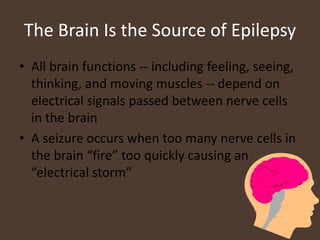
AutismThe Brain Is the Source of EpilepsyAll brain functions -- including feeling, seeing, thinking, and moving muscles -- depend on electrical signals passed between nerve cells in the brainA seizure occurs when too many nerve cells in the brain “fire” too quickly causing an “electrical storm”
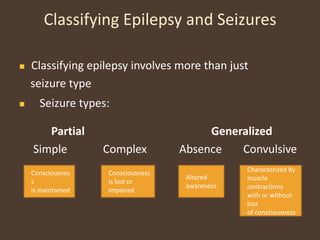
What Happens During a SeizureGeneralized seizureInvolves the whole brain and loss of consciousnessAbsence: characterized by brief loss of consciousnessTonic-Clonic: characterized by rhythmic jerking of musclesPartial seizureInvolves only part of the brain; may or may not include loss of consciousnessSymptoms relate to the part of the brain affected
Symptoms That May Indicate a Seizure DisorderPeriods of blackout or confused memoryOccasional “fainting spells”Episodes of blank staring in childrenSudden falls for no apparent reasonEpisodes of blinking or chewing at inappropriate timesA convulsion, with or without feverClusters of swift jerking movements in babies
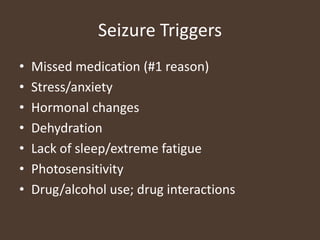
Seizure TriggersMissed medication (#1 reason)Stress/anxietyHormonal changesDehydrationLack of sleep/extreme fatiguePhotosensitivityDrug/alcohol use; drug interactions
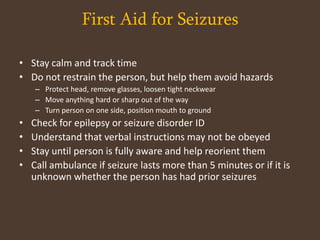
First Aid for SeizuresStay calm and track timeDo not restrain the person, but help them avoid hazardsProtect head, remove glasses, loosen tight neckwearMove anything hard or sharp out of the wayTurn person on one side, position mouth to groundCheck for epilepsy or seizure disorder IDUnderstand that verbal instructions may not be obeyedStay until person is fully aware and help reorient themCall ambulance if seizure lasts more than 5 minutes or if it is unknown whether the person has had prior seizures
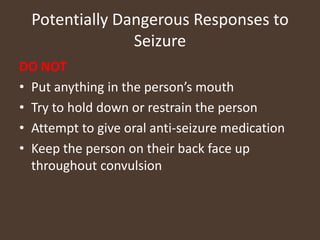
Potentially Dangerous Responses to SeizureDO NOTPut anything in the person’s mouthTry to hold down or restrain the personAttempt to give oral anti-seizure medicationKeep the person on their back face up throughout convulsion
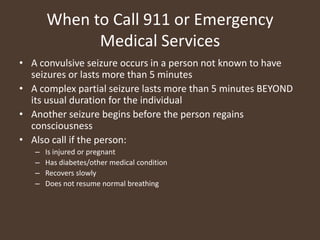
When to Call 911 or Emergency Medical ServicesA convulsive seizure occurs in a person not known to have seizures or lasts more than 5 minutesA complex partial seizure lasts more than 5 minutes BEYOND its usual duration for the individualAnother seizure begins before the person regains consciousnessAlso call if the person:Is injured or pregnant	Has diabetes/other medical condition 	Recovers slowlyDoes not resume normal breathing
How Is Epilepsy Diagnosed?Clinical AssessmentPatient historyTests (blood, EEG, CT, MRI or PET scans)Neurologic examID of seizure typeClinical evaluation	to look for causes
Treatment Goals in EpilepsyHelp person with epilepsy lead full and productive lifeEliminate seizures without producing side effects
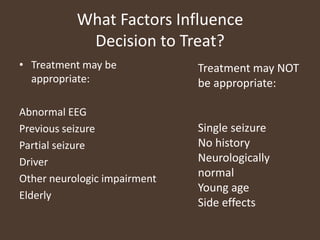
What Factors InfluenceDecision to Treat?Treatment may be appropriate:Abnormal EEGPrevious seizurePartial seizureDriverOther neurologic impairmentElderlyTreatment may NOT be appropriate: Single seizureNo historyNeurologically normalYoung ageSide effects
Types of TreatmentMedication
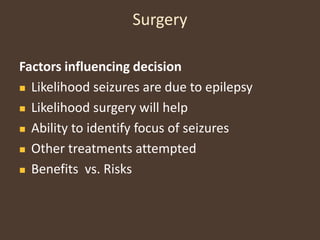
Surgery
Non-pharmacologic treatment
Ketogenic diet
Vagus nerve stimulation (VNS)
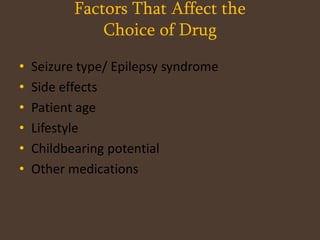
Lifestyle modificationsFactors That Affect theChoice of DrugSeizure type/ Epilepsy syndrome
Side effects
Patient age

Epilepsy Presentation

  • 1.
    Epilepsy & Seizures101Presentationby: Myeshi Briley Education Presenter for Epilepsy Foundation(2010)
  • 2.
    What Is theDifference Between Epilepsy & Seizures?Epilepsy is a disorder characterized by recurring seizures (also known as “seizure disorder”)
  • 3.
    A seizure isa brief, temporary disturbance in the electrical activity of the brainA seizure is a symptom of epilepsy
  • 4.
    Who Has Epilepsy?About3 million Americans have epilepsyRoughly 200,000 new cases of seizures and epilepsy occur each year50% of people with epilepsy develop seizures by the age of 25; however, anyone can get epilepsy at any timeNow there are as many people with epilepsy who are 60 or older as children aged 10 or younger
  • 5.
    What Causes Epilepsy?Inabout 70% of people with epilepsy, the cause is not knownIn the remaining 30%, the most common causes are: Head trauma
  • 6.
    Brain tumorand stroke
  • 7.
  • 8.
    Infection ofbrain tissue
  • 9.
  • 10.
    Prenatal disturbanceof brain developmentGroups at Increased Risk for EpilepsyAbout 1% of the general population develops epilepsy
  • 11.
    The risk ishigher in people with certain medical conditions:
  • 12.
  • 13.
  • 14.
  • 15.
  • 16.
    AutismThe Brain Isthe Source of EpilepsyAll brain functions -- including feeling, seeing, thinking, and moving muscles -- depend on electrical signals passed between nerve cells in the brainA seizure occurs when too many nerve cells in the brain “fire” too quickly causing an “electrical storm”
  • 17.
    What Happens Duringa SeizureGeneralized seizureInvolves the whole brain and loss of consciousnessAbsence: characterized by brief loss of consciousnessTonic-Clonic: characterized by rhythmic jerking of musclesPartial seizureInvolves only part of the brain; may or may not include loss of consciousnessSymptoms relate to the part of the brain affected
  • 18.
    Symptoms That MayIndicate a Seizure DisorderPeriods of blackout or confused memoryOccasional “fainting spells”Episodes of blank staring in childrenSudden falls for no apparent reasonEpisodes of blinking or chewing at inappropriate timesA convulsion, with or without feverClusters of swift jerking movements in babies
  • 19.
    Seizure TriggersMissed medication(#1 reason)Stress/anxietyHormonal changesDehydrationLack of sleep/extreme fatiguePhotosensitivityDrug/alcohol use; drug interactions
  • 20.
    First Aid forSeizuresStay calm and track timeDo not restrain the person, but help them avoid hazardsProtect head, remove glasses, loosen tight neckwearMove anything hard or sharp out of the wayTurn person on one side, position mouth to groundCheck for epilepsy or seizure disorder IDUnderstand that verbal instructions may not be obeyedStay until person is fully aware and help reorient themCall ambulance if seizure lasts more than 5 minutes or if it is unknown whether the person has had prior seizures
  • 21.
    Potentially Dangerous Responsesto SeizureDO NOTPut anything in the person’s mouthTry to hold down or restrain the personAttempt to give oral anti-seizure medicationKeep the person on their back face up throughout convulsion
  • 22.
    When to Call911 or Emergency Medical ServicesA convulsive seizure occurs in a person not known to have seizures or lasts more than 5 minutesA complex partial seizure lasts more than 5 minutes BEYOND its usual duration for the individualAnother seizure begins before the person regains consciousnessAlso call if the person:Is injured or pregnant Has diabetes/other medical condition Recovers slowlyDoes not resume normal breathing
  • 23.
    How Is EpilepsyDiagnosed?Clinical AssessmentPatient historyTests (blood, EEG, CT, MRI or PET scans)Neurologic examID of seizure typeClinical evaluation to look for causes
  • 24.
    Treatment Goals inEpilepsyHelp person with epilepsy lead full and productive lifeEliminate seizures without producing side effects
  • 25.
    What Factors InfluenceDecisionto Treat?Treatment may be appropriate:Abnormal EEGPrevious seizurePartial seizureDriverOther neurologic impairmentElderlyTreatment may NOT be appropriate: Single seizureNo historyNeurologically normalYoung ageSide effects
  • 26.
  • 27.
  • 28.
  • 29.
  • 30.
  • 31.
    Lifestyle modificationsFactors ThatAffect theChoice of DrugSeizure type/ Epilepsy syndrome
  • 32.
  • 33.