TERPENOID
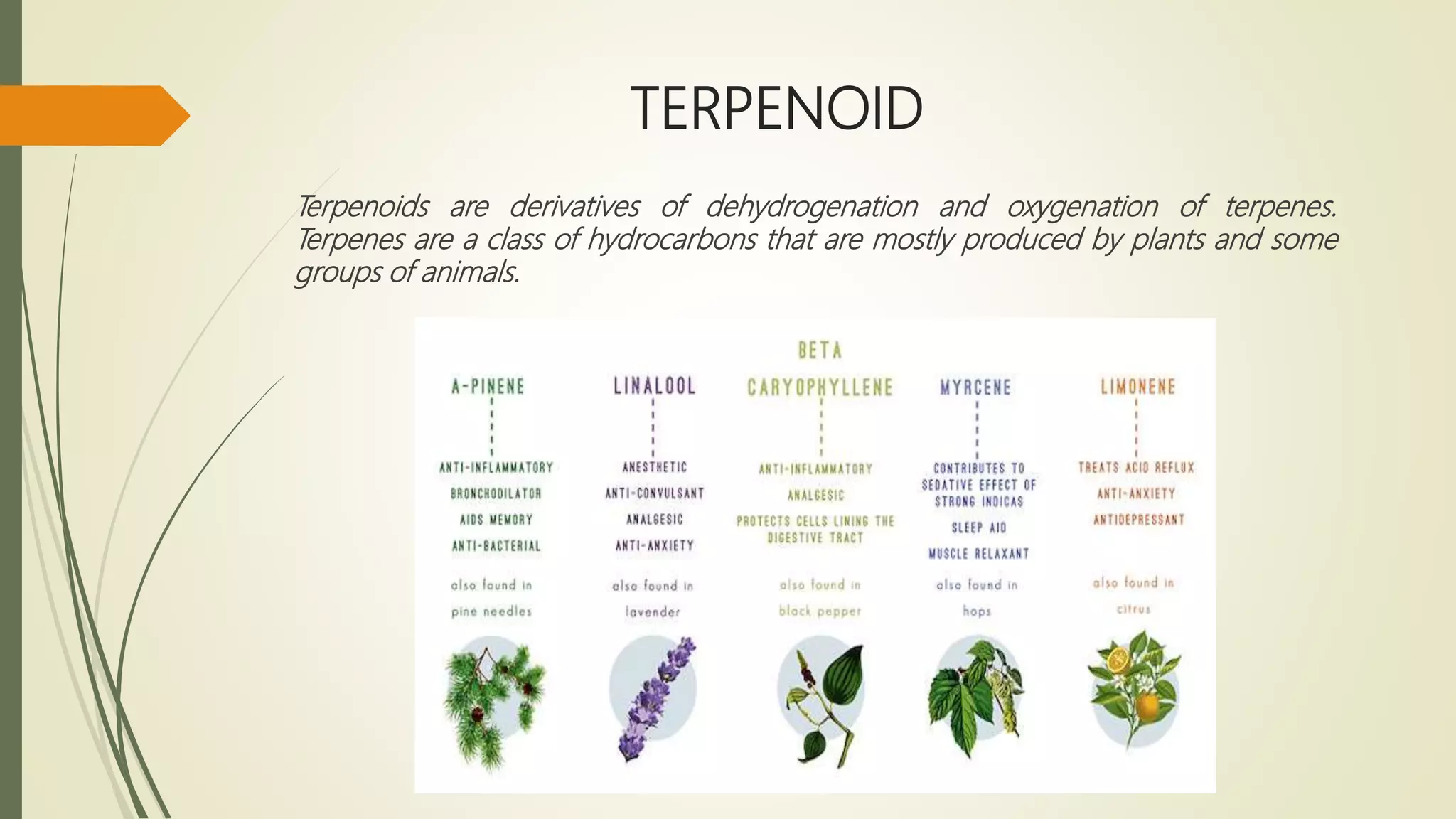
Terpenoids are derivatives of dehydrogenation and oxygenation of terpenes.
Terpenes are a class of hydrocarbons that are mostly produced by plants and some
groups of animals.
TRITERPENE
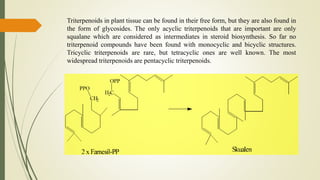
Triterpenoids in plant tissue can be found in their free form, but they are also found in
the form of glycosides. The only acyclic triterpenoids that are important are only
squalane which are considered as intermediates in steroid biosynthesis. So far no
triterpenoid compounds have been found with monocyclic and bicyclic structures.
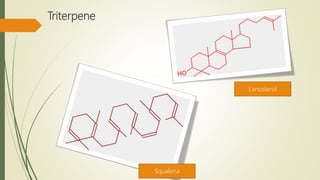
Tricyclic triterpenoids are rare, but tetracyclic ones are well known. The most
widespread triterpenoids are pentacyclic triterpenoids.
 Triterpene structure
1. Pentacyclic is usually derived from plants
2. Few functional groups, difficult to attack and difficult to determine the
structure
3. The structure is associated with other compounds and steroids
4. Tetracyclic, generally derived from animals
5. Irregular (regular)
Triterpene
SQUALENA
Squalena
Lanosterol
TETRATERPENE
Tertraterpene, never had a large condensation ring system. This class of compounds
can be either acyclic, monocyclic or bicyclic compounds. The best known of this
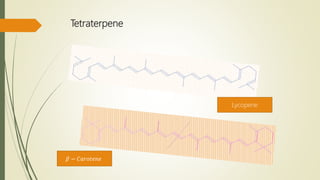
group is carotenoids, a yellow to red pigment found in all plants and various tissues.
The most widespread carotenoid is beta carotene. The oxygenated derivative of
carotene hydrocarbons is xanthophyll. Also known as colorless tetraterpenoids. This
difference is caused by the presence or absence of a conjugated double bond.
Tetraterpene
Lycopene
𝛽 − 𝐶𝑎𝑟𝑜𝑡𝑒𝑛𝑒
POLITERPENE
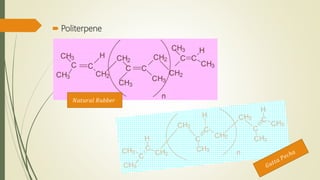
Politerpenes, the most important in this group is rubber, which is thought to function
as a carrier in the biosynthesis of certain polysaccharides in plant tissue. The
stereochemistry of all the double bonds is shown as cis. Guta and balata are
polyisoprene too but their structure is all trans. Molecular weight of guta is mostly
lower than rubber. Rubber can be distinguished from guta based on its elasticity and
imperfect solubility in aromatic hydrocarbons.
 Politerpene
𝑁𝑎𝑡𝑢𝑟𝑎𝑙 𝑅𝑢𝑏𝑏𝑒𝑟

Triterpenoid

  • 1.
    TERPENOID Terpenoids are derivativesof dehydrogenation and oxygenation of terpenes. Terpenes are a class of hydrocarbons that are mostly produced by plants and some groups of animals.
  • 2.
  • 3.
    Triterpenoids in planttissue can be found in their free form, but they are also found in the form of glycosides. The only acyclic triterpenoids that are important are only squalane which are considered as intermediates in steroid biosynthesis. So far no triterpenoid compounds have been found with monocyclic and bicyclic structures. Tricyclic triterpenoids are rare, but tetracyclic ones are well known. The most widespread triterpenoids are pentacyclic triterpenoids.
  • 4.
     Triterpene structure 1.Pentacyclic is usually derived from plants 2. Few functional groups, difficult to attack and difficult to determine the structure 3. The structure is associated with other compounds and steroids 4. Tetracyclic, generally derived from animals 5. Irregular (regular)
  • 5.
  • 6.
    TETRATERPENE Tertraterpene, never hada large condensation ring system. This class of compounds can be either acyclic, monocyclic or bicyclic compounds. The best known of this group is carotenoids, a yellow to red pigment found in all plants and various tissues. The most widespread carotenoid is beta carotene. The oxygenated derivative of carotene hydrocarbons is xanthophyll. Also known as colorless tetraterpenoids. This difference is caused by the presence or absence of a conjugated double bond.
  • 7.
  • 8.
    POLITERPENE Politerpenes, the mostimportant in this group is rubber, which is thought to function as a carrier in the biosynthesis of certain polysaccharides in plant tissue. The stereochemistry of all the double bonds is shown as cis. Guta and balata are polyisoprene too but their structure is all trans. Molecular weight of guta is mostly lower than rubber. Rubber can be distinguished from guta based on its elasticity and imperfect solubility in aromatic hydrocarbons.
  • 9.