Rebox is an electrotherapeutic method utilizing non-invasive electric currents to treat acute and chronic pain, immobility, and various musculoskeletal and neurological disorders. The treatment works by correcting local acidosis, improving blood and lymph circulation, and providing pain relief through specific pulse frequencies and currents. It is widely used by medical professionals and can also be applied by patients at home, with several contraindications to consider.
Introduction to Rebox therapy; its inventor, application methods, and indications.
Discussed the effects of Rebox therapy, treatment modes, and the TCLA method including pain reduction and myorelaxation.
Detailed protocols for treating various conditions like torticollis, and ankle sprains, including treatment techniques and schedules. Focused application techniques for various conditions like sprained ankle and tennis elbow.
INTRODUCTION
• Rebox electrotherapeuticmethod is based on
non-invasive transcutaneous application of
specific electric currents to a living tissue.
• Main indications for using the Rebox include
treatment of acute and chronic pain,
immobility, musculoskeletal and neurological
disorders and oedema.
3.
• Rebox wasinvented by Ing. Petr Slovak, Ph.D.,
a lecturer at Czech Technical University in
Prague, CZ.
• The name Rebox is derived from the
"Rehabilitation Box".
• Specific impulses (frequency 2–4 kHz, pulse
width 100-300 μs) of weak electric currents
(100-200 μA) are introduced transcutaneously
to the affected region.
Physiological Effects
• Withinseveral seconds, local acidosis in the
treated tissue will be corrected, lymphatic
fluid and blood circulation will be increased,
and effective myorelaxation will take place at
the same time.
• It restores the microcirculation in living tissue,
reduces inflammation, improves blood and
lymph circulation, decreases pain, and
provides tissue relaxation.
• This speeds up recovery time.
10.
FORM OF THEPULSES UNIPOLAR RECTANGULAR
AMPLITUDE 0-20V
PULSE FREQUENCY 2-4 kHz
PULSE WIDTH 100 – 300 MICROSECONDS
11.
• Treatment Modes
•1. GENTLE - Recommended for a new patient
(first few sessions).
2. STANDARD - The most frequent mode when
patient is used to the treatment.
3. STRONG - For patients who do not respond
to normal stimulation amplitude.
12.
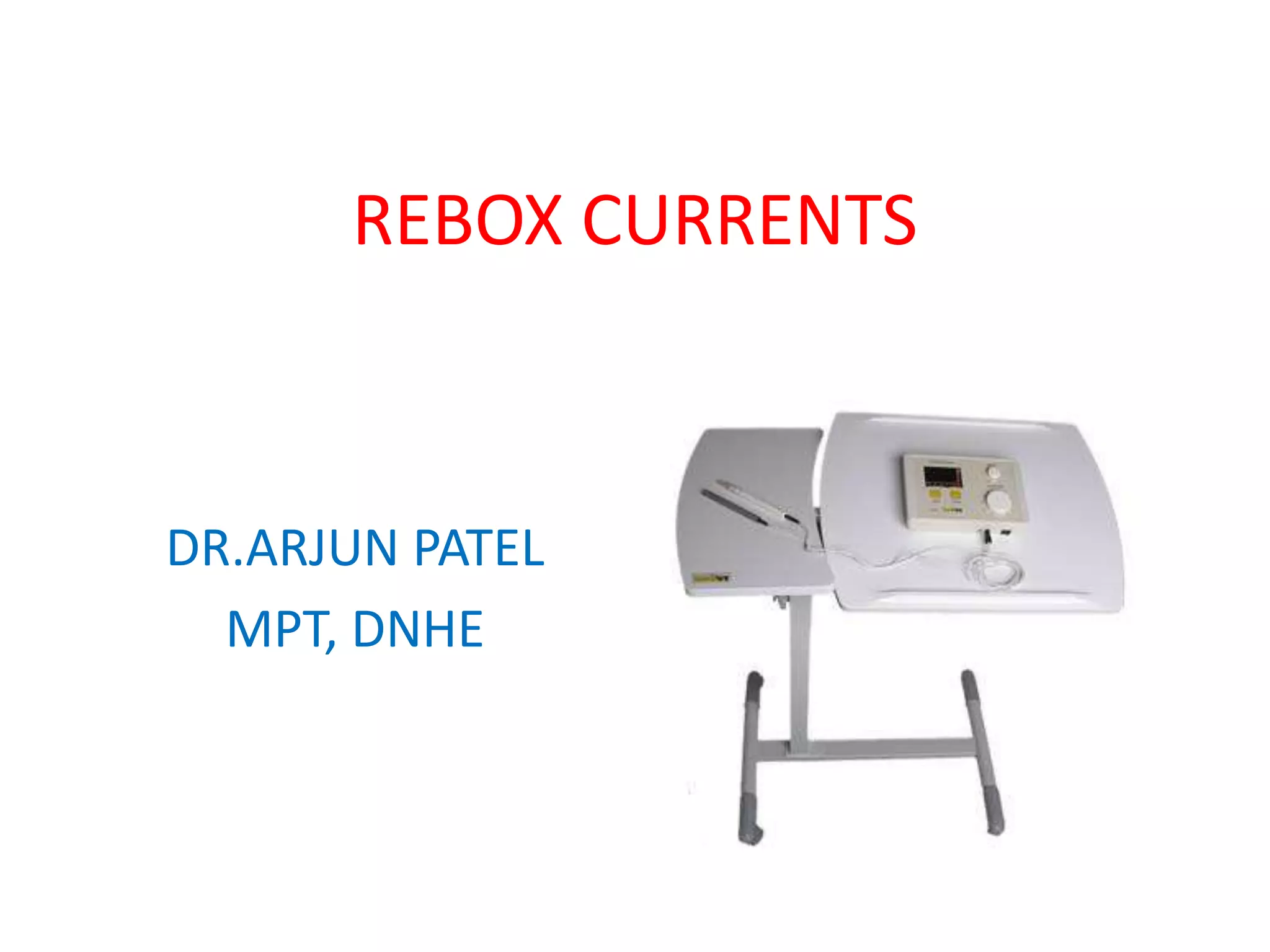
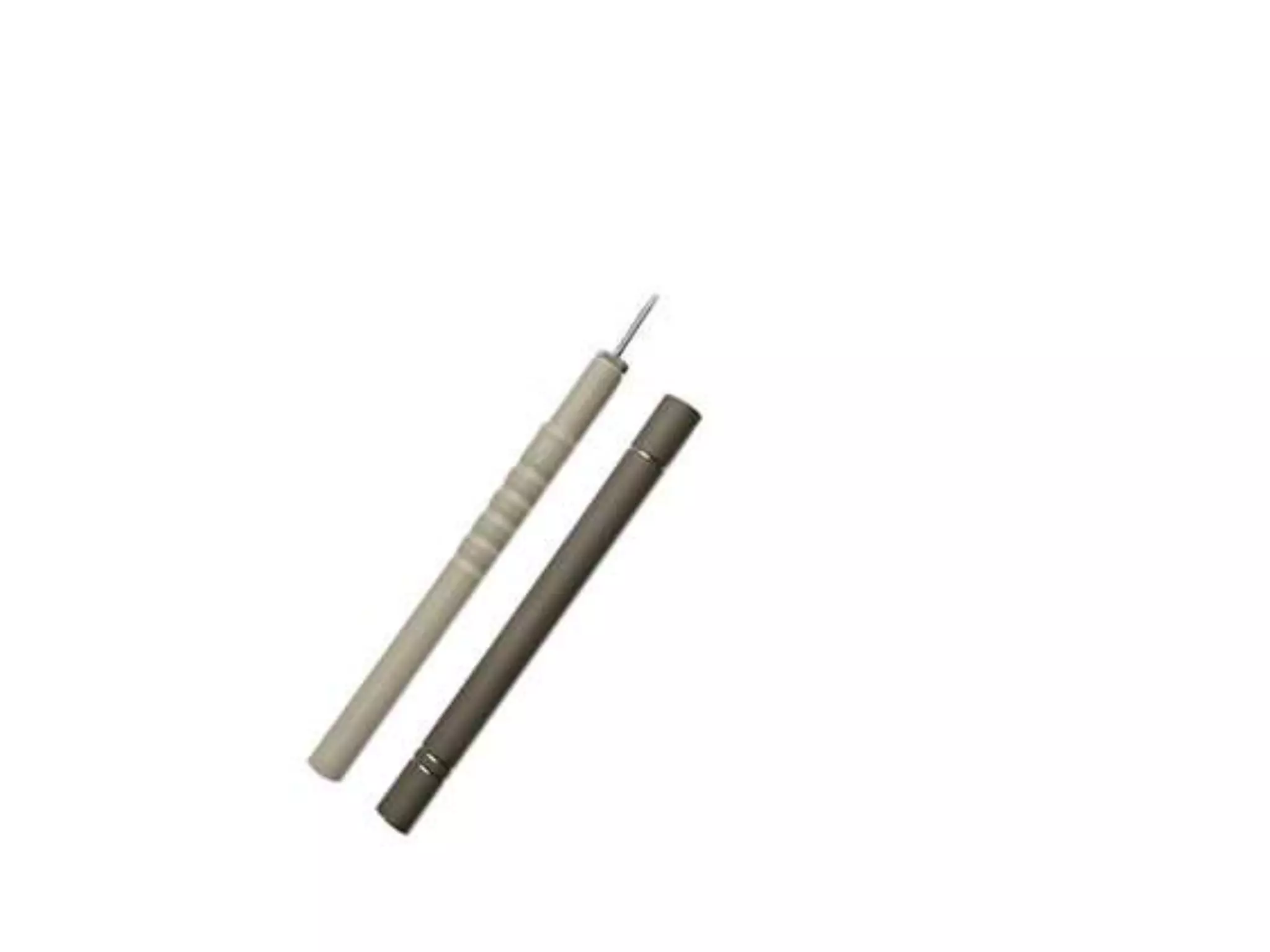
• small non-invasivetreatment electrode
(cathode) AND a second reference electrode
(anode) hand held to complete electric circuit.
ELECTRODE TIPS
2 TYPES
- classic hard tip
- Golden flexi tip
13.
• The treatmentelectrode (active surface 1,5
mm2) is applied for 2–3 seconds in one spot,
then proceeding approx. 1,5 cm to another
point.
• About 20 points are treated per one session.
Frequency of treatment sessions is individual
for each patient.
14.
• Procedure:
• Thesmall, pencil-probe is placed over the treated area lightly
touching the skin.
The other probe is held by the hand of the person receiving
treatment.
The therapist monitors the treatment reading the meter.
Treatment should be repeated for stable results.
Rebox therapy is more effective in acute cases, than in chronic
cases.
• One application of Rebox probe produces healing effect
within a radius of about � an inch
15.
TCLA Method
• Thetreatment method of the Rebox is based
on Transcutaneous Correction of Local
Acidosis (TCLA). This therapy method is being
clinically used since 1985.
• Acute injuries and chronic diseases are
accompanied by local acidosis in living tissue.
The changes in tissue microenvironment often
result in pain, oedema and myocontraction.
17.
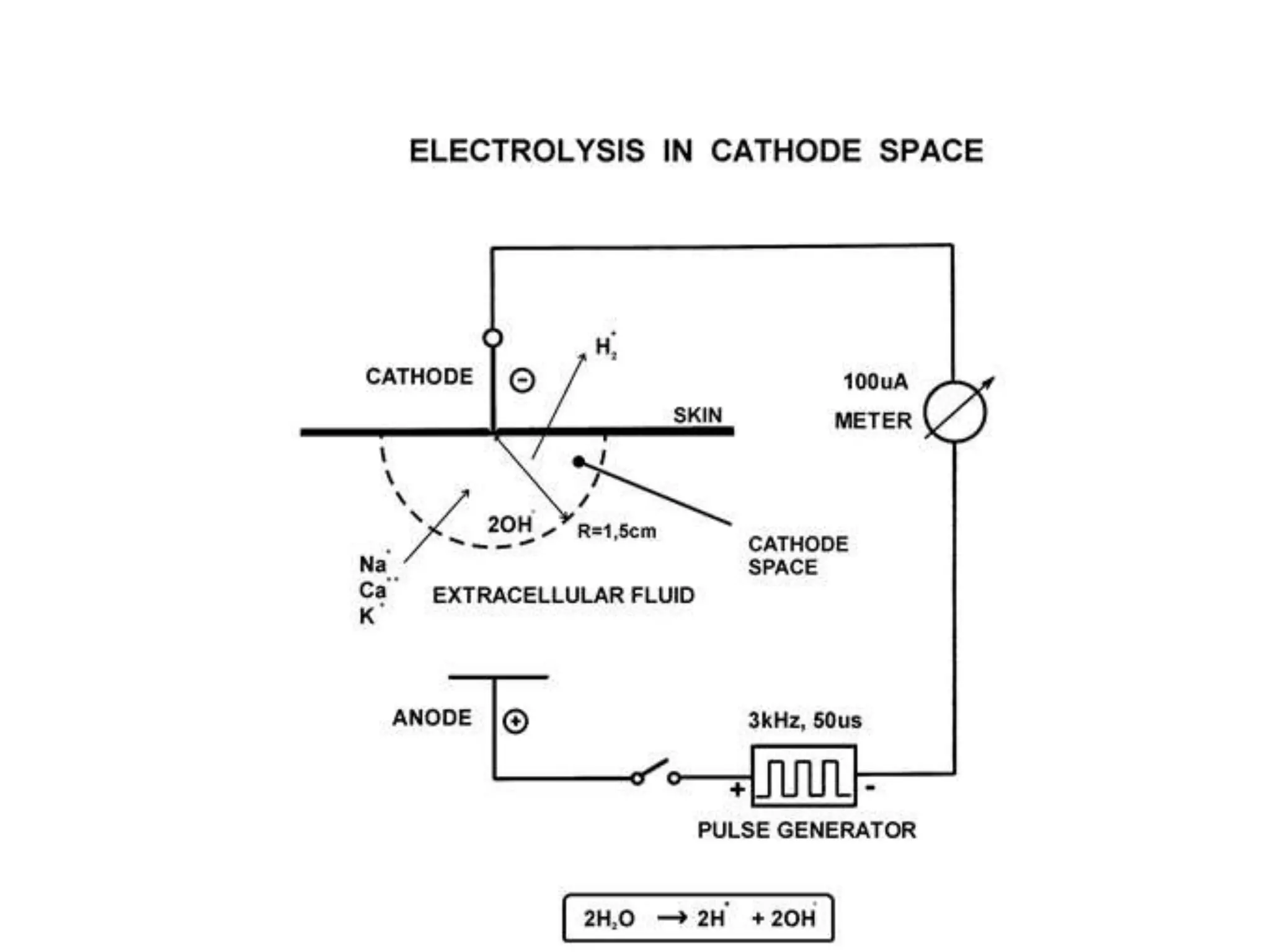
• Battery poweredpulse generator provides pulsating DC
current with rectangular waveform.
• Microamp meter is measuring the average value of the
current.
• All positive ions (mainly K+, Ca++ and Na+) are attracted from
the extra cellular fluid to the cathode leads to local changes in
tissue microenvironment resulting in positive treatment effects.
• After a short time, myorelaxation in the tissue occurs -
especially thanks to calcium ions.
• Due to the electrolysis effect, water molecules in extra
cellular fluid dissociate to hydrogen positive ions and OH
hydroxide negative ions according to the chemical equation in
the picture.
18.
• Since hydrogenions leave the tissue and enter
the surrounding air, and hydroxide ions
together with K+ and Na+ ions create
hydroxides NaOH and KOH, local alkalization
occurs.
• This results in dramatic pain decrease.
Because the effective radius, which was
experimentally found, is about 1.5cm (approx.
1/2 inch), we can imagine the treated area for
one needle probe application point as a
hemisphere with a 1.5cm radius.
20.
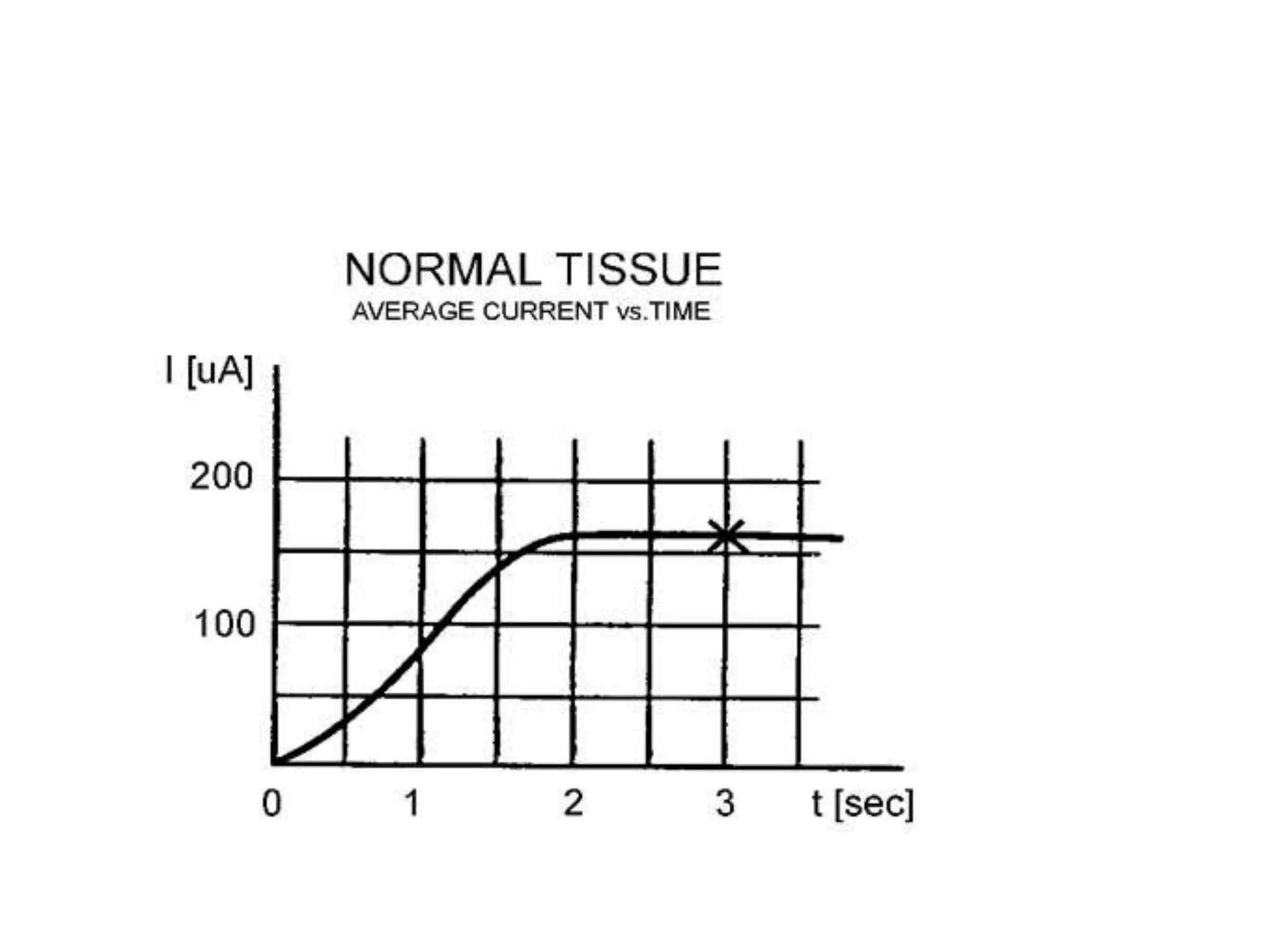
• After 2-3seconds of needle probe application
balance occurs and the current remains constant,
but only if we treat normal tissue without
pathologies.
• At this moment, application can be finished at
this point and the therapist can move 1-2cm
further.
• The average current vs. time characteristics for
normal tissue can be seen in the picture. The
cross shows the optimal time for finishing the
treatment at this point.
• If there is any pathology in the tissue, we will
obtain another characteristic.
21.
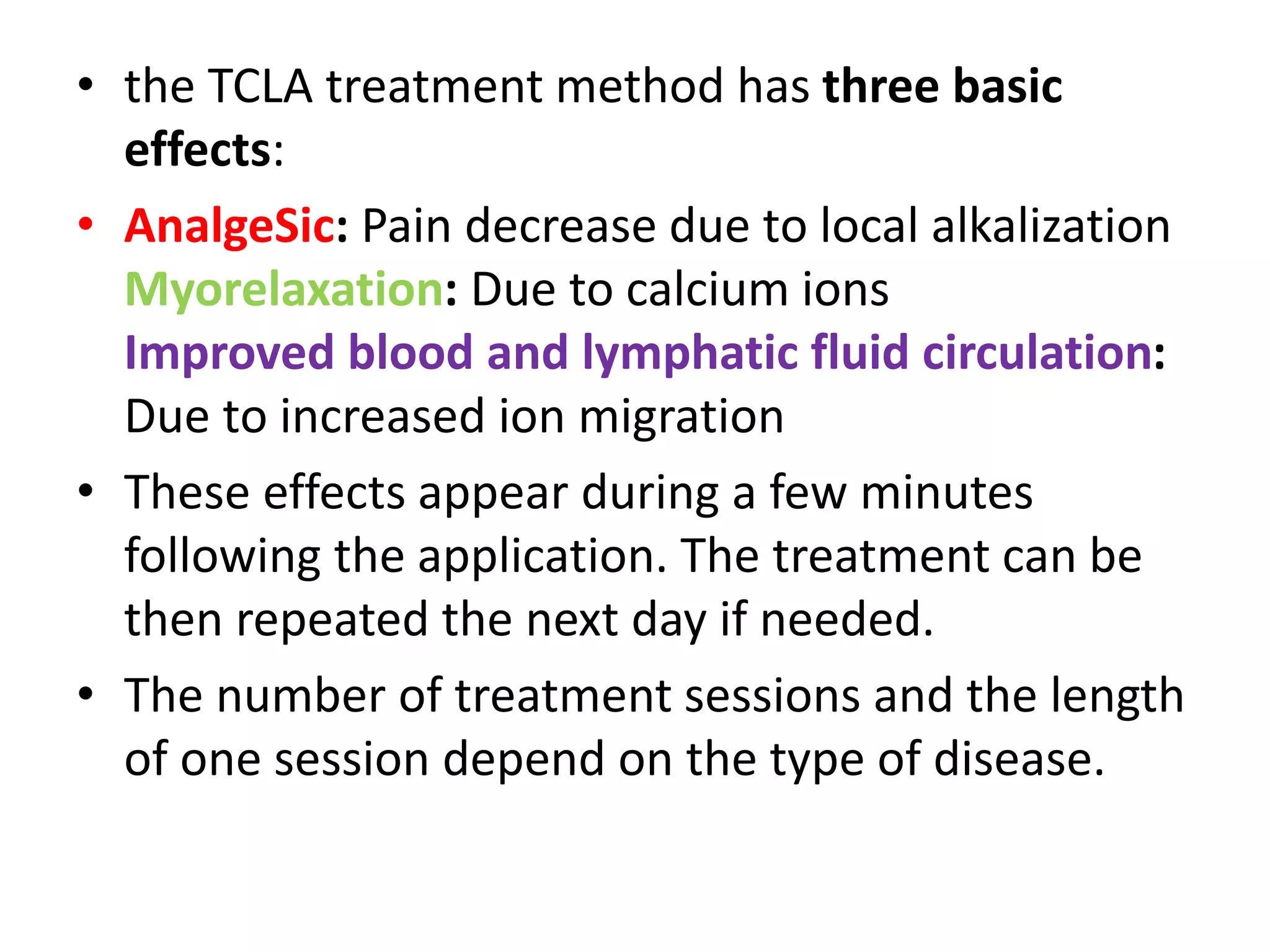
• the TCLAtreatment method has three basic
effects:
• AnalgeSic: Pain decrease due to local alkalization
Myorelaxation: Due to calcium ions
Improved blood and lymphatic fluid circulation:
Due to increased ion migration
• These effects appear during a few minutes
following the application. The treatment can be
then repeated the next day if needed.
• The number of treatment sessions and the length
of one session depend on the type of disease.
22.
TREATMENT DURATION
• Atypical session length is between 5-10
minutes and a sufficient number of sessions
OF 4-5 during a week for acute injuries.
23.
Indications
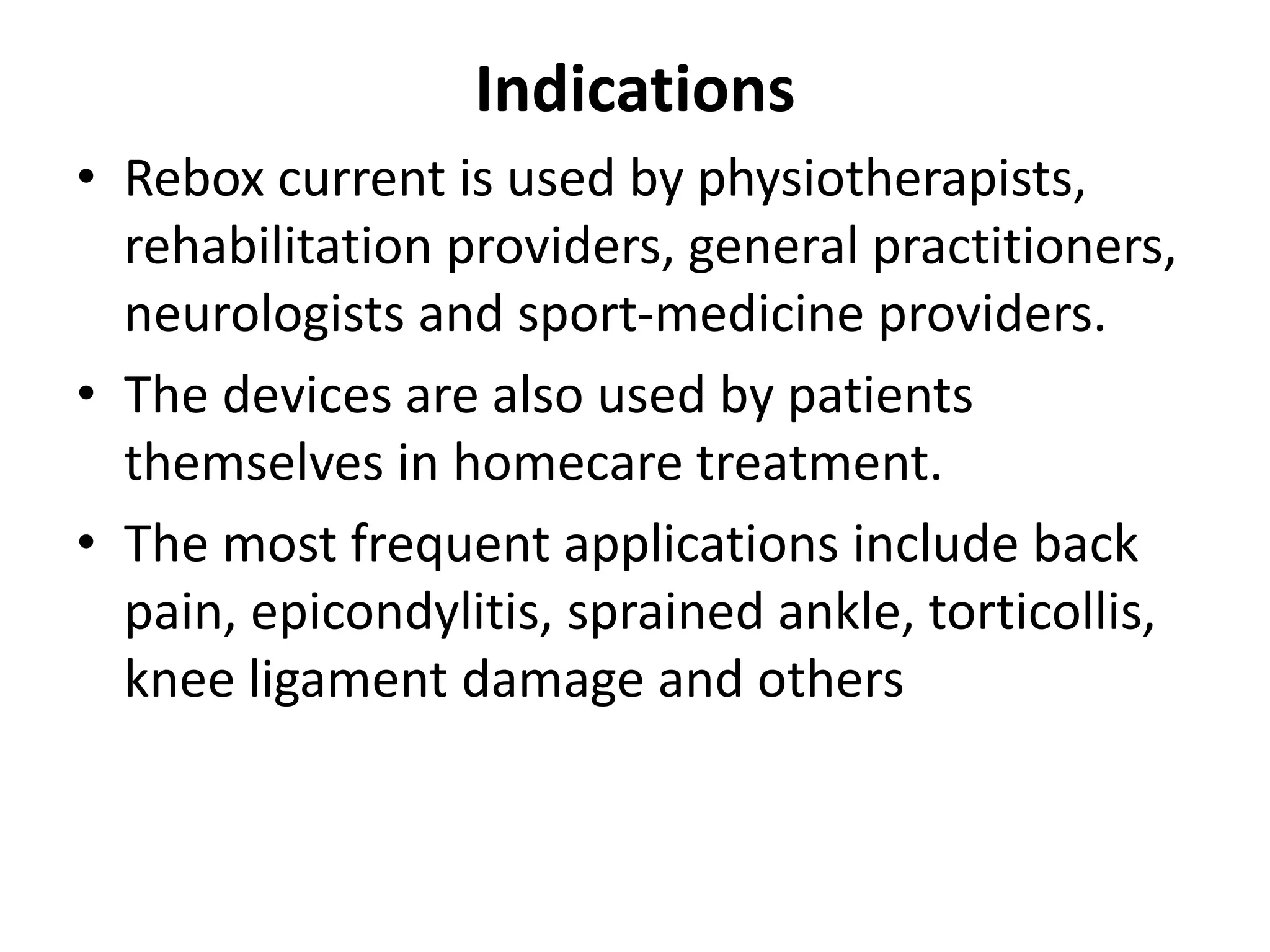
• Rebox currentis used by physiotherapists,
rehabilitation providers, general practitioners,
neurologists and sport-medicine providers.
• The devices are also used by patients
themselves in homecare treatment.
• The most frequent applications include back
pain, epicondylitis, sprained ankle, torticollis,
knee ligament damage and others
24.
CONTRAINDICATIONS
• The Reboxshould not be used in these cases:
A. LOCAL CONTRAINDICATIONS
- disruption in continuity of the skin (open
wound, etc.)
- skin ulcer
- acute inflammation of the skin or
subcutaneous tissue
- thrombosis
25.
• B. GENERALCONTRAINDICATIONS
- cardiostimulator
- pregnancy
- epilepsy
- tumour (diagnosed or suspected)
- shock
• Special care should be taken if the REBOX is
used in the neck area of the carotid sinus, to
avoid stimulation of the vagus nerve (n.X).
• The Rebox is not recommended for use in the
vicinity of a high frequency power supply.
26.
• The changeof Rebox current in time has
diagnostic value.
• The therapist receives information from the
patient's tissues during treatment, giving him
the great advantage of continuous monitoring
and control of the dosage applied.
• Every type of tissue pathology shows its own
specific course of changes in the electric
current during treatment, the type of needle
movement acts as a diagnostic aid as well as a
treatment monitor.
• Treatment: Usetwo parallel rows of points on either
side of the spine, with points spaced 2 cm apart. Treat
distally from C1. Then treat in a spiral around the focus
of the spasm (may be determined by palpation).
• Cautions: In the first and second session preferably use
GENTLE mode, especially in sensitive patients. Keep
strictly to the dorsal paravertebral muscles
• Recommended Timetable: First week 3x, then
according to patient need. If possible immediately after
the symptoms appear.
• Recommended Supplementary Therapy: We
recommend gentle manual massage immediately after
Rebox therapy, then gentle exercises.
• Treatment: Treatin a spiral line around the
mandibulo-maxillar joint beginning approx. 3 cm
from the joint (with distance approx. 15 mm
between points) and ending in the center of the
joint (with a distance 4 - 5 mm between points).
• Cautions: Maximum of 30 points treated in the
above described spiral are enough. At the first
session also treat the three branches of the
trigeminus. Use GENTLE mode if necessary.
• Recommended Timetable: For the first three
days treat twice a day, then once a day for four
days, second week 4x - 5x, third week 2x, then
check after two weeks.
• Treatment: Treatdistally in four parallel rows
of points with distance of points spaced 15 -
20 mm apart. Then treat in a large spiral
around the ankle with points spaced approx. 5
mm apart. Treat both the lateral and the
medial side.
• Cautions: In first session use GENTLE mode
because the treatment is rather painful.
• Recommended Timetable: First week 3x,
second week 2x - 3x, third week 2x.
• Treatment: 3- 4 rows of points distally, with points
spaced 2 - 3 cm apart. Then in a spiral around the
epicondyle with points 0.5 - 1 cm apart.
• Cautions: Check tension of elbow muscles. If in a state
of tension treat in 5 - 10 points along the lines of
tension.
• Recommended Timetable:
Acute cases: First week 3x, second week 2x, third week
2x, fourth week 1x.
Chronic cases: first week 2x, second week 2x, then four
sessions once a week, then according to patient need
(usually up to six months).
• Comments: In patients previously treated by
mesocaine injections a long - term treatment is usually
necessary.
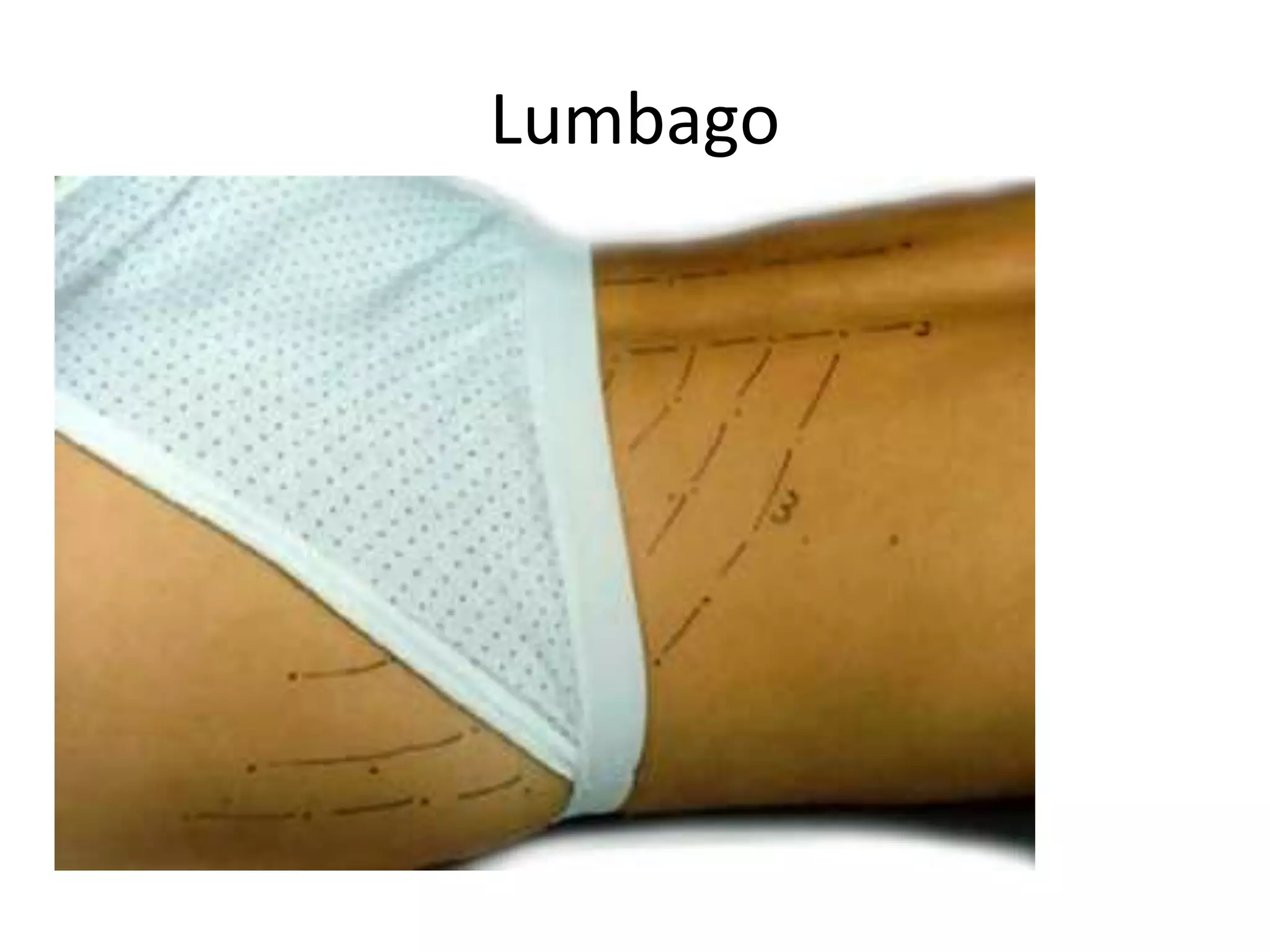
• Treatment: Threerows of points (distance
between points 2 - 3 cm) on either side of the
spine from the chest to the sacrum. Then follow
plexus lumbalis and gluteal muscles in four or five
rows of points, with 4 - 5 cm between points.
Apply treatment in spirals around the centers of
pain as indicated by patient.
• Recommended Timetable: First week 3x - 4x,
second week 3x, third week 3x, fourth week 2x.
• Recommended Supplementary Therapy:
exercises.
• Treatment: 3- 4 rows of points from proximal
to distal, with points spaced 2 - 3 cm apart.
Then in a spiral around the problem area with
distance of points 0.5 - 1 cm.
• Cautions: Do not apply Rebox in states with
acute hyperemia (e.g. immediately after
surgery).
• Recommended Timetable: First week 2x - 3x,
second week 2x, third week 2x, fourth week
2x.
















![Shockwave [Read-Only].pptx](https://cdn.slidesharecdn.com/ss_thumbnails/shockwaveread-only-220729144108-2f959010-thumbnail.jpg?width=640&height=640&fit=bounds)


