TEAM BUILDING
Team Work
Coming together is a beginning,
keeping together is progress and
working together is success
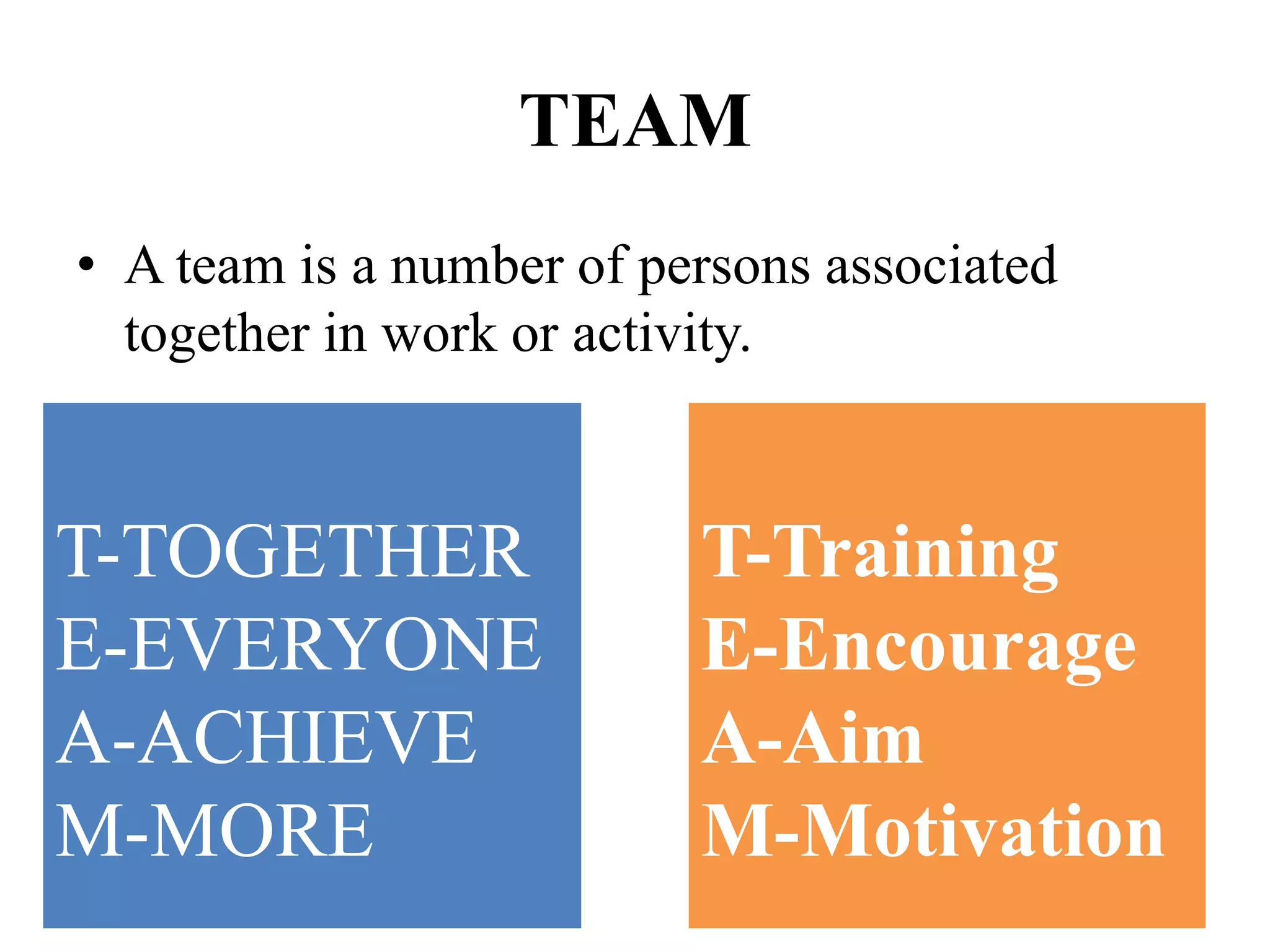
TEAM
• A team is a number of persons associated
together in work or activity.
T-TOGETHER
E-EVERYONE
A-ACHIEVE
M-MORE
T-Training
E-Encourage
A-Aim
M-Motivation
WHAT IS TEAM ???
In a team,
 People depend on each other;
 May or may not work in the same physical
location,
 Combine to achieve something together
TEAM BUILDING
The process of
working with a
team to clarify
its task and
how team
members can
work together
to achieve it.
A strategy that
can help groups
to develop into
a real team is
“team
building”
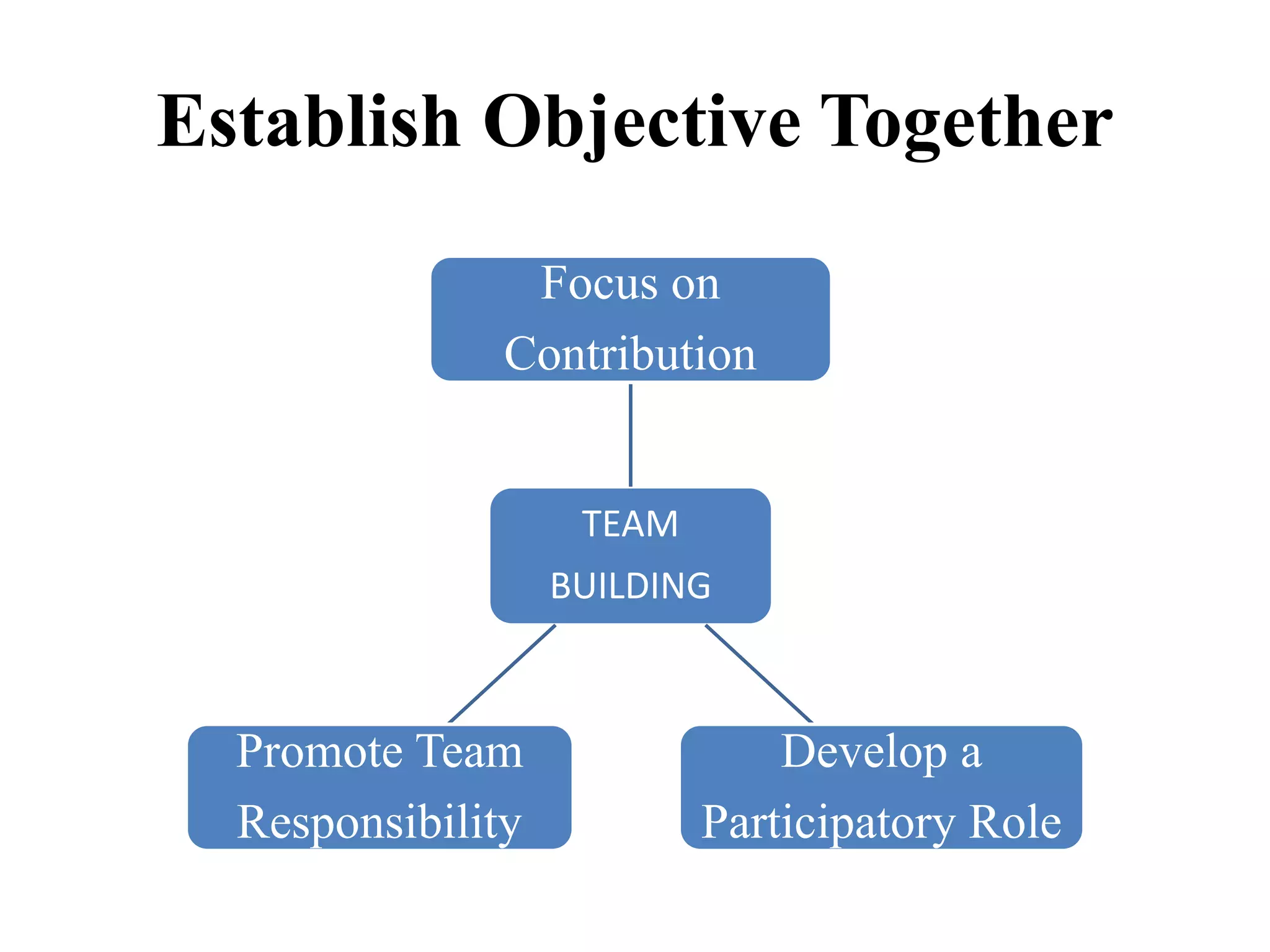
Establish Objective Together
TEAM
BUILDING
Focus on
Contribution
Develop a
Participatory Role
Promote Team
Responsibility
Key Actions in Team Building
Setting and maintaining the teams
objectives and standards
Involving the team as a whole in
the achievement of objectives
Maintaining the unity of the team
Communicating efficiently with the team
Consulting the team – members
before taking any decisions
Key Roles in Team Building
• Motivation
• Determination
• Unity & Diversity
• Broader Perspective
• Goal Orientation
Helpful Team Behaviour
• Keeping the peace
• Friendly
• Enthusiasm
• Feedback
• Generating ideas
• Initiative
• Solving problems
• Appropriate humour
• Seeking approval
• Encouraging others
Key factors to successful
performance of a team: S.C.O.R.E
• Strategy
• Clear Role & Responsibility
• Open Communication
• Rapid Response
• Effective Leadership
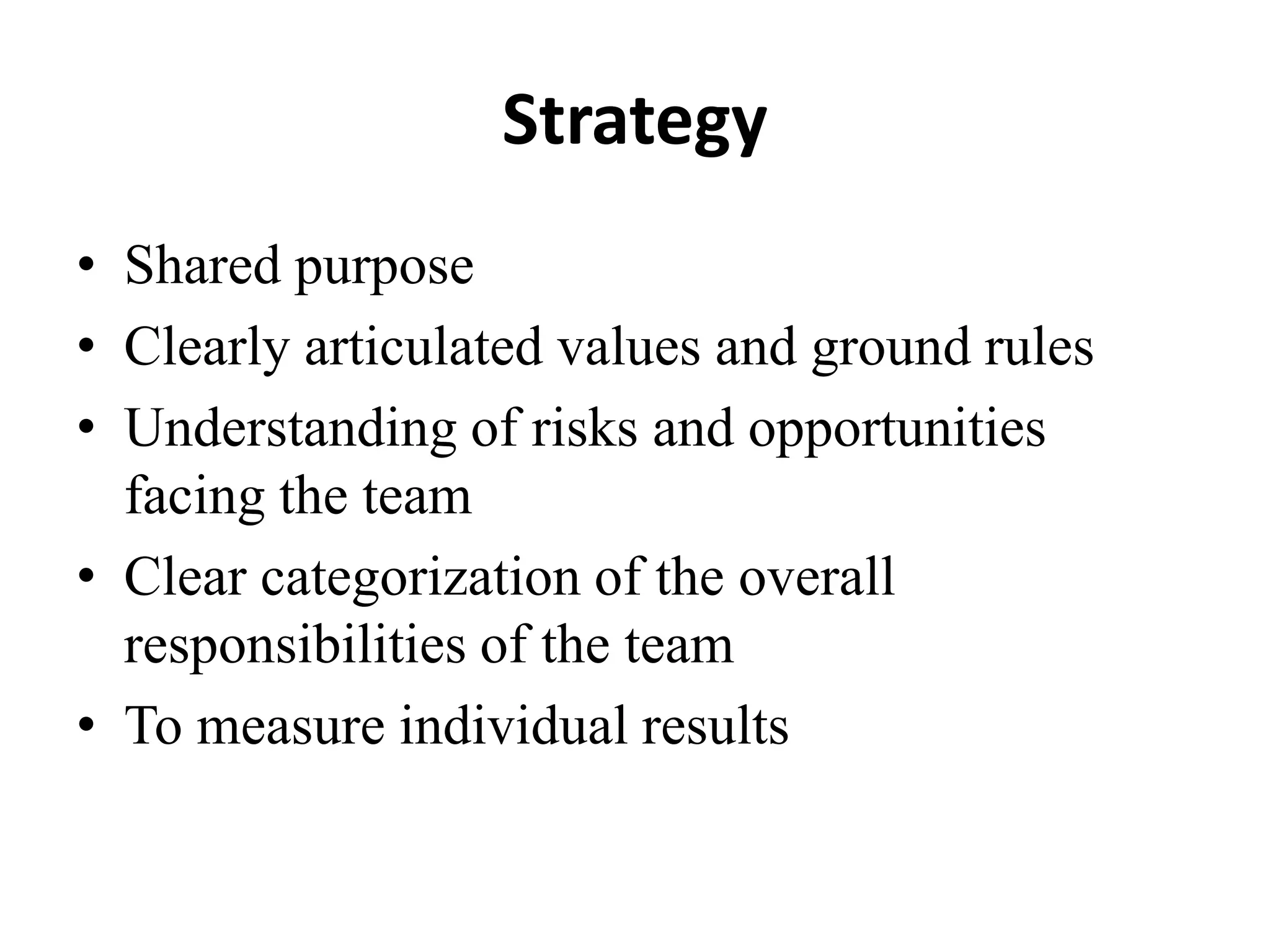
Strategy
• Shared purpose
• Clearly articulated values and ground rules
• Understanding of risks and opportunities
facing the team
• Clear categorization of the overall
responsibilities of the team
• To measure individual results
Clear Roles & Responsibility
• Clear definition of roles and responsibilities
• Responsibility shared by all members
• Specific objectives
Open Communication
• Respect for individual differences
• Open communication environment among
team members
Rapid Response
• Rapid response to the team’s problems
• Effective management to change in the internal
and external environment
Effective Leadership
• Team leader who is able to help members
achieve the objective and build the team
• Team leader who can draw out and free up the
skills of all team members, develop individuals
Common Need
The overriding need
of all people working
for the same
organization:
To make the
organization
profitable.
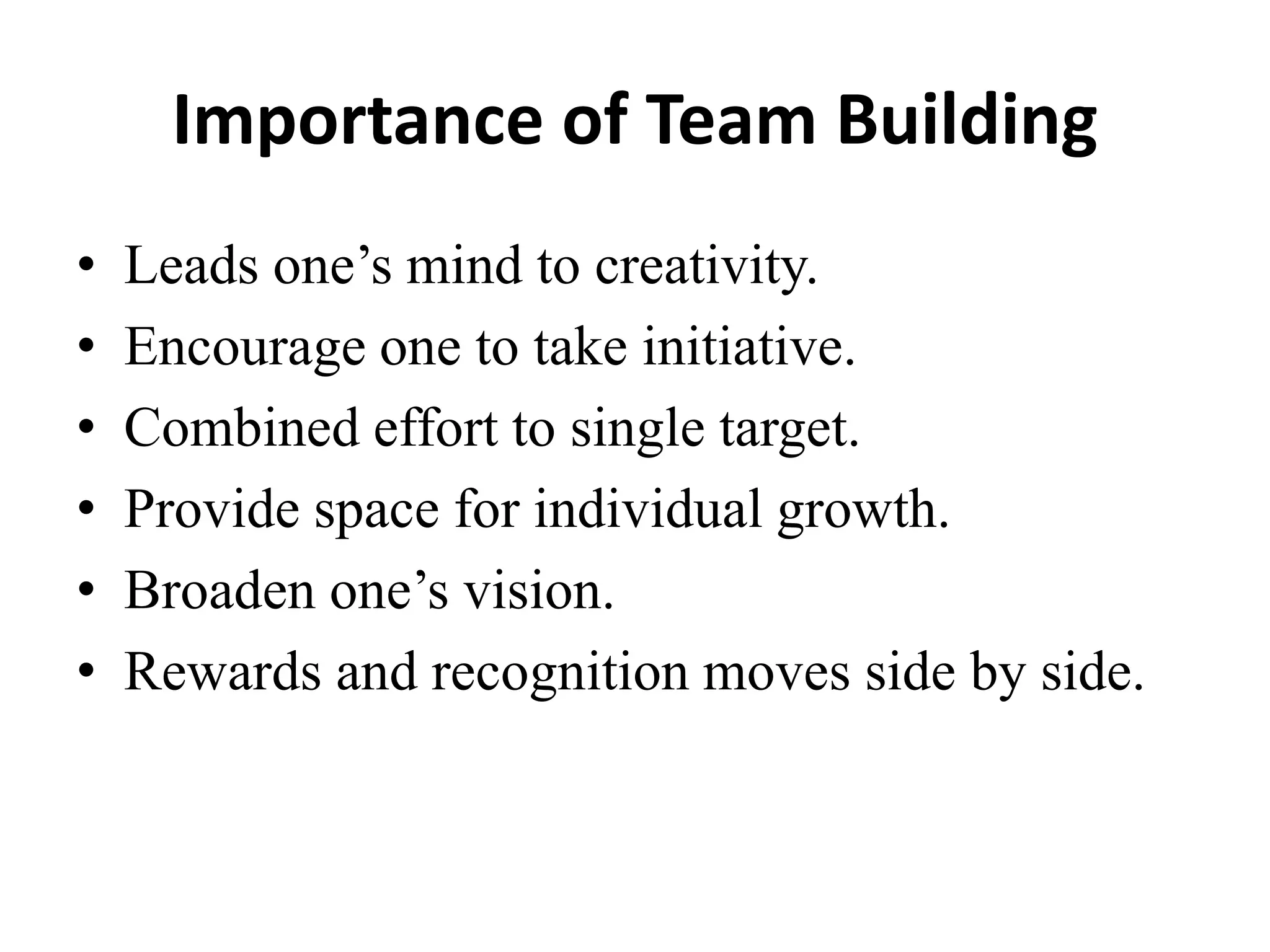
Importance of Team Building
• Leads one’s mind to creativity.
• Encourage one to take initiative.
• Combined effort to single target.
• Provide space for individual growth.
• Broaden one’s vision.
• Rewards and recognition moves side by side.
TEAM BUILDING
TEAM BUILDING

TEAM BUILDING

  • 1.
  • 3.
    Team Work Coming togetheris a beginning, keeping together is progress and working together is success
  • 4.
    TEAM • A teamis a number of persons associated together in work or activity. T-TOGETHER E-EVERYONE A-ACHIEVE M-MORE T-Training E-Encourage A-Aim M-Motivation
  • 5.
    WHAT IS TEAM??? In a team,  People depend on each other;  May or may not work in the same physical location,  Combine to achieve something together
  • 6.
    TEAM BUILDING The processof working with a team to clarify its task and how team members can work together to achieve it. A strategy that can help groups to develop into a real team is “team building”
  • 7.
    Establish Objective Together TEAM BUILDING Focuson Contribution Develop a Participatory Role Promote Team Responsibility
  • 8.
    Key Actions inTeam Building Setting and maintaining the teams objectives and standards Involving the team as a whole in the achievement of objectives Maintaining the unity of the team Communicating efficiently with the team Consulting the team – members before taking any decisions
  • 9.
    Key Roles inTeam Building • Motivation • Determination • Unity & Diversity • Broader Perspective • Goal Orientation
  • 10.
    Helpful Team Behaviour •Keeping the peace • Friendly • Enthusiasm • Feedback • Generating ideas • Initiative • Solving problems • Appropriate humour • Seeking approval • Encouraging others
  • 11.
    Key factors tosuccessful performance of a team: S.C.O.R.E • Strategy • Clear Role & Responsibility • Open Communication • Rapid Response • Effective Leadership
  • 12.
    Strategy • Shared purpose •Clearly articulated values and ground rules • Understanding of risks and opportunities facing the team • Clear categorization of the overall responsibilities of the team • To measure individual results
  • 13.
    Clear Roles &Responsibility • Clear definition of roles and responsibilities • Responsibility shared by all members • Specific objectives
  • 14.
    Open Communication • Respectfor individual differences • Open communication environment among team members
  • 15.
    Rapid Response • Rapidresponse to the team’s problems • Effective management to change in the internal and external environment
  • 16.
    Effective Leadership • Teamleader who is able to help members achieve the objective and build the team • Team leader who can draw out and free up the skills of all team members, develop individuals
  • 17.
    Common Need The overridingneed of all people working for the same organization: To make the organization profitable.
  • 19.
    Importance of TeamBuilding • Leads one’s mind to creativity. • Encourage one to take initiative. • Combined effort to single target. • Provide space for individual growth. • Broaden one’s vision. • Rewards and recognition moves side by side.