To understand
 Meaning & Definitions of Power.
 Nature and features of Power.
 Types / kinds of Power.
 What is Authority?
 Concepts of Authority
 The ability to control and/or influence people and
resources
 The ability or capacity to do something or act in a
particular way.
 The ability or right to control people or things.
 Power - the ability to influence another person
 Influence - the process of affecting the thoughts,
behavior, & feelings of another person
 Authority - the right to influence another person
 Providing direction
 Get fast access to decision makers
 Maintain regular, frequent contact with decision makers
 Assisting in the management process
 Structure to organisations
 Assist to employees in performing better
 Articulate the goals
 Coercive power
 Legitimate power
 Reward power
 Referent power
 Expert power
 Coercive power is the ability of a manager to force an
employee to follow an order by threatening the
employee with punishment if the employee does not
comply with the order.
 Threats of write-ups,
 Demotions,
 Pay cuts, layoffs,
 Terminations if employees
don't follow orders.
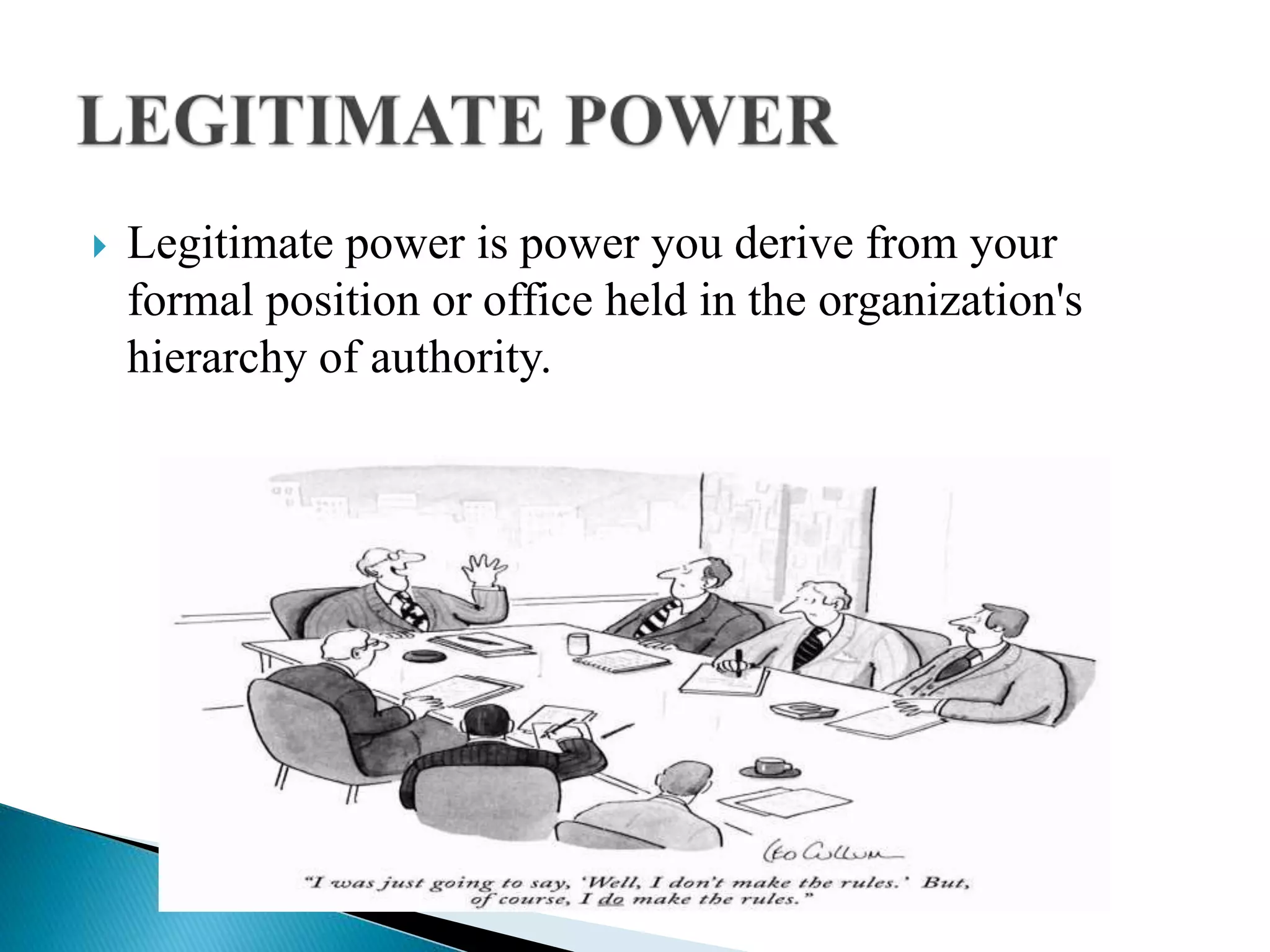
 Legitimate power is power you derive from your
formal position or office held in the organization's
hierarchy of authority.
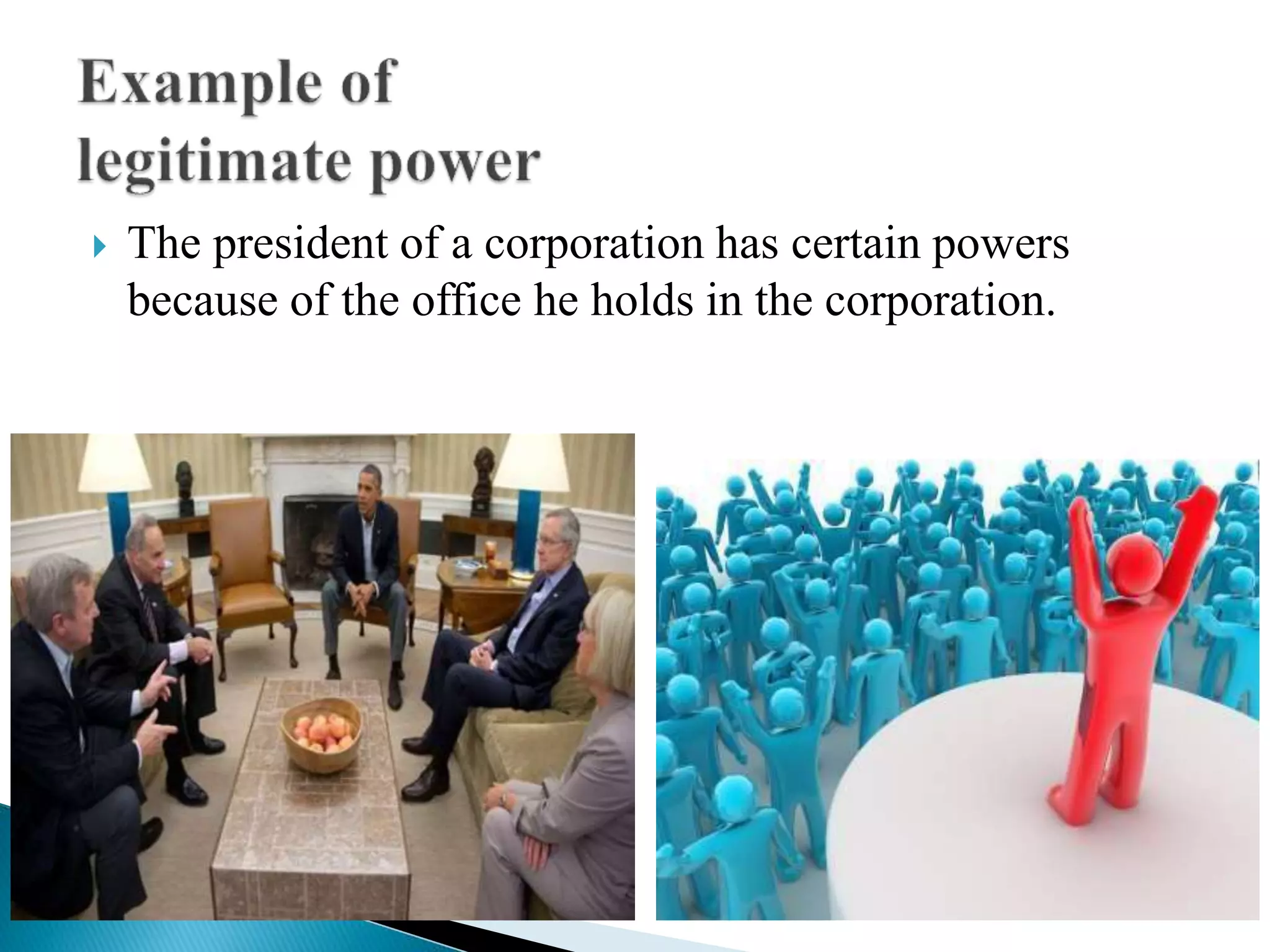
 The president of a corporation has certain powers
because of the office he holds in the corporation.
 Reward power is simply the power of a manager to
give some type of reward to an employee as a means to
influence the employee to act.
Rewards can be
• Tangible
• Intangible.
 Monetary awards,
 wage or salary increases,
 bonuses,
 Certificates, medals
 gifts.
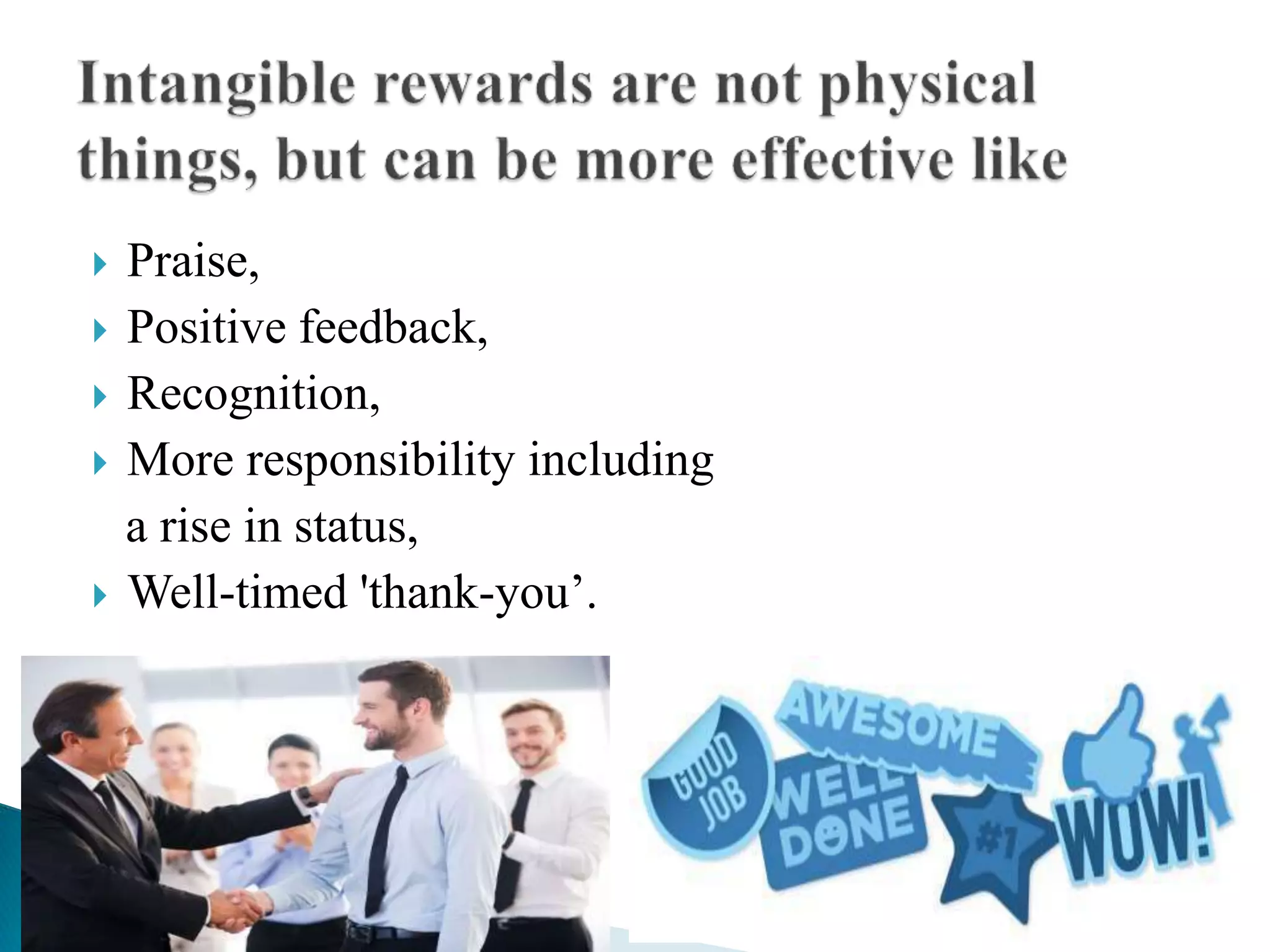
 Praise,
 Positive feedback,
 Recognition,
 More responsibility including
a rise in status,
 Well-timed 'thank-you’.
 Referent power is power of an individual over
the Team or Followers, based on a high level
of identification with, admiration of, or
respect for the power holder/ leader.
 Nationalism,
 patriotism,
 celebrities,
 mass leaders,
 widely-respected people.
 Expert power is power based upon employees
perception that a manager or some other member of an
organization has a high level of knowledge or a
specialized set of skills that other employees or
members of the organization do not possess.
 Leadership responsibilities
 Organizational and personal goals
 Inspire commitment
 Creativity
 Reduction of bureaucratic obstacles
 Bully Bosses
 Manipulator
 Sexual harassment
 The legitimate or acceptable use of power
 the power or right to give orders, make decisions, and
enforce obedience
 a person or organization having political or
administrative power and control
Statutory
Customary Common
law
Delegated
 Authority to wield power as a result of history or
tradition
 Historically, men over women, non-indigenous over
indigenous
 Often recognised at common law
 E.g. by parents over children, employers over
employees, the state over the individual (eg police, gvt
officers, defence etc)
 Held by persons and orgnization that are provided with
power by plt,
 E.g customs agencies and tax office.
 Authority provided to persons and groups by the courts
 E.g employers once had common law authority to
completely control the lives of employees; the position
of men in society was reinforced by ability to ‘own’ a
wife at common law
 Authority given to subordinate, or lesser, people or
organization to make decisions or principles on their
own behalf.
 Used to increase administrative efficiency of an
organization .
 E.g junior staff in business organization to manage a
budget without having to bother managing director.
Local council given delegated authority to make law
 Be polite and clear.
 Explain reasons when requesting something from your
staff.
 Respond to concerns of staffers
 Use legitimate authority.
POWER
POWER

POWER

  • 2.
    To understand  Meaning& Definitions of Power.  Nature and features of Power.  Types / kinds of Power.  What is Authority?  Concepts of Authority
  • 3.
     The abilityto control and/or influence people and resources  The ability or capacity to do something or act in a particular way.  The ability or right to control people or things.
  • 4.
     Power -the ability to influence another person  Influence - the process of affecting the thoughts, behavior, & feelings of another person  Authority - the right to influence another person
  • 5.
     Providing direction Get fast access to decision makers  Maintain regular, frequent contact with decision makers  Assisting in the management process  Structure to organisations  Assist to employees in performing better  Articulate the goals
  • 6.
     Coercive power Legitimate power  Reward power  Referent power  Expert power
  • 7.
     Coercive poweris the ability of a manager to force an employee to follow an order by threatening the employee with punishment if the employee does not comply with the order.
  • 8.
     Threats ofwrite-ups,  Demotions,  Pay cuts, layoffs,  Terminations if employees don't follow orders.
  • 9.
     Legitimate poweris power you derive from your formal position or office held in the organization's hierarchy of authority.
  • 10.
     The presidentof a corporation has certain powers because of the office he holds in the corporation.
  • 11.
     Reward poweris simply the power of a manager to give some type of reward to an employee as a means to influence the employee to act. Rewards can be • Tangible • Intangible.
  • 12.
     Monetary awards, wage or salary increases,  bonuses,  Certificates, medals  gifts.
  • 13.
     Praise,  Positivefeedback,  Recognition,  More responsibility including a rise in status,  Well-timed 'thank-you’.
  • 14.
     Referent poweris power of an individual over the Team or Followers, based on a high level of identification with, admiration of, or respect for the power holder/ leader.
  • 15.
     Nationalism,  patriotism, celebrities,  mass leaders,  widely-respected people.
  • 16.
     Expert poweris power based upon employees perception that a manager or some other member of an organization has a high level of knowledge or a specialized set of skills that other employees or members of the organization do not possess.
  • 18.
     Leadership responsibilities Organizational and personal goals  Inspire commitment  Creativity  Reduction of bureaucratic obstacles
  • 19.
  • 20.
  • 21.
  • 23.
     The legitimateor acceptable use of power  the power or right to give orders, make decisions, and enforce obedience  a person or organization having political or administrative power and control
  • 24.
  • 25.
     Authority towield power as a result of history or tradition  Historically, men over women, non-indigenous over indigenous  Often recognised at common law  E.g. by parents over children, employers over employees, the state over the individual (eg police, gvt officers, defence etc)
  • 26.
     Held bypersons and orgnization that are provided with power by plt,  E.g customs agencies and tax office.
  • 27.
     Authority providedto persons and groups by the courts  E.g employers once had common law authority to completely control the lives of employees; the position of men in society was reinforced by ability to ‘own’ a wife at common law
  • 28.
     Authority givento subordinate, or lesser, people or organization to make decisions or principles on their own behalf.  Used to increase administrative efficiency of an organization .  E.g junior staff in business organization to manage a budget without having to bother managing director. Local council given delegated authority to make law
  • 29.
     Be politeand clear.  Explain reasons when requesting something from your staff.  Respond to concerns of staffers  Use legitimate authority.