Unit 4
Teaching Grammar
Teaching Language as a System
PhD. Norma Flores

Cristina Aguilera
Hector Noriega
Marcela Miranda
Bogard Rerjis
4.1 The importance of
teaching grammar
Grammar is the way words are put together to
form correct sentences.

Spelling is forming words from letters.

Crsitina Aguilera
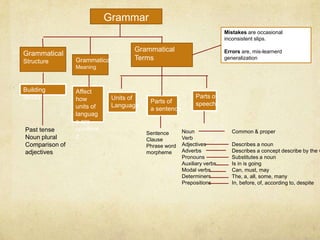
Grammar
Mistakes are occasional
inconsistent slips.

Grammatical
Structure

Grammatical

Grammatical
Terms

Errors are, mis-learnerd
generalization

Meaning

Building
blocks

Past tense
Noun plural
Comparison of
adjectives

Affect
how
units of
languag
e are
combine
d

Units of
Language

Parts of
a sentence

Sentence
Clause
Phrase word
morpheme

Parts of
speech

Noun
Verb
Adjectives
Adverbs
Pronouns
Auxiliary verbs
Modal verbs
Determiners
Prepositions

Common & proper

Describes a noun
Describes a concept describe by the v
Substitutes a noun
Is in is going
Can, must, may
The, a, all, some, many
In, before, of, according to, despite
4.2 Factors involved in
teaching grammar
Creating a path to a
good understanding
of English grammar.

Hector Noriega
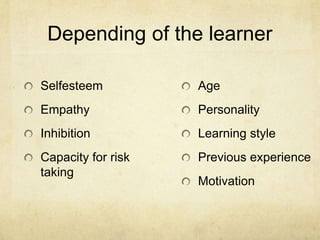
Depending of the learner
Selfesteem

Age

Empathy

Personality

Inhibition

Learning style

Capacity for risk
taking

Previous experience

Motivation
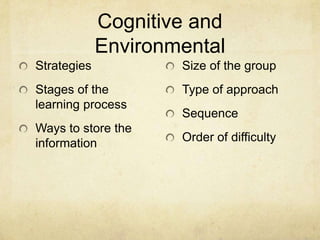
Cognitive and
Environmental
Strategies

Size of the group

Stages of the
learning process

Type of approach

Ways to store the
information

Sequence
Order of difficulty
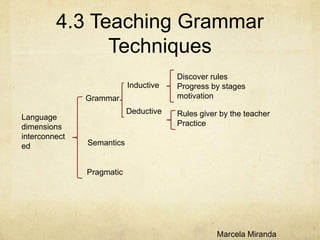
4.3 Teaching Grammar
Techniques
Inductive
Grammar
Language
dimensions
interconnect
ed

Deductive

Discover rules
Progress by stages
motivation

Rules giver by the teacher
Practice

Semantics

Pragmatic

Marcela Miranda
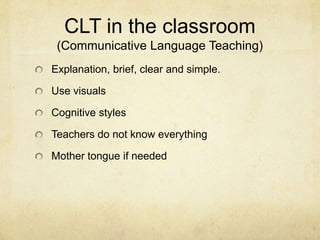
CLT in the classroom
(Communicative Language Teaching)
Explanation, brief, clear and simple.
Use visuals
Cognitive styles
Teachers do not know everything

Mother tongue if needed
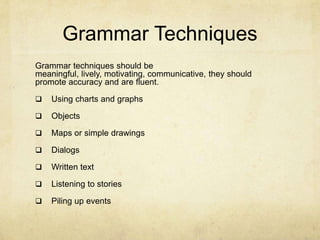
Grammar Techniques
Grammar techniques should be
meaningful, lively, motivating, communicative, they should
promote accuracy and are fluent.


Using charts and graphs



Objects



Maps or simple drawings



Dialogs



Written text



Listening to stories



Piling up events
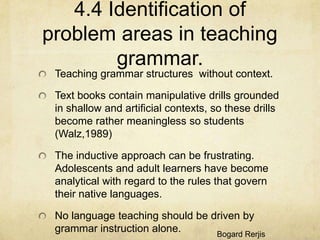
4.4 Identification of
problem areas in teaching
grammar.
Teaching grammar structures without context.
Text books contain manipulative drills grounded
in shallow and artificial contexts, so these drills
become rather meaningless so students
(Walz,1989)
The inductive approach can be frustrating.
Adolescents and adult learners have become
analytical with regard to the rules that govern
their native languages.
No language teaching should be driven by
grammar instruction alone.
Bogard Rerjis
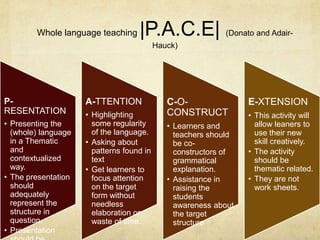
Whole language teaching

|P.A.C.E| (Donato and AdairHauck)

PRESENTATION
• Presenting the
(whole) language
in a Thematic
and
contextualized
way.
• The presentation
should
adequately
represent the
structure in
question.
• Presentation

A-TTENTION
• Highlighting
some regularity
of the language.
• Asking about
patterns found in
text
• Get learners to
focus attention
on the target
form without
needless
elaboration or
waste of time.

C-OCONSTRUCT
• Learners and
teachers should
be coconstructors of
grammatical
explanation.
• Assistance in
raising the
students
awareness about
the target
structure

E-XTENSION
• This activity will
allow leaners to
use their new
skill creatively.
• The activity
should be
thematic related.
• They are not
work sheets.
CONCLUSION
“Language learning is a thinking process,
or from the learner´s viewpoint, a
guessing game. Teachers need to design
cognitively demanding activities that will
encourage learners to hypothesize,
predict, take risk, make errors, and selfcorrect.” (Fountas and Hannigan 1989).
By doing so, the learners become active
participants in the learning process.
Reference list
Krashen, Stephen (1982). Principles and Practice in Second Language
Acquisition. Pergamon Press. ISBN 0-08-028628-3. Retrieved 2010-11-25.

Startvik, j. and Leech, G. (1994). A communicative grammar in English.
New York, New York, USA.
Stern, H. (1984). Fundamental Concepts of Language Teaching. London,
Great Britain.

Teaching grammar final

  • 1.
    Unit 4 Teaching Grammar TeachingLanguage as a System PhD. Norma Flores Cristina Aguilera Hector Noriega Marcela Miranda Bogard Rerjis
  • 2.
    4.1 The importanceof teaching grammar Grammar is the way words are put together to form correct sentences. Spelling is forming words from letters. Crsitina Aguilera
  • 3.
    Grammar Mistakes are occasional inconsistentslips. Grammatical Structure Grammatical Grammatical Terms Errors are, mis-learnerd generalization Meaning Building blocks Past tense Noun plural Comparison of adjectives Affect how units of languag e are combine d Units of Language Parts of a sentence Sentence Clause Phrase word morpheme Parts of speech Noun Verb Adjectives Adverbs Pronouns Auxiliary verbs Modal verbs Determiners Prepositions Common & proper Describes a noun Describes a concept describe by the v Substitutes a noun Is in is going Can, must, may The, a, all, some, many In, before, of, according to, despite
  • 4.
    4.2 Factors involvedin teaching grammar Creating a path to a good understanding of English grammar. Hector Noriega
  • 5.
    Depending of thelearner Selfesteem Age Empathy Personality Inhibition Learning style Capacity for risk taking Previous experience Motivation
  • 6.
    Cognitive and Environmental Strategies Size ofthe group Stages of the learning process Type of approach Ways to store the information Sequence Order of difficulty
  • 7.
    4.3 Teaching Grammar Techniques Inductive Grammar Language dimensions interconnect ed Deductive Discoverrules Progress by stages motivation Rules giver by the teacher Practice Semantics Pragmatic Marcela Miranda
  • 8.
    CLT in theclassroom (Communicative Language Teaching) Explanation, brief, clear and simple. Use visuals Cognitive styles Teachers do not know everything Mother tongue if needed
  • 9.
    Grammar Techniques Grammar techniquesshould be meaningful, lively, motivating, communicative, they should promote accuracy and are fluent.  Using charts and graphs  Objects  Maps or simple drawings  Dialogs  Written text  Listening to stories  Piling up events
  • 10.
    4.4 Identification of problemareas in teaching grammar. Teaching grammar structures without context. Text books contain manipulative drills grounded in shallow and artificial contexts, so these drills become rather meaningless so students (Walz,1989) The inductive approach can be frustrating. Adolescents and adult learners have become analytical with regard to the rules that govern their native languages. No language teaching should be driven by grammar instruction alone. Bogard Rerjis
  • 11.
    Whole language teaching |P.A.C.E|(Donato and AdairHauck) PRESENTATION • Presenting the (whole) language in a Thematic and contextualized way. • The presentation should adequately represent the structure in question. • Presentation A-TTENTION • Highlighting some regularity of the language. • Asking about patterns found in text • Get learners to focus attention on the target form without needless elaboration or waste of time. C-OCONSTRUCT • Learners and teachers should be coconstructors of grammatical explanation. • Assistance in raising the students awareness about the target structure E-XTENSION • This activity will allow leaners to use their new skill creatively. • The activity should be thematic related. • They are not work sheets.
  • 12.
    CONCLUSION “Language learning isa thinking process, or from the learner´s viewpoint, a guessing game. Teachers need to design cognitively demanding activities that will encourage learners to hypothesize, predict, take risk, make errors, and selfcorrect.” (Fountas and Hannigan 1989). By doing so, the learners become active participants in the learning process.
  • 13.
    Reference list Krashen, Stephen(1982). Principles and Practice in Second Language Acquisition. Pergamon Press. ISBN 0-08-028628-3. Retrieved 2010-11-25. Startvik, j. and Leech, G. (1994). A communicative grammar in English. New York, New York, USA. Stern, H. (1984). Fundamental Concepts of Language Teaching. London, Great Britain.