Target Costing
Rincy Joseph
Akshay Karnatak
Surbhi Gupta
Harpreet Singh
Origin of Target Costing
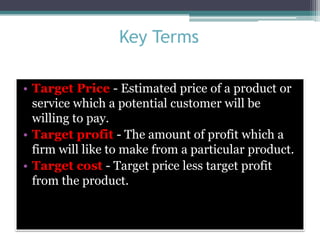
Key Terms
• Target Price - Estimated price of a product or
service which a potential customer will be
willing to pay.
• Target profit - The amount of profit which a
firm will like to make from a particular product.
• Target cost - Target price less target profit
from the product.
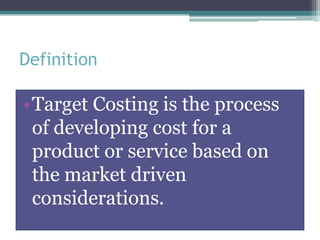
Definition

•Target Costing is the process
of developing cost for a
product or service based on
the market driven
considerations.
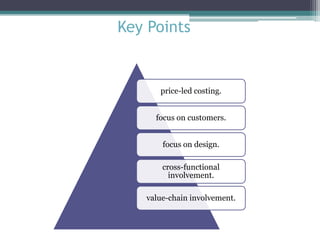
Key Points

price-led costing.
focus on customers.
focus on design.

cross-functional
involvement.
value-chain involvement.
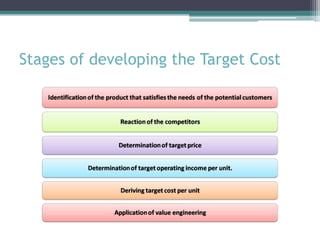
Stages of developing the Target Cost
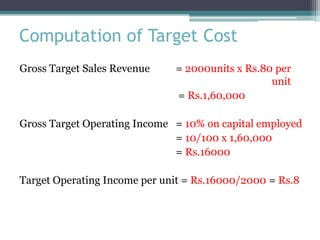
Computation of Target Cost
Gross Target Sales Revenue

= 2000units x Rs.80 per
unit
= Rs.1,60,000

Gross Target Operating Income = 10% on capital employed
= 10/100 x 1,60,000
= Rs.16000
Target Operating Income per unit = Rs.16000/2000 = Rs.8
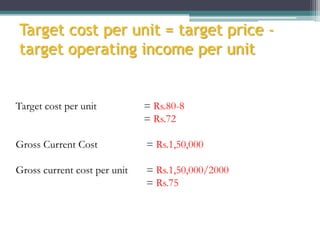
Target cost per unit = target price target operating income per unit

Target cost per unit

= Rs.80-8
= Rs.72

Gross Current Cost

= Rs.1,50,000

Gross current cost per unit

= Rs.1,50,000/2000
= Rs.75
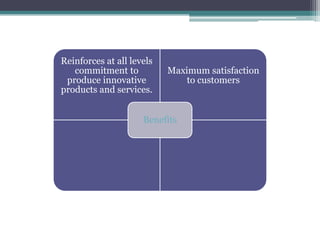
Reinforces at all levels
commitment to
produce innovative
products and services.

Maximum satisfaction
to customers

Benefits
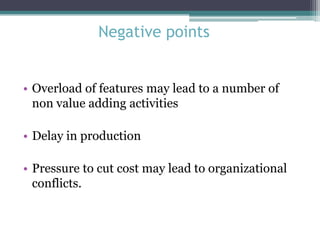
Negative points

• Overload of features may lead to a number of
non value adding activities

• Delay in production
• Pressure to cut cost may lead to organizational
conflicts.
Thank you

Target costing presentation_final(2)

  • 1.
    Target Costing Rincy Joseph AkshayKarnatak Surbhi Gupta Harpreet Singh
  • 2.
  • 3.
    Key Terms • TargetPrice - Estimated price of a product or service which a potential customer will be willing to pay. • Target profit - The amount of profit which a firm will like to make from a particular product. • Target cost - Target price less target profit from the product.
  • 4.
    Definition •Target Costing isthe process of developing cost for a product or service based on the market driven considerations.
  • 5.
    Key Points price-led costing. focuson customers. focus on design. cross-functional involvement. value-chain involvement.
  • 6.
    Stages of developingthe Target Cost
  • 7.
    Computation of TargetCost Gross Target Sales Revenue = 2000units x Rs.80 per unit = Rs.1,60,000 Gross Target Operating Income = 10% on capital employed = 10/100 x 1,60,000 = Rs.16000 Target Operating Income per unit = Rs.16000/2000 = Rs.8
  • 8.
    Target cost perunit = target price target operating income per unit Target cost per unit = Rs.80-8 = Rs.72 Gross Current Cost = Rs.1,50,000 Gross current cost per unit = Rs.1,50,000/2000 = Rs.75
  • 9.
    Reinforces at alllevels commitment to produce innovative products and services. Maximum satisfaction to customers Benefits
  • 10.
    Negative points • Overloadof features may lead to a number of non value adding activities • Delay in production • Pressure to cut cost may lead to organizational conflicts.
  • 11.

Editor's Notes

  • #10 Reinforces at all levels commitment to produce innovative products and services.Maximum satisfaction to customersEnables organizations survival in competitive environment.