INTERNATIONAL
CAPITAL
BUDGETING
Nobody can really guarantee the
future. The best we can do is size
up the chances, calculate the risks
involved, estimate our ability to
deal with them, and then make our
plans with confidence.
--- Henry Ford - II
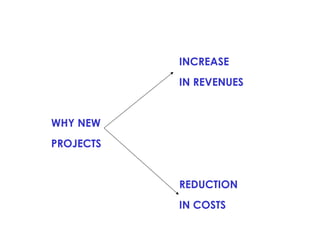
INCREASE
IN REVENUES

WHY NEW
PROJECTS

REDUCTION
IN COSTS
A FOREIGN PROJECT THAT IS PROFITABLE
WHEN VALUED ON ITS OWN MAY NOT BE
PROFITABLE OTHERWISE.
FOREIGN INVESTMENT DECISION PROCESS MAY BE
VIEWED AS AN INTEGRAL UNIT OF MANY ELEMENTS
THAT ARE INTERRELATED.
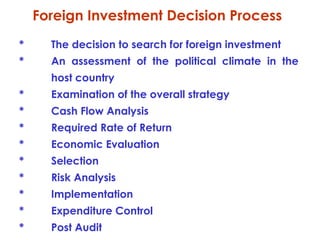
Foreign Investment Decision Process
*

The decision to search for foreign investment

*

An assessment of the political climate in the
host country

*

Examination of the overall strategy

*

Cash Flow Analysis

*

Required Rate of Return

*

Economic Evaluation

*

Selection

*

Risk Analysis

*

Implementation

*

Expenditure Control

*

Post Audit
Search for Foreign Investment
*

Profit Opportunities

*

Tax Policy

*

Diversification Strategies

*

Environmental Forces

*

Organisational Factors

*

Drive by some High Ranking officials inside a
Company
Political Climate
*

Host country gives priority to projects that

reduce the country’s need for imports.

*

Political actions such as exchange controls and
discrimination, adversely affect company

operations.
Company’s Overall Strategy
The analyst must assess the usefulness of each
alternative within the company’s overall strategy to
determine how foreign operations may perpetuate
current strengths or offset weaknesses.
Cash Flow Analysis
*

Tax Laws

*

Import Duties

*

Exchange Rate

*

Sales Creation

*

Cannibalisation (Loss to present sales)

*

Fees & Royalties

*

Intangible benefits (learning)

*

Exchange Rate

*

Expropriation
Cash Flow Analysis
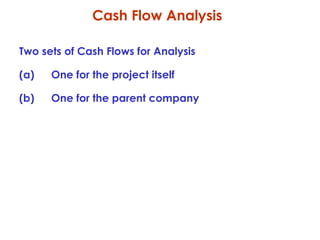
Two sets of Cash Flows for Analysis
(a)

One for the project itself

(b)

One for the parent company
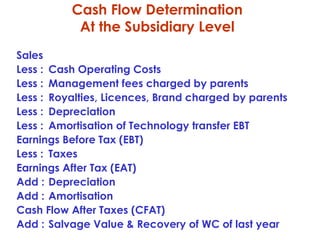
Cash Flow Determination
At the Subsidiary Level
Sales
Less : Cash Operating Costs
Less : Management fees charged by parents
Less : Royalties, Licences, Brand charged by parents
Less : Depreciation
Less : Amortisation of Technology transfer EBT
Earnings Before Tax (EBT)
Less : Taxes
Earnings After Tax (EAT)
Add : Depreciation
Add : Amortisation
Cash Flow After Taxes (CFAT)
Add : Salvage Value & Recovery of WC of last year
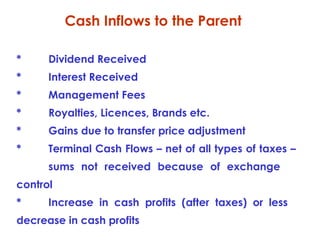
Cash Inflows to the Parent
*

Dividend Received

*

Interest Received

*

Management Fees

*

Royalties, Licences, Brands etc.

*

Gains due to transfer price adjustment

*

Terminal Cash Flows – net of all types of taxes –
sums not received because of exchange

control
*

Increase in cash profits (after taxes) or less

decrease in cash profits
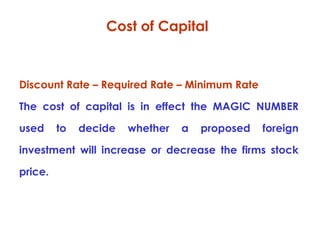
Cost of Capital

Discount Rate – Required Rate – Minimum Rate
The cost of capital is in effect the MAGIC NUMBER
used

to

decide

whether

a

proposed

foreign

investment will increase or decrease the firms stock
price.
Economic Evaluation
Once cash flows and cost of capital are known –
process of evaluating investment projects.
*

Pay back period

*

ARR

*

NPV

*

IRR

Which is Good
Selection
*

Accept – Reject decision

*

Mutually Exclusive Choice

*

Capital Rationing

Adjusted Present Value : PV Technique – Discounts
different cash flows at different rates – depending
upon risk associated with each cash flow.
Risk Analysis

*

ADJUSTMENT IN CASH FLOWS

*

ADJUSTMENT IN DISCOUNT RATE
IMPLEMENTATION

Control – Complete within established guidelines.

Was or has the
Post Audits

project been a
success
What makes International Capital Budgeting different
from domestic Capital Budgeting

*

Project Cash Flows and Cash Flows to the

Parent Company
*

Factor of Political Risk

*

Inflation & Exchange Rate changes
Financial Tools

No doubt Financial Tools such as pay back, NPV or
IRR can be used. But considering the additional issues
involved that affect both the cash flows and the risk
(discount rate) make these techniques insufficient.
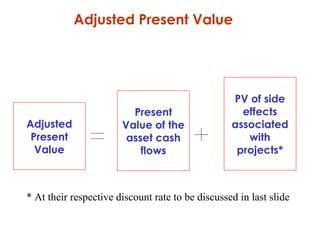
Adjusted Present Value

Adjusted
Present
Value

Present
Value of the
asset cash
flows

PV of side
effects
associated
with
projects*

* At their respective discount rate to be discussed in last slide
Additional Issues Involved in CrossBorder Projects
*

Home country or host country whose

perspective be considered
*

Blocked Funds

*

Loss due to lost exports

*

Restrictions on Repatriation

*

Taxation

*

Effect on Borrowing capacity

*

Concessional Loan

*

Depreciation
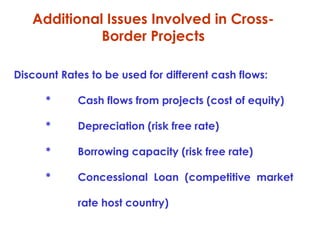
Additional Issues Involved in CrossBorder Projects
Discount Rates to be used for different cash flows:
*

Cash flows from projects (cost of equity)

*

Depreciation (risk free rate)

*

Borrowing capacity (risk free rate)

*

Concessional Loan (competitive market
rate host country)

Internationalcapitalbudgeting slides-110216223158-phpapp01

  • 1.
  • 2.
    Nobody can reallyguarantee the future. The best we can do is size up the chances, calculate the risks involved, estimate our ability to deal with them, and then make our plans with confidence. --- Henry Ford - II
  • 3.
  • 4.
    A FOREIGN PROJECTTHAT IS PROFITABLE WHEN VALUED ON ITS OWN MAY NOT BE PROFITABLE OTHERWISE.
  • 5.
    FOREIGN INVESTMENT DECISIONPROCESS MAY BE VIEWED AS AN INTEGRAL UNIT OF MANY ELEMENTS THAT ARE INTERRELATED.
  • 6.
    Foreign Investment DecisionProcess * The decision to search for foreign investment * An assessment of the political climate in the host country * Examination of the overall strategy * Cash Flow Analysis * Required Rate of Return * Economic Evaluation * Selection * Risk Analysis * Implementation * Expenditure Control * Post Audit
  • 7.
    Search for ForeignInvestment * Profit Opportunities * Tax Policy * Diversification Strategies * Environmental Forces * Organisational Factors * Drive by some High Ranking officials inside a Company
  • 8.
    Political Climate * Host countrygives priority to projects that reduce the country’s need for imports. * Political actions such as exchange controls and discrimination, adversely affect company operations.
  • 9.
    Company’s Overall Strategy Theanalyst must assess the usefulness of each alternative within the company’s overall strategy to determine how foreign operations may perpetuate current strengths or offset weaknesses.
  • 10.
    Cash Flow Analysis * TaxLaws * Import Duties * Exchange Rate * Sales Creation * Cannibalisation (Loss to present sales) * Fees & Royalties * Intangible benefits (learning) * Exchange Rate * Expropriation
  • 11.
    Cash Flow Analysis Twosets of Cash Flows for Analysis (a) One for the project itself (b) One for the parent company
  • 12.
    Cash Flow Determination Atthe Subsidiary Level Sales Less : Cash Operating Costs Less : Management fees charged by parents Less : Royalties, Licences, Brand charged by parents Less : Depreciation Less : Amortisation of Technology transfer EBT Earnings Before Tax (EBT) Less : Taxes Earnings After Tax (EAT) Add : Depreciation Add : Amortisation Cash Flow After Taxes (CFAT) Add : Salvage Value & Recovery of WC of last year
  • 13.
    Cash Inflows tothe Parent * Dividend Received * Interest Received * Management Fees * Royalties, Licences, Brands etc. * Gains due to transfer price adjustment * Terminal Cash Flows – net of all types of taxes – sums not received because of exchange control * Increase in cash profits (after taxes) or less decrease in cash profits
  • 14.
    Cost of Capital DiscountRate – Required Rate – Minimum Rate The cost of capital is in effect the MAGIC NUMBER used to decide whether a proposed foreign investment will increase or decrease the firms stock price.
  • 15.
    Economic Evaluation Once cashflows and cost of capital are known – process of evaluating investment projects. * Pay back period * ARR * NPV * IRR Which is Good
  • 16.
    Selection * Accept – Rejectdecision * Mutually Exclusive Choice * Capital Rationing Adjusted Present Value : PV Technique – Discounts different cash flows at different rates – depending upon risk associated with each cash flow.
  • 17.
    Risk Analysis * ADJUSTMENT INCASH FLOWS * ADJUSTMENT IN DISCOUNT RATE
  • 18.
    IMPLEMENTATION Control – Completewithin established guidelines. Was or has the Post Audits project been a success
  • 19.
    What makes InternationalCapital Budgeting different from domestic Capital Budgeting * Project Cash Flows and Cash Flows to the Parent Company * Factor of Political Risk * Inflation & Exchange Rate changes
  • 20.
    Financial Tools No doubtFinancial Tools such as pay back, NPV or IRR can be used. But considering the additional issues involved that affect both the cash flows and the risk (discount rate) make these techniques insufficient.
  • 21.
    Adjusted Present Value Adjusted Present Value Present Valueof the asset cash flows PV of side effects associated with projects* * At their respective discount rate to be discussed in last slide
  • 22.
    Additional Issues Involvedin CrossBorder Projects * Home country or host country whose perspective be considered * Blocked Funds * Loss due to lost exports * Restrictions on Repatriation * Taxation * Effect on Borrowing capacity * Concessional Loan * Depreciation
  • 23.
    Additional Issues Involvedin CrossBorder Projects Discount Rates to be used for different cash flows: * Cash flows from projects (cost of equity) * Depreciation (risk free rate) * Borrowing capacity (risk free rate) * Concessional Loan (competitive market rate host country)