Cost Reduction Strategies:
Focus and Techniques
for

NAPM-Wichita
presented by

Thomas L. Tanel, C.P.M., CTL, CCA
President and CEO
CATTAN Services Group, Inc.
College Station, TX
© 2009 CATTAN Services Group, Inc.
Agenda Topics










Cost Reduction Strategies and Ideas
Price and Cost Analysis--Applied
Total Cost of Ownership and Total System Cost
Use of “Should” Cost Models
Innovative Thought and Ideas Solicitation
Value Analysis and Engineering
Target Cost Analysis and Target Pricing
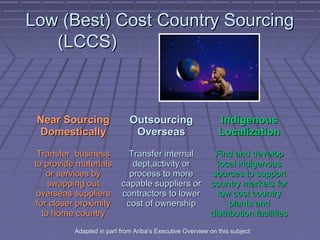
Low (Best) Cost Country Sourcing
Summary
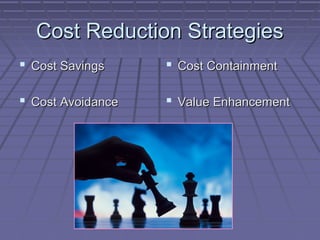
Cost Reduction Strategies
 Cost Savings

 Cost Containment

 Cost Avoidance

 Value Enhancement
Cost Reduction Terminology
Product cost savings
 Defined as obtaining and realizing a lower unit
price on the same item than the unit price was in
the last contract period.
 A cost saving is valid for as long as the
comparative that generated the saving is; but
it is not to exceed the end of the contract period
in which the saving was produced. On the first
day of the next contract period the old price
becomes the baseline against which any future
cost savings are measured.
Cost Reduction Terminology
Revenue generation
 New financial sources that can be used to leverage or
increase monies/resources available to an activity.
 Revenue generation is a quantifiable monetary
benefit.
Non-monetary benefit
 A benefit that cannot be measured in terms of finances
or resources, such as better quality of services;
improved health, safety or quality of life; enhanced
security; enterprise-wide consistency; or contribution to
achieving supplier diversity goals.
Return on investment
 Monetary benefit from an investment as a ratio or
percentage of the amount invested.
Cost Savings
Cost Savings—definition
 A cost reduction that can be specifically identified
and will be made to a budget or program,
resulting from implementing a specific alternative
in lieu of continuing the present system.
 The result of a planned or deliberate action
taken by Purchasing
 Savings are a quantifiable monetary benefit
 There must be a direct activity reduction for a
savings to occur; thus, benefits are considered as
savings only if the estimate identifies benefits that
start accruing during the budget/activity’s fiscal
year.
Cost Avoidance
Cost avoidance—definition
 Financial or economic benefits that result from
an initiative but do not permit a monetary
reduction to a funded activity or budget.
 Is a quantifiable monetary benefit
 Usually addresses the reduction or elimination
of a future cost
 Does not lower the cost of materials purchased
when measured against historical results, but it
does minimize or avoid entirely the negative
impact on net income that a price increase
would have.
Cost Containment
Cost containment—definition
 The process of maintaining organizational
costs within a specified budget; restraining
expenditures to meet organizational or
project financial targets.
 Measures taken to reduce expenditure or
the rate of growth of expenditure, or the unit
cost of goods/materials/supplies/services.
 When an organization keeps costs low, or
within a limit that has been planned.
Value Enhancement
Value enhancement—definition
 Value which affects the whole-life costs or whole-life
income and its required functionality.
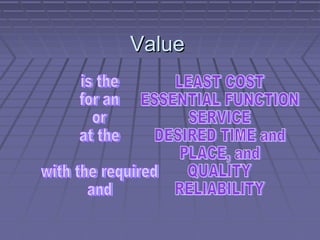
Value
 For any service or offering to have financial value, the
organization must have been willing to pay for it out of
pocket or must have already been paying for it in a way
that can be measured on the organization’s income
statement. This definition is a requirement for any
discussion of legitimate cost avoidances.
 For example, in practicing sustainable environmental
management, we may reduce the environmental impact;
while at the same time achieve cost reduction and create
environmental friendly conservation added value.
The Difference between
Price and Cost
 “Price” . . .
is a sales and purchasing concept.

 “Cost” . . .
is an accounting concept.
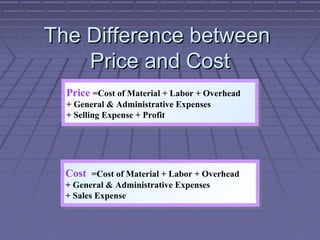
The Difference between
Price and Cost
Price =Cost of Material + Labor + Overhead
+ General & Administrative Expenses
+ Selling Expense + Profit

Cost =Cost of Material + Labor + Overhead
+ General & Administrative Expenses
+ Sales Expense
+ Sales Expense
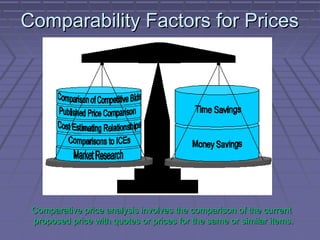
Comparability Factors for Prices

Comparative price analysis involves the comparison of the current
proposed price with quotes or prices for the same or similar items.
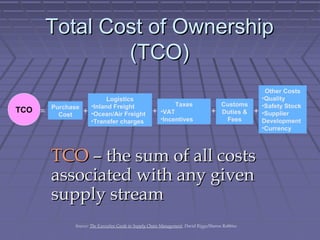
Total Cost of Ownership
(TCO)
TCO

=

Purchase
Cost

+

Logistics
•Inland Freight
•Ocean/Air Freight
•Transfer charges

+

Taxes
•VAT
•Incentives

+

Customs
Duties &
Fees

+

TCO – the sum of all costs
associated with any given
supply stream
Source: The Executive Guide to Supply Chain Management, David Riggs/Sharon Robbins

Other Costs
•Quality
•Safety Stock
•Supplier
Development
•Currency
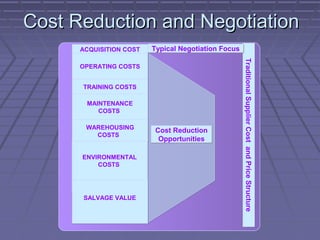
Cost Reduction and Negotiation
ACQUISITION COST

Typical Negotiation Focus

TRAINING COSTS
MAINTENANCE
COSTS
WAREHOUSING
COSTS
ENVIRONMENTAL
COSTS

SALVAGE VALUE

Cost Reduction
Opportunities

Traditional Supplier Cost and Price Structure

OPERATING COSTS
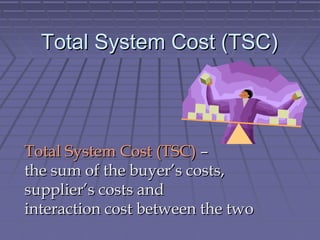
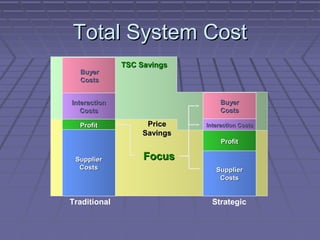
Total System Cost (TSC)

Total System Cost (TSC) –
the sum of the buyer’s costs,
supplier’s costs and
interaction cost between the two
Total System Cost
Buyer
Costs

TSC Savings

Buyer
Costs

Interaction
Costs
Profit

Price
Savings

Interaction Costs

Profit
Supplier
Costs

Traditional

Focus
Supplier
Costs

Strategic
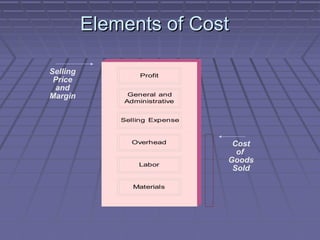
Elements of Cost
Selling
Price
and
Margin

Profit
General and
Administrative
Selling Expense

Overhead

Labor

Materials

Cost
of
Goods
Sold
Drive Out Costs Creatively
 Considering alternative products, designs, concepts,

and services, or looking at different or alternative
solutions to existing services, processes or applications,
requires a multi-disciplined approach, making use of
internal customers or subject matter experts as well as
first-tier suppliers or prime contractors.

 Remember to create an arena that is friendly and open
to suggestion, change, and innovation.

 When defining the elements of cost, focus on cost
reduction opportunities.
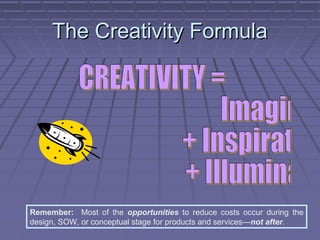
The Creativity Formula

Remember: Most of the opportunities to reduce costs occur during the
design, SOW, or conceptual stage for products and services—not after.
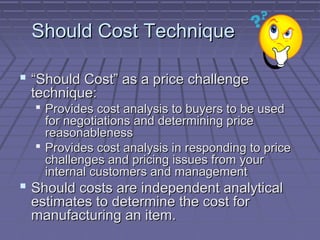
Should Cost Technique
 “Should Cost” as a price challenge
technique:

 Provides cost analysis to buyers to be used
for negotiations and determining price
reasonableness
 Provides cost analysis in responding to price
challenges and pricing issues from your
internal customers and management

 Should costs are independent analytical
estimates to determine the cost for
manufacturing an item.
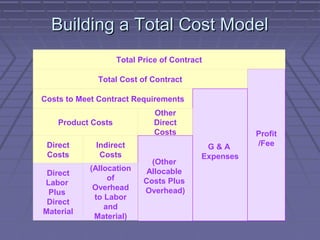
Building a Total Cost Model
Total Price of Contract
Total Cost of Contract
Costs to Meet Contract Requirements
Product Costs
Direct
Costs

Indirect
Costs

Direct
Labor
Plus
Direct
Material

(Allocation
of
Overhead
to Labor
and
Material)

Other
Direct
Costs

(Other
Allocable
Costs Plus
Overhead)

G&A
Expenses

Profit
/Fee
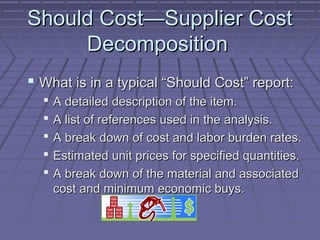
Should Cost—Supplier Cost
Decomposition
 What is in a typical “Should Cost” report:






A detailed description of the item.
A list of references used in the analysis.
A break down of cost and labor burden rates.
Estimated unit prices for specified quantities.
A break down of the material and associated
cost and minimum economic buys.
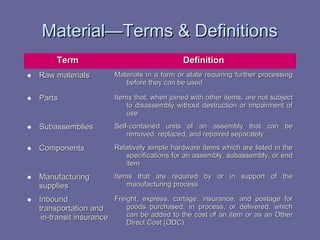
Material—Terms & Definitions
Term

Definition

• Raw materials

Materials in a form or state requiring further processing
before they can be used

• Parts

Items that, when joined with other items, are not subject
to disassembly without destruction or impairment of
use

• Subassemblies

Self-contained units of an assembly that can be
removed, replaced, and repaired separately

• Components

Relatively simple hardware items which are listed in the
specifications for an assembly, subassembly, or end
item

• Manufacturing

Items that are required by or in support of the
manufacturing process

supplies

• Inbound

Freight, express, cartage, insurance, and postage for
goods purchased, in process, or delivered, which
transportation and
can be added to the cost of an item or as an Other
in-transit insurance
Direct Cost (ODC)
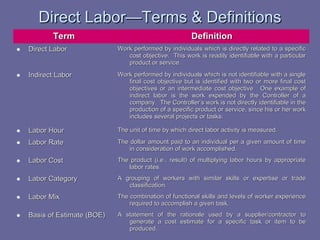
Direct Labor—Terms & Definitions
Term

Definition

•

Direct Labor

Work performed by individuals which is directly related to a specific
cost objective. This work is readily identifiable with a particular
product or service.

•

Indirect Labor

Work performed by individuals which is not identifiable with a single
final cost objective but is identified with two or more final cost
objectives or an intermediate cost objective. One example of
indirect labor is the work expended by the Controller of a
company. The Controller’s work is not directly identifiable in the
production of a specific product or service, since his or her work
includes several projects or tasks.

•
•

Labor Hour

The unit of time by which direct labor activity is measured.

Labor Rate

The dollar amount paid to an individual per a given amount of time
in consideration of work accomplished.

•

Labor Cost

The product (i.e., result) of multiplying labor hours by appropriate
labor rates.

•

Labor Category

A grouping of workers with similar skills or expertise or trade
classification.

•

Labor Mix

The combination of functional skills and levels of worker experience
required to accomplish a given task.

•

Basis of Estimate (BOE)

A statement of the rationale used by a supplier/contractor to
generate a cost estimate for a specific task or item to be
produced.
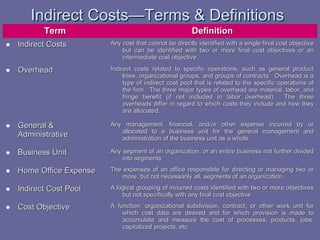
Indirect Costs—Terms & Definitions
Term

Definition

• Indirect Costs

Any cost that cannot be directly identified with a single final cost objective
but can be identified with two or more final cost objectives or an
intermediate cost objective

• Overhead

Indirect costs related to specific operations, such as general product
lines, organizational groups, and groups of contracts. Overhead is a
type of indirect cost pool that is related to the specific operations of
the firm. The three major types of overhead are material, labor, and
fringe benefit (if not included in labor overhead). The three
overheads differ in regard to which costs they include and how they
are allocated.

• General &

Administrative

Any management, financial, and/or other expense incurred by or
allocated to a business unit for the general management and
administration of the business unit as a whole

• Business Unit

Any segment of an organization, or an entire business not further divided
into segments

• Home Office Expense

The expenses of an office responsible for directing or managing two or
more, but not necessarily all, segments of an organization

• Indirect Cost Pool

A logical grouping of incurred costs identified with two or more objectives
but not specifically with any final cost objective

• Cost Objective

A function, organizational subdivision, contract, or other work unit for
which cost data are desired and for which provision is made to
accumulate and measure the cost of processes, products, jobs,
capitalized projects, etc.
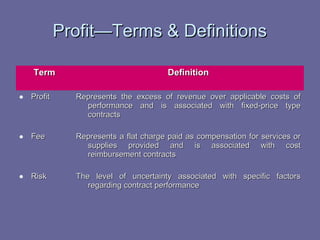
Profit—Terms & Definitions
Term

Definition

• Profit

Represents the
performance
contracts

• Fee

Represents a flat charge paid as compensation for services or
supplies provided and is associated with cost
reimbursement contracts

• Risk

The level of uncertainty associated with specific factors
regarding contract performance

excess of revenue over applicable costs of
and is associated with fixed-price type
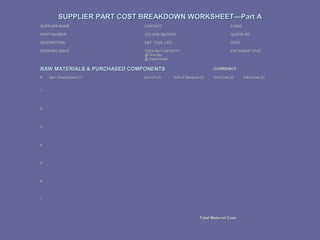
SUPPLIER PART COST BREAKDOWN WORKSHEET—Part A
SUPPLIER NAME:

CONTACT:

E-MAIL:

PART NUMBER:

VOLUME QUOTED:

QUOTE NO:

DESCRIPTION:

EST. TOOL LIFE:

DATE:

DRAWING ISSUE:

TOOLING CAPACITY
@ Hrs/day:
@ Days/Week:

EXCHANGE RATE:

RAW MATERIALS & PURCHASED COMPONENTS
#

Item Descriptions (1)

Item ID (2)

CURRENCY:
Unit of Measure (3)

Unit Cost (4)

1

2

3

4

5

6

7

Total Material Cost

Total Cost (5)
SUPPLIER PART COST BREAKDOWN WORKSHEET—Part B
LABOR AND OVERHEAD
Labor Details

#

Operations Process Descriptions (6)

Labor
Rate
(7)

Std
Hrs
(8)

Labor
Cost (9)

Machine Data

Op.
(10)

Mach.
Size (11)

Mach. Type
(12)

Overhead Detail

Var. Cost
(13)

Fixed Cost
(14)

1

2

3

4

Total Labor
Cost

Total Overhead Cost

Total Manufacturing Cost (material + labor + burden) (16)

Selling, General and Administration Expenses (17)

Selling Price

FROM TOOLING COST BREAKDOWN—TOTAL TOOLING COST QUOTED

Total Cost (15)
Meeting the Competitive Demands of
Supply Management through
Supplier Ideas Solicitation
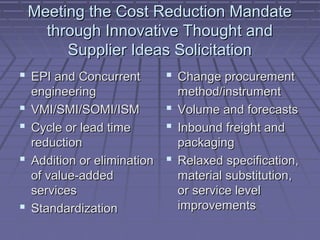
Meeting the Cost Reduction Mandate
through Innovative Thought and
Supplier Ideas Solicitation
 EPI and Concurrent





 Change procurement

engineering
method/instrument
 Volume and forecasts
VMI/SMI/SOMI/ISM
 Inbound freight and
Cycle or lead time
reduction
packaging
Addition or elimination  Relaxed specification,
of value-added
material substitution,
services
or service level
improvements
Standardization
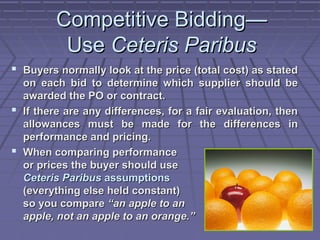
Competitive Bidding—
Use Ceteris Paribus
 Buyers normally look at the price (total cost) as stated
on each bid to determine which supplier should be
awarded the PO or contract.
 If there are any differences, for a fair evaluation, then
allowances must be made for the differences in
performance and pricing.
 When comparing performance
or prices the buyer should use
Ceteris Paribus assumptions
(everything else held constant)
so you compare “an apple to an
apple, not an apple to an orange.”
Value
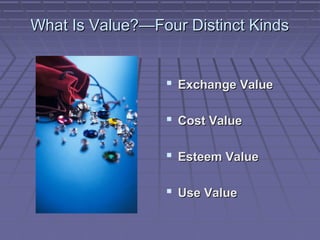
What Is Value?—Four Distinct Kinds

 Exchange Value
 Cost Value
 Esteem Value
 Use Value
Value Analysis and
Engineering (VA/VE)
1. An organized creative
approach to cost reduction
2. Emphasis on function or use
3. Identifies areas of excessive
or unnecessary costs
4. Eliminates non-value added
activities
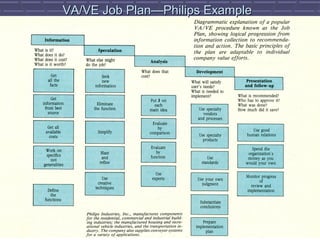
VA/VE Job Plan—Philips Example
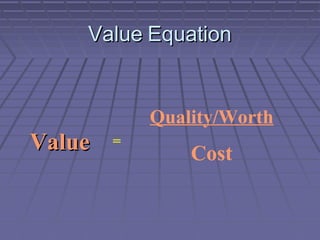
Value Equation

Quality/Worth

Value

=

Cost
How To Get Started in VA/VE
 Identify what is it and what





does it do?
Obtain and review all available
cost information
Try to anticipate roadblocks
Promote cooperation with
VA/VE effort
Seek guidance from those in
management that assigned
study
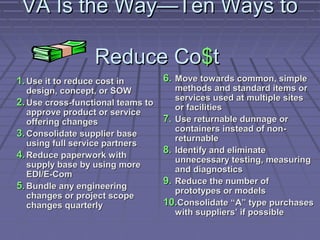
VA Is the Way—Ten Ways to
Reduce Co$t
1. Use it to reduce cost in

design, concept, or SOW
2. Use cross-functional teams to
approve product or service
offering changes
3. Consolidate supplier base
using full service partners
4. Reduce paperwork with
supply base by using more
EDI/E-Com
5. Bundle any engineering
changes or project scope
changes quarterly

6. Move towards common, simple

methods and standard items or
services used at multiple sites
or facilities
7. Use returnable dunnage or
containers instead of nonreturnable
8. Identify and eliminate
unnecessary testing, measuring
and diagnostics
9. Reduce the number of
prototypes or models
10.Consolidate “A” type purchases
with suppliers’ if possible
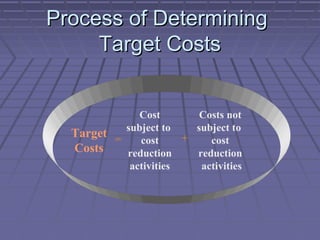
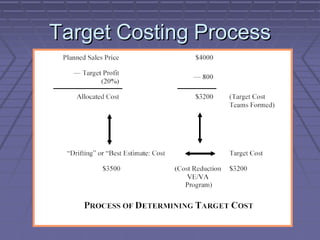
Process of Determining
Target Costs
Cost
Costs not
subject to
subject to
Target =
+
cost
cost
Costs
reduction
reduction
activities
activities
Target Costing Process
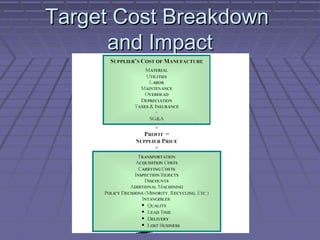
Target Cost Breakdown
and Impact
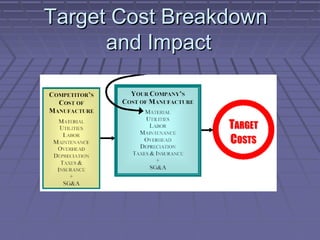
Target Cost Breakdown
and Impact
Target Pricing
A reduction in the direct
costs of a supplier’s cost
profile has more impact on
your bottom line than a
major percentage discount
in the supplier’s price.
Negotiation based on cost
allows you to challenge the
logic of each element of the
price.
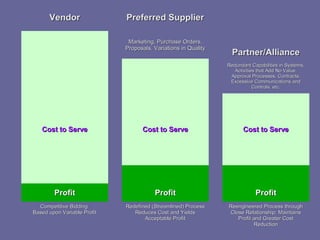
Vendor

Preferred Supplier
Marketing, Purchase Orders,
Proposals, Variations in Quality

Partner/Alliance
Redundant Capabilities in Systems,
Activities that Add No Value,
Approval Processes, Contracts,
Excessive Communications and
Controls, etc.

Cost to Serve

Cost to Serve

Cost to Serve

Profit

Profit

Profit

Competitive Bidding
Based upon Variable Profit

Redefined (Streamlined) Process
Reduces Cost and Yields
Acceptable Profit

Reengineered Process through
Close Relationship; Maintains
Profit and Greater Cost
Reduction
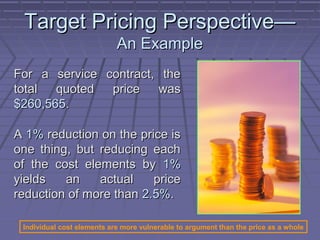
Target Pricing Perspective—
An Example
For a service contract, the
total
quoted
price
was
$260,565.
A 1% reduction on the price is
one thing, but reducing each
of the cost elements by 1%
yields
an
actual
price
reduction of more than 2.5%.
Individual cost elements are more vulnerable to argument than the price as a whole
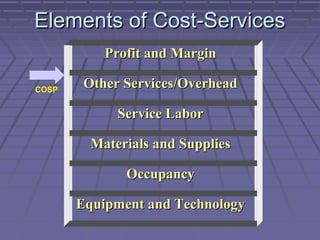
Elements of Cost-Services
Profit and Margin
COSP

Other Services/Overhead
Service Labor
Materials and Supplies
Occupancy
Equipment and Technology
Opportunity Knocks
The ultimate objective is to maximize
the value of each purchase spend
dollar.

Sometimes the buyer has a chance to gain the upper hand.
This occurs when the supplying industry’s margins are healthy
because selling prices rose faster than their costs escalated.
Low (Best) Cost Country Sourcing
(LCCS)

Near Sourcing
Domestically

Outsourcing
Overseas

Indigenous
Localization

Transfer business
to provide materials
or services by
swapping out
overseas suppliers
for closer proximity
to home country

Transfer internal
dept,activity or
process to more
capable suppliers or
contractors to lower
cost of ownership

Find and develop
local indigenous
sources to support
country markets for
low cost country
plants and
distribution facilities

Adapted in part from Ariba’s Executive Overview on this subject
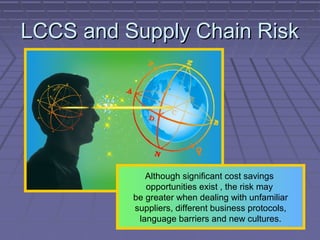
LCCS and Supply Chain Risk

Although significant cost savings
opportunities exist , the risk may
be greater when dealing with unfamiliar
suppliers, different business protocols,
language barriers and new cultures.
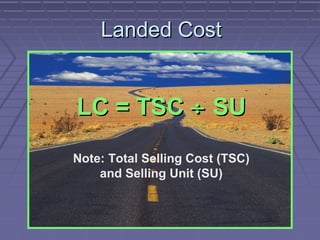
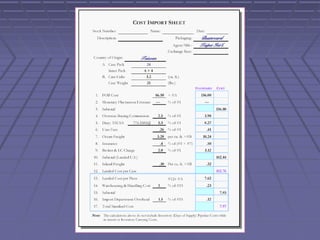
Landed Cost

LC = TSC ÷ SU
Note: Total Selling Cost (TSC)
and Selling Unit (SU)
SUMMARY and THANKS

© 2009 CATTAN Services Group, Inc.

Cost Reduction Strategies:Focus and Techniques

  • 1.
    Cost Reduction Strategies: Focusand Techniques for NAPM-Wichita presented by Thomas L. Tanel, C.P.M., CTL, CCA President and CEO CATTAN Services Group, Inc. College Station, TX © 2009 CATTAN Services Group, Inc.
  • 2.
    Agenda Topics          Cost ReductionStrategies and Ideas Price and Cost Analysis--Applied Total Cost of Ownership and Total System Cost Use of “Should” Cost Models Innovative Thought and Ideas Solicitation Value Analysis and Engineering Target Cost Analysis and Target Pricing Low (Best) Cost Country Sourcing Summary
  • 3.
    Cost Reduction Strategies Cost Savings  Cost Containment  Cost Avoidance  Value Enhancement
  • 4.
    Cost Reduction Terminology Productcost savings  Defined as obtaining and realizing a lower unit price on the same item than the unit price was in the last contract period.  A cost saving is valid for as long as the comparative that generated the saving is; but it is not to exceed the end of the contract period in which the saving was produced. On the first day of the next contract period the old price becomes the baseline against which any future cost savings are measured.
  • 5.
    Cost Reduction Terminology Revenuegeneration  New financial sources that can be used to leverage or increase monies/resources available to an activity.  Revenue generation is a quantifiable monetary benefit. Non-monetary benefit  A benefit that cannot be measured in terms of finances or resources, such as better quality of services; improved health, safety or quality of life; enhanced security; enterprise-wide consistency; or contribution to achieving supplier diversity goals. Return on investment  Monetary benefit from an investment as a ratio or percentage of the amount invested.
  • 6.
    Cost Savings Cost Savings—definition A cost reduction that can be specifically identified and will be made to a budget or program, resulting from implementing a specific alternative in lieu of continuing the present system.  The result of a planned or deliberate action taken by Purchasing  Savings are a quantifiable monetary benefit  There must be a direct activity reduction for a savings to occur; thus, benefits are considered as savings only if the estimate identifies benefits that start accruing during the budget/activity’s fiscal year.
  • 7.
    Cost Avoidance Cost avoidance—definition Financial or economic benefits that result from an initiative but do not permit a monetary reduction to a funded activity or budget.  Is a quantifiable monetary benefit  Usually addresses the reduction or elimination of a future cost  Does not lower the cost of materials purchased when measured against historical results, but it does minimize or avoid entirely the negative impact on net income that a price increase would have.
  • 8.
    Cost Containment Cost containment—definition The process of maintaining organizational costs within a specified budget; restraining expenditures to meet organizational or project financial targets.  Measures taken to reduce expenditure or the rate of growth of expenditure, or the unit cost of goods/materials/supplies/services.  When an organization keeps costs low, or within a limit that has been planned.
  • 9.
    Value Enhancement Value enhancement—definition Value which affects the whole-life costs or whole-life income and its required functionality. Value  For any service or offering to have financial value, the organization must have been willing to pay for it out of pocket or must have already been paying for it in a way that can be measured on the organization’s income statement. This definition is a requirement for any discussion of legitimate cost avoidances.  For example, in practicing sustainable environmental management, we may reduce the environmental impact; while at the same time achieve cost reduction and create environmental friendly conservation added value.
  • 10.
    The Difference between Priceand Cost  “Price” . . . is a sales and purchasing concept.  “Cost” . . . is an accounting concept.
  • 11.
    The Difference between Priceand Cost Price =Cost of Material + Labor + Overhead Price =Cost of Material + Labor + Overhead + General & Administrative Expenses + General & Administrative Expenses + Selling Expense + Profit + Selling Expense + Profit Cost =Cost of Material + Labor + Overhead Cost =Cost of Material + Labor + Overhead + General & Administrative Expenses + General & Administrative Expenses + Sales Expense + Sales Expense
  • 12.
    Comparability Factors forPrices Comparative price analysis involves the comparison of the current proposed price with quotes or prices for the same or similar items.
  • 13.
    Total Cost ofOwnership (TCO) TCO = Purchase Cost + Logistics •Inland Freight •Ocean/Air Freight •Transfer charges + Taxes •VAT •Incentives + Customs Duties & Fees + TCO – the sum of all costs associated with any given supply stream Source: The Executive Guide to Supply Chain Management, David Riggs/Sharon Robbins Other Costs •Quality •Safety Stock •Supplier Development •Currency
  • 14.
    Cost Reduction andNegotiation ACQUISITION COST Typical Negotiation Focus TRAINING COSTS MAINTENANCE COSTS WAREHOUSING COSTS ENVIRONMENTAL COSTS SALVAGE VALUE Cost Reduction Opportunities Traditional Supplier Cost and Price Structure Traditional Supplier Cost and Price Structure OPERATING COSTS
  • 15.
    Total System Cost(TSC) Total System Cost (TSC) – the sum of the buyer’s costs, supplier’s costs and interaction cost between the two
  • 16.
    Total System Cost Buyer Costs TSCSavings Buyer Costs Interaction Costs Profit Price Savings Interaction Costs Profit Supplier Costs Traditional Focus Supplier Costs Strategic
  • 17.
    Elements of Cost Selling Price and Margin Profit Generaland Administrative Selling Expense Overhead Labor Materials Cost of Goods Sold
  • 18.
    Drive Out CostsCreatively  Considering alternative products, designs, concepts, and services, or looking at different or alternative solutions to existing services, processes or applications, requires a multi-disciplined approach, making use of internal customers or subject matter experts as well as first-tier suppliers or prime contractors.  Remember to create an arena that is friendly and open to suggestion, change, and innovation.  When defining the elements of cost, focus on cost reduction opportunities.
  • 19.
    The Creativity Formula Remember:Most of the opportunities to reduce costs occur during the design, SOW, or conceptual stage for products and services—not after.
  • 20.
    Should Cost Technique “Should Cost” as a price challenge technique:  Provides cost analysis to buyers to be used for negotiations and determining price reasonableness  Provides cost analysis in responding to price challenges and pricing issues from your internal customers and management  Should costs are independent analytical estimates to determine the cost for manufacturing an item.
  • 21.
    Building a TotalCost Model Total Price of Contract Total Cost of Contract Costs to Meet Contract Requirements Product Costs Direct Costs Indirect Costs Direct Labor Plus Direct Material (Allocation of Overhead to Labor and Material) Other Direct Costs (Other Allocable Costs Plus Overhead) G&A Expenses Profit /Fee
  • 22.
    Should Cost—Supplier Cost Decomposition What is in a typical “Should Cost” report:      A detailed description of the item. A list of references used in the analysis. A break down of cost and labor burden rates. Estimated unit prices for specified quantities. A break down of the material and associated cost and minimum economic buys.
  • 23.
    Material—Terms & Definitions Term Definition •Raw materials Materials in a form or state requiring further processing before they can be used • Parts Items that, when joined with other items, are not subject to disassembly without destruction or impairment of use • Subassemblies Self-contained units of an assembly that can be removed, replaced, and repaired separately • Components Relatively simple hardware items which are listed in the specifications for an assembly, subassembly, or end item • Manufacturing Items that are required by or in support of the manufacturing process supplies • Inbound Freight, express, cartage, insurance, and postage for goods purchased, in process, or delivered, which transportation and can be added to the cost of an item or as an Other in-transit insurance Direct Cost (ODC)
  • 24.
    Direct Labor—Terms &Definitions Term Definition • Direct Labor Work performed by individuals which is directly related to a specific cost objective. This work is readily identifiable with a particular product or service. • Indirect Labor Work performed by individuals which is not identifiable with a single final cost objective but is identified with two or more final cost objectives or an intermediate cost objective. One example of indirect labor is the work expended by the Controller of a company. The Controller’s work is not directly identifiable in the production of a specific product or service, since his or her work includes several projects or tasks. • • Labor Hour The unit of time by which direct labor activity is measured. Labor Rate The dollar amount paid to an individual per a given amount of time in consideration of work accomplished. • Labor Cost The product (i.e., result) of multiplying labor hours by appropriate labor rates. • Labor Category A grouping of workers with similar skills or expertise or trade classification. • Labor Mix The combination of functional skills and levels of worker experience required to accomplish a given task. • Basis of Estimate (BOE) A statement of the rationale used by a supplier/contractor to generate a cost estimate for a specific task or item to be produced.
  • 25.
    Indirect Costs—Terms &Definitions Term Definition • Indirect Costs Any cost that cannot be directly identified with a single final cost objective but can be identified with two or more final cost objectives or an intermediate cost objective • Overhead Indirect costs related to specific operations, such as general product lines, organizational groups, and groups of contracts. Overhead is a type of indirect cost pool that is related to the specific operations of the firm. The three major types of overhead are material, labor, and fringe benefit (if not included in labor overhead). The three overheads differ in regard to which costs they include and how they are allocated. • General & Administrative Any management, financial, and/or other expense incurred by or allocated to a business unit for the general management and administration of the business unit as a whole • Business Unit Any segment of an organization, or an entire business not further divided into segments • Home Office Expense The expenses of an office responsible for directing or managing two or more, but not necessarily all, segments of an organization • Indirect Cost Pool A logical grouping of incurred costs identified with two or more objectives but not specifically with any final cost objective • Cost Objective A function, organizational subdivision, contract, or other work unit for which cost data are desired and for which provision is made to accumulate and measure the cost of processes, products, jobs, capitalized projects, etc.
  • 26.
    Profit—Terms & Definitions Term Definition •Profit Represents the performance contracts • Fee Represents a flat charge paid as compensation for services or supplies provided and is associated with cost reimbursement contracts • Risk The level of uncertainty associated with specific factors regarding contract performance excess of revenue over applicable costs of and is associated with fixed-price type
  • 27.
    SUPPLIER PART COSTBREAKDOWN WORKSHEET—Part A SUPPLIER NAME: CONTACT: E-MAIL: PART NUMBER: VOLUME QUOTED: QUOTE NO: DESCRIPTION: EST. TOOL LIFE: DATE: DRAWING ISSUE: TOOLING CAPACITY @ Hrs/day: @ Days/Week: EXCHANGE RATE: RAW MATERIALS & PURCHASED COMPONENTS # Item Descriptions (1) Item ID (2) CURRENCY: Unit of Measure (3) Unit Cost (4) 1 2 3 4 5 6 7 Total Material Cost Total Cost (5)
  • 28.
    SUPPLIER PART COSTBREAKDOWN WORKSHEET—Part B LABOR AND OVERHEAD Labor Details # Operations Process Descriptions (6) Labor Rate (7) Std Hrs (8) Labor Cost (9) Machine Data Op. (10) Mach. Size (11) Mach. Type (12) Overhead Detail Var. Cost (13) Fixed Cost (14) 1 2 3 4 Total Labor Cost Total Overhead Cost Total Manufacturing Cost (material + labor + burden) (16) Selling, General and Administration Expenses (17) Selling Price FROM TOOLING COST BREAKDOWN—TOTAL TOOLING COST QUOTED Total Cost (15)
  • 29.
    Meeting the CompetitiveDemands of Supply Management through Supplier Ideas Solicitation
  • 30.
    Meeting the CostReduction Mandate through Innovative Thought and Supplier Ideas Solicitation  EPI and Concurrent      Change procurement engineering method/instrument  Volume and forecasts VMI/SMI/SOMI/ISM  Inbound freight and Cycle or lead time reduction packaging Addition or elimination  Relaxed specification, of value-added material substitution, services or service level improvements Standardization
  • 31.
    Competitive Bidding— Use CeterisParibus  Buyers normally look at the price (total cost) as stated on each bid to determine which supplier should be awarded the PO or contract.  If there are any differences, for a fair evaluation, then allowances must be made for the differences in performance and pricing.  When comparing performance or prices the buyer should use Ceteris Paribus assumptions (everything else held constant) so you compare “an apple to an apple, not an apple to an orange.”
  • 32.
  • 33.
    What Is Value?—FourDistinct Kinds  Exchange Value  Cost Value  Esteem Value  Use Value
  • 34.
    Value Analysis and Engineering(VA/VE) 1. An organized creative approach to cost reduction 2. Emphasis on function or use 3. Identifies areas of excessive or unnecessary costs 4. Eliminates non-value added activities
  • 35.
  • 36.
  • 37.
    How To GetStarted in VA/VE  Identify what is it and what     does it do? Obtain and review all available cost information Try to anticipate roadblocks Promote cooperation with VA/VE effort Seek guidance from those in management that assigned study
  • 38.
    VA Is theWay—Ten Ways to Reduce Co$t 1. Use it to reduce cost in design, concept, or SOW 2. Use cross-functional teams to approve product or service offering changes 3. Consolidate supplier base using full service partners 4. Reduce paperwork with supply base by using more EDI/E-Com 5. Bundle any engineering changes or project scope changes quarterly 6. Move towards common, simple methods and standard items or services used at multiple sites or facilities 7. Use returnable dunnage or containers instead of nonreturnable 8. Identify and eliminate unnecessary testing, measuring and diagnostics 9. Reduce the number of prototypes or models 10.Consolidate “A” type purchases with suppliers’ if possible
  • 39.
    Process of Determining TargetCosts Cost Costs not subject to subject to Target = + cost cost Costs reduction reduction activities activities
  • 40.
  • 41.
  • 42.
  • 43.
    Target Pricing A reductionin the direct costs of a supplier’s cost profile has more impact on your bottom line than a major percentage discount in the supplier’s price. Negotiation based on cost allows you to challenge the logic of each element of the price.
  • 44.
    Vendor Preferred Supplier Marketing, PurchaseOrders, Proposals, Variations in Quality Partner/Alliance Redundant Capabilities in Systems, Activities that Add No Value, Approval Processes, Contracts, Excessive Communications and Controls, etc. Cost to Serve Cost to Serve Cost to Serve Profit Profit Profit Competitive Bidding Based upon Variable Profit Redefined (Streamlined) Process Reduces Cost and Yields Acceptable Profit Reengineered Process through Close Relationship; Maintains Profit and Greater Cost Reduction
  • 45.
    Target Pricing Perspective— AnExample For a service contract, the total quoted price was $260,565. A 1% reduction on the price is one thing, but reducing each of the cost elements by 1% yields an actual price reduction of more than 2.5%. Individual cost elements are more vulnerable to argument than the price as a whole
  • 46.
    Elements of Cost-Services Profitand Margin COSP Other Services/Overhead Service Labor Materials and Supplies Occupancy Equipment and Technology
  • 47.
    Opportunity Knocks The ultimateobjective is to maximize the value of each purchase spend dollar. Sometimes the buyer has a chance to gain the upper hand. This occurs when the supplying industry’s margins are healthy because selling prices rose faster than their costs escalated.
  • 48.
    Low (Best) CostCountry Sourcing (LCCS) Near Sourcing Domestically Outsourcing Overseas Indigenous Localization Transfer business to provide materials or services by swapping out overseas suppliers for closer proximity to home country Transfer internal dept,activity or process to more capable suppliers or contractors to lower cost of ownership Find and develop local indigenous sources to support country markets for low cost country plants and distribution facilities Adapted in part from Ariba’s Executive Overview on this subject
  • 49.
    LCCS and SupplyChain Risk Although significant cost savings opportunities exist , the risk may be greater when dealing with unfamiliar suppliers, different business protocols, language barriers and new cultures.
  • 50.
    Landed Cost LC =TSC ÷ SU Note: Total Selling Cost (TSC) and Selling Unit (SU)
  • 52.
    SUMMARY and THANKS ©2009 CATTAN Services Group, Inc.

Editor's Notes

  • #3 <number>
  • #15 <number> Now talk about where the typical focus of the same TCO model shown graphically…joke about the environmental costs shown here!
  • #17 <number>