Made By:
Ankit Verma 107
Gaurav
108
Pooja
109
Parana
110
Saumya
112
CONTENT
•
•
•
•
•
•
•
•
•

About Planning
Purpose of Planning
Elements of Planning
Strategies and Tactics
Types of Strategies
Seven S Model
Planning tools and Techniques
Advantages and Limitation of Planning
Decision Making Process Model
What is Planning??
Planning is the Process of:

Thinking

Organizing

It involves creation and maintenance of plan.

Desired
Goals
Purpose of Planning
Provides Direction

Sets the Standards
for Controlling

Reduces
Uncertainty
Minimizes waste
and redundancy
Elements of Planning
• GOALS: are the End results to be achieved. They give direction to
activities and require creative thinking and foresight.

• PLANS: Written account of intended future course of action aimed

at achieving specific goal or objective within a specific timeframe. It
explains in detail what needs to be done, when, how, and by
whom, and often includes best case, expected case, and worst case
scenarios.
Types of Goals

Financial
Goals

GOALS
Strategic
Goals

Stated
Goals
versus Real
Goals
Types of Plans
Strategic
Plans

Tactical
Plans

Operational
Plans
The Hierarchy of Organizational
Plans
Mission
Statement

Strategic
Plans

Operational
Plans

• Broad Organizational Goals
• Based on Planning premises, which justifies an organization’s
existence

• Plans designed to meet an organization’s broad goals.

• Plans that contain details for carrying out, or implementing,
those strategic plans in day-to-day activities.
Strategies and Tactics
Strategies
• Aimed at counteracting the actions of the opponents.

Tactics
• Immediate decisions based on the executive’s
judgement and experience whilst facing an actual
situation
Types of Strategy
Corporate Level
Business Unit
Functional Level
The Seven-S model
STRUCTURE

STRATEGY

SYSTEMS
Subordinate

Goals
STYLE

SKILLS

STAFF
Planning Tools and Techniques
Accessing the Environment:

Scanning
Forecasting
Bench Marking

Allocating Resources
Contemporary Planning Techniques :
Project and Project
Management
Scenario and Scenario
Planning
Contingency Planning
Advantages of Planning
Increases the organization’s ability to adopt future eventualities.

Helps crystallize objectives.
Ensures a relatedness among decision.
Reduces mistakes and oversights/ unnecessary pressures of immediacy.

Ensures a more productive use of resources.
Increases effectiveness of a manager.
Makes control easier.
Helps the company remain more competitive in its industry .
Limitations of Planning
Effectiveness depends upon correctness of assumptions

Planning is expensive
Planning delays actions
Encourages a false sense of security
How to make Planning Effective..?
Coordination
Communication

Participation
Proper Climate
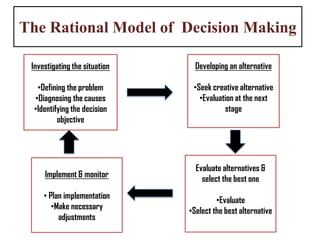
The Rational Model of Decision Making
Investigating the situation

Developing an alternative

•Defining the problem
•Diagnosing the causes
•Identifying the decision
objective

•Seek creative alternative
•Evaluation at the next
stage

Implement & monitor

Evaluate alternatives &
select the best one

• Plan implementation
•Make necessary
adjustments

•Evaluate
•Select the best alternative
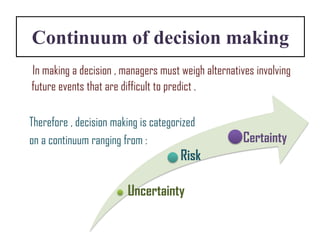
Continuum of decision making
In making a decision , managers must weigh alternatives involving
future events that are difficult to predict .
Therefore , decision making is categorized
on a continuum ranging from :

Risk

Uncertainty

Certainty
Certainty

• Objective is known.
• Complete information about each
alternative is known.

Risk

• Unpredictable outcome of an alternative.
• But enough information to predict the
probability that desired state is achieved.

Uncertainty

• High unpredictability about the alternative
and the outcome.
• Due to External conditions and
unavailability of key information.
PLANNING & CONTROLLING:
UNENDING PHENOMENON

Planning

Results
Controlling:

Corrective
Measures &
Follow Up
Case Study: Planning For A Miracle On
34th Street
Shifted focus from glizty goods to moderated priced
goods.
Installed new satellite network to connect suppliers with
sales people.
Launched their own 24*7 Cable channel to advertise &
sell their goods.
“Developing the plan is actually
laying out the sequence of events
that have to occur for you to achieve
your goal.”
― George L.Morrisey

Mpob planning final(with akshay)

  • 1.
    Made By: Ankit Verma107 Gaurav 108 Pooja 109 Parana 110 Saumya 112
  • 2.
    CONTENT • • • • • • • • • About Planning Purpose ofPlanning Elements of Planning Strategies and Tactics Types of Strategies Seven S Model Planning tools and Techniques Advantages and Limitation of Planning Decision Making Process Model
  • 3.
    What is Planning?? Planningis the Process of: Thinking Organizing It involves creation and maintenance of plan. Desired Goals
  • 4.
    Purpose of Planning ProvidesDirection Sets the Standards for Controlling Reduces Uncertainty Minimizes waste and redundancy
  • 5.
    Elements of Planning •GOALS: are the End results to be achieved. They give direction to activities and require creative thinking and foresight. • PLANS: Written account of intended future course of action aimed at achieving specific goal or objective within a specific timeframe. It explains in detail what needs to be done, when, how, and by whom, and often includes best case, expected case, and worst case scenarios.
  • 6.
  • 7.
  • 8.
    The Hierarchy ofOrganizational Plans Mission Statement Strategic Plans Operational Plans • Broad Organizational Goals • Based on Planning premises, which justifies an organization’s existence • Plans designed to meet an organization’s broad goals. • Plans that contain details for carrying out, or implementing, those strategic plans in day-to-day activities.
  • 9.
    Strategies and Tactics Strategies •Aimed at counteracting the actions of the opponents. Tactics • Immediate decisions based on the executive’s judgement and experience whilst facing an actual situation
  • 10.
    Types of Strategy CorporateLevel Business Unit Functional Level
  • 11.
  • 12.
    Planning Tools andTechniques Accessing the Environment: Scanning Forecasting Bench Marking Allocating Resources
  • 13.
    Contemporary Planning Techniques: Project and Project Management Scenario and Scenario Planning Contingency Planning
  • 14.
    Advantages of Planning Increasesthe organization’s ability to adopt future eventualities. Helps crystallize objectives. Ensures a relatedness among decision. Reduces mistakes and oversights/ unnecessary pressures of immediacy. Ensures a more productive use of resources. Increases effectiveness of a manager. Makes control easier. Helps the company remain more competitive in its industry .
  • 15.
    Limitations of Planning Effectivenessdepends upon correctness of assumptions Planning is expensive Planning delays actions Encourages a false sense of security
  • 16.
    How to makePlanning Effective..? Coordination Communication Participation Proper Climate
  • 17.
    The Rational Modelof Decision Making Investigating the situation Developing an alternative •Defining the problem •Diagnosing the causes •Identifying the decision objective •Seek creative alternative •Evaluation at the next stage Implement & monitor Evaluate alternatives & select the best one • Plan implementation •Make necessary adjustments •Evaluate •Select the best alternative
  • 18.
    Continuum of decisionmaking In making a decision , managers must weigh alternatives involving future events that are difficult to predict . Therefore , decision making is categorized on a continuum ranging from : Risk Uncertainty Certainty
  • 19.
    Certainty • Objective isknown. • Complete information about each alternative is known. Risk • Unpredictable outcome of an alternative. • But enough information to predict the probability that desired state is achieved. Uncertainty • High unpredictability about the alternative and the outcome. • Due to External conditions and unavailability of key information.
  • 20.
    PLANNING & CONTROLLING: UNENDINGPHENOMENON Planning Results Controlling: Corrective Measures & Follow Up
  • 21.
    Case Study: PlanningFor A Miracle On 34th Street Shifted focus from glizty goods to moderated priced goods. Installed new satellite network to connect suppliers with sales people. Launched their own 24*7 Cable channel to advertise & sell their goods.
  • 22.
    “Developing the planis actually laying out the sequence of events that have to occur for you to achieve your goal.” ― George L.Morrisey

Editor's Notes

  • #4 Planning is the process of thinking about and organizing the activities required to achieve a desired goal. It involves creation and maintenance of plan.
  • #5 Provides directionReduces uncertaintyMinimizes waste and redundancySets the standards for controlling
  • #19 Certainty Risk Uncertainty