• Introduction of pharmacovigilance
• Drug safety in practice
• Need for monitoring the safety of drugs
• Organisation of pharmacovigilance
• Have knowledge of the definition of
pharmacovigilance
• What is a “serious” side effect, according to
the formal definition.
• Peruse the history of pharmacovigilance and
a number of side effects that have played a
role.
• Knowledge on how safety of medicines in the
Netherlands and Europe are organised
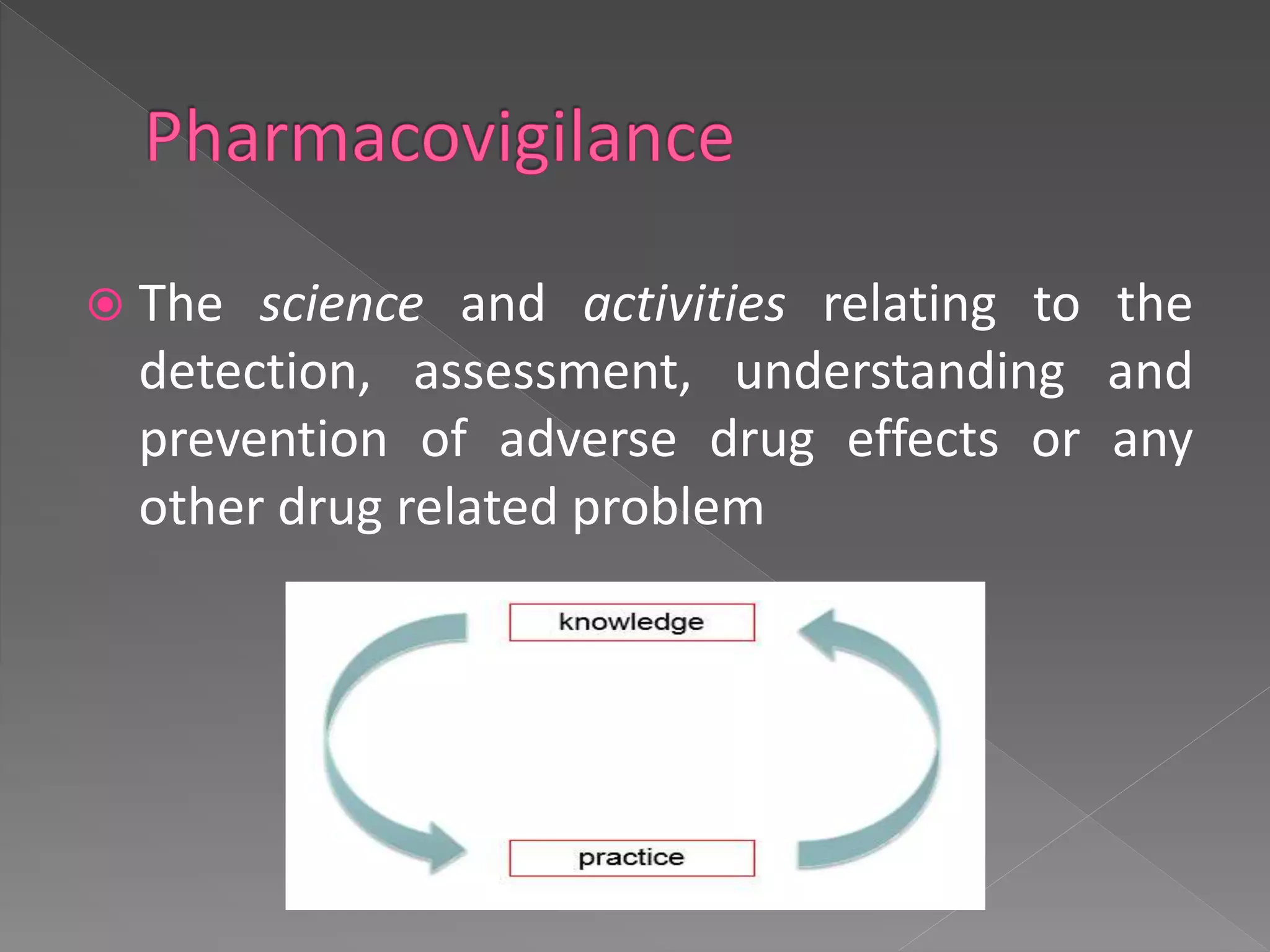
 The science and activities relating to the
detection, assessment, understanding and
prevention of adverse drug effects or any
other drug related problem
 A response to a drug which is noxious and
unintended, and which occurs at doses
normally used in man for prophylaxis,
diagnosis, therapy or for the modifications of
physiological function
 ADE: Adverse Drug Event
› Medical occurrence temporally associated with the use of a medicinal
product, but not necessarily causally related
› Not consistent with applicable product information or characteristics of
drug
 AE: Adverse Event
› Medical occurence which is not necessarily causally related to the use of a
drug, and might rely on coincidence
 Definition WHO
› Response of drug action in a person, resulting in experienced harm
 A medical event that gives rise to one or more of the
following
› Death
› Life-threatening situations
› Hospitalization or prolongation thereof
› Permanent incapacity or disability
› Birth defects
› Other medically important conditions
 Five years between first victim and the
withdrawal of thalidomide from the market
 Establishment of Medicines Evaluation Boards
worldwide
 Establishment of spontaneous reporting
centers to identify potential adverse drug
reaction in an early stage
 Drug is back on the market and is now used
for the treatment of, for example
- Leprosy
- HIV / AIDS complications
- Multiple myeloma (multiple myeloma)
 New cases of congenital malformations,
despite precautionary measures
 Synthetic oestrogen for the prevention of
miscarriages
- On the Dutch market from 1947-1976
- Warning NTvG 1972
- Ministry of Health issued warning not to use
DES anymore in 1974
 In children of mothers who used DES there
is an increasred risk of
- cervical cancer (Clear Cell Adenocarcinoma)
- deviations in the shape of the uterus
 No children
 No elderly
 Not pregnant
 Little or no comorbidity
 Little or no use concomitant medications
 Limited numbers
 ADRs with long time onset hard to detect
 Extensive research before drug reaches the
market
 At the time of market authorization has
balance safety / efficacy good
 In post-marketing (Phase IV) more knowledge
open approach: spontaneous reporting
when needed additional studies
 Combination of knowledge is used to monitor
balance safety / efficacy
 Medicines Evaluation Board
 Netherlands Pharmacovigilance centre
 Healthcare professionals and patients
 Marketing Authorization Holders
 Inspectorate of health
 EMA
 WHO
 Healthcare professionals should immediately
report any suspected serious adverse
reactions to a body of professionals and
patient organizations as referred to in Article
76, paragraph three, and any suspected
transmission via a medicinal product of
infectious agents
 Signalling and Analysing as yet unknown
adverse events
- Identifying adverse events (partially from
Lareb)
- Evaluation of PSURs
 Final risk/benefit assessment
 Determine actions to be taken i.e. by
- Amendment of SmPC
- Dear Health Care Professional letter
- Suspension of withdrawal of drug
 Amendment Summary of product characteristics
- New update
- Warning
- Contraindication
- Mitigate indication of use
 Temporary suspension of drug
 Withdraw drug from market
 Informing medical professionals by a “Dear
Healthcare Professional Communication” (DHPC)
 Initiate additional reasearch into the safety of a
drug
 Monitoring safety of own products on a
continuous basis
- Spontaneous reports
- Evaluation of studies
- Literature
 Periodic Safety Update Reports
 If applicable, apply for an update in the
product information in between
 Overview of serious and non-serious adverse reactions
worldwide
 Frequency
- a PSUR every six months for the first two years after
being placed on the market
- during the following two years a PSUR every year
- thereafter at three-yearly intervals
- If needed more often…
 Is change in SmPC needed?
 Reports are forwarded to the Eudravigilance
database of the European Medicines Agency
 Registration
- National (National Authorised products)
- Central (Central Authorised products)
 Signal Detection via member states
- National level
- Central level
 Provide advise on safety medicinal products
authorised in the EU
 Investigation of ADRs to enable effective
assessment and management of risk during
any phase in product life cycle
• Evaluation of potential signals
• Provision of advice on confirmation and
quantification of risk and on regulatory
options;
• Risk management
• Monitoring regulatory action and the
outcomes
• Setting standards for procedures and
methodologies
 Receipt, analysis and recording of worldwide
adverse event data
 Maintenance and screening of the
international database
 Studies on WHO database
 Training courses and meetings on
pharmacovigilance
1. Website EMA: central registered products
2. Website national MEB (CBG): all other products
3. KNMP - Informatorium Medicamentorum (for
pharmacists)
4. Farmacotherapeutisch Kompas (free access)
5. Website Netherlands PV centre Lareb: spontaneous
reports; not always a causal relationship!
 1 and 2 official information
 Other sources additional and interpreted information
Introduction on Pharmacovigilance.pptx

Introduction on Pharmacovigilance.pptx

  • 2.
    • Introduction ofpharmacovigilance • Drug safety in practice • Need for monitoring the safety of drugs • Organisation of pharmacovigilance
  • 3.
    • Have knowledgeof the definition of pharmacovigilance • What is a “serious” side effect, according to the formal definition. • Peruse the history of pharmacovigilance and a number of side effects that have played a role. • Knowledge on how safety of medicines in the Netherlands and Europe are organised
  • 4.
     The scienceand activities relating to the detection, assessment, understanding and prevention of adverse drug effects or any other drug related problem
  • 5.
     A responseto a drug which is noxious and unintended, and which occurs at doses normally used in man for prophylaxis, diagnosis, therapy or for the modifications of physiological function
  • 7.
     ADE: AdverseDrug Event › Medical occurrence temporally associated with the use of a medicinal product, but not necessarily causally related › Not consistent with applicable product information or characteristics of drug  AE: Adverse Event › Medical occurence which is not necessarily causally related to the use of a drug, and might rely on coincidence  Definition WHO › Response of drug action in a person, resulting in experienced harm
  • 8.
     A medicalevent that gives rise to one or more of the following › Death › Life-threatening situations › Hospitalization or prolongation thereof › Permanent incapacity or disability › Birth defects › Other medically important conditions
  • 11.
     Five yearsbetween first victim and the withdrawal of thalidomide from the market  Establishment of Medicines Evaluation Boards worldwide  Establishment of spontaneous reporting centers to identify potential adverse drug reaction in an early stage
  • 12.
     Drug isback on the market and is now used for the treatment of, for example - Leprosy - HIV / AIDS complications - Multiple myeloma (multiple myeloma)  New cases of congenital malformations, despite precautionary measures
  • 13.
     Synthetic oestrogenfor the prevention of miscarriages - On the Dutch market from 1947-1976 - Warning NTvG 1972 - Ministry of Health issued warning not to use DES anymore in 1974  In children of mothers who used DES there is an increasred risk of - cervical cancer (Clear Cell Adenocarcinoma) - deviations in the shape of the uterus
  • 16.
     No children No elderly  Not pregnant  Little or no comorbidity  Little or no use concomitant medications  Limited numbers  ADRs with long time onset hard to detect
  • 18.
     Extensive researchbefore drug reaches the market  At the time of market authorization has balance safety / efficacy good  In post-marketing (Phase IV) more knowledge open approach: spontaneous reporting when needed additional studies  Combination of knowledge is used to monitor balance safety / efficacy
  • 19.
     Medicines EvaluationBoard  Netherlands Pharmacovigilance centre  Healthcare professionals and patients  Marketing Authorization Holders  Inspectorate of health  EMA  WHO
  • 20.
     Healthcare professionalsshould immediately report any suspected serious adverse reactions to a body of professionals and patient organizations as referred to in Article 76, paragraph three, and any suspected transmission via a medicinal product of infectious agents
  • 21.
     Signalling andAnalysing as yet unknown adverse events - Identifying adverse events (partially from Lareb) - Evaluation of PSURs  Final risk/benefit assessment  Determine actions to be taken i.e. by - Amendment of SmPC - Dear Health Care Professional letter - Suspension of withdrawal of drug
  • 22.
     Amendment Summaryof product characteristics - New update - Warning - Contraindication - Mitigate indication of use  Temporary suspension of drug  Withdraw drug from market  Informing medical professionals by a “Dear Healthcare Professional Communication” (DHPC)  Initiate additional reasearch into the safety of a drug
  • 23.
     Monitoring safetyof own products on a continuous basis - Spontaneous reports - Evaluation of studies - Literature  Periodic Safety Update Reports  If applicable, apply for an update in the product information in between
  • 24.
     Overview ofserious and non-serious adverse reactions worldwide  Frequency - a PSUR every six months for the first two years after being placed on the market - during the following two years a PSUR every year - thereafter at three-yearly intervals - If needed more often…  Is change in SmPC needed?
  • 25.
     Reports areforwarded to the Eudravigilance database of the European Medicines Agency  Registration - National (National Authorised products) - Central (Central Authorised products)  Signal Detection via member states - National level - Central level
  • 26.
     Provide adviseon safety medicinal products authorised in the EU  Investigation of ADRs to enable effective assessment and management of risk during any phase in product life cycle
  • 27.
    • Evaluation ofpotential signals • Provision of advice on confirmation and quantification of risk and on regulatory options; • Risk management • Monitoring regulatory action and the outcomes • Setting standards for procedures and methodologies
  • 29.
     Receipt, analysisand recording of worldwide adverse event data  Maintenance and screening of the international database  Studies on WHO database  Training courses and meetings on pharmacovigilance
  • 30.
    1. Website EMA:central registered products 2. Website national MEB (CBG): all other products 3. KNMP - Informatorium Medicamentorum (for pharmacists) 4. Farmacotherapeutisch Kompas (free access) 5. Website Netherlands PV centre Lareb: spontaneous reports; not always a causal relationship!  1 and 2 official information  Other sources additional and interpreted information