Lecture on
T- Cell mediated Immunity
Deliverd by
Dr. Dinesh Dabhadkar
Department of Zoology, GSG, College, Umarkhed
T Cells Mediated Immunity
 Antigens that stimulate this response are mainly intracellular & They may be viruses, Bacteria,
fungi, spores particle, dust particle, chemicals & etc.
 Requires constant presence of antigen to remain effective.
 Unlike humoral immunity, cell mediated immunity is not transferred to the fetus.
 Cytokines: Chemical messengers of immune cells.
 Over 100 have been identified.
 Stimulate and/or regulate immune responses.
 Interleukins: Communication between WBCs.
 Interferons: Protect against viral infections.
 Chemokines: Attract WBCs to infected areas.
Cell Mediated Immunity is Carried Out by T Lymphocytes
Cellular Components of Immunity:
 T cells are key cellular component of immunity.
 T cells have an antigen receptor that recognizes and reacts
to a specific antigen (T cell receptor).
 T cell receptor only recognize antigens combined with major
histocompatability (MHC) proteins on the surface of cells.
 MHC Class I: Found on all cells.
 MHC Class II: Found on phagocytes.
 Clonal selection increases number of T cells.
T Cells Only Recognize Antigen Associated
with MHC Molecules on Cell Surfaces
Types of T cells
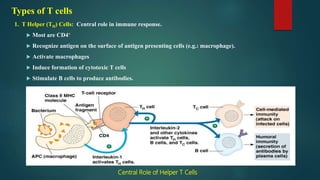
1. T Helper (TH) Cells: Central role in immune response.
 Most are CD4+
 Recognize antigen on the surface of antigen presenting cells (e.g.: macrophage).
 Activate macrophages
 Induce formation of cytotoxic T cells
 Stimulate B cells to produce antibodies.
Central Role of Helper T Cells
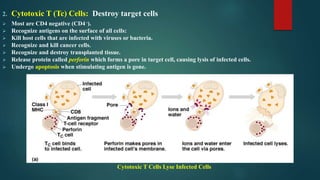
2. Cytotoxic T (Tc) Cells: Destroy target cells
 Most are CD4 negative (CD4 -).
 Recognize antigens on the surface of all cells:
 Kill host cells that are infected with viruses or bacteria.
 Recognize and kill cancer cells.
 Recognize and destroy transplanted tissue.
 Release protein called perforin which forms a pore in target cell, causing lysis of infected cells.
 Undergo apoptosis when stimulating antigen is gone.
Cytotoxic T Cells Lyse Infected Cells
3) Delayed Hypersensitivity T (TD) Cells: Mostly T helper and a few cytotoxic T cells that are involved in some
allergic reactions (poison ivy) and rejection of transplanted tissue.
4) T Suppressor (Ts) Cells: May shut down immune response.
Relationship Between Cell-Mediated and Humoral Immunity
1. Antibody Production
T-Dependent Antigens:
 Antibody production requires assistance from T helper cells.
 A macrophage cells ingest antigen and presents it to TH cell.
 TH cell stimulates B cells specific for antigen to become plasma cells.
 Antigens are mainly proteins on viruses, bacteria, foreign red blood cells, and hapten-carrier molecules.
T-Independent Antigens:
 Antibody production does not require assistance from T cells.
 Antigens are mainly polysaccharides or lipopolysaccharides with repeating subunits (bacterial capsules).
 Weaker immune response than for T-dependent antigens.
Thanks

T cell mediated immunity

  • 1.
    Lecture on T- Cellmediated Immunity Deliverd by Dr. Dinesh Dabhadkar Department of Zoology, GSG, College, Umarkhed
  • 2.
    T Cells MediatedImmunity  Antigens that stimulate this response are mainly intracellular & They may be viruses, Bacteria, fungi, spores particle, dust particle, chemicals & etc.  Requires constant presence of antigen to remain effective.  Unlike humoral immunity, cell mediated immunity is not transferred to the fetus.  Cytokines: Chemical messengers of immune cells.  Over 100 have been identified.  Stimulate and/or regulate immune responses.  Interleukins: Communication between WBCs.  Interferons: Protect against viral infections.  Chemokines: Attract WBCs to infected areas.
  • 3.
    Cell Mediated Immunityis Carried Out by T Lymphocytes
  • 4.
    Cellular Components ofImmunity:  T cells are key cellular component of immunity.  T cells have an antigen receptor that recognizes and reacts to a specific antigen (T cell receptor).  T cell receptor only recognize antigens combined with major histocompatability (MHC) proteins on the surface of cells.  MHC Class I: Found on all cells.  MHC Class II: Found on phagocytes.  Clonal selection increases number of T cells. T Cells Only Recognize Antigen Associated with MHC Molecules on Cell Surfaces
  • 5.
    Types of Tcells 1. T Helper (TH) Cells: Central role in immune response.  Most are CD4+  Recognize antigen on the surface of antigen presenting cells (e.g.: macrophage).  Activate macrophages  Induce formation of cytotoxic T cells  Stimulate B cells to produce antibodies. Central Role of Helper T Cells
  • 6.
    2. Cytotoxic T(Tc) Cells: Destroy target cells  Most are CD4 negative (CD4 -).  Recognize antigens on the surface of all cells:  Kill host cells that are infected with viruses or bacteria.  Recognize and kill cancer cells.  Recognize and destroy transplanted tissue.  Release protein called perforin which forms a pore in target cell, causing lysis of infected cells.  Undergo apoptosis when stimulating antigen is gone. Cytotoxic T Cells Lyse Infected Cells
  • 7.
    3) Delayed HypersensitivityT (TD) Cells: Mostly T helper and a few cytotoxic T cells that are involved in some allergic reactions (poison ivy) and rejection of transplanted tissue. 4) T Suppressor (Ts) Cells: May shut down immune response. Relationship Between Cell-Mediated and Humoral Immunity 1. Antibody Production T-Dependent Antigens:  Antibody production requires assistance from T helper cells.  A macrophage cells ingest antigen and presents it to TH cell.  TH cell stimulates B cells specific for antigen to become plasma cells.  Antigens are mainly proteins on viruses, bacteria, foreign red blood cells, and hapten-carrier molecules. T-Independent Antigens:  Antibody production does not require assistance from T cells.  Antigens are mainly polysaccharides or lipopolysaccharides with repeating subunits (bacterial capsules).  Weaker immune response than for T-dependent antigens.
  • 8.