Speciation and Types of evolution
Speciation
 Species: a group of individuals capable of interbreeding
 Speciation: the formation of new species (3 main types)
 Allopatric Speciation
 Sympatric Speciation
 Adaptive Radiation
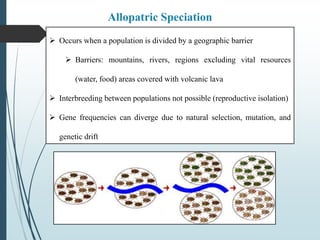
Allopatric Speciation
 Occurs when a population is divided by a geographic barrier
 Barriers: mountains, rivers, regions excluding vital resources
(water, food) areas covered with volcanic lava
 Interbreeding between populations not possible (reproductive isolation)
 Gene frequencies can diverge due to natural selection, mutation, and
genetic drift
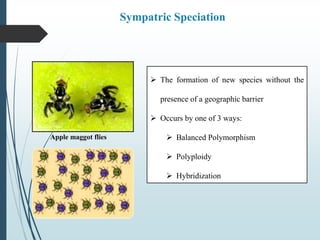
Sympatric Speciation
Apple maggot flies
 The formation of new species without the
presence of a geographic barrier
 Occurs by one of 3 ways:
 Balanced Polymorphism
 Polyploidy
 Hybridization
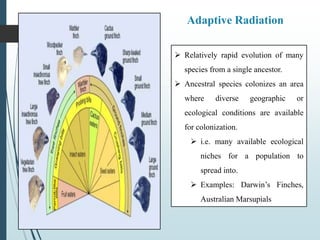
Adaptive Radiation
 Relatively rapid evolution of many
species from a single ancestor.
 Ancestral species colonizes an area
where diverse geographic or
ecological conditions are available
for colonization.
 i.e. many available ecological
niches for a population to
spread into.
 Examples: Darwin’s Finches,
Australian Marsupials
Patterns of Evolution
 Evolution can take place
along the lines of the
following patterns:
 Divergent Evolution
 Convergent Evolution
 Parallel Evolution
 Coevolution
Divergent Evolution
 Describes two or more species that originate
from a common ancestor.
 This may happen as a result of allopatric or
sympatric speciation or by adaptive radiation
Convergent Evolution
 Describes two unrelated species that share
similar traits.
 Similar traits arise because each species has
independently adapted to a similar niche
 These traits are called: Analogous Traits
Parallel Evolution
 It is two related species or two related
lineages that have made similar
evolutionary changes after their
divergence from a common ancestor
 Example:
 Species from two groups of
mammals, the marsupial mammals
and the placental mammals, have
independently evolved similar
adaptations when ancestors
encountered comparable
environments
Coevolution
 It is the evolution of one species in
response to new adaptations that appear
in another species
 An example: evolutionary arms race
between predators and prey…or
 Plants and plant eating insects
 Pollinators and flowering plants
 Pathogens and animal immune
systems
Speciation & types of evolution

Speciation & types of evolution

  • 1.
  • 2.
    Speciation  Species: agroup of individuals capable of interbreeding  Speciation: the formation of new species (3 main types)  Allopatric Speciation  Sympatric Speciation  Adaptive Radiation
  • 3.
    Allopatric Speciation  Occurswhen a population is divided by a geographic barrier  Barriers: mountains, rivers, regions excluding vital resources (water, food) areas covered with volcanic lava  Interbreeding between populations not possible (reproductive isolation)  Gene frequencies can diverge due to natural selection, mutation, and genetic drift
  • 4.
    Sympatric Speciation Apple maggotflies  The formation of new species without the presence of a geographic barrier  Occurs by one of 3 ways:  Balanced Polymorphism  Polyploidy  Hybridization
  • 5.
    Adaptive Radiation  Relativelyrapid evolution of many species from a single ancestor.  Ancestral species colonizes an area where diverse geographic or ecological conditions are available for colonization.  i.e. many available ecological niches for a population to spread into.  Examples: Darwin’s Finches, Australian Marsupials
  • 6.
    Patterns of Evolution Evolution can take place along the lines of the following patterns:  Divergent Evolution  Convergent Evolution  Parallel Evolution  Coevolution Divergent Evolution  Describes two or more species that originate from a common ancestor.  This may happen as a result of allopatric or sympatric speciation or by adaptive radiation Convergent Evolution  Describes two unrelated species that share similar traits.  Similar traits arise because each species has independently adapted to a similar niche  These traits are called: Analogous Traits
  • 7.
    Parallel Evolution  Itis two related species or two related lineages that have made similar evolutionary changes after their divergence from a common ancestor  Example:  Species from two groups of mammals, the marsupial mammals and the placental mammals, have independently evolved similar adaptations when ancestors encountered comparable environments Coevolution  It is the evolution of one species in response to new adaptations that appear in another species  An example: evolutionary arms race between predators and prey…or  Plants and plant eating insects  Pollinators and flowering plants  Pathogens and animal immune systems