Presented by
Simran Kaur
MBA 2nd year
IGICM
 Systems analysis relates to shaping organizations, increasing performance, and
achieving objectives for profitability and growth.
 Application using computer-based approach.
 Positive consequences: improved performance and feeling of achievement with
quality information.
 Negative consequences: decreased morale of personnel and feeling of intimidation
by users having limited training.
 Ludwig Bertalanffy, biologist: arrangement of elements such as cells, people,
societies or even planets.
 Norbert Wiener, mathematician: information theory parallel between the
functioning of human beings and electronic systems.
 Herbert A. Simon, political scientist: study of organizations by viewing a system
as a processor of information for making decisions.
 General systems theory: developing systematic, theoretical framework upon which
to make decisions.
 System involves a set of techniques that helps in solving problems.
 The term “system” derived from Greek word ”systema” meaning an organized
relationship among functioning units or components.
 Designed to achieve objectives.
 Orderly grouping of interdependent components linked together according to a
plan to achieve a specific objective.
 3 basic implications:
Designed to achieve pre-determined objective
Interrelationships and interdependencies exist among components.
Objectives of organization has higher priority than objectives of subsystems.
 Organization
 Interaction
 Interdependence
 Integration
 Central objective
 Outputs and inputs
 Processors(operational component)
 Control
 Feedback(cybernetic procedure; positive or negative, routine or informational)
 Environment
 Boundaries and interface(limits of the elements)
 Physical systems
 Abstract systems
 Open systems
 Closed systems
 Man-made information systems
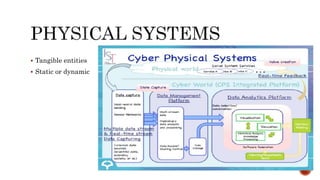
 Tangible entities
 Static or dynamic
 Conceptual or non physical entities
 Straightforward
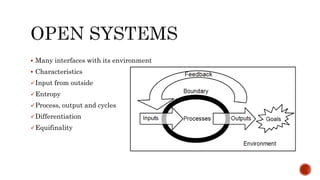
 Many interfaces with its environment
 Characteristics
Input from outside
Entropy
Process, output and cycles
Differentiation
Equifinality
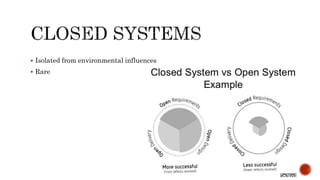
 Isolated from environmental influences
 Rare
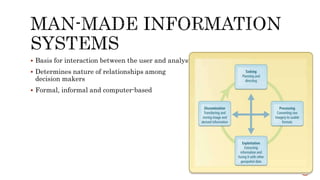
 Basis for interaction between the user and analyst
 Determines nature of relationships among
decision makers
 Formal, informal and computer-based
 Based on the organization represented by organization chart
 Concerned with the pattern of authority, communication and work flow
 Information is formally disseminated in instructions, memos or reports from top
management to the intended user.
 Employee-based system
 Designed to meet personnel and vocational needs
 Funnels information upwards through indirect channels
 Works within the framework of business and its stated policies
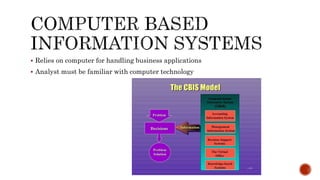
 Relies on computer for handling business applications
 Analyst must be familiar with computer technology
 Strategic information, achieved through Decision Support Systems
 Managerial information, achieved through Management Information Systems
 Operational information, achieved through Data Processing Systems
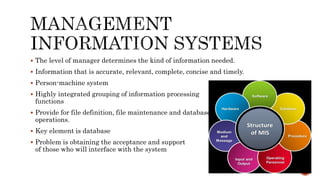
 The level of manager determines the kind of information needed.
 Information that is accurate, relevant, complete, concise and timely.
 Person-machine system
 Highly integrated grouping of information processing
functions
 Provide for file definition, file maintenance and database
operations.
 Key element is database
 Problem is obtaining the acceptance and support
of those who will interface with the system
 Term coined by Gorry and Morton
 Decision emphasizes on decision making; Support requires computer-aided
decision situations; System relates the integrated nature of problem solving
 Results from adding external data sources, accounting and statistical models and
interactive query capabilities.
 Young and evolving
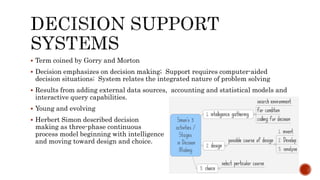
 Herbert Simon described decision
making as three-phase continuous
process model beginning with intelligence
and moving toward design and choice.
 Analyst begins by creation a model of the reality with which the systems is
concerned.
 Types of systems models:
Schematic models
Flow systems models
Static systems models
Dynamic systems models
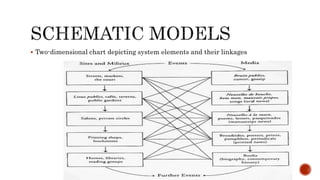
 Two-dimensional chart depicting system elements and their linkages
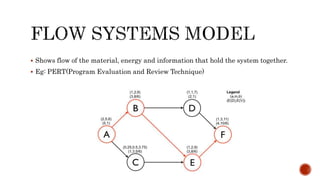
 Shows flow of the material, energy and information that hold the system together.
 Eg: PERT(Program Evaluation and Review Technique)
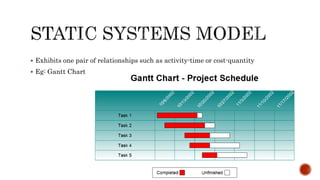
 Exhibits one pair of relationships such as activity-time or cost-quantity
 Eg: Gantt Chart
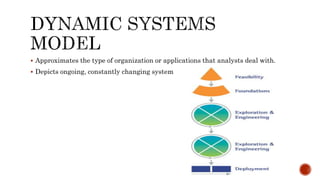
 Approximates the type of organization or applications that analysts deal with.
 Depicts ongoing, constantly changing system
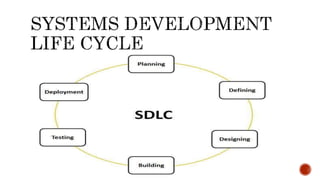
 Most fundamental stage in SDLC
 Performed by the senior members of the team
 Plan the basic project approach and to conduct product feasibility study in the
economical, operational, and technical areas
 Planning for the quality assurance requirements and identification of the risks
 Clearly define and document the product requirements.
 Get them approved from the customer or the market analysts through SRS.
 Software Requirement Specification document which consists of all the product
requirements to be designed and developed during the project life cycle.
 Based on the requirements specified in SRS, usually more than one design
approach for the product architecture is proposed and documented in a DDS -
Design Document Specification.
 DDS is reviewed by all the important stakeholders. The best design approach is
selected for the product.
 The internal design of all the modules of the proposed architecture should be
clearly defined with the minutest of the details in DDS.
 The actual development starts and the product is built
 If the design is performed in a detailed and organized manner, code generation
can be accomplished without much hassle.
 Usually a subset of all the stages as in the modern SDLC models
 Testing only stage of the product where products defects are reported, tracked,
fixed and retested, until the product reaches the quality standards defined in the
SRS.
 Less creative than system design.
 Concerned with user training, site preparation, file conversion.
 There is an aging process in a system that requires maintenance of hardware and
software.
 Inconsistent new information needs change in the design specifications of system.
Systems concept

Systems concept

  • 1.
  • 2.
     Systems analysisrelates to shaping organizations, increasing performance, and achieving objectives for profitability and growth.  Application using computer-based approach.  Positive consequences: improved performance and feeling of achievement with quality information.  Negative consequences: decreased morale of personnel and feeling of intimidation by users having limited training.
  • 3.
     Ludwig Bertalanffy,biologist: arrangement of elements such as cells, people, societies or even planets.  Norbert Wiener, mathematician: information theory parallel between the functioning of human beings and electronic systems.  Herbert A. Simon, political scientist: study of organizations by viewing a system as a processor of information for making decisions.  General systems theory: developing systematic, theoretical framework upon which to make decisions.  System involves a set of techniques that helps in solving problems.
  • 4.
     The term“system” derived from Greek word ”systema” meaning an organized relationship among functioning units or components.  Designed to achieve objectives.  Orderly grouping of interdependent components linked together according to a plan to achieve a specific objective.  3 basic implications: Designed to achieve pre-determined objective Interrelationships and interdependencies exist among components. Objectives of organization has higher priority than objectives of subsystems.
  • 5.
     Organization  Interaction Interdependence  Integration  Central objective
  • 6.
     Outputs andinputs  Processors(operational component)  Control  Feedback(cybernetic procedure; positive or negative, routine or informational)  Environment  Boundaries and interface(limits of the elements)
  • 7.
     Physical systems Abstract systems  Open systems  Closed systems  Man-made information systems
  • 8.
     Tangible entities Static or dynamic
  • 9.
     Conceptual ornon physical entities  Straightforward
  • 10.
     Many interfaceswith its environment  Characteristics Input from outside Entropy Process, output and cycles Differentiation Equifinality
  • 11.
     Isolated fromenvironmental influences  Rare
  • 12.
     Basis forinteraction between the user and analyst  Determines nature of relationships among decision makers  Formal, informal and computer-based
  • 13.
     Based onthe organization represented by organization chart  Concerned with the pattern of authority, communication and work flow  Information is formally disseminated in instructions, memos or reports from top management to the intended user.
  • 14.
     Employee-based system Designed to meet personnel and vocational needs  Funnels information upwards through indirect channels  Works within the framework of business and its stated policies
  • 15.
     Relies oncomputer for handling business applications  Analyst must be familiar with computer technology
  • 16.
     Strategic information,achieved through Decision Support Systems  Managerial information, achieved through Management Information Systems  Operational information, achieved through Data Processing Systems
  • 17.
     The levelof manager determines the kind of information needed.  Information that is accurate, relevant, complete, concise and timely.  Person-machine system  Highly integrated grouping of information processing functions  Provide for file definition, file maintenance and database operations.  Key element is database  Problem is obtaining the acceptance and support of those who will interface with the system
  • 18.
     Term coinedby Gorry and Morton  Decision emphasizes on decision making; Support requires computer-aided decision situations; System relates the integrated nature of problem solving  Results from adding external data sources, accounting and statistical models and interactive query capabilities.  Young and evolving  Herbert Simon described decision making as three-phase continuous process model beginning with intelligence and moving toward design and choice.
  • 19.
     Analyst beginsby creation a model of the reality with which the systems is concerned.  Types of systems models: Schematic models Flow systems models Static systems models Dynamic systems models
  • 20.
     Two-dimensional chartdepicting system elements and their linkages
  • 21.
     Shows flowof the material, energy and information that hold the system together.  Eg: PERT(Program Evaluation and Review Technique)
  • 22.
     Exhibits onepair of relationships such as activity-time or cost-quantity  Eg: Gantt Chart
  • 23.
     Approximates thetype of organization or applications that analysts deal with.  Depicts ongoing, constantly changing system
  • 25.
     Most fundamentalstage in SDLC  Performed by the senior members of the team  Plan the basic project approach and to conduct product feasibility study in the economical, operational, and technical areas  Planning for the quality assurance requirements and identification of the risks
  • 26.
     Clearly defineand document the product requirements.  Get them approved from the customer or the market analysts through SRS.  Software Requirement Specification document which consists of all the product requirements to be designed and developed during the project life cycle.
  • 27.
     Based onthe requirements specified in SRS, usually more than one design approach for the product architecture is proposed and documented in a DDS - Design Document Specification.  DDS is reviewed by all the important stakeholders. The best design approach is selected for the product.  The internal design of all the modules of the proposed architecture should be clearly defined with the minutest of the details in DDS.
  • 28.
     The actualdevelopment starts and the product is built  If the design is performed in a detailed and organized manner, code generation can be accomplished without much hassle.
  • 29.
     Usually asubset of all the stages as in the modern SDLC models  Testing only stage of the product where products defects are reported, tracked, fixed and retested, until the product reaches the quality standards defined in the SRS.
  • 30.
     Less creativethan system design.  Concerned with user training, site preparation, file conversion.
  • 31.
     There isan aging process in a system that requires maintenance of hardware and software.  Inconsistent new information needs change in the design specifications of system.