SURGICAL MANAGEMENT IN ULCERATIVE COLITIS
UC & CRC
INCIDENCE  CRC in UC appears at younger age than in sporadic CRC (40-50 yrs old vs 60). 5-10% after 20 years. 12-20% after 30 years.
RISK FACTORS Duration of the disease Extent of the disease  UC complicated by primary sclerosing cholangitis Presence of post-inflammatory pseudopolyp
CRC in UC… Appears as: Polypoid  Nodular Ulcerated Plaque like Mostly adenocarcinoma. Mostly located in the rectum and sigmoid It arises from areas of dysplasia.
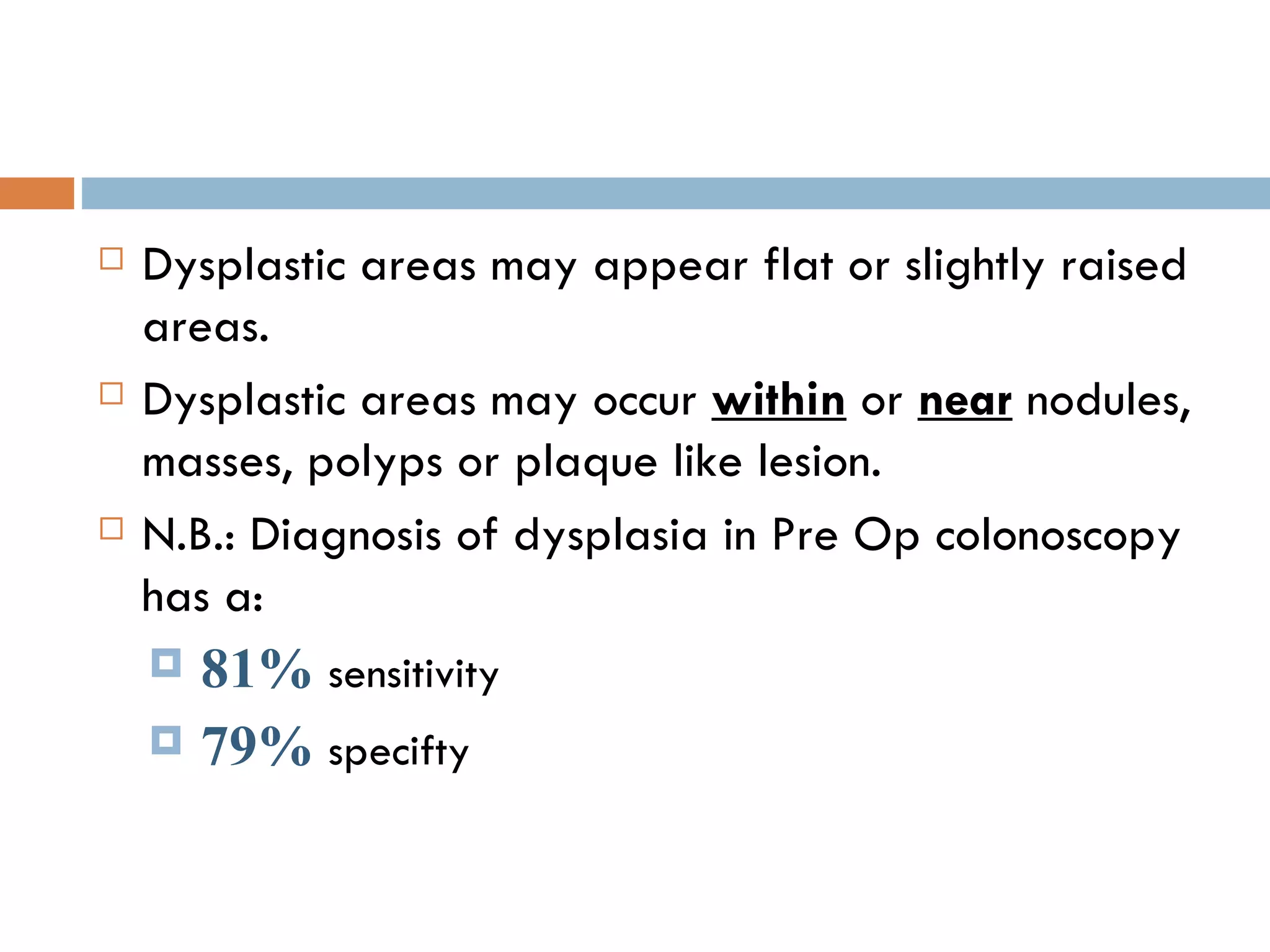
Dysplastic areas may appear flat or slightly raised areas. Dysplastic areas may occur  within  or  near  nodules, masses, polyps or plaque like lesion. N.B.: Diagnosis of dysplasia in Pre Op colonoscopy has a: 81%  sensitivity 79%  specifty
Surgical management in UC
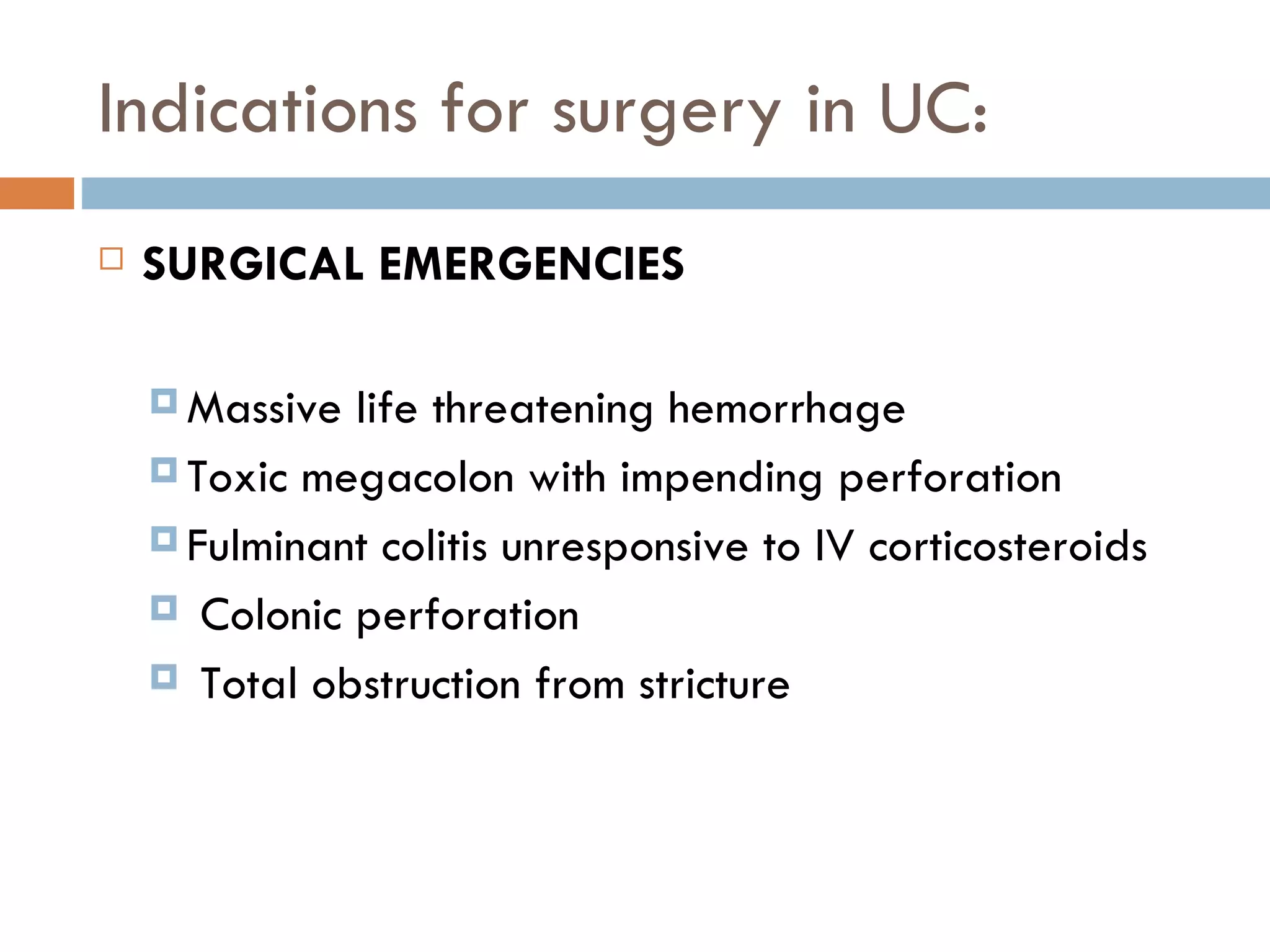
Indications for surgery in UC: SURGICAL EMERGENCIES Massive life threatening hemorrhage Toxic megacolon with impending perforation Fulminant colitis unresponsive to IV corticosteroids    Colonic perforation   Total obstruction from stricture
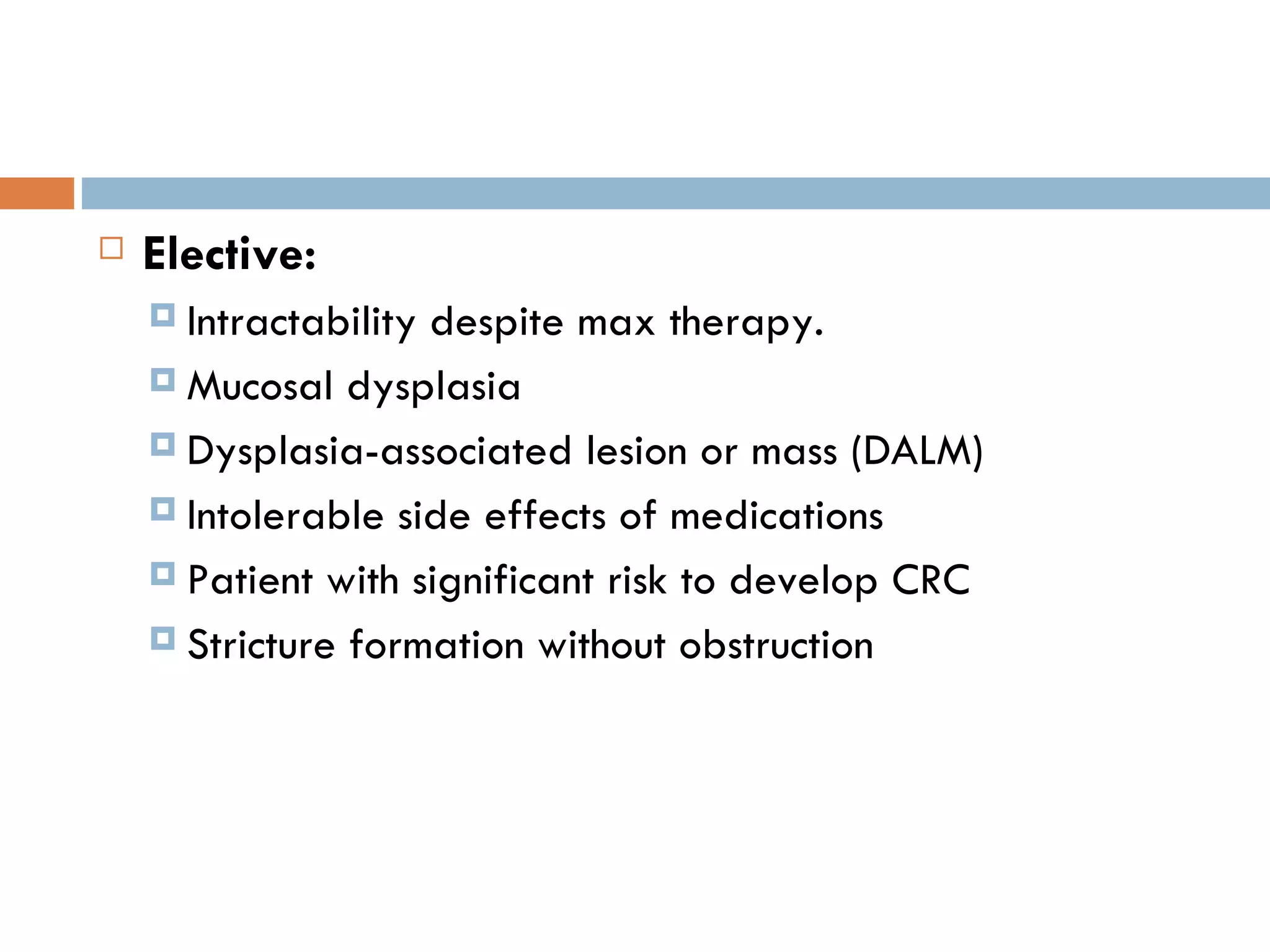
Elective: Intractability despite max therapy. Mucosal dysplasia Dysplasia-associated lesion or mass (DALM) Intolerable side effects of medications Patient with significant risk to develop CRC Stricture formation without obstruction
Extraintestinal manifestations Growth retardation, primarily in children and adolescents
Surgical Options
Emergency operation: Subtotal colectomy with end ileostomy Proctocolectomy with end ileostomy Blow-hole colostomy with end ileostomy
Subtotal colectomy with end ileostomy Advantages   : Allows option for IPAA; low risk Disadvantages   :  Requires second operation may develop rectal recurrence of disease Contraindication :  Massive hemorrhage from colon and rectum
Proctocolectomy with end ileostomy: Advantages:  Definitive treatment Disadvantages :  No option for IPAA moderate risk for perineal nerve damage Contraindication :  Severely toxic or unstable patient
Blow-hole colostomy with end ileostomy Advantages:  Short, simple decompression procedure Disadvantages :  Diseased colon and rectum retained
ELECTIVE PROCEDURES Total proctocolectomy with Brooke ileostomy Subtotal colectomy with ileorectal anastomosis Total proctocolectomy with Kock pouch Total colectomy, mucosal proctectomy and hand-sewn IPAA with temporary diverting loop ileostomy (two-stage operation) Total proctocolectomy without mucosectomy and stapled IPAA with temporary diverting loop ileostomy (two-stage operation)
Laparoscopic total proctocolectomy with or without mucosectomy and IPAA
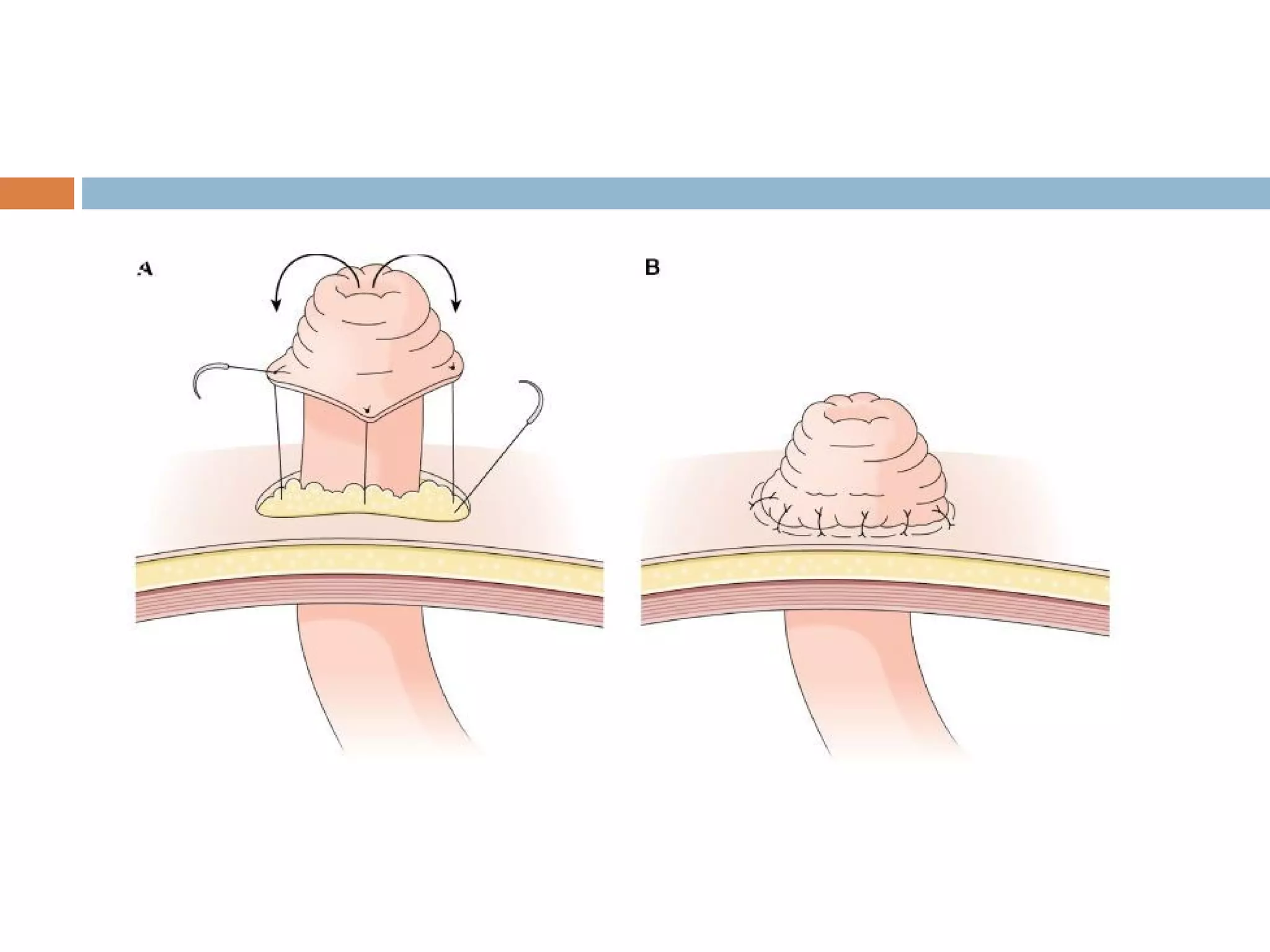
Total proctocolectomy with Brooke ileostomy Indications :  Patients wanting to avoid risks of IPAA; elderly; poor sphincter function; rectal cancer Contraindications  : Patient aversion to permanent ileostomy; obesity; life-threatening emergencies Advantages :  Eliminates all disease-bearing mucosa; single operation Disadvantages:  Potential for nerve injury in the perineal and pelvic dissection; permanent ileostomy; delayed perineal wound healing; mechanical problems with stoma; high risk of SBO
 
Subtotal colectomy with ileorectal anastomosis Indications:  No rectal involvement; avoid permanent stoma and IPAA; young women of childbearing age to preserve fertility Contraindications :  Poor sphincter tone or dysfunction; active rectal or perianal disease; colonic or rectal dysplasia; or frank cancer Advantages:   One-stage operation; complete continence with good function; low risk of pelvic nerve injury; eliminates stoma.
Disadvantages:   30% Recurrence rate requiring conversion to ileostomy Risk of rectal cancer requiring lifelong surveillance
 
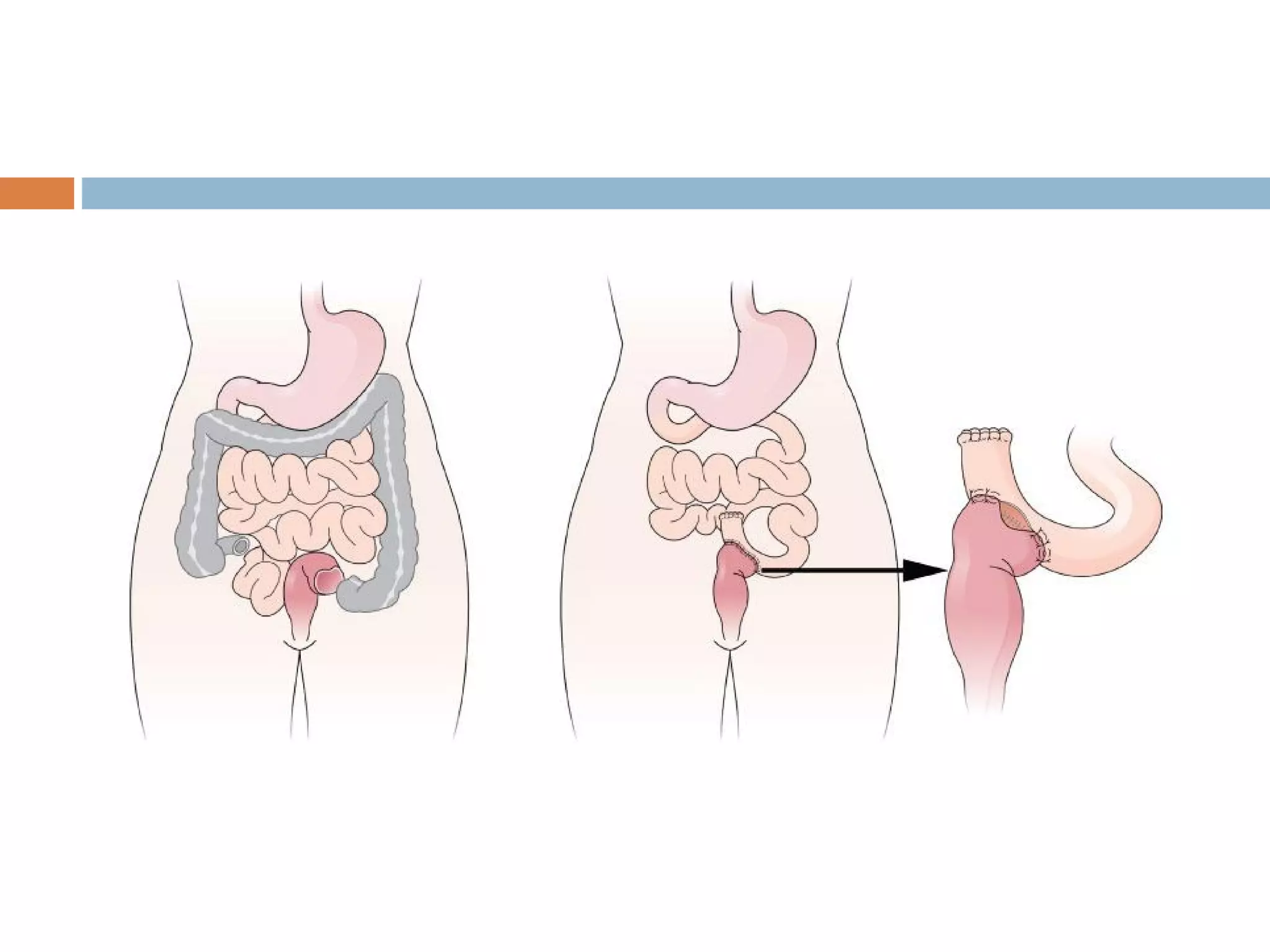
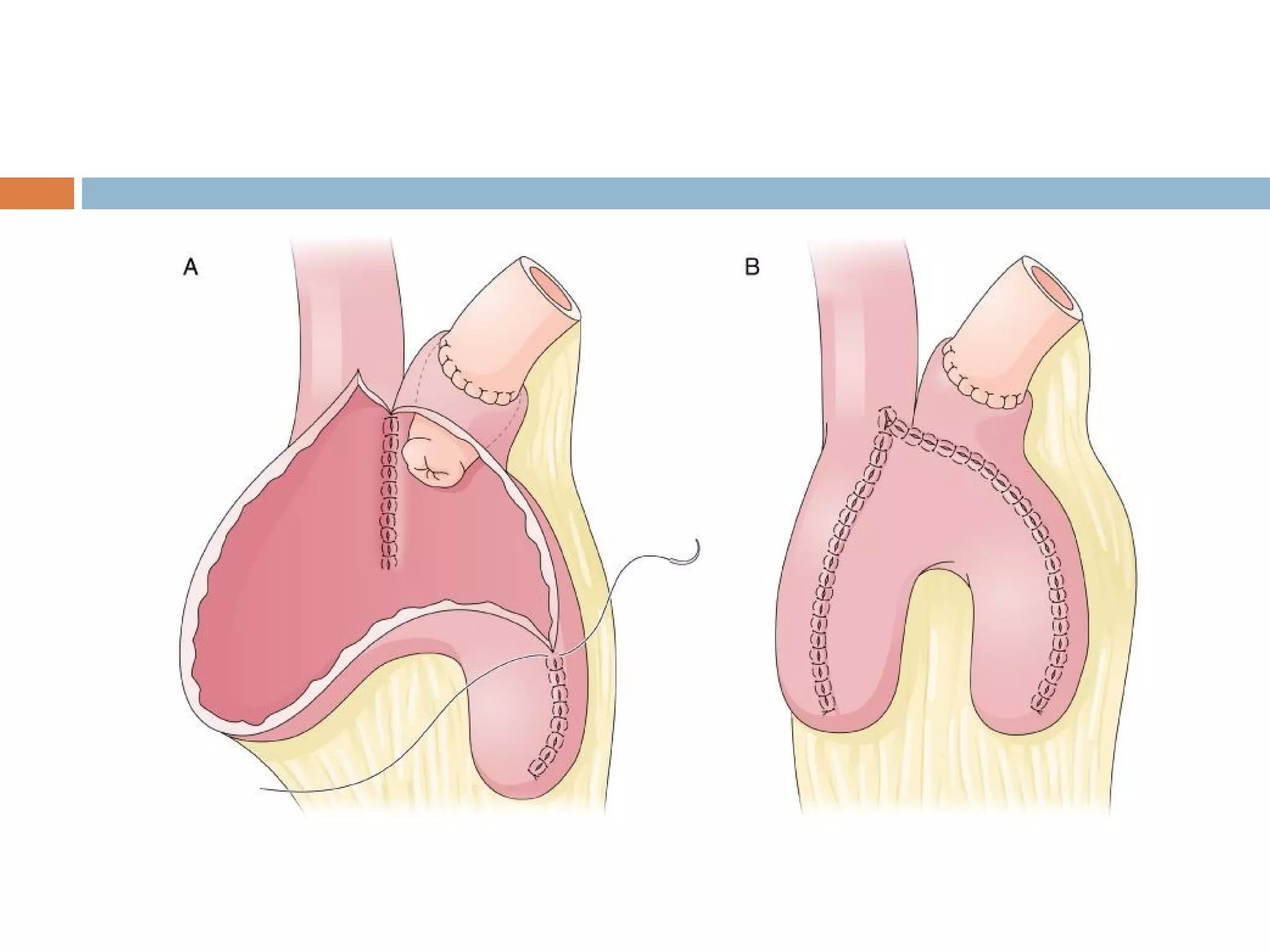
Total proctocolectomy with Kock pouch Indications :  Alternative to conventional ileostomy for patients desiring to preserve continence; poor sphincter tone; low rectal cancer; failed IPAA; conversion from ileostomy Contraindications :  Possibility of Crohn's disease; previous resection of small bowel; patients over 60 years old; obesity; coexisting medical illness
Advantages:  Avoids ileostomy; patients remain continent; good quality of live; improved body image over ileostomy Disadvantages:   High reoperation rate (35%) due to nipple valve dysfunction or failure; high fistula rate; pouchitis
 
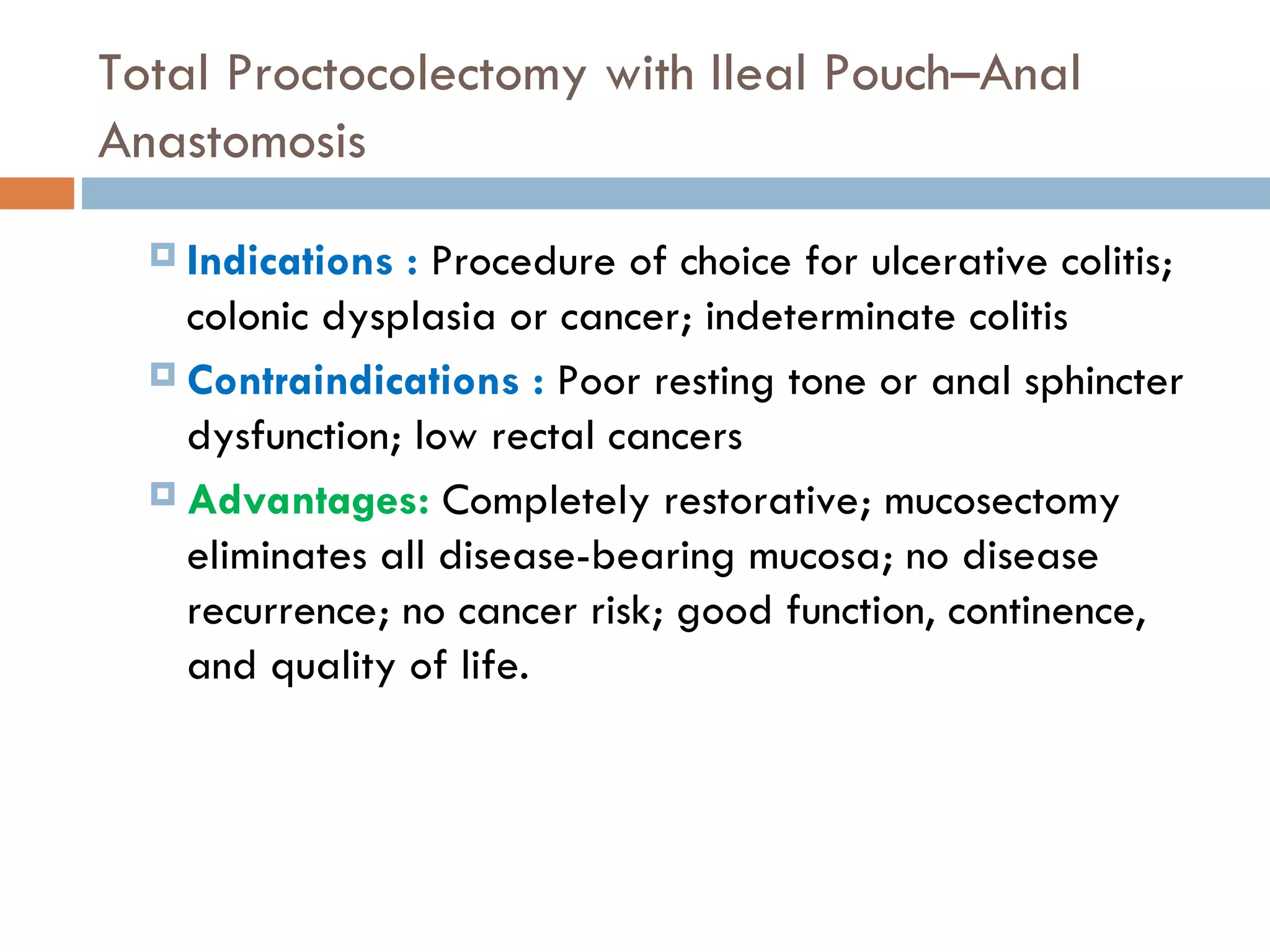
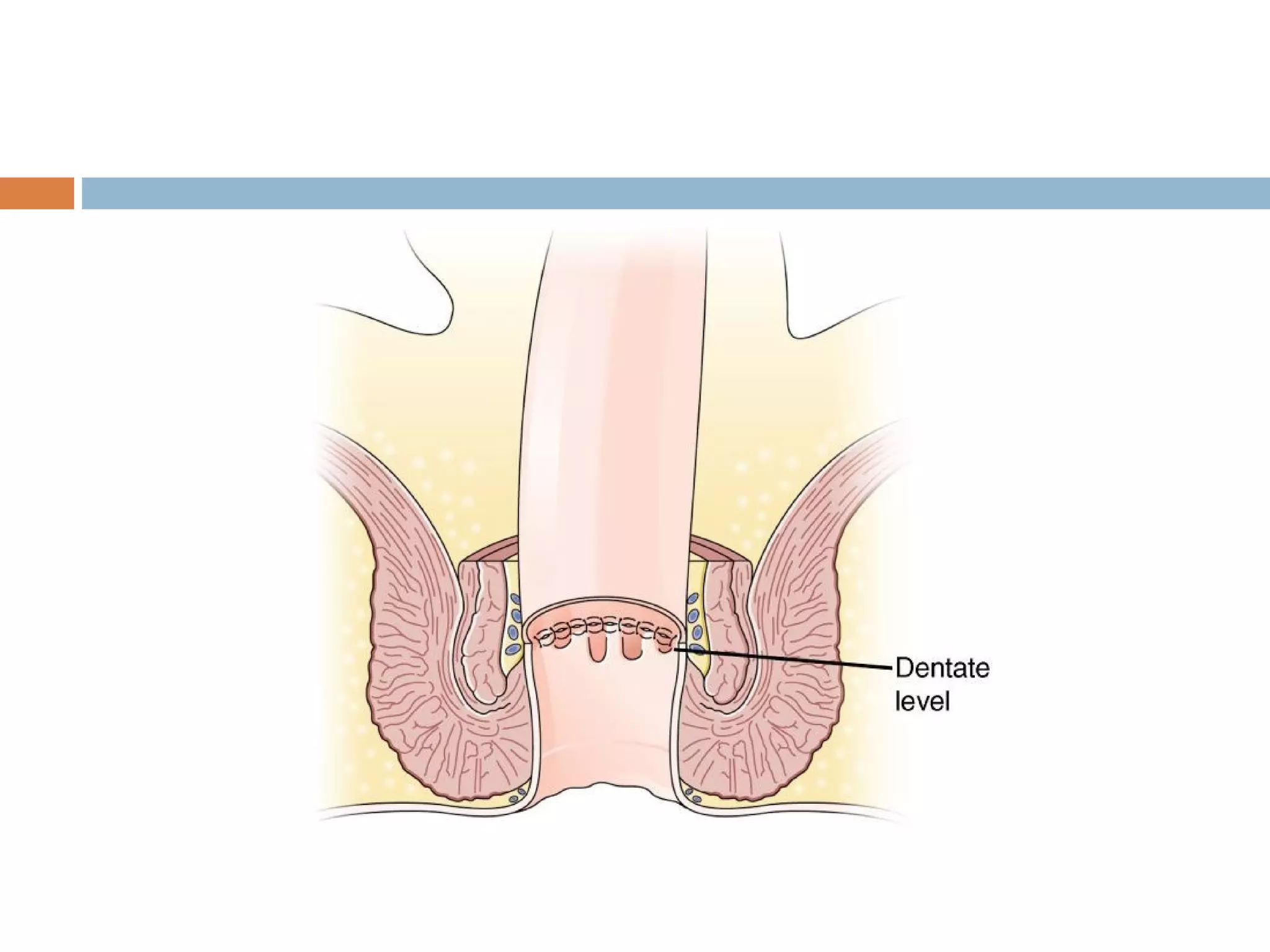
Total Proctocolectomy with Ileal Pouch–Anal Anastomosis Indications :  Procedure of choice for ulcerative colitis; colonic dysplasia or cancer; indeterminate colitis Contraindications :  Poor resting tone or anal sphincter dysfunction; low rectal cancers Advantages:   Completely restorative; mucosectomy eliminates all disease-bearing mucosa; no disease recurrence; no cancer risk; good function, continence, and quality of life.
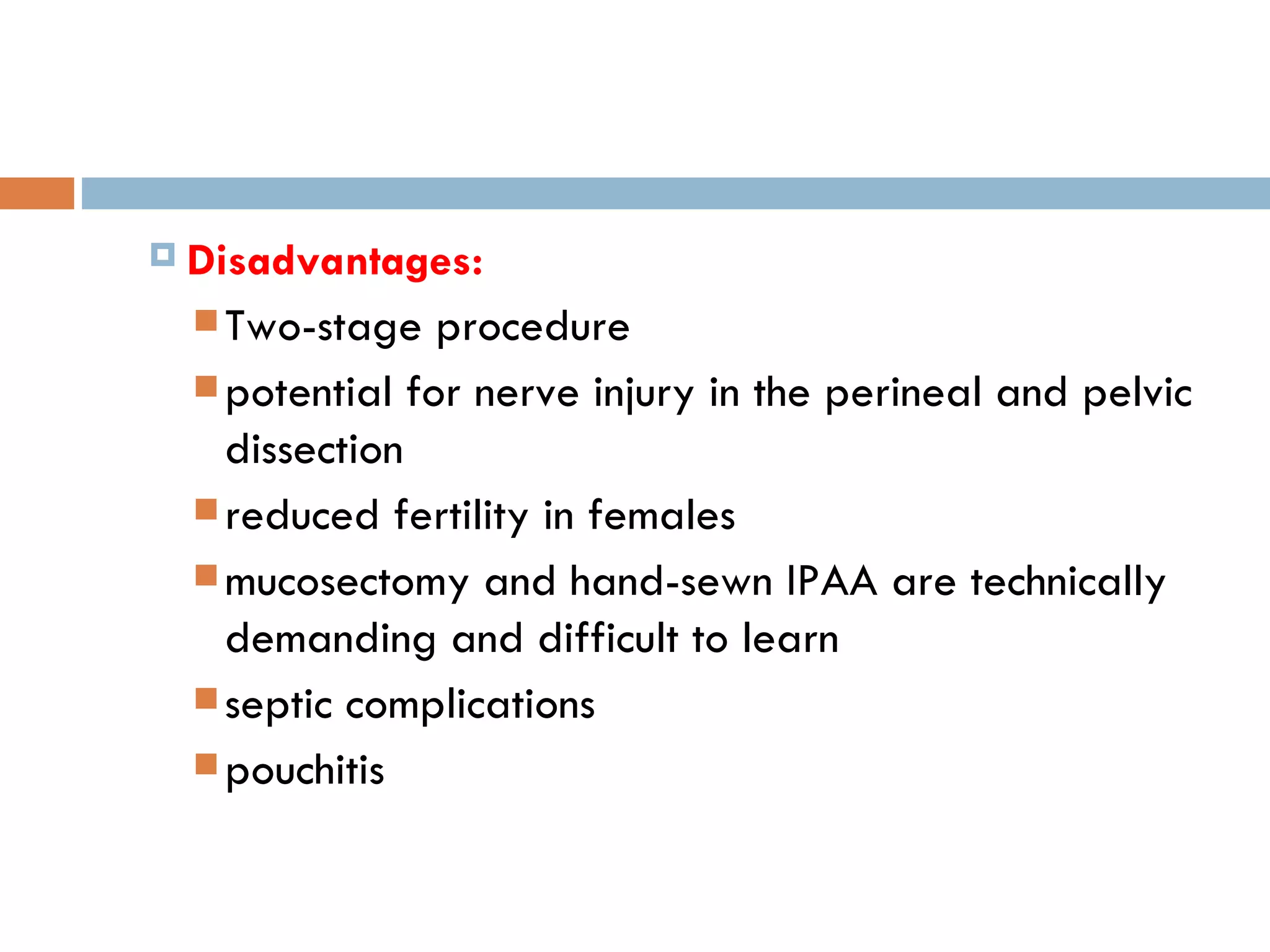
Disadvantages:   Two-stage procedure potential for nerve injury in the perineal and pelvic dissection reduced fertility in females mucosectomy and hand-sewn IPAA are technically demanding and difficult to learn septic complications pouchitis
 
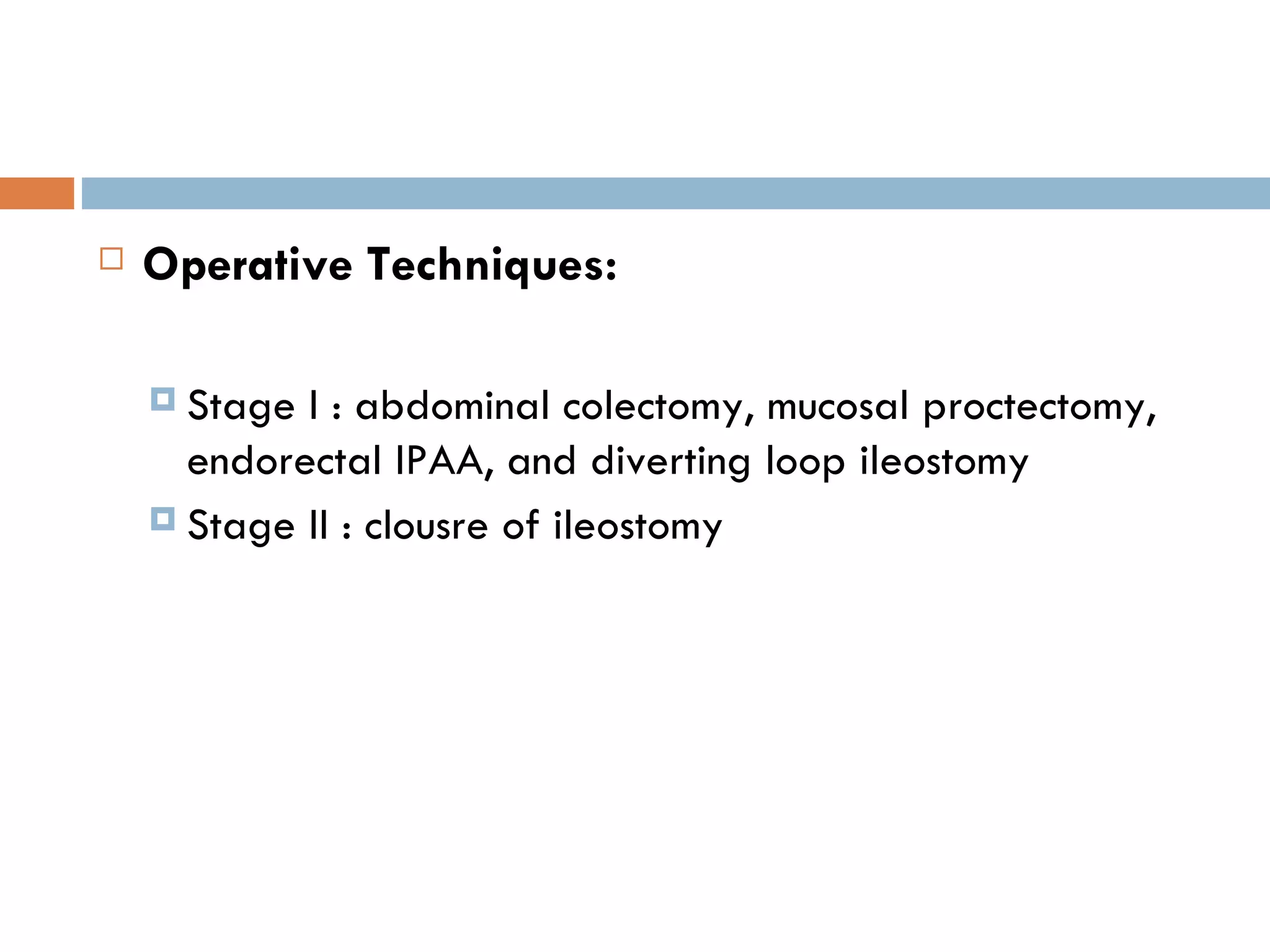
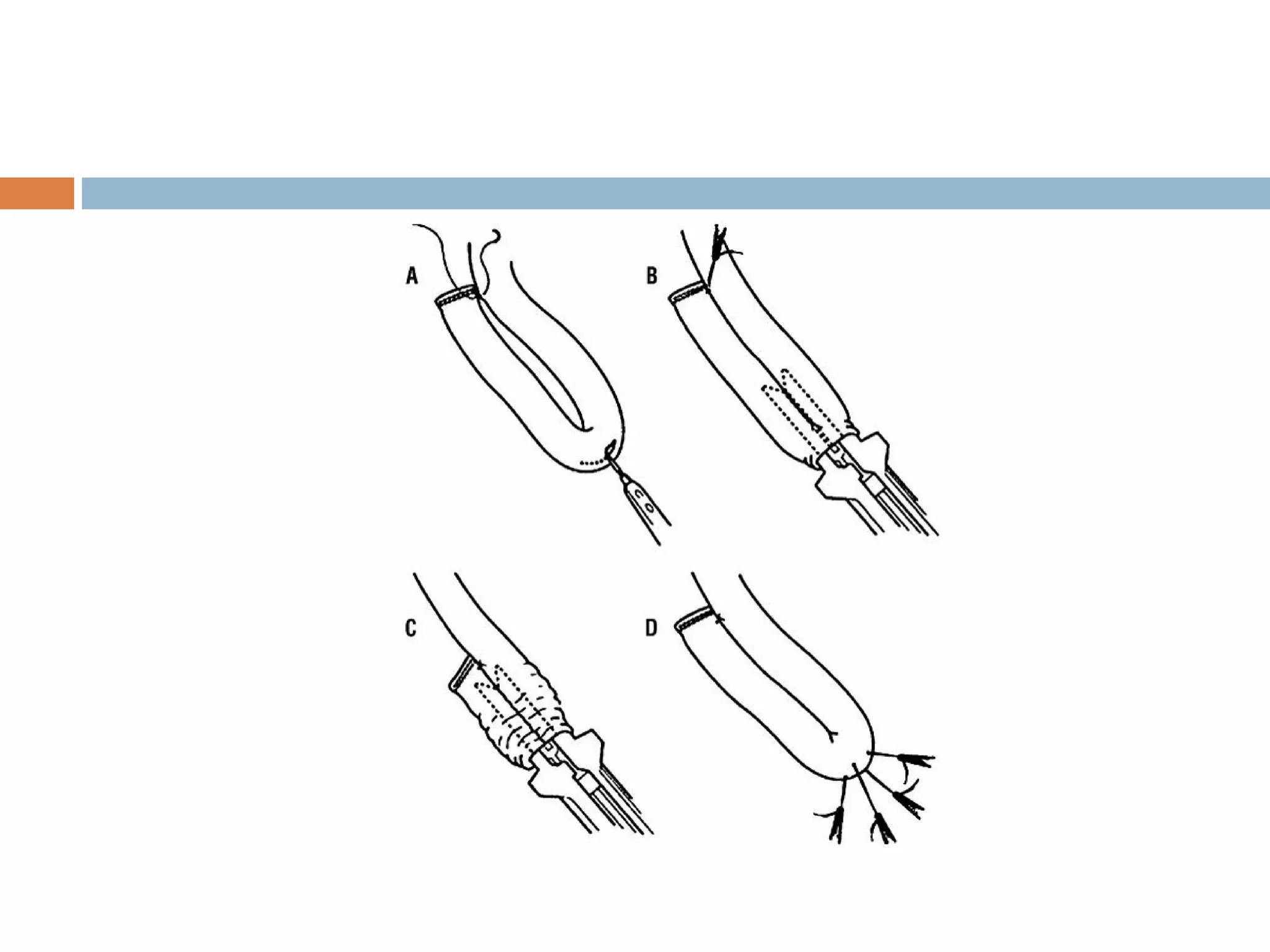
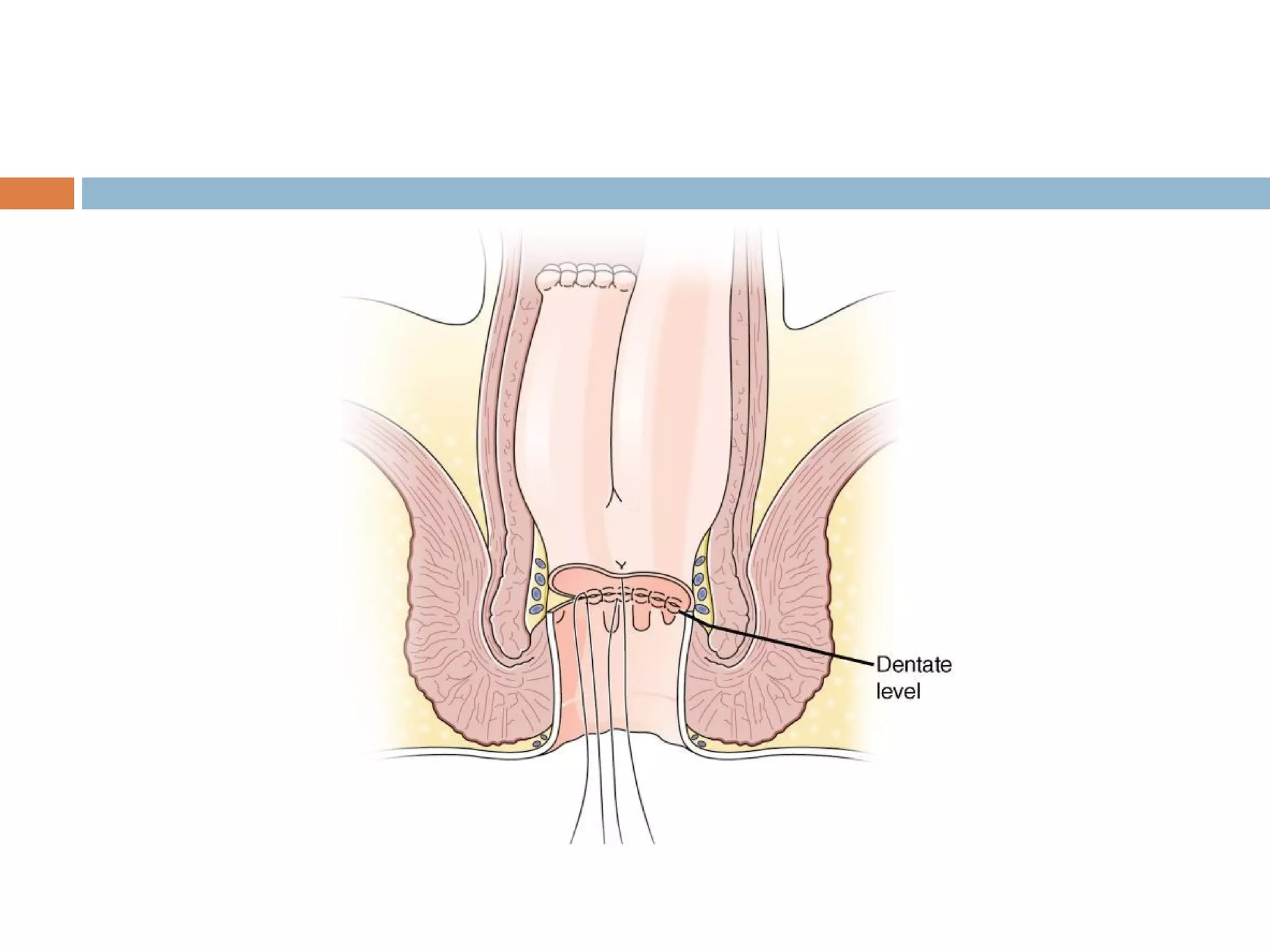
Operative Techniques: Stage I : abdominal colectomy, mucosal proctectomy, endorectal IPAA, and diverting loop ileostomy Stage II : clousre of ileostomy
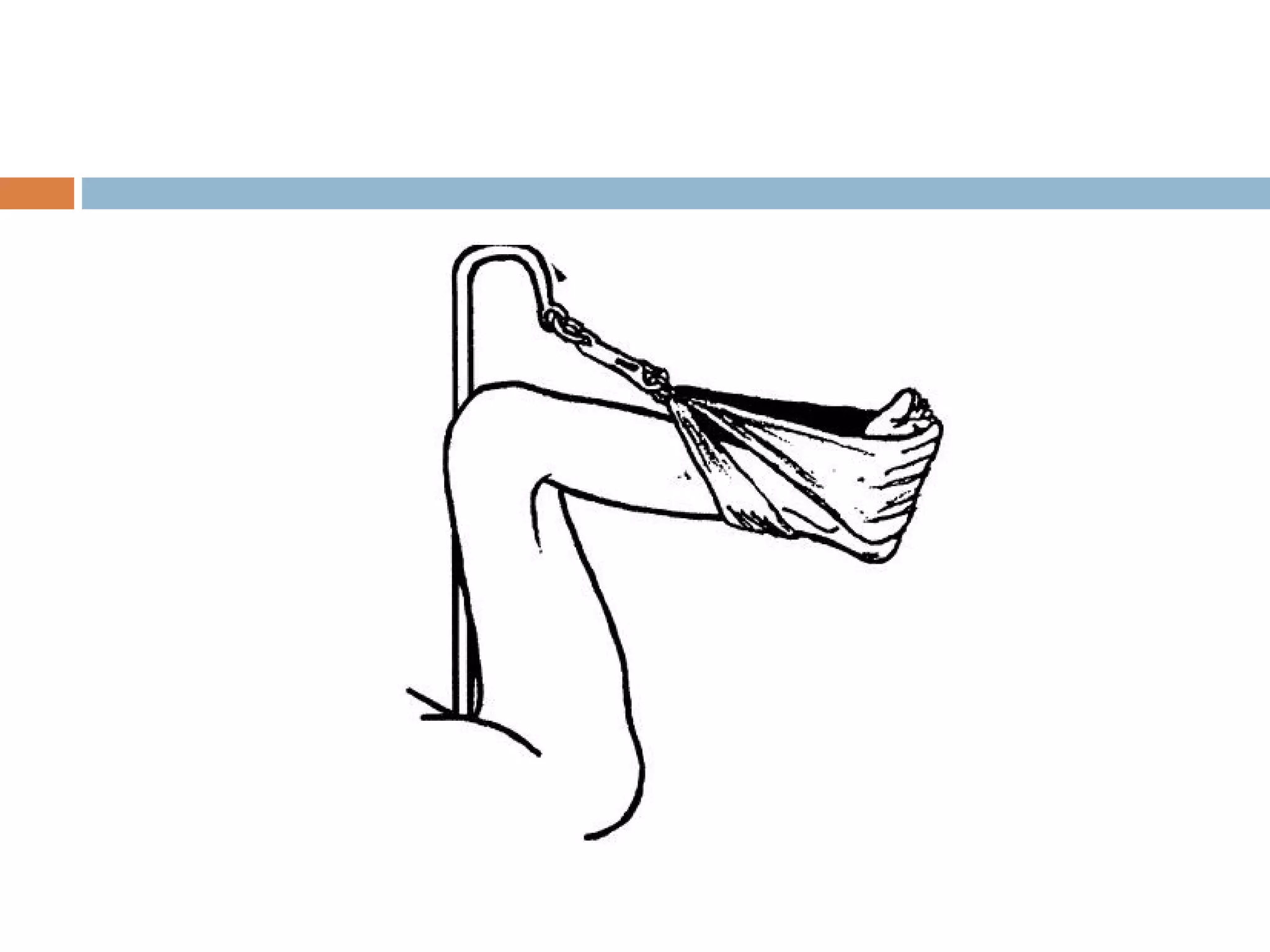
preoperative work-up anal manometry Sigmoidoscopy bowel preparation
 
 
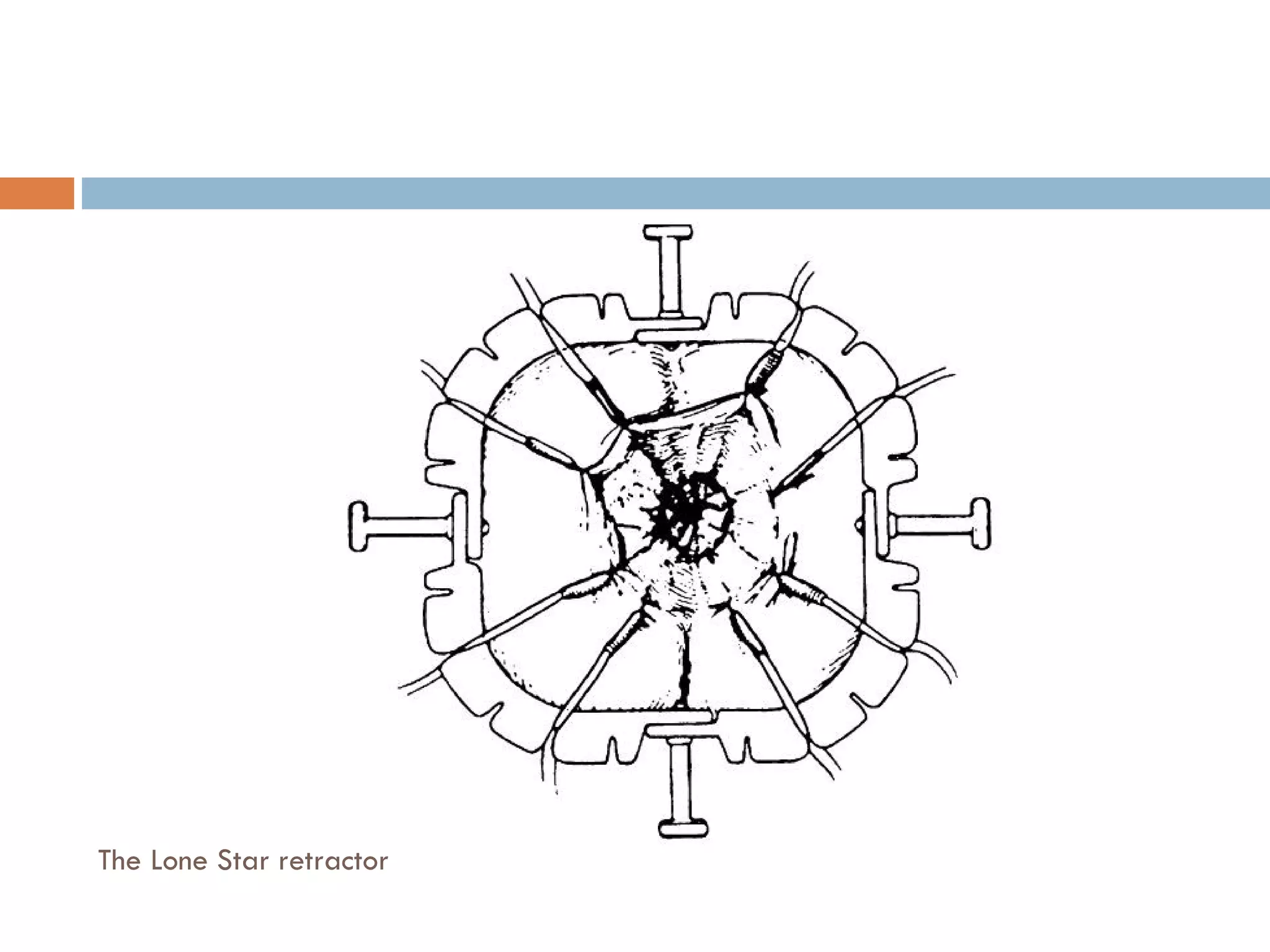
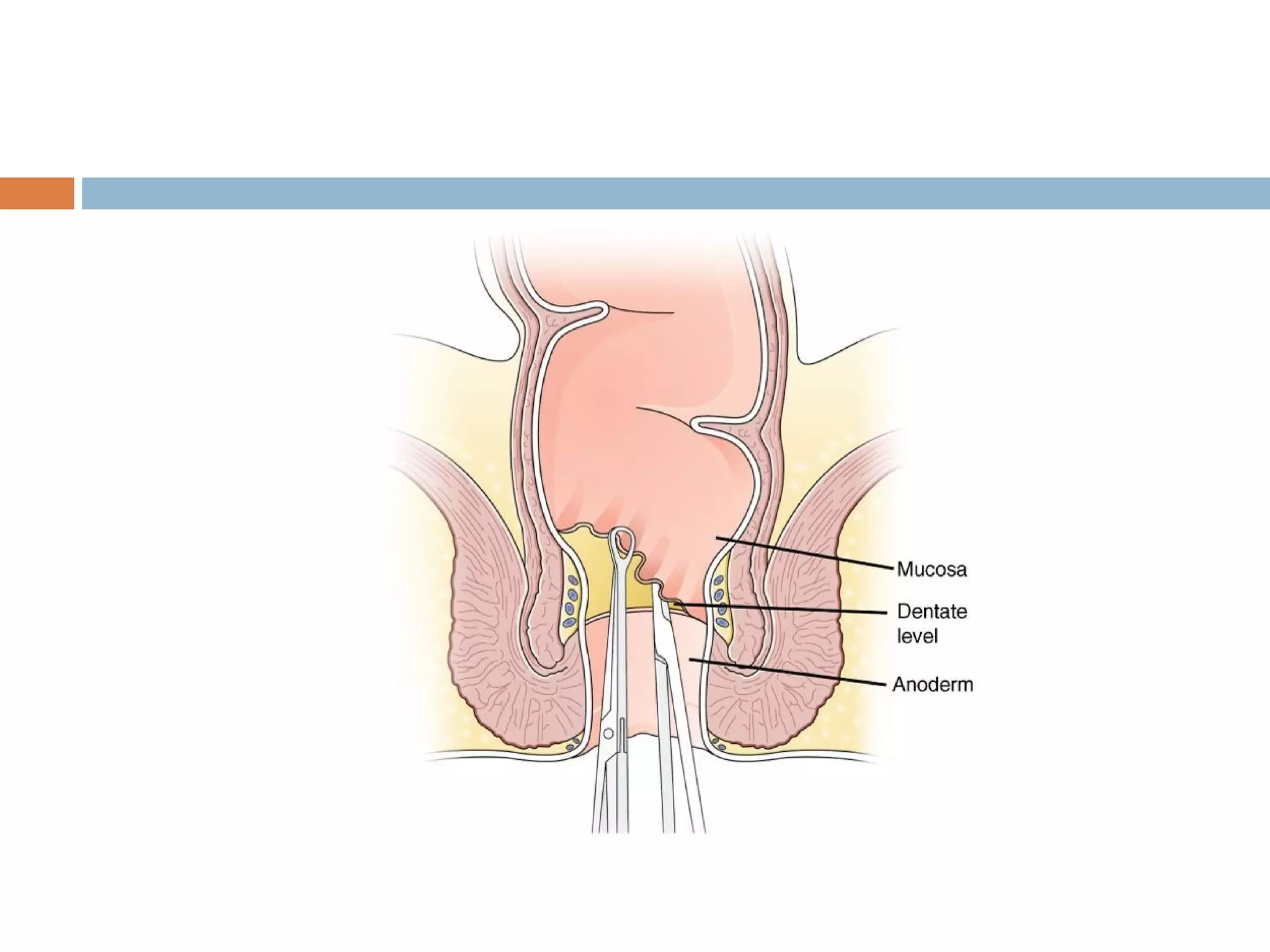
The Lone Star retractor
 
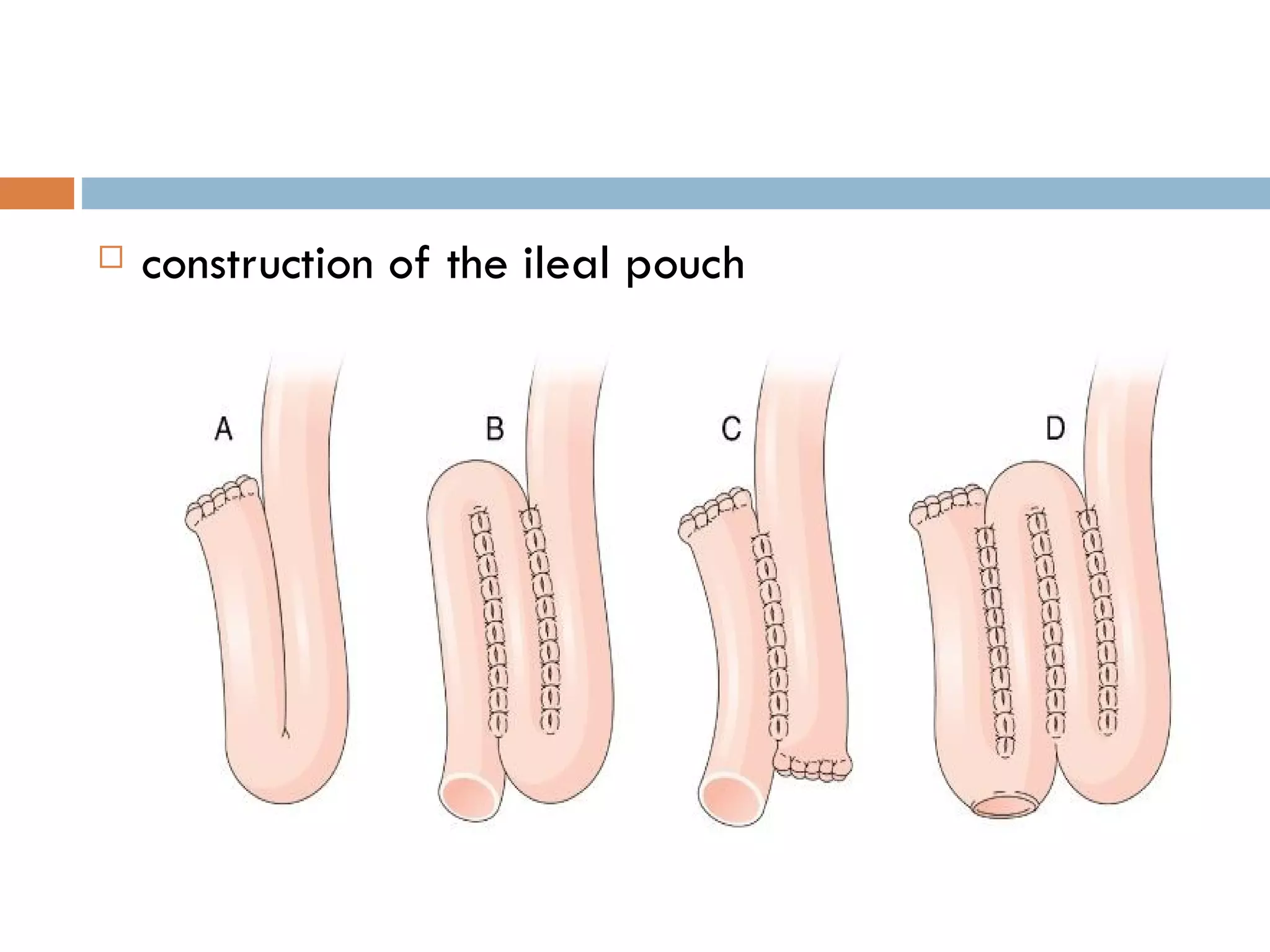
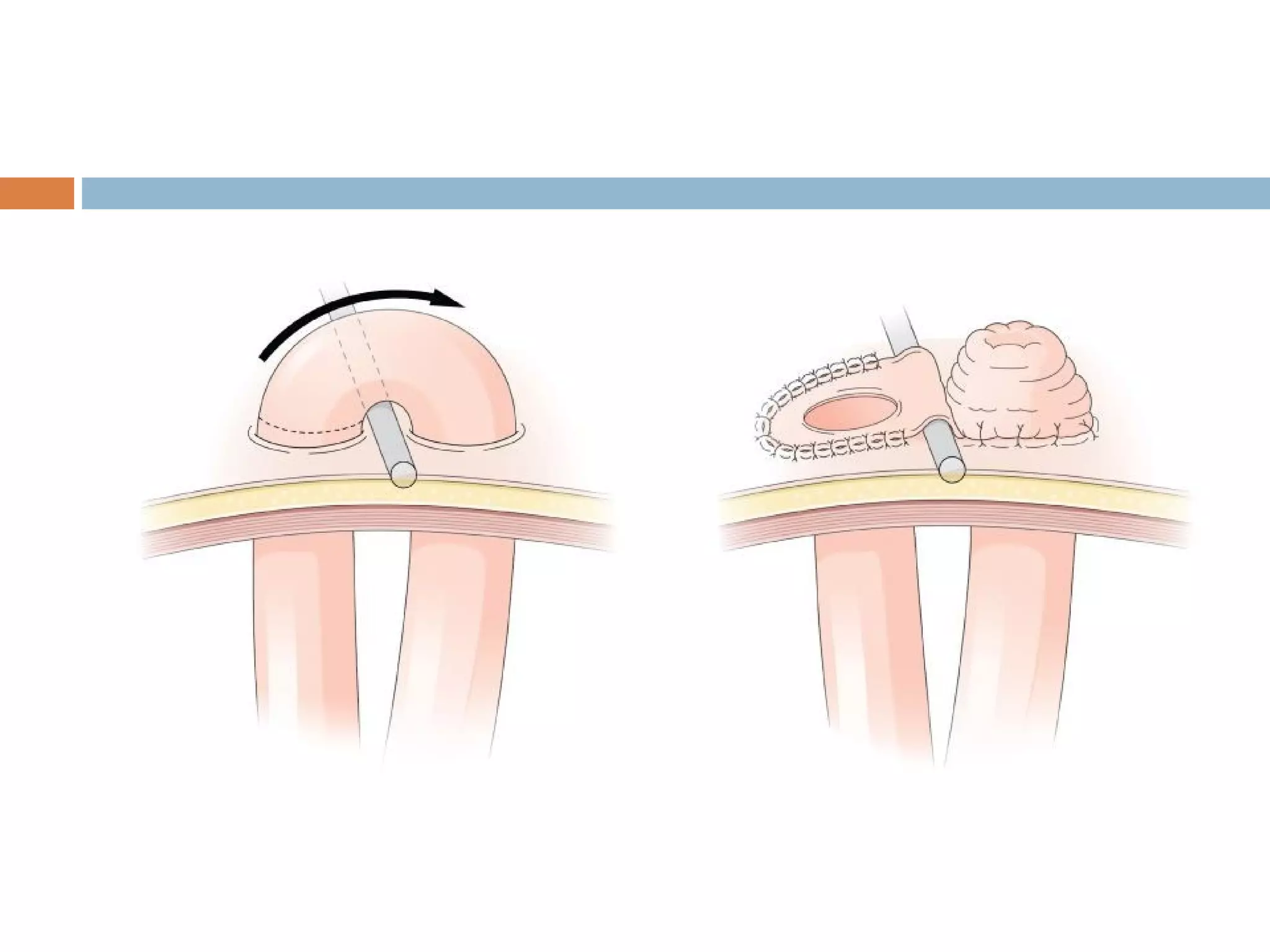
construction of the ileal pouch
ileal J-pouch faster  less tedious to create use considerably less ileum have similar or better functional results than other pouch configurations.


Post-IPAA: 4 weeks after - barium radiographic study  8 weeks after - anal manometry + clousre of ileostomy 1 – 3 – 6 – 12 month F/U then every year flexible fiberoptic pouchoscopy with surveillance biopsies of the ileal pouch approximately every 5 years.
Complications Pouch Failure Pouchitis Crohn's Disease dysplasia and carcinoma of the ileal pouch
Pouch Failure significant long-term complication of IPAA Prior anal pathology Abnormal anal manometry Pouch-perineal or pouch-vaginal fistulae Pelvic sepsis Anastomotic stricture, and dehiscence Brooke ileostomy or Kock pouch
Pouchitis nonspecific, idiopathic inflammation of the ileal pouch most common and significant late, long-term complication  > 50% of ulcerative colitis patients Rare in IPAA for FAP
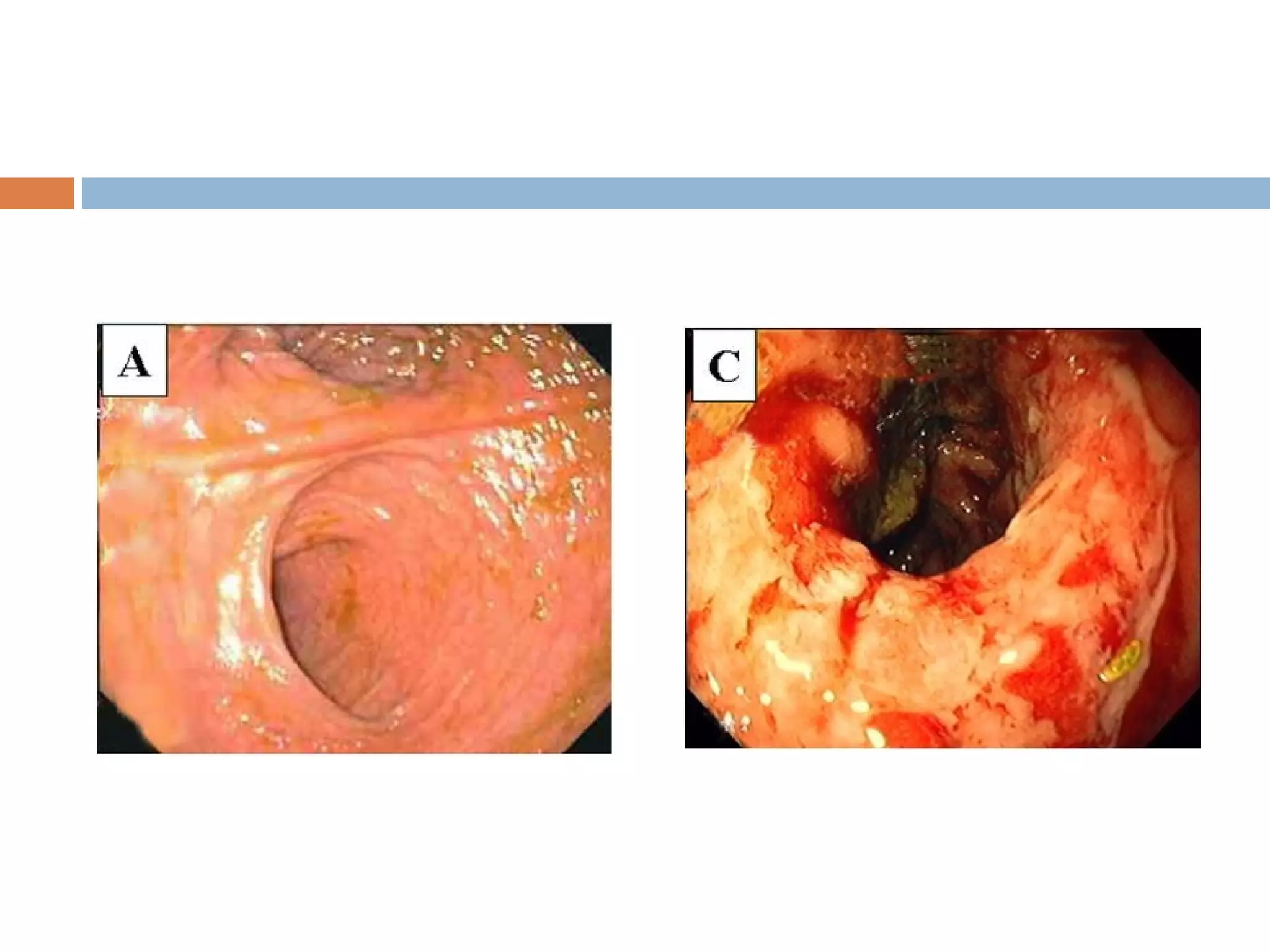
Presentation : stool frequency watery diarrhea fecal urgency Incontinence abdominal cramping fever, and malaise flexible ileal pouchoscopy
 
the greatest risk for experiencing an episode is during the initial 6-month period following closure of the temporary diverting loop ileostomy. Risk continues to rise steadily for the next 18–36 months before leveling off at around 4 years
Management : Broad-spectrum antibiotics  Acute: Ciprofloxacin 250 mg BID Metronidazole 250 mg QID Chronic: ( treatment for 3 months ) Ciprofloxacin 250 mg OD Metronidazole 250 mg OD topical anti-inflammatory agents, corticosteroids Refractory : undiagnosed Crohn's disease ?
Crohn's Disease severe morbidity and a significant risk of pouch excision Predictors : complex perianal or pouch fistulae ileitis proximal to the pouch Afferent limb ulcers biological therapies
THANK YOU

Surgical Management in Ulcerative Colitis

  • 1.
    SURGICAL MANAGEMENT INULCERATIVE COLITIS
  • 2.
  • 3.
    INCIDENCE CRCin UC appears at younger age than in sporadic CRC (40-50 yrs old vs 60). 5-10% after 20 years. 12-20% after 30 years.
  • 4.
    RISK FACTORS Durationof the disease Extent of the disease UC complicated by primary sclerosing cholangitis Presence of post-inflammatory pseudopolyp
  • 5.
    CRC in UC…Appears as: Polypoid Nodular Ulcerated Plaque like Mostly adenocarcinoma. Mostly located in the rectum and sigmoid It arises from areas of dysplasia.
  • 6.
    Dysplastic areas mayappear flat or slightly raised areas. Dysplastic areas may occur within or near nodules, masses, polyps or plaque like lesion. N.B.: Diagnosis of dysplasia in Pre Op colonoscopy has a: 81% sensitivity 79% specifty
  • 7.
  • 8.
    Indications for surgeryin UC: SURGICAL EMERGENCIES Massive life threatening hemorrhage Toxic megacolon with impending perforation Fulminant colitis unresponsive to IV corticosteroids    Colonic perforation   Total obstruction from stricture
  • 9.
    Elective: Intractability despitemax therapy. Mucosal dysplasia Dysplasia-associated lesion or mass (DALM) Intolerable side effects of medications Patient with significant risk to develop CRC Stricture formation without obstruction
  • 10.
    Extraintestinal manifestations Growthretardation, primarily in children and adolescents
  • 11.
  • 12.
    Emergency operation: Subtotalcolectomy with end ileostomy Proctocolectomy with end ileostomy Blow-hole colostomy with end ileostomy
  • 13.
    Subtotal colectomy withend ileostomy Advantages : Allows option for IPAA; low risk Disadvantages : Requires second operation may develop rectal recurrence of disease Contraindication : Massive hemorrhage from colon and rectum
  • 14.
    Proctocolectomy with endileostomy: Advantages: Definitive treatment Disadvantages : No option for IPAA moderate risk for perineal nerve damage Contraindication : Severely toxic or unstable patient
  • 15.
    Blow-hole colostomy withend ileostomy Advantages: Short, simple decompression procedure Disadvantages : Diseased colon and rectum retained
  • 16.
    ELECTIVE PROCEDURES Totalproctocolectomy with Brooke ileostomy Subtotal colectomy with ileorectal anastomosis Total proctocolectomy with Kock pouch Total colectomy, mucosal proctectomy and hand-sewn IPAA with temporary diverting loop ileostomy (two-stage operation) Total proctocolectomy without mucosectomy and stapled IPAA with temporary diverting loop ileostomy (two-stage operation)
  • 17.
    Laparoscopic total proctocolectomywith or without mucosectomy and IPAA
  • 18.
    Total proctocolectomy withBrooke ileostomy Indications : Patients wanting to avoid risks of IPAA; elderly; poor sphincter function; rectal cancer Contraindications : Patient aversion to permanent ileostomy; obesity; life-threatening emergencies Advantages : Eliminates all disease-bearing mucosa; single operation Disadvantages: Potential for nerve injury in the perineal and pelvic dissection; permanent ileostomy; delayed perineal wound healing; mechanical problems with stoma; high risk of SBO
  • 19.
  • 20.
    Subtotal colectomy withileorectal anastomosis Indications: No rectal involvement; avoid permanent stoma and IPAA; young women of childbearing age to preserve fertility Contraindications : Poor sphincter tone or dysfunction; active rectal or perianal disease; colonic or rectal dysplasia; or frank cancer Advantages: One-stage operation; complete continence with good function; low risk of pelvic nerve injury; eliminates stoma.
  • 21.
    Disadvantages: 30% Recurrence rate requiring conversion to ileostomy Risk of rectal cancer requiring lifelong surveillance
  • 22.
  • 23.
    Total proctocolectomy withKock pouch Indications : Alternative to conventional ileostomy for patients desiring to preserve continence; poor sphincter tone; low rectal cancer; failed IPAA; conversion from ileostomy Contraindications : Possibility of Crohn's disease; previous resection of small bowel; patients over 60 years old; obesity; coexisting medical illness
  • 24.
    Advantages: Avoidsileostomy; patients remain continent; good quality of live; improved body image over ileostomy Disadvantages: High reoperation rate (35%) due to nipple valve dysfunction or failure; high fistula rate; pouchitis
  • 25.
  • 26.
    Total Proctocolectomy withIleal Pouch–Anal Anastomosis Indications : Procedure of choice for ulcerative colitis; colonic dysplasia or cancer; indeterminate colitis Contraindications : Poor resting tone or anal sphincter dysfunction; low rectal cancers Advantages: Completely restorative; mucosectomy eliminates all disease-bearing mucosa; no disease recurrence; no cancer risk; good function, continence, and quality of life.
  • 27.
    Disadvantages: Two-stage procedure potential for nerve injury in the perineal and pelvic dissection reduced fertility in females mucosectomy and hand-sewn IPAA are technically demanding and difficult to learn septic complications pouchitis
  • 28.
  • 29.
    Operative Techniques: StageI : abdominal colectomy, mucosal proctectomy, endorectal IPAA, and diverting loop ileostomy Stage II : clousre of ileostomy
  • 30.
    preoperative work-up analmanometry Sigmoidoscopy bowel preparation
  • 31.
  • 32.
  • 33.
    The Lone Starretractor
  • 34.
  • 35.
  • 36.
    ileal J-pouch faster less tedious to create use considerably less ileum have similar or better functional results than other pouch configurations.
  • 37.
  • 38.
  • 39.
  • 40.
    Post-IPAA: 4 weeksafter - barium radiographic study 8 weeks after - anal manometry + clousre of ileostomy 1 – 3 – 6 – 12 month F/U then every year flexible fiberoptic pouchoscopy with surveillance biopsies of the ileal pouch approximately every 5 years.
  • 41.
    Complications Pouch FailurePouchitis Crohn's Disease dysplasia and carcinoma of the ileal pouch
  • 42.
    Pouch Failure significantlong-term complication of IPAA Prior anal pathology Abnormal anal manometry Pouch-perineal or pouch-vaginal fistulae Pelvic sepsis Anastomotic stricture, and dehiscence Brooke ileostomy or Kock pouch
  • 43.
    Pouchitis nonspecific, idiopathicinflammation of the ileal pouch most common and significant late, long-term complication > 50% of ulcerative colitis patients Rare in IPAA for FAP
  • 44.
    Presentation : stoolfrequency watery diarrhea fecal urgency Incontinence abdominal cramping fever, and malaise flexible ileal pouchoscopy
  • 45.
  • 46.
    the greatest riskfor experiencing an episode is during the initial 6-month period following closure of the temporary diverting loop ileostomy. Risk continues to rise steadily for the next 18–36 months before leveling off at around 4 years
  • 47.
    Management : Broad-spectrumantibiotics Acute: Ciprofloxacin 250 mg BID Metronidazole 250 mg QID Chronic: ( treatment for 3 months ) Ciprofloxacin 250 mg OD Metronidazole 250 mg OD topical anti-inflammatory agents, corticosteroids Refractory : undiagnosed Crohn's disease ?
  • 48.
    Crohn's Disease severemorbidity and a significant risk of pouch excision Predictors : complex perianal or pouch fistulae ileitis proximal to the pouch Afferent limb ulcers biological therapies
  • 49.