Kurdistan Board GEH/GIT Surgery J Club 2022
Supervised by Professor Dr. Mohamed Alshekhani.
Introduction:
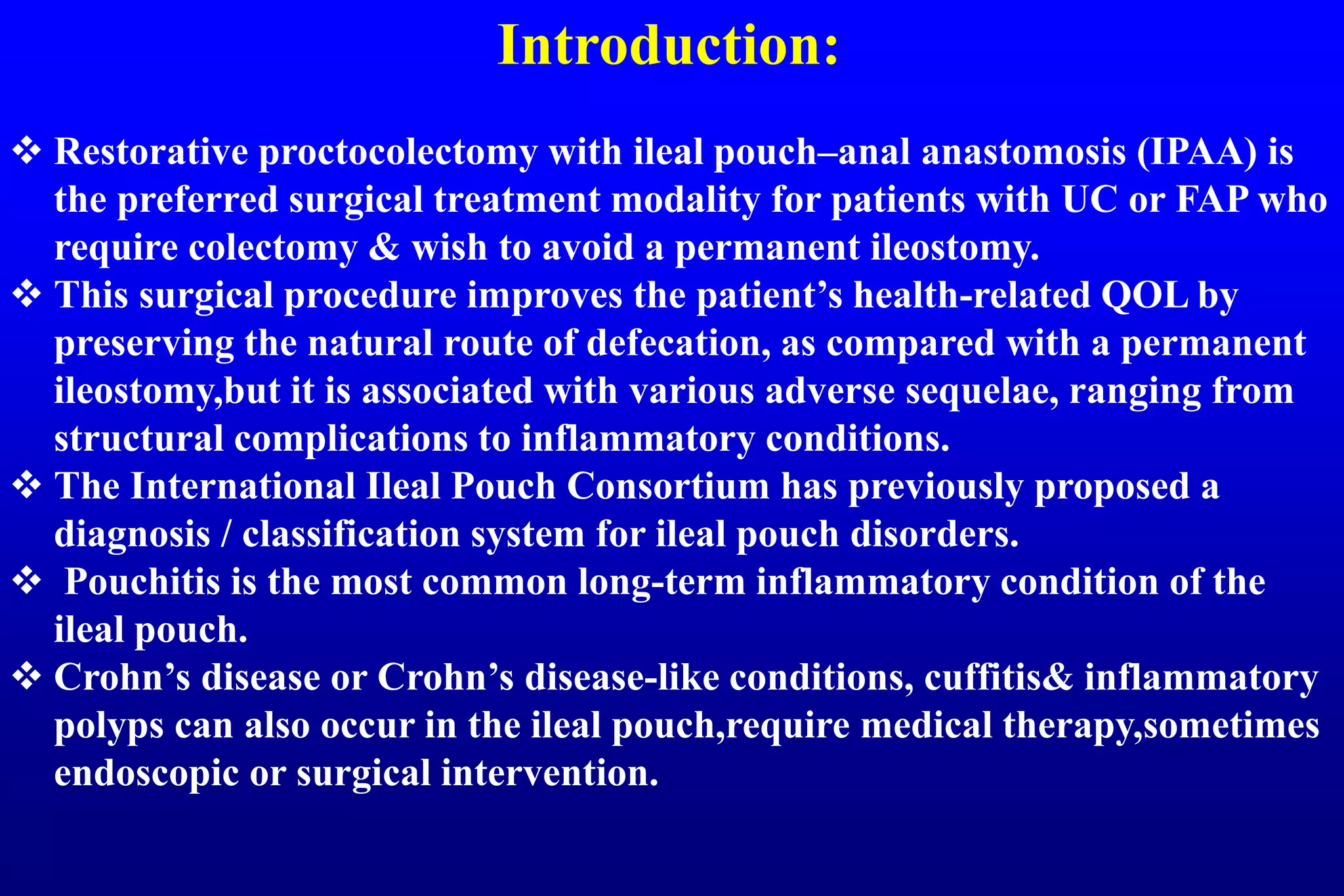
 Restorative proctocolectomy with ileal pouch–anal anastomosis (IPAA) is
the preferred surgical treatment modality for patients with UC or FAP who
require colectomy & wish to avoid a permanent ileostomy.
 This surgical procedure improves the patient’s health-related QOL by
preserving the natural route of defecation, as compared with a permanent
ileostomy,but it is associated with various adverse sequelae, ranging from
structural complications to inflammatory conditions.
 The International Ileal Pouch Consortium has previously proposed a
diagnosis / classification system for ileal pouch disorders.
 Pouchitis is the most common long-term inflammatory condition of the
ileal pouch.
 Crohn’s disease or Crohn’s disease-like conditions, cuffitis& inflammatory
polyps can also occur in the ileal pouch,require medical therapy,sometimes
endoscopic or surgical intervention.
Pouch disorders:
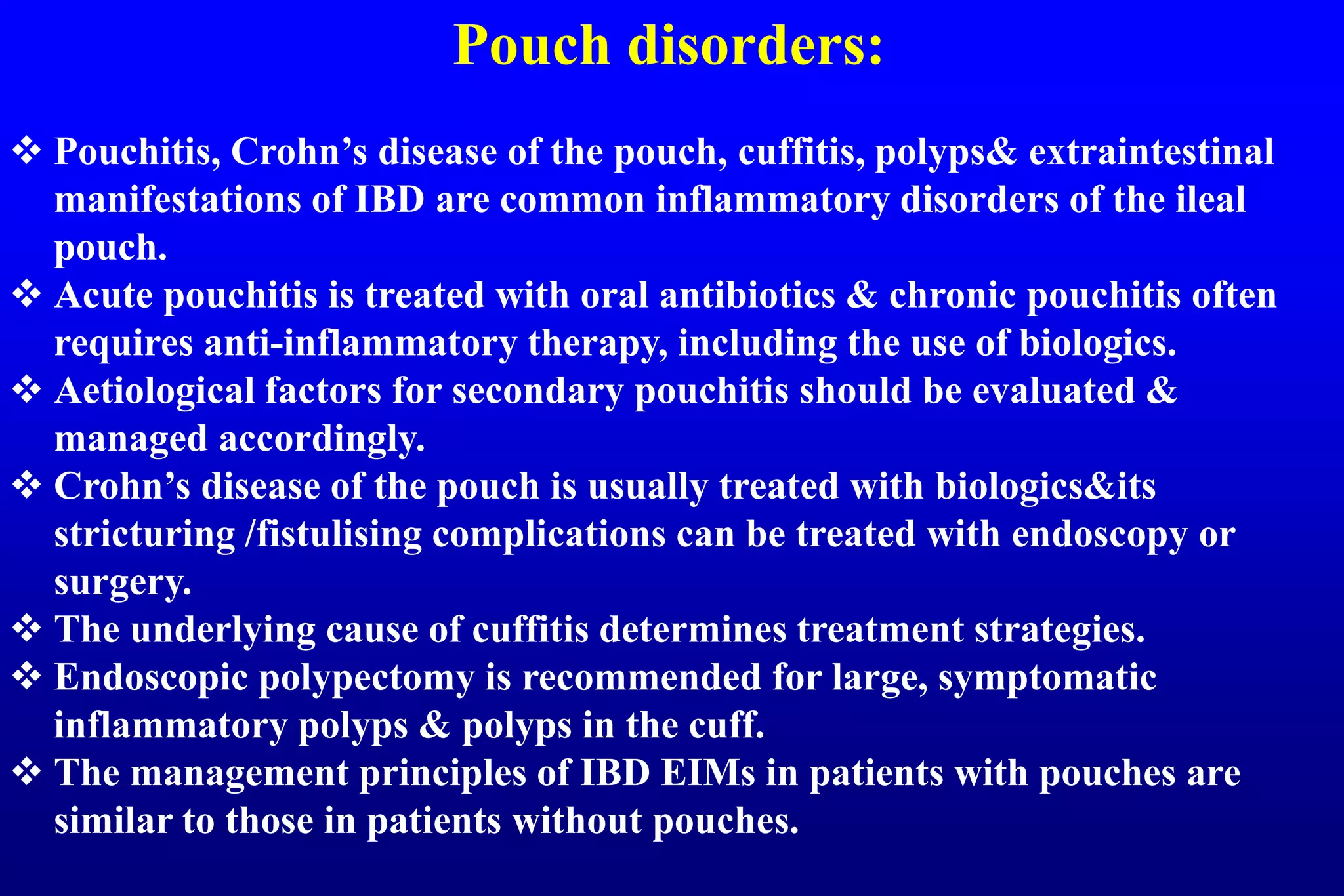
 Pouchitis, Crohn’s disease of the pouch, cuffitis, polyps& extraintestinal
manifestations of IBD are common inflammatory disorders of the ileal
pouch.
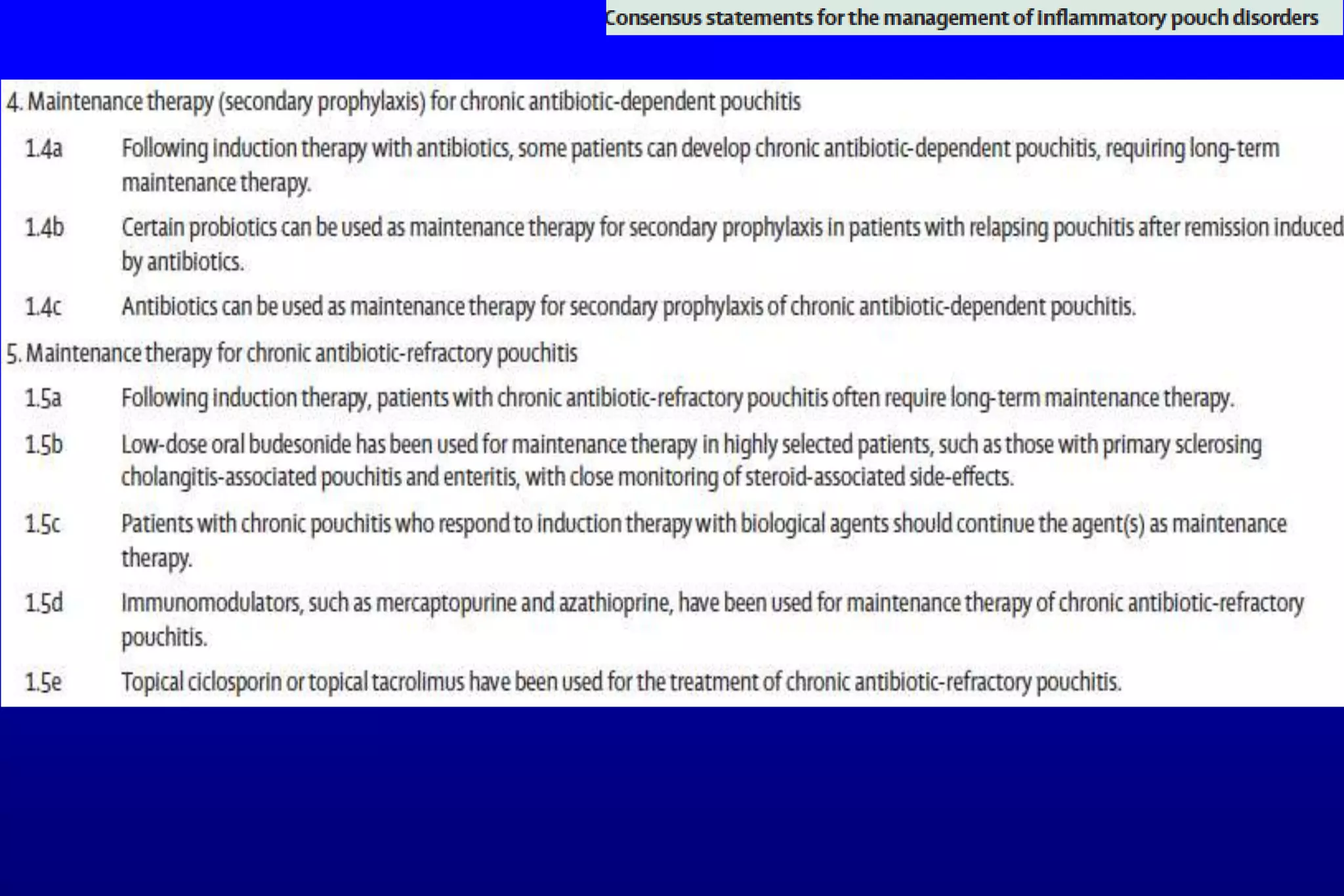
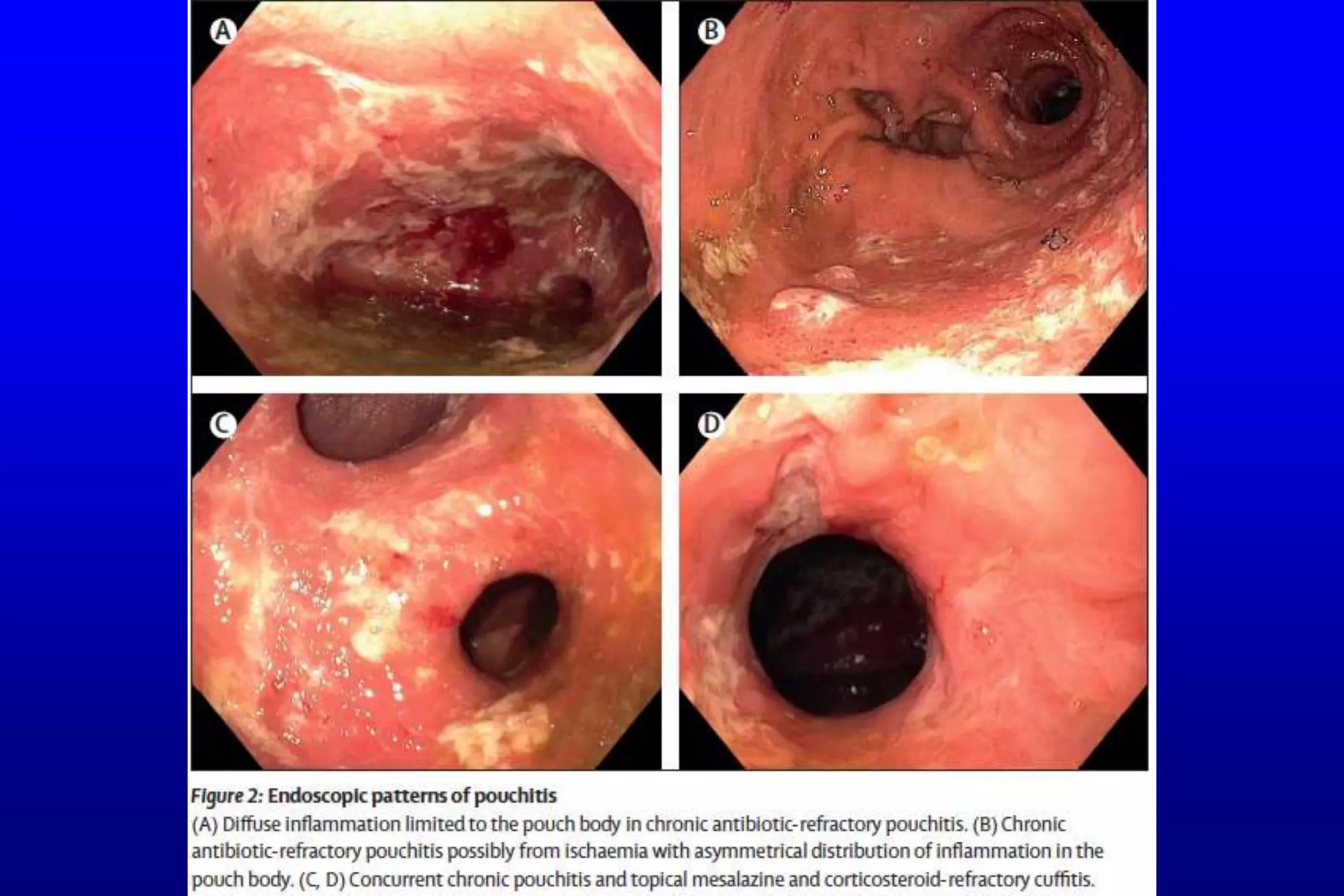
 Acute pouchitis is treated with oral antibiotics & chronic pouchitis often
requires anti-inflammatory therapy, including the use of biologics.
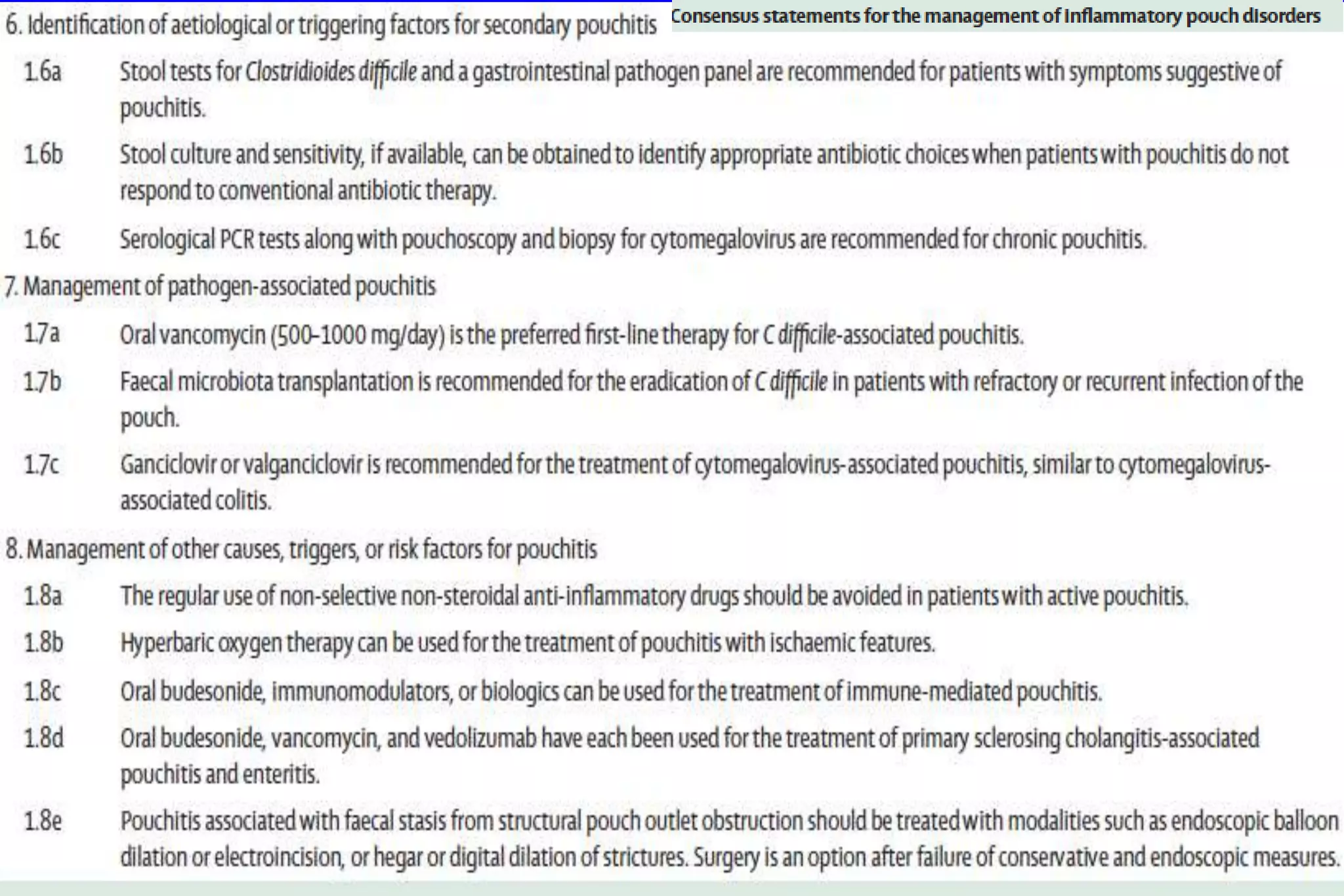
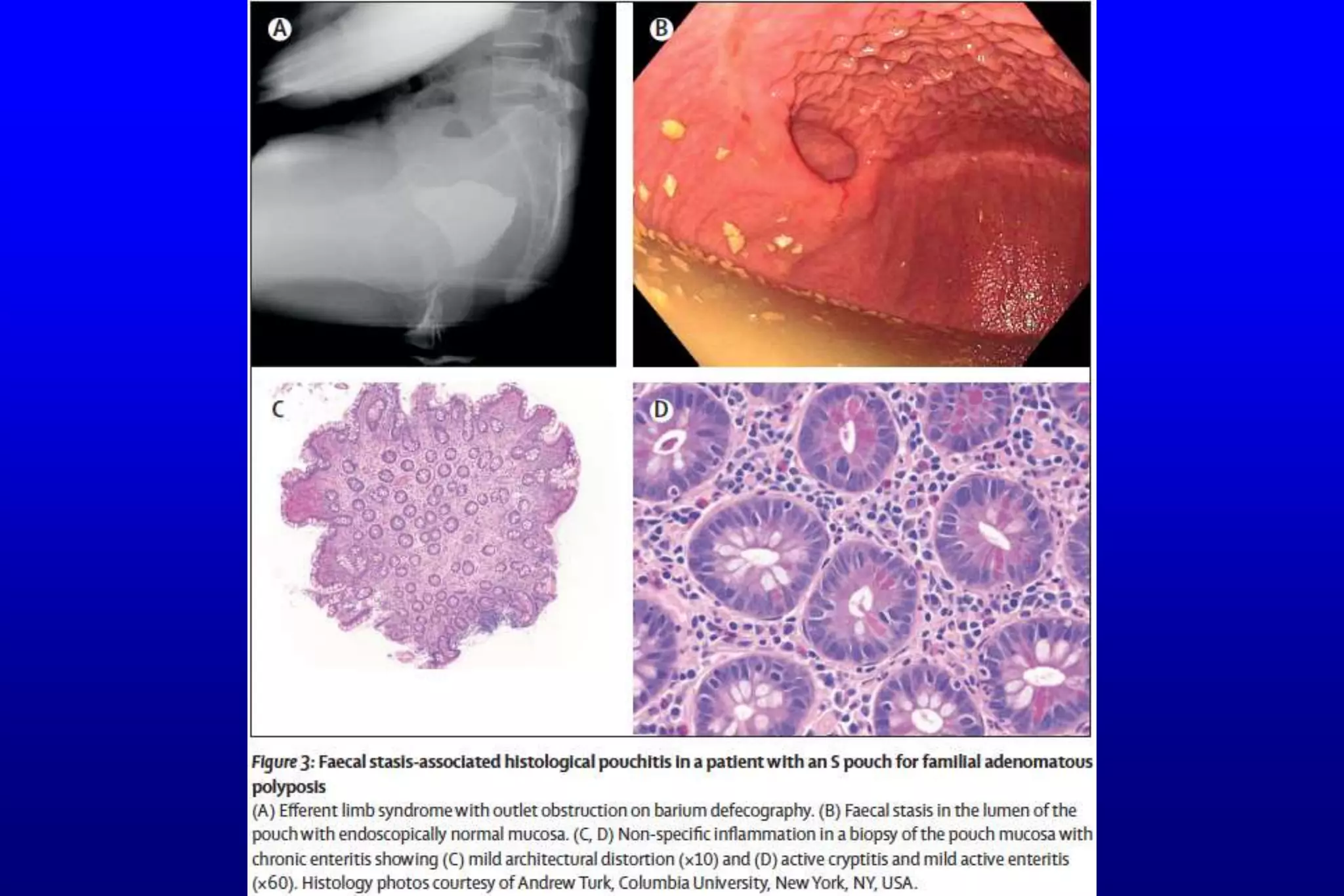
 Aetiological factors for secondary pouchitis should be evaluated &
managed accordingly.
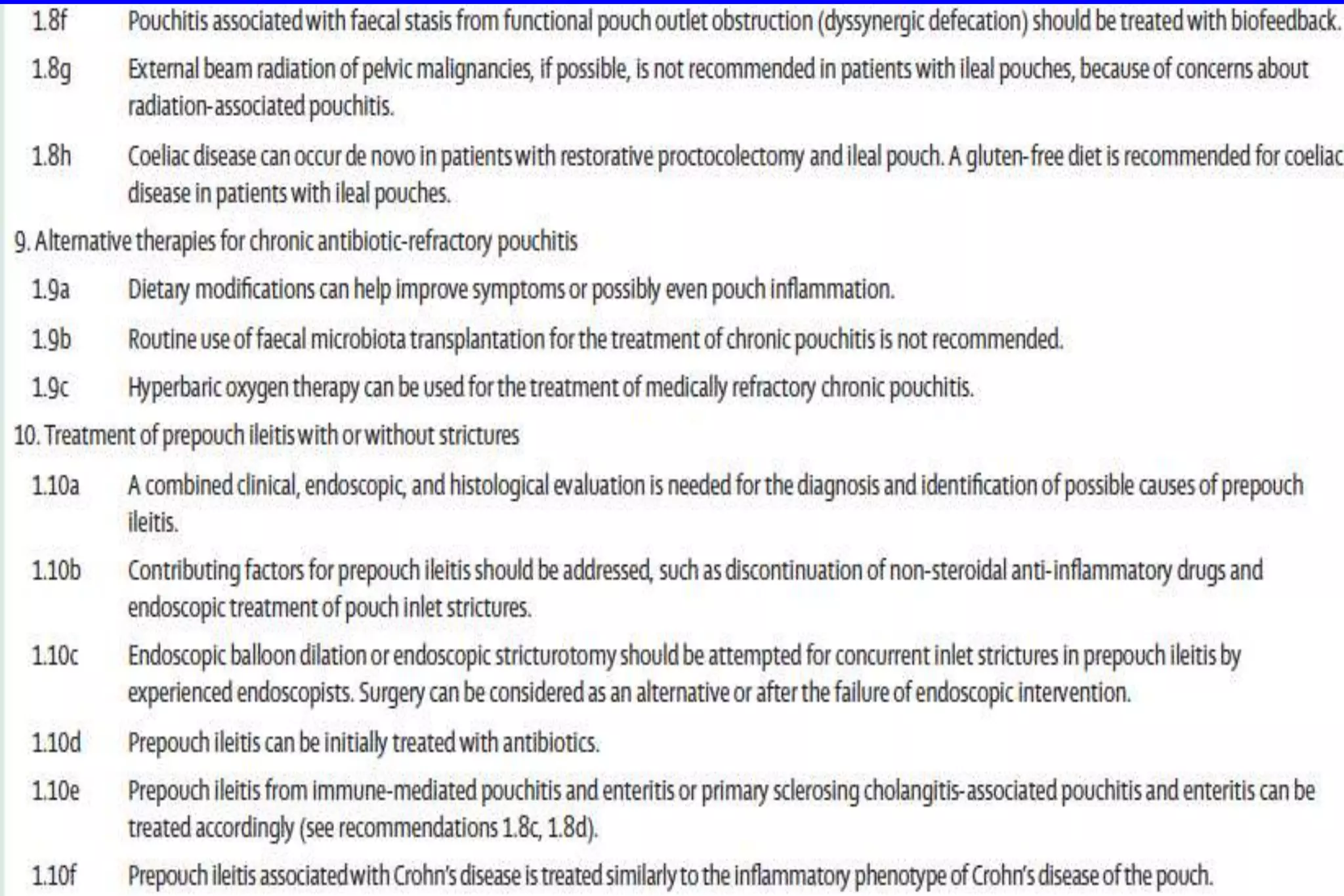
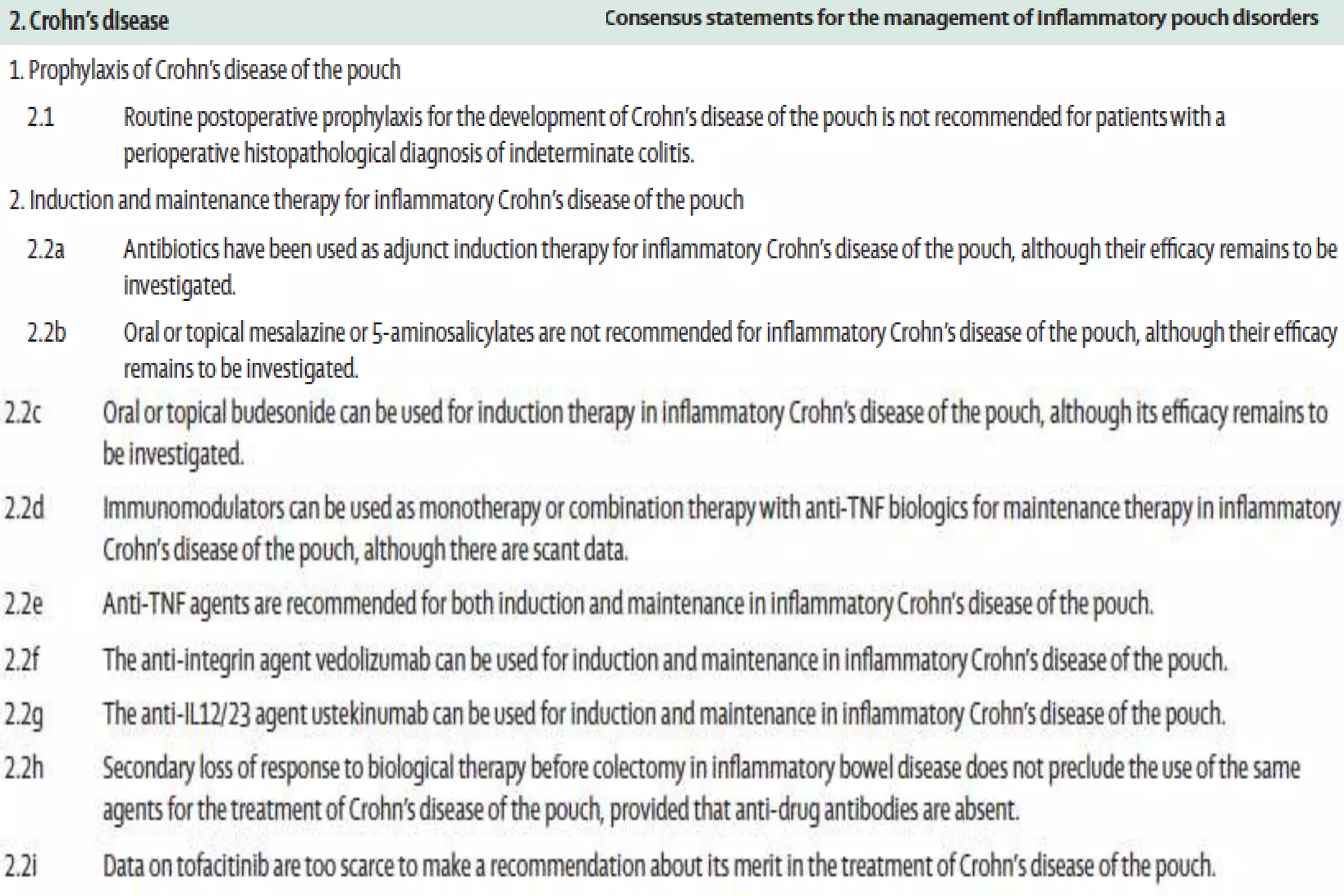
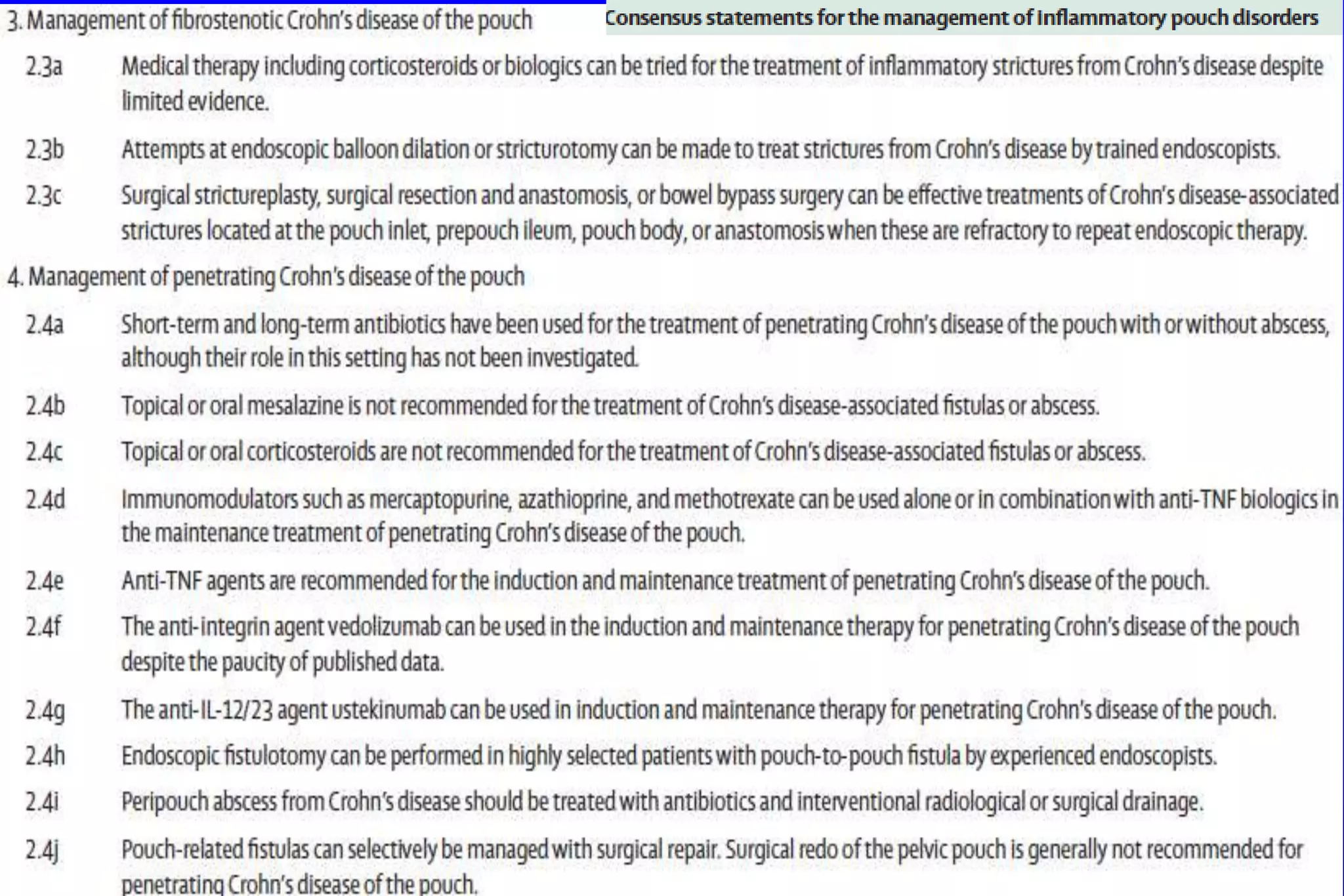
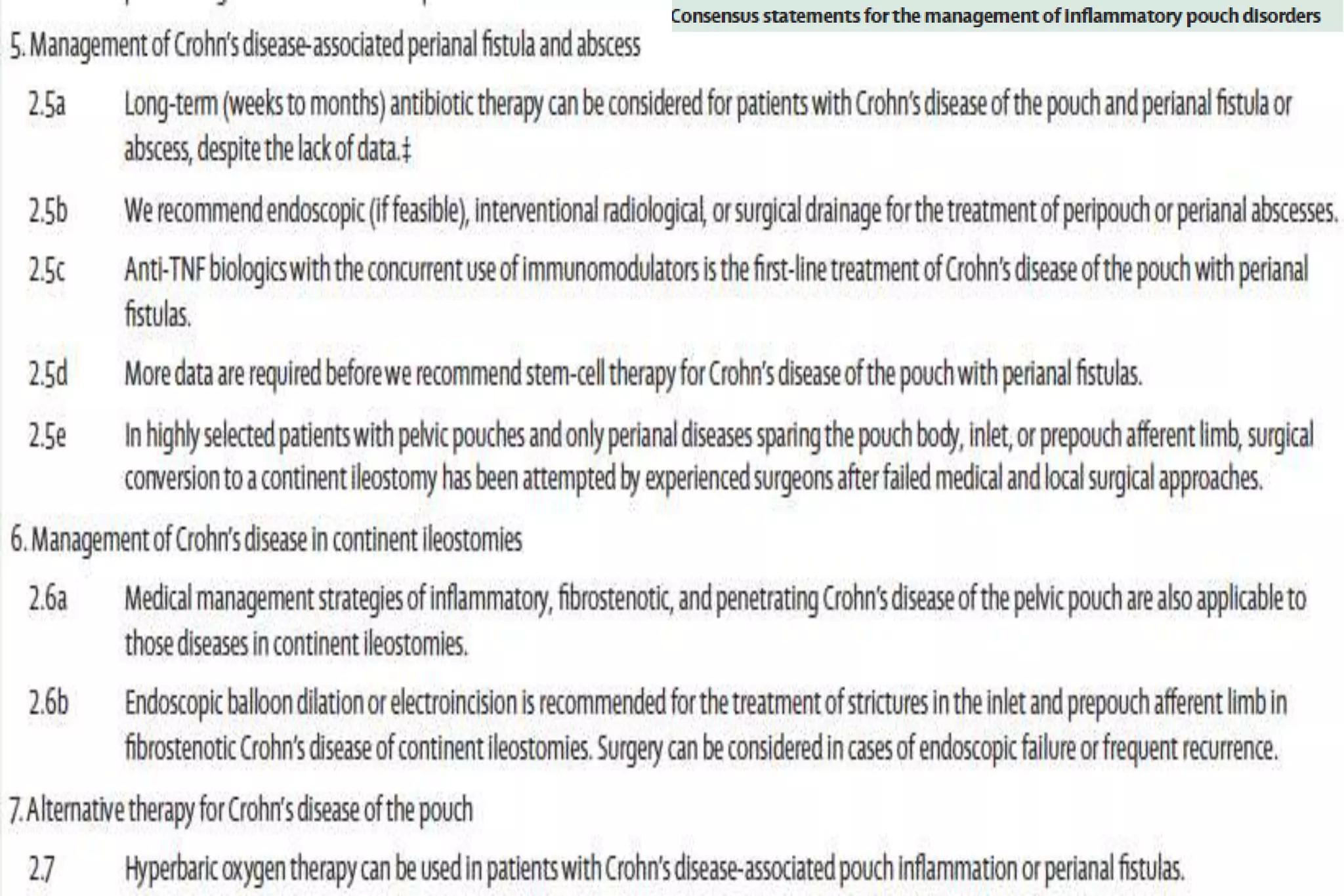
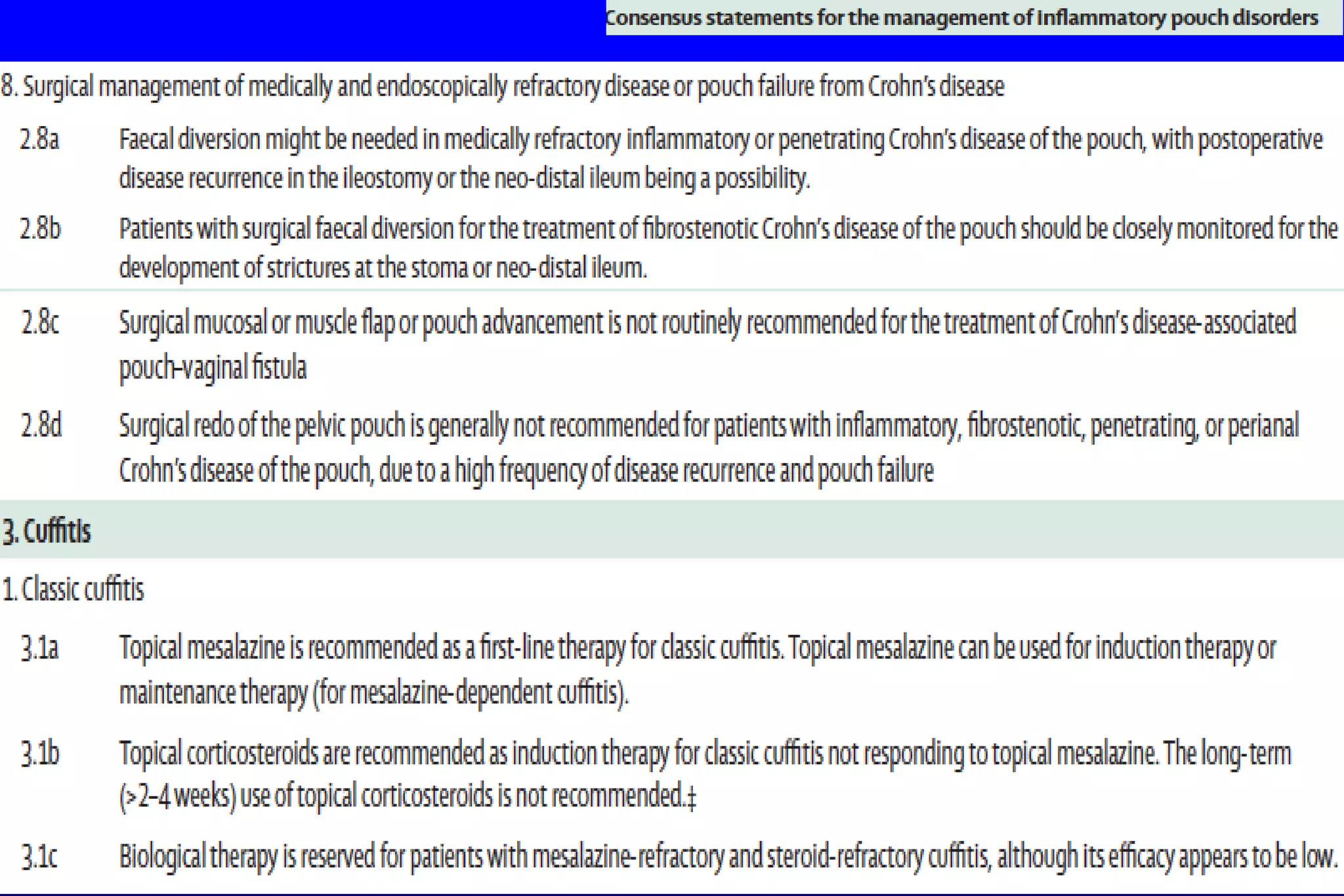
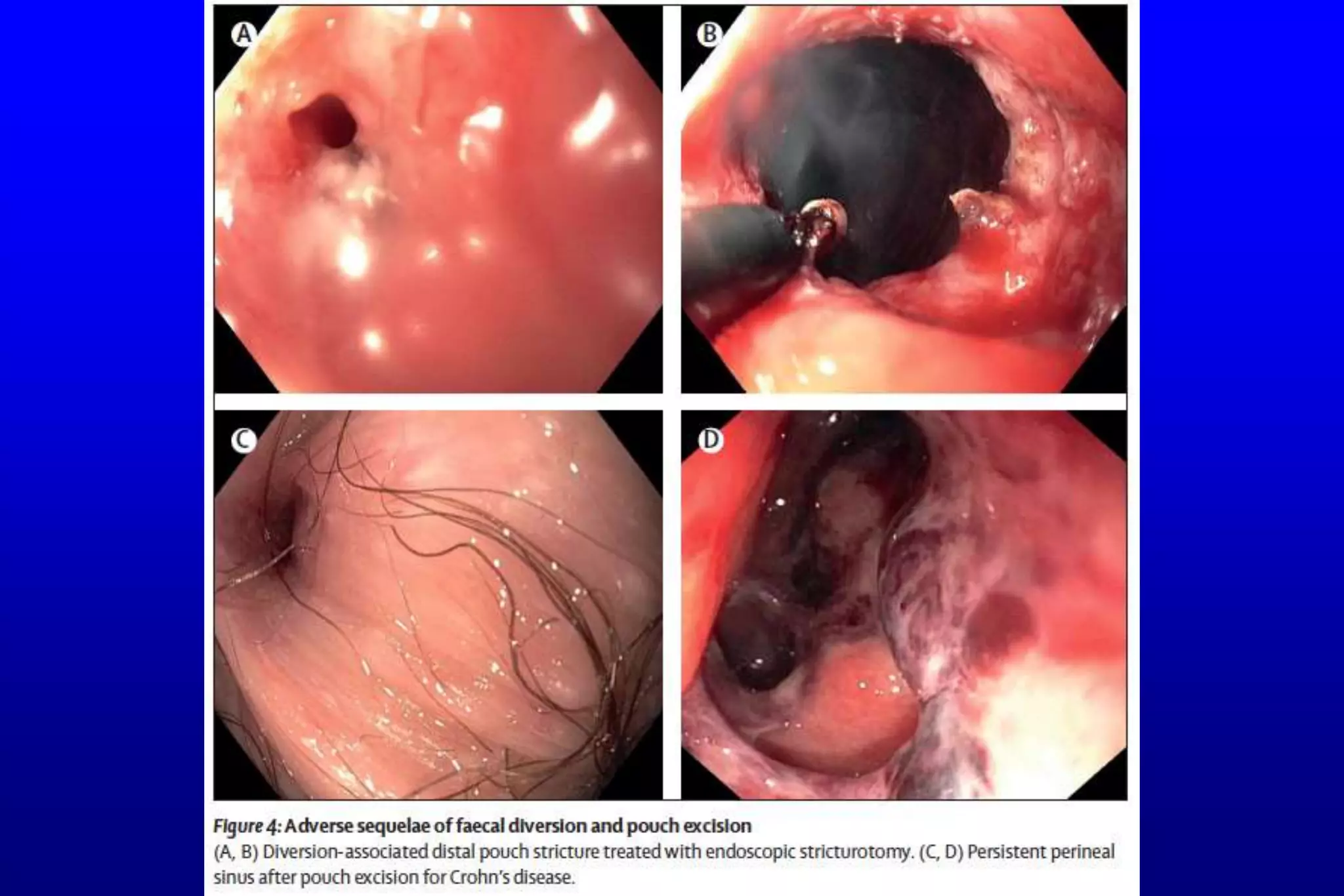
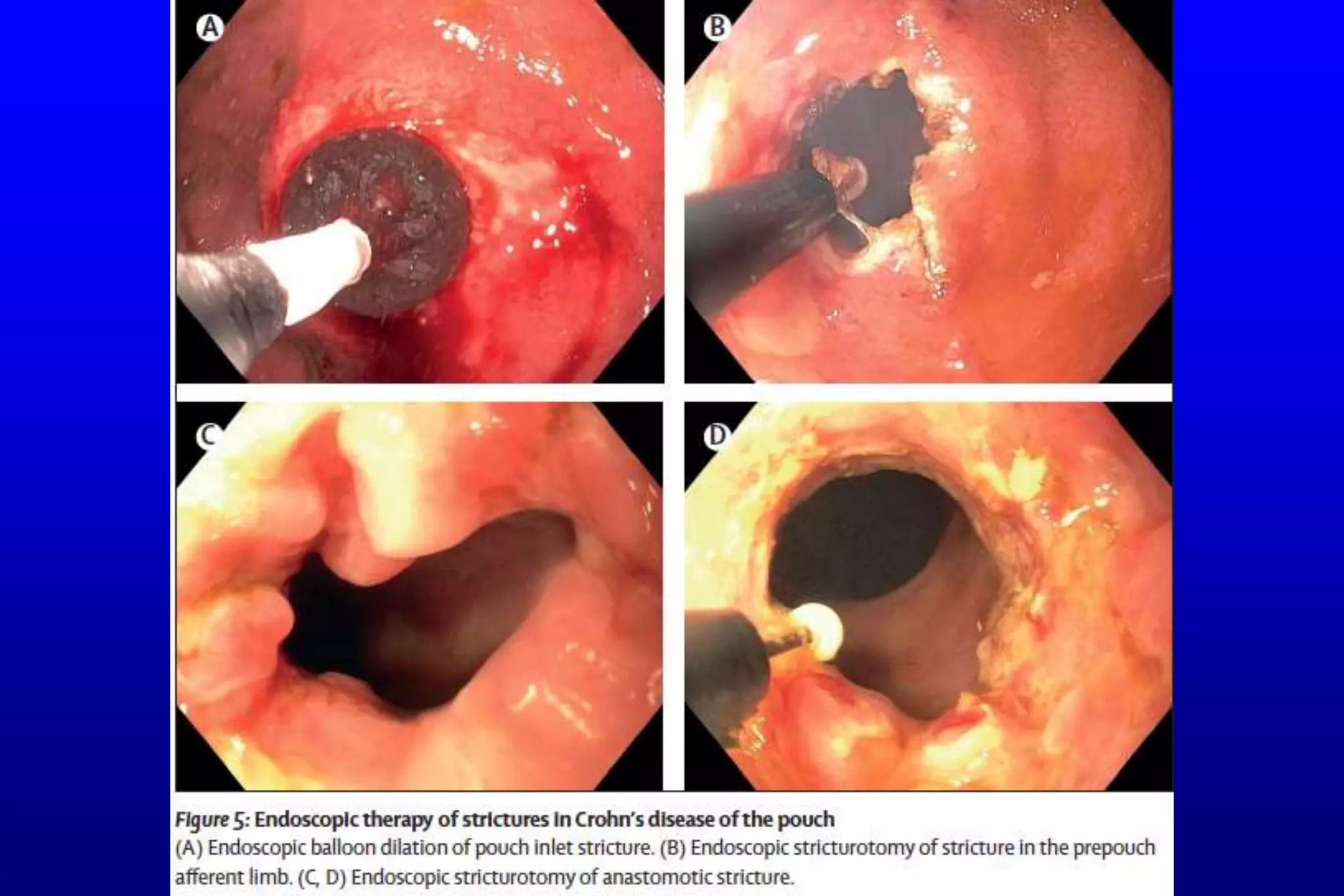
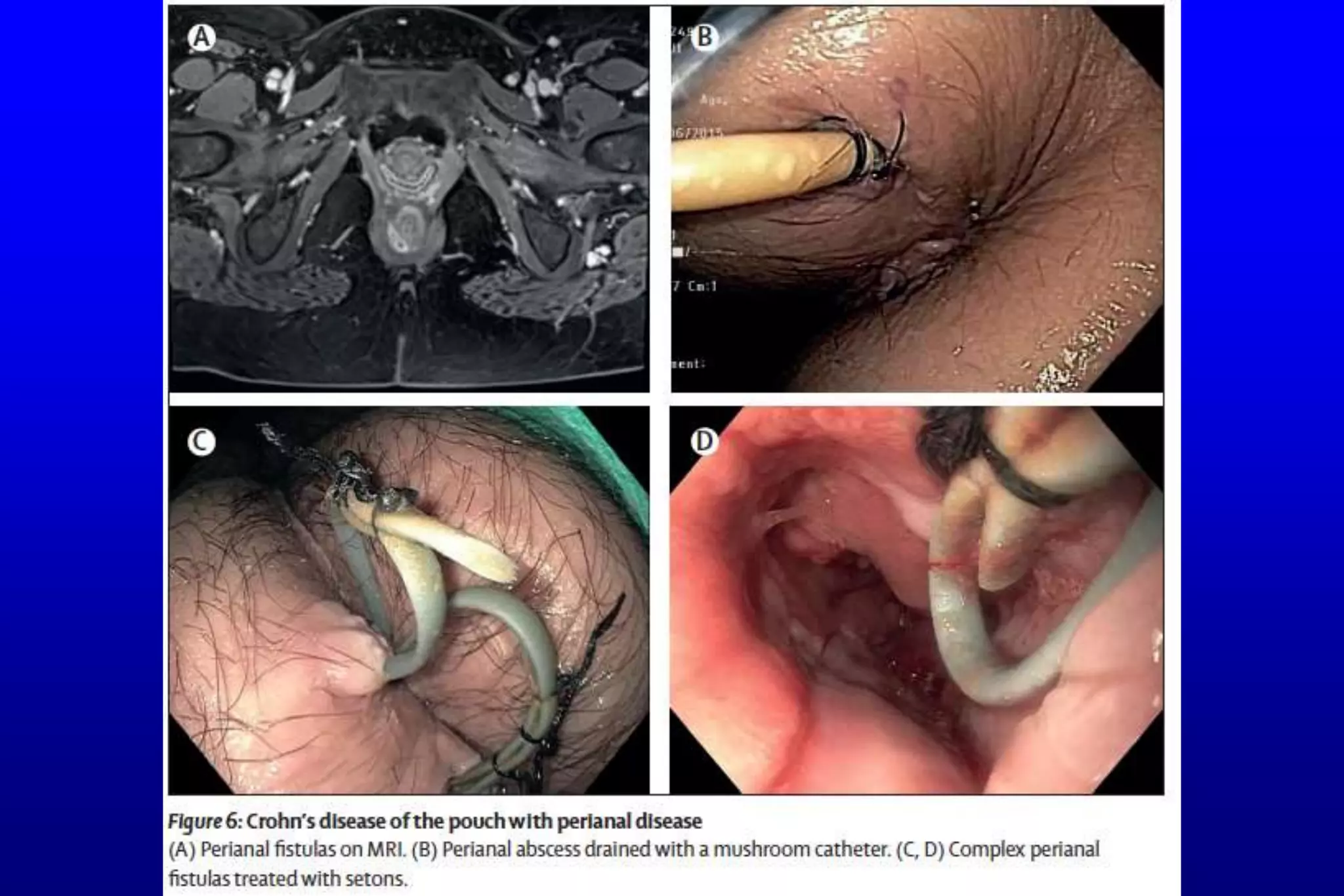
 Crohn’s disease of the pouch is usually treated with biologics&its
stricturing /fistulising complications can be treated with endoscopy or
surgery.
 The underlying cause of cuffitis determines treatment strategies.
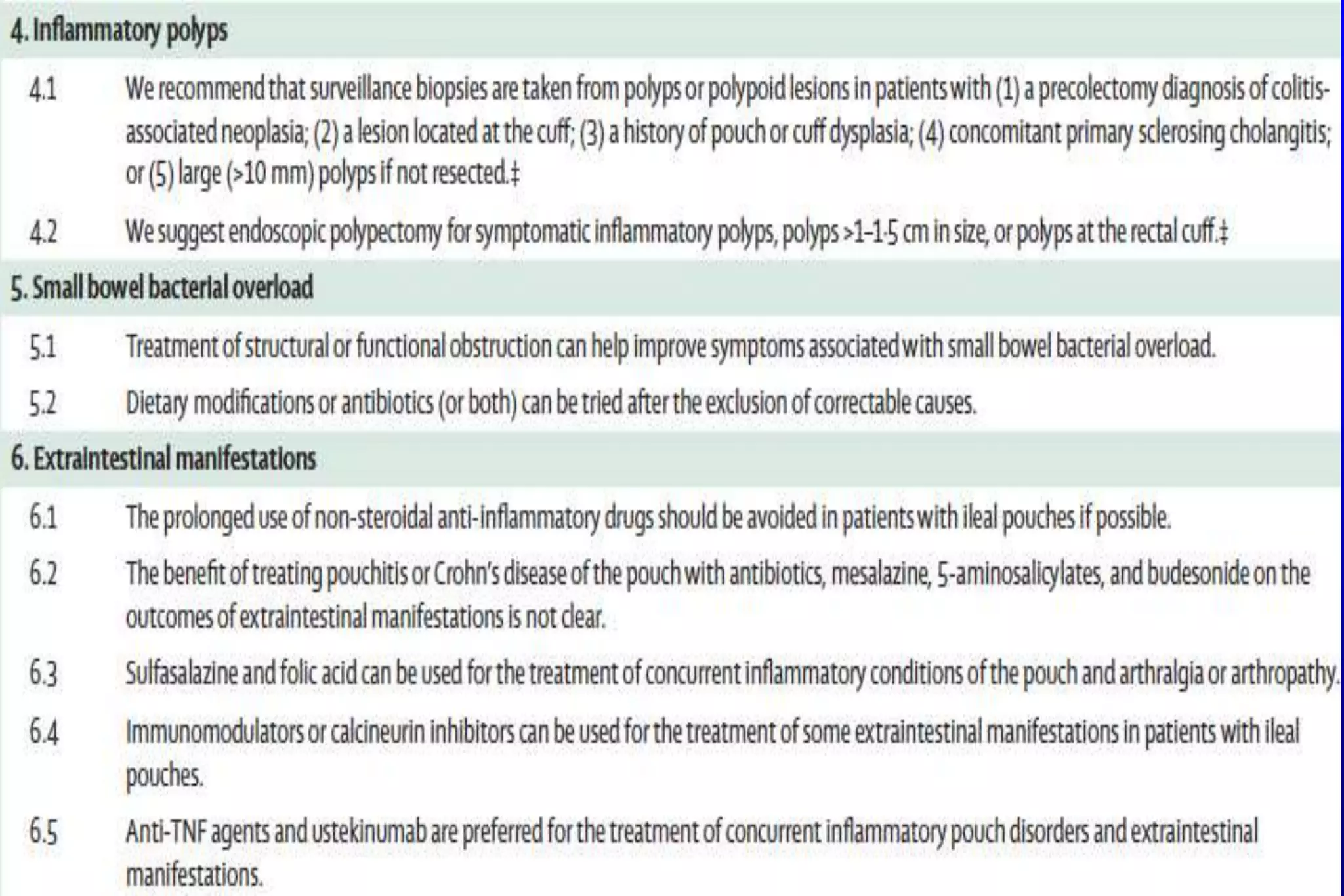
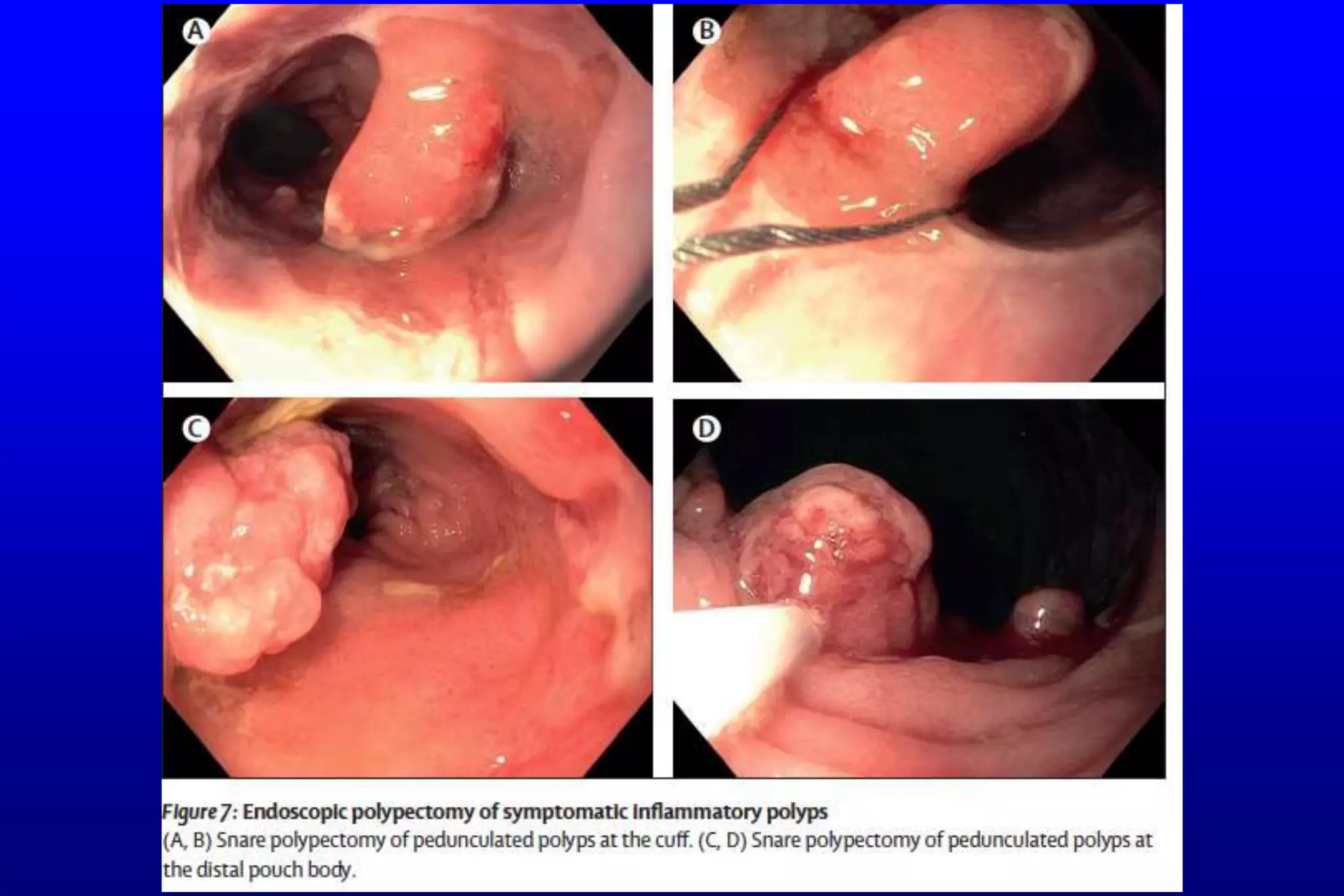
 Endoscopic polypectomy is recommended for large, symptomatic
inflammatory polyps & polyps in the cuff.
 The management principles of IBD EIMs in patients with pouches are
similar to those in patients without pouches.
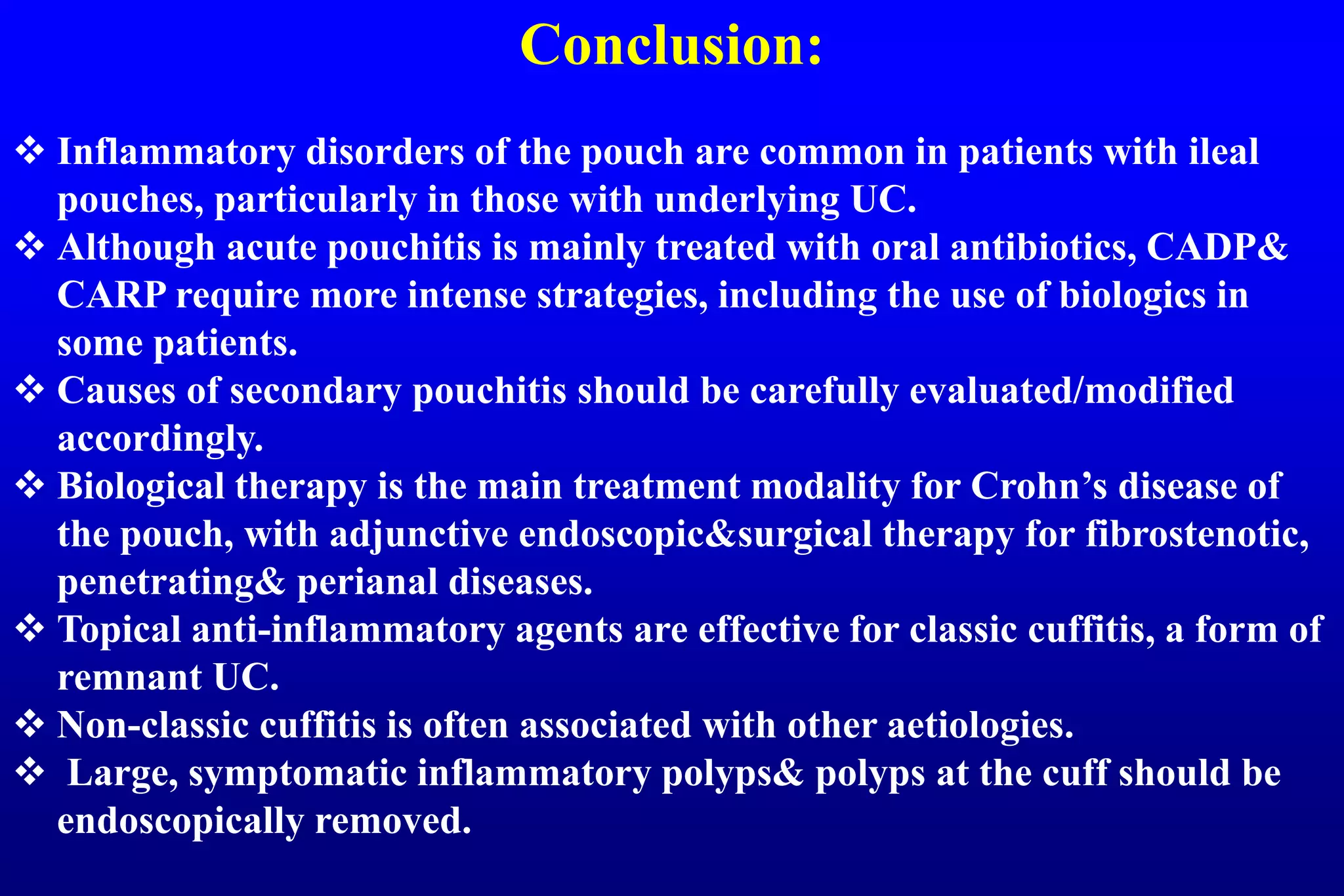
Conclusion:
 Inflammatory disorders of the pouch are common in patients with ileal
pouches, particularly in those with underlying UC.
 Although acute pouchitis is mainly treated with oral antibiotics, CADP&
CARP require more intense strategies, including the use of biologics in
some patients.
 Causes of secondary pouchitis should be carefully evaluated/modified
accordingly.
 Biological therapy is the main treatment modality for Crohn’s disease of
the pouch, with adjunctive endoscopic&surgical therapy for fibrostenotic,
penetrating& perianal diseases.
 Topical anti-inflammatory agents are effective for classic cuffitis, a form of
remnant UC.
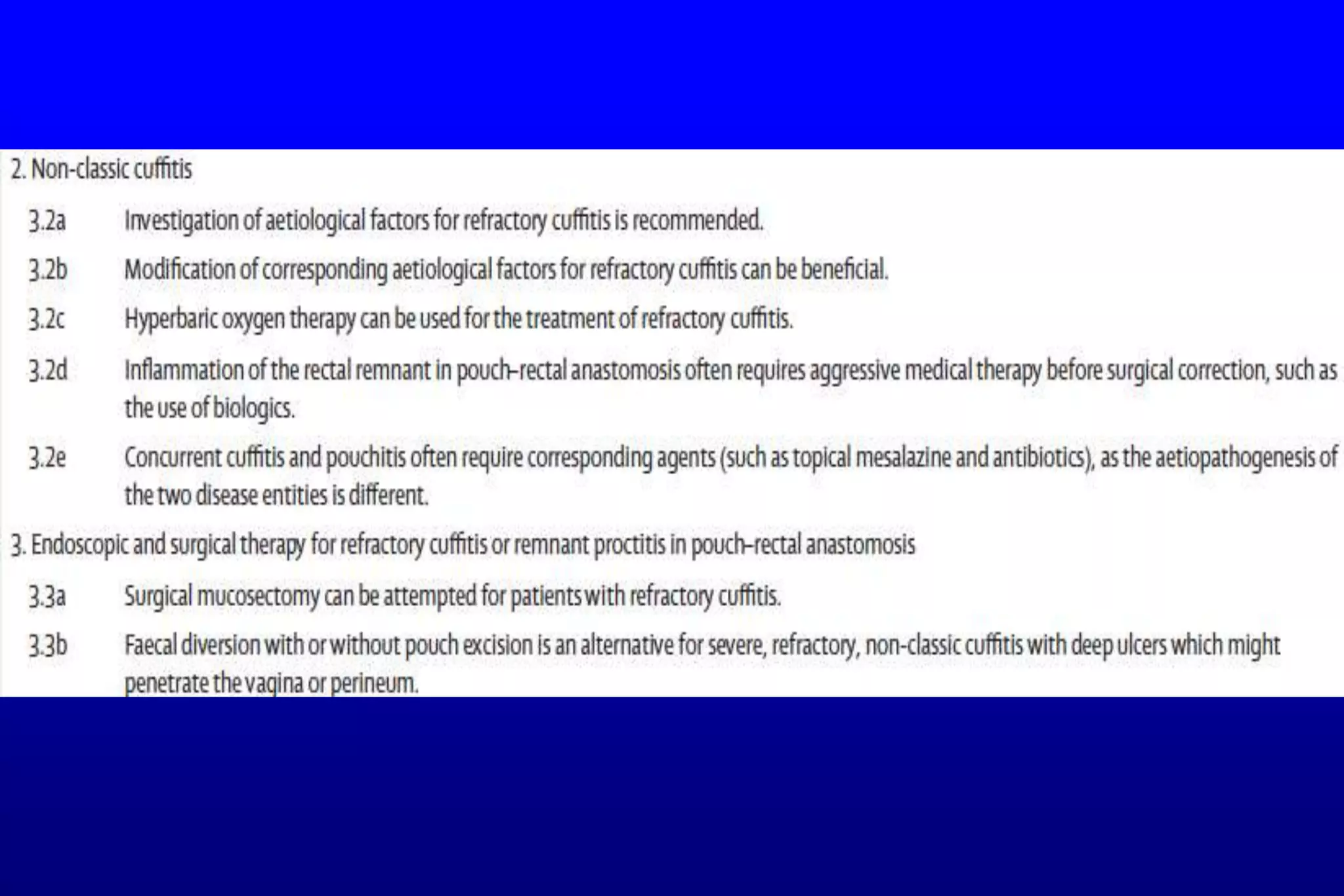
 Non-classic cuffitis is often associated with other aetiologies.
 Large, symptomatic inflammatory polyps& polyps at the cuff should be
endoscopically removed.
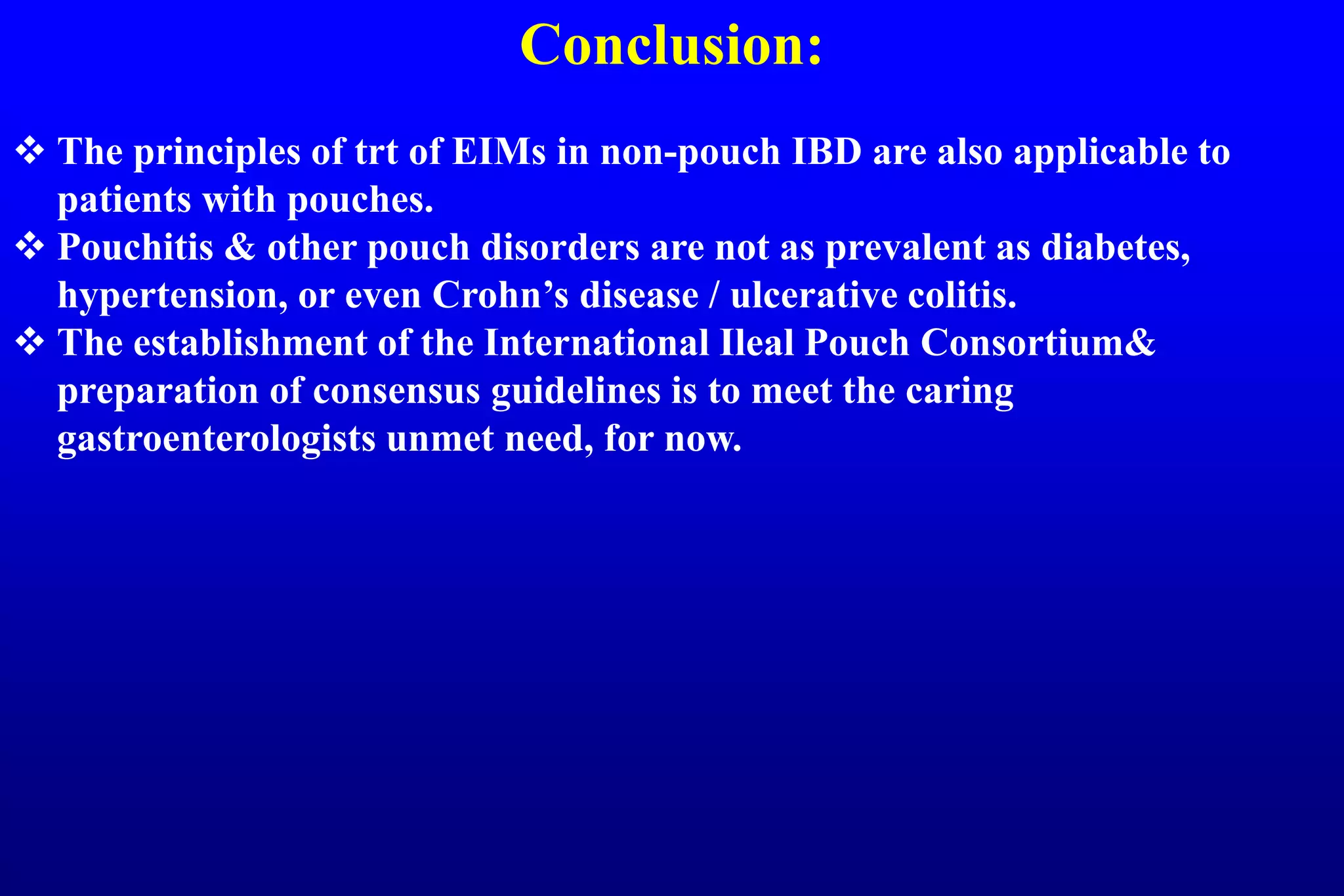
Conclusion:
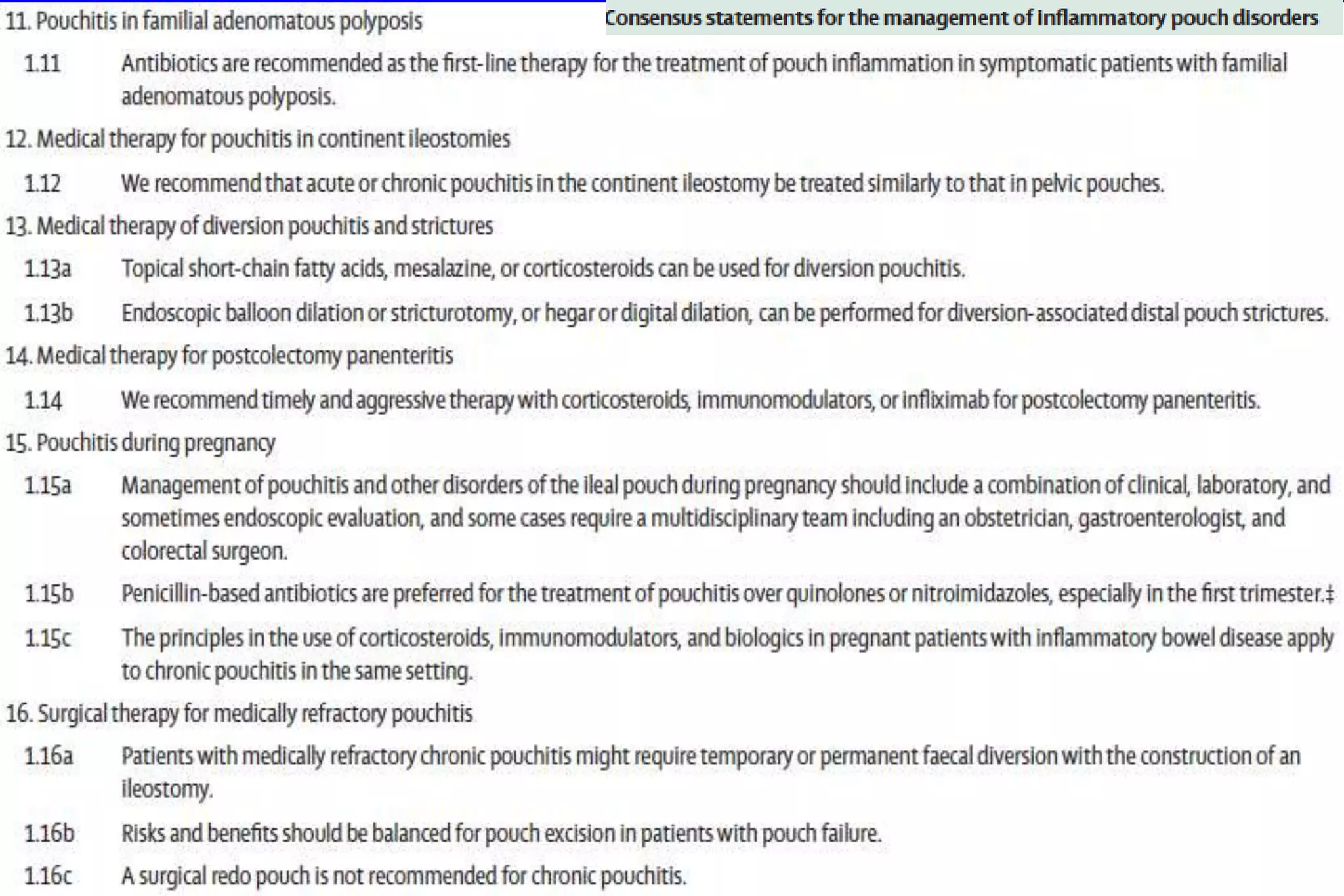
 The principles of trt of EIMs in non-pouch IBD are also applicable to
patients with pouches.
 Pouchitis & other pouch disorders are not as prevalent as diabetes,
hypertension, or even Crohn’s disease / ulcerative colitis.
 The establishment of the International Ileal Pouch Consortium&
preparation of consensus guidelines is to meet the caring
gastroenterologists unmet need, for now.

Git j club ileal pouch disorders22

  • 1.
    Kurdistan Board GEH/GITSurgery J Club 2022 Supervised by Professor Dr. Mohamed Alshekhani.
  • 2.
    Introduction:  Restorative proctocolectomywith ileal pouch–anal anastomosis (IPAA) is the preferred surgical treatment modality for patients with UC or FAP who require colectomy & wish to avoid a permanent ileostomy.  This surgical procedure improves the patient’s health-related QOL by preserving the natural route of defecation, as compared with a permanent ileostomy,but it is associated with various adverse sequelae, ranging from structural complications to inflammatory conditions.  The International Ileal Pouch Consortium has previously proposed a diagnosis / classification system for ileal pouch disorders.  Pouchitis is the most common long-term inflammatory condition of the ileal pouch.  Crohn’s disease or Crohn’s disease-like conditions, cuffitis& inflammatory polyps can also occur in the ileal pouch,require medical therapy,sometimes endoscopic or surgical intervention.
  • 3.
    Pouch disorders:  Pouchitis,Crohn’s disease of the pouch, cuffitis, polyps& extraintestinal manifestations of IBD are common inflammatory disorders of the ileal pouch.  Acute pouchitis is treated with oral antibiotics & chronic pouchitis often requires anti-inflammatory therapy, including the use of biologics.  Aetiological factors for secondary pouchitis should be evaluated & managed accordingly.  Crohn’s disease of the pouch is usually treated with biologics&its stricturing /fistulising complications can be treated with endoscopy or surgery.  The underlying cause of cuffitis determines treatment strategies.  Endoscopic polypectomy is recommended for large, symptomatic inflammatory polyps & polyps in the cuff.  The management principles of IBD EIMs in patients with pouches are similar to those in patients without pouches.
  • 21.
    Conclusion:  Inflammatory disordersof the pouch are common in patients with ileal pouches, particularly in those with underlying UC.  Although acute pouchitis is mainly treated with oral antibiotics, CADP& CARP require more intense strategies, including the use of biologics in some patients.  Causes of secondary pouchitis should be carefully evaluated/modified accordingly.  Biological therapy is the main treatment modality for Crohn’s disease of the pouch, with adjunctive endoscopic&surgical therapy for fibrostenotic, penetrating& perianal diseases.  Topical anti-inflammatory agents are effective for classic cuffitis, a form of remnant UC.  Non-classic cuffitis is often associated with other aetiologies.  Large, symptomatic inflammatory polyps& polyps at the cuff should be endoscopically removed.
  • 22.
    Conclusion:  The principlesof trt of EIMs in non-pouch IBD are also applicable to patients with pouches.  Pouchitis & other pouch disorders are not as prevalent as diabetes, hypertension, or even Crohn’s disease / ulcerative colitis.  The establishment of the International Ileal Pouch Consortium& preparation of consensus guidelines is to meet the caring gastroenterologists unmet need, for now.