Downloaded 886 times
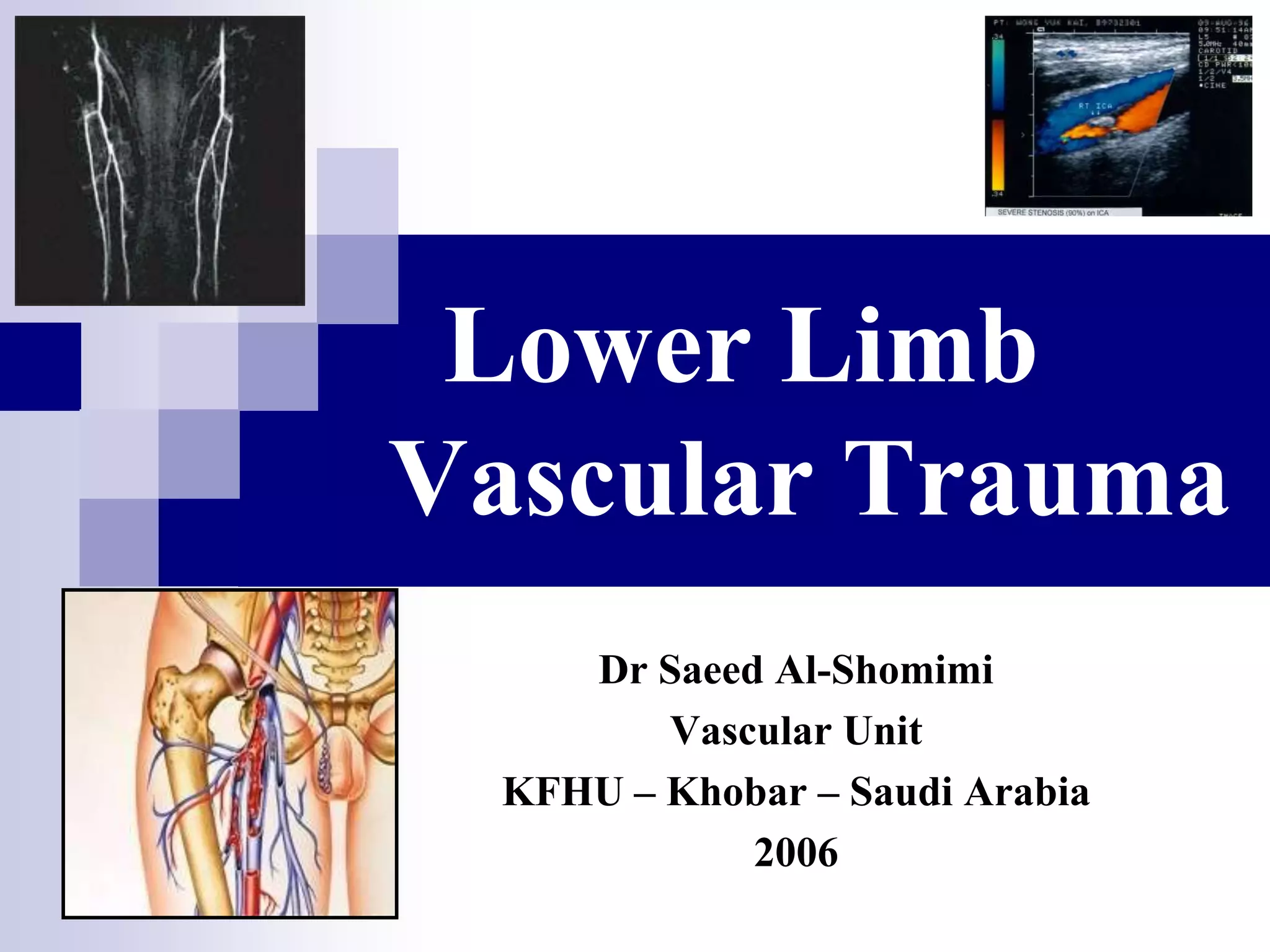
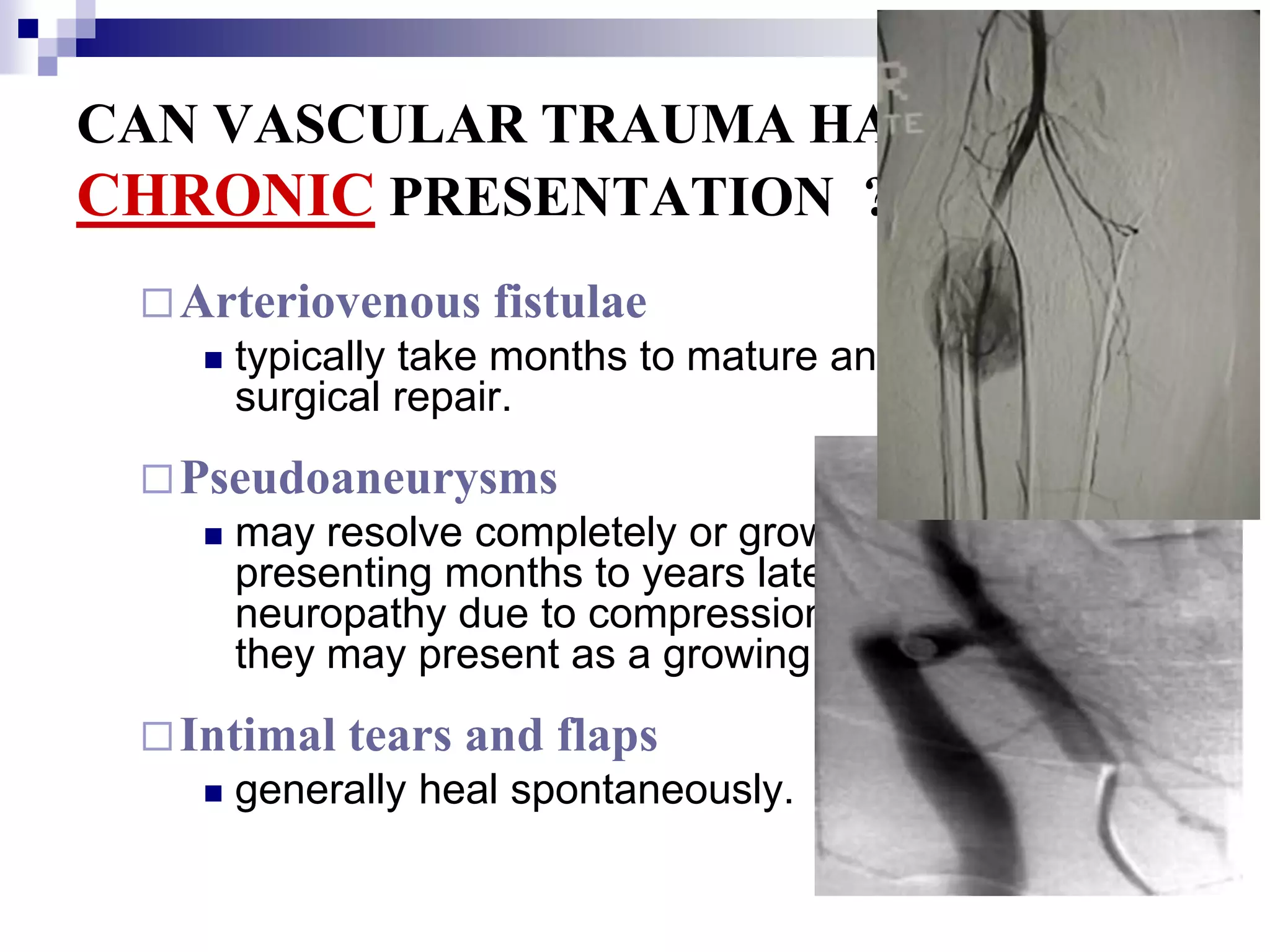

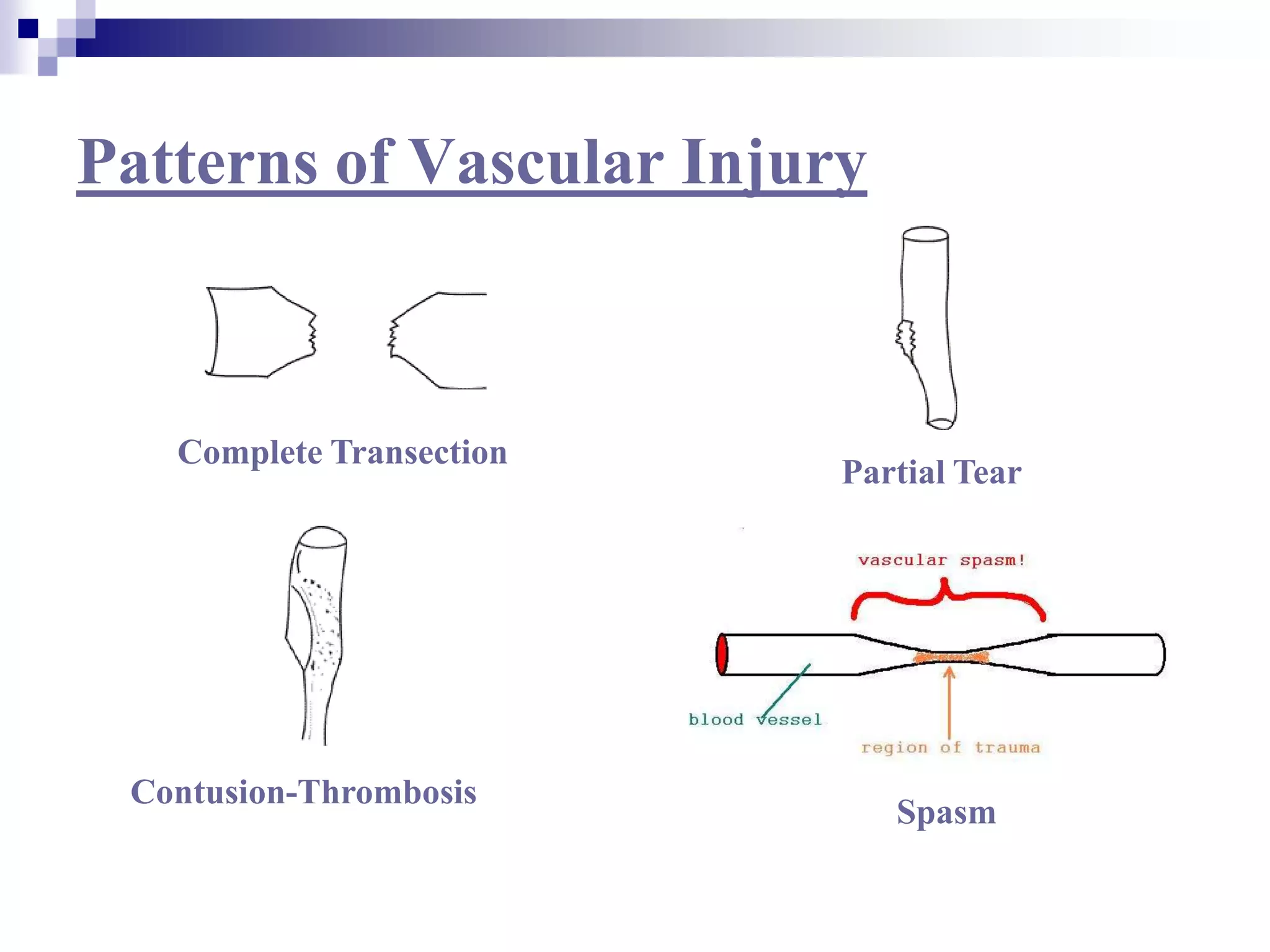
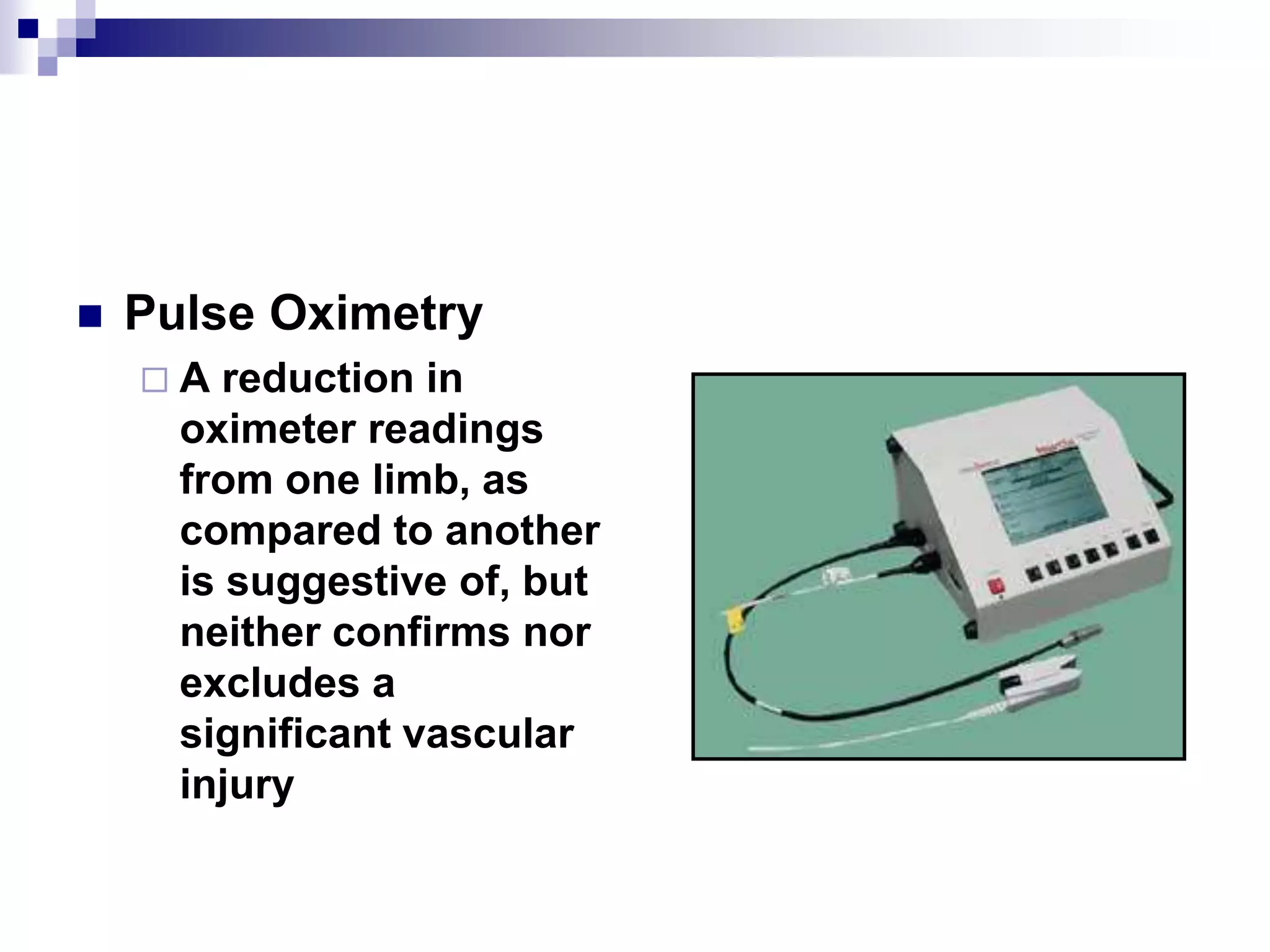

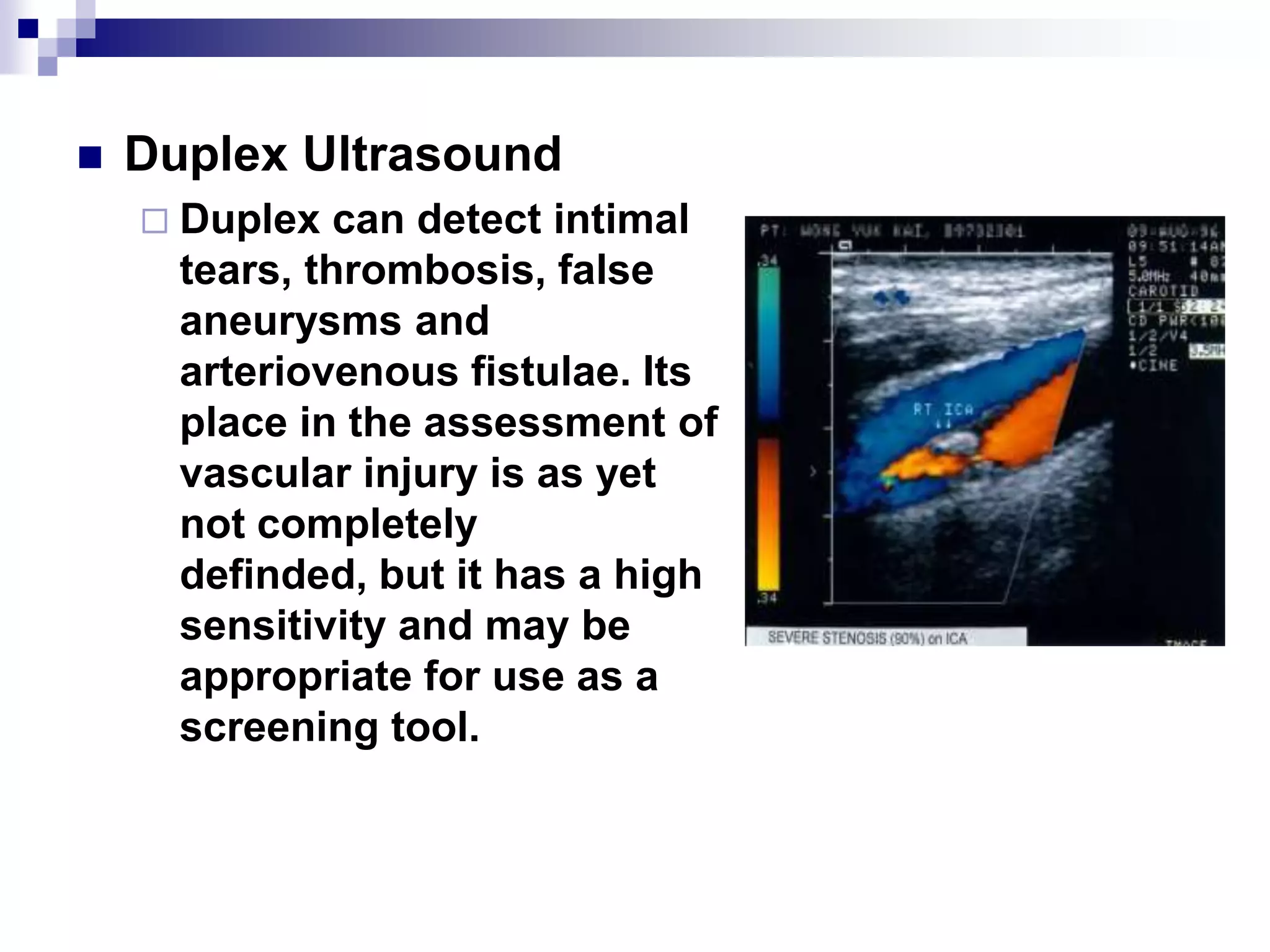






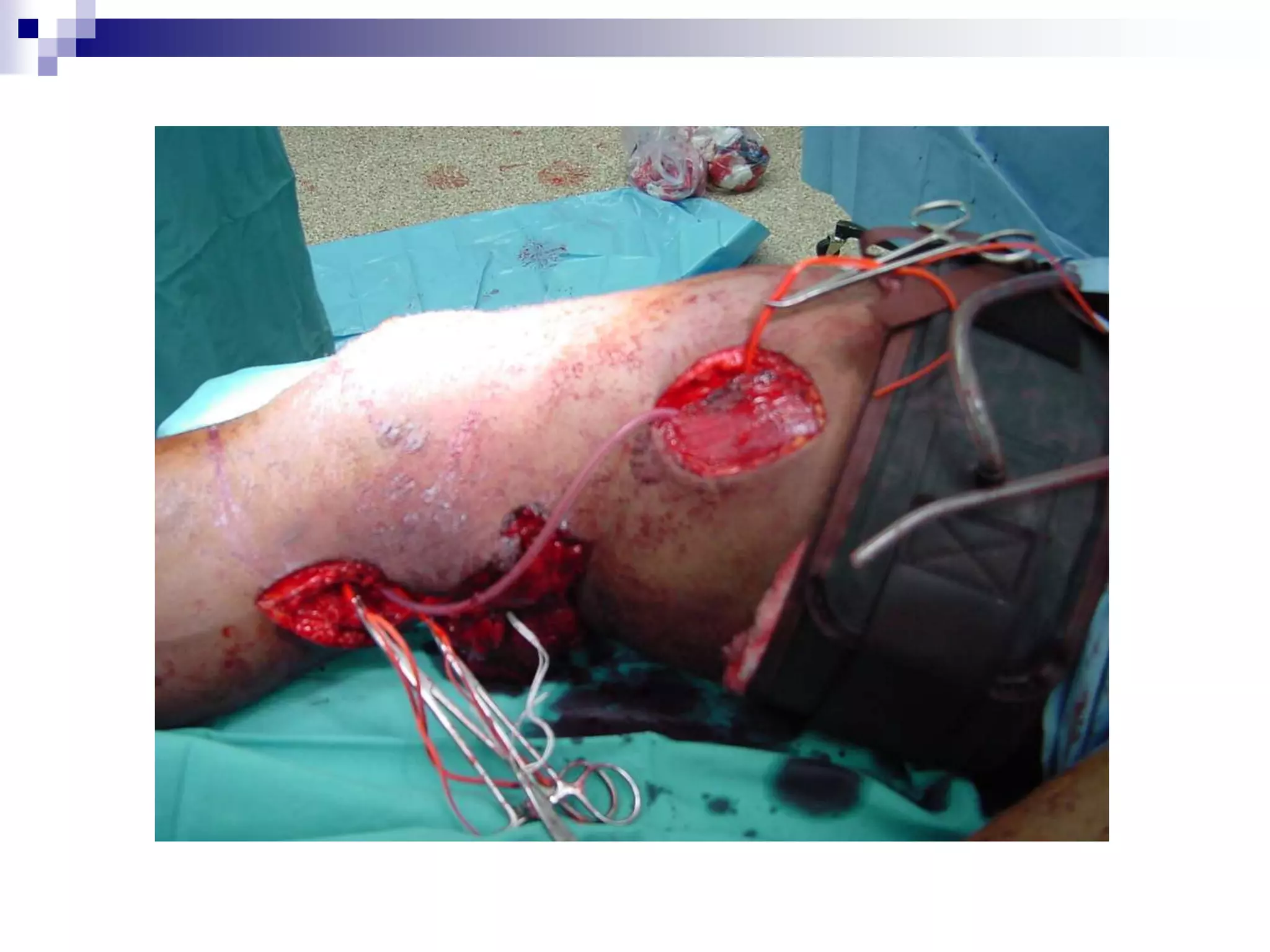

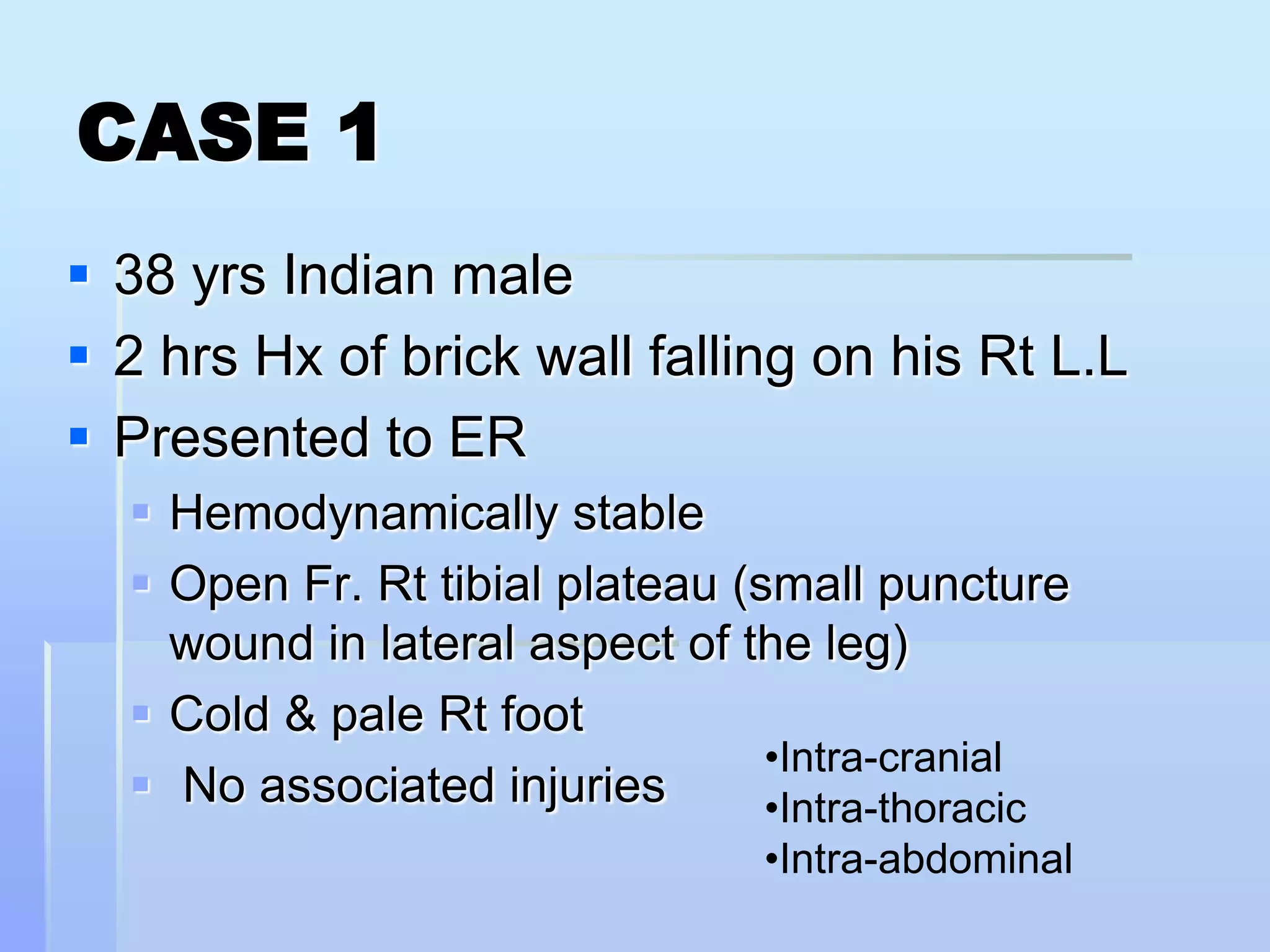


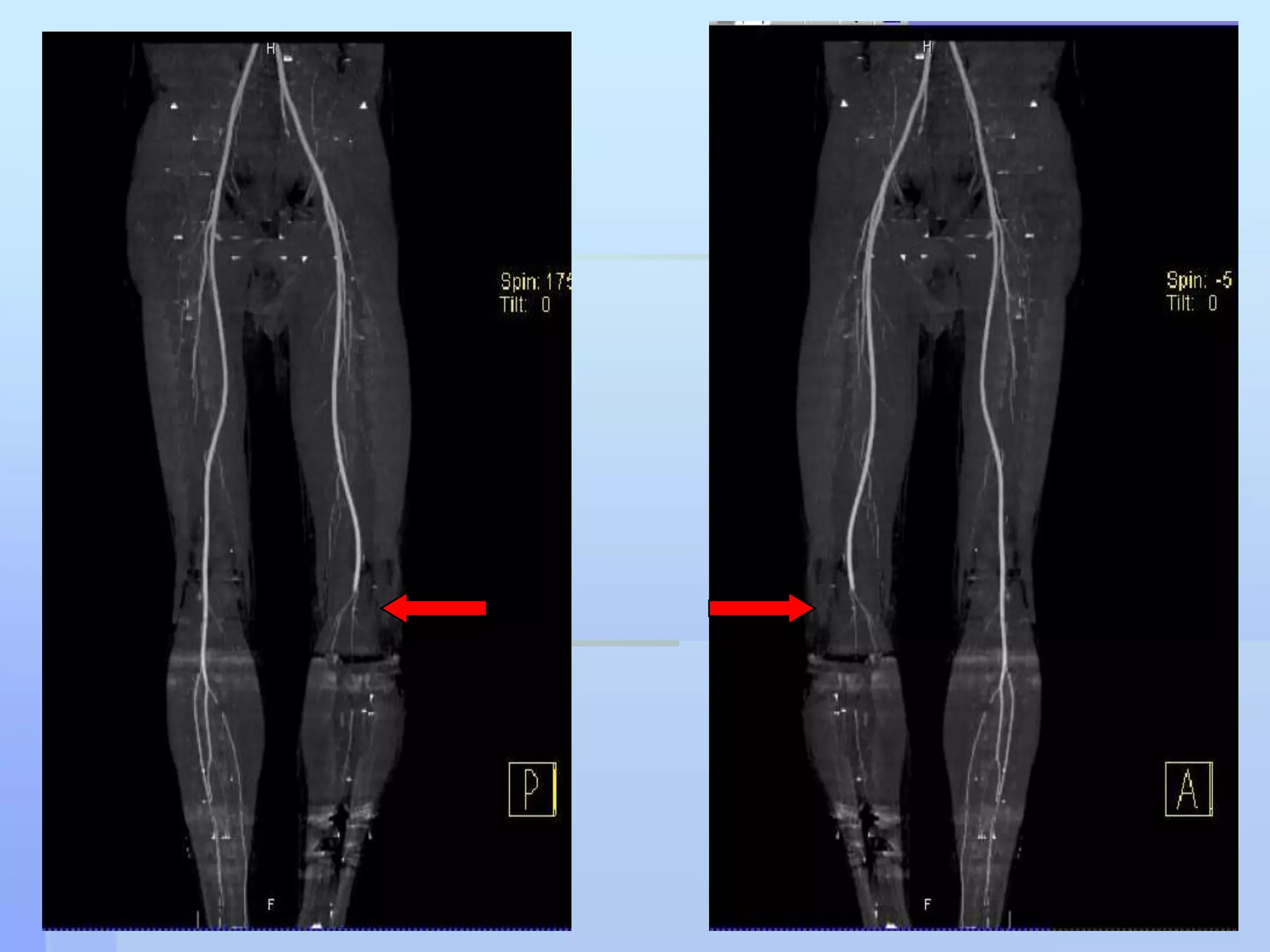


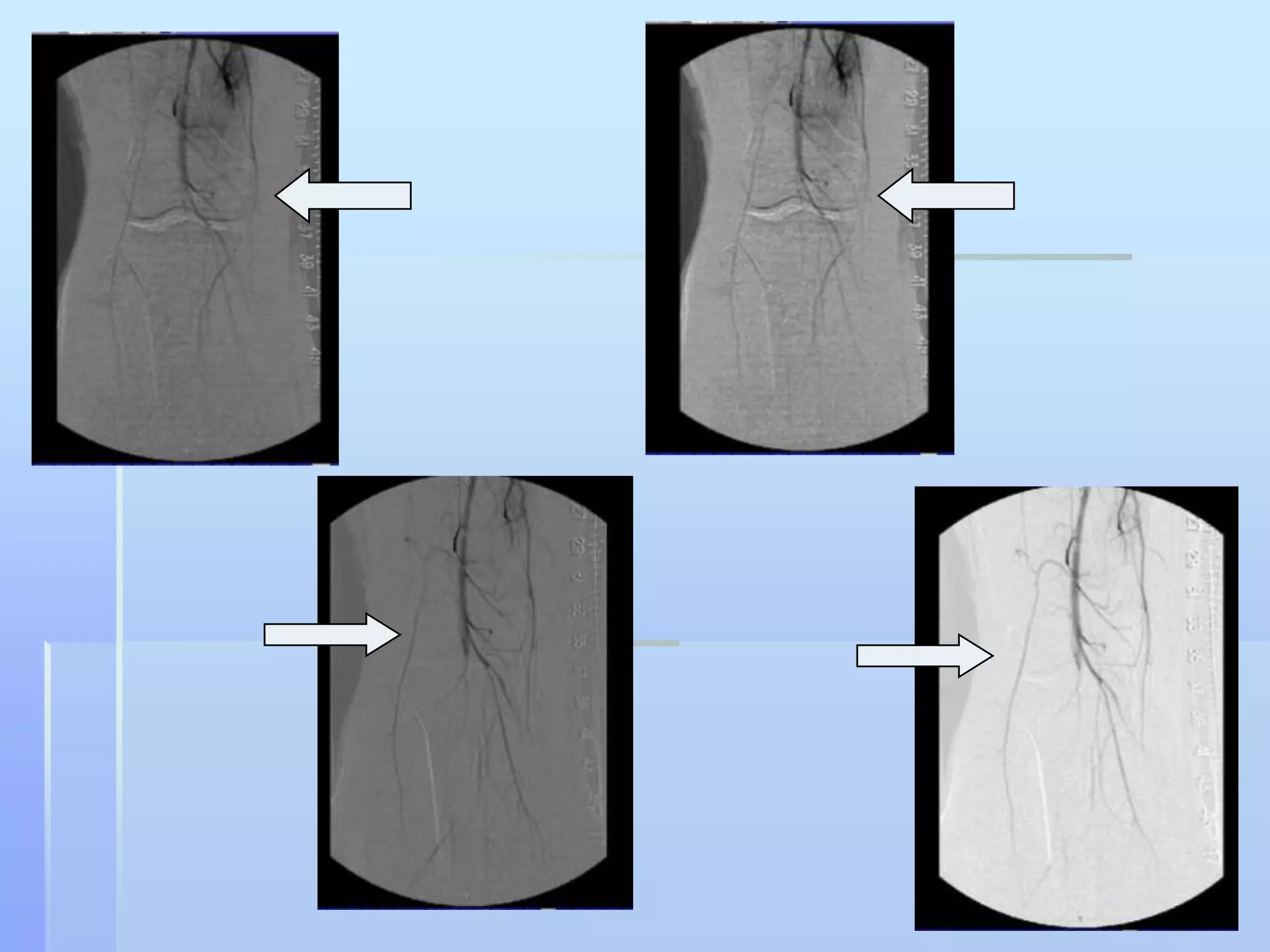

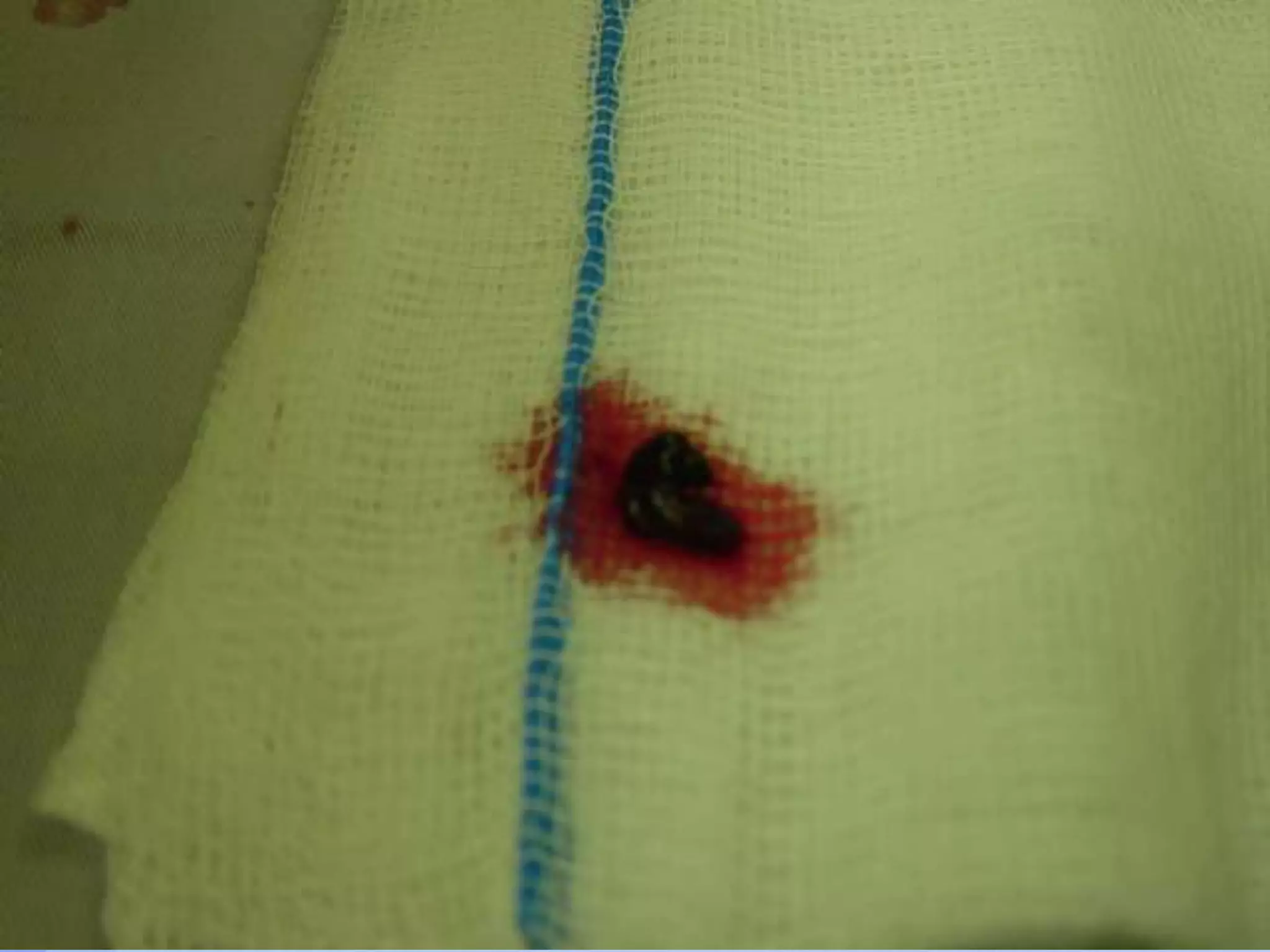

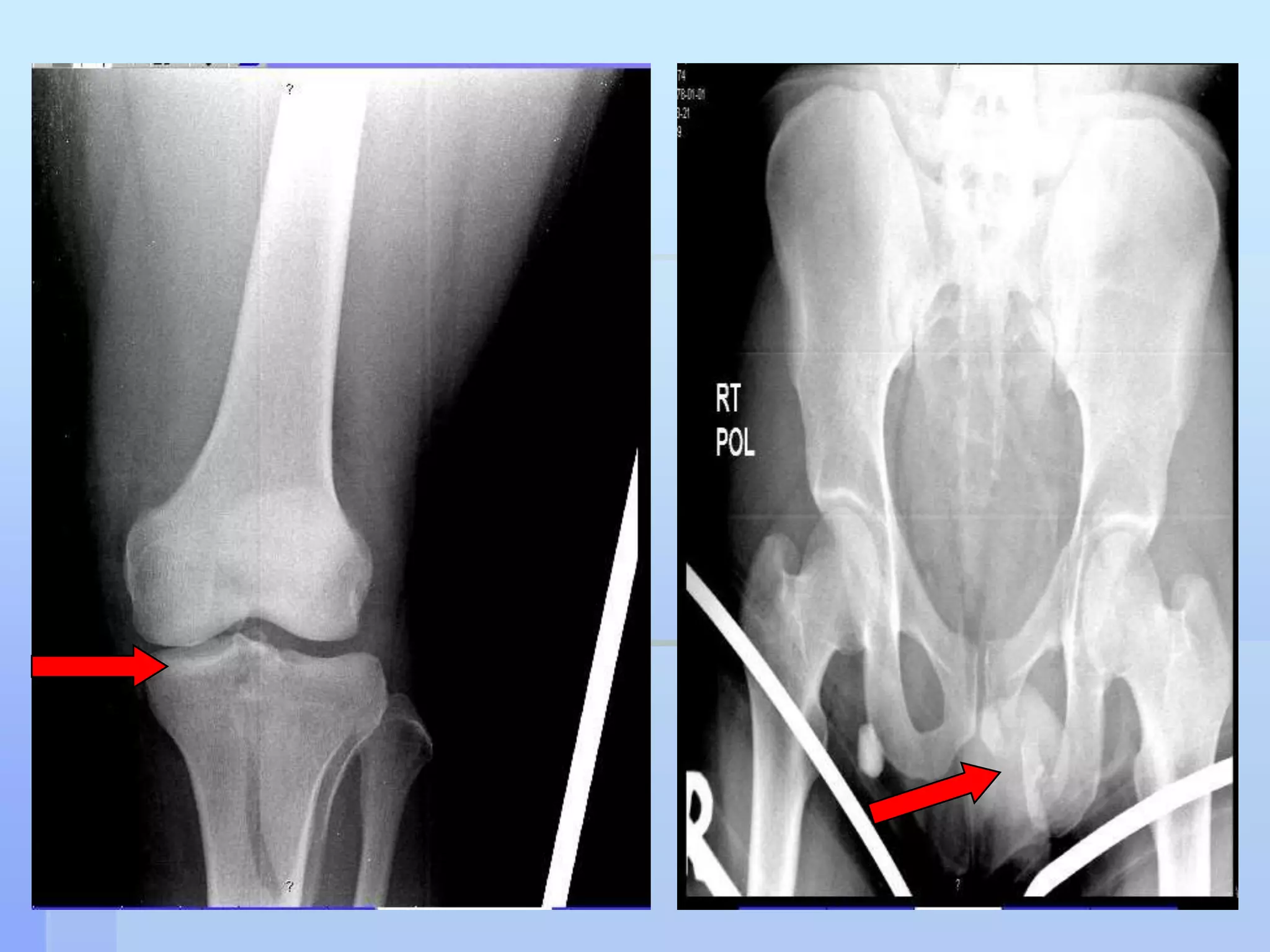

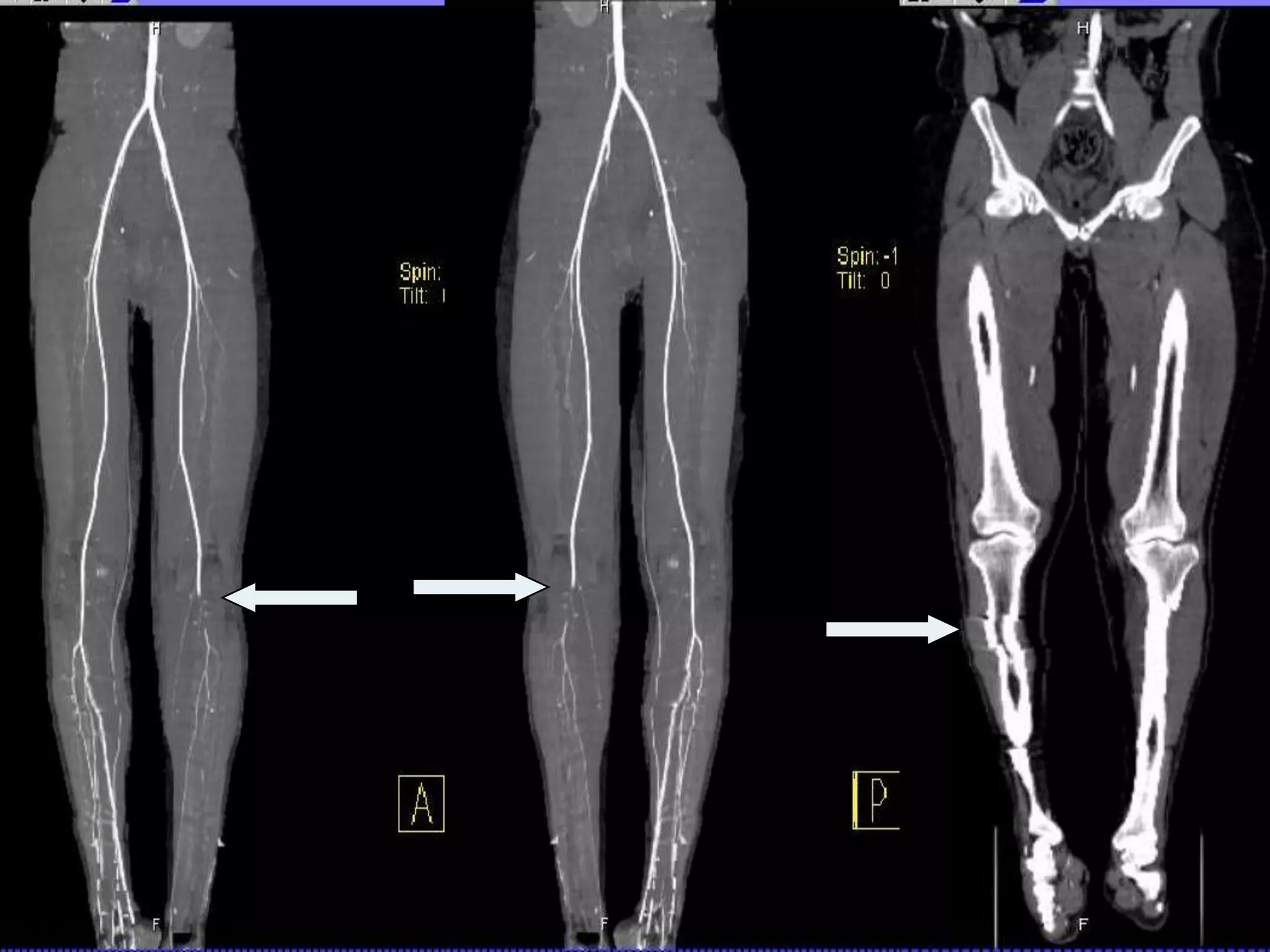


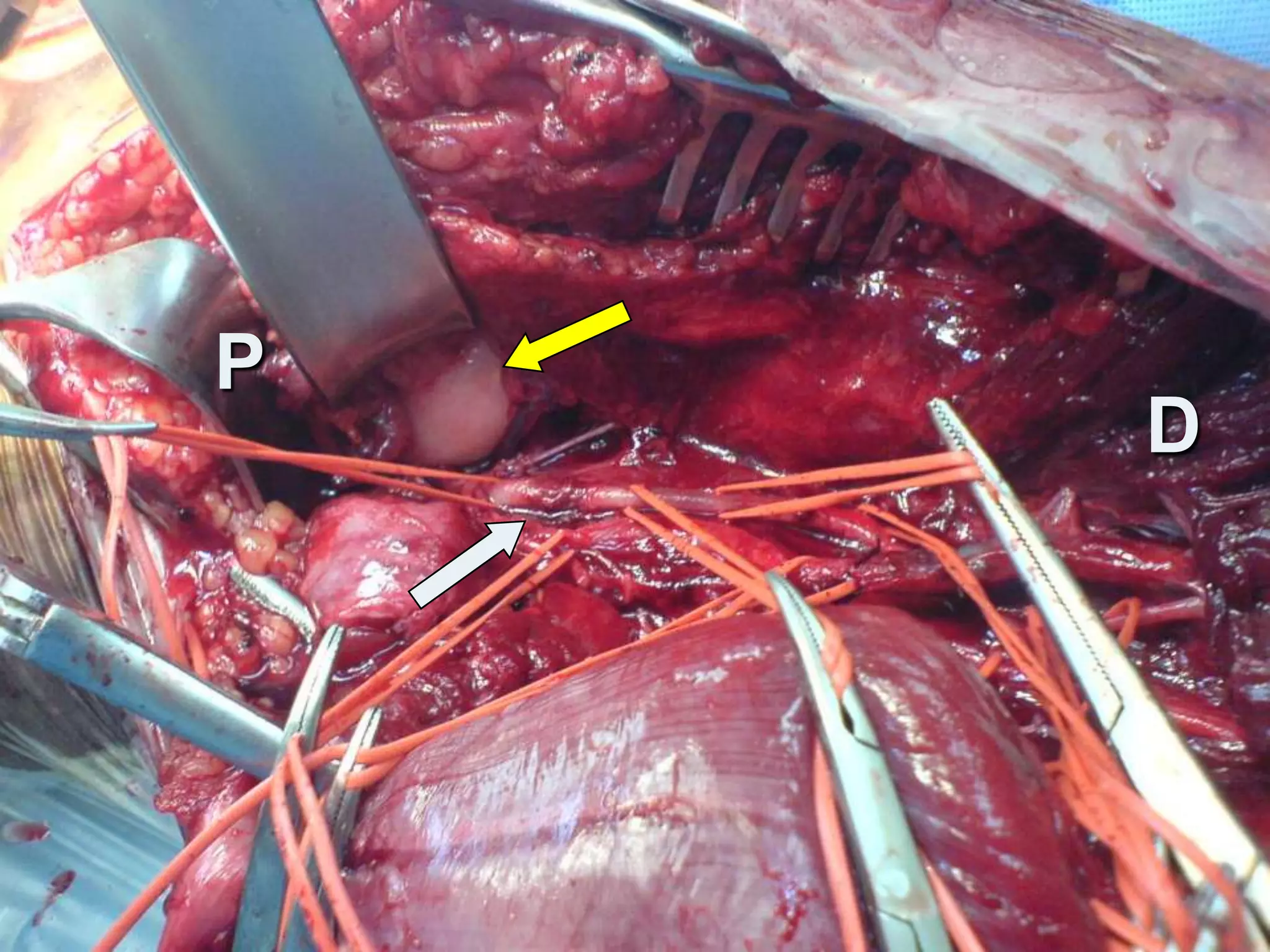

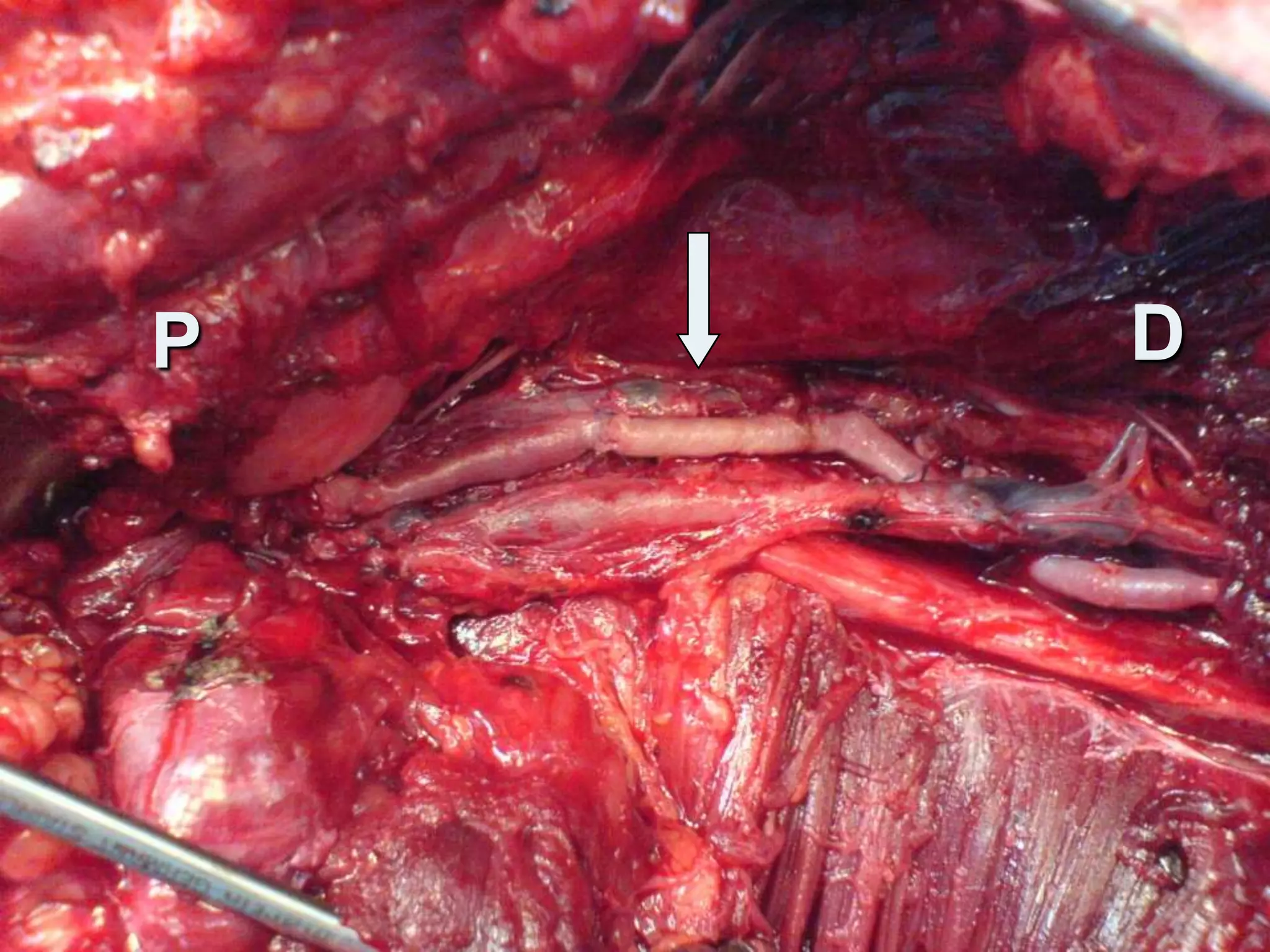


This document provides an overview of lower limb vascular trauma, including: - It accounts for 80% of all vascular trauma cases, with the lower extremities involved in two-thirds of patients. - Presentation can include hard signs like active bleeding or soft signs like pulse deficits. Complications include thrombosis, embolization, and rupture. - Diagnosis involves clinical examination, pulse oximetry, Doppler ultrasound, duplex ultrasound, and angiography. - Management includes immediate hemorrhage control, volume resuscitation, operative strategies like suturing, grafting or shunting, and damage control techniques like ligation if needed. Case examples from the author's experience are also summarized.


