SURGICAL INSTRUMENTS
EXTRACTION FORCEPSES
ELEVATORS
SURGICAL INSRUMENTS
LOCAL ANESTHESIA INSTRUMENTATION
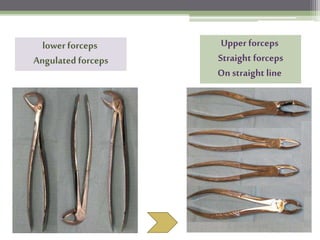
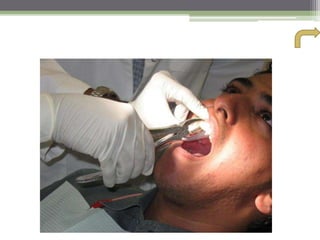
Upper forceps
Straight forceps
On straight line
lower forceps
Angulated forceps
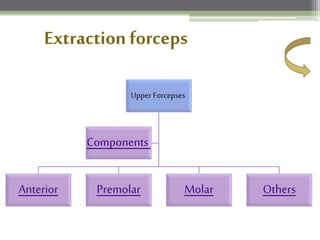
Upper Forcepses
Anterior Premolar Molar Others
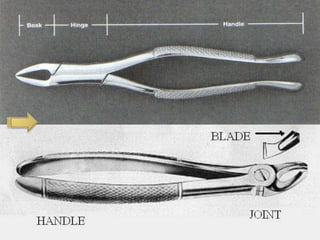
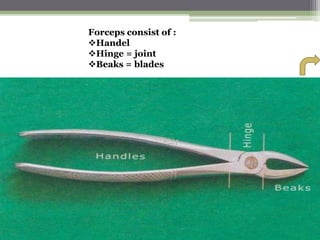
Components
Forceps consist of :
Handel
Hinge = joint
Beaks = blades
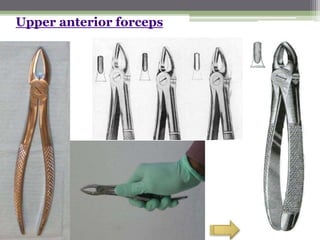
Upper anterior forceps
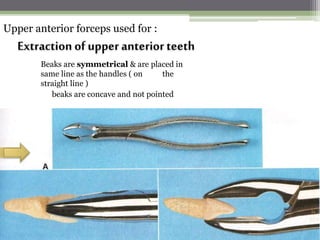
Upper anterior forceps used for :
Extraction of upper anterior teeth
Beaks are symmetrical & are placed in
thesame line as the handles ( on
straight line )
beaks are concave and not pointed
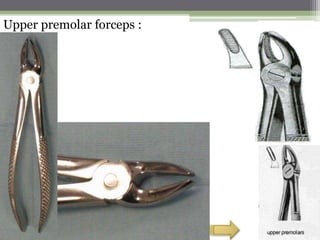
Upper premolar forceps :
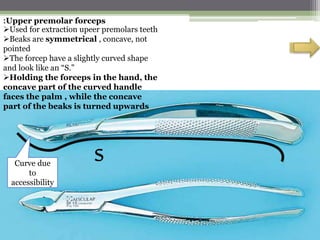
:Upper premolar forceps
Used for extraction upeer premolars teeth
Beaks are symmetrical , concave, not
pointed
The forcep have a slightly curved shape
and look like an “S.”
Holding the forceps in the hand, the
concave part of the curved handle
faces the palm , while the concave
part of the beaks is turned upwards
sCurve due
to
accessibility
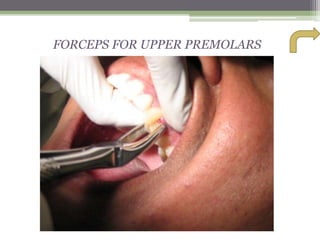
FORCEPS FOR UPPER PREMOLARS
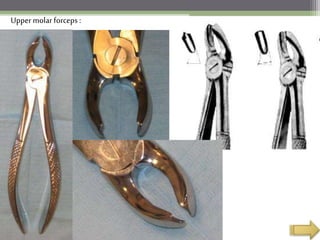
Upper molar forceps :
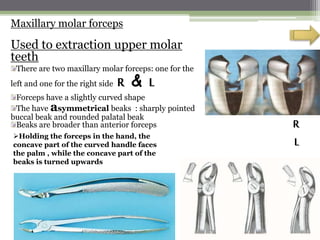
Maxillary molar forceps
Used to extraction upper molar
teeth
There are two maxillary molar forceps: one for the
left and one for the right side R & L
Forceps have a slightly curved shape
The have asymmetrical beaks : sharply pointed
buccal beak and rounded palatal beak
Beaks are broader than anterior forceps
Holding the forceps in the hand, the
concave part of the curved handle faces
the palm , while the concave part of the
beaks is turned upwards
R
L
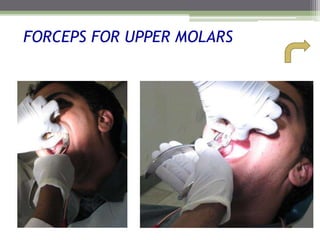
FORCEPS FOR UPPER MOLARS
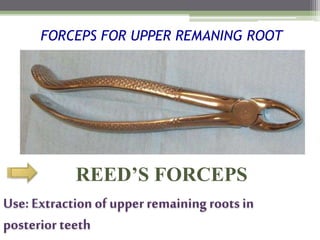
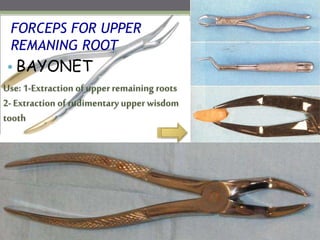
FORCEPS FOR UPPER REMANING ROOT
REED’S FORCEPS
Use: Extraction of upper remaining rootsin
posterior teeth
FORCEPS FOR UPPER
REMANING ROOT
• BAYONET
Use: 1-Extraction of upperremaining roots
2- Extraction of rudimentary upper wisdom
tooth
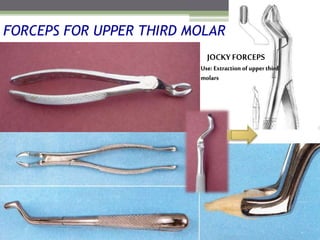
FORCEPS FOR UPPER THIRD MOLAR
JOCKYFORCEPS
Use: Extraction of upper third
molars
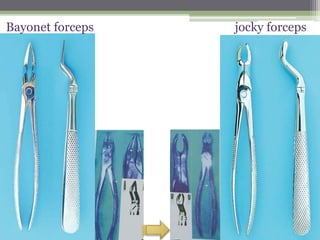
Bayonet forceps jocky forceps
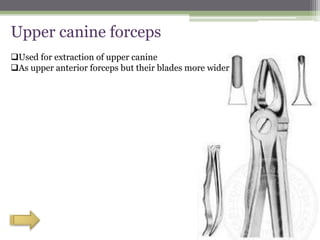
Upper canine forceps
Used for extraction of upper canine
As upper anterior forceps but their blades more wider
Lower Forceps
Anterior Premolar Molar Others
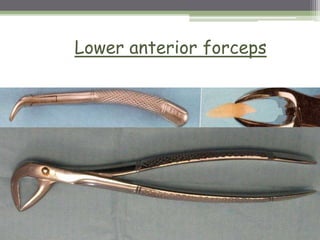
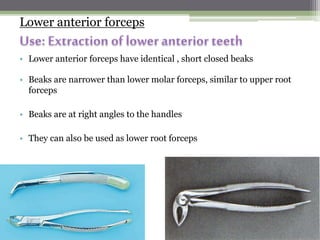
Lower anterior forceps
• Lower anterior forceps have identical , short closed beaks
• Beaks are narrower than lower molar forceps, similar to upper root
forceps
• Beaks are at right angles to the handles
• They can also be used as lower root forceps
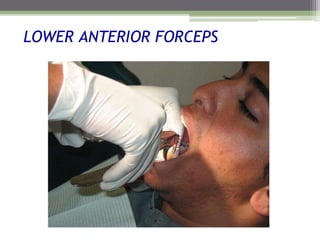
LOWER ANTERIOR FORCEPS
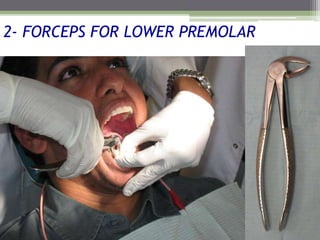
2- FORCEPS FOR LOWER PREMOLAR
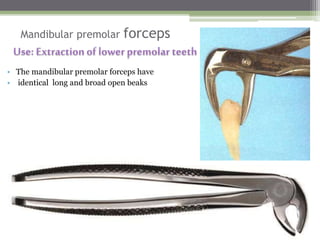
• The mandibular premolar forceps have
• identical long and broad open beaks
Mandibular premolar forceps
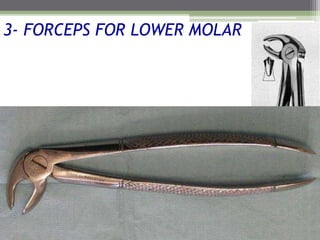
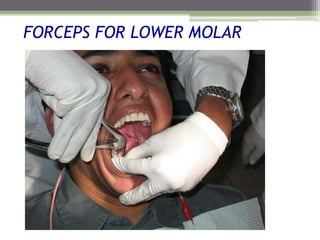
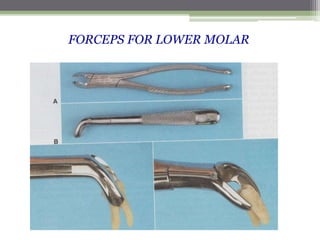
3- FORCEPS FOR LOWER MOLAR
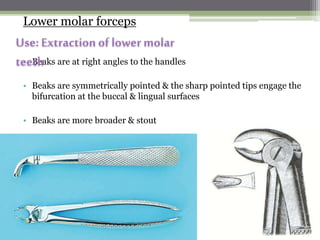
Lower molar forceps
• Beaks are at right angles to the handles
• Beaks are symmetrically pointed & the sharp pointed tips engage the
bifurcation at the buccal & lingual surfaces
• Beaks are more broader & stout
FORCEPS FOR LOWER MOLAR
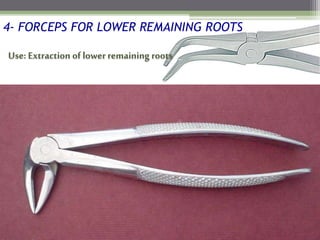
4- FORCEPS FOR LOWER REMAINING ROOTS
Use: Extraction of lower remaining roots
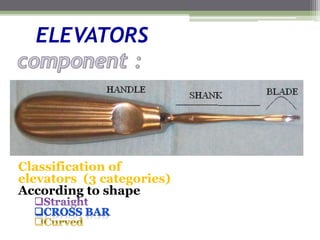
ELEVATORS
Classification of
elevators (3 categories)
According to shape
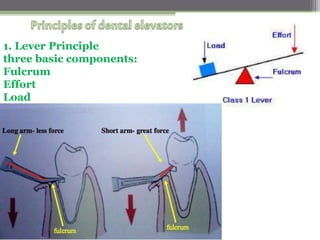
1. Lever Principle
three basic components:
Fulcrum
Effort
Load
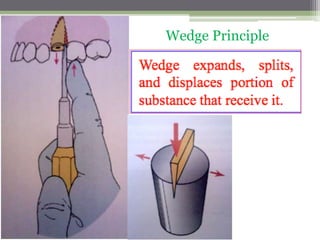
Wedge Principle
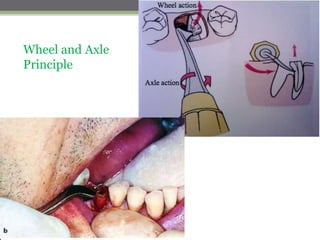
Wheel and Axle
Principle
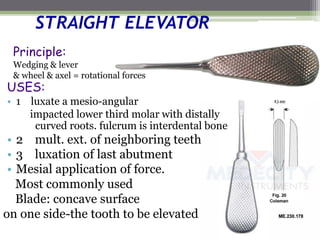
USES:
• 1 luxate a mesio-angular
impacted lower third molar with distally
curved roots. fulcrum is interdental bone
• 2 mult. ext. of neighboring teeth
• 3 luxation of last abutment
• Mesial application of force.
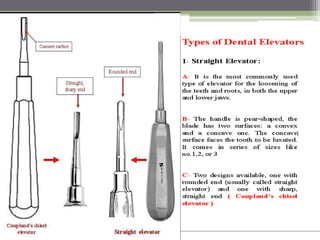
Most commonly used
Blade: concave surface
on one side-the tooth to be elevated
Principle:
Wedging & lever
& wheel & axel = rotational forces
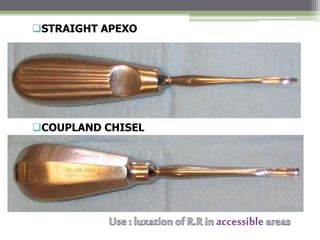
STRAIGHT ELEVATOR
STRAIGHT APEXO
COUPLAND CHISEL
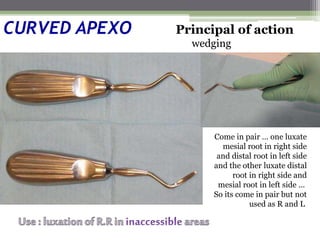
CURVED APEXO
Come in pair … one luxate
mesial root in right side
and distal root in left side
and the other luxate distal
root in right side and
mesial root in left side …
So its come in pair but not
used as R and L
Principal of action
wedging
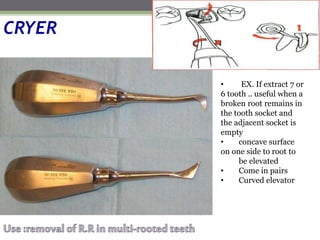
CRYER
• EX. If extract 7 or
6 tooth .. useful when a
broken root remains in
the tooth socket and
the adjacent socket is
empty
• concave surface
on one side to root to
be elevated
• Come in pairs
• Curved elevator
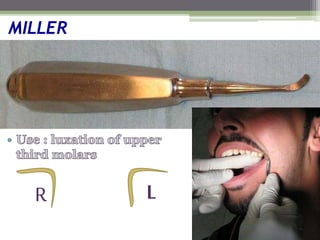
MILLER
R L
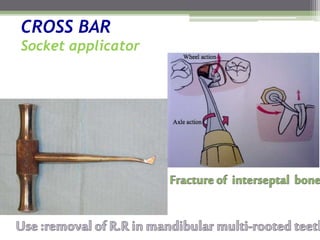
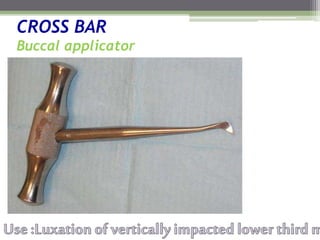
CROSS BAR
Socket applicator
CROSS BAR
Buccal applicator
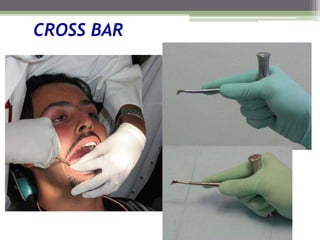
CROSS BAR
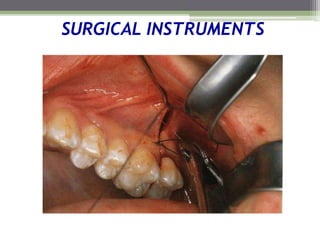
SURGICAL INSTRUMENTS
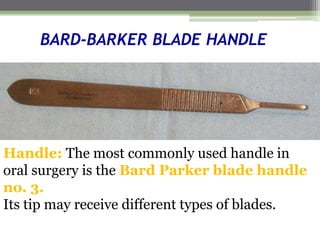
BARD-BARKER BLADE HANDLE
Handle: The most commonly used handle in
oral surgery is the Bard Parker blade handle
no. 3.
Its tip may receive different types of blades.
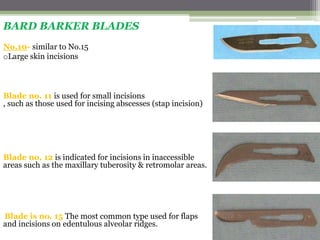
BARD BARKER BLADES
Blade no. 11 is used for small incisions
, such as those used for incising abscesses (stap incision)
Blade no. 12 is indicated for incisions in inaccessible
areas such as the maxillary tuberosity & retromolar areas.
Blade is no. 15 The most common type used for flaps
and incisions on edentulous alveolar ridges.
No.10- similar to No.15
oLarge skin incisions
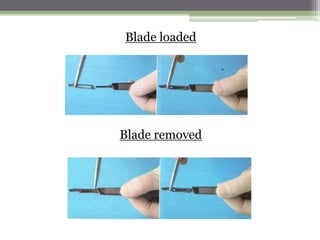
Blade loaded
Blade removed
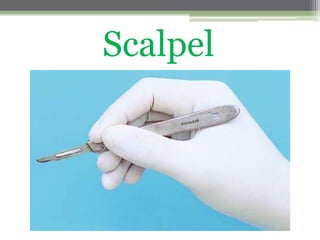
Scalpel
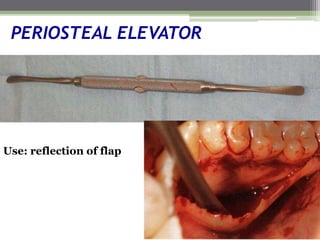
PERIOSTEAL ELEVATOR
Use: reflection of flap
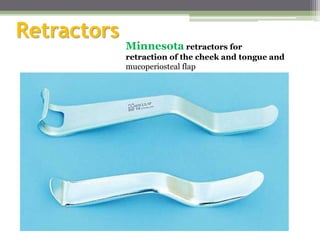
Retractors
Minnesota retractors for
retraction of the cheek and tongue and
mucoperiosteal flap
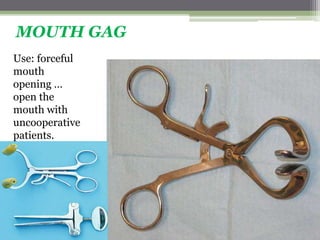
MOUTH GAG
Use: forceful
mouth
opening …
open the
mouth with
uncooperative
patients.
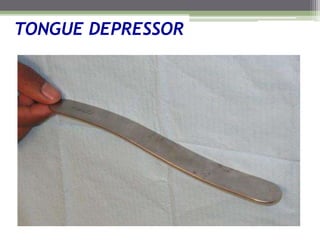
TONGUE DEPRESSOR
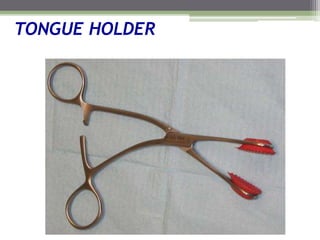
TONGUE HOLDER
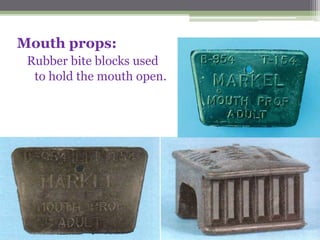
Mouth props:
Rubber bite blocks used
to hold the mouth open.
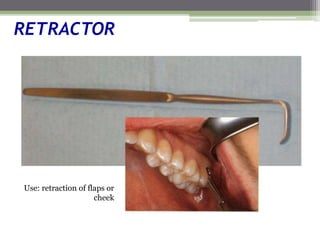
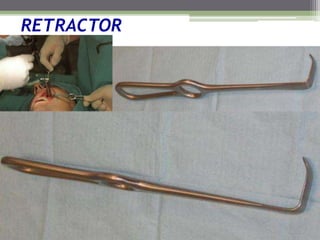
RETRACTOR
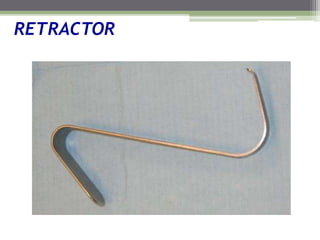
Use: retraction of flaps or
cheek
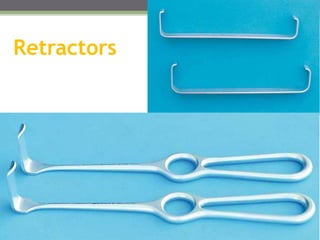
Retractors
RETRACTOR
RETRACTOR
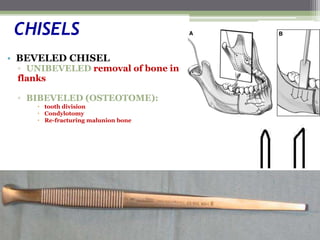
CHISELS
• BEVELED CHISEL
▫ UNIBEVELED removal of bone in
flanks
▫ BIBEVELED (OSTEOTOME):
• tooth division
• Condylotomy
• Re-fracturing malunion bone
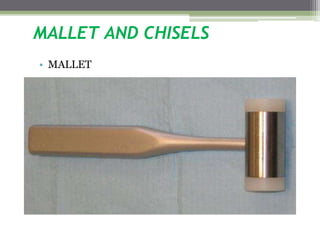
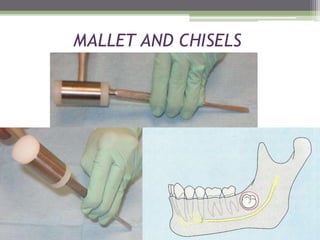
MALLET AND CHISELS
• MALLET
MALLET AND CHISELS
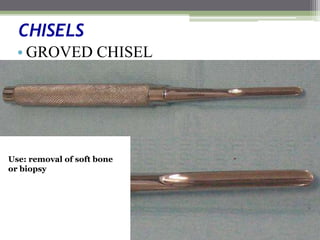
CHISELS
• GROVED CHISEL
Use: removal of soft bone
or biopsy
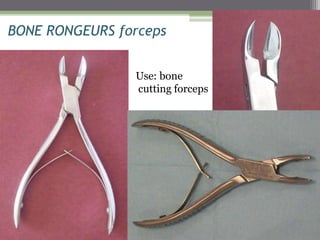
BONE RONGEURS forceps
Use: bone
cutting forceps
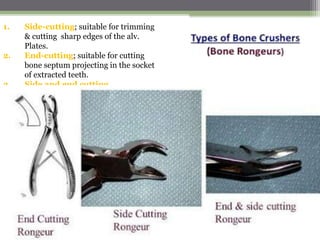
1. Side-cutting; suitable for trimming
& cutting sharp edges of the alv.
Plates.
2. End-cutting; suitable for cutting
bone septum projecting in the socket
of extracted teeth.
3. Side and end cutting.
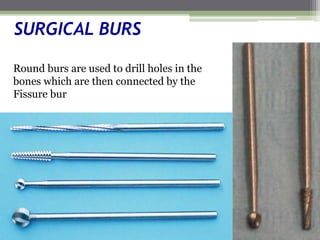
SURGICAL BURS
Round burs are used to drill holes in the
bones which are then connected by the
Fissure bur
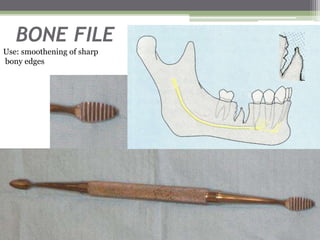
BONE FILE
Use: smoothening of sharp
bony edges
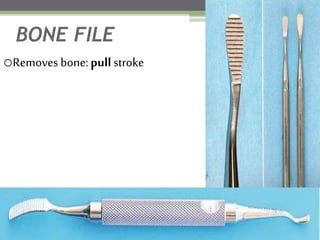
oRemoves bone: pull stroke
BONE FILE
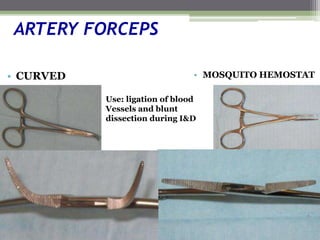
ARTERY FORCEPS
• CURVED • MOSQUITO HEMOSTAT
Use: ligation of blood
Vessels and blunt
dissection during I&D
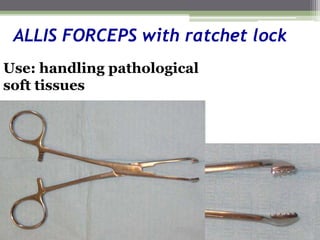
ALLIS FORCEPS with ratchet lock
Use: handling pathological
soft tissues
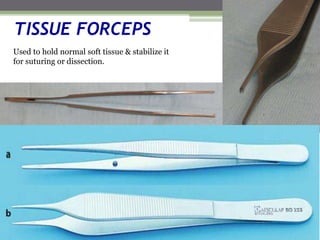
TISSUE FORCEPS
Used to hold normal soft tissue & stabilize it
for suturing or dissection.
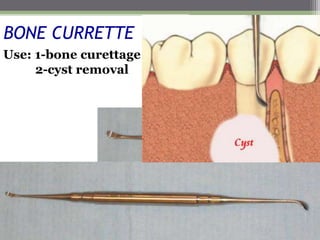
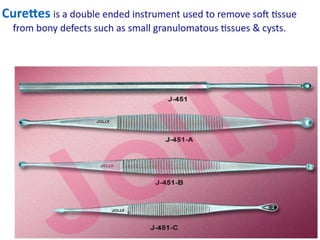
BONE CURRETTE
Use: 1-bone curettage
2-cyst removal
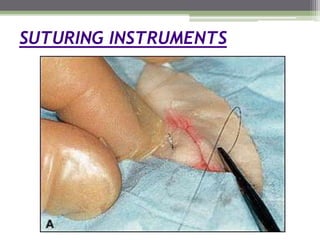
SUTURING INSTRUMENTS
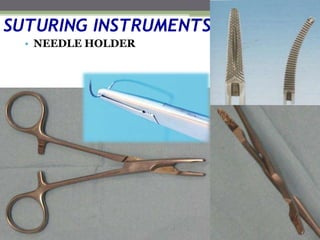
• NEEDLE HOLDER
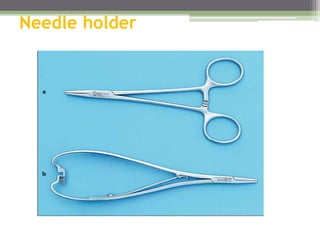
Needle holder
SUTURING INSTRUMENTS
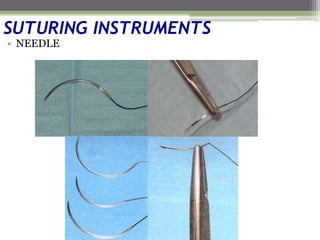
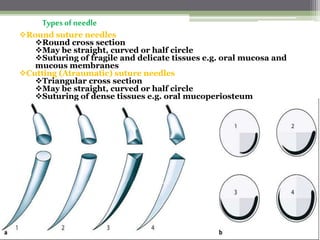
• NEEDLE
Round suture needles
Round cross section
May be straight, curved or half circle
Suturing of fragile and delicate tissues e.g. oral mucosa and
mucous membranes
Cutting (Atraumatic) suture needles
Triangular cross section
May be straight, curved or half circle
Suturing of dense tissues e.g. oral mucoperiosteum
Types ofneedle
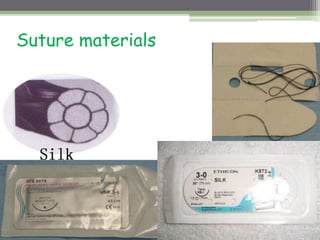
Suture materials
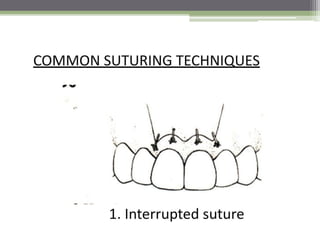
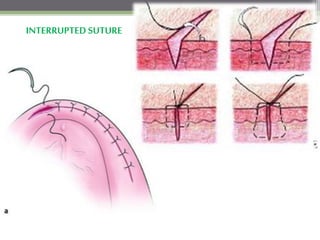
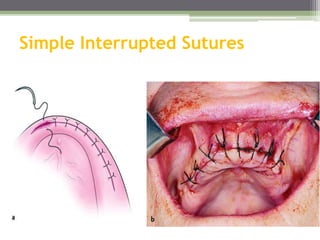
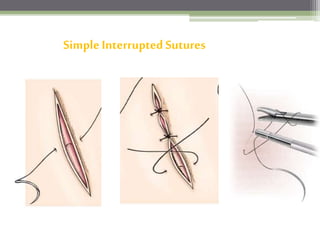
INTERRUPTED SUTURE
Simple Interrupted Sutures
SimpleInterruptedSutures
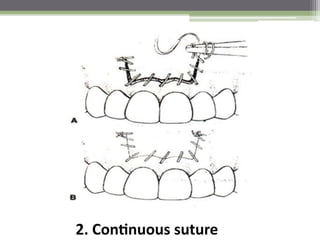
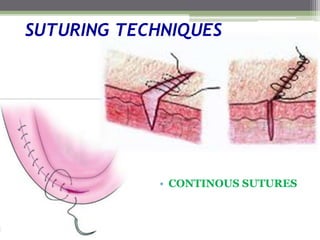
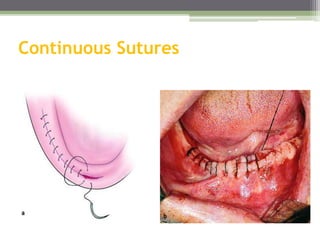
• CONTINOUS SUTURES
SUTURING TECHNIQUES
Continuous Sutures
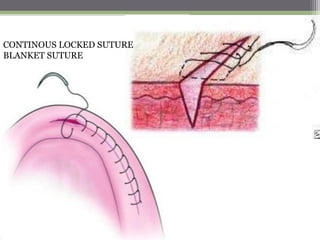
CONTINOUS LOCKED SUTURE
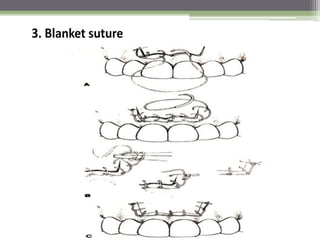
BLANKET SUTURE
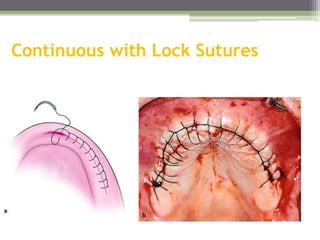
Continuous with Lock Sutures
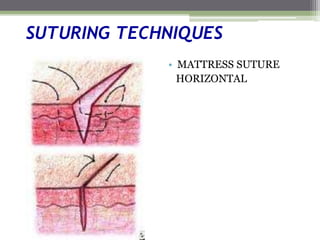
SUTURING TECHNIQUES
• MATTRESS SUTURE
HORIZONTAL
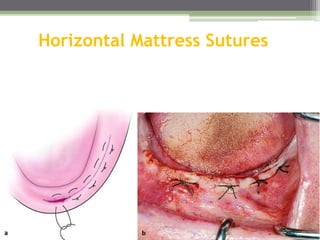
Horizontal Mattress Sutures
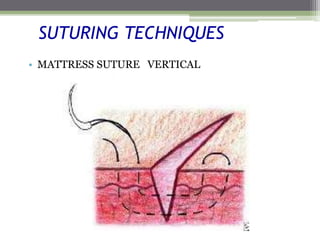
SUTURING TECHNIQUES
• MATTRESS SUTURE VERTICAL
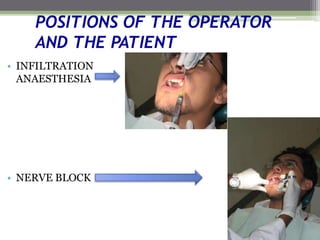
POSITIONS OF THE OPERATOR
AND THE PATIENT
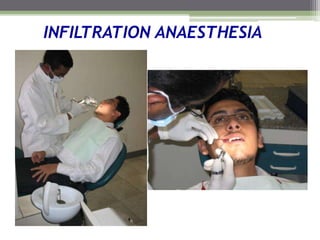
• INFILTRATION
ANAESTHESIA
• NERVE BLOCK
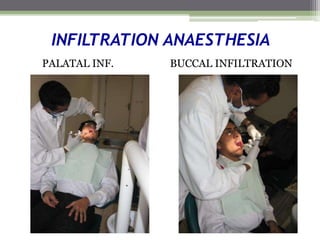
INFILTRATION ANAESTHESIA
PALATAL INF. BUCCAL INFILTRATION
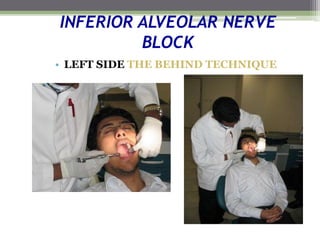
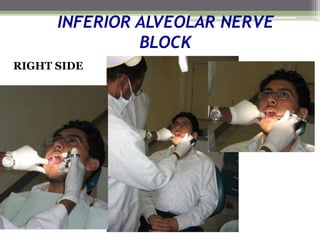
INFERIOR ALVEOLAR NERVE
BLOCK
RIGHT SIDE
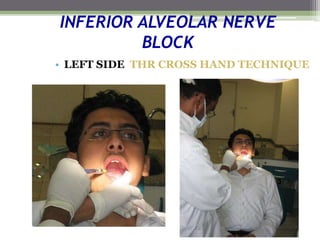
INFERIOR ALVEOLAR NERVE
BLOCK
• LEFT SIDE THR CROSS HAND TECHNIQUE
INFERIOR ALVEOLAR NERVE
BLOCK
• LEFT SIDE THE BEHIND TECHNIQUE
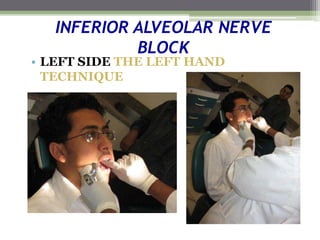
INFERIOR ALVEOLAR NERVE
BLOCK
• LEFT SIDE THE LEFT HAND
TECHNIQUE
Mucoperiosteal Flaps
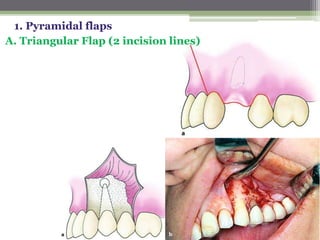
1. Pyramidal flaps
A. Triangular Flap (2 incision lines)
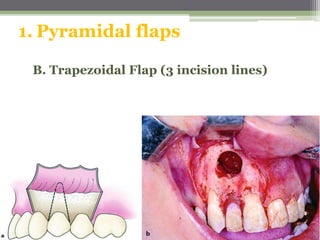
1. Pyramidal flaps
B. Trapezoidal Flap (3 incision lines)
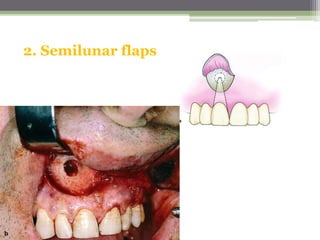
2. Semilunar flaps
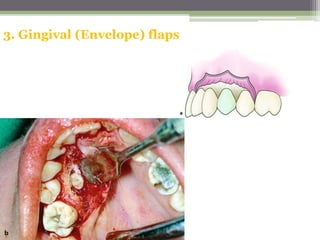
3. Gingival (Envelope) flaps
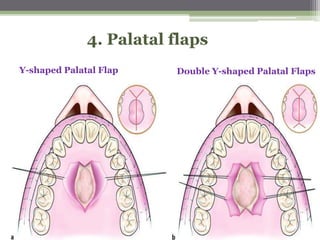
4. Palatal flaps
Y-shaped Palatal Flap Double Y-shaped Palatal Flaps
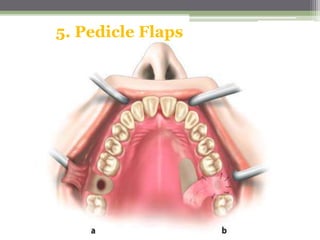
5. Pedicle Flaps

Surgical Instruments