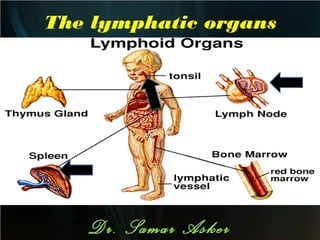
The lymphatic organs

Dr. Samar Asker
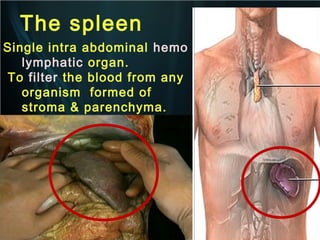
The spleen
Single intra abdominal hemo
lymphatic organ.
To filter the blood from any
organism formed of
stroma & parenchyma.
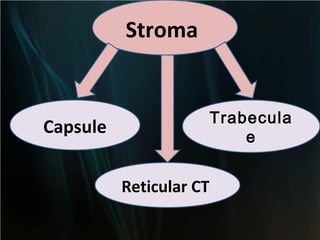
Stroma

Trabecula
e

Capsule
Reticular CT
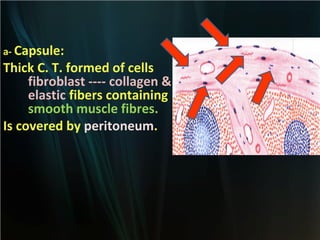
a- Capsule:

Thick C. T. formed of cells
fibroblast ---- collagen &
elastic fibers containing
smooth muscle fibres.
Is covered by peritoneum.
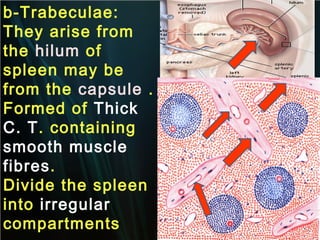
b-Trabeculae:
They arise from
the hilum of
spleen may be
from the capsule .
Formed of Thick
C. T. containing
smooth muscle
fibres.
Divide the spleen
into irregular
compartments
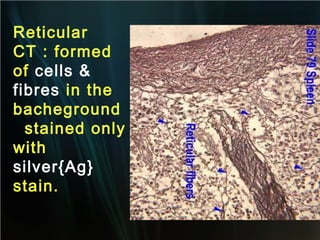
Reticular
CT : formed
of cells &
fibres in the
bacheground
stained only
with
silver{Ag}
stain.
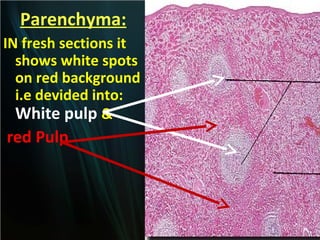
Parenchyma:
IN fresh sections it
shows white spots
on red background
i.e devided into:
White pulp &

red Pulp
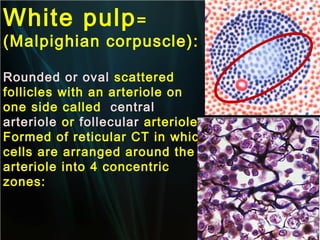
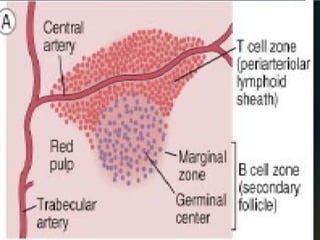
White pulp =

(Malpighian corpuscle):
Rounded or oval scattered
follicles with an arteriole on
one side called central
arteriole or follecular arteriole.
Formed of reticular CT in which
cells are arranged around the
arteriole into 4 concentric
zones:
B,T, p &
M

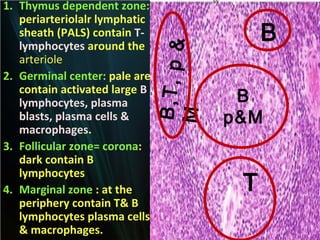
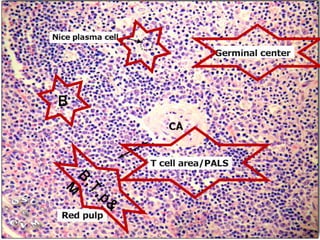
1. Thymus dependent zone:
periarteriolalr lymphatic
sheath (PALS) contain Tlymphocytes around the
arteriole
2. Germinal center: pale area
contain activated large B
lymphocytes, plasma
blasts, plasma cells &
macrophages.
3. Follicular zone= corona:
dark contain B
lymphocytes
4. Marginal zone : at the
periphery contain T& B
lymphocytes plasma cells
& macrophages.

B
B
p&M

T
B

B

,T

,p
M

&
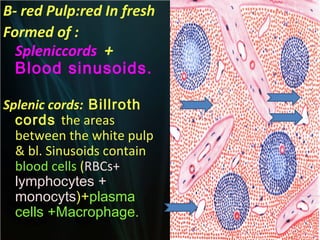
B- red Pulp:red In fresh
Formed of :
Spleniccords +
Blood sinusoids.
Splenic cords: Billroth
cords the areas
between the white pulp
& bl. Sinusoids contain
blood cells (RBCs+
lymphocytes +
monocyts)+plasma
cells +Macrophage.
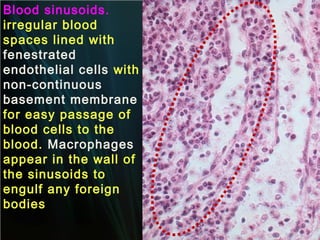
Blood sinusoids.
irregular blood
spaces lined with
fenestrated
endothelial cells with
non-continuous
basement membrane
for easy passage of
blood cells to the
blood. Macrophages
appear in the wall of
the sinusoids to
engulf any foreign
bodies
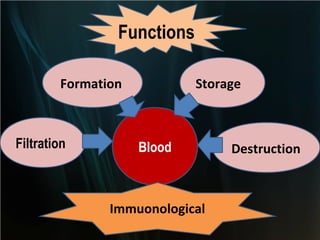
Functions
Formation

Filtration

Storage

Blood

Immuonological

Destruction
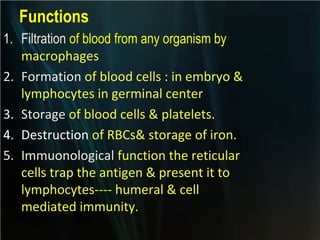
Functions
1. Filtration of blood from any organism by
macrophages
2. Formation of blood cells : in embryo &
lymphocytes in germinal center
3. Storage of blood cells & platelets.
4. Destruction of RBCs& storage of iron.
5. Immuonological function the reticular
cells trap the antigen & present it to
lymphocytes---- humeral & cell
mediated immunity.
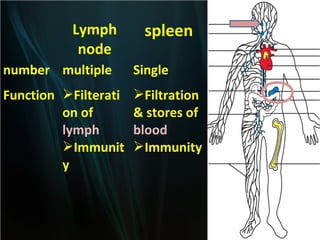
Lymph
node

spleen

number multiple

Single

Function Filterati
on of
lymph
Immunit
y

Filtration
& stores of
blood
Immunity
Lymph node
Capsule

Thin, covered with fat
Smooth ms only at
,.hilum

Trabeculae Thin arise from the
capsule

spleen
Thick covered with
peritoneum
rich in smooth muscle
Thick arise from the hilum
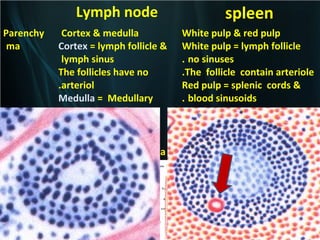
Lymph node
Parenchy
ma

Cells

Cortex & medulla
Cortex = lymph follicle &
lymph sinus
The follicles have no
.arteriol
Medulla = Medullary
cords & Medullary
. sinuses
lymphocytes +
.macrophages + plasma

spleen
White pulp & red pulp
White pulp = lymph follicle
. no sinuses
.The follicle contain arteriole
Red pulp = splenic cords &
. blood sinusoids

macrophages + plasma cells +
WBCs +RBCs
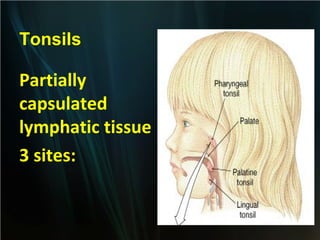
Tonsils

Partially
capsulated
lymphatic tissue
3 sites:
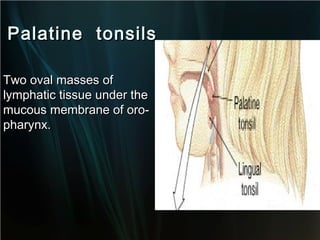
Palatine tonsils
Two oval masses of
lymphatic tissue under the
mucous membrane of oropharynx.
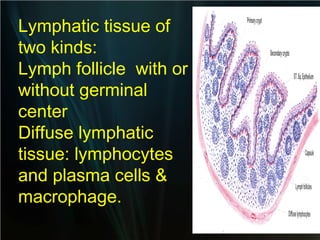
Lymphatic tissue of
two kinds:
Lymph follicle with or
without germinal
center
Diffuse lymphatic
tissue: lymphocytes
and plasma cells &
macrophage.
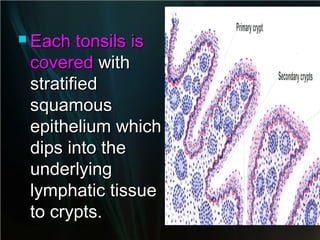
 Each

tonsils is
covered with
stratified
squamous
epithelium which
dips into the
underlying
lymphatic tissue
to crypts.
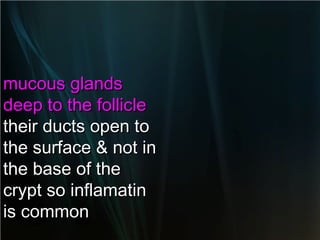
mucous glands
deep to the follicle
their ducts open to
the surface & not in
the base of the
crypt so inflamatin
is common
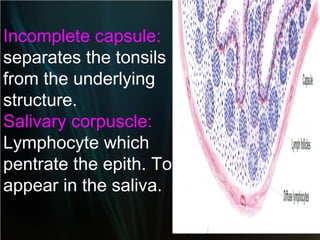
Incomplete capsule:
separates the tonsils
from the underlying
structure.
Salivary corpuscle:
Lymphocyte which
pentrate the epith. To
appear in the saliva.
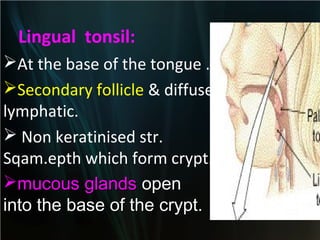
Lingual tonsil:
At the base of the tongue .
Secondary follicle & diffuse
lymphatic.
 Non keratinised str.
Sqam.epth which form crypt.
mucous glands open
into the base of the crypt.
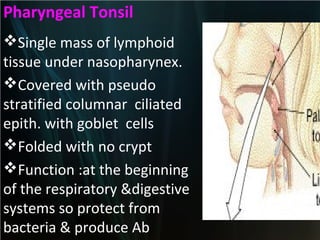
Pharyngeal Tonsil
Single mass of lymphoid
tissue under nasopharynex.
Covered with pseudo
stratified columnar ciliated
epith. with goblet cells
Folded with no crypt
Function :at the beginning
of the respiratory &digestive
systems so protect from
bacteria & produce Ab
The Lymphatic System

The Lymphatic System

  • 2.
  • 3.
    The spleen Single intraabdominal hemo lymphatic organ. To filter the blood from any organism formed of stroma & parenchyma.
  • 4.
  • 5.
    a- Capsule: Thick C.T. formed of cells fibroblast ---- collagen & elastic fibers containing smooth muscle fibres. Is covered by peritoneum.
  • 6.
    b-Trabeculae: They arise from thehilum of spleen may be from the capsule . Formed of Thick C. T. containing smooth muscle fibres. Divide the spleen into irregular compartments
  • 7.
    Reticular CT : formed ofcells & fibres in the bacheground stained only with silver{Ag} stain.
  • 8.
    Parenchyma: IN fresh sectionsit shows white spots on red background i.e devided into: White pulp & red Pulp
  • 9.
    White pulp = (Malpighiancorpuscle): Rounded or oval scattered follicles with an arteriole on one side called central arteriole or follecular arteriole. Formed of reticular CT in which cells are arranged around the arteriole into 4 concentric zones:
  • 10.
    B,T, p & M 1.Thymus dependent zone: periarteriolalr lymphatic sheath (PALS) contain Tlymphocytes around the arteriole 2. Germinal center: pale area contain activated large B lymphocytes, plasma blasts, plasma cells & macrophages. 3. Follicular zone= corona: dark contain B lymphocytes 4. Marginal zone : at the periphery contain T& B lymphocytes plasma cells & macrophages. B B p&M T
  • 11.
  • 13.
    B- red Pulp:redIn fresh Formed of : Spleniccords + Blood sinusoids. Splenic cords: Billroth cords the areas between the white pulp & bl. Sinusoids contain blood cells (RBCs+ lymphocytes + monocyts)+plasma cells +Macrophage.
  • 14.
    Blood sinusoids. irregular blood spaceslined with fenestrated endothelial cells with non-continuous basement membrane for easy passage of blood cells to the blood. Macrophages appear in the wall of the sinusoids to engulf any foreign bodies
  • 15.
  • 16.
    Functions 1. Filtration ofblood from any organism by macrophages 2. Formation of blood cells : in embryo & lymphocytes in germinal center 3. Storage of blood cells & platelets. 4. Destruction of RBCs& storage of iron. 5. Immuonological function the reticular cells trap the antigen & present it to lymphocytes---- humeral & cell mediated immunity.
  • 17.
    Lymph node spleen number multiple Single Function Filterati onof lymph Immunit y Filtration & stores of blood Immunity
  • 18.
    Lymph node Capsule Thin, coveredwith fat Smooth ms only at ,.hilum Trabeculae Thin arise from the capsule spleen Thick covered with peritoneum rich in smooth muscle Thick arise from the hilum
  • 19.
    Lymph node Parenchy ma Cells Cortex &medulla Cortex = lymph follicle & lymph sinus The follicles have no .arteriol Medulla = Medullary cords & Medullary . sinuses lymphocytes + .macrophages + plasma spleen White pulp & red pulp White pulp = lymph follicle . no sinuses .The follicle contain arteriole Red pulp = splenic cords & . blood sinusoids macrophages + plasma cells + WBCs +RBCs
  • 20.
  • 21.
    Palatine tonsils Two ovalmasses of lymphatic tissue under the mucous membrane of oropharynx.
  • 22.
    Lymphatic tissue of twokinds: Lymph follicle with or without germinal center Diffuse lymphatic tissue: lymphocytes and plasma cells & macrophage.
  • 23.
     Each tonsils is coveredwith stratified squamous epithelium which dips into the underlying lymphatic tissue to crypts.
  • 24.
    mucous glands deep tothe follicle their ducts open to the surface & not in the base of the crypt so inflamatin is common
  • 25.
    Incomplete capsule: separates thetonsils from the underlying structure. Salivary corpuscle: Lymphocyte which pentrate the epith. To appear in the saliva.
  • 26.
    Lingual tonsil: At thebase of the tongue . Secondary follicle & diffuse lymphatic.  Non keratinised str. Sqam.epth which form crypt. mucous glands open into the base of the crypt.
  • 27.
    Pharyngeal Tonsil Single massof lymphoid tissue under nasopharynex. Covered with pseudo stratified columnar ciliated epith. with goblet cells Folded with no crypt Function :at the beginning of the respiratory &digestive systems so protect from bacteria & produce Ab