SURFACE DEFECTS IN
    CRYSTALS


               presented by:
                      Arun K S
               Ist sem M.Tech
                    Sjcet, palai
Surface Defects
1.External Surface:
 Surface atoms have unsatisfied
  atomic bonds, and higher surface
  energies, than the bulk atoms.
 To reduce surface free energy, material
  tends to minimize its surface areas
  against the surface tension (e.g. liquid
  drop).
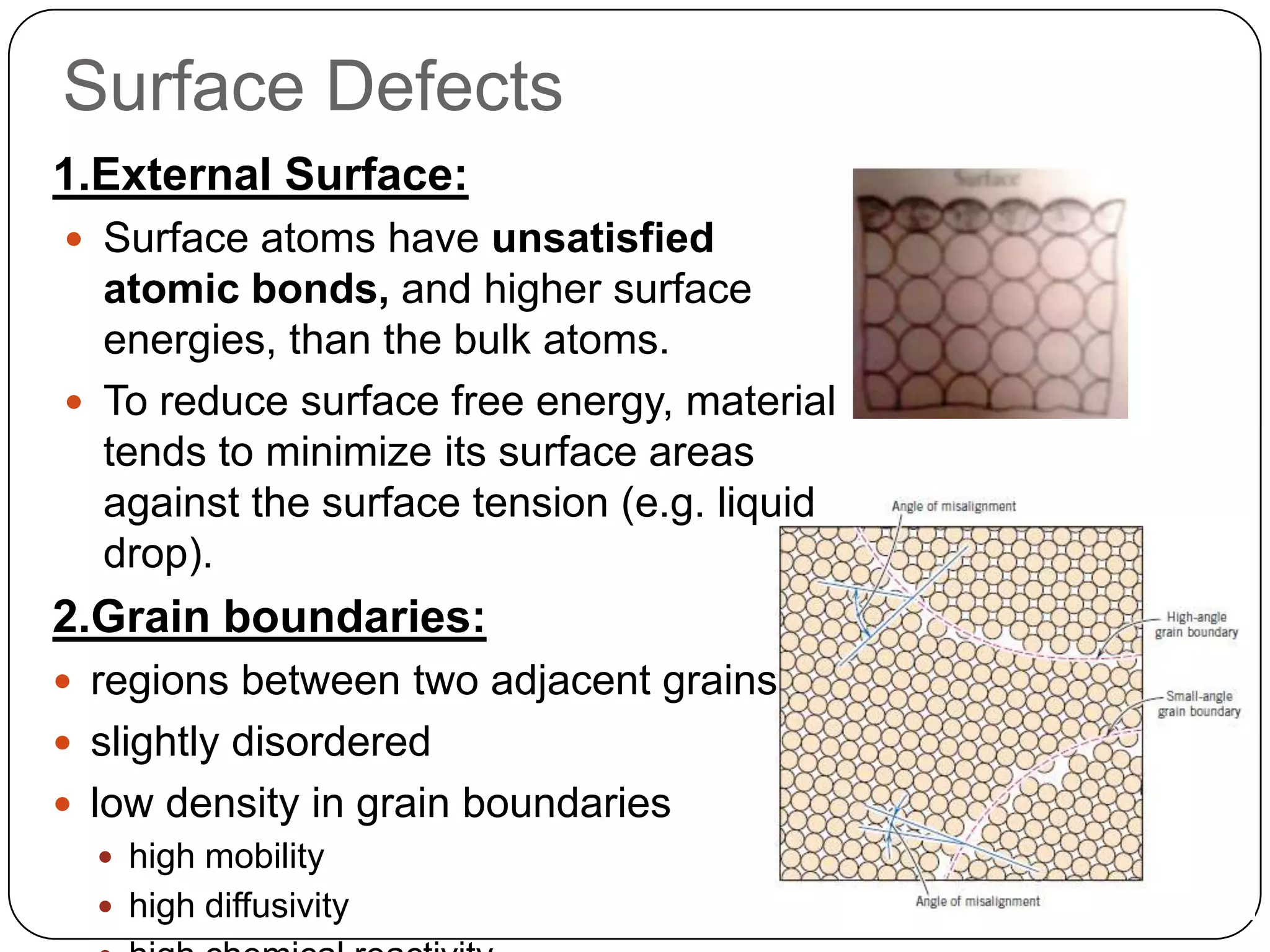
2.Grain boundaries:
 regions between two adjacent grains
 slightly disordered
 low density in grain boundaries
    high mobility
    high diffusivity
3.Tilt Boundary:
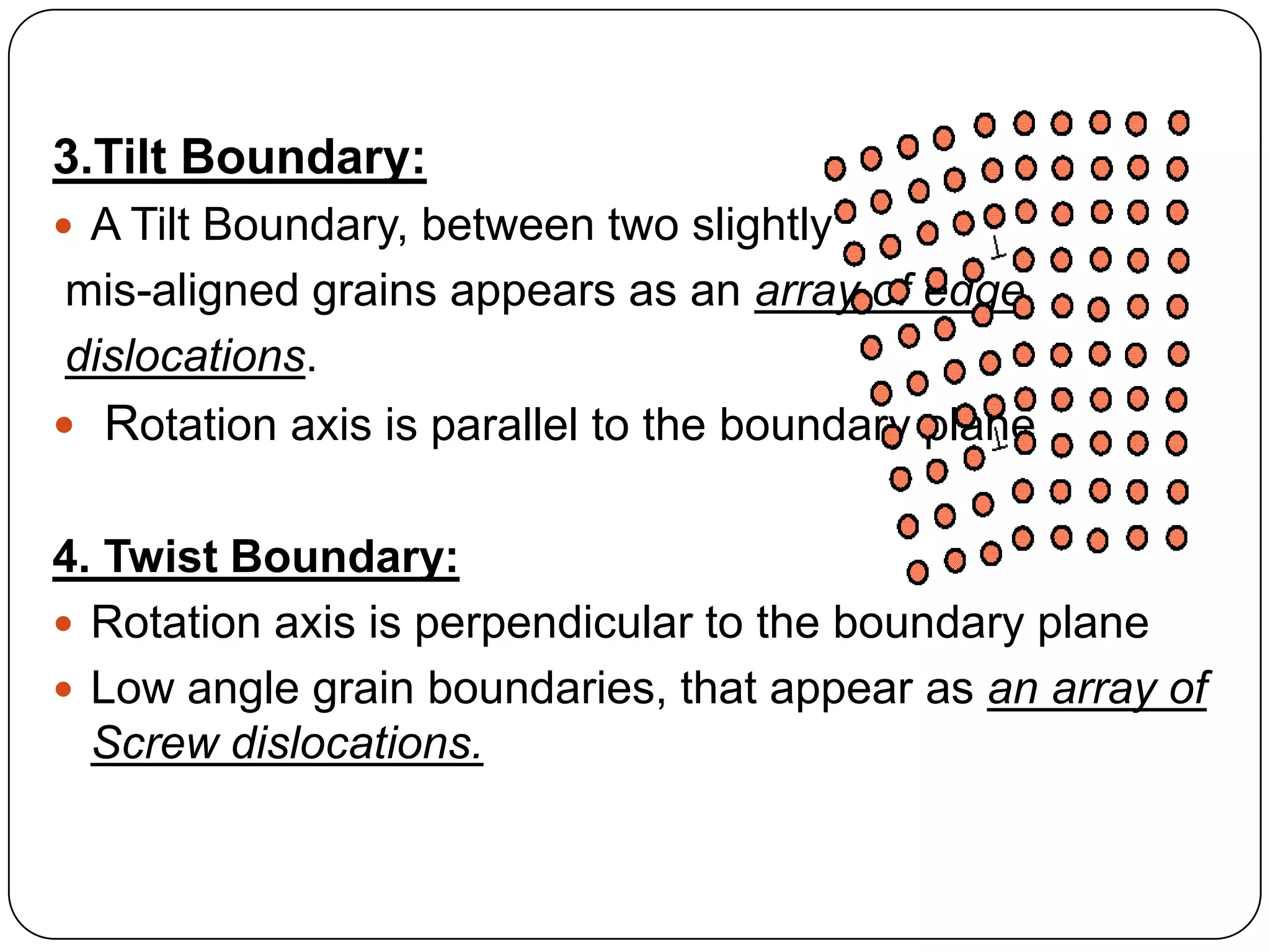
 A Tilt Boundary, between two slightly
mis-aligned grains appears as an array of edge
dislocations.
 Rotation axis is parallel to the boundary plane


4. Twist Boundary:
 Rotation axis is perpendicular to the boundary plane
 Low angle grain boundaries, that appear as an array of
  Screw dislocations.
5.Twin boundaries:
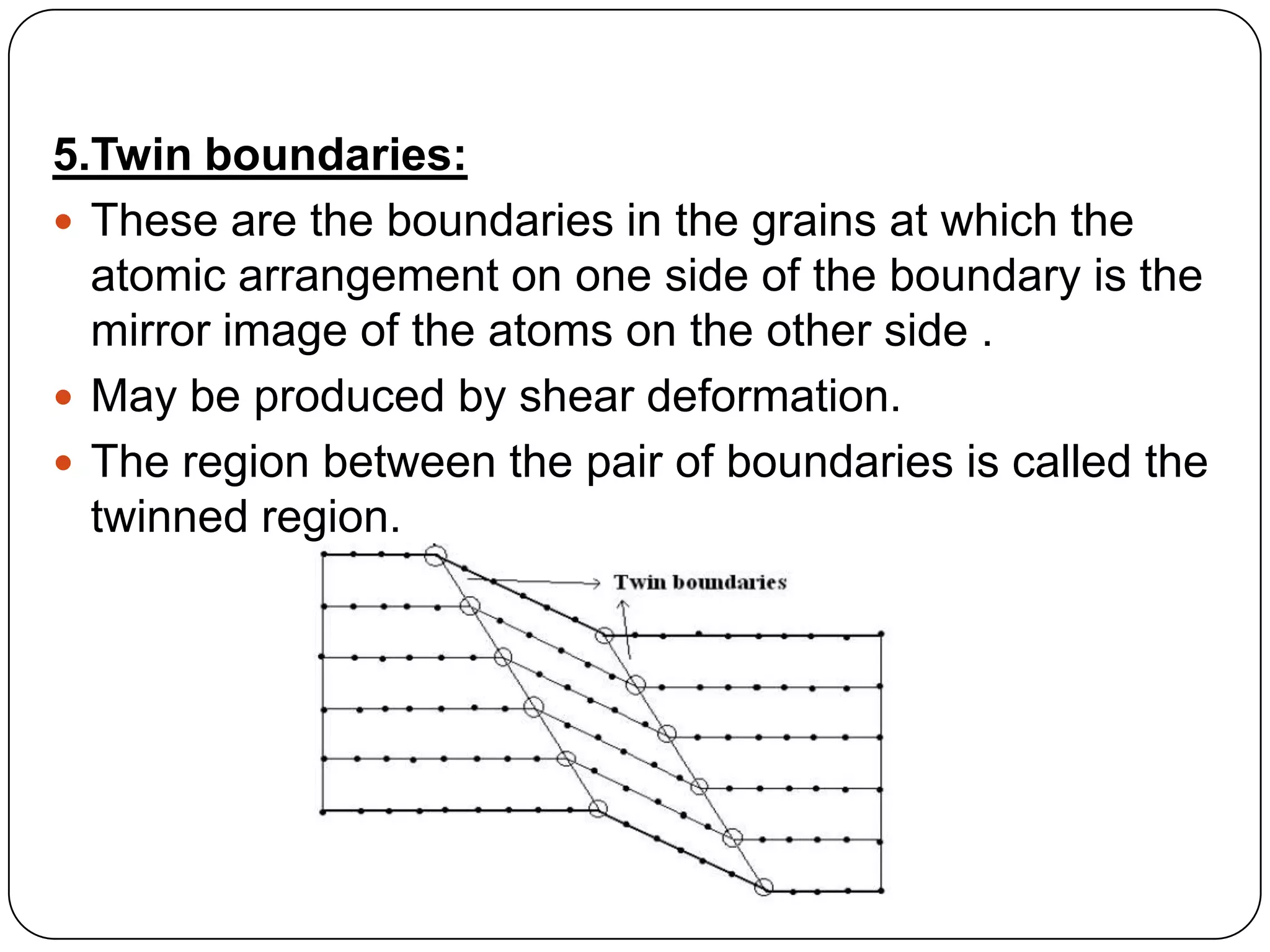
 These are the boundaries in the grains at which the
  atomic arrangement on one side of the boundary is the
  mirror image of the atoms on the other side .
 May be produced by shear deformation.
 The region between the pair of boundaries is called the
  twinned region.
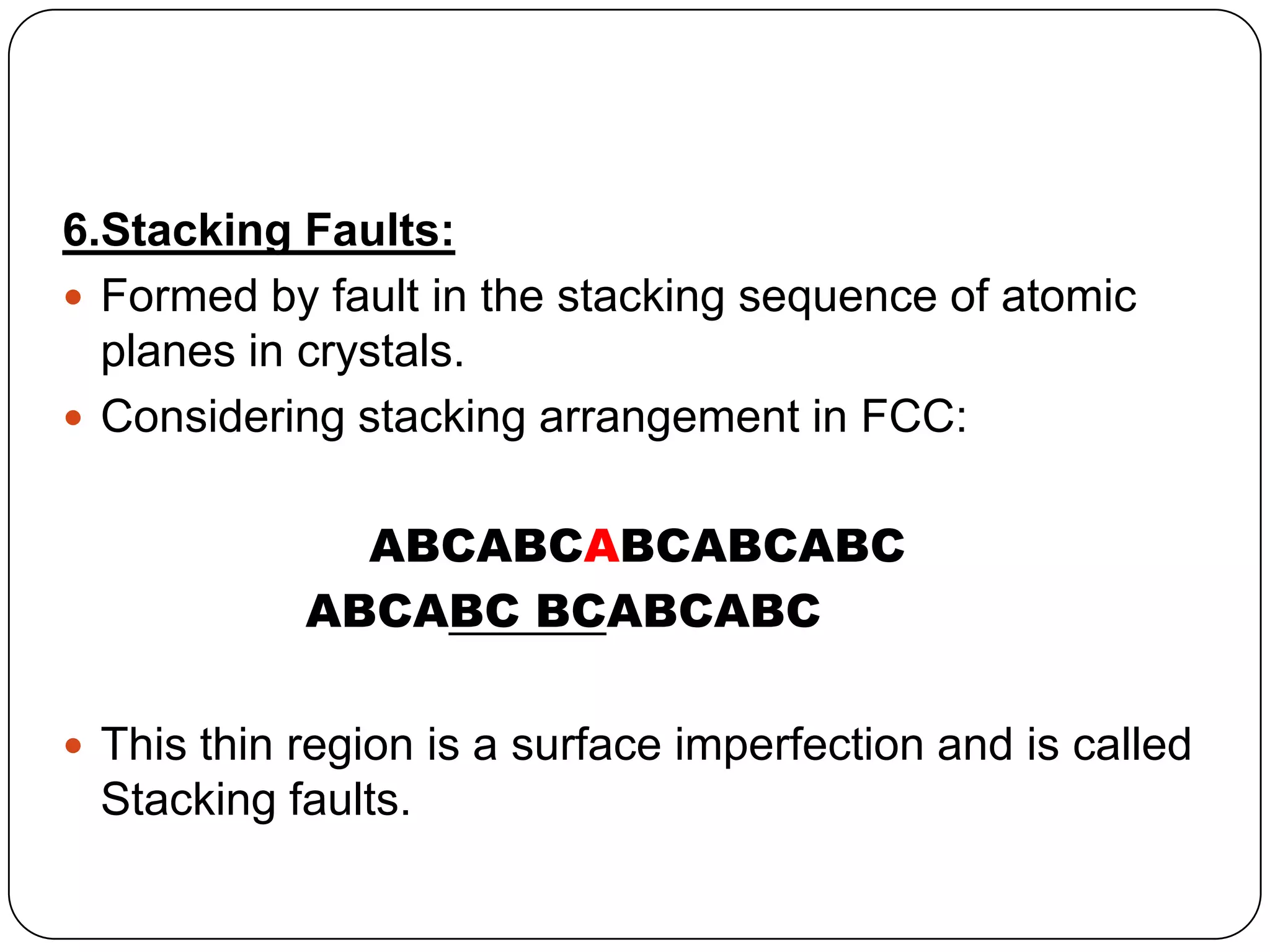
6.Stacking Faults:
 Formed by fault in the stacking sequence of atomic
  planes in crystals.
 Considering stacking arrangement in FCC:


              ABCABCABCABCABC
            ABCABC BCABCABC

 This thin region is a surface imperfection and is called
 Stacking faults.
THANKYOU

Surface defects in crystals

  • 1.
    SURFACE DEFECTS IN CRYSTALS presented by: Arun K S Ist sem M.Tech Sjcet, palai
  • 2.
    Surface Defects 1.External Surface: Surface atoms have unsatisfied atomic bonds, and higher surface energies, than the bulk atoms.  To reduce surface free energy, material tends to minimize its surface areas against the surface tension (e.g. liquid drop). 2.Grain boundaries:  regions between two adjacent grains  slightly disordered  low density in grain boundaries  high mobility  high diffusivity
  • 3.
    3.Tilt Boundary:  ATilt Boundary, between two slightly mis-aligned grains appears as an array of edge dislocations.  Rotation axis is parallel to the boundary plane 4. Twist Boundary:  Rotation axis is perpendicular to the boundary plane  Low angle grain boundaries, that appear as an array of Screw dislocations.
  • 4.
    5.Twin boundaries:  Theseare the boundaries in the grains at which the atomic arrangement on one side of the boundary is the mirror image of the atoms on the other side .  May be produced by shear deformation.  The region between the pair of boundaries is called the twinned region.
  • 5.
    6.Stacking Faults:  Formedby fault in the stacking sequence of atomic planes in crystals.  Considering stacking arrangement in FCC: ABCABCABCABCABC ABCABC BCABCABC  This thin region is a surface imperfection and is called Stacking faults.
  • 6.