© City of Glasgow College
Charity Number SC0 36198
Surface Defects
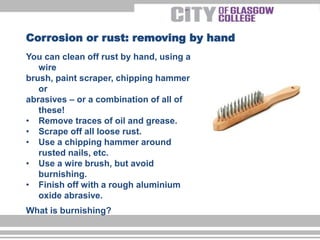
You can clean off rust by hand, using a
wire
brush, paint scraper, chipping hammer
or
abrasives – or a combination of all of
these!
• Remove traces of oil and grease.
• Scrape off all loose rust.
• Use a chipping hammer around
rusted nails, etc.
• Use a wire brush, but avoid
burnishing.
• Finish off with a rough aluminium
oxide abrasive.
What is burnishing?
Corrosion or rust: removing by hand
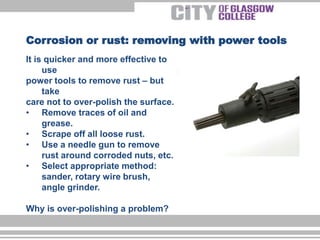
It is quicker and more effective to
use
power tools to remove rust – but
take
care not to over-polish the surface.
• Remove traces of oil and
grease.
• Scrape off all loose rust.
• Use a needle gun to remove
rust around corroded nuts, etc.
• Select appropriate method:
sander, rotary wire brush,
angle grinder.
Why is over-polishing a problem?
Corrosion or rust: removing with power tools
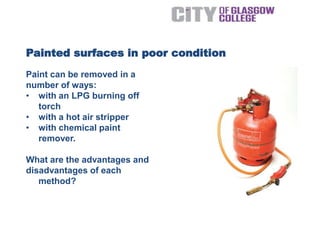
Paint can be removed in a
number of ways:
• with an LPG burning off
torch
• with a hot air stripper
• with chemical paint
remover.
What are the advantages and
disadvantages of each
method?
Painted surfaces in poor condition
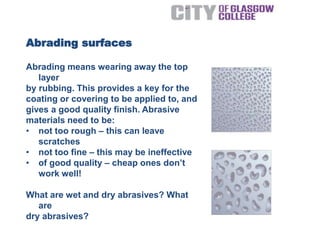
Abrading surfaces
Abrading means wearing away the top
layer
by rubbing. This provides a key for the
coating or covering to be applied to, and
gives a good quality finish. Abrasive
materials need to be:
• not too rough – this can leave
scratches
• not too fine – this may be ineffective
• of good quality – cheap ones don’t
work well!
What are wet and dry abrasives? What
are
dry abrasives?
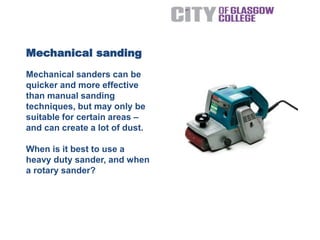
Mechanical sanders can be
quicker and more effective
than manual sanding
techniques, but may only be
suitable for certain areas –
and can create a lot of dust.
When is it best to use a
heavy duty sander, and when
a rotary sander?
Mechanical sanding
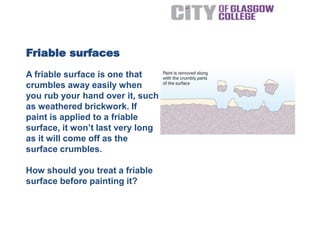
A friable surface is one that
crumbles away easily when
you rub your hand over it, such
as weathered brickwork. If
paint is applied to a friable
surface, it won’t last very long
as it will come off as the
surface crumbles.
How should you treat a friable
surface before painting it?
Friable surfaces
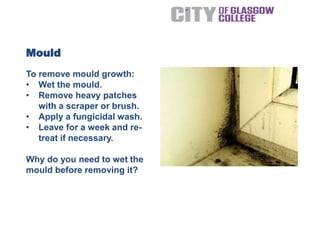
To remove mould growth:
• Wet the mould.
• Remove heavy patches
with a scraper or brush.
• Apply a fungicidal wash.
• Leave for a week and re-
treat if necessary.
Why do you need to wet the
mould before removing it?
Mould
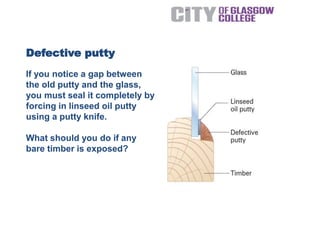
Defective putty
If you notice a gap between
the old putty and the glass,
you must seal it completely by
forcing in linseed oil putty
using a putty knife.
What should you do if any
bare timber is exposed?
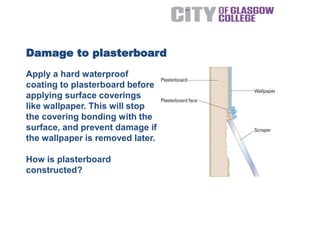
Apply a hard waterproof
coating to plasterboard before
applying surface coverings
like wallpaper. This will stop
the covering bonding with the
surface, and prevent damage if
the wallpaper is removed later.
How is plasterboard
constructed?
Damage to plasterboard
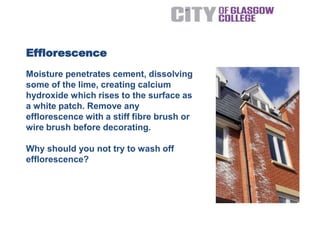
Moisture penetrates cement, dissolving
some of the lime, creating calcium
hydroxide which rises to the surface as
a white patch. Remove any
efflorescence with a stiff fibre brush or
wire brush before decorating.
Why should you not try to wash off
efflorescence?
Efflorescence
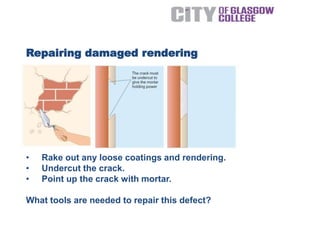
• Rake out any loose coatings and rendering.
• Undercut the crack.
• Point up the crack with mortar.
What tools are needed to repair this defect?
Repairing damaged rendering
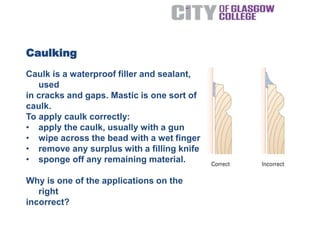
Caulk is a waterproof filler and sealant,
used
in cracks and gaps. Mastic is one sort of
caulk.
To apply caulk correctly:
• apply the caulk, usually with a gun
• wipe across the bead with a wet finger
• remove any surplus with a filling knife
• sponge off any remaining material.
Why is one of the applications on the
right
incorrect?
Caulking

Surface defects

  • 1.
    © City ofGlasgow College Charity Number SC0 36198 Surface Defects
  • 2.
    You can cleanoff rust by hand, using a wire brush, paint scraper, chipping hammer or abrasives – or a combination of all of these! • Remove traces of oil and grease. • Scrape off all loose rust. • Use a chipping hammer around rusted nails, etc. • Use a wire brush, but avoid burnishing. • Finish off with a rough aluminium oxide abrasive. What is burnishing? Corrosion or rust: removing by hand
  • 3.
    It is quickerand more effective to use power tools to remove rust – but take care not to over-polish the surface. • Remove traces of oil and grease. • Scrape off all loose rust. • Use a needle gun to remove rust around corroded nuts, etc. • Select appropriate method: sander, rotary wire brush, angle grinder. Why is over-polishing a problem? Corrosion or rust: removing with power tools
  • 4.
    Paint can beremoved in a number of ways: • with an LPG burning off torch • with a hot air stripper • with chemical paint remover. What are the advantages and disadvantages of each method? Painted surfaces in poor condition
  • 5.
    Abrading surfaces Abrading meanswearing away the top layer by rubbing. This provides a key for the coating or covering to be applied to, and gives a good quality finish. Abrasive materials need to be: • not too rough – this can leave scratches • not too fine – this may be ineffective • of good quality – cheap ones don’t work well! What are wet and dry abrasives? What are dry abrasives?
  • 6.
    Mechanical sanders canbe quicker and more effective than manual sanding techniques, but may only be suitable for certain areas – and can create a lot of dust. When is it best to use a heavy duty sander, and when a rotary sander? Mechanical sanding
  • 7.
    A friable surfaceis one that crumbles away easily when you rub your hand over it, such as weathered brickwork. If paint is applied to a friable surface, it won’t last very long as it will come off as the surface crumbles. How should you treat a friable surface before painting it? Friable surfaces
  • 8.
    To remove mouldgrowth: • Wet the mould. • Remove heavy patches with a scraper or brush. • Apply a fungicidal wash. • Leave for a week and re- treat if necessary. Why do you need to wet the mould before removing it? Mould
  • 9.
    Defective putty If younotice a gap between the old putty and the glass, you must seal it completely by forcing in linseed oil putty using a putty knife. What should you do if any bare timber is exposed?
  • 10.
    Apply a hardwaterproof coating to plasterboard before applying surface coverings like wallpaper. This will stop the covering bonding with the surface, and prevent damage if the wallpaper is removed later. How is plasterboard constructed? Damage to plasterboard
  • 11.
    Moisture penetrates cement,dissolving some of the lime, creating calcium hydroxide which rises to the surface as a white patch. Remove any efflorescence with a stiff fibre brush or wire brush before decorating. Why should you not try to wash off efflorescence? Efflorescence
  • 12.
    • Rake outany loose coatings and rendering. • Undercut the crack. • Point up the crack with mortar. What tools are needed to repair this defect? Repairing damaged rendering
  • 13.
    Caulk is awaterproof filler and sealant, used in cracks and gaps. Mastic is one sort of caulk. To apply caulk correctly: • apply the caulk, usually with a gun • wipe across the bead with a wet finger • remove any surplus with a filling knife • sponge off any remaining material. Why is one of the applications on the right incorrect? Caulking