Printing and printing
procedure
PRESENTED BY : MS.K.KATHIROLI
ASST PROF
DEPT OF FASHION TECHNOLOGY AND COSTUME DESIGNING
BON SECOURS COLLEGE FOR WOMEN – THANJAVUR
Printing
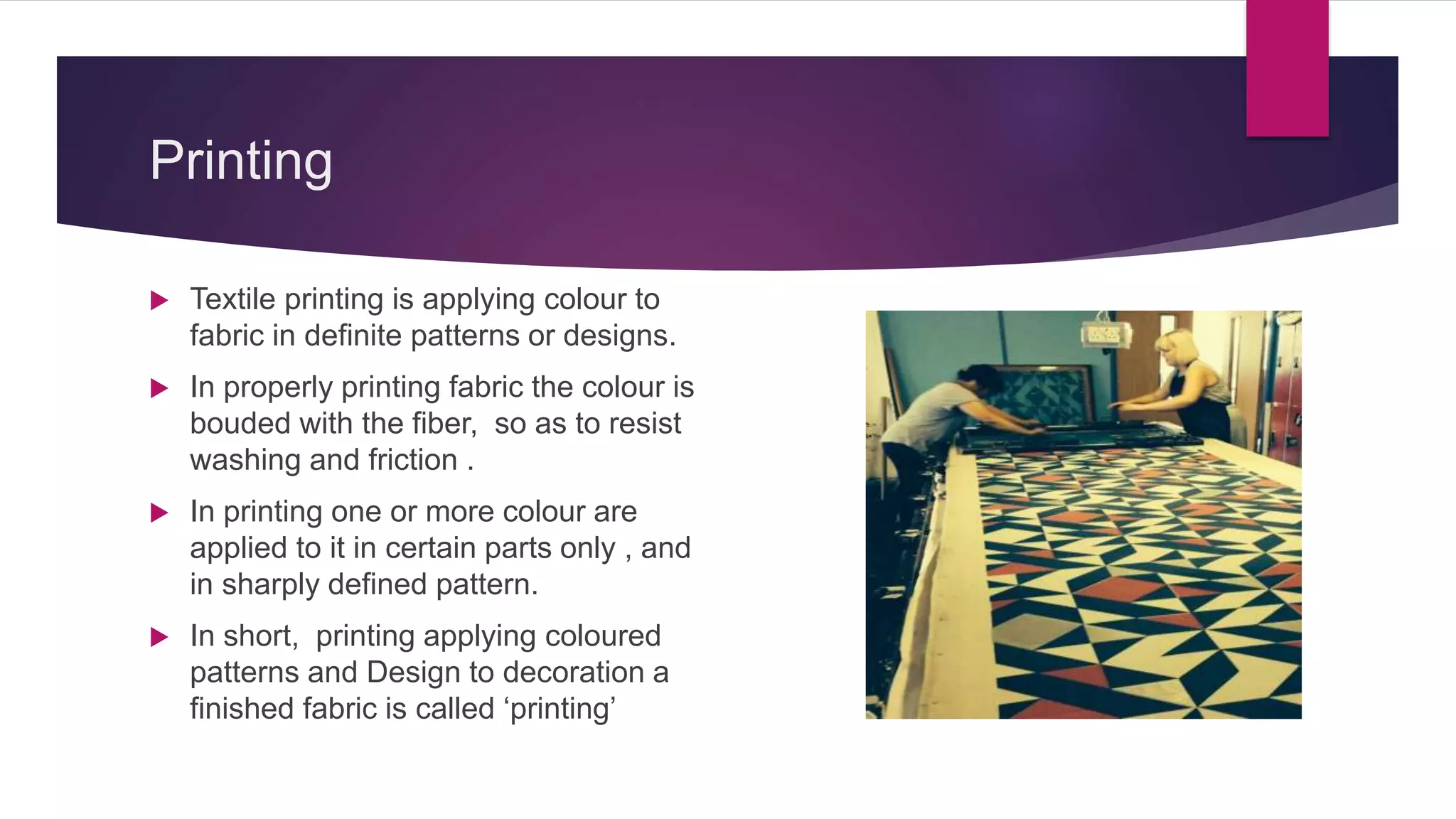
 Textile printing is applying colour to
fabric in definite patterns or designs.
 In properly printing fabric the colour is
bouded with the fiber, so as to resist
washing and friction .
 In printing one or more colour are
applied to it in certain parts only , and
in sharply defined pattern.
 In short, printing applying coloured
patterns and Design to decoration a
finished fabric is called ‘printing’
Different styles of printing
 There are three basic approaches to printing a
colour on a fabric
1.Direct printing style
2.Discharge printing style
3.Resist printing style
Direct printing
 Direct printing has been the most common method of applying design to fabric.
 A direct print, also called an application print, in which design is printing directly
onto a white cloth (or) over a previously dyed fabric.
 There are most popular Print types and the most common approach for applying
a colour pattern is direct printing.
 The dye is imprinted on the fabric in paste form, by which any desirable pattern
can be produced.
 Corn starch is used to print cotton fabrics but today gums (or) alginates derived
from sea weeds are preferred because they are easier to wash out and do not
themselves absorb any colour.
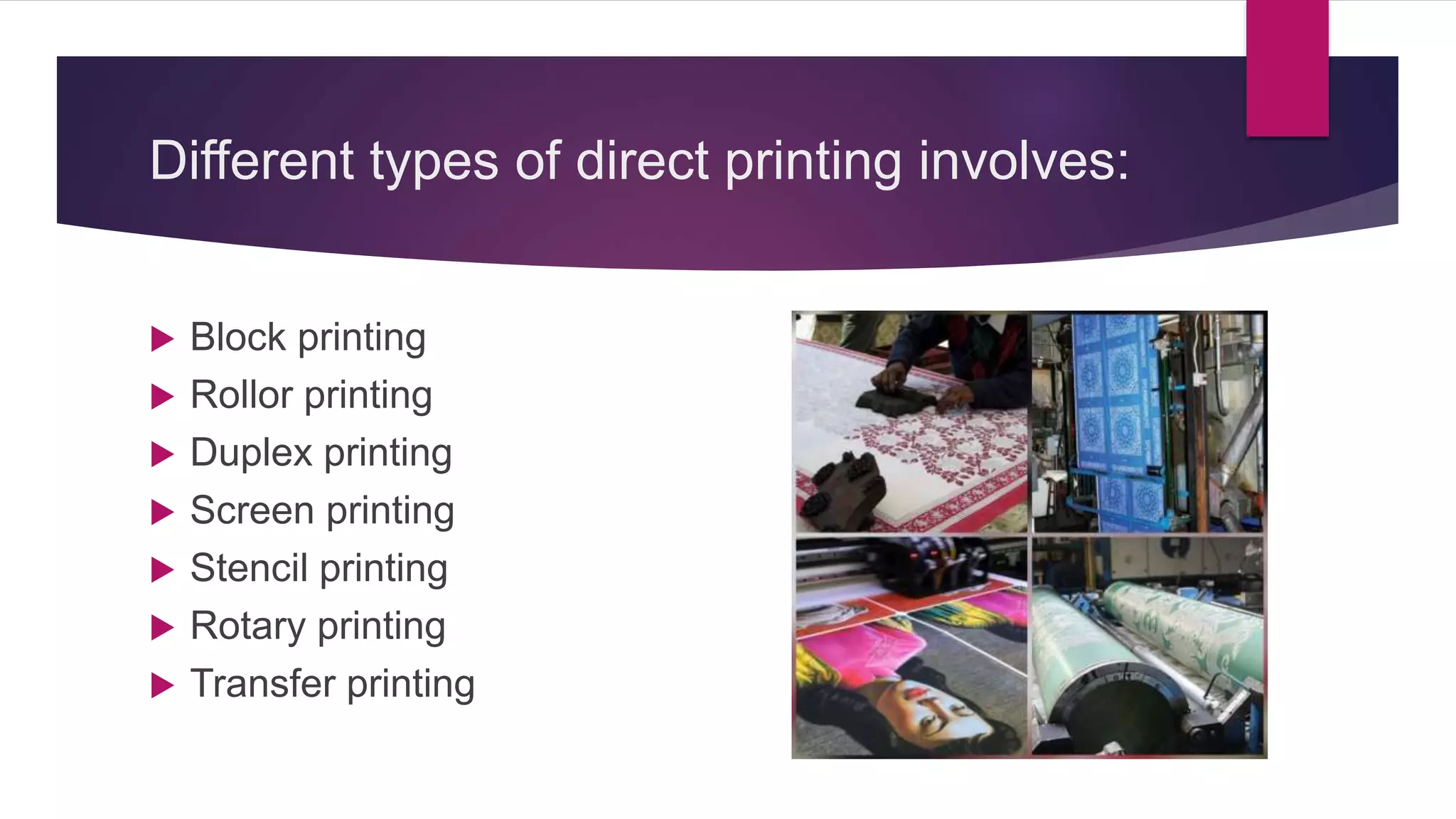
Different types of direct printing involves:
 Block printing
 Rollor printing
 Duplex printing
 Screen printing
 Stencil printing
 Rotary printing
 Transfer printing
Discharge printing
 Discharge prints are fabric which are dyed prior to printing. Many pleasing effect
can be obtained by producing coloured patterns on coloured fabrics or by
producing a white pattern on a coloured fabric.
 Discharge prints are prints that have a dark background, widely spaced motifs
and a rich , vibrant, expensive look.
 A discharge paste which contain chemicals to remove the colour on the fabric is
then applied to fabric with roller .
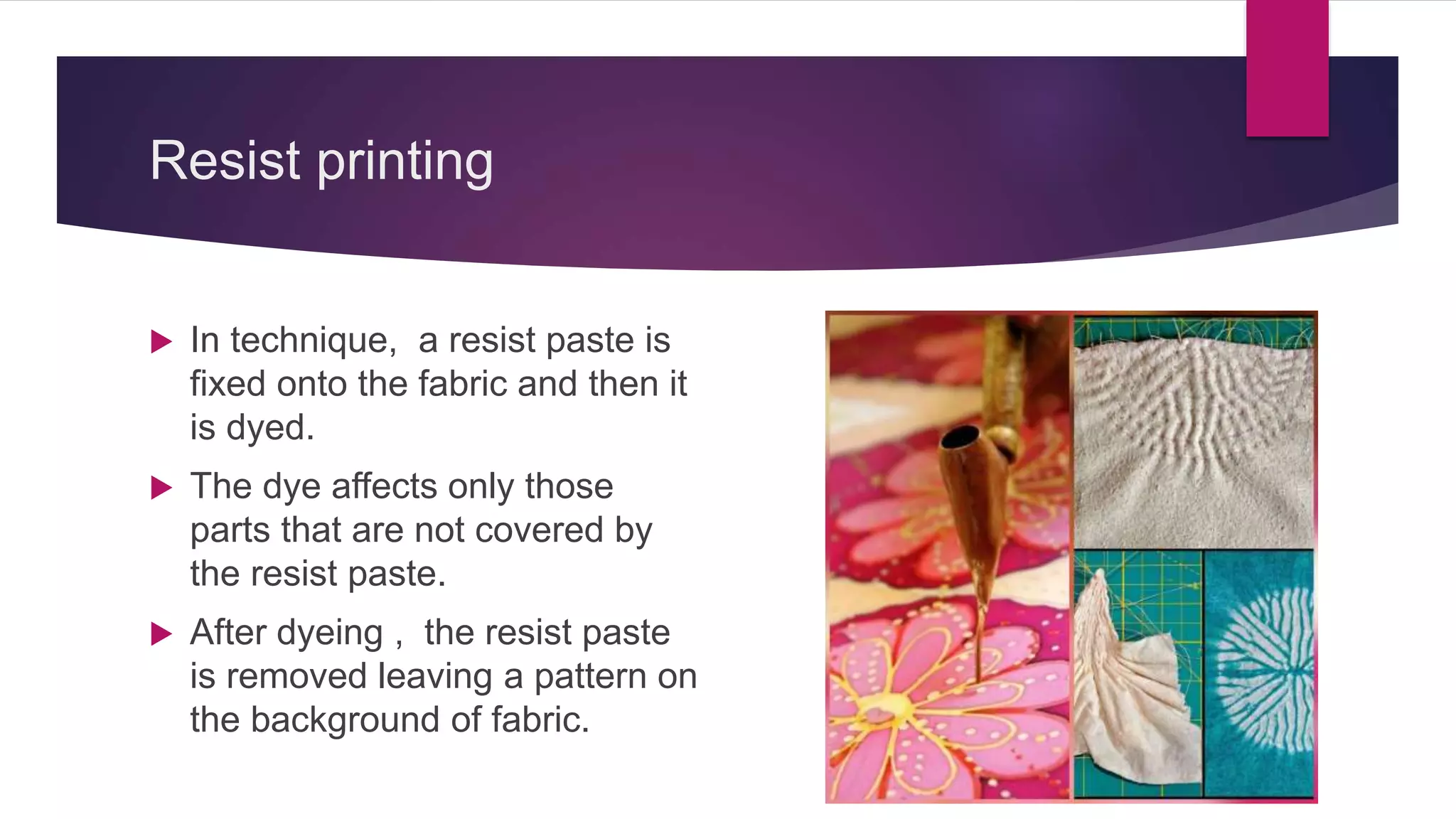
Resist printing
 In technique, a resist paste is
fixed onto the fabric and then it
is dyed.
 The dye affects only those
parts that are not covered by
the resist paste.
 After dyeing , the resist paste
is removed leaving a pattern on
the background of fabric.
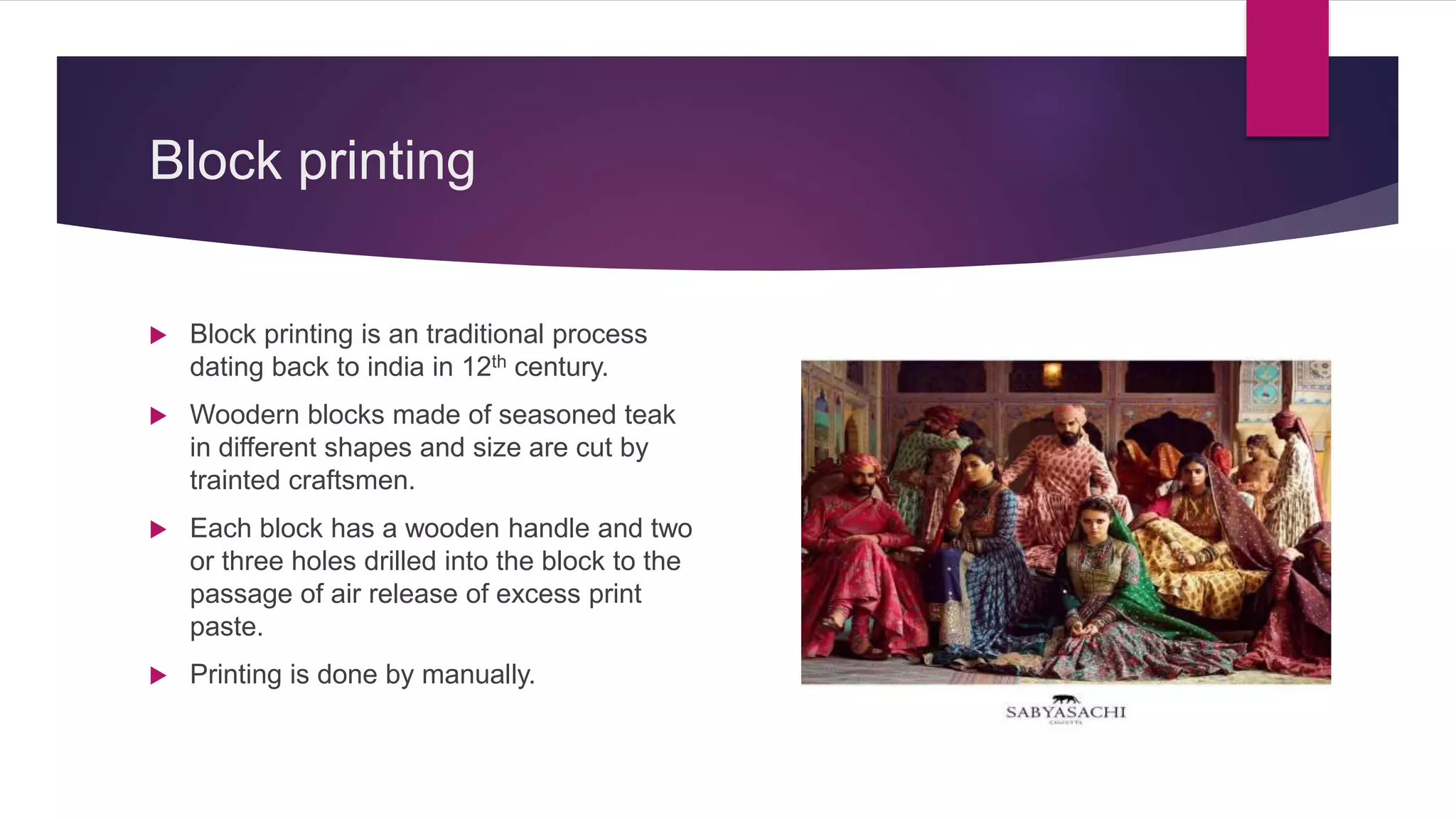
Block printing
 Block printing is an traditional process
dating back to india in 12th century.
 Woodern blocks made of seasoned teak
in different shapes and size are cut by
trainted craftsmen.
 Each block has a wooden handle and two
or three holes drilled into the block to the
passage of air release of excess print
paste.
 Printing is done by manually.
Stencile printing
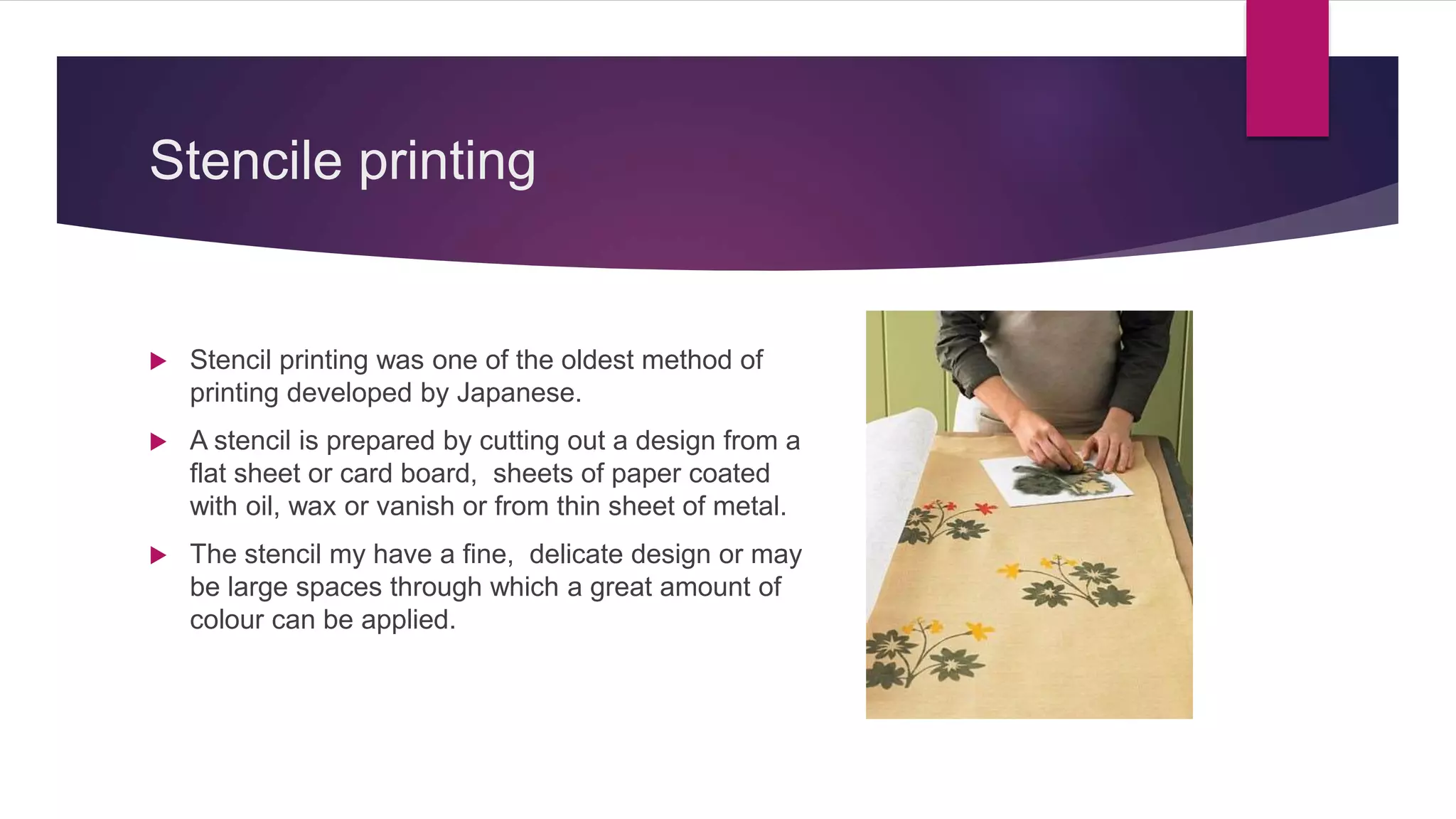
 Stencil printing was one of the oldest method of
printing developed by Japanese.
 A stencil is prepared by cutting out a design from a
flat sheet or card board, sheets of paper coated
with oil, wax or vanish or from thin sheet of metal.
 The stencil my have a fine, delicate design or may
be large spaces through which a great amount of
colour can be applied.
Roller printing
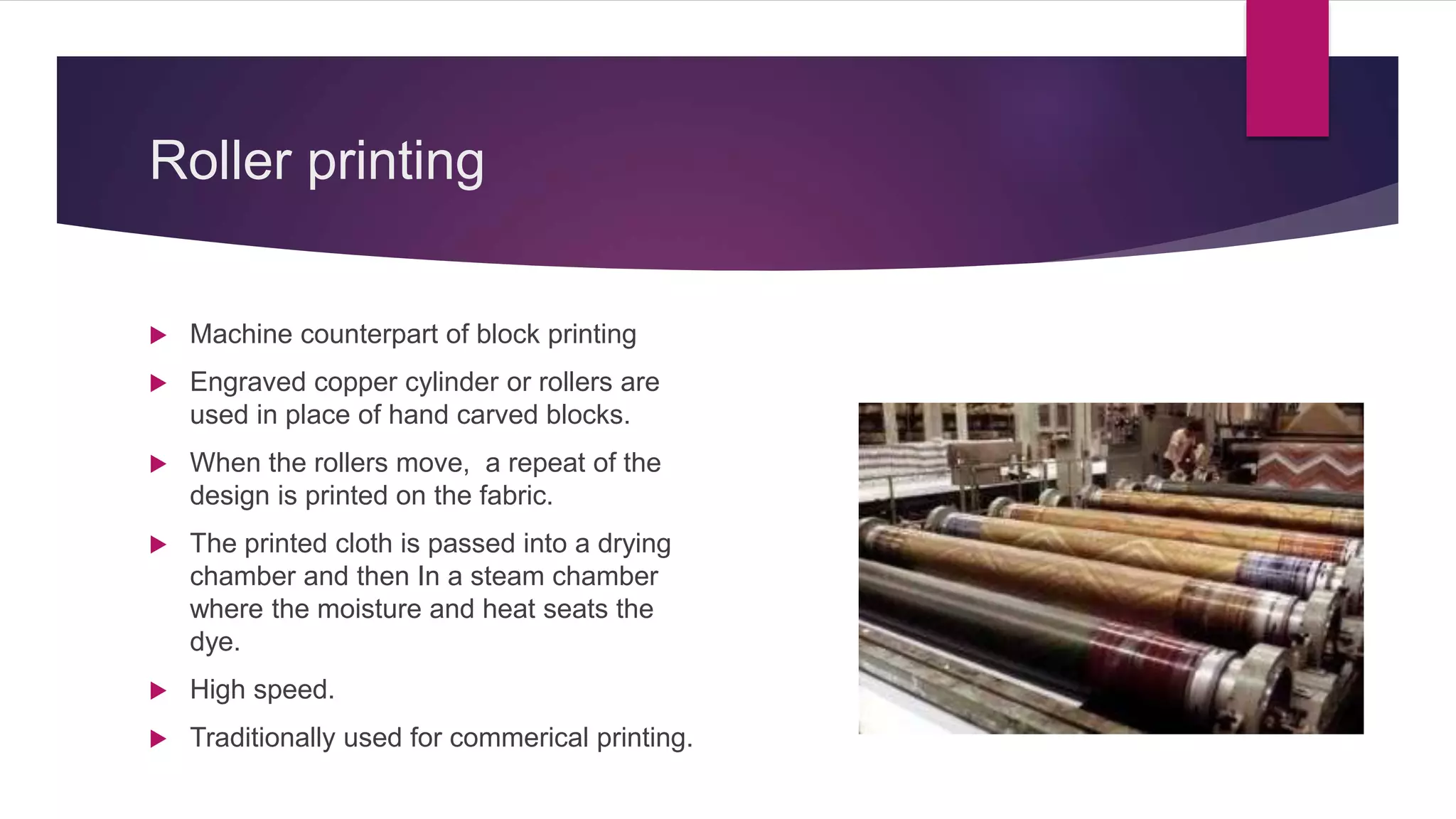
 Machine counterpart of block printing
 Engraved copper cylinder or rollers are
used in place of hand carved blocks.
 When the rollers move, a repeat of the
design is printed on the fabric.
 The printed cloth is passed into a drying
chamber and then In a steam chamber
where the moisture and heat seats the
dye.
 High speed.
 Traditionally used for commerical printing.
Duplex printing
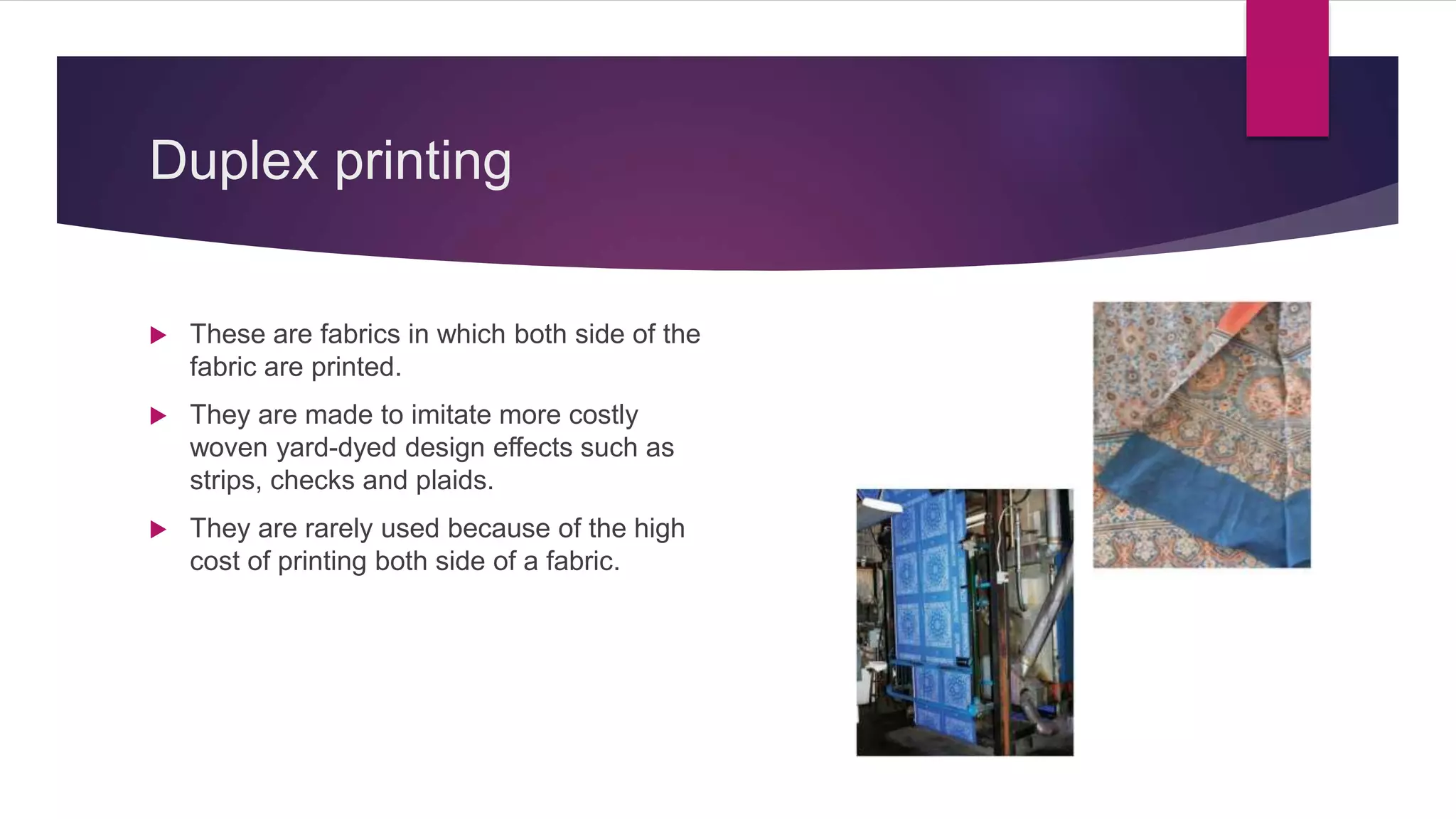
 These are fabrics in which both side of the
fabric are printed.
 They are made to imitate more costly
woven yard-dyed design effects such as
strips, checks and plaids.
 They are rarely used because of the high
cost of printing both side of a fabric.
screen printing
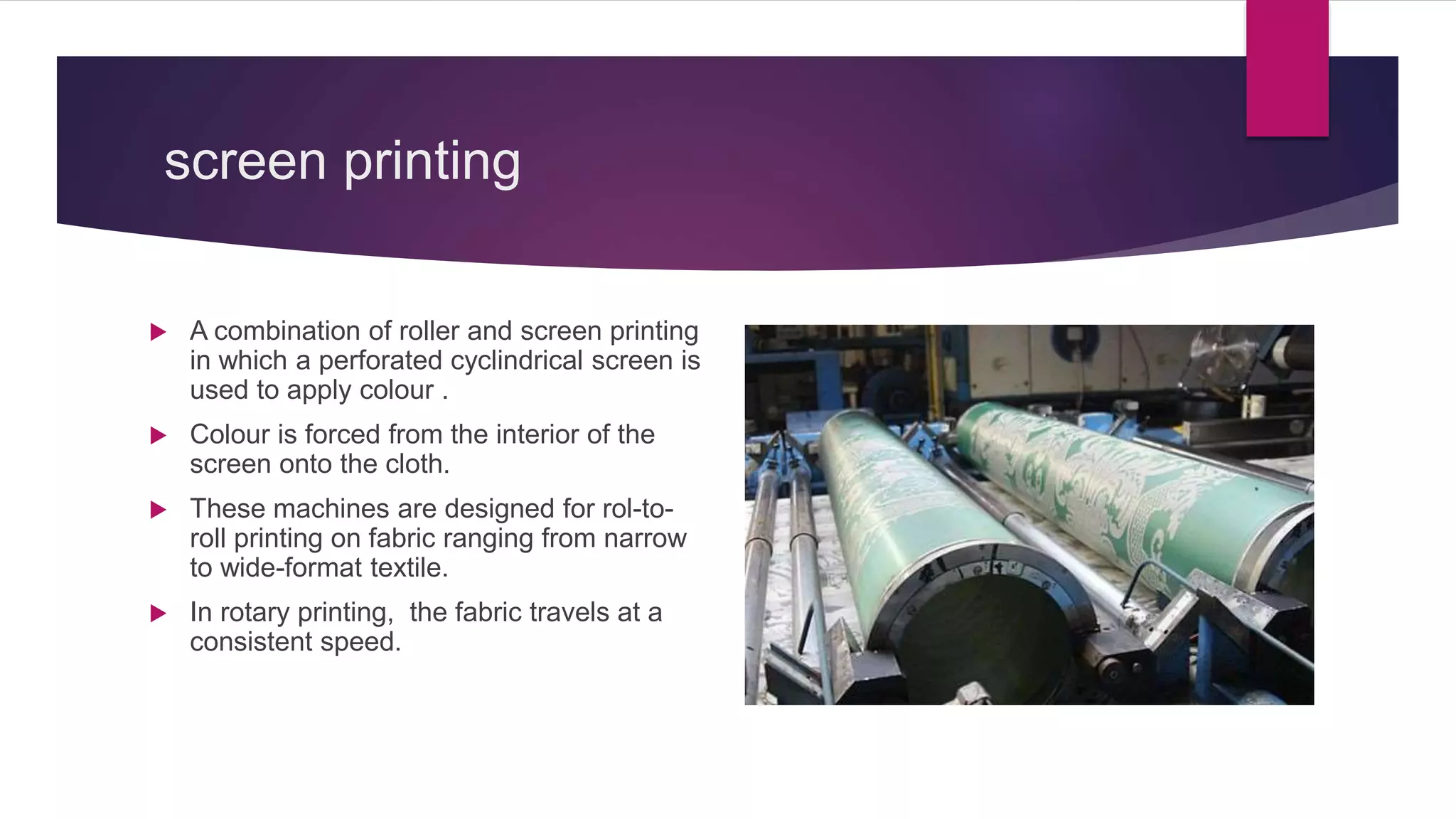
 A combination of roller and screen printing
in which a perforated cyclindrical screen is
used to apply colour .
 Colour is forced from the interior of the
screen onto the cloth.
 These machines are designed for rol-to-
roll printing on fabric ranging from narrow
to wide-format textile.
 In rotary printing, the fabric travels at a
consistent speed.
Screen printing types
 Screen printing is by far the most common
technology today
 Based on the types of the screen used.
 Two types of exist: 1) rotary screen printing
 2) flat (bed) screen printing
Transfer printing
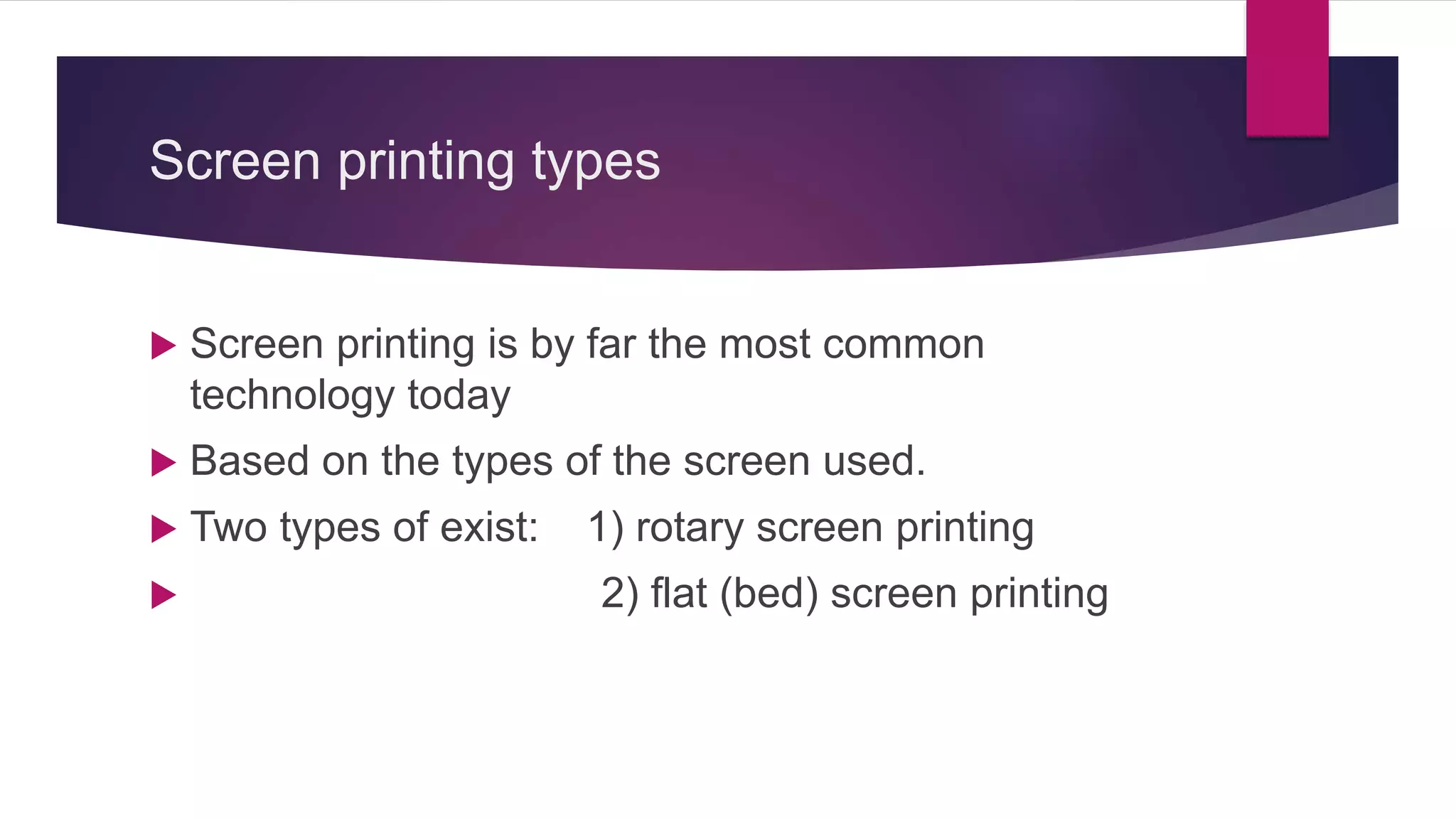
 Literally moving a design from one surface
to anthor is known as transfer printing.
 A typically well-known techinque is that of
iron on prints of emblems and decoration ,
which are generally made of pigments in a
paraffin or thermoplastic basic that can be
melted and bound by heat and pressure
onto a fabtic surface .
 These pigment transfer are not very
satisfactory because they make the cloth
stiff and are not fast to laundering or light.
Batik printing
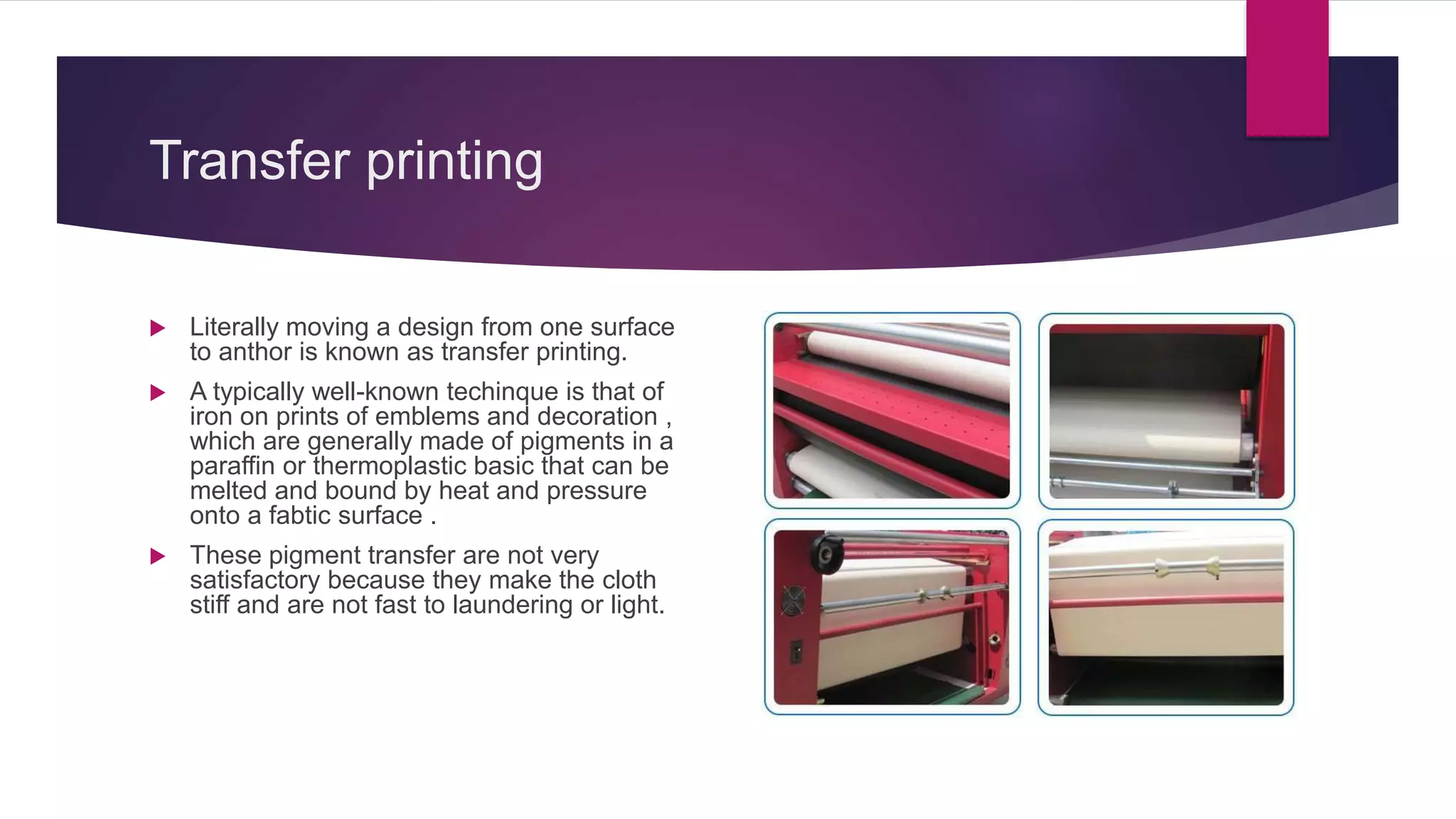
 Originated on island of java and is a
cottage based industry.
 Batik is derived from word “Amba tik “.
 The resist dyeing process whereby
designs are made with wax on the fabric
which is subsequently immersed in a dye
to absorb the color on the unwaxed
portion is known as batik printing.
Tie & dye
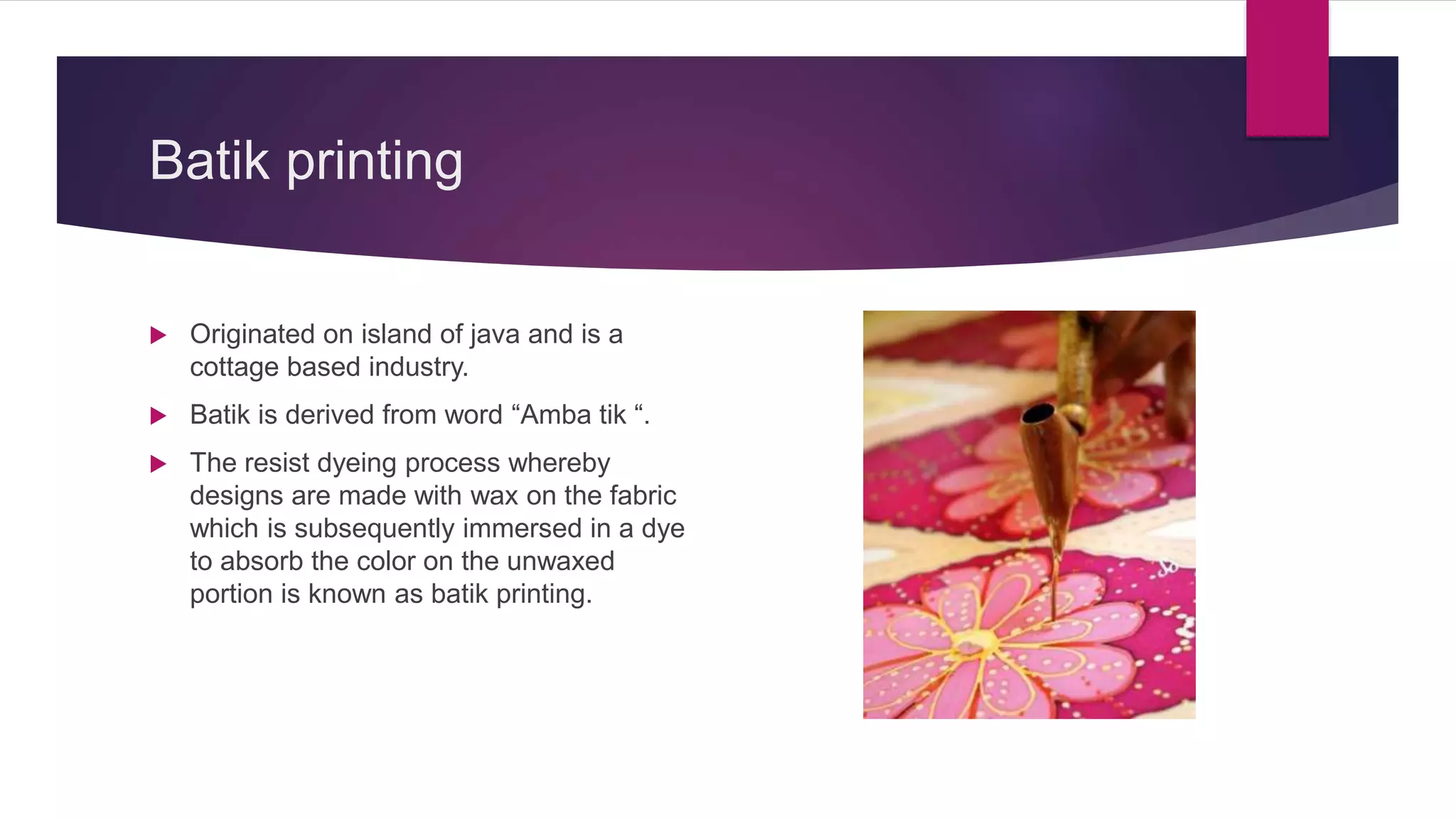
 It is same as that of batik printing but here
the dye is resisted by knots that are tired
in the cloth before it is immersed in dye
bath.
 The outside of the knotted portion is dyed,
but inside is not penetrated if the knot is
firmly tied.
 This give a characteristic blurred or
mottled effect.
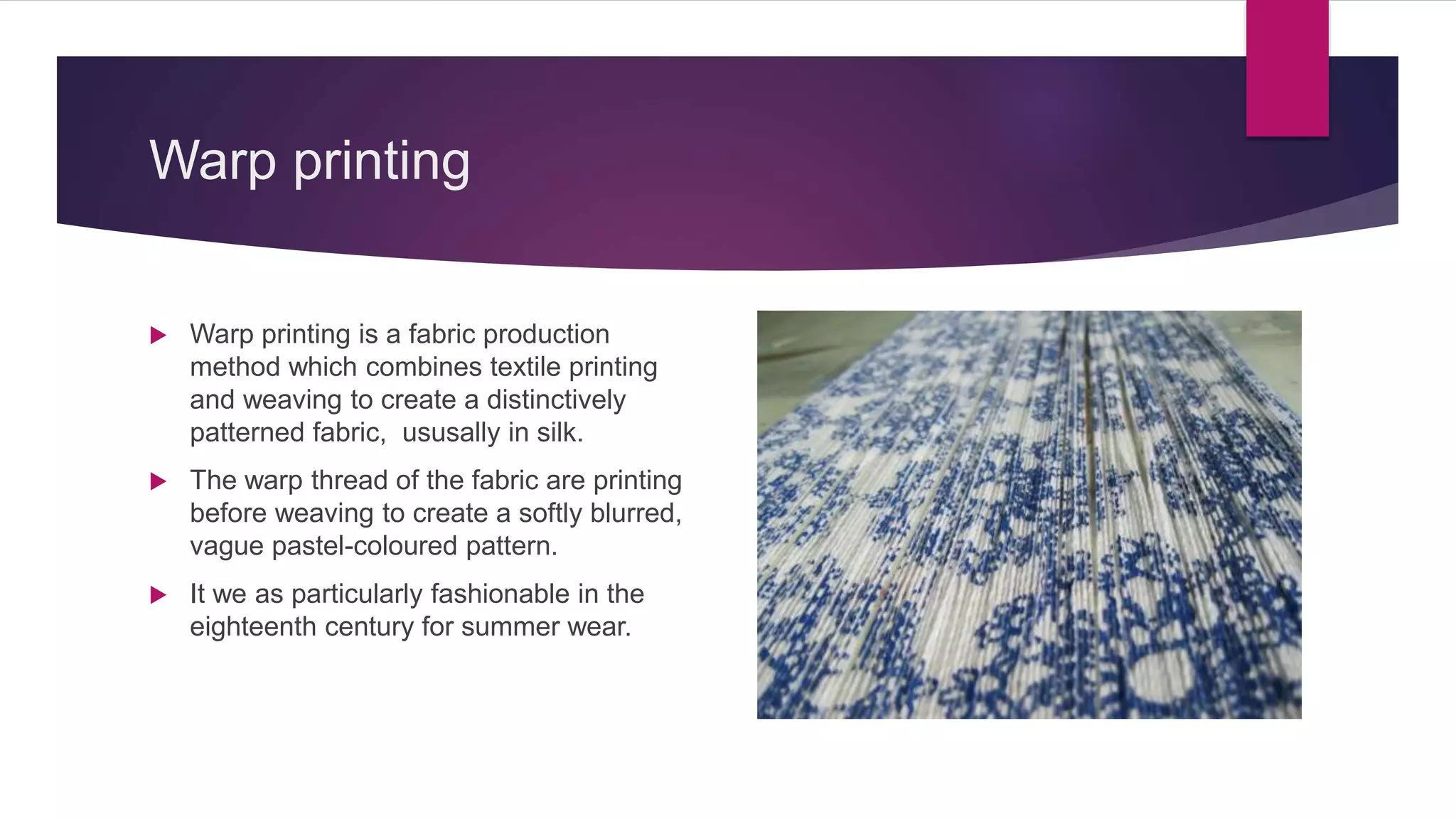
Warp printing
 Warp printing is a fabric production
method which combines textile printing
and weaving to create a distinctively
patterned fabric, ususally in silk.
 The warp thread of the fabric are printing
before weaving to create a softly blurred,
vague pastel-coloured pattern.
 It we as particularly fashionable in the
eighteenth century for summer wear.

Textile printing

  • 1.
    Printing and printing procedure PRESENTEDBY : MS.K.KATHIROLI ASST PROF DEPT OF FASHION TECHNOLOGY AND COSTUME DESIGNING BON SECOURS COLLEGE FOR WOMEN – THANJAVUR
  • 2.
    Printing  Textile printingis applying colour to fabric in definite patterns or designs.  In properly printing fabric the colour is bouded with the fiber, so as to resist washing and friction .  In printing one or more colour are applied to it in certain parts only , and in sharply defined pattern.  In short, printing applying coloured patterns and Design to decoration a finished fabric is called ‘printing’
  • 3.
    Different styles ofprinting  There are three basic approaches to printing a colour on a fabric 1.Direct printing style 2.Discharge printing style 3.Resist printing style
  • 4.
    Direct printing  Directprinting has been the most common method of applying design to fabric.  A direct print, also called an application print, in which design is printing directly onto a white cloth (or) over a previously dyed fabric.  There are most popular Print types and the most common approach for applying a colour pattern is direct printing.  The dye is imprinted on the fabric in paste form, by which any desirable pattern can be produced.  Corn starch is used to print cotton fabrics but today gums (or) alginates derived from sea weeds are preferred because they are easier to wash out and do not themselves absorb any colour.
  • 5.
    Different types ofdirect printing involves:  Block printing  Rollor printing  Duplex printing  Screen printing  Stencil printing  Rotary printing  Transfer printing
  • 6.
    Discharge printing  Dischargeprints are fabric which are dyed prior to printing. Many pleasing effect can be obtained by producing coloured patterns on coloured fabrics or by producing a white pattern on a coloured fabric.  Discharge prints are prints that have a dark background, widely spaced motifs and a rich , vibrant, expensive look.  A discharge paste which contain chemicals to remove the colour on the fabric is then applied to fabric with roller .
  • 7.
    Resist printing  Intechnique, a resist paste is fixed onto the fabric and then it is dyed.  The dye affects only those parts that are not covered by the resist paste.  After dyeing , the resist paste is removed leaving a pattern on the background of fabric.
  • 8.
    Block printing  Blockprinting is an traditional process dating back to india in 12th century.  Woodern blocks made of seasoned teak in different shapes and size are cut by trainted craftsmen.  Each block has a wooden handle and two or three holes drilled into the block to the passage of air release of excess print paste.  Printing is done by manually.
  • 9.
    Stencile printing  Stencilprinting was one of the oldest method of printing developed by Japanese.  A stencil is prepared by cutting out a design from a flat sheet or card board, sheets of paper coated with oil, wax or vanish or from thin sheet of metal.  The stencil my have a fine, delicate design or may be large spaces through which a great amount of colour can be applied.
  • 10.
    Roller printing  Machinecounterpart of block printing  Engraved copper cylinder or rollers are used in place of hand carved blocks.  When the rollers move, a repeat of the design is printed on the fabric.  The printed cloth is passed into a drying chamber and then In a steam chamber where the moisture and heat seats the dye.  High speed.  Traditionally used for commerical printing.
  • 11.
    Duplex printing  Theseare fabrics in which both side of the fabric are printed.  They are made to imitate more costly woven yard-dyed design effects such as strips, checks and plaids.  They are rarely used because of the high cost of printing both side of a fabric.
  • 12.
    screen printing  Acombination of roller and screen printing in which a perforated cyclindrical screen is used to apply colour .  Colour is forced from the interior of the screen onto the cloth.  These machines are designed for rol-to- roll printing on fabric ranging from narrow to wide-format textile.  In rotary printing, the fabric travels at a consistent speed.
  • 13.
    Screen printing types Screen printing is by far the most common technology today  Based on the types of the screen used.  Two types of exist: 1) rotary screen printing  2) flat (bed) screen printing
  • 14.
    Transfer printing  Literallymoving a design from one surface to anthor is known as transfer printing.  A typically well-known techinque is that of iron on prints of emblems and decoration , which are generally made of pigments in a paraffin or thermoplastic basic that can be melted and bound by heat and pressure onto a fabtic surface .  These pigment transfer are not very satisfactory because they make the cloth stiff and are not fast to laundering or light.
  • 15.
    Batik printing  Originatedon island of java and is a cottage based industry.  Batik is derived from word “Amba tik “.  The resist dyeing process whereby designs are made with wax on the fabric which is subsequently immersed in a dye to absorb the color on the unwaxed portion is known as batik printing.
  • 16.
    Tie & dye It is same as that of batik printing but here the dye is resisted by knots that are tired in the cloth before it is immersed in dye bath.  The outside of the knotted portion is dyed, but inside is not penetrated if the knot is firmly tied.  This give a characteristic blurred or mottled effect.
  • 17.
    Warp printing  Warpprinting is a fabric production method which combines textile printing and weaving to create a distinctively patterned fabric, ususally in silk.  The warp thread of the fabric are printing before weaving to create a softly blurred, vague pastel-coloured pattern.  It we as particularly fashionable in the eighteenth century for summer wear.