© City of Glasgow College
Charity Number SC0 36198
© City of Glasgow College
Charity Number SC0 36198
WALLPAPER
History of
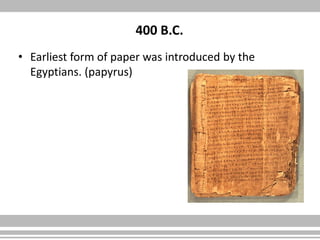
400 B.C.
• Earliest form of paper was introduced by the
Egyptians. (papyrus)
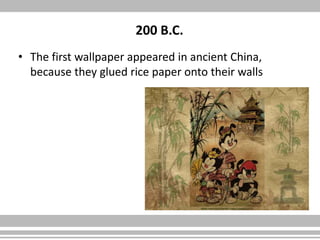
200 B.C.
• The first wallpaper appeared in ancient China,
because they glued rice paper onto their walls
105 A.D.
• The Chinese started making paper from textile waste,
i.e. from rags.
• This was the birth of paper as we know it today.
8th Century
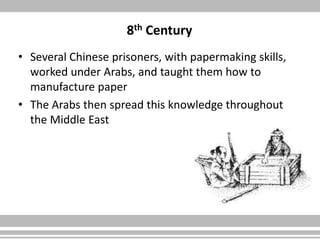
• Several Chinese prisoners, with papermaking skills,
worked under Arabs, and taught them how to
manufacture paper
• The Arabs then spread this knowledge throughout
the Middle East
10th Century
• Arabians were substituting linen fibres for wood &
bamboo. Creating a finer sheet of paper
• Paper now reached a much higher quality level
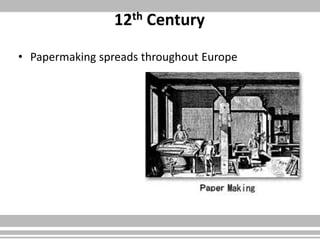
12th Century
• Papermaking spreads throughout Europe
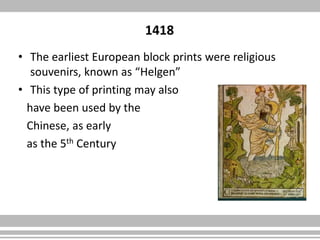
1418
• The earliest European block prints were religious
souvenirs, known as “Helgen”
• This type of printing may also
have been used by the
Chinese, as early
as the 5th Century
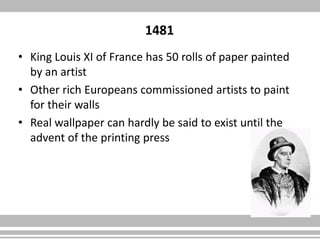
1481
• King Louis XI of France has 50 rolls of paper painted
by an artist
• Other rich Europeans commissioned artists to paint
for their walls
• Real wallpaper can hardly be said to exist until the
advent of the printing press
1509
• Earliest known fragment of wallpaper was found on
beams in the Lodge of Christ’s College, Cambridge
(dated 1509)
• It is an Italian design, printed on the back of a
proclamation by Henry VIII
• It is attributed to Hugo Goes, a printer from York
1599
• A guild of paperhangers is established in France
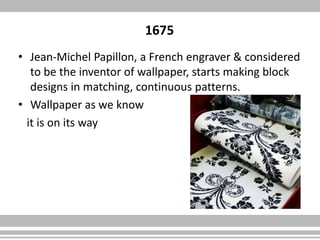
1675
• Jean-Michel Papillon, a French engraver & considered
to be the inventor of wallpaper, starts making block
designs in matching, continuous patterns.
• Wallpaper as we know
it is on its way
1680
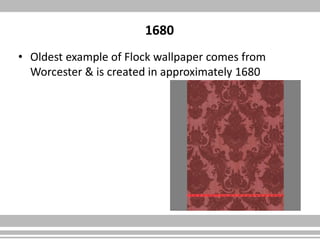
• Oldest example of Flock wallpaper comes from
Worcester & is created in approximately 1680
18th Century
• English develop manufacturing methods
• Fashion conscious Londoners order expensive, hand
made papers
• Papers include, flock papers, marble & stucco effects
& borders
1739
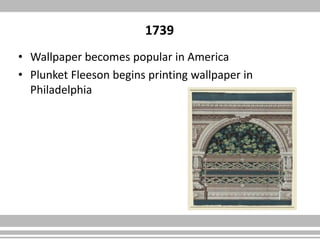
• Wallpaper becomes popular in America
• Plunket Fleeson begins printing wallpaper in
Philadelphia
1778
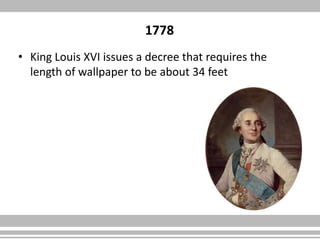
• King Louis XVI issues a decree that requires the
length of wallpaper to be about 34 feet
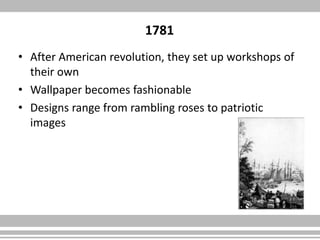
1781
• After American revolution, they set up workshops of
their own
• Wallpaper becomes fashionable
• Designs range from rambling roses to patriotic
images
1785
• The French invent the first machine for printing
wallpaper
• Also invent a way to make an endless roll of
wallpaper
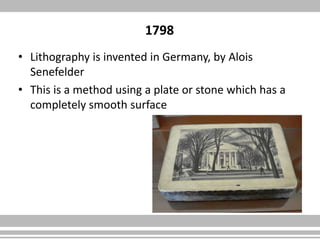
1798
• Lithography is invented in Germany, by Alois
Senefelder
• This is a method using a plate or stone which has a
completely smooth surface
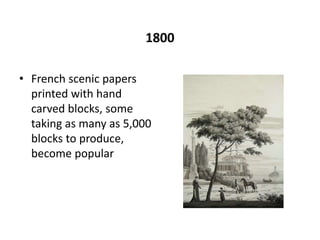
1800
• French scenic papers
printed with hand
carved blocks, some
taking as many as 5,000
blocks to produce,
become popular
1839
• English invent a four colour surface printing machine
• Designs are on hand cut cylinders that can print 400
rolls per day
• It was invented by Charles Potter from Darwen in
Lancashire

Wallpaper history

  • 1.
    © City ofGlasgow College Charity Number SC0 36198
  • 2.
    © City ofGlasgow College Charity Number SC0 36198 WALLPAPER History of
  • 3.
    400 B.C. • Earliestform of paper was introduced by the Egyptians. (papyrus)
  • 4.
    200 B.C. • Thefirst wallpaper appeared in ancient China, because they glued rice paper onto their walls
  • 5.
    105 A.D. • TheChinese started making paper from textile waste, i.e. from rags. • This was the birth of paper as we know it today.
  • 6.
    8th Century • SeveralChinese prisoners, with papermaking skills, worked under Arabs, and taught them how to manufacture paper • The Arabs then spread this knowledge throughout the Middle East
  • 7.
    10th Century • Arabianswere substituting linen fibres for wood & bamboo. Creating a finer sheet of paper • Paper now reached a much higher quality level
  • 8.
    12th Century • Papermakingspreads throughout Europe
  • 9.
    1418 • The earliestEuropean block prints were religious souvenirs, known as “Helgen” • This type of printing may also have been used by the Chinese, as early as the 5th Century
  • 10.
    1481 • King LouisXI of France has 50 rolls of paper painted by an artist • Other rich Europeans commissioned artists to paint for their walls • Real wallpaper can hardly be said to exist until the advent of the printing press
  • 11.
    1509 • Earliest knownfragment of wallpaper was found on beams in the Lodge of Christ’s College, Cambridge (dated 1509) • It is an Italian design, printed on the back of a proclamation by Henry VIII • It is attributed to Hugo Goes, a printer from York
  • 12.
    1599 • A guildof paperhangers is established in France
  • 13.
    1675 • Jean-Michel Papillon,a French engraver & considered to be the inventor of wallpaper, starts making block designs in matching, continuous patterns. • Wallpaper as we know it is on its way
  • 14.
    1680 • Oldest exampleof Flock wallpaper comes from Worcester & is created in approximately 1680
  • 15.
    18th Century • Englishdevelop manufacturing methods • Fashion conscious Londoners order expensive, hand made papers • Papers include, flock papers, marble & stucco effects & borders
  • 16.
    1739 • Wallpaper becomespopular in America • Plunket Fleeson begins printing wallpaper in Philadelphia
  • 17.
    1778 • King LouisXVI issues a decree that requires the length of wallpaper to be about 34 feet
  • 18.
    1781 • After Americanrevolution, they set up workshops of their own • Wallpaper becomes fashionable • Designs range from rambling roses to patriotic images
  • 19.
    1785 • The Frenchinvent the first machine for printing wallpaper • Also invent a way to make an endless roll of wallpaper
  • 20.
    1798 • Lithography isinvented in Germany, by Alois Senefelder • This is a method using a plate or stone which has a completely smooth surface
  • 21.
    1800 • French scenicpapers printed with hand carved blocks, some taking as many as 5,000 blocks to produce, become popular
  • 22.
    1839 • English inventa four colour surface printing machine • Designs are on hand cut cylinders that can print 400 rolls per day • It was invented by Charles Potter from Darwen in Lancashire