Prokaryotes

        Carissa Fletcher
Inter Community School Zurich
Background

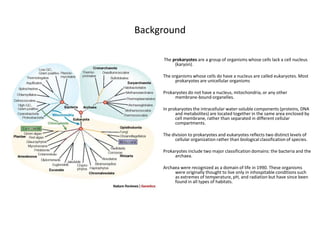
     The prokaryotes are a group of organisms whose cells lack a cell nucleus
          (karyon).

     The organisms whose cells do have a nucleus are called eukaryotes. Most
           prokaryotes are unicellular organisms

     Prokaryotes do not have a nucleus, mitochondria, or any other
          membrane-bound organelles.

     In prokaryotes the intracellular water-soluble components (proteins, DNA
           and metabolites) are located together in the same area enclosed by
           cell membrane, rather than separated in different cellular
           compartments.

     The division to prokaryotes and eukaryotes reflects two distinct levels of
           cellular organization rather than biological classification of species.

     Prokaryotes include two major classification domains: the bacteria and the
          archaea.

     Archaea were recognized as a domain of life in 1990. These organisms
          were originally thought to live only in inhospitable conditions such
          as extremes of temperature, pH, and radiation but have since been
          found in all types of habitats.
Background

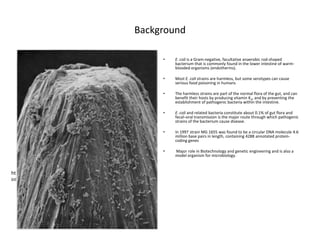
                                                             •   E. coli is a Gram-negative, facultative anaerobic rod-shaped
                                                                 bacterium that is commonly found in the lower intestine of warm-
                                                                 blooded organisms (endotherms).

                                                             •   Most E. coli strains are harmless, but some serotypes can cause
                                                                 serious food poisoning in humans

                                                             •   The harmless strains are part of the normal flora of the gut, and can
                                                                 benefit their hosts by producing vitamin K2, and by preventing the
                                                                 establishment of pathogenic bacteria within the intestine.

                                                             •   E. coli and related bacteria constitute about 0.1% of gut flora and
                                                                 fecal–oral transmission is the major route through which pathogenic
                                                                 strains of the bacterium cause disease.

                                                             •   In 1997 strain MG 1655 was found to be a circular DNA molecule 4.6
                                                                 million base pairs in length, containing 4288 annotated protein-
                                                                 coding genes

                                                             •   Major role in Biotechnology and genetic engineering and is also a
                                                                 model organism for microbiology.


http://abcnews.go.com/topics/lifestyle/health/e-coli-
infection.htm?mediatype=Image
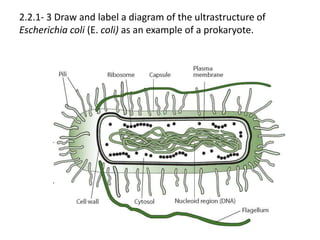
2.2.1- 3 Draw and label a diagram of the ultrastructure of
Escherichia coli (E. coli) as an example of a prokaryote.
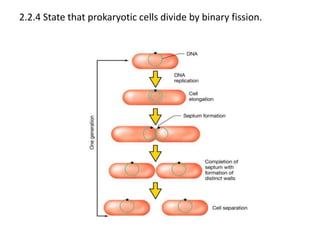
2.2.4 State that prokaryotic cells divide by binary fission.
2.3.4 Compare prokaryotic and eukaryotic cells.


Feature              Prokaryotes           Eukaryotes

Prokaryotes

  • 1.
    Prokaryotes Carissa Fletcher Inter Community School Zurich
  • 2.
    Background The prokaryotes are a group of organisms whose cells lack a cell nucleus (karyon). The organisms whose cells do have a nucleus are called eukaryotes. Most prokaryotes are unicellular organisms Prokaryotes do not have a nucleus, mitochondria, or any other membrane-bound organelles. In prokaryotes the intracellular water-soluble components (proteins, DNA and metabolites) are located together in the same area enclosed by cell membrane, rather than separated in different cellular compartments. The division to prokaryotes and eukaryotes reflects two distinct levels of cellular organization rather than biological classification of species. Prokaryotes include two major classification domains: the bacteria and the archaea. Archaea were recognized as a domain of life in 1990. These organisms were originally thought to live only in inhospitable conditions such as extremes of temperature, pH, and radiation but have since been found in all types of habitats.
  • 3.
    Background • E. coli is a Gram-negative, facultative anaerobic rod-shaped bacterium that is commonly found in the lower intestine of warm- blooded organisms (endotherms). • Most E. coli strains are harmless, but some serotypes can cause serious food poisoning in humans • The harmless strains are part of the normal flora of the gut, and can benefit their hosts by producing vitamin K2, and by preventing the establishment of pathogenic bacteria within the intestine. • E. coli and related bacteria constitute about 0.1% of gut flora and fecal–oral transmission is the major route through which pathogenic strains of the bacterium cause disease. • In 1997 strain MG 1655 was found to be a circular DNA molecule 4.6 million base pairs in length, containing 4288 annotated protein- coding genes • Major role in Biotechnology and genetic engineering and is also a model organism for microbiology. http://abcnews.go.com/topics/lifestyle/health/e-coli- infection.htm?mediatype=Image
  • 4.
    2.2.1- 3 Drawand label a diagram of the ultrastructure of Escherichia coli (E. coli) as an example of a prokaryote.
  • 5.
    2.2.4 State thatprokaryotic cells divide by binary fission.
  • 6.
    2.3.4 Compare prokaryoticand eukaryotic cells. Feature Prokaryotes Eukaryotes