AHP was developed by Thomas L. Saaty in the 
1970s, it is designed to solve complex multi-criteria 
decision problems. 
It is based on the human ability to make 
sound judgments about small problems. 
It breaks down a problem into its smaller 
constituent parts and brings in simple pair 
wise comparison judgment to obtain the 
priorities in the hierarchy.
AHP can deal with complex and unstructured 
problem. 
Its simple to use and understand 
Can handle subjective judgments of 
individuals
Xerox, IBM, British Airways, Ford Motor 
Company, American Army etc
Supplier selection is one of the most 
important components of purchasing and 
supply chain management for many 
companies. Supplier selection is of particular 
importance if companies spend a high 
portion of capital on supply and supply costs 
count a significant part of the total cost
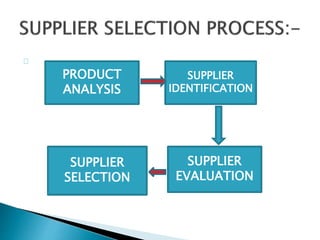
PRODUCT 
ANALYSIS 
SUPPLIER 
IDENTIFICATION 
SUPPLIER 
EVALUATION 
SUPPLIER 
SELECTION
It is a comparison of suppliers using a common 
set of criteria and measures, to identify suppliers with 
the highest potential for meeting the needs of the firm 
consistently 
Selecting the right supplier significantly reduces the 
purchasing cost and improve corporate competitiveness 
Commonly adopted Supplier Selection Techniques are: 
Categorical 
Weighted Point 
Cost Ratio 
Analytic Hierarchy Process (AHP) 
Supplier selection problems are often: 
Multi criteria 
Unstructured 
Involve both quantitative and qualitative factors
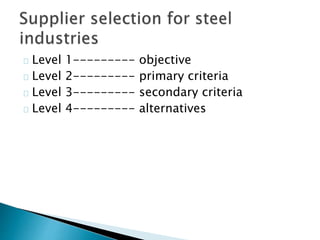
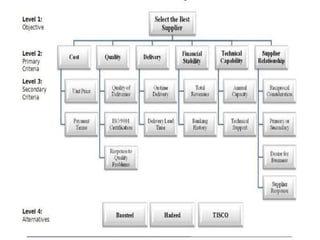
Level 1--------- objective 
Level 2--------- primary criteria 
Level 3--------- secondary criteria 
Level 4--------- alternatives
It is the process in which each supplier is 
accessed and evaluated on the basis of each 
lowest level criteria 
Different evaluation techniques are 
used, based on the nature of each criteria: 
Pair wise Comparisons 
Pair wise Comparisons using Equivalent Scale 
Direct Input of Quantitative Data
The Supplier Selection Model using AHP 
improves Supplier Selection Process: 
Both tangible and intangible factors can be 
included in the process 
Using pair wise comparisons reduced 
dependency of the system on human 
judgment 
The organizational preferences and policies 
are reflected in the relative weights of the 
criteria

Supplier selection using ahp

  • 2.
    AHP was developedby Thomas L. Saaty in the 1970s, it is designed to solve complex multi-criteria decision problems. It is based on the human ability to make sound judgments about small problems. It breaks down a problem into its smaller constituent parts and brings in simple pair wise comparison judgment to obtain the priorities in the hierarchy.
  • 3.
    AHP can dealwith complex and unstructured problem. Its simple to use and understand Can handle subjective judgments of individuals
  • 4.
    Xerox, IBM, BritishAirways, Ford Motor Company, American Army etc
  • 5.
    Supplier selection isone of the most important components of purchasing and supply chain management for many companies. Supplier selection is of particular importance if companies spend a high portion of capital on supply and supply costs count a significant part of the total cost
  • 6.
    PRODUCT ANALYSIS SUPPLIER IDENTIFICATION SUPPLIER EVALUATION SUPPLIER SELECTION
  • 7.
    It is acomparison of suppliers using a common set of criteria and measures, to identify suppliers with the highest potential for meeting the needs of the firm consistently Selecting the right supplier significantly reduces the purchasing cost and improve corporate competitiveness Commonly adopted Supplier Selection Techniques are: Categorical Weighted Point Cost Ratio Analytic Hierarchy Process (AHP) Supplier selection problems are often: Multi criteria Unstructured Involve both quantitative and qualitative factors
  • 8.
    Level 1--------- objective Level 2--------- primary criteria Level 3--------- secondary criteria Level 4--------- alternatives
  • 10.
    It is theprocess in which each supplier is accessed and evaluated on the basis of each lowest level criteria Different evaluation techniques are used, based on the nature of each criteria: Pair wise Comparisons Pair wise Comparisons using Equivalent Scale Direct Input of Quantitative Data
  • 11.
    The Supplier SelectionModel using AHP improves Supplier Selection Process: Both tangible and intangible factors can be included in the process Using pair wise comparisons reduced dependency of the system on human judgment The organizational preferences and policies are reflected in the relative weights of the criteria