Living
Creatures:
Exploring Their
Characteristics
Living creatures have unique characteristics that set them apart from
non-living things. This chapter explores the essential features of living
beings and their life cycles.
by sandeep swamy
Identifying Living and Non-Living
Things
Living Things
Move, eat, grow, breathe, excrete, respond to stimuli,
reproduce, die
Non-Living Things
Lack one or more essential characteristics of living
beings
Movement in Living Things
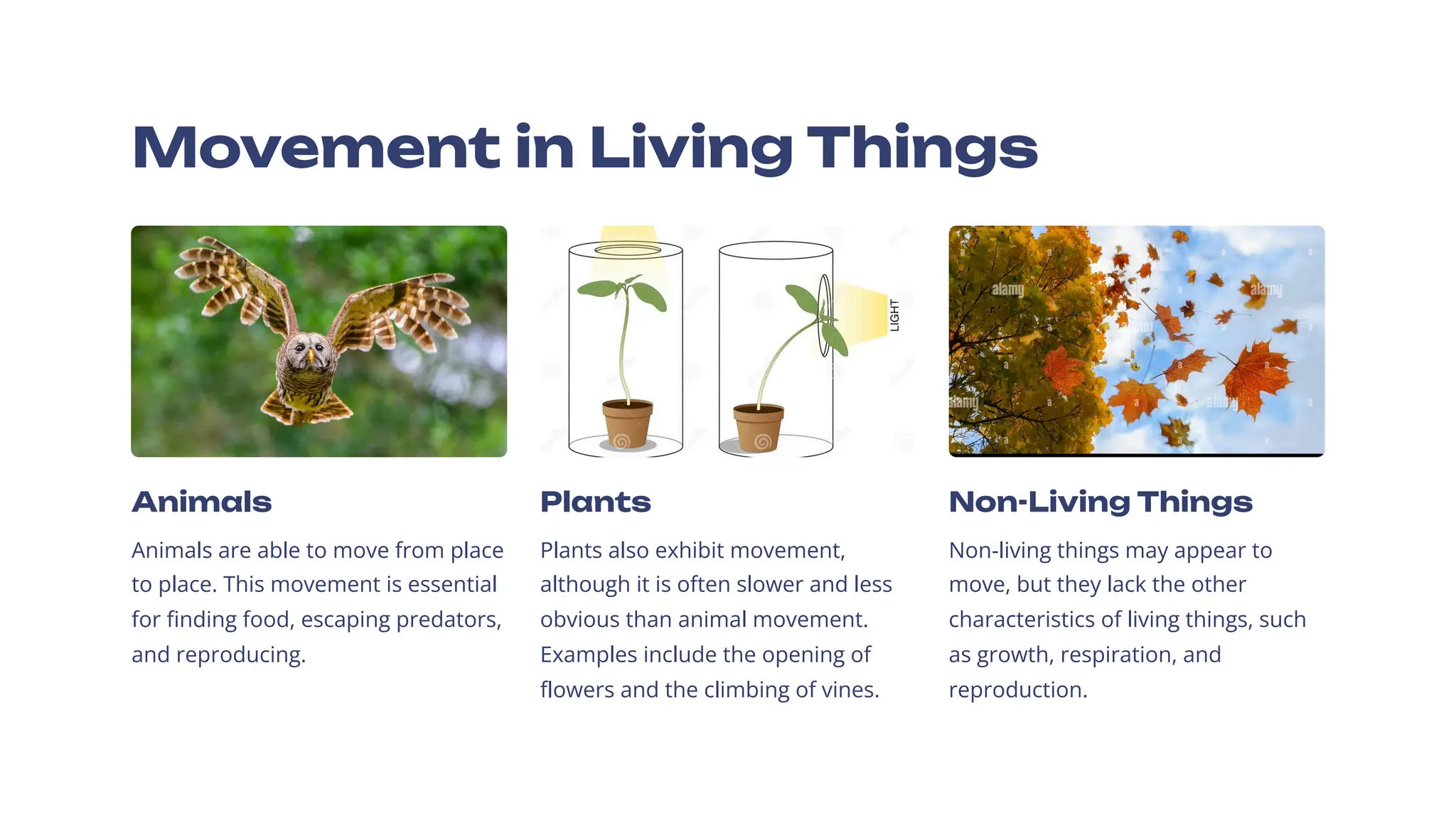
Animals
Animals are able to move from place
to place. This movement is essential
for finding food, escaping predators,
and reproducing.
Plants
Plants also exhibit movement,
although it is often slower and less
obvious than animal movement.
Examples include the opening of
flowers and the climbing of vines.
Non-Living Things
Non-living things may appear to
move, but they lack the other
characteristics of living things, such
as growth, respiration, and
reproduction.
Growth and Nutrition
Seed/Egg
Beginning stage of life
Young
Period of rapid growth and
development
Adult
Fully grown and capable of
reproduction
Respiration and
Excretion
Respiration
All living beings take in air for energy production
Excretion
Removal of waste products from the body
Examples
Breathing in animals, stomata in plants
Response to Stimuli
1
Stimulus
External trigger like touch or light
2
Response
Reaction of living being to the stimulus
3
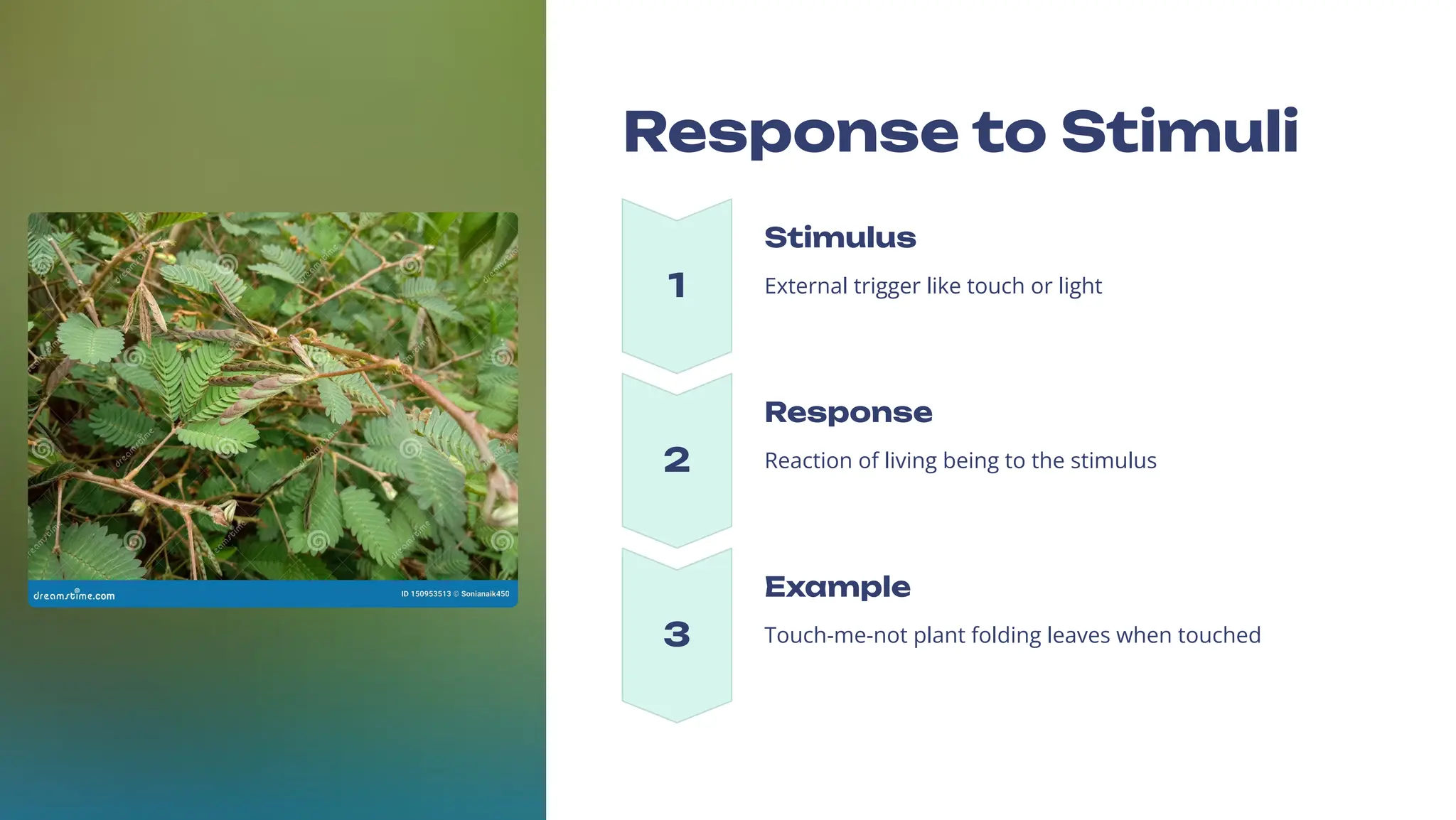
Example
Touch-me-not plant folding leaves when touched
Reproduction and
Death
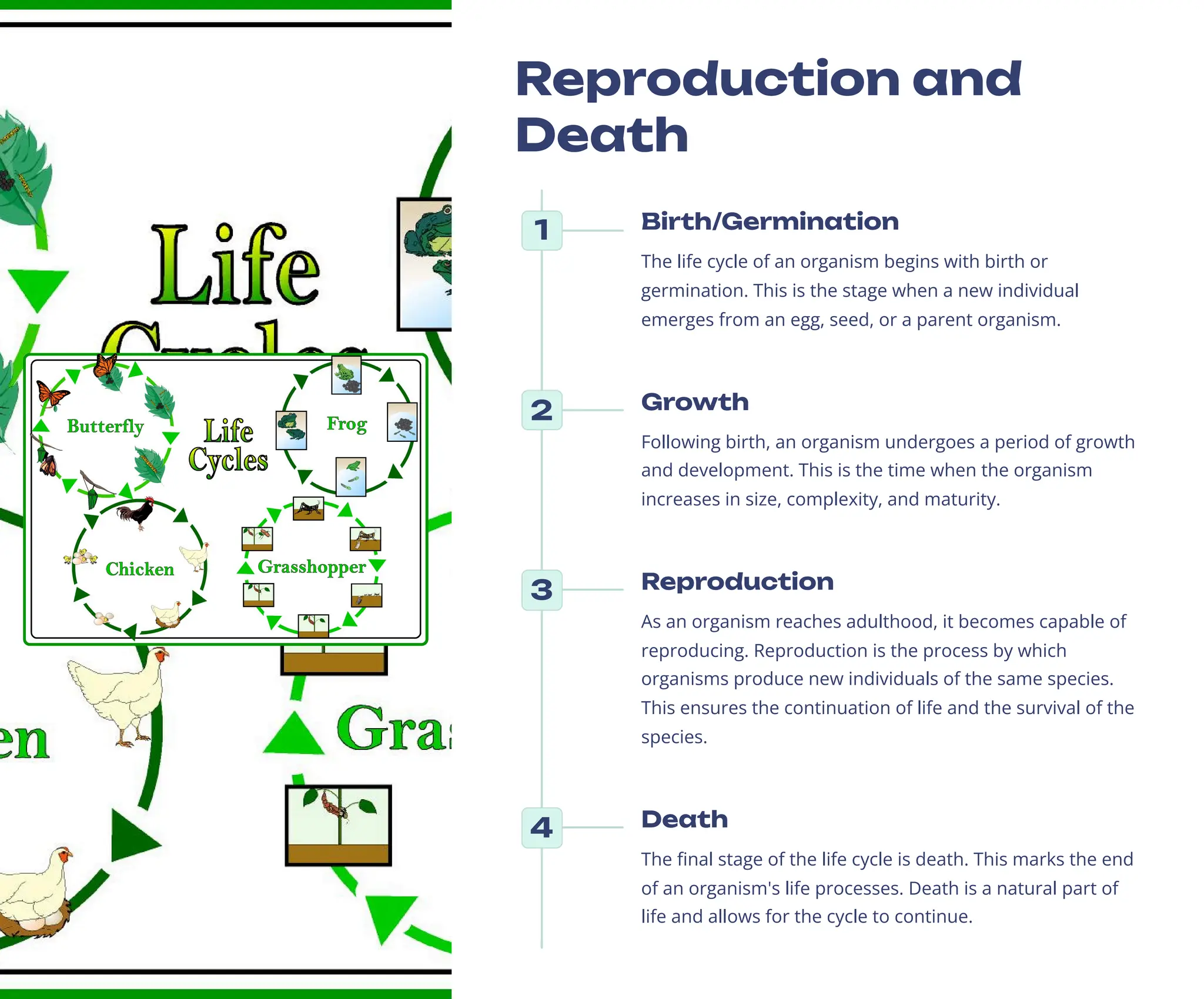
1 Birth/Germination
The life cycle of an organism begins with birth or
germination. This is the stage when a new individual
emerges from an egg, seed, or a parent organism.
2 Growth
Following birth, an organism undergoes a period of growth
and development. This is the time when the organism
increases in size, complexity, and maturity.
3 Reproduction
As an organism reaches adulthood, it becomes capable of
reproducing. Reproduction is the process by which
organisms produce new individuals of the same species.
This ensures the continuation of life and the survival of the
species.
4 Death
The final stage of the life cycle is death. This marks the end
of an organism's life processes. Death is a natural part of
life and allows for the cycle to continue.
Seed Germination
Water
Softens seed coat and
enables growth
Air
Necessary for respiration
Soil
Provides support and
nutrients
Light/Dark
Some seeds require
specific light conditions
Plant Growth and Movement
Root
Roots grow downwards due to
geotropism, absorbing water and
nutrients for survival.
Shoot
The shoot grows upwards towards
light (phototropism), enabling
photosynthesis.
Leaves
Leaves capture sunlight for
photosynthesis and facilitate gas
exchange through stomata.
Life Cycle of a Plant
Seed
The plant's life begins as a
dormant seed.
Seedling
The seed sprouts, growing
into a young plant.
Mature Plant
The plant grows and
develops, producing
flowers and fruits.
New Seeds
The plant produces new
seeds, starting the cycle
again.
Life Cycle of a Mosquito
1
Egg
The mosquito life cycle begins with eggs that
are laid in stagnant water.
2 Larva
The eggs hatch into larvae, which are aquatic
worm-like creatures. Larvae feed on algae and
other organic matter in the water.
3
Pupa
The larvae then transform into pupae, a non-
feeding stage where they undergo
metamorphosis. 4 Adult
After several days, the pupae emerge as adult
mosquitos, which can fly and reproduce,
starting the cycle anew.
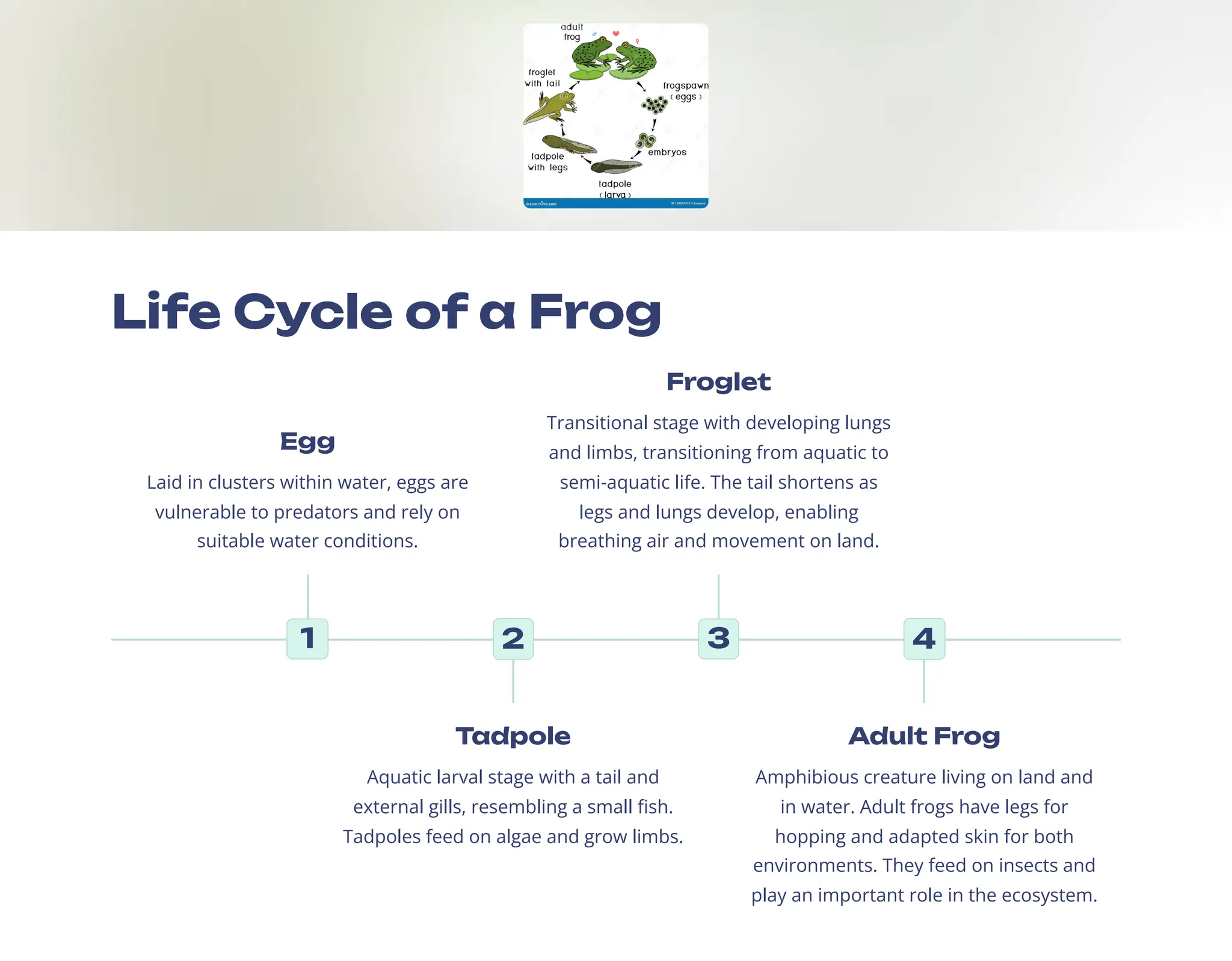
Life Cycle of a Frog
1
Egg
Laid in clusters within water, eggs are
vulnerable to predators and rely on
suitable water conditions.
2
Tadpole
Aquatic larval stage with a tail and
external gills, resembling a small fish.
Tadpoles feed on algae and grow limbs.
3
Froglet
Transitional stage with developing lungs
and limbs, transitioning from aquatic to
semi-aquatic life. The tail shortens as
legs and lungs develop, enabling
breathing air and movement on land.
4
Adult Frog
Amphibious creature living on land and
in water. Adult frogs have legs for
hopping and adapted skin for both
environments. They feed on insects and
play an important role in the ecosystem.
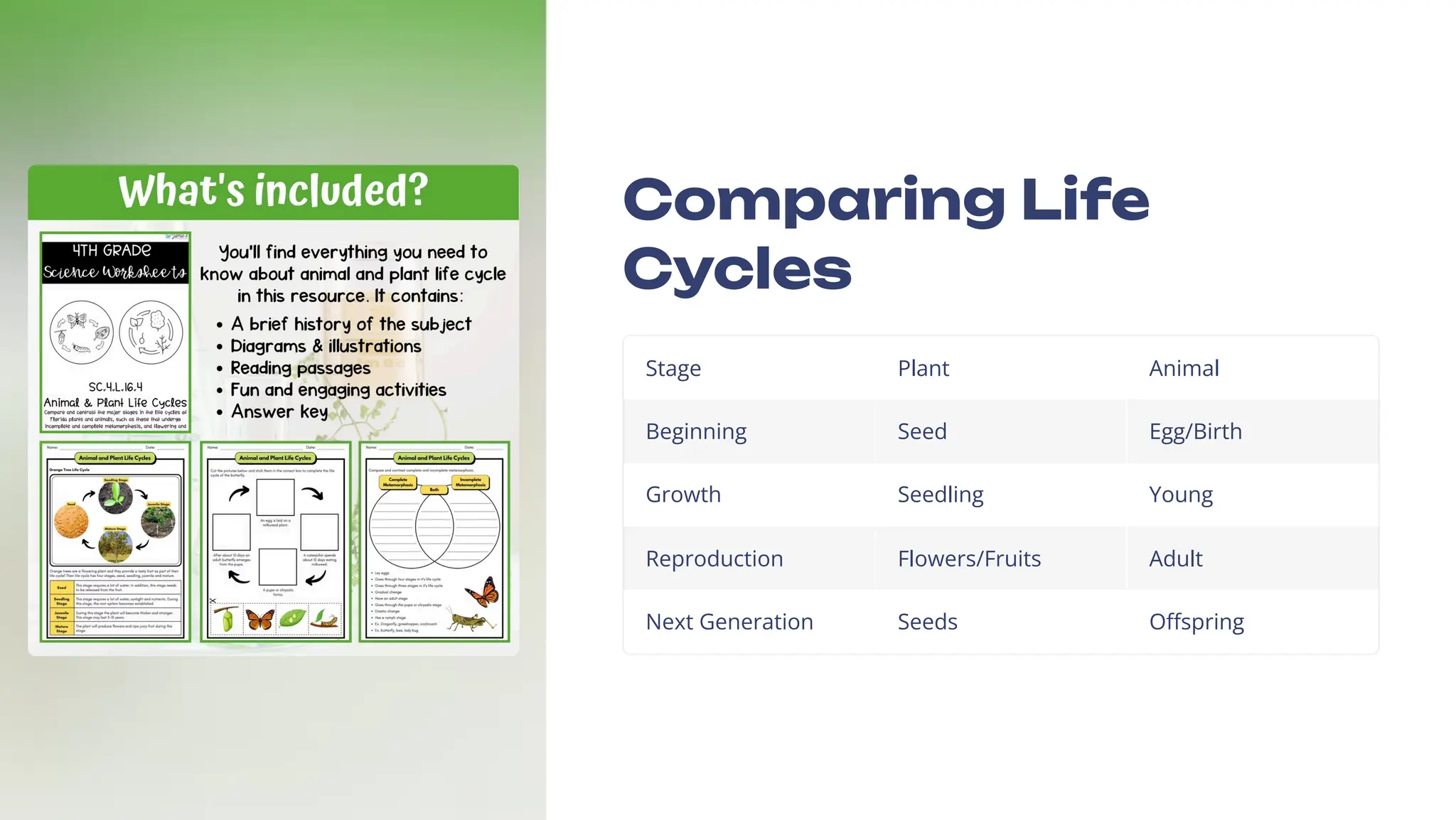
Comparing Life
Cycles
Stage Plant Animal
Beginning Seed Egg/Birth
Growth Seedling Young
Reproduction Flowers/Fruits Adult
Next Generation Seeds Offspring
Importance of Life Cycles
Survival
Adaptations for different life
stages
Continuity
Reproduction ensures species
survival
Biodiversity
Diverse life cycles contribute to
ecosystem balance
Preserving the Living
World
1 Habitat Protection
Preserve natural environments
2 Conservation
Protect endangered species
3 Education
Raise awareness about living creatures
4 Sustainable Practices
Minimize human impact on ecosystems

Living-Creatures-Exploring-Their-Characteristics.pdf 6th class science curiosity

  • 1.
    Living Creatures: Exploring Their Characteristics Living creatureshave unique characteristics that set them apart from non-living things. This chapter explores the essential features of living beings and their life cycles. by sandeep swamy
  • 2.
    Identifying Living andNon-Living Things Living Things Move, eat, grow, breathe, excrete, respond to stimuli, reproduce, die Non-Living Things Lack one or more essential characteristics of living beings
  • 3.
    Movement in LivingThings Animals Animals are able to move from place to place. This movement is essential for finding food, escaping predators, and reproducing. Plants Plants also exhibit movement, although it is often slower and less obvious than animal movement. Examples include the opening of flowers and the climbing of vines. Non-Living Things Non-living things may appear to move, but they lack the other characteristics of living things, such as growth, respiration, and reproduction.
  • 4.
    Growth and Nutrition Seed/Egg Beginningstage of life Young Period of rapid growth and development Adult Fully grown and capable of reproduction
  • 5.
    Respiration and Excretion Respiration All livingbeings take in air for energy production Excretion Removal of waste products from the body Examples Breathing in animals, stomata in plants
  • 6.
    Response to Stimuli 1 Stimulus Externaltrigger like touch or light 2 Response Reaction of living being to the stimulus 3 Example Touch-me-not plant folding leaves when touched
  • 7.
    Reproduction and Death 1 Birth/Germination Thelife cycle of an organism begins with birth or germination. This is the stage when a new individual emerges from an egg, seed, or a parent organism. 2 Growth Following birth, an organism undergoes a period of growth and development. This is the time when the organism increases in size, complexity, and maturity. 3 Reproduction As an organism reaches adulthood, it becomes capable of reproducing. Reproduction is the process by which organisms produce new individuals of the same species. This ensures the continuation of life and the survival of the species. 4 Death The final stage of the life cycle is death. This marks the end of an organism's life processes. Death is a natural part of life and allows for the cycle to continue.
  • 8.
    Seed Germination Water Softens seedcoat and enables growth Air Necessary for respiration Soil Provides support and nutrients Light/Dark Some seeds require specific light conditions
  • 9.
    Plant Growth andMovement Root Roots grow downwards due to geotropism, absorbing water and nutrients for survival. Shoot The shoot grows upwards towards light (phototropism), enabling photosynthesis. Leaves Leaves capture sunlight for photosynthesis and facilitate gas exchange through stomata.
  • 10.
    Life Cycle ofa Plant Seed The plant's life begins as a dormant seed. Seedling The seed sprouts, growing into a young plant. Mature Plant The plant grows and develops, producing flowers and fruits. New Seeds The plant produces new seeds, starting the cycle again.
  • 11.
    Life Cycle ofa Mosquito 1 Egg The mosquito life cycle begins with eggs that are laid in stagnant water. 2 Larva The eggs hatch into larvae, which are aquatic worm-like creatures. Larvae feed on algae and other organic matter in the water. 3 Pupa The larvae then transform into pupae, a non- feeding stage where they undergo metamorphosis. 4 Adult After several days, the pupae emerge as adult mosquitos, which can fly and reproduce, starting the cycle anew.
  • 12.
    Life Cycle ofa Frog 1 Egg Laid in clusters within water, eggs are vulnerable to predators and rely on suitable water conditions. 2 Tadpole Aquatic larval stage with a tail and external gills, resembling a small fish. Tadpoles feed on algae and grow limbs. 3 Froglet Transitional stage with developing lungs and limbs, transitioning from aquatic to semi-aquatic life. The tail shortens as legs and lungs develop, enabling breathing air and movement on land. 4 Adult Frog Amphibious creature living on land and in water. Adult frogs have legs for hopping and adapted skin for both environments. They feed on insects and play an important role in the ecosystem.
  • 13.
    Comparing Life Cycles Stage PlantAnimal Beginning Seed Egg/Birth Growth Seedling Young Reproduction Flowers/Fruits Adult Next Generation Seeds Offspring
  • 14.
    Importance of LifeCycles Survival Adaptations for different life stages Continuity Reproduction ensures species survival Biodiversity Diverse life cycles contribute to ecosystem balance
  • 15.
    Preserving the Living World 1Habitat Protection Preserve natural environments 2 Conservation Protect endangered species 3 Education Raise awareness about living creatures 4 Sustainable Practices Minimize human impact on ecosystems