What is Civilization? 5 characteristics: Advanced cities Complex institutions Advanced technology Specialized workers Record keeping
CIVIL ization   C ities; advanced   I nstitutions; complex ad V anced technology   I ndividual jobs (specialized workers)   L iterate (record keeping)
The First Civilizations The Neolithic revolution allowed people to settle down in one place Villages grew into cities and complex societies emerged Religion developed People took on specific occupations (specialization) Farmer Priest Craftsman Administrator, etc.
Ur Bronze Age civilization Located in Mesopotamia Modern day Iraq Population: 30,000 Around 3000 B.C.E. Ur
Sumerian Firsts 1 st  irrigation system 1 st  libraries 1 st  written contract 1 st  written laws (Code of Hammurabi) 1 st  literature (Epic of Gilgamesh) 1 st  effective use of wheel
 
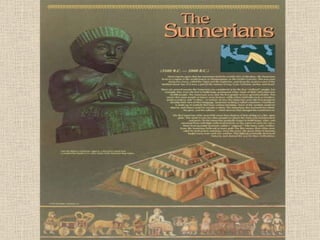
Ziggurat farming Lower & middle class homes Central city (homes of priests & royalty)
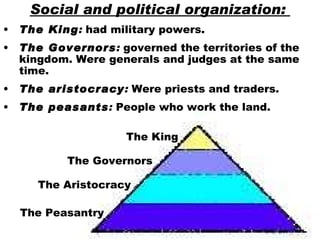
The King The Governors The Aristocracy The Peasantry Social and political organization:  The King :  had military powers. The Governors :  governed the territories of the kingdom. Were generals and judges at the same time. The aristocracy :  Were priests and traders. The peasants :  People who work the land.
Life in Ur Irrigation & specialized agricultural workers lead to food surpluses Government officials supervised and planned irrigation and harvests Artisans such as bronze workers, potters, and textile workers produced items for trade
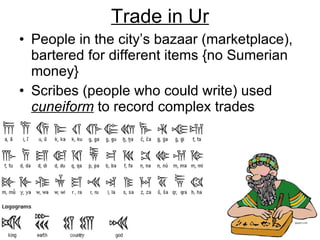
Trade in Ur People in the city’s bazaar (marketplace), bartered for different items {no Sumerian money} Scribes (people who could write) used  cuneiform  to record complex trades
Sumerian Religion Polytheist Religious life centered around giant temple or  ziggurat Animal sacrifices Each city focused on one particular god

Sumeria

  • 1.
  • 2.
    What is Civilization?5 characteristics: Advanced cities Complex institutions Advanced technology Specialized workers Record keeping
  • 3.
    CIVIL ization C ities; advanced I nstitutions; complex ad V anced technology I ndividual jobs (specialized workers) L iterate (record keeping)
  • 4.
    The First CivilizationsThe Neolithic revolution allowed people to settle down in one place Villages grew into cities and complex societies emerged Religion developed People took on specific occupations (specialization) Farmer Priest Craftsman Administrator, etc.
  • 5.
    Ur Bronze Agecivilization Located in Mesopotamia Modern day Iraq Population: 30,000 Around 3000 B.C.E. Ur
  • 6.
    Sumerian Firsts 1st irrigation system 1 st libraries 1 st written contract 1 st written laws (Code of Hammurabi) 1 st literature (Epic of Gilgamesh) 1 st effective use of wheel
  • 7.
  • 8.
    Ziggurat farming Lower& middle class homes Central city (homes of priests & royalty)
  • 9.
    The King TheGovernors The Aristocracy The Peasantry Social and political organization: The King : had military powers. The Governors : governed the territories of the kingdom. Were generals and judges at the same time. The aristocracy : Were priests and traders. The peasants : People who work the land.
  • 10.
    Life in UrIrrigation & specialized agricultural workers lead to food surpluses Government officials supervised and planned irrigation and harvests Artisans such as bronze workers, potters, and textile workers produced items for trade
  • 11.
    Trade in UrPeople in the city’s bazaar (marketplace), bartered for different items {no Sumerian money} Scribes (people who could write) used cuneiform to record complex trades
  • 12.
    Sumerian Religion PolytheistReligious life centered around giant temple or ziggurat Animal sacrifices Each city focused on one particular god