River Valley Civilizations
   What was the relationship between early people
   and the environment?
River Valley Civilizations
   Why did hunters and gatherers not have
   permanent homes?
River Valley Civilizations
   What are the changes that took place as a result of
   the Neolithic Revolution?
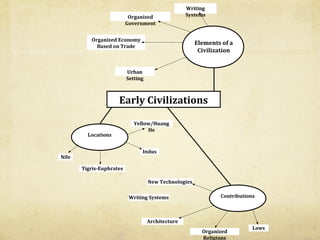
Writing
                           Organized               Systems
                          Government


          Organized Economy
                                                       Elements of a
            Based on Trade
                                                        Civilization


                          Urban
                          Setting


                     Early Civilizations

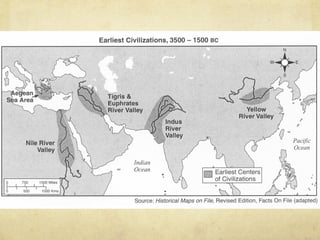
                             Yellow/Huang
                                  He
         Locations


                                Indus
Nile

       Tigris-Euphrates

                                    New Technologies

                           Writing Systems                     Contributions


                                    Architecture
                                                                           Laws
                                                         Organized
                                                         Religions
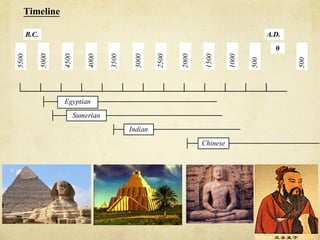
Timeline

       B.C.                                                                                 A.D.
                                                                                              0
5500


              5000


                     4500


                                4000


                                       3500


                                               3000


                                                       2500


                                                              2000


                                                                     1500


                                                                               1000


                                                                                      500


                                                                                                   500
                     Egyptian
                            Sumerian
                                              Indian
                                                                     Chinese
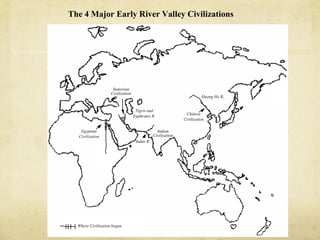
The 4 Major Early River Valley Civilizations


                     Sumerian
                    Civilization
                                                                        Huang He R.


                                    Tigris and
                                                               Chinese
                                   Euphrates R.
                                                              Civilization

   Egyptian                                      Indian
  Civilization                                 Civilization
                                    Indus R.


  Where Civilization began
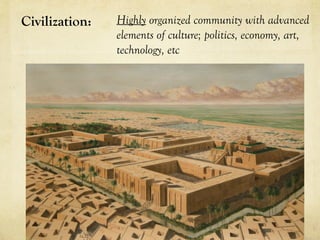
Civilization:   Highly organized community with advanced
                elements of culture; politics, economy, art,
                technology, etc
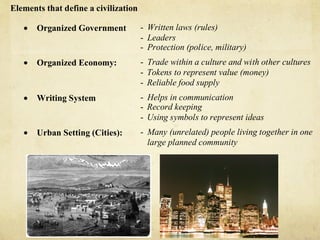
Elements that define a civilization

   •   Organized Government           - Written laws (rules)
                                      - Leaders
                                      - Protection (police, military)
   •   Organized Economy:             - Trade within a culture and with other cultures
                                      - Tokens to represent value (money)
                                      - Reliable food supply
   •   Writing System                 - Helps in communication
                                      - Record keeping
                                      - Using symbols to represent ideas
   •   Urban Setting (Cities):        - Many (unrelated) people living together in one
                                        large planned community
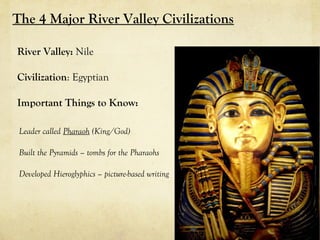
The 4 Major River Valley Civilizations

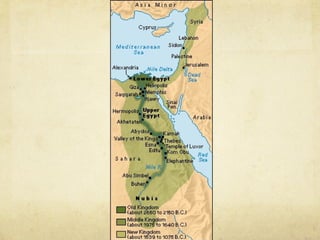
River Valley: Nile

Civilization: Egyptian

Important Things to Know:

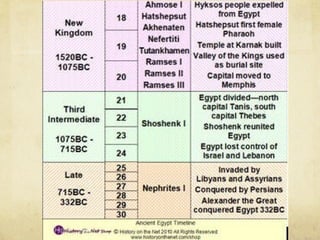
 Leader called Pharaoh (King/God)

 Built the Pyramids – tombs for the Pharaohs

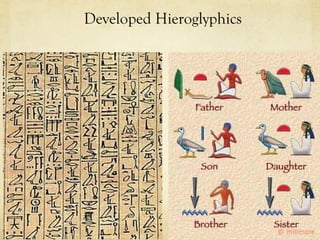
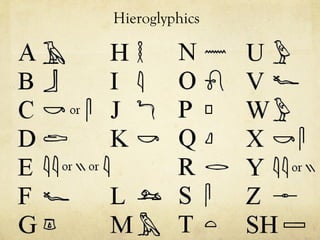
 Developed Hieroglyphics – picture-based writing
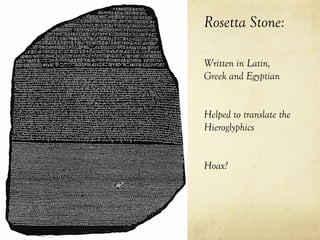
Rosetta Stone:

Written in Latin,
Greek and Egyptian


Helped to translate the
Hieroglyphics


Hoax?
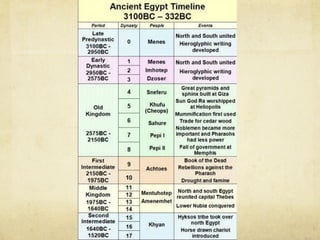
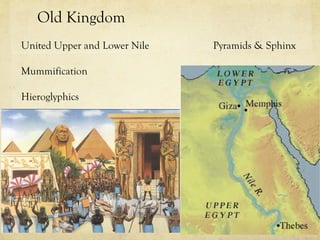
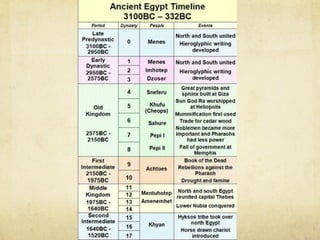
Old Kingdom
United Upper and Lower Nile   Pyramids & Sphinx

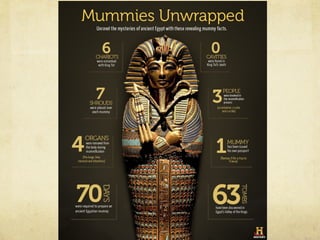
Mummification

Hieroglyphics
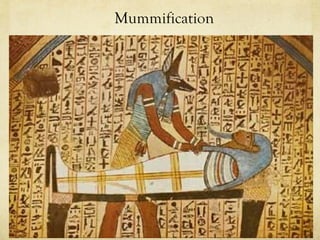
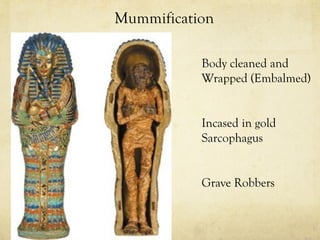
Mummification
Mummification

           Body cleaned and
           Wrapped (Embalmed)


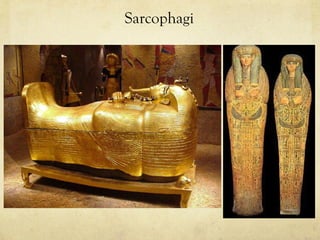
           Incased in gold
           Sarcophagus


           Grave Robbers
Sarcophagi
Developed Hieroglyphics
Hieroglyphics
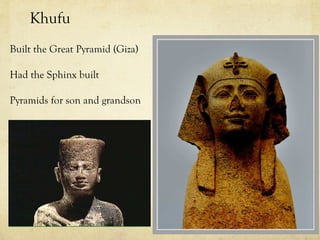
Khufu
Built the Great Pyramid (Giza)

Had the Sphinx built

Pyramids for son and grandson
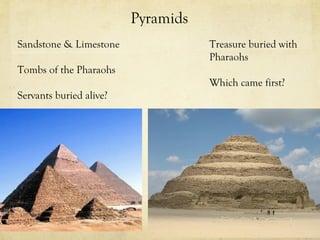
Pyramids
Sandstone & Limestone               Treasure buried with
                                    Pharaohs
Tombs of the Pharaohs
                                    Which came first?
Servants buried alive?
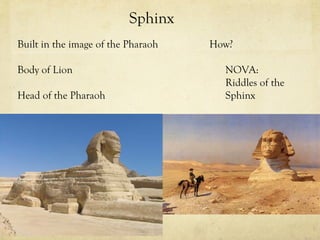
Sphinx
Built in the image of the Pharaoh   How?

Body of Lion                          NOVA:
                                      Riddles of the
Head of the Pharaoh                   Sphinx
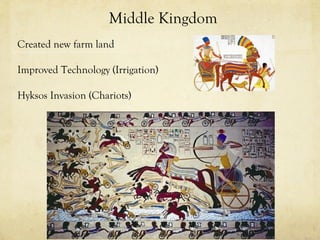
Middle Kingdom
Created new farm land

Improved Technology (Irrigation)

Hyksos Invasion (Chariots)
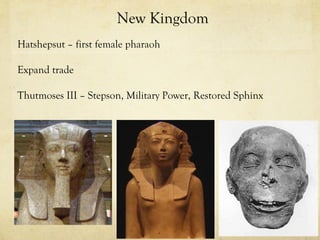
New Kingdom
Hatshepsut – first female pharaoh

Expand trade

Thutmoses III – Stepson, Military Power, Restored Sphinx
New Kingdom
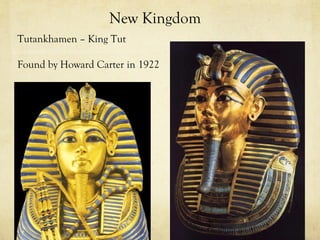
Tutankhamen – King Tut

Found by Howard Carter in 1922
New Kingdom
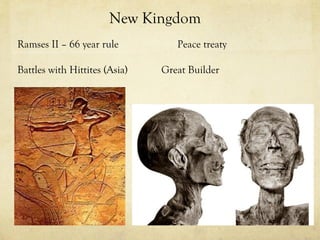
Ramses II – 66 year rule          Peace treaty

Battles with Hittites (Asia)   Great Builder
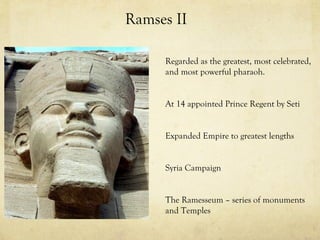
Ramses II

     Regarded as the greatest, most celebrated,
     and most powerful pharaoh.


     At 14 appointed Prince Regent by Seti


     Expanded Empire to greatest lengths


     Syria Campaign


     The Ramesseum – series of monuments
     and Temples
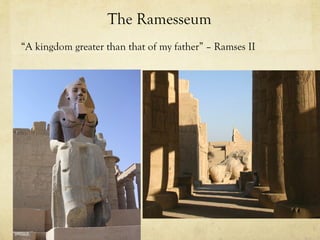
The Ramesseum
“A kingdom greater than that of my father” – Ramses II
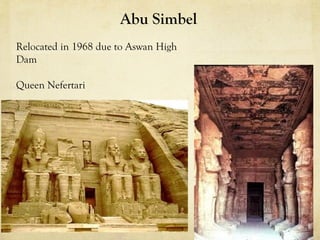
Abu Simbel
Relocated in 1968 due to Aswan High
Dam

Queen Nefertari
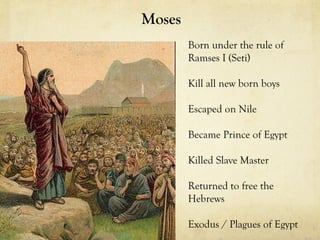
Moses
        Born under the rule of
        Ramses I (Seti)

        Kill all new born boys

        Escaped on Nile

        Became Prince of Egypt

        Killed Slave Master

        Returned to free the
        Hebrews

        Exodus / Plagues of Egypt
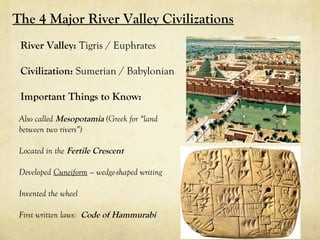
The 4 Major River Valley Civilizations
 River Valley: Tigris / Euphrates

 Civilization: Sumerian / Babylonian

 Important Things to Know:

 Also called Mesopotamia (Greek for “land
 between two rivers”)

 Located in the Fertile Crescent

 Developed Cuneiform – wedge-shaped writing

 Invented the wheel

 First written laws: Code of Hammurabi
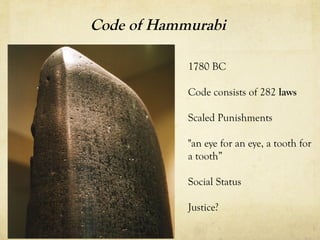
Code of Hammurabi

            1780 BC

            Code consists of 282 laws

            Scaled Punishments

            "an eye for an eye, a tooth for
            a tooth”

            Social Status

            Justice?
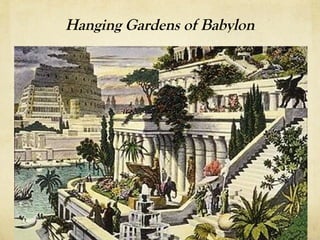
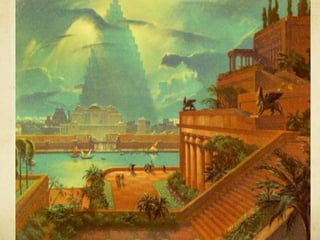
Hanging Gardens of Babylon
The 4 Major River Valley Civilizations
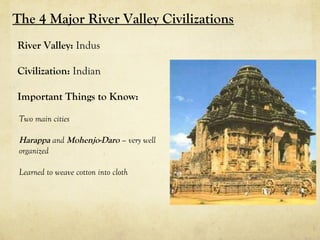
River Valley: Indus

Civilization: Indian

Important Things to Know:

 Two main cities

 Harappa and Mohenjo-Daro – very well
 organized

 Learned to weave cotton into cloth
The 4 Major River Valley Civilizations
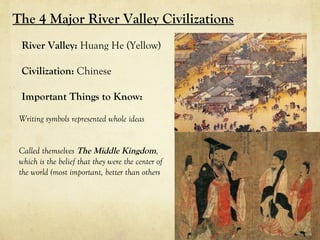
 River Valley: Huang He (Yellow)

 Civilization: Chinese

 Important Things to Know:

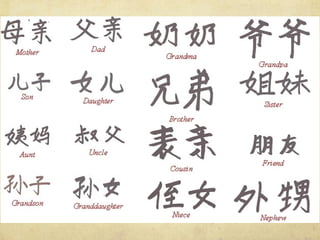
 Writing symbols represented whole ideas


 Called themselves The Middle Kingdom,
 which is the belief that they were the center of
 the world (most important, better than others
What these Civilizations contributed to our life:

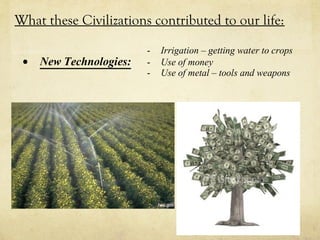
                         -   Irrigation – getting water to crops
 •   New Technologies:   -   Use of money
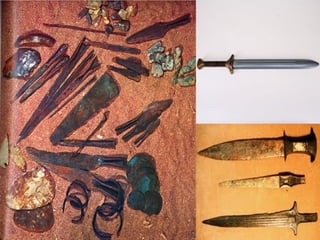
                         -   Use of metal – tools and weapons
What these Civilizations contributed to our life:

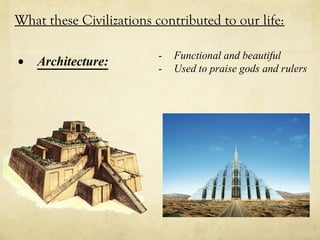
                          -   Functional and beautiful
•   Architecture:         -   Used to praise gods and rulers
What these Civilizations contributed to our life:
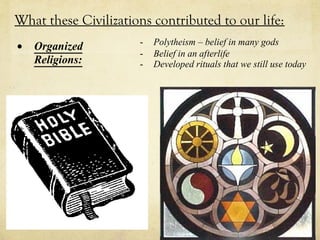
•   Organized         -   Polytheism – belief in many gods
                      -   Belief in an afterlife
    Religions:        -   Developed rituals that we still use today
What these Civilizations contributed to our life:
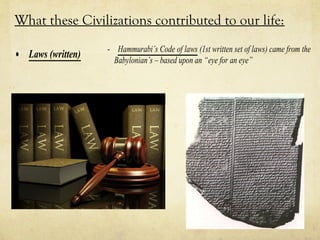
                   - Hammurabi’s Code of laws (1st written set of laws) came from the
• Laws (written)     Babylonian’s – based upon an “eye for an eye”
What these Civilizations contributed to our life:
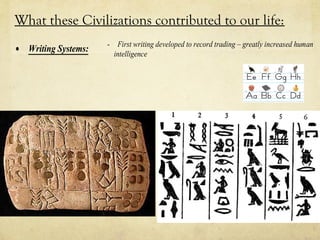
                     - First writing developed to record trading – greatly increased human
• Writing Systems:     intelligence
Essential Questions
   How is a civilization different from a community?
Essential Questions
   What is the reason that the greatest early
   civilizations all developed in river valleys?
Essential Questions
   Compare and contrast the Nile and Tigris-
   Euphrates civilizations
Essential Questions
   Why was the development of writing systems so
   important to the development of civilizations?

Unit ii

  • 1.
    River Valley Civilizations What was the relationship between early people and the environment?
  • 2.
    River Valley Civilizations Why did hunters and gatherers not have permanent homes?
  • 3.
    River Valley Civilizations What are the changes that took place as a result of the Neolithic Revolution?
  • 4.
    Writing Organized Systems Government Organized Economy Elements of a Based on Trade Civilization Urban Setting Early Civilizations Yellow/Huang He Locations Indus Nile Tigris-Euphrates New Technologies Writing Systems Contributions Architecture Laws Organized Religions
  • 6.
    Timeline B.C. A.D. 0 5500 5000 4500 4000 3500 3000 2500 2000 1500 1000 500 500 Egyptian Sumerian Indian Chinese
  • 7.
    The 4 MajorEarly River Valley Civilizations Sumerian Civilization Huang He R. Tigris and Chinese Euphrates R. Civilization Egyptian Indian Civilization Civilization Indus R. Where Civilization began
  • 8.
    Civilization: Highly organized community with advanced elements of culture; politics, economy, art, technology, etc
  • 9.
    Elements that definea civilization • Organized Government - Written laws (rules) - Leaders - Protection (police, military) • Organized Economy: - Trade within a culture and with other cultures - Tokens to represent value (money) - Reliable food supply • Writing System - Helps in communication - Record keeping - Using symbols to represent ideas • Urban Setting (Cities): - Many (unrelated) people living together in one large planned community
  • 10.
    The 4 MajorRiver Valley Civilizations River Valley: Nile Civilization: Egyptian Important Things to Know: Leader called Pharaoh (King/God) Built the Pyramids – tombs for the Pharaohs Developed Hieroglyphics – picture-based writing
  • 11.
    Rosetta Stone: Written inLatin, Greek and Egyptian Helped to translate the Hieroglyphics Hoax?
  • 15.
    Old Kingdom United Upperand Lower Nile Pyramids & Sphinx Mummification Hieroglyphics
  • 16.
  • 17.
    Mummification Body cleaned and Wrapped (Embalmed) Incased in gold Sarcophagus Grave Robbers
  • 18.
  • 19.
  • 20.
  • 21.
    Khufu Built the GreatPyramid (Giza) Had the Sphinx built Pyramids for son and grandson
  • 22.
    Pyramids Sandstone & Limestone Treasure buried with Pharaohs Tombs of the Pharaohs Which came first? Servants buried alive?
  • 23.
    Sphinx Built in theimage of the Pharaoh How? Body of Lion NOVA: Riddles of the Head of the Pharaoh Sphinx
  • 26.
    Middle Kingdom Created newfarm land Improved Technology (Irrigation) Hyksos Invasion (Chariots)
  • 28.
    New Kingdom Hatshepsut –first female pharaoh Expand trade Thutmoses III – Stepson, Military Power, Restored Sphinx
  • 29.
    New Kingdom Tutankhamen –King Tut Found by Howard Carter in 1922
  • 30.
    New Kingdom Ramses II– 66 year rule Peace treaty Battles with Hittites (Asia) Great Builder
  • 31.
    Ramses II Regarded as the greatest, most celebrated, and most powerful pharaoh. At 14 appointed Prince Regent by Seti Expanded Empire to greatest lengths Syria Campaign The Ramesseum – series of monuments and Temples
  • 32.
    The Ramesseum “A kingdomgreater than that of my father” – Ramses II
  • 33.
    Abu Simbel Relocated in1968 due to Aswan High Dam Queen Nefertari
  • 34.
    Moses Born under the rule of Ramses I (Seti) Kill all new born boys Escaped on Nile Became Prince of Egypt Killed Slave Master Returned to free the Hebrews Exodus / Plagues of Egypt
  • 35.
    The 4 MajorRiver Valley Civilizations River Valley: Tigris / Euphrates Civilization: Sumerian / Babylonian Important Things to Know: Also called Mesopotamia (Greek for “land between two rivers”) Located in the Fertile Crescent Developed Cuneiform – wedge-shaped writing Invented the wheel First written laws: Code of Hammurabi
  • 36.
    Code of Hammurabi 1780 BC Code consists of 282 laws Scaled Punishments "an eye for an eye, a tooth for a tooth” Social Status Justice?
  • 37.
  • 40.
    The 4 MajorRiver Valley Civilizations River Valley: Indus Civilization: Indian Important Things to Know: Two main cities Harappa and Mohenjo-Daro – very well organized Learned to weave cotton into cloth
  • 42.
    The 4 MajorRiver Valley Civilizations River Valley: Huang He (Yellow) Civilization: Chinese Important Things to Know: Writing symbols represented whole ideas Called themselves The Middle Kingdom, which is the belief that they were the center of the world (most important, better than others
  • 44.
    What these Civilizationscontributed to our life: - Irrigation – getting water to crops • New Technologies: - Use of money - Use of metal – tools and weapons
  • 46.
    What these Civilizationscontributed to our life: - Functional and beautiful • Architecture: - Used to praise gods and rulers
  • 47.
    What these Civilizationscontributed to our life: • Organized - Polytheism – belief in many gods - Belief in an afterlife Religions: - Developed rituals that we still use today
  • 49.
    What these Civilizationscontributed to our life: - Hammurabi’s Code of laws (1st written set of laws) came from the • Laws (written) Babylonian’s – based upon an “eye for an eye”
  • 50.
    What these Civilizationscontributed to our life: - First writing developed to record trading – greatly increased human • Writing Systems: intelligence
  • 51.
    Essential Questions How is a civilization different from a community?
  • 52.
    Essential Questions What is the reason that the greatest early civilizations all developed in river valleys?
  • 53.
    Essential Questions Compare and contrast the Nile and Tigris- Euphrates civilizations
  • 54.
    Essential Questions Why was the development of writing systems so important to the development of civilizations?