
Global midterm review
The Social Studies Historian: Person who studies the past through researching & creating documents Economi$t: Person who studies how limited resources are allocated to satisfy unlimited needs Geographer: Someone who studies the earth’s physical environment and human habitat Political Scientist: person who studies governments
The Social Studies Sociologist: Person who studies & classifies the ways humans behave in groups Anthropologist: Person who studies the origins and social relationships of people Archeologist: Person who studies ancient civilizations by examining the materials they left behind. Study people & primates Study objects &artifacts
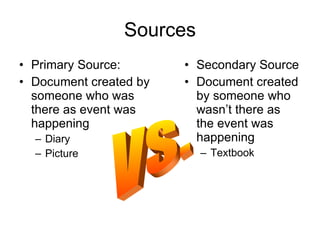
Sources Primary Source: Document created by someone who was there as event was happening Diary Picture Secondary Source Document created by someone who wasn’t there as the event was happening Textbook VS.
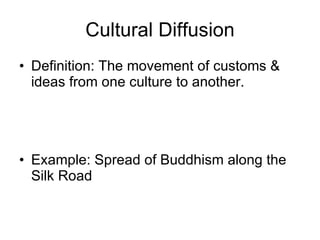
Cultural Diffusion Definition: The movement of customs & ideas from one culture to another. Example: Spread of Buddhism along the Silk Road
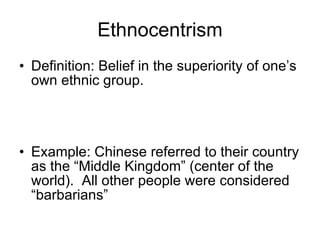
Ethnocentrism Definition: Belief in the superiority of one’s own ethnic group. Example: Chinese referred to their country as the “Middle Kingdom” (center of the world).  All other people were considered “barbarians”
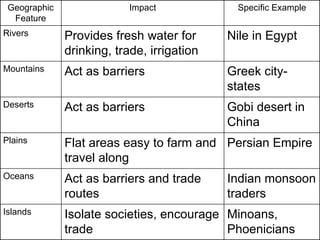
Minoans, Phoenicians Isolate societies, encourage trade Islands Indian monsoon traders Act as barriers and trade routes Oceans Persian Empire Flat areas easy to farm and travel along Plains Gobi desert in China Act as barriers Deserts Greek city-states Act as barriers Mountains Nile in Egypt Provides fresh water for drinking, trade, irrigation Rivers Specific Example Impact Geographic Feature
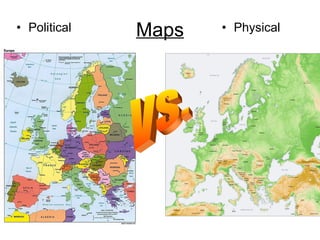
Maps Political  Physical  VS.
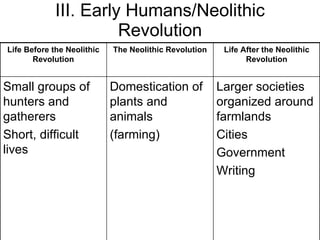
III. Early Humans/Neolithic Revolution Larger societies organized around farmlands Cities Government Writing Domestication of plants and animals (farming) Small groups of hunters and gatherers Short, difficult lives Life After the Neolithic Revolution The Neolithic Revolution Life Before the Neolithic Revolution
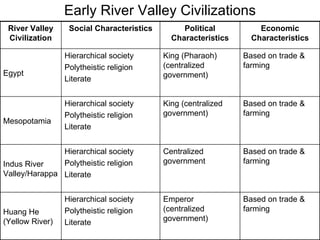
Early River Valley Civilizations Based on trade & farming Emperor (centralized government) Hierarchical society Polytheistic religion Literate Huang He (Yellow River) Based on trade & farming Centralized government Hierarchical society Polytheistic religion Literate Indus River Valley/Harappa Based on trade & farming King (centralized government) Hierarchical society Polytheistic religion Literate Mesopotamia Based on trade & farming King (Pharaoh) (centralized government) Hierarchical society Polytheistic religion Literate Egypt Economic Characteristics Political Characteristics Social Characteristics River Valley Civilization
Common Themes
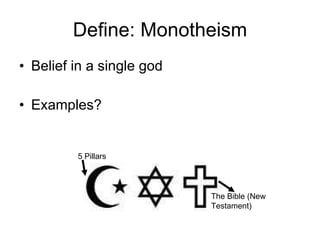
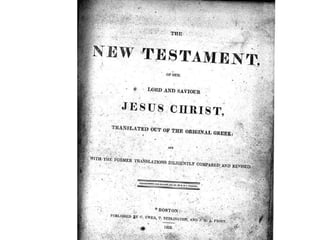
Define: Monotheism Belief in a single god Examples? The Bible (New Testament) 5 Pillars
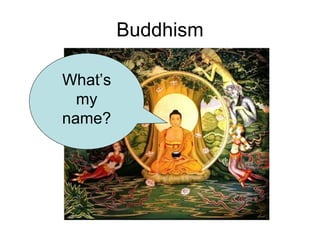
Buddhism What’s my name?
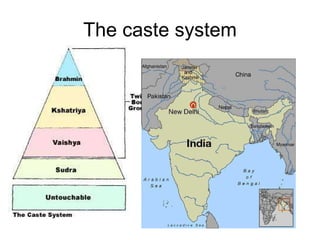
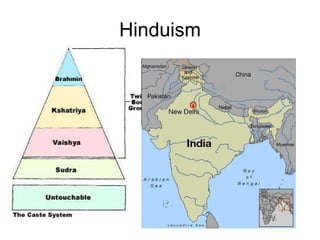
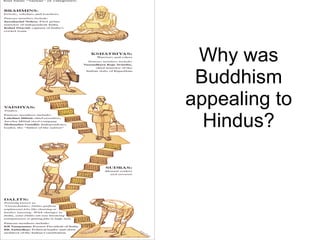
The caste system
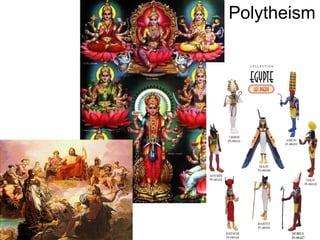
Polytheism
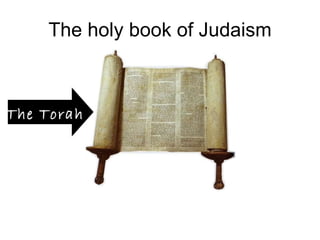
The holy book of Judaism The Torah
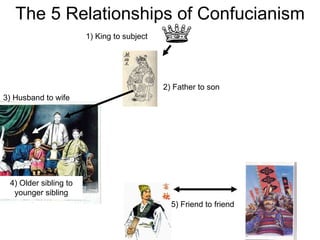
The 5 Relationships of Confucianism 1) King to subject 2) Father to son 4) Older sibling to younger sibling 5) Friend to friend 3) Husband to wife
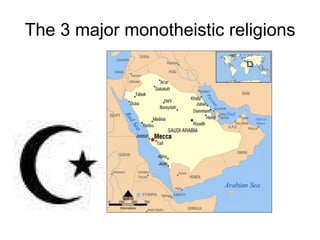
The 3 major monotheistic religions
Hinduism
Right now Pass your homework forward and to the right Take out your review sheet Help before or after school?
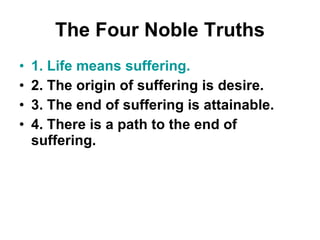
The Four Noble Truths 1. Life means suffering. 2. The origin of suffering is desire. 3. The end of suffering is attainable. 4. There is a path to the end of suffering.
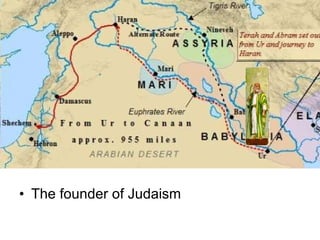
The founder of Judaism
 
 
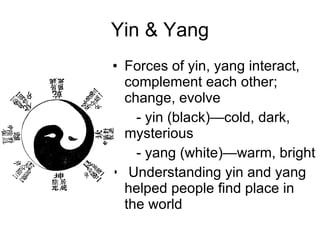
Yin & Yang Forces of yin, yang interact, complement each other; change, evolve   - yin (black)—cold, dark,  mysterious    - yang (white)—warm, bright  Understanding yin and yang helped people find place in the world
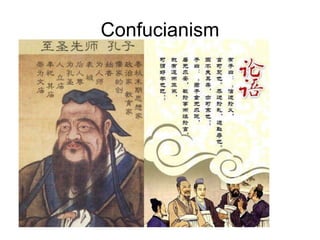
What role did Confucianism play in China’s development? Confucianism set out family and social roles - following these roles helped Chinese  avoid conflict and live peacefully Rulers tried to live up to Confucius’ model Confucius encouraged education, creating fair and skilled officials (Civil Service)
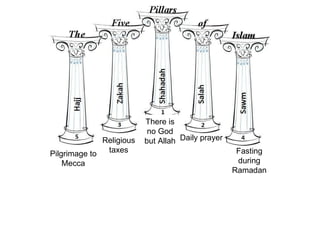
Pilgrimage to Mecca There is no God but Allah Daily prayer Religious taxes Fasting during Ramadan
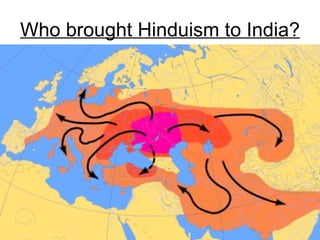
Who brought Hinduism to India?
Why was Buddhism appealing to Hindus?
Confucianism
Animism
 
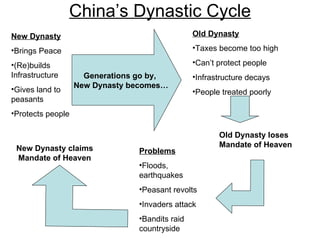
China’s Dynastic Cycle New Dynasty Brings Peace (Re)builds Infrastructure Gives land to peasants Protects people Generations go by, New Dynasty becomes… Old Dynasty Taxes become too high Can’t protect people Infrastructure decays People treated poorly Problems Floods, earthquakes Peasant revolts Invaders attack Bandits raid countryside New Dynasty claims Mandate of Heaven Old Dynasty loses Mandate of Heaven
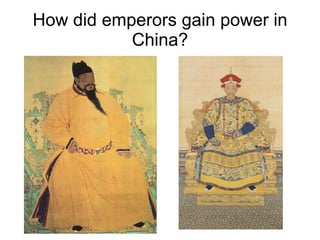
How did emperors gain power in China?
Organization of Chinese government Bureaucracy: people who work for the government Civil service    exam meant that only qualified people could work in government
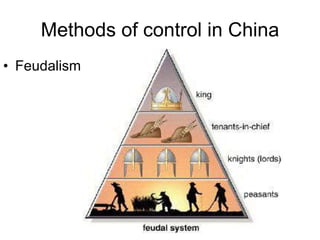
Methods of control in China Feudalism
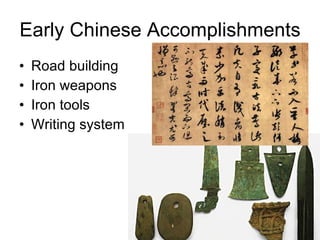
Early Chinese Accomplishments Road building Iron weapons Iron tools Writing system
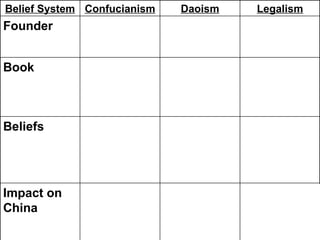
China continues to have a strong government and use strict punishment system. the people of China focused on bettering themselves and becoming one with nature Trained civil service Better government Foundation of Chinese government Foundation for social order in Asia Impact on China People are naturally evil and need a strong government and strict punishments to control them accepted things as they were; did not get involved in government Tried to understand nature, live in harmony with its rhythms 5 Relationships Filial Piety (respect for elders & ancestors) Beliefs N/A Dao De Jing The Analects Book Han Feizi Laozi Confucius Founder Legalism Daoism Confucianism Belief System
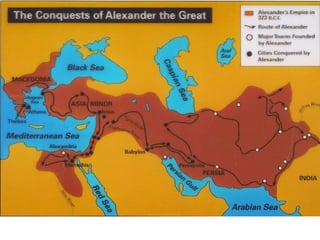
Famous Greeks Socrates: Father of Western Philosophy Plato: famous philosopher Aristotle: philosopher, taught Alex the Great Pericles: Leader of Athens during golden age Alexander the Great: Macedonian, conquered most of the world… Hellenistic culture Homer: wrote the Iliad & Odyssey (basis for Greek cultural tradition
Kinds of Governments Democracy: people vote Direct democracy: everyone votes on every law Oligarchy: small group of people control country Monarchy: one person in charge (king, emperor) Aristocracy: small hereditary group of wealthy people control country
Characteristics of Athens Social: Political: Economic:
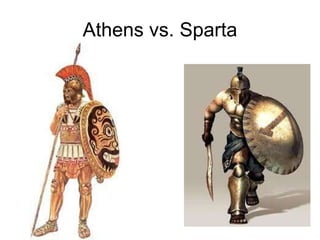
Athens vs. Sparta
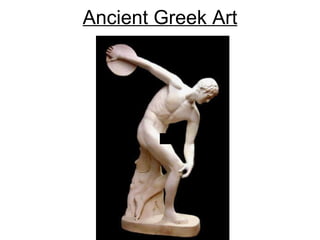
Ancient Greek Art
 
Thematic Essay

Global midterm review

  • 1.
  • 2.
    The Social StudiesHistorian: Person who studies the past through researching & creating documents Economi$t: Person who studies how limited resources are allocated to satisfy unlimited needs Geographer: Someone who studies the earth’s physical environment and human habitat Political Scientist: person who studies governments
  • 3.
    The Social StudiesSociologist: Person who studies & classifies the ways humans behave in groups Anthropologist: Person who studies the origins and social relationships of people Archeologist: Person who studies ancient civilizations by examining the materials they left behind. Study people & primates Study objects &artifacts
  • 4.
    Sources Primary Source:Document created by someone who was there as event was happening Diary Picture Secondary Source Document created by someone who wasn’t there as the event was happening Textbook VS.
  • 5.
    Cultural Diffusion Definition:The movement of customs & ideas from one culture to another. Example: Spread of Buddhism along the Silk Road
  • 6.
    Ethnocentrism Definition: Beliefin the superiority of one’s own ethnic group. Example: Chinese referred to their country as the “Middle Kingdom” (center of the world). All other people were considered “barbarians”
  • 7.
    Minoans, Phoenicians Isolatesocieties, encourage trade Islands Indian monsoon traders Act as barriers and trade routes Oceans Persian Empire Flat areas easy to farm and travel along Plains Gobi desert in China Act as barriers Deserts Greek city-states Act as barriers Mountains Nile in Egypt Provides fresh water for drinking, trade, irrigation Rivers Specific Example Impact Geographic Feature
  • 8.
    Maps Political Physical VS.
  • 9.
    III. Early Humans/NeolithicRevolution Larger societies organized around farmlands Cities Government Writing Domestication of plants and animals (farming) Small groups of hunters and gatherers Short, difficult lives Life After the Neolithic Revolution The Neolithic Revolution Life Before the Neolithic Revolution
  • 10.
    Early River ValleyCivilizations Based on trade & farming Emperor (centralized government) Hierarchical society Polytheistic religion Literate Huang He (Yellow River) Based on trade & farming Centralized government Hierarchical society Polytheistic religion Literate Indus River Valley/Harappa Based on trade & farming King (centralized government) Hierarchical society Polytheistic religion Literate Mesopotamia Based on trade & farming King (Pharaoh) (centralized government) Hierarchical society Polytheistic religion Literate Egypt Economic Characteristics Political Characteristics Social Characteristics River Valley Civilization
  • 11.
  • 12.
    Define: Monotheism Beliefin a single god Examples? The Bible (New Testament) 5 Pillars
  • 13.
  • 14.
  • 15.
  • 16.
    The holy bookof Judaism The Torah
  • 17.
    The 5 Relationshipsof Confucianism 1) King to subject 2) Father to son 4) Older sibling to younger sibling 5) Friend to friend 3) Husband to wife
  • 18.
    The 3 majormonotheistic religions
  • 19.
  • 20.
    Right now Passyour homework forward and to the right Take out your review sheet Help before or after school?
  • 21.
    The Four NobleTruths 1. Life means suffering. 2. The origin of suffering is desire. 3. The end of suffering is attainable. 4. There is a path to the end of suffering.
  • 22.
  • 23.
  • 24.
  • 25.
    Yin & YangForces of yin, yang interact, complement each other; change, evolve - yin (black)—cold, dark, mysterious - yang (white)—warm, bright Understanding yin and yang helped people find place in the world
  • 26.
    What role didConfucianism play in China’s development? Confucianism set out family and social roles - following these roles helped Chinese avoid conflict and live peacefully Rulers tried to live up to Confucius’ model Confucius encouraged education, creating fair and skilled officials (Civil Service)
  • 27.
    Pilgrimage to MeccaThere is no God but Allah Daily prayer Religious taxes Fasting during Ramadan
  • 28.
  • 29.
    Why was Buddhismappealing to Hindus?
  • 30.
  • 31.
  • 32.
  • 33.
    China’s Dynastic CycleNew Dynasty Brings Peace (Re)builds Infrastructure Gives land to peasants Protects people Generations go by, New Dynasty becomes… Old Dynasty Taxes become too high Can’t protect people Infrastructure decays People treated poorly Problems Floods, earthquakes Peasant revolts Invaders attack Bandits raid countryside New Dynasty claims Mandate of Heaven Old Dynasty loses Mandate of Heaven
  • 34.
    How did emperorsgain power in China?
  • 35.
    Organization of Chinesegovernment Bureaucracy: people who work for the government Civil service  exam meant that only qualified people could work in government
  • 36.
    Methods of controlin China Feudalism
  • 37.
    Early Chinese AccomplishmentsRoad building Iron weapons Iron tools Writing system
  • 38.
    China continues tohave a strong government and use strict punishment system. the people of China focused on bettering themselves and becoming one with nature Trained civil service Better government Foundation of Chinese government Foundation for social order in Asia Impact on China People are naturally evil and need a strong government and strict punishments to control them accepted things as they were; did not get involved in government Tried to understand nature, live in harmony with its rhythms 5 Relationships Filial Piety (respect for elders & ancestors) Beliefs N/A Dao De Jing The Analects Book Han Feizi Laozi Confucius Founder Legalism Daoism Confucianism Belief System
  • 39.
    Famous Greeks Socrates:Father of Western Philosophy Plato: famous philosopher Aristotle: philosopher, taught Alex the Great Pericles: Leader of Athens during golden age Alexander the Great: Macedonian, conquered most of the world… Hellenistic culture Homer: wrote the Iliad & Odyssey (basis for Greek cultural tradition
  • 40.
    Kinds of GovernmentsDemocracy: people vote Direct democracy: everyone votes on every law Oligarchy: small group of people control country Monarchy: one person in charge (king, emperor) Aristocracy: small hereditary group of wealthy people control country
  • 41.
    Characteristics of AthensSocial: Political: Economic:
  • 42.
  • 43.
  • 44.
  • 45.