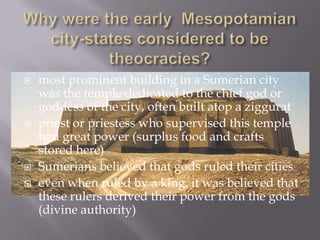
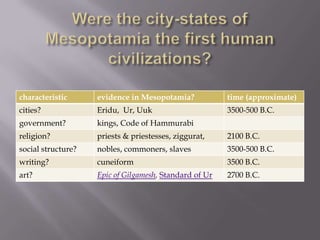
Civilization first began in Mesopotamia due to favorable environmental conditions. The flooding and sediment deposition of the Tigris and Euphrates Rivers enriched the soil and made agriculture possible. As populations grew, people constructed irrigation systems to control floods and produce surplus food, allowing cities and complex societies to form. The first major Sumerian city of Uruk reached a population of 50,000 by 2700 BCE, with ziggurats and temples dominating the landscape. Social stratification developed between nobles, commoners, and slaves. Writing, law, trade, and many innovations originated in early Mesopotamian societies, laying the foundations for later civilizations.