4 Early River Valley Civilizations- ERVC
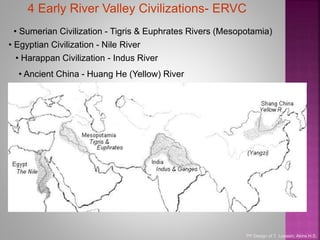
• Sumerian Civilization - Tigris & Euphrates Rivers (Mesopotamia)
• Egyptian Civilization - Nile River
• Harappan Civilization - Indus River
• Ancient China - Huang He (Yellow) River
PP Design of T. Loessin; Akins H.S.
http://www.youtube.com/watch?v=Ki8S5I83Ccc&list=P
LXDguX5KyGMZmihM1X-oZPT87pElD00V5
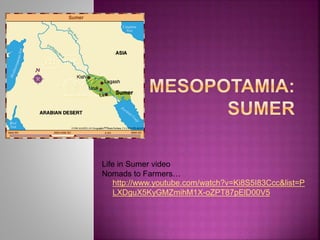
Life in Sumer video
Nomads to Farmers…
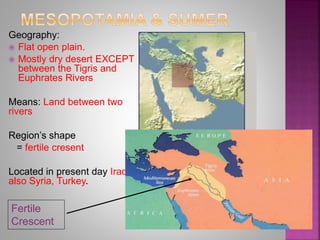
Geography:
 Flat open plain.
 Mostly dry desert EXCEPT
between the Tigris and
Euphrates Rivers
Means: Land between two
rivers
Region’s shape
= fertile cresent
Located in present day Iraq,
also Syria, Turkey.
Fertile
Crescent
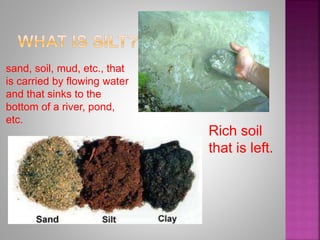
sand, soil, mud, etc., that
is carried by flowing water
and that sinks to the
bottom of a river, pond,
etc.
Rich soil
that is left.
 Unpredictable flooding
 Both rivers flooded
 Dry summer months
 No natural barriers (size of Massachusetts)
 Need protection!
 Limited natural resources (wood, metals and
tools)
Unpredictable flooding
 SOLUTION – irrigation ditches
No natural barriers (size of
Massachusetts)
 SOLUTION – built city walls with mud bricks
Limited natural resources (wood, metals
and tools)
 SOLUTION – traded with other people
 A city-state is: a state that has its own government and
consists of a city and the area around it
Examples: Uruk, Lagosh, Umma, Sumer
Each city-state had its
 own government
 Center of Trade
 own Ruler
-Originally priests held all the power
-As wars became more frequent, kings took over
 Why? Because the kings were military leaders
 Dynasty: system in which monarchs (rulers) pass power from
father to son
-Monarchs ruled city-states
 City and the surrounding land it controlled
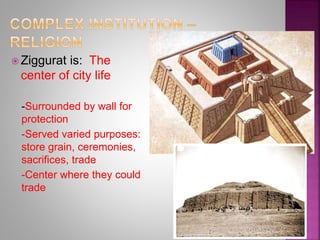
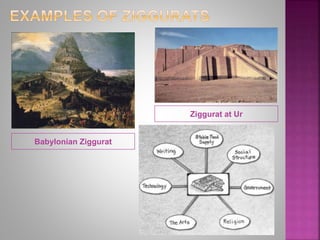
 Ziggurat is: The
center of city life
-Surrounded by wall for
protection
-Served varied purposes:
store grain, ceremonies,
sacrifices, trade
-Center where they could
trade
Babylonian Ziggurat
Ziggurat at Ur
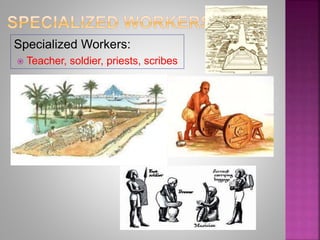
Specialized Workers:
 Teacher, soldier, priests, scribes
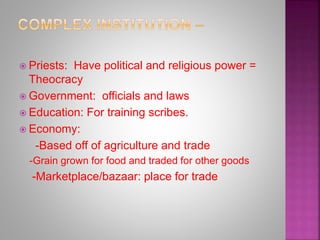
 Priests: Have political and religious power =
Theocracy
 Government: officials and laws
 Education: For training scribes.
 Economy:
-Based off of agriculture and trade
-Grain grown for food and traded for other goods
-Marketplace/bazaar: place for trade
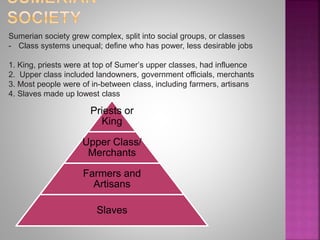
Priests or
King
Upper Class/
Merchants
Farmers and
Artisans
Slaves
Sumerian society grew complex, split into social groups, or classes
- Class systems unequal; define who has power, less desirable jobs
1. King, priests were at top of Sumerʼs upper classes, had influence
2. Upper class included landowners, government officials, merchants
3. Most people were of in-between class, including farmers, artisans
4. Slaves made up lowest class
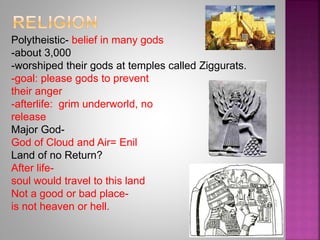
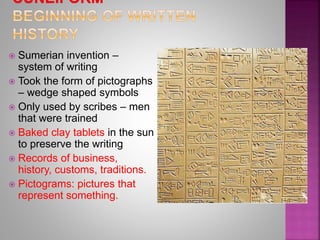
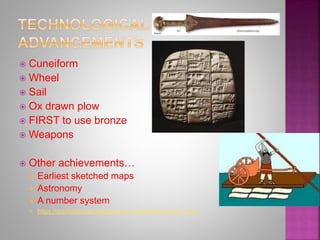
Polytheistic- belief in many gods
-about 3,000
-worshiped their gods at temples called Ziggurats.
-goal: please gods to prevent
their anger
-afterlife: grim underworld, no
release
Major God-
God of Cloud and Air= Enil
Land of no Return?
After life-
soul would travel to this land
Not a good or bad place-
is not heaven or hell.
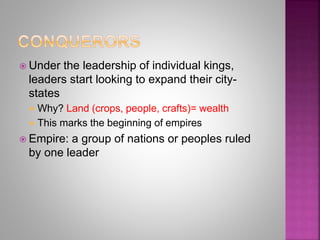
 Sumerian invention –
system of writing
 Took the form of pictographs
– wedge shaped symbols
 Only used by scribes – men
that were trained
 Baked clay tablets in the sun
to preserve the writing
 Records of business,
history, customs, traditions.
 Pictograms: pictures that
represent something.
 Cuneiform
 Wheel
 Sail
 Ox drawn plow
 FIRST to use bronze
 Weapons
 Other achievements…
 Earliest sketched maps
 Astronomy
 A number system
 https://gizzisgoodies.wikispaces.com/Sumerians+5th+hour
 Under the leadership of individual kings,
leaders start looking to expand their city-
states
 Why? Land (crops, people, crafts)= wealth
 This marks the beginning of empires
 Empire: a group of nations or peoples ruled
by one leader
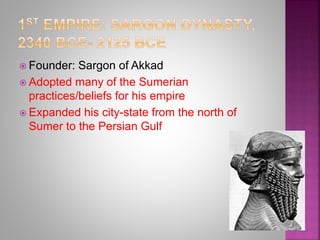
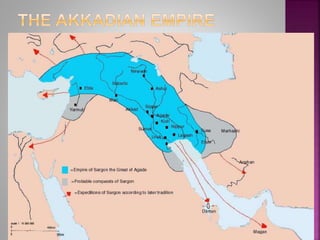
 Founder: Sargon of Akkad
 Adopted many of the Sumerian
practices/beliefs for his empire
 Expanded his city-state from the north of
Sumer to the Persian Gulf
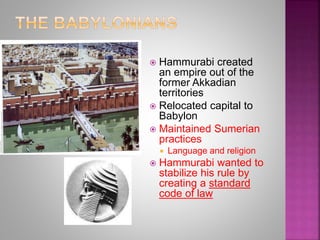
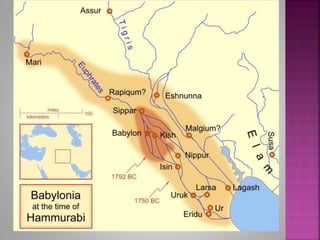
 Hammurabi created
an empire out of the
former Akkadian
territories
 Relocated capital to
Babylon
 Maintained Sumerian
practices
 Language and religion
 Hammurabi wanted to
stabilize his rule by
creating a standard
code of law
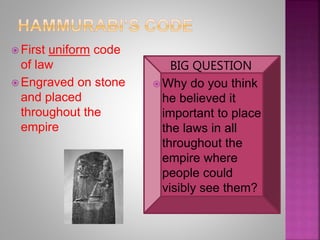
 First uniform code
of law
 Engraved on stone
and placed
throughout the
empire
BIG QUESTION
 Why do you think
he believed it
important to place
the laws in all
throughout the
empire where
people could
visibly see them?
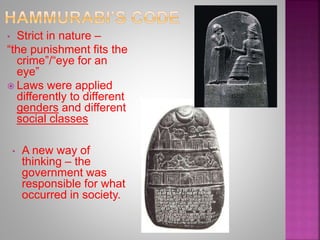
• Strict in nature –
“the punishment fits the
crime”/“eye for an
eye”
 Laws were applied
differently to different
genders and different
social classes
• A new way of
thinking – the
government was
responsible for what
occurred in society.

Mesopotamia and Sumer power point presentation.pptx

  • 1.
    4 Early RiverValley Civilizations- ERVC • Sumerian Civilization - Tigris & Euphrates Rivers (Mesopotamia) • Egyptian Civilization - Nile River • Harappan Civilization - Indus River • Ancient China - Huang He (Yellow) River PP Design of T. Loessin; Akins H.S.
  • 2.
  • 3.
    Geography:  Flat openplain.  Mostly dry desert EXCEPT between the Tigris and Euphrates Rivers Means: Land between two rivers Region’s shape = fertile cresent Located in present day Iraq, also Syria, Turkey. Fertile Crescent
  • 4.
    sand, soil, mud,etc., that is carried by flowing water and that sinks to the bottom of a river, pond, etc. Rich soil that is left.
  • 5.
     Unpredictable flooding Both rivers flooded  Dry summer months  No natural barriers (size of Massachusetts)  Need protection!  Limited natural resources (wood, metals and tools)
  • 6.
    Unpredictable flooding  SOLUTION– irrigation ditches No natural barriers (size of Massachusetts)  SOLUTION – built city walls with mud bricks Limited natural resources (wood, metals and tools)  SOLUTION – traded with other people
  • 7.
     A city-stateis: a state that has its own government and consists of a city and the area around it Examples: Uruk, Lagosh, Umma, Sumer Each city-state had its  own government  Center of Trade  own Ruler -Originally priests held all the power -As wars became more frequent, kings took over  Why? Because the kings were military leaders  Dynasty: system in which monarchs (rulers) pass power from father to son -Monarchs ruled city-states  City and the surrounding land it controlled
  • 8.
     Ziggurat is:The center of city life -Surrounded by wall for protection -Served varied purposes: store grain, ceremonies, sacrifices, trade -Center where they could trade
  • 9.
  • 10.
    Specialized Workers:  Teacher,soldier, priests, scribes
  • 11.
     Priests: Havepolitical and religious power = Theocracy  Government: officials and laws  Education: For training scribes.  Economy: -Based off of agriculture and trade -Grain grown for food and traded for other goods -Marketplace/bazaar: place for trade
  • 12.
    Priests or King Upper Class/ Merchants Farmersand Artisans Slaves Sumerian society grew complex, split into social groups, or classes - Class systems unequal; define who has power, less desirable jobs 1. King, priests were at top of Sumerʼs upper classes, had influence 2. Upper class included landowners, government officials, merchants 3. Most people were of in-between class, including farmers, artisans 4. Slaves made up lowest class
  • 13.
    Polytheistic- belief inmany gods -about 3,000 -worshiped their gods at temples called Ziggurats. -goal: please gods to prevent their anger -afterlife: grim underworld, no release Major God- God of Cloud and Air= Enil Land of no Return? After life- soul would travel to this land Not a good or bad place- is not heaven or hell.
  • 14.
     Sumerian invention– system of writing  Took the form of pictographs – wedge shaped symbols  Only used by scribes – men that were trained  Baked clay tablets in the sun to preserve the writing  Records of business, history, customs, traditions.  Pictograms: pictures that represent something.
  • 15.
     Cuneiform  Wheel Sail  Ox drawn plow  FIRST to use bronze  Weapons  Other achievements…  Earliest sketched maps  Astronomy  A number system  https://gizzisgoodies.wikispaces.com/Sumerians+5th+hour
  • 16.
     Under theleadership of individual kings, leaders start looking to expand their city- states  Why? Land (crops, people, crafts)= wealth  This marks the beginning of empires  Empire: a group of nations or peoples ruled by one leader
  • 17.
     Founder: Sargonof Akkad  Adopted many of the Sumerian practices/beliefs for his empire  Expanded his city-state from the north of Sumer to the Persian Gulf
  • 19.
     Hammurabi created anempire out of the former Akkadian territories  Relocated capital to Babylon  Maintained Sumerian practices  Language and religion  Hammurabi wanted to stabilize his rule by creating a standard code of law
  • 21.
     First uniformcode of law  Engraved on stone and placed throughout the empire BIG QUESTION  Why do you think he believed it important to place the laws in all throughout the empire where people could visibly see them?
  • 22.
    • Strict innature – “the punishment fits the crime”/“eye for an eye”  Laws were applied differently to different genders and different social classes • A new way of thinking – the government was responsible for what occurred in society.