Download to read offline





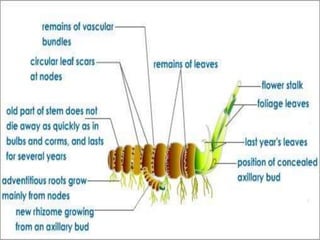

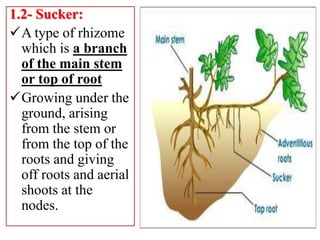
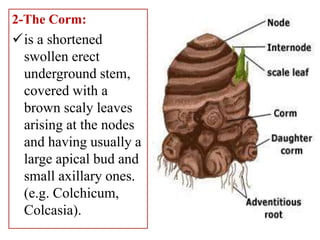

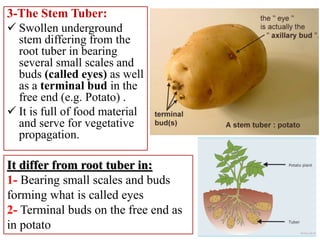


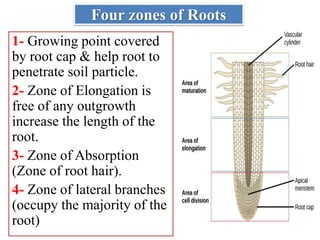

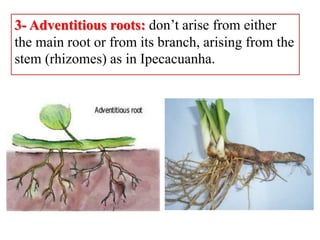
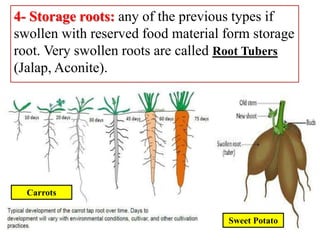
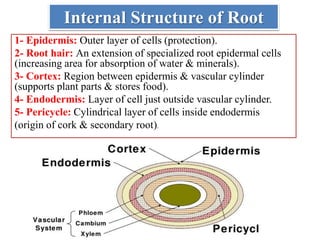




1. Subterranean organs are plant structures that grow underground and serve as storage organs, containing starch, inulin, and sugars. They lack chlorophyll. 2. There are two main types of subterranean organs - stems and roots. Subterranean stems include rhizomes, corms, bulb stems, and tubers. Rhizomes are horizontal underground stems with nodes, internodes, and buds. Corms are shortened swollen stems covered in scales. Tubers are swollen stems that bear scales, buds, and a terminal bud. 3. Subterranean roots lack nodes and buds and have a root cap covering the growing point. Secondary roots develop from the pericycle. Storage


