Immunology
Structure Function
Relationship of
Antibodies
By
Ahmed Riyadh Abdul Rahman
Al-Noor University College
1
Structure Function Relationship of Antibodies
• Antibodies possess both an antigen binding capacity and a biological
activity.
• This bifunctional nature of antibodies was initially demonstrated by
proteolytic cleavage (digestive) of antibody.
2
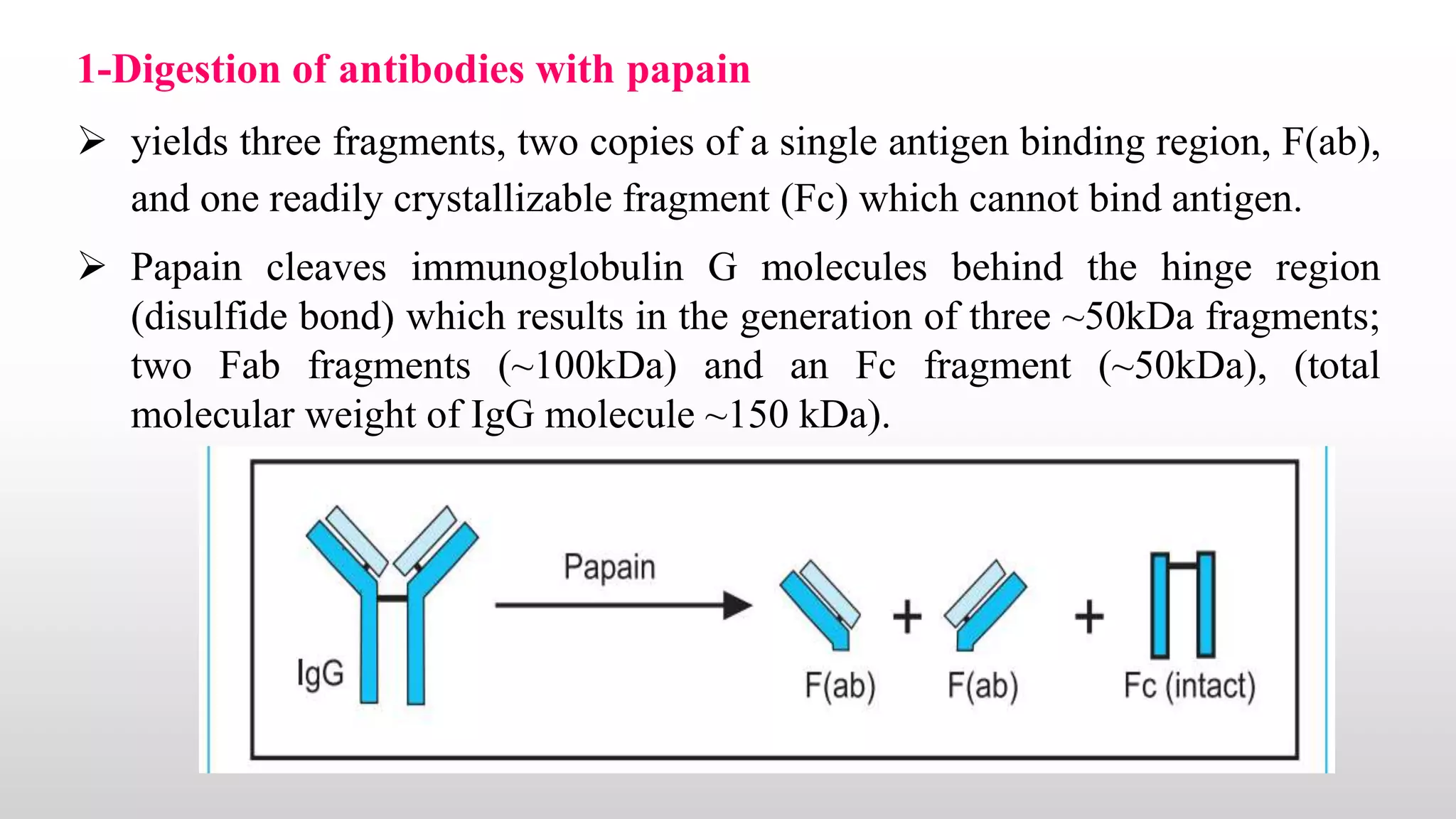
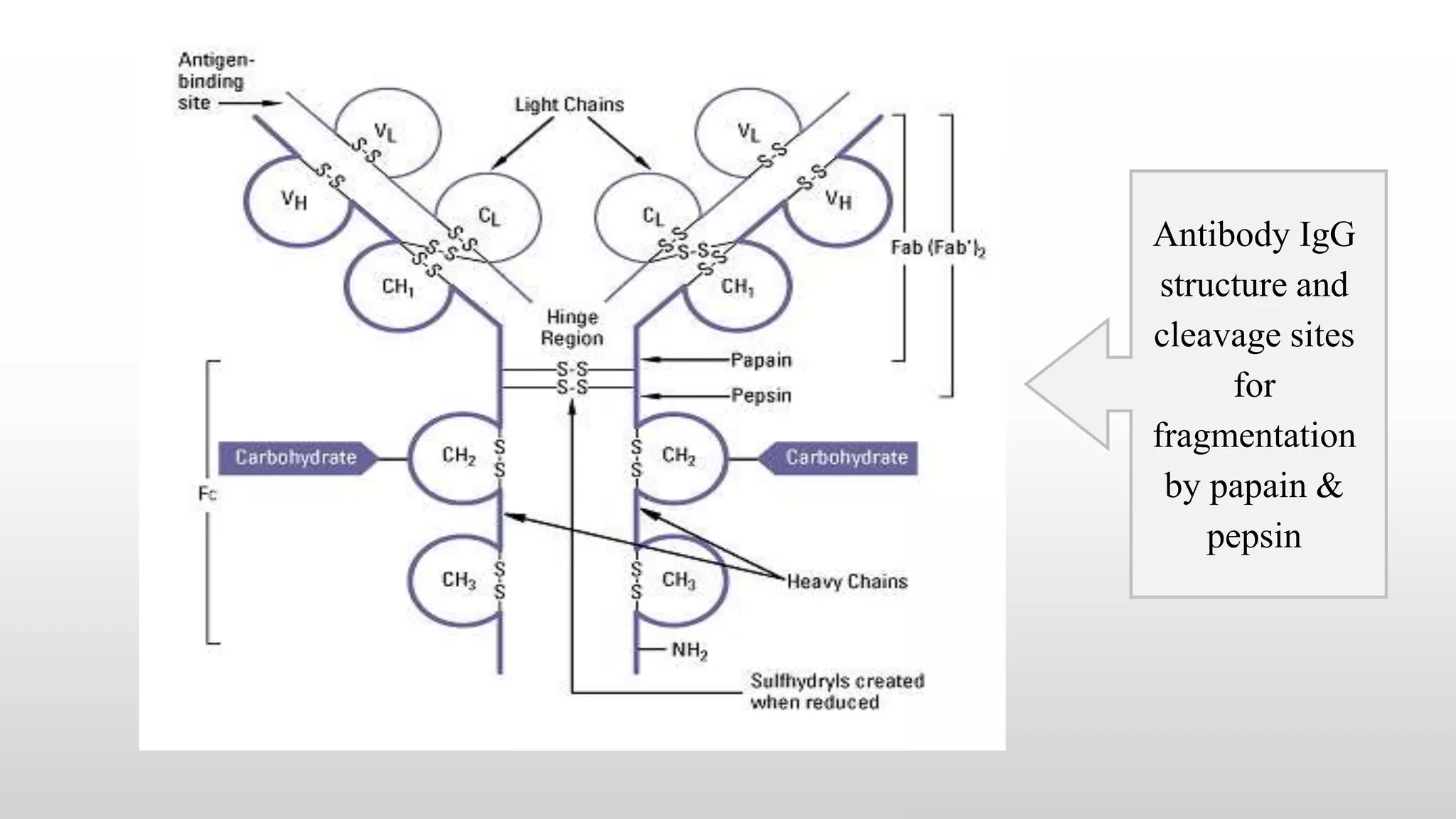
1-Digestion of antibodies with papain
 yields three fragments, two copies of a single antigen binding region, F(ab),
and one readily crystallizable fragment (Fc) which cannot bind antigen.
 Papain cleaves immunoglobulin G molecules behind the hinge region
(disulfide bond) which results in the generation of three ~50kDa fragments;
two Fab fragments (~100kDa) and an Fc fragment (~50kDa), (total
molecular weight of IgG molecule ~150 kDa).
4
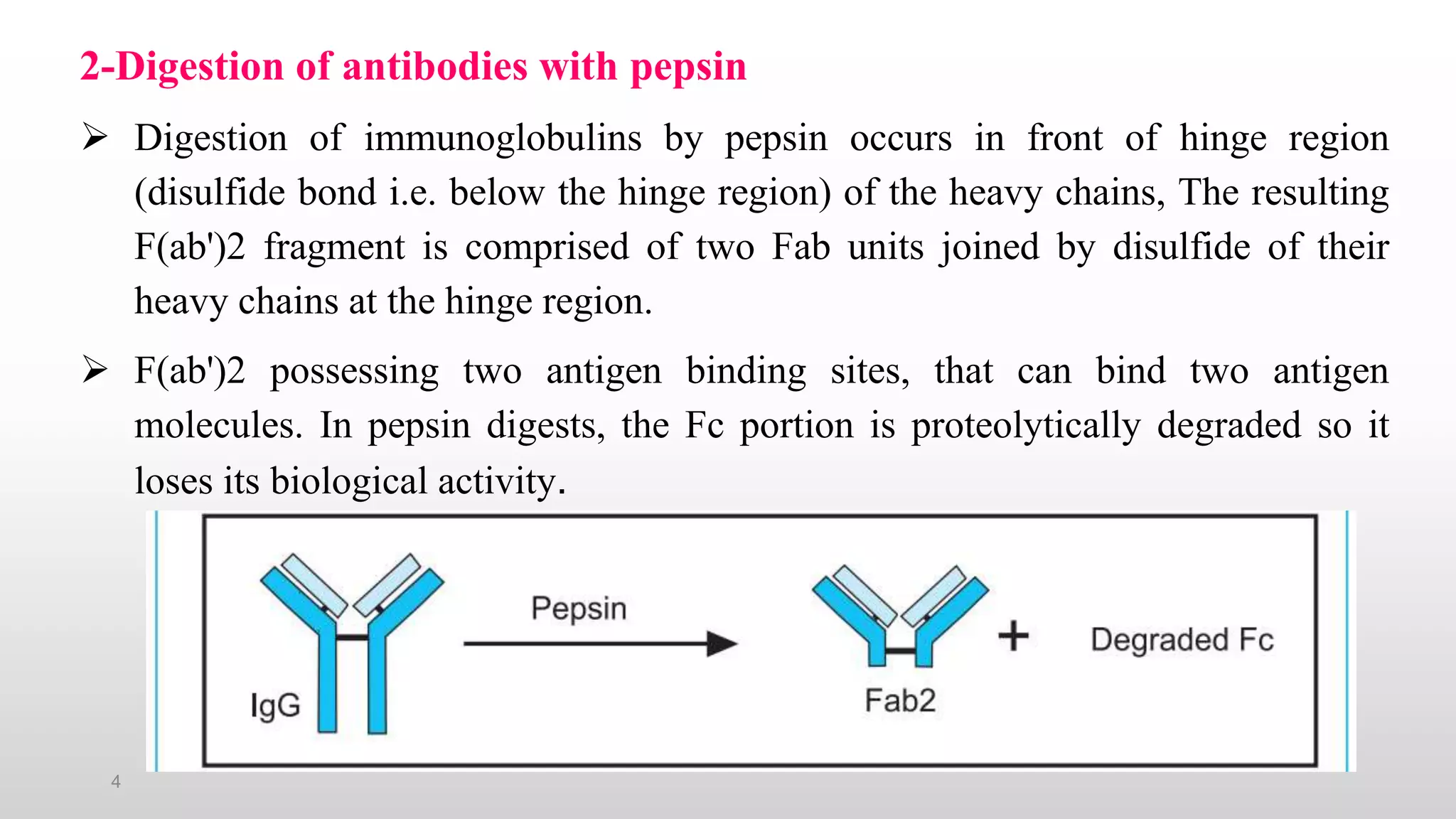
2-Digestion of antibodies with pepsin
 Digestion of immunoglobulins by pepsin occurs in front of hinge region
(disulfide bond i.e. below the hinge region) of the heavy chains, The resulting
F(ab')2 fragment is comprised of two Fab units joined by disulfide of their
heavy chains at the hinge region.
 F(ab')2 possessing two antigen binding sites, that can bind two antigen
molecules. In pepsin digests, the Fc portion is proteolytically degraded so it
loses its biological activity.
Antibody IgG
structure and
cleavage sites
for
fragmentation
by papain &
pepsin
6
Immunoglobulin Classes and Subclasses
 Immunglobulin molecules are divided into distinct classes and
subclasses in terms of the differences in amino acid sequence of
constant region of heavy chain, i.e. γ,α ,ε , μ, and δ.
7
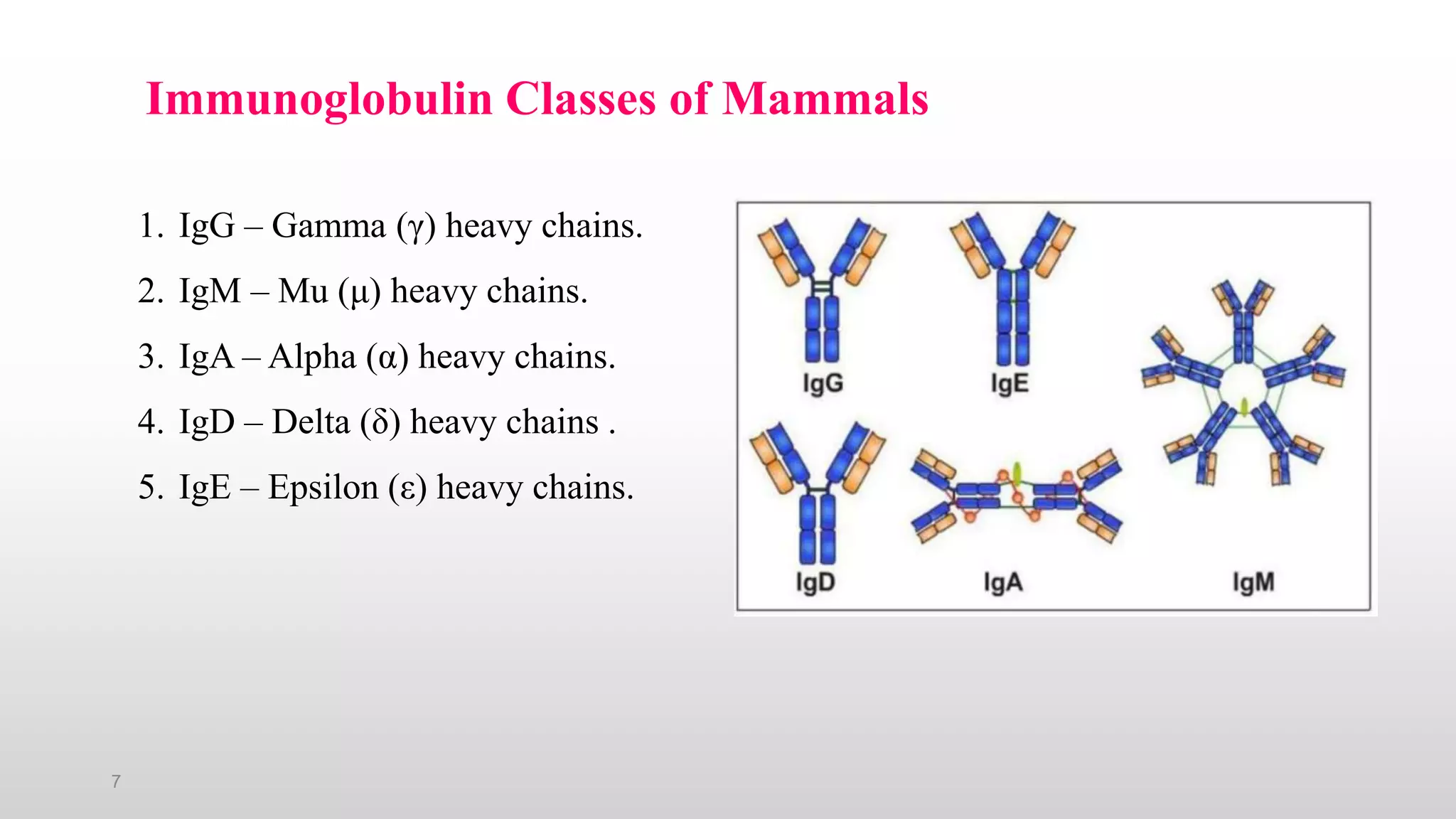
Immunoglobulin Classes of Mammals
1. IgG – Gamma (γ) heavy chains.
2. IgM – Mu (μ) heavy chains.
3. IgA – Alpha (α) heavy chains.
4. IgD – Delta (δ) heavy chains .
5. IgE – Epsilon (ε) heavy chains.
8
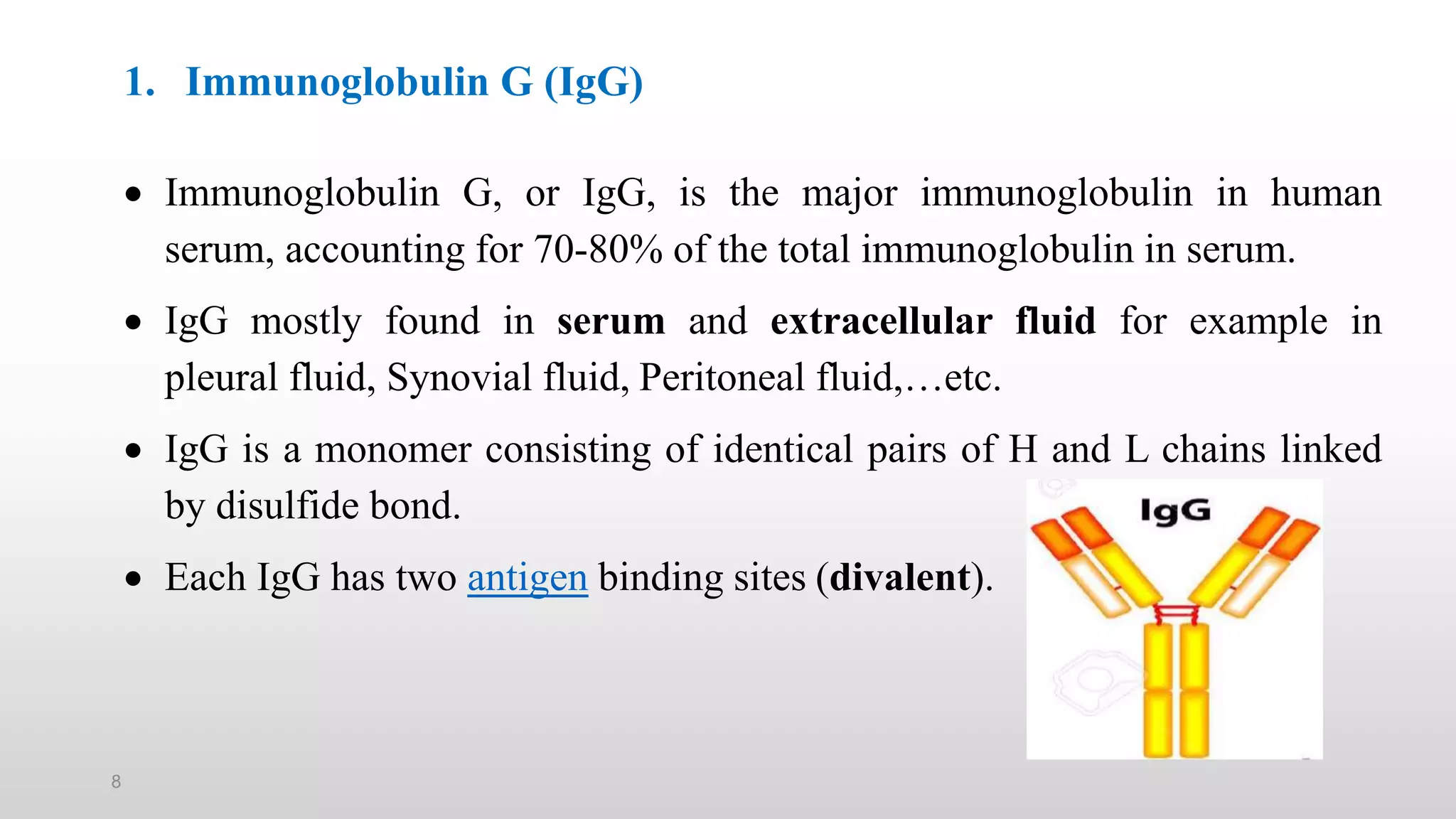
1. Immunoglobulin G (IgG)
 Immunoglobulin G, or IgG, is the major immunoglobulin in human
serum, accounting for 70-80% of the total immunoglobulin in serum.
 IgG mostly found in serum and extracellular fluid for example in
pleural fluid, Synovial fluid, Peritoneal fluid,…etc.
 IgG is a monomer consisting of identical pairs of H and L chains linked
by disulfide bond.
 Each IgG has two antigen binding sites (divalent).
9
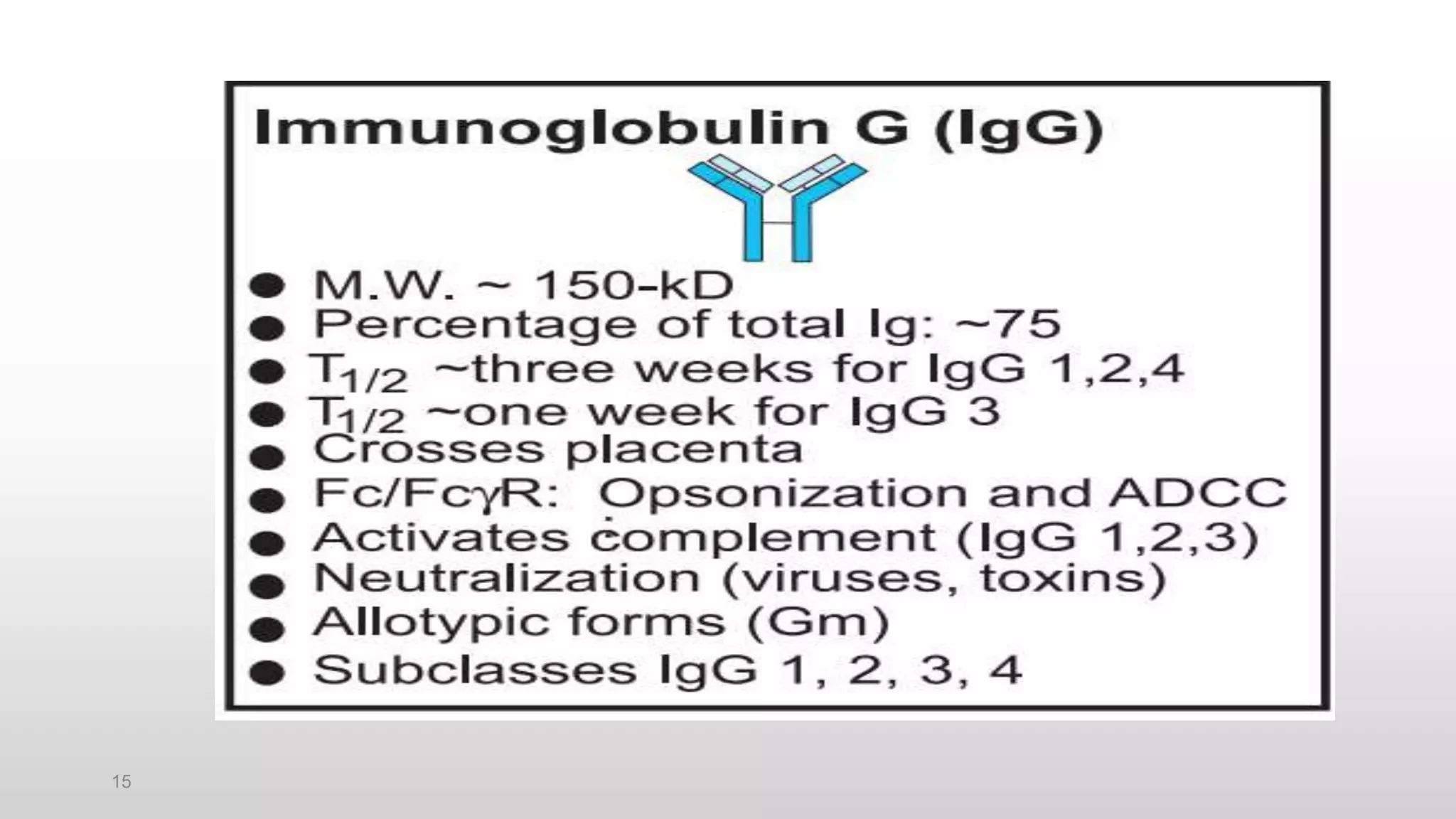
 Sedimentation coefficient of IgG is (7s), and molecular weight about~150-
180 kDa.
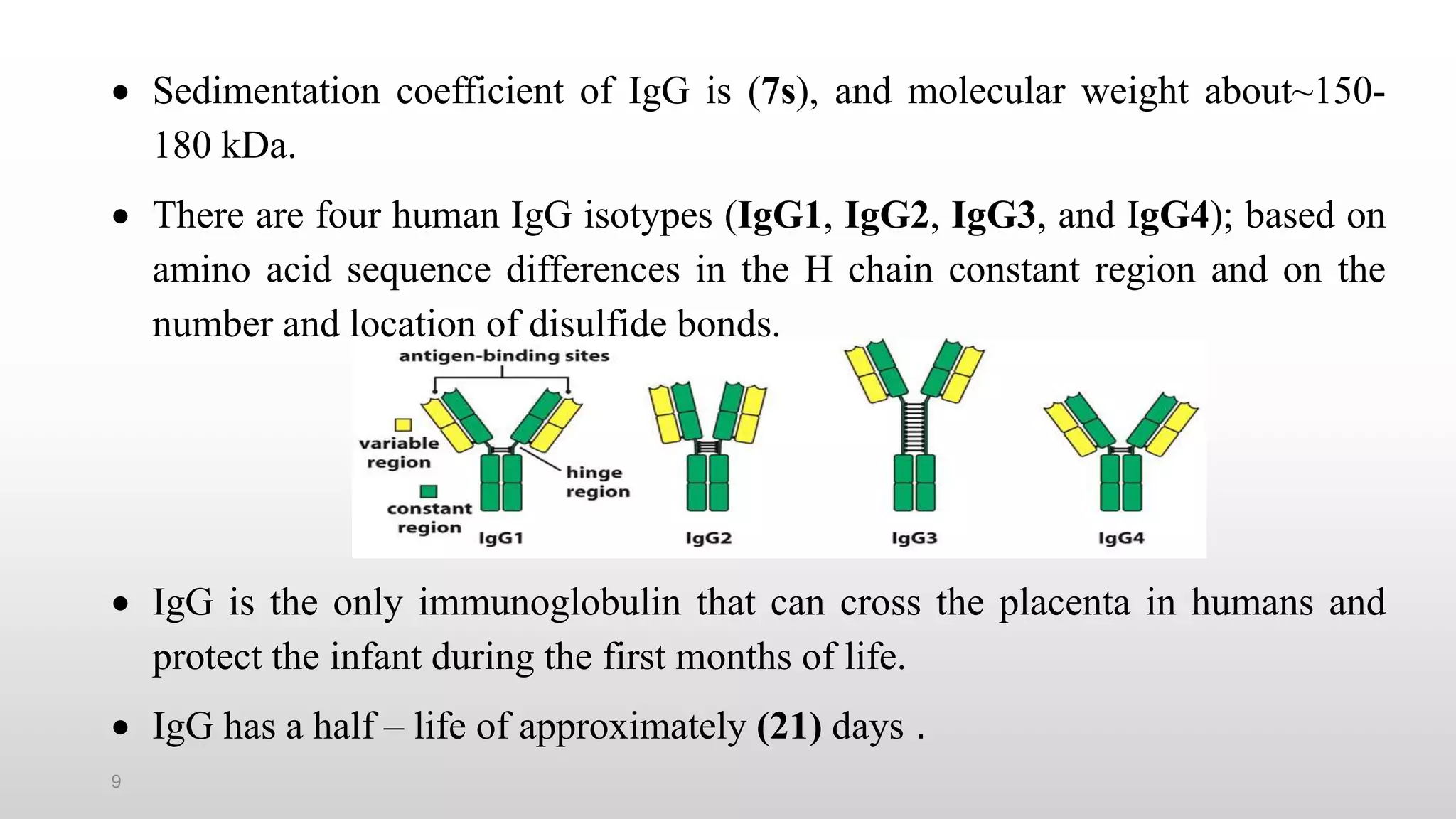
 There are four human IgG isotypes (IgG1, IgG2, IgG3, and IgG4); based on
amino acid sequence differences in the H chain constant region and on the
number and location of disulfide bonds.
 IgG is the only immunoglobulin that can cross the placenta in humans and
protect the infant during the first months of life.
 IgG has a half – life of approximately (21) days .
10
 IgG is the predominant (the major) antibody in secondary immune responses
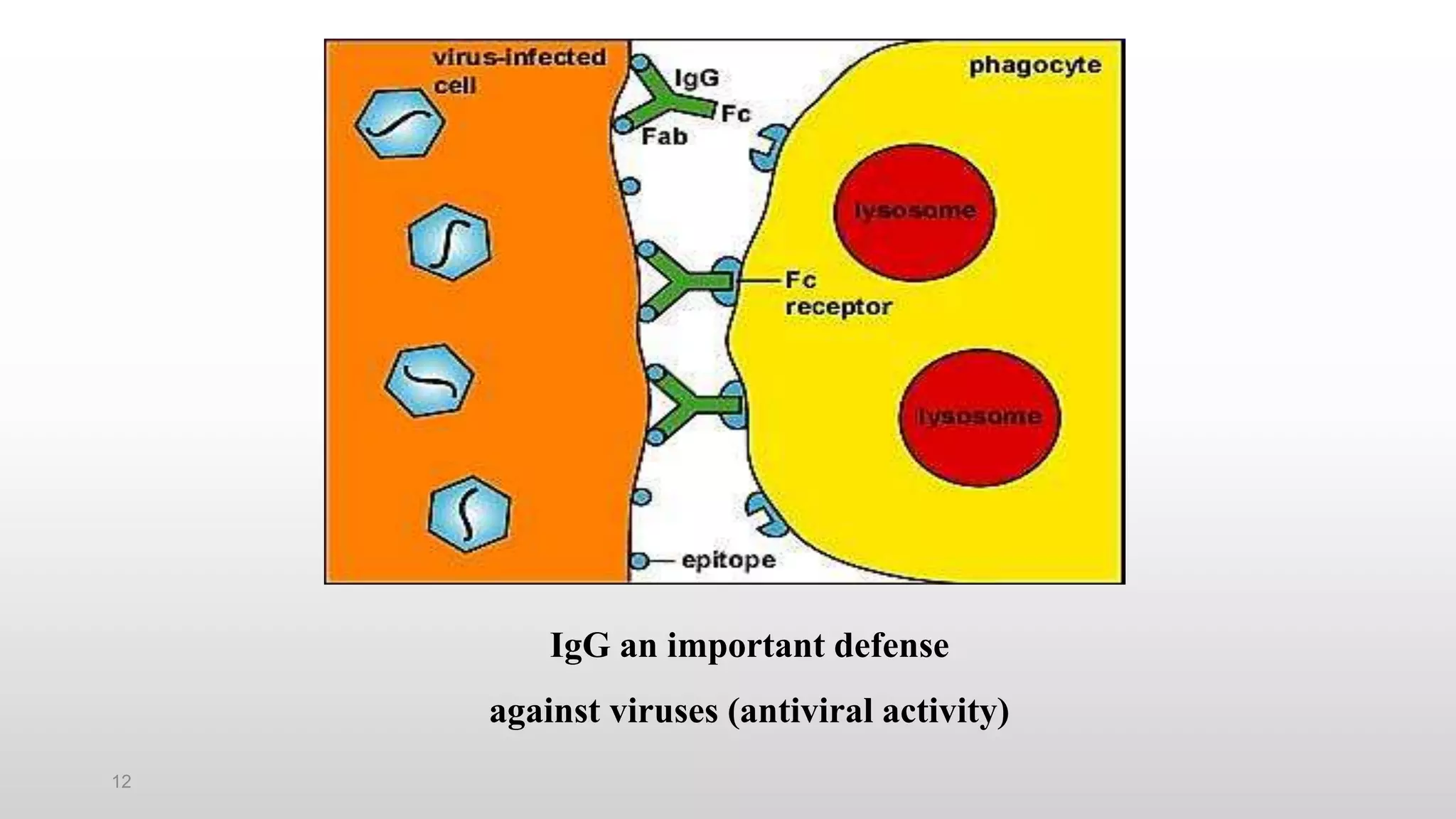
and constitutes an important defense against bacteria (Antibacterial), viruses
(antiviral) and parasite (antiparasite).
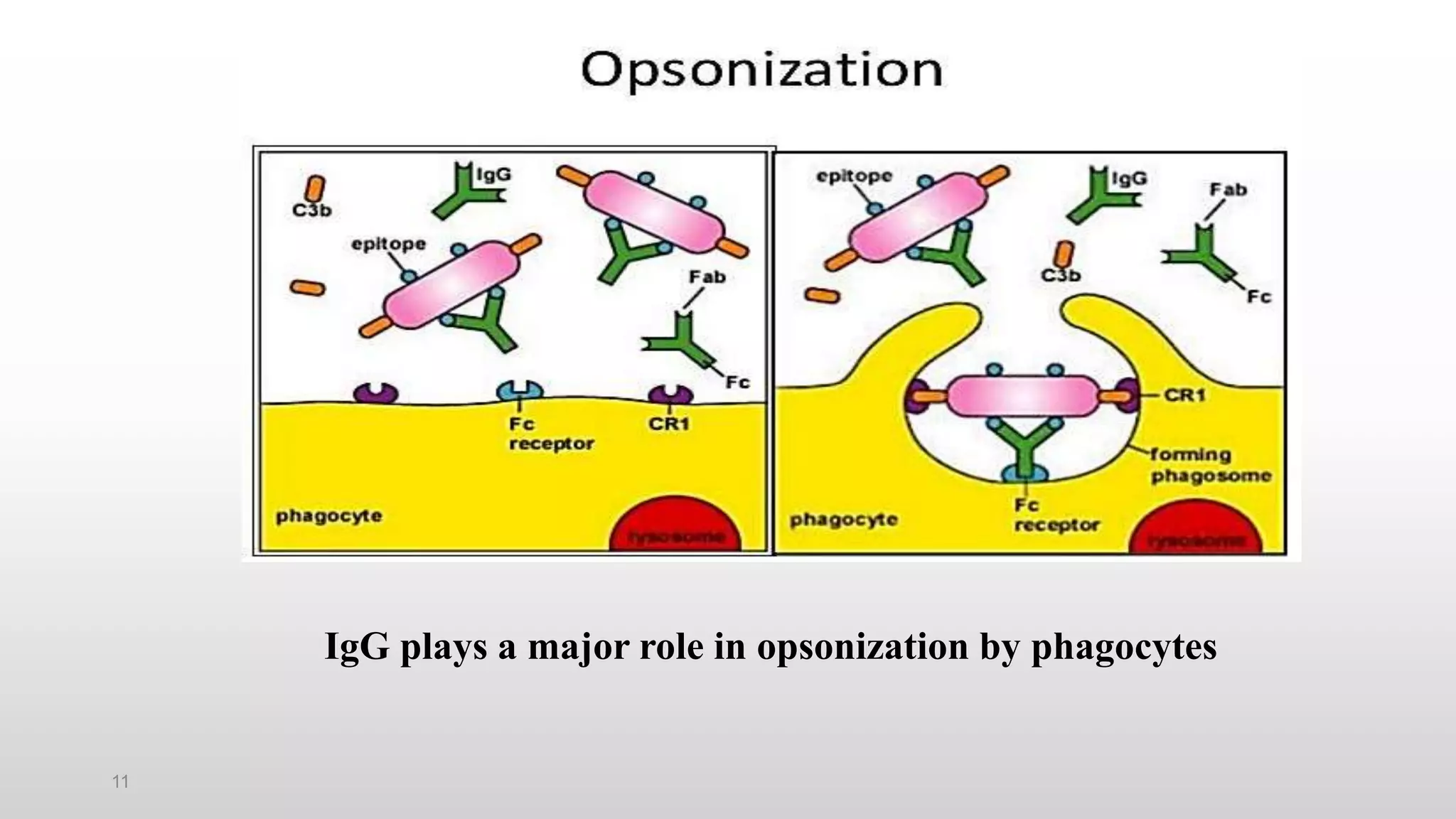
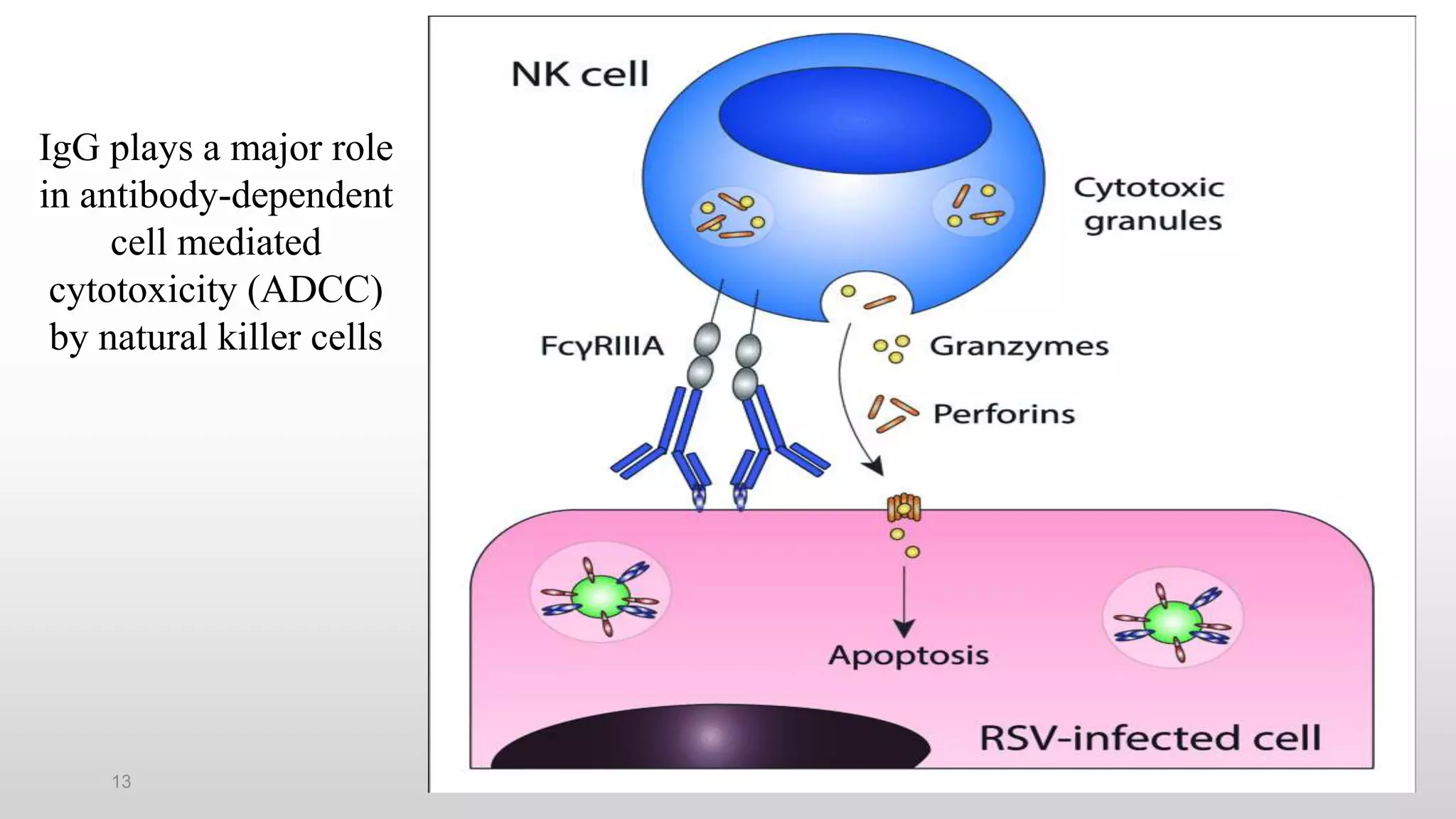
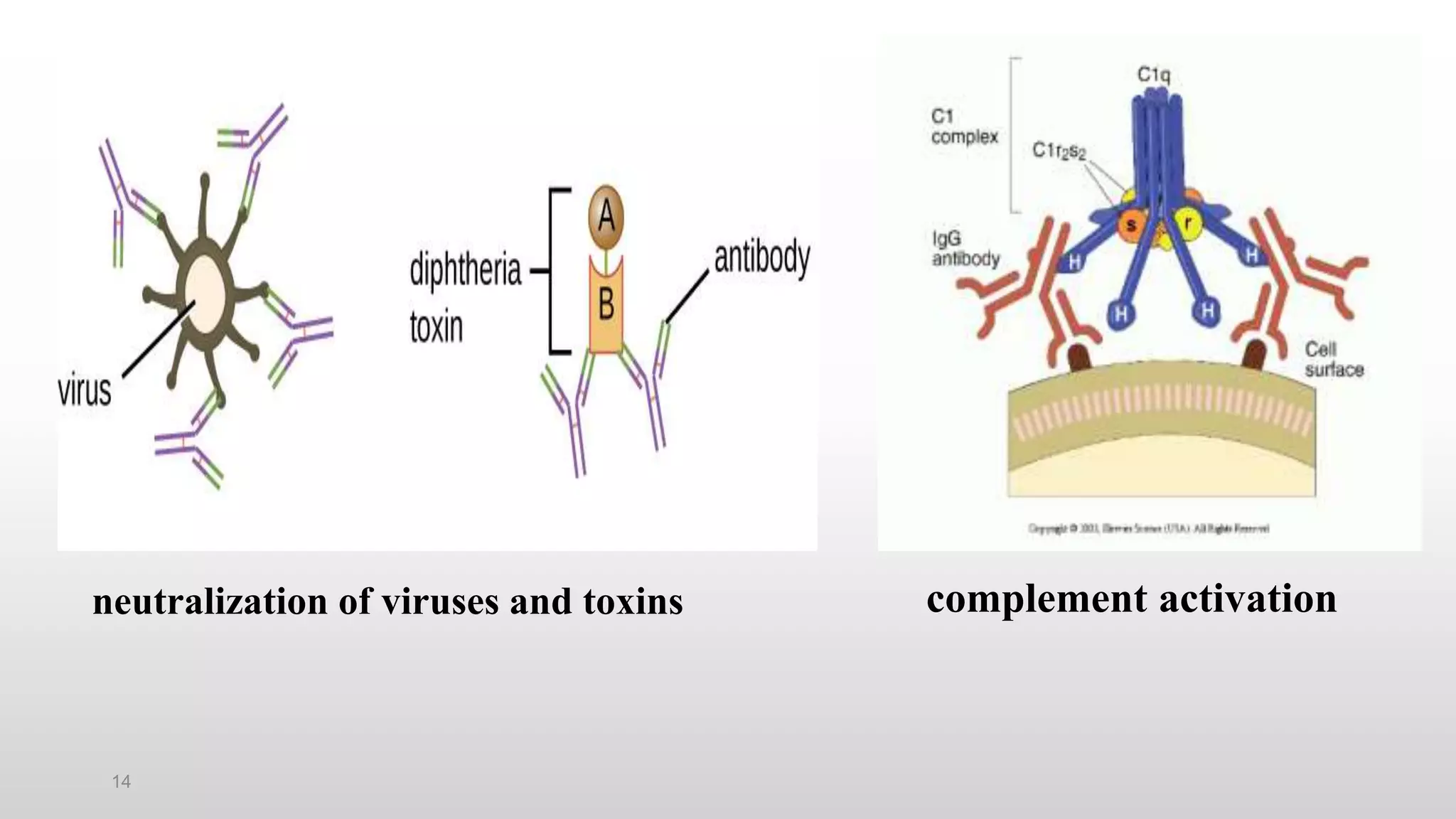
 IgG plays a major role in (i) opsonization by phagocytes; (ii) antibody-
dependent cell mediated cytotoxicity (ADCC) by natural killer cells; (iii)
complement activation; and (iv) neutralization of viruses and toxins(ѵ)
agglutinating and heamagglutinating activity.
 IgG the most effective Ig in immunity
 IgG affected by the proteolytic enzyme.
11
IgG plays a major role in opsonization by phagocytes
12
IgG an important defense
against viruses (antiviral activity)
13
IgG plays a major role
in antibody-dependent
cell mediated
cytotoxicity (ADCC)
by natural killer cells
14
neutralization of viruses and toxins complement activation
15
16

Structure Function Relationship of Antibodies

  • 1.
    Immunology Structure Function Relationship of Antibodies By AhmedRiyadh Abdul Rahman Al-Noor University College 1
  • 2.
    Structure Function Relationshipof Antibodies • Antibodies possess both an antigen binding capacity and a biological activity. • This bifunctional nature of antibodies was initially demonstrated by proteolytic cleavage (digestive) of antibody. 2
  • 3.
    1-Digestion of antibodieswith papain  yields three fragments, two copies of a single antigen binding region, F(ab), and one readily crystallizable fragment (Fc) which cannot bind antigen.  Papain cleaves immunoglobulin G molecules behind the hinge region (disulfide bond) which results in the generation of three ~50kDa fragments; two Fab fragments (~100kDa) and an Fc fragment (~50kDa), (total molecular weight of IgG molecule ~150 kDa).
  • 4.
    4 2-Digestion of antibodieswith pepsin  Digestion of immunoglobulins by pepsin occurs in front of hinge region (disulfide bond i.e. below the hinge region) of the heavy chains, The resulting F(ab')2 fragment is comprised of two Fab units joined by disulfide of their heavy chains at the hinge region.  F(ab')2 possessing two antigen binding sites, that can bind two antigen molecules. In pepsin digests, the Fc portion is proteolytically degraded so it loses its biological activity.
  • 5.
    Antibody IgG structure and cleavagesites for fragmentation by papain & pepsin
  • 6.
    6 Immunoglobulin Classes andSubclasses  Immunglobulin molecules are divided into distinct classes and subclasses in terms of the differences in amino acid sequence of constant region of heavy chain, i.e. γ,α ,ε , μ, and δ.
  • 7.
    7 Immunoglobulin Classes ofMammals 1. IgG – Gamma (γ) heavy chains. 2. IgM – Mu (μ) heavy chains. 3. IgA – Alpha (α) heavy chains. 4. IgD – Delta (δ) heavy chains . 5. IgE – Epsilon (ε) heavy chains.
  • 8.
    8 1. Immunoglobulin G(IgG)  Immunoglobulin G, or IgG, is the major immunoglobulin in human serum, accounting for 70-80% of the total immunoglobulin in serum.  IgG mostly found in serum and extracellular fluid for example in pleural fluid, Synovial fluid, Peritoneal fluid,…etc.  IgG is a monomer consisting of identical pairs of H and L chains linked by disulfide bond.  Each IgG has two antigen binding sites (divalent).
  • 9.
    9  Sedimentation coefficientof IgG is (7s), and molecular weight about~150- 180 kDa.  There are four human IgG isotypes (IgG1, IgG2, IgG3, and IgG4); based on amino acid sequence differences in the H chain constant region and on the number and location of disulfide bonds.  IgG is the only immunoglobulin that can cross the placenta in humans and protect the infant during the first months of life.  IgG has a half – life of approximately (21) days .
  • 10.
    10  IgG isthe predominant (the major) antibody in secondary immune responses and constitutes an important defense against bacteria (Antibacterial), viruses (antiviral) and parasite (antiparasite).  IgG plays a major role in (i) opsonization by phagocytes; (ii) antibody- dependent cell mediated cytotoxicity (ADCC) by natural killer cells; (iii) complement activation; and (iv) neutralization of viruses and toxins(ѵ) agglutinating and heamagglutinating activity.  IgG the most effective Ig in immunity  IgG affected by the proteolytic enzyme.
  • 11.
    11 IgG plays amajor role in opsonization by phagocytes
  • 12.
    12 IgG an importantdefense against viruses (antiviral activity)
  • 13.
    13 IgG plays amajor role in antibody-dependent cell mediated cytotoxicity (ADCC) by natural killer cells
  • 14.
    14 neutralization of virusesand toxins complement activation
  • 15.
  • 16.