STRUCTURE & FUNCTIONS OF MHC
Mr. A. T. Sharma
Assist. Professor
Nanded Pharmacy College, Nanded
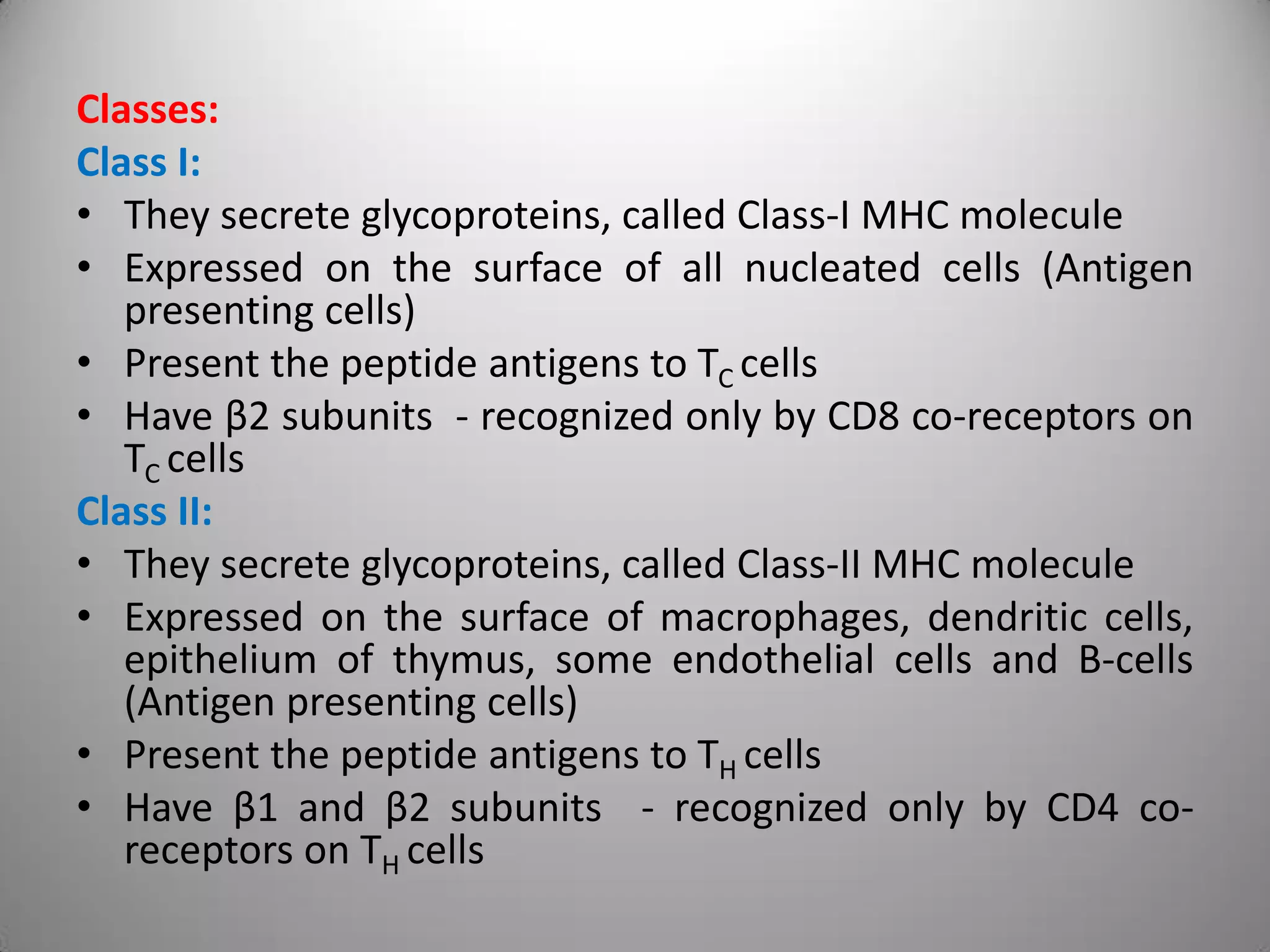
MHC Antigens
• A set of cell surface proteins in all human beings and vertebrates
called Major Histocompatibility Complex antigens
• Essential for acquired immune system to identify foreign molecules.
• Bind to antigens of pathogens and display (present) them on the
cell surface for identification by T-cells
• MHC is a tightly linked cluster of genes present on chromosome 6
in humans and chromosome 17 in mouse which encodes MHC
antigens
• Discovered from antigenic differences in WBCs of different
individuals, so called as Human Leukocyte Antigens (HLA), (in
mouse, H-2 genes)
• George Snell from USA (1950) – concept of MHC participation in
transplant rejection (Nobel Prize in 1980)
• Only identical twins have exactly same MHC molecules
• Matched during organ transplantation – tissue typing (HLA-DR
antigens matched)
• Susceptibility to autoimmune disorder
Classes:
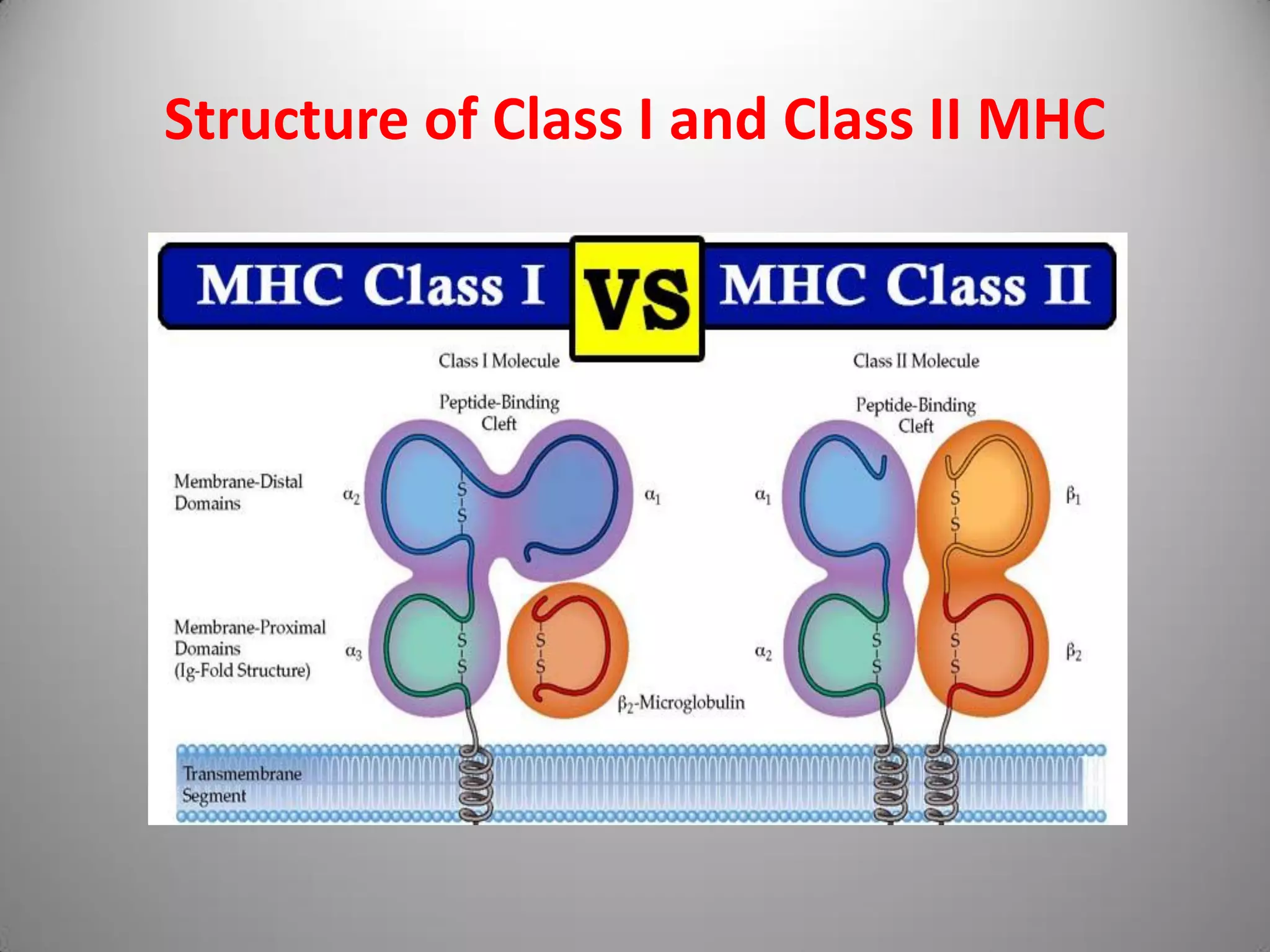
Class I:
• They secrete glycoproteins, called Class-I MHC molecule
• Expressed on the surface of all nucleated cells (Antigen
presenting cells)
• Present the peptide antigens to TC cells
• Have β2 subunits - recognized only by CD8 co-receptors on
TC cells
Class II:
• They secrete glycoproteins, called Class-II MHC molecule
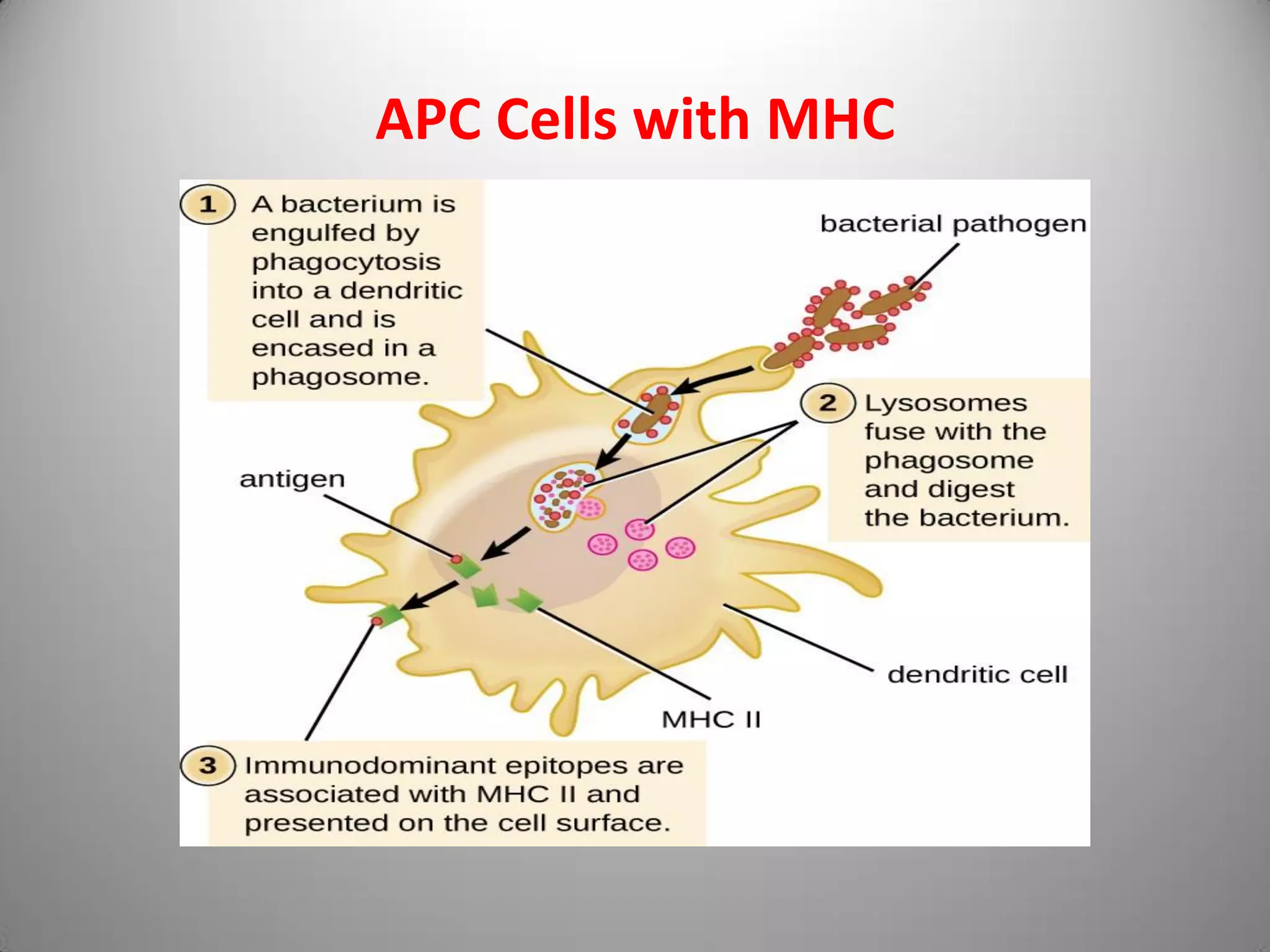
• Expressed on the surface of macrophages, dendritic cells,
epithelium of thymus, some endothelial cells and B-cells
(Antigen presenting cells)
• Present the peptide antigens to TH cells
• Have β1 and β2 subunits - recognized only by CD4 co-
receptors on TH cells
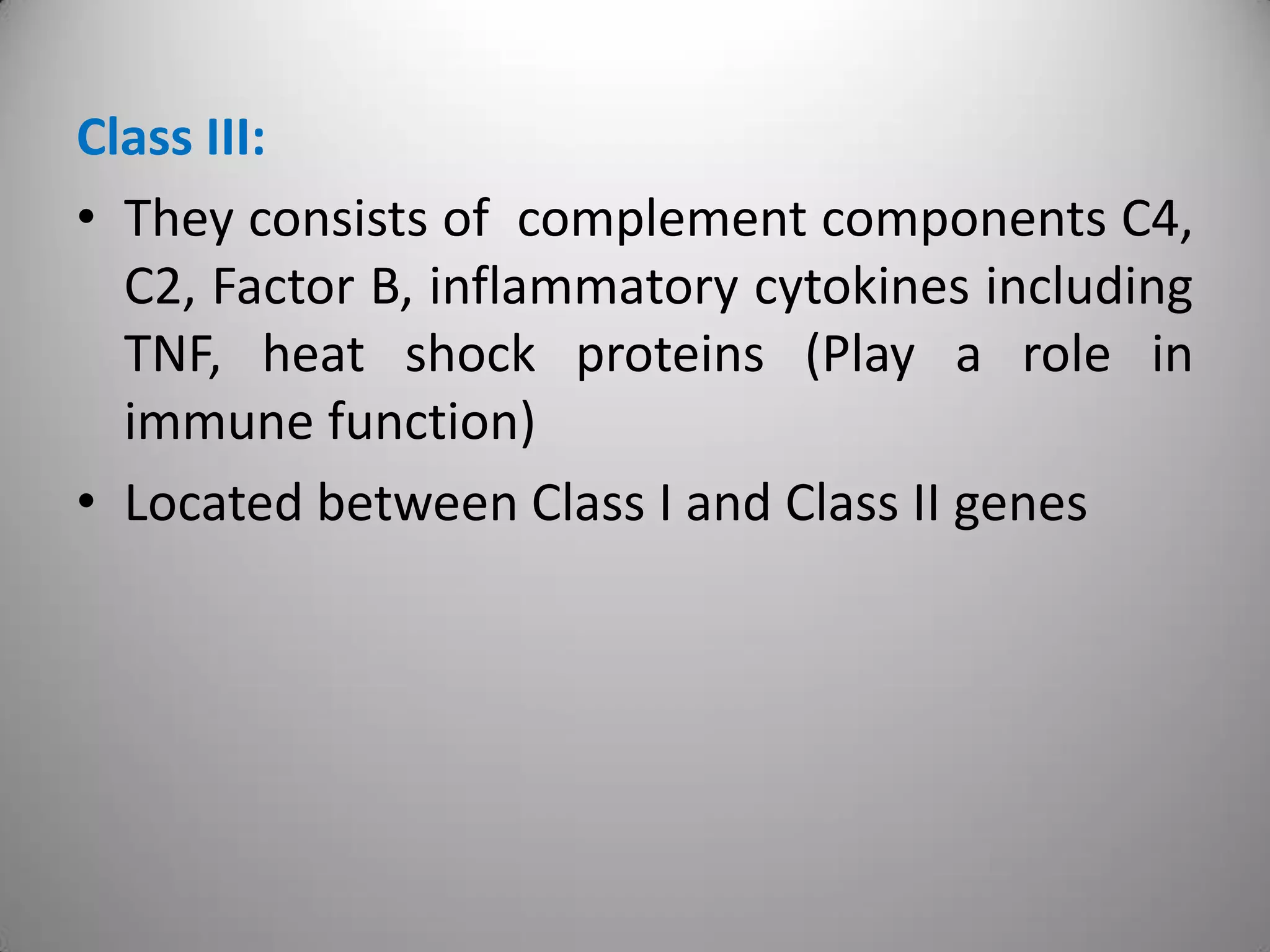
Class III:
• They consists of complement components C4,
C2, Factor B, inflammatory cytokines including
TNF, heat shock proteins (Play a role in
immune function)
• Located between Class I and Class II genes
APC Cells with MHC
Structure of Class I and Class II MHC
Functions of MHC
• Act as antigen presenting structure – role in
cell mediated and humoral immune response
• Play a role in development of autoimmune
diseases
• Tissue typing during organ transplantation
• In graft versus host response
• Class III MHC play a role in immunity through
complement system and in inflammatory
response.
Thank You…!!!

STRUCTURE AND FUNCTIONS OF MHC

  • 1.
    STRUCTURE & FUNCTIONSOF MHC Mr. A. T. Sharma Assist. Professor Nanded Pharmacy College, Nanded
  • 2.
    MHC Antigens • Aset of cell surface proteins in all human beings and vertebrates called Major Histocompatibility Complex antigens • Essential for acquired immune system to identify foreign molecules. • Bind to antigens of pathogens and display (present) them on the cell surface for identification by T-cells • MHC is a tightly linked cluster of genes present on chromosome 6 in humans and chromosome 17 in mouse which encodes MHC antigens • Discovered from antigenic differences in WBCs of different individuals, so called as Human Leukocyte Antigens (HLA), (in mouse, H-2 genes) • George Snell from USA (1950) – concept of MHC participation in transplant rejection (Nobel Prize in 1980) • Only identical twins have exactly same MHC molecules • Matched during organ transplantation – tissue typing (HLA-DR antigens matched) • Susceptibility to autoimmune disorder
  • 3.
    Classes: Class I: • Theysecrete glycoproteins, called Class-I MHC molecule • Expressed on the surface of all nucleated cells (Antigen presenting cells) • Present the peptide antigens to TC cells • Have β2 subunits - recognized only by CD8 co-receptors on TC cells Class II: • They secrete glycoproteins, called Class-II MHC molecule • Expressed on the surface of macrophages, dendritic cells, epithelium of thymus, some endothelial cells and B-cells (Antigen presenting cells) • Present the peptide antigens to TH cells • Have β1 and β2 subunits - recognized only by CD4 co- receptors on TH cells
  • 4.
    Class III: • Theyconsists of complement components C4, C2, Factor B, inflammatory cytokines including TNF, heat shock proteins (Play a role in immune function) • Located between Class I and Class II genes
  • 5.
  • 6.
    Structure of ClassI and Class II MHC
  • 7.
    Functions of MHC •Act as antigen presenting structure – role in cell mediated and humoral immune response • Play a role in development of autoimmune diseases • Tissue typing during organ transplantation • In graft versus host response • Class III MHC play a role in immunity through complement system and in inflammatory response.
  • 8.