BRAIN STROKE AND PHYSICAL
REHABILITATION
BY- JITENDRA KUMAR
GROUP- 407
GUIDED BY – PROF. Bobrik Yu.V.
BRAIN STROKE-
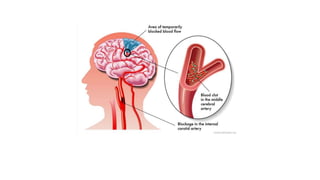
• A stroke occurs when the blood supply to your brain is interrupted or
reduced. This deprives your brain of oxygen and nutrients, which can
cause your brain cells to die. A stroke may be caused by a blocked
artery (ischemic stroke) or the leaking or bursting of a blood vessel
(hemorrhagicstroke).
Disabilities – Caused by brain stroke:-
• Hemiparesis (48%) “
• Inability to Walk (22%) “
• Need for Help in daily activities. (24-53%) "
• Clinical Depression (32%) “
• Cognitive Impairment (33%)
Recovery:-
Dependent Upon –
" Type “
1) Cerebral Ischemia.
2) " Cerebral Hemorrhage.
" Extent “
1) Level of Recovery in Rehab
2) Remaining Disability
3) Pre-existing Comorbidities.
Brain stroke and role of physiotherapy:-
• To understand the role of physiotherapy following stroke.
• To be aware of causes of hemiplegic shoulder pain and methods of
prevention.
• To recognize the importance of positioning and know how to
position an patient with acute stroke.
• To understand the term Early mobilization.
What is Physiotherapy?
• Physiotherapy is concerned with helping to restore well-being to
people following injury, pain or disability through mainly physical
means. ! Following stroke, the overall aim is to help people regain
functional independence in everyday tasks such as standing, walking
and eating etc.
Initial stages:-
• Assessment !
• Advice on positioning !
• Advice on prevention of shoulder pain !
• Respiratory management. !
• Sitting out/ mobilizing
Core areas in stroke physiotherapy :-
• Sitting balance !
• Transfer training !
• Gait reducation !
• Upper limb functional rehab !
• Strength, co-ordination, balance, tone etc. !
• Assessment of falls risk !
• Stair practice!
Hemiplegic shoulder pain:-
• Incidence somewhere between 5% and 80% !
• Severe, persistent shoulder pain in 5% !
• Secondary, muscular-skeletal disorder.
P eeehabilitation
ELEMENTS OF THE STROKE REHABILITATION:-
• Prevention
• Treatment
• Compensation
• Maintenance
• Reintegration
Goals of physical rehabilitation:
• Restore patient to maximum mobilization
• Help patient regain functional independence and confidence
• Provide measures to prevent falls and
ensure safety
• Educate patient and family about secondary prevention
• Facilitate psychosocial adjustment
Rehabilitation team members
• psychologists
• OTs
• recreational therapists
• PTs
• speech pathologists
• medical social services personnel
Patient assessment:
• repeated clinical examinations
• full & consistent documentation
throughout
Assessment target-
• neurologic impairments
• medical problems
• disabilities
• living conditions and community reintegration
Continuity of care and family involvement:
• Multiple care settings during
recovery
• Patient and family must:
• be fully informed &
participate in decisions
• participate actively in
rehabilitation
Mobilization;
• Within 12-24 hours, if possible
• Daily active/passive ROM exercises
• Progressively increased activity
• Changes of position in bed
• pullsheet method
• limb positioning & support
• Encouragement to resume self-care & socialization
Measures to prevent recurrent strokes:
• Carotid endarterectomy in patients who have 70%-99% carotid artery
obstruction.
• Anticoagulants in patients with atrial fibrillation and other
nonvalvular cause of embolic stroke.
• Antiplatelet agents in patients who have had transient ischemic attack
(TIA).
Preventing deep venous thrombosis:
• Heparin
• low molecular weight (LMWH), or
• low-dose unfractionated (LDUH)
• Other effective measures
• intermittent pneumatic compression
• elastic stockings
Management of dysphagia:
• Goals
• prevent dehydration and malnutrition
• prevent aspiration and pneumonia
• restore ability to chew and swallow safely
Indicators of poor rehabilitation:
• Severe functional/motor/cognitive deficits
• Persistent urinary/fecal incontinence
• Severe visual/spatial deficits
• Sitting imbalance
• Severe aphasia
• Altered level of consciousness
• Major depression
• Severe comorbidities
• Disability before stroke
• Older age
Threshold criteria for admission in
rehabilitation:
• Medically/moderately stable
• One or more persistent disabilities
• Able to learn
• Physical endurance sufficient to:
• sit at least 1 hour per day
• participate in rehabilitation
Management plan for rehabilitation:
The management plan should identify
• significant impairments and disabilities
• measures to prevent recurrence
• treatments for comorbidities
• rehabilitation interventions
• plans for periodic monitoring
Measure of successful rehabilitation;
• Normalized health patterns
• Freedom from physical pain/emotional distress/impairments
• Retention of cognitive/communicative abilities
• Mobility and independence in ADL
• IMPROVED QUALITY OF LIFE
Summery; requirement of successful physical
rehabilitation:
• In-depth assessment at all phases
• Appropriate patient selection
• Early introduction to rehabilitation
• Teamwork approach in multidisciplinary setting
• Shared goals and management plan
• Detailed, shared record keeping
Thank You!!!!!!!!!!!!!!!!!!!!!!!

Brain stroke n physical rehabilitation

  • 1.
    BRAIN STROKE ANDPHYSICAL REHABILITATION BY- JITENDRA KUMAR GROUP- 407 GUIDED BY – PROF. Bobrik Yu.V.
  • 3.
    BRAIN STROKE- • Astroke occurs when the blood supply to your brain is interrupted or reduced. This deprives your brain of oxygen and nutrients, which can cause your brain cells to die. A stroke may be caused by a blocked artery (ischemic stroke) or the leaking or bursting of a blood vessel (hemorrhagicstroke).
  • 4.
    Disabilities – Causedby brain stroke:- • Hemiparesis (48%) “ • Inability to Walk (22%) “ • Need for Help in daily activities. (24-53%) " • Clinical Depression (32%) “ • Cognitive Impairment (33%)
  • 5.
    Recovery:- Dependent Upon – "Type “ 1) Cerebral Ischemia. 2) " Cerebral Hemorrhage. " Extent “ 1) Level of Recovery in Rehab 2) Remaining Disability 3) Pre-existing Comorbidities.
  • 6.
    Brain stroke androle of physiotherapy:- • To understand the role of physiotherapy following stroke. • To be aware of causes of hemiplegic shoulder pain and methods of prevention. • To recognize the importance of positioning and know how to position an patient with acute stroke. • To understand the term Early mobilization.
  • 7.
    What is Physiotherapy? •Physiotherapy is concerned with helping to restore well-being to people following injury, pain or disability through mainly physical means. ! Following stroke, the overall aim is to help people regain functional independence in everyday tasks such as standing, walking and eating etc.
  • 8.
    Initial stages:- • Assessment! • Advice on positioning ! • Advice on prevention of shoulder pain ! • Respiratory management. ! • Sitting out/ mobilizing
  • 9.
    Core areas instroke physiotherapy :- • Sitting balance ! • Transfer training ! • Gait reducation ! • Upper limb functional rehab ! • Strength, co-ordination, balance, tone etc. ! • Assessment of falls risk ! • Stair practice!
  • 10.
    Hemiplegic shoulder pain:- •Incidence somewhere between 5% and 80% ! • Severe, persistent shoulder pain in 5% ! • Secondary, muscular-skeletal disorder.
  • 11.
    P eeehabilitation ELEMENTS OFTHE STROKE REHABILITATION:- • Prevention • Treatment • Compensation • Maintenance • Reintegration
  • 12.
    Goals of physicalrehabilitation: • Restore patient to maximum mobilization • Help patient regain functional independence and confidence • Provide measures to prevent falls and ensure safety • Educate patient and family about secondary prevention • Facilitate psychosocial adjustment
  • 13.
    Rehabilitation team members •psychologists • OTs • recreational therapists • PTs • speech pathologists • medical social services personnel
  • 14.
    Patient assessment: • repeatedclinical examinations • full & consistent documentation throughout Assessment target- • neurologic impairments • medical problems • disabilities • living conditions and community reintegration
  • 15.
    Continuity of careand family involvement: • Multiple care settings during recovery • Patient and family must: • be fully informed & participate in decisions • participate actively in rehabilitation
  • 16.
    Mobilization; • Within 12-24hours, if possible • Daily active/passive ROM exercises • Progressively increased activity • Changes of position in bed • pullsheet method • limb positioning & support • Encouragement to resume self-care & socialization
  • 17.
    Measures to preventrecurrent strokes: • Carotid endarterectomy in patients who have 70%-99% carotid artery obstruction. • Anticoagulants in patients with atrial fibrillation and other nonvalvular cause of embolic stroke. • Antiplatelet agents in patients who have had transient ischemic attack (TIA).
  • 18.
    Preventing deep venousthrombosis: • Heparin • low molecular weight (LMWH), or • low-dose unfractionated (LDUH) • Other effective measures • intermittent pneumatic compression • elastic stockings
  • 19.
    Management of dysphagia: •Goals • prevent dehydration and malnutrition • prevent aspiration and pneumonia • restore ability to chew and swallow safely
  • 20.
    Indicators of poorrehabilitation: • Severe functional/motor/cognitive deficits • Persistent urinary/fecal incontinence • Severe visual/spatial deficits • Sitting imbalance • Severe aphasia • Altered level of consciousness • Major depression • Severe comorbidities • Disability before stroke • Older age
  • 21.
    Threshold criteria foradmission in rehabilitation: • Medically/moderately stable • One or more persistent disabilities • Able to learn • Physical endurance sufficient to: • sit at least 1 hour per day • participate in rehabilitation
  • 22.
    Management plan forrehabilitation: The management plan should identify • significant impairments and disabilities • measures to prevent recurrence • treatments for comorbidities • rehabilitation interventions • plans for periodic monitoring
  • 23.
    Measure of successfulrehabilitation; • Normalized health patterns • Freedom from physical pain/emotional distress/impairments • Retention of cognitive/communicative abilities • Mobility and independence in ADL • IMPROVED QUALITY OF LIFE
  • 24.
    Summery; requirement ofsuccessful physical rehabilitation: • In-depth assessment at all phases • Appropriate patient selection • Early introduction to rehabilitation • Teamwork approach in multidisciplinary setting • Shared goals and management plan • Detailed, shared record keeping
  • 25.