General Awareness
• What is stress?
• Type of stress
• Individuals
• Body origin & body system
• Adoption syndrome
• Symptoms
What is stress
Stress is the “wear and
tear” our minds and
bodies experience as
we attempt to cope
with our continually
changing environment
External
Internal
Types of stress
Stress feelings
• Worry
• Tense
• Tired
• Frightened
• Elated
• Depressed
• Anxious
• Anger
External stressors
• Physical Environment
• Social Interaction
• Organizational
• Major Life Events
• Daily Hassles
Physical environment
• Noise
• Bright Lights
• Heat
• Confined Spaces
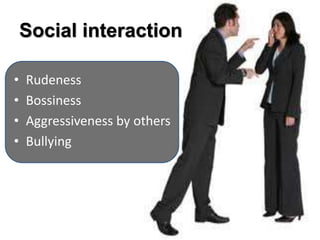
Social interaction
• Rudeness
• Bossiness
• Aggressiveness by others
• Bullying
Organizational
• Rules
• Regulations
• “Red - Tape”
• Deadline
Major events in life
• Birth
• Death
• Lost job
• Promotion
• Marital status change
Daily hassles
• Misplaced keys
• Commuting
• Mechanical breakdowns
Internal stressors
• Lifestyle choices
• Negative self – talk
• Mind traps
• Personality traits
Lifestyle choices
Negative self talk
• Pessimistic thinking
• Self criticism
• Over analysing
Mind traps• Unrealistic expectations
• Taking things personally
• All or nothing thinking
• Exaggeration
• Rigid thinking
Personality traits
• Perfectionists
• Workaholic
Kind of stress
Negative
It is a contributory factor in minor conditions,
such as headaches, digestive
problems, skin complaints, insomnia and
ulcers.
Excessive, prolonged and unrelieved stress
can have a harmful effect on mental,
physical and spiritual health
Positive
Stress can also have a positive effect,
spurring motivation and awareness,
providing the stimulation to cope with
challenging situations.
Stress also provides the sense of urgency
and alertness needed for survival when
confronting threatening situations.
Symptoms of stress
• Physical symptoms
• Mental symptoms
• Behavioral symptoms
• Emotional symptom
Physical symptoms
• Sleep pattern changes
• Fatigue
• Digestion changes
• Loss of sexual drive
• Headaches
• Aches and pains
• Infections
• Indigestion
• Dizziness
• Fainting
• Sweating & trembling
• Tingling hands & feet
• Breathlessness
• Palpitations
• Missed heartbeats
Mental symptoms
• Lack of concentration
• Memory lapses
• Difficulty in making decisions
• Confusion
• Disorientation
• Panic attacks
Behavioral symptoms
• Appetite changes - too much or too little
• Eating disorders - anorexia, bulimia
• Increased intake of alcohol & other drugs
• Increased smoking
• Restlessness
• Fidgeting
• Nail biting
• Hypochondria
Emotional symptoms
• Bouts of depression
• Impatience
• Fits of rage
• Tearfulness
• Deterioration of personal hygiene and
appearance
Stress awareness
ABC STRATEGY
A = AWARENESS
What causes you stress?
How do you react?
ABC strategy
B = BALANCE
There is a fine line between positive /
negative stress
How much can you cope with before it
becomes negative ?
ABC strategy
C = CONTROL
What can you do to help yourself
combat the
negative effects of stress ?
Change your behavior
• Be assertive
• Get organized
• Ventilation
• Humor
• Diversion and distraction
Equality & basic rights
1) The right to express my feelings
2) The right to express opinions / beliefs
3) The right to say ‘Yes/No’ for yourself
4) Right to change your mind
5) Right to say ‘I don’t understand’
6) Right to be yourself, not acting for the
benefit of others
Assertive skills
• Establish good eye contact / don’t stare
• Stand or sit comfortably - don’t fidget
• Talk in a firm, steady voice
• Use body language
• ‘I think’ / ‘I feel’
• ‘What do you think?’ ‘How do you feel ?’
• Concise and to the point
Benefits
• Higher self-esteem
• Less self-conscious
• Less anxious
• Manage stress more successfully
• Appreciate yourself and others more easily
• Feeling of self-control
Get organized
Poor organization is one of the most
common causes of stress. Structured
approaches offer security against ‘out of the
blue’ problems. Prioritising objectives,
duties and activities makes them
manageable and achievable. Don’t overload
your mind. Organisation will help avoid
personal and professional chaos
Humor
• Good stress – reducer
• Applies at home and work
• Relieves muscular tension
• Improves breathing
• Pumps endorphins into the bloodstream -
the body’s natural painkillers
Diversion and Distraction
• Take time out
• Get away from things that bother you
• Doesn’t solve the problem
• Reduce stress level
• Calm down
• Think logically
Change your lifestyle
• Diet
• Smoking & Alcohol
• Exercise
• Sleep
• Leisure
• Relaxation
Stress Management at work

Stress Management at work

  • 2.
    General Awareness • Whatis stress? • Type of stress • Individuals • Body origin & body system • Adoption syndrome • Symptoms
  • 3.
    What is stress Stressis the “wear and tear” our minds and bodies experience as we attempt to cope with our continually changing environment External Internal Types of stress
  • 4.
    Stress feelings • Worry •Tense • Tired • Frightened • Elated • Depressed • Anxious • Anger
  • 5.
    External stressors • PhysicalEnvironment • Social Interaction • Organizational • Major Life Events • Daily Hassles
  • 6.
    Physical environment • Noise •Bright Lights • Heat • Confined Spaces
  • 7.
    Social interaction • Rudeness •Bossiness • Aggressiveness by others • Bullying
  • 8.
    Organizational • Rules • Regulations •“Red - Tape” • Deadline
  • 9.
    Major events inlife • Birth • Death • Lost job • Promotion • Marital status change
  • 10.
    Daily hassles • Misplacedkeys • Commuting • Mechanical breakdowns
  • 11.
    Internal stressors • Lifestylechoices • Negative self – talk • Mind traps • Personality traits
  • 12.
  • 13.
    Negative self talk •Pessimistic thinking • Self criticism • Over analysing
  • 14.
    Mind traps• Unrealisticexpectations • Taking things personally • All or nothing thinking • Exaggeration • Rigid thinking
  • 15.
  • 16.
    Kind of stress Negative Itis a contributory factor in minor conditions, such as headaches, digestive problems, skin complaints, insomnia and ulcers. Excessive, prolonged and unrelieved stress can have a harmful effect on mental, physical and spiritual health
  • 17.
    Positive Stress can alsohave a positive effect, spurring motivation and awareness, providing the stimulation to cope with challenging situations. Stress also provides the sense of urgency and alertness needed for survival when confronting threatening situations.
  • 18.
    Symptoms of stress •Physical symptoms • Mental symptoms • Behavioral symptoms • Emotional symptom
  • 19.
    Physical symptoms • Sleeppattern changes • Fatigue • Digestion changes • Loss of sexual drive • Headaches • Aches and pains • Infections • Indigestion • Dizziness • Fainting • Sweating & trembling • Tingling hands & feet • Breathlessness • Palpitations • Missed heartbeats
  • 20.
    Mental symptoms • Lackof concentration • Memory lapses • Difficulty in making decisions • Confusion • Disorientation • Panic attacks
  • 21.
    Behavioral symptoms • Appetitechanges - too much or too little • Eating disorders - anorexia, bulimia • Increased intake of alcohol & other drugs • Increased smoking • Restlessness • Fidgeting • Nail biting • Hypochondria
  • 22.
    Emotional symptoms • Boutsof depression • Impatience • Fits of rage • Tearfulness • Deterioration of personal hygiene and appearance
  • 23.
    Stress awareness ABC STRATEGY A= AWARENESS What causes you stress? How do you react?
  • 24.
    ABC strategy B =BALANCE There is a fine line between positive / negative stress How much can you cope with before it becomes negative ?
  • 25.
    ABC strategy C =CONTROL What can you do to help yourself combat the negative effects of stress ?
  • 26.
    Change your behavior •Be assertive • Get organized • Ventilation • Humor • Diversion and distraction
  • 27.
    Equality & basicrights 1) The right to express my feelings 2) The right to express opinions / beliefs 3) The right to say ‘Yes/No’ for yourself 4) Right to change your mind 5) Right to say ‘I don’t understand’ 6) Right to be yourself, not acting for the benefit of others
  • 28.
    Assertive skills • Establishgood eye contact / don’t stare • Stand or sit comfortably - don’t fidget • Talk in a firm, steady voice • Use body language • ‘I think’ / ‘I feel’ • ‘What do you think?’ ‘How do you feel ?’ • Concise and to the point
  • 29.
    Benefits • Higher self-esteem •Less self-conscious • Less anxious • Manage stress more successfully • Appreciate yourself and others more easily • Feeling of self-control
  • 30.
    Get organized Poor organizationis one of the most common causes of stress. Structured approaches offer security against ‘out of the blue’ problems. Prioritising objectives, duties and activities makes them manageable and achievable. Don’t overload your mind. Organisation will help avoid personal and professional chaos
  • 31.
    Humor • Good stress– reducer • Applies at home and work • Relieves muscular tension • Improves breathing • Pumps endorphins into the bloodstream - the body’s natural painkillers
  • 32.
    Diversion and Distraction •Take time out • Get away from things that bother you • Doesn’t solve the problem • Reduce stress level • Calm down • Think logically
  • 33.
    Change your lifestyle •Diet • Smoking & Alcohol • Exercise • Sleep • Leisure • Relaxation