Stress
Management

visit: www.exploreHR.org

1
You can download this presentation file at:

www.exploreHR.org
Visit www.exploreHR.org for more presentations on
Human Capital Strategy and Personal Development

visit: www.exploreHR.org

2
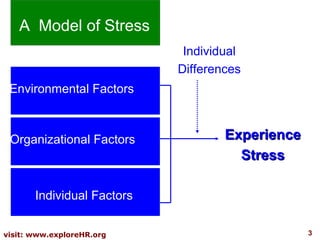
A Model of Stress
Individual
Differences
Environmental Factors

Organizational Factors

Experience
Stress

Individual Factors
visit: www.exploreHR.org

3
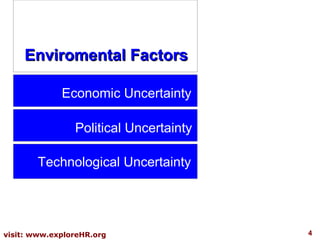
Enviromental Factors
Economic Uncertainty
Political Uncertainty
Technological Uncertainty

visit: www.exploreHR.org

4
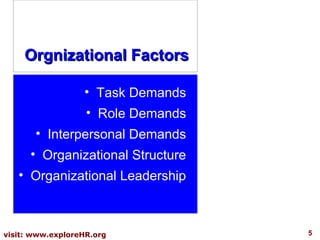
Orgnizational Factors
• Task Demands
• Role Demands
• Interpersonal Demands
• Organizational Structure
• Organizational Leadership

visit: www.exploreHR.org

5
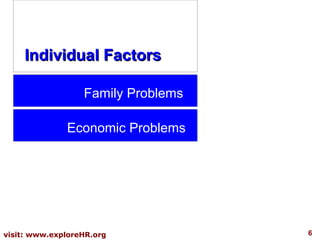
Individual Factors
Family Problems
Economic Problems

visit: www.exploreHR.org

6
Some people thrive on stressful situations,
while others are overwhelmed by them. What
is it that differentiates people in terms of their
ability to handle stress?
At least four variables — perception, job
experience, social support, and belief in
locus of control — have been found to be
relevant moderators.

visit: www.exploreHR.org

7
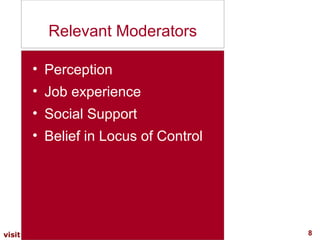
Relevant Moderators
• Perception
• Job experience
• Social Support
• Belief in Locus of Control

visit: www.exploreHR.org

8
Perception
The stress potential in environmental,
organizational, and individual factors doesn't
lie in their objective condition. Rather, it lies in
an employee's interpretation of those factors.

visit: www.exploreHR.org

9
Job Experience
Experience is said to be a great teacher. It
can also be a great stress-reducer.

visit: www.exploreHR.org

10
Social Support
There is increasing evidence that social
support — that is, collegial relationships with
co-workers or supervisors — can buffer the
impact of stress.

visit: www.exploreHR.org

11
Belief in Locus of Control
Those with an internal locus of control believe
they control their own destiny. Those with an
external locus believe their lives are
controlled by outside forces. Evidence
indicates that internals perceive their jobs to
be less stressful than do externals.

visit: www.exploreHR.org

12
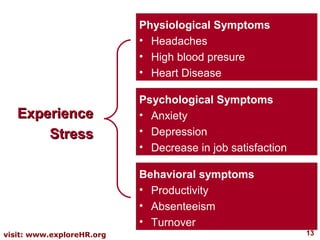
Physiological Symptoms
• Headaches
• High blood presure
• Heart Disease

Experience
Stress

Psychological Symptoms
• Anxiety
• Depression
• Decrease in job satisfaction
Behavioral symptoms
• Productivity
• Absenteeism
• Turnover

visit: www.exploreHR.org

13
Stress Management
Strategies
Individual Approaches
Organizational Approaches

visit: www.exploreHR.org

14
Individual Approaches
Time Management
Physical Exercise
Relaxation Training
Social Support

visit: www.exploreHR.org

15
Time Management
An understanding and utilization of
basic time management principles
can help individuals better cope
with job demands.

visit: www.exploreHR.org

16
Physical Exercise
Noncompetitive physical exercise
such as aerobics, race walking,
jogging, swimming, and riding a
bicycle have long been
recommended by physicians as a
way to deal with excessive stress
levels.
visit: www.exploreHR.org

17
Relaxation Training
Individuals can teach themselves to relax
through techniques such as meditation,
hypnosis, and biofeedback. The objective
is to reach a state of deep relaxation,
where one feels physically relaxed,
somewhat detached from the immediate
environment, and detached from body
sensations.
visit: www.exploreHR.org

18
Social Support
Having friends, family, or work
colleagues to talk to provides an outlet
when stress levels become excessive.
Expanding your social support network,
therefore, can be a means for tension
reduction.

visit: www.exploreHR.org

19
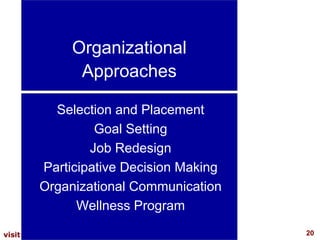
Organizational
Approaches
Selection and Placement
Goal Setting
Job Redesign
Participative Decision Making
Organizational Communication
Wellness Program
visit: www.exploreHR.org

20
Selection & Placement
Individuals with little experience
or an external locus of control
tend to be more stress-prone.
Selection and placement decisions
should take these facts into
consideration.

visit: www.exploreHR.org

21
Goal Setting
The use of goals can reduce stress as well
as provide motivation. Specific goals that
are perceived as attainable clarify
performance expectations. Additionally,
goal feedback reduces uncertainties as to
actual job performance. The result is less
employee frustration, role ambiguity,
and stress.
visit: www.exploreHR.org

22
Job Redesign
Redesigning jobs to give employees
more responsibility, more meaningful
work, more autonomy, and increased
feedback can reduce stress, because
these factors give the employee greater
control over work activities and lessen
dependence on others.
visit: www.exploreHR.org

23
Participative Decision Making
By giving these employees a voice in
decisions that directly affect their job
performances, management can
increase employee control and reduce
this role stress.

visit: www.exploreHR.org

24
Organizational Commitment
Given the importance that perceptions
play in moderating the stress-response
relationship, management can also use
effective communications as a means to
shape employee perceptions.

visit: www.exploreHR.org

25
Wellness Program
These programs focus on the
employee's total physical and mental
condition. For example, they typically
provide workshops to help people quit
smoking, control alcohol use, lose
weight, eat better, and develop a regular
exercise program.
visit: www.exploreHR.org

26
Source of Reference:
Stephen Robbins, Organizational Behavior, Prentice Hall
International

visit: www.exploreHR.org

27

Stress management in hr

  • 1.
  • 2.
    You can downloadthis presentation file at: www.exploreHR.org Visit www.exploreHR.org for more presentations on Human Capital Strategy and Personal Development visit: www.exploreHR.org 2
  • 3.
    A Model ofStress Individual Differences Environmental Factors Organizational Factors Experience Stress Individual Factors visit: www.exploreHR.org 3
  • 4.
    Enviromental Factors Economic Uncertainty PoliticalUncertainty Technological Uncertainty visit: www.exploreHR.org 4
  • 5.
    Orgnizational Factors • TaskDemands • Role Demands • Interpersonal Demands • Organizational Structure • Organizational Leadership visit: www.exploreHR.org 5
  • 6.
    Individual Factors Family Problems EconomicProblems visit: www.exploreHR.org 6
  • 7.
    Some people thriveon stressful situations, while others are overwhelmed by them. What is it that differentiates people in terms of their ability to handle stress? At least four variables — perception, job experience, social support, and belief in locus of control — have been found to be relevant moderators. visit: www.exploreHR.org 7
  • 8.
    Relevant Moderators • Perception •Job experience • Social Support • Belief in Locus of Control visit: www.exploreHR.org 8
  • 9.
    Perception The stress potentialin environmental, organizational, and individual factors doesn't lie in their objective condition. Rather, it lies in an employee's interpretation of those factors. visit: www.exploreHR.org 9
  • 10.
    Job Experience Experience issaid to be a great teacher. It can also be a great stress-reducer. visit: www.exploreHR.org 10
  • 11.
    Social Support There isincreasing evidence that social support — that is, collegial relationships with co-workers or supervisors — can buffer the impact of stress. visit: www.exploreHR.org 11
  • 12.
    Belief in Locusof Control Those with an internal locus of control believe they control their own destiny. Those with an external locus believe their lives are controlled by outside forces. Evidence indicates that internals perceive their jobs to be less stressful than do externals. visit: www.exploreHR.org 12
  • 13.
    Physiological Symptoms • Headaches •High blood presure • Heart Disease Experience Stress Psychological Symptoms • Anxiety • Depression • Decrease in job satisfaction Behavioral symptoms • Productivity • Absenteeism • Turnover visit: www.exploreHR.org 13
  • 14.
  • 15.
    Individual Approaches Time Management PhysicalExercise Relaxation Training Social Support visit: www.exploreHR.org 15
  • 16.
    Time Management An understandingand utilization of basic time management principles can help individuals better cope with job demands. visit: www.exploreHR.org 16
  • 17.
    Physical Exercise Noncompetitive physicalexercise such as aerobics, race walking, jogging, swimming, and riding a bicycle have long been recommended by physicians as a way to deal with excessive stress levels. visit: www.exploreHR.org 17
  • 18.
    Relaxation Training Individuals canteach themselves to relax through techniques such as meditation, hypnosis, and biofeedback. The objective is to reach a state of deep relaxation, where one feels physically relaxed, somewhat detached from the immediate environment, and detached from body sensations. visit: www.exploreHR.org 18
  • 19.
    Social Support Having friends,family, or work colleagues to talk to provides an outlet when stress levels become excessive. Expanding your social support network, therefore, can be a means for tension reduction. visit: www.exploreHR.org 19
  • 20.
    Organizational Approaches Selection and Placement GoalSetting Job Redesign Participative Decision Making Organizational Communication Wellness Program visit: www.exploreHR.org 20
  • 21.
    Selection & Placement Individualswith little experience or an external locus of control tend to be more stress-prone. Selection and placement decisions should take these facts into consideration. visit: www.exploreHR.org 21
  • 22.
    Goal Setting The useof goals can reduce stress as well as provide motivation. Specific goals that are perceived as attainable clarify performance expectations. Additionally, goal feedback reduces uncertainties as to actual job performance. The result is less employee frustration, role ambiguity, and stress. visit: www.exploreHR.org 22
  • 23.
    Job Redesign Redesigning jobsto give employees more responsibility, more meaningful work, more autonomy, and increased feedback can reduce stress, because these factors give the employee greater control over work activities and lessen dependence on others. visit: www.exploreHR.org 23
  • 24.
    Participative Decision Making Bygiving these employees a voice in decisions that directly affect their job performances, management can increase employee control and reduce this role stress. visit: www.exploreHR.org 24
  • 25.
    Organizational Commitment Given theimportance that perceptions play in moderating the stress-response relationship, management can also use effective communications as a means to shape employee perceptions. visit: www.exploreHR.org 25
  • 26.
    Wellness Program These programsfocus on the employee's total physical and mental condition. For example, they typically provide workshops to help people quit smoking, control alcohol use, lose weight, eat better, and develop a regular exercise program. visit: www.exploreHR.org 26
  • 27.
    Source of Reference: StephenRobbins, Organizational Behavior, Prentice Hall International visit: www.exploreHR.org 27

Editor's Notes