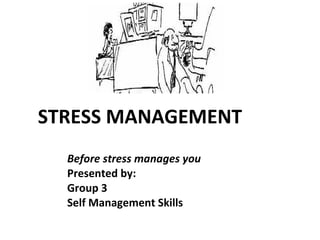
STRESS MANAGEMENT Before stress manages you Presented by: Group 3 Self Management Skills
Goals To provide stress management education and awareness To provide physical  wellness education. To provide the class with the basic management challenges for stress  of the 21 st  century.
Objectives Increase use of  healthy , proactive stress management techniques. Minimize use of unhealthy stress management techniques. Awareness from the basic challenges of 21 st  century  for stress management.
… ..people are disturbed  not by things,but by their perceptions of things… -Epictetus-
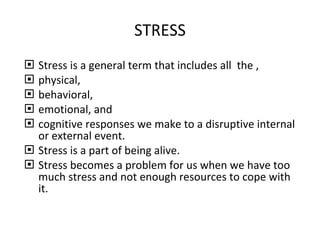
STRESS Stress is a general term that includes all  the , physical, behavioral, emotional, and  cognitive responses we make to a disruptive internal or external event. Stress is a part of being alive. Stress becomes a problem for us when we have too much stress and not enough resources to cope with it.
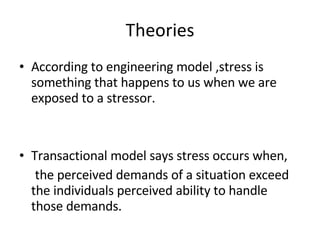
Theories According to engineering model ,stress is something that happens to us when we are exposed to a stressor. Transactional model says stress occurs when, the perceived demands of a situation exceed the individuals perceived ability to handle those demands.
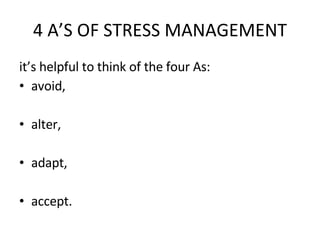
4 A’S OF STRESS MANAGEMENT it’s helpful to think of the four As:  avoid,  alter, adapt, accept.
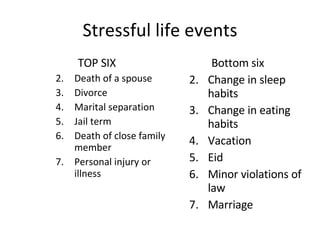
Stressful life events TOP SIX Death of a spouse Divorce Marital separation Jail term Death of close family member Personal injury or illness Bottom six Change in sleep habits Change in eating habits Vacation Eid  Minor violations of law Marriage
Work-related  stress Poor relationships with colleagues  an unsupportive boss  Lack of consultation and communication  Too much interference with your private, social or family life  Too much or too little to do
Work related stress Too much pressure, with unrealistic deadlines Work that's too difficult or not demanding enough  Lack of control over the way the work is done Poor working conditions
Work related stress Being in the wrong job  Feeling undervalued  Insecurity and the threat of unemployment
Should WE Eliminate Stress from OUR Lives? Our goal is not to eliminate stress but, to learn how to manage it and how to use it to help us . What we need to do is find the optimal level of stress which will individually motivate but not overwhelm each of us .
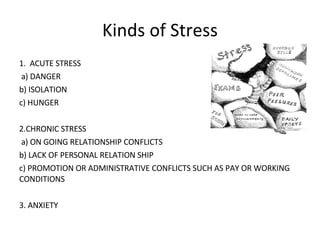
Kinds of Stress 1.  ACUTE STRESS a) DANGER b) ISOLATION c) HUNGER 2.CHRONIC STRESS a) ON GOING RELATIONSHIP CONFLICTS b) LACK OF PERSONAL RELATION SHIP c) PROMOTION OR ADMINISTRATIVE CONFLICTS SUCH AS PAY OR WORKING CONDITIONS 3. ANXIETY
Kinds of effects associated with the stressed state Psychologists have argued that there are four major kinds of effects associated with the stressed state, Emotional effects Feelings of anxiety and depression Increased physical tension Increased psychological tension
2. Physiological effects Release of adrenaline and noradrenalin shut-down of digestive system Expansion of air passages In lungs Increased heart rate Constriction of blood vessels
3. Cognitive effects Poor concentration Increased distractibility Reduced short term memory capacity 4. Behavioral effects Increased absenteeism Disrupted sleep patterns Reduced work performance
Stress inititors Stress is uniquely personal. Our response to stress is a unique combination of bodily reactions, thoughts feelings and behaviors. Factors Affecting our personal stress level Internal factors Physical health Genetic vulnerabilities
FACTORS OF STRESS External factors Medical care Finances Skills and training Support systems Counseling Frequency of stressors occurrence Intensity of stress's occurrence
FACTORS OF STRESS Mental health Self-esteem Temperament Self confidence Cultural expectations Cultural definitions
Causes of stress Stressful life events Noise pollution Heat Technological threats Architecture Uneven distribution of life facilities
Stress Impact 43% of all adults suffer adverse health effect due to stress. 75-90% of all visits to primary care physicians are for stress related complaints. Impaired task performance: your ability of performing certain tasks decrease Burn out: it is a state of exhaustion
Reduced negative organizational stress  Increased individual productivity and responsibility  Better team communications and morale
STRESS MANAGEMENT TRAINING BENEFITS TO THE INDIVIDUAL Reduced personal stress Improved decision making  Increased productivity  Connecting better to family & friends  More value, balance & happiness every day
Managing the stress Unhealthy ways:   Drugs and sleeping pills. Overeating or undereating  Zoning out for hours in front of the TV or computer  Withdrawing from friends, family, and activities  Procrastinating  Filling up every minute of the day to avoid facing problems  Taking out your stress on others (lashing out, angry outbursts, physical violence)
Stress management strategy #1: Avoid unnecessary stress Learn how to say “no” Avoid people who stress you out Take control of your environment.
Stress management strategy #2: Alter the situation: Express your feelings instead of bottling them up.  Be willing to compromise. Be more assertive Time Management.
Stress management strategy #3: Adapt to the stressor: Reframe problems Look at the big picture Adjust your standards. Focus on the positive.
Stress management strategy #4: Accept the things you can’t change: Don’t try to control the uncontrollable Look for the upside Share your feelings Learn to forgive
Stress management strategy #5:  Healthy ways to relax and recharge Go for a walk.  Spend time in nature.  Call a good friend.  Sweat out tension with a good workout.  Write in your journal.  Take a long bath.  Light scented candles  Savor a warm cup of coffee or tea.  Play with a pet.  Work in your garden.  Get a massage.  Curl up with a good book.  Listen to music.  Watch a comedy
Stress management strategy #6 : Adopt a healthy lifestyle: Exercise regularly Eat a healthy diet Reduce caffeine and sugar Avoid alcohol, cigarettes, and drugs. Get enough sleep.
10 stress busters Exercise three to five times for at least 30 minutes. Work off your anger by doing something physical. Use relaxation techniques ,yoga meditation or deep breathing. Watch out funny movie a week, more during stressful times.
5. Maintain a regular sleep schedule. 6. Don’t procrastinate. 7.Avoid caffeine,sugar,and tobacco when you are stressed 8. Volunteer once a month,  ,helping others is an incredible stress reliever. 9.Set priorities weekly and make sure to schedule in leisure time. 10.Talk with others. A support system is one of the greatest stress busters.

Stress Management by Iqbal

  • 1.
    STRESS MANAGEMENT Beforestress manages you Presented by: Group 3 Self Management Skills
  • 2.
    Goals To providestress management education and awareness To provide physical wellness education. To provide the class with the basic management challenges for stress of the 21 st century.
  • 3.
    Objectives Increase useof healthy , proactive stress management techniques. Minimize use of unhealthy stress management techniques. Awareness from the basic challenges of 21 st century for stress management.
  • 4.
    … ..people aredisturbed not by things,but by their perceptions of things… -Epictetus-
  • 5.
    STRESS Stress isa general term that includes all the , physical, behavioral, emotional, and cognitive responses we make to a disruptive internal or external event. Stress is a part of being alive. Stress becomes a problem for us when we have too much stress and not enough resources to cope with it.
  • 6.
    Theories According toengineering model ,stress is something that happens to us when we are exposed to a stressor. Transactional model says stress occurs when, the perceived demands of a situation exceed the individuals perceived ability to handle those demands.
  • 7.
    4 A’S OFSTRESS MANAGEMENT it’s helpful to think of the four As: avoid, alter, adapt, accept.
  • 8.
    Stressful life eventsTOP SIX Death of a spouse Divorce Marital separation Jail term Death of close family member Personal injury or illness Bottom six Change in sleep habits Change in eating habits Vacation Eid Minor violations of law Marriage
  • 9.
    Work-related stressPoor relationships with colleagues an unsupportive boss Lack of consultation and communication Too much interference with your private, social or family life Too much or too little to do
  • 10.
    Work related stressToo much pressure, with unrealistic deadlines Work that's too difficult or not demanding enough Lack of control over the way the work is done Poor working conditions
  • 11.
    Work related stressBeing in the wrong job Feeling undervalued Insecurity and the threat of unemployment
  • 12.
    Should WE EliminateStress from OUR Lives? Our goal is not to eliminate stress but, to learn how to manage it and how to use it to help us . What we need to do is find the optimal level of stress which will individually motivate but not overwhelm each of us .
  • 13.
    Kinds of Stress1. ACUTE STRESS a) DANGER b) ISOLATION c) HUNGER 2.CHRONIC STRESS a) ON GOING RELATIONSHIP CONFLICTS b) LACK OF PERSONAL RELATION SHIP c) PROMOTION OR ADMINISTRATIVE CONFLICTS SUCH AS PAY OR WORKING CONDITIONS 3. ANXIETY
  • 14.
    Kinds of effectsassociated with the stressed state Psychologists have argued that there are four major kinds of effects associated with the stressed state, Emotional effects Feelings of anxiety and depression Increased physical tension Increased psychological tension
  • 15.
    2. Physiological effectsRelease of adrenaline and noradrenalin shut-down of digestive system Expansion of air passages In lungs Increased heart rate Constriction of blood vessels
  • 16.
    3. Cognitive effectsPoor concentration Increased distractibility Reduced short term memory capacity 4. Behavioral effects Increased absenteeism Disrupted sleep patterns Reduced work performance
  • 17.
    Stress inititors Stressis uniquely personal. Our response to stress is a unique combination of bodily reactions, thoughts feelings and behaviors. Factors Affecting our personal stress level Internal factors Physical health Genetic vulnerabilities
  • 18.
    FACTORS OF STRESSExternal factors Medical care Finances Skills and training Support systems Counseling Frequency of stressors occurrence Intensity of stress's occurrence
  • 19.
    FACTORS OF STRESSMental health Self-esteem Temperament Self confidence Cultural expectations Cultural definitions
  • 20.
    Causes of stressStressful life events Noise pollution Heat Technological threats Architecture Uneven distribution of life facilities
  • 21.
    Stress Impact 43%of all adults suffer adverse health effect due to stress. 75-90% of all visits to primary care physicians are for stress related complaints. Impaired task performance: your ability of performing certain tasks decrease Burn out: it is a state of exhaustion
  • 22.
    Reduced negative organizationalstress Increased individual productivity and responsibility Better team communications and morale
  • 23.
    STRESS MANAGEMENT TRAININGBENEFITS TO THE INDIVIDUAL Reduced personal stress Improved decision making Increased productivity Connecting better to family & friends More value, balance & happiness every day
  • 24.
    Managing the stressUnhealthy ways: Drugs and sleeping pills. Overeating or undereating Zoning out for hours in front of the TV or computer Withdrawing from friends, family, and activities Procrastinating Filling up every minute of the day to avoid facing problems Taking out your stress on others (lashing out, angry outbursts, physical violence)
  • 25.
    Stress management strategy#1: Avoid unnecessary stress Learn how to say “no” Avoid people who stress you out Take control of your environment.
  • 26.
    Stress management strategy#2: Alter the situation: Express your feelings instead of bottling them up. Be willing to compromise. Be more assertive Time Management.
  • 27.
    Stress management strategy#3: Adapt to the stressor: Reframe problems Look at the big picture Adjust your standards. Focus on the positive.
  • 28.
    Stress management strategy#4: Accept the things you can’t change: Don’t try to control the uncontrollable Look for the upside Share your feelings Learn to forgive
  • 29.
    Stress management strategy#5: Healthy ways to relax and recharge Go for a walk. Spend time in nature. Call a good friend. Sweat out tension with a good workout. Write in your journal. Take a long bath. Light scented candles Savor a warm cup of coffee or tea. Play with a pet. Work in your garden. Get a massage. Curl up with a good book. Listen to music. Watch a comedy
  • 30.
    Stress management strategy#6 : Adopt a healthy lifestyle: Exercise regularly Eat a healthy diet Reduce caffeine and sugar Avoid alcohol, cigarettes, and drugs. Get enough sleep.
  • 31.
    10 stress bustersExercise three to five times for at least 30 minutes. Work off your anger by doing something physical. Use relaxation techniques ,yoga meditation or deep breathing. Watch out funny movie a week, more during stressful times.
  • 32.
    5. Maintain aregular sleep schedule. 6. Don’t procrastinate. 7.Avoid caffeine,sugar,and tobacco when you are stressed 8. Volunteer once a month, ,helping others is an incredible stress reliever. 9.Set priorities weekly and make sure to schedule in leisure time. 10.Talk with others. A support system is one of the greatest stress busters.