Supply Chain ManagementRevenue Management
IntroductionIn Revenue Management, we focus on how to set the best prices for the offered products.The airline industry, where tickets for the same flight may be sold at many different fares depending on the remaining time until departure and the number of unsold seats.Essentially means setting and adjusting prices on a tactical level in order to maximize profit.
Definition“Revenue management (RM) is the science and art of enhancing firm revenues while selling essentially the same amount of product.”Revenue Management is an approach taken by businesses that want to optimize their revenue stream. This is achieved through a thorough understanding of the marketplace that manipulates product demand, timing and targeting to best effect.
History and Background1985 – Airline Industry, American Airlines and Delta Airlines.1990 – Transportation Companies, National Car Rentals1993 – Manufacturing Companies, General Motors1996-2000 – TV Channels, NBC
RM - PreconditionsProduct is perishable Can be sold in advance (Airline Tickets)Capacity is limited (Hotel Rooms)Market can be segmented (Business Class and Economy Class)Variable costs are low (Cost per Passenger)Demand varies (On Eid demand for train travel is high)
How does it Work?Market Segment PricingPeak/Off-Peak PricingForecasting DemandInventory Allocation Basics
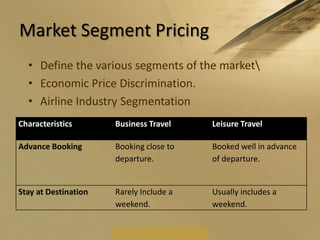
Market Segment PricingDefine the various segments of the market\Economic Price Discrimination. Airline Industry Segmentation
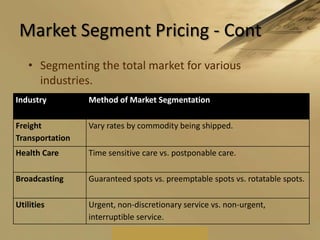
Market Segment Pricing - ContSegmenting the total market for various industries.
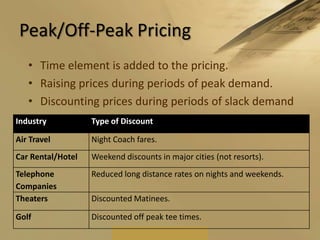
Peak/Off-Peak PricingTime element is added to the pricing.Raising prices during periods of peak demand.Discounting prices during periods of slack demand
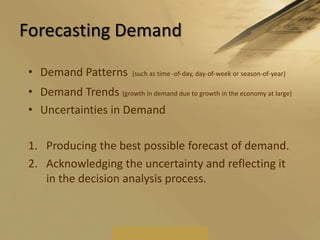
Forecasting DemandDemand Patterns(such as time -of-day, day-of-week or season-of-year)Demand Trends (growth in demand due to growth in the economy at large)Uncertainties in DemandProducing the best possible forecast of demand.Acknowledging the uncertainty and reflecting it in the decision analysis process.
Inventory Allocation BasicsAllocate inventory among price levels/market segmentsto maximize total expected revenue or profits in the face of uncertain levels of demand.
Inventory Allocation Basics - ContExampleWe have a unit of capacity (an airline seat or a hotel room or 30 seconds of television advertising time)Customer ACustomer BCustomer CCustomer D
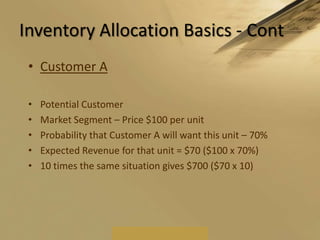
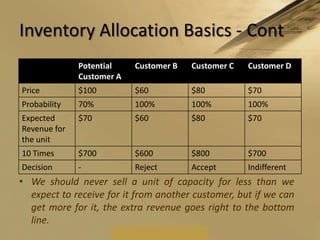
Inventory Allocation Basics - ContCustomer APotential CustomerMarket Segment – Price $100 per unitProbability that Customer A will want this unit – 70%Expected Revenue for that unit = $70 ($100 x 70%)10 times the same situation gives $700 ($70 x 10)
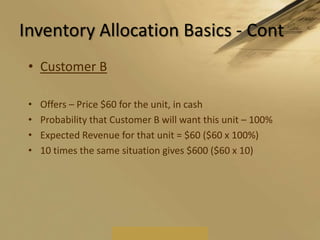
Inventory Allocation Basics - ContCustomer BOffers – Price $60 for the unit, in cashProbability that Customer B will want this unit – 100%Expected Revenue for that unit = $60 ($60 x 100%)10 times the same situation gives $600 ($60 x 10)
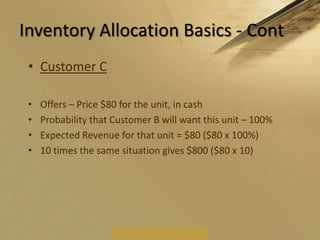
Inventory Allocation Basics - ContCustomer COffers – Price $80 for the unit, in cashProbability that Customer B will want this unit – 100%Expected Revenue for that unit = $80 ($80 x 100%)10 times the same situation gives $800 ($80 x 10)
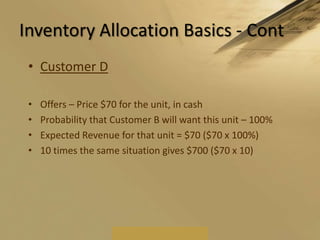
Inventory Allocation Basics - ContCustomer DOffers – Price $70 for the unit, in cashProbability that Customer B will want this unit – 100%Expected Revenue for that unit = $70 ($70 x 100%)10 times the same situation gives $700 ($70 x 10)
Inventory Allocation Basics - ContWe should never sell a unit of capacity for less than we expect to receive for it from another customer, but if we can get more for it, the extra revenue goes right to the bottom line.Use by IndustryUnderstand & analyse libraries’ concerns about business modelsAnalyse strengths & weaknesses of business modelsNew models as well as current modelsOpen access became even more prominent as an issue as the study progressedStrong interest in repositories emergedIdentify “new” models that might solve some problems
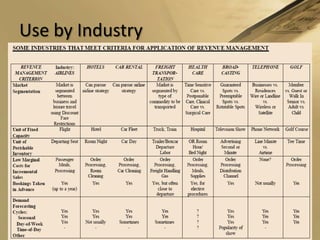
Use by IndustryAirlines IndustryHotel IndustryRental Cars Industry
Airlines IndustryCapacity is regarded fixed.Unsold seats can be said to have perished.Special software to monitor how seats are being reserved and react accordingly.Keep a specific number of seats in reservePrice of each seat varies inversely with the number of seats reserved
Hotel IndustryTo calculate the rates, rooms and restrictions on sales in order to best maximize the return.Selling rooms and services at the right price, at the right time, to the right people.
Rental Car IndustryIn the rental car industry, yield management deals with the sale of optional insurance, damage waivers and vehicle upgrades. It accounts for a major portion of the rental company's profitability, and is monitored on a daily basis.
Other Issues in RMEthical Issues And Questions Of EffectivenessEconometricsRevenue Management and E-Commerce
Thank You!
Revenue management by Iqbal

Revenue management by Iqbal

  • 1.
  • 2.
    IntroductionIn Revenue Management,we focus on how to set the best prices for the offered products.The airline industry, where tickets for the same flight may be sold at many different fares depending on the remaining time until departure and the number of unsold seats.Essentially means setting and adjusting prices on a tactical level in order to maximize profit.
  • 3.
    Definition“Revenue management (RM)is the science and art of enhancing firm revenues while selling essentially the same amount of product.”Revenue Management is an approach taken by businesses that want to optimize their revenue stream. This is achieved through a thorough understanding of the marketplace that manipulates product demand, timing and targeting to best effect.
  • 4.
    History and Background1985– Airline Industry, American Airlines and Delta Airlines.1990 – Transportation Companies, National Car Rentals1993 – Manufacturing Companies, General Motors1996-2000 – TV Channels, NBC
  • 5.
    RM - PreconditionsProductis perishable Can be sold in advance (Airline Tickets)Capacity is limited (Hotel Rooms)Market can be segmented (Business Class and Economy Class)Variable costs are low (Cost per Passenger)Demand varies (On Eid demand for train travel is high)
  • 6.
    How does itWork?Market Segment PricingPeak/Off-Peak PricingForecasting DemandInventory Allocation Basics
  • 7.
    Market Segment PricingDefinethe various segments of the market\Economic Price Discrimination. Airline Industry Segmentation
  • 8.
    Market Segment Pricing- ContSegmenting the total market for various industries.
  • 9.
    Peak/Off-Peak PricingTime elementis added to the pricing.Raising prices during periods of peak demand.Discounting prices during periods of slack demand
  • 10.
    Forecasting DemandDemand Patterns(suchas time -of-day, day-of-week or season-of-year)Demand Trends (growth in demand due to growth in the economy at large)Uncertainties in DemandProducing the best possible forecast of demand.Acknowledging the uncertainty and reflecting it in the decision analysis process.
  • 11.
    Inventory Allocation BasicsAllocateinventory among price levels/market segmentsto maximize total expected revenue or profits in the face of uncertain levels of demand.
  • 12.
    Inventory Allocation Basics- ContExampleWe have a unit of capacity (an airline seat or a hotel room or 30 seconds of television advertising time)Customer ACustomer BCustomer CCustomer D
  • 13.
    Inventory Allocation Basics- ContCustomer APotential CustomerMarket Segment – Price $100 per unitProbability that Customer A will want this unit – 70%Expected Revenue for that unit = $70 ($100 x 70%)10 times the same situation gives $700 ($70 x 10)
  • 14.
    Inventory Allocation Basics- ContCustomer BOffers – Price $60 for the unit, in cashProbability that Customer B will want this unit – 100%Expected Revenue for that unit = $60 ($60 x 100%)10 times the same situation gives $600 ($60 x 10)
  • 15.
    Inventory Allocation Basics- ContCustomer COffers – Price $80 for the unit, in cashProbability that Customer B will want this unit – 100%Expected Revenue for that unit = $80 ($80 x 100%)10 times the same situation gives $800 ($80 x 10)
  • 16.
    Inventory Allocation Basics- ContCustomer DOffers – Price $70 for the unit, in cashProbability that Customer B will want this unit – 100%Expected Revenue for that unit = $70 ($70 x 100%)10 times the same situation gives $700 ($70 x 10)
  • 17.
    Inventory Allocation Basics- ContWe should never sell a unit of capacity for less than we expect to receive for it from another customer, but if we can get more for it, the extra revenue goes right to the bottom line.Use by IndustryUnderstand & analyse libraries’ concerns about business modelsAnalyse strengths & weaknesses of business modelsNew models as well as current modelsOpen access became even more prominent as an issue as the study progressedStrong interest in repositories emergedIdentify “new” models that might solve some problems
  • 18.
    Use by IndustryAirlinesIndustryHotel IndustryRental Cars Industry
  • 19.
    Airlines IndustryCapacity isregarded fixed.Unsold seats can be said to have perished.Special software to monitor how seats are being reserved and react accordingly.Keep a specific number of seats in reservePrice of each seat varies inversely with the number of seats reserved
  • 20.
    Hotel IndustryTo calculatethe rates, rooms and restrictions on sales in order to best maximize the return.Selling rooms and services at the right price, at the right time, to the right people.
  • 21.
    Rental Car IndustryInthe rental car industry, yield management deals with the sale of optional insurance, damage waivers and vehicle upgrades. It accounts for a major portion of the rental company's profitability, and is monitored on a daily basis.
  • 22.
    Other Issues inRMEthical Issues And Questions Of EffectivenessEconometricsRevenue Management and E-Commerce
  • 23.