STRESS MANAGEMENT.
               T.James Joseph.
               Kottayam.Kerala.


.
STRESS
EPIDEMIC OF THE 21st CENTURY.
WHAT IS STRESS ?

Every day fact of life.
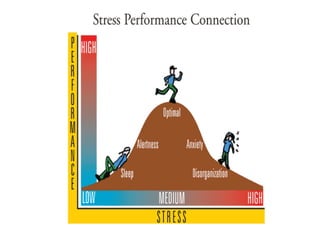
Stress can be GOOD.

But Excessive
stress can be
 harmful..
TAJ MAHAL-STRESS OF
     SHAJAHAN,
.
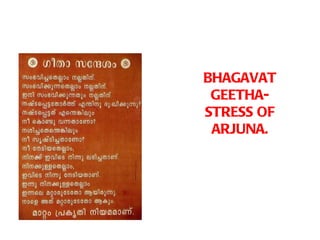
BHAGAVAT
 GEETHA-
STRESS OF
 ARJUNA.
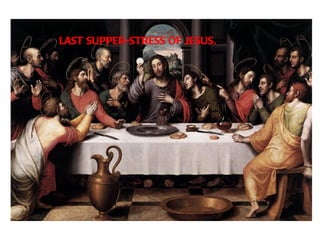
LAST SUPPER-STRESS OF JESUS.
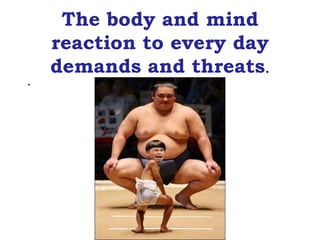
The body and mind
    reaction to every day
    demands and threats.
.
Career and family
responsibilities will
always be demanding.


  But managing stress
   is all about taking charge:
  of your thoughts, emotions, schedule,
    and the way you deal with
    problems.
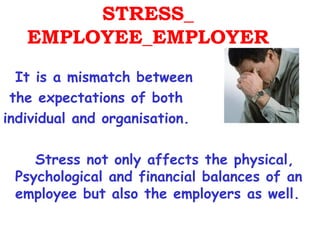
STRESS_
   EMPLOYEE_EMPLOYER
  It is a mismatch between
 the expectations of both
individual and organisation.

    Stress not only affects the physical,
 Psychological and financial balances of an
 employee but also the employers as well.
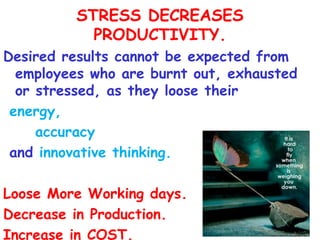
STRESS DECREASES
           PRODUCTIVITY.
Desired results cannot be expected from
  employees who are burnt out, exhausted
  or stressed, as they loose their
 energy,
     accuracy
 and innovative thinking.

Loose More Working days.
Decrease in Production.
Increase in COST.
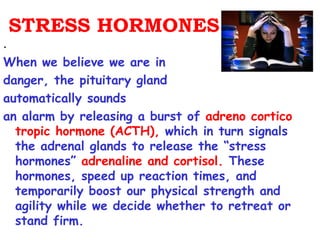
STRESS HORMONES
.
When we believe we are in
danger, the pituitary gland
automatically sounds
an alarm by releasing a burst of adreno cortico
  tropic hormone (ACTH), which in turn signals
  the adrenal glands to release the “stress
  hormones” adrenaline and cortisol. These
  hormones, speed up reaction times, and
  temporarily boost our physical strength and
  agility while we decide whether to retreat or
  stand firm.
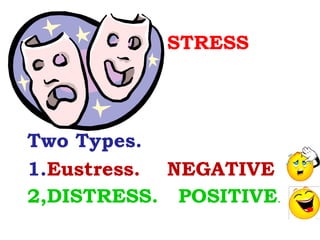
STRESS


Two Types.
1.Eustress. NEGATIVE
2,DISTRESS. POSITIVE.
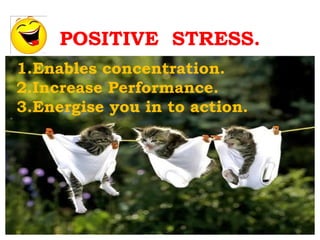
POSITIVE STRESS.
1.Enables concentration.
 .
2.Increase Performance.
3.Energise you in to action.
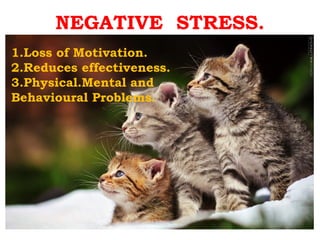
NEGATIVE STRESS.
1.Loss of Motivation.
2.Reduces effectiveness.
  .
3.Physical.Mental and
Behavioural Problems.
.


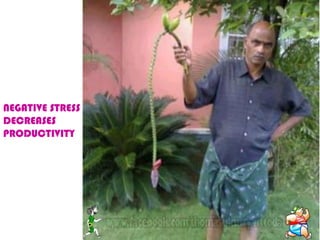
NEGATIVE STRESS
DECREASES
PRODUCTIVITY
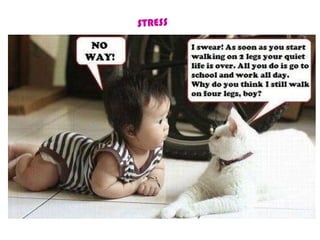
STRESS


         .
STRESS
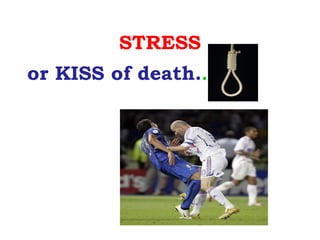
or KISS of death..
STRESS
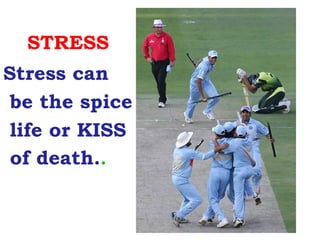
Stress can
 be the spice of
 life or KISS
 of death..
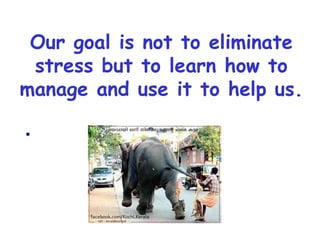
Our goal is not to eliminate
 stress but to learn how to
manage and use it to help us.

.
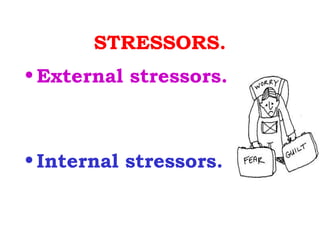
STRESSORS.
• External stressors.


• Internal stressors.
EXTERNAL STRESSORS.


Climate,
Relationship problems,
Disasters,
Working conditions….
INTERNAL STRESSORS.


Health Problems…..
Mental Problems……
Personal habbits…
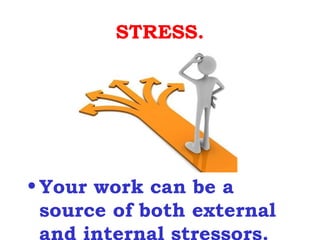
STRESS.


• Your work can be a
  source of both external
STRESSORS.


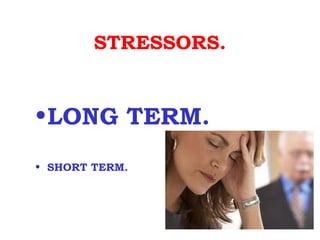
• LONG TERM.
• SHORT TERM.
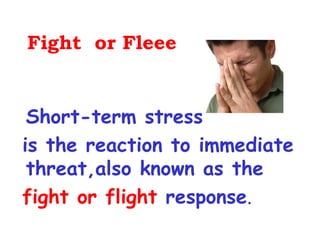
Fight or Fleee


 Short-term stress
is the reaction to immediate
 threat,also known as the
fight or flight response.
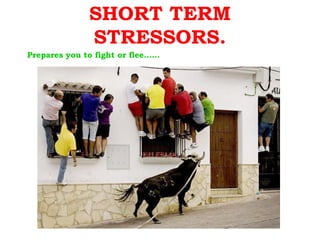
SHORT TERM
              STRESSORS.
Prepares you to fight or flee……
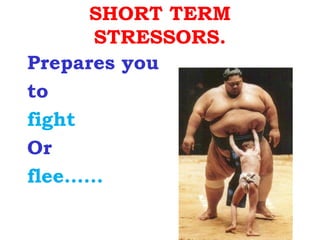
SHORT TERM
      STRESSORS.
Prepares you
to
fight
Or
flee……
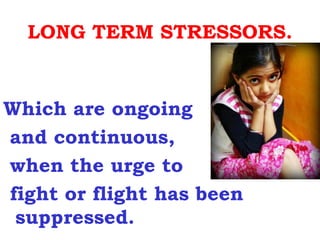
LONG TERM STRESSORS.


Which are ongoing
and continuous,
when the urge to
fight or flight has been
 suppressed.
STRESS-THREATS.
A threat of danger can be
physical, mental or social.
A physical threat occurs when you believe
 that you will be physically hurt.
A social threat occurs when you believe you
 will be rejected, humiliated, embarrassed,
 or put down.
A mental threat occurs when something
  makes you worry that you are going crazy or
STRESS-Economic and
     financial issues.
• Stress is believed to
        trigger 70% of visits
         to doctors, and 85%
         of serious illnesses .
• Increased Hospital Bill…
• Low Productivity……
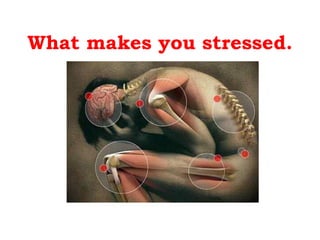
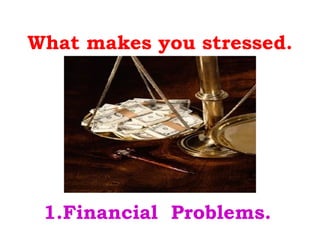
What makes you stressed.


 1.Financial Problems.
What makes you stressed.
   1.Financial Problems.

1.Struggle to make both
 ends meet.
2.Greed.
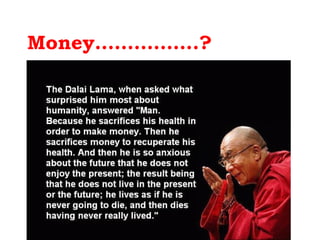
Money…………….?
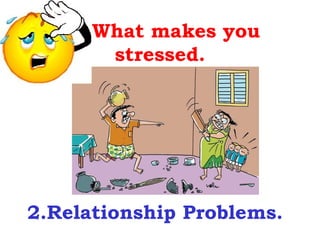
What makes you
       stressed.


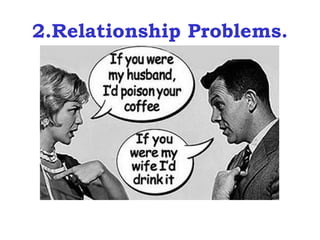
2.Relationship Problems.
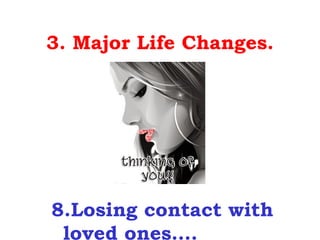
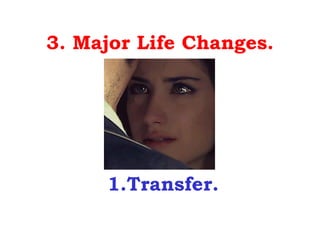
3. Major Life Changes.


     1.Transfer.
3. Major Life Changes.


Promotion./Reversion.
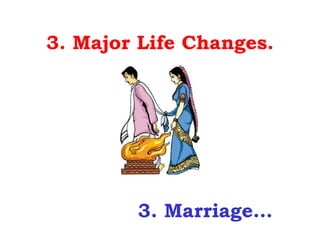
3. Major Life Changes.


        3. Marriage…
3. Major Life Changes.


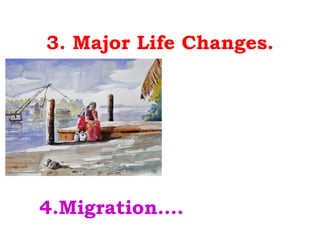
4.Migration….
3. Major Life Changes.


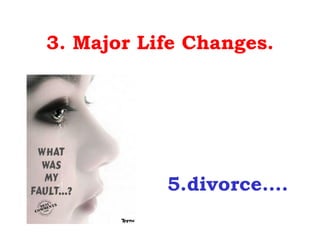
           5.divorce….
3. Major Life Changes.


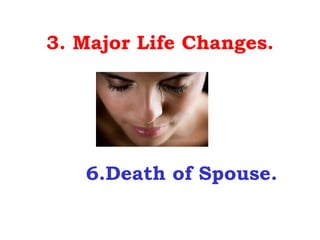
   6.Death of Spouse.
3. Major Life Changes.


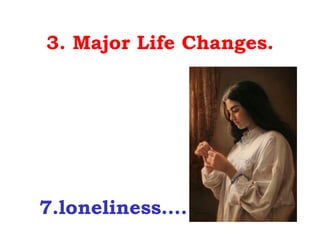
7.loneliness….
3. Major Life Changes.


8.Losing contact with
 loved ones….
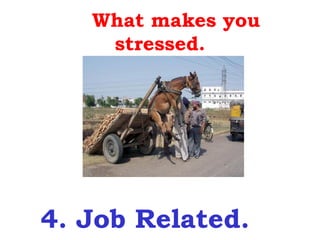
What makes you
    stressed.


4. Job Related.
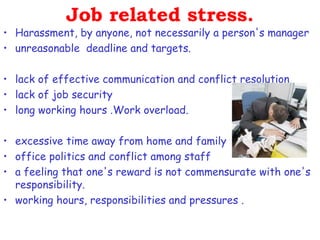
Job related stress.
• Harassment, by anyone, not necessarily a person's manager
• unreasonable deadline and targets.

• lack of effective communication and conflict resolution
• lack of job security
• long working hours .Work overload.

• excessive time away from home and family
• office politics and conflict among staff
• a feeling that one's reward is not commensurate with one's
  responsibility.
• working hours, responsibilities and pressures .
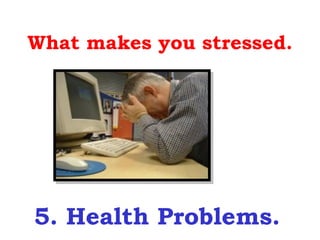
What makes you stressed.


5. Health Problems.
What makes you stressed.


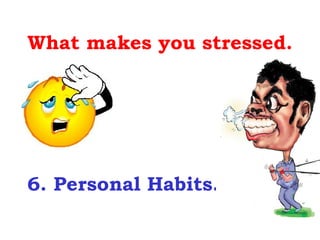
6. Personal Habits.
Personal Habits:

  Drinking.
  Smoking,
  Eating too much sugar or salt,
 getting overtired,
   being pessimistic,
   worrying about your career, dwelling
  on past failures using negative self
 talk can all cause stress.
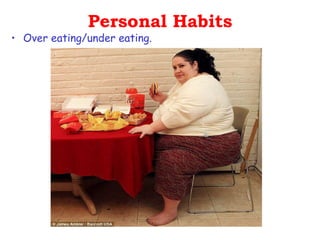
Personal Habits
• Over eating/under eating.
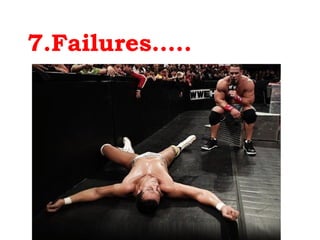
7.Failures…..
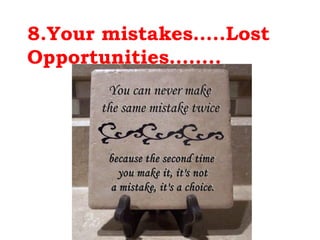
8.Your mistakes…..Lost
Opportunities……..
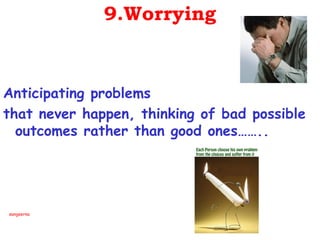
9.Worrying


Anticipating problems
that never happen, thinking of bad possible
  outcomes rather than good ones……..


sangeerna
What makes you stressed.


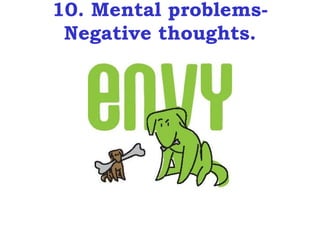
10. Mental problems-
 Negative thoughts.
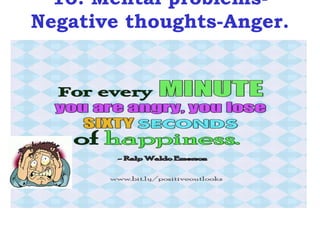
10. Mental problems-
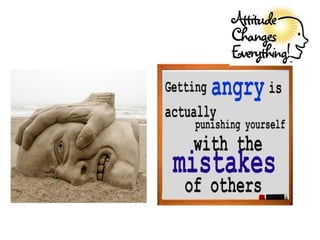
Negative thoughts-Anger.
10. Mental problems-
 Negative thoughts.
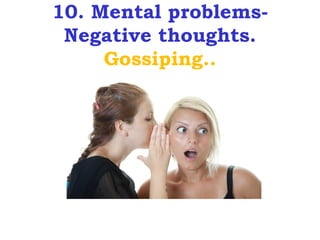
10. Mental problems-
 Negative thoughts.
     Gossiping..

     Ggggggggg
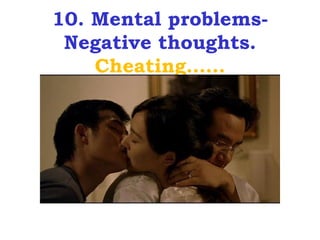
10. Mental problems-
 Negative thoughts.
    Cheating……
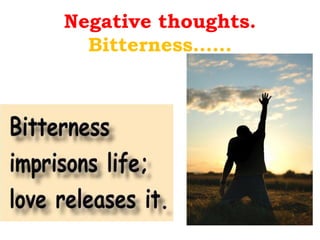
Negative thoughts.
  Bitterness……
What makes you stressed.


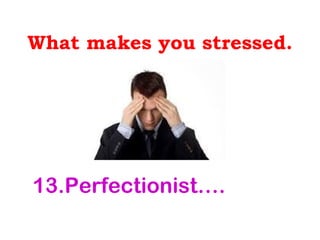
13.Perfectionist….
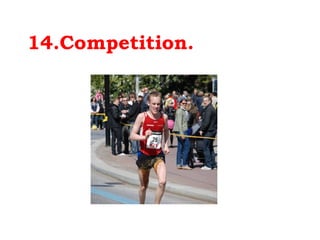
14.Competition.
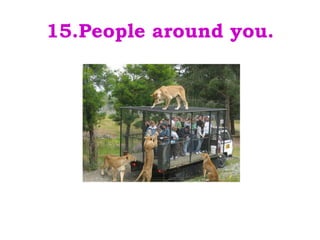
15.People around you.
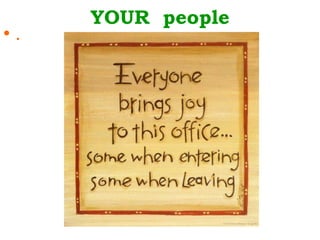
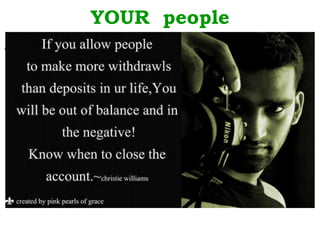
YOUR people
•.
YOUR people
.
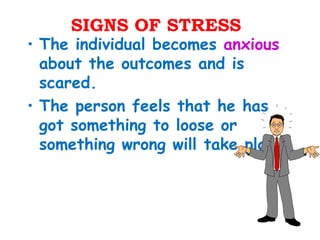
SIGNS OF STRESS
• The individual becomes anxious
  about the outcomes and is
  scared.
• The person feels that he has
  got something to loose or
  something wrong will take place.
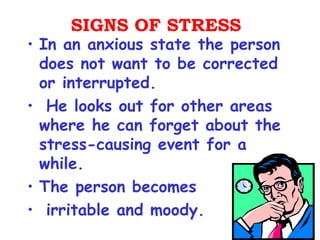
SIGNS OF STRESS
• In an anxious state the person
  does not want to be corrected
  or interrupted.
• He looks out for other areas
  where he can forget about the
  stress-causing event for a
  while.
• The person becomes
• irritable and moody.
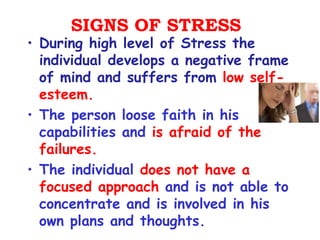
SIGNS OF STRESS
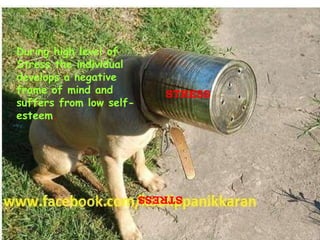
• During high level of Stress the
  individual develops a negative frame
  of mind and suffers from low self-
  esteem.
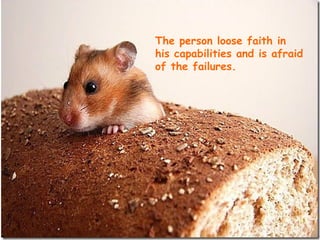
• The person loose faith in his
  capabilities and is afraid of the
  failures.
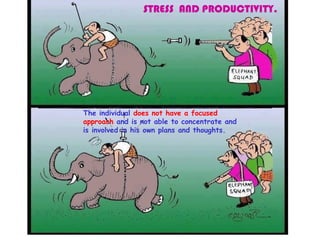
• The individual does not have a
  focused approach and is not able to
  concentrate and is involved in his
  own plans and thoughts.
During high level of
Stress the individual             .
develops a negative
frame of mind and           STRESS
suffers from low self-
esteem.


                         STRESS
STRESS AND PRODUCTIVITY.


                                .


The individual does not have a focused
approach and is not able to concentrate and
is involved in his own plans and thoughts.
The person loose faith in
his capabilities and is afraid
of the failures.
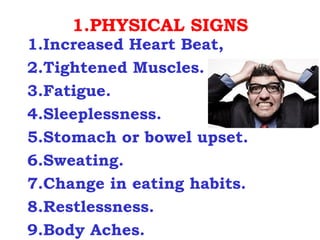
1.PHYSICAL SIGNS
1.Increased Heart Beat,
2.Tightened Muscles.
3.Fatigue.
4.Sleeplessness.
5.Stomach or bowel upset.
6.Sweating.
7.Change in eating habits.
8.Restlessness.
9.Body Aches.
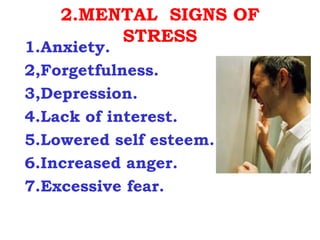
2.MENTAL SIGNS OF
         STRESS
1.Anxiety.
2,Forgetfulness.
3,Depression.
4.Lack of interest.
5.Lowered self esteem.
6.Increased anger.
7.Excessive fear.
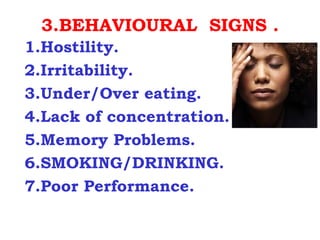
3.BEHAVIOURAL SIGNS .
1.Hostility.
2.Irritability.
3.Under/Over eating.
4.Lack of concentration.
5.Memory Problems.
6.SMOKING/DRINKING.
7.Poor Performance.
Intellectual problems.
•   Memory problems.
•   Difficulty making decisions.
•   Inability to concentrate.
•   Confusion.
•   Seeing only the negative.
•   Repetitive or racing thoughts. 
•   Poor judgment.
•   Loss of objectivity.
•   Desire to escape or run away….
Organizational issues.
•   Job dissatisfaction.
•   Lower motivation.
•   Low employee morale.
•   Less organizational commitment,.
•   Lowered overall quality of work life.
•   Absenteeism, turnover.
•   Intention to leave the job,
•   Lower productivity, decreased quantity and
    quality of work.
•   Inability to make sound decisions.
Impact on HEALTH.
1.Pain.
2.Ulcers.
3.Blood Pressure.
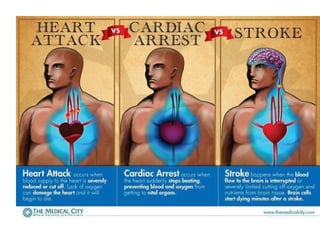
4.STROKE.
5.Heart attack.
6,Cancer Etc.
Impact on HEALTH.
Stress is now known to
contribute to heart disease;
 it causes hypertension and high blood
   pressure, and impairs the immune
   system.
Stress is also linked to strokes, IBS
   (irritable bowel syndrome), ulcers,
   diabetes, muscle and joint pain,
   miscarriage during pregnancy, allergies,
   alopecia and even premature tooth loss.
.
STRESS
MANAGEMENT.
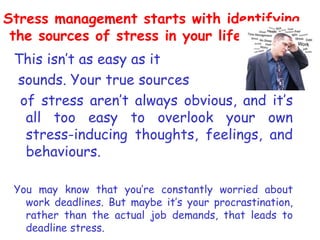
Stress management starts with identifying
 the sources of stress in your life.
 This isn’t as easy as it
 sounds. Your true sources
  of stress aren’t always obvious, and it’s
   all too easy to overlook your own
   stress-inducing thoughts, feelings, and
   behaviours.

 You may know that you’re constantly worried about
   work deadlines. But maybe it’s your procrastination,
   rather than the actual job demands, that leads to
   deadline stress.
To identify your true sources of stress,
look closely at your habits, attitude, and
                 excuses:

Until you accept
responsibility for
the role you play in
creating or maintaining it,
 your stress level will remain outside
your control.
Unhealthy ways of coping with stress
 • Smoking
                 .
 •  Drinking too much
 •  Overeating or under eating
 •  Zoning out for hours in front of the TV or computer
 •  Withdrawing from friends, family, and activities
 •  Using pills or drugs to relax
 •  Sleeping too much
 •  Procrastinating
 •  Filling up every minute of the day
     to avoid facing problems
 • Taking out your stress on others
  (lashing out, angry outbursts,
Learning healthier ways
  to manage stress.
.
1.Proper Thought.
2.Proper Exercise.
3.Proper Diet.
4.Proper Breathing.
5.Proper Relaxation.
6.Proper Working.
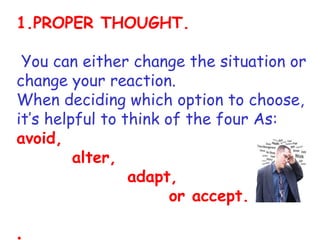
1.PROPER THOUGHT.

 You can either change the situation or
    .

change your reaction.
When deciding which option to choose,
it’s helpful to think of the four As:
avoid,
         alter,
                 adapt,
                       or accept.

.
1.ALTER STRESS.
Express your feelings
instead of bottling them up. 
Be willing to compromise. 
    Be more assertive. 
        Manage your time better.
             Focus on the positive.   
2.ADAPT TO STRESS.

Reframe problems.
  Look at the big picture. 
     Adjust your standards.
          Focus on the positive. 
3.AVOID STRESS.
Learn how to say “no” – 
  Avoid people who stress you out –
   Take control of your environment –Tv
        Avoid hot-button topics.
           Pare down your to-do list –
4.ACCEPT STRESS.


Don’t try to control the uncontrollable.
     Look for the upside. 
         Share your feelings.
                Learn to forgive.   
Learning healthier ways to manage
                stress
   .


 Since everyone has a unique response
to stress, there is no “one size fits all”
        solution to managing it..
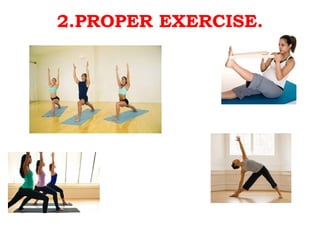
2.PROPER EXERCISE.
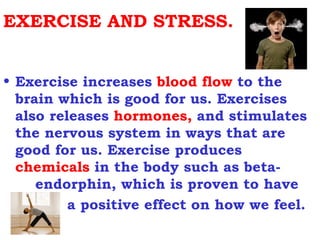
EXERCISE AND STRESS.


• Exercise increases blood flow to the
  brain which is good for us. Exercises
  also releases hormones, and stimulates
  the nervous system in ways that are
  good for us. Exercise produces
  chemicals in the body such as beta-
     endorphin, which is proven to have
          a positive effect on how we feel.
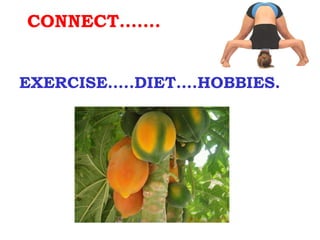
CONNECT…….


EXERCISE…..DIET….HOBBIES.
2.PROPER DIET.

• A proper balanced diet is
  clearly essential, both to
  avoid direct physical stress
  causes via brain and nervous
  system, and to reduce stress
  susceptibility resulting from
  poor health and condition.
The RULE.
The rule is simple and inescapable:
 eat and drink healthily,

 and avoid excessive intake of
 toxins, to reduce stress
 susceptibility and stress itself.
Balanced DIET
 improve diet - group B
vitamins and magnesium are
important, but potentially so
are all the other vitamins and
minerals: a balanced healthy
diet is essential.
Vitamin B
The Vitamin B Group is
 particularly relevant to
 the brain, depression and stress
 susceptibility.
Vitamin B1- deficiency is associated with
 depression and nervous system
 weakness ..
B2- deficiency is associated with nervous
 system disorders and depression.
B3- is essential for protein
 synthesis.healthy nervous system..
Balanced DIET

• Vitamin B6 is essential for
neurotransmitter synthesis and
  maintaining healthy nervous system;
• B6 deficiency is associated with
  depression and dementia.
• B12 deficiency is associated with
  peripheral nerve degeneration,
  dementia, and depression
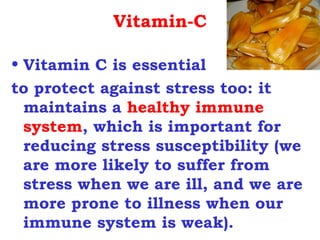
Vitamin-C

• Vitamin C is essential
to protect against stress too: it
  maintains a healthy immune
  system, which is important for
  reducing stress susceptibility (we
  are more likely to suffer from
  stress when we are ill, and we are
  more prone to illness when our
  immune system is weak).
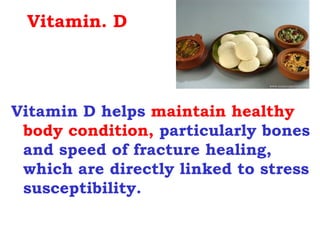
Vitamin. D


Vitamin D helps maintain healthy
 body condition, particularly bones
 and speed of fracture healing,
 which are directly linked to stress
 susceptibility.
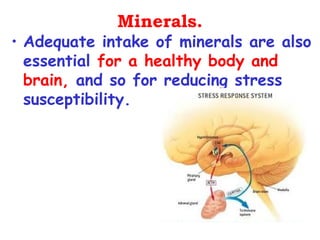
Minerals.
• Adequate intake of minerals are also
  essential for a healthy body and
  brain, and so for reducing stress
  susceptibility.
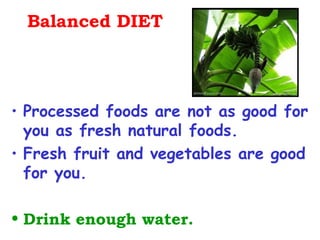
Balanced DIET


• Processed foods are not as good for
  you as fresh natural foods.
• Fresh fruit and vegetables are good
  for you.

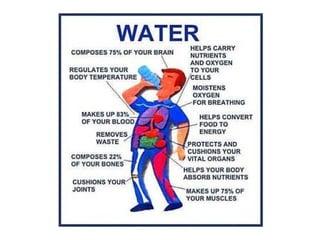
• Drink enough water.
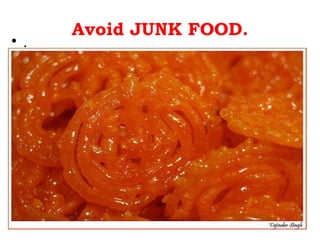
Avoid JUNK FOOD.
• .
.
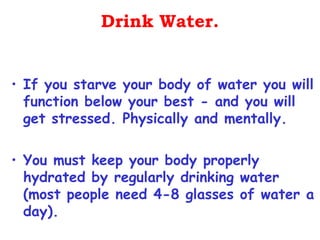
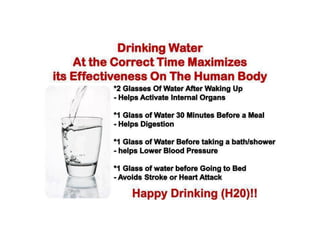
Drink Water.


• If you starve your body of water you will
  function below your best - and you will
  get stressed. Physically and mentally.

• You must keep your body properly
  hydrated by regularly drinking water
  (most people need 4-8 glasses of water a
  day).
.
.
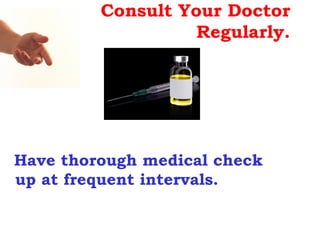
Consult Your Doctor
                   Regularly.


Have thorough medical check
up at frequent intervals.
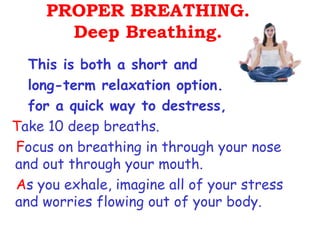
PROPER BREATHING.
       Deep Breathing.
  This is both a short and
  long-term relaxation option.
  for a quick way to destress,
Take 10 deep breaths.
Focus on breathing in through your nose
and out through your mouth.
As you exhale, imagine all of your stress
and worries flowing out of your body.
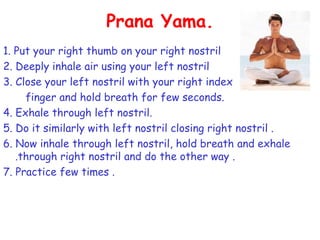
Prana Yama.
1. Put your right thumb on your right nostril
2. Deeply inhale air using your left nostril
3. Close your left nostril with your right index
     finger and hold breath for few seconds.
4. Exhale through left nostril.
5. Do it similarly with left nostril closing right nostril .
6. Now inhale through left nostril, hold breath and exhale
   .through right nostril and do the other way .
7. Practice few times .
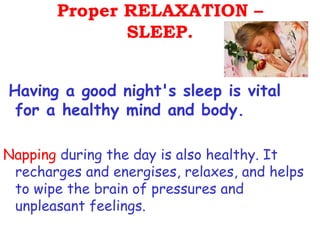
Proper RELAXATION –
              SLEEP.


Having a good night's sleep is vital
 for a healthy mind and body.

Napping during the day is also healthy. It
 recharges and energises, relaxes, and helps
 to wipe the brain of pressures and
 unpleasant feelings.
.
.
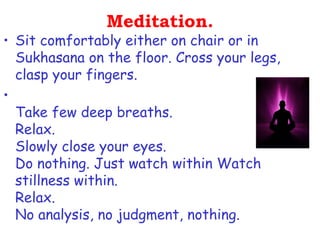
Meditation.
• Sit comfortably either on chair or in
  Sukhasana on the floor. Cross your legs,
  clasp your fingers.
•
  Take few deep breaths.
  Relax.
  Slowly close your eyes.
  Do nothing. Just watch within Watch
  stillness within.
  Relax.
  No analysis, no judgment, nothing.
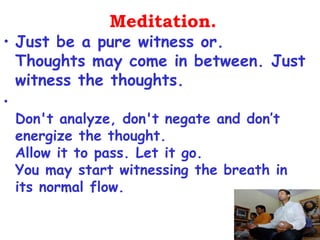
Meditation.
• Just be a pure witness or.
  Thoughts may come in between. Just
  witness the thoughts.
•
    Don't analyze, don't negate and don’t
    energize the thought.
    Allow it to pass. Let it go.
    You may start witnessing the breath in
    its normal flow.
Meditation.

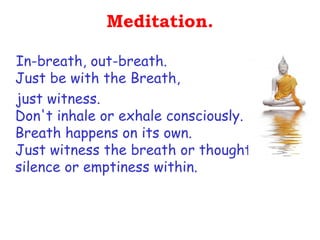
In-breath, out-breath.
Just be with the Breath,
just witness.
Don't inhale or exhale consciously.
Breath happens on its own.
Just witness the breath or thought or
silence or emptiness within.
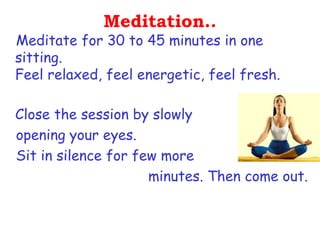
Meditation..
Meditate for 30 to 45 minutes in one
sitting.
Feel relaxed, feel energetic, feel fresh.

Close the session by slowly
opening your eyes.
Sit in silence for few more
                     minutes. Then come out.
.
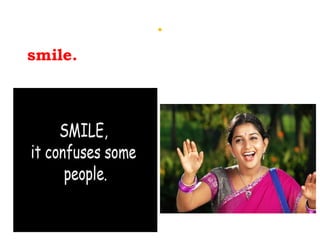
smile.
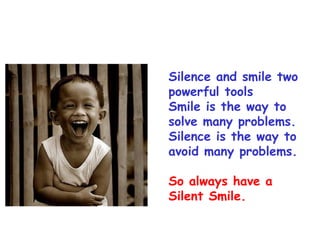
Silence and smile two
powerful tools
Smile is the way to
solve many problems.
Silence is the way to
avoid many problems.

So always have a
Silent Smile.
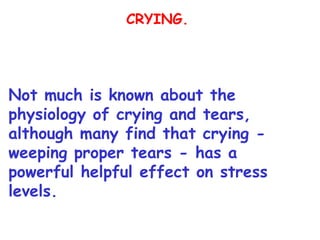
CRYING.


Not much is known about the
physiology of crying and tears,
although many find that crying -
weeping proper tears - has a
powerful helpful effect on stress
levels.
SEX


• .
SEX


• .
SEX


• .
PROPER WORKING.
1.Time Management.

      YESTERDAY is history.


TOMORROW is a mystery.

TODAY is a gift. That's why
it's called the

               PRESENT!!
Avoid Procrastination.
2.Accept Change.
• If you are suffering from
• work-related stress and it's
  beginning to affect, or already
  affecting your health, stop to think:
  why are you taking this risk with
  your body and mind? Life's short
  enough as it is; illness is all around
  us; why make matters worse?
  Commit to change before one day
  change is forced upon you.
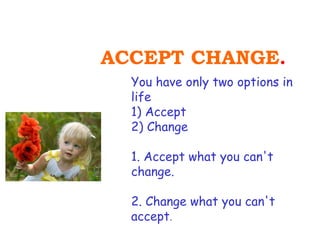
ACCEPT CHANGE.
  You have only two options in
  life
  1) Accept
  2) Change

  1. Accept what you can't
  change.

  2. Change what you can't
  accept.
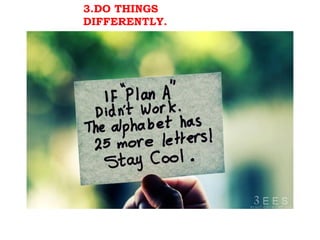
3.DO THINGS
DIFFERENTLY.
DIVERSION……Find time for hobbies&
       entertainment.
     .


DIVERSION ____HOBBIES.
Enjoy MUSIC.
Tour

• .
DIVERSION…ENTERTAINMENTS.


Engage in Entertainments.
WATCHING TV…RADIO…
    INTERNET…
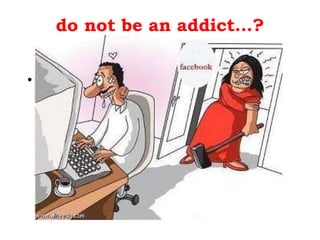
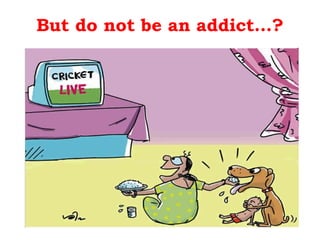
do not be an addict…?

• .
But do not be an addict…?

• .
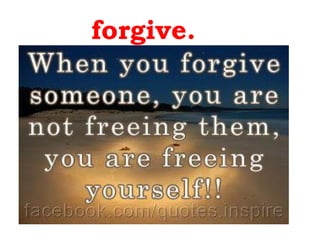
forgive.
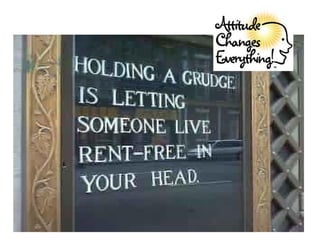
This is the most powerful aid to peace of mind. We often develop
ill feelings inside our heart for the person who insults us or
harms us.

We nurture grievances. This in turn results in loss of sleep,
development of stomach ulcers, and high blood pressure. This
insult or injury was done once, but nourishing of grievance goes
on forever by constantly remembering it.


 Get over this bad habit. Life is too short to waste in such trifles.
Forgive, Forget, and march on. Love flourishes in giving and
forgiving.
forgive.
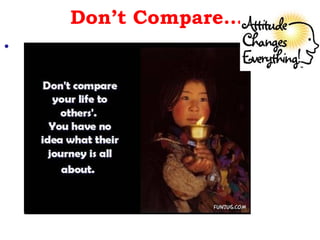
Don’t Compare….
.
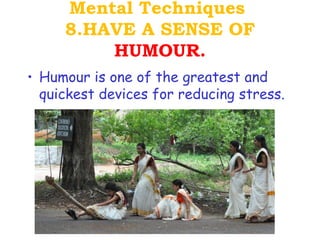
Mental Techniques
     8.HAVE A SENSE OF
         HUMOUR.
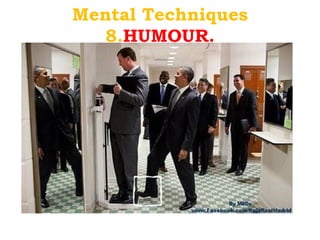
• Humour is one of the greatest and
  quickest devices for reducing stress.
Mental Techniques
         8.HUMOUR.
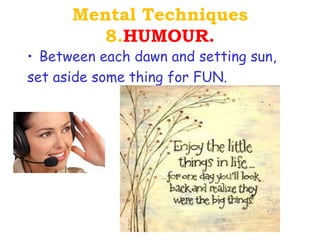
• Between each dawn and setting sun,
set aside some thing for FUN.
Mental Techniques
           8.HUMOUR.
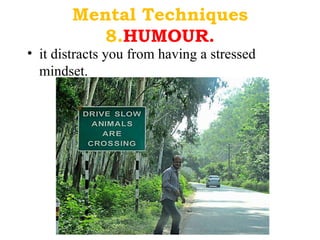
• it distracts you from having a stressed
  mindset.
Mental Techniques
   8.HUMOUR.
HUMOUR.
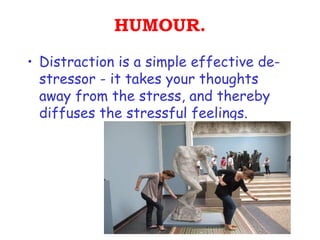
• Distraction is a simple effective de-
  stressor - it takes your thoughts
  away from the stress, and thereby
  diffuses the stressful feelings.
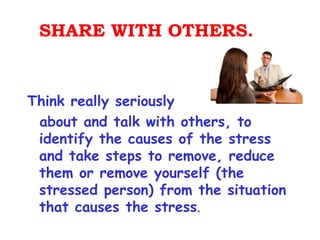
SHARE WITH OTHERS.


Think really seriously
 about and talk with others, to
 identify the causes of the stress
 and take steps to remove, reduce
 them or remove yourself (the
 stressed person) from the situation
 that causes the stress.
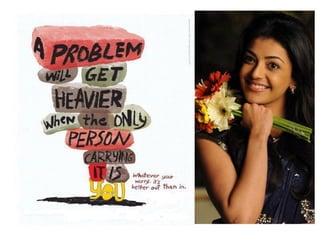
SHARE YOUR WORRIES….
10.SHARE
• .
Spirituality.


“
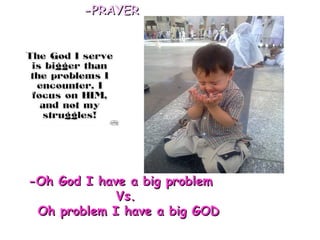
-PRAYER


-Oh God I have a big problem
             Vs.
 Oh problem I have a big GOD
.


•   T.J Joseph.
•   Adhikarathil.
•   S H Mount.
•   Kottayam.
.


• .

stress management....stress can be the spice of life.......or it can be the KISS of DEATH..

  • 1.
    STRESS MANAGEMENT. T.James Joseph. Kottayam.Kerala. .
  • 2.
  • 3.
    WHAT IS STRESS? Every day fact of life. Stress can be GOOD. But Excessive stress can be harmful..
  • 4.
  • 5.
  • 6.
  • 8.
    The body andmind reaction to every day demands and threats. .
  • 9.
    Career and family responsibilitieswill always be demanding. But managing stress is all about taking charge: of your thoughts, emotions, schedule, and the way you deal with problems.
  • 10.
    STRESS_ EMPLOYEE_EMPLOYER It is a mismatch between the expectations of both individual and organisation. Stress not only affects the physical, Psychological and financial balances of an employee but also the employers as well.
  • 11.
    STRESS DECREASES PRODUCTIVITY. Desired results cannot be expected from employees who are burnt out, exhausted or stressed, as they loose their energy, accuracy and innovative thinking. Loose More Working days. Decrease in Production. Increase in COST.
  • 12.
    STRESS HORMONES . When webelieve we are in danger, the pituitary gland automatically sounds an alarm by releasing a burst of adreno cortico tropic hormone (ACTH), which in turn signals the adrenal glands to release the “stress hormones” adrenaline and cortisol. These hormones, speed up reaction times, and temporarily boost our physical strength and agility while we decide whether to retreat or stand firm.
  • 13.
  • 14.
    POSITIVE STRESS. 1.Enables concentration. . 2.Increase Performance. 3.Energise you in to action.
  • 15.
    NEGATIVE STRESS. 1.Loss ofMotivation. 2.Reduces effectiveness. . 3.Physical.Mental and Behavioural Problems.
  • 16.
  • 17.
  • 19.
  • 20.
    STRESS Stress can bethe spice of life or KISS of death..
  • 21.
    Our goal isnot to eliminate stress but to learn how to manage and use it to help us. .
  • 22.
  • 23.
  • 24.
    INTERNAL STRESSORS. Health Problems….. MentalProblems…… Personal habbits…
  • 25.
    STRESS. • Your workcan be a source of both external
  • 26.
  • 27.
    Fight or Fleee Short-term stress is the reaction to immediate threat,also known as the fight or flight response.
  • 28.
    SHORT TERM STRESSORS. Prepares you to fight or flee……
  • 29.
    SHORT TERM STRESSORS. Prepares you to fight Or flee……
  • 30.
    LONG TERM STRESSORS. Whichare ongoing and continuous, when the urge to fight or flight has been suppressed.
  • 31.
    STRESS-THREATS. A threat ofdanger can be physical, mental or social. A physical threat occurs when you believe that you will be physically hurt. A social threat occurs when you believe you will be rejected, humiliated, embarrassed, or put down. A mental threat occurs when something makes you worry that you are going crazy or
  • 32.
    STRESS-Economic and financial issues. • Stress is believed to trigger 70% of visits to doctors, and 85% of serious illnesses . • Increased Hospital Bill… • Low Productivity……
  • 33.
    What makes youstressed.
  • 34.
    What makes youstressed. 1.Financial Problems.
  • 35.
    What makes youstressed. 1.Financial Problems. 1.Struggle to make both ends meet. 2.Greed.
  • 36.
  • 37.
    What makes you stressed. 2.Relationship Problems.
  • 38.
  • 39.
    3. Major LifeChanges. 1.Transfer.
  • 40.
    3. Major LifeChanges. Promotion./Reversion.
  • 41.
    3. Major LifeChanges. 3. Marriage…
  • 42.
    3. Major LifeChanges. 4.Migration….
  • 43.
    3. Major LifeChanges. 5.divorce….
  • 44.
    3. Major LifeChanges. 6.Death of Spouse.
  • 45.
    3. Major LifeChanges. 7.loneliness….
  • 46.
    3. Major LifeChanges. 8.Losing contact with loved ones….
  • 47.
    What makes you stressed. 4. Job Related.
  • 48.
    Job related stress. •Harassment, by anyone, not necessarily a person's manager • unreasonable deadline and targets. • lack of effective communication and conflict resolution • lack of job security • long working hours .Work overload. • excessive time away from home and family • office politics and conflict among staff • a feeling that one's reward is not commensurate with one's responsibility. • working hours, responsibilities and pressures .
  • 49.
    What makes youstressed. 5. Health Problems.
  • 50.
    What makes youstressed. 6. Personal Habits.
  • 51.
    Personal Habits: Drinking. Smoking, Eating too much sugar or salt, getting overtired, being pessimistic, worrying about your career, dwelling on past failures using negative self talk can all cause stress.
  • 52.
    Personal Habits • Overeating/under eating.
  • 53.
  • 54.
  • 55.
    9.Worrying Anticipating problems that neverhappen, thinking of bad possible outcomes rather than good ones…….. sangeerna
  • 56.
    What makes youstressed. 10. Mental problems- Negative thoughts.
  • 57.
  • 58.
    10. Mental problems- Negative thoughts.
  • 59.
    10. Mental problems- Negative thoughts. Gossiping.. Ggggggggg
  • 60.
    10. Mental problems- Negative thoughts. Cheating……
  • 61.
    Negative thoughts. Bitterness……
  • 62.
    What makes youstressed. 13.Perfectionist….
  • 63.
  • 64.
  • 65.
  • 66.
  • 67.
    SIGNS OF STRESS •The individual becomes anxious about the outcomes and is scared. • The person feels that he has got something to loose or something wrong will take place.
  • 68.
    SIGNS OF STRESS •In an anxious state the person does not want to be corrected or interrupted. • He looks out for other areas where he can forget about the stress-causing event for a while. • The person becomes • irritable and moody.
  • 69.
    SIGNS OF STRESS •During high level of Stress the individual develops a negative frame of mind and suffers from low self- esteem. • The person loose faith in his capabilities and is afraid of the failures. • The individual does not have a focused approach and is not able to concentrate and is involved in his own plans and thoughts.
  • 70.
    During high levelof Stress the individual . develops a negative frame of mind and STRESS suffers from low self- esteem. STRESS
  • 71.
    STRESS AND PRODUCTIVITY. . The individual does not have a focused approach and is not able to concentrate and is involved in his own plans and thoughts.
  • 72.
    The person loosefaith in his capabilities and is afraid of the failures.
  • 73.
    1.PHYSICAL SIGNS 1.Increased HeartBeat, 2.Tightened Muscles. 3.Fatigue. 4.Sleeplessness. 5.Stomach or bowel upset. 6.Sweating. 7.Change in eating habits. 8.Restlessness. 9.Body Aches.
  • 74.
    2.MENTAL SIGNS OF STRESS 1.Anxiety. 2,Forgetfulness. 3,Depression. 4.Lack of interest. 5.Lowered self esteem. 6.Increased anger. 7.Excessive fear.
  • 75.
    3.BEHAVIOURAL SIGNS . 1.Hostility. 2.Irritability. 3.Under/Overeating. 4.Lack of concentration. 5.Memory Problems. 6.SMOKING/DRINKING. 7.Poor Performance.
  • 76.
    Intellectual problems. • Memory problems. • Difficulty making decisions. • Inability to concentrate. • Confusion. • Seeing only the negative. • Repetitive or racing thoughts.  • Poor judgment. • Loss of objectivity. • Desire to escape or run away….
  • 77.
    Organizational issues. • Job dissatisfaction. • Lower motivation. • Low employee morale. • Less organizational commitment,. • Lowered overall quality of work life. • Absenteeism, turnover. • Intention to leave the job, • Lower productivity, decreased quantity and quality of work. • Inability to make sound decisions.
  • 78.
    Impact on HEALTH. 1.Pain. 2.Ulcers. 3.BloodPressure. 4.STROKE. 5.Heart attack. 6,Cancer Etc.
  • 79.
    Impact on HEALTH. Stressis now known to contribute to heart disease; it causes hypertension and high blood pressure, and impairs the immune system. Stress is also linked to strokes, IBS (irritable bowel syndrome), ulcers, diabetes, muscle and joint pain, miscarriage during pregnancy, allergies, alopecia and even premature tooth loss.
  • 80.
  • 81.
  • 82.
    Stress management startswith identifying the sources of stress in your life. This isn’t as easy as it sounds. Your true sources of stress aren’t always obvious, and it’s all too easy to overlook your own stress-inducing thoughts, feelings, and behaviours. You may know that you’re constantly worried about work deadlines. But maybe it’s your procrastination, rather than the actual job demands, that leads to deadline stress.
  • 83.
    To identify yourtrue sources of stress, look closely at your habits, attitude, and excuses: Until you accept responsibility for the role you play in creating or maintaining it, your stress level will remain outside your control.
  • 84.
    Unhealthy ways ofcoping with stress • Smoking . • Drinking too much • Overeating or under eating • Zoning out for hours in front of the TV or computer • Withdrawing from friends, family, and activities • Using pills or drugs to relax • Sleeping too much • Procrastinating • Filling up every minute of the day to avoid facing problems • Taking out your stress on others (lashing out, angry outbursts,
  • 85.
    Learning healthier ways to manage stress. . 1.Proper Thought. 2.Proper Exercise. 3.Proper Diet. 4.Proper Breathing. 5.Proper Relaxation. 6.Proper Working.
  • 86.
    1.PROPER THOUGHT. Youcan either change the situation or . change your reaction. When deciding which option to choose, it’s helpful to think of the four As: avoid, alter, adapt, or accept. .
  • 87.
    1.ALTER STRESS. Express yourfeelings instead of bottling them up.  Be willing to compromise.  Be more assertive.  Manage your time better. Focus on the positive.   
  • 88.
    2.ADAPT TO STRESS. Reframeproblems. Look at the big picture.  Adjust your standards. Focus on the positive. 
  • 89.
    3.AVOID STRESS. Learn howto say “no” –  Avoid people who stress you out – Take control of your environment –Tv Avoid hot-button topics. Pare down your to-do list –
  • 90.
    4.ACCEPT STRESS. Don’t tryto control the uncontrollable. Look for the upside.  Share your feelings. Learn to forgive.   
  • 91.
    Learning healthier waysto manage stress . Since everyone has a unique response to stress, there is no “one size fits all” solution to managing it..
  • 92.
  • 93.
    EXERCISE AND STRESS. •Exercise increases blood flow to the brain which is good for us. Exercises also releases hormones, and stimulates the nervous system in ways that are good for us. Exercise produces chemicals in the body such as beta- endorphin, which is proven to have a positive effect on how we feel.
  • 94.
  • 95.
    2.PROPER DIET. • Aproper balanced diet is clearly essential, both to avoid direct physical stress causes via brain and nervous system, and to reduce stress susceptibility resulting from poor health and condition.
  • 96.
    The RULE. The ruleis simple and inescapable: eat and drink healthily, and avoid excessive intake of toxins, to reduce stress susceptibility and stress itself.
  • 97.
    Balanced DIET improvediet - group B vitamins and magnesium are important, but potentially so are all the other vitamins and minerals: a balanced healthy diet is essential.
  • 98.
    Vitamin B The VitaminB Group is particularly relevant to the brain, depression and stress susceptibility. Vitamin B1- deficiency is associated with depression and nervous system weakness .. B2- deficiency is associated with nervous system disorders and depression. B3- is essential for protein synthesis.healthy nervous system..
  • 99.
    Balanced DIET • VitaminB6 is essential for neurotransmitter synthesis and maintaining healthy nervous system; • B6 deficiency is associated with depression and dementia. • B12 deficiency is associated with peripheral nerve degeneration, dementia, and depression
  • 100.
    Vitamin-C • Vitamin Cis essential to protect against stress too: it maintains a healthy immune system, which is important for reducing stress susceptibility (we are more likely to suffer from stress when we are ill, and we are more prone to illness when our immune system is weak).
  • 101.
    Vitamin. D Vitamin Dhelps maintain healthy body condition, particularly bones and speed of fracture healing, which are directly linked to stress susceptibility.
  • 102.
    Minerals. • Adequate intakeof minerals are also essential for a healthy body and brain, and so for reducing stress susceptibility.
  • 103.
    Balanced DIET • Processedfoods are not as good for you as fresh natural foods. • Fresh fruit and vegetables are good for you. • Drink enough water.
  • 104.
  • 105.
  • 106.
    Drink Water. • Ifyou starve your body of water you will function below your best - and you will get stressed. Physically and mentally. • You must keep your body properly hydrated by regularly drinking water (most people need 4-8 glasses of water a day).
  • 107.
  • 108.
  • 109.
    Consult Your Doctor Regularly. Have thorough medical check up at frequent intervals.
  • 110.
    PROPER BREATHING. Deep Breathing. This is both a short and long-term relaxation option. for a quick way to destress, Take 10 deep breaths. Focus on breathing in through your nose and out through your mouth. As you exhale, imagine all of your stress and worries flowing out of your body.
  • 111.
    Prana Yama. 1. Putyour right thumb on your right nostril 2. Deeply inhale air using your left nostril 3. Close your left nostril with your right index finger and hold breath for few seconds. 4. Exhale through left nostril. 5. Do it similarly with left nostril closing right nostril . 6. Now inhale through left nostril, hold breath and exhale .through right nostril and do the other way . 7. Practice few times .
  • 112.
    Proper RELAXATION – SLEEP. Having a good night's sleep is vital for a healthy mind and body. Napping during the day is also healthy. It recharges and energises, relaxes, and helps to wipe the brain of pressures and unpleasant feelings.
  • 113.
  • 114.
  • 115.
    Meditation. • Sit comfortablyeither on chair or in Sukhasana on the floor. Cross your legs, clasp your fingers. • Take few deep breaths. Relax. Slowly close your eyes. Do nothing. Just watch within Watch stillness within. Relax. No analysis, no judgment, nothing.
  • 116.
    Meditation. • Just bea pure witness or. Thoughts may come in between. Just witness the thoughts. • Don't analyze, don't negate and don’t energize the thought. Allow it to pass. Let it go. You may start witnessing the breath in its normal flow.
  • 117.
    Meditation. In-breath, out-breath. Just bewith the Breath, just witness. Don't inhale or exhale consciously. Breath happens on its own. Just witness the breath or thought or silence or emptiness within.
  • 118.
    Meditation.. Meditate for 30to 45 minutes in one sitting. Feel relaxed, feel energetic, feel fresh. Close the session by slowly opening your eyes. Sit in silence for few more minutes. Then come out.
  • 119.
  • 120.
    Silence and smiletwo powerful tools Smile is the way to solve many problems. Silence is the way to avoid many problems. So always have a Silent Smile.
  • 121.
    CRYING. Not much isknown about the physiology of crying and tears, although many find that crying - weeping proper tears - has a powerful helpful effect on stress levels.
  • 122.
  • 123.
  • 124.
  • 125.
  • 126.
    1.Time Management. YESTERDAY is history. TOMORROW is a mystery. TODAY is a gift. That's why it's called the PRESENT!!
  • 127.
  • 128.
    2.Accept Change. • Ifyou are suffering from • work-related stress and it's beginning to affect, or already affecting your health, stop to think: why are you taking this risk with your body and mind? Life's short enough as it is; illness is all around us; why make matters worse? Commit to change before one day change is forced upon you.
  • 129.
    ACCEPT CHANGE. You have only two options in life 1) Accept 2) Change 1. Accept what you can't change. 2. Change what you can't accept.
  • 130.
  • 131.
    DIVERSION……Find time forhobbies& entertainment. . DIVERSION ____HOBBIES.
  • 132.
  • 133.
  • 134.
  • 135.
  • 136.
    do not bean addict…? • .
  • 137.
    But do notbe an addict…? • .
  • 141.
    forgive. This is themost powerful aid to peace of mind. We often develop ill feelings inside our heart for the person who insults us or harms us. We nurture grievances. This in turn results in loss of sleep, development of stomach ulcers, and high blood pressure. This insult or injury was done once, but nourishing of grievance goes on forever by constantly remembering it. Get over this bad habit. Life is too short to waste in such trifles. Forgive, Forget, and march on. Love flourishes in giving and forgiving.
  • 142.
  • 143.
  • 144.
    Mental Techniques 8.HAVE A SENSE OF HUMOUR. • Humour is one of the greatest and quickest devices for reducing stress.
  • 145.
    Mental Techniques 8.HUMOUR. • Between each dawn and setting sun, set aside some thing for FUN.
  • 146.
    Mental Techniques 8.HUMOUR. • it distracts you from having a stressed mindset.
  • 147.
  • 148.
    HUMOUR. • Distraction isa simple effective de- stressor - it takes your thoughts away from the stress, and thereby diffuses the stressful feelings.
  • 149.
    SHARE WITH OTHERS. Thinkreally seriously about and talk with others, to identify the causes of the stress and take steps to remove, reduce them or remove yourself (the stressed person) from the situation that causes the stress.
  • 150.
  • 151.
  • 152.
  • 153.
    -PRAYER -Oh God Ihave a big problem Vs. Oh problem I have a big GOD
  • 155.
    . • T.J Joseph. • Adhikarathil. • S H Mount. • Kottayam.
  • 156.